
Echinacea angustifolia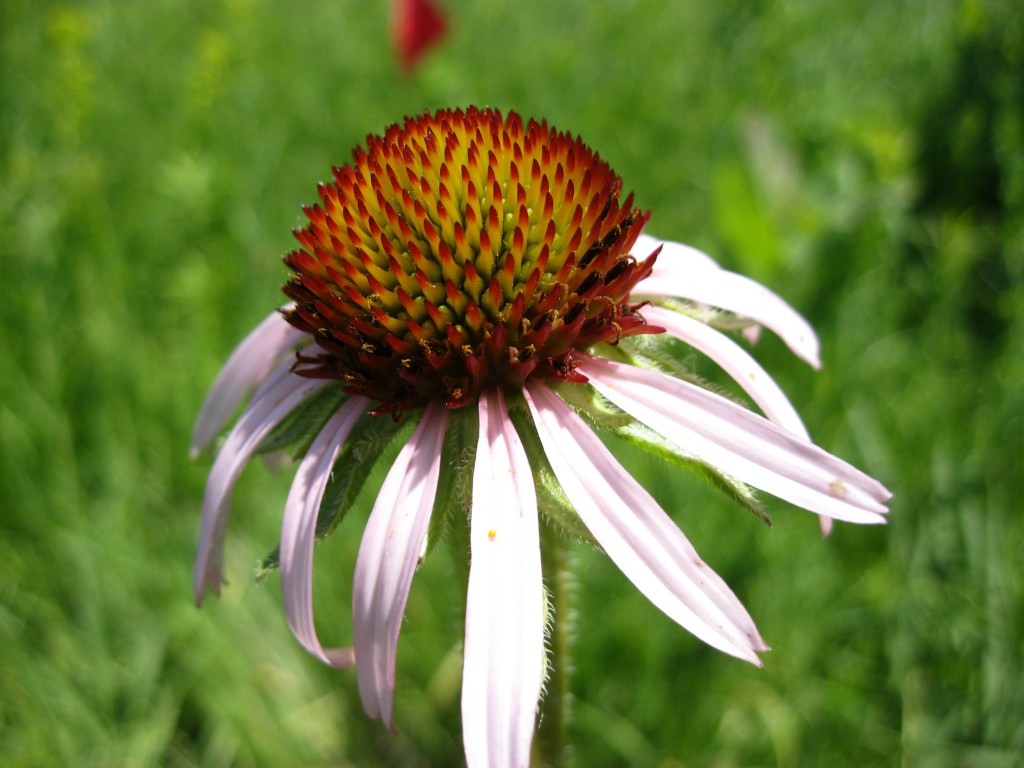 Asteraceae
Common name: Narrow-leaved purple coneflower
About this species:
Echinacea angustifolia is an herbaceous perennial, native to the tallgrass prairie and plains of North America. I grows west of the Mississippi river. This species was chosen as the primary species of interest when The Project started in 1995 because it shares numerous characteristics with other native prairie plants…
- Asteraceae. Echinacea is in the composite family–an important group in the prairie.
- Long-lived. Plants rarely flower before their fifth year and then don’t flower every year.
- Reproduces only by seed. Echinacea is taprooted and doesn’t spread vegetatively.
- Limited seed dispersal. The fruits have no specialized means of dispersal.
- Generalist pollinators. The main visitors are a diverse group of native ground-nesting bees.
- Self-incompatible. For a plant to set seed it needs pollen from another plant. And that pollen grain must have different S-alleles from the seed plant.
Breeding system: Self-incompatible.
Flowering phenology: Peak flowering usually occurs in July. Visit the Echinacea Project Field Log to read more about our ongoing investigations of the causes and consequences of variation in timing of flowering.
The USDA plant profile page for Echinacea angustifolia.
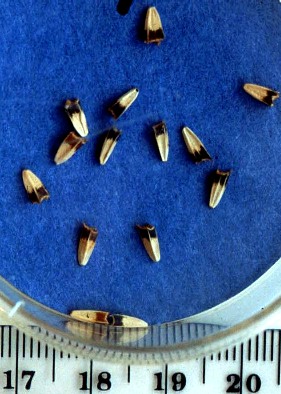
E. angustifolia fruits, also called achenes
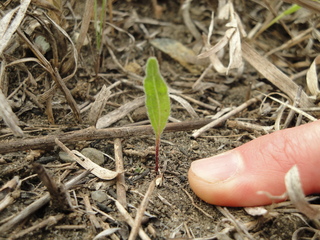
E. angustifolia seedling
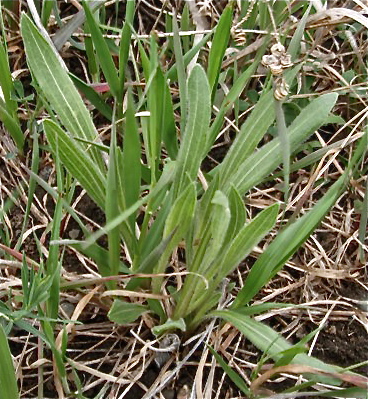
Basal E. angustifolia plant