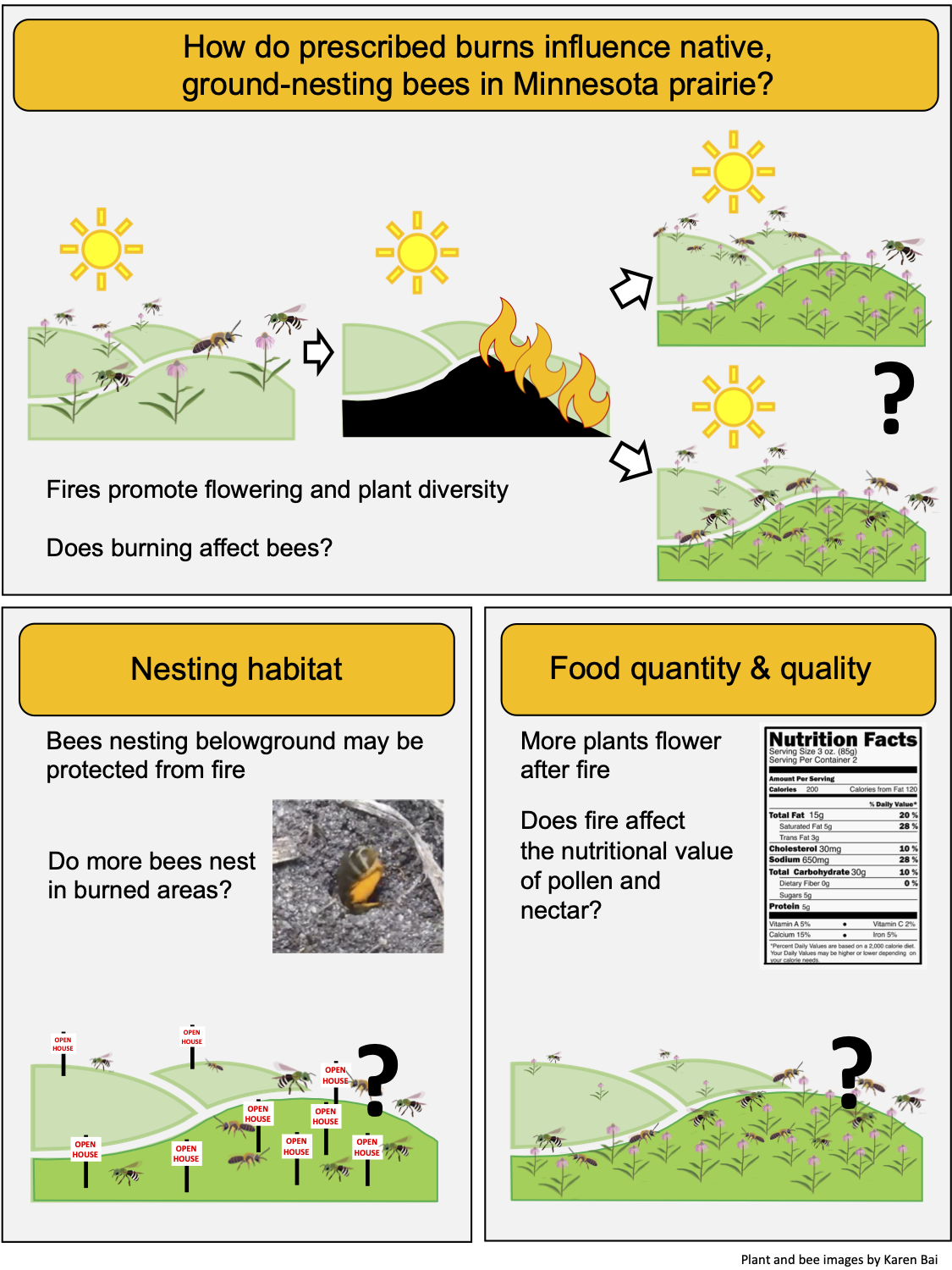
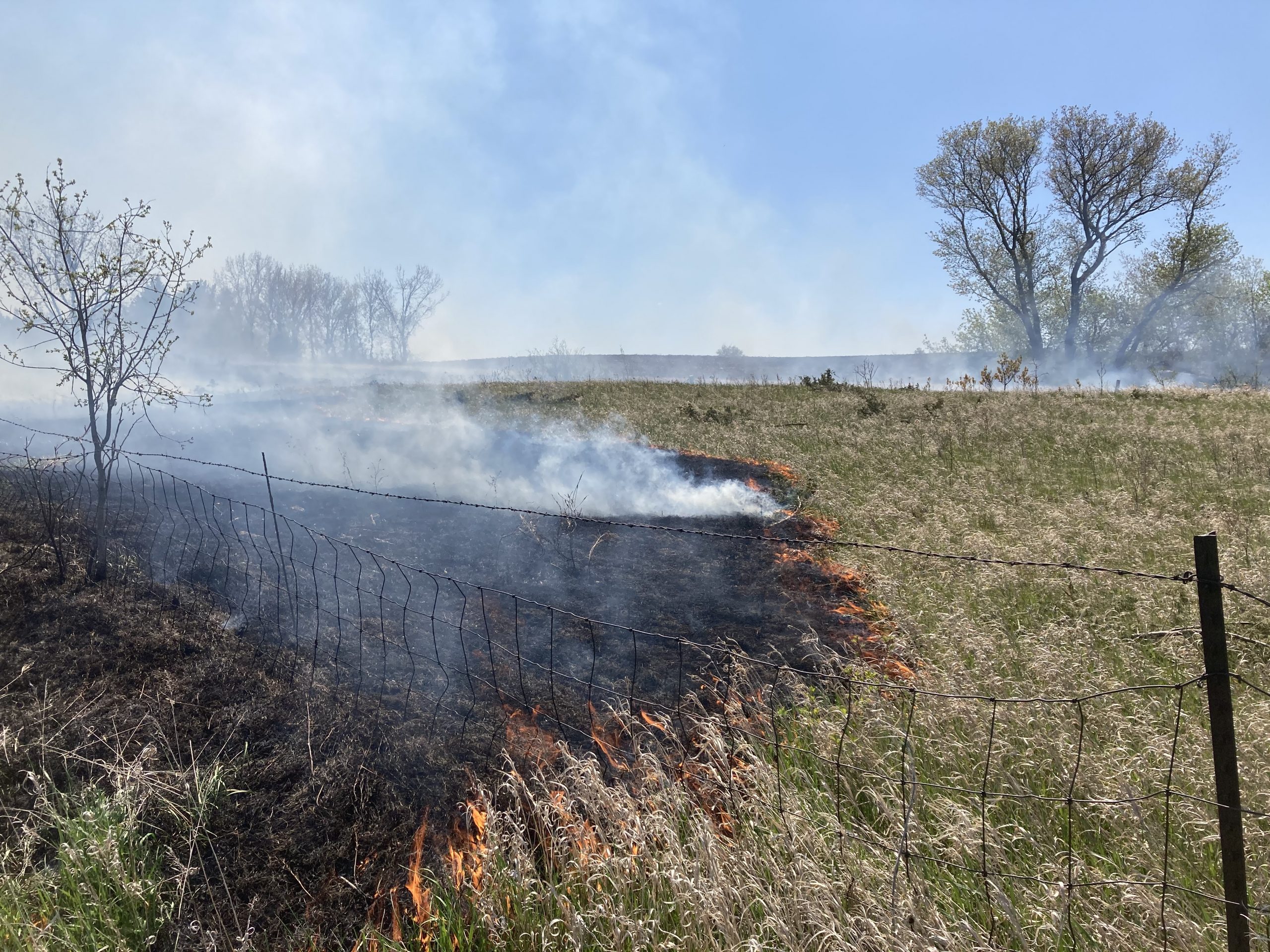
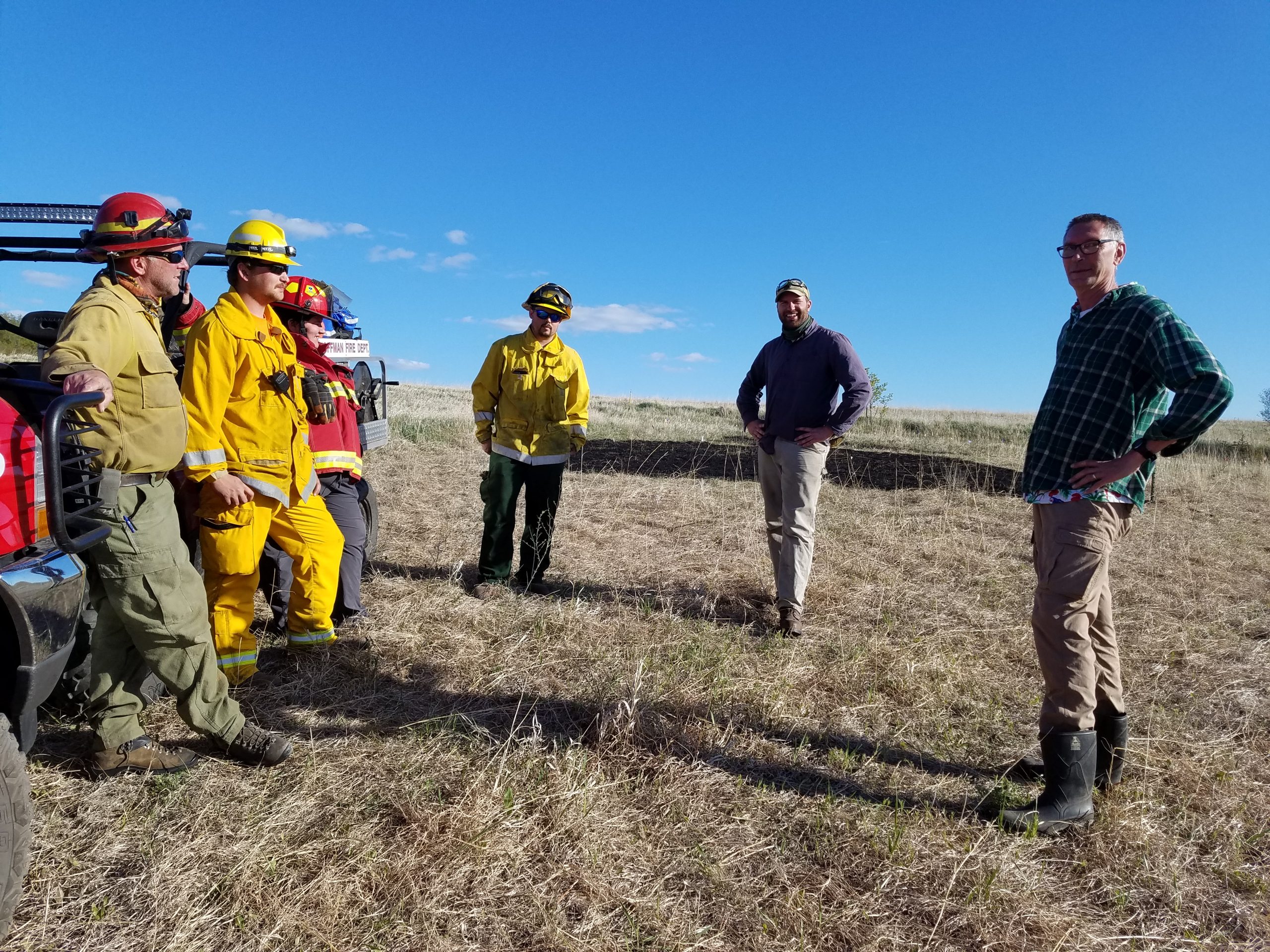
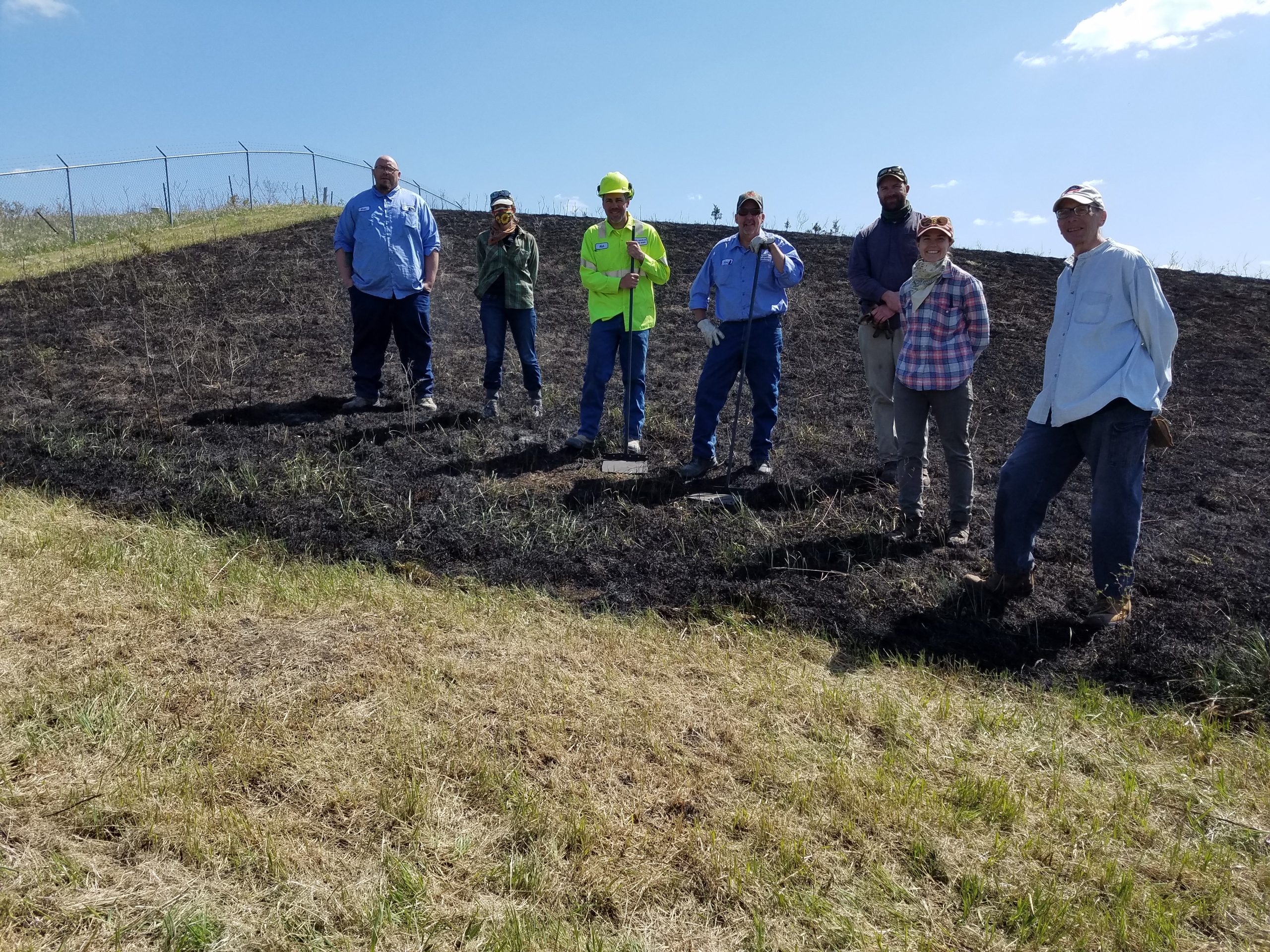
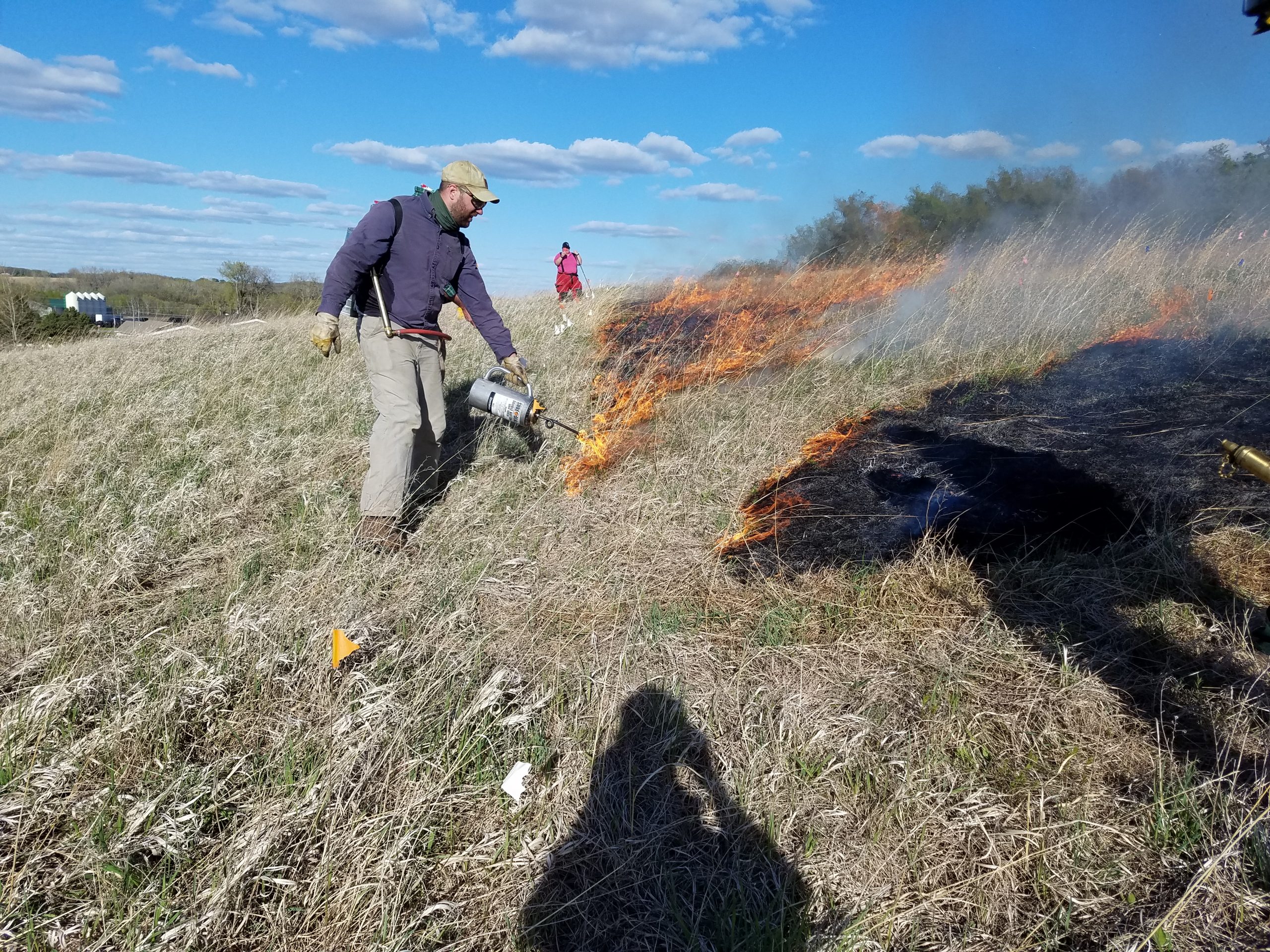
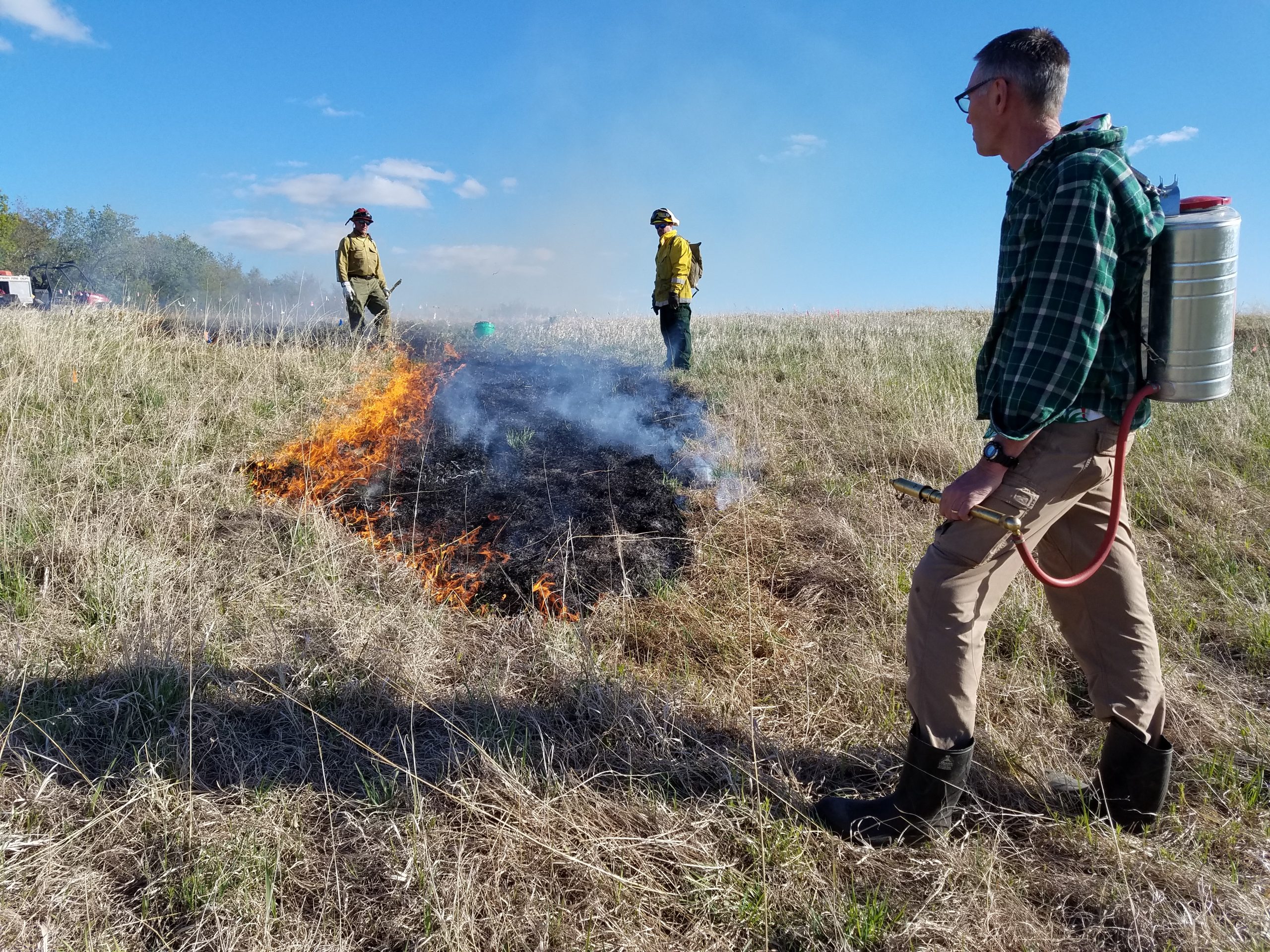
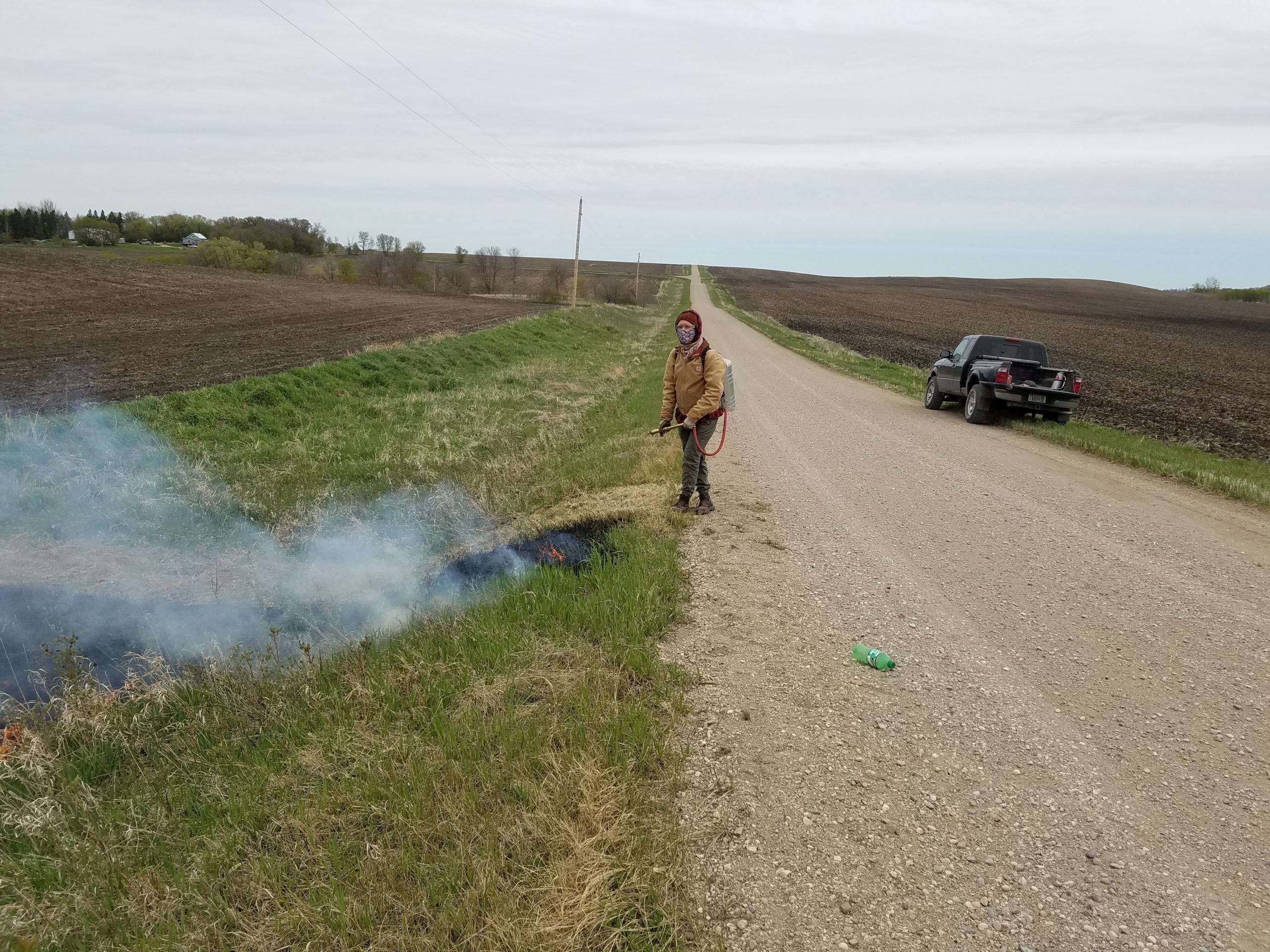
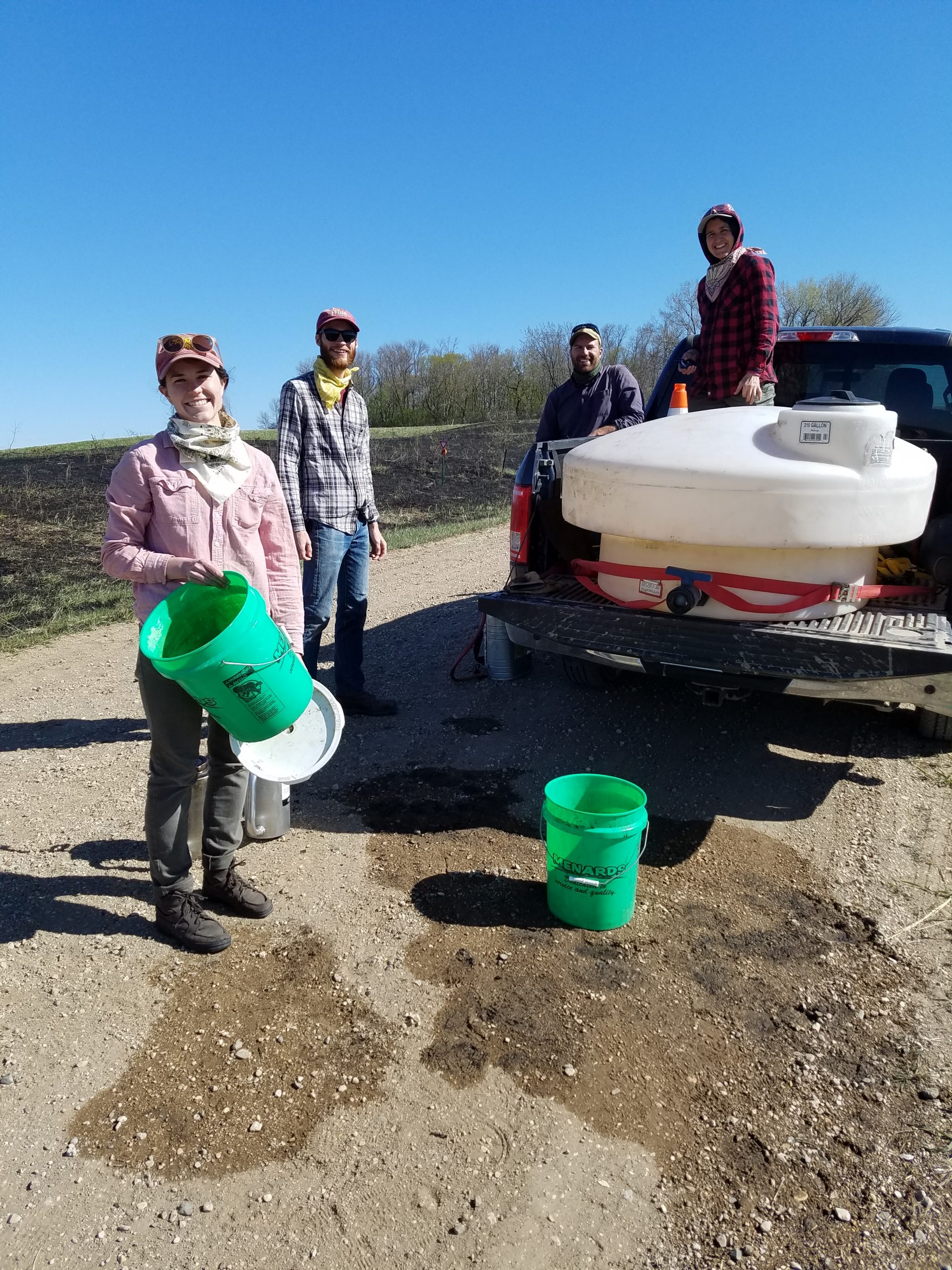
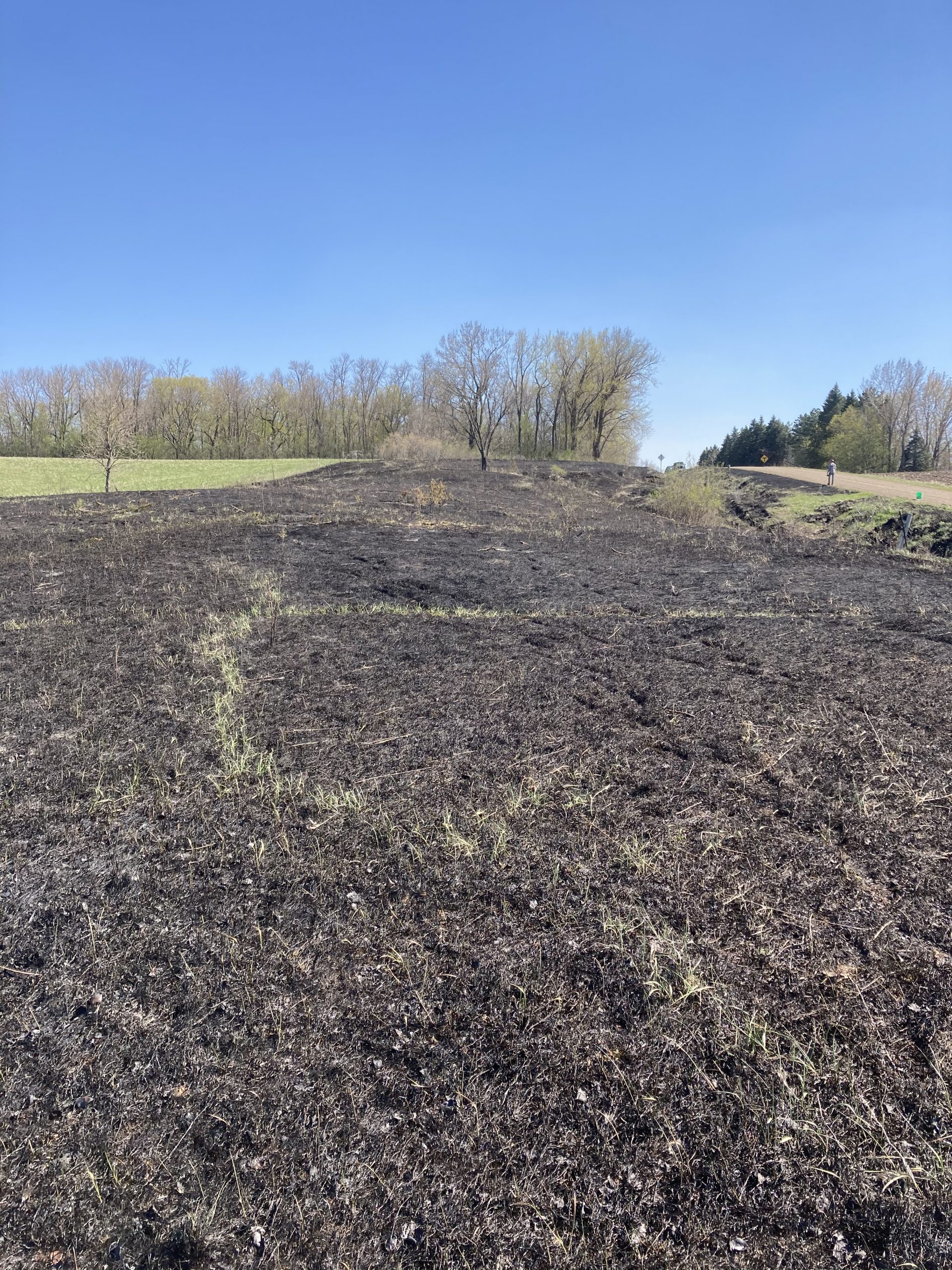
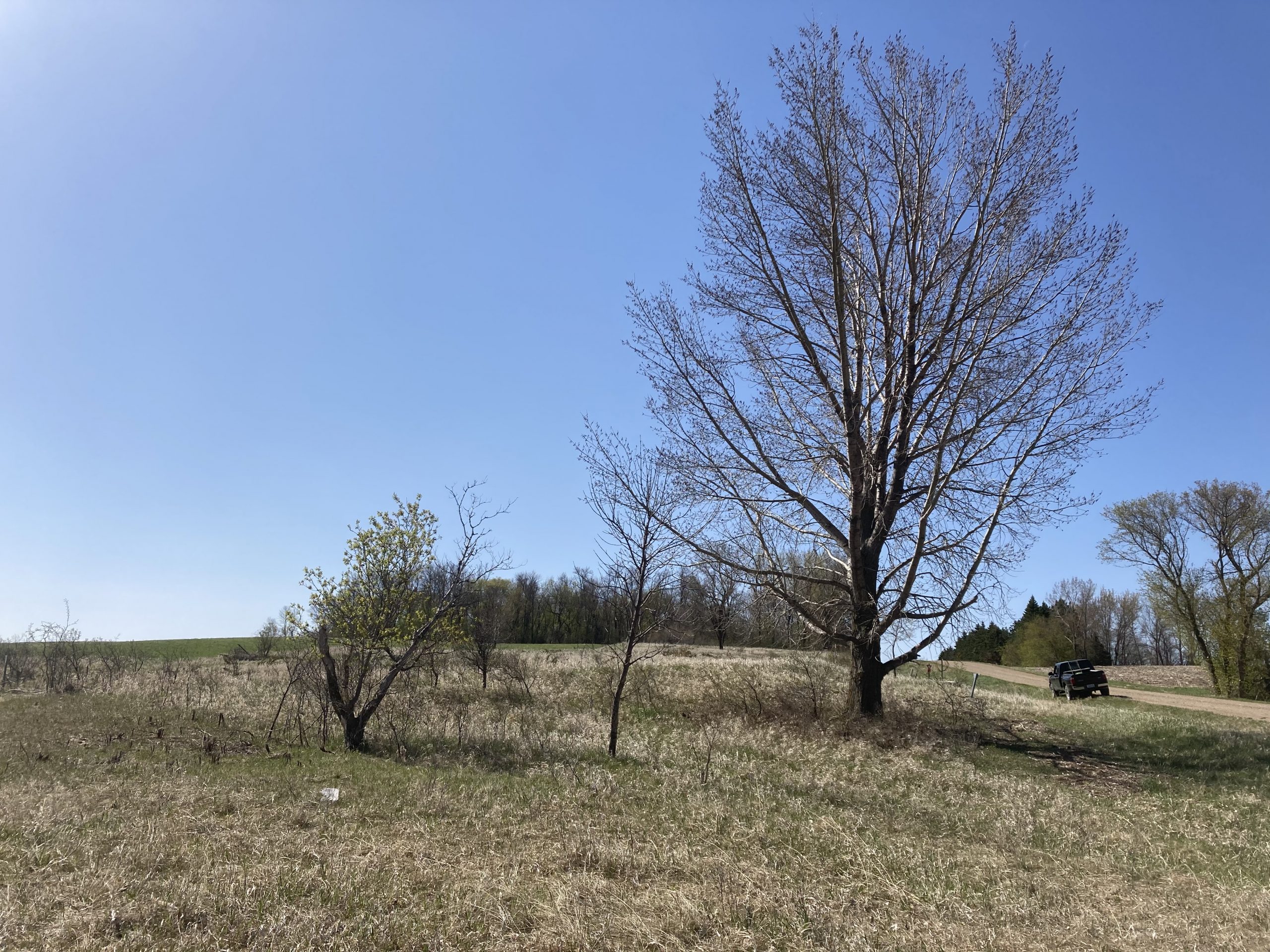
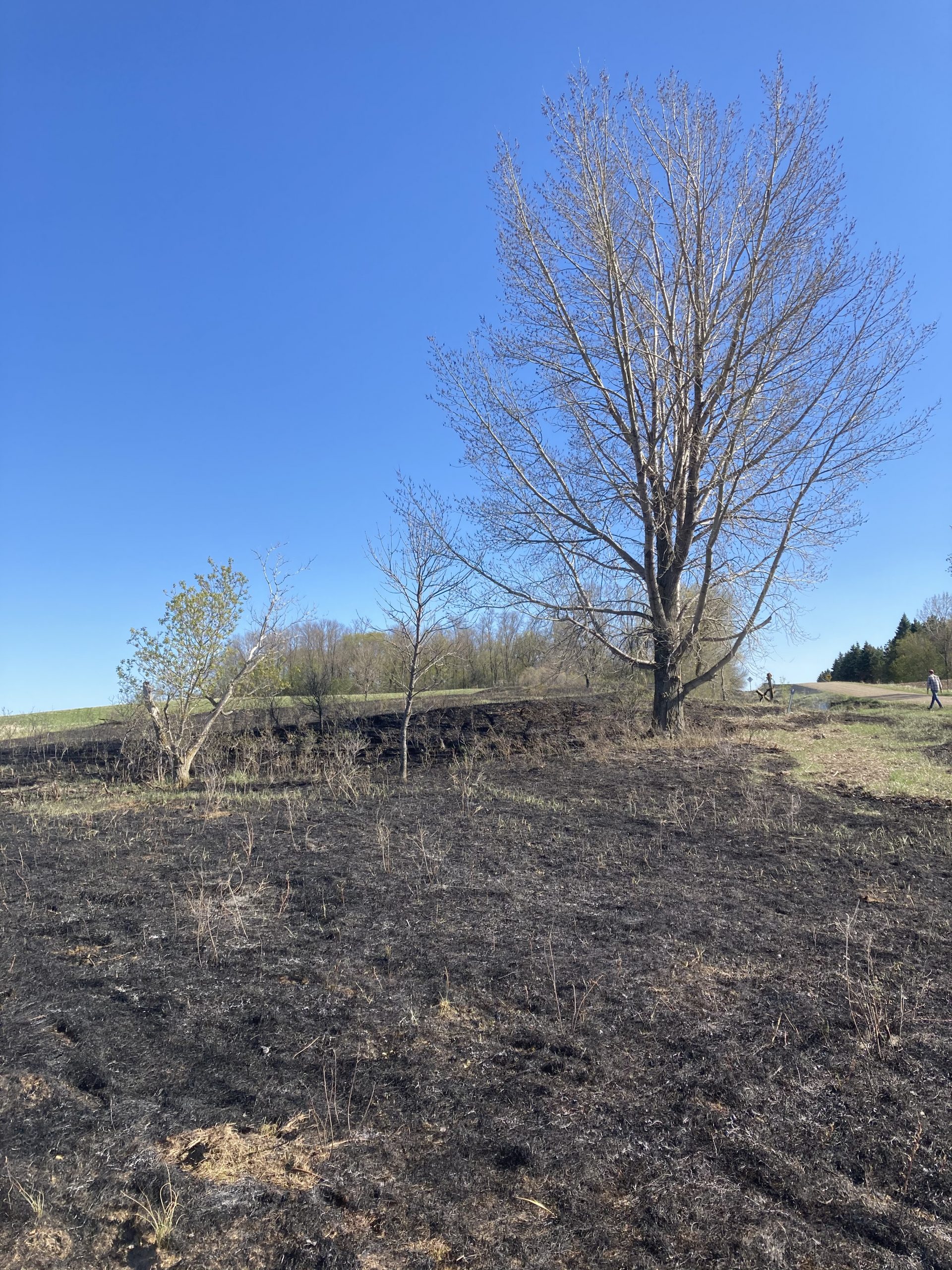
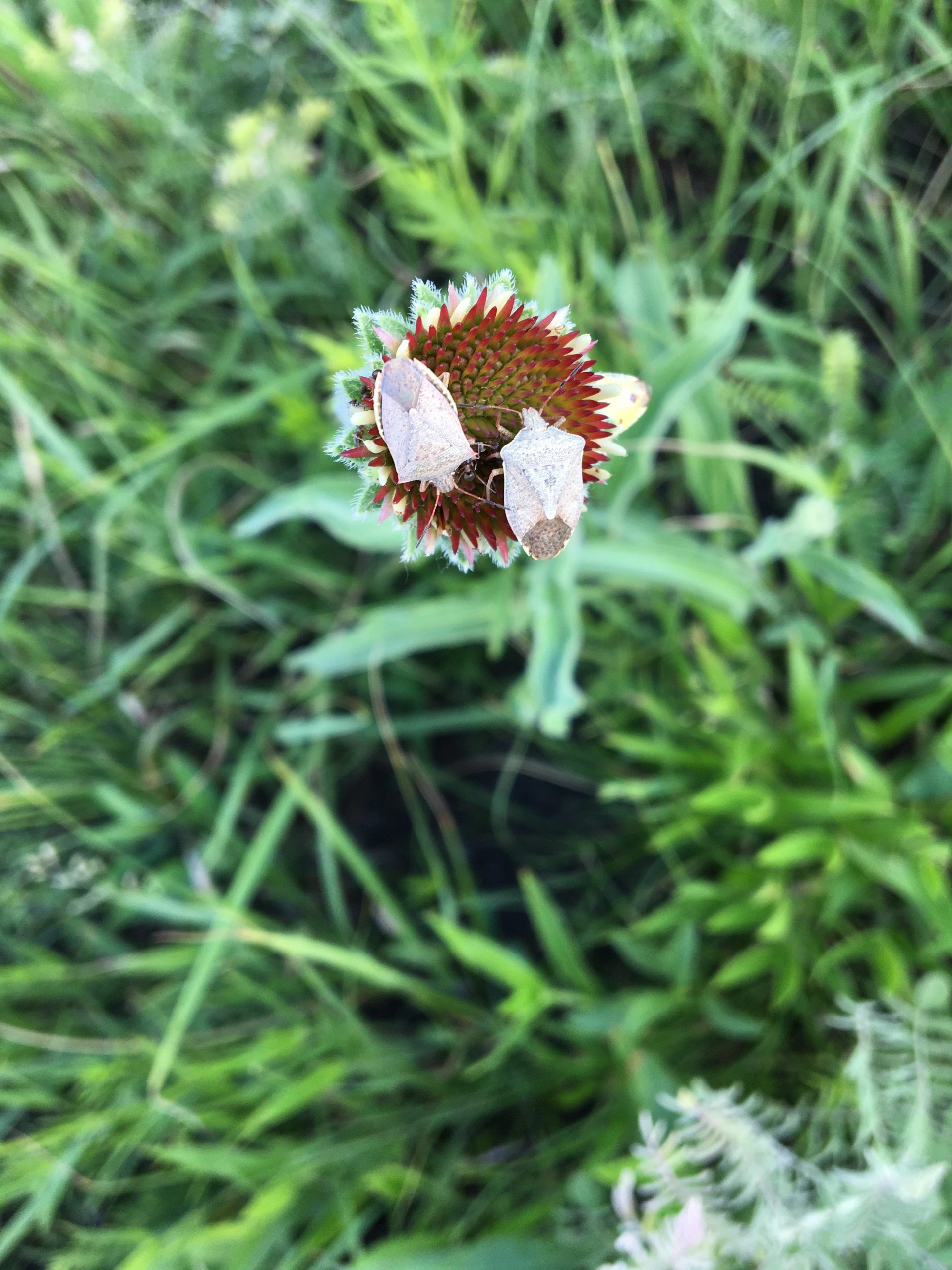
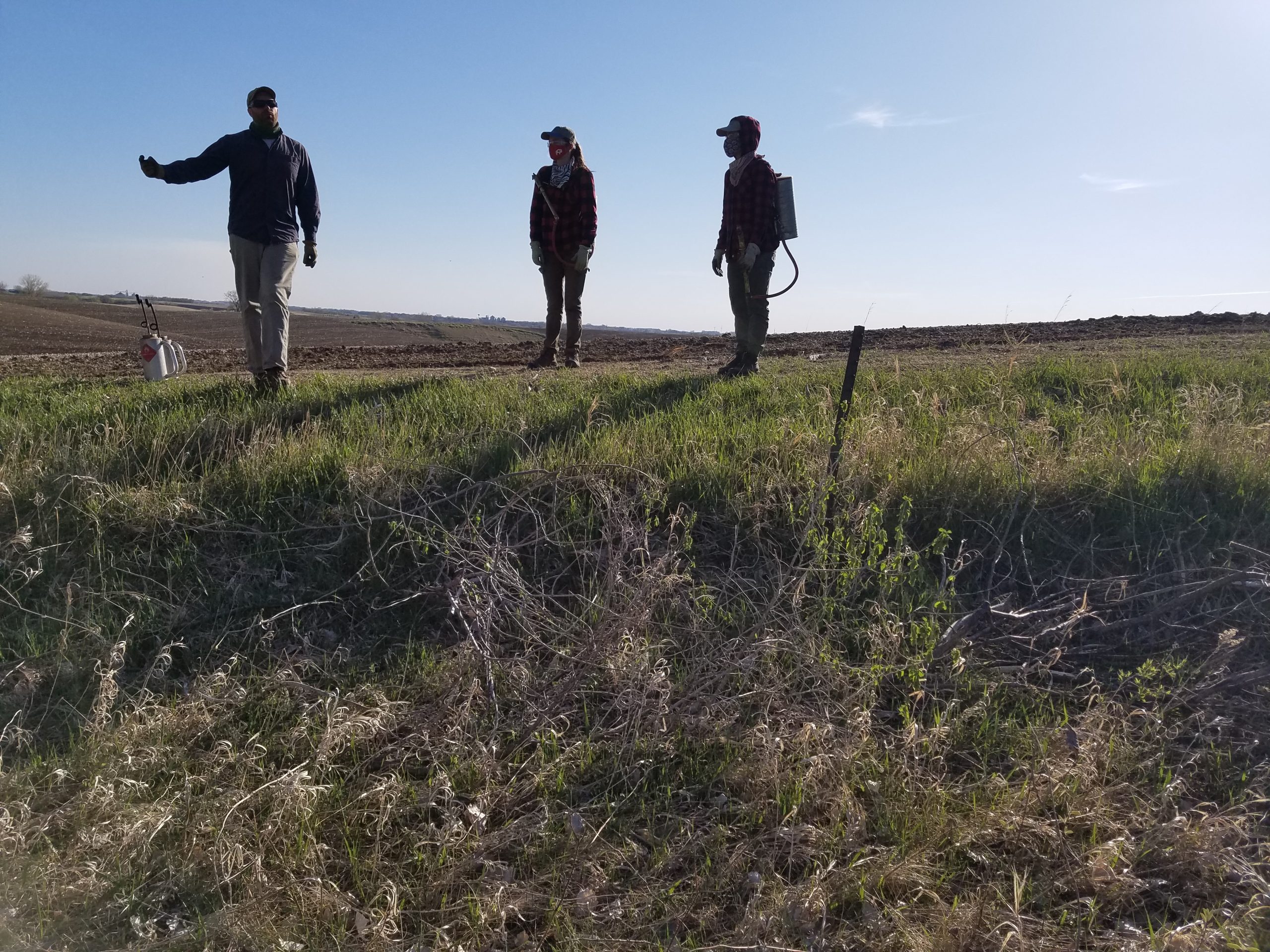
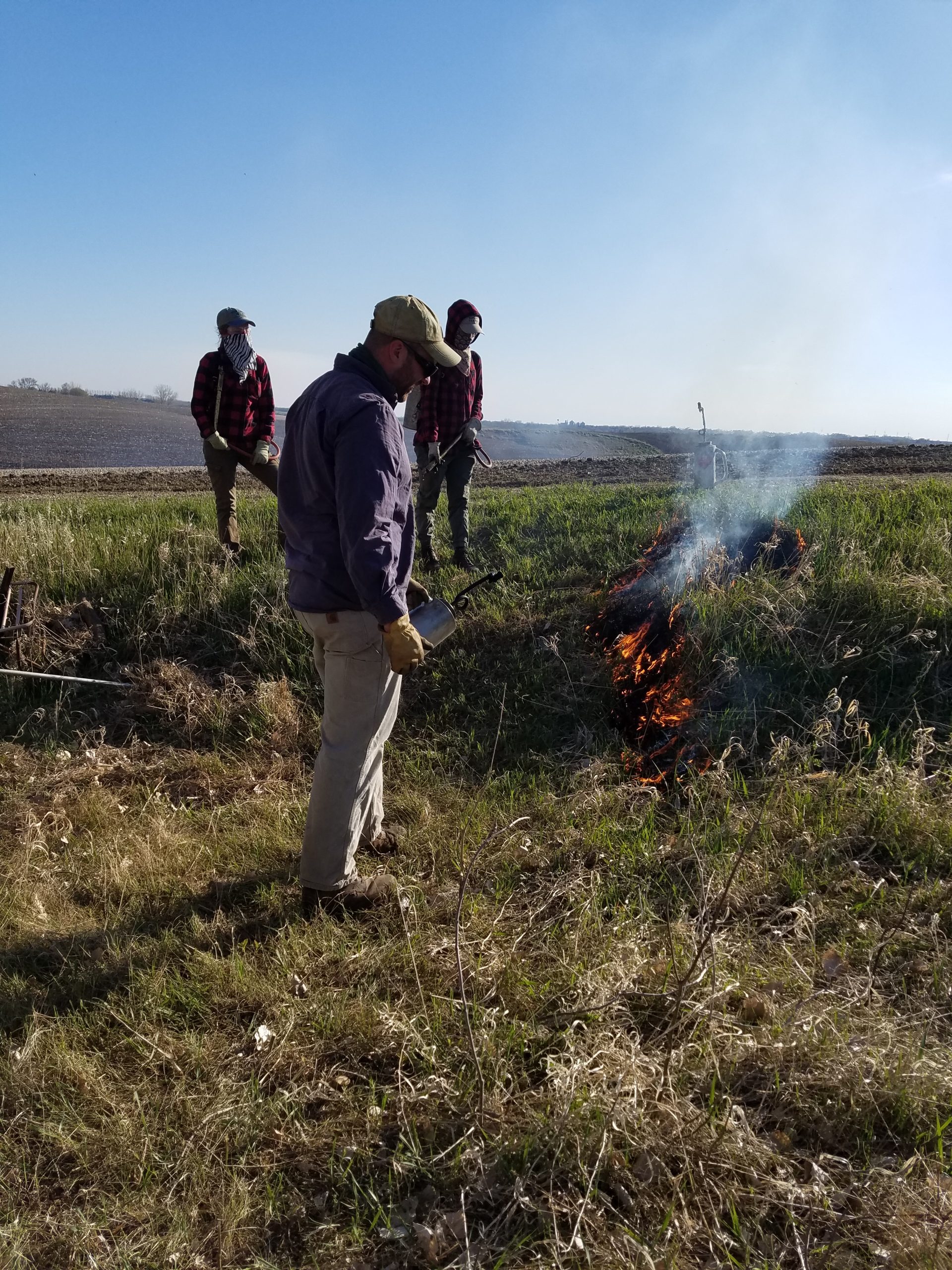
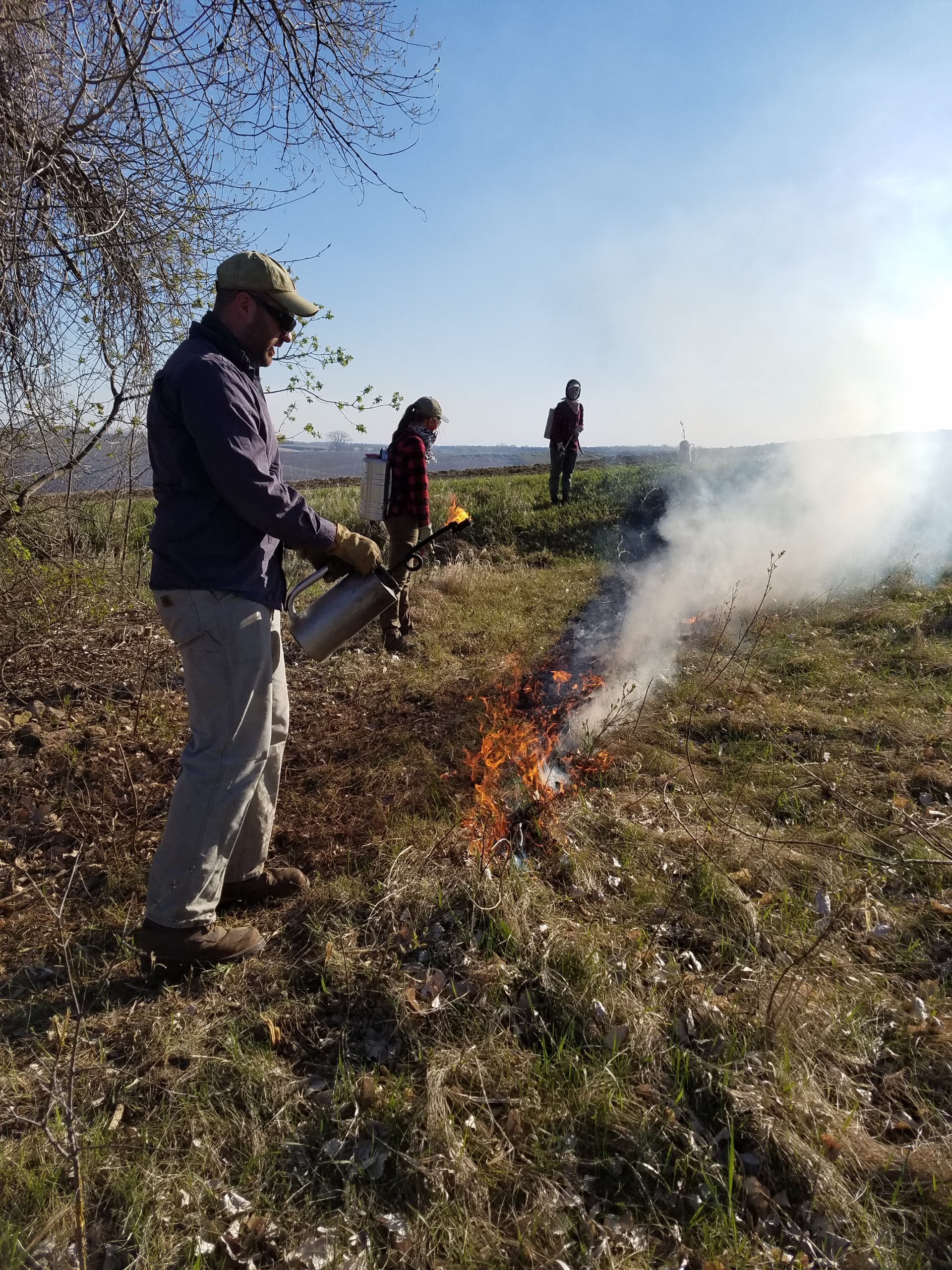
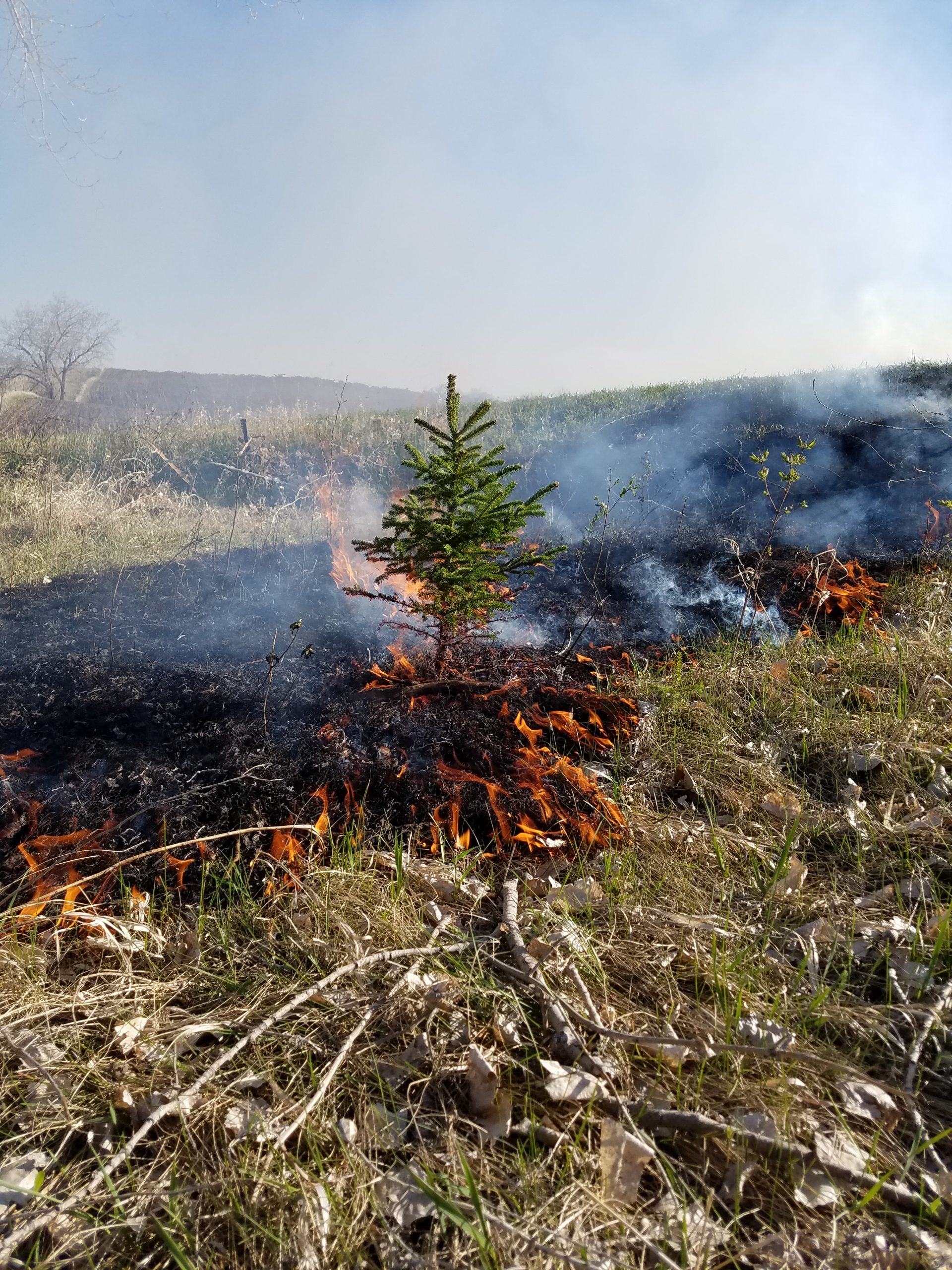
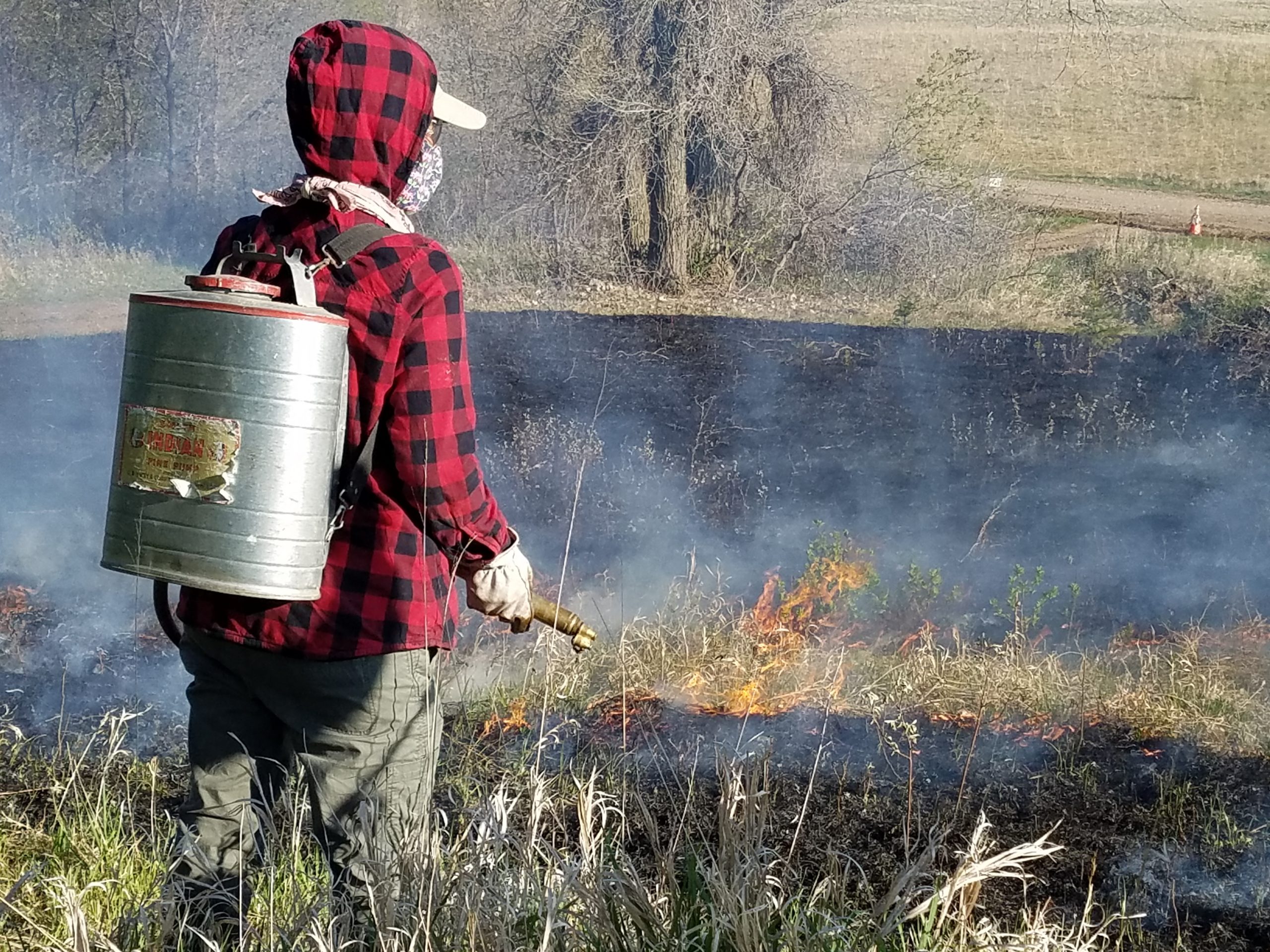
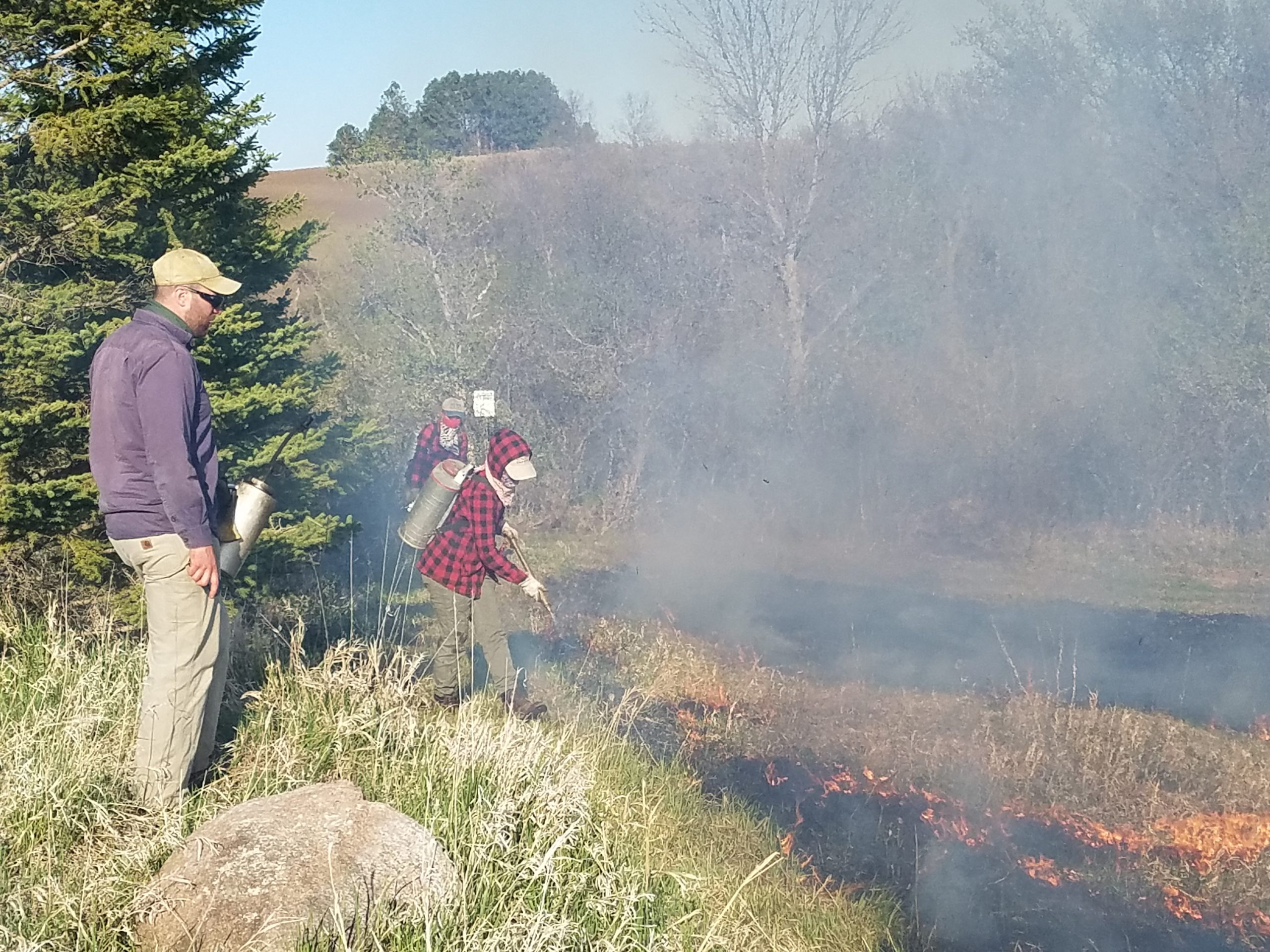
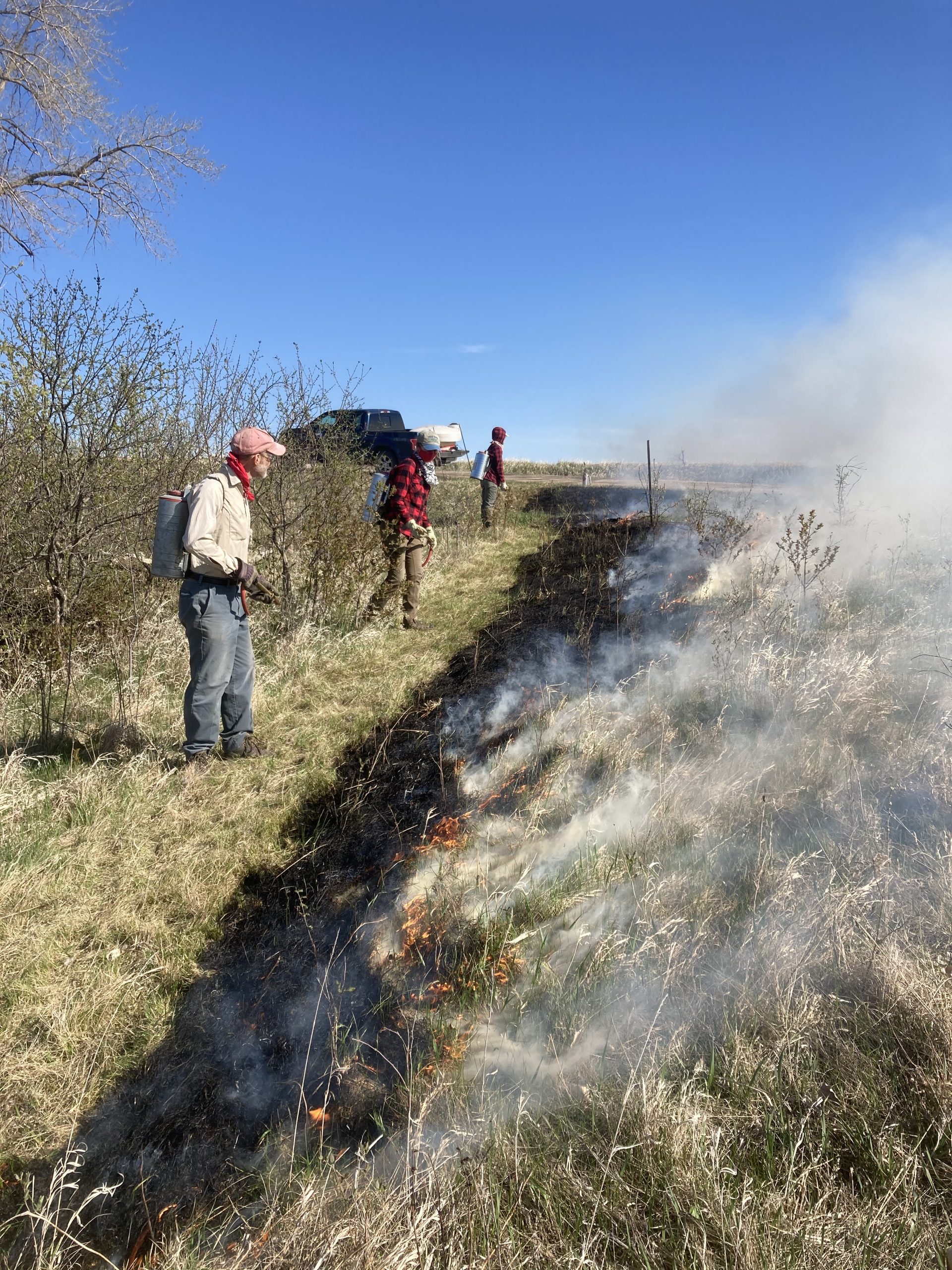
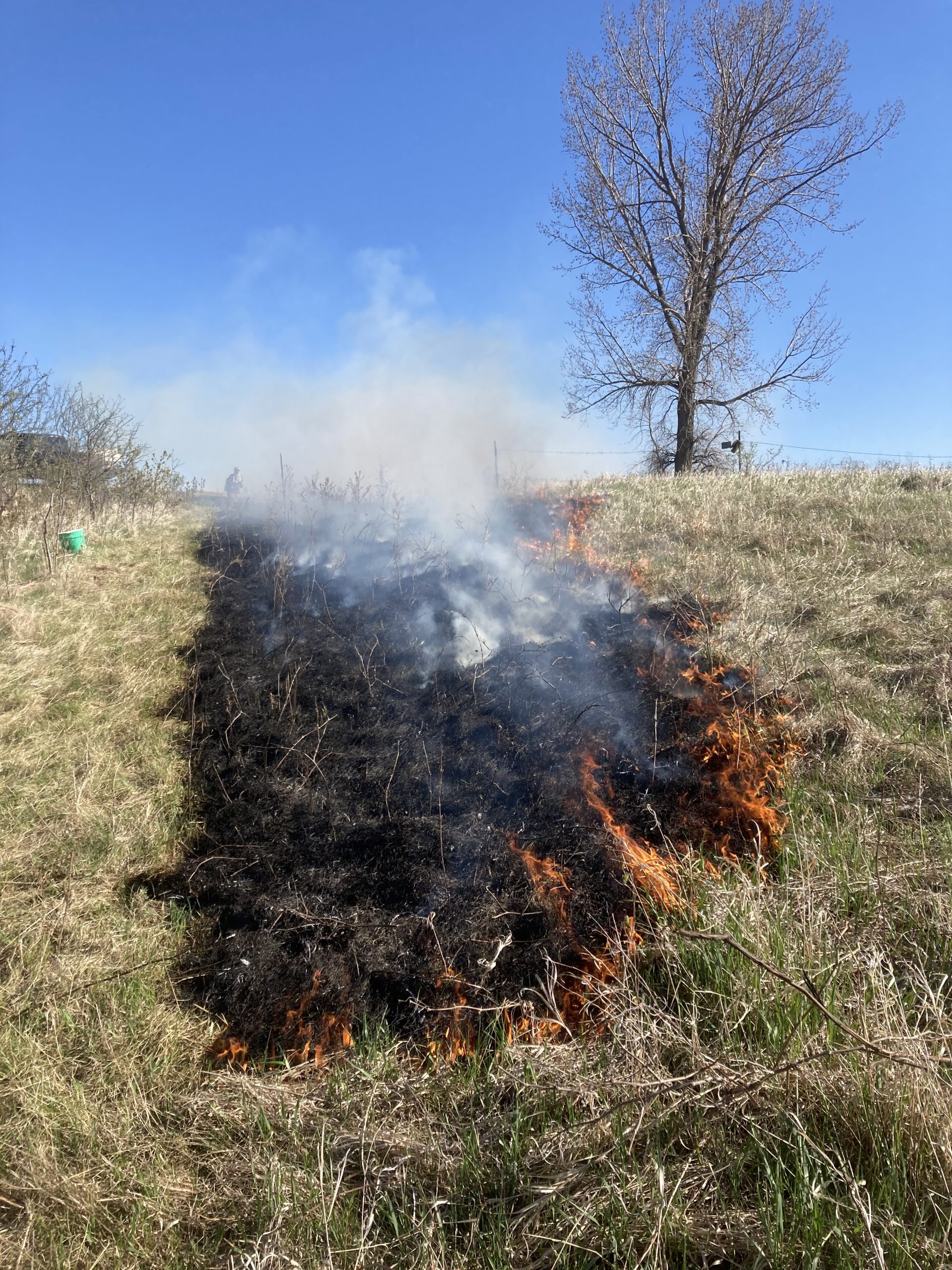
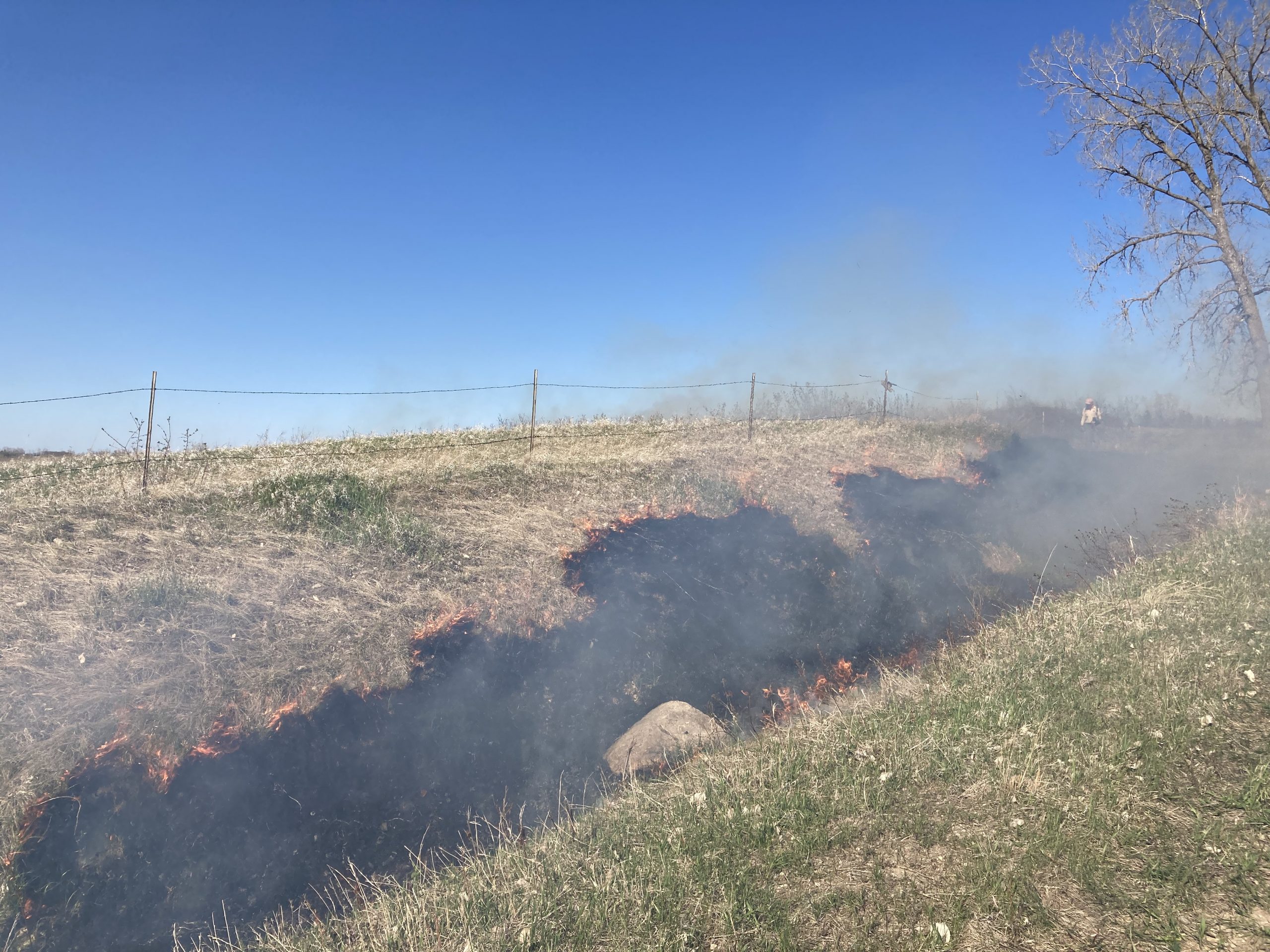
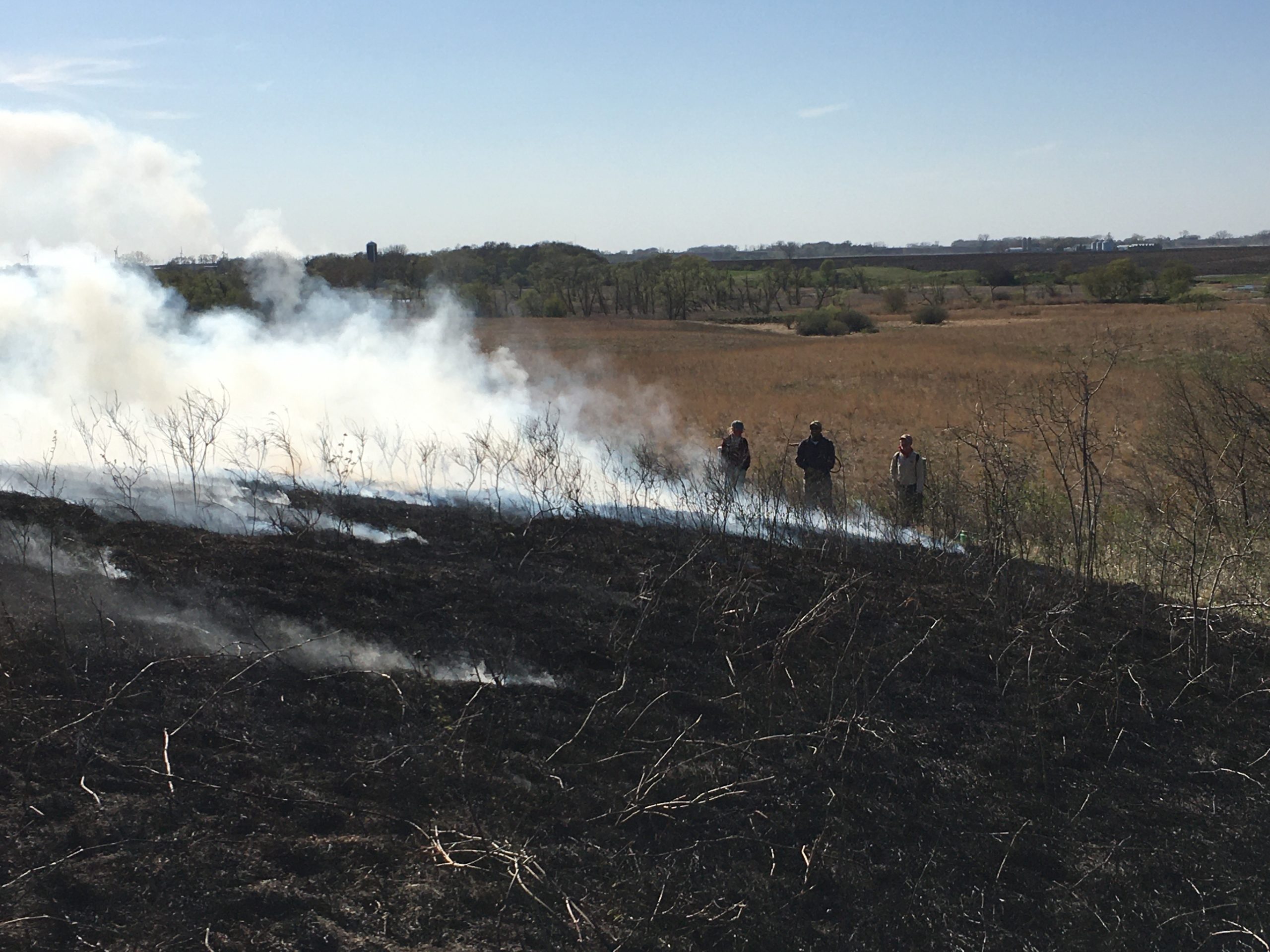
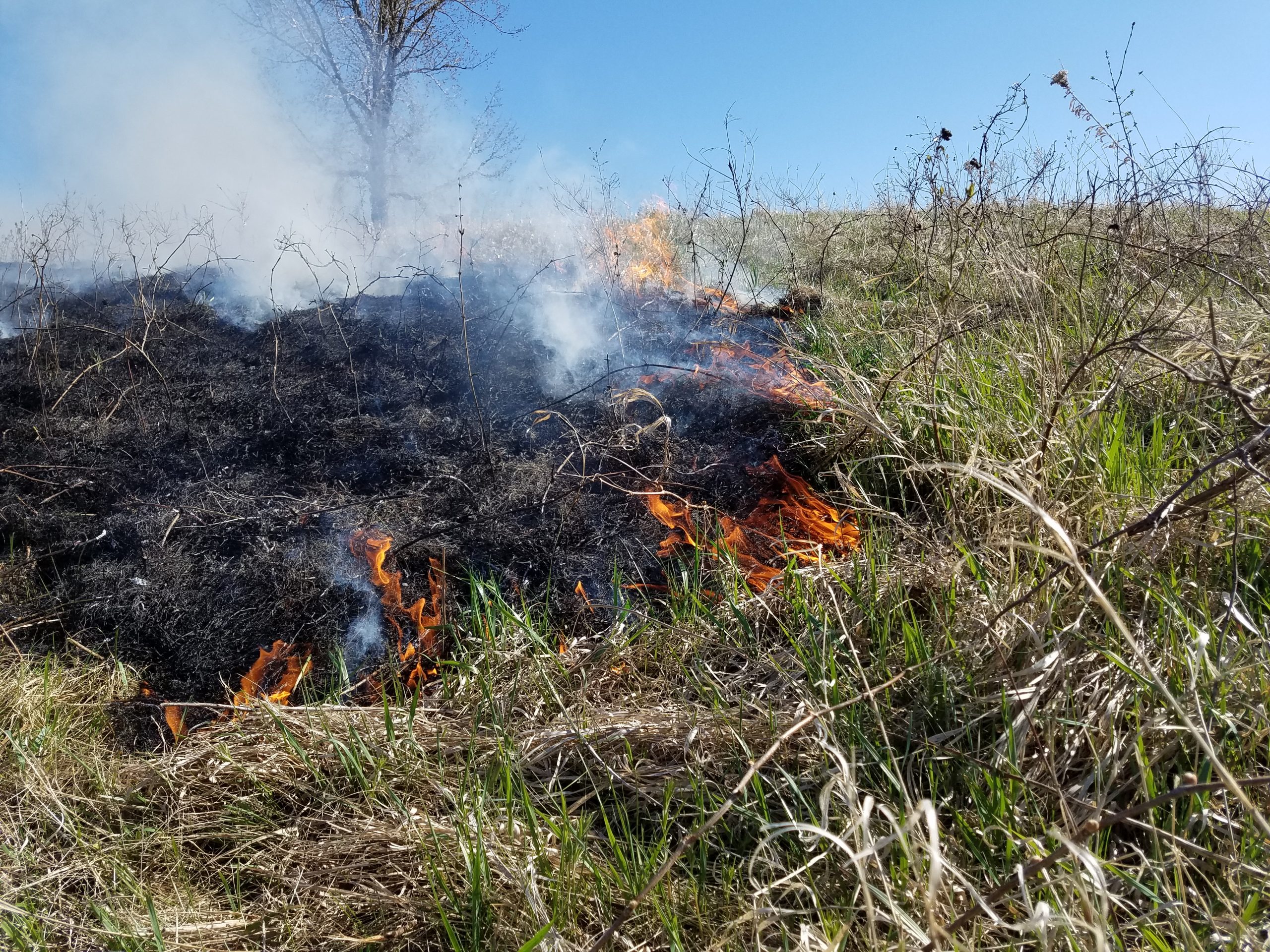
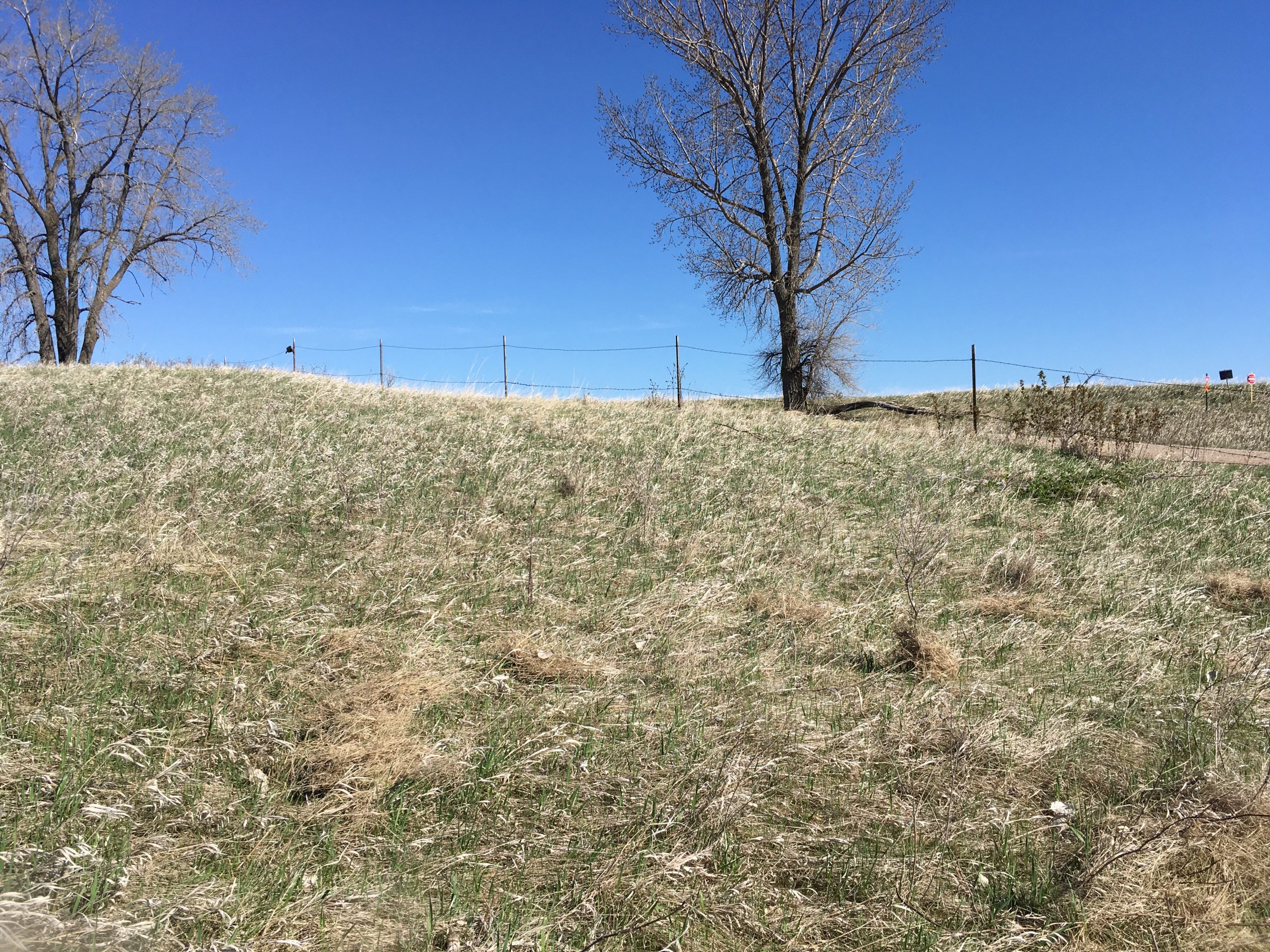
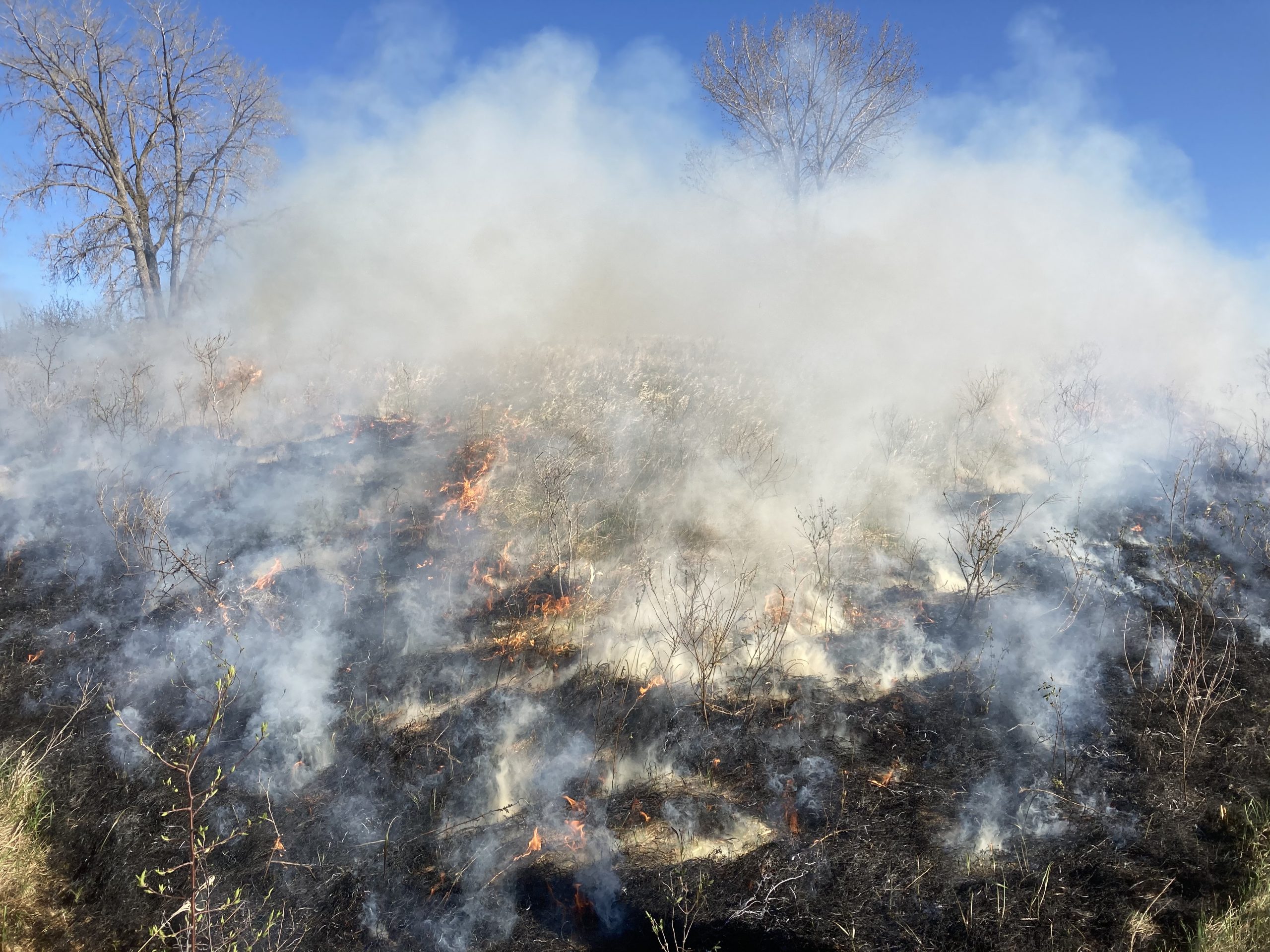
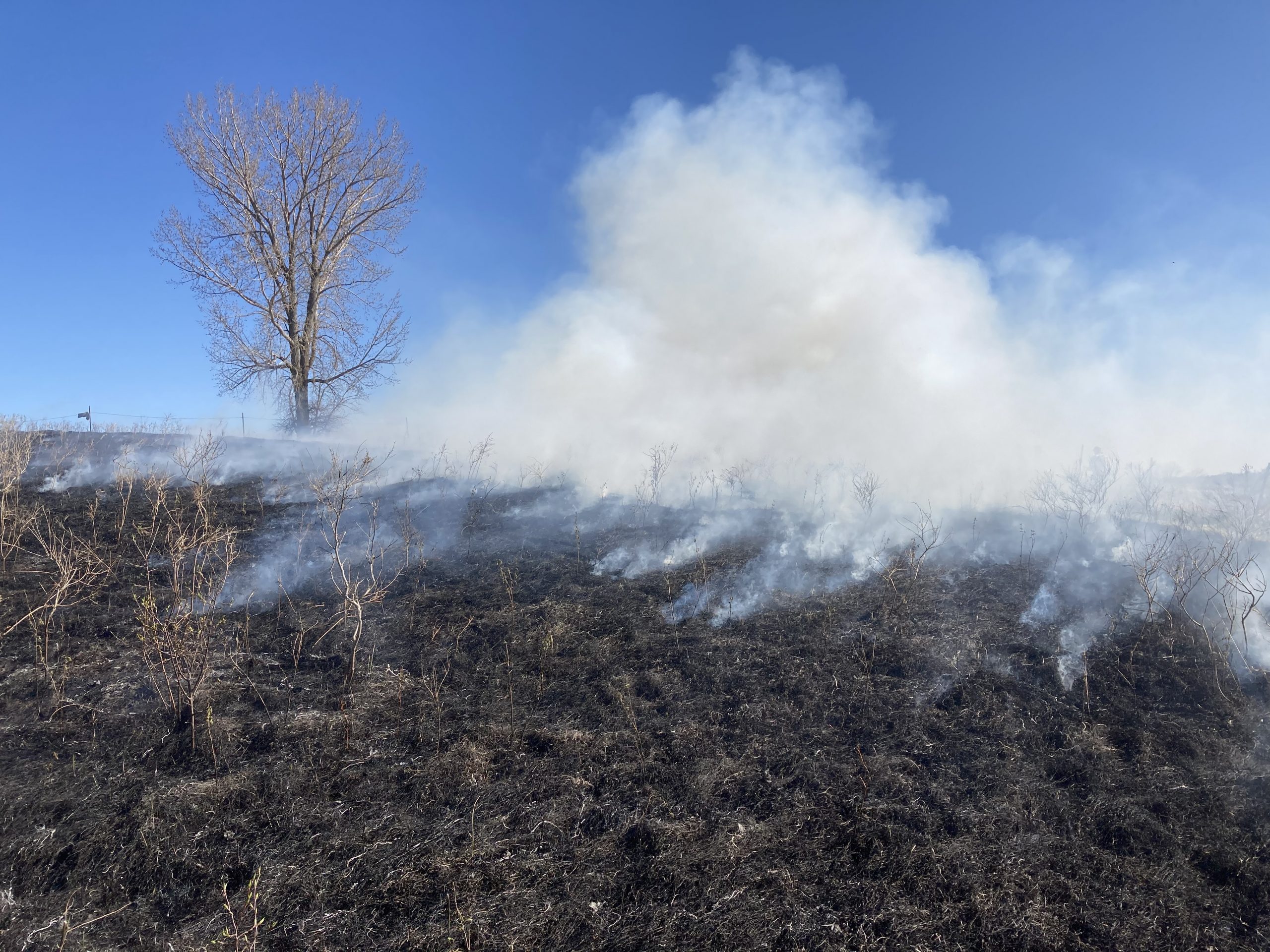
The Echinacea Project has been investigating tallgrass prairie in Douglas and Grant Counties, MN since 1995. Our research on native plants & pollinators identifies threats to prairies as well as conservation opportunities. For example, in a 21-year investigation of purple coneflower (Echinacea angustifolia) we found that prescribed burns improved seed production by synchronizing reproduction and improving pollination. We recently submitted a proposal to the Legislative-Citizen Commission on Minnesota Resources for funding to build on our long-term investigations. We propose research projects to investigate how prescribed burns affect solitary, ground-nesting bees — the most important pollinators in tallgrass prairie. Specifically, we will examine how burns affect solitary bee diversity, nesting habitat, and food resources (e.g. quantity and nutritional quality of pollen and nectar). This research will produce valuable information for natural resource managers, including guidelines for how to maintain insect pollinators and prairie plants with prescribed fires.
Whew, the past month has been a blur. When I hopped in a car on April 21, we had not gotten a start on our ambitious burn plans. We hadn’t even stepped foot in Minnesota since the fall. Fast forward three weeks and we had completed 10 prescribed burns including 2 experimental plots and 8 remnants (listed below). These included nine burns in a rather intense period of nine days (May 4 to May 12)!
Experimental plots: p8 & p10
Remnants: eri (north), yoh (east), yoh (west), kjs, lc (east), sap, lf (east), & dog
Huge thanks to all the volunteers who came out to help with prescribed burns this spring! We could not have completed such as safe and successful 2021 burn season without you. And thank you to all the landowners who gave us permission to conduct prescribed burns. We are grateful to have such wonderful, supportive neighbors and we look forward to continuing to work with you!
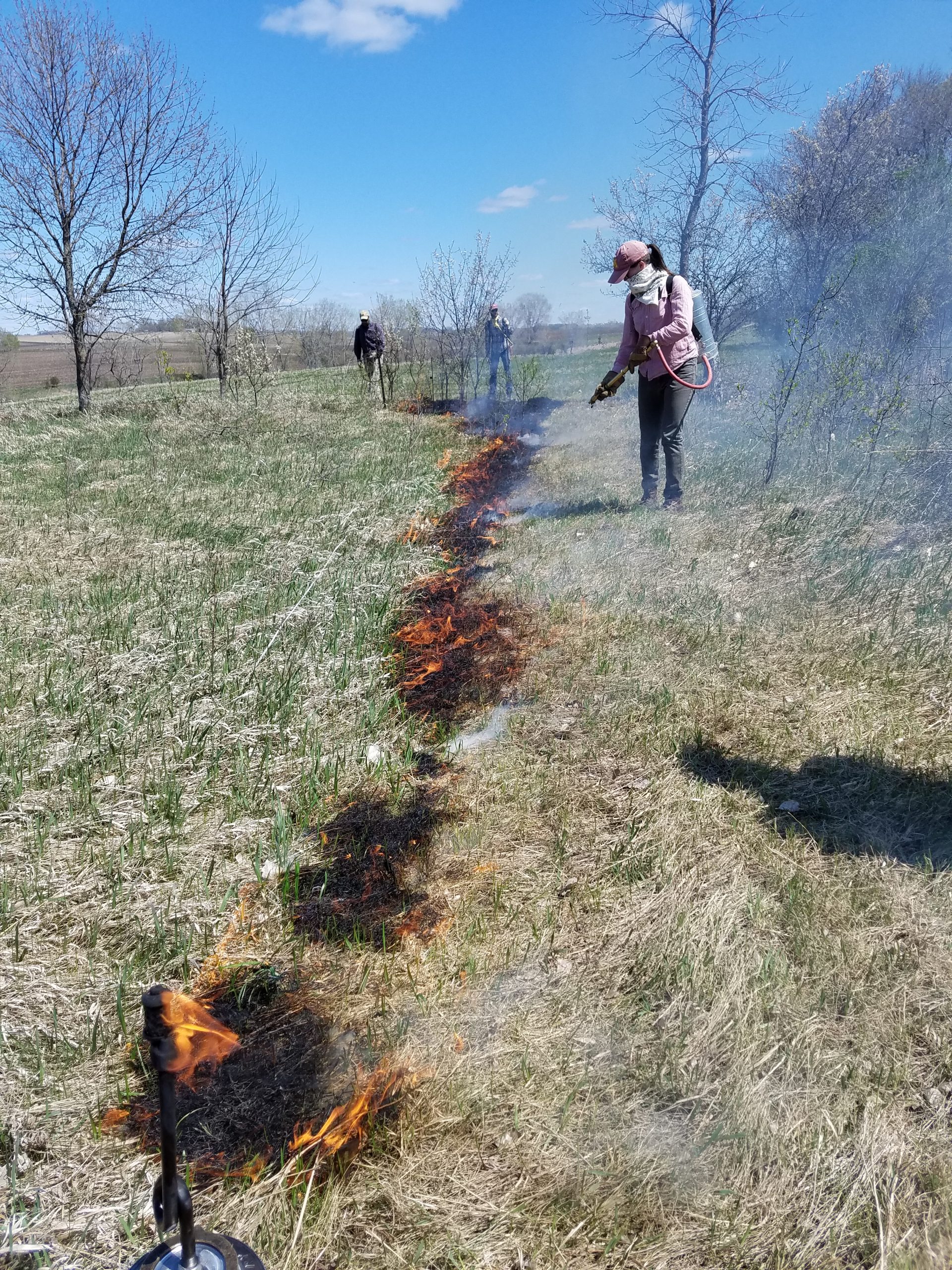
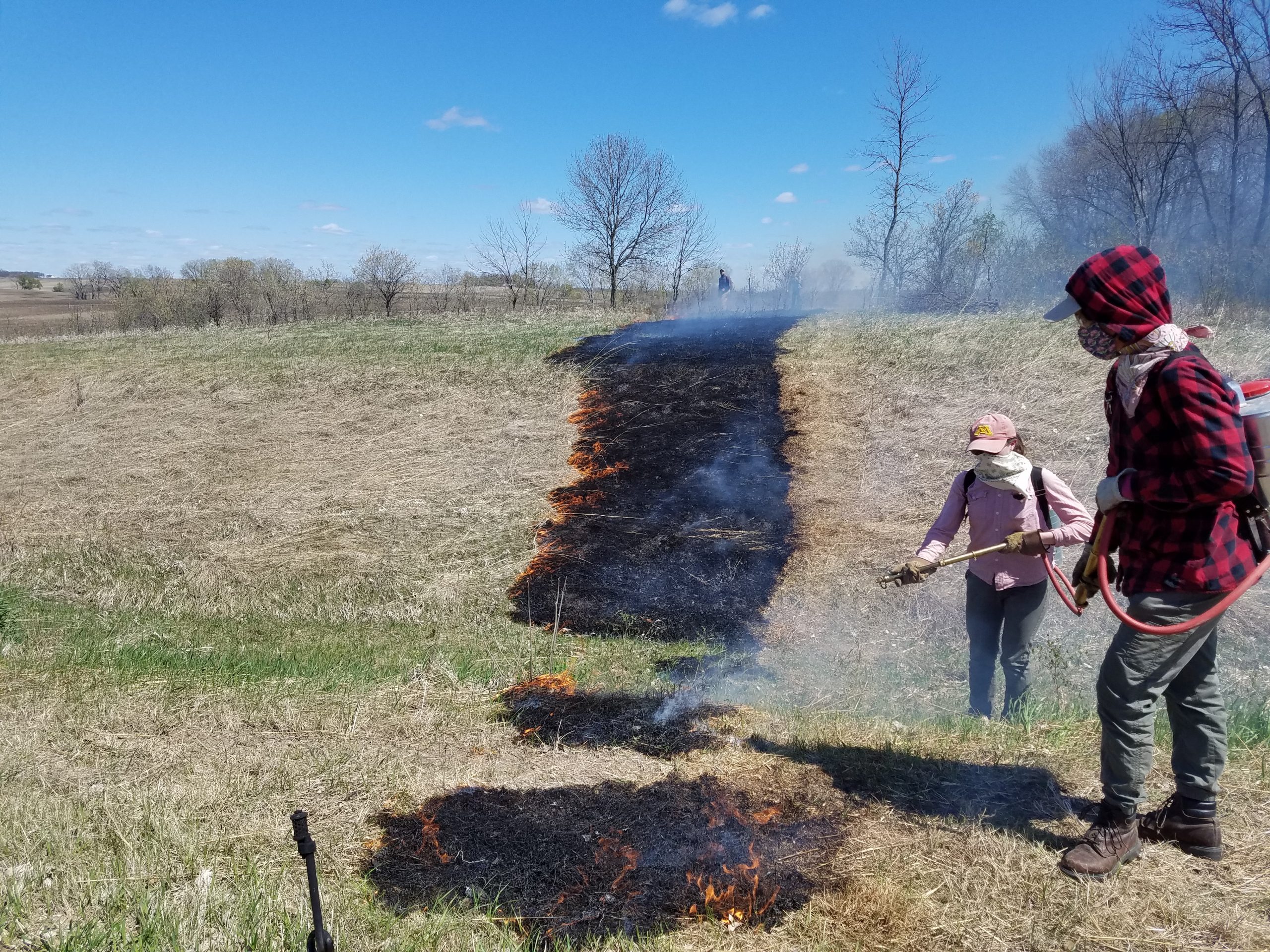
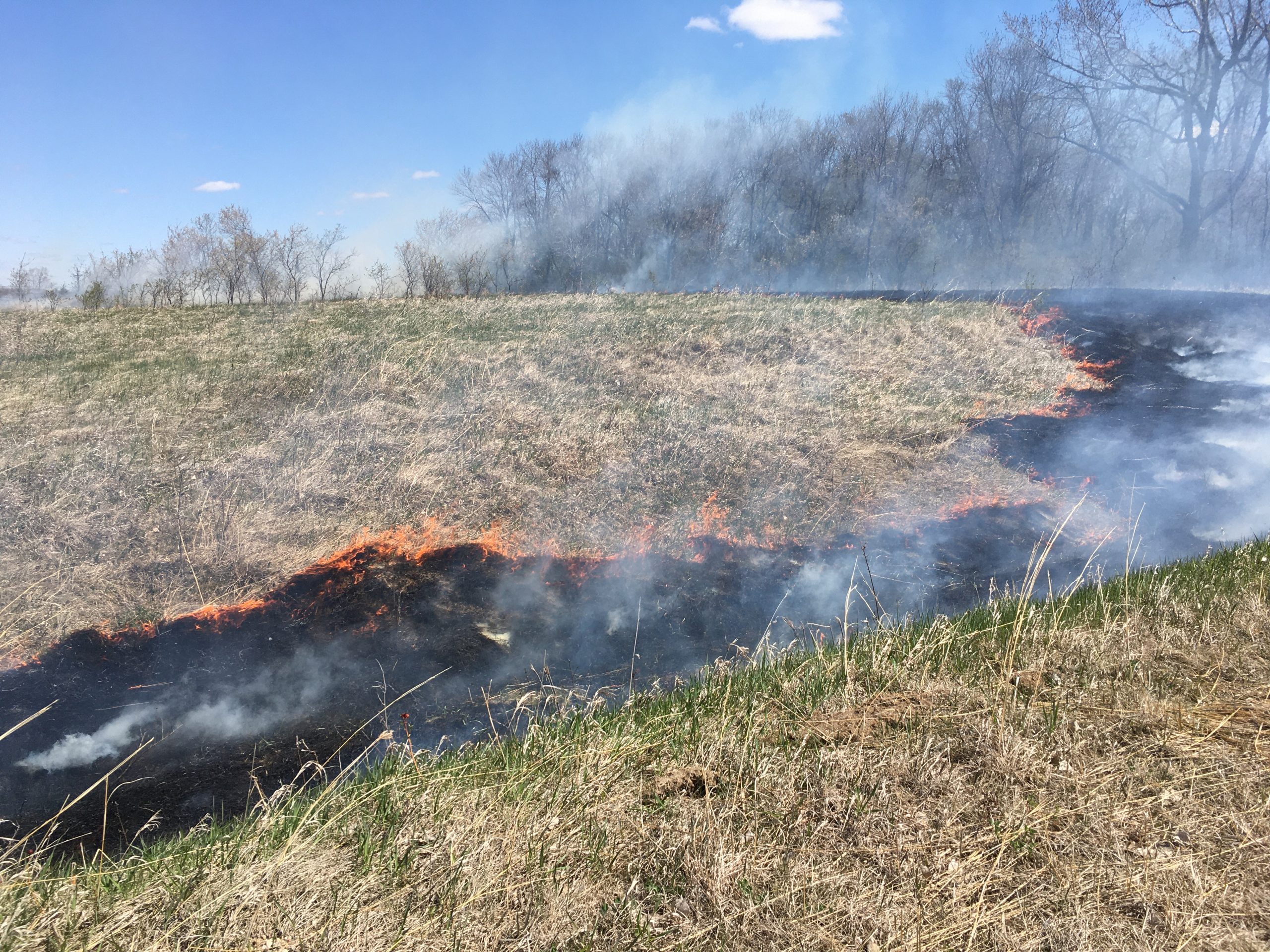
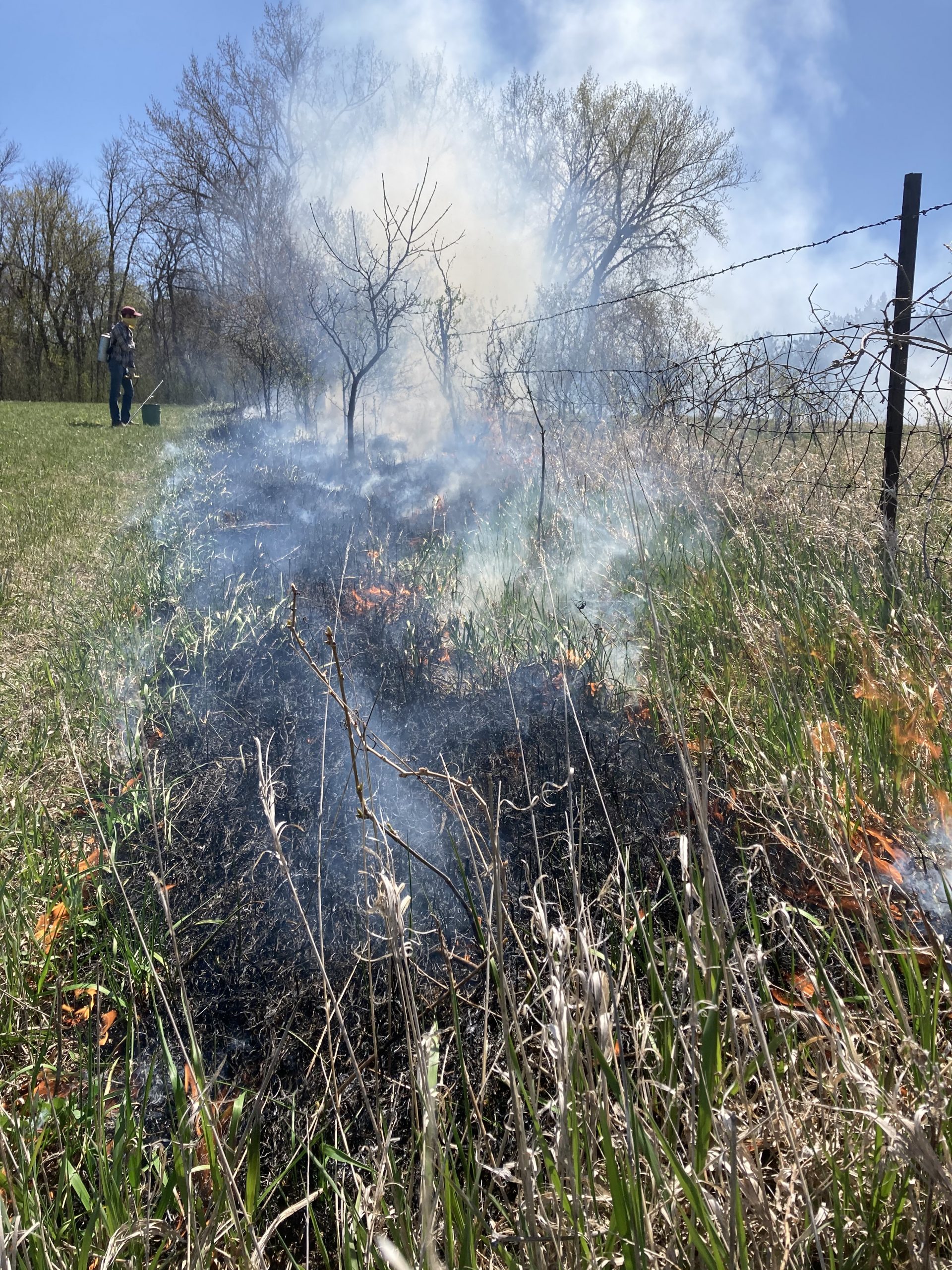
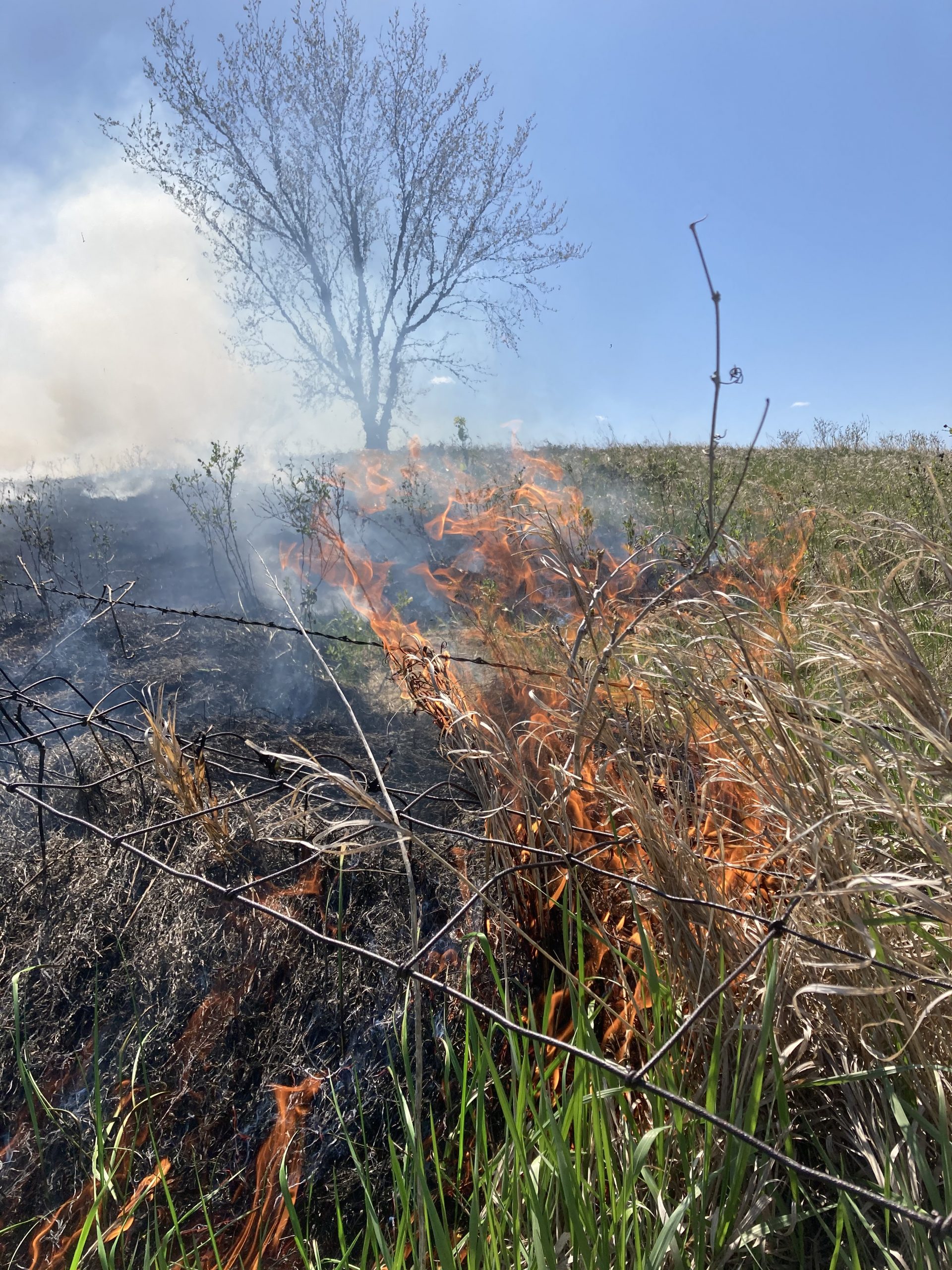
Prescribed burns are an important part of our research. Fire is the most effective and efficient way to maintain our experimental plots. Without periodic fire, they would be quickly overrun by shrubs and trees. We are also eager to investigate how fire affects prairie plant reproduction and population growth. Burning is a necessary first step for these projects! But a fringe benefit that excites me is returning fire to the landscape starved for fire. Contrary to popular belief, I am not a pyromaniac. I am mesmerized by the sight of flames dancing across the ground, the distinctive pops and crackles given off my warm season grasses engulfed in flames, the warmth emanating from the fiery spectacle, and the lingering smell of smoke but this isn’t why I burn. I burn because fire is as much a part of prairie as rain, sunlight, soil, and wind.
Before the early 1900s, fire was ubiquitous. Lightning strikes generate an immense amount of energy and heat which undoubted ignited fires in dry prairie grasses that raced across the contiguous expanse of North American prairie. Moreover, for millennia Native Americans adeptly used fire to manage the landscape. Fire was used to reduce fuel loads and the risk of catastrophic wildfire, improve forage to game animals, clear land for crops, and undoubtedly many other reasons. Estimates of fire frequency in tallgrass prairie pre-1850 suggest any given location burned every 1-5 years. Even after Euro-American settlement, fire was common. Landowners often burned ditches to prevent woody plants from establishing and burned pasture to improve forage for livestock. Bottom line: in the post-glacial history of western Minnesota, the widespread absence of fire for the past 70+ years is abnormal.
Prairies need fire. Without fire, we risk losing the incredible diversity of prairie plants sheltering in remnants scattered across the landscape. We risk losing the diverse pollinators and insect herbivores that depend on those prairie plants. as well as their predators (other insects and arthropods, birds, reptiles, small mammals, etc.) and so on. We risk losing Minnesota’s rich prairie heritage. The challenge is safely returning fire to the landscape, understanding the differences and tradeoffs of burning small prairie remnants rather than large expanses of prairie, and making recommendations about burning based on sound science. Sounds like a job for Team Echinacea 2021!
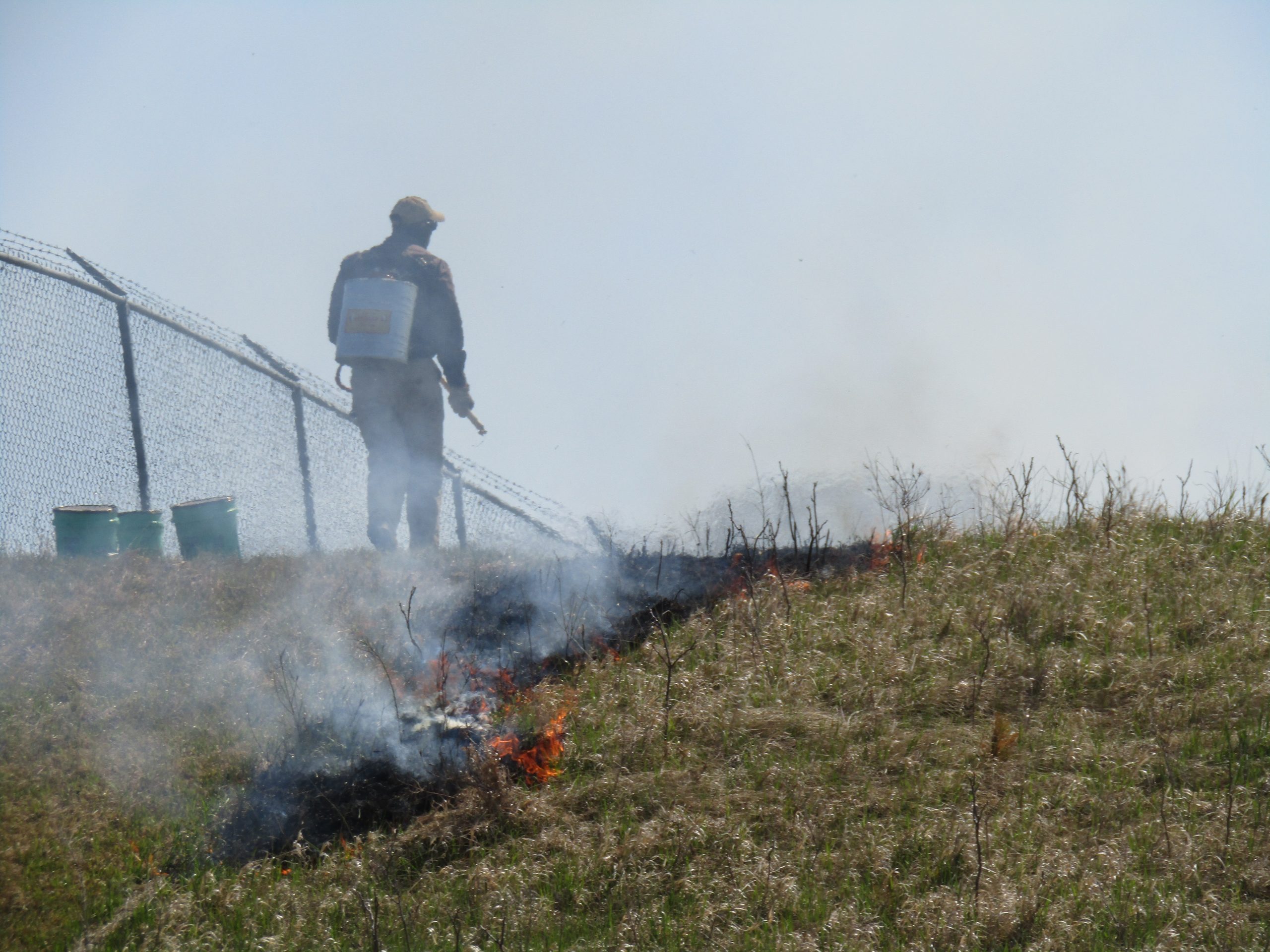
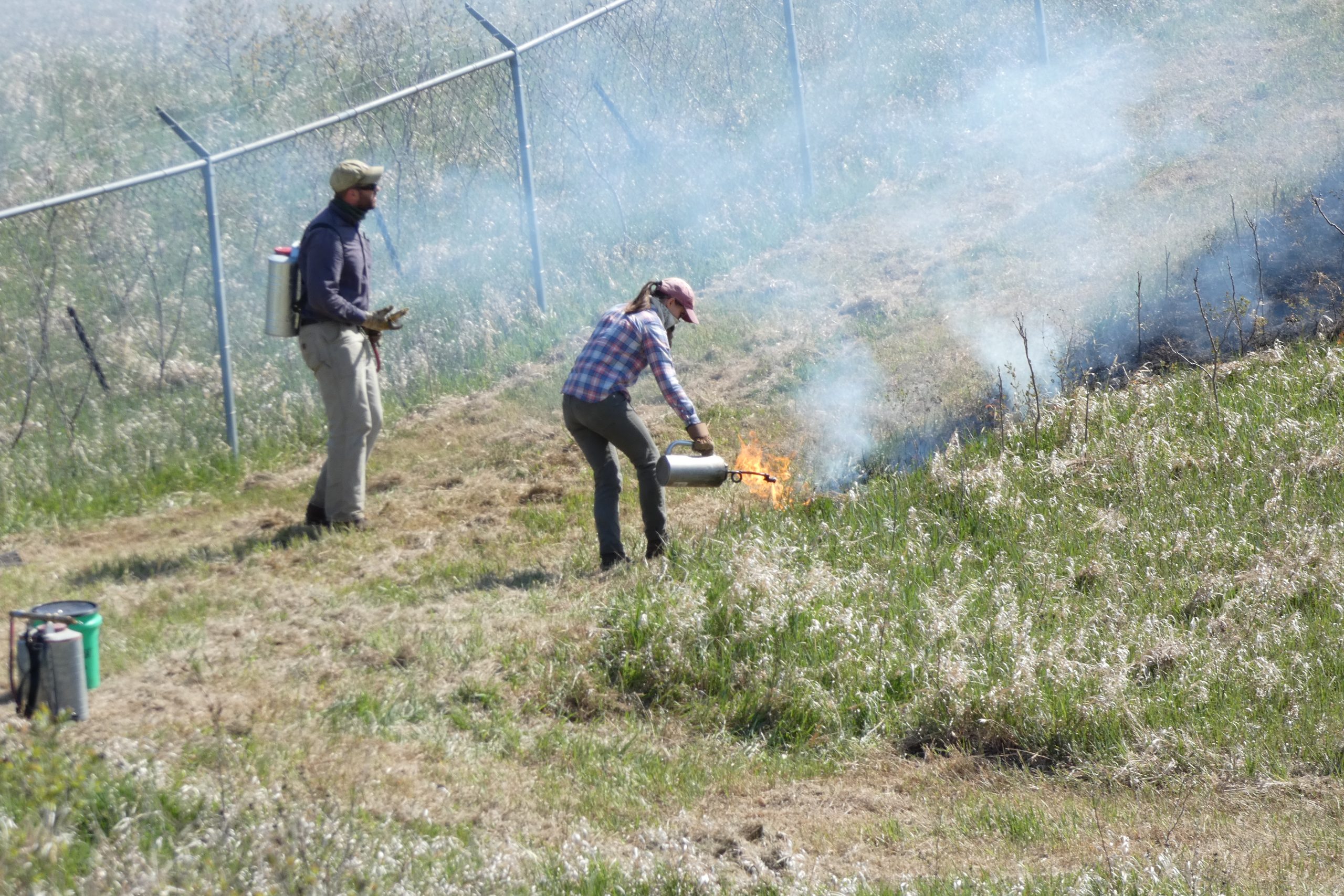
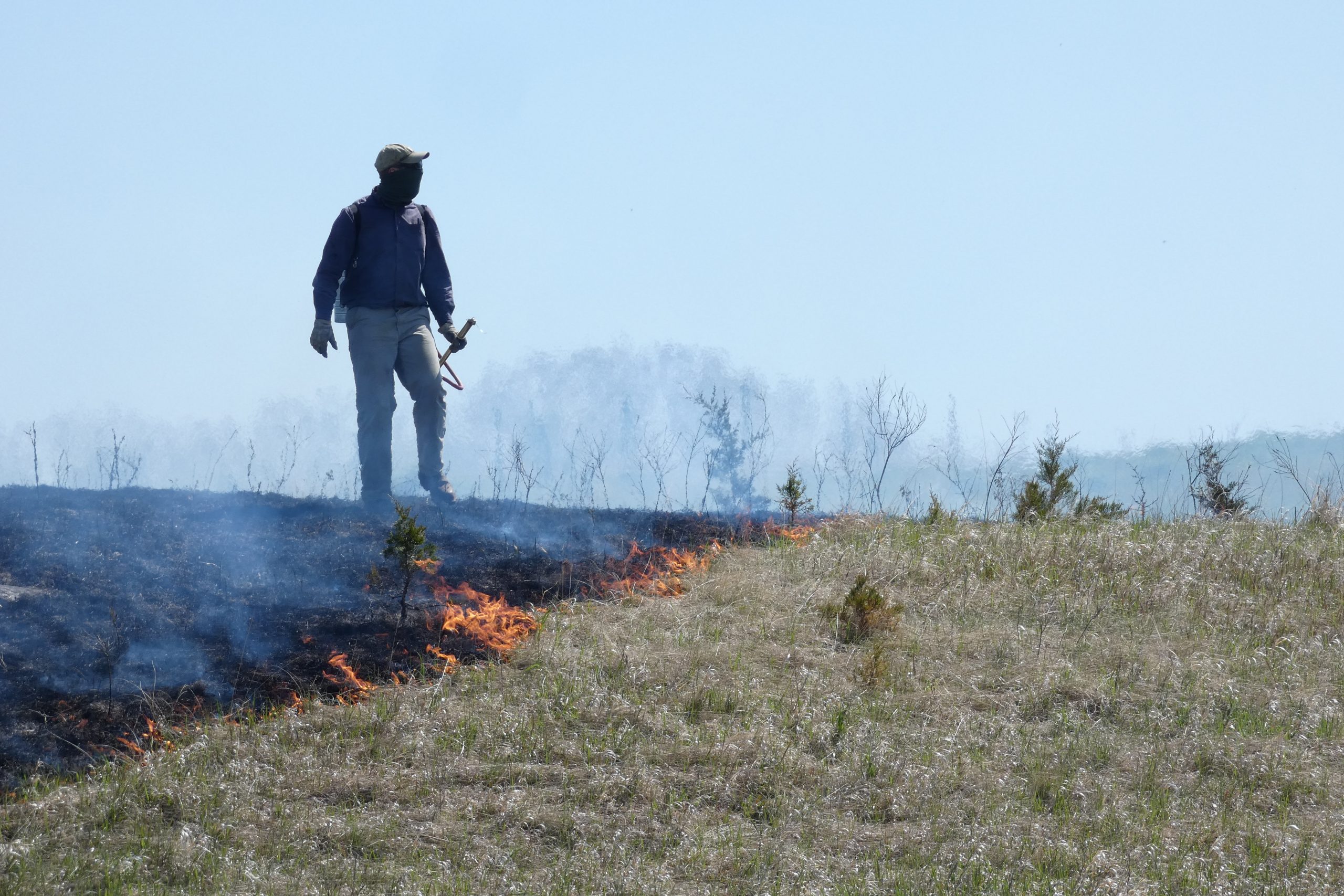
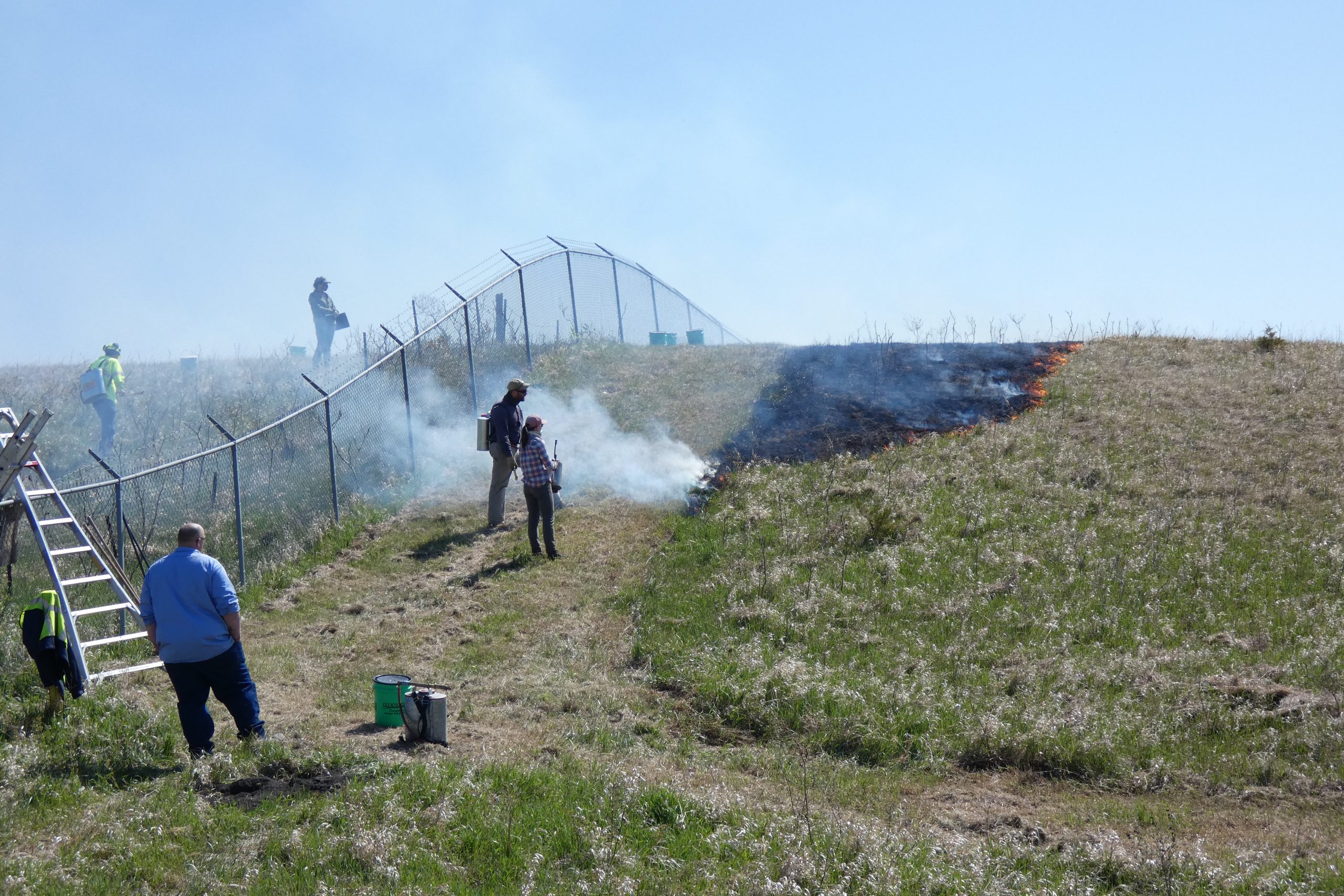
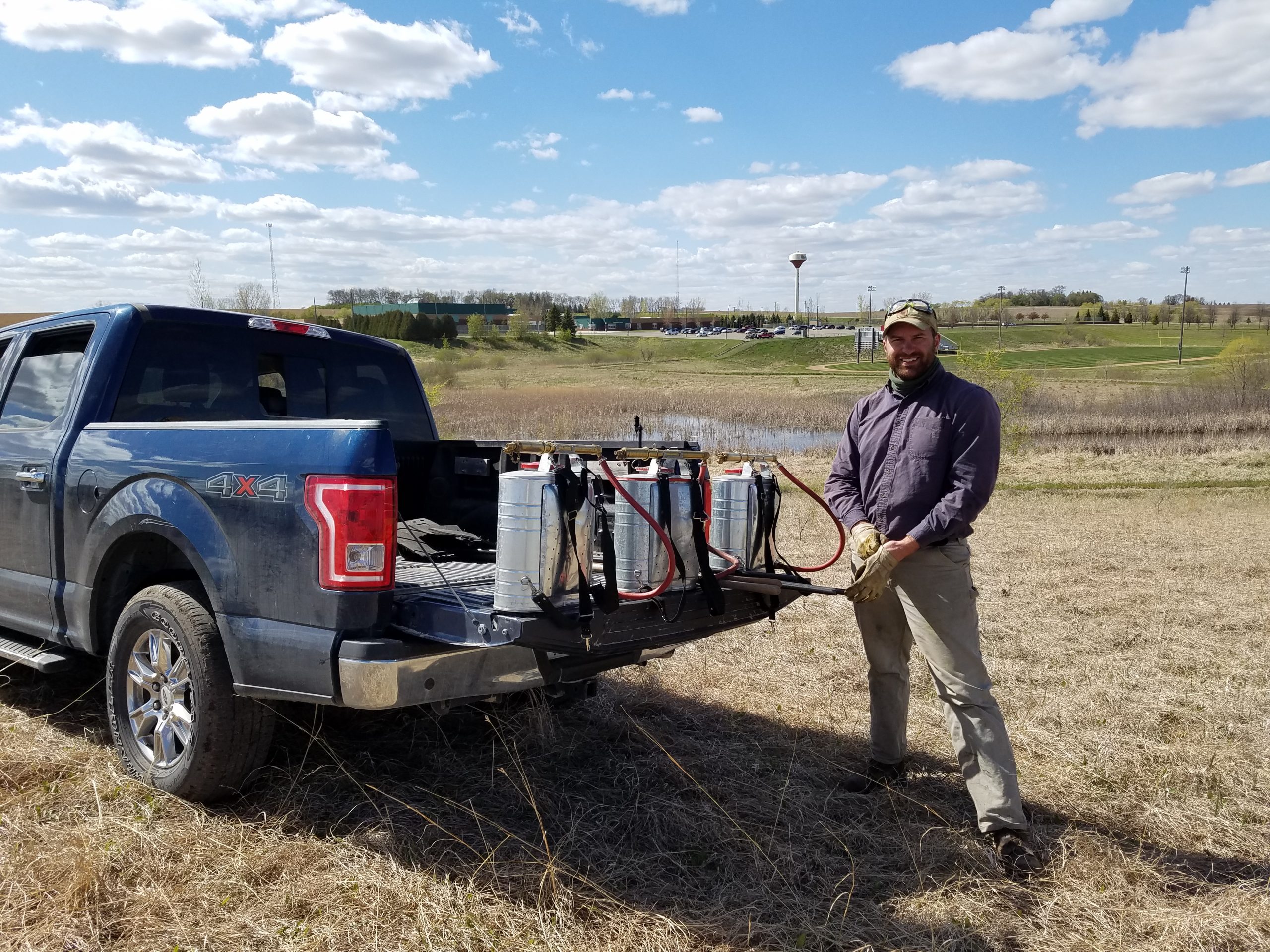
After a week of predominantly north winds, the weather gave us the south winds we needed to complete our remaining burns. We eyed Wednesday (May 12) for our most technically challenging burn of the season: landfill east. This gorgeous prairie hill is owned by Pope/Douglas Solid Waste Management. After meeting with Steve Vrchota (Executive Director of PDSWM) and several staff members to talk about our goals and logistics, Steve gave us permission to conduct a prescribed burn. He also generously offered PDSWM personnel to help cut fire breaks and conduct the burn. On May 12, Stuart and I woke early to stage equipment and make other preparations for the prescribed burn. We decided to start this prescribed burn in the morning to begin before the relative humidity plummeted in the afternoon producing volatile and potentially dangerous conditions for burning landfill east.
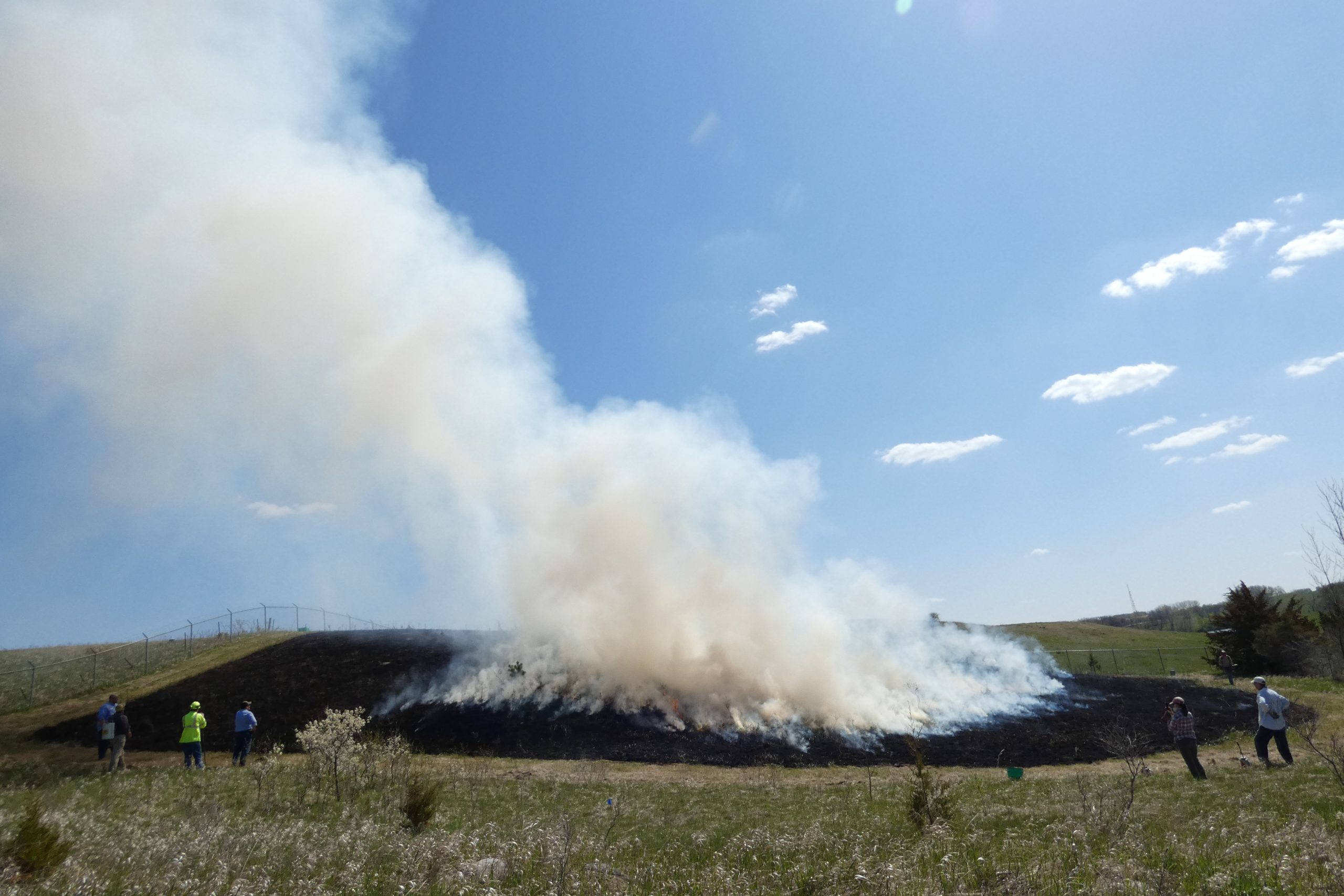
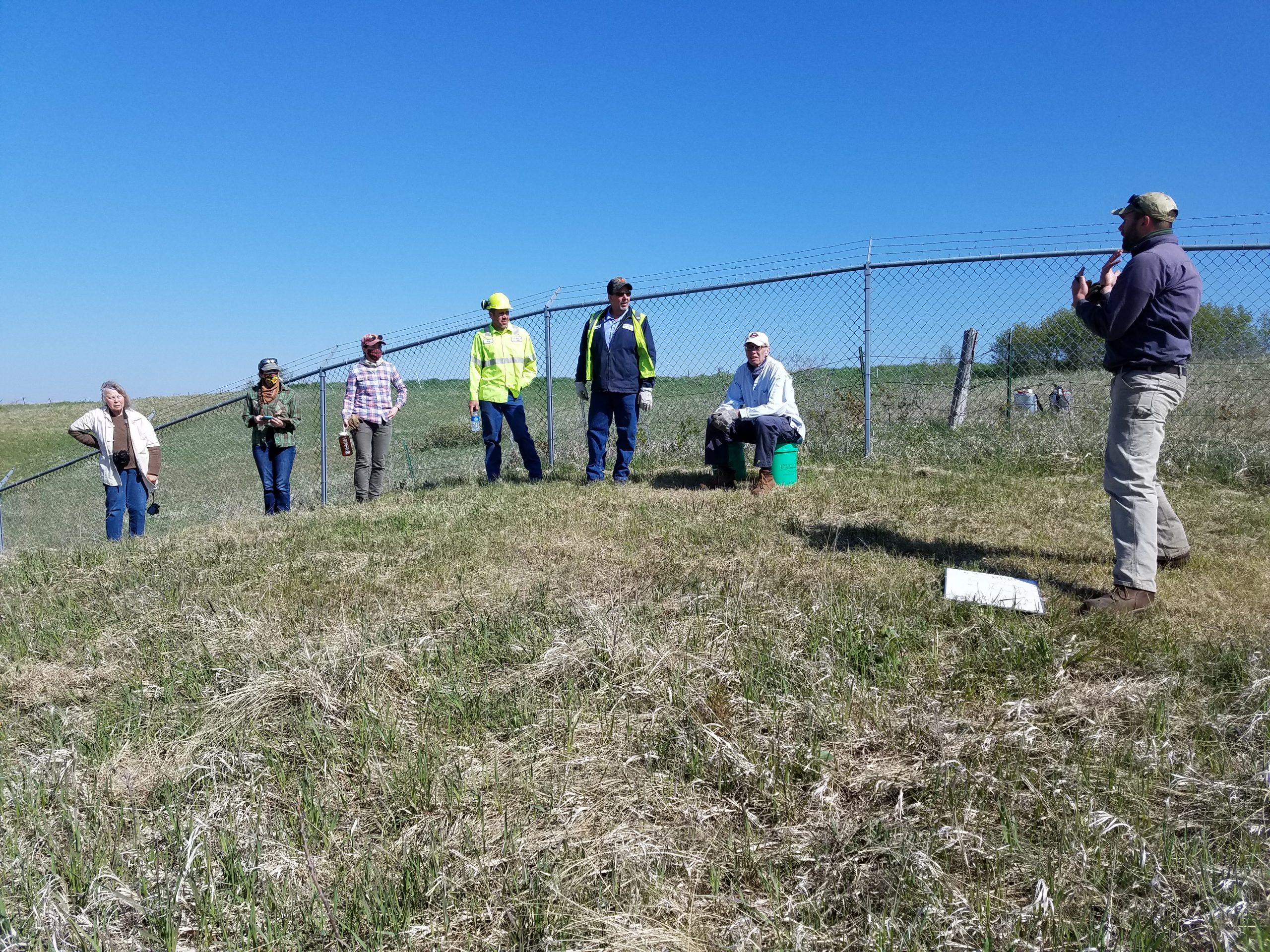
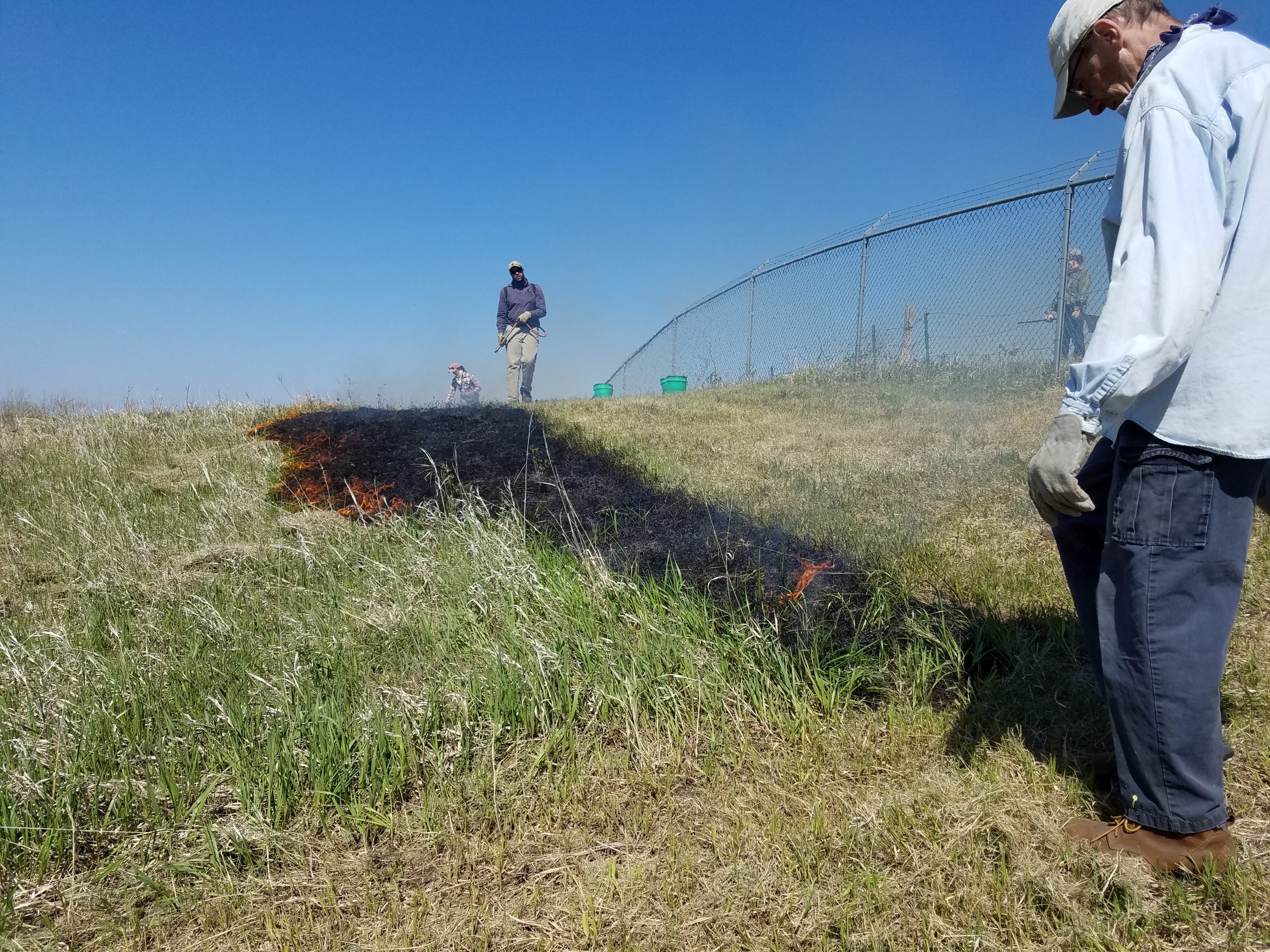
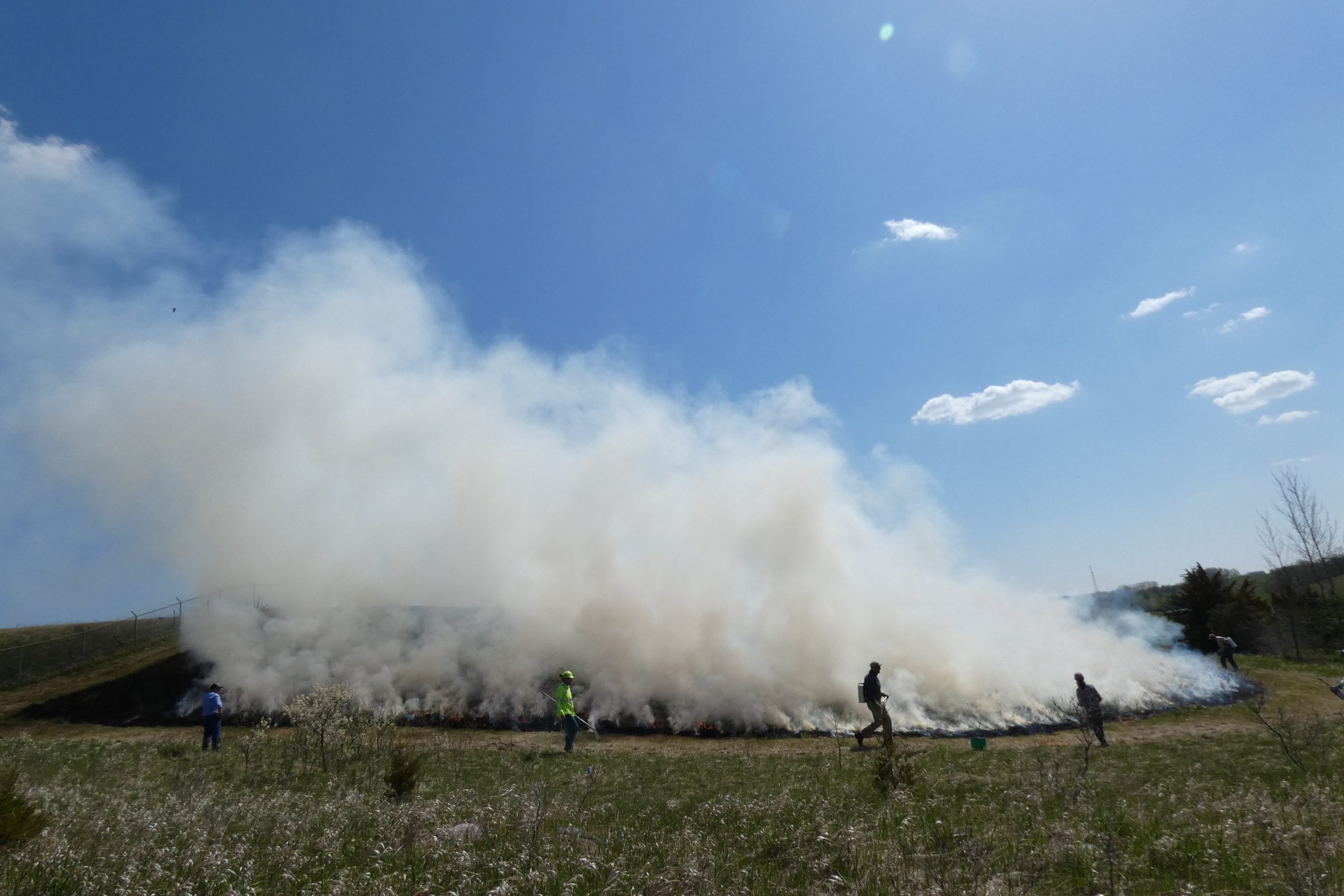
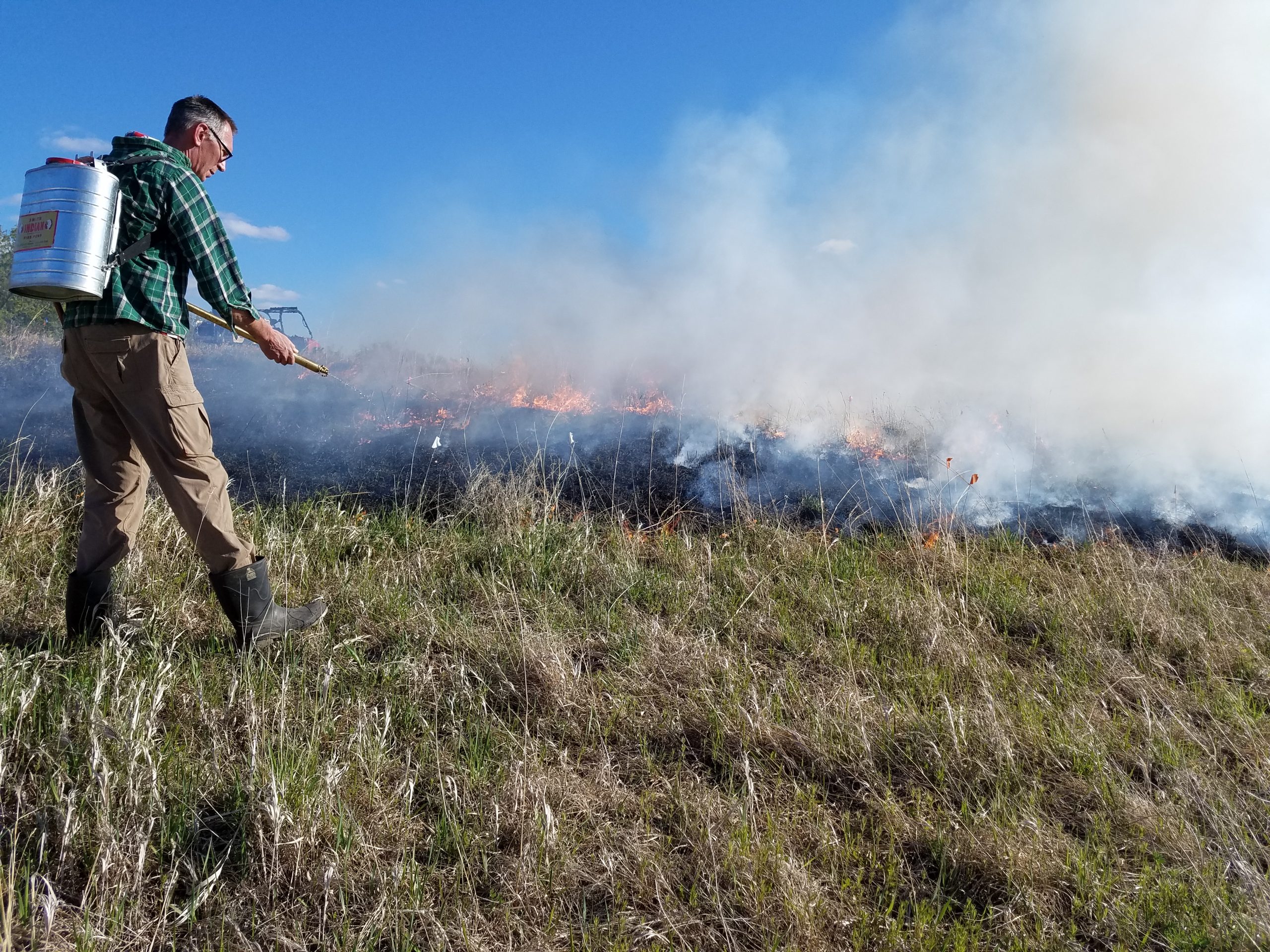
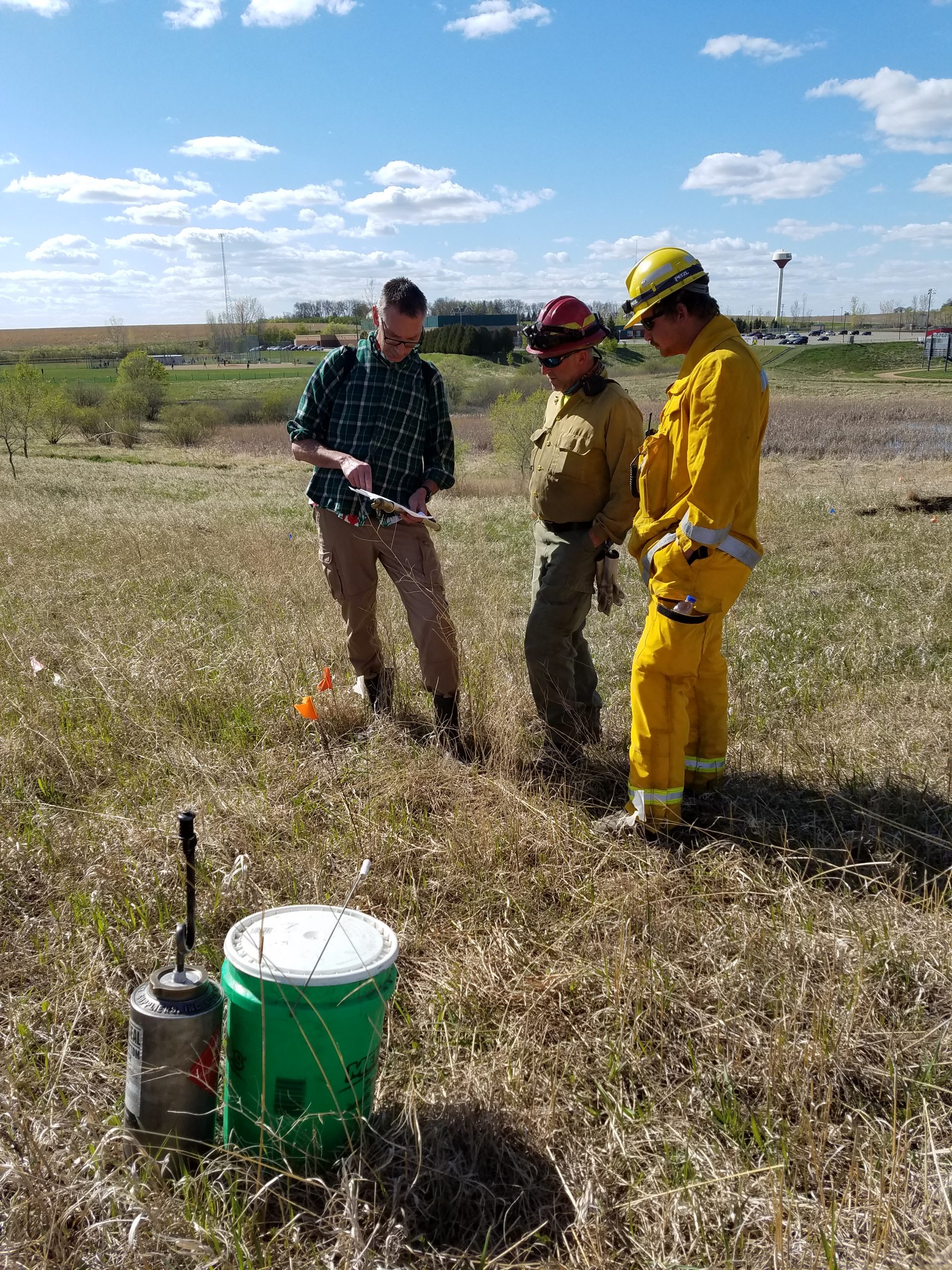
A handful of photos from the burn at landfill east illustrating our preparations and the start of the prescribed burn.
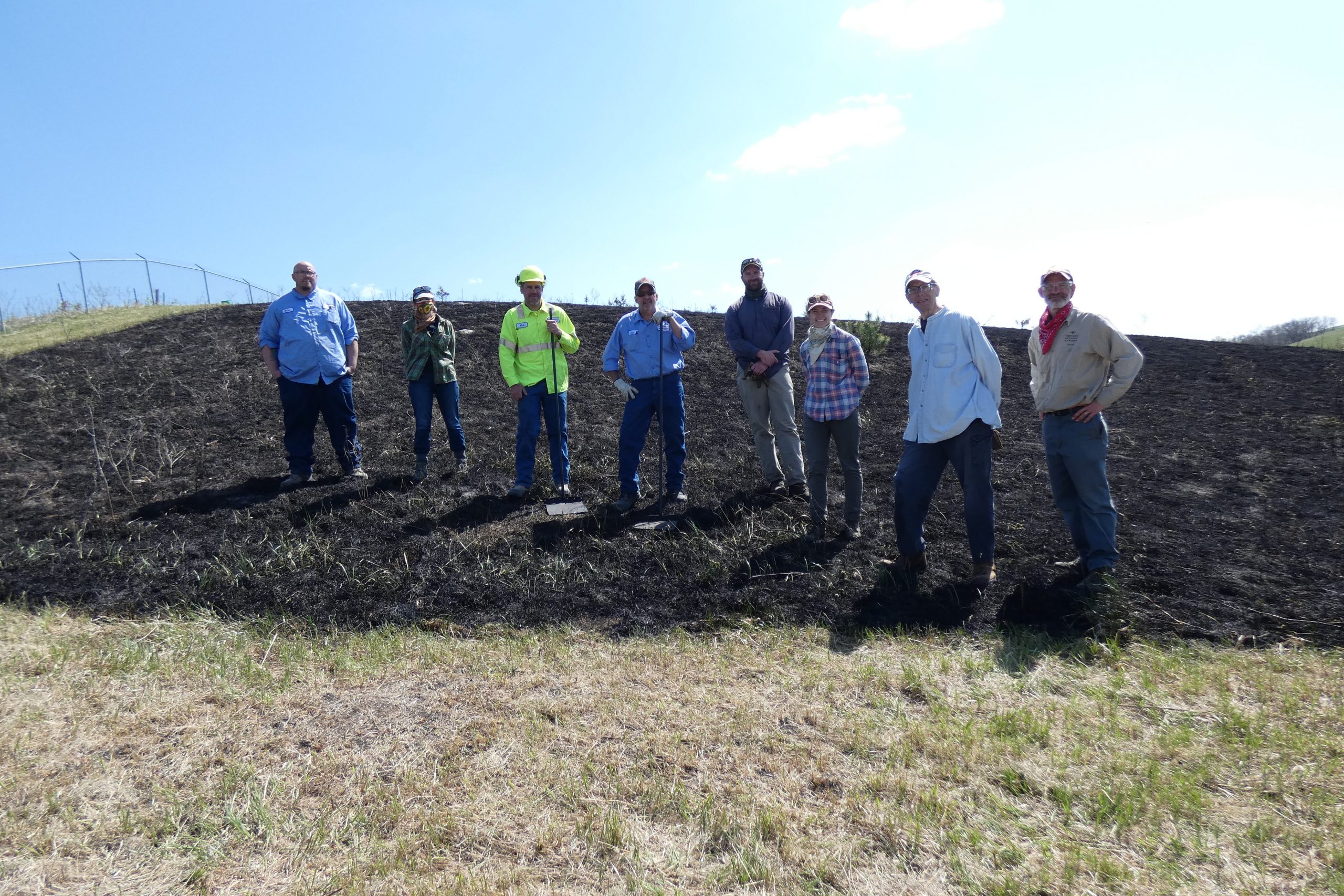
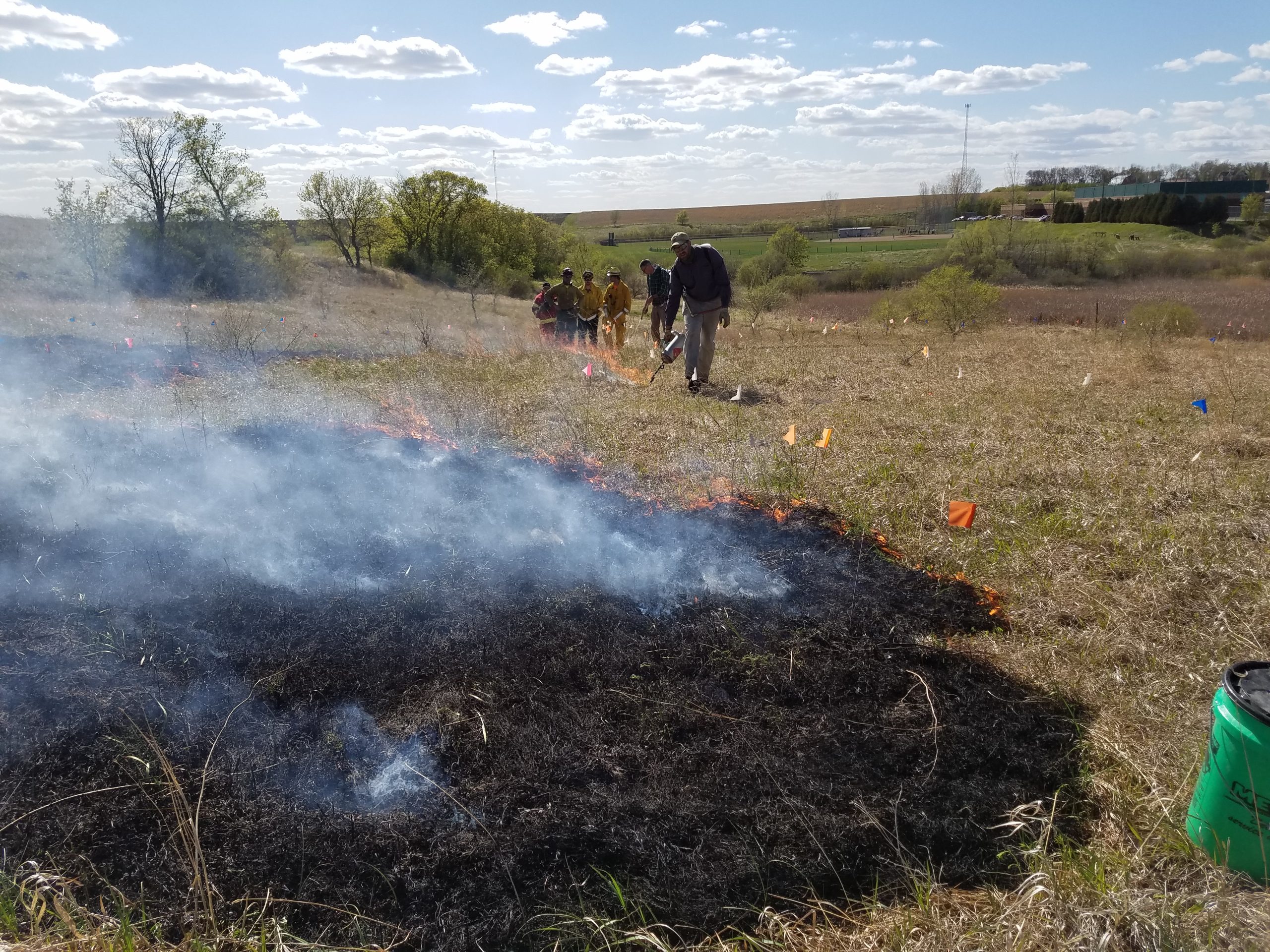
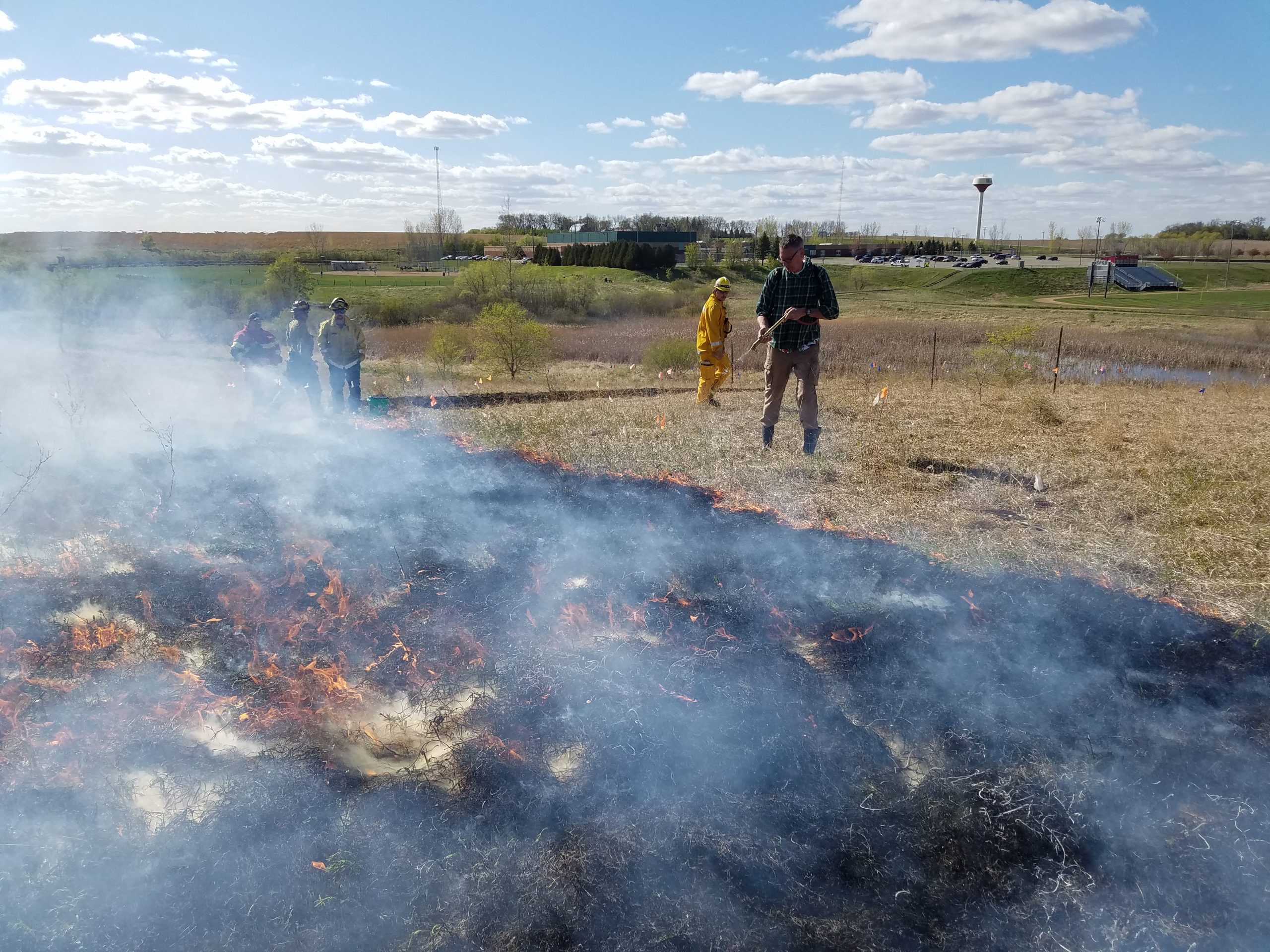
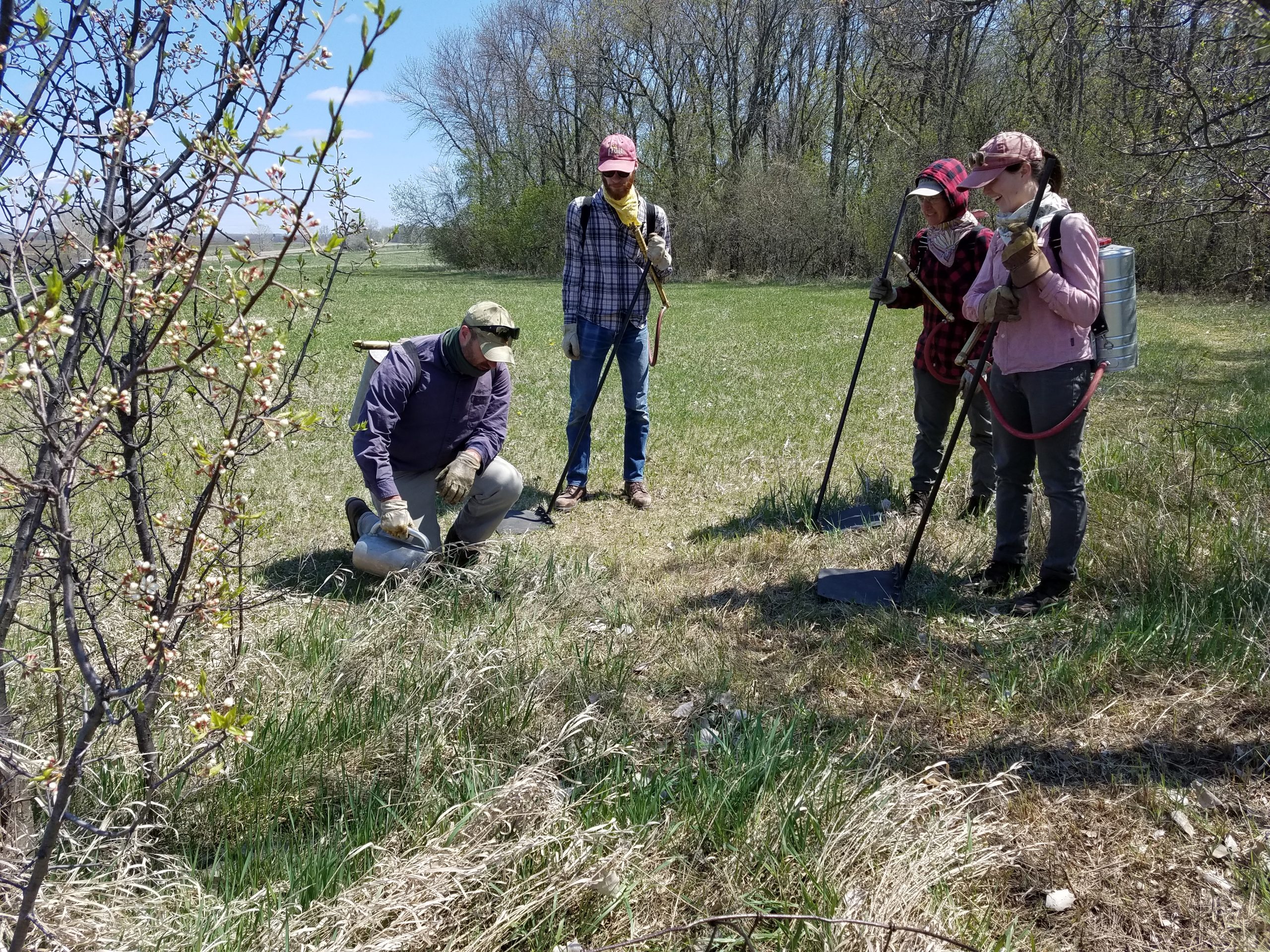
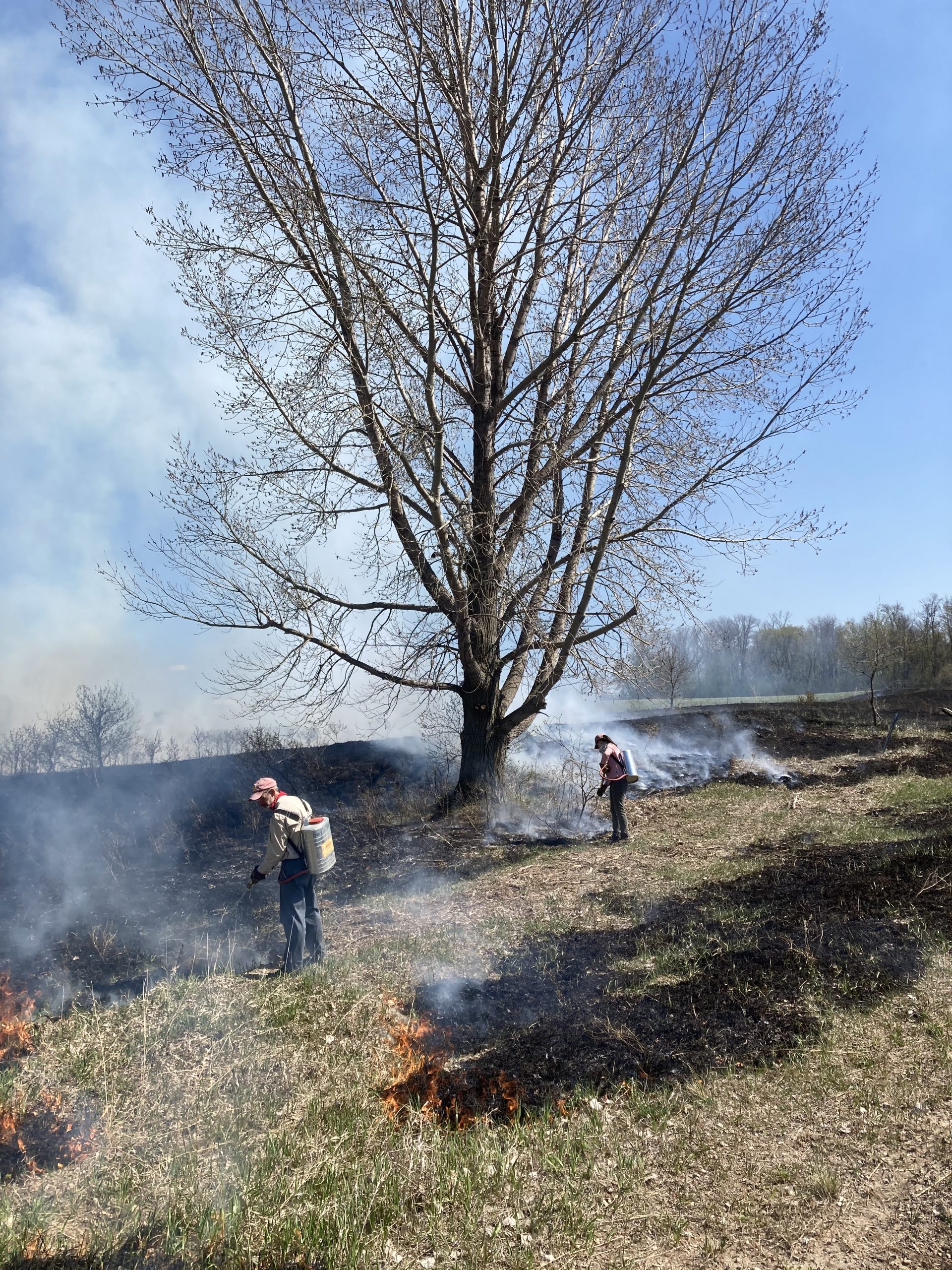
We were joined by Brad D., Amy W., and Julia B. who drove up from the Twin Cities as well as Karl, Nick, and Chris from PDSWM. Stuart’s aunt (a photographer) also tagged along to take photos. Around 10 AM we reviewed the burn plan emphasizing safety, gave a quick tutorial on tools, and assigned personnel. Team 1 was responsible for protecting the pasture north of our burn unit should fire move across our burn break while Team 2 and Team 3 would ignite along the east and west edges of the burn unit. We began a test fire at the apex of the hill and it burned beautifully. We cautiously used a wet line to prevent fire from creeping across our northern burn break but the mowed and raked break held up very well. Once Team 2 reach the northeast corner, Team 3 began igniting to the west. The fire moved much more slowly and was much less volatile than we anticipated. Having a well-behaved fire was a huge relief for this burn boss. Stuart and I definitely lost sleep Tuesday night planning for every possible scenario to ensure we could keep the burn crew safe and the fire within the allotted unit.
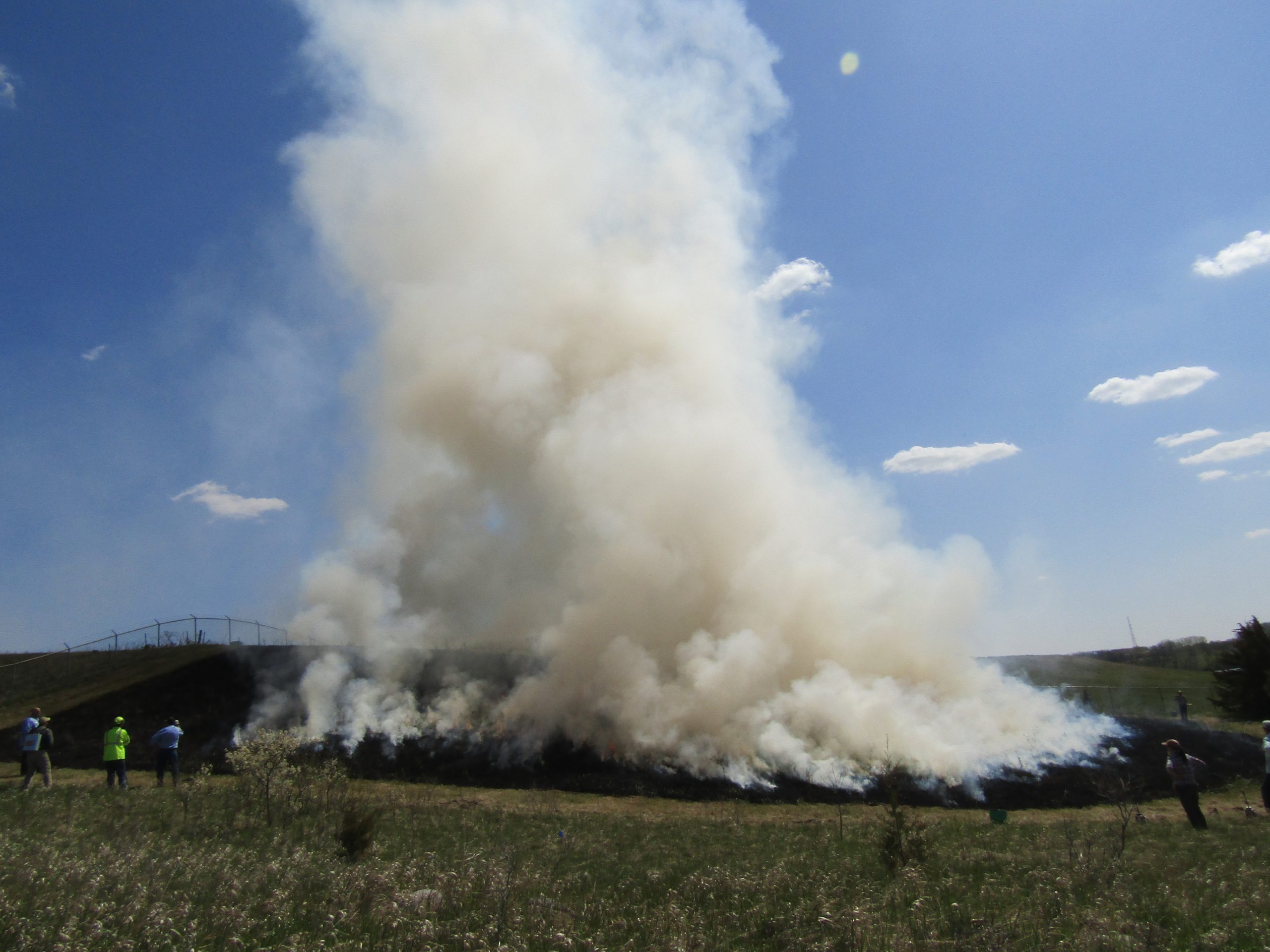
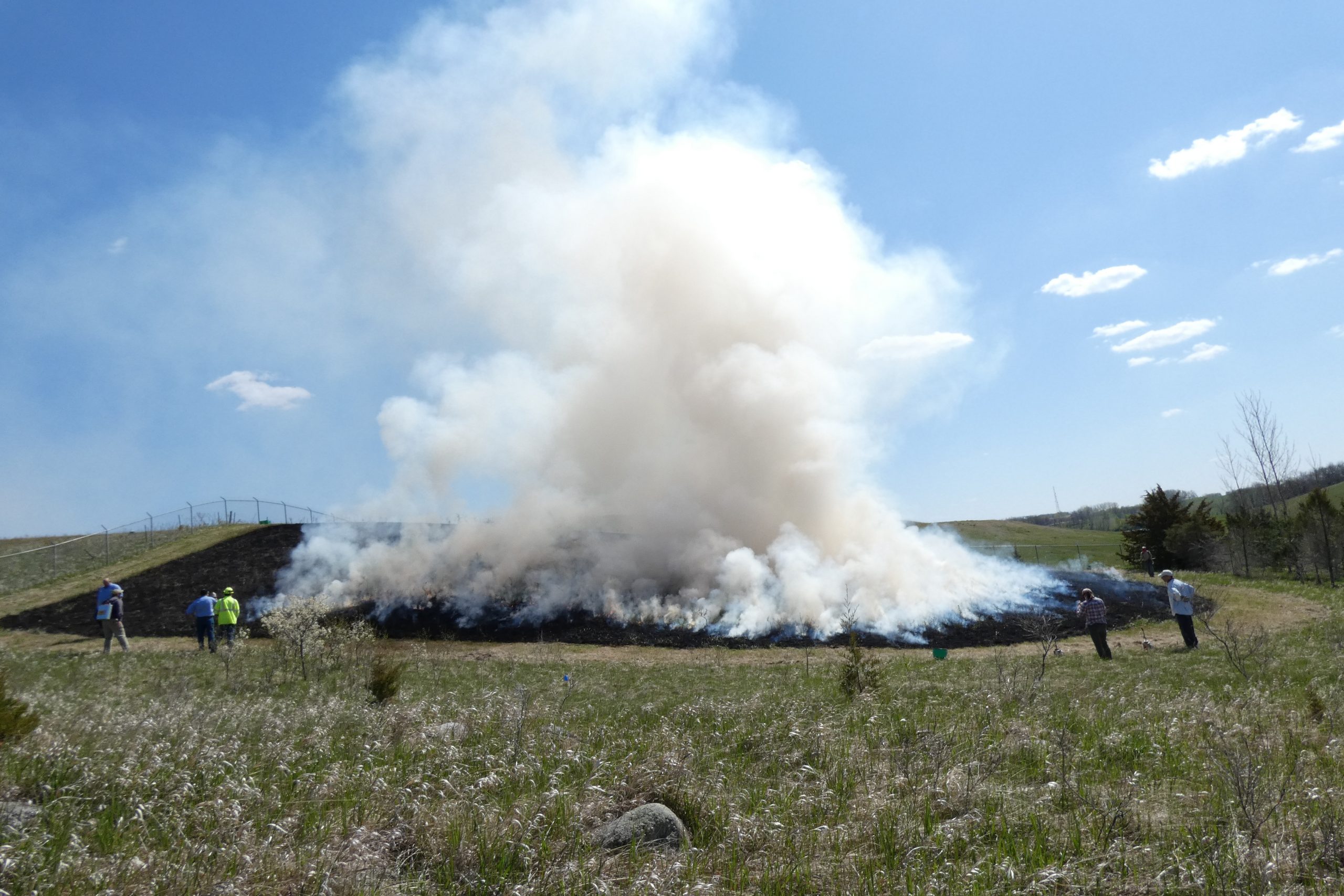
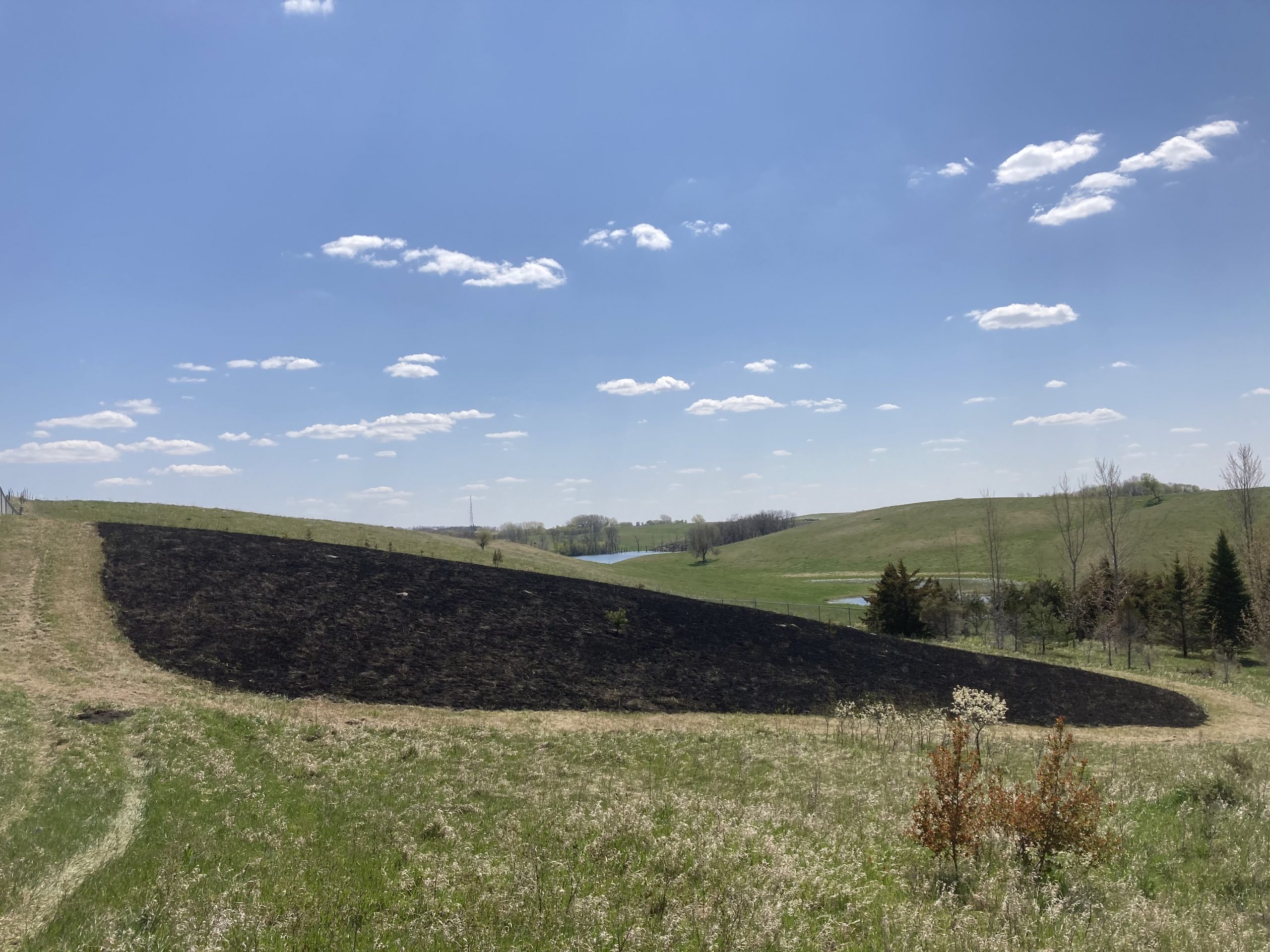
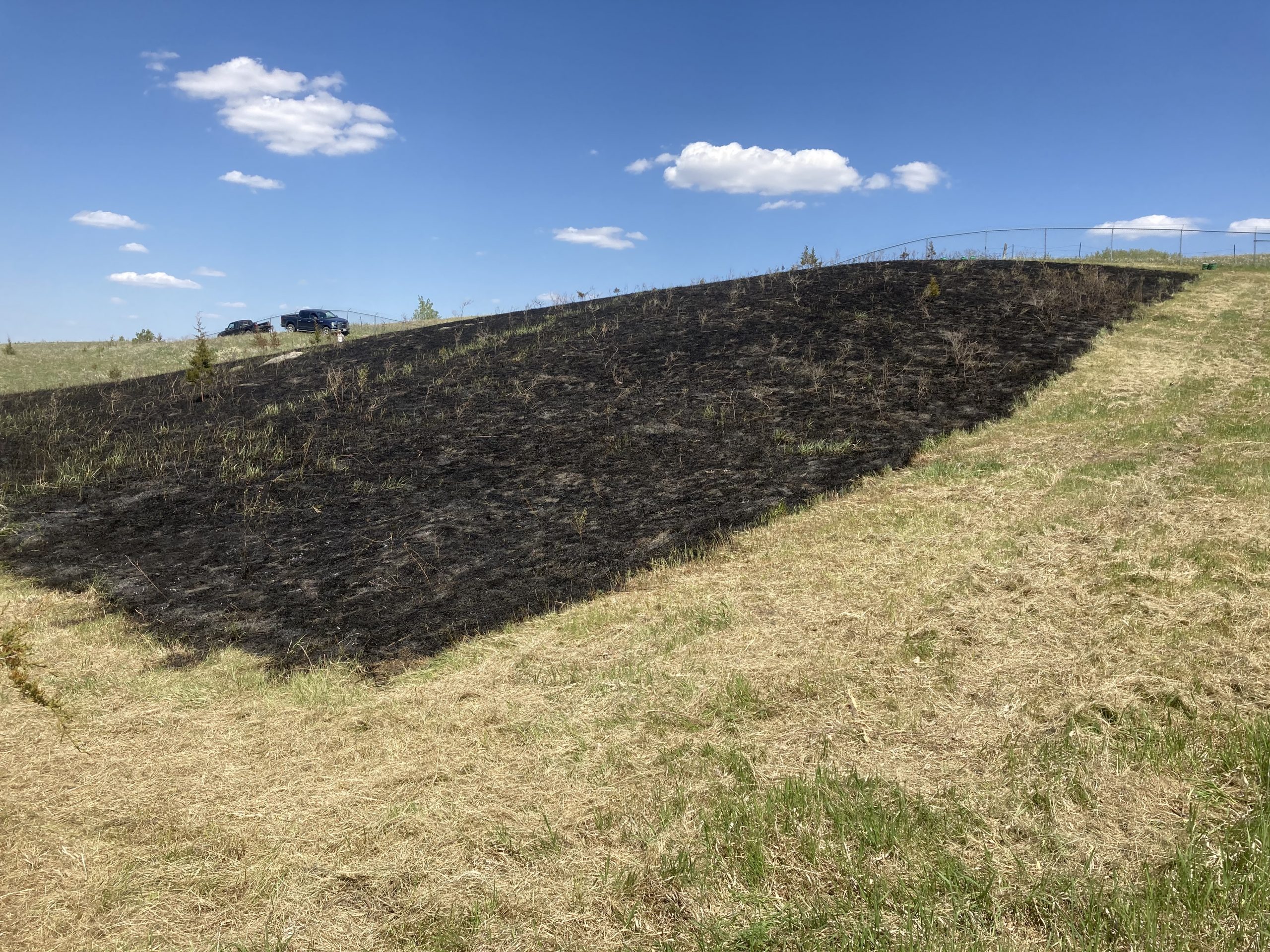
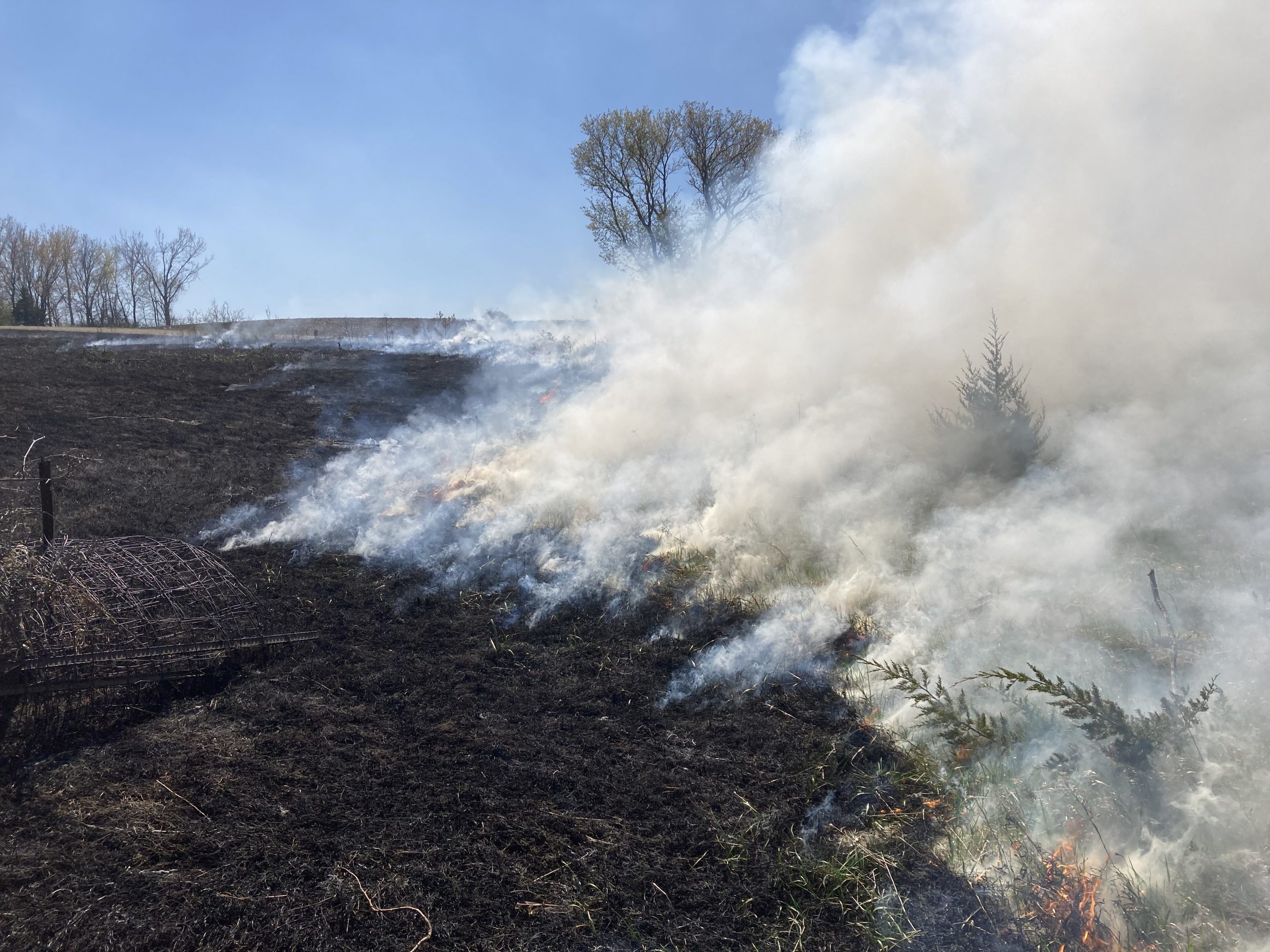
Once sufficient black had been established at the top of the hill and along the east and west edges of the burn unit, Amy W. and Brad D. ringed the unit with drip torches while all watched with great anticipation. The head fire was not nearly as fast or intense as we anticipated (maybe all the green brome grass?) but it sure was thorough! In just a couple minutes, the head fire and backing fire met in the southwest quarter of the burn unit producing a spectacular cloud of smoke and a uniformly blackened burn unit. Exactly as planned! It will be exciting to watch the east hill green up and I am eager to see what prairie plants have been sheltering below the dense thatch, just waiting for some fire and a little light to make their encore.
Cool sequence of photos illustrating the progress of the burn. Notice the south wind pushing smoke to the north but then the smoke rising vertically towards the end of the burn as the backing and head fire meet to produce tons of convection. Thanks Joyce!
The prescribed burn at landfill east went flawlessly. Although the size of our burn crew, the resources we prepared, and the intensity of our preparations were overkill, we would not change any aspect of our preparations or burn plan. Conducting prescribed burns safely is our #1 priority. Having contingencies in place just in case a prescribed fire does not go as planned is a must. Huge thanks to Brad D., Amy W., Julia B., Karl, Nick, and Brian for their help! And thanks to PDSWM for collaborating with us on this project!
As the smoke dissipated over the east landfill prairie hill, I was elated. The burn went better than I could have imagined and excitement was building for summer research. At the same time, I couldn’t help but smile at the thought of this hillside blanketed by wildflowers in just a few short months. It is unlikely this prairie has experienced fire in more than 60 years. Returning fire to the landscape can transform neglected prairie hills like this from grassy slopes dominated by non-native brome grass (Bromus inermis) to beautiful prairie covered in wildflowers and native grasses in just a few years. The landfill hills are already fascinating with many native prairie plant species clinging to the hillside. Before the burn, I saw a couple prairie smoke (Geum triflorum) and heart-leaved alexanders (Zizia aptera) flowering. What plants will show up after we burn? We also observed a handful of bumblebees cruising in search of flowers and several other native bees zipping around (I am not especially adept at identifying these). Will more flowers after this burn mean more bees and butterflies?
What about birds? I observed several clay-colored sparrows which utilize this grassland habitat for breeding and I heard a bobolink fly overhead (one of my personal favorites). Could these and other grassland birds return to nest and take advantage of the post-fire insect buffet? Bobolinks nested in the adjacent pasture (to the east) which is also owned by PDSWM back in 2014. I worry heavy grazing in the pasture may prevent these lively and charismatic grassland birds from returning to nest this year but perhaps they will take up residence nearby. My mind wanders thinking about a sea of purple coneflowers, lilies, sunflowers, and big bluestem swaying in the summer breeze. The landfill hills we study plus the adjacent pasture to the east and another prairie hill to the south could form an incredible block of grassland habitat supporting grassland birds; ducks, pheasants, and other game animals; prairie butterflies and bees; as well as hundreds of prairie plant species with a few more burns and a few less tree. Staring out across those picturesque golden hills silhouetted against a vivid blue sky just makes my imagination run wild. What an incredible place!
Temperature: 62 F Relative Humidity: 29 % Wind Speed: 10 mph Wind Direction: SW Ignition time: 10:34 AM End time: 11:14 AM Burn Crew: Jared, Stuart, Brad D., Amy W., Julia B., Karl, Nick, and Brian + Joyce (photographer)
North winds and dry conditions persisted Monday (May 10) giving us an opportunity to conduct prescribed burns at p10, our experimental plot at West Central Area High School. In addition to being a home to 1400 coneflower plants and Amy W.’s gene flow experiment, these plots serve as an excellent educational resources for John VanKempen, high school science teacher at WCA and long-time member of Team Echinacea. John established an experiment in which each of the twelve 8 x 10 m plots is burned during spring, fall, or not at all. This will help us understand how fire affects the survival of Echinacea seedlings. John also uses these plots as a teaching resource for high school students at WCA.
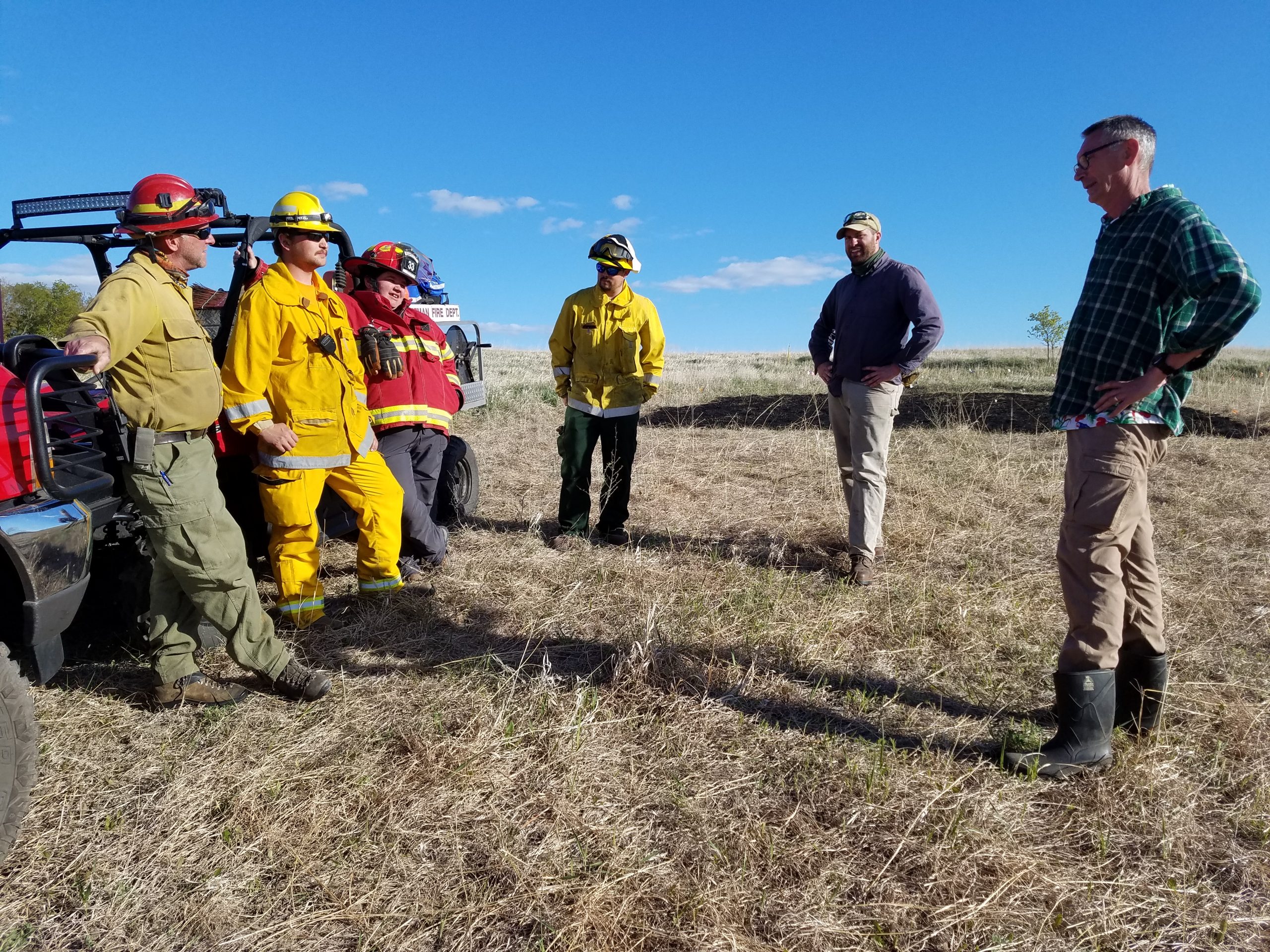
Because this burn was conducted within Barrett city limits, John needed to get special permission from the mayor and fire chief. Plus members of the volunteer fire department needed to be present. So we met up with Jenny and DJ (from Barrett’s volunteer fire department) as well as TJ and Braeden (from Hoffman’s volunteer fire department). Before burning, Stuart, John, and I chatted with members of the volunteer fire department (who included several of John’s former students!). It was a great opportunity for us to learn from community members about their experiences with prescribed burns and their knowledge of prairies. For example, DJ owns a parcel of prairie just a little outside Barrett that was passed down from his father. TJ works for the DNR’s roving burn crew based in Elbow Lake. Talking with members of the fire department also gave us an opportunity to share a little more about the science behind why we conduct prescribed burns. We also shared information about the Echinacea Project’s research in west central Minnesota investigating how fire benefits native prairie plants as well as the diversity of insects, birds, and other species that call Minnesota’s tallgrass prairie home.
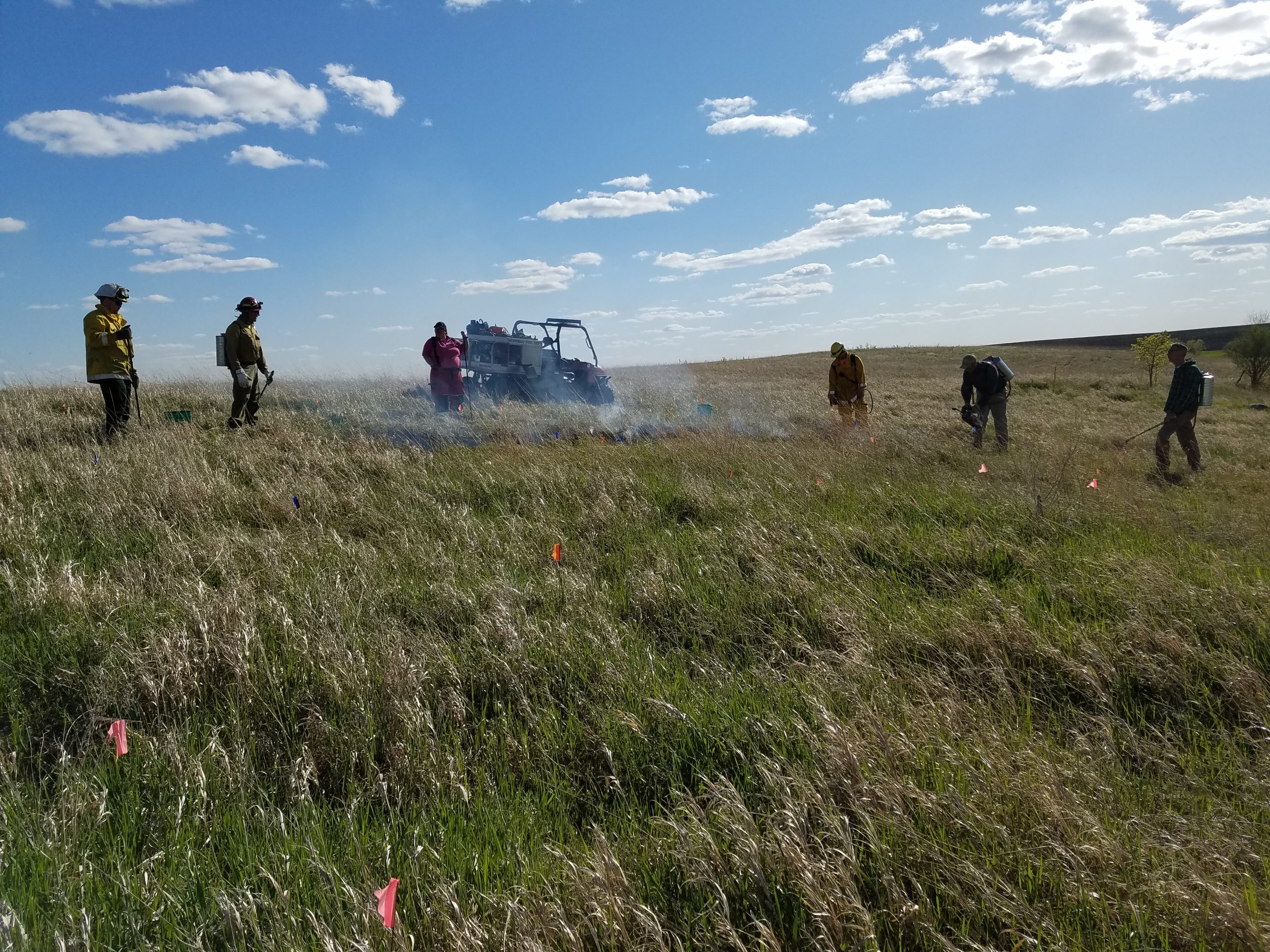
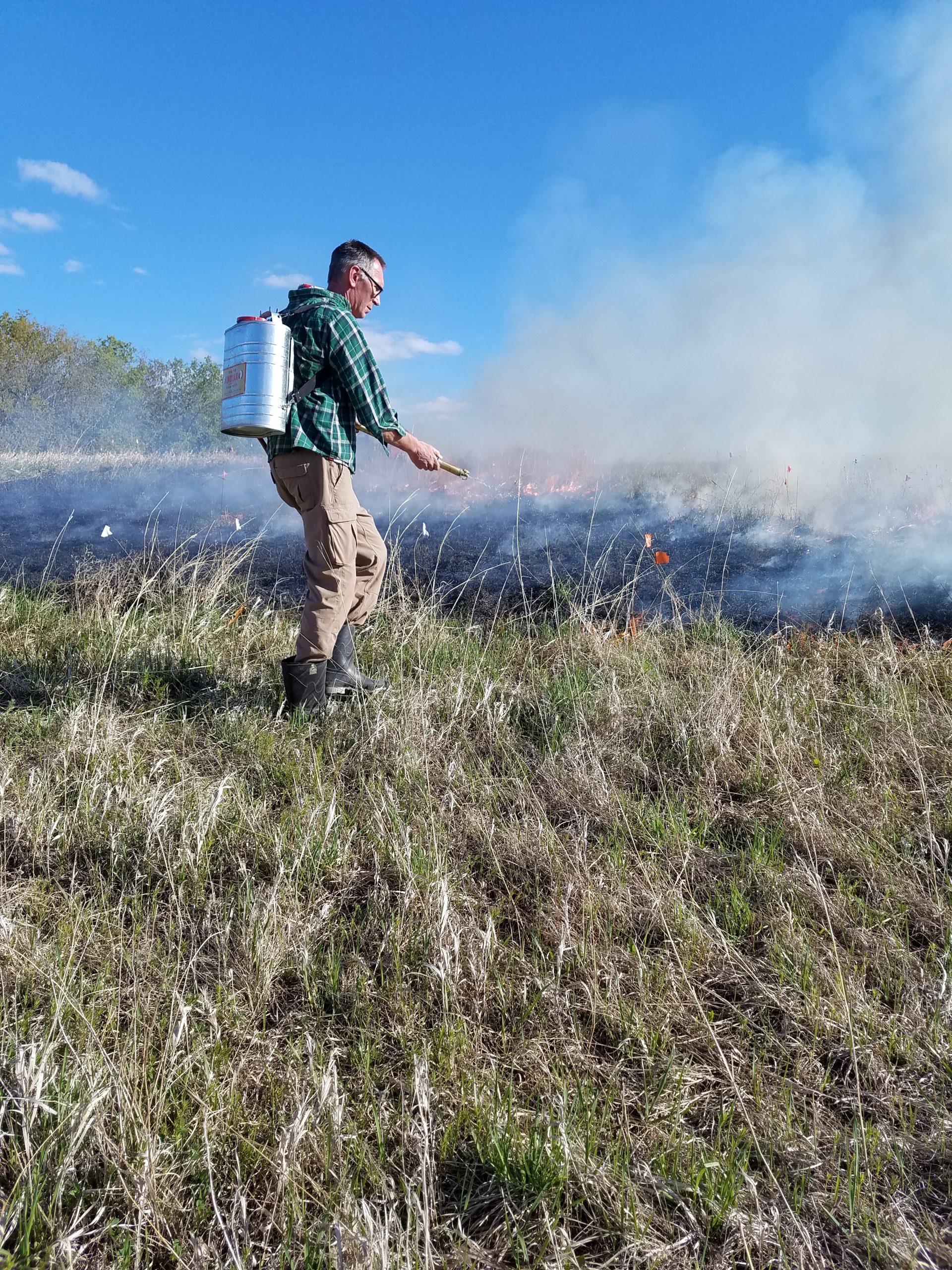
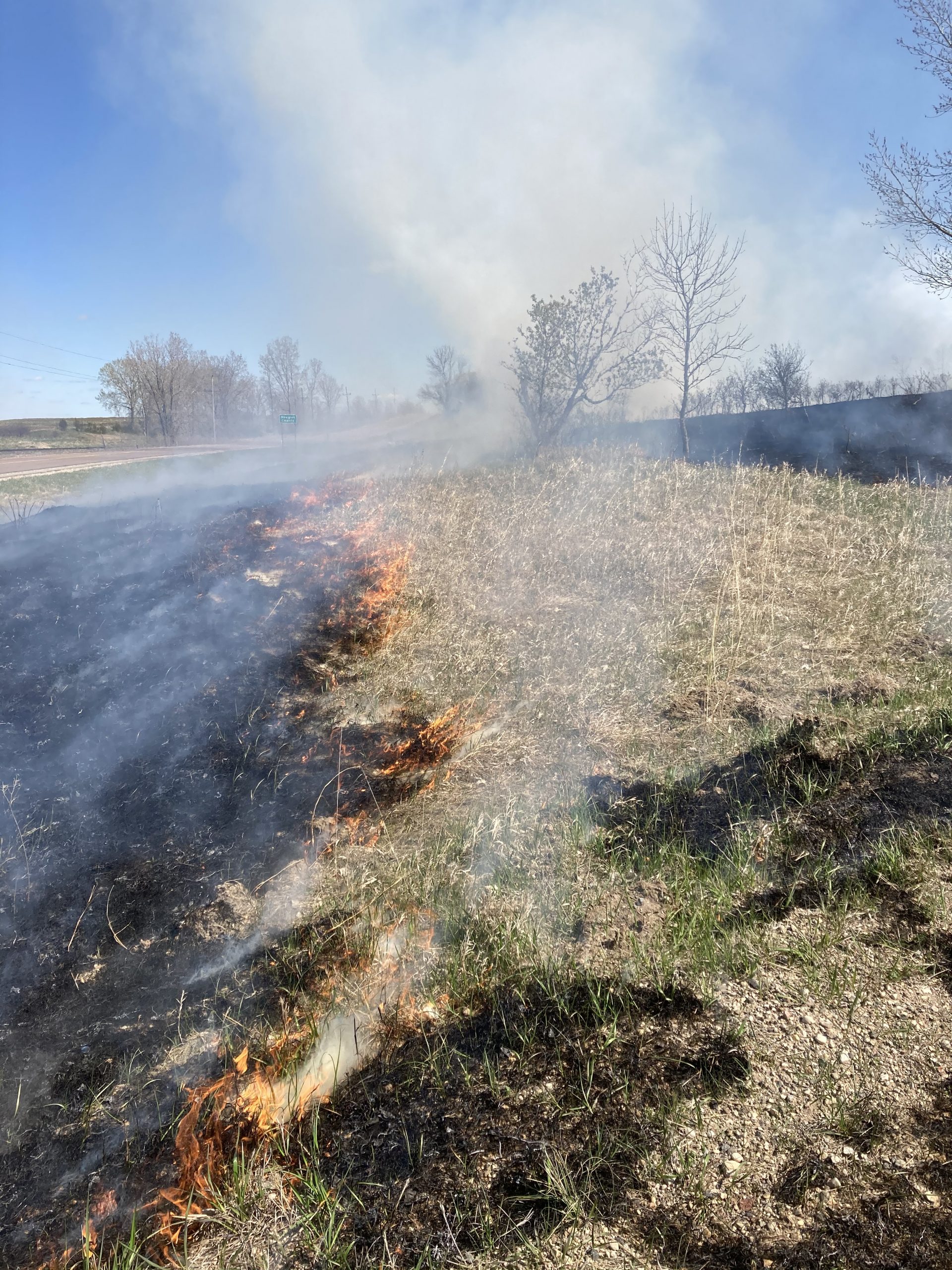
Oh and of course we partnered up with these local firefighters to burn 8 prairie plots! With dry fuel conditions and pretty heavy fuel in spots, we laid down wet lines and ignited a backing fire that moved slowly against the wind. In plots with primarily warm-season grasses, we secured the downwind (south) break and ignited down the east and west flanks before lighting a head fires that went screaming across the dry big bluestem. For plots with few warm season grasses and lots of brome, we chose to use exclusively backing fire in hopes of setting back the brome and achieving a consistent black across the entire plot. This technique worked well to achieve the desired result.
The final burn unit encompassed 3 adjacent experimental plots. The northernmost of these plots had dense big bluestem. We expected the fuel in this plot and gentle slope would produce quite a head fire. The plot did not disappoint. Members of local volunteer fire departments and the Echinacea Project worked together to secure the downwind fire break and blacken the downwind third of the burn unit consisting of three adjacent experimental plots. Once we had sufficient black and the east and west flanks of the unit were secured, we ignited a spectacular head fire that burned through the dense stand of big bluestem in less than a minute.
Thanks to Jenny and DJ from the Barrett volunteer fire department as well as TJ and Braeden from the Hoffman fire department for helping us conduct prescribed burns at the high school and sharing their experiences about fire and prairies in western Minnesota!
Temperature: 52 F Relative Humidity: 24% Wind Speed: 10 mph Wind Direction: NE Ignition time: 4:50 PM End time: 6:12 PM Burn Crew: Jared, Stuart, John, Jenny, DJ, TJ, Braeden
Saturday (May 8) brought overcast skies and east-southeast winds. Conditions were not ideal for burning but the winds, cloud cover, and relative humidity stabilized by mid-morning. Gretel, Stuart, and I thought we might be able to get a couple burns in. We decided to try Steven’s approach where I had mowed burn breaks Thursday. We loaded up backpack pumps, drip torches, water buckets, flappers, and other equipment and drove a short way east to the pair of burn units.
Starting with the west unit, we ignited a test fire in the northwest corner, secured the north burn break, and proceeded to ignited the western edge the unit. We ignited cautiously around two telephone poles but made quick work of igniting along the field edge. Towards the end of burning the west unit, winds became squirrelly shifting from southeast to east and back again (Stuart and I swear it was northeast for a minute or two). Nevertheless, the fire backed well across the western side of Wolley Lake Rd. Fire on the approach was a bit patchy but Jared was committed to emptying a drip torch. So Jared “painted” the approach with a drip torch producing an aesthetically pleasing mosaic of burned grasses and bare gravel.
Once the south end of the western unit had been secured by Stuart, Gretel and Jared scurried across the road and began igniting the east unit while Stuart kept vigilant watch of the western unit. Jared ignited a fire in the southeast corner of the east unit (as winds were more or less straight east at this moment). Once Gretel and Jared secured the southern edge of the unit, Jared ignited along Wolley Lake Rd moving north. Winds shifted back to the southeast so Jared quickly ignited the entire length of the unit. Gretel and Jared secured the northern end of the east unit while Stuart kept watch over the southern end. We proceeded mop up the units and extinguish any remaining woody debris that was still smoking. With unreliable winds, we decided to call it a day and returned to Echinacea Project home base for lunch.
Temperature – 52 F Relative humidity – 27 % Wind speed (max gusts) – 12 (18) mph wind direction – ESE Burn crew: Jared, Gretel, Stuart sap.w ignition time: 11:06 PM sap.w end time: 11:58 PM sap.e ignition time: 11:40 PM sap.e end time: 12:18 PM
Weather conditions Friday (May 7) presented nearly ideal conditions for burning the east side of Loeffler’s corner. Because this patch of prairie is located immediately south of Hwy 55, our burn prescription calls for a stiff north wind to keep smoke off the highway. The weather forecast called for a high temperature in the mid 50s, an relative humidity to bottom out in the upper 20s, and north winds 10-15 mph. We couldn’t have asked for a better forecast. Amy W. and Matthew G. drove up from the Twin Cities to join Stuart, Gretel, and myself on our Friday burn crew.
Photos depicting preparations for the days burn at Loeffler’s corner east.
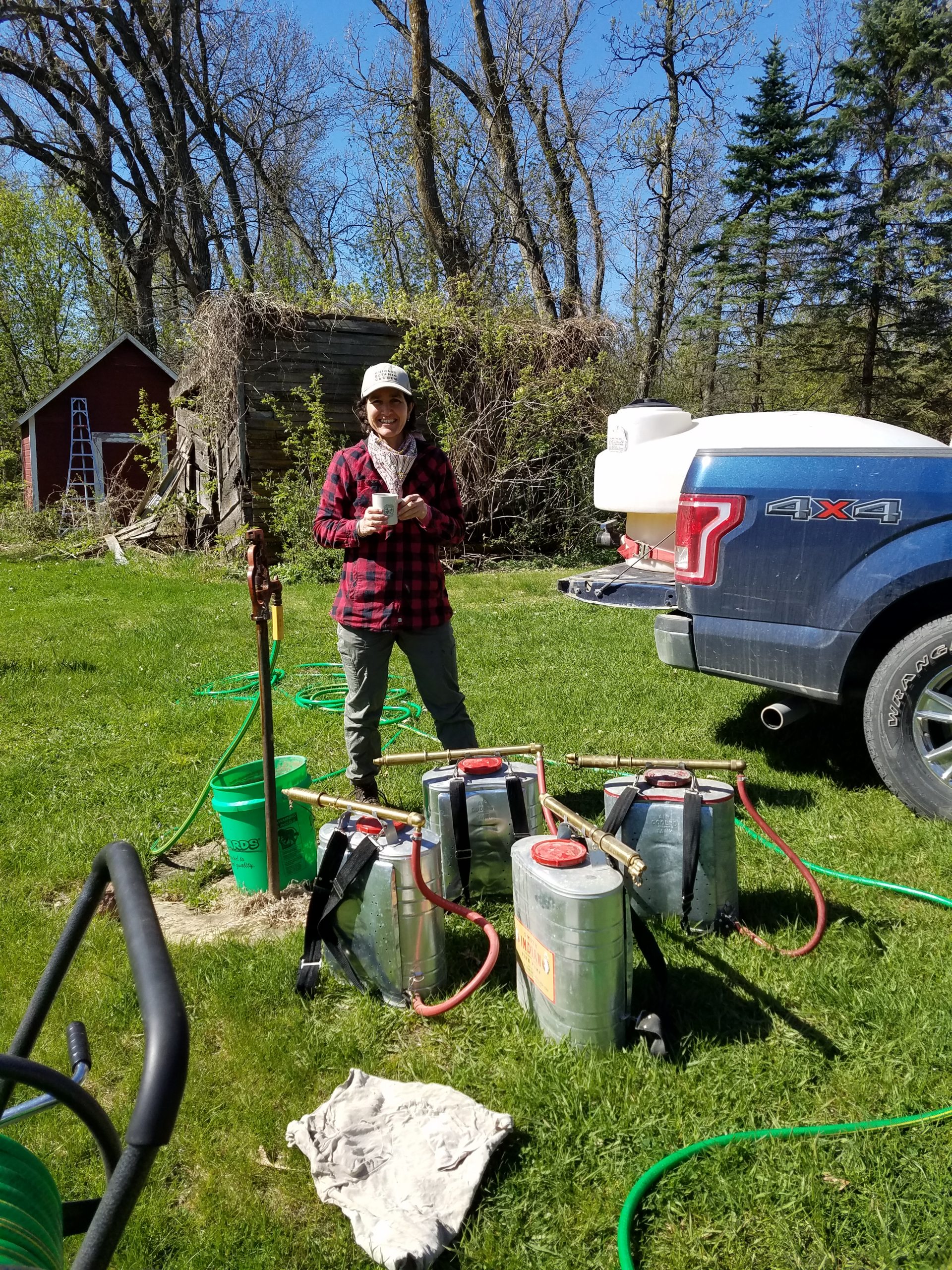
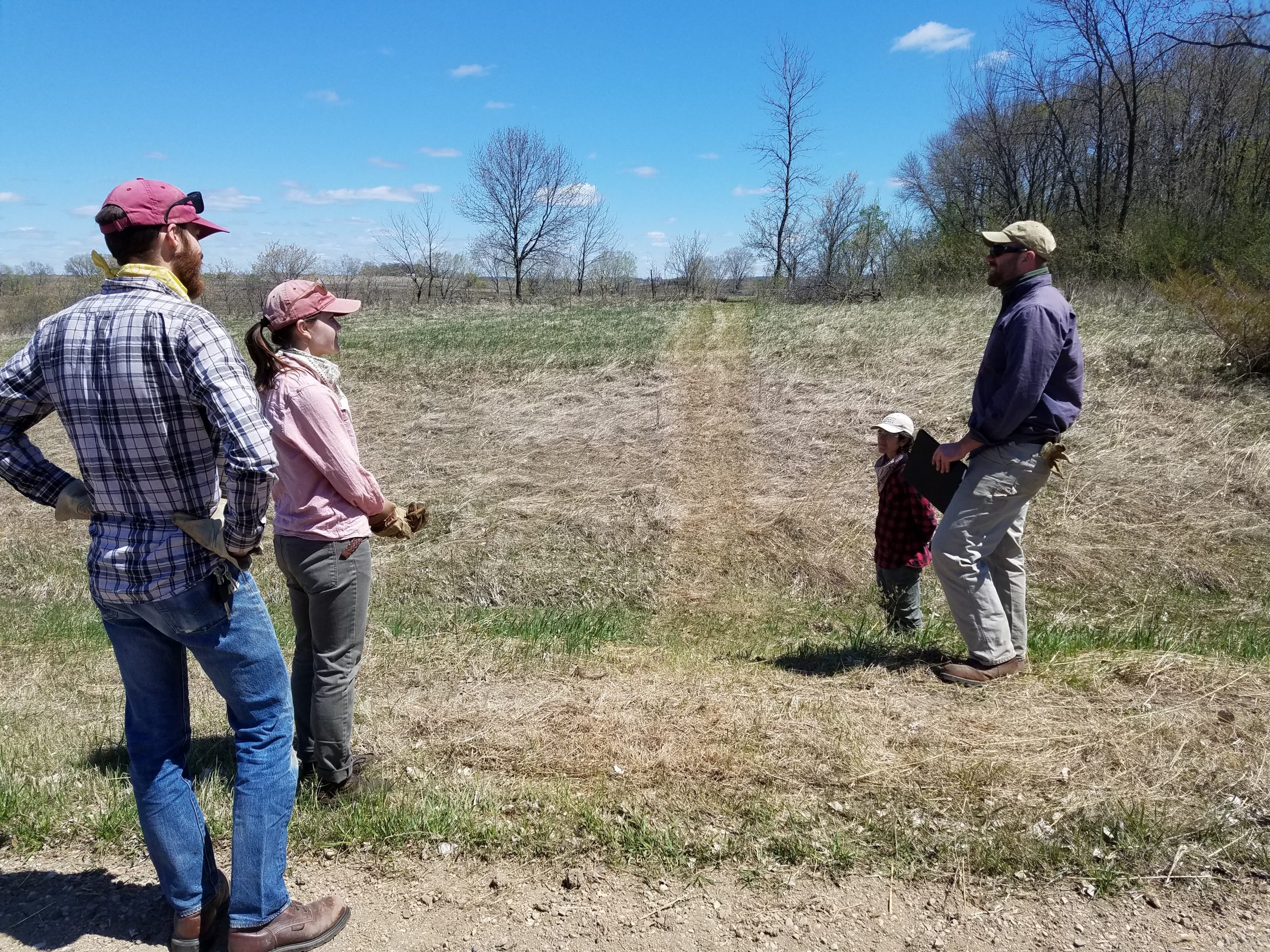
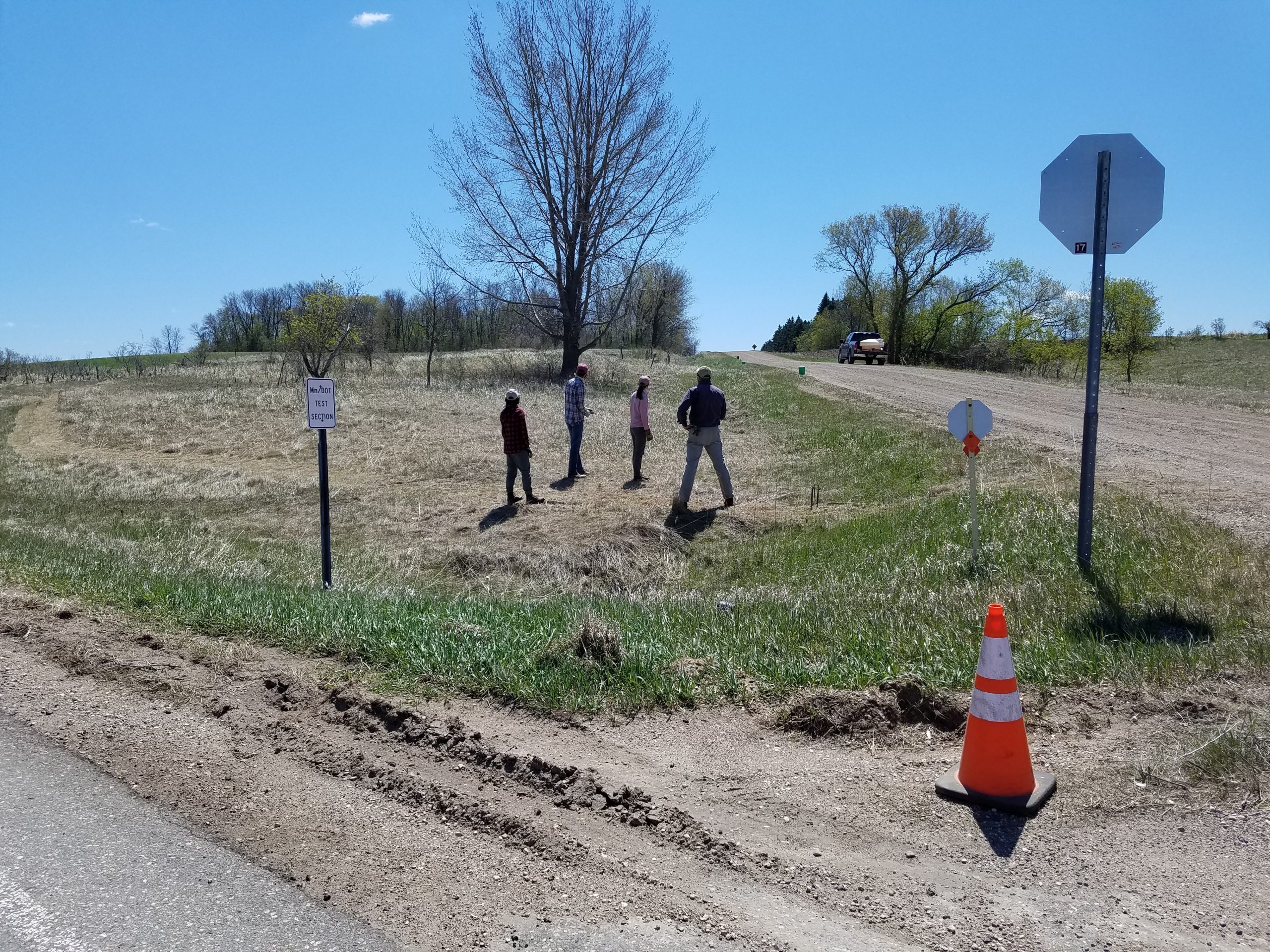
During the morning, we prepared equipment for the burn. We loaded equipment after lunch and drove south to the burn unit. Along the drive, we spotted a very large plume of smoke from a USFWS burn to the southwest and once at the site, another USFWS burn 10 miles. Stuart, Gretel, and I staged vehicles and water buckets. We placed orange traffic cones along the highway and Sandy Hill Rd to alert passing traffic. The whole burn crew walked the entire burn break while reviewing the burn plan and discussing hazards. The east edge of the burn unit (along Sandy Hill Rd) presented few challenges including a mass of woody debris, wooden fence posts with barbed wire, and a pile of wood chips.
Sequence of photos illustrating test fire and the crew securing the southern burn break.
We ignited a test fire in the southeast corner of the burn unit. Once we secured the southern edge of the burn unit, Stuart and I ignited in parallel directions moving north. Matthew and I patrolled the eastern edge while Stuart, Gretel, and Amy did most of the hard work along the troublesome western edge. The eastern edge of the burn unit (along agricultural field) was very civilized. Matthew and I ignited along the fence line. The fire essentially put itself out. The western edge of the unit required more effort. Stuart ignited carefully around a brush pile, around fence posts, and around the large cottonwood while Gretel and Amy diligently kept watch to ensure none of the hazards caught fire. Realized winds 30 minutes into the burn were lighter and more variable than forecast, argggh… We started with steady N winds but wind direction wobbled with NW, N, and NE gusts alongside a couple short-lived E and W gusts. With topography and the dominant wind in our favor, Stuart and I kept in contact with radios. We adjusted our pacing to accommodate the fickle winds and complete the burn safely. While Amy and Stuart tended to wood chips around the cottonwood, I lit the head fire with help from Matthew and Gretel to hold the northern burn break. The head fire was not terribly exciting. We ended up igniting more slowly than anticipated and back burning ~90 percent of the burn unit. Though slower, this contributed to a consistently blackened unit. The wood chips were a hassle. Tiny plumes of smoke occasionally popped up demanding our attention. With the fire contained, we returned to the research base for dinner. Stuart, Gretel, and I then returned to the site after dinner to check on and extinguish any remaining logs/woodchips that were smoking.
Photos from the burn.
Temperature – 52 F Relative humidity – 32% Wind speed (max gusts) – 10 (22) mph wind direction – N Ignition time: 2:06 PM End time: 3:44 PM Burn crew: Jared, Gretel, Stuart, Amy W., Matthew G.
Before and after photos from our prescribed burn at Loeffler’s corner east.
The oldest plants in our experimental plots are turning 25 years old this year. Happy almost birthday to them! I set off on a mission to determine how many of these plants are still alive so we know how much cake we need to celebrate. These plants are in the oldest portion of our oldest experimental plot (exPt01), they were planted in 1996 and every year since we have visited each plant and recorded various traits.
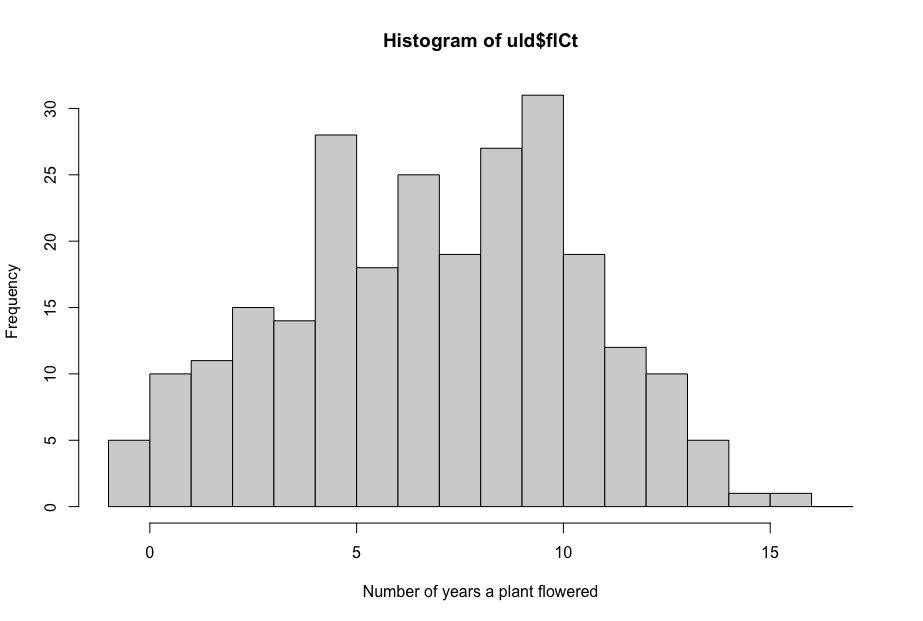
The first year that these plants flowered was in 1999, a total of 10 plants flowered in this first year. If we look at survival as of 2019 only 251 of the original 646 plants are still alive. Of these 251 surviving plants five of these plants have never flowered! They have been alive for 26 years and never flowered, they have only been producing basal rosettes (just leaves nothing else), all these years. On the other end of the flowering frequency spectrum, one plant has flowered during 16 of the 26 years that it has been alive, that is a 62% flowering rate. To show the high variation in flowering frequency I made the following histogram, the majority of plants have flowered a total of nine or four times.
As I continue to work through the 2020 data from our experimental plots I will be posting more “Random Fun Facts” with Mia so stay tuned to learn more about what is going on in the experimental plots!
It’s Emma Greenlee, reporting from Northfield, MN on my presentation at the Winchell Undergraduate Research Symposium! This is a research symposium for students in STEM at Minnesota colleges to present their research, and I presented my work from my independent project with the Echinacea Project last summer (see this flog post for more info!). The symposium was on zoom, naturally this year, and students presented in small groups for 10 minutes each. So pretty low stakes but a really good opportunity to practice presenting to an audience and it held me accountable to finish a few data analysis and visualization things I had been needing to do for my project. This e-conference made me think I could handle and enjoy the real thing, which is cool!
That’s all for me for now, just a month left at Carleton before I’ll be heading to Nevada on a Conservation and Land Management internship doing native seed collection with the Forest Service.
Peace out for now FLOG but I don’t think you’ve heard the last of me yet!
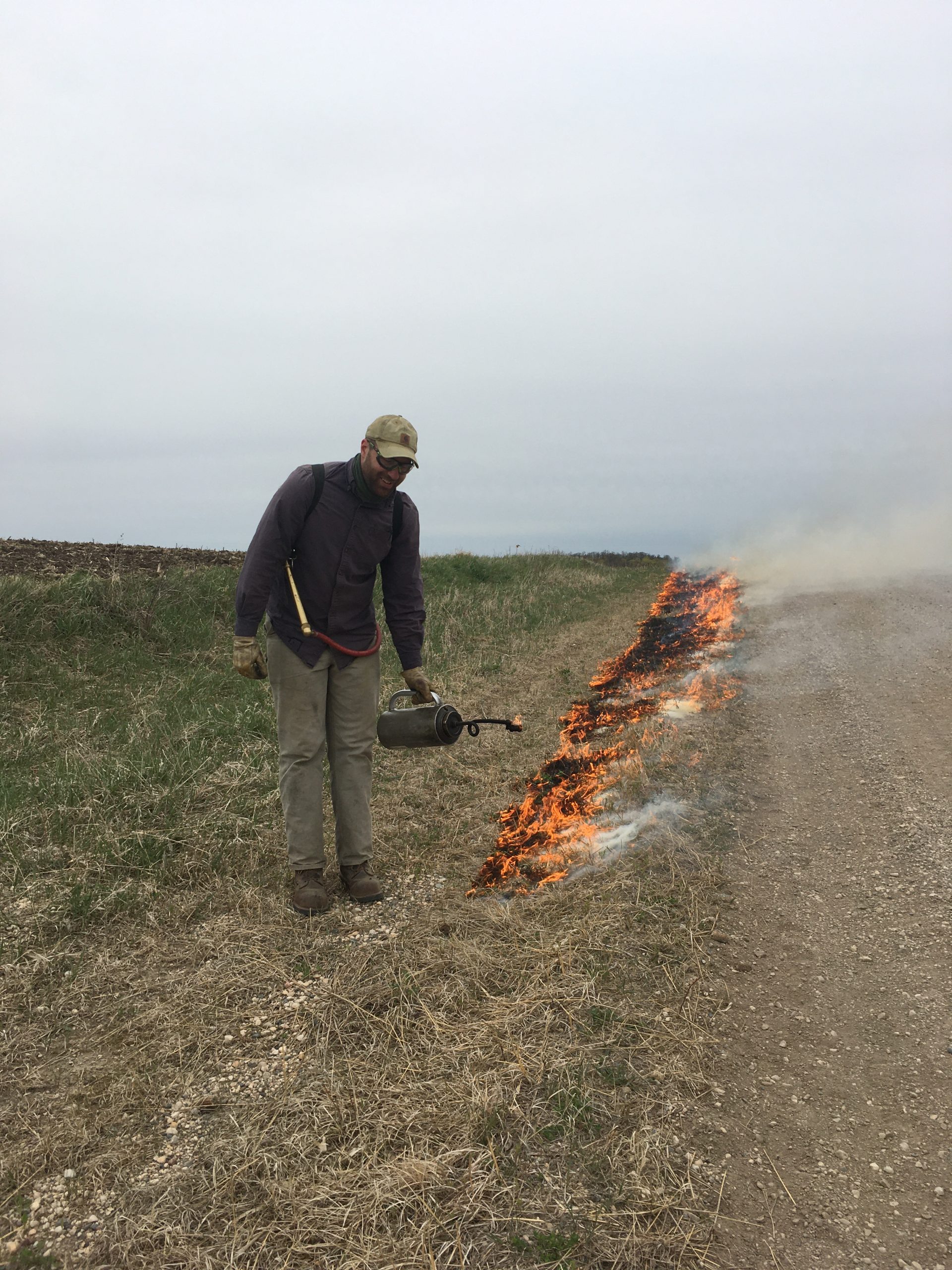
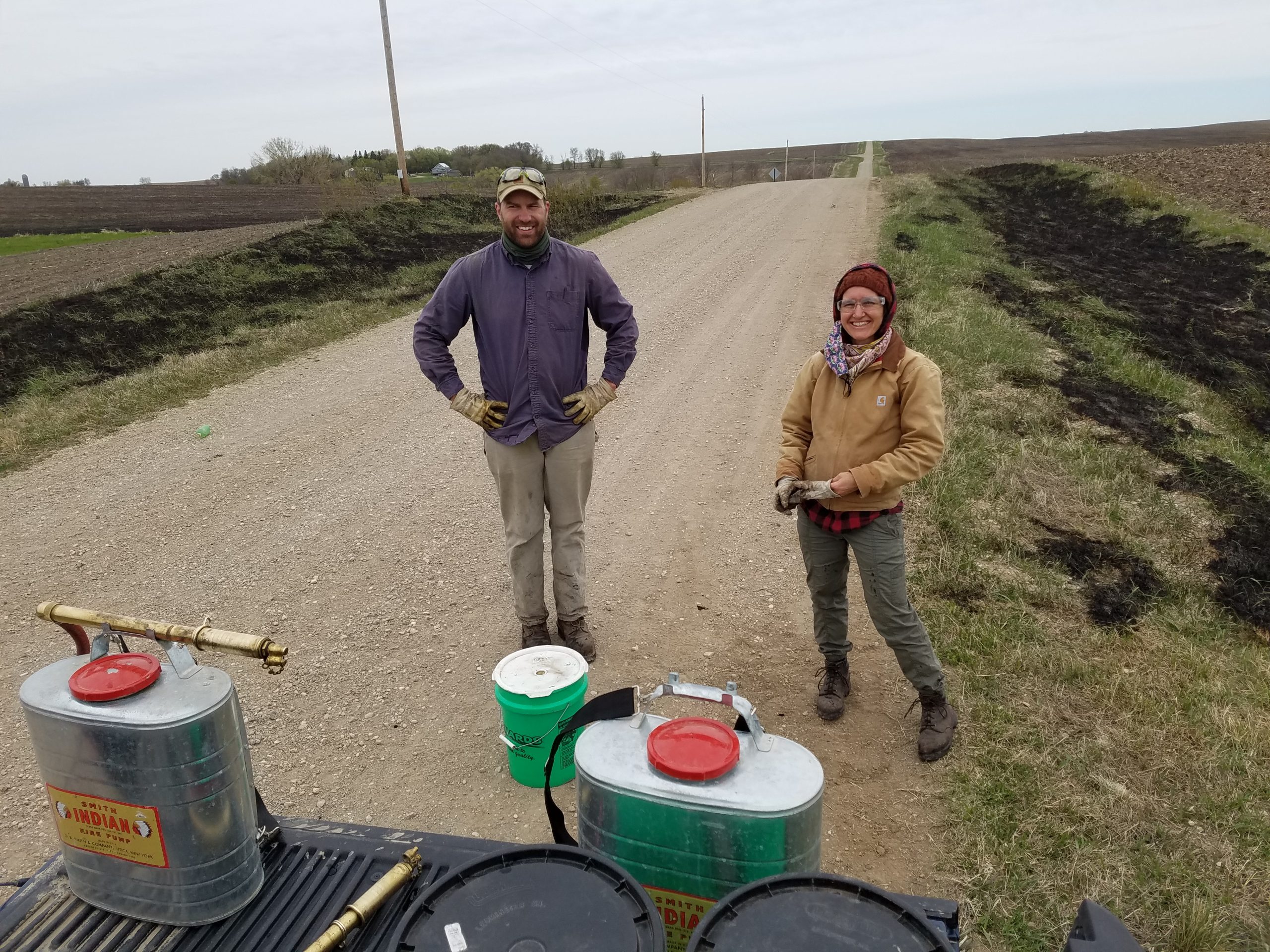
For our fourth and final burn of the afternoon on May 4, 2021, we ventured back into Douglas County for a burn at kjs. Earlier in the day, Mia and I prepared burn breaks by cutting woody plants and mowing burn breaks. Despite increasing humidity and less consistent winds, the prescribed burn at kjs proceeded quickly and produced a beautifully consistent burn. We ignited a mowed a line in the southeast corner along our mowed burn break. Once the line was secure and we had 5-10 feet of black (burned area downwind), the crew split with one line lighting along Elk Lake Rd and the other along the dirt access road. Realized winds midway through the burn were lighter and more variable than anticipated. A couple ENE/NE wind gusts turned our backing fire into 5 second headfires (not part of the plan!) so we made a quick decision to ignite around the remaining perimeter and finish up the burn while avoiding any further unexpected wind shifts. We extinguished a couple remaining hotspots, packed up our equipment, and returned to the Echinacea Project research base for dinner after a successful day of burning.
While the prescribed burn at kjs was completed in just over 15 minutes, this and other burns are the culmination of weeks if not months of planning and preparation. Safety is our #1 priority when conducting prescribed burns. We developed written burn plans for each unit outlining the conditions (e.g. temperature, humidity, wind speed and direction, fuel conditions, etc.) when fire should behave predictibly and a burn can be conducted safely. This is the prescribed part of prescribed burns. Our burn plan also includes a step-by-step plan for igniting a fire and keeping it contained within the burn unit.
Stay tuned for more prescribed burns and our research investigating the effects of fire on plant reproduction and population dynamics in fragmented prairies!
Temperature – 53 F Relative humidity – 26% Wind speed (max gusts) – 8 (16) mph wind direction – NNW Ignition time – 6:11 PM End time – 6:27 PM Burn crew: Jared, Stuart, Gretel, Mia
Upon completion of the prescribed burn at yellow orchid hill east we moved equipment and staged vehicles just a short stroll down Wennersborg Rd at yellow orchid hill west. Gretel finished mowing and the entire crew walked the mowed burn break. We discussed the plan for ignition, raked around several wooden fence posts, and wet down the wooden posts with a backpack pump.
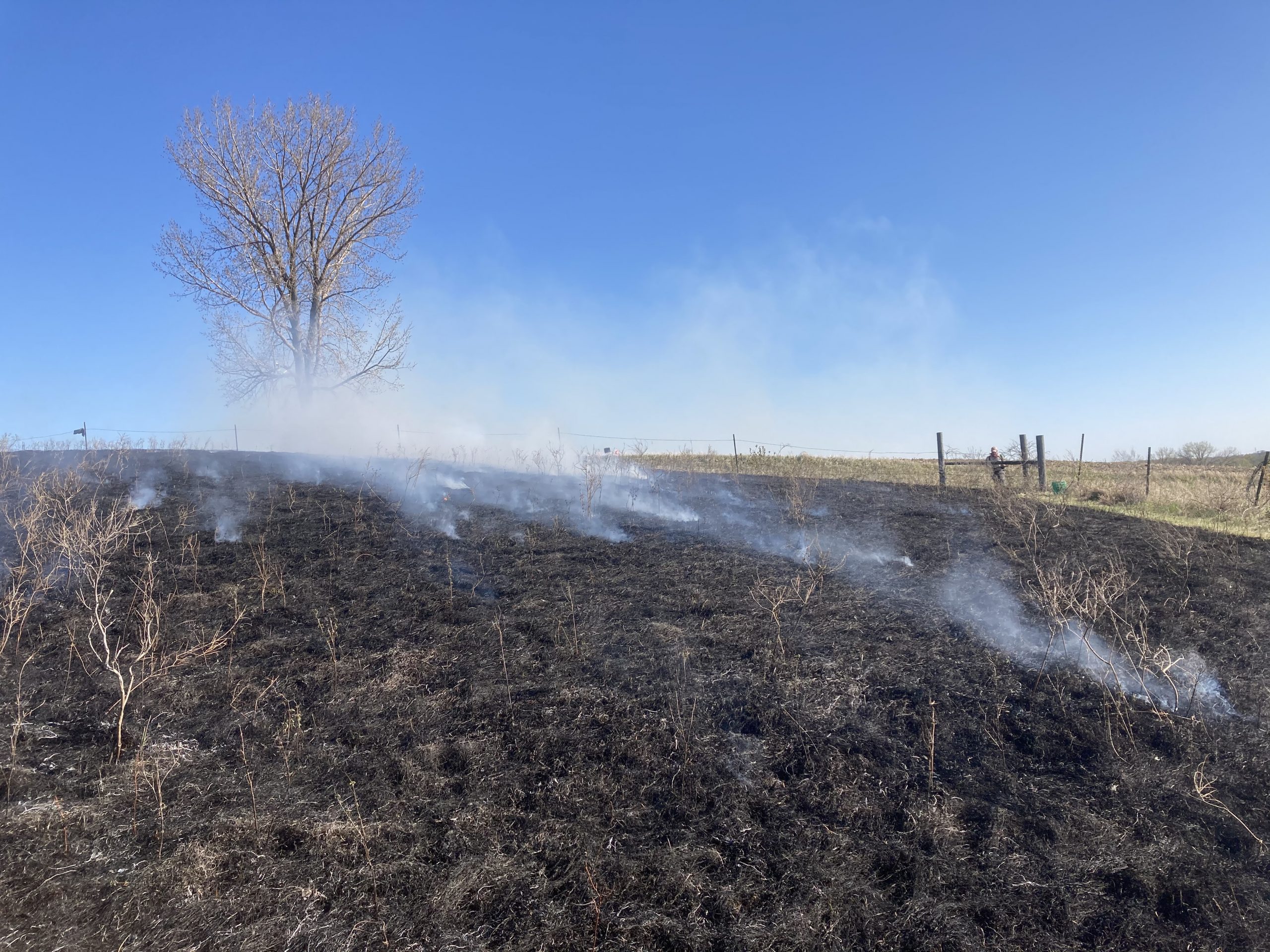
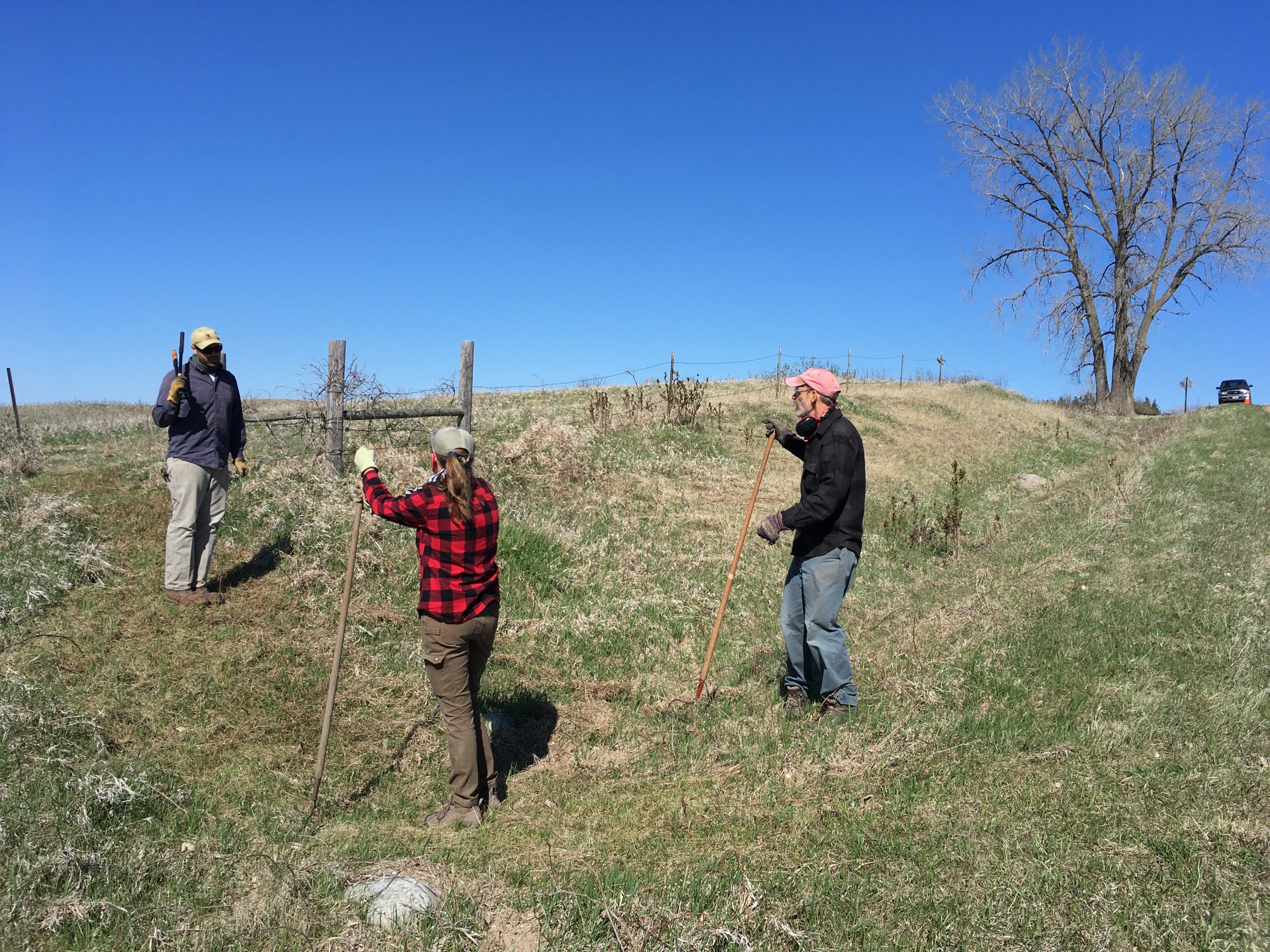
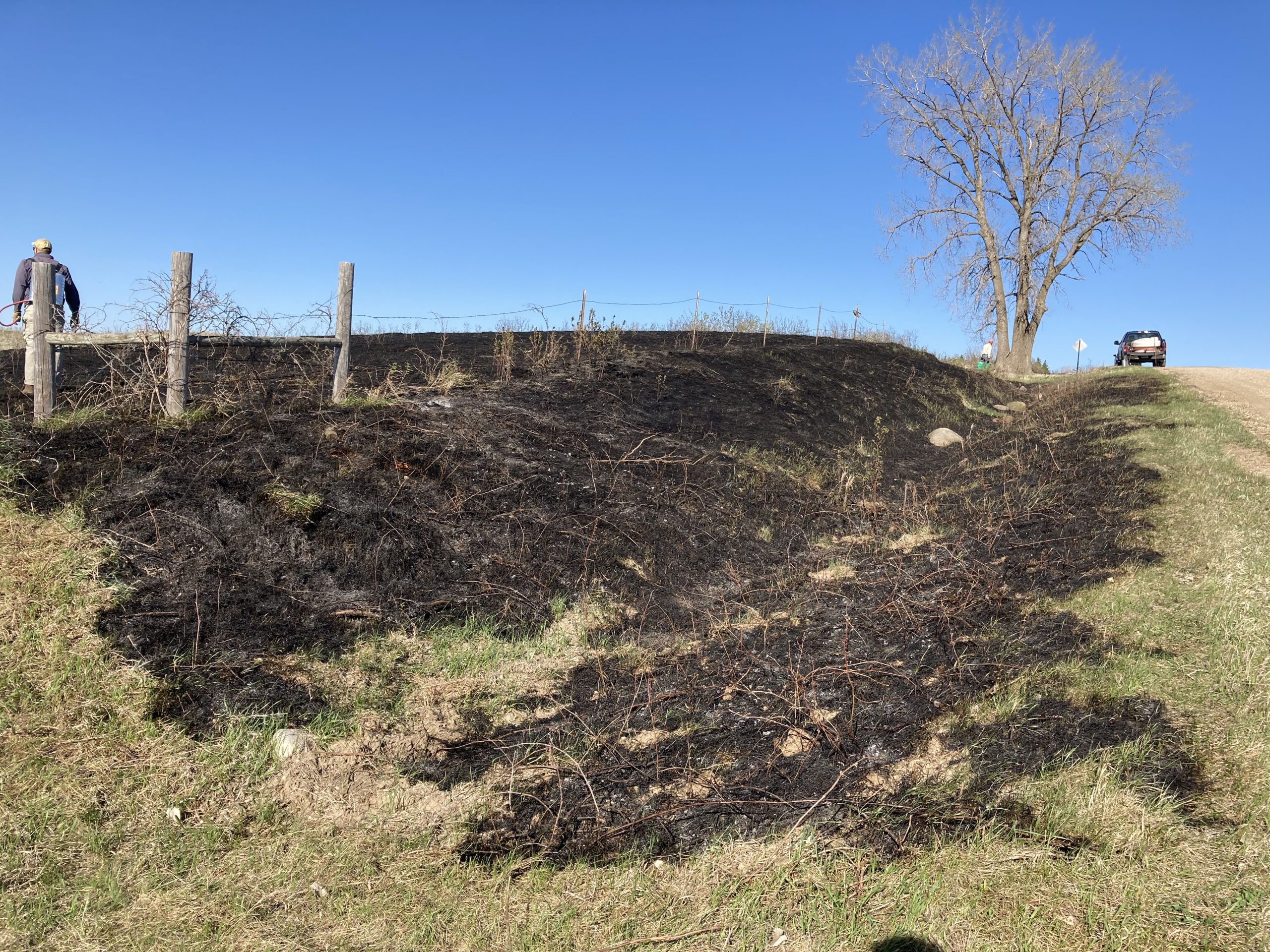
We ignited a test fire in the southeastern corner of the burn unit. The test fire behaved as predicted so we slowly extended the ignition line along the downwind side of the unit (up the steep south-facing side of the ditch and back down the more gentle north slope across the fence line). Once the downwind fire break of the burn unit had been secured, Gretel and Mia set about igniting along the base of the ditch while Jared and Stuart slowly rounded northeast corner of the burn unit. Jared and Stuart held their position at the northeast corner until Gretel and Mia reached the wooden fence posts in the southwest corner of the burn unit. At this point, Jared and Gretel ignited the north and west edges of the burn unit respectively while Stuart and Mia expertly kept fire from creeping across our mowed breaks. The whole crew met in the northwest corner and paused to watch the headfire dash uphill to complete another successful prescribed burn.
Temperature – 54 F Relative humidity – 28% Wind speed (max gusts) – 15 (19) mph wind direction – NNW Ignition time – 5:01 PM End time – 5:27 PM Burn crew: Jared, Stuart, Gretel, Mia
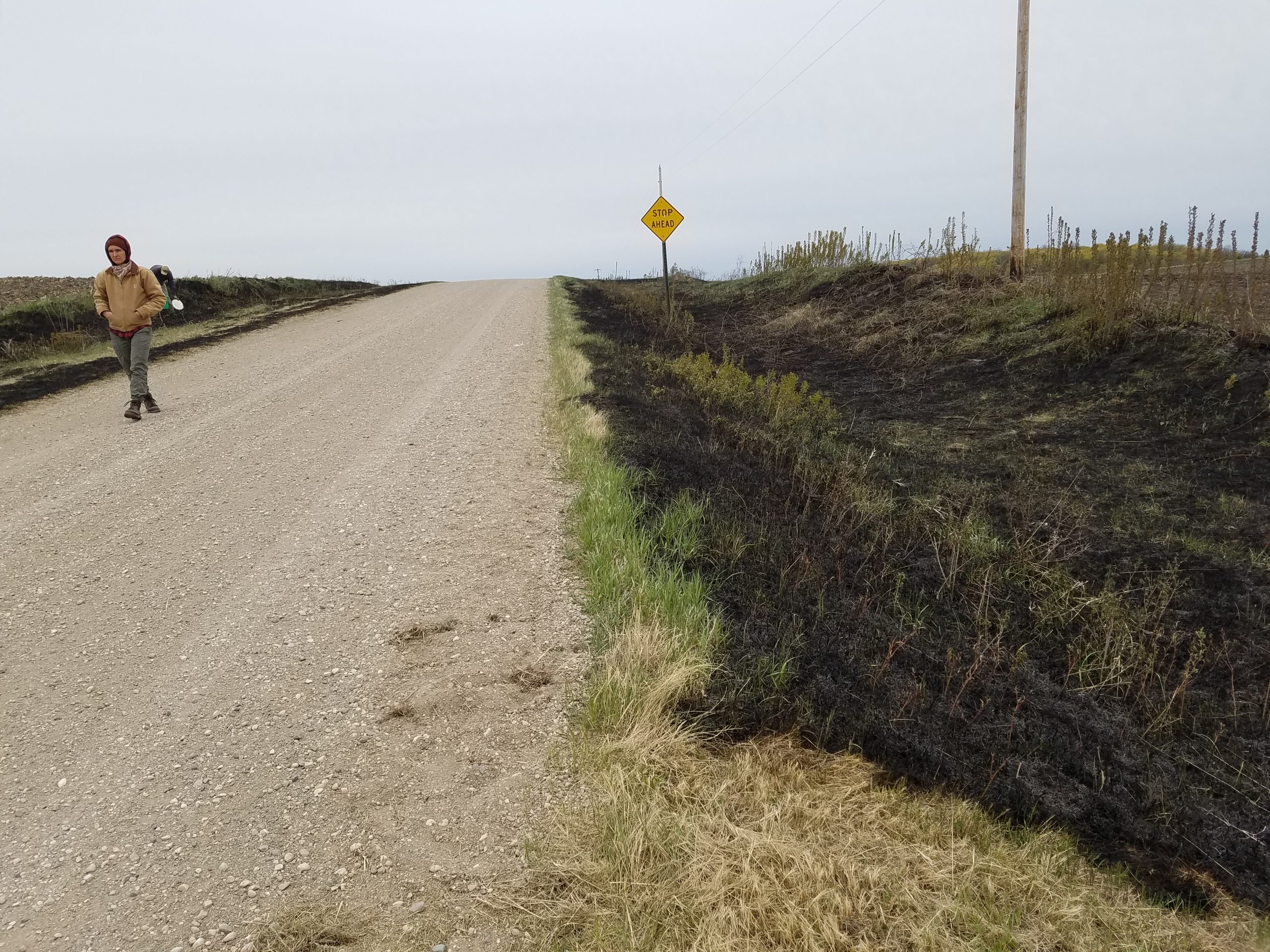
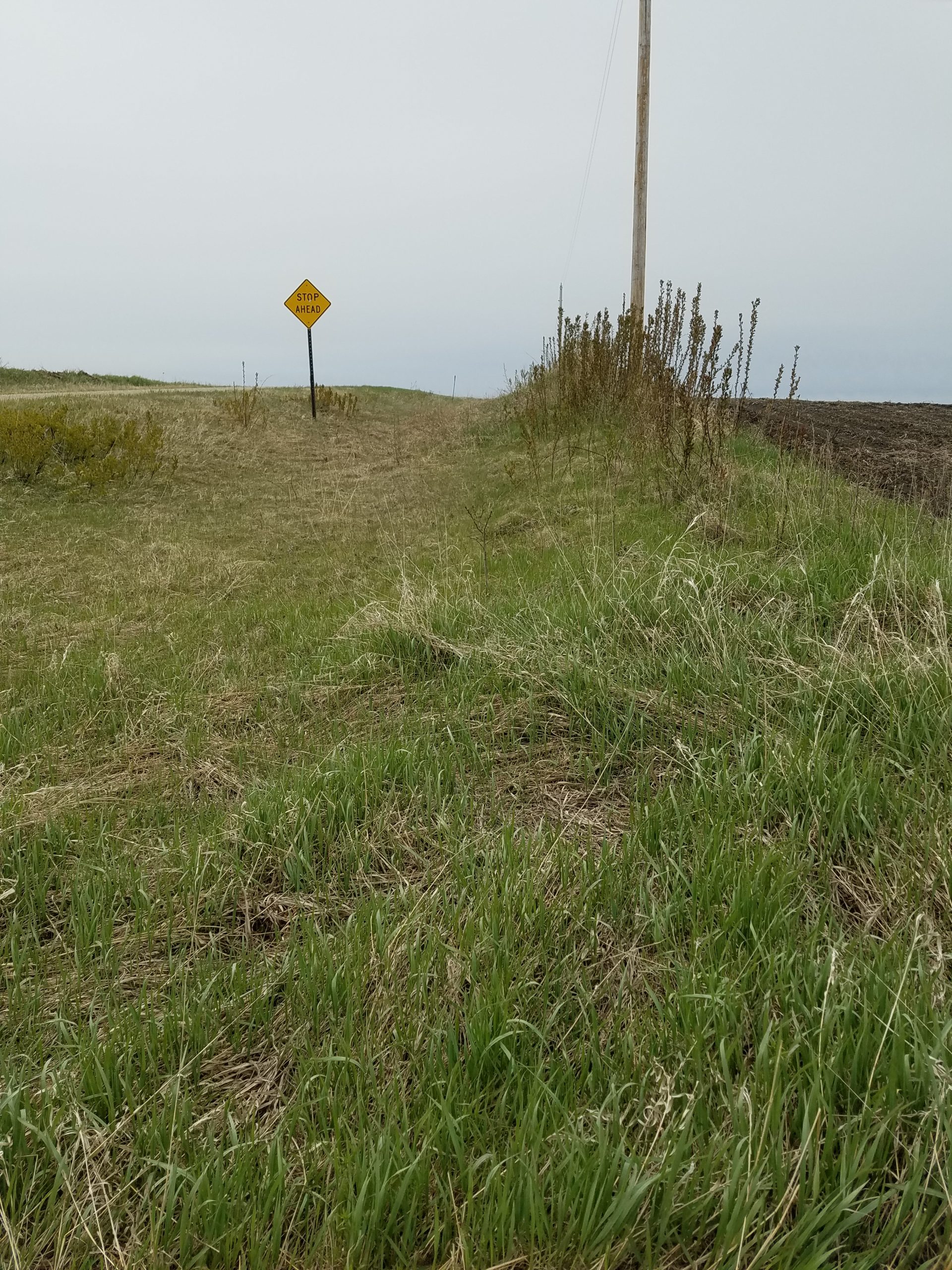
Before and after photos illustrating the burn at yoh.w.