|
|
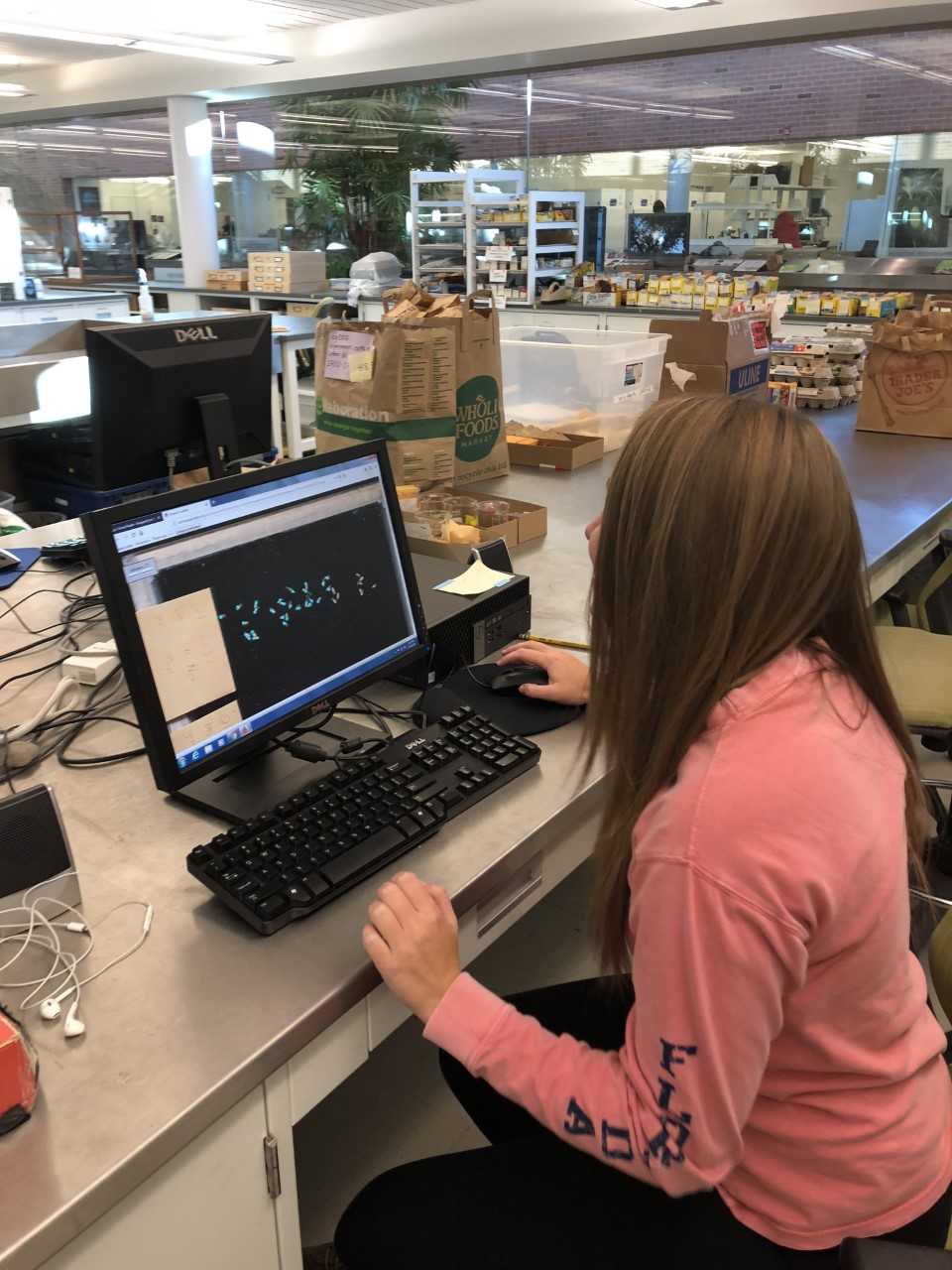
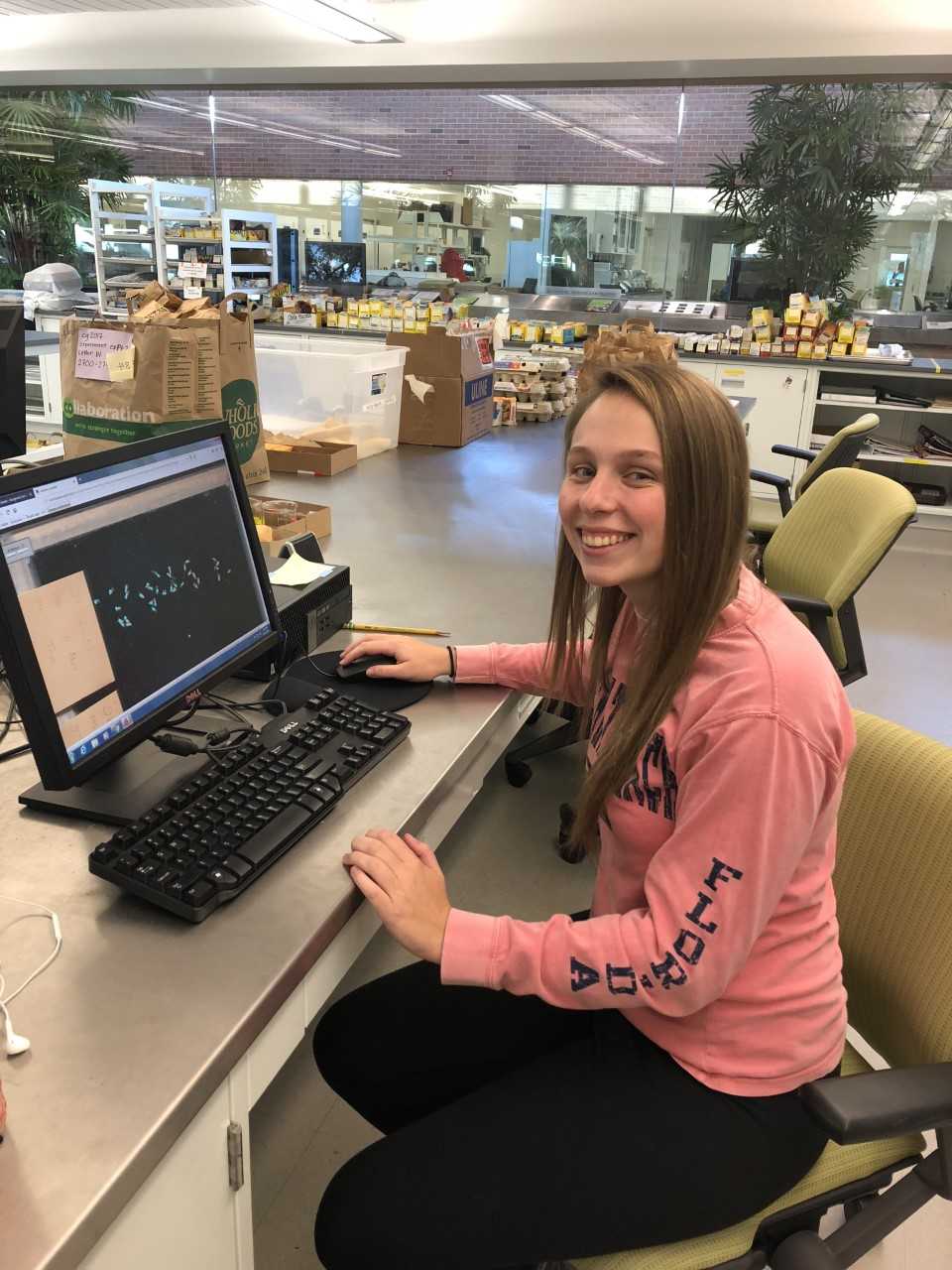
Hello! My name is Emma Carlson, and I am one of the Lake Forest College student interns working at the CBG! I am currently working with Tracie Hayes and Stuart Wagenius on the aphid exclusion and addition project. Over the past few weeks, I have been working on cleaning Echinacea heads, as well as randomizing and counting achenes! I have thoroughly enjoyed being a part of this project and being able to actually DO science! As a future science teacher, I always want to emphasize to my students that science is not just something you learn or read about, but something that you do and engage in! Science is about exploration, discovery, research, and hands-on problem solving. I am LOVING this opportunity to get out of the classroom and actually do science with this internship!
I am so thankful for this opportunity to see and experience how all of the different parts of the project, such as counting thousands of achenes, contributes to the overall importance of the study. This mini-internship has been an extremely valuable experience for me, and something that I am honored to be a part of!
Here is a few photos of me, working super diligently to beat Leah’s overall achene count for the day!

Hello! I am Emily Staufer, one of the Lake Forest College students taking part in the ‘mini-internships’ with CBG! I’m working with Kristen Manion on pinning foraging bees from the Hegg NE site.
I really enjoy working on this project; I spent the past summer in a research lab point-mounting ants, and so working with critters a little larger and involving much less glue is a much-welcomed change of pace. I’ve also always had an interest in conservation ecology, so this project is a perfect fit, and Kristen is helping me figure out how to ask questions of my own about my little section I’m working on in order to have a great presentation for the end of the semester.
When asked about my specific role, I like to think of my corner of the table in the CBG lab as my bee beauty (bee-uty!) salon – it’s my role to make the specimen look as good as possible, and this all boils down to fluffy bees.
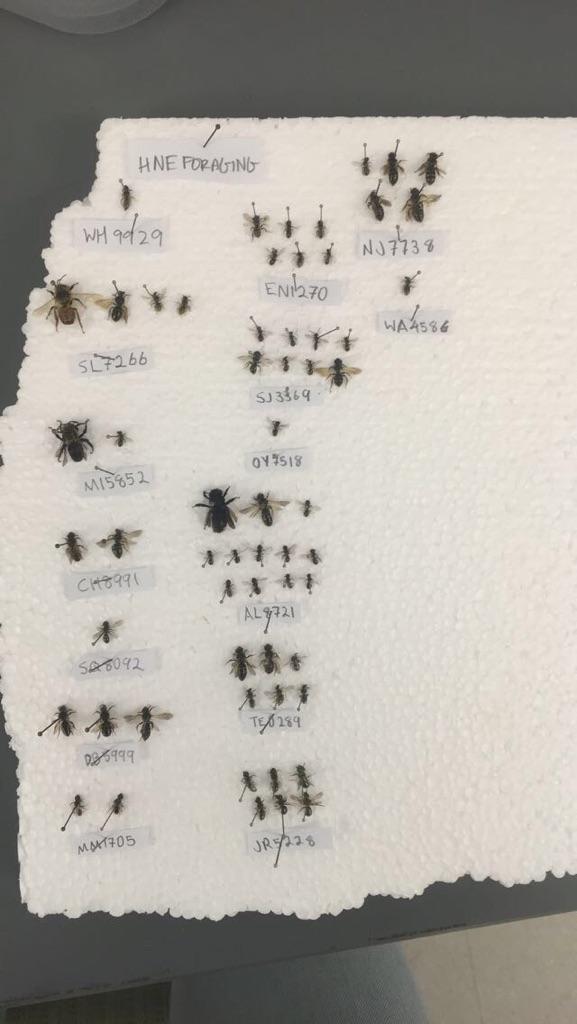
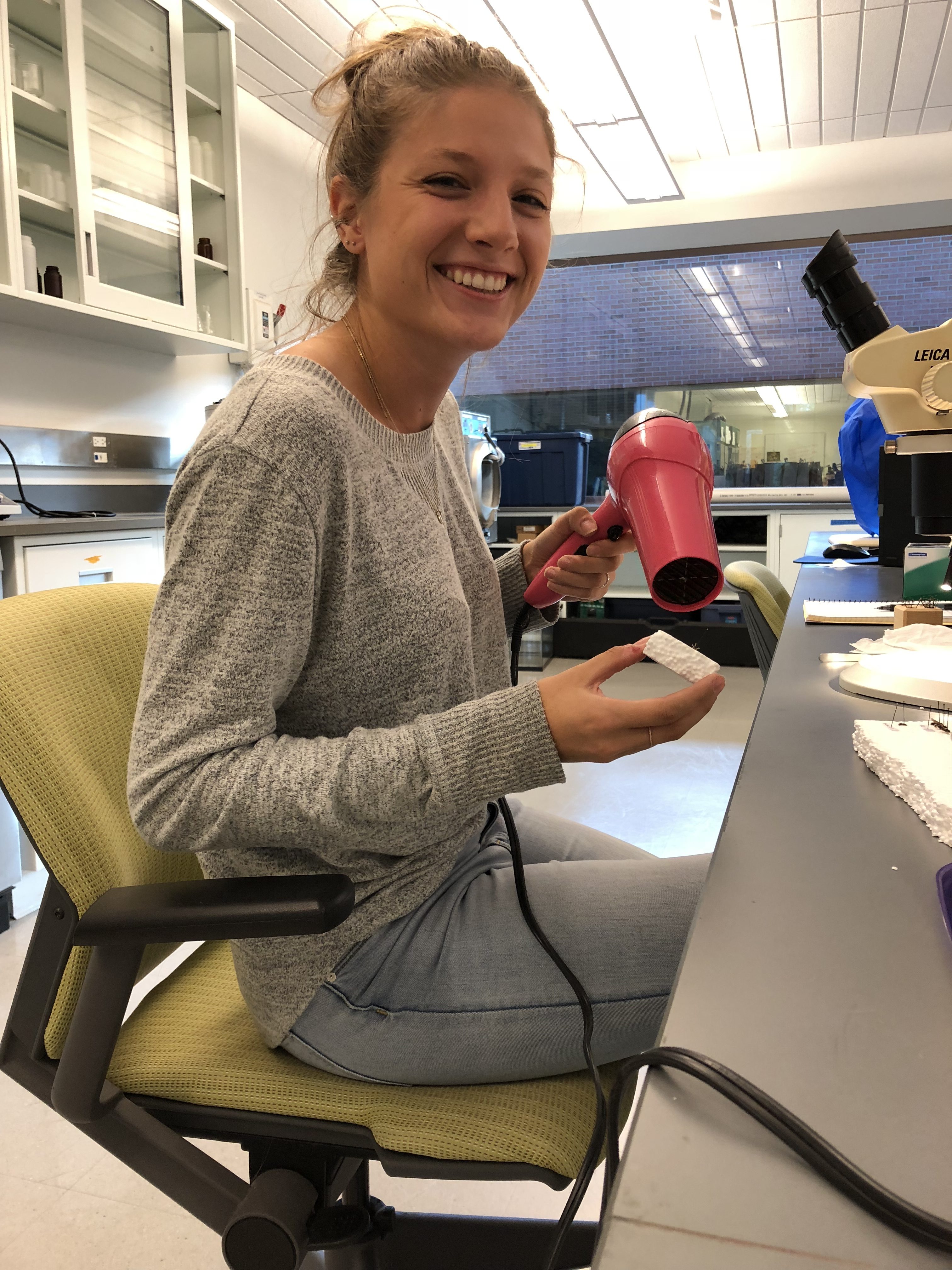
At my salon, the wash always comes first, since the bees are all in their ethanol tubes from each collection location. A quick towel dry follows to begin the fluffing process. Under the dissecting scope, they undergo a slightly invasive process when the pin is put in place through the center of their abdomen, but it is followed quickly by a relaxing massage with a pair of forceps as I position their legs and wings. What comes next is the real treat – a nice, warm blowdry using my very professional Pink Hairdryer. No bee is left defluffed, as this is key to the process! After their treatment, each happy customer is added to the larger board next to their foraging friends from the same site. Come visit my salon in the CBG lab, 100% satisfaction rating on Yelp (or it would have one, if bees had access to iPhones).
 Some of the bees Emily has been working with these past few weeks.
This week the Echinacea Project welcomes our three Lake Forest College interns: Emma, Leah, and Emily! We’re excited to have them for the next four weeks helping out in the lab. Emily is pinning bees from Hegg NE for Kristen, Emma is looking at our 2015-2017 heads in the aphid addition and exclusion experiment, and Leah is looking at our 2015-2017 heads in the pollen limitation experiment. Look forward to more updates from Emma, Leah, and Emily themselves!
 Emma and Leah cleaning heads Emily blow drying a bee
Stuart, Michael and I were back in Minnesota this week Monday-Thursday to finish up a few fieldwork tasks. We staked to 268 points across our sites to complete demo rechecks. Most of our Echinacea have fully senesced, but there were a few out there with some greenish leaves. There are not a lot of species flowering, except your occasional Solidago still holding on.
We also started work herbiciding Ash trees in p8. We didn’t apply herbicide to any trees close to Echinacea, because we wanted to test out our methods. It will be interesting to see how well the herbicide works. Finally, no chances for a burn these last few days, with wind and humidity levels not right. There might be a chance for a burn this fall, but more likely spring 2019.
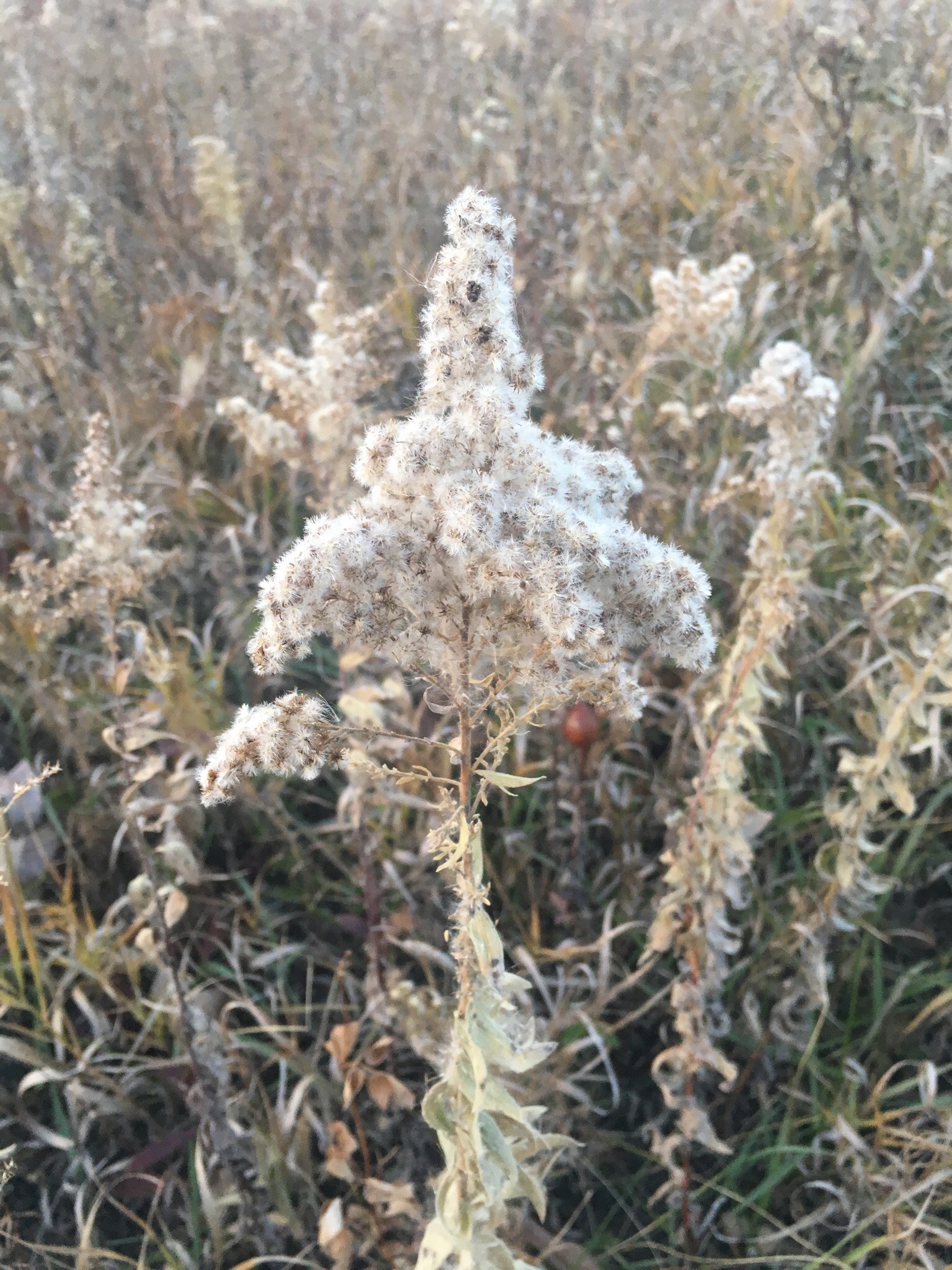
Solidago fluff at Hegg.
Hello from Team Echinacea East!
A long long time ago on the flog many clicks away, Lara Leventhal performed an experiment to determine the amount of interspecific pollen diversity on different taxa of solitary ground nesting bees. The field aspect of this experiment occurred during the summer of 2016 this involved catching bees and wiping them on styles of Echinacea. By genotyping seedlings that were produced by wiping bees on receptive styles, we are able to determine how many different plants that the bee taxa are carrying pollen from. This requires performing plant paternity tests really means a lot of PCR work. This work has been going on for over a year, we are starting to reach the end and almost to a point of doing only reruns on samples that failed. I have not been doing this work alone, there have been many people that have worked on this project right now Michelle Chang and I have been on the molecular team, (there has been at least two people besides Laura that worked on this project).
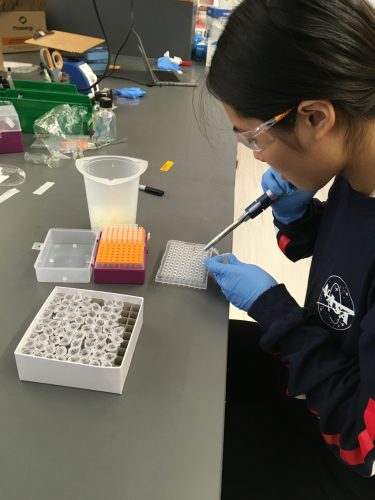
Meet Michele! She is working on loading a PCR plate in this photo
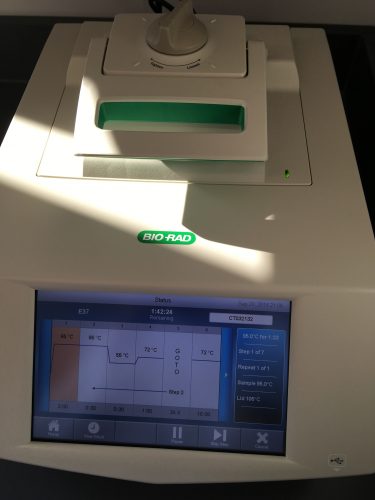
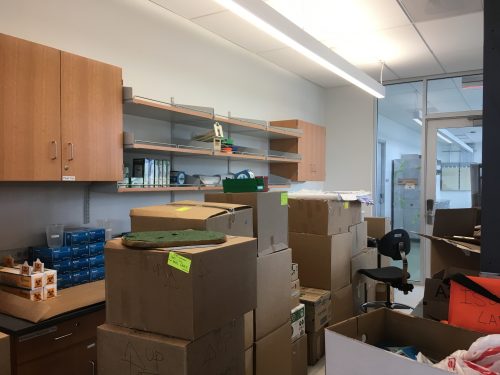
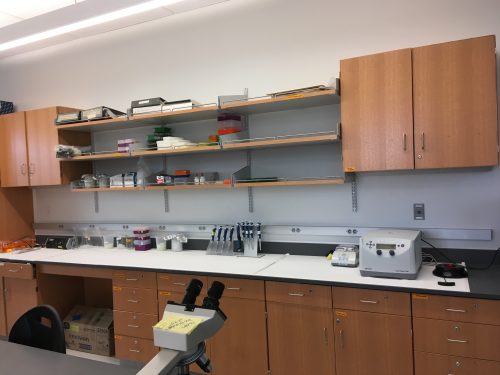
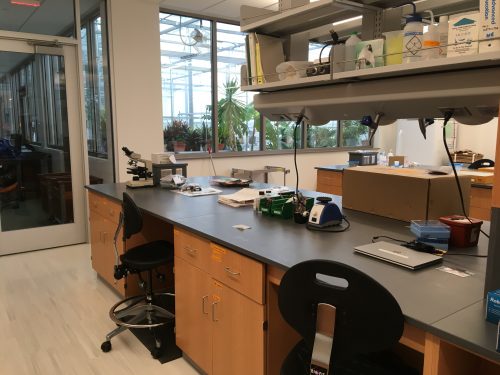
Look its a new PCR! We called it boxville for a reason! Doing lab work requires well a set up lab. The College of Wooster just opened our new life sciences building that means that when I got back to school the lab was full of boxes. We had to unpack before we could do anything. This was very exciting but also was a daunting task, we have recently have finished setting up the lab and the greenhouse(oh have I not mentioned it yet there is a greenhouse attached to the lab!)
One side of the lab(post boxes) The other half of the lab Until next time flog!
Mia
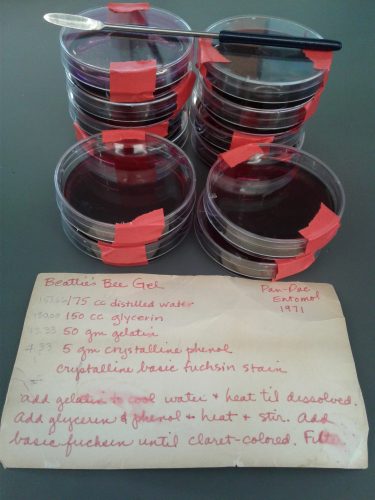
Tomorrow I will be coming back to CBG to work for a few days over break and I’m very excited! I just wanted to take the time and explain some of the things that I’ve done since the school year started. I finished entering two data sets of data; the data from pollen in the bank and the maternal repaints (technically I entered one and a half because Zeke filled out the pollen in the bank data with me). I’ve also been showing our new volunteer, Nate Scheerer, around the lab sense he’ll be helping me count the pollen on the styles Zeke, Mia, and I collected this summer out in Minnesota. But what I’ve completed that I was most proud of was making the fuschin dye that we’ll be using to stain the styles. Even though I was nervous when making the gel, the product turned out great! One thing that I recommend before making the gel is having all the materials that you’ll need nearby so you can keep a close eye on the gel (and so the people in the stockroom don’t get annoyed with seeing you every five minutes). I’m looking forward to a productive few days at CBG!
Just a small amount of the gel that I made in the lab.
Hello from Chicago!
All members of team Echinacea have evacuated Solem Township for the season and migrated to warmer climates (well except for those who stayed in Minnesota). No worries though, we’ll be back soon to harvest the last 21 heads that just weren’t quite ready when we left. Once we have those heads, it will be time to start recording new data!
Back at CBG, we’re getting underway with processing the data that we collected this year. The first step, as always, will be inventorying the heads that we collected in the field this year. How many heads you might ask? This many:
We’ve definitely got our work cut out for us, but it’s nothing that we can’t handle!
Be on the lookout for our yearly project updates, they will start being published soon.
Thanks for reading!
Hello, Flog!
The field season in Minnesota has wrapped up, and we have all returned to continue working hard at our various institutions. For the members of this years team returning to the Chicago Botanic Garden, that means analyzing all of the data (including 1000+ Echinacea heads) that we collected in the field and in our experimental plots.
Our last few days at the Hjelm house have been filled with harvest and management, getting ready for our prescribed burns this fall and spring. We’ve harvested all sorts of species – everything from Asclepias to Viola – in preparation to spread them after the burns in p1 and p8.
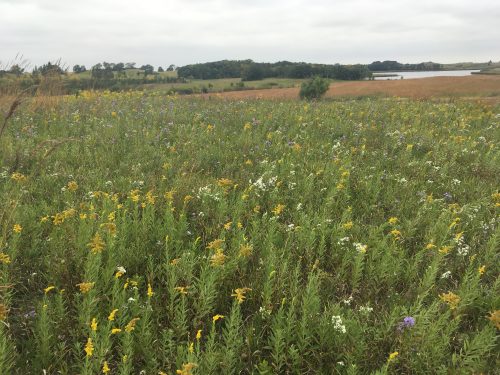
Thanks for reading the flog this summer! Here’s a parting shot of Hegg lake from the last day we were out there: white and purple asters with some great Solidago!
The very damp morning began with flagging p8 on each nail that was spaced 1 m apart. A then very interesting meeting with Joe Montoyne from NCRS who provided us with much insight into prairie restoration and some local history of local prairies. After lunch Michael, Tracy, Andy and i wnet to p2 to harvest more flower heads. As the summer comes to an end i am so appreciative of the opportunity i have had this summer with the Echin Project and the group of quality young people here. Rest assured citizens, these kids will be our community leaders, parents and professors leading us into the next generation at a when the world needs such an intelligent thoughtful group in charge. I have also gained an appreciation for what we have been blessed with in our very own west central Minnesota. Everyone is within a few minute drive to a prairie with a diversity that may go unappreciated until you spend some quality time walking and observing what the prairie has to offer. Our zoo is right here. There is a diversity of plants and insects that will require thoughtful consideration of how we choose to treat the soil and water. It may be difficult to imagine that not too long ago west central Minnesota was acre after acre of prairie.
Hello, Flog!
Monday was, unfortunately, a rainy, rainy day. Well, okay, maybe it started out just a slightly rainy day. But the kind of rain that makes it just impossible to do any dampness-sensitive research. We started off the day with the usual moist trudges through the ever-present big bluestem, and even managed to complete a few of the many field rechecks we have to do.
What are field rechecks you might ask? Sometimes, we look over the data from a summer and go, “Huh? What? How did this happen?” Our data, frankly, just doesn’t make sense. Sometimes one person will look at an area and say “There’s one plant!” and another might say “There are six plants here!” When we look at this data later, we need another opinion as to how many plants are there. And in comes field checks! (They’re particularly easy to do because they require the least walking, and therefore the least wetness.”)
Now, after lunch, picture Michael, Andy, and Lea poised to do P2 harvesting. Imagine them with bags and clippers in hand, ready to save achenes from the cruel fate of the ground. Imagine the cars bursting with egg cartons and data sheets full of LetNos (the identifiers we use each head).
Now imagine rain.
You’re not imagining enough rain, imagine more!
Well, it rained enough to make harvesting impossible. So instead of experiencing the thrill of saving a head from dropping achenes, we did some coding in R and called it a day.
Here’s to less rain this week!
Michael
|
|