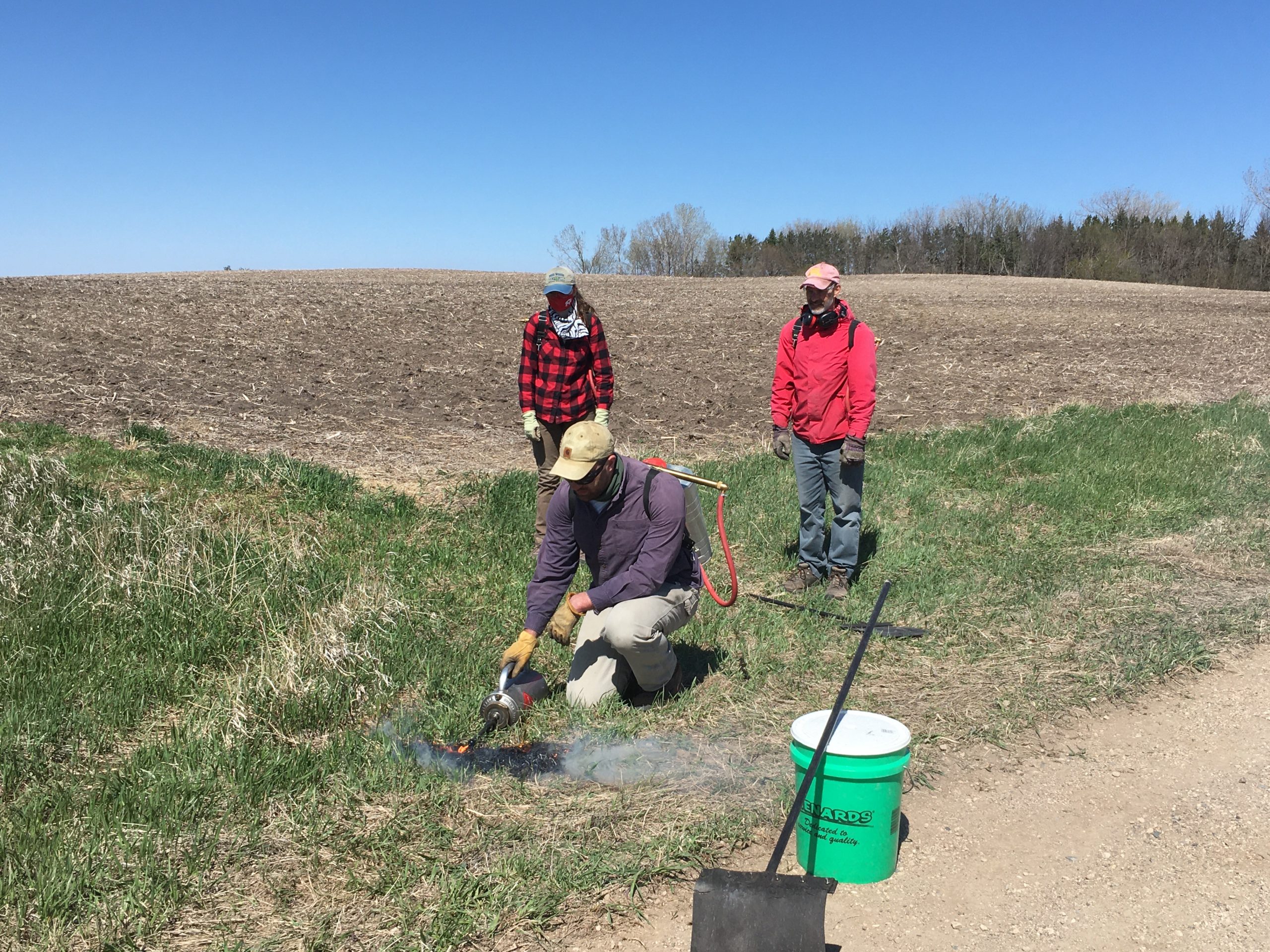
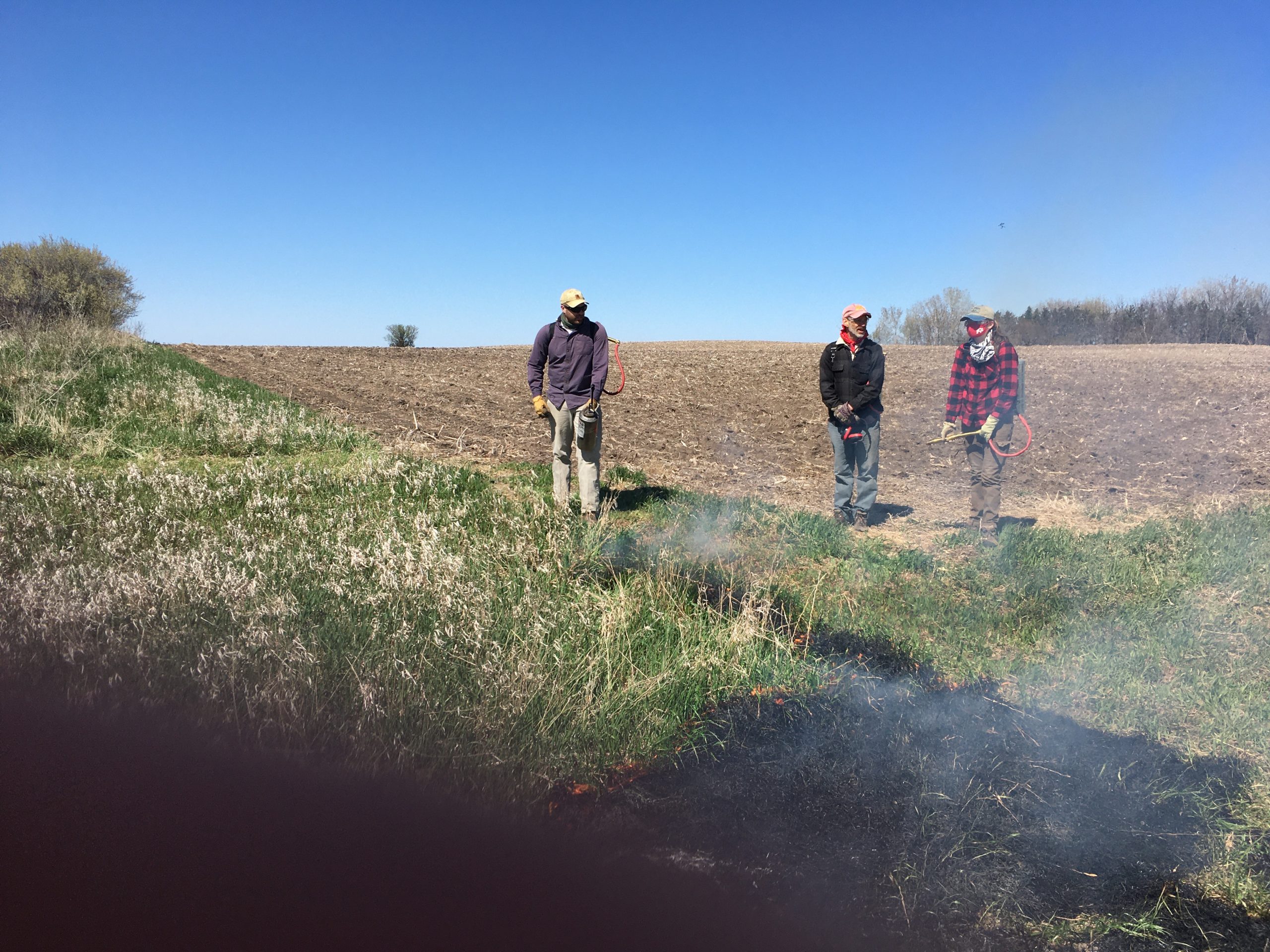
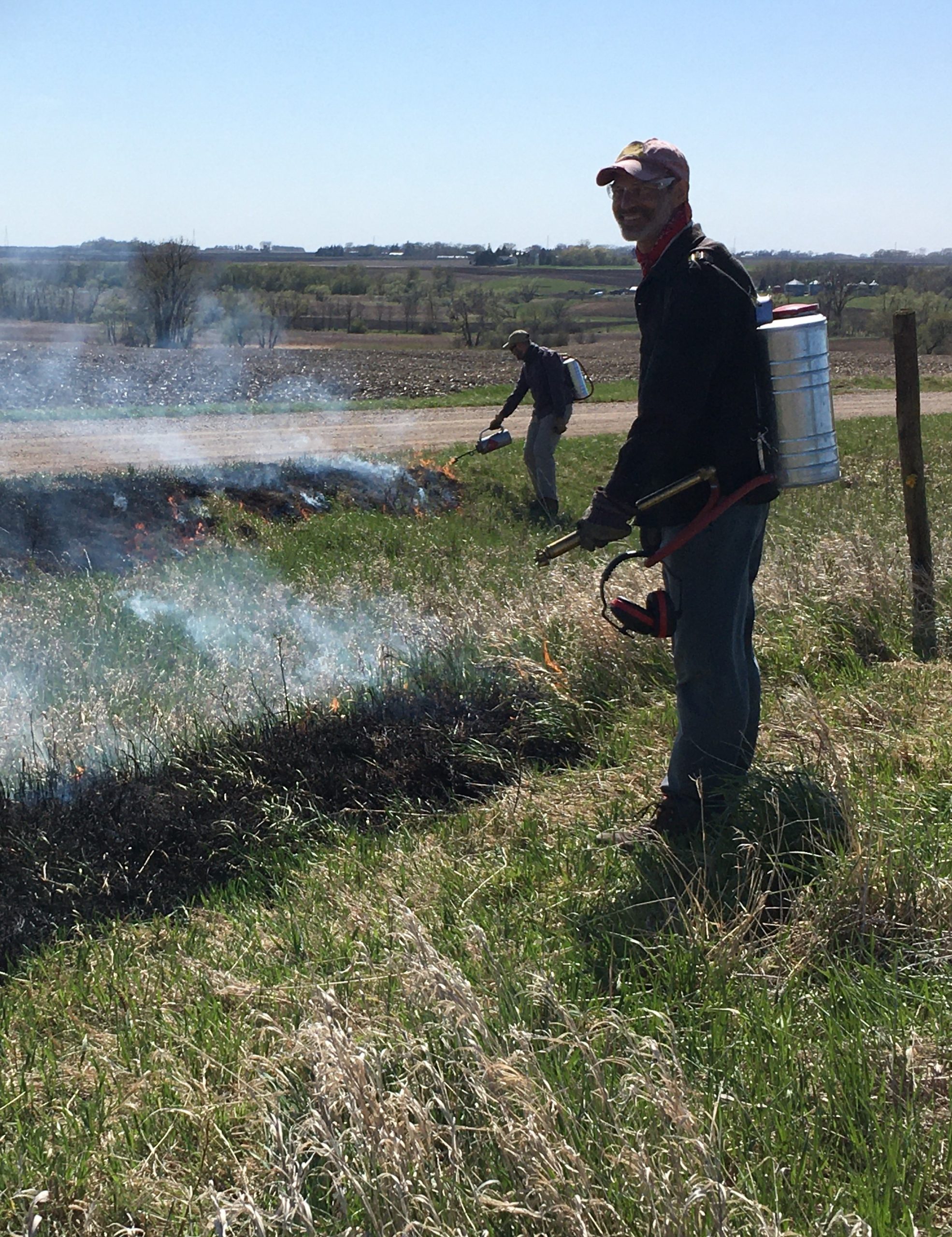
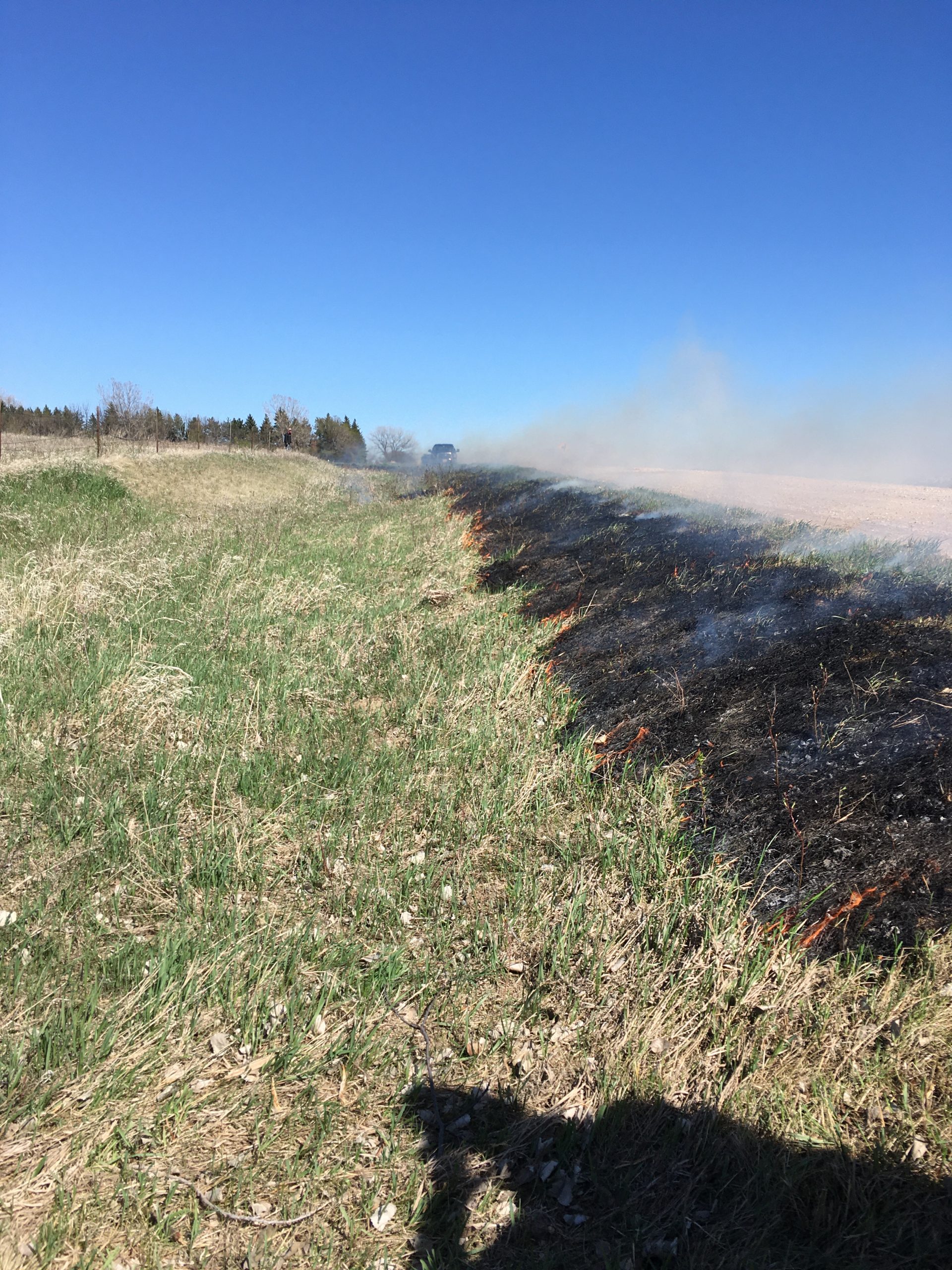
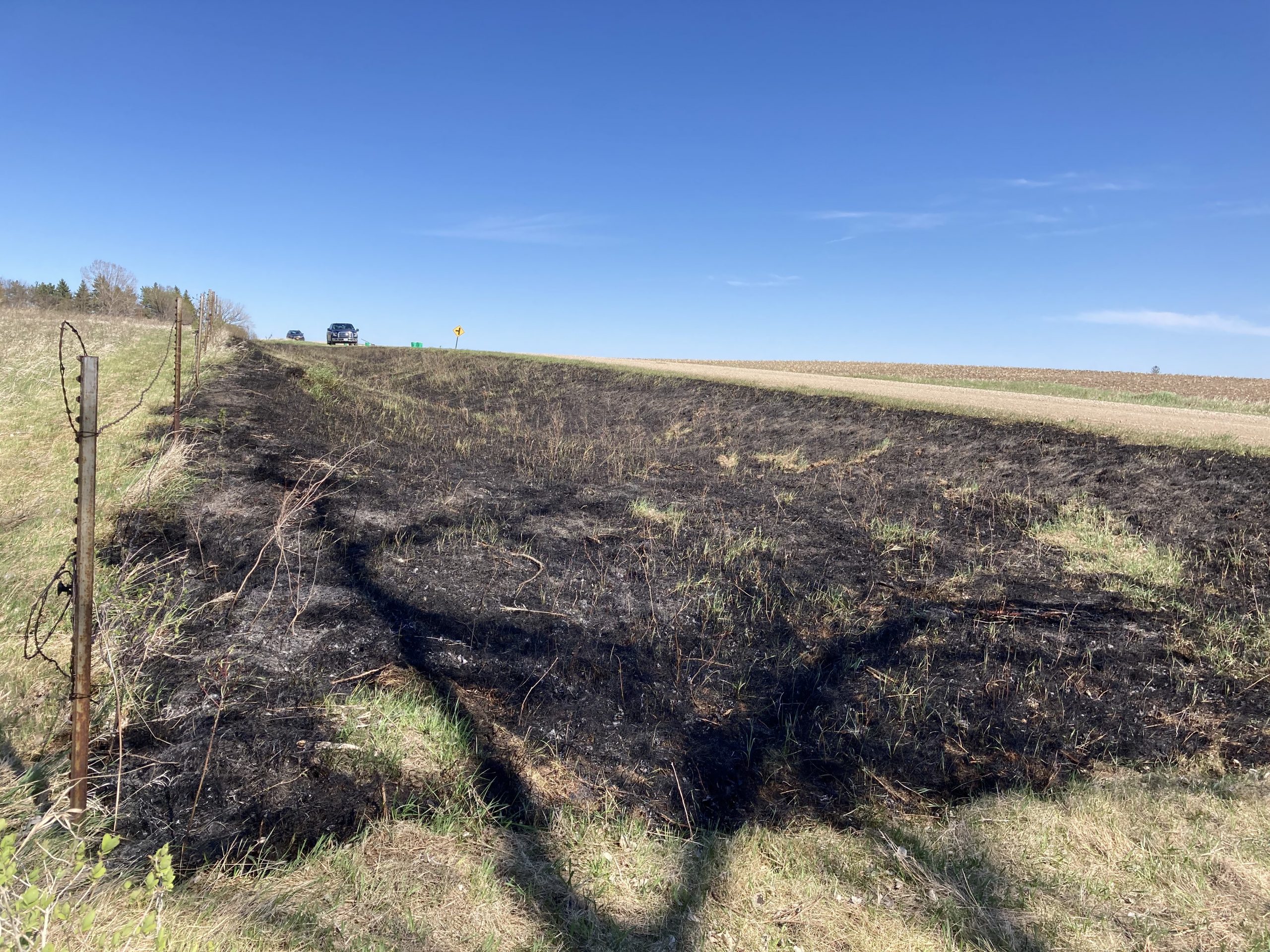
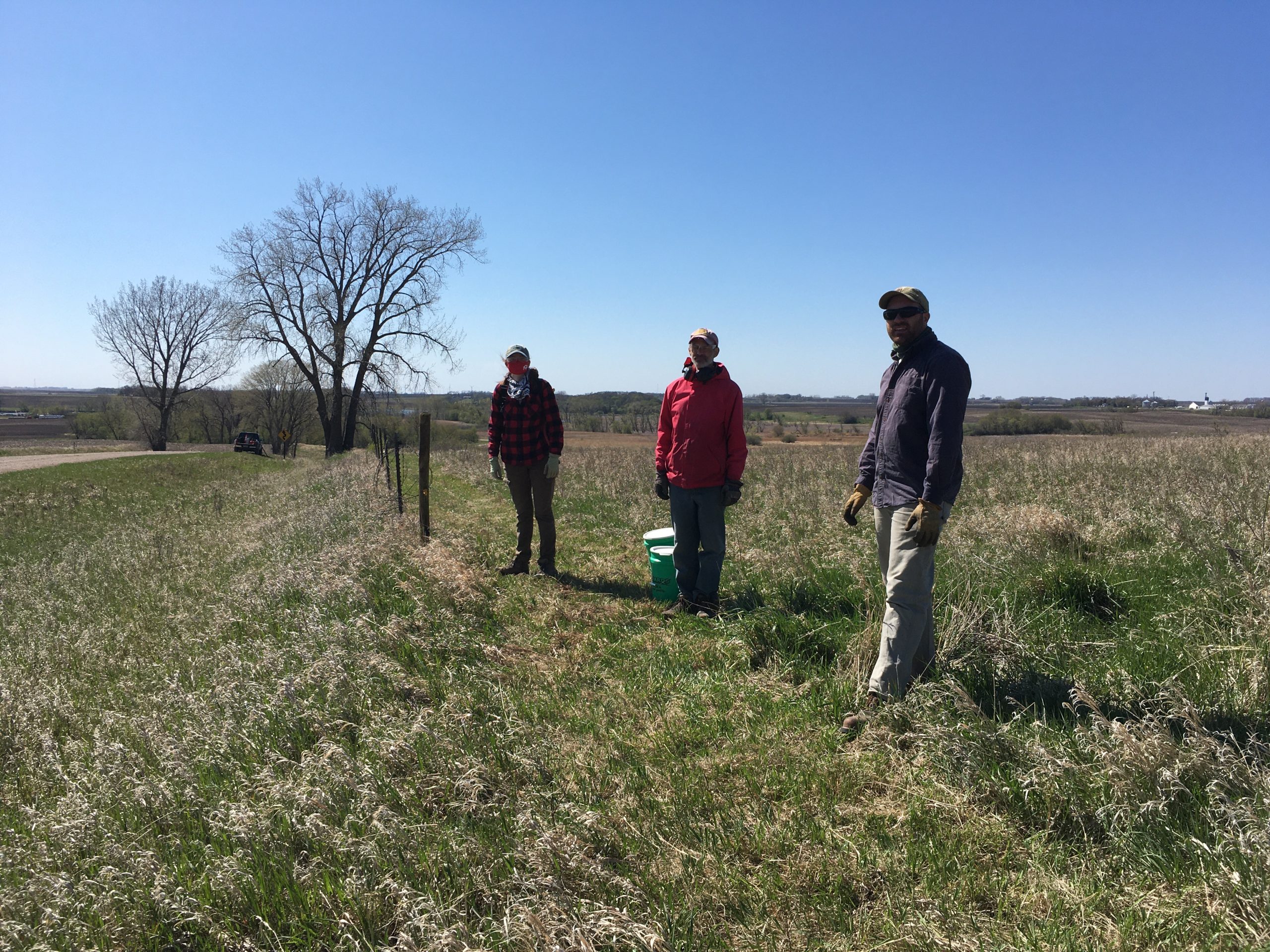
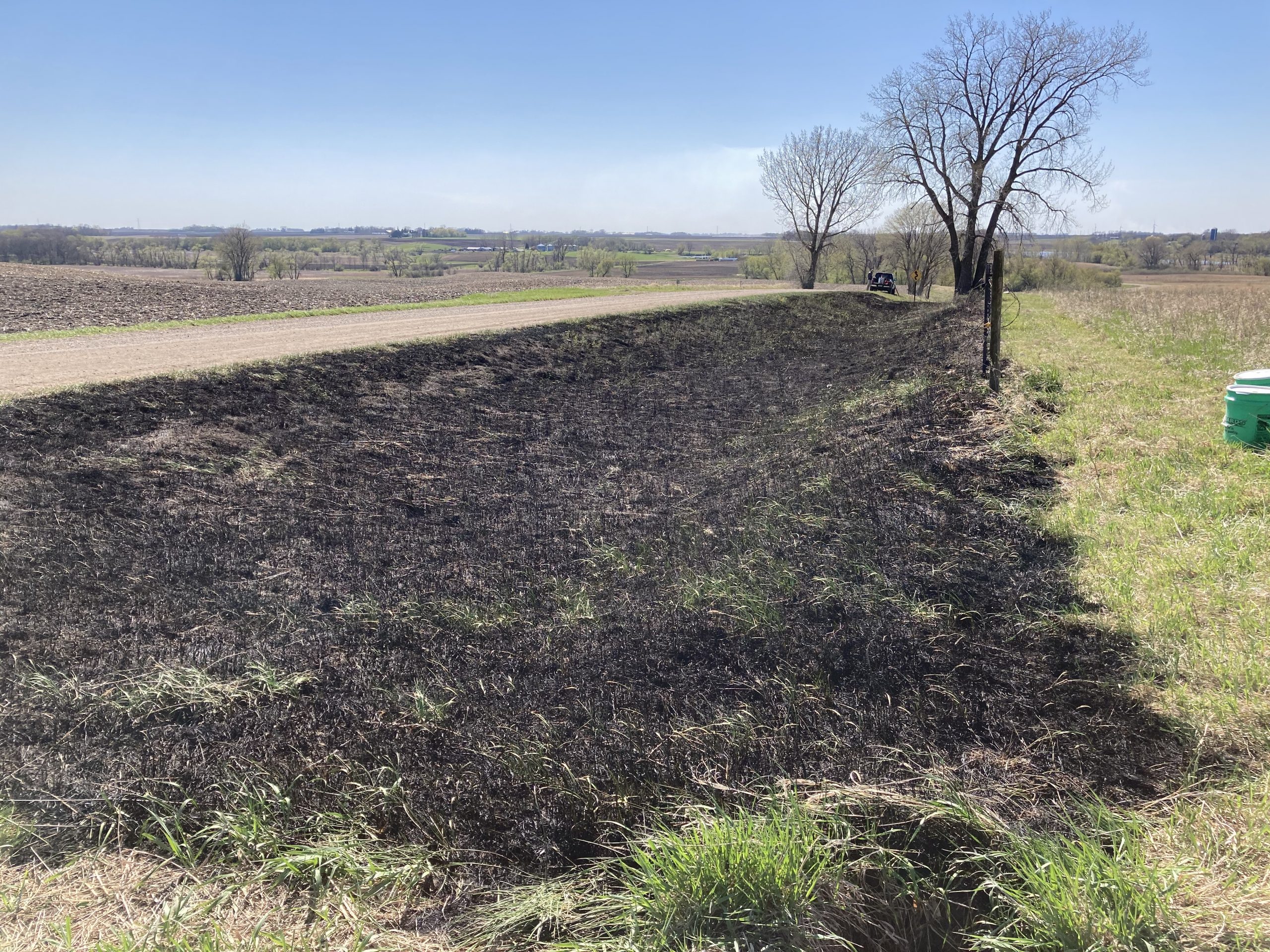
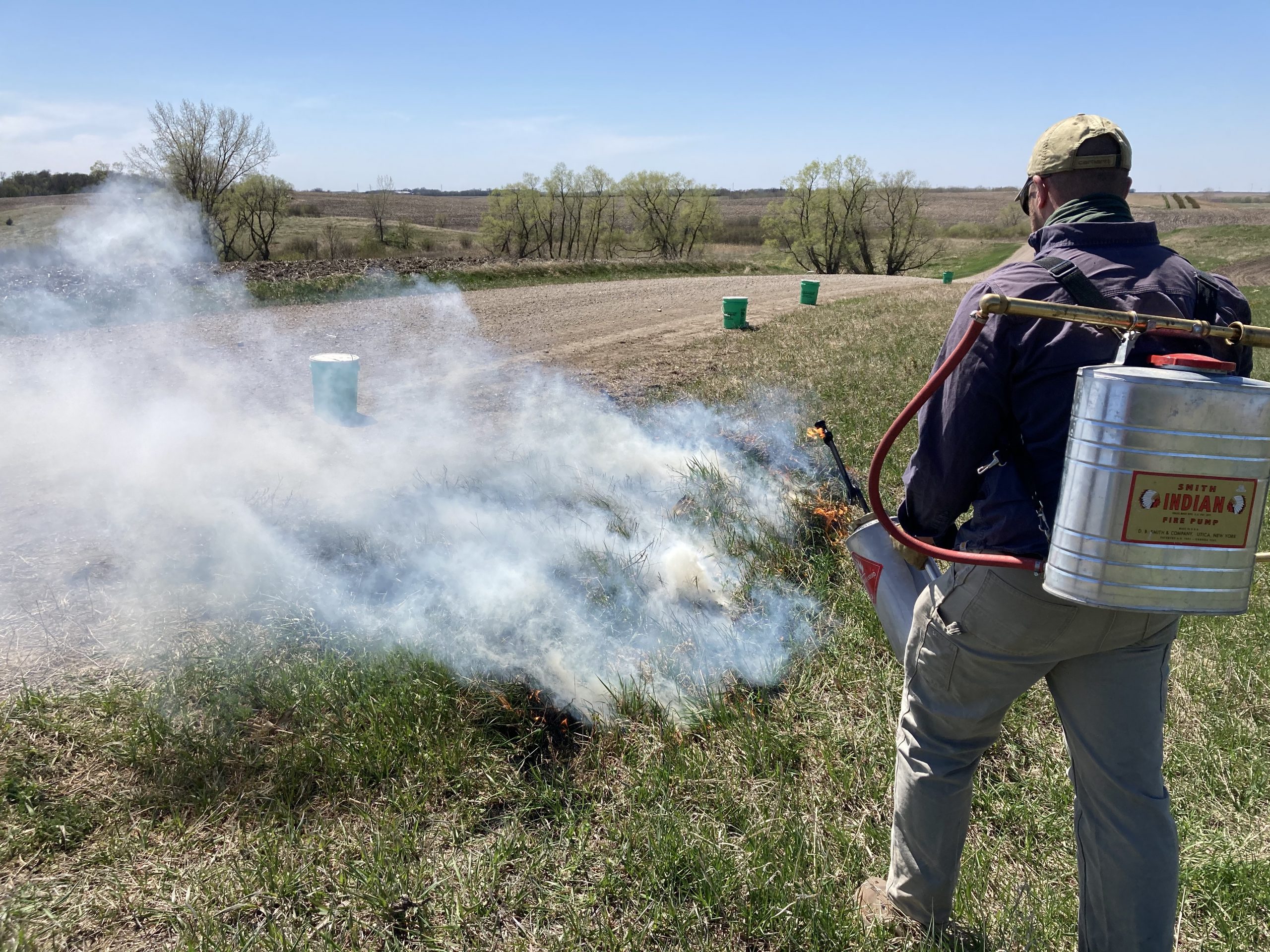
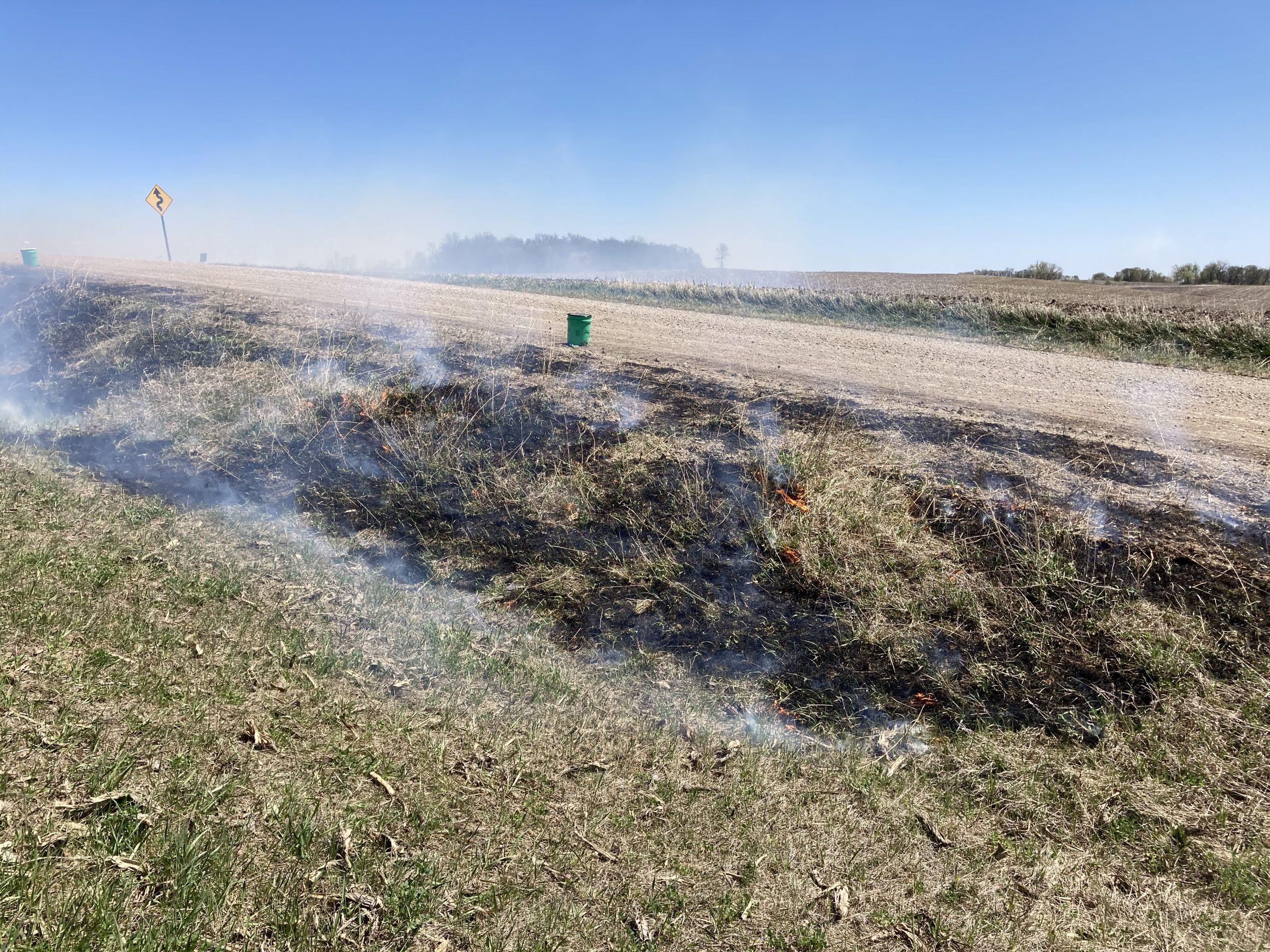
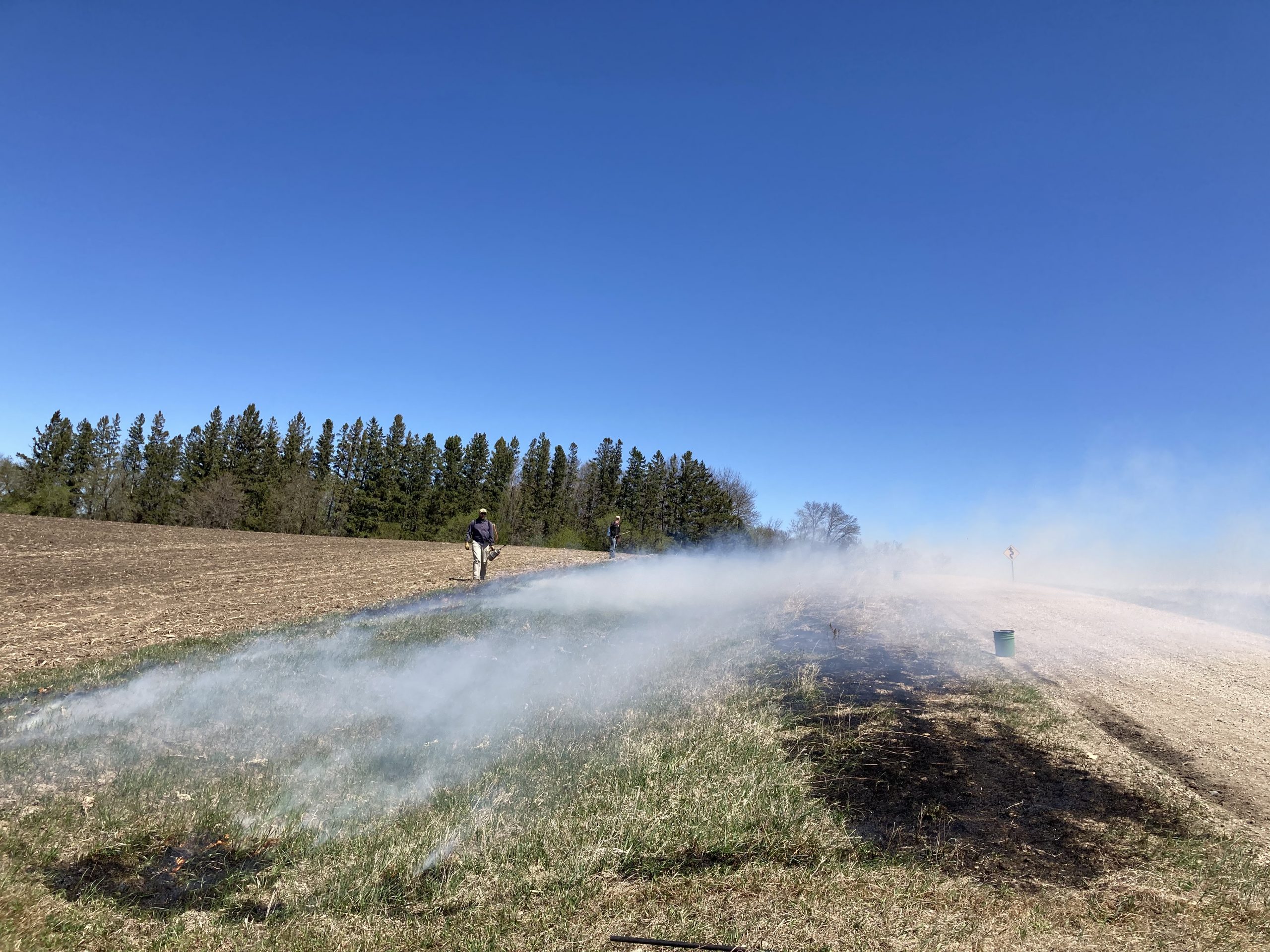
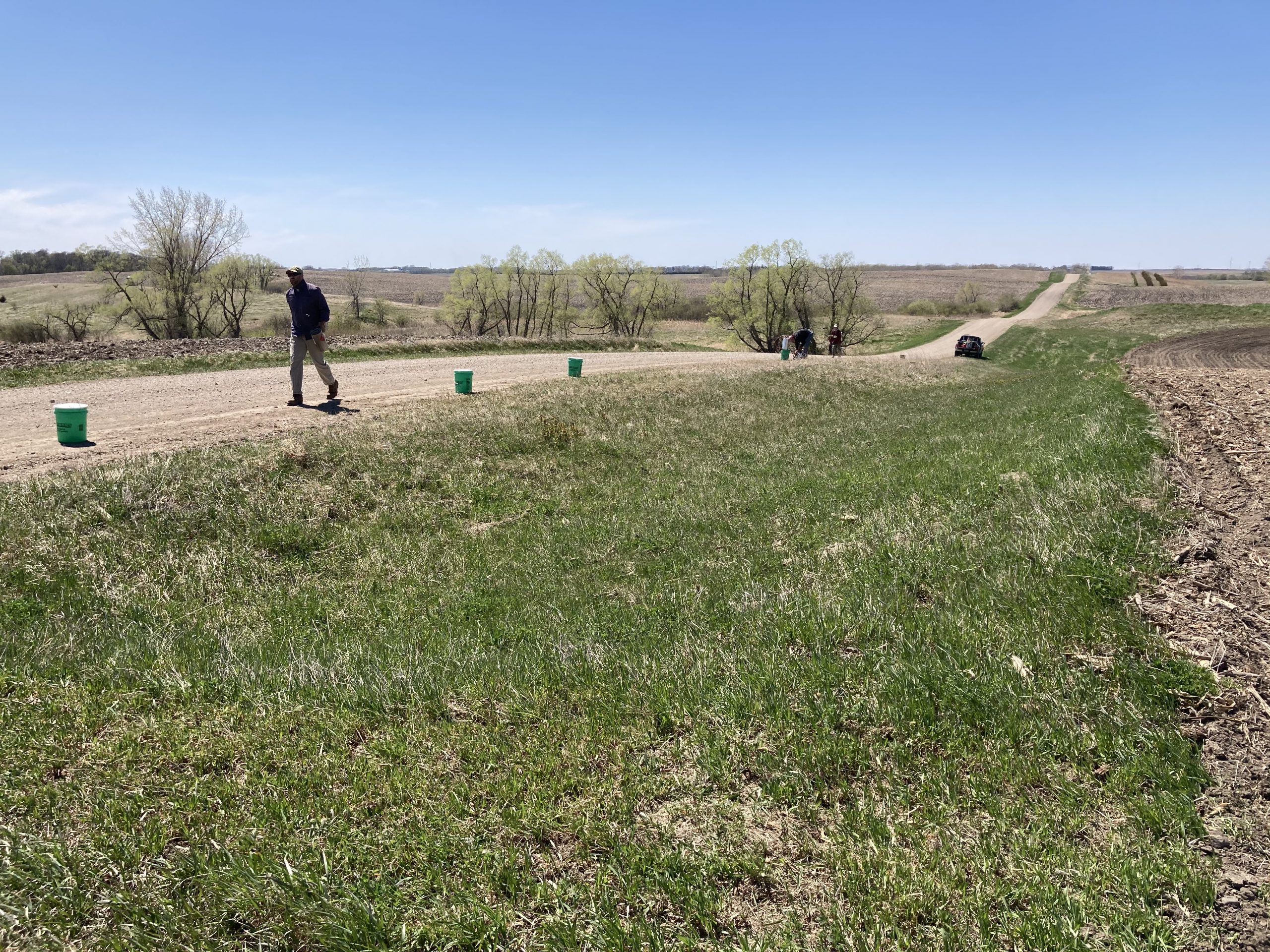
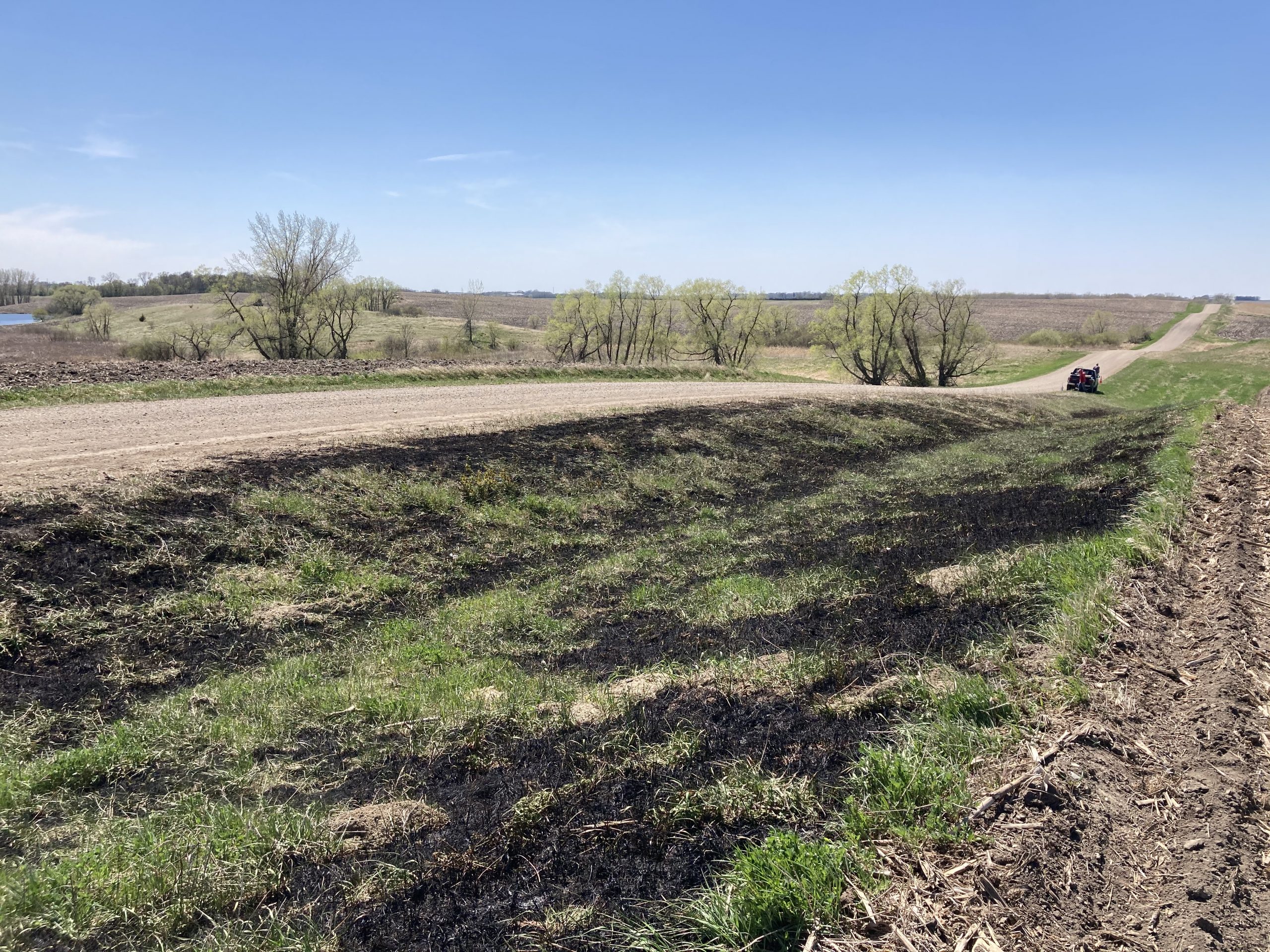
After wrapping up our first remnant burn of the season at east riley, the crew ventured into the wild western prairies of Grant County. Earlier in the day, Mia mowed burn breaks at yellow orchid hill east. This roadside patch had considerably more fuel than east riley and NW winds remained stiff when we arrived. Once water buckets had been staged and the crew briefed, we ignited a test fire in the southeast corner. This fire backed beautifully against the wind, moving steadily and burning fuel completely. One of my takeaways from burns this spring is that prescribed burns in a little lower relative humidity (RH = 25-30) and a little higher winds (12-18 mph sustained) seem to produce great results in burn units where brome is the primary fuel.
A nice sequence of photos illustrating how the burn at yoh.e progressed. We started with a test fire and observed that small fire before proceeding to burn the entire unit. We decided to ignite the downwind edge of the burn unit and allow that fire to back against the stiff wind. Looking at the fourth and fifth photos, you can see the wind push smoke to the south as the fire backs slowly against the wind moving north.
We decided to let the fire back against the wind across the entire burn unit. Once sufficient black had been established in the southeast corner of the unit, we ignited a backing fire along the entire southern edge of the unit along Wennersborg Rd. After fire lines were secured, Gretel grabbed the push power and finished mowing burn breaks at yellow orchid hill west while Jared, Stuart, and Mia extinguished any remaining hotspots. 30 minutes after ignition, we were left with an almost entirely blackened burn unit. Beautiful, predictable prescribed burn!
Temperature – 53 F Relative humidity – 30% Wind speed (max gusts) – 18 (21) mph wind direction – NNW Ignition time – 3:44 PM End time – 4:14 PM Burn crew: Jared, Stuart, Gretel, Mia
Before and after photos looking east along Wennersborg Rd
Before and after photos looking west along Wennersborg Rd
After 5 months of preparation, we officially applied the first experimental treatments for our NSF proposal to study prescribed fire effects on prairie plant reproduction and population dynamics.
Weather conditions Tuesday afternoon were favorable for burning but wind forecasts were at the upper end of our burn prescription. Given our success burning p8 in similar conditions just a week earlier, we decided to proceed cautiously by starting with a prescribed burn on the north side of east riley. Here light and discontinuous fuel (mostly brome), a gravel road for a firebreak on the south side, and agricultural fields downwind mitigated our concerns about gusty winds. Earlier in the day, Mia mowed fire breaks along the east and west end of the burn unit. We ate lunch, loaded up our equipment, and drove down to east riley. Along the way, the crew got a great look at a western kingbird perched along Sandy Hill Road.
Once at the site, we reviewed the burn plan and staged equipment. We ignited a test fire in the southeast corner of the burn unit. Despite a slow start to the test fire and stiff NW winds that kept extinguishing the drip torch, the backing fire burned well through brome and scattered warm season grasses. With scattered poison ivy in the eastern third of east riley, we were cautious to stay upwind of smoke by lighting small strips perpendicular to the wind. Once sufficient black (burned area downwind) had been established, we proceeded to ignite the southern edge of the unit along Mellow Ln and wrap around the western end of the unit to ignite a head fire along the northern edge of the burn unit.
While somewhat patchy, we considered the burn a success. The fire behaved predictably and we felt comfortable that we could continue burning other units with more fuel. After the burn, Stuart shared the observation that the fire did not carry well in areas where fuel was covered by a film of silt/gravel. We packed up and drove a short distance into Grant County for our next set of burn units…
Temperature – 52 F Relative humidity – 34% Wind speed (max gusts) – 13 (22) mph wind direction – NNW Ignition time – 2:22 PM End time – 2:58 PM Burn crew: Jared, Stuart, Gretel, Mia
Before and after comparison looking west along Mellow Ln.