In past years team echinacea has noticed that silverleaf scurfpea very rarely produces a seed. Some would estimate over ninety percent of the time the pod contains no seed. This brings about many questions concerning why sliverleaf scurfpea produces so few seeds. The focus of this experiment is to get an idea of whether or not the problems related to going to seed are pollination related?
The first step of the experiment was to was to look at the sliverleaf scurfpea’s flowers under a microscope to see if the flowers were producing pollen and see if it was possible to cross pollinate such a small flower in the field. The flowers of the sliverleaf scurfpea were producing pollen and with some experimentation I found a way to effectively cross pollinate the flowers. I found that the best way to get the pollen out out of the flowers was to use a dark colored toothpick and gently open the petals of the flower so that the anthers are more visible. following that I would lightly brush the anthers with the toothpick so that it would collect the pollen. I would then gently open the petals of the other flower and bush the toothpick over the stigma.
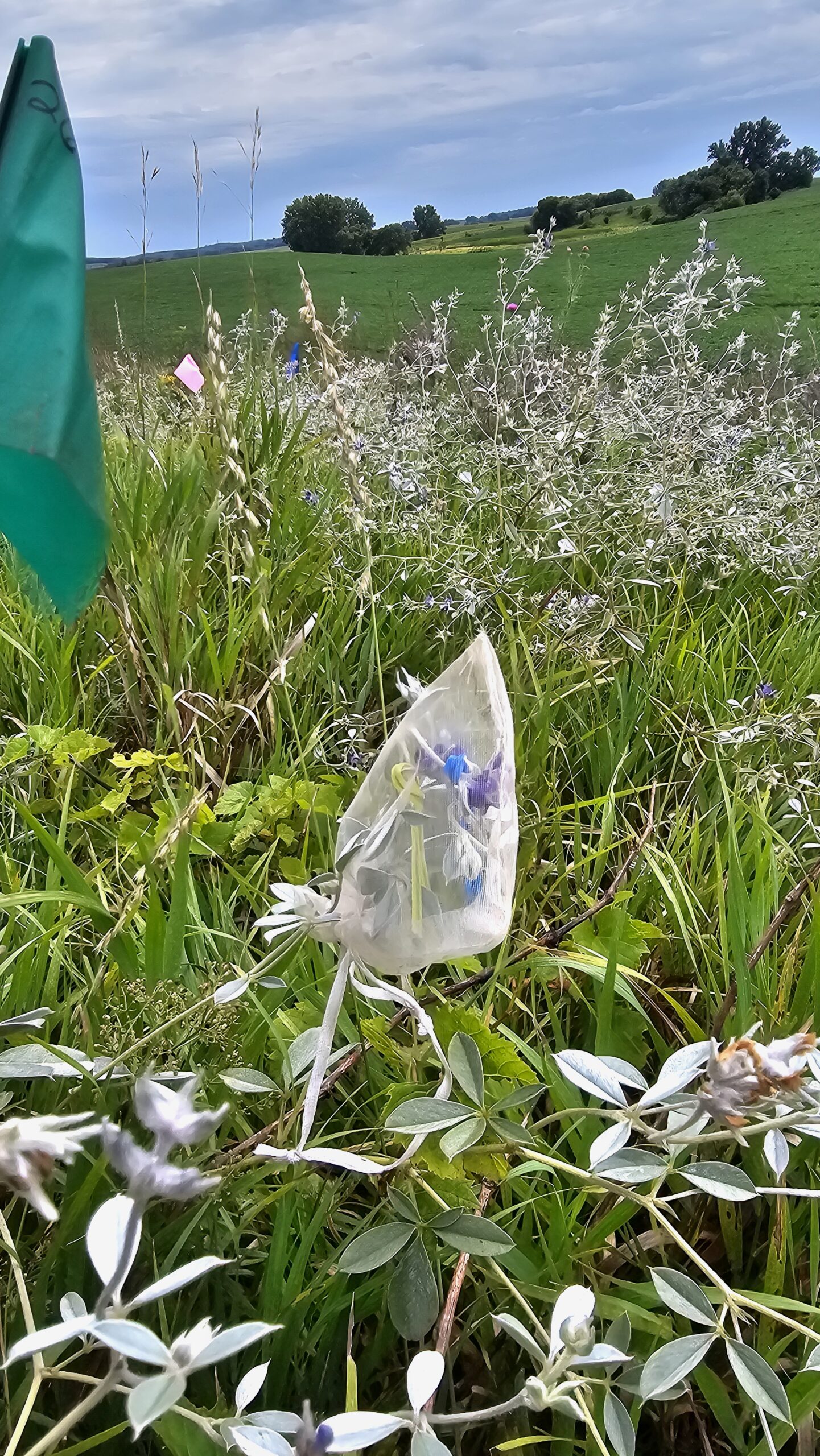
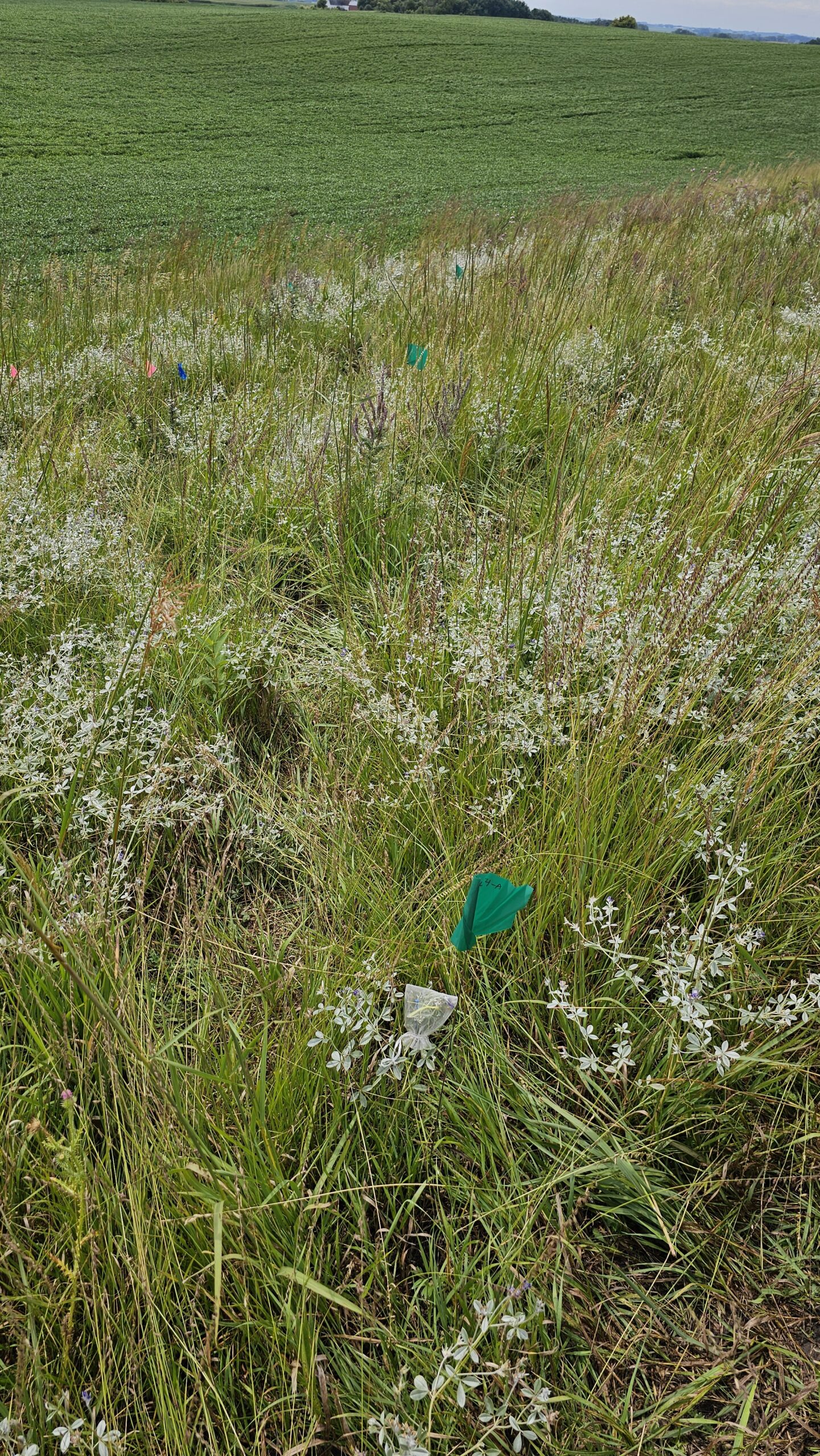
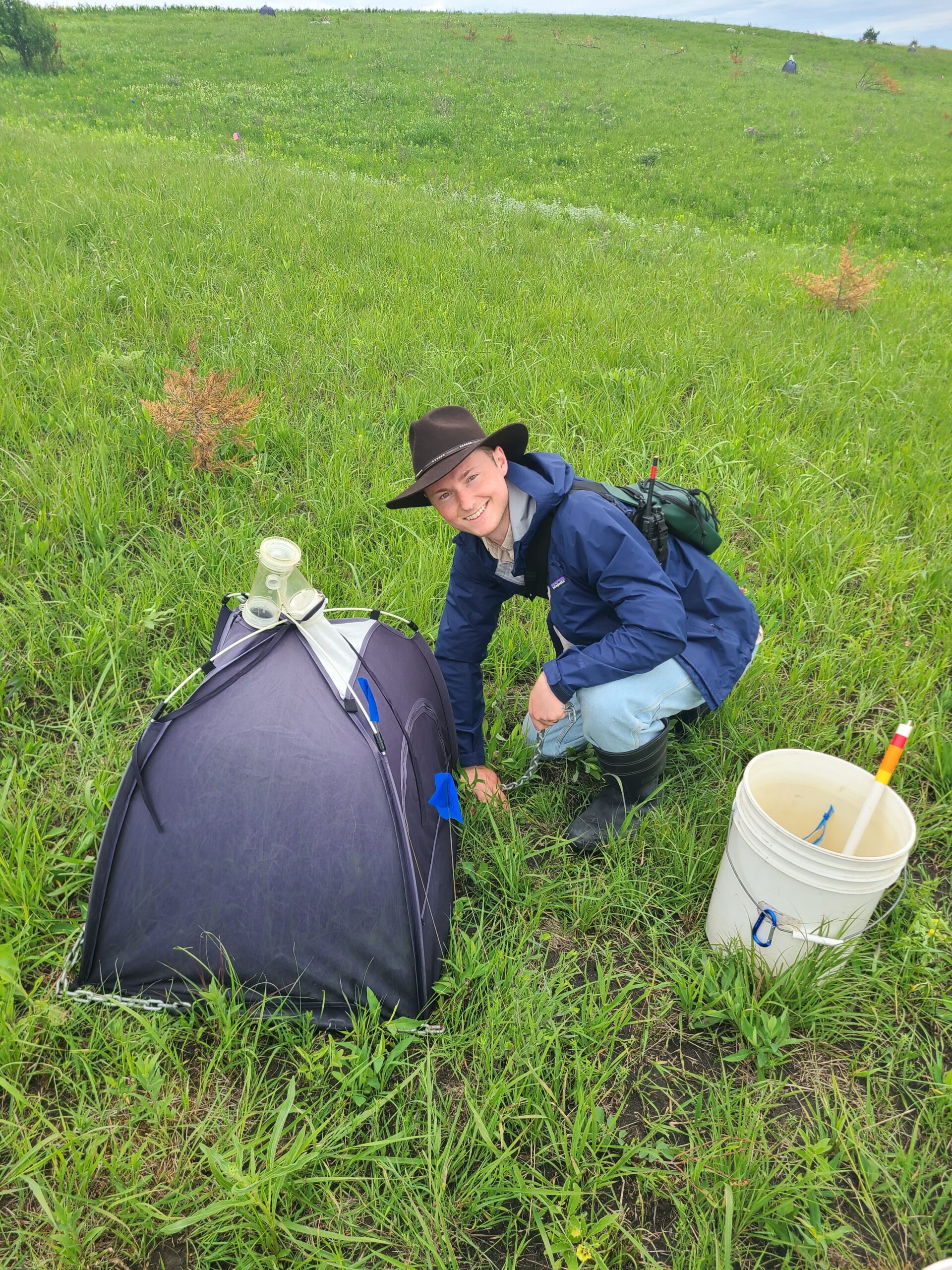
The second phase of the experiment included going out into the field and cross pollinating the silverleaf scurfpea. This took place at the site Nice Island on July 24th and July 31st of 2024. The plants were chosen at random and each plant was over 20 meters away from the plant it was being crossed with. On each plant two flowers were randomly chosen. One as the flower that would be crossed, identified by a blue twist tie, and the other as a control variable, identified by a yellow twist tie. Following the cross pollination both twist tied flowers were covered in a pollinator exclusion bag. This was repeated for 6 different silverleaf scurfpea plants at Nice Island. Each plant involved in the silverleaf scurfpea experiment was marked using a green flag.
This work sets the team up for the final step of the experiment. The final step will be to return to the cross pollinated plants in about 2-3 weeks and see if the pods that were pollinated produced a seed. This can be done by squeezing the pods. The pod will either contain a seed or not contain a seed.
Silverleaf Scurfpea in Cross Pollination Experiment
Silverleaf Scurfpea in Cross Pollination ExperimentSilverleaf Scurfpea Cross Pollination Experiment at Nice Island
Today was the first day of total demography! Team Echinacea started as a whole group at Tower, a remnant prairie site, where Jared gave an overview of total demography. Team Echinacea learned important skills such as communication and collaboration. After total demography was finished at Tower, one group headed to Martinson Approach and another went to East of Town Hall. Echinacea angustifolia pollen has seemed to wind down in the past few days. Today, Grace and Rebecca collected the remaining pollen from the last flowering plants. In the afternoon, everyone had personal project time!
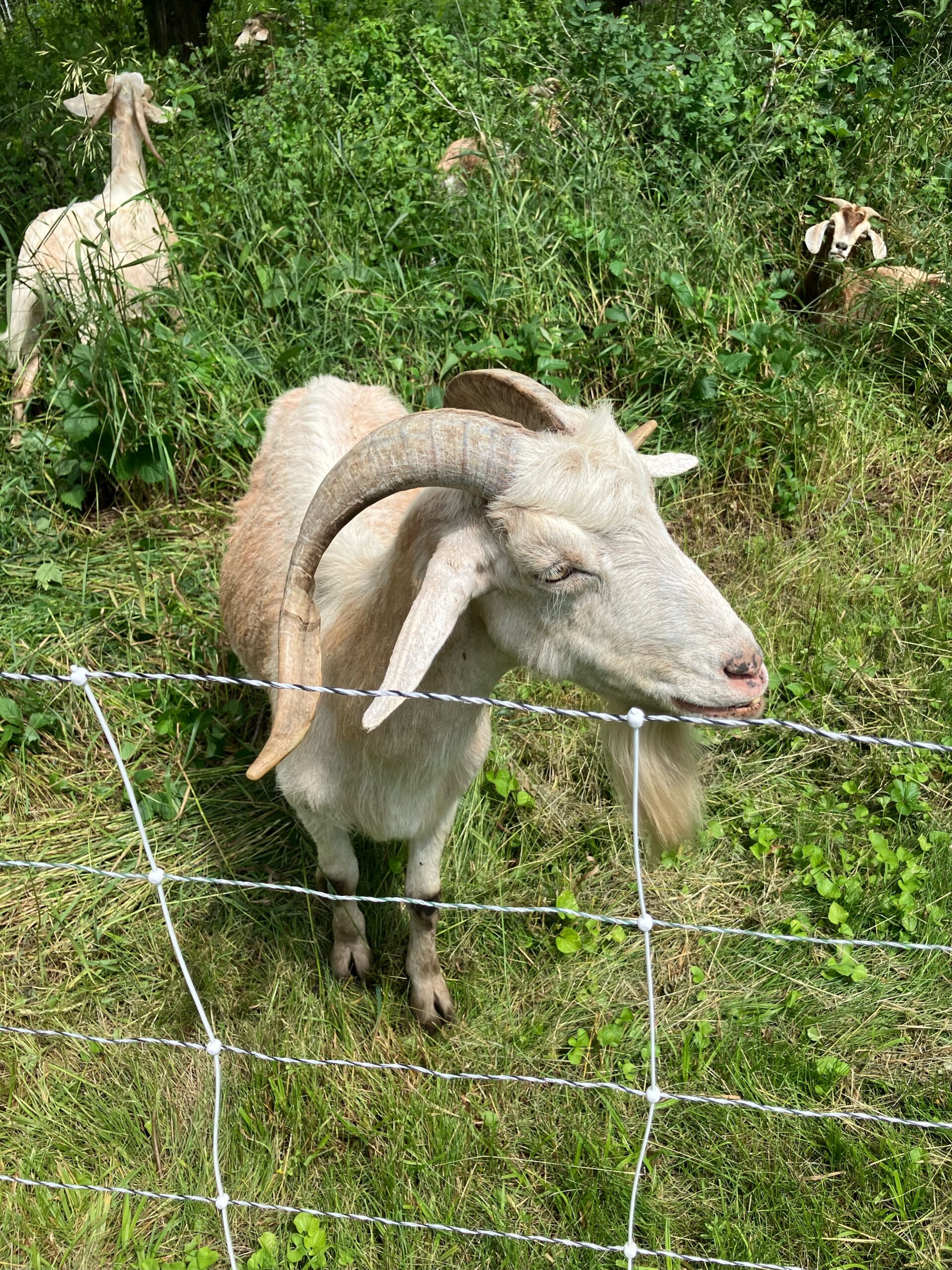
Today we welcomed goats to Hjelm. They are already hard at work eating their way through the foliage. Keep up the good work, goats! Most of the humans worked on finishing searching for Stipa in p01 and started planting a new production garden to generate seed to add to the experimental plots. Ian and Liam valiantly continued staking points for the pollinator emergence study. Wyatt and Abby are getting ready to begin a study investigating the effects of fire on pollen and nectar production in Echinacea angustifolia. This project has many excellent collaborators and is part of the MN ENTRF funded research on prescribed fire and ground nesting bees.
I am a high school science teacher from La Salle High School in Yakima, Washington. Before I was a teacher, I was an ecologist studying plant communities in savanna landscapes. At La Salle, our campus contains nine acres of restored riparian habitat that we manage in partnership with the Yakama Tribal Fisheries Project. My goal this summer is to participate in and learn from Echinacea Project’s ongoing activities and to develop a long-term research project to bring home for science students at La Salle.
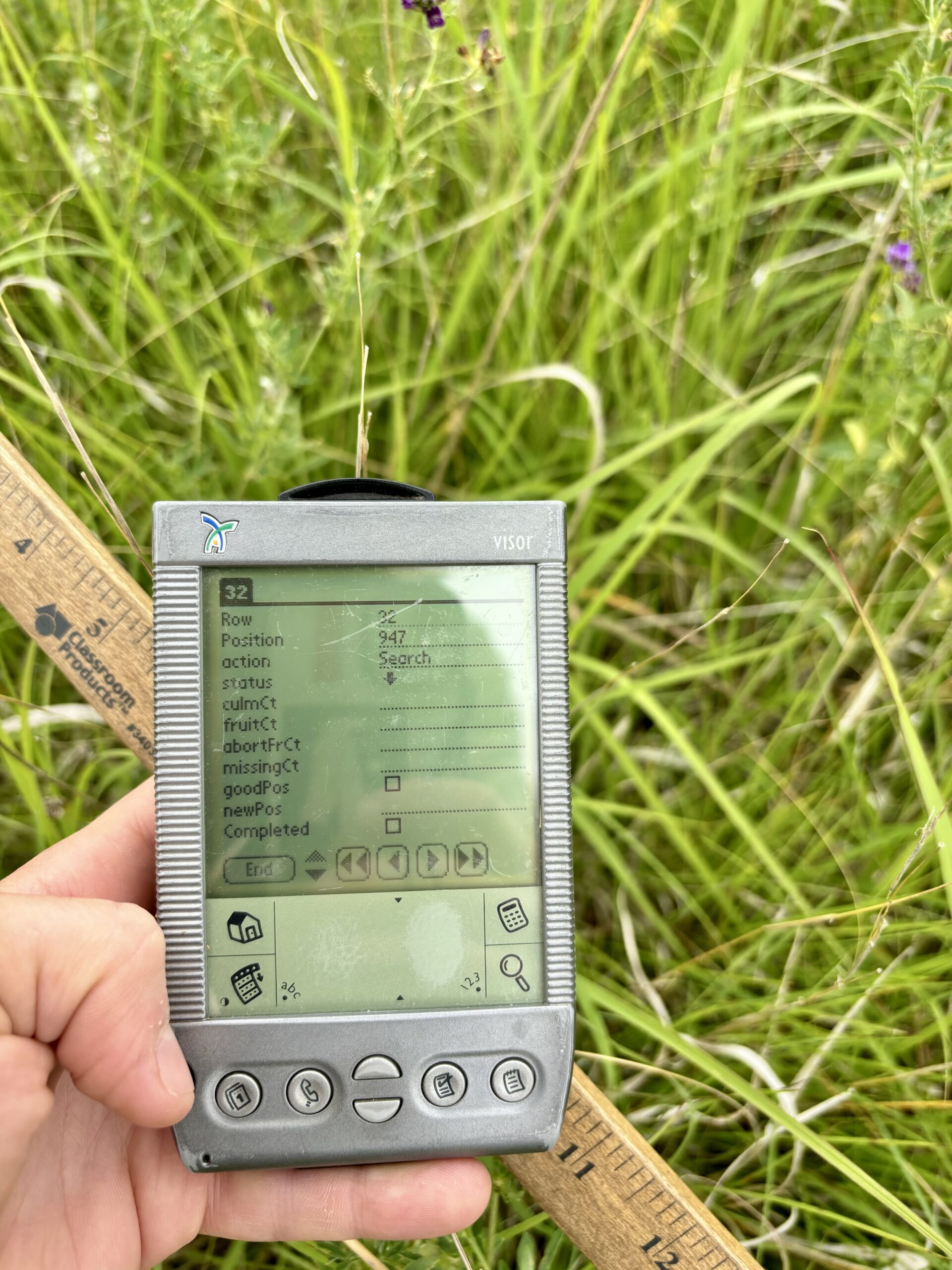
Today the team conducted the second day of Stipa search. This time we came back to know points with Stipa plants using our visor and confirmed if a plant was present. The team learned how to differentiate basal Stipa plants from other grasses in the plot and confirmed the presence of many Stipa grasses that weren’t logged during our first day of Stipa search. In the afternoon the team worked on staking more BB points and collecting/setting up more emergence traps.
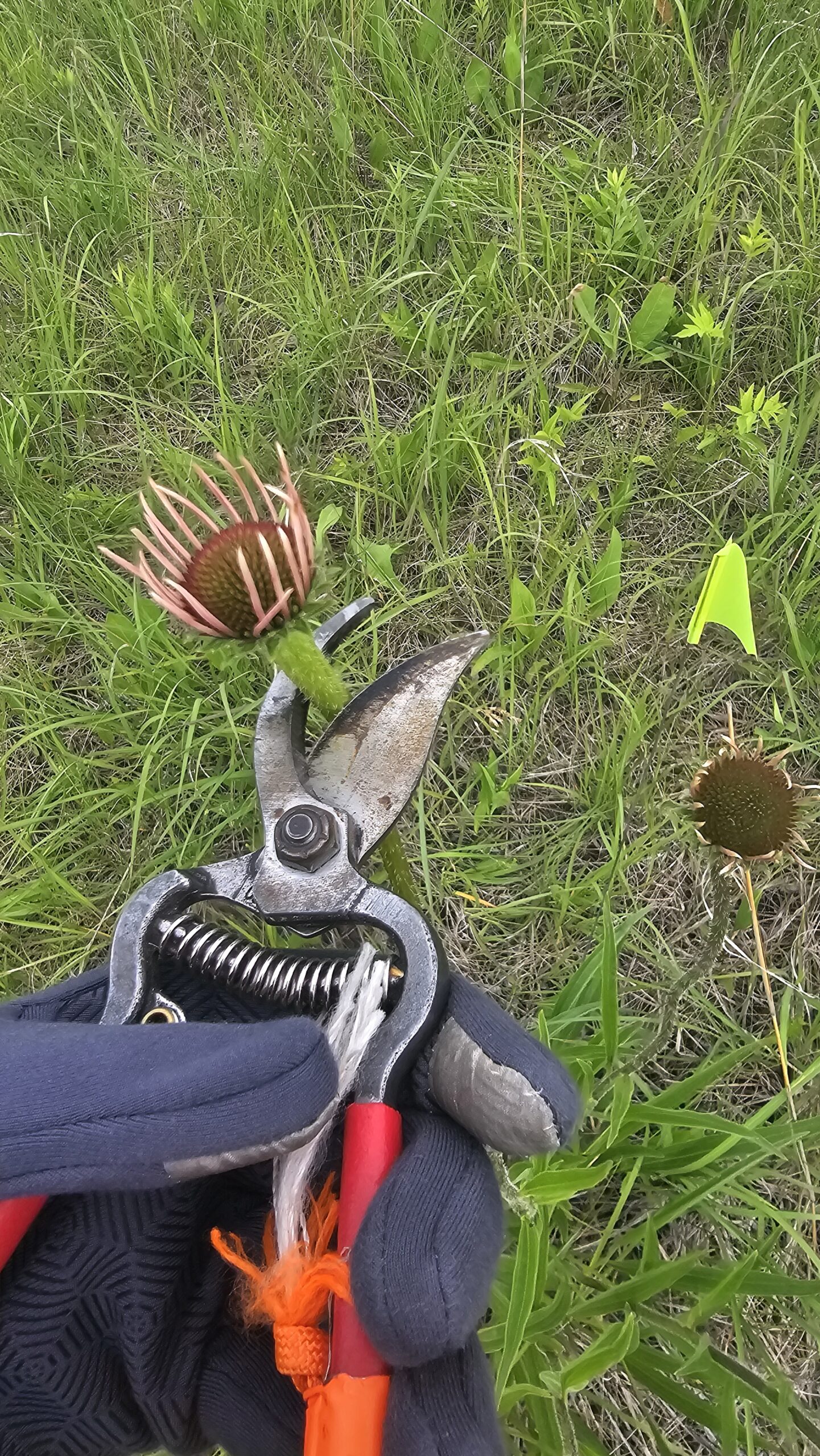
Today the team went out to Hegg Lake to flag flowering echinacea along with decapitating some pallida. We were joined by collaborators from NDSU who collected pallida samples for pollen and nectar studies. It was the first day of taking demographics of the echinacea this season. Taking the demographics went well and we estimated finding anywhere between 80 to 300 flowering echinacea pallida. Later in the afternoon the team split up to work on independent projects. Including, shooting bb points with the gps, working on proposals, and flagging more echinacea.
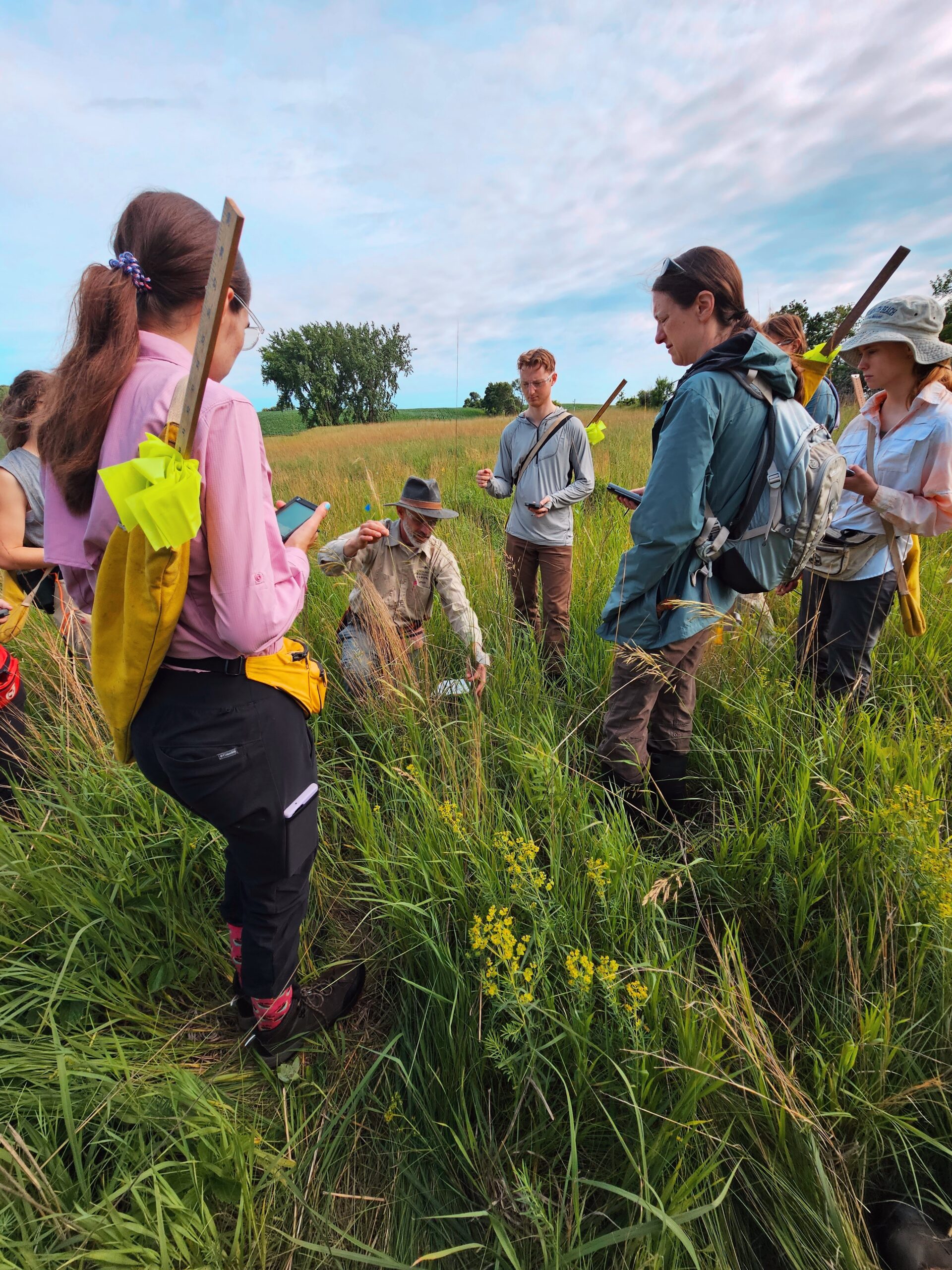
Today the team learned about Hesperostipa spartea (Stipa) which is affectionately known as porcupine grass. After reviewing the protocol for collection, we made our way down to experimental plot p01 where we received a lesson on identifying flowering Stipa and counting the fruits (imagine a long seed with a tail). We documented the number of culms (stems) and fruits as well as missing fruit in our field notes. This was only the first step but the information collected will help determine how the fitness – an organisms ability to survive and reproduce in an ecosystem – of Stipa grown in experimental plots differs from Stipa growing in prairie remnants.
Dr. Wagenius teachingteam Echinacea how to identify Hesperostipa spartea in experimental plot p01.
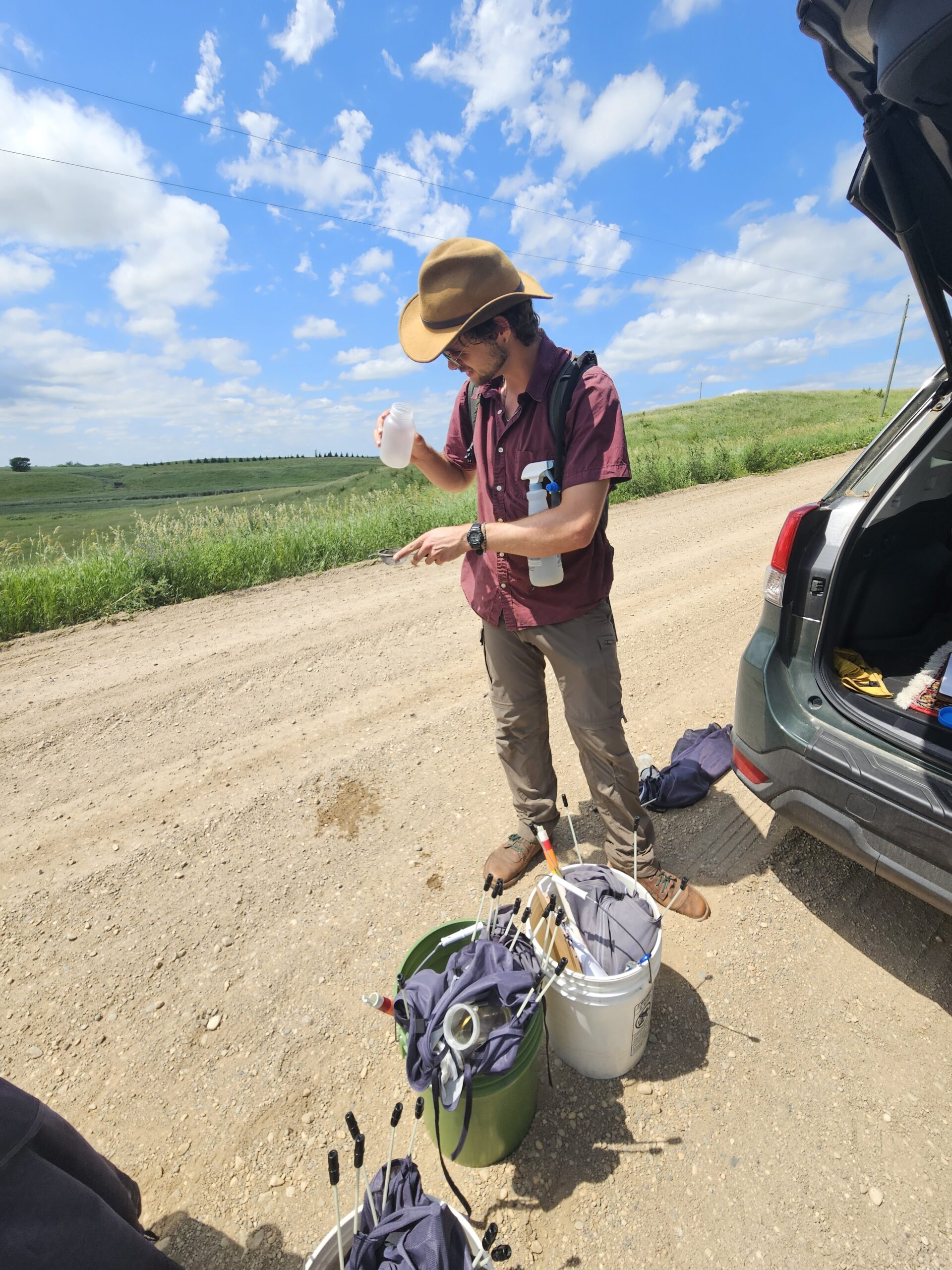
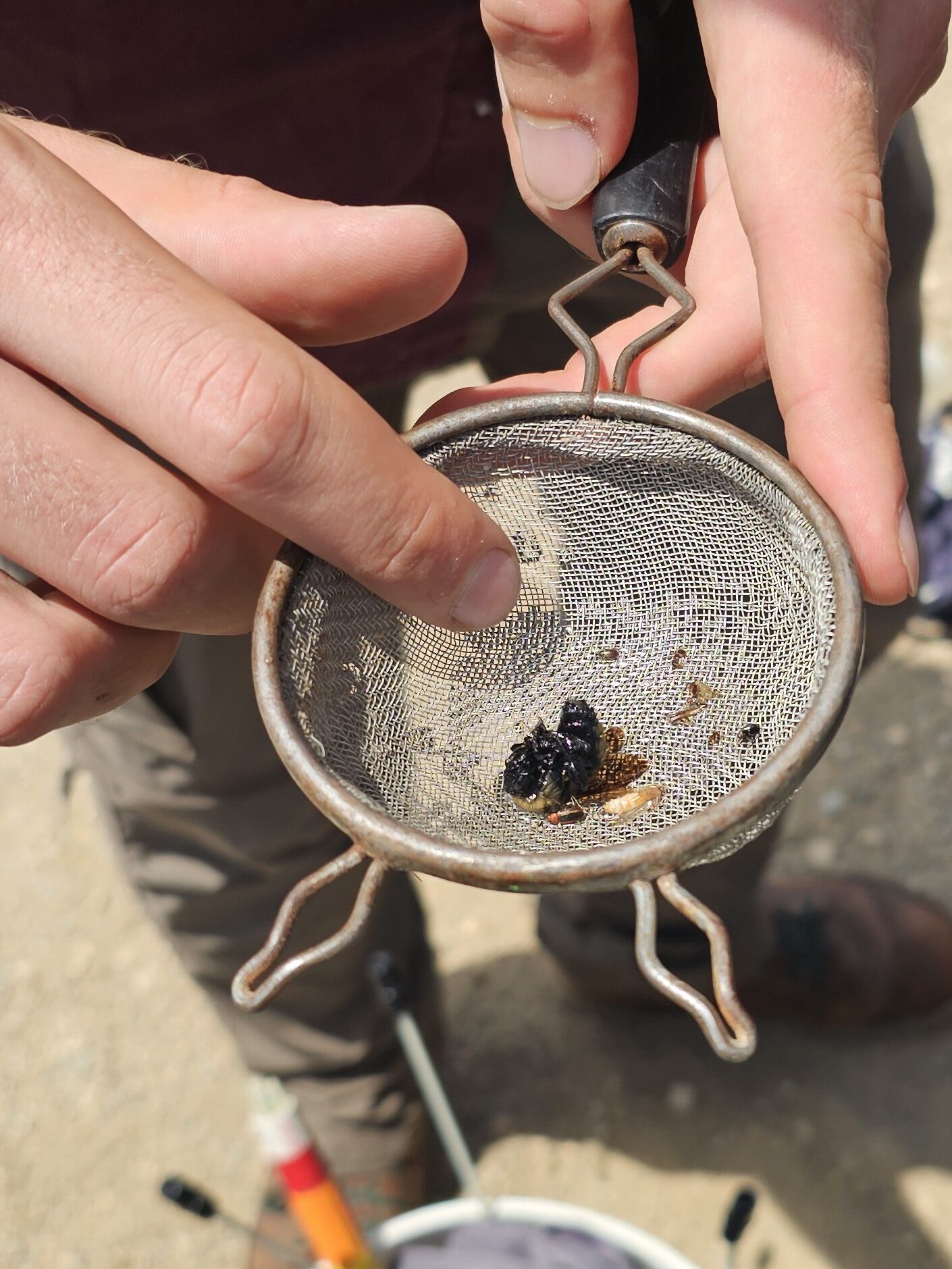
Later that afternoon, a small team retrieved and deployed emergence traps. The contents of the traps were examined and the specimens were prepared for classification.
Ian straining the contents of an emergence trap.
The contents of an emergence trap. That’s a big bee!
Today was a busy Friday full of many activities! It is officially the first day of summer! Ning, Liam, and Maddie worked in P1 today fixing flags that might be out of place or not in line and also putting signs for positions so it is easier to know where you are. They also checked the flags in the 99 garden. Zach and Emma headed out to P8, where they watered the prairie turnips planted yesterday and planted extra plants. An interesting thing they noticed was that the prairie turnips seemed eaten across the first 3 rows. The team hypothesized that it might be hungry rodent. Ian helped Elise learn how to use the GPS and how to shoot some BB points.
At lunch, the team had a discussion about their ABTs (And, But, So), which are goals for what each person wants to research or study further this year. There were many great ideas and lots of feedback in our discussion.
In the afternoon, Liam and Zach shot some more BB points. Ian, Maddie, Elise, and Emma and placed some more emergence traps!
Zach with an emergence trap placed yesterday(6/20/2024)
LCW- The study plot sits at the intersection of two roads, one of which is fairly busy. There were copious amounts of tall Brome grasses (cool season plant), and Lead plants (legume). These plants were observed throughout the study plot. There were also prairie roses lining about 5 feet of the roadside. We also observed one Echinacea angustifolia plant near the roadside. The study plot also contained trees and shrubs. It is suspected that this area was not involved in a recent burn. My group came to this conclusion based on the presence dried plant matter under the living plants. If there were a recent burn in this area, this would not be observed. There were not many flowering plants in this area. I hypothesize that it may be too early in the season or there is a lack of pollinators in the area.
YOHW- The study plot is located in an area with less observed vehicle traffic. There were no tall grasses or dead plant matter. We observed very few identifiable plant species. I hypothesize that this area was burned in the spring. In conclusion, these sites were vastly different. We observed far more plant species at the LCW study plot likely because the area had not undergone a recent burn.
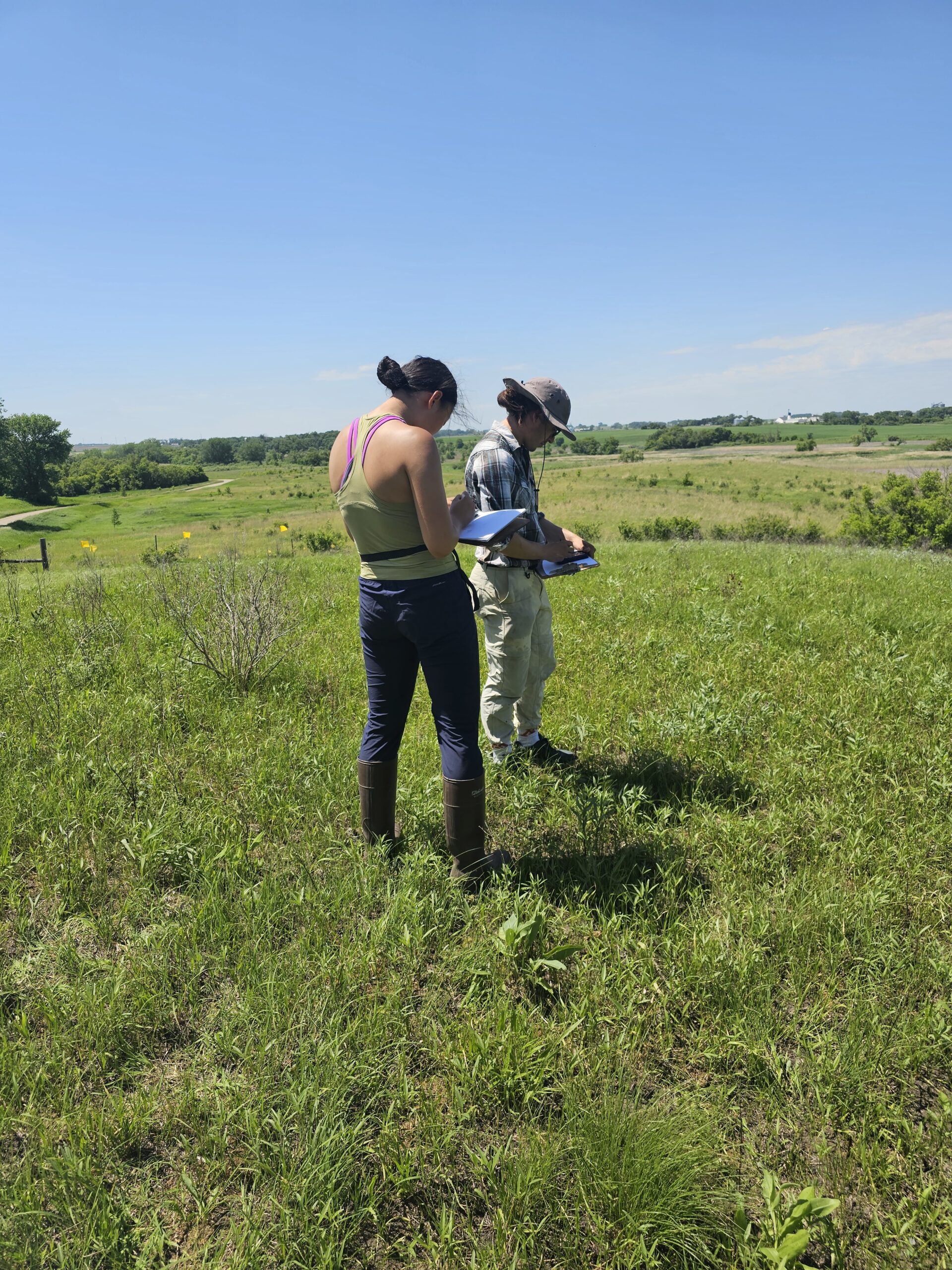
For our first day we did direct observations with the goal of practicing your observational skills along with plant ID for our four plant groups of focus: C3 grasses, C4 grasses, legumes, and forbs. The group I was placed in looked at sites ALF East and ALF West.
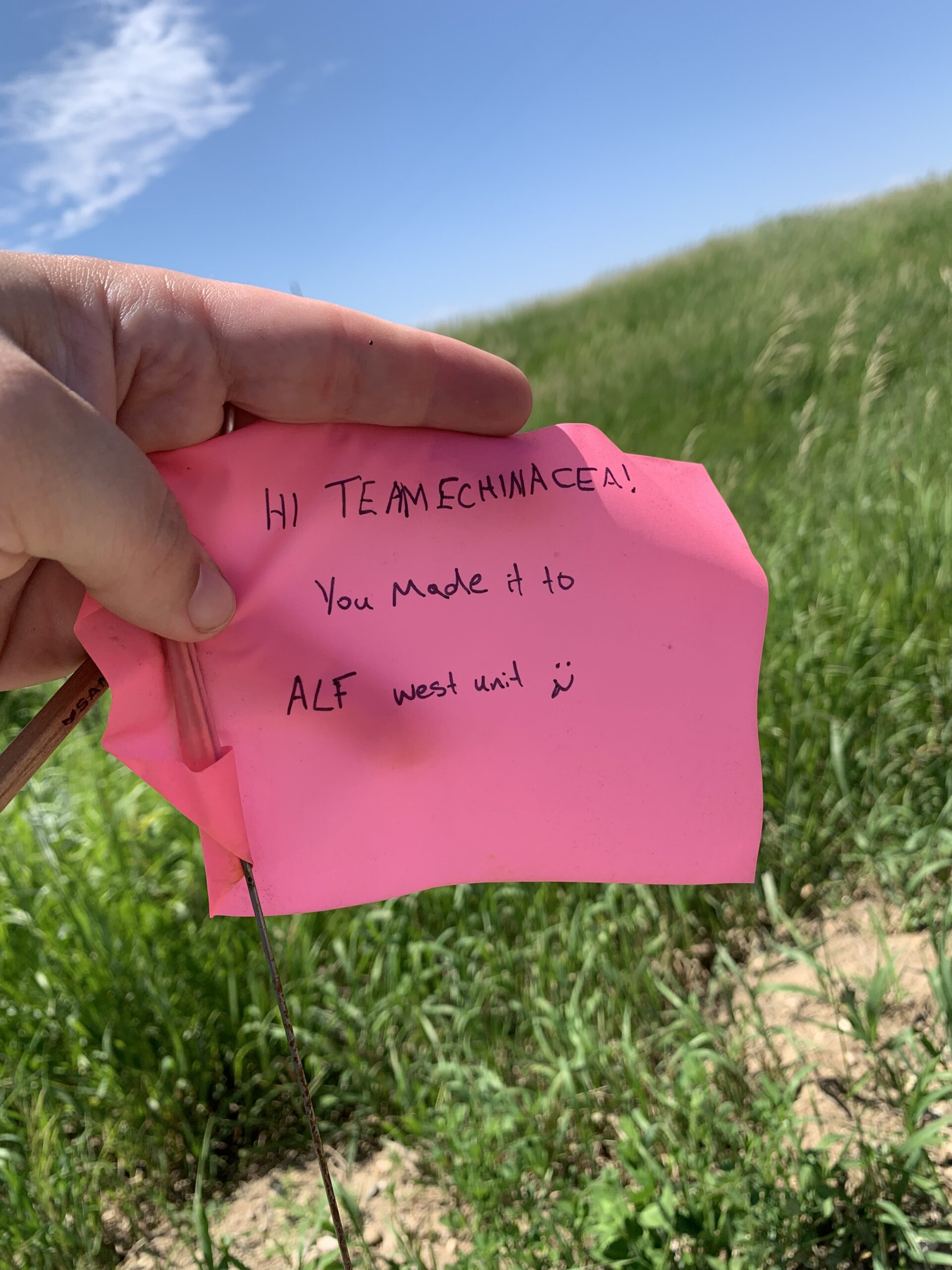
ALF West was our first stop. This site featured a fence line and natural hills that has been cut through by a gravel road. The site consisted mainly of C3 grasses. In the ditch and closer to the road we were able to see a handful of different legume and forb species, but the site lacked diversity in general. Due to this lack of diversity and over taking of C3 grasses the site appears to have not had a prescribed fire for a few years. Fortunately, we were able to see some emerging coneflower which is always exciting!
ALF East was very different in diversity in comparison to ALF West. Based on visual observations diversity was a lot higher and most of the plant species found belonged in the legume and forb plant groups. With diversity being so much higher, and the plot featuring several plants that have appeared to have been scorched by fire it was our assumption that ALF West had experienced prescribed fire in recent years. The landscape of ALF West not too visually different other than it featuring a corn field behind the prairie area unlike on ALF East.