
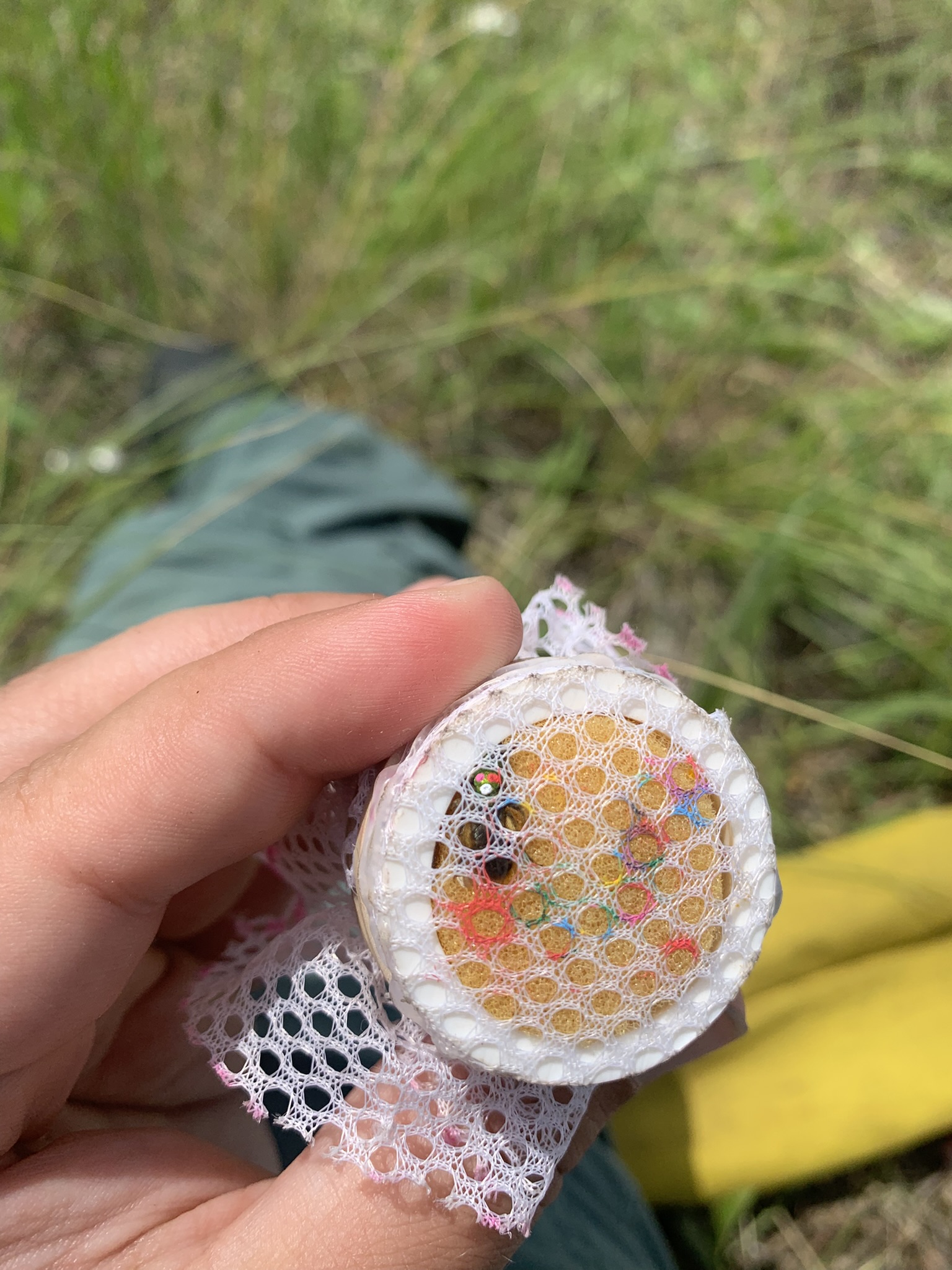
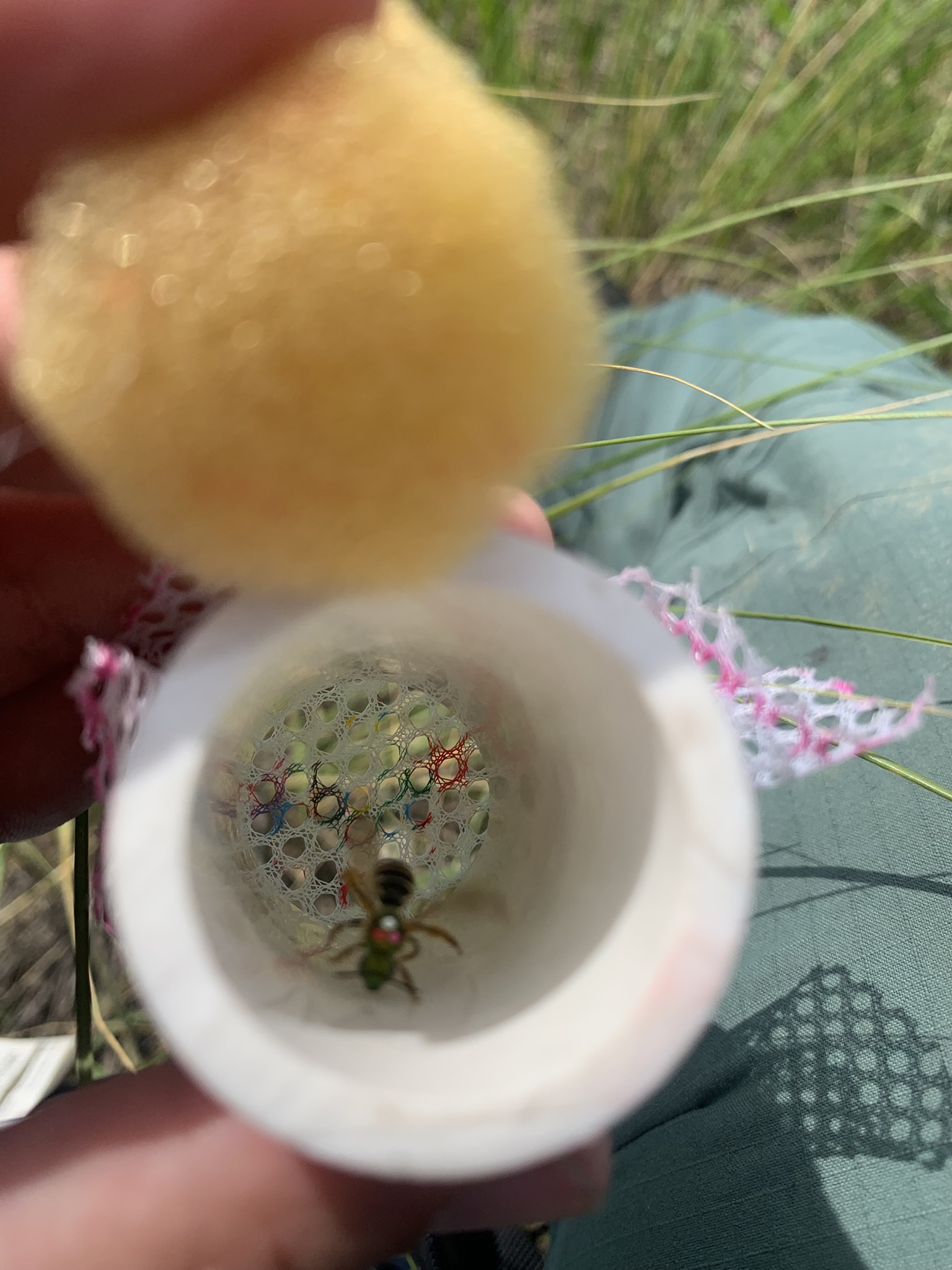
Since the last daily update on the 7th, Team Echinacea has been busy! Last week was the start of the mark recapture project lead by Grace and Kyra. Tallgrass prairie in Minnesota currently exists in fragmented and isolated remnants across the state. These plants suffer from inbreeding and reproductive failure due to a lack of compatible mates. Research has shown that prairie plants in these remnants still receive frequent visits from pollinators, but it is unknown if these pollinators are moving between fragmented prairie sites. Therefore, we as a team are studying the movement patterns of a common pollinator, Agapostemon virescens, using mark recapture techniques to analyze movement between isolated Echinacea angustifolia populations in prairie remnants. In order to do this Grace and Kyra have been teaching the team how to do a mark recapture pilot study where we mark Agapostemon virescens with three alternating colors of paint pens on their thorax. There has been many trials and tribulations with finding the right approach and making sure we are getting out quickly and promptly when the time is right, but we are learning and on the right track, and have the beginnings of a great data set!
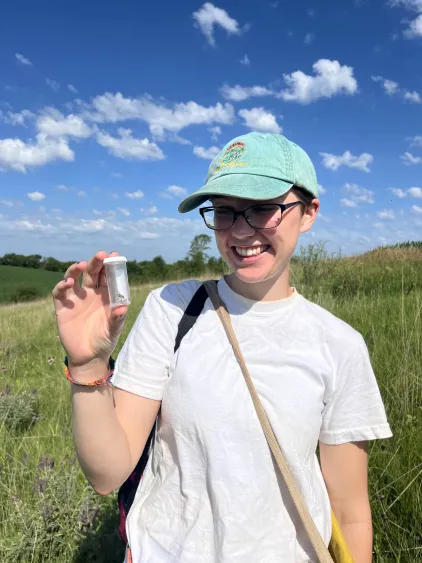
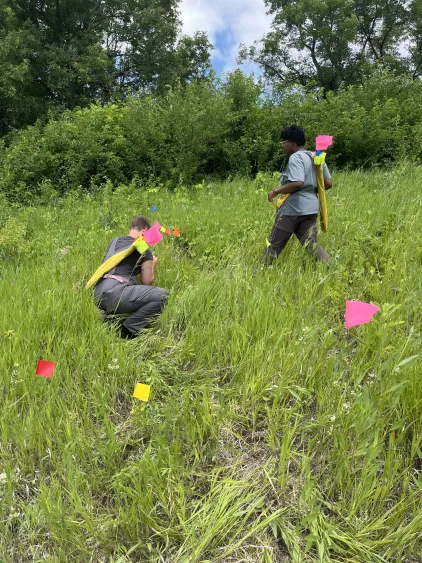
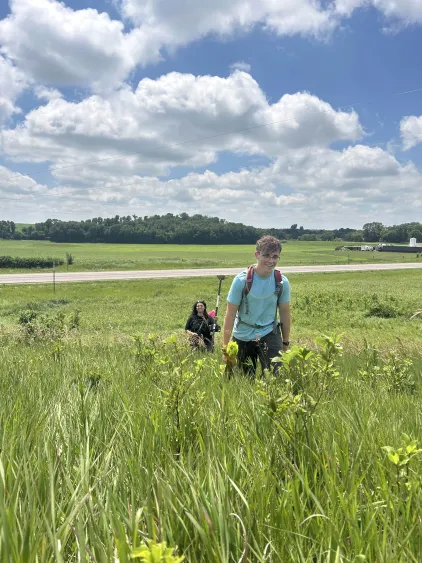
An update on projects in our remnants sites is also in store. We have also been working on total demo at numerous sites. Our objectives for surveying remnant Echinacea angustifolia populations are twofold this year: Document the spatial location of each flowering plant in every remnant using a GPS unit, and Collect demographic data about the Echinacea plants in each population. Total demo gives us a valuable glimpse into the lives of non-flowering Echinacea including factors that influence survival and population growth. The team has been working hard and taking some exceptional data this year. We’ve even found a few plants with a tag in the 500’s meaning they are plants that we’re originally planted at the start of the Echinacea Project. Now those are some long-lived perennials! We’ve also been working on staking, demoing, and decapitating Echinacea pallida over at Hegg Lake. Echinacea pallida is a species of Echinacea that is not native to Minnesota. It was mistakenly introduced to our study area during a restoration of Hegg Lake WMA, and we don’t know how it may impact our local Echinacea angustifolia so we decapitate it to stop the spread. Be gone pallida!
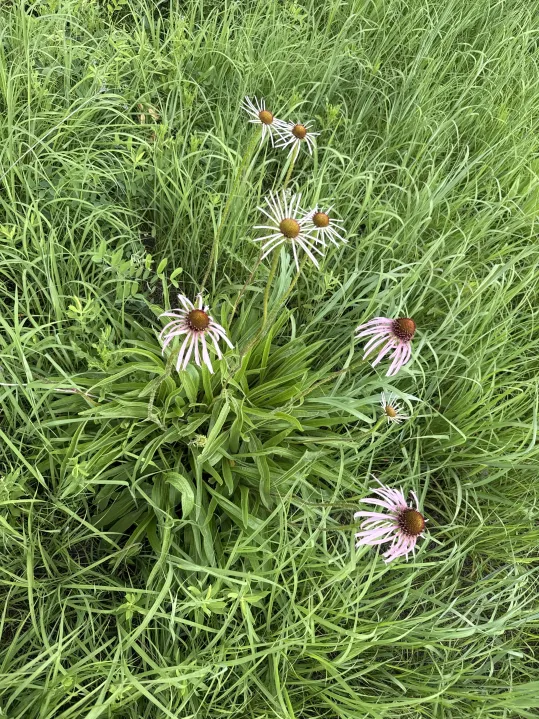
Finally, for the experimental plot update we’ve been working on adding twist ties to flowering Echinacea heads in plot P1 to get them ready for measuring. Measuring is going to look a little different this year as we are not looking at phenology like we have done in previous years, but I will let Maddie D. discuss that in a future post!
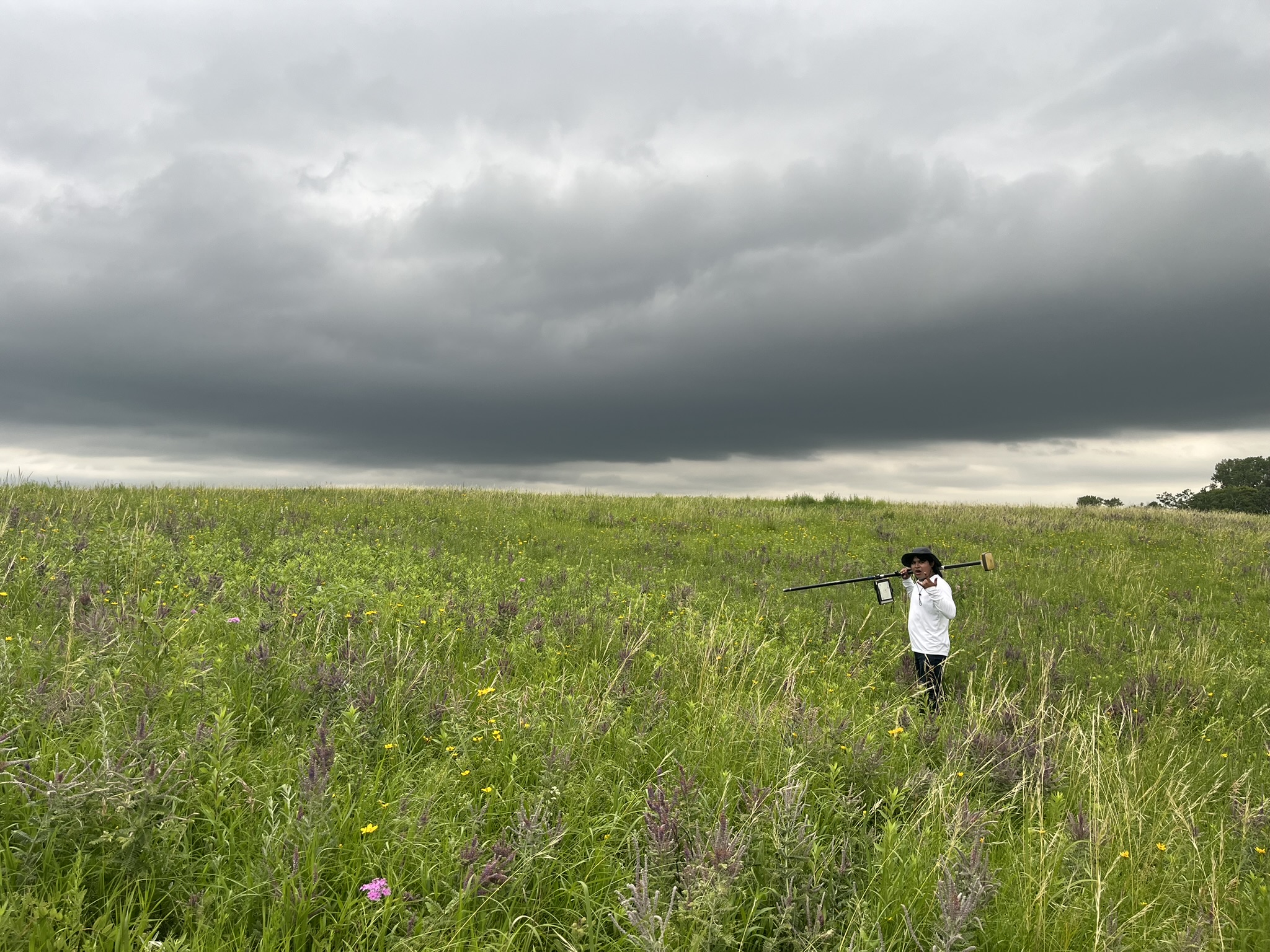
Bonus: currently writing this after being rained in for the afternoon where Gael and I (Maddie S.) were working to stake the transect at Staffanson to get ready for total demo there soon!
Leave a Reply