Hello Flog-beasts! We’ve been busy here at the Echinacea project. This Tuesday we finished measuring P1, which was the final big hurdle in our quest to finish measuring. That’s right: we’ve now visited every position in our experimental plots at which we’ve found a plant in the last three years! Very exciting.
The other two big tasks we’re working on finishing is finding Liatris and harvesting Echinacea heads. We’re making great progress on both! Every few days we revisit Echinacea in our plots and in the remnants to see if they’re ready to harvest. Once we harvest the heads, we put them into an H-bag which goes into a G-bag which goes in the seed drier which goes in G-3. That reminds me of a certain song about a bog…
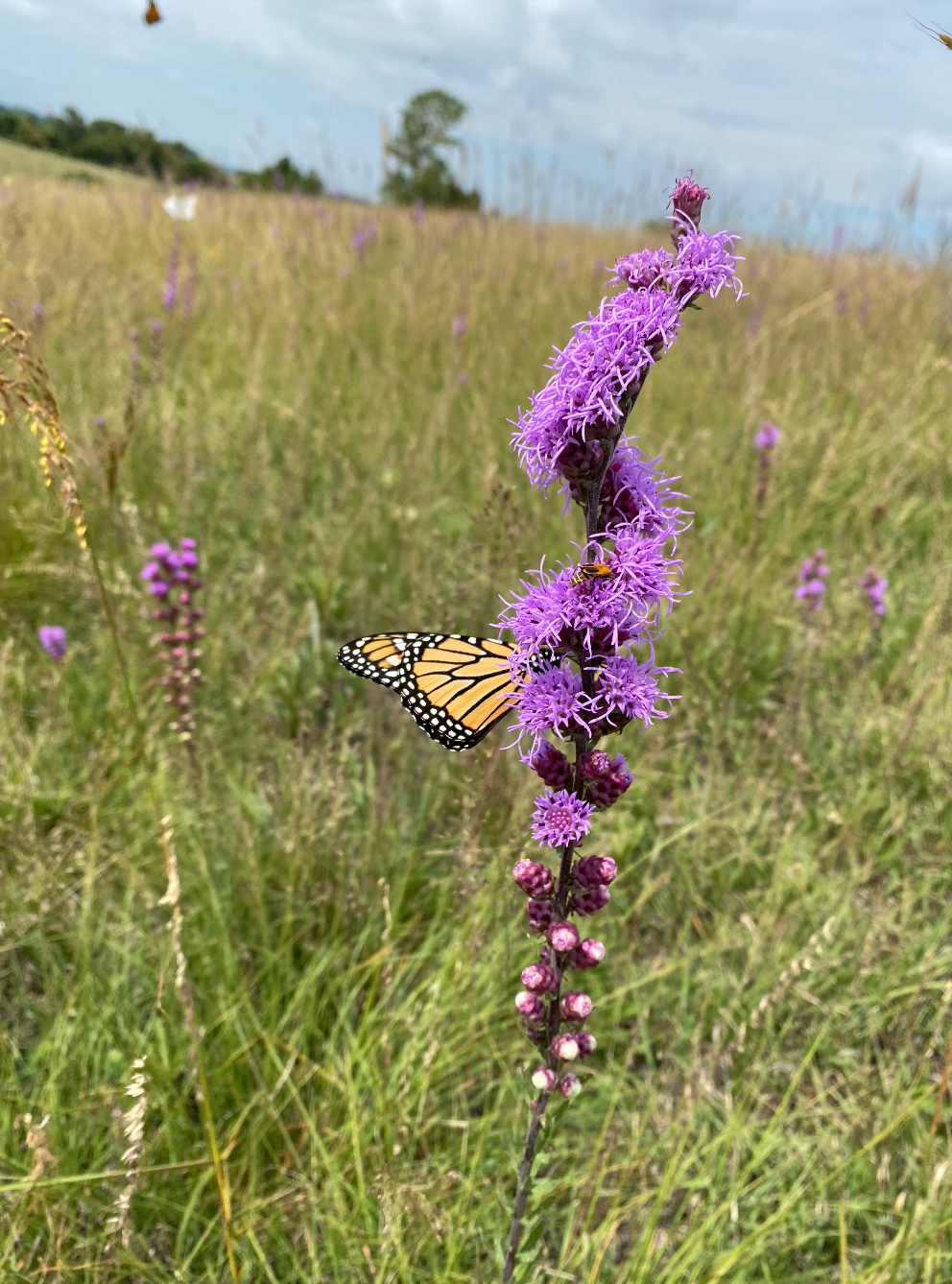
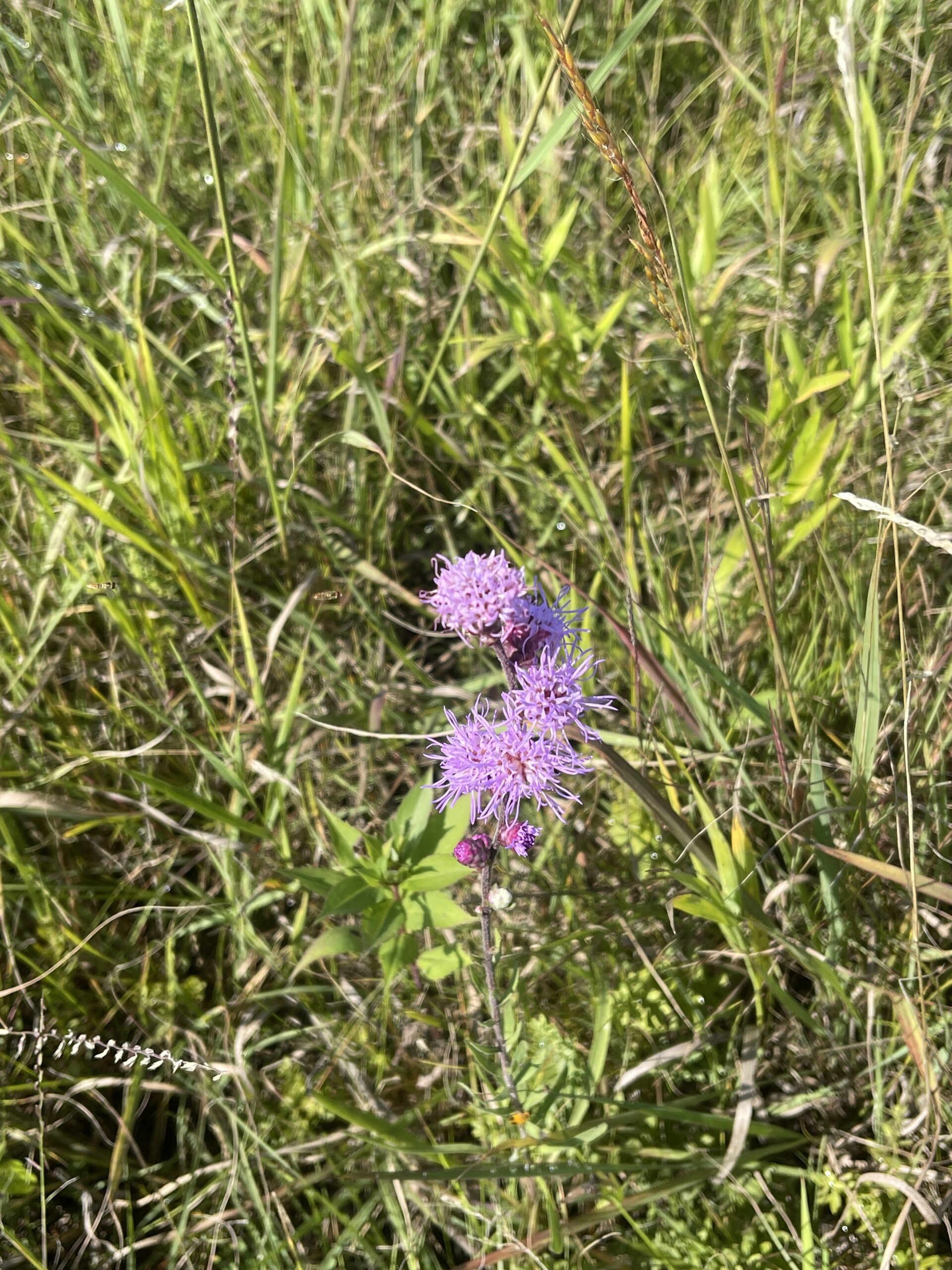
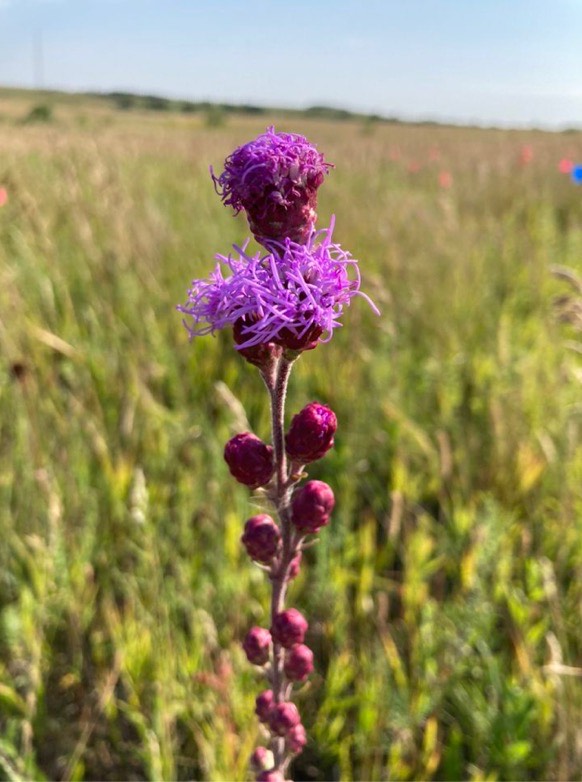
This summer there’s been an unprecedented amount of Liatris flowering, so it’s been a huge task to map it all. We’ve had to put in transects at certain plots because there’s just too many to surv!
Spiral staircase Liatrus!
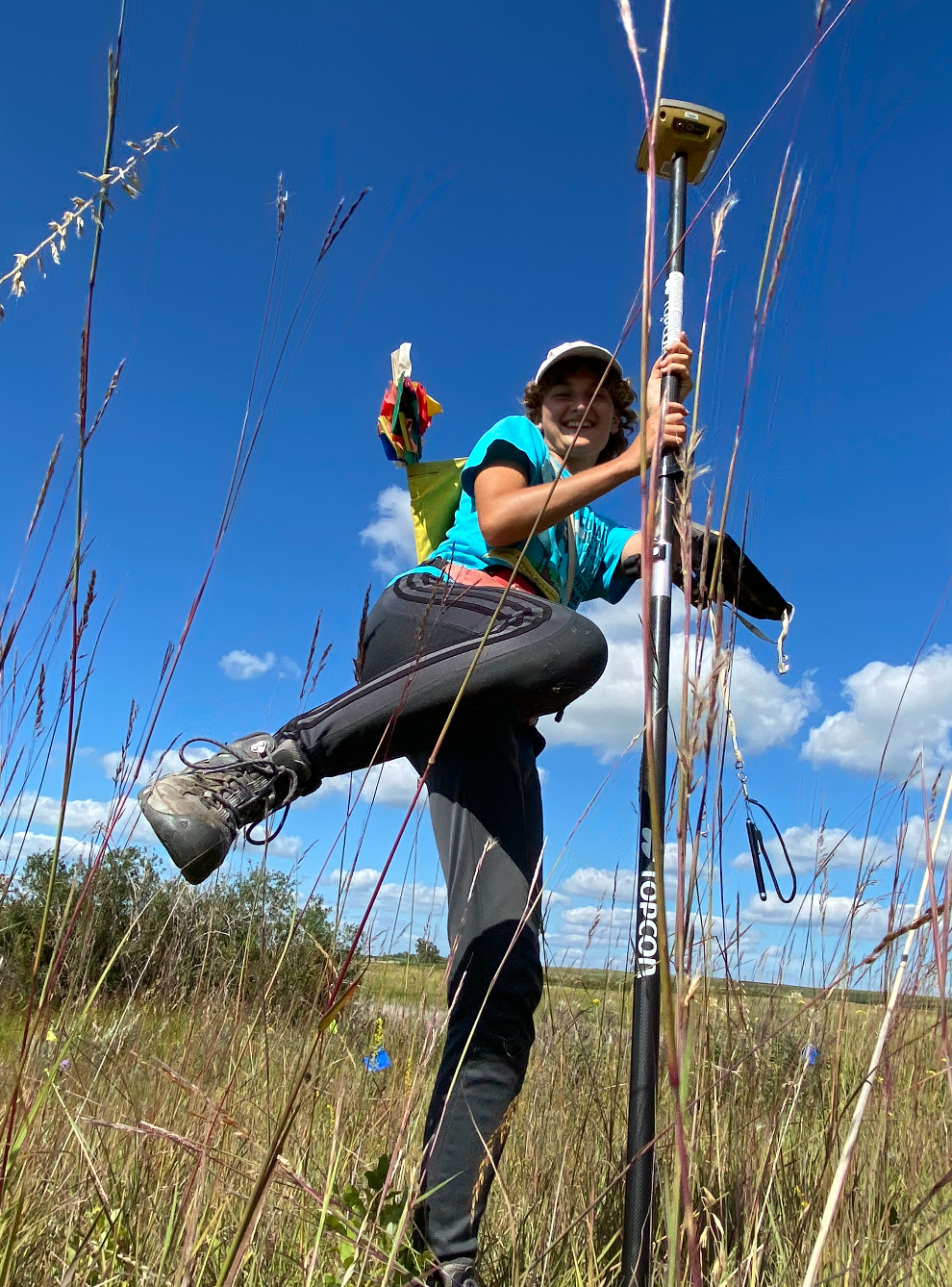
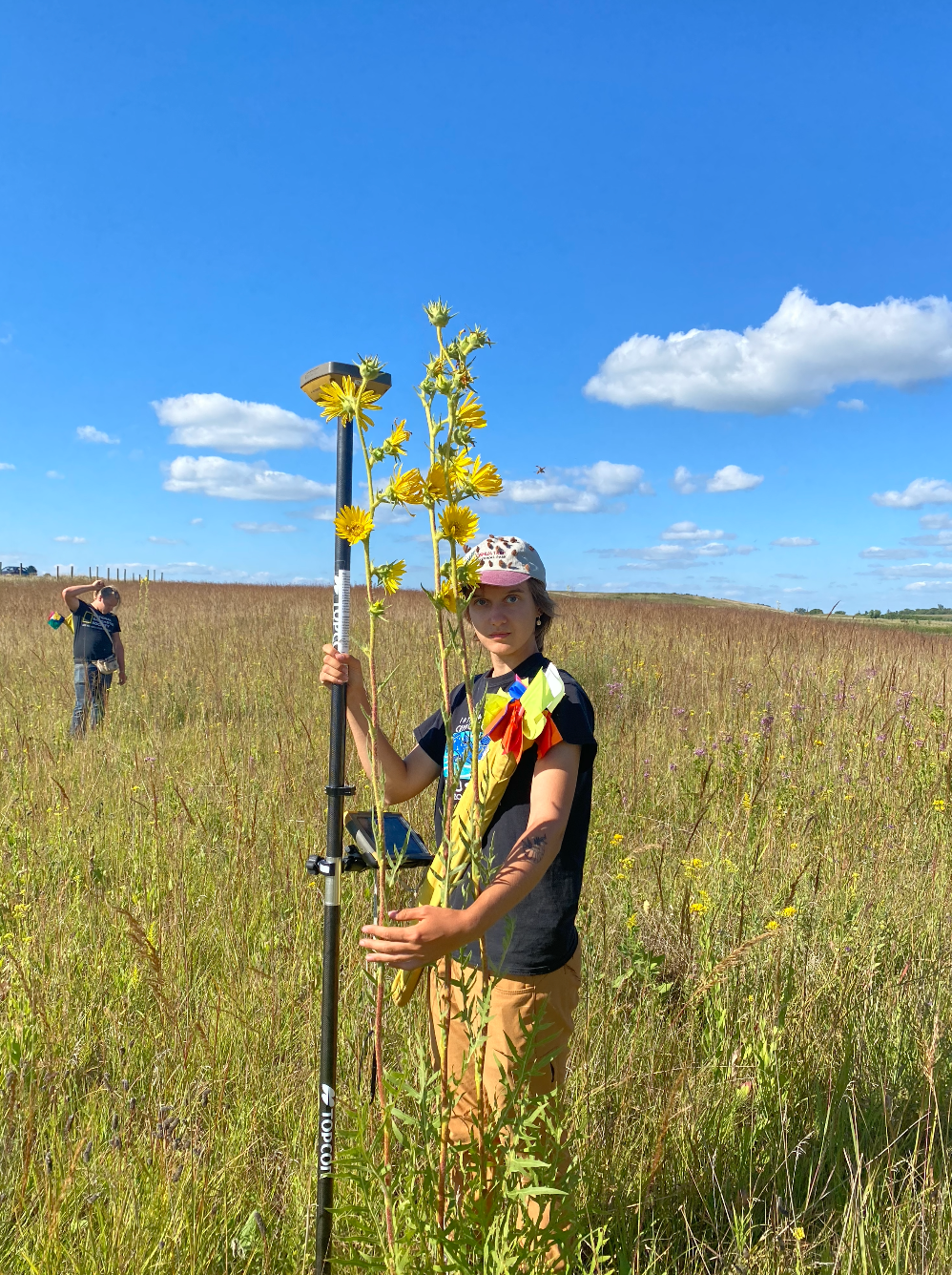
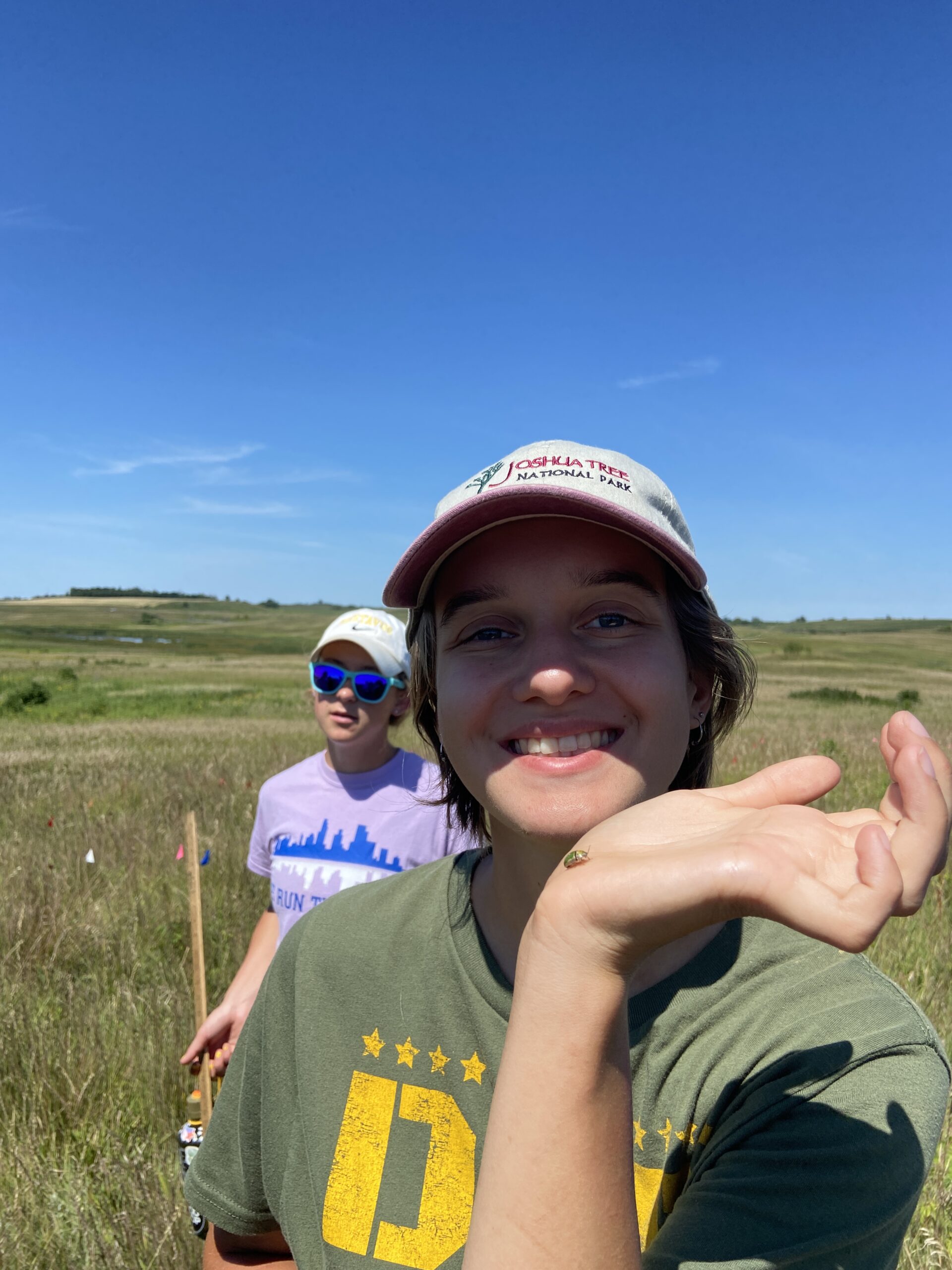
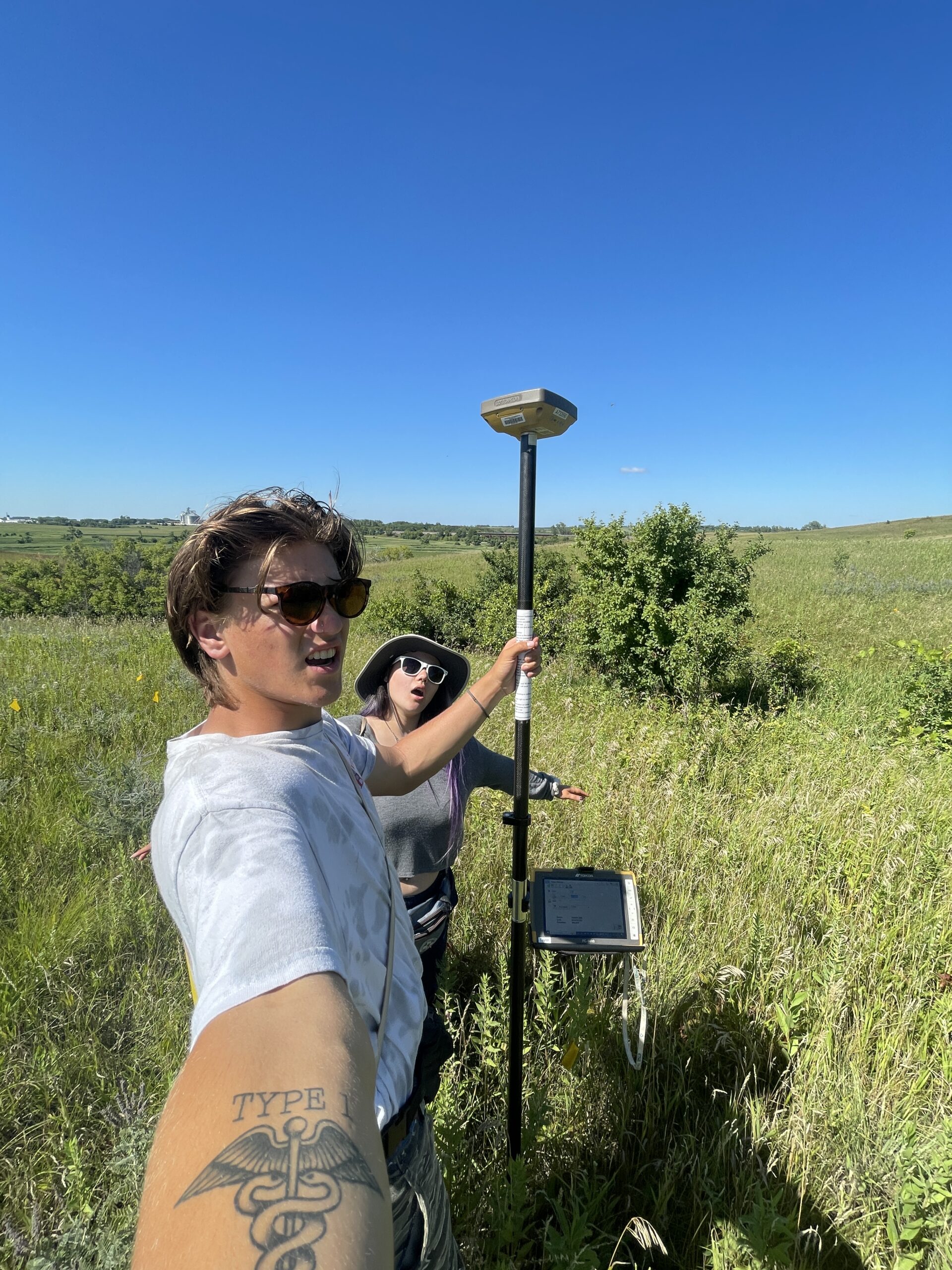
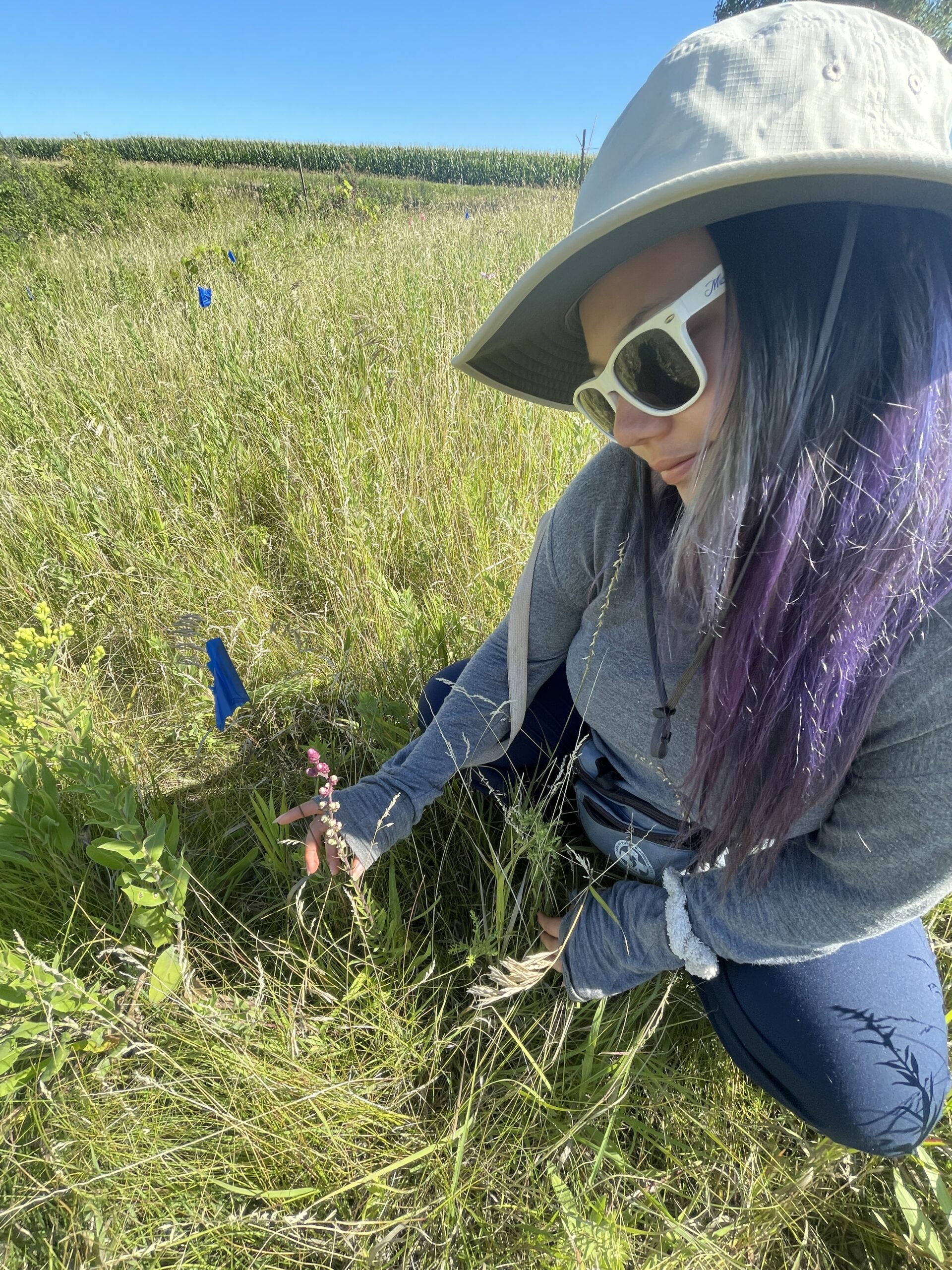
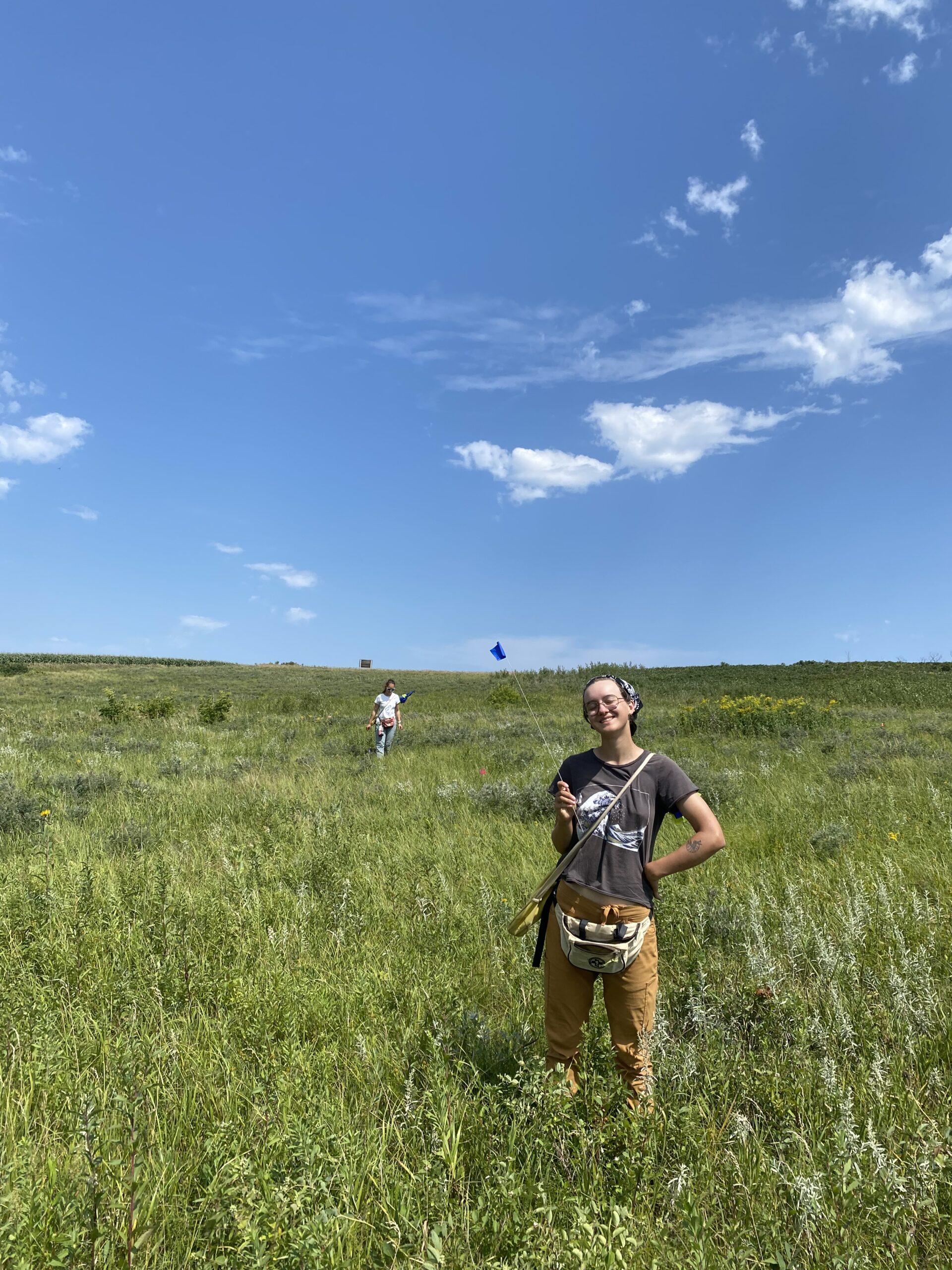
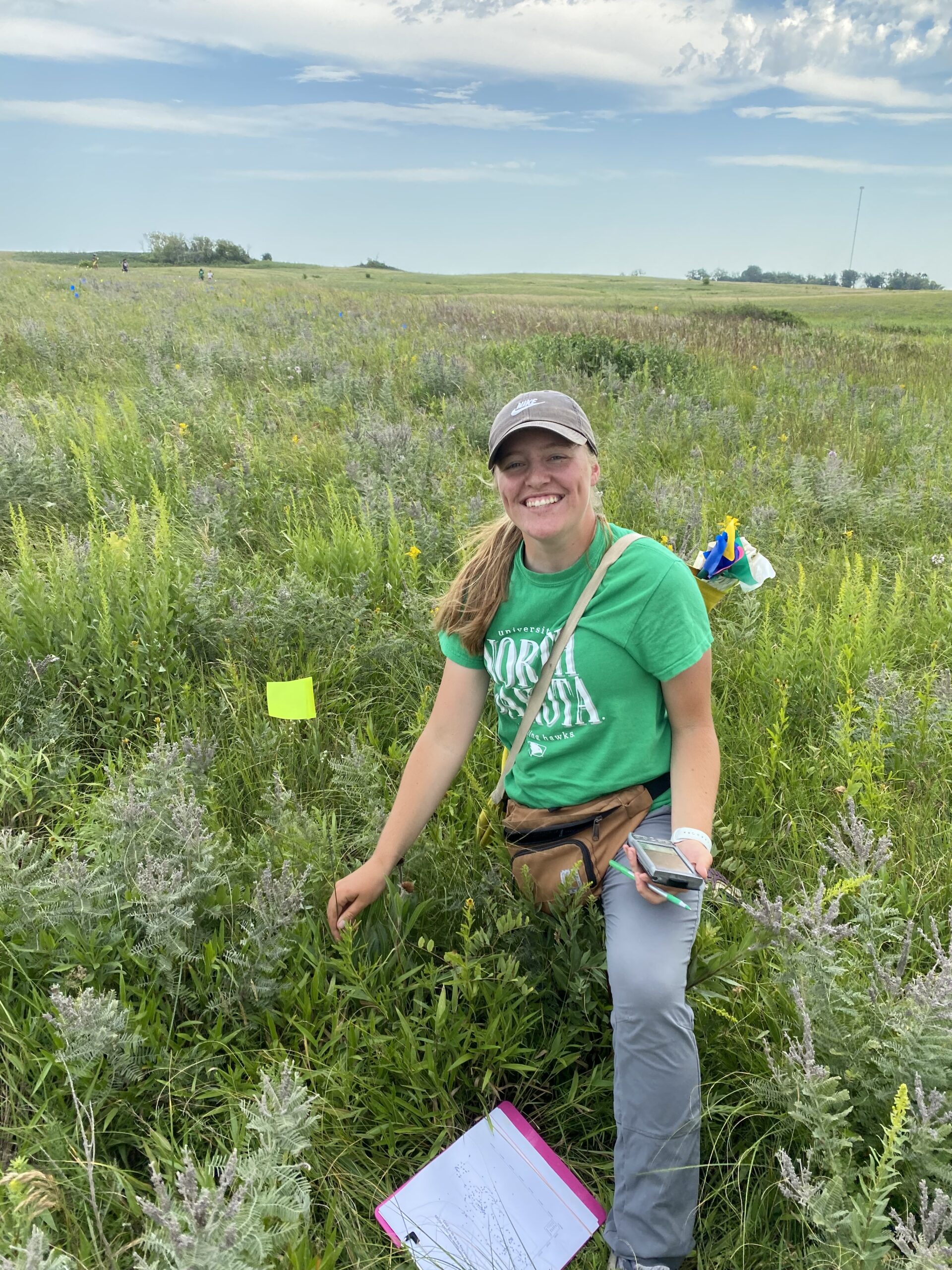
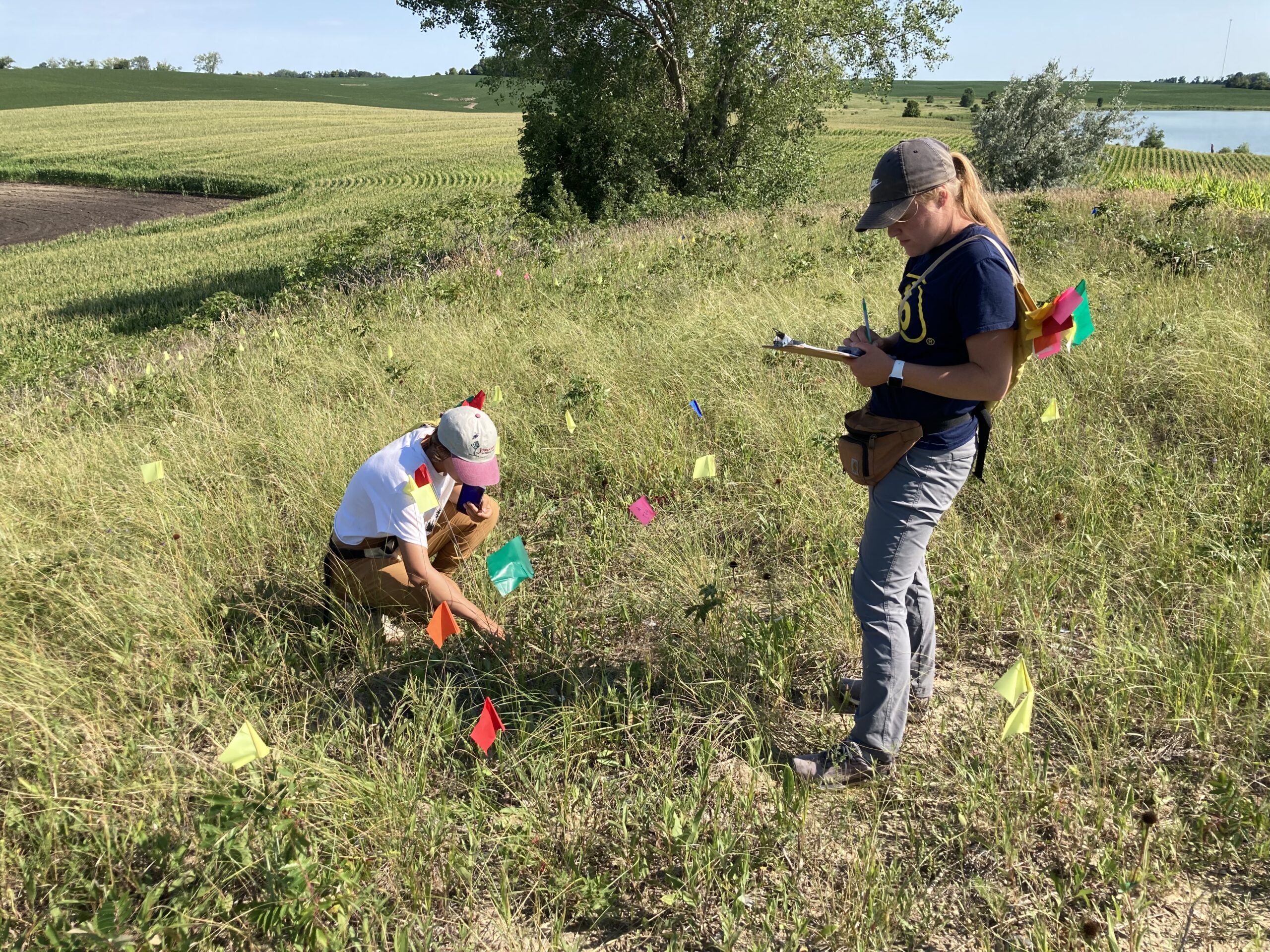
One other thing we’ve been spending a lot of time doing is total demography. This is when we use the GPS to revisit every location where there’s been a flowering plant in the past. When we find flowering plants we also surv(ey) them. Geena, Daytona, and I had lots of fun at Hegg Lake today surving plants…and also serving looks!!
Daytona is high-visibility.Daytona’s favorite pose. Me.*Kicks you*A compass plant. Did you know the leaves of a compass plant are cold?
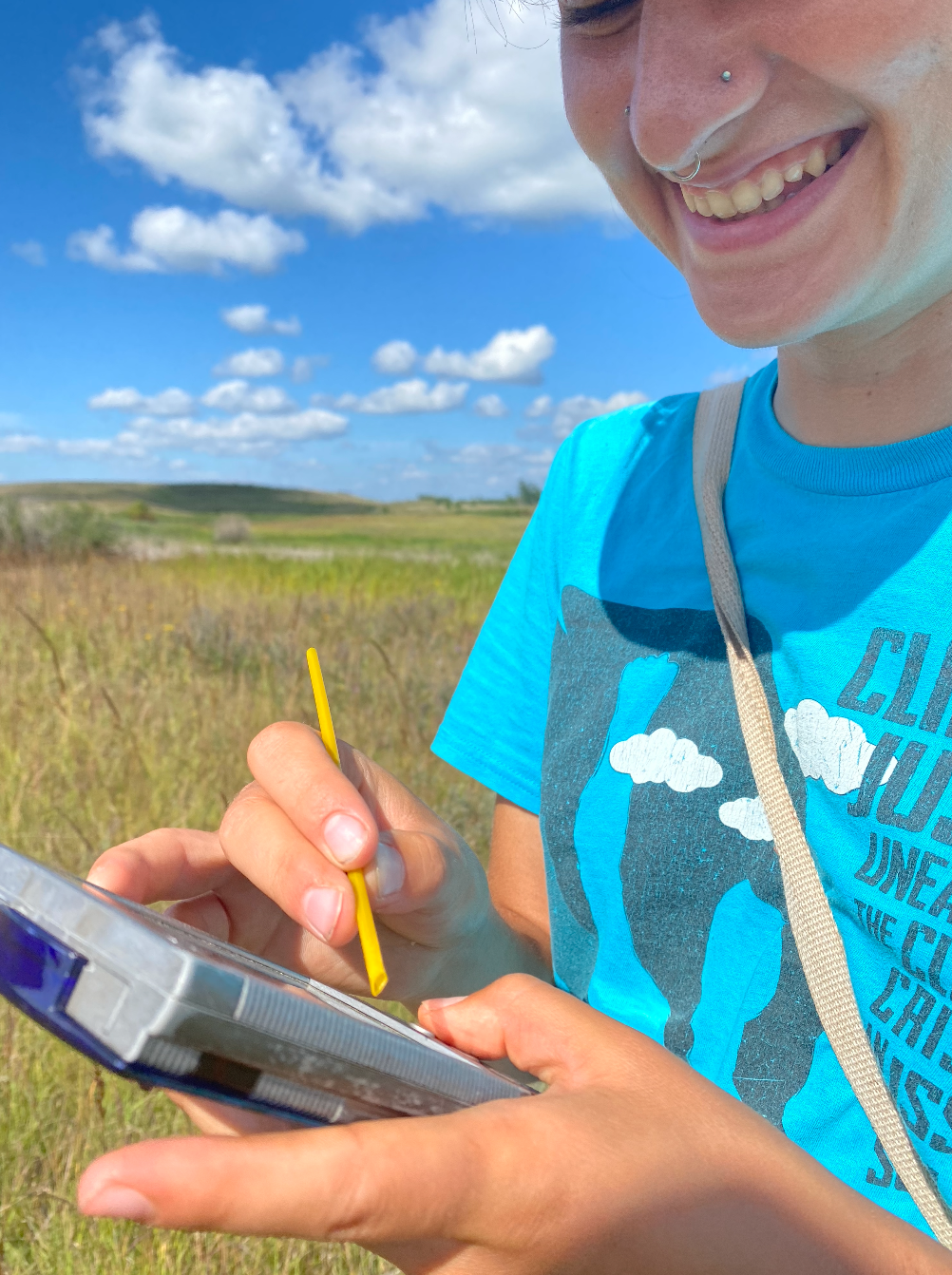
One thing we are all about at the Echinacea project is innovation. Which is why I am happy to share some cutting-edge creativity Geena demonstrated today by using a Capri Sun straw as a Visor stylus:
Hello all you flog-readers! We’ve had quite a fun week at the Echinacea Project, and it’s only Thursday!
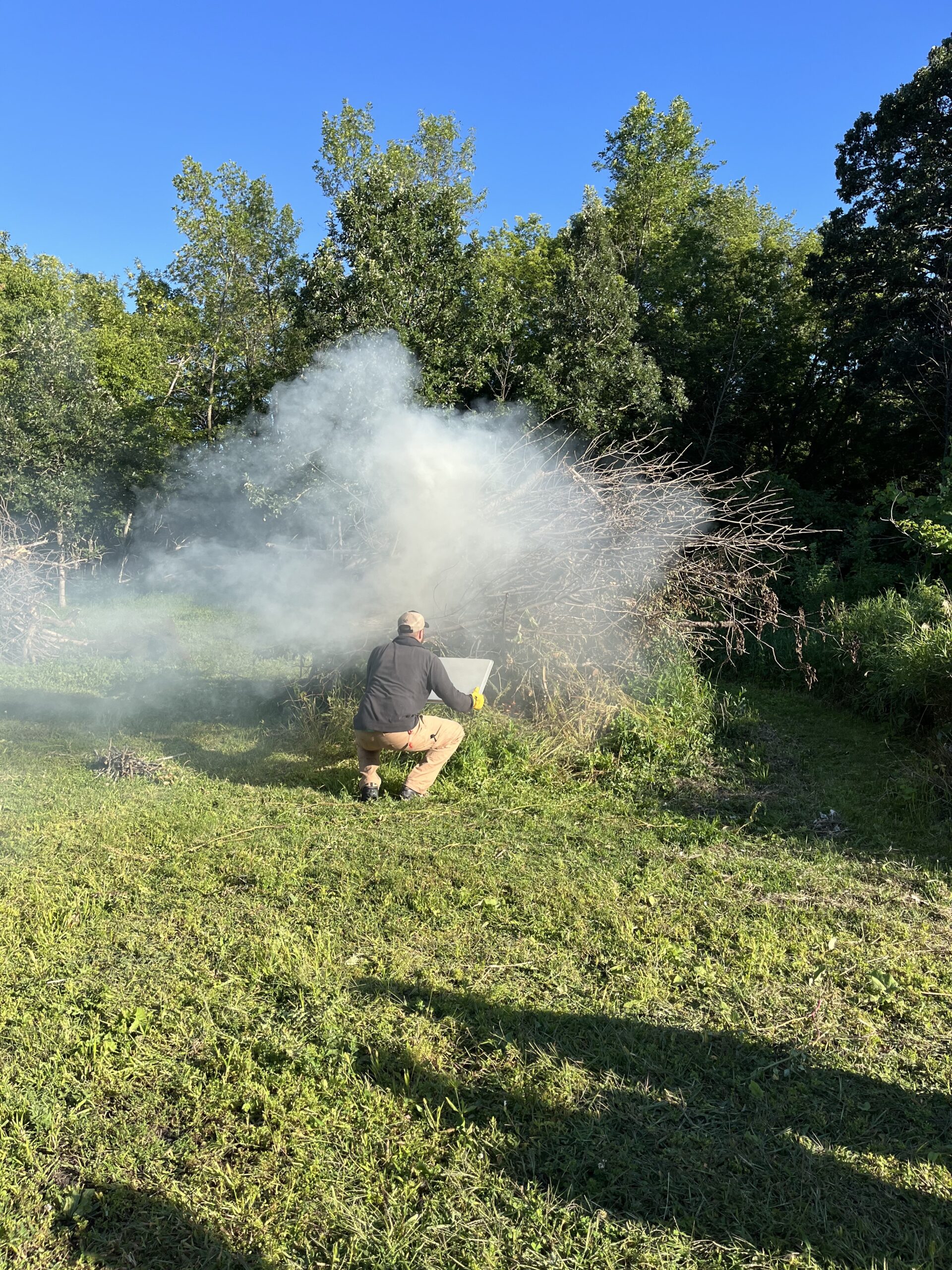
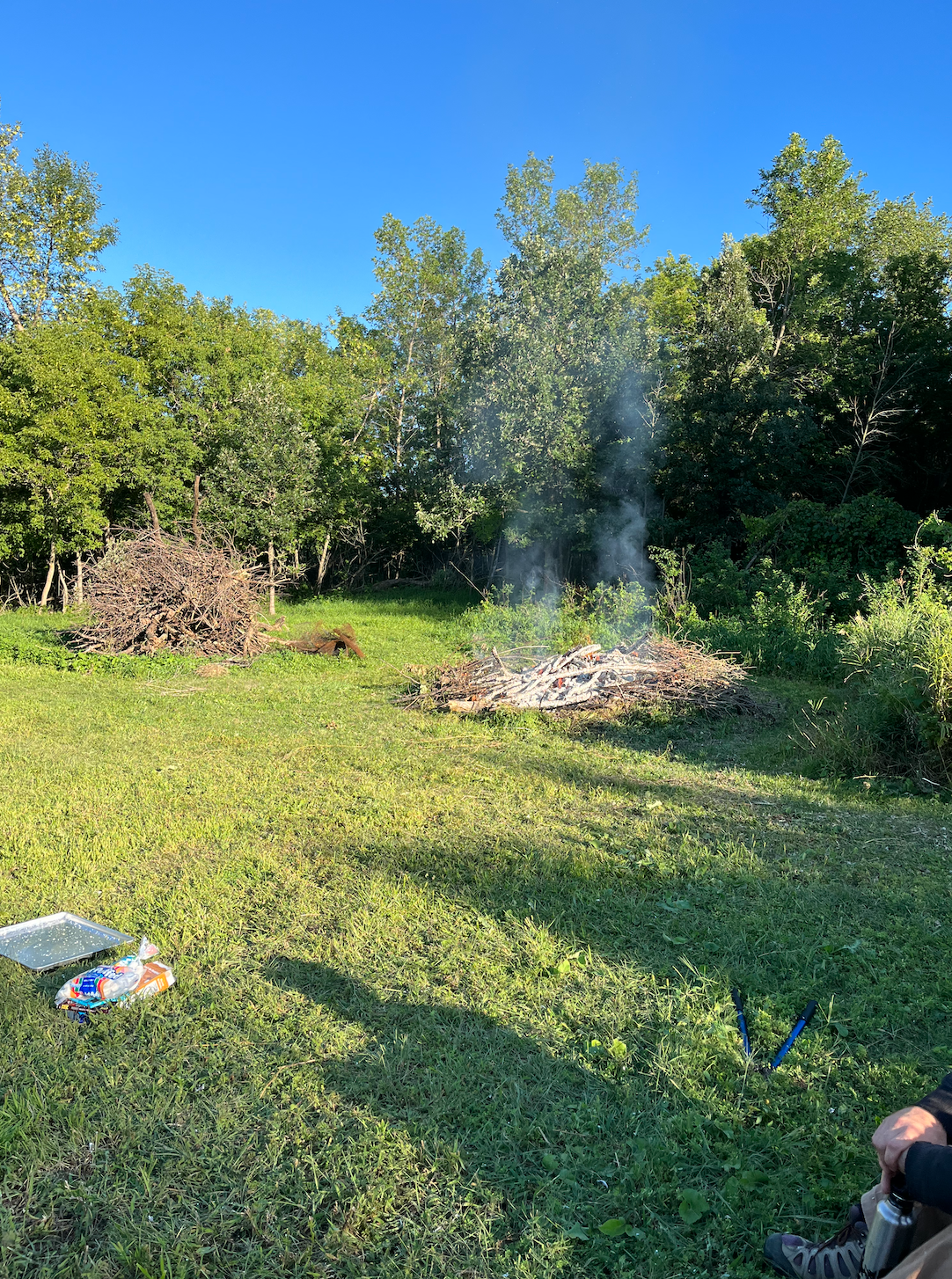
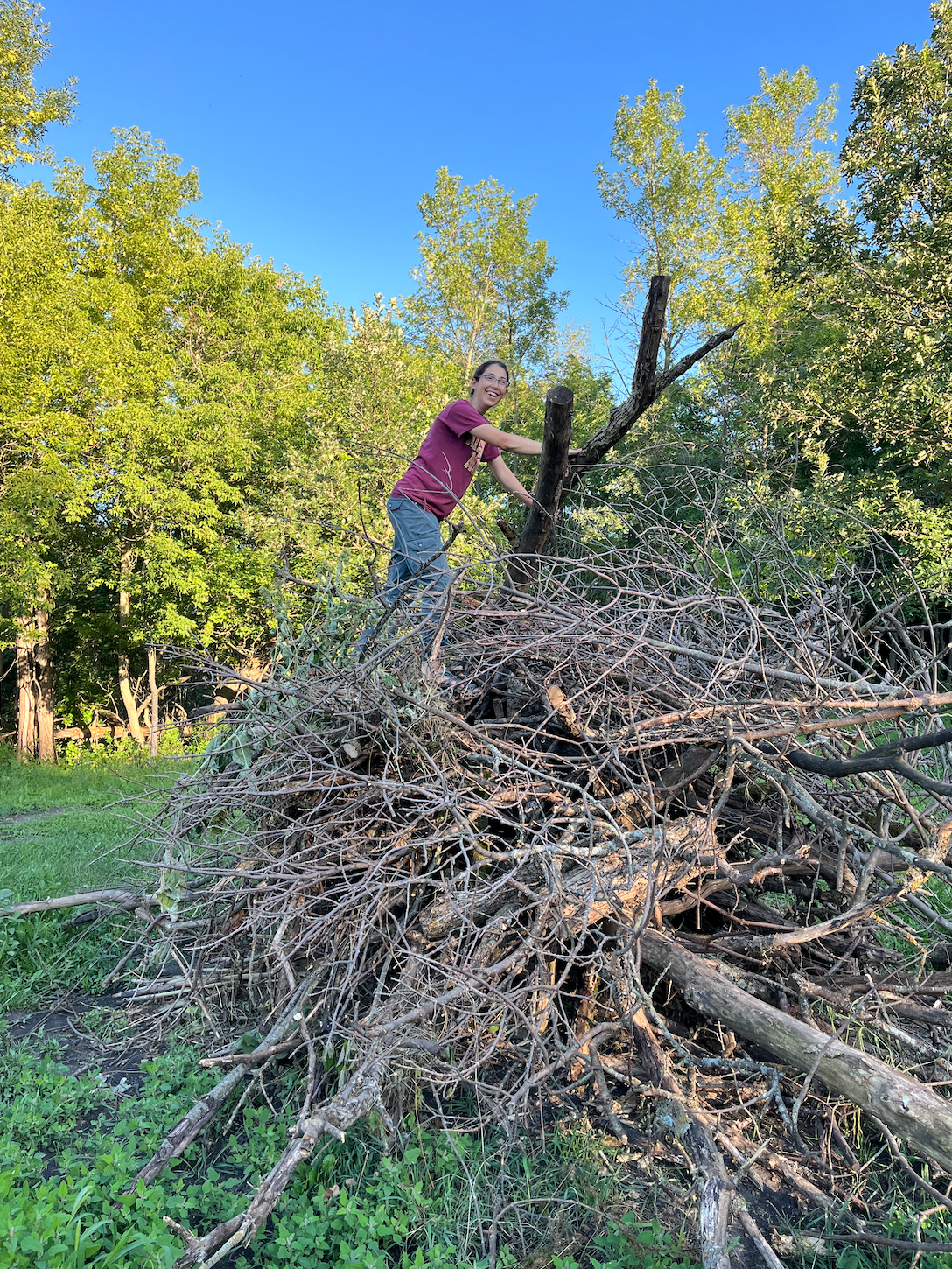
This past Tuesday, we had the team social at Hjelm. The highlights of the dinner were fresh corn on the cob and S’mores- thanks, Stuart! We also finally got to see the fruits of our tree-hauling labor as we (Jared) ignited one of the bonfire piles (which we stacked less than 20 feet tall, as per regulation).
The beacons are lit! Gondor calls for aid!Smoldering remains.Resident clamberer and wood-pile-smusher, Alex
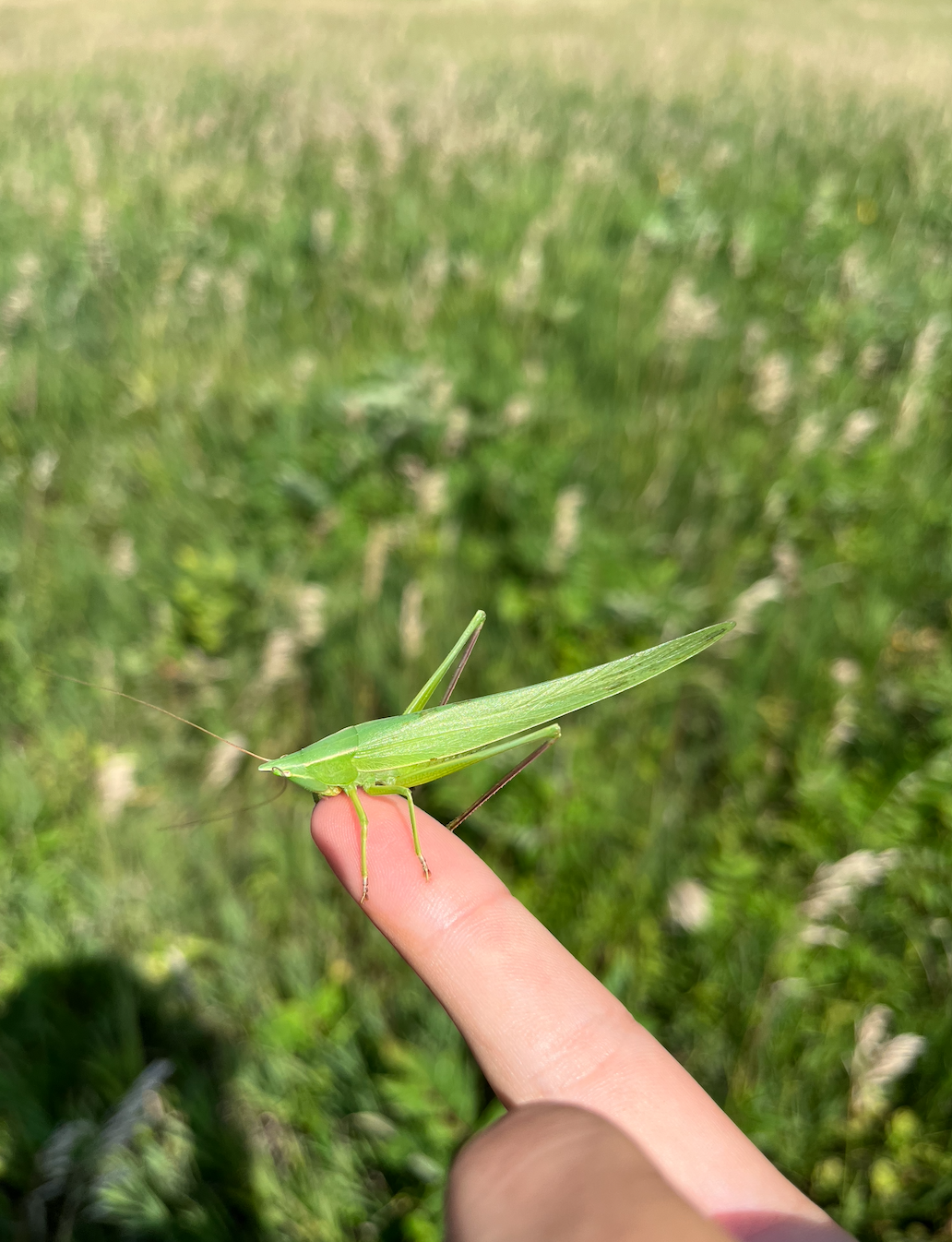
The team has spent a lot of time this week measuring P1, our nearest and dearest plot. We are definitely making progress! My favorite pastime during P1 measuring is catching grasshoppers and katydids, and unleashing them on other team members. We also got some help measuring today from Team Echinacea alum Riley and our favorite recurring guest star Ruth!
P1 resident biting me so bad.
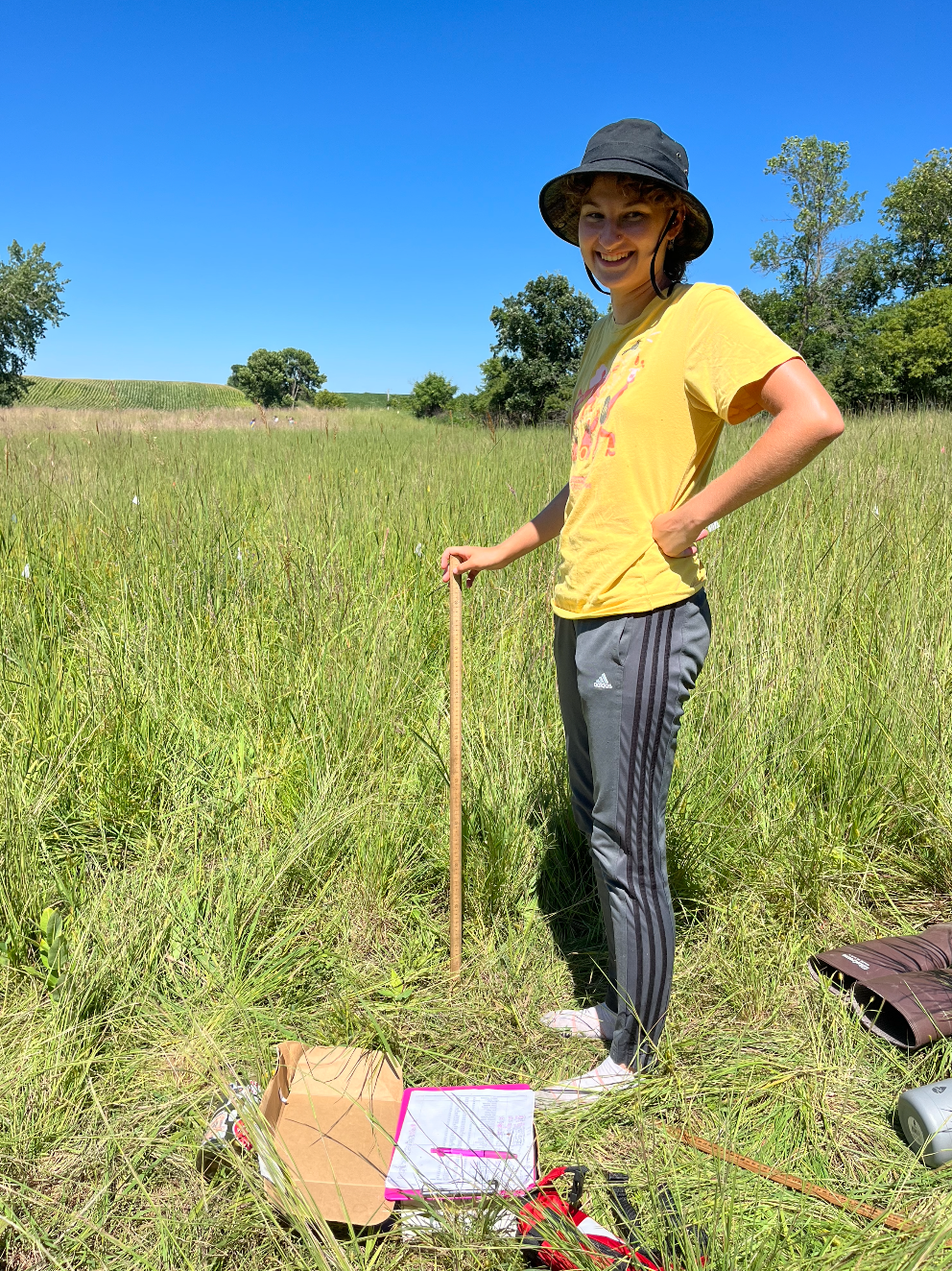
One great interpersonal disagreement we must overcome at Team Echinacea is differences in opinions on field clothes. Some people are never seen outside without their wide-brimmed hat with sun flaps. A few prefer long sleeves and long pants for sun protection to avoid cuts from grass. Many enjoy t-shirts and long pants. Some even wear shorts (as I did, once, but was quickly deterred). However, I truly believe this may be a first for Team Echinacea: Geena braved P1 with no shoes! “Socks are just enough protection for me,” she told us.
Geena goes primal.
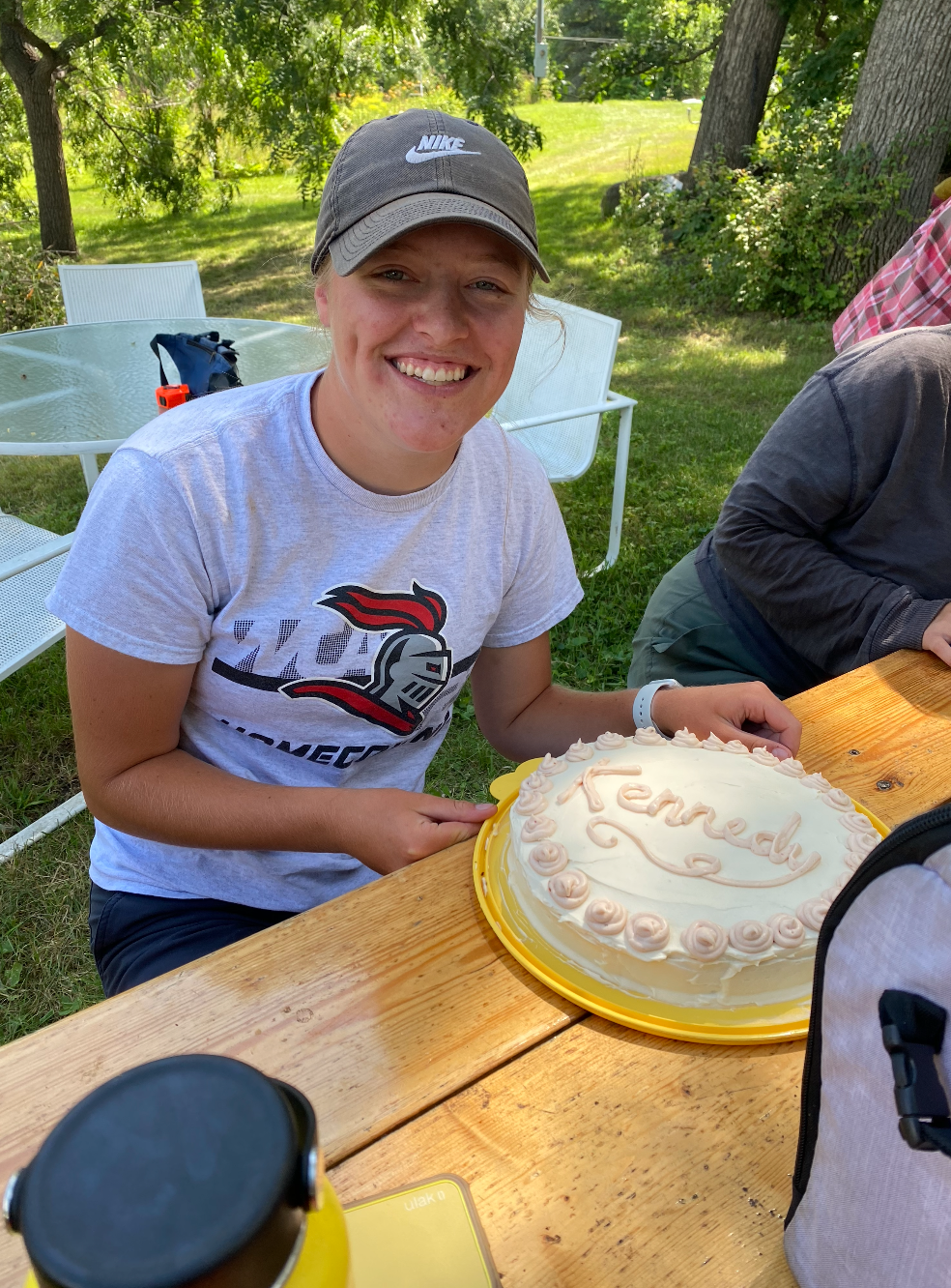
On a more bittersweet note, our beloved team member Kennedy had her second-to-last day of work today. This was Kennedy’s second summer with the team, and we loved hearing her talk about aphids, dust, goats, and her cow Ollie. Alex baked a delicious cake to commemorate Kennedy’s leaving. Thanks Kennedy for being such an awesome, sweet, kind, and funny person to work with this summer! We wish you the best of luck in South Dakota 🙂
Cake was sweet but not as sweet as Kennedy!Emma instructing Kennedy on the proper cake-cutting form. “Imagine it’s a dust-trap.”
The team split up for an adventurous and successful Wednesday morning. Some went to go do total demo at landfill (finishing the last big site!), while others did demo at various other sites. I also was working on my dust traps throughout the day, part of my independent project where I am measuring the amount of dust traveling off of unpaved roads. If you are interested in learning more about my dust, go check out my project update! After I finished placing my dust traps, I finished up some demo and phen at a few prairie remnants and headed back for lunch.
The afternoon proved to be an eventful one! The entire team headed out to P2 to get trained in on harvesting. I don’t have photo evidence (sorry guys), but even Jared made it into the experimental plot, an event rarer than a double rainbow! While in the plot, Stuart taught the team the 4 ways to know if an Echinacea head is ready to harvest, then sent us on our way to start harvesting in the experimental plot. The task seemed to be easy enough at first, but proved difficult as we moved along. The culprit of our problems: the 13 lined ground squirrels who call P2 home. Many of the plants had their roots eaten, which we discovered when the peduncle (stem) of the Echinacea was no longer attached to the ground. If the plant was lucky enough to have its roots still intact, it may have had its head eaten off. Daytona and I tried to scare them away when we saw them eating our plants, but the safety of our plants was likely short-lived. The ground squirrels were feeling especially brave, one even jumped on my leg! The excitement of harvesting and the ground squirrels made for a quick afternoon, and soon enough we had to head back and finish up for the day. I collected my dust traps and everyone split up to enjoy their evening!
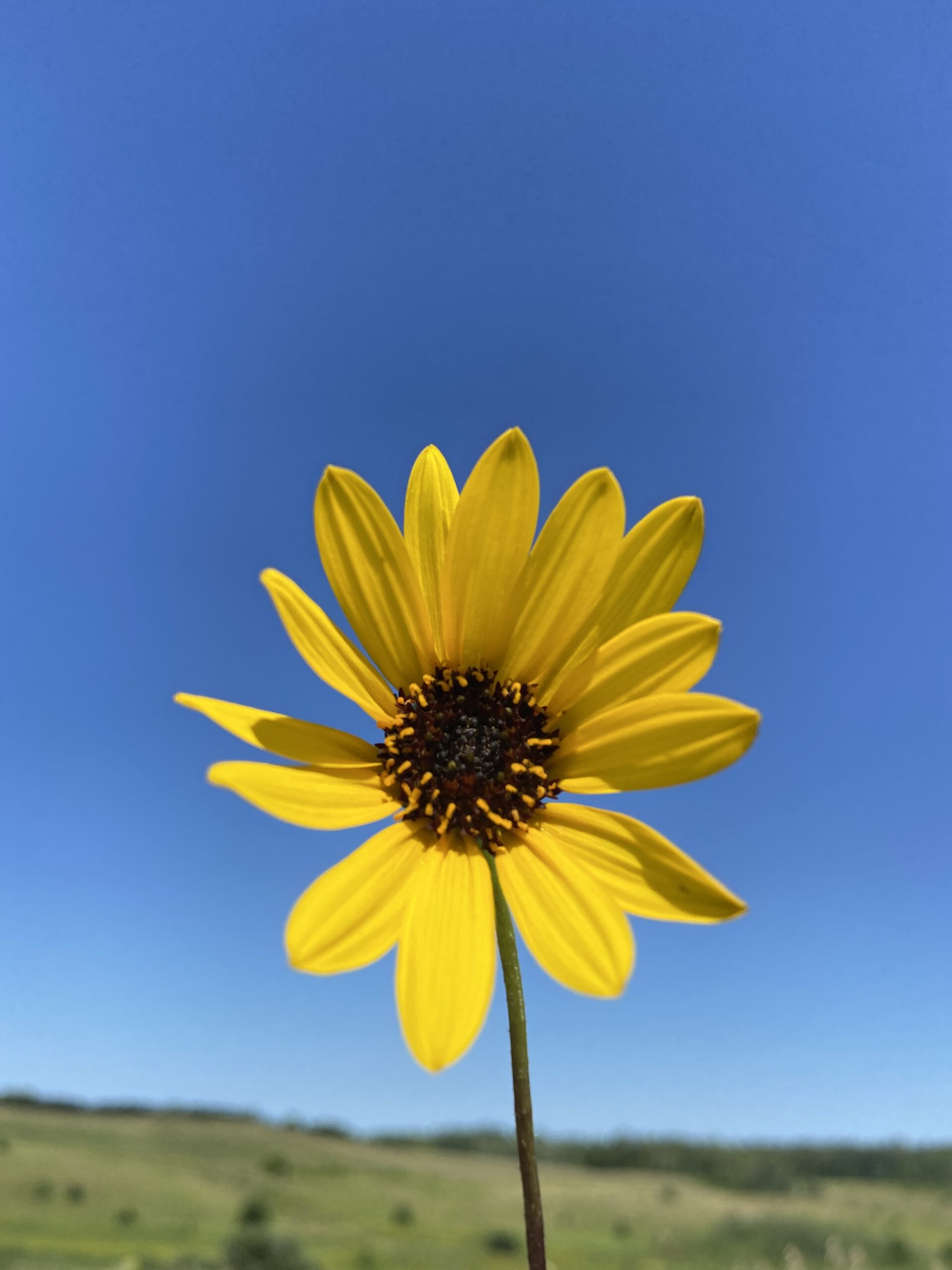
I found a spider eating a syrphid on my dust trapA cute little sunflower I found 🙂My dust trap is ready to go!Jo shows me her newest, shiniest bug (front). I’m not sure what Lindsey is doing (back)Daytona showing off the damage of the ground squirrels
Hey flog-heads! Welcome back to one more week of the Echinacea project; off to an exciting start with milkweed, measuring, birds-of-prey, total demo, wet shoes, visitors, visors, liatris, and as always … phenology.
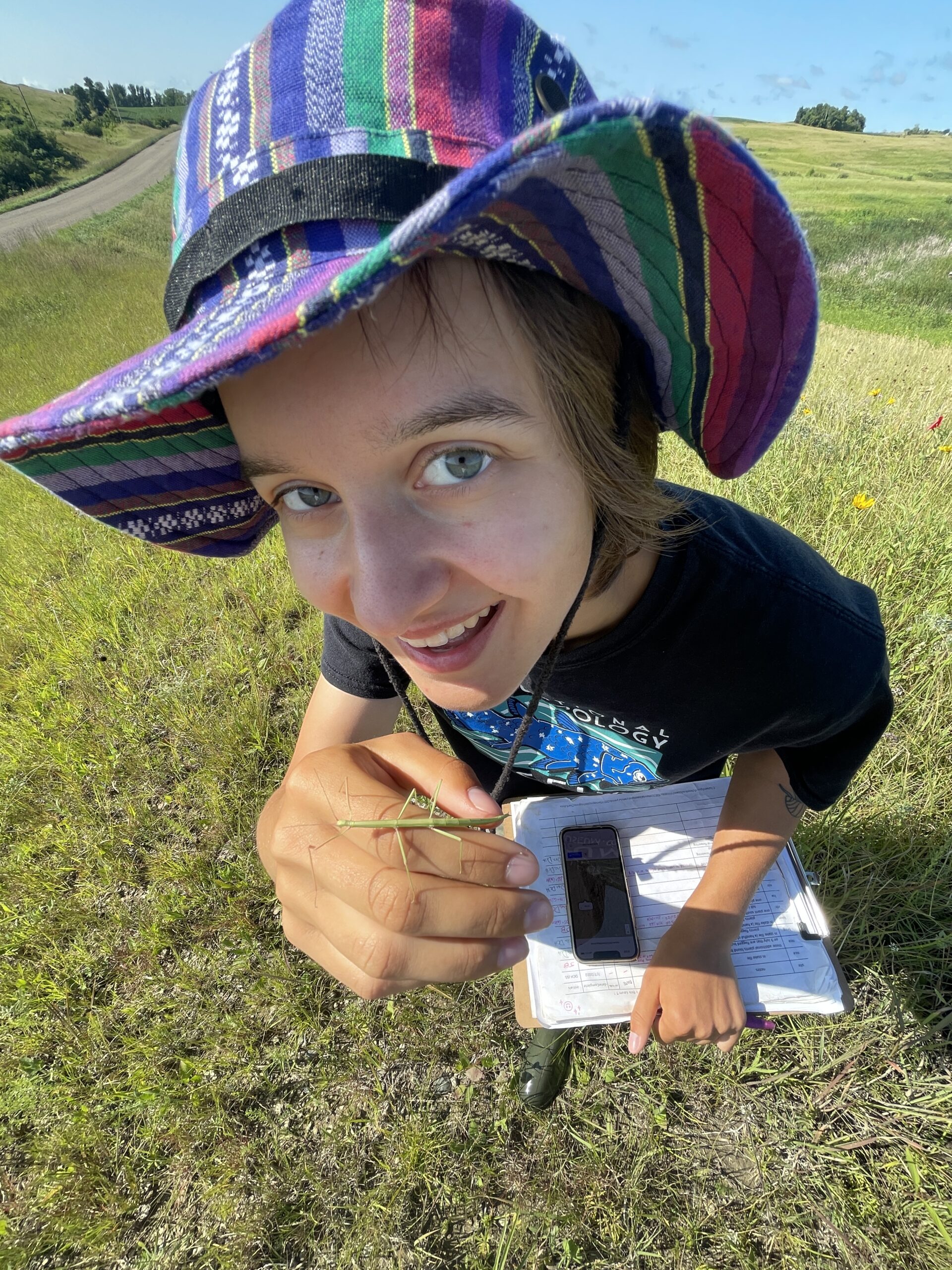
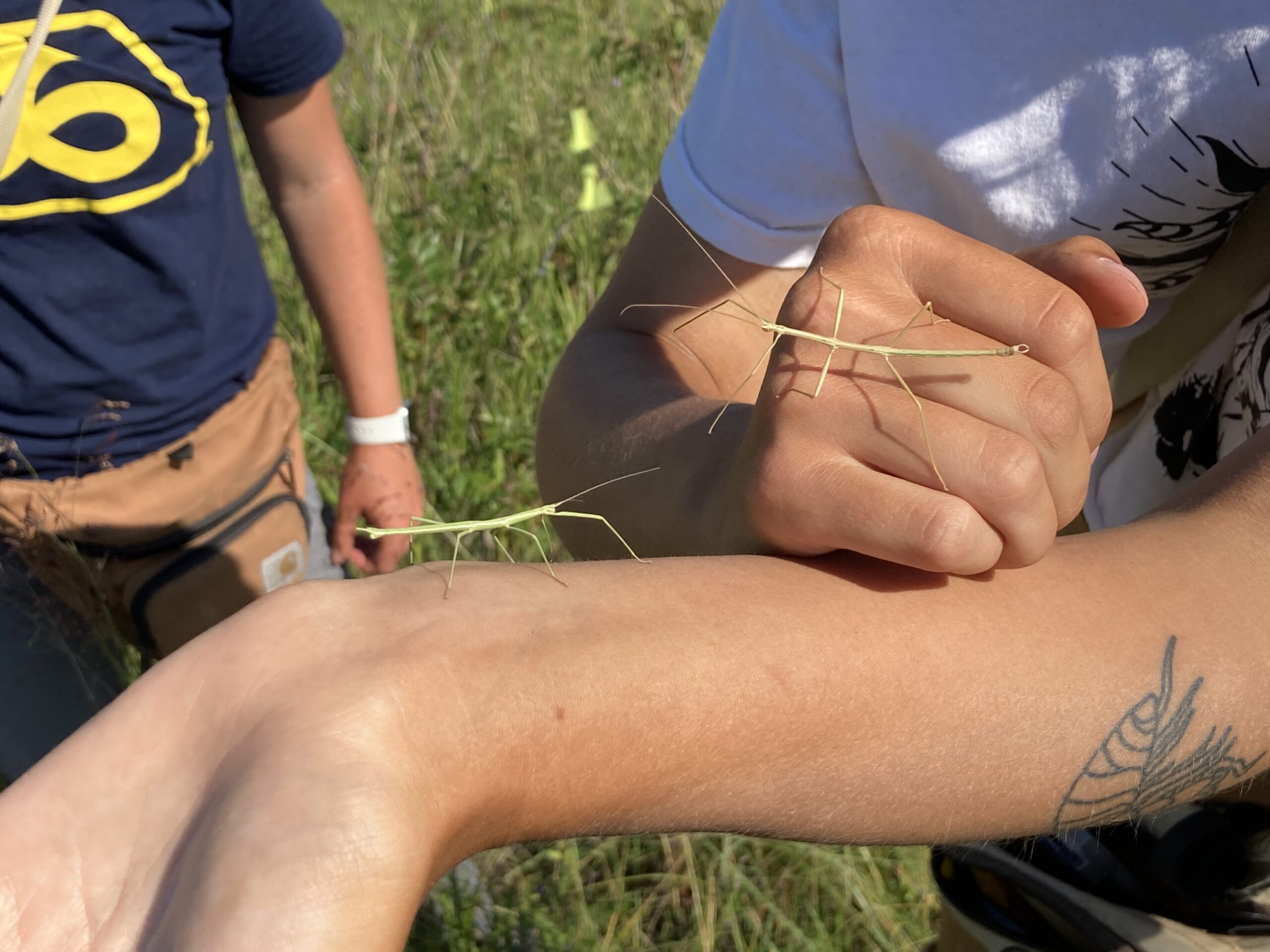
This morning the team divided, some to continue remnant phenology on few remaining flowering echinacea while others went to start total demo on on behemoth of a site, Loeffler’s corner. I am grateful that Jo and I had the task of scoring milkweed at Bang and Hegg lake. We trekked through the dewy grass, Jo’s rubber boots repelling the water that my shoes invited in, leaving me to walk in puddles for the majority of the morning. Jared warns that soon enough that I’ll be dreaming of the abundant purple heads of Liatris aspera as I will see so many, but for now I revel in the excitement of the few flowering plants I was able to find today at Hegg. Along with Green Milkweed, we encountered three osprey, all upset by our presence, as well as a stickbug, pictured below.
Get Stickbugged!My precious Jo fell in a hole lol
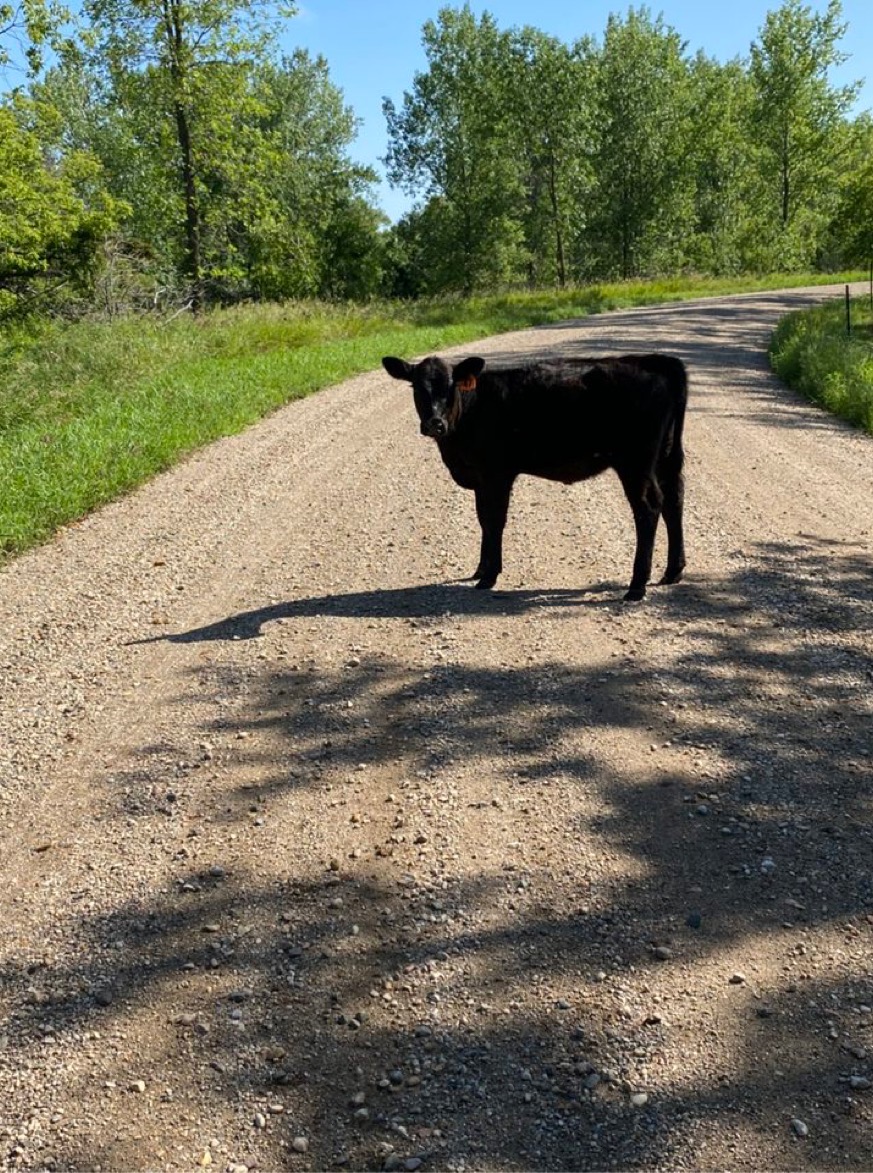
Geena found a calf in the street, which when she asked politely to moooove over, they obliged (sorry Jared, I stole your joke, but its for the fans. You get it.).
“Moooooooo” – probably what the cow said idk I wasn’t there.
At lunch, we welcomed Scott back to the Echinacea Project. An alum from 2016, Scott returned on his way back to Boulder, CO to make sure everything was still in working order. We were excited to hear his stories and gain some wisdom about the adventure into science, post-team Echinacea. Thank you Scott!
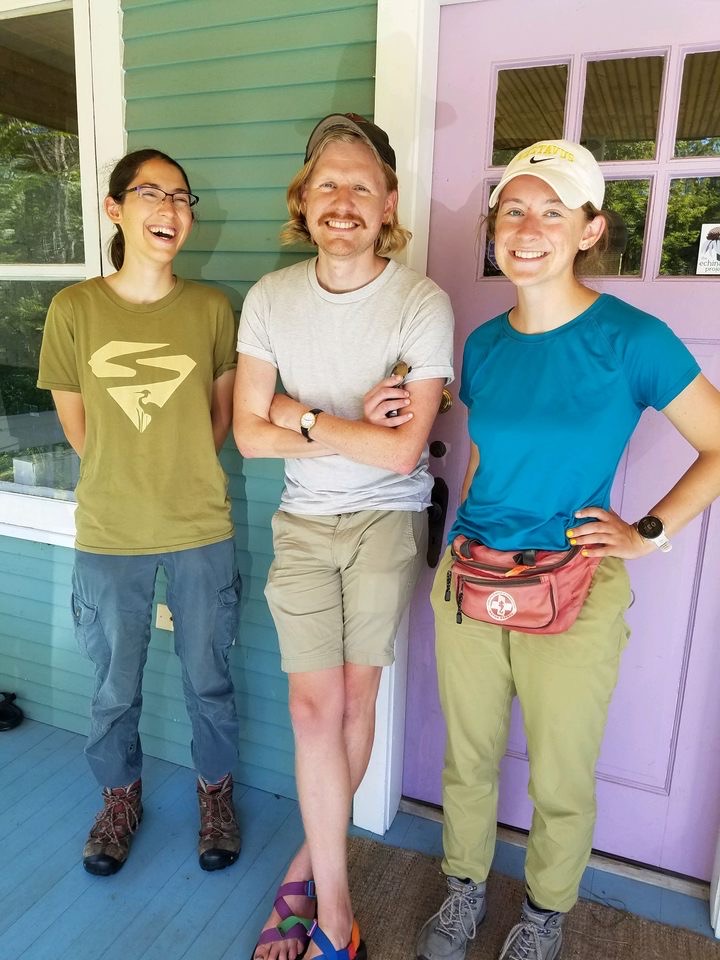
Alex! Scott! Lindsey! All smiles!
The afternoon brought with it measuring in P2 and P1 for the majority of the team, while Sophia and I ventured to Yellow Orchid Hill to begin mapping Liatris for my project. We found many more than previously expected, inspiring burgeoning hypotheses as to why. Soon, Yellow Orchid Hill West will be ablaze with purple. Maybe they’ll have to change the name.
Hard at work! Sophia and Liatris. They’re matching!Big blue stem living up to its name.
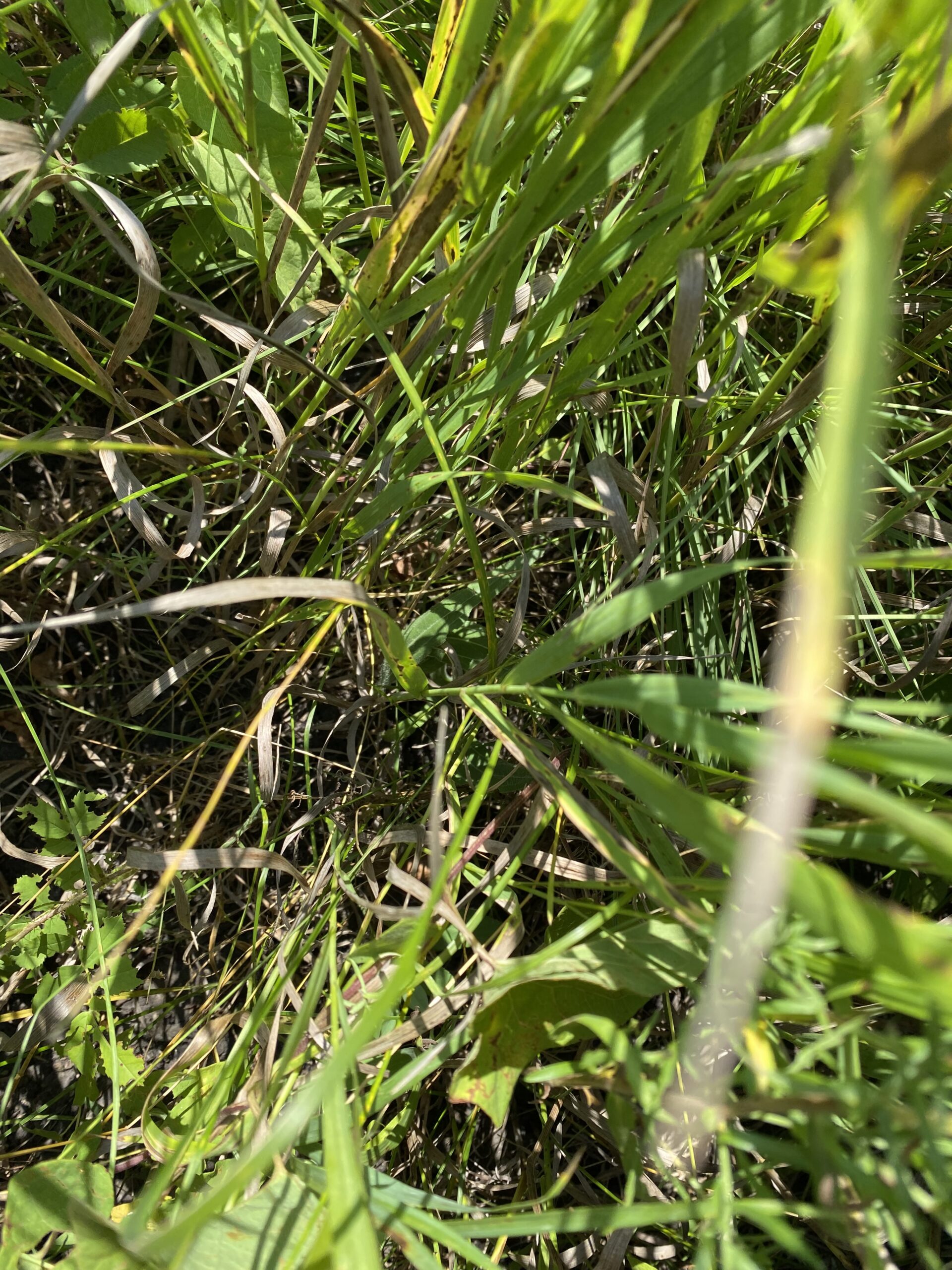
This morning the crew split up, heading out to work on various tasks: remnant phenology, p7&9 phenology, and p2 measuring. P2 was peaceful, and measuring is like a game of I-spy: can you spot the echinacea in this picture?
Echinacea hidden in the grass, likely around position 47the beautiful p2Flowering liatrus seen in P2!
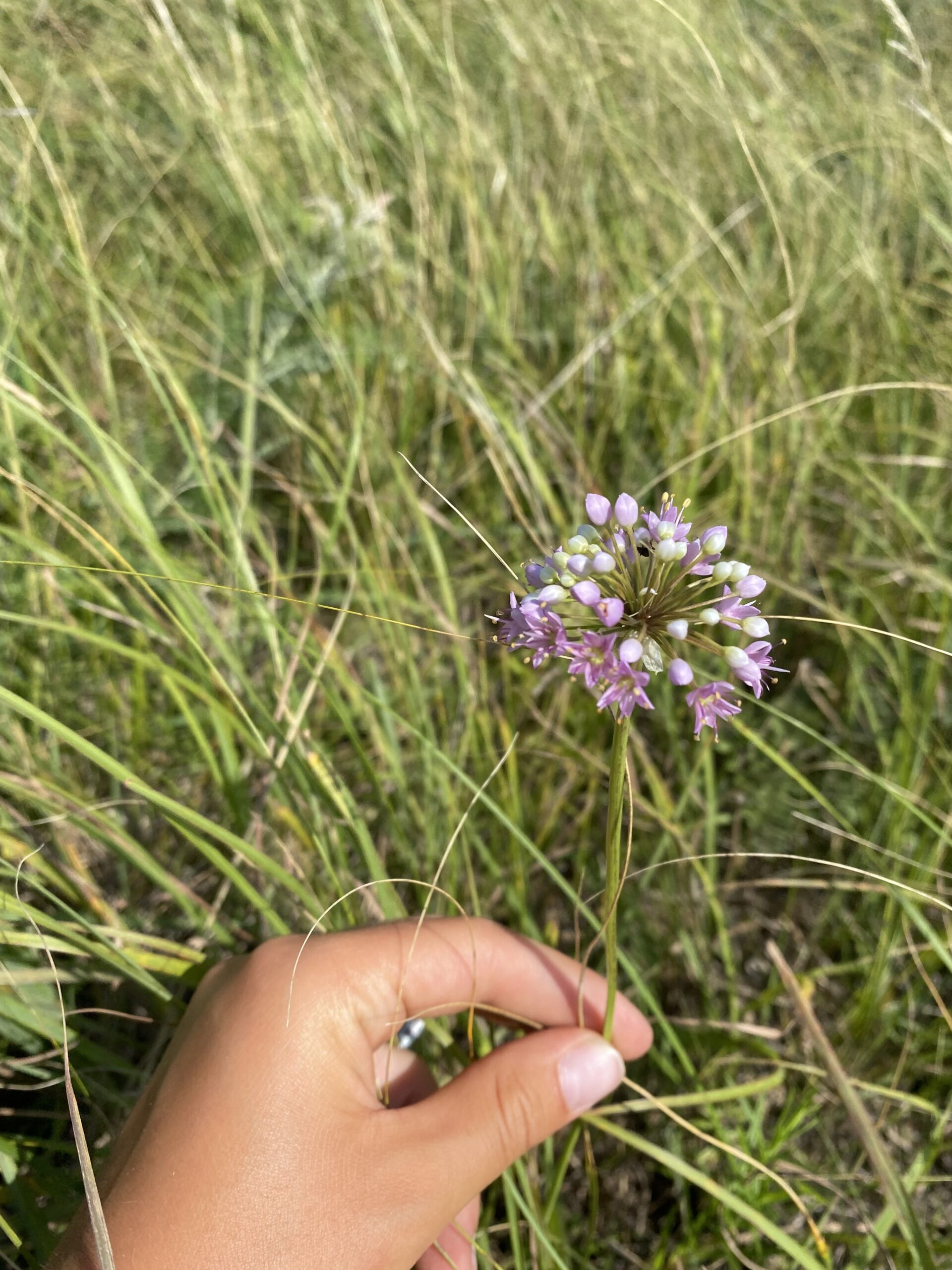
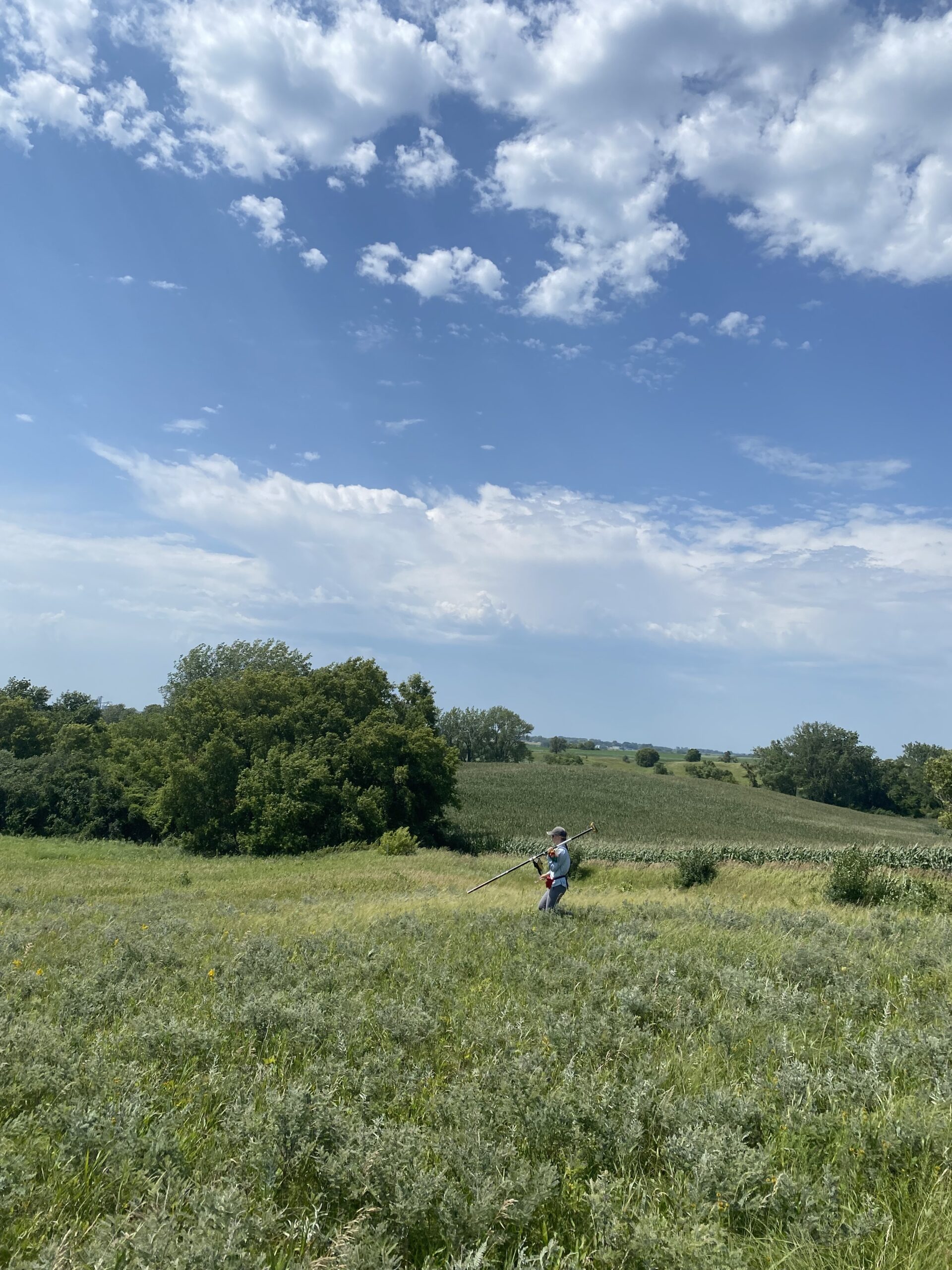
After lunch and a successful goat herding (they love a new pasture!), the team got to head to Staffanson, where we got to see how the rolling prairie has changed since we first visited in early June. One of my favorite plants to see was Allium stellatum, or the prairie onion! The team spread out across the prairie, searching for flowering echinacea and following speedy Emma as she staked to a subset of the plants for total demo. Staffanson was stunning, and even more fun was watching the afternoon storm roll in. Eventually, we had to head back for fear of getting soaked – but we didn’t made it, so we got a quick shower before heading home for the day.
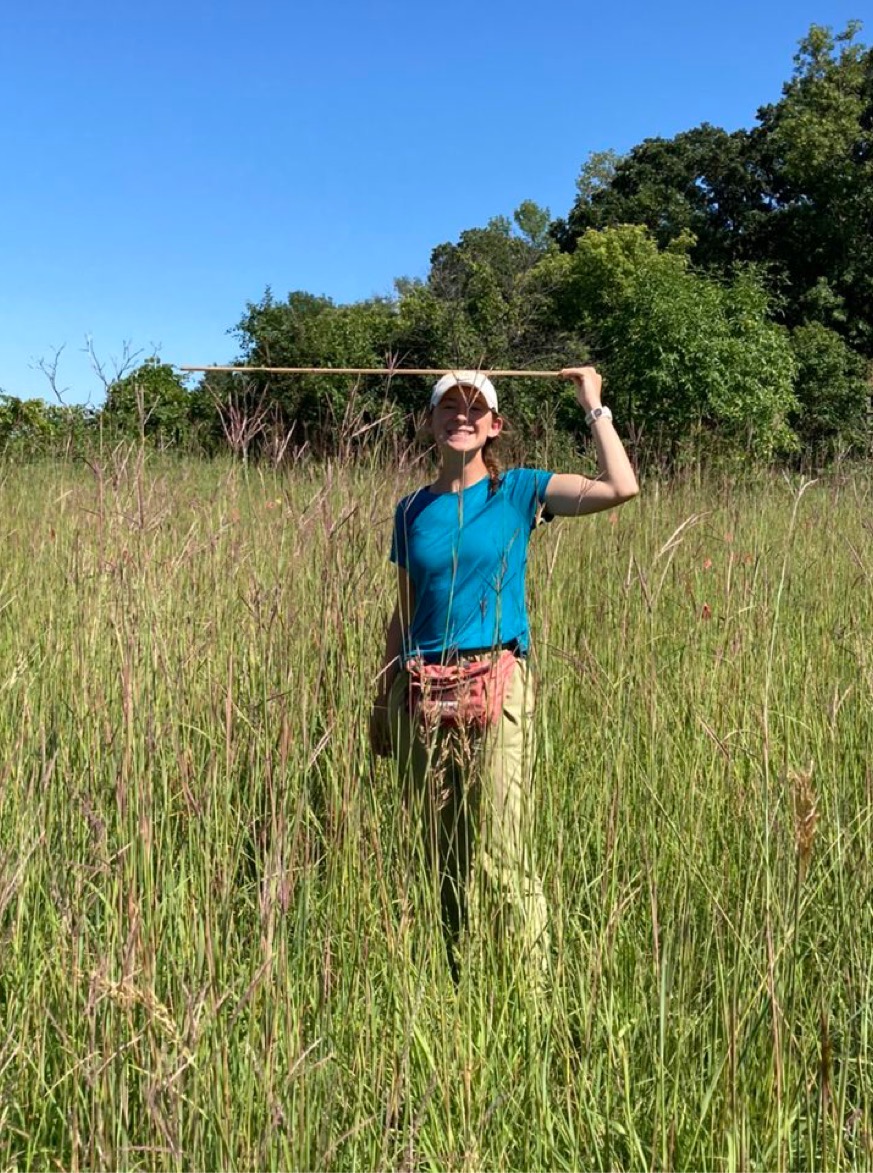
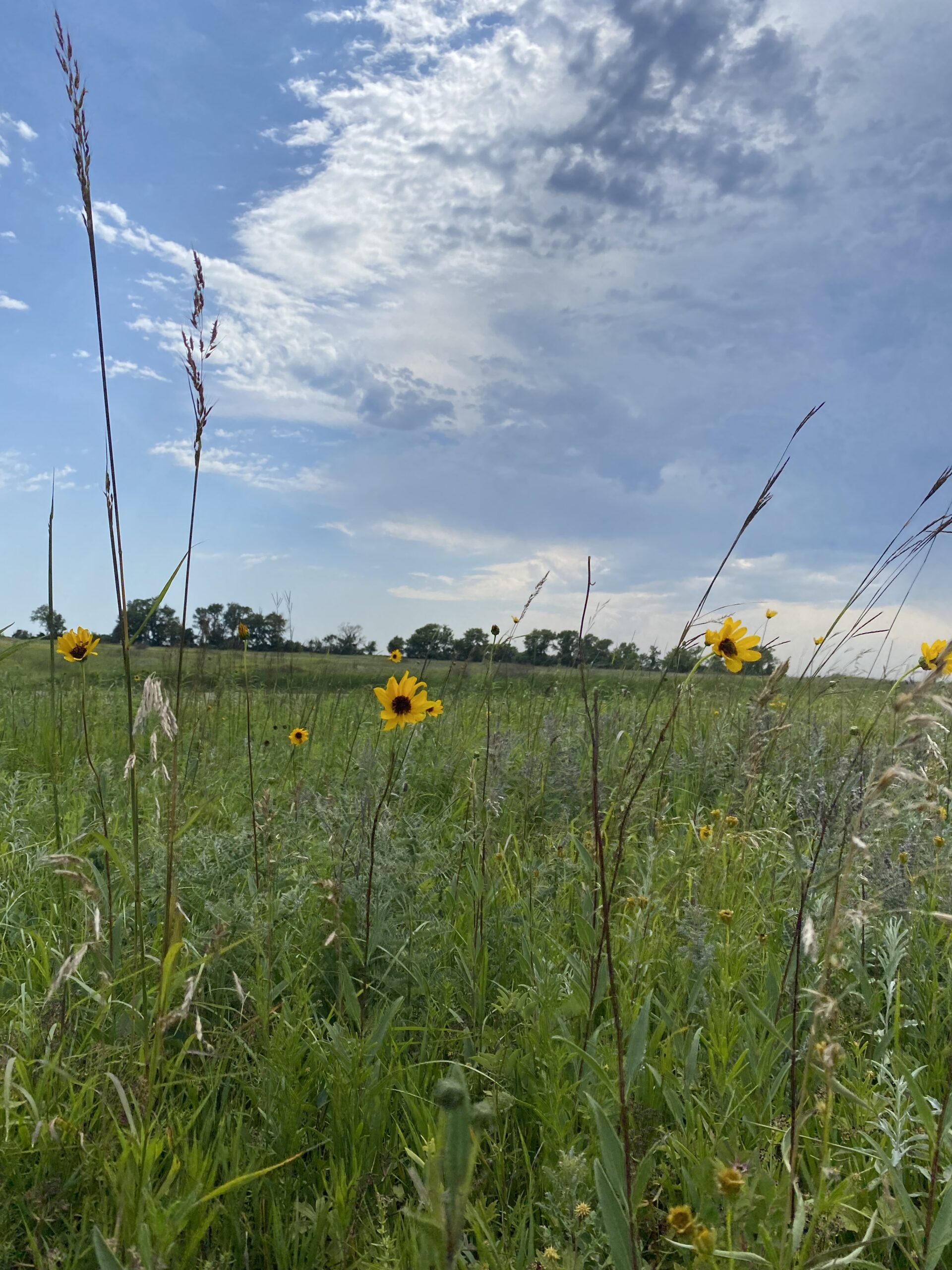
Helianthus pauciflorus Allium!Emma on the moveEmma and her big stick !Jo !Kennedy !The rain moving inPost rain runMade it to the car!
Overall, Friday was a breeze, and filled with beautiful prairies and as usual, lots of echinacea. 🙂
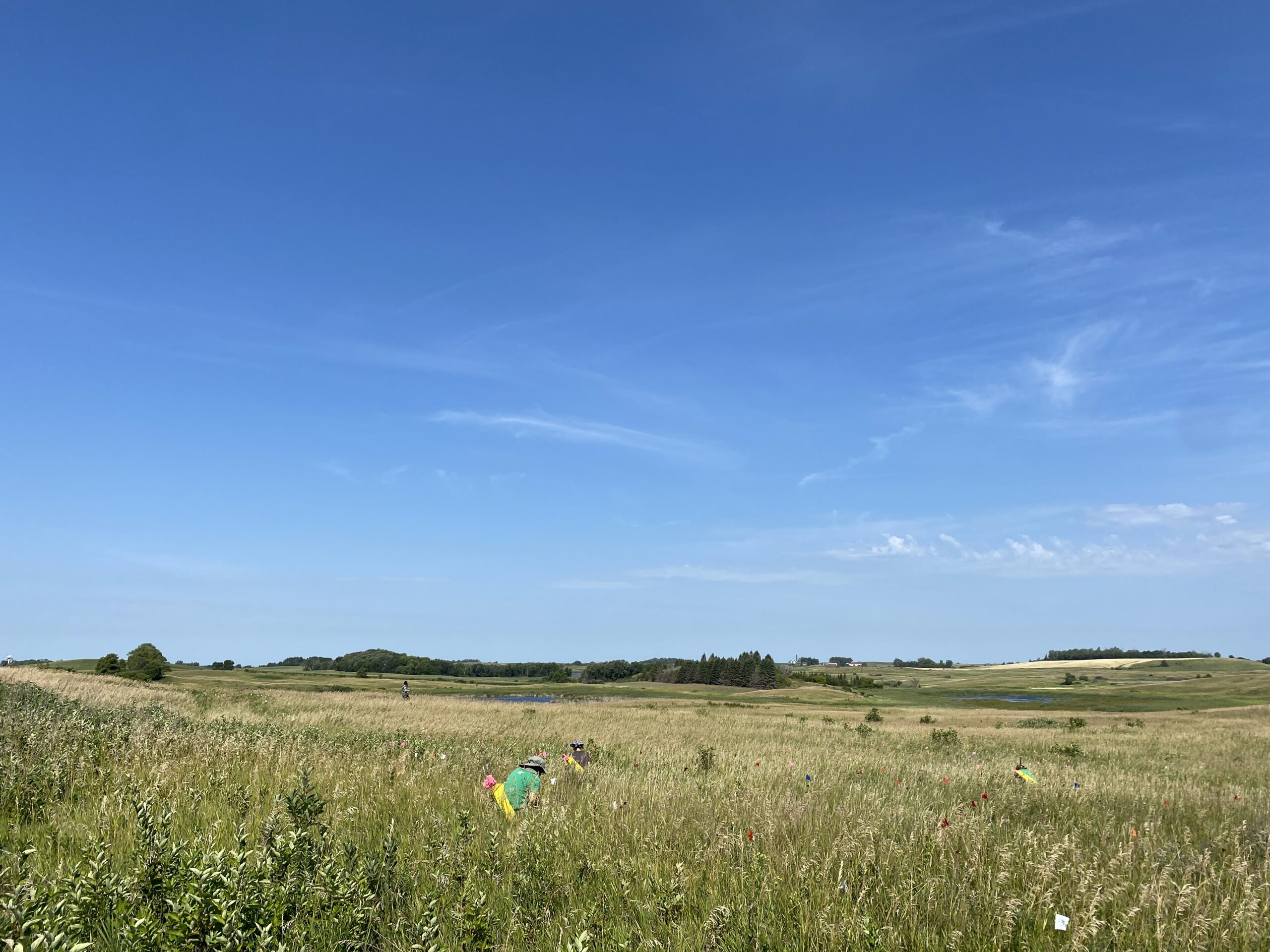
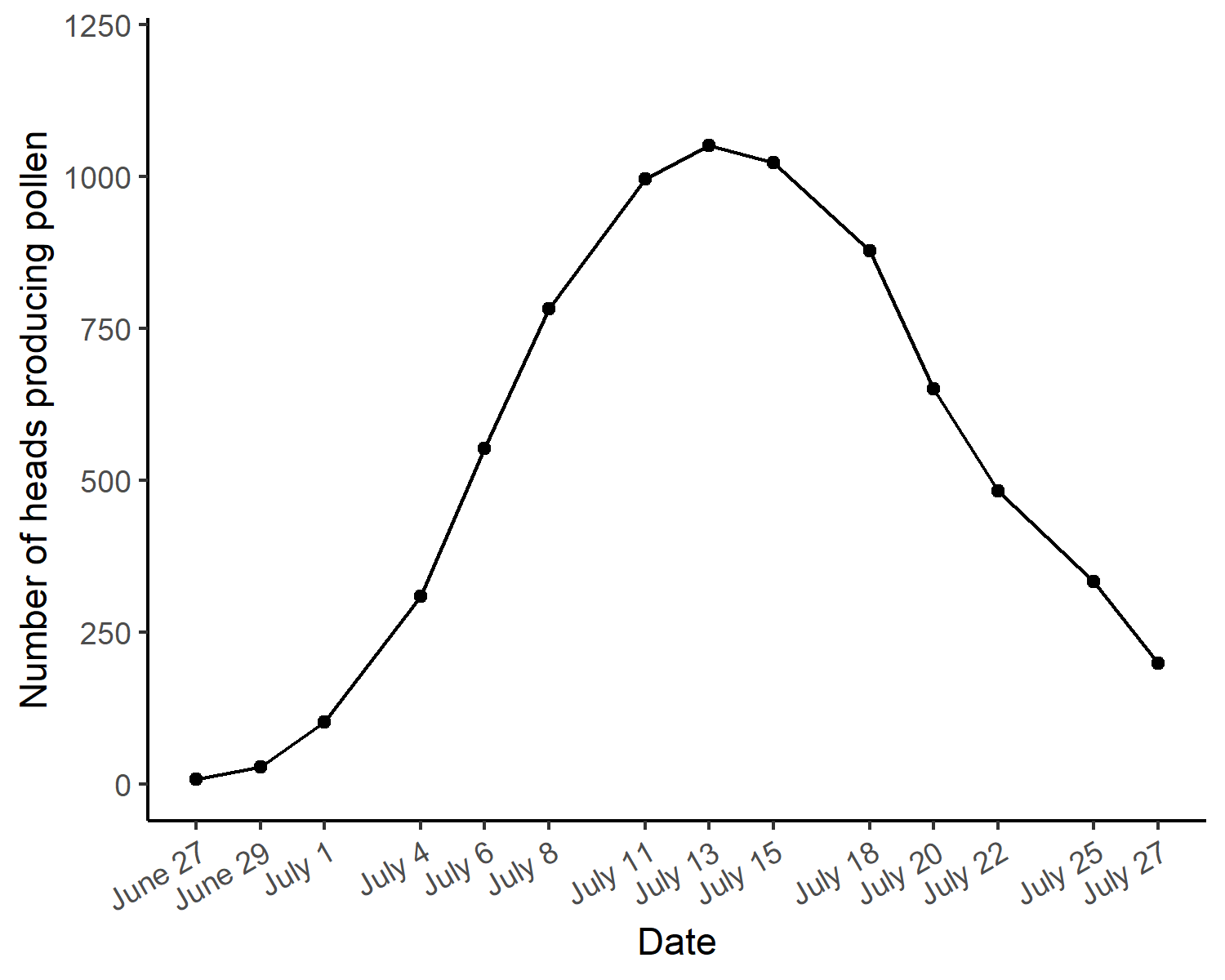
To record the flowering phenology of Echinacea, we visit plants every Monday, Wednesday, and Friday morning so we can estimate the flowering start and end date within 2-3 days. During peak flowering in mid-July, the full team spent the whole morning recording phenology. This year was a good flowering year for Echinacea across sites, but fortunately we reduced the number of sites and visited only a subset of plants at larger remnants and those that burned this year.
Remnant phenology is currently wrapping up for the summer. Most of the plants are done flowering now, and we have stopped visiting several of the smaller sites. Landfill West is the exception; the site burned in late May, so the plants flowered several weeks later than at other sites.
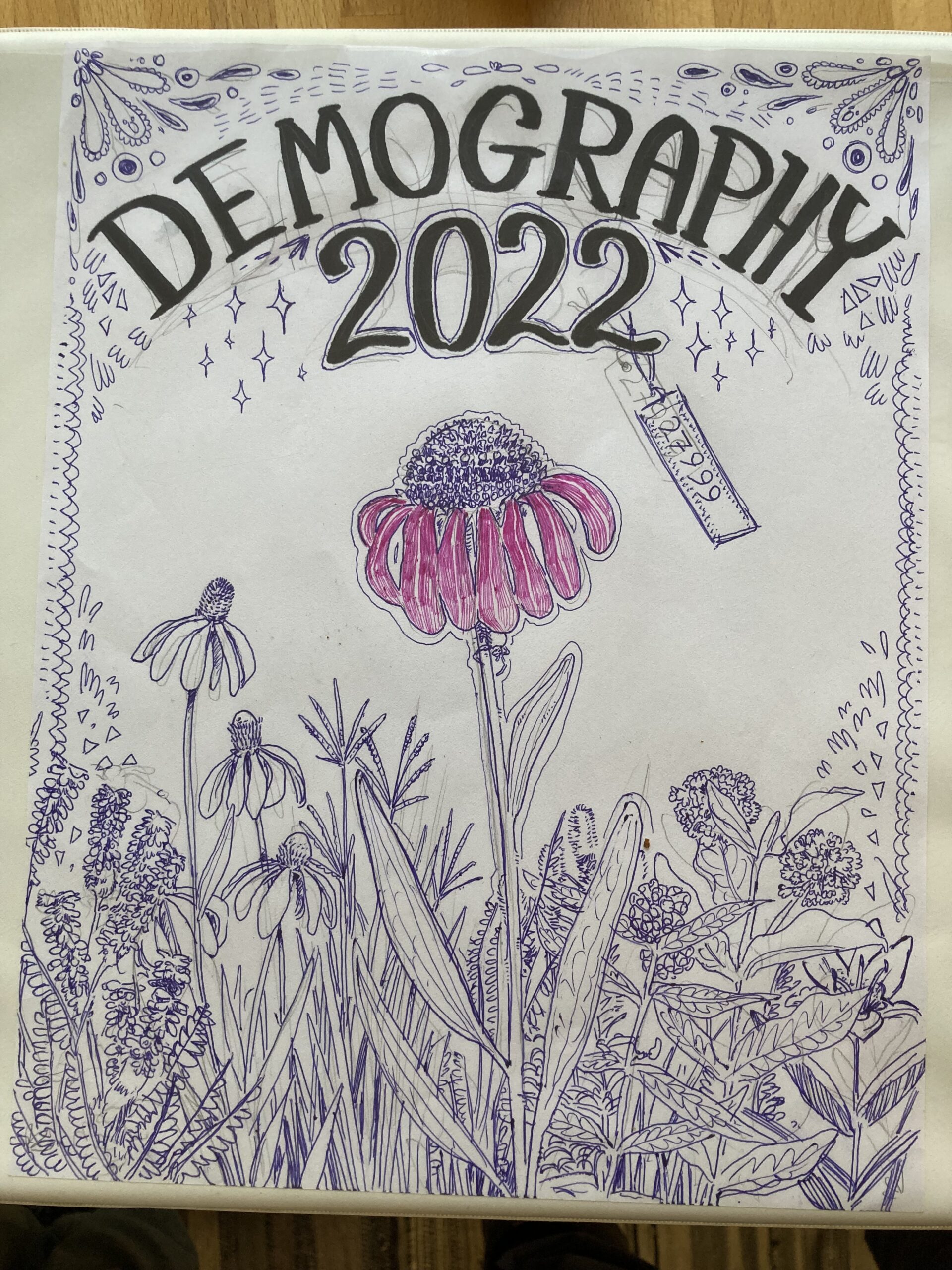
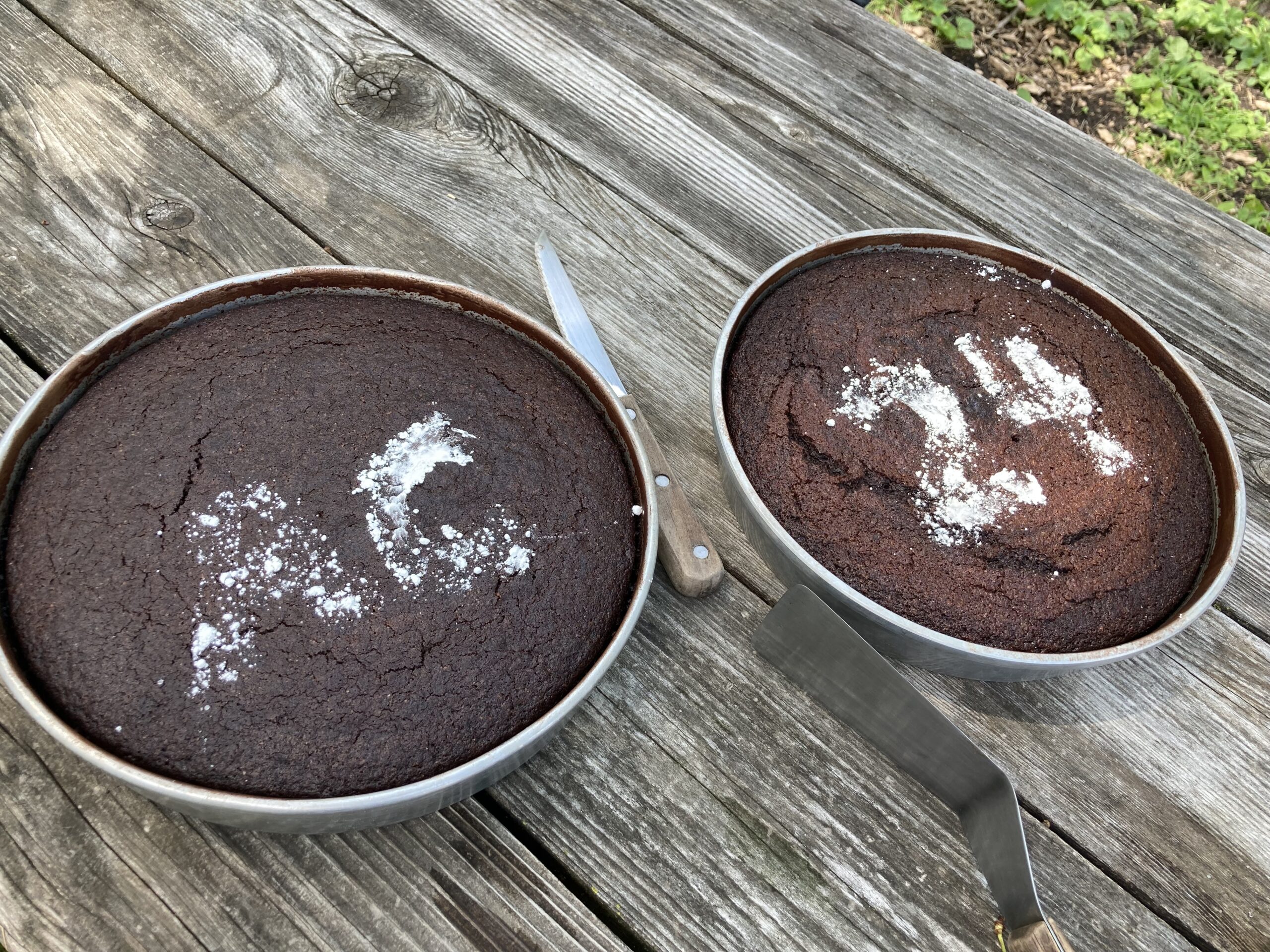
On Monday morning, the crew split into two groups. Half of the team did remnant phenology, which is going much faster now that most Echinacea are done flowering. The other half did total demo at prairie remnants nrrx and rrx, where we revisited a subset of the plants that flowered in previous years. Johanna made a fabulous illustration for the cover of total demo binder. Can you identify all the prairie species? It was also my birthday on Monday, so we celebrated by eating Stuart’s famous vegan chocolate cake at lunch.
The total demo pros hard at workI spy a lead plant…Cake!
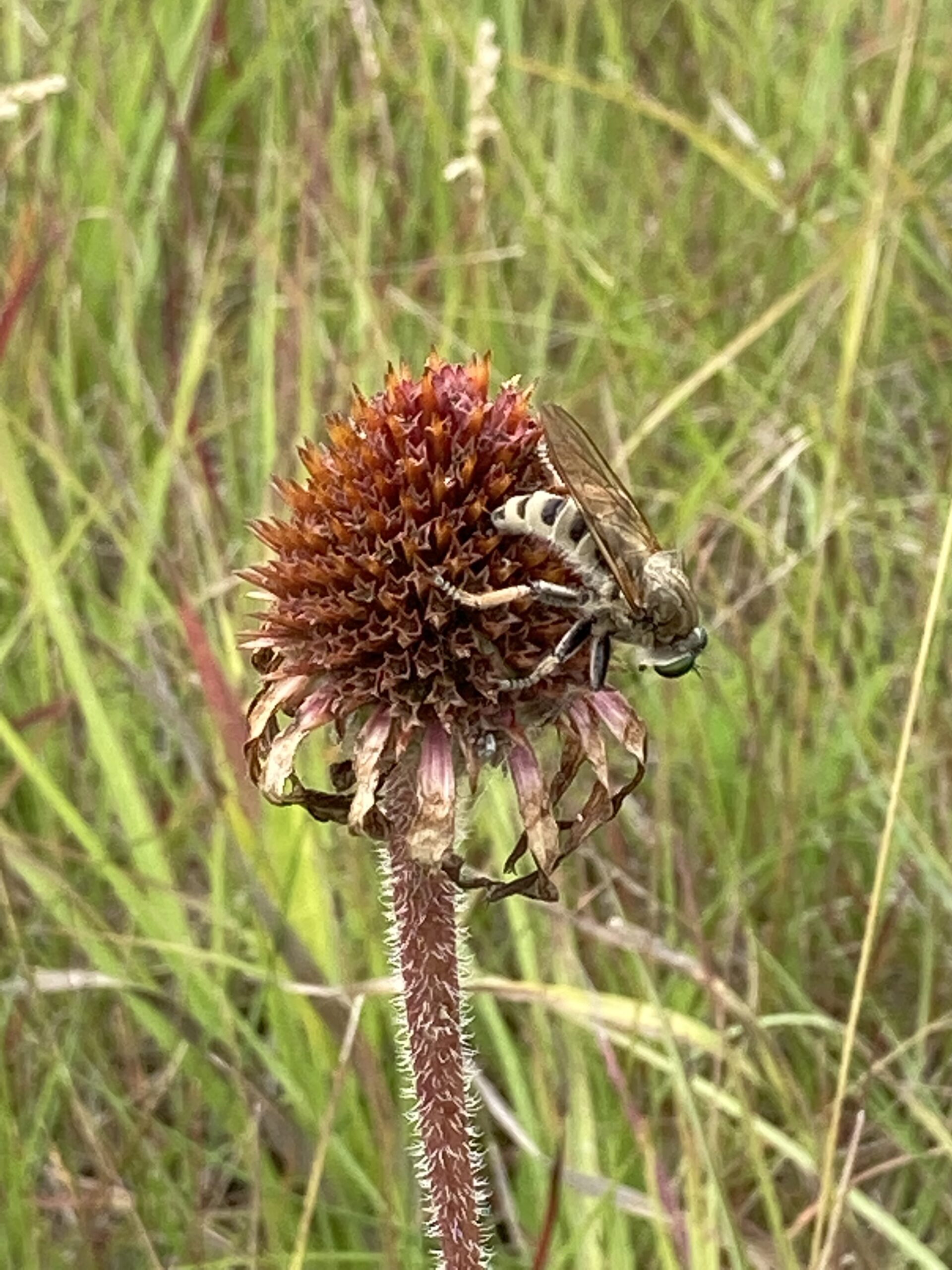
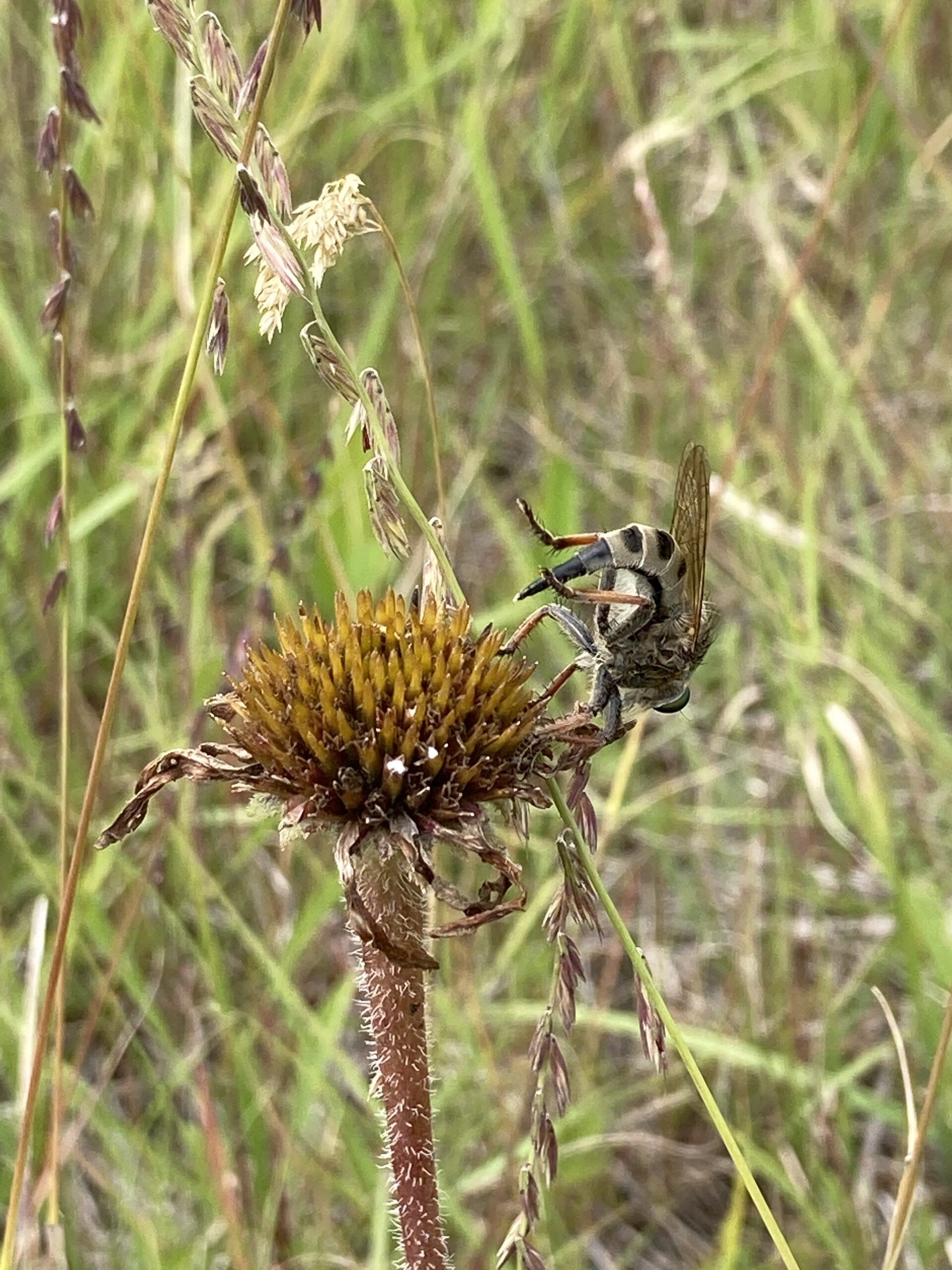
In the afternoon, I joined Kennedy and Johanna to finish total demo at rrx and start on27. At rrx, we spotted several robber flies laying their eggs on Echinacea heads. It was a busy day for insects, and Johanna also spotted two walking sticks climbing through the grass at on27. Overall, it was an excellent birthday!
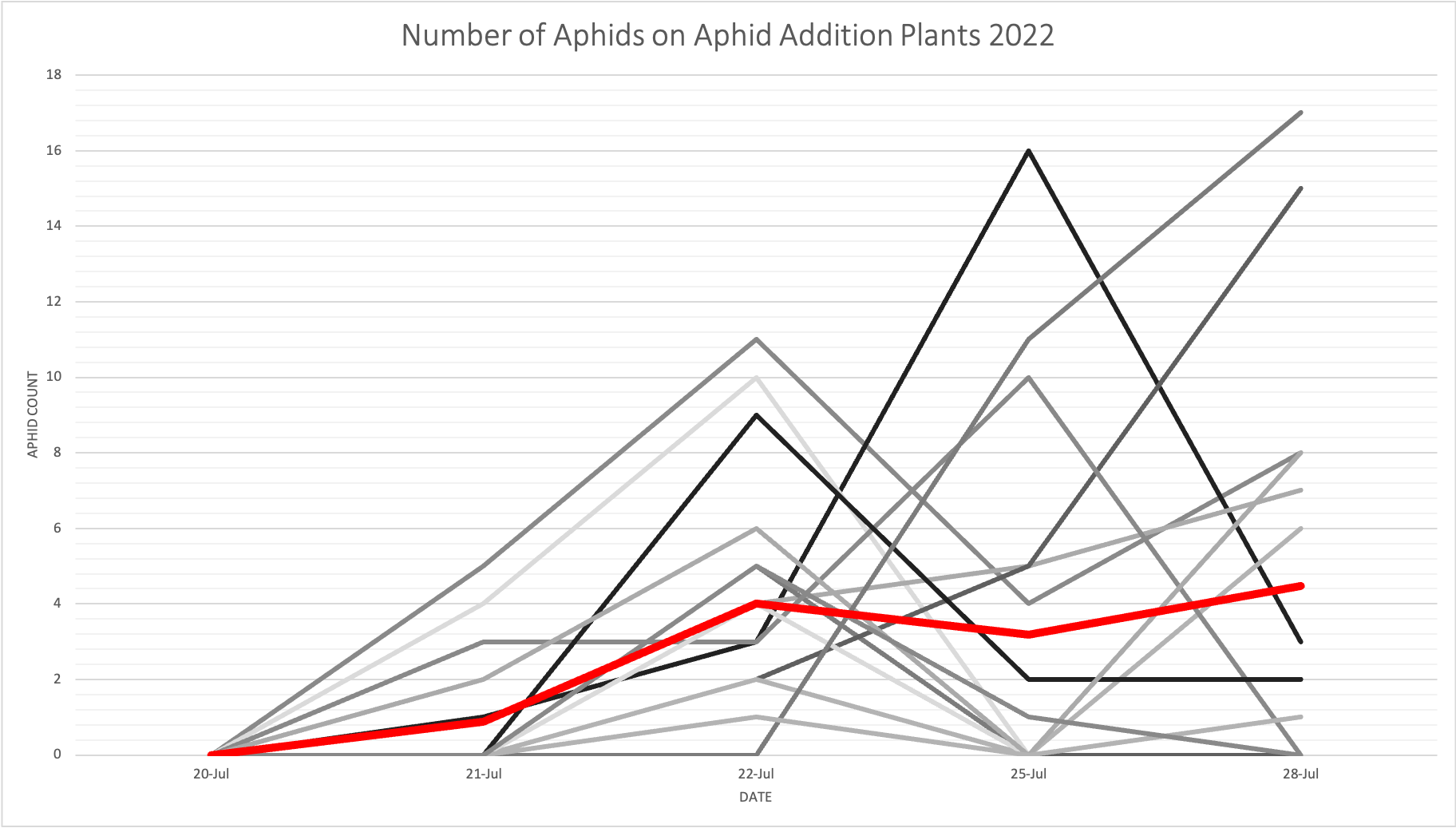
Since 2011, Team Echinacea has been studying how the presence (or absence) of the specialist herbivore Aphis echinaceae has an impact on Echinacea fitness. This summer, Kennedy and I (Emma) have been tasked with running the project. Originally, 100 heads were included in the study. This summer, only 41 plants are still present, with 17 addition plants and 24 exclusion plants. At the beginning of the summer, Kennedy and I searched to see if we could find any aphids, regardless of whether the plants were a part of the addition or exclusion treatment. We found exactly none, the same as last year. After consulting with Stuart about the conundrum, we decided to introduce a new population of Aphid echinaeceae into ExPt1, where the project is located. Multiple times a week, Kennedy and I went into prairie remnants, carefully gathered the aphids, then brought them back and placed them onto the living addition plants. Below is a graph of the aphid population growth on these 17 plants, with the red line being the average.
Most of the plants have now received between 70 and 80 Aphid echinaeceae since the 20th of July, with most plants having at least a few living each time we visit the plant. On one plant we even found an ant! Overall, it will still take some work to establish a new population, but we seem to be off to a good start.
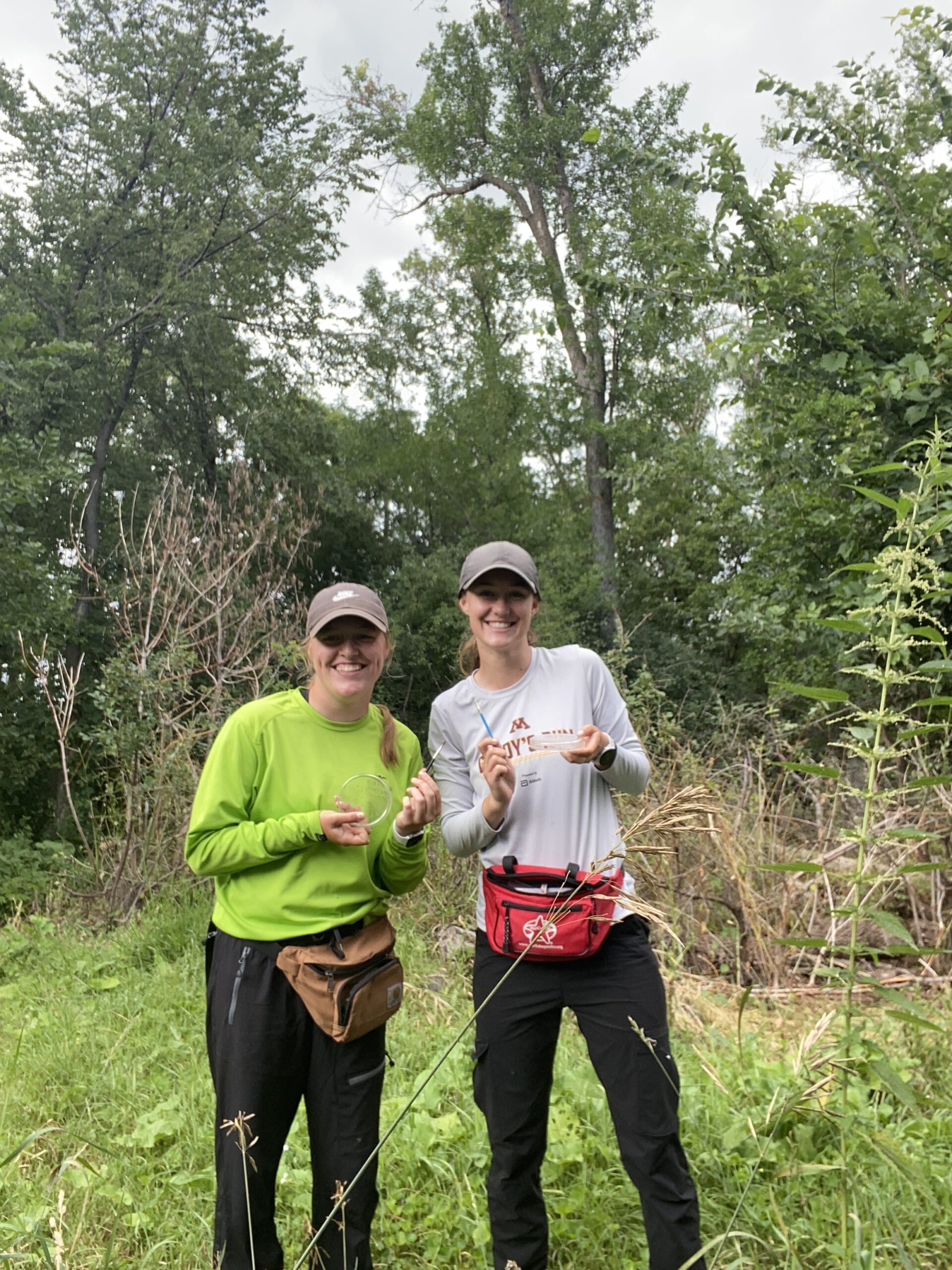
Transporting Aphid echinaeceae in petri dishesKennedy and Emma with their petri dishes and paint brushes
Over the course of this summer, the dust project has continued! Team Dust is now on its second year of studying the effects of dust deposition on Echinacea angustifolia’s seed set, through both an experimental study (to determine if dust deposition affects seed set) and an observational study (to determine the amount of dust traveling off of unpaved roads). Now that we are over half way done with the field season, below is a brief update of what has been done so far this summer, and what is still yet to come.
Experimental Study
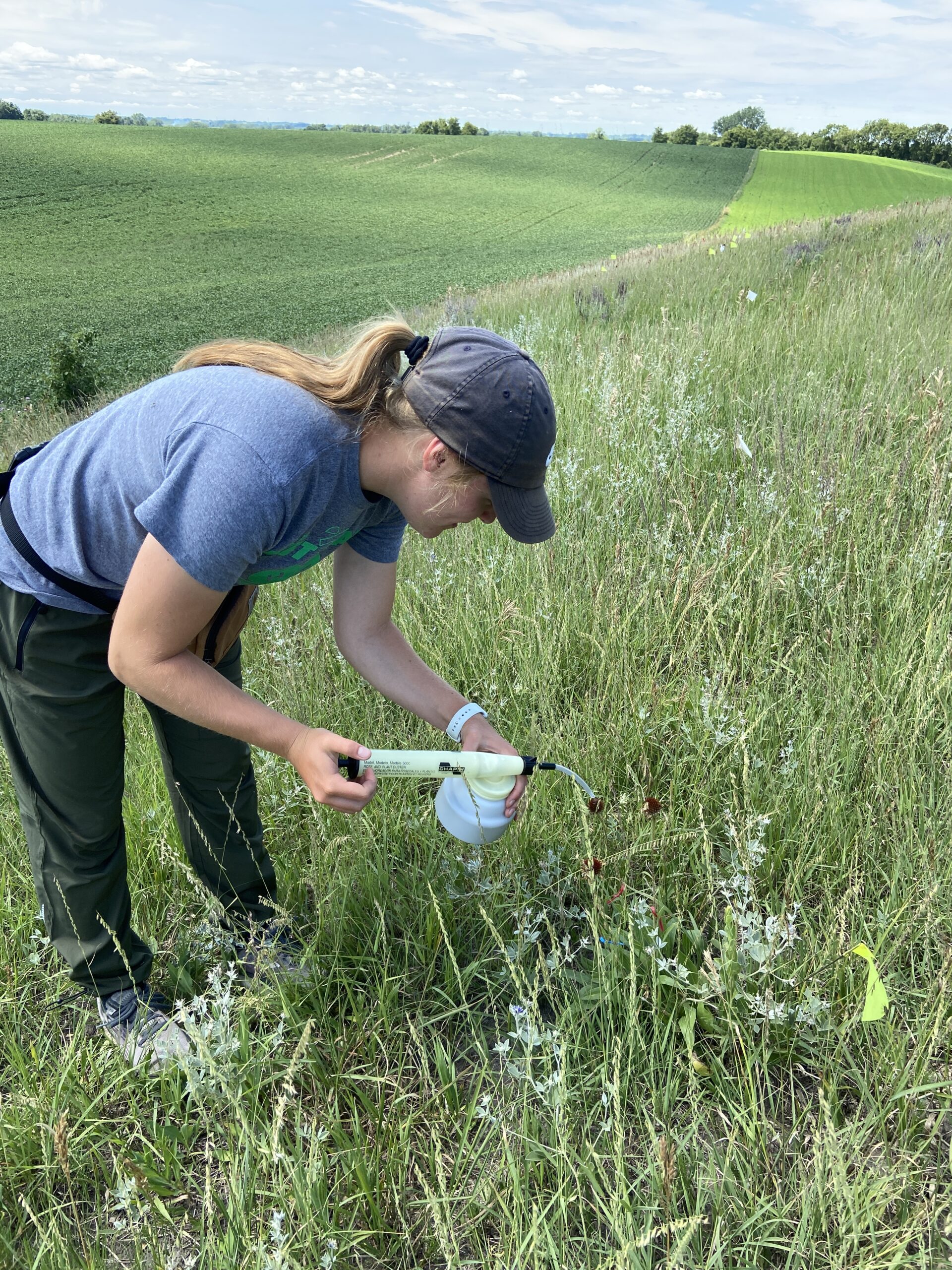
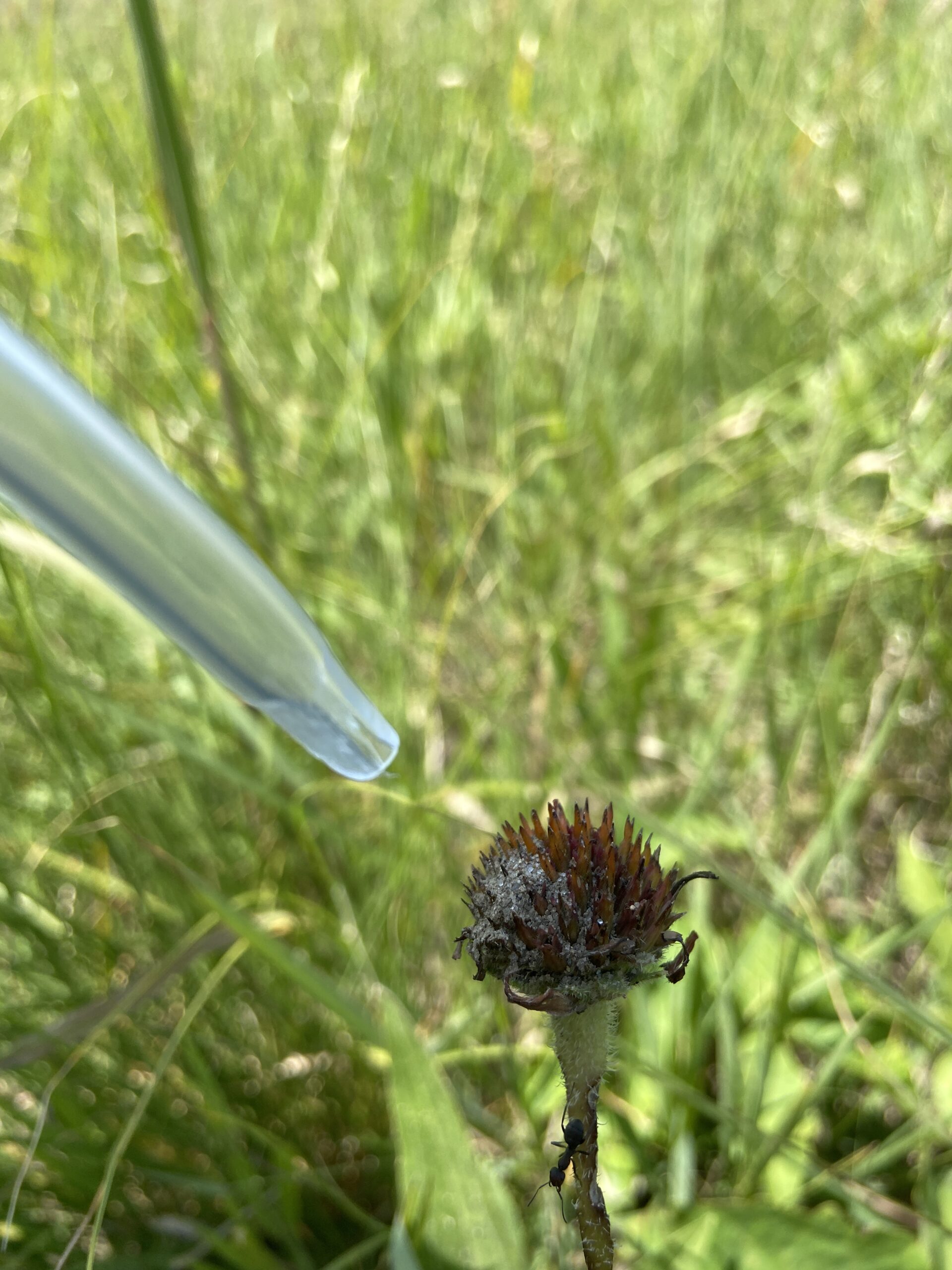
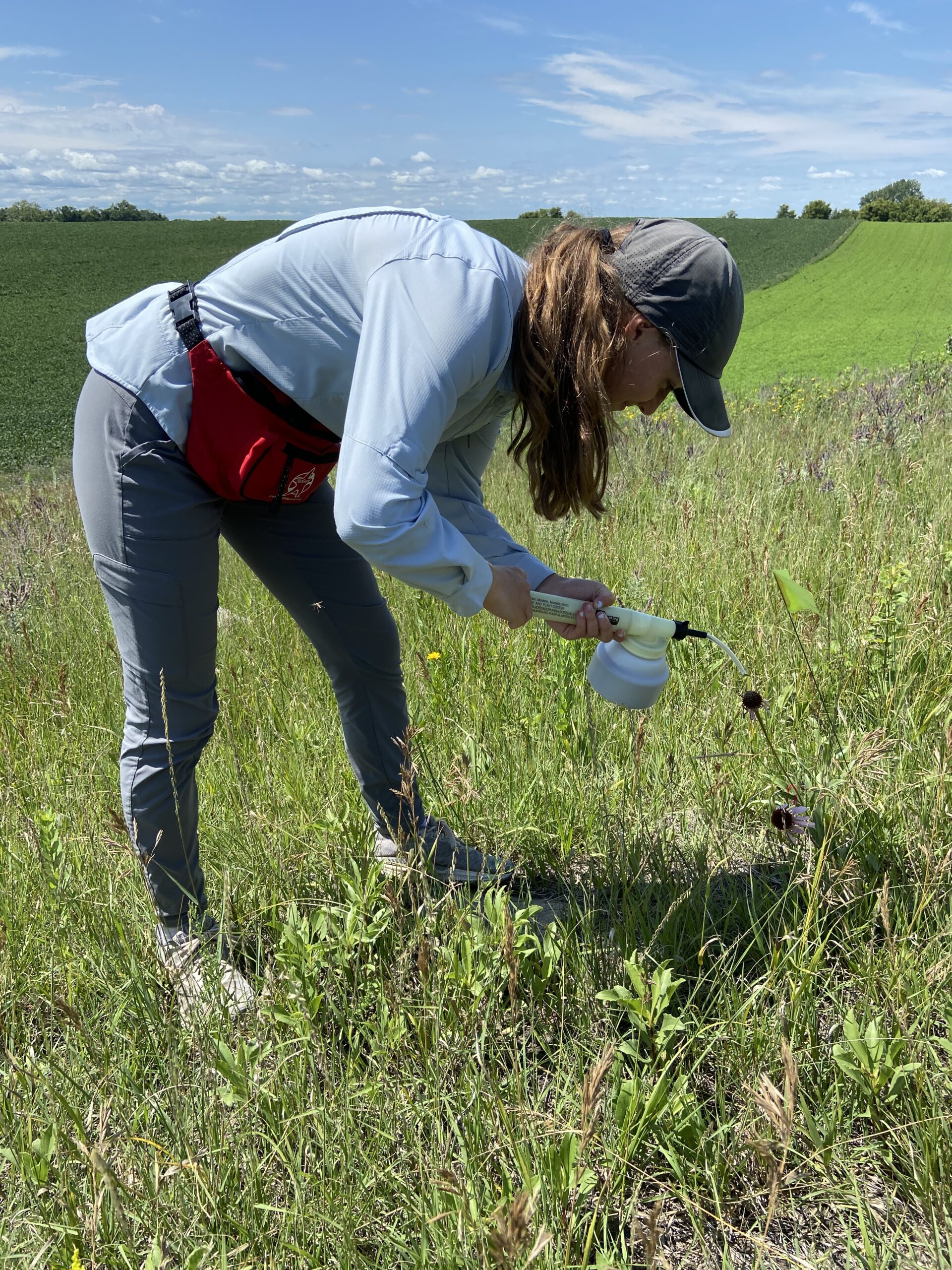
This summer we have 64 Echinacea heads included in the experimental study, located at the prairie remnant Nice Island. Of these 64 heads, half of them were randomly selected to receive dust treatments while the other half receive no dust. Twice a week I venture out to these heads to give the “dusty” heads their dust while the others receive none. All of these heads are located at a site where little to no dust comes in naturally. Once these heads are ready to be harvested, they will be run under an x-ray to determine their seed set. Currently we have the x-rays from last year’s heads, but not all of them have been analyzed so there is no data to report as of now.
Observational Study
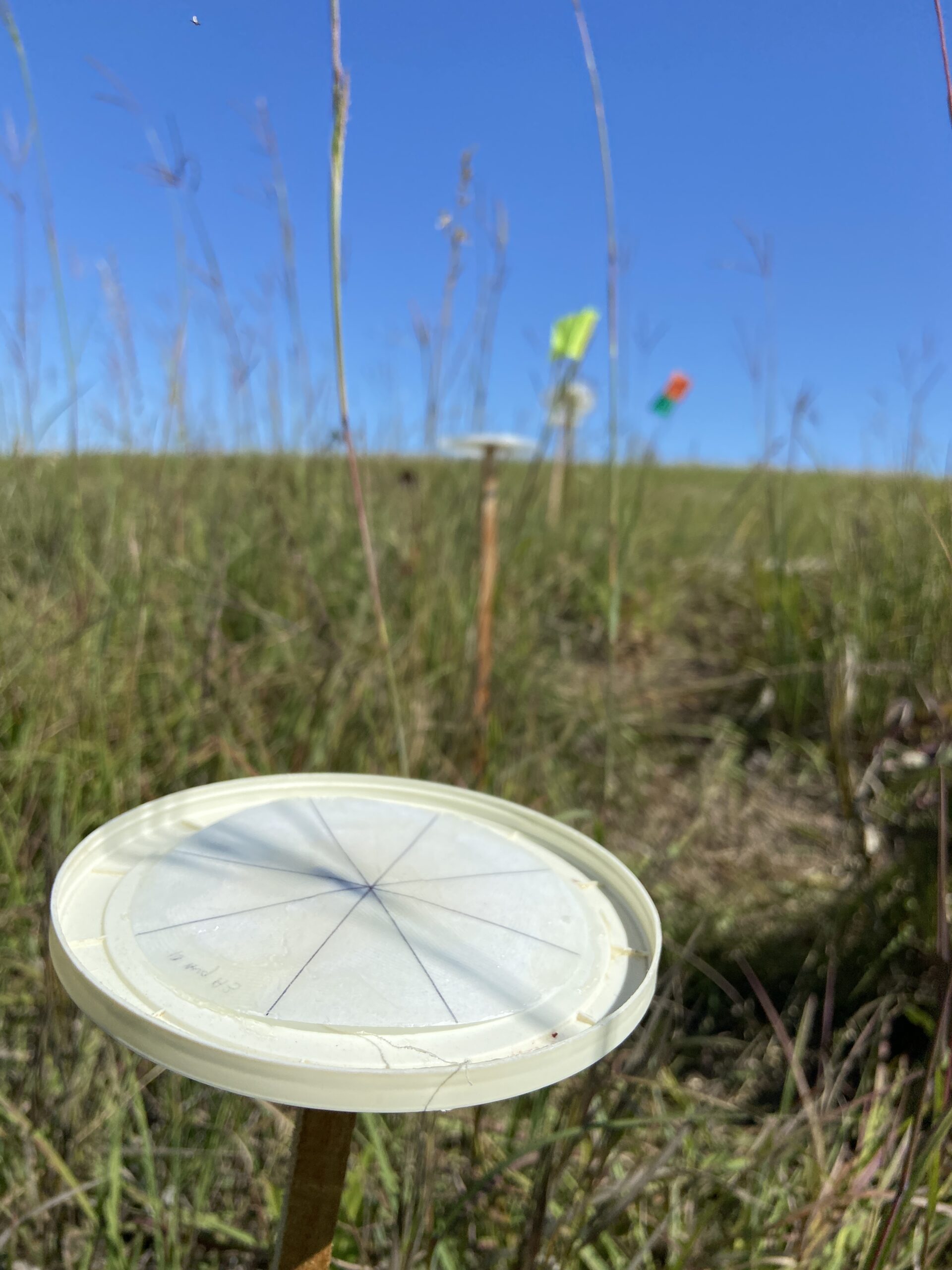
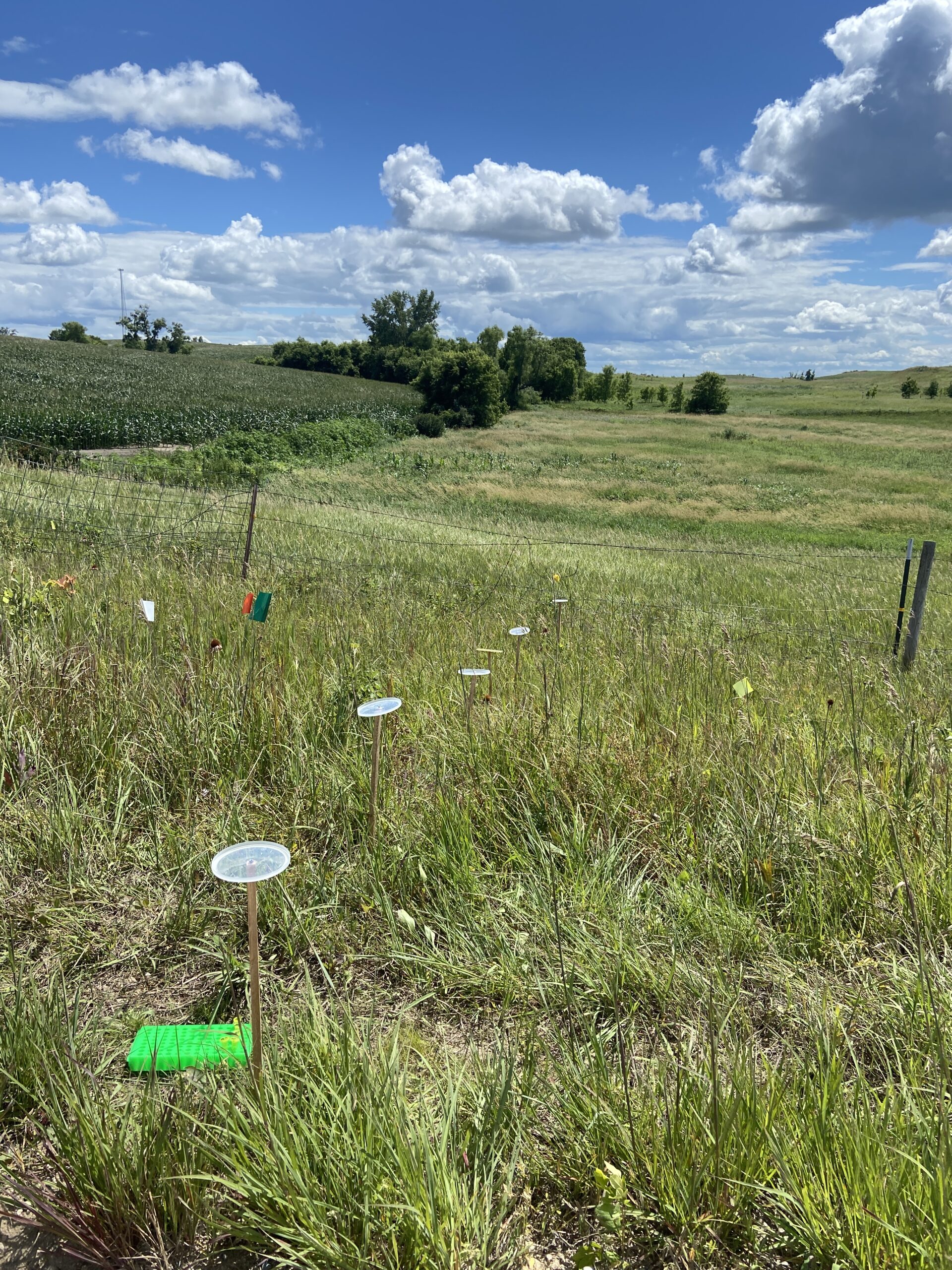
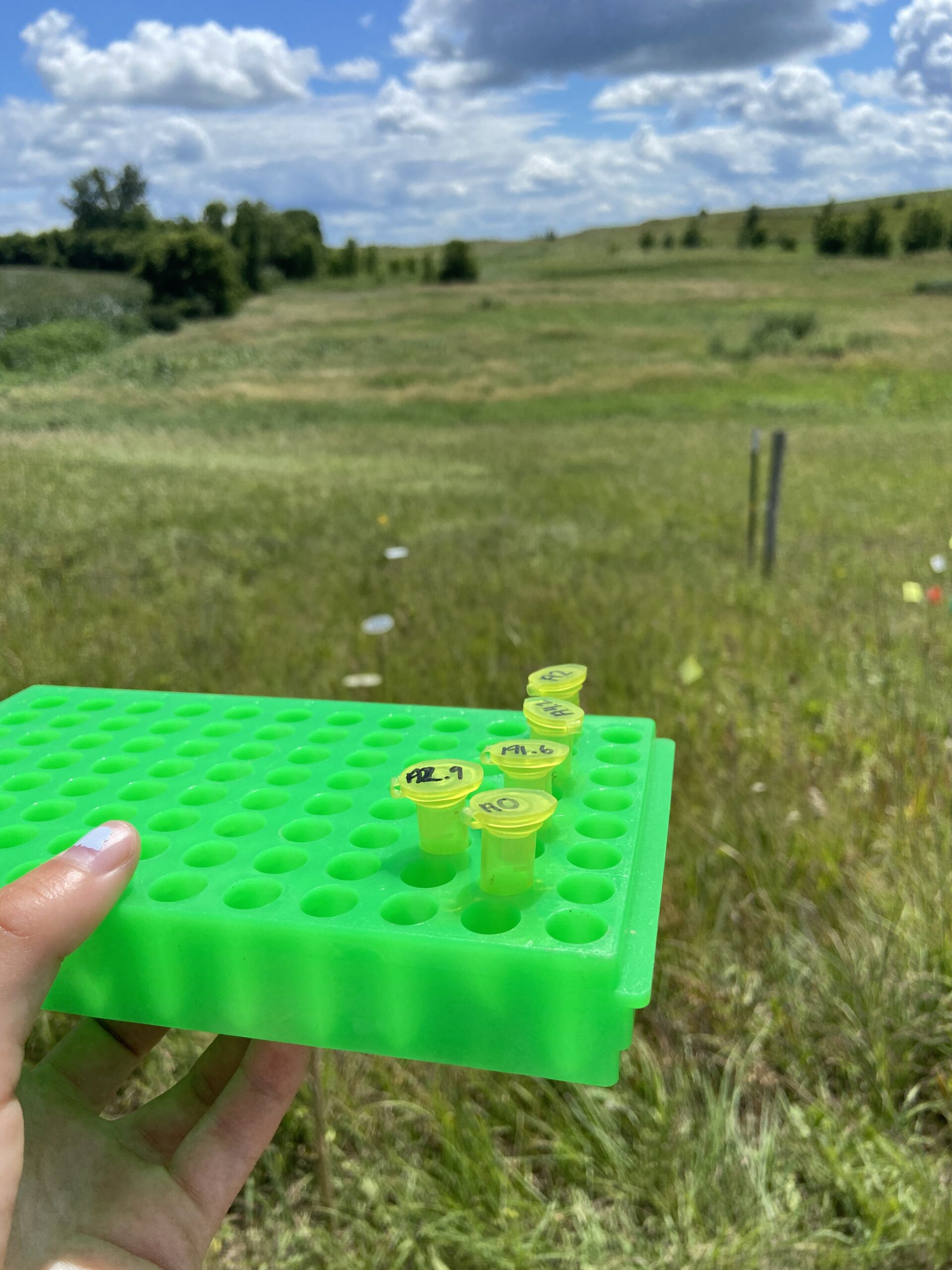
The observational part of this project is about to begin! This past week, Kennedy and I assembled the dust traps (pictured below) that we are going to use to measure dust levels at varying distances from unpaved roads. We then placed these traps at two different remnants (pictured below). Over the course of the next two weeks, these dust traps will be loaded in order to collect data. The second part of the observational study, new to Team Dust as of 2022, is collecting styles from flowering Echinacea heads alongside unpaved roads. Kennedy and I managed to collect some styles on Thursday, which went well! Currently these styles are sitting in the freezer, but they will soon be analyzed under a microscope to look for dust covering them.
Overall, lots has already been done this summer, but there is still plenty left to do!
Kennedy applying a dust treatmentA dusty head!Emma applying a dust treatmentSome dust trapsThe styles sitting in their vialsMore dust trapsDust traps along a dusty road