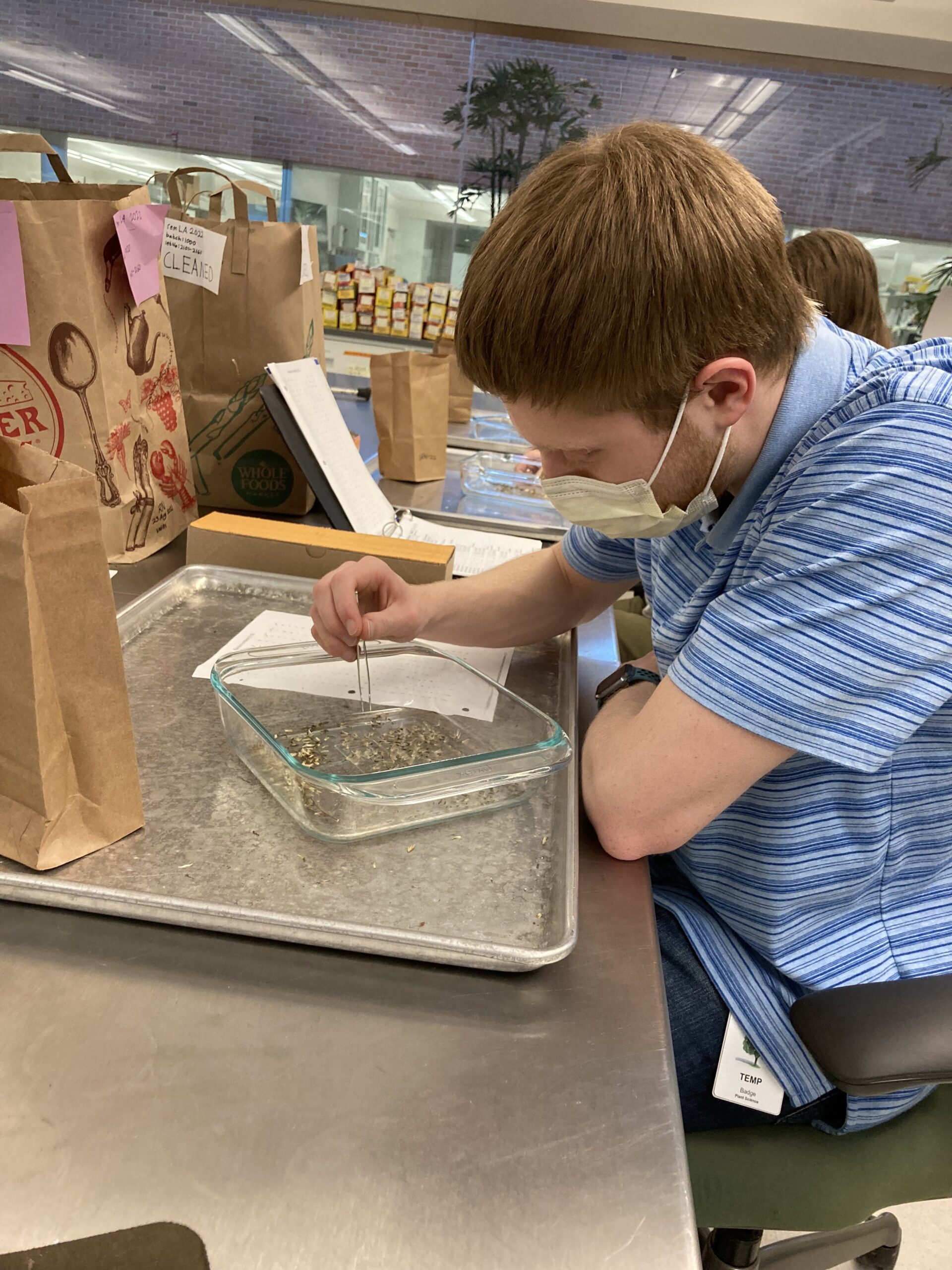
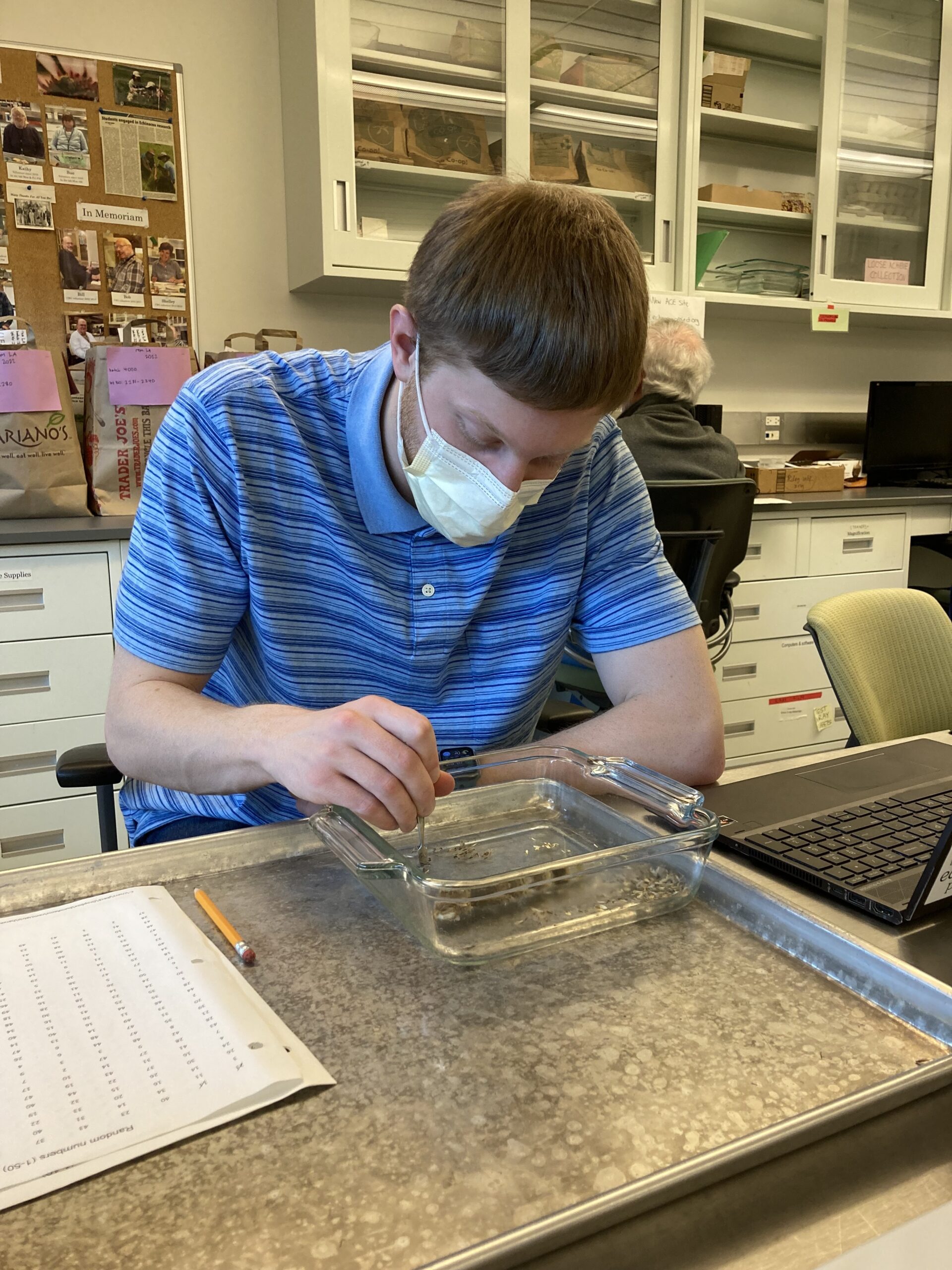
So far, things are going well in the randomization step, but there is still quite a ways to go to complete the first batch of Liatris plants. However, we have counted a considerable number of achenes that have been eaten, and we are starting to get a rough estimate of the predation rate per Liatris plant. We are finding that there are, on average, 1 to 3 achenes eaten per plant out of a total of at least 30 randomly selected achenes. This equals approximately a 3 to 10 percent range for what has been found, but we have also found a few that have had either none or many achenes eaten. In light of these findings, I think we are heading in the right direction with the project, but hopefully, we will need to get much more work done to get through all five batches. Hopefully, we will have all the plants cleaned and randomized before the burning season (which starts in April), but it will take a lot to get to that goal within a little over a month’s worth of time. However, the good news is whether or not we meet our goal, there will be more than enough data to work with, and ultimately we can come to conclusions at the end.
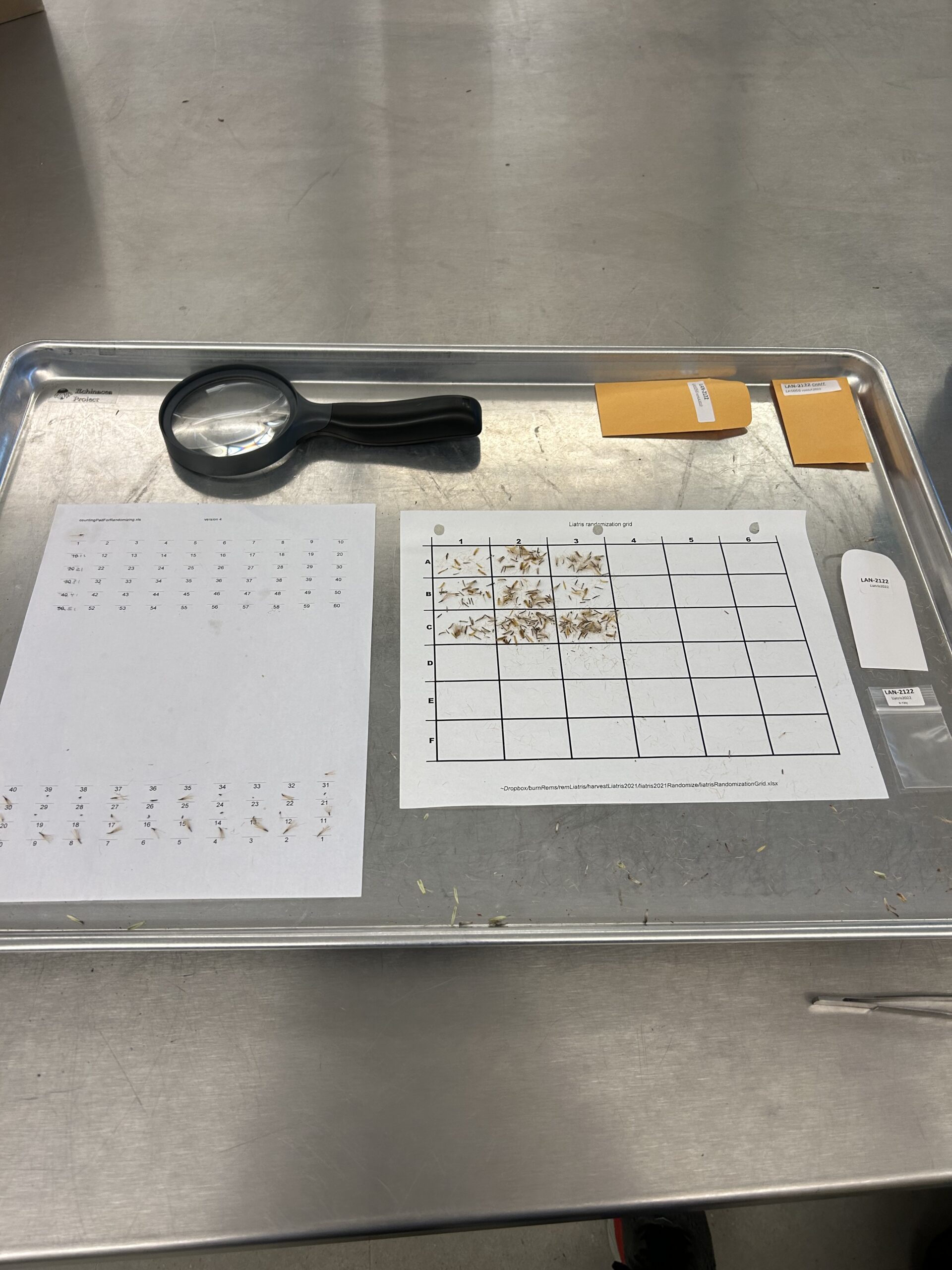
In lab today, I started the process of randomization. This step in the project does take some time and patience, but all of it is worthwhile toward reducing bias and collecting achenes that can be x-rayed or identified as eaten. Similar to the randomization of achenes from Echinacea plants, sheets of randomization and counting grids are used. In addition, we also use plastic bags, white envelopes, stickers, tweezers, and a magnifying glass for this procedure. The first step involves pouring the achenes evenly across the randomization grid and ensuring all the achenes are placed in a specific square on the grid without being on the lines. Then using a randomized list of grid coordinates, we go down the list until we hit a coordinate (an example would be “B2”) with achenes present. We then examined each achene in the selected coordinate to see if there was any predation. If less than 30 achenes were counted in the coordinate, we randomly selected another one going down the randomization list. Once we categorized 30 achenes as either eaten or eligible for x-ray, we took our white envelope and plastic bag and put stickers on them. The envelope will store the eaten achenes while the plastic bag will contain the achenes ready to be x-rayed. On the envelope, we write the date, initials, and the quantities of achenes eaten, not eaten, and uninformative. After putting the achenes in their respective containers, we put them in a pile marked “randomized,” and we move on to the next one. As of today, we managed to get through a little over one third of our first batch, so we still have much work to do before proceeding onward.
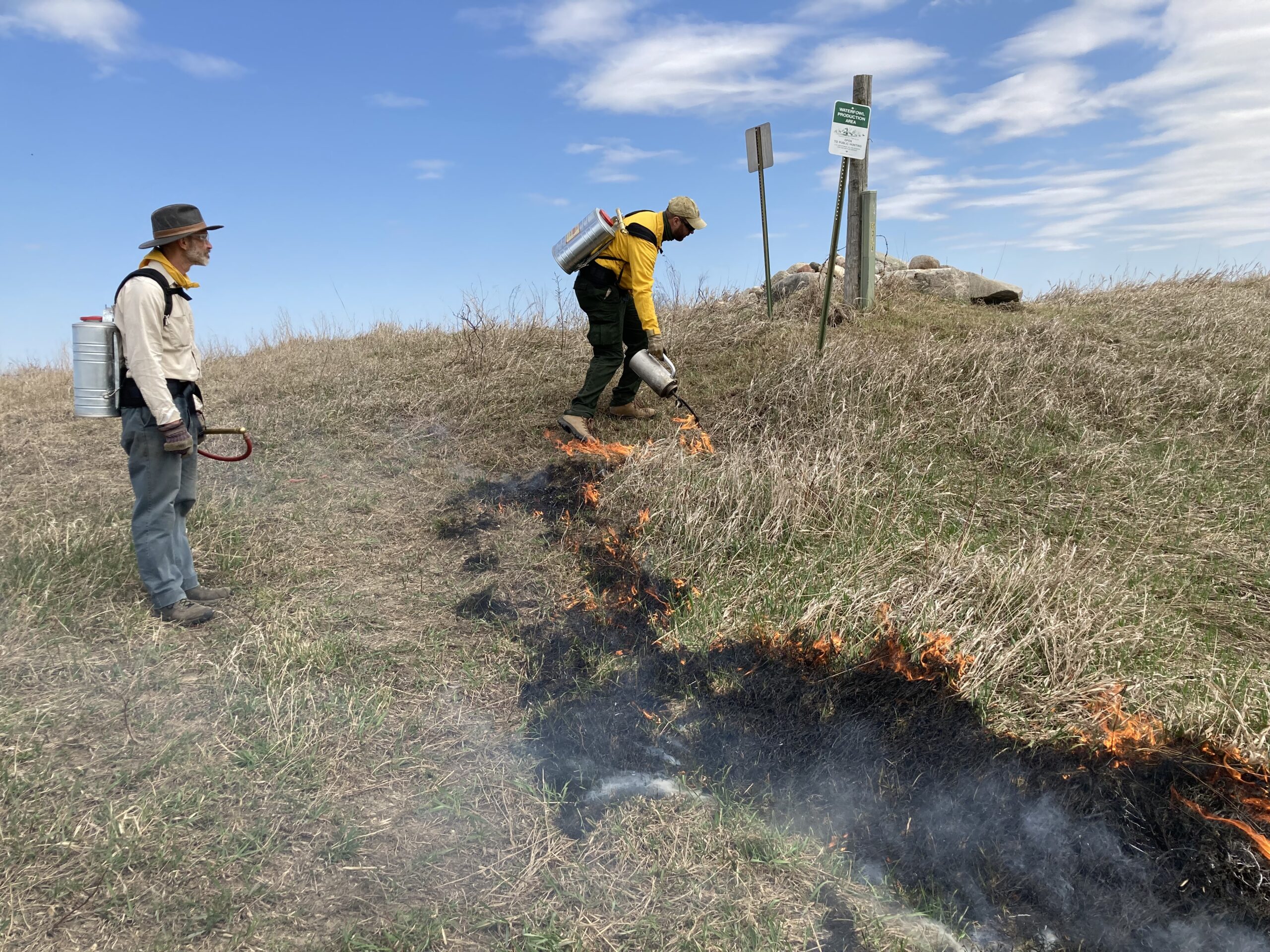
The Echinacea Project is seeking collaborators interested in studying the ecological effects of fire within a highly fragmented prairie landscape. In 2021, we began experimentally burning patches of remnant prairie in western Minnesota to investigate how fire effects on plant reproduction and population dynamics may be mediated by fragmentation. In 2023, we are expanding our efforts to study fire and fragmentation effects on plant-pollinator interactions and ground-nesting bees in remnant and restored prairies. We hope to collaborate with other researchers who can capitalize on our landscape-scale experiment to address these and other ecological questions about effects of fire and fragmentation in tallgrass prairie. Please share with anyone you think may be interested!
We will host a brief informational Zoom meeting on February 22 at 10:30 AM CDT to share information about the experimental design and potential opportunities for collaboration. If you are interested in attending the informational meeting, send us an email (EchinaceaProject [at] gmail.com) and we will share a link to the Zoom meeting. If you are unable to attend live, we plan to record the informational meeting and can make this recording available.
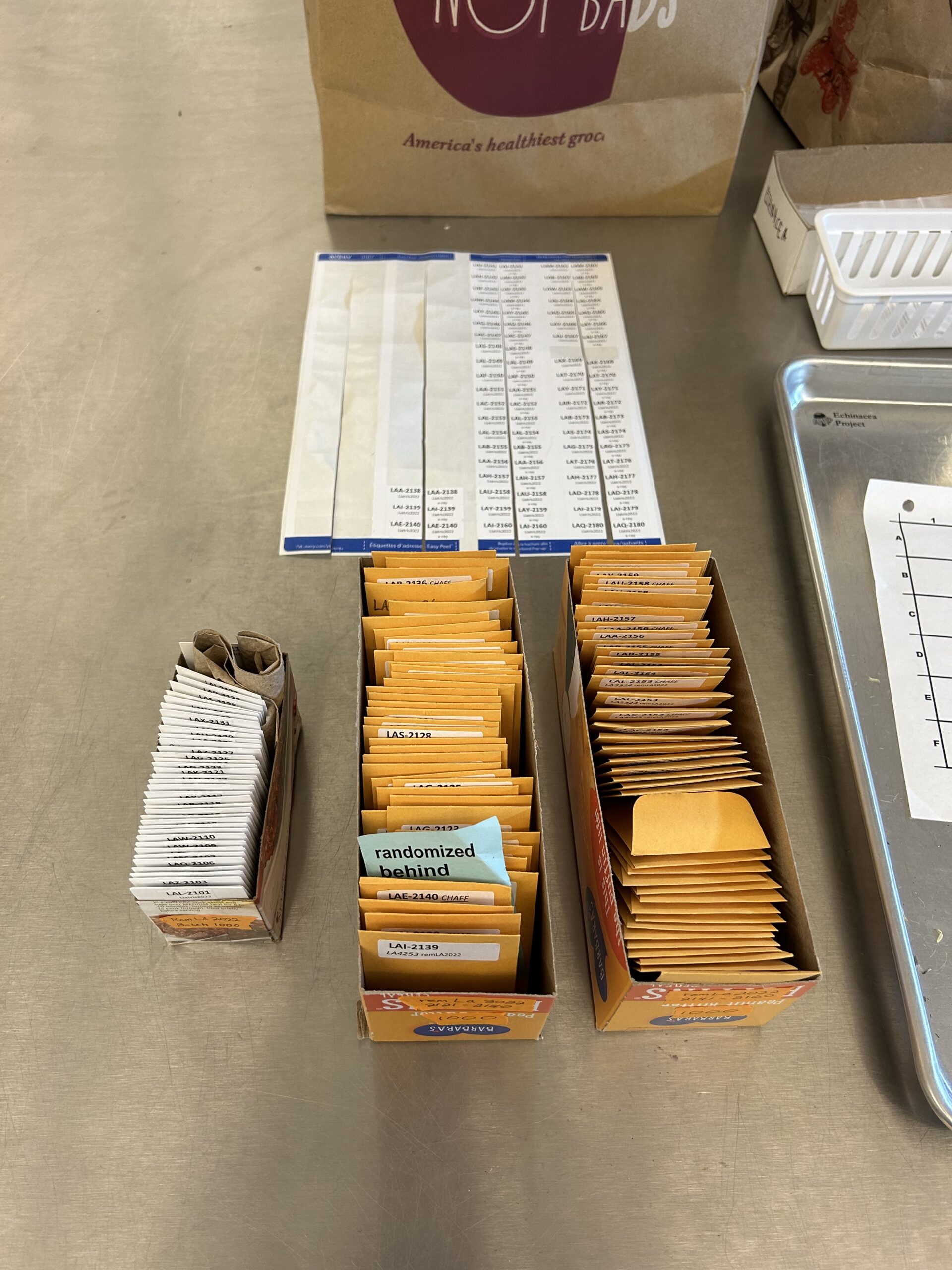
After cleaning Liatris plants for a week, I am happy to say that the first of five batches are now finished. Now that the first batch is completed, the project’s next step is ready to begin. The process of randomization will be the next step in the project. This step will involve the random selection of achenes from each plant to avoid bias and separation of achenes that are either qualified for being x-rayed or not. Luckily, both groupings will have a role in the project’s studies. X-rayed achenes will inform us about pollination and reproductive outcomes for each head of a Liatris plant. On the other hand, non-x-rayed achenes can be assessed for why they cannot be x-rayed, including what types of damage the achenes have and if any predation occurred toward those achenes. My research question will focus specifically on seed predation, so using the non-x-rayed achenes will be essential. I am still working on a finalized research question relating to seed predation, but seeing the progress made so far has me excited about what will come next in the project and toward finalizing my research question.
I am happy to say that the Liatris Project is off to a good start. After taking inventory of all the Liatris plants this past week, I got to start the cleaning process. A total of 293 Liatris plants have been counted in the inventory, and all have been sorted randomly into 5 different batches. Today, I got to start cleaning the ones in the 1st batch, and while cleaning, I noticed several similarities and differences compared to cleaning Echinacea plants. Overall, I found that Liatris achenes were much easier to extract from the plant than Echinacea achenes, but counting them proved much more challenging. To make things easier, random selection sheets of different numerical ranges were arranged that listed random numbers from left to right down the sheets. Using these sheets, I could randomly pick out a flower head and count the number of achenes associated with that head. I also had to observe if any achenes were missing from each head on a Liatris plant. I recorded the total number of heads per plant and the number of heads with no achenes, some achenes, or all achenes missing. After taking these recordings, I removed all the other achenes present on the Liatris plants and sorted them into an envelope. Any chaff leftover got put into a separate envelope labeled as “chaff.” So far, a handful of plants have been cleaned, but there is still a long way to go.