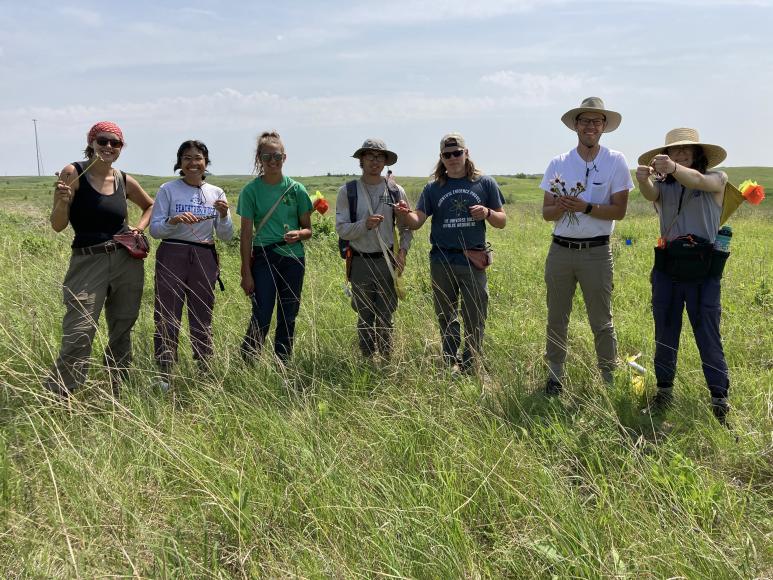
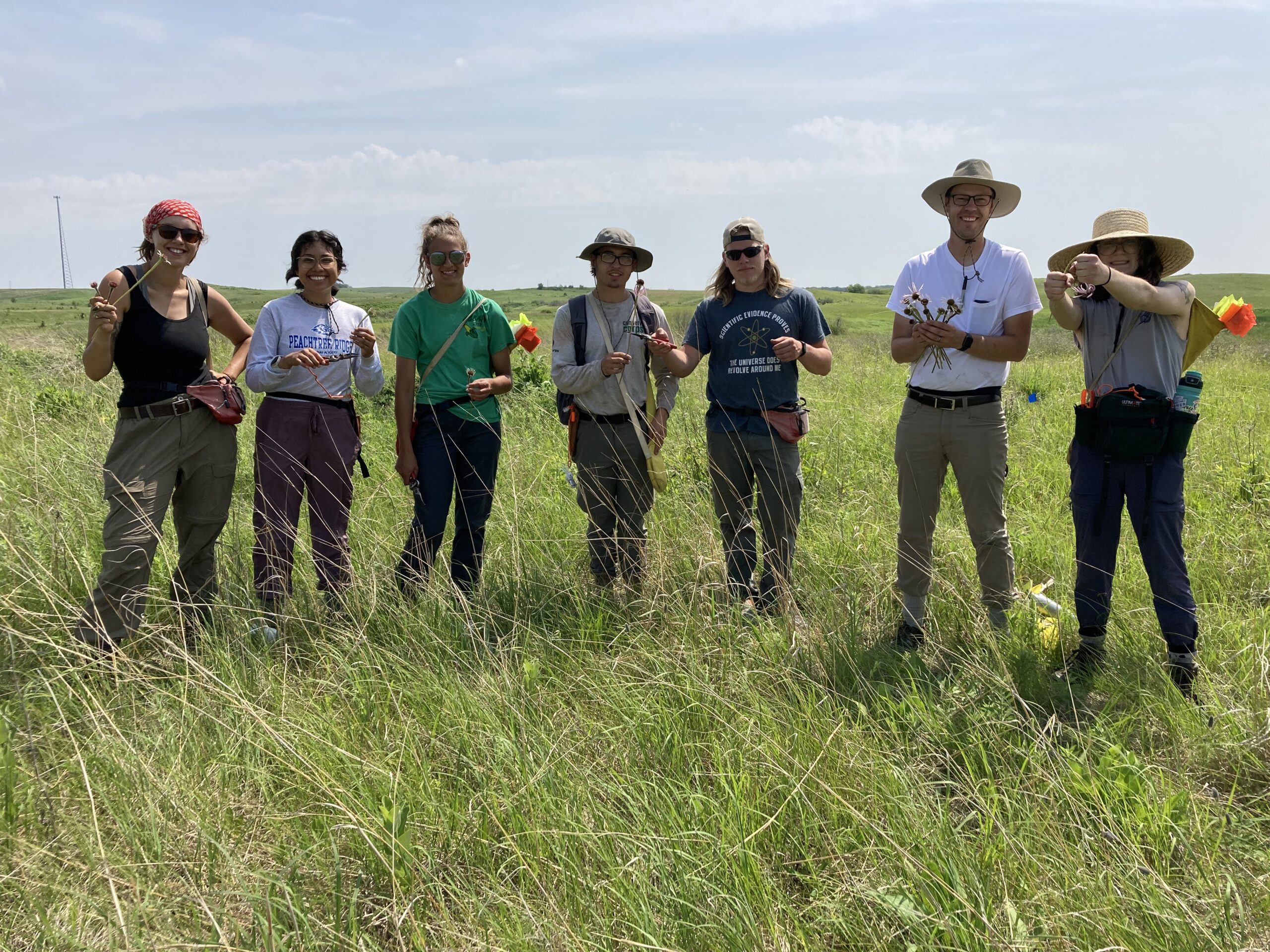
We started our day off by splitting into teams and heading out to collect pollen from a few Echinacea heads. Daytona and his team had a volunteer trying to hitch a ride to the site on the side of the truck (a very adorable volunteer at that). The would be tiniest member of team Echinacea was removed safely due to a lack of sufficient credentials and inability to meet BF standards.
Once we finished out the morning collecting pollen we headed back out in the afternoon to collect nectar and I saw this echinacea with a large head that looked like a strawberry. Though tempted, I did not taste to see whether it was an echinacea or a strawberry.
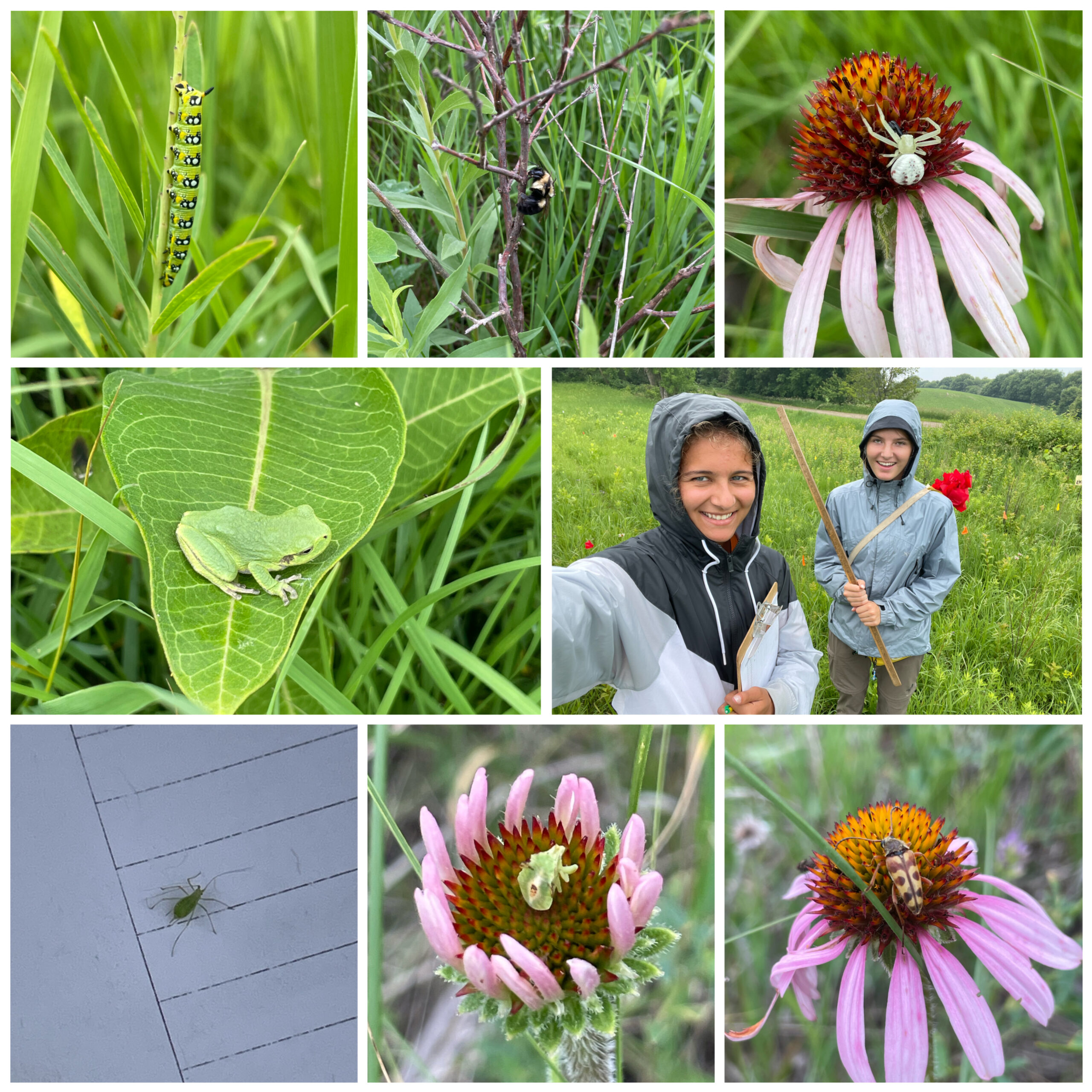
We had a dreary, drizzly day in Douglas county, but that didn’t stop the bugs and other critters from enjoying the cool weather. Other critter sightings from the day include and are not limited to: deer, snakes, chipmunks, geese, ducks and other various birds, stink bugs, dragonflies, crickets, lots of mosquitoes and flies, and of course Team Echinacea members.
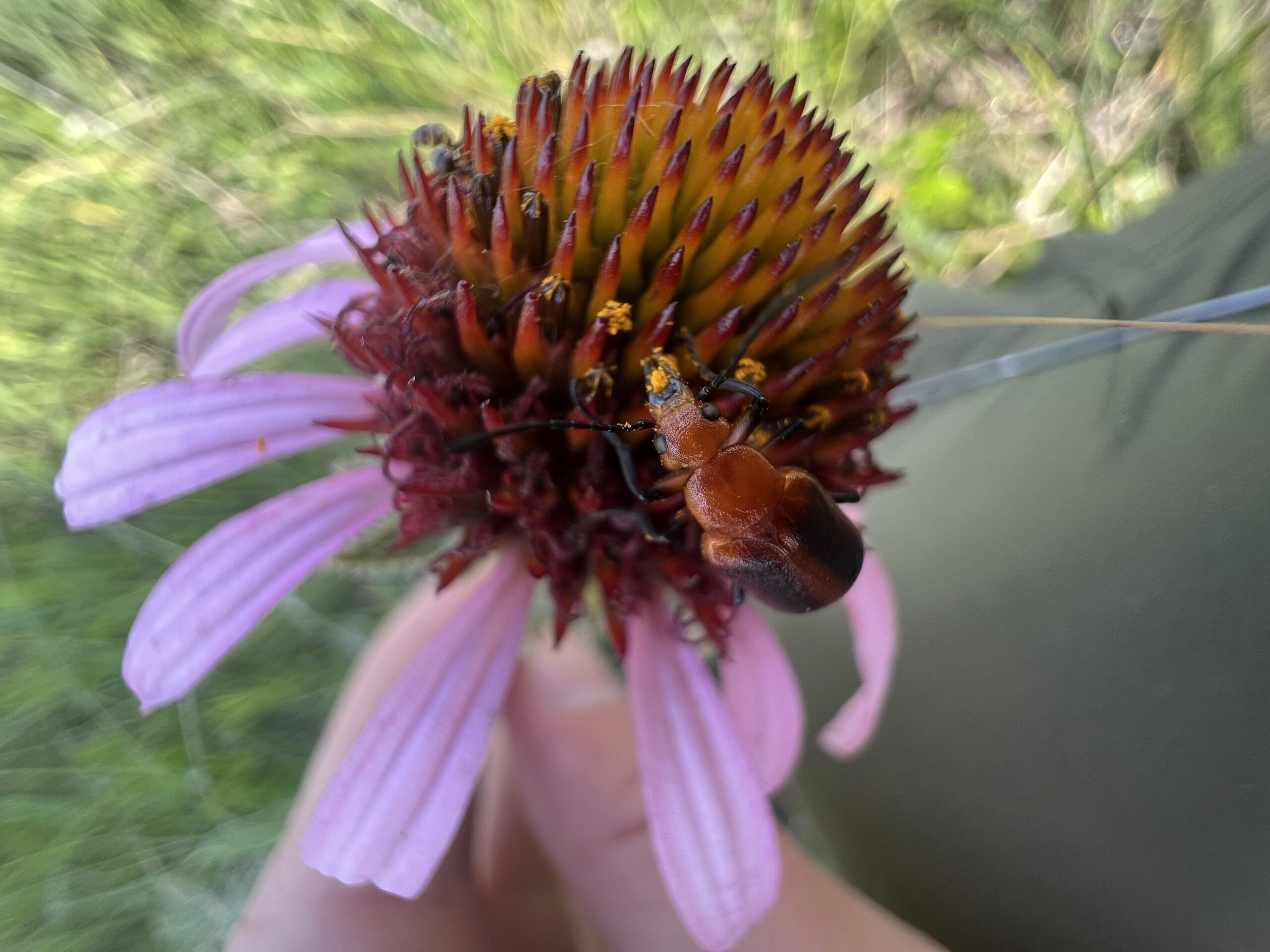
A beetle was seen allegedly stealing pollen from Echinacea Angustifolia this morning at Staffanson Prairie preserve. The insect’s motives are currently unknown and the suspect is still on the loose.
The crime in progress
Witnesses say the crime occurred around 9:40, when the critter began apparently attacking Angustifolia’s anthers unprovoked.
“It was like nothing I’d ever seen,” said Amorpha Canascens, Angustifolia’s neighbor. “My forby friend was just going about their business trying to reproduce when this cranky creature started pocketing all their pollen for itself.”
Officials have reported that 2023 is a relatively low flowering year for our favorite prairie flower in the area, so Angustifolia may not have had many mates anyway. Still, they would have liked to have had a chance to reproduce.
“A whole day of pollen production wasted! This is going to throw off my synchrony stats for sure,” Angustifolia said.
Despite the hardship, Angustifolia remains committed to their goal.
“I still have some more flowering days in me yet,” they said. “And for every selfish beetle, there’s a benevolent bee to help me out. Because in the prairie, we look out for each other.”
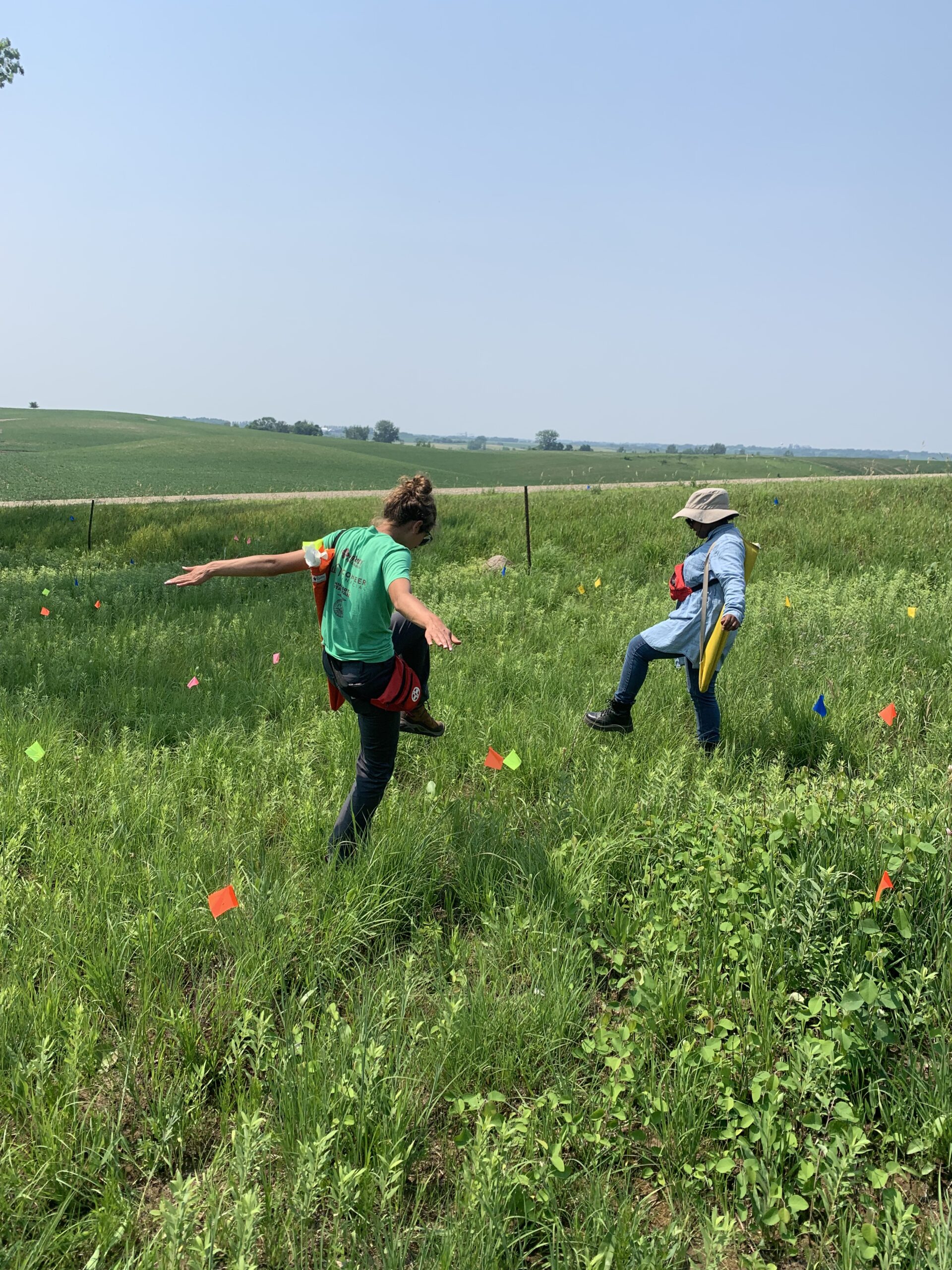
We went on a wild hunt this morning. Team Echinacea (or euthanasia/youth in Asia) members were prepped with pruners, pollinators exclusion bags, and flags.
Everyone worked together to find Echinacea! The summer team learned how to record data using our handy visors ( a memory of the 90s).
We then went to place pollinator exclusion bags on Echinacea pallida. Readers, please note that E. pallida is not the same as our beloved Echinacea angustifolia. Height is one key difference we use to distinguish the two plants. Angustifolia is a short king.
Afterward, we went on a decapitation spree. See below to view a picture of our winnings. Members of the team were enjoying seeing E. Pallida fall off its petal-stal.
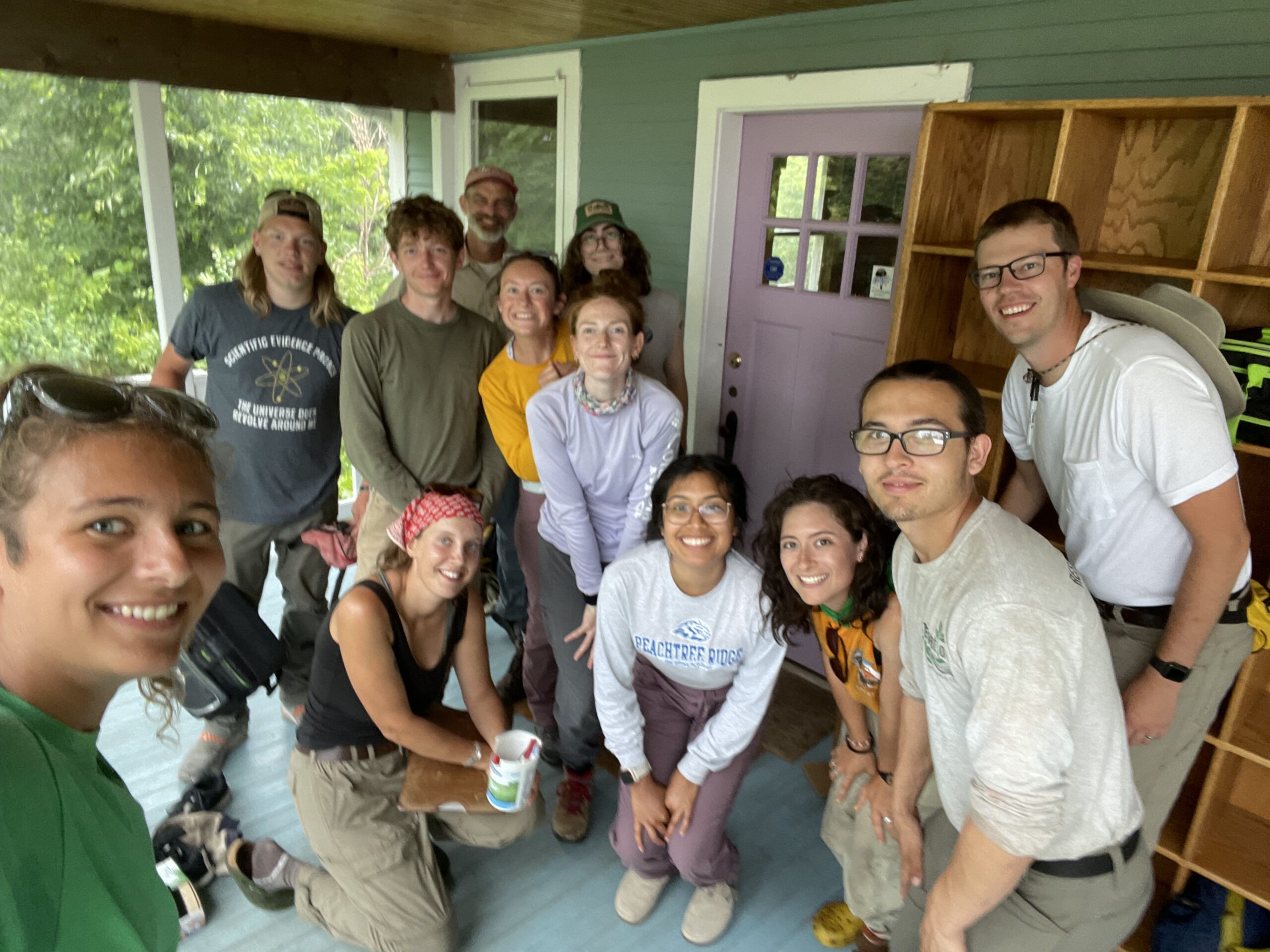
Today the team took Echinacea Demos. We got trained in on the different scenarios we could see in the field and got to work. We set pollinator bags on the twenty closest Echinacea Pallida plants to a random point, taking demos as we went, afterwards we decapitated any other Echinacea Pallia nearby. All was right in the world during lunch, but halfway through updating our team norms the sky looked very gray and the thunder got quite loud. We moved to the porch and it started raining. I’m sure the plants were thrilled. Many members spent the afternoon working on their projects.
Today members of Team Echinacea shared some preliminary ABTs for their summer research! Today we heard from Victoria!
Victoria is going to design lesson plans for her co-taught 9th grade biology classes. They are designed to support her students in lab based learning. She hopes to lower the barrier for underrepresented students engagment in science practices!
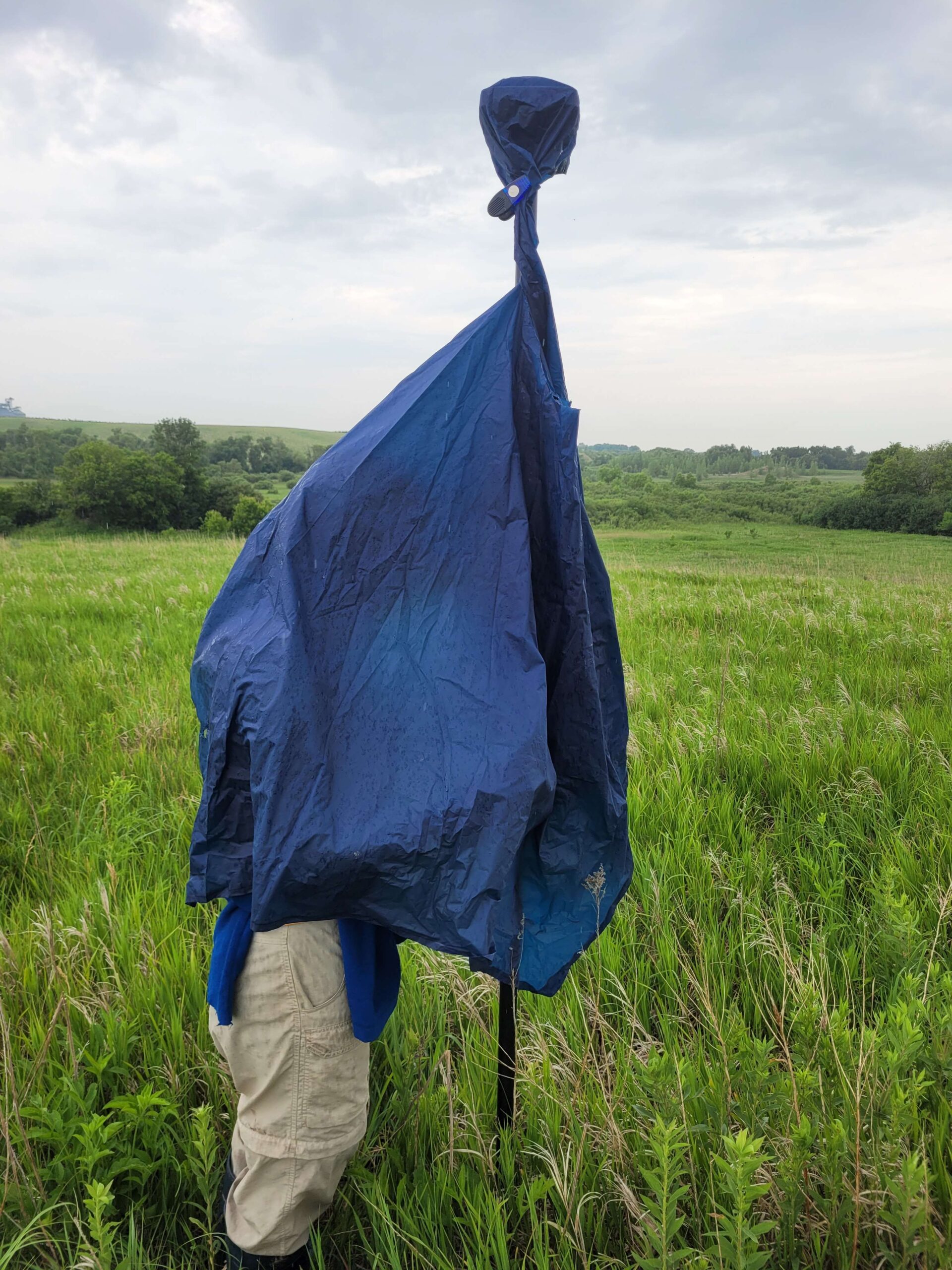
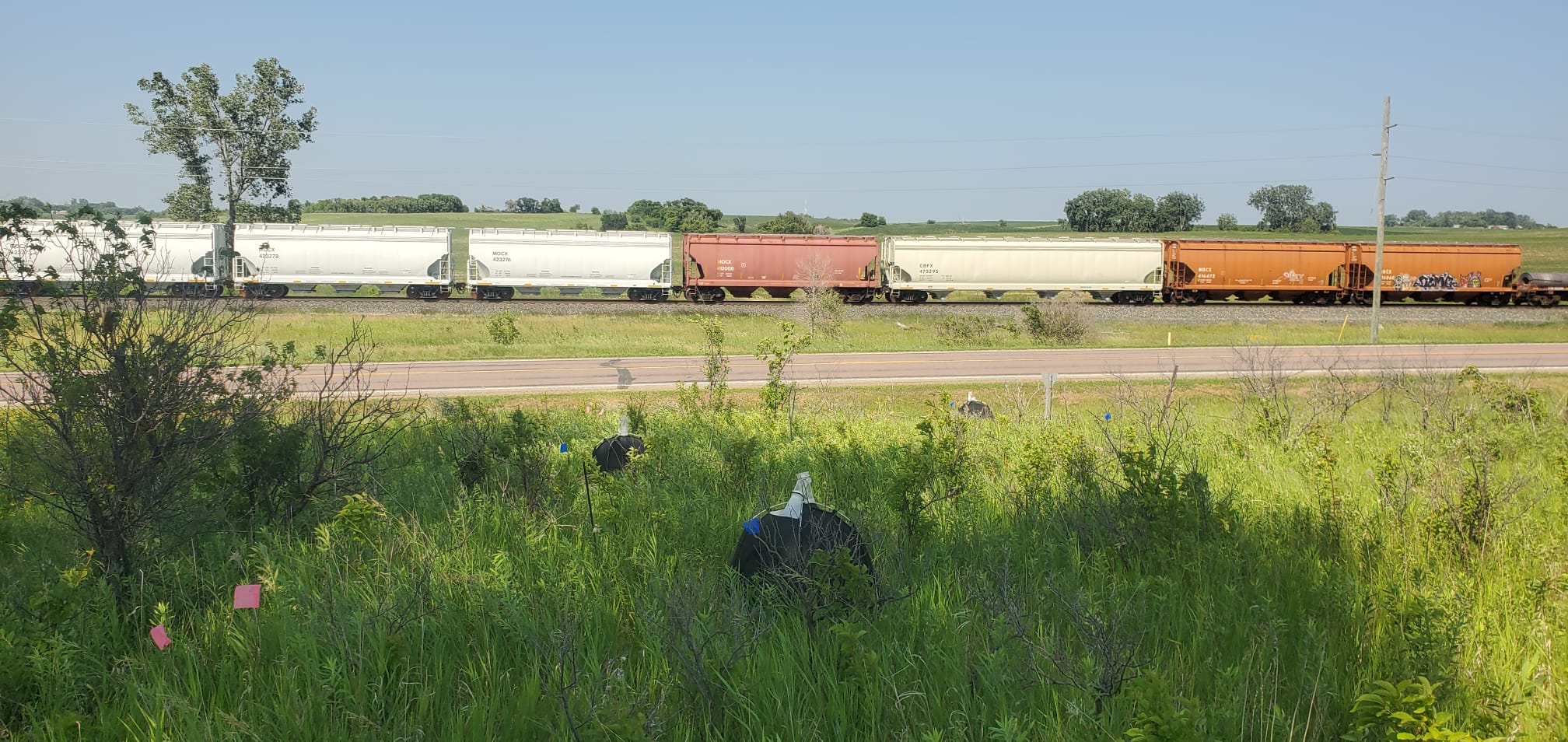
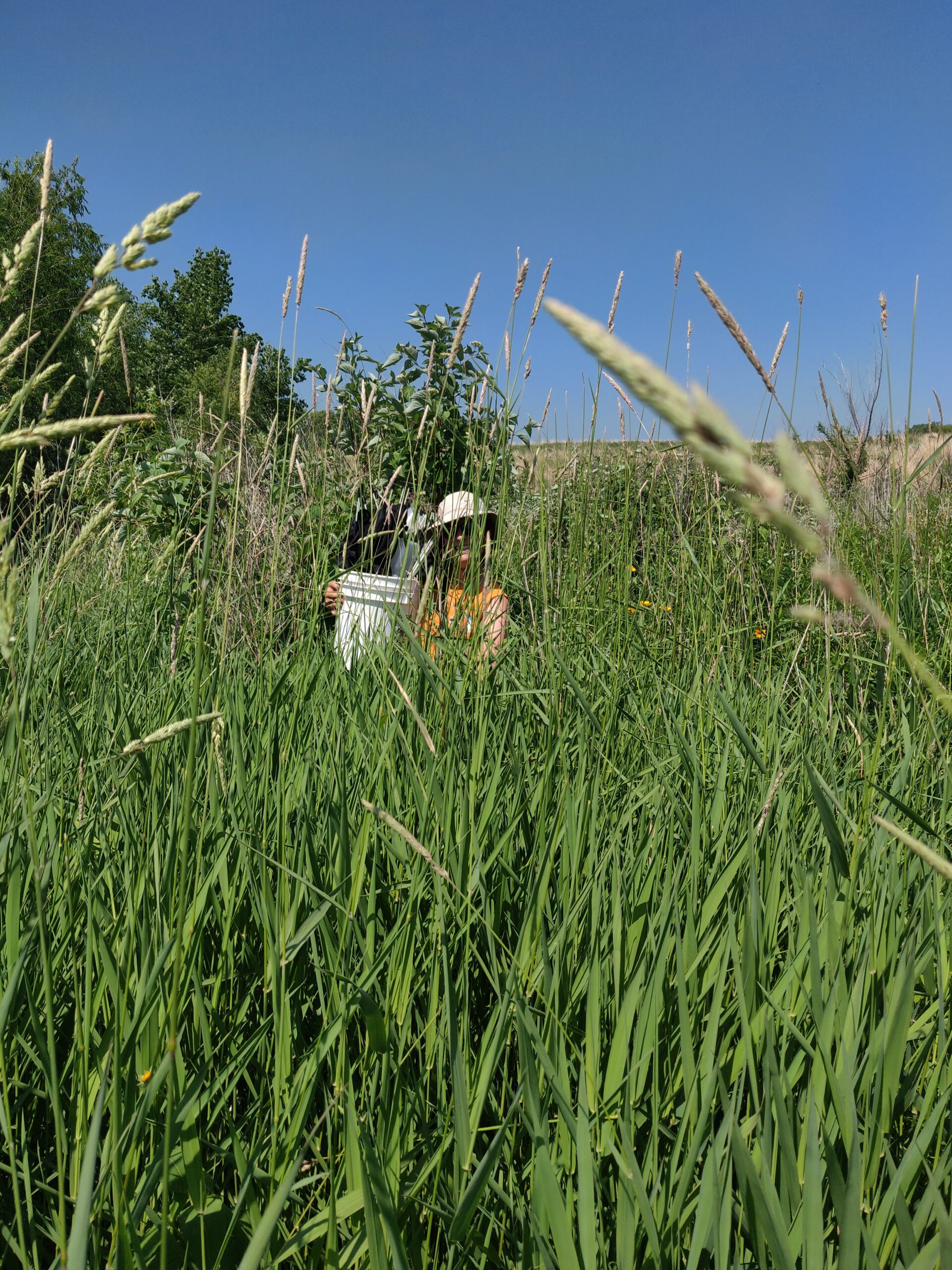
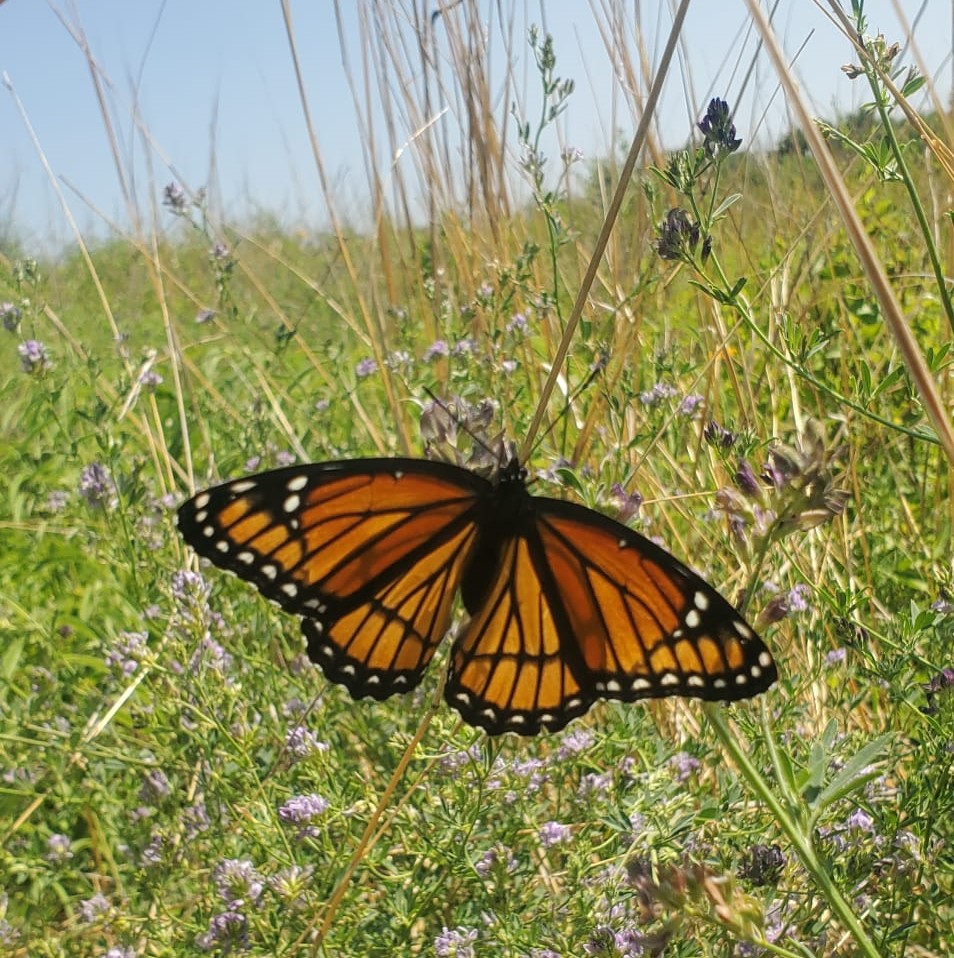
The pollinator team set out to recover some emergence traps (picture 1) this afternoon. While we didn’t find ground-nesting bees, which this project is centered around, we did see another pollinator while sifting through grass that extended beyond our own heads (Jan for scale; picture 2). The viceroy (Limenitis archippus; picture 3) looks incredibly similar to the monarch (Danaus plexippus), except for the black, horizontal line that cuts across their dorsal wings. We hope to see even more pollinator friends as the field season goes on!
Finally done with orientation week! This past week I have had the chance to tour the different labs located in the Plant Science Center, visit UIC’s heritage gardens, and see the amazing resources the Lenhardt Library has to offer! I was able to learn not only more about the different projects other interns will be working on this summer but also more about fieldwork safety and intern wellness. I am so excited to dive into what this summer has in store for me while also being more mindful of my well-being. Here is a photo of some Echinacea found in the diverse garden beds on the UIC campus.