During the summer of 2024, Team Echinacea completed the second year of its ENRTF funded project to better understand how prescribed fire influences ground nesting bee habitat, food resources, and diversity. Understanding the associations between land management methods and ground nesting bees is essential for providing reccomendations to policymakers and practitioners interested in native bee conservation.
We surveyed solitary bee diversity and nesting habitat before and after prescribed fires in a subset of 30 prairie remnants and 15 prairie restorations to determine how prescribed fire affects solitary bee nesting habitat and abundance. We used emergence traps to sample the community of solitary ground nesting bees. This was complemented by detailed measures of soil and litter to characterize how prescribed burning influences the nesting habitat (read more here).
2024 REU student Zach Zarling deploys an emergence trap at a site near Hoffman, Minnesota
We deployed emergence traps at our random “burn and bee points”(BBPTs) in prairie remnants and restorations from early June to mid September. Our deployments spanned three rotations (4-6) of BBPTs and we put out a total of ~1,159 emergence traps. On reccomendation from Dr. Alex Harmon-Threatt, we also performed 10 minute “pollard walks” on deployment to estimate the number of foraging bees at each site. These foraging numbers will be compared to nesting incidence as part of Ian Roberts’ thesis project.
As of December 21st, specimens caught in this year’s deployments have been pinned, labeled, and transported from Chicago Botanic Garden to the University of Minnesota, where Zach Portman, a bee taxonomist, will identify them. Team Echinacea also collected lots of non-bee bycatch while processing specimens collected in the traps: including millipedes, flies, and even a prairie skink! To avoid wasting these specimens, we plan to categorize this bycatch into broad taxonomic groups (like Dipterans, Orthopterans, etc) and examine potential associations between our experimental treatments and general arthropod diversity across our study sites.
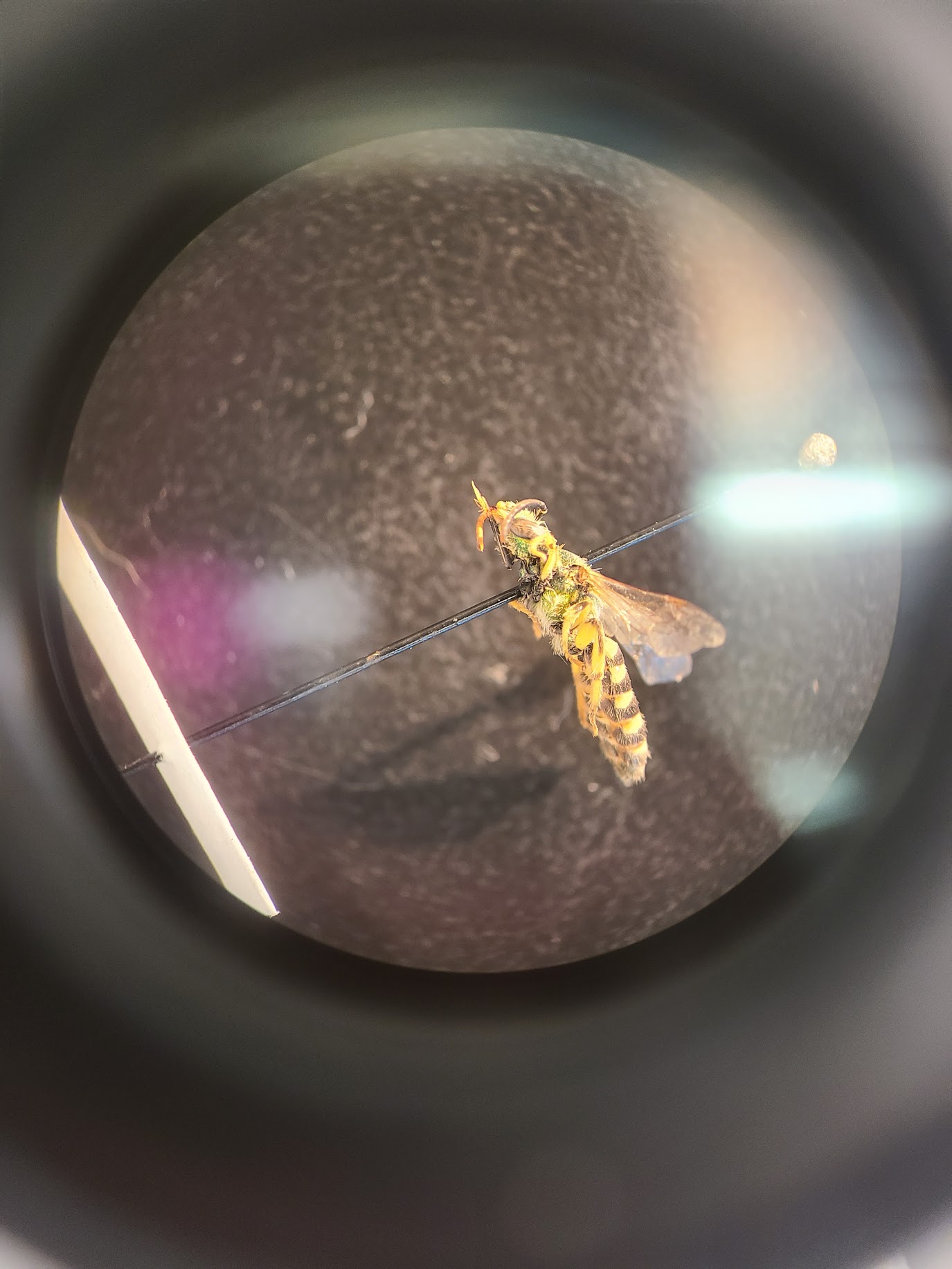
Pinned specimen from 2024’s emergence trapping, likely an Agapostemon virescens.
While working on pinning and processing specimens, Ian Roberts produced a poster containing analyses from the 2023 emergence trapping data to present at Entomology 2024. The poster can be viewed here. Future data analyses will feature data from both sampling years, as well as microhabitat measurments and and diversity indices.
Start year: 2023
Location: prairie remnants and restorations in Solem Township, MN.
Data collected: insect samples, counts of foraging bees
Samples or specimens collected: Pinned bees are currently being identified at University of Minnesota. Bycatch is in the freezer at Chicago Botanic Garden.
Products: poster presented at Entomology 2024 (see above for link)
During summer 2024, Team Echinacea continued to collect data on local environmental conditions in order to understand which environmental factors are associated with good habitat for ground-nesting bees. These data complement emergence trapping for our ENRTF funded research on fire’s influence on ground nesting bees habitats. We sampled local environmental conditions near randomly placed “burn and bee points” (BBPTs) in prairie remnants and restorations.
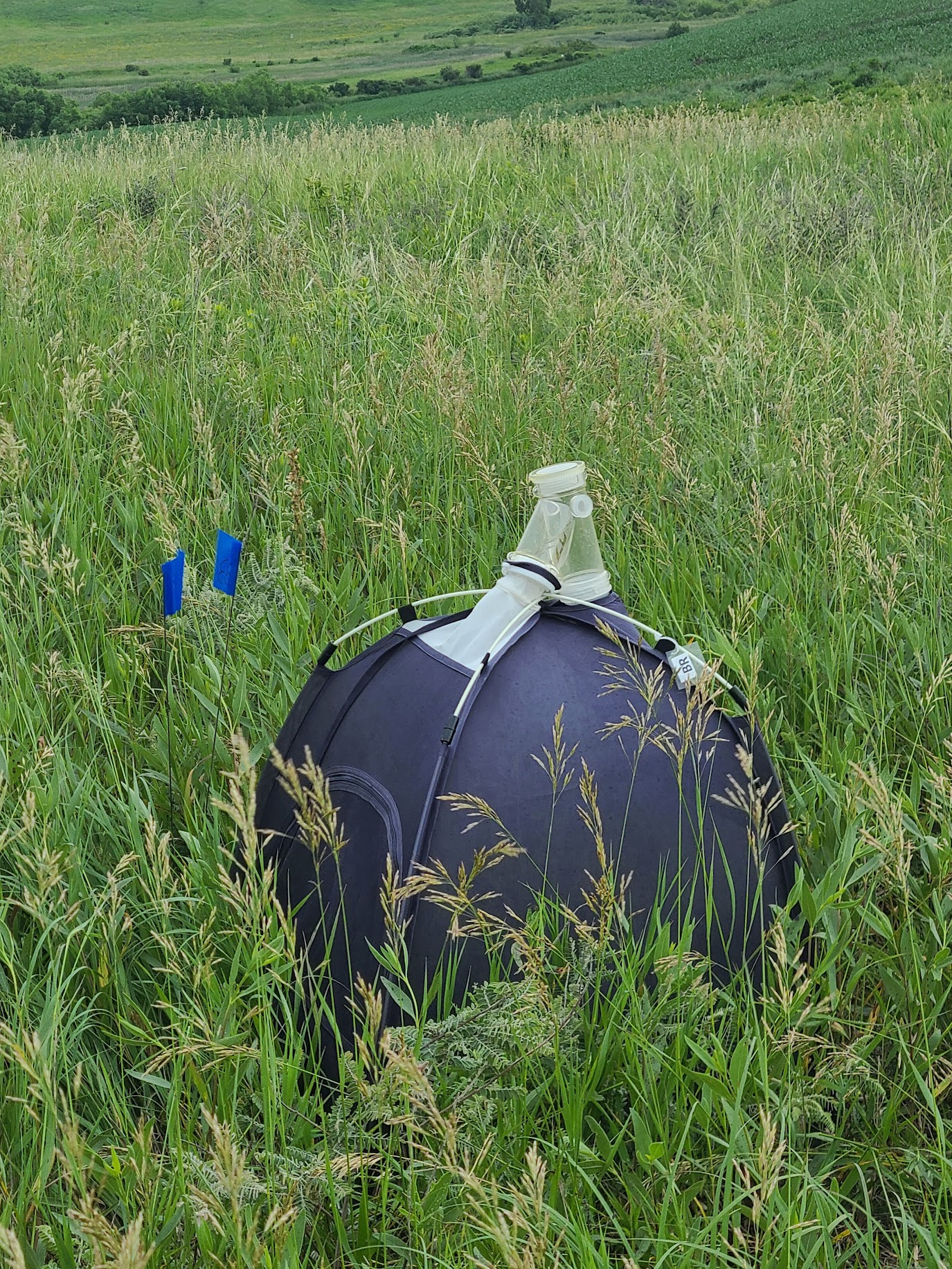
A deployed emergence trap next to a set of marking flags. Microhabitat data was sampled within a meter of these marking flags.
Unlike the 2023 season, we did not collect data on light levels at BBPTs this year. Instead, we measured soil temperature just under the surface using a digital thermometer, along with soil compaction via a penetrometer and litter depth via a meter stick.
Team Echinacea conducted microhabitat assessments for remnant prairies at rotation 4 BBPTs. Over the summer, we took microhabitat assessment measurements at a total of 241 measurments.
Start year: 2024
Location: prairie remnants and restorations in Solem Township, MN
Today we’re closing the lab for a two week break. Team Echinacea has had a fun and productive year. We worked really hard in the lab and it’s time to take a well-deserved vacation.
We made great strides in the lab this past year quantifying annual reproductive fitness of plants from many experiments, mostly Echinacea angustifolia–the narrow-leaved coneflower. We estimate fruit counts and seed counts in hundreds of heads we harvest each year using the ACE protocol: cleaning heads, rechecking heads, scanning fruits, counting fruits, taking random samples, x-raying samples of fruits, and classifying radiographs. We were way behind because the lab was closed during the pandemic. We are catching up. In the past two months we moved all heads harvested from one experiment in Sept 2024 all the way through counting all fruits of each head three times. We have a really great data set.
Thank you to the volunteers who contributed so much to our science and conservation endeavors. Thank you, everybody. Enjoy your vacation–you deserve it. I look forward to working with everyone in 2025!
The Viola propagation tub Team Echinacea installed this past summer was designed with a few goals in mind. First of all, we wanted the tub to produce Viola pedatifida seed that could be used to help seed this important spring native throughout our remnants and experimental plots. We have already seen a pretty good return on our investment from the seed production end, just this fall 10 ripe pods have been harvested each containing between 20 and 30 seeds so this season around 250 seeds have been collected. Additionally, 9 Immature pods were collected before winterizing the plot, so hopefully, some good seeds will come from those as well. The second big goal we wanted to explore with this setup is learning more about small-scale production plots. Several other species have been known to grow well in beds like violets and hopefully, through managing this violet plot, we can learn more about what to expect. Other notable species that may go into future production plots are Ranunculus rhomboideus, Fragaria virginiana, Geum triflorum, and many others. Other good data to collect may come from the survivability of plants directly transferred from remnants and data on germination and survivability of seedlings.
Plot Layout and Plant Data
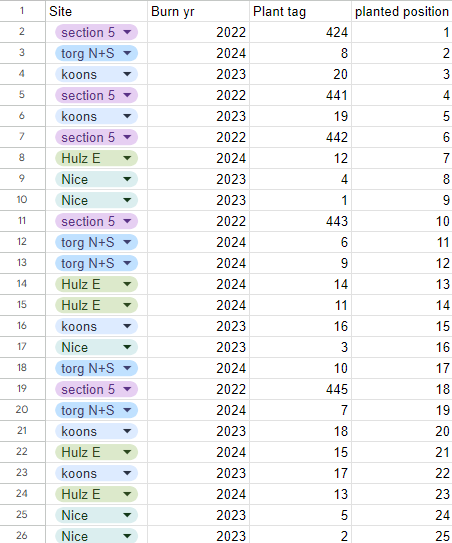
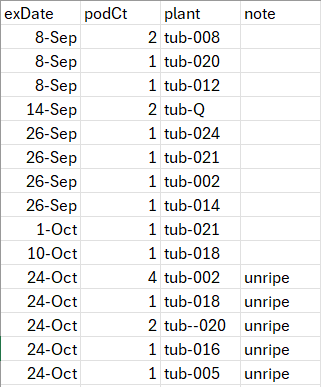
The plot is laid out below with the corresponding position numbers. The left spreadsheet lays out the ID and source for each plant, and the right contains data on pods collected so far.
Collecting Pods
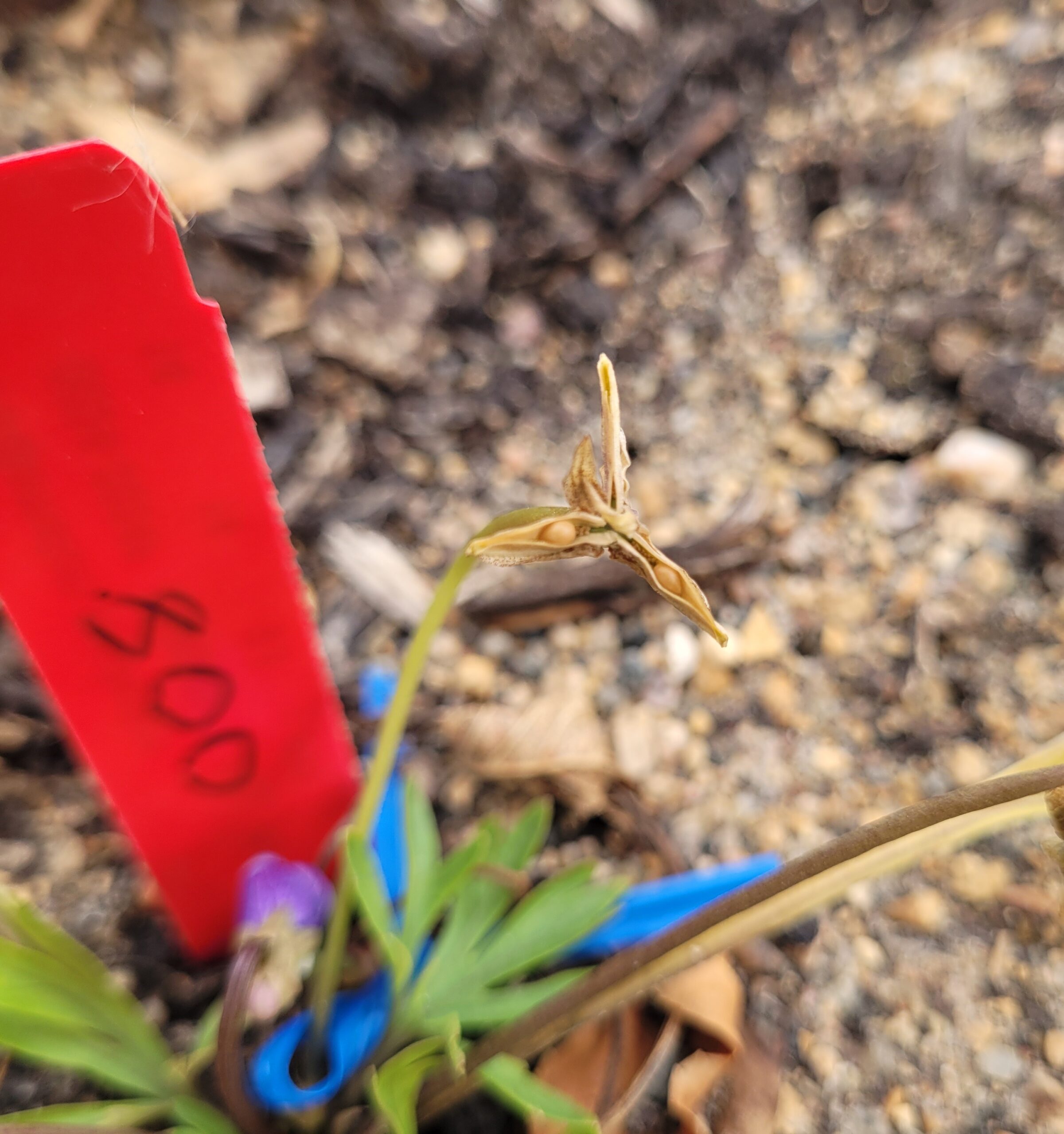
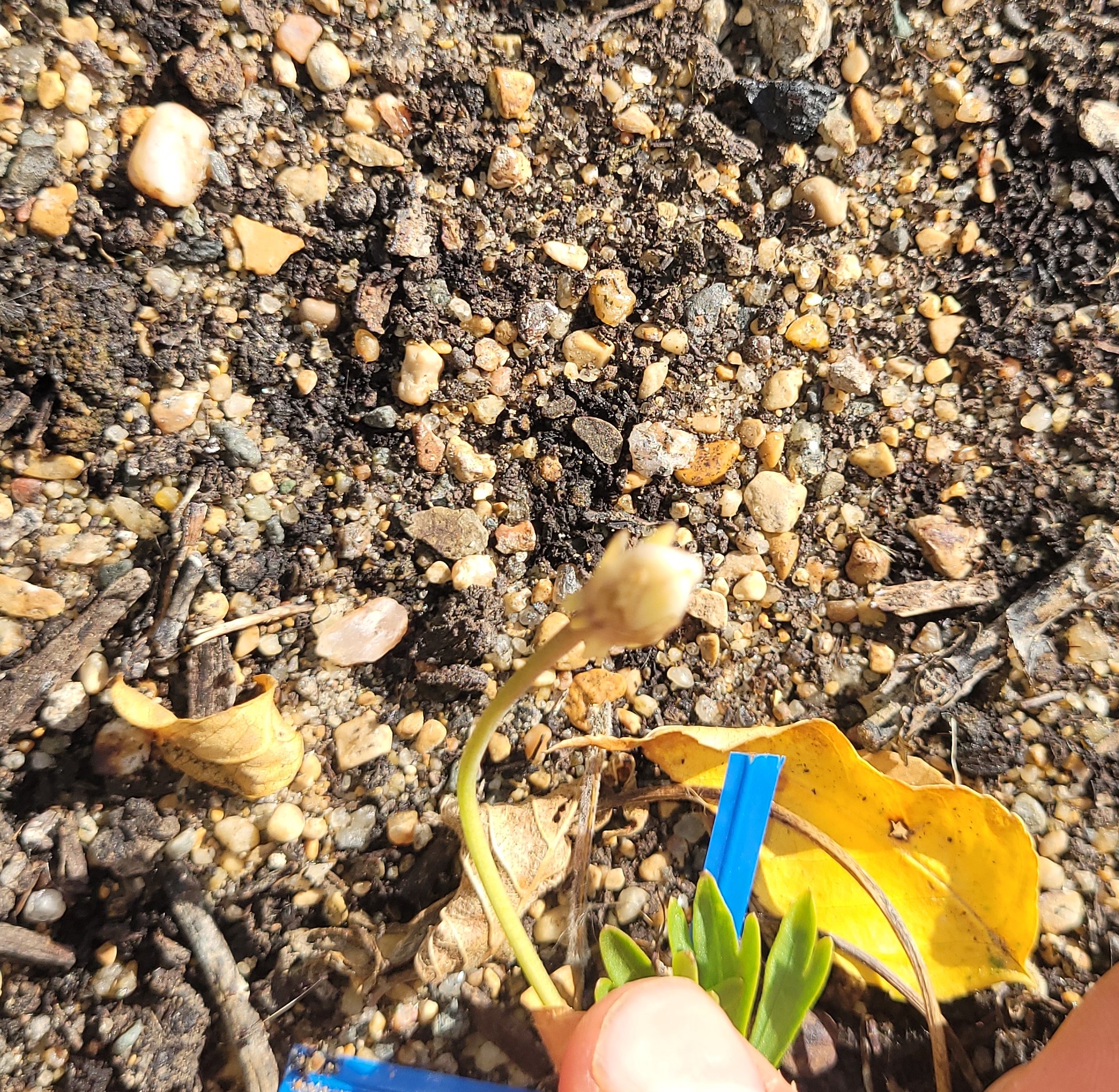
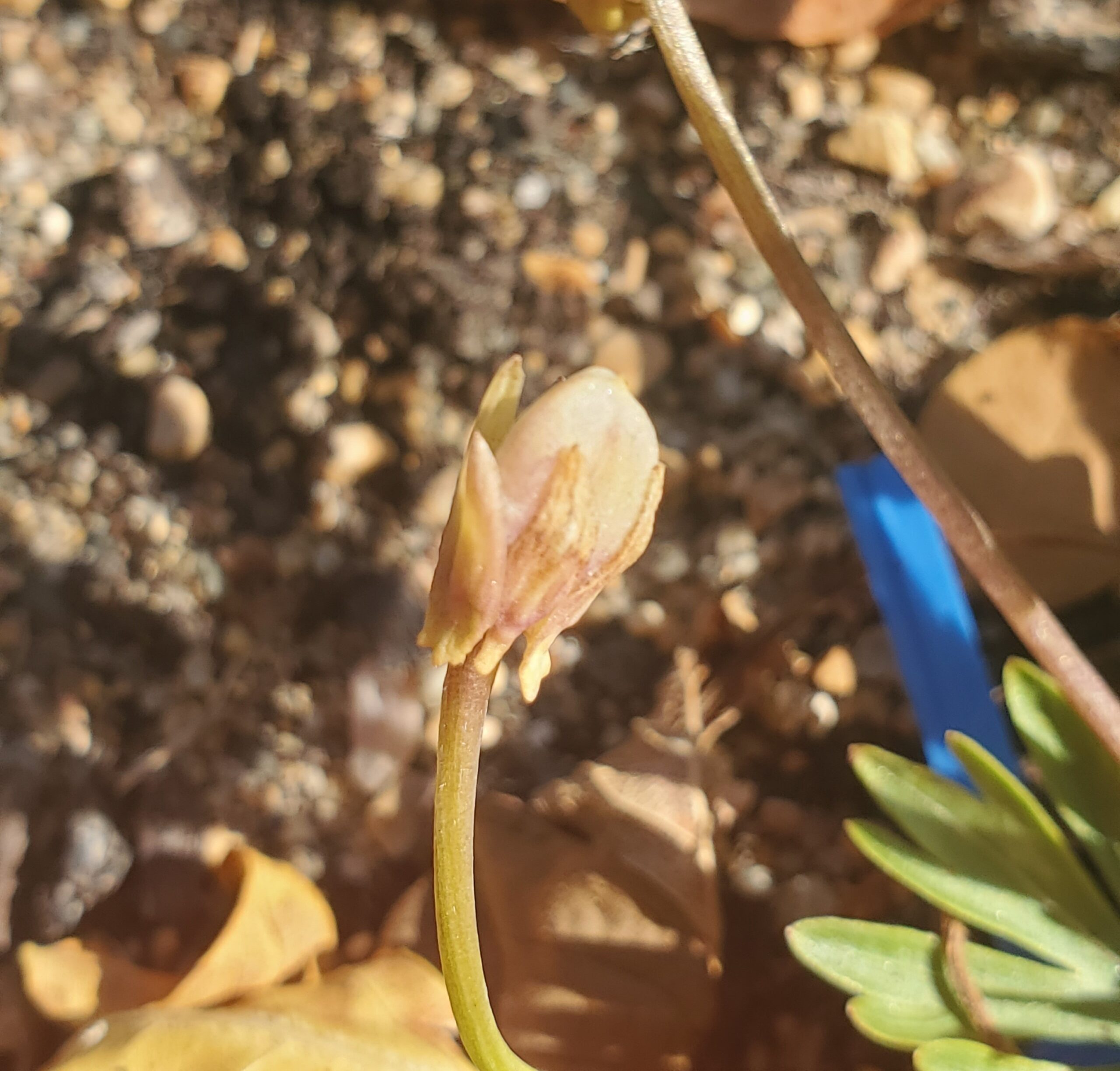
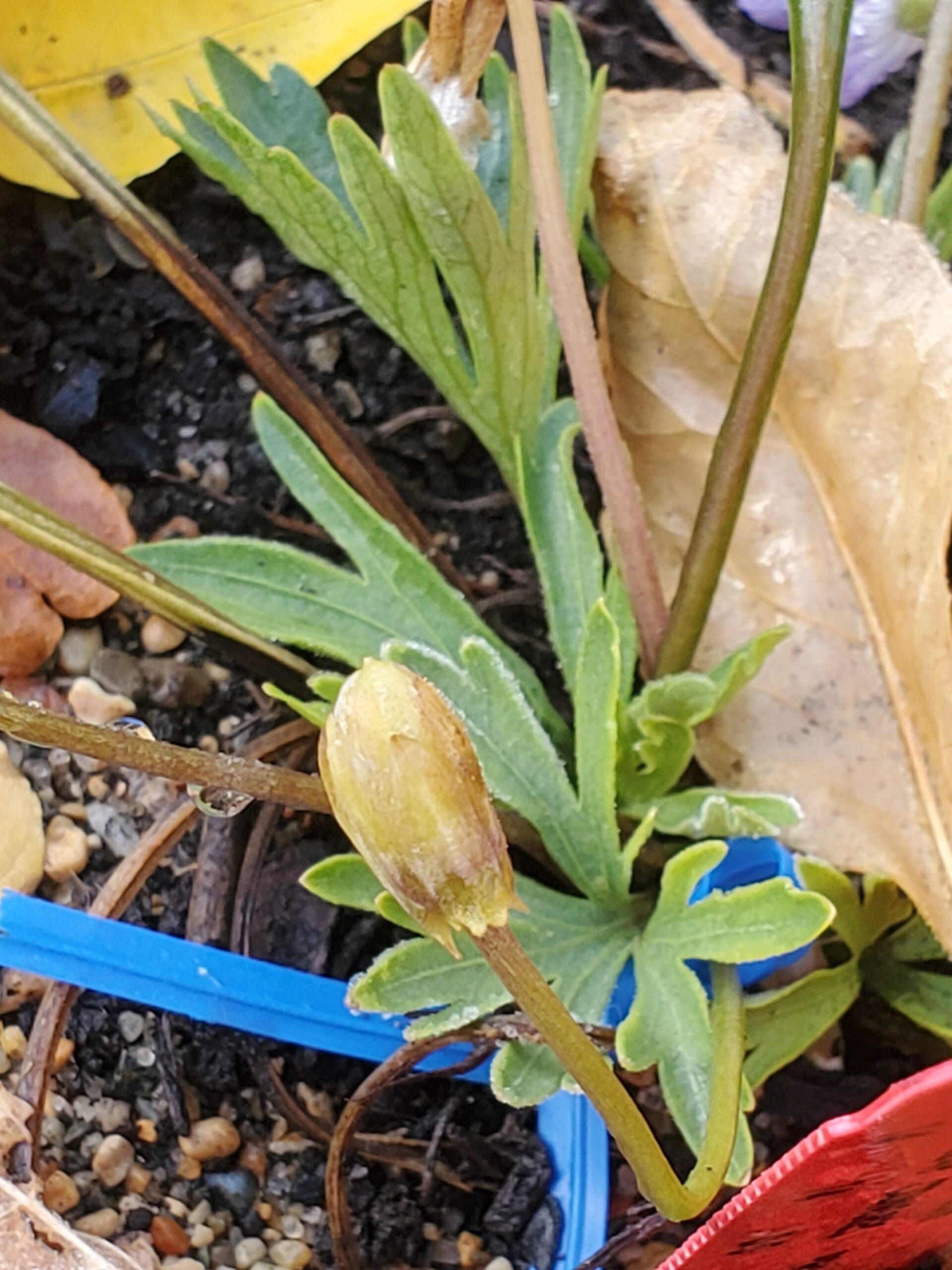
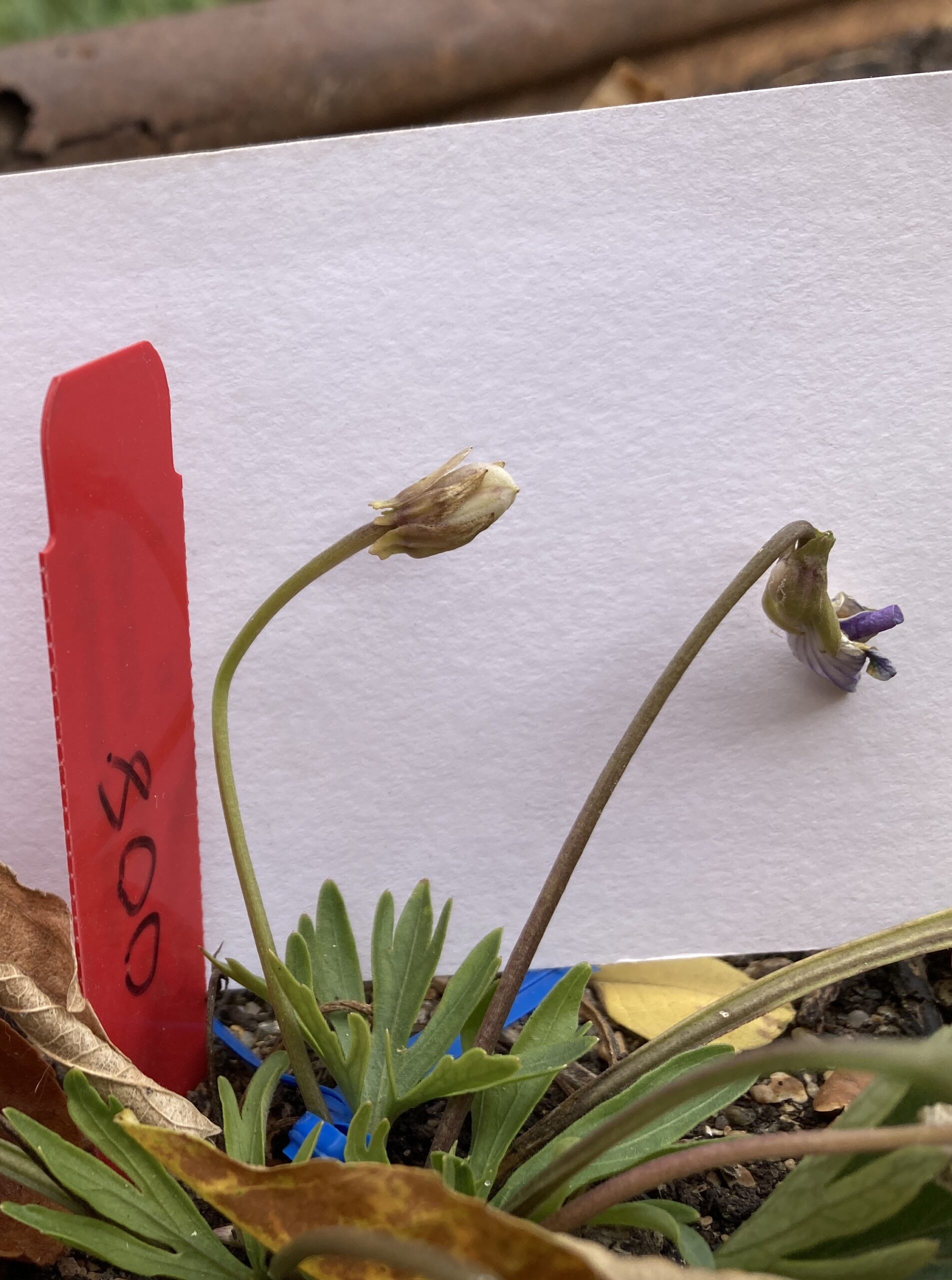
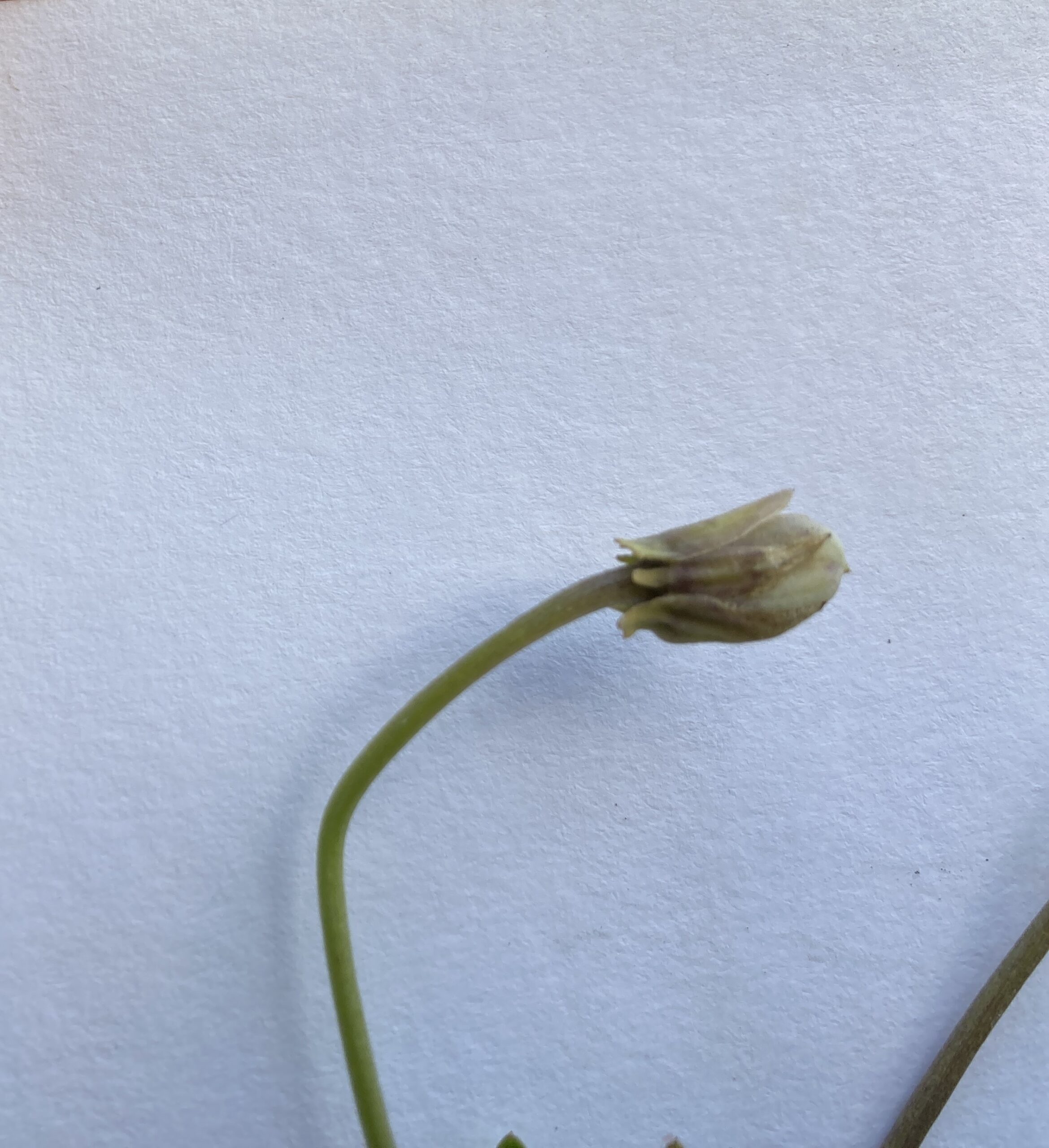
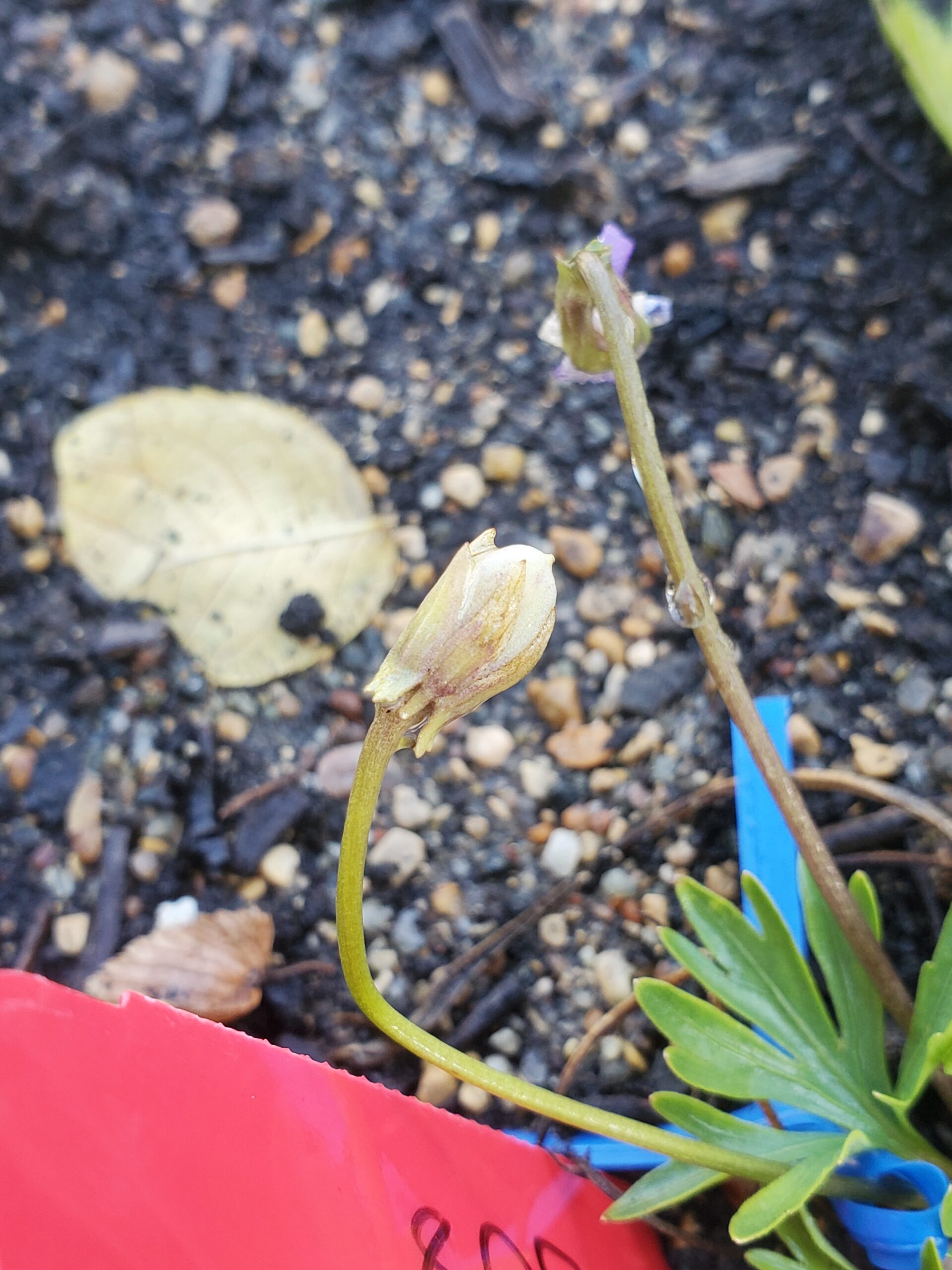
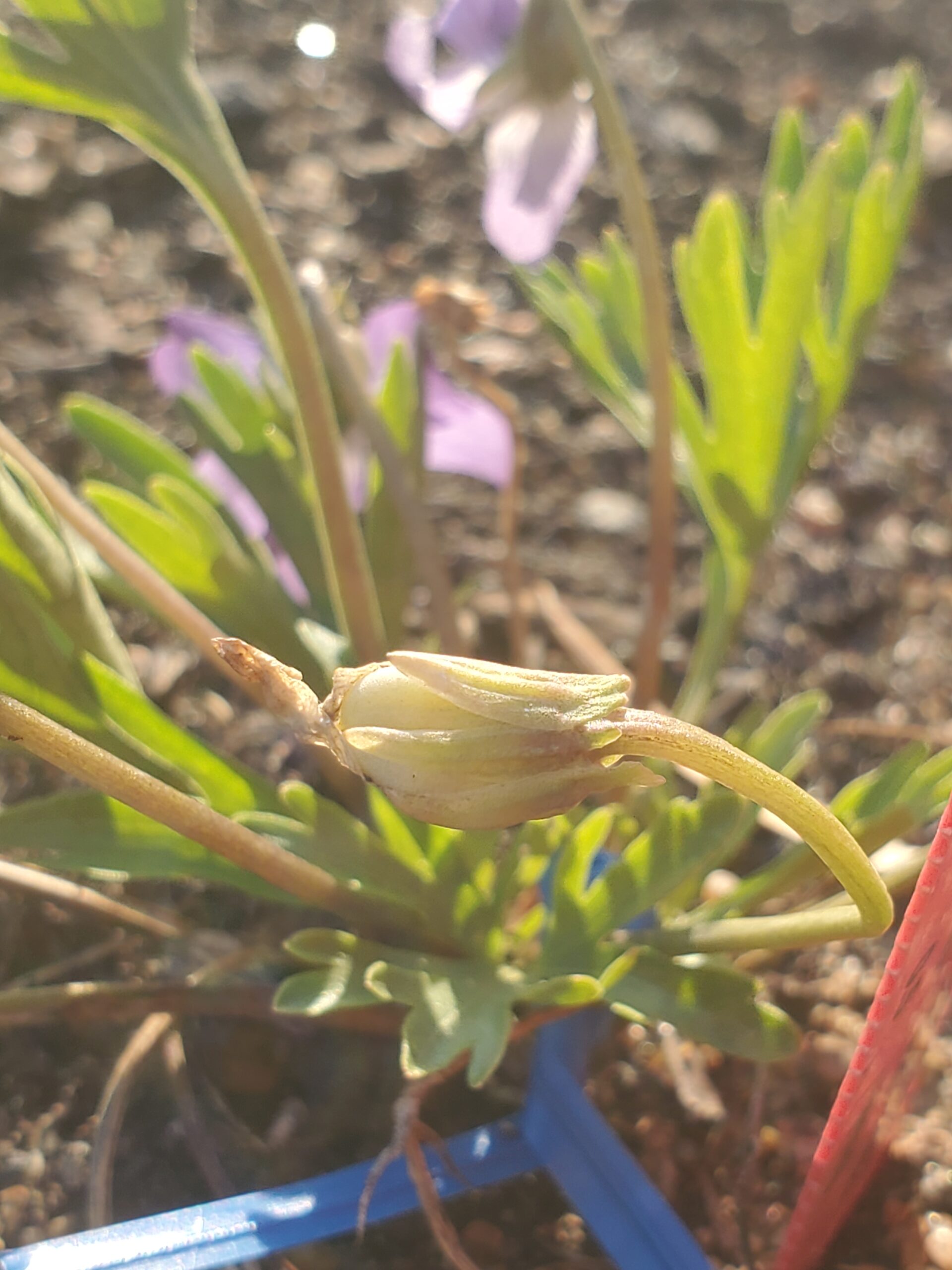
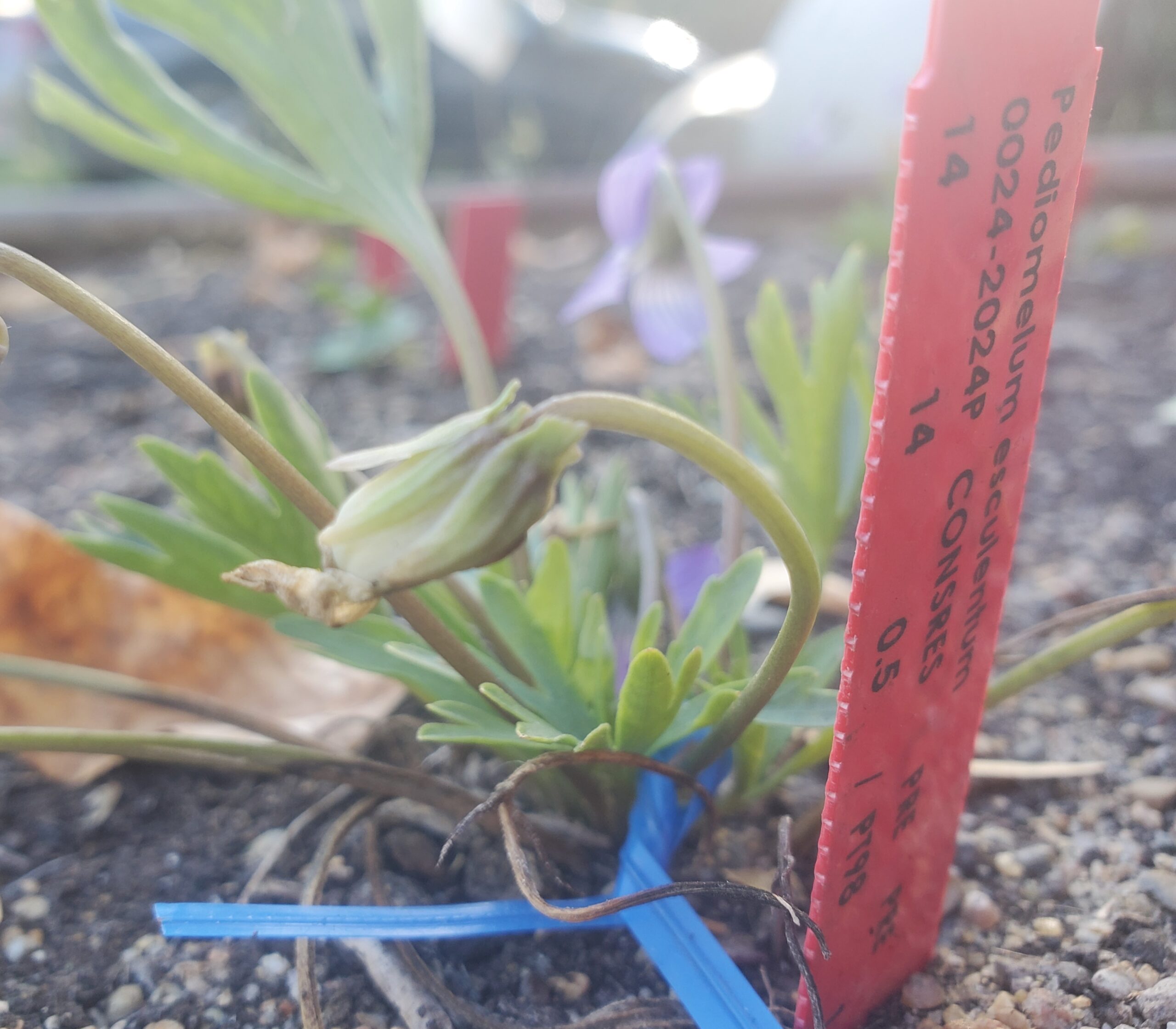
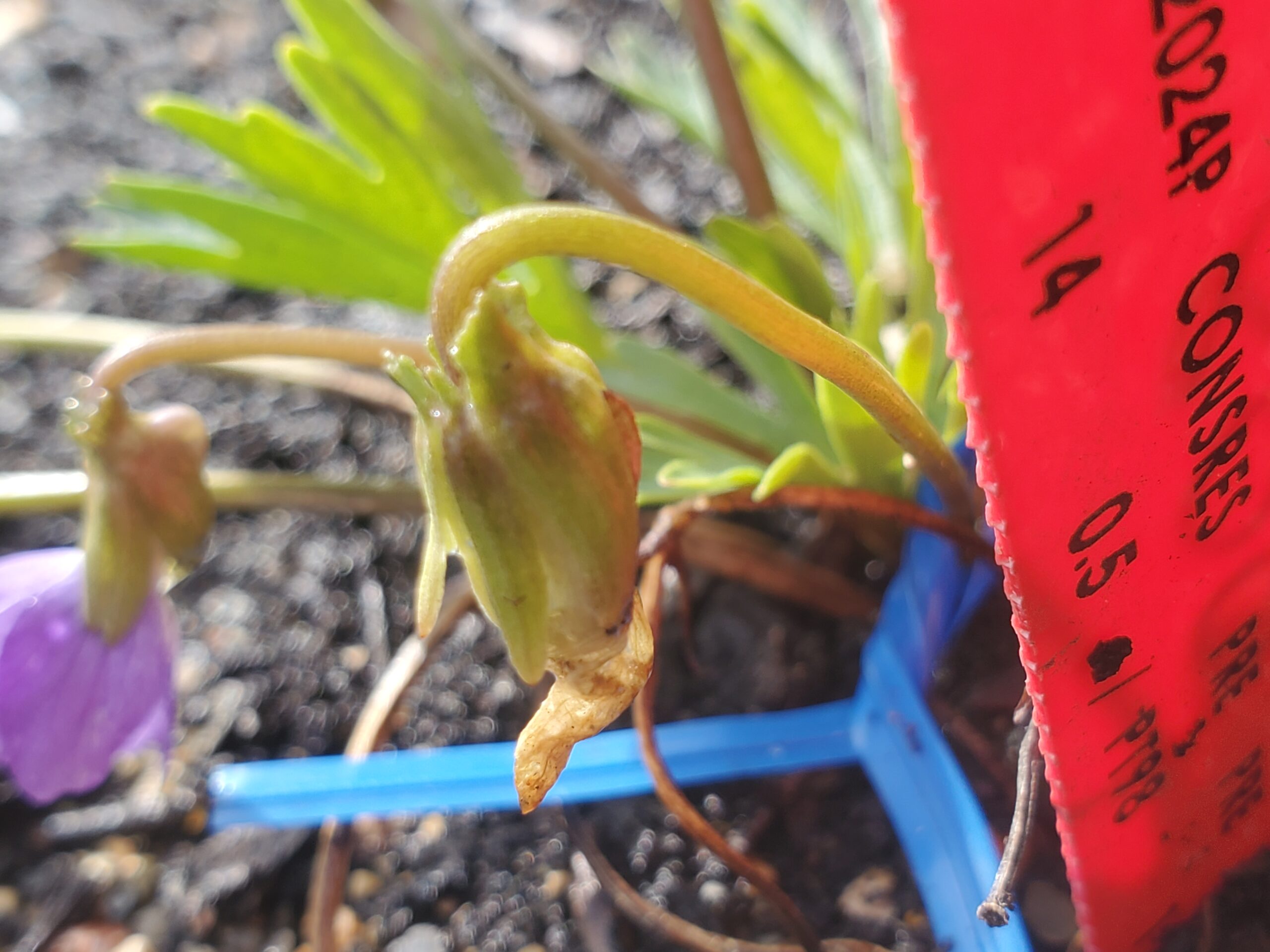
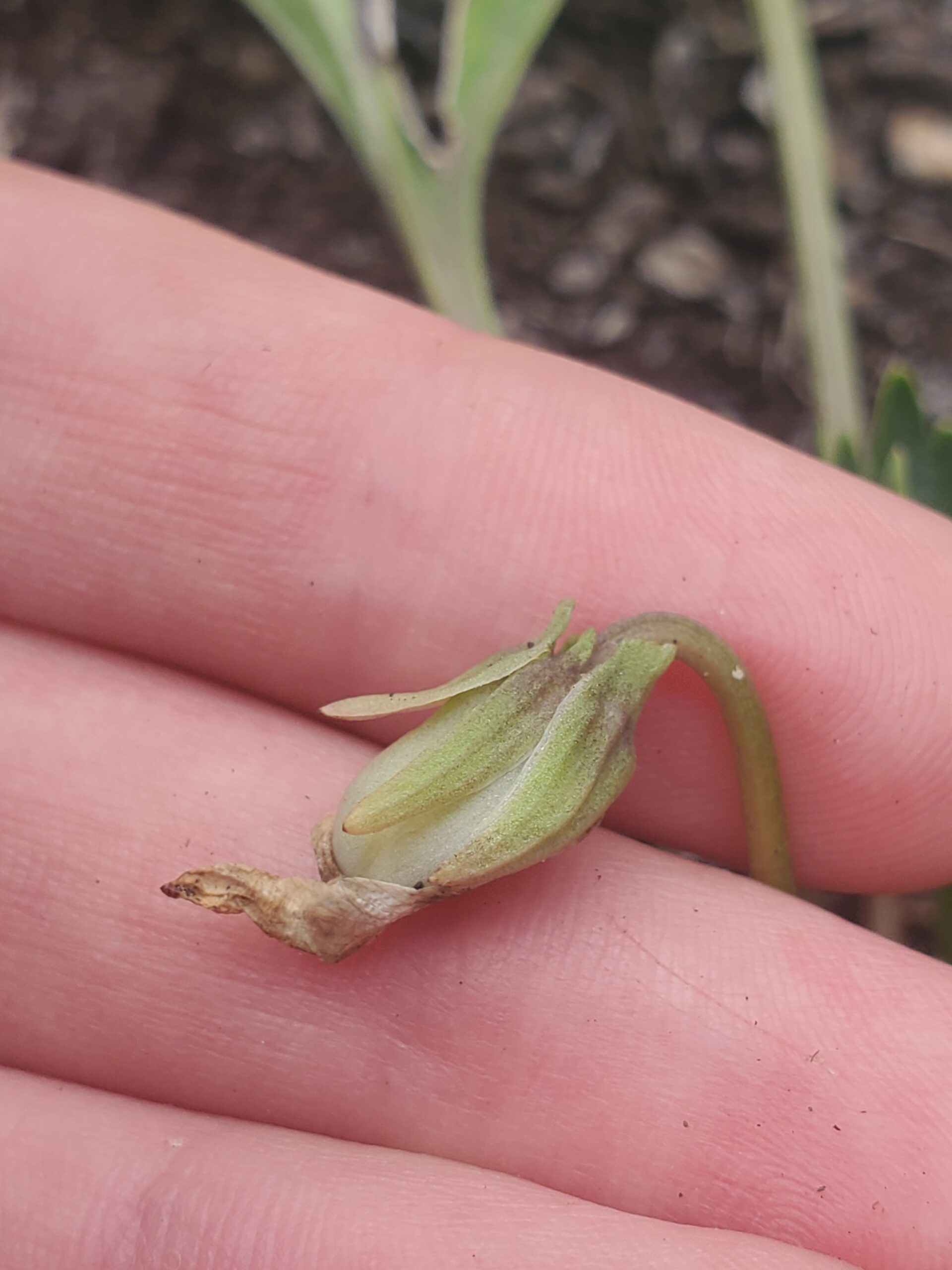
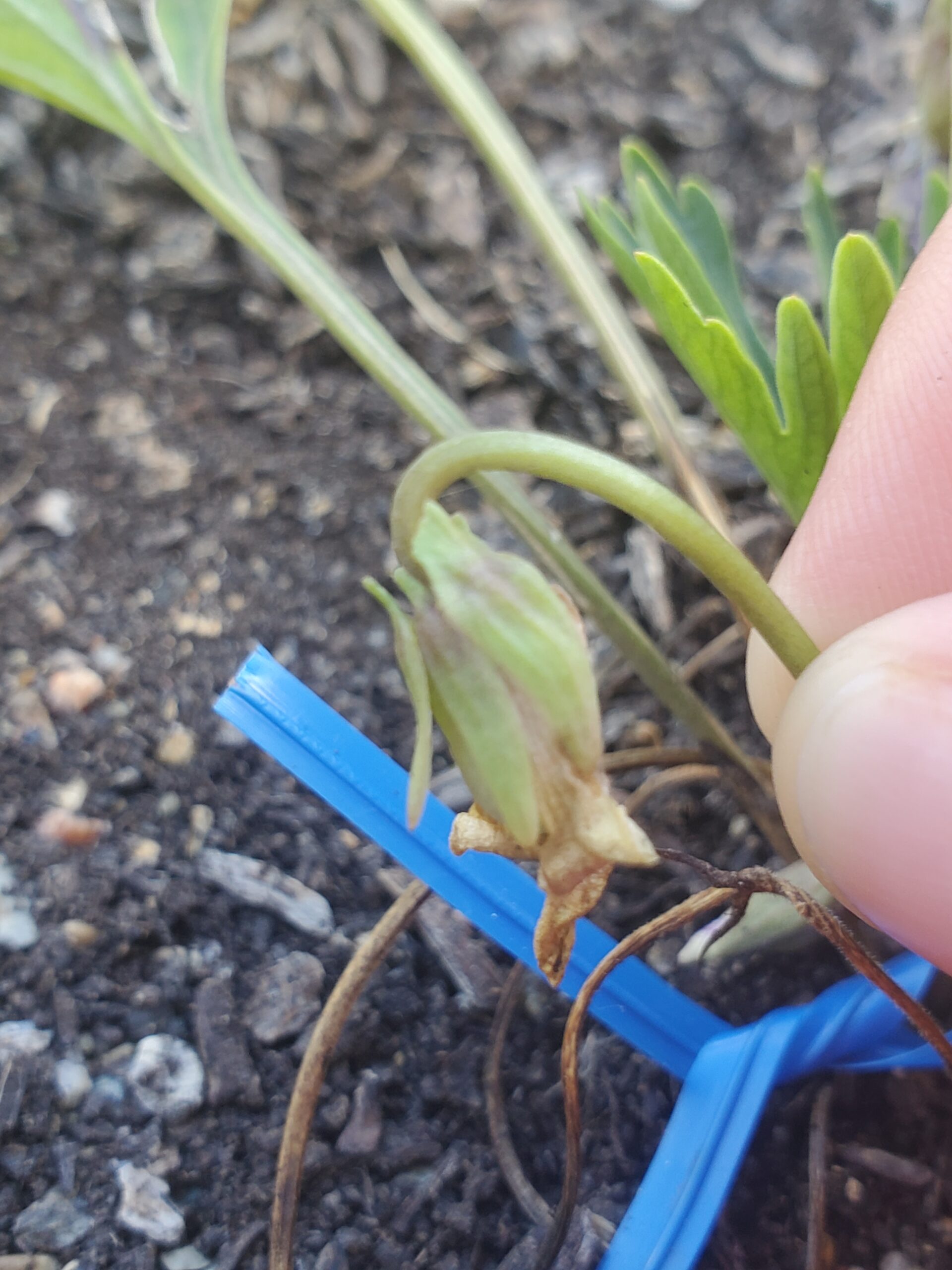
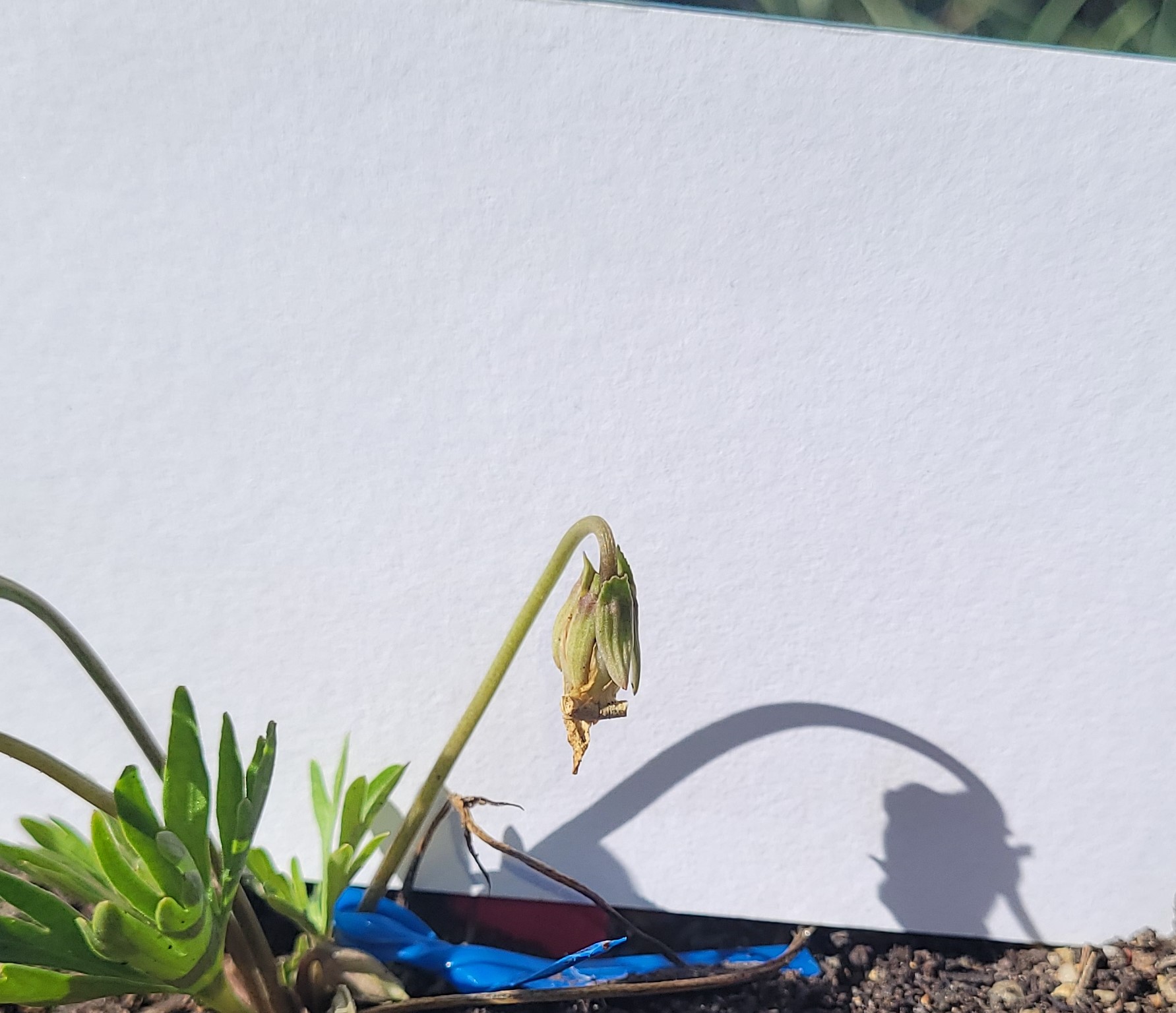
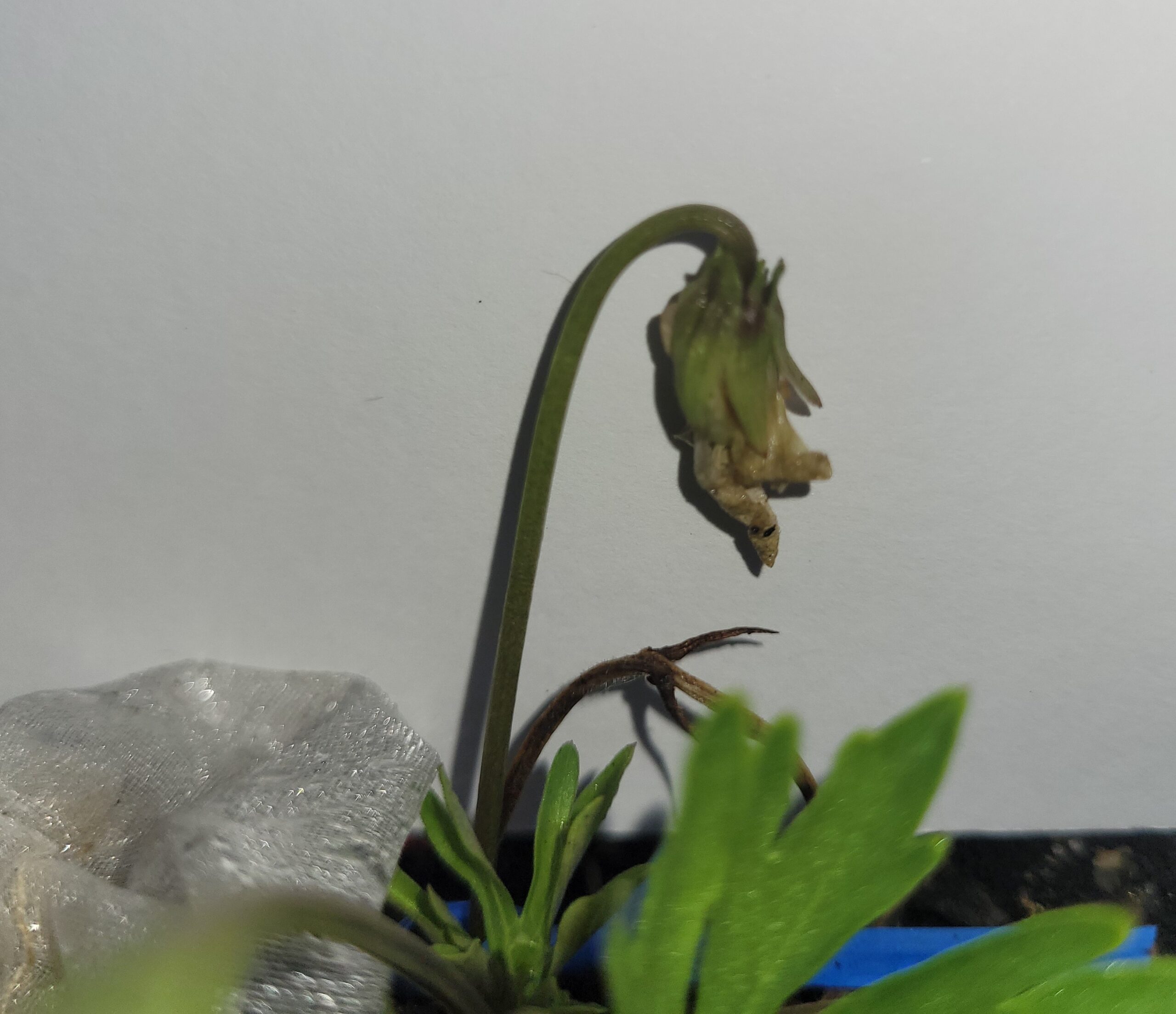
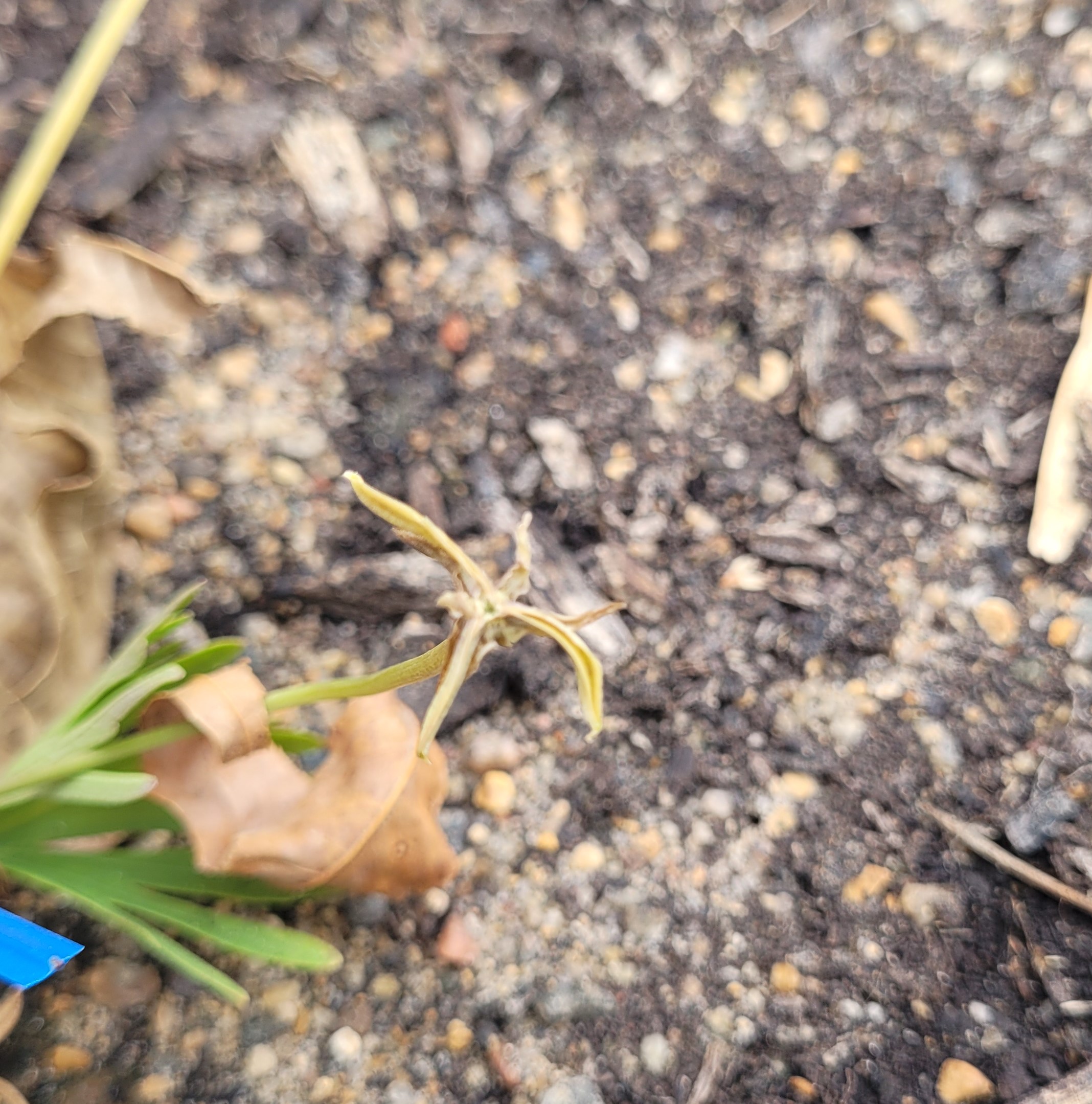
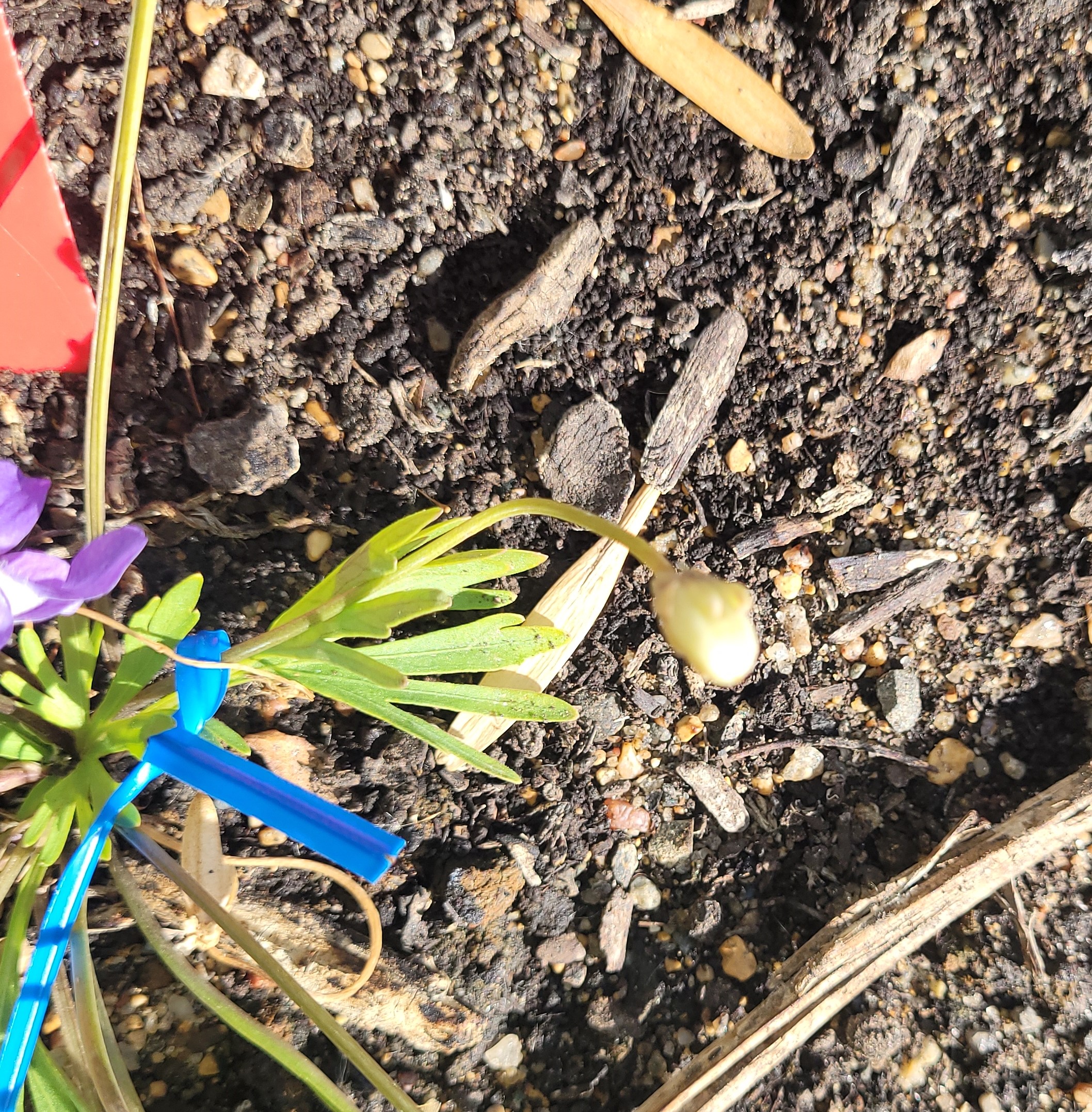
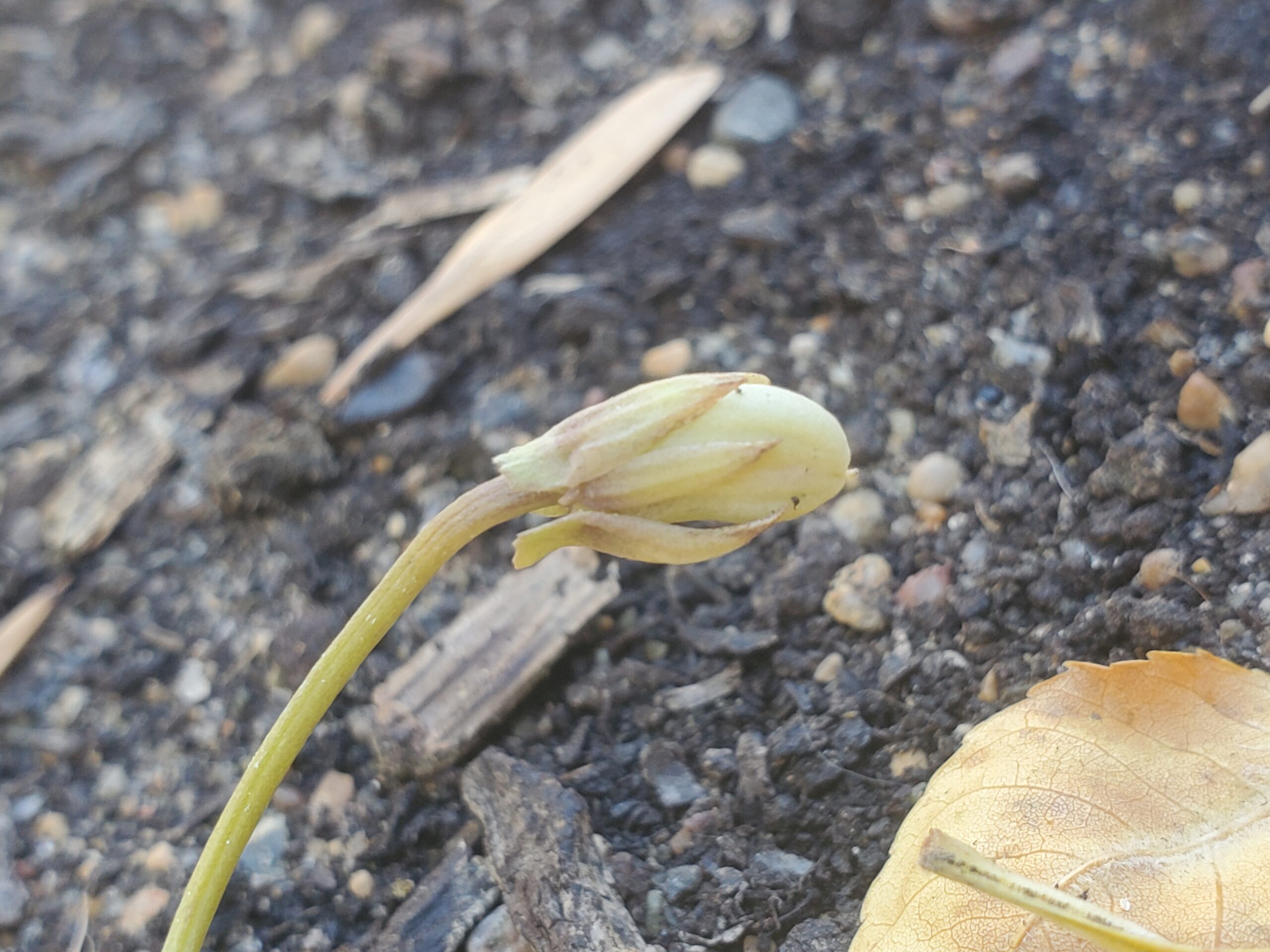
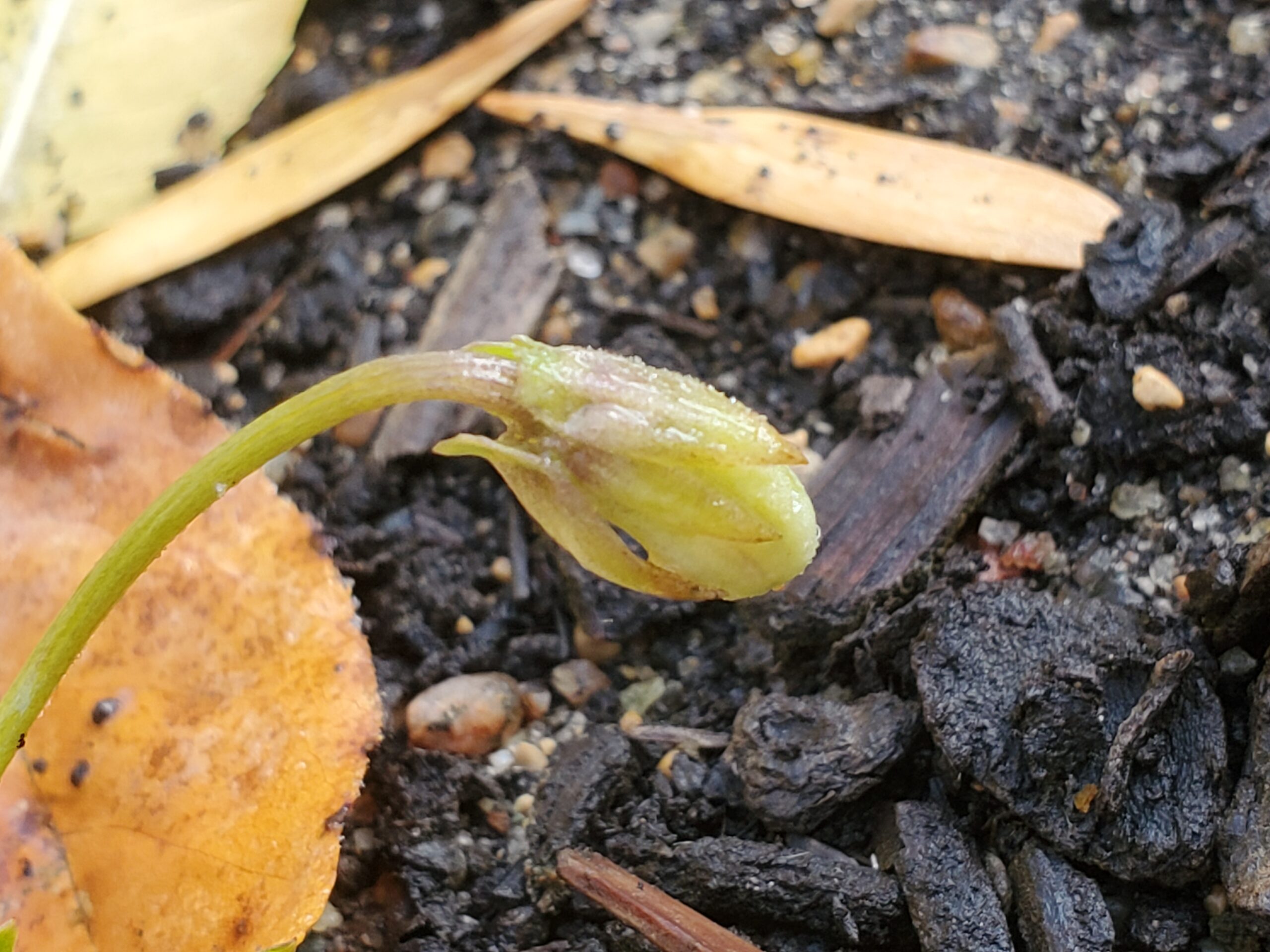
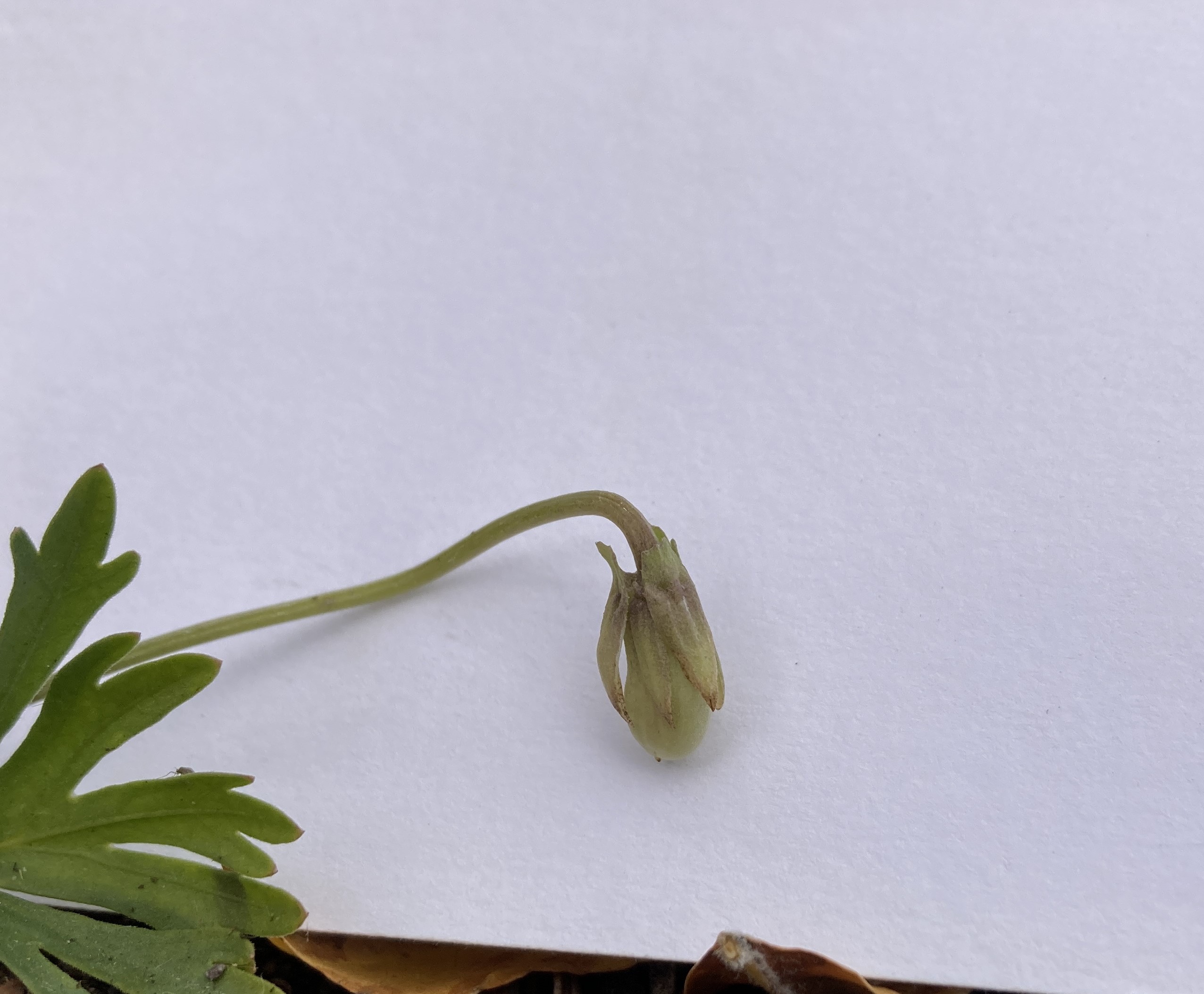
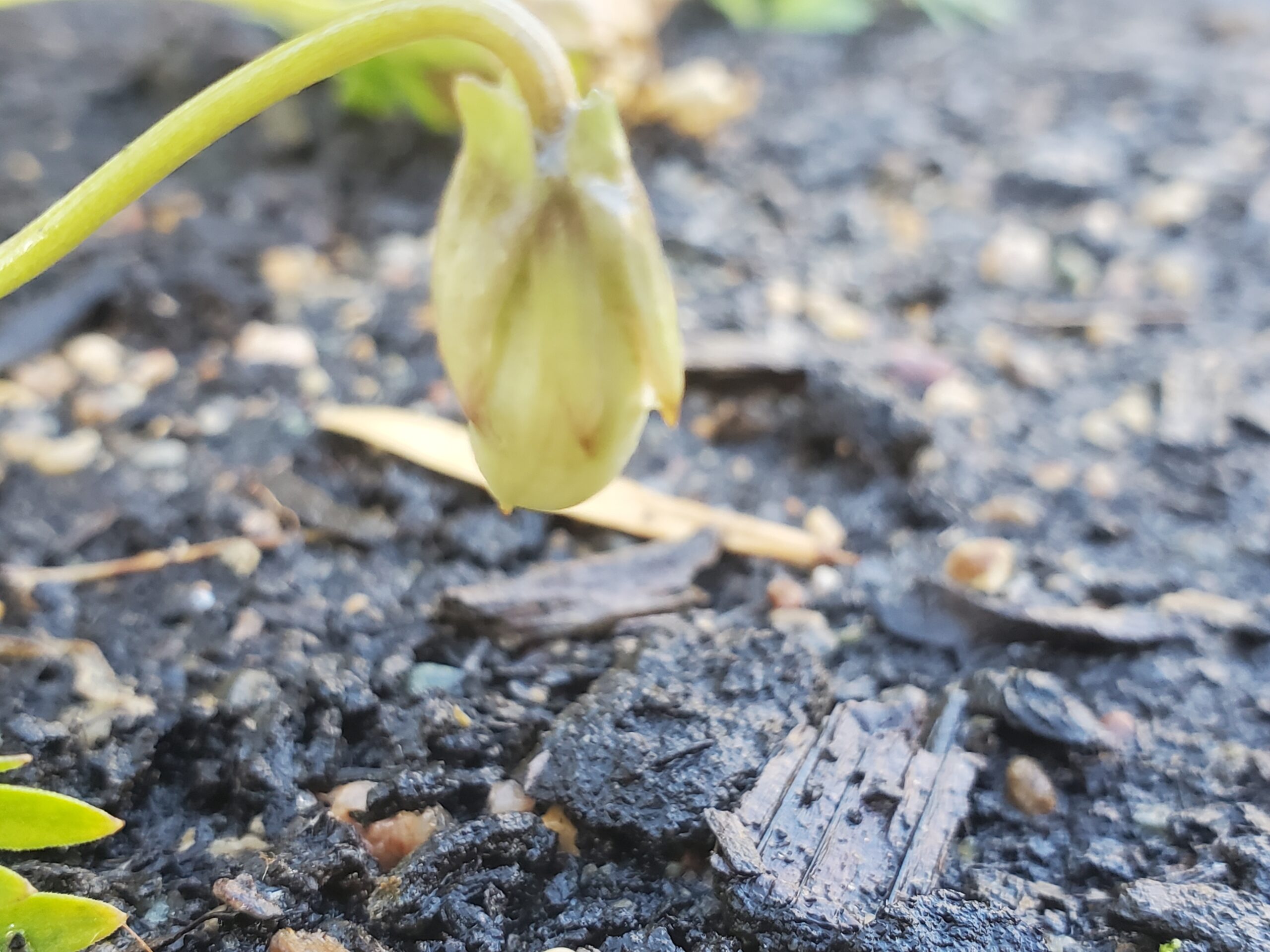
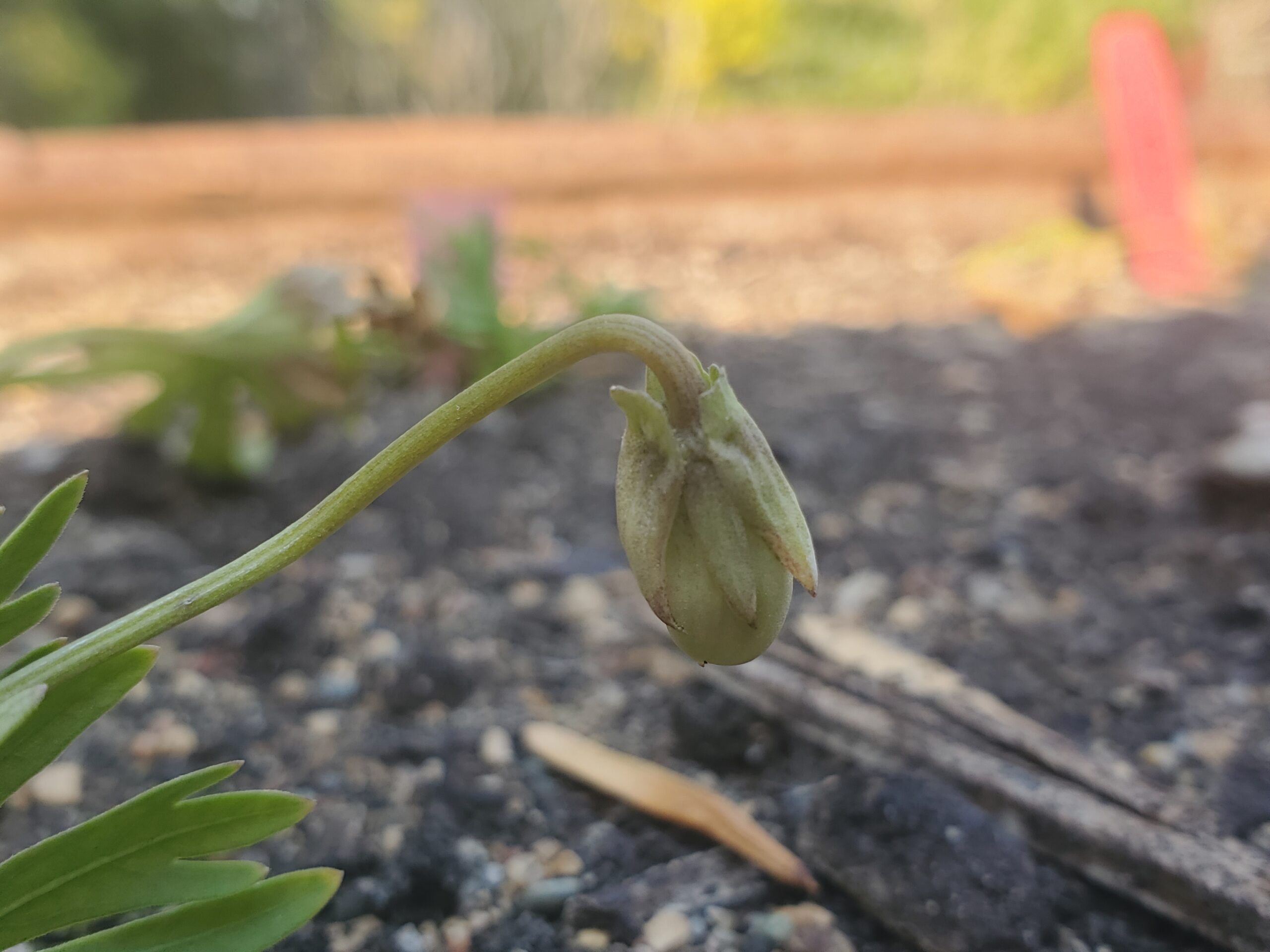
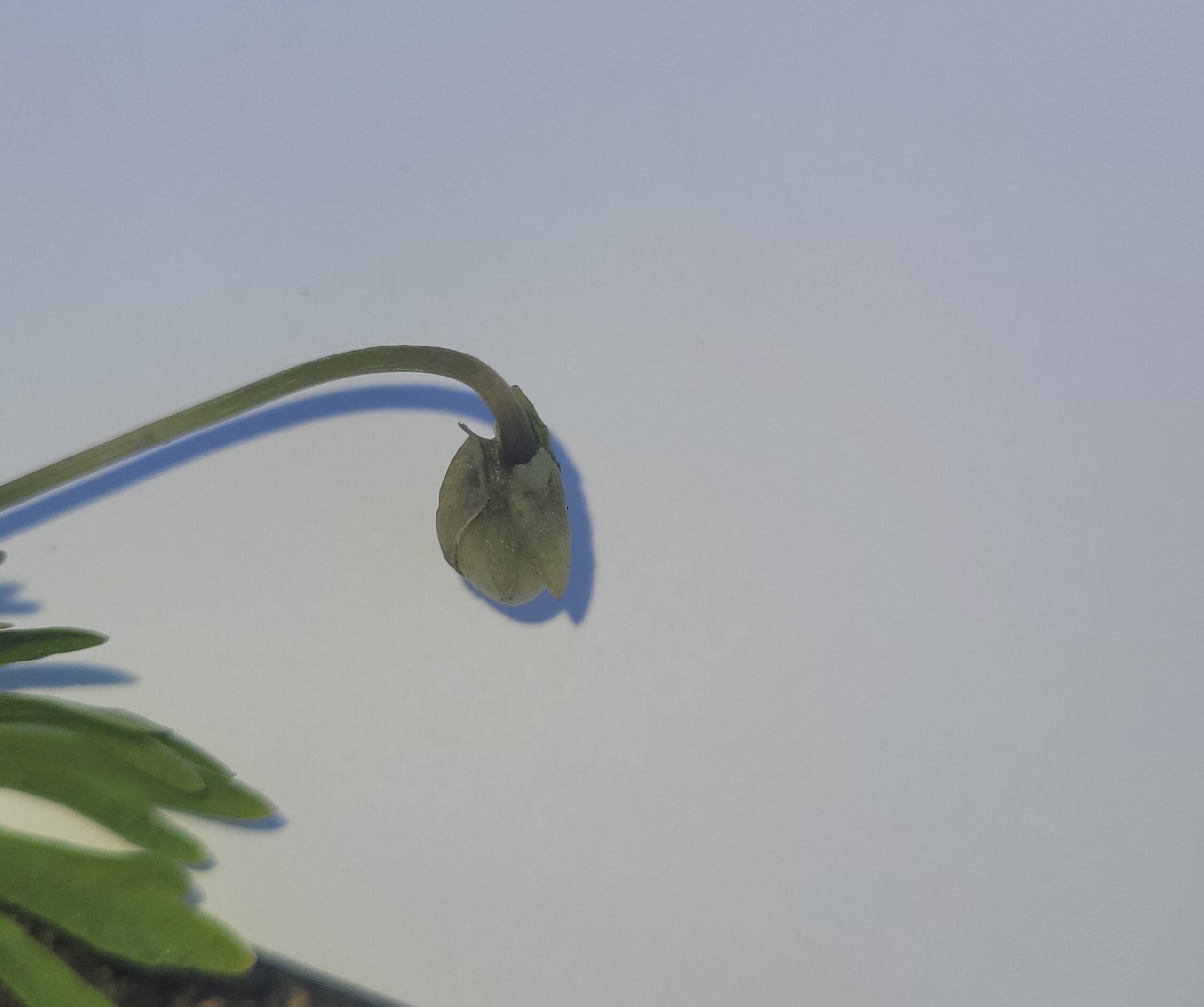
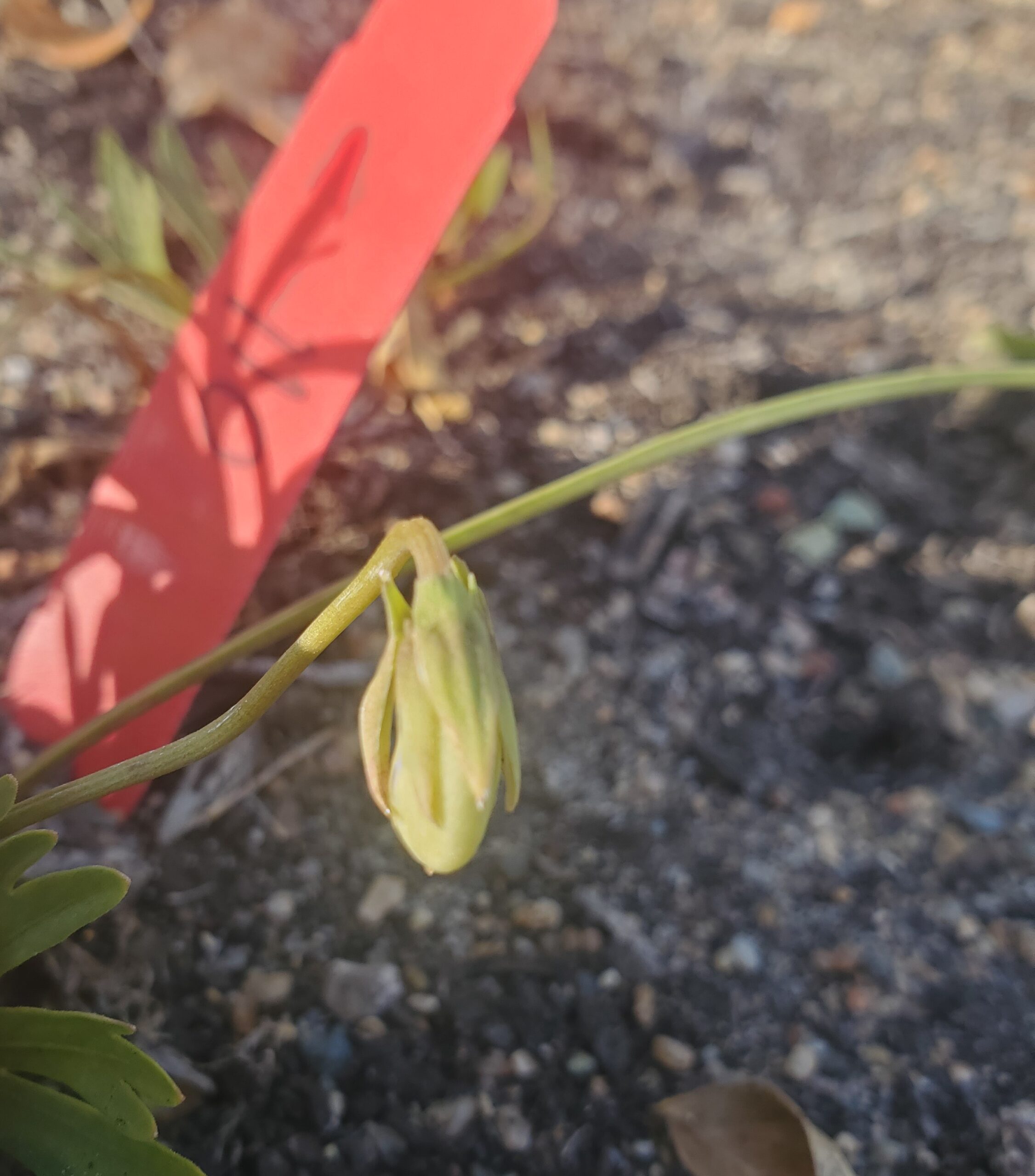
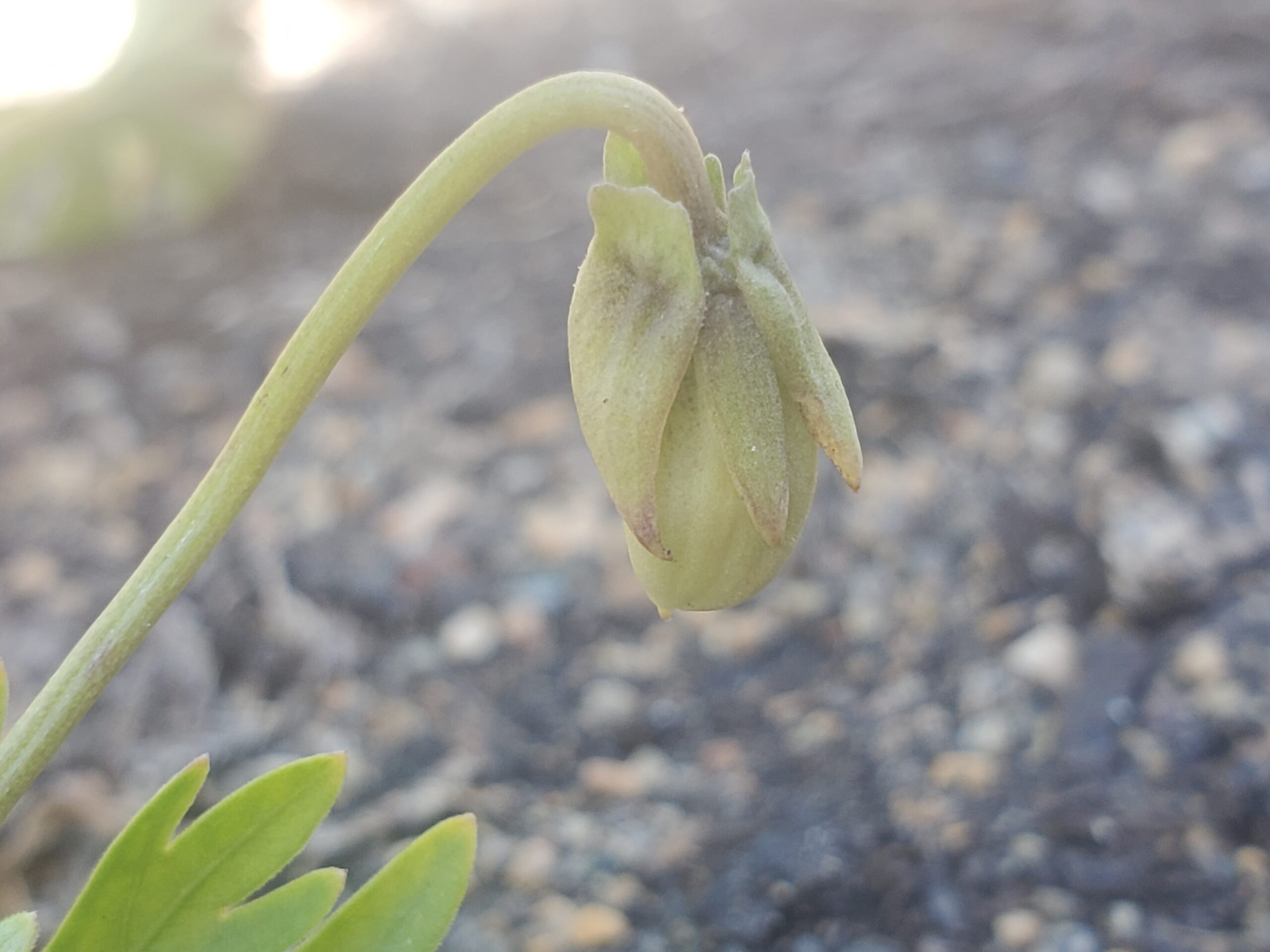
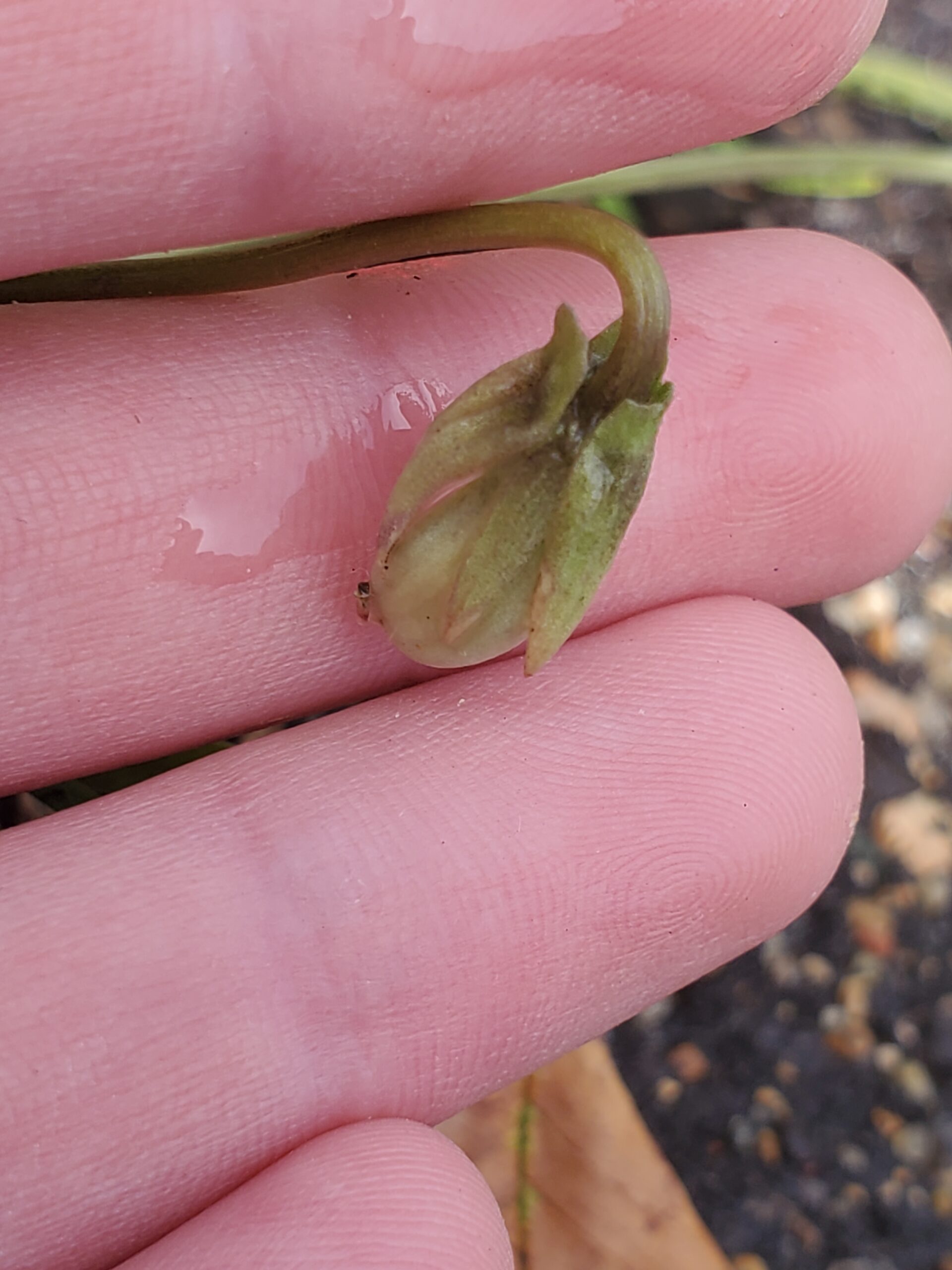
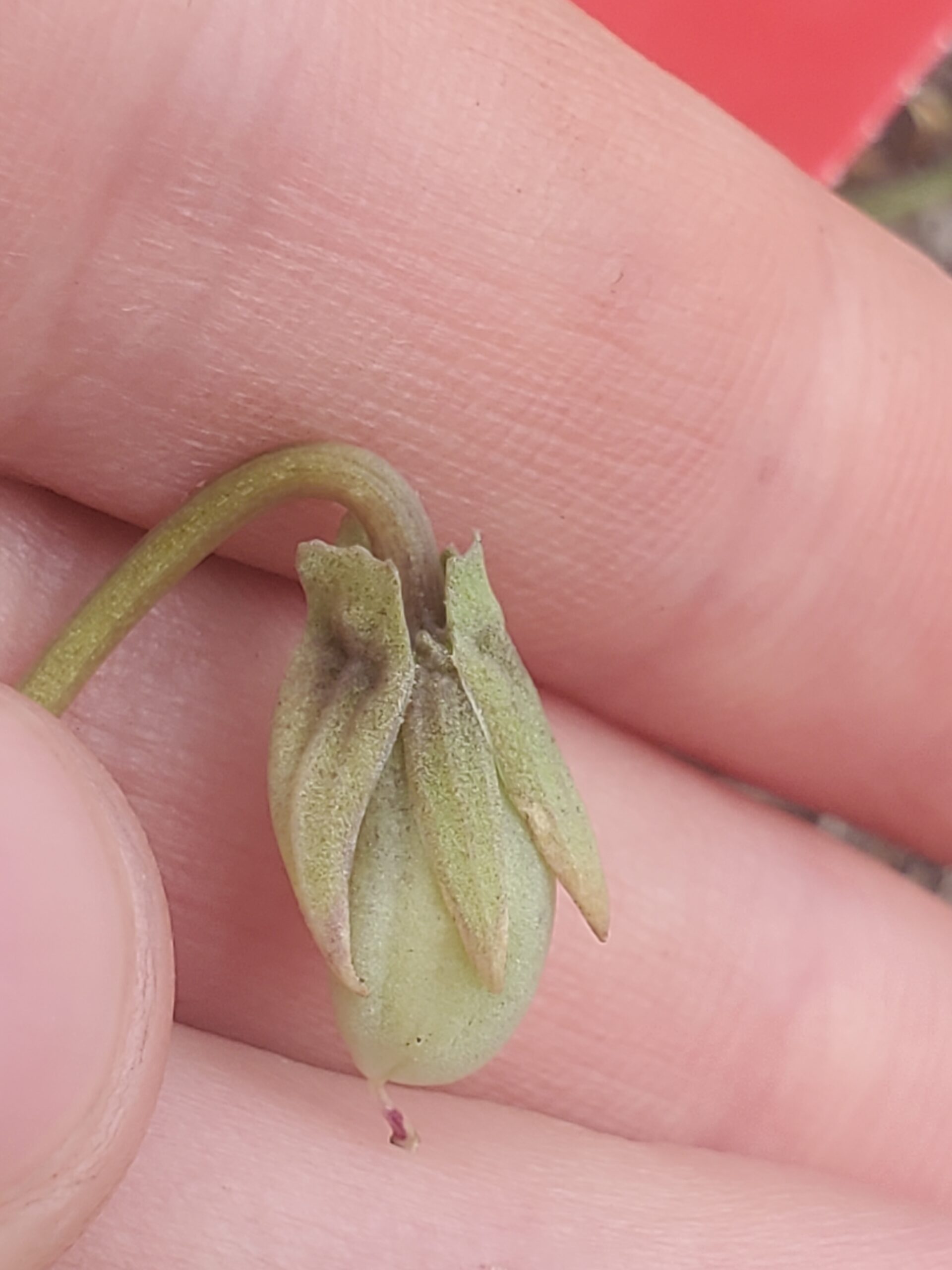
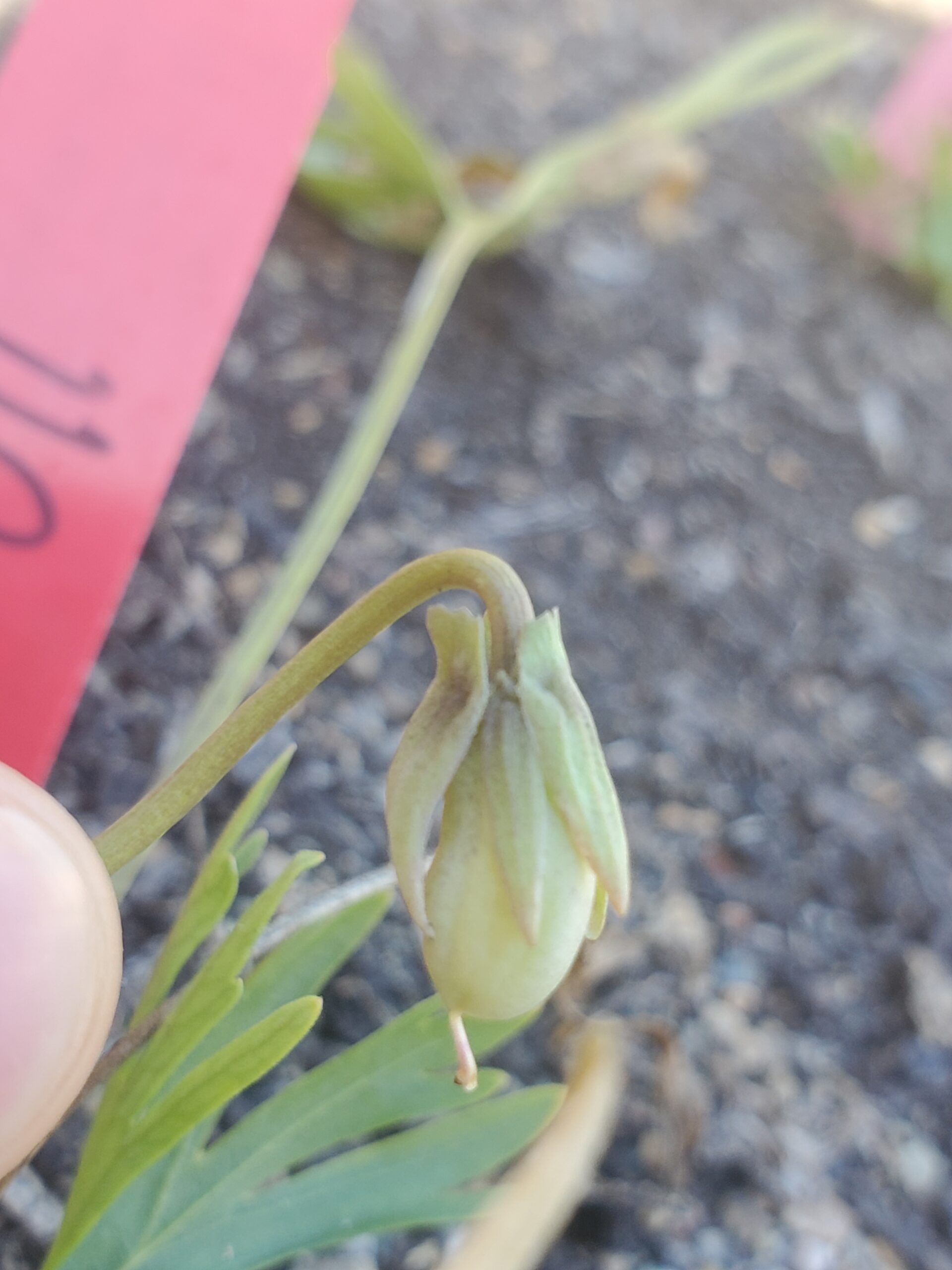
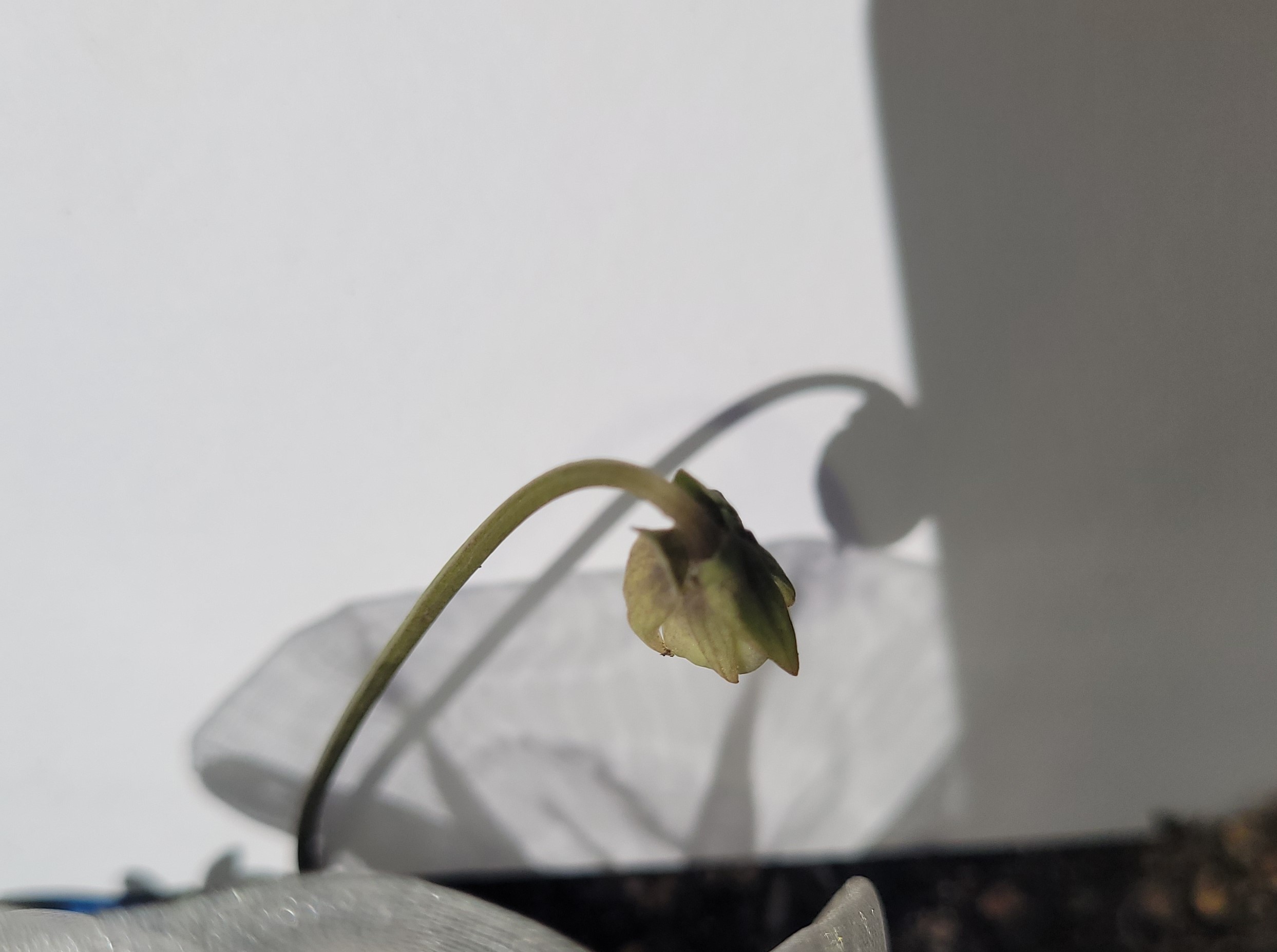
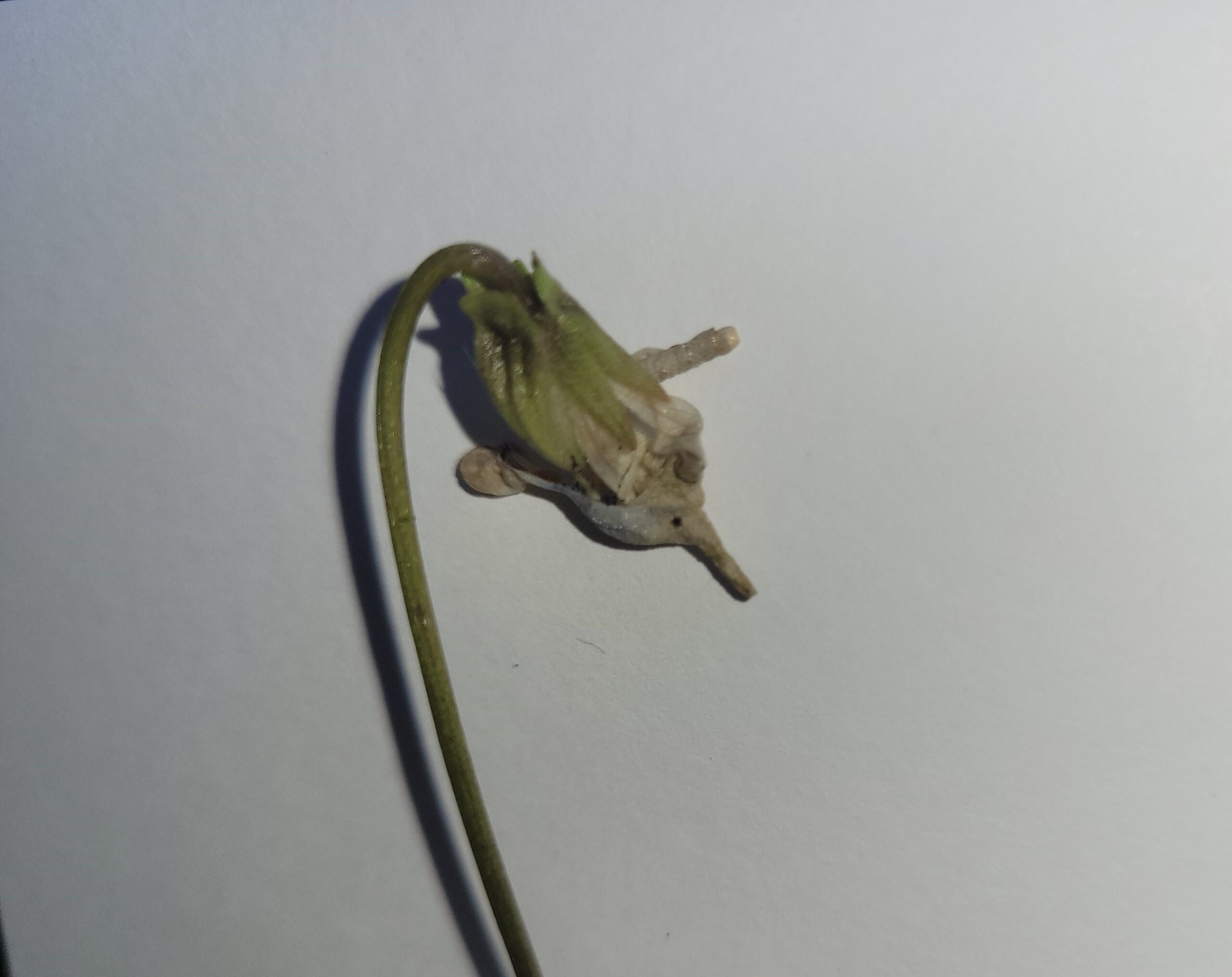
Throughout the fall, 2 pods were followed from flowering to splitting of the pod. Pictures were taken each day along the entire course each morning before lunch. each pod took 17 days from flower to splitting open. Photos here will be arranged in inverse chronological order starting with pod splitting and then counting backwards. Moving forward we would like to learn what the exact features are of a pod that is ready to harvest. So far these photos have shown 2 likely indicators. 1) the pod starts very green and small and slowly turns a pale cream color and fills out as it matures. 2) The pod stem transitions from a bent gooseneck shape into a more upright position while lightening in color. When a pod is ready the stem tends to be fairly straight or has a soft curvature.
Violet 8
Violet 11
Tucking in for Winter
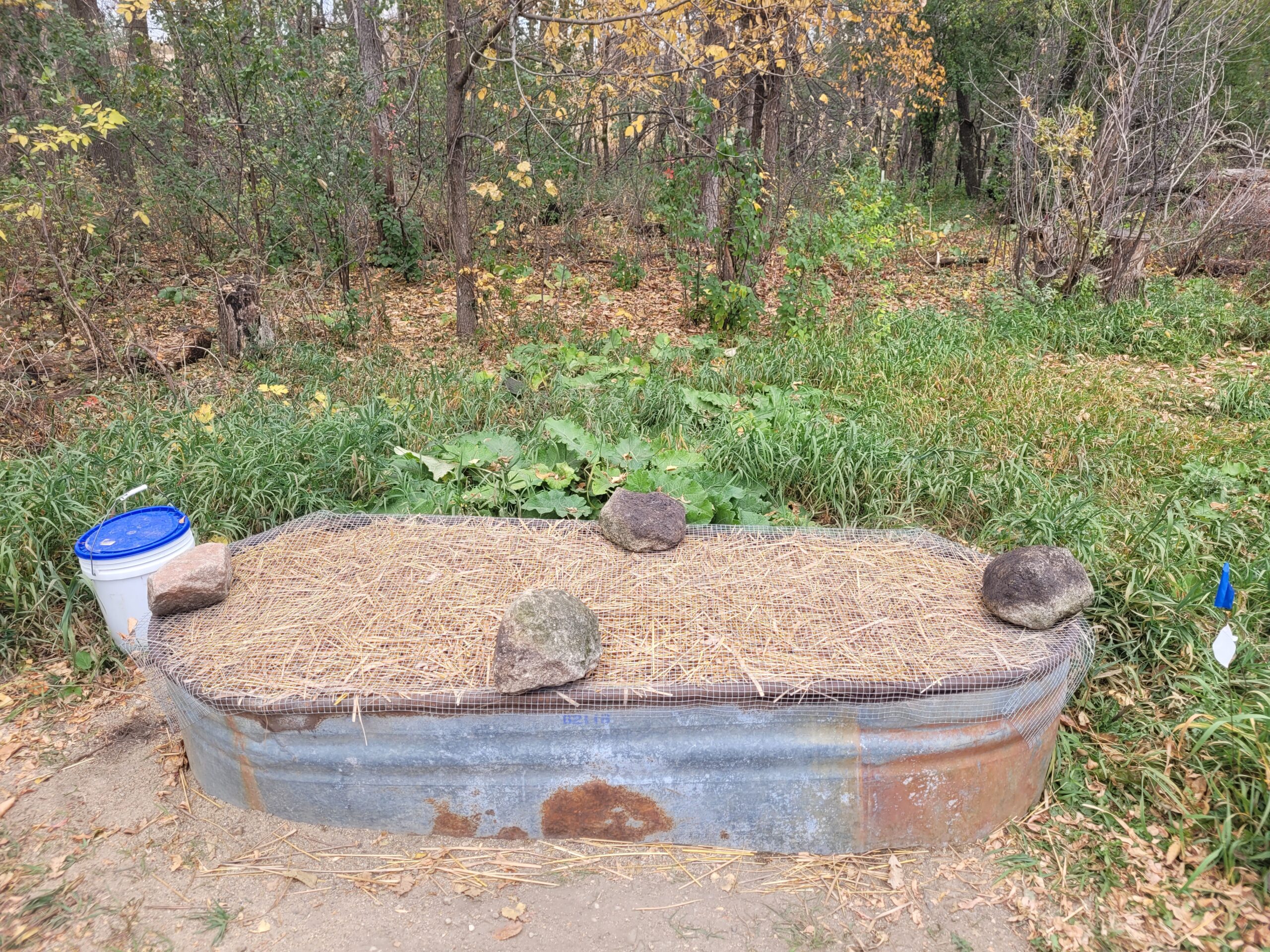
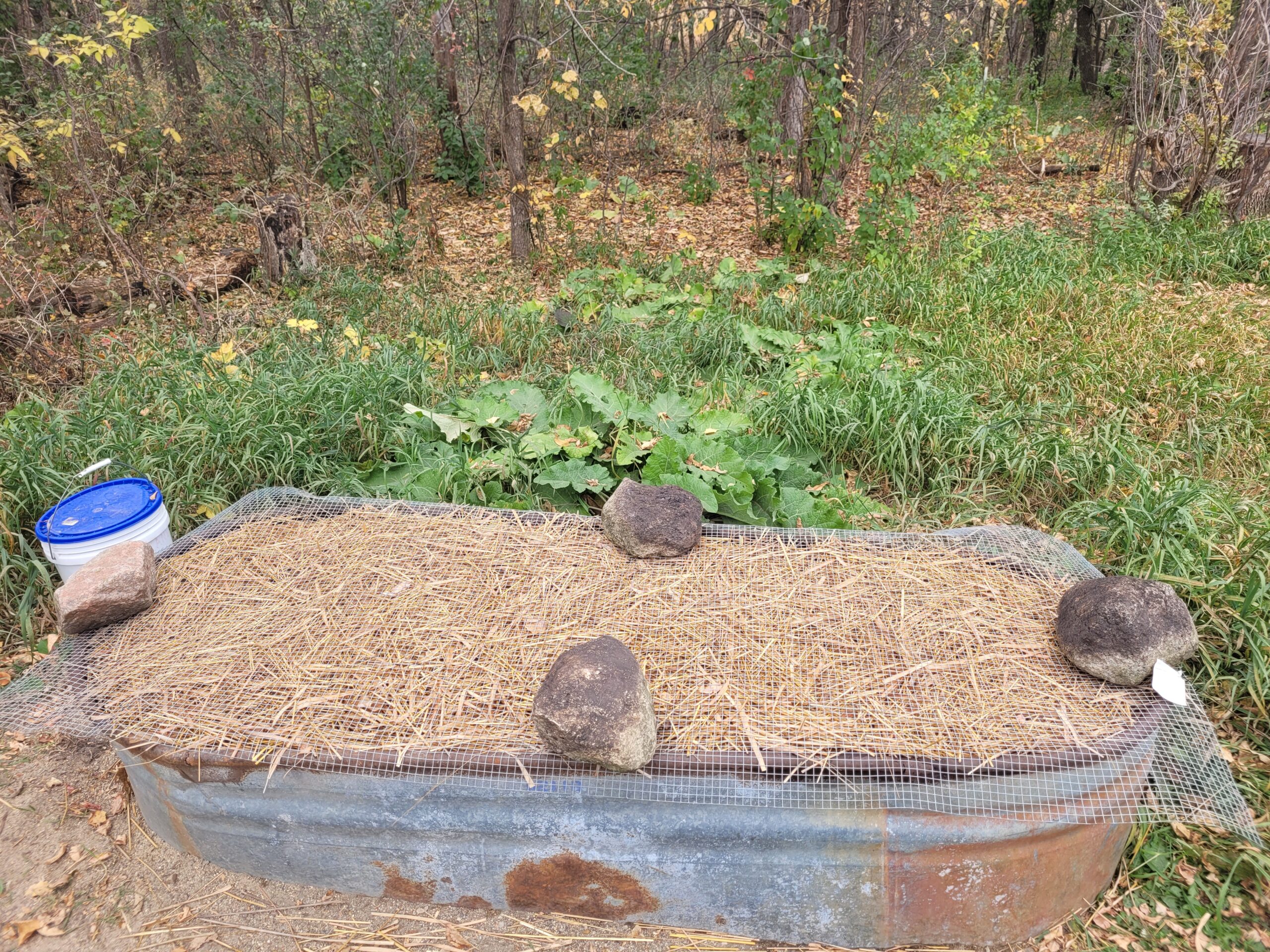
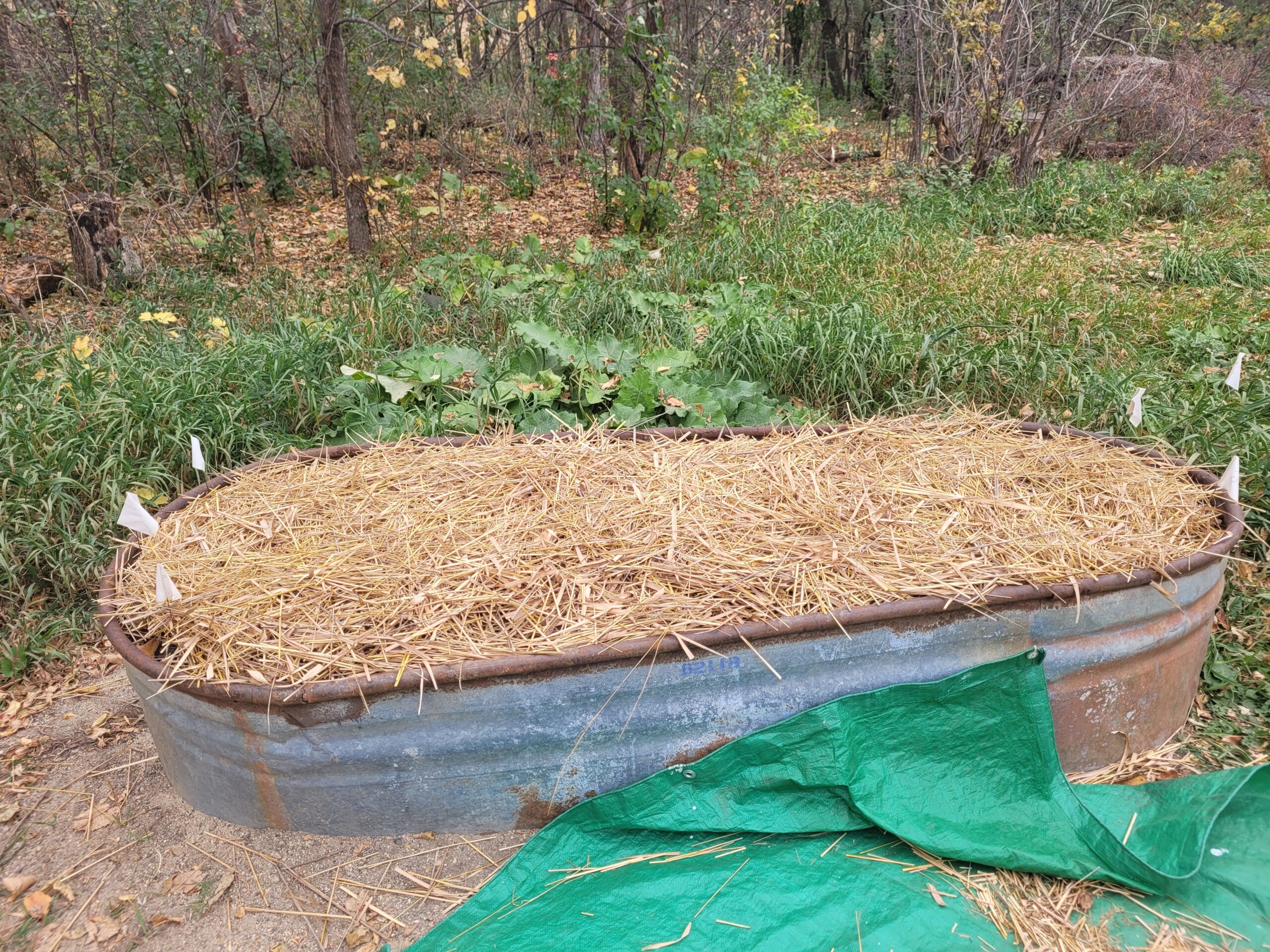
Oct 24 2024 the violets seed production was slowing down and with winter weather on its way it was decided that we should tuck the violets in and cover them. Firstly litter and any seeds visible on the surface of the tub. Next, a 4-inch mulch of Straw cut from P1 was applied across the entire surface of the tub, being sure to cover all green stems from the violas. Lastly, a Sheet of hardware cloth was cut to the length of the tub to prevent the intrusion of digging animals. This sheet was bent around the edges of the tub and then weighed down by several stones. Afterwards, the violas should be safe until next summer.
Spring 2025
A few things will definitely be on the docket for next spring. First off after the snow recedes the wire and mulch should be removed as soon as possible to ensure the soil warms and the volets get enough sunlight. As soon as the soil is removed an inch or so of compost should be applied across the entire bed. Once the violets emerge then the mulch can be reapplied to prevent weed development. Flowers should develop quickly and the job of picking ripe pods will almost certainly last all summer.