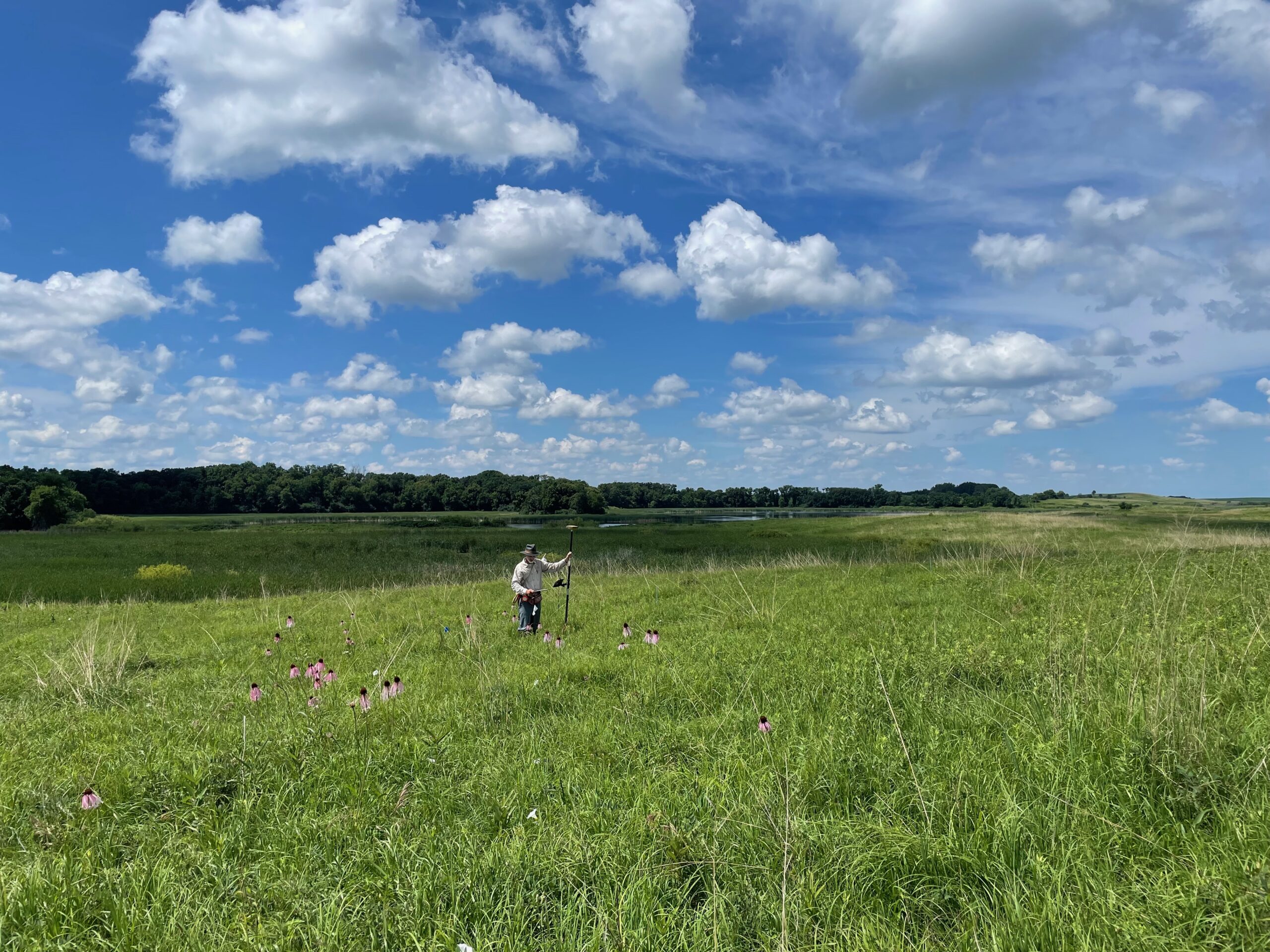
Echinacea angustifolia, the titular study species of the Echinacea Project, is the only species of purple coneflower native to Minnesota. But these days, it’s not alone. Multiple other species of Echinacea, including Echinacea pallida, have been introduced to Minnesota, whether as ornamental plants in horticultural settings or as E. angustifolia substitutes in prairie restorations (pallida seed is significantly cheaper than angustifolia seed). One such restoration is located within Hegg Lake Wildlife Management Area, a key study site for the Echinacea Project.
These two species of Echinacea are visibly different, with E. pallida typically having taller flowering heads and longer, skinnier rays than E. angustifolia. E. pallida also has white pollen, while E. angustifolia has yellow pollen. E. angustifolia is found throughout the western half of Minnesota, while E. pallida is native to Iowa, Illinois, and other more southern states. But why does this matter? Non-native plants like E. pallida can be aesthetically pleasing, and may even provide some of the same ecological benefits as their native counterparts. However, non-native plants can also outcompete native plants, and if hybridization occurs, may dilute locally adapted native gene pools. Experimental plots 7 and 9 (ExPt07 and ExPt09) were designed to determine if E. pallida can produce viable hybrid offspring with E. angustifolia, and to monitor the fitness of these hybrids.
One of our jobs this year was to measure all of the surviving plants in ExPt07 and ExPt09. We used different protocols for the two plots, but both went by mostly without a hitch. Compared to ExPt01, these plots had far more flowering plants: 37 flowering individuals were found in ExPt07 (29% of searched positions) and 106 were found in ExPt09 (44% of searched positions). The plants that were flowering also seemed to have, on average, more flowering heads (one plant had 18!). E. pallida generally produces more flowering heads, so seeing this pattern in its hybrid offspring made sense.
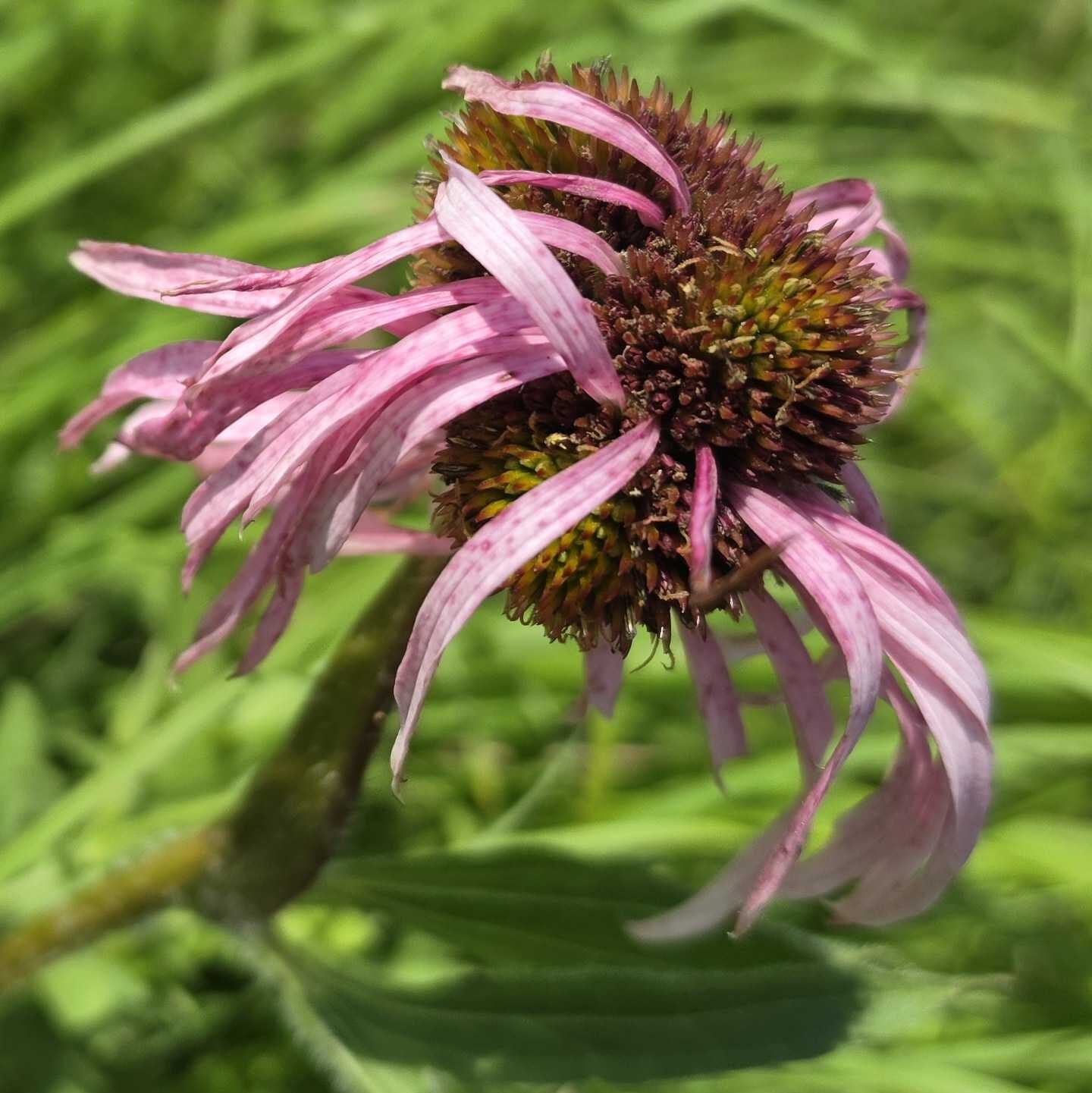
While we observed many healthy flowering heads, we also noticed lots of failed attempts at flowering (i.e. vertical developments), unsuccessful buds, and even “mutant” flowers (see the “tri-butt”, above). Whether this is an effect of hybridization or simply a result of the larger sample size of flower heads is unclear. If hybridization does increase the rate of unsuccessful flowering attempts, reducing fitness, it presents an immediate threat to populations of E. angustifolia within pollination distance of E. pallida restorations. Which brings us back to the restoration at Hegg Lake WMA…
After counting heads and identifying unique tag numbers for all of the flowering E. pallida plants in the Hegg Lake restoration, we took matters into our own hands. To prevent genetic swamping of nearby wild E. angustifolia, we beheaded every E. pallida plant in the restoration. Guillotined them. Total decapitation. If it sounds violent, that’s because it was. Robespierre would have been proud of us.
Say what you will about our methods, but Echinacea pallida won’t be showing it’s face at Hegg Lake WMA for a long, long time.
Leave a Reply