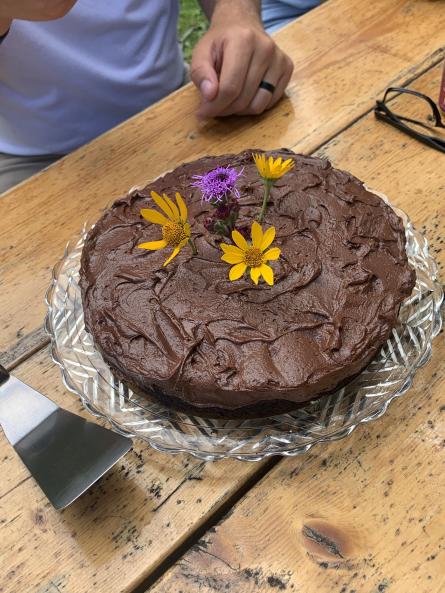
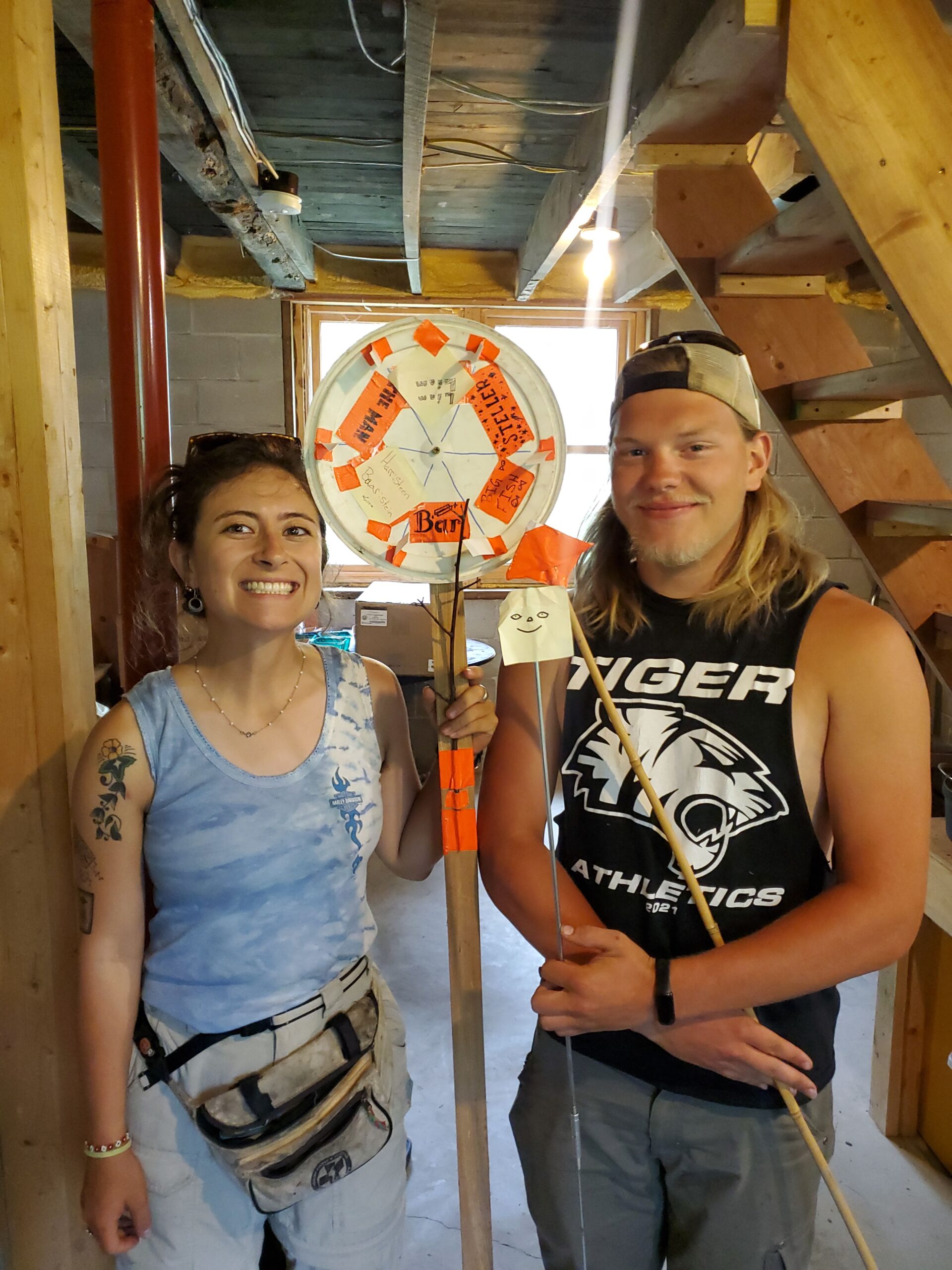
Today was Harrison’s last day with us 🙁 Stuart made a prairie-inspired cake to honor his time with the project. He is returning to teach young minds about ecological research. Farewell, Harrison, and good luck!
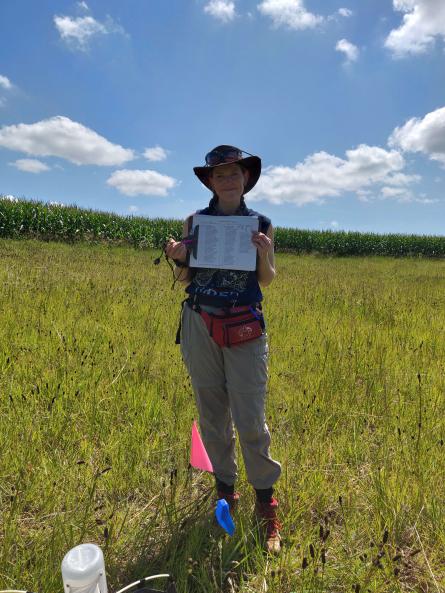
The team also conducted floral abundance surveys. Essentially, we want to see how many plants (and what kinds) may be associated with ground-nesting bees. That requires feet on the ground to estimate abundances and identify plants.
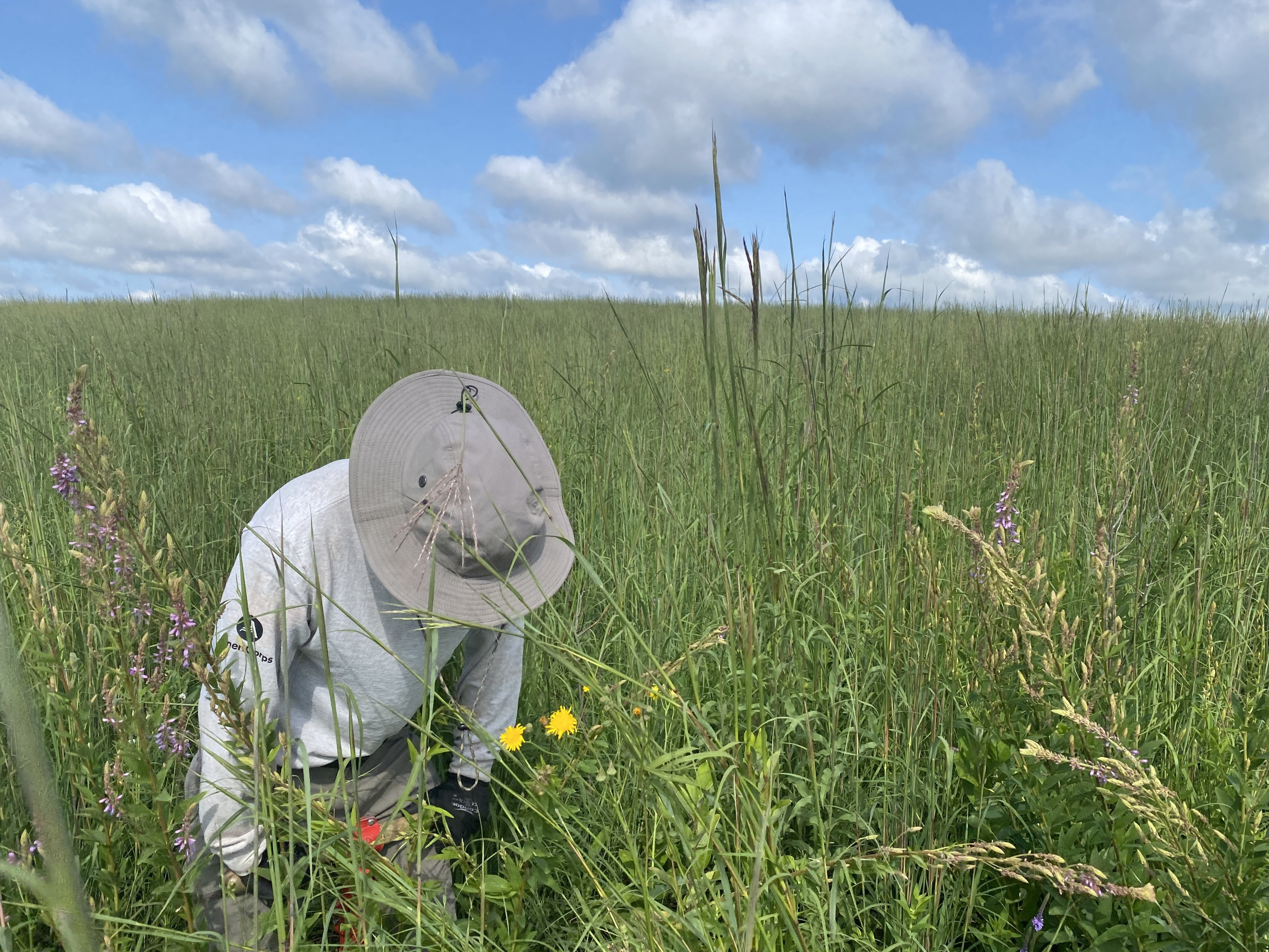
Lastly, a battle occurred today. While the crew did demography of echinacea plants- where we record data on this year’s flowering plants- I was stung by two wasps. Luckily, Lindsey was prepared to retaliate, though it wasn’t necessary.
All in all, farewells can sting, but at least there’s cake in the end.
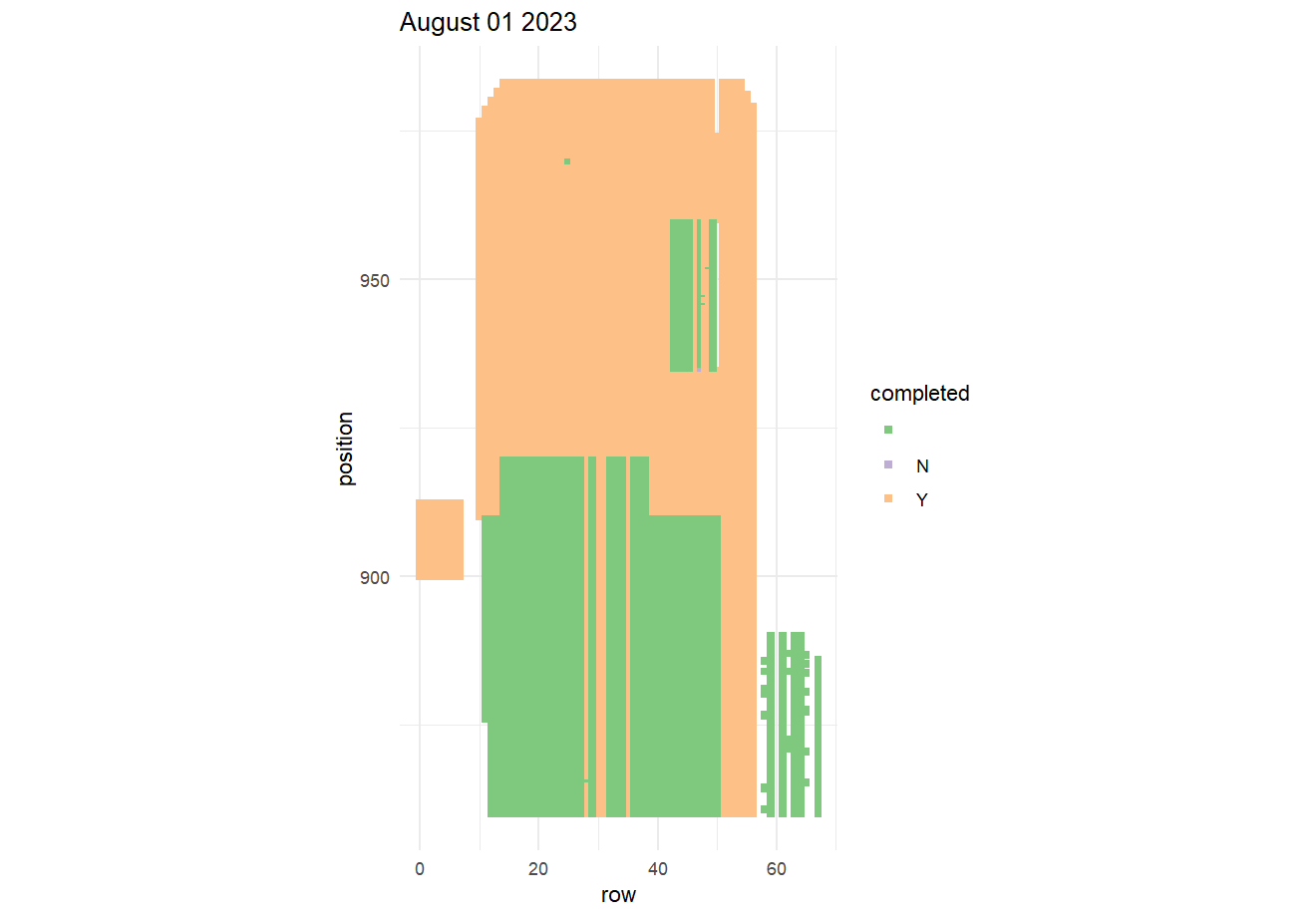
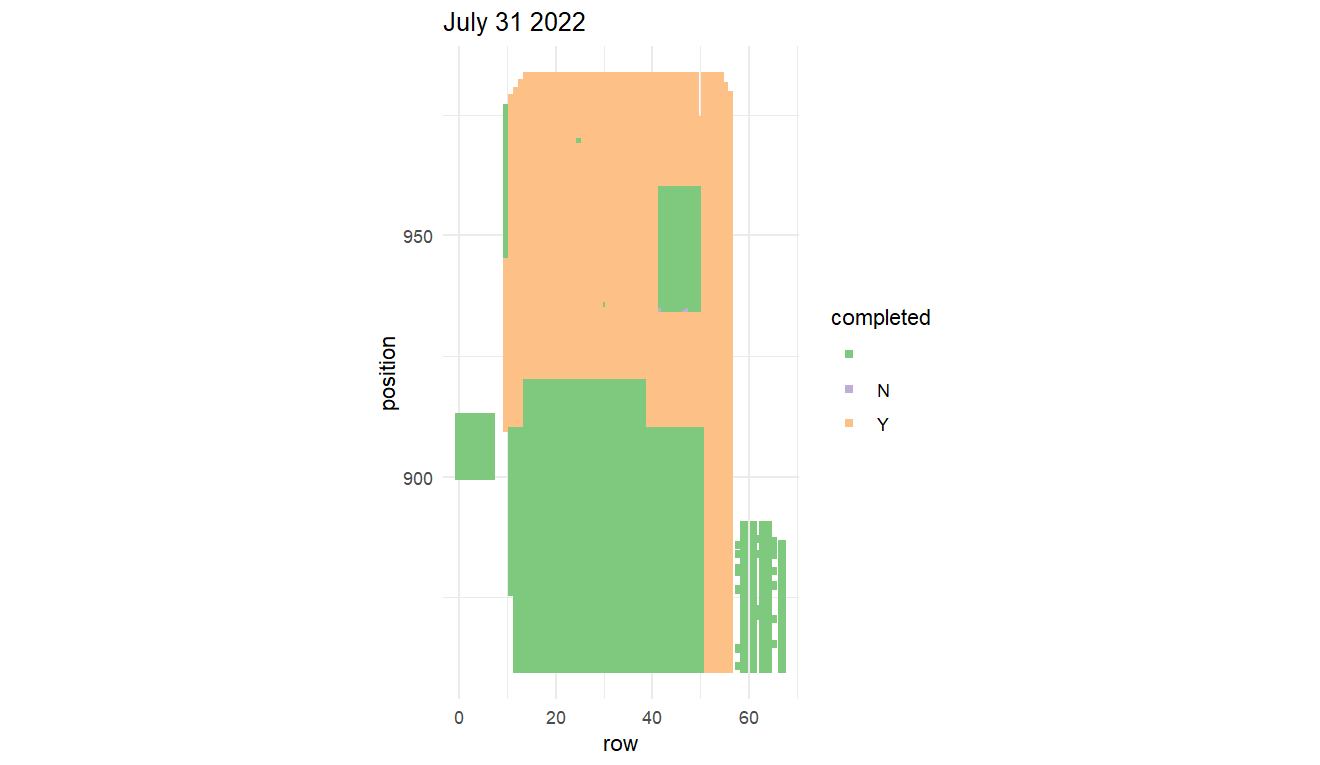
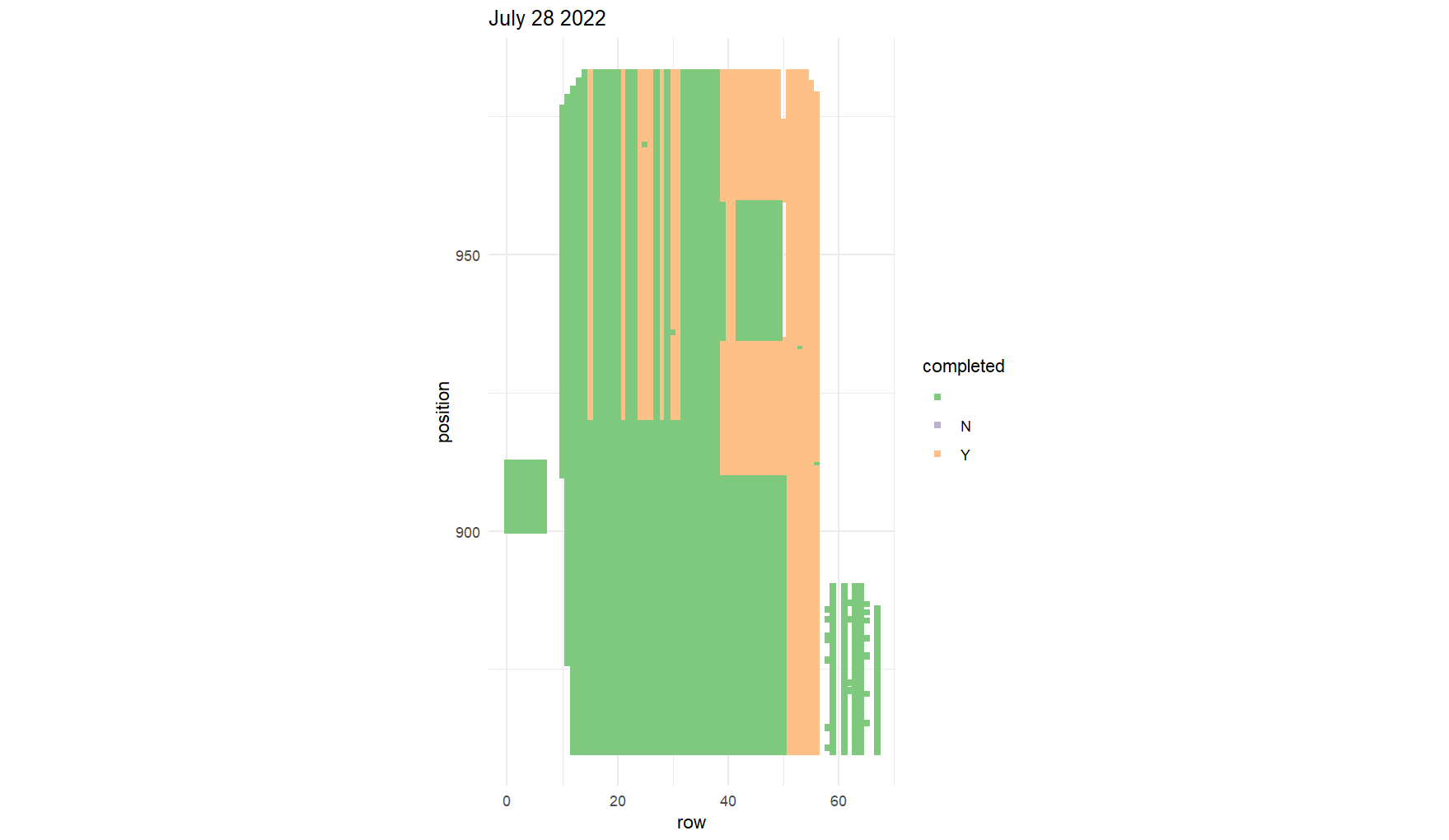
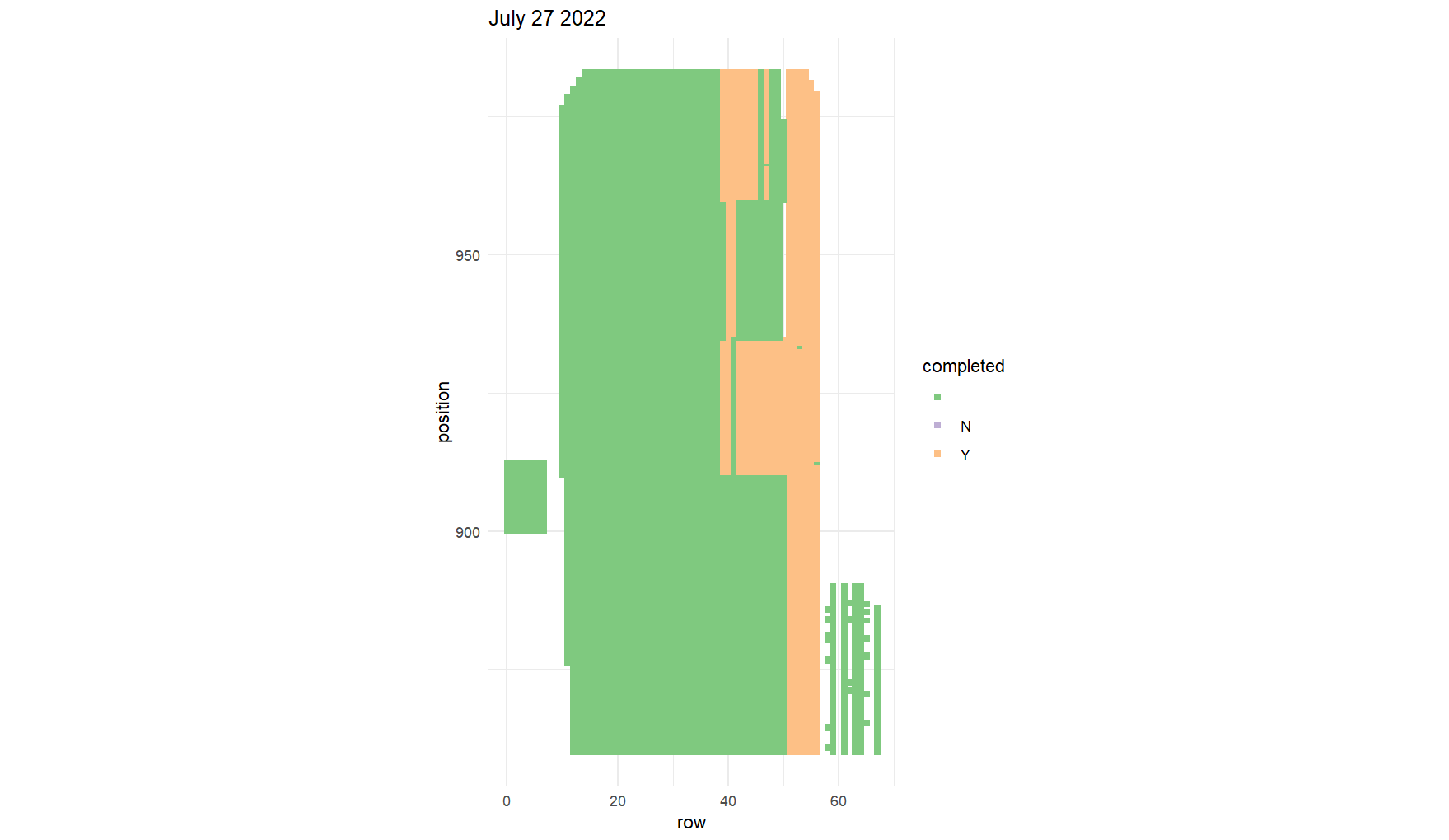
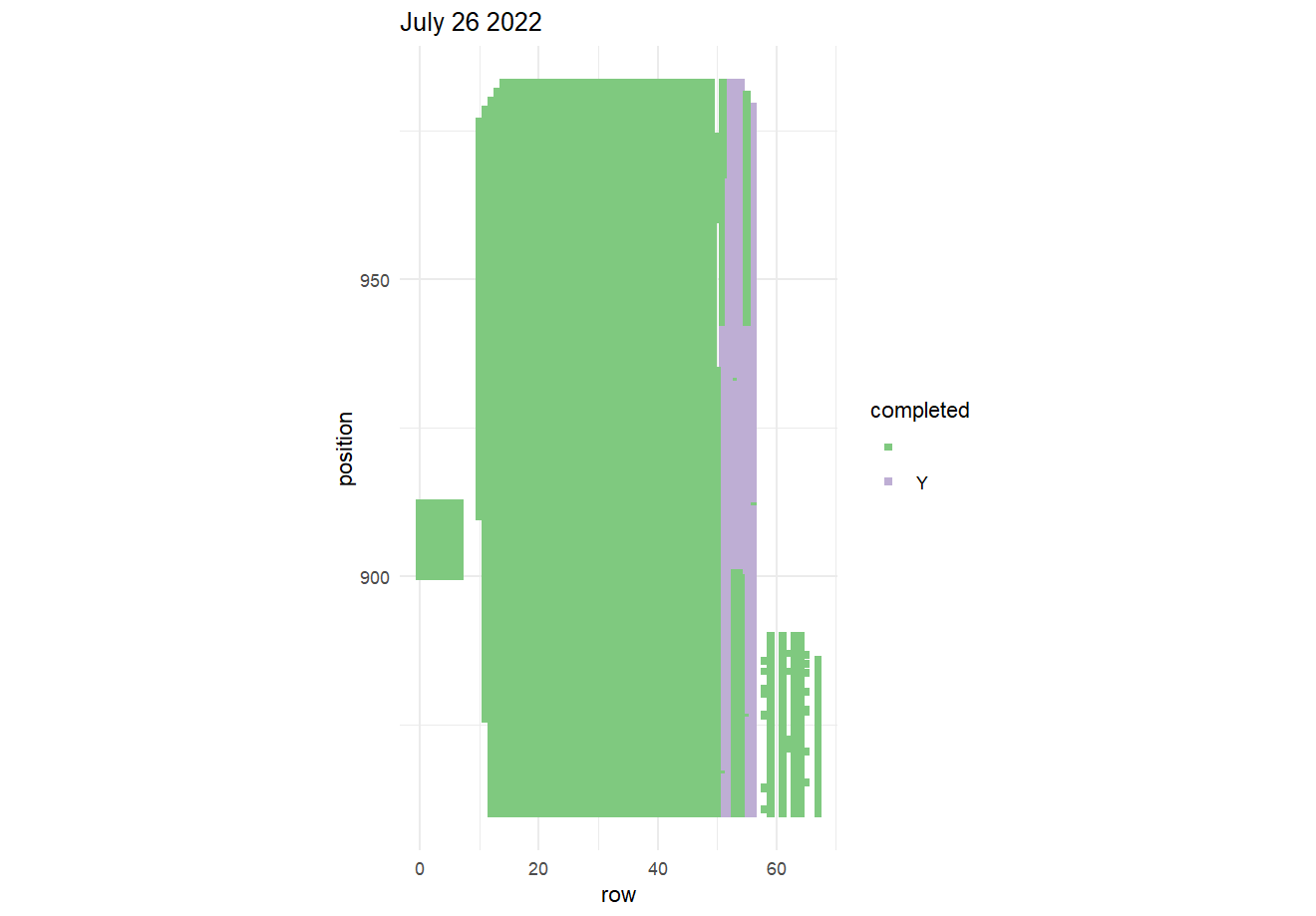
Yesterday, the team began measuring our biggest common garden experiment, P1! This plot has 10,992 positions that were planted with Echinacea. Yesterday, 3 teams of pairs went out for about 3.5 hours in the morning and knocked out 1,140 positions and 14 segments for over 10% of P1! I’m excited we made so much progress the first day! Below is map that visualizes progress. Stay tuned for today’s update.
It was a busy morning here at the Station I barely had time to comb through Victoria’s Donations A little past 11 I drove her to Perkin’s Where much to my sadness the Groom Shuttle was lurkin’ We will miss you, Victoria, a whole heck of a lot More than all the plants missing in our P2 plot
Lonely visor seeks loving, careful, accurate data collector
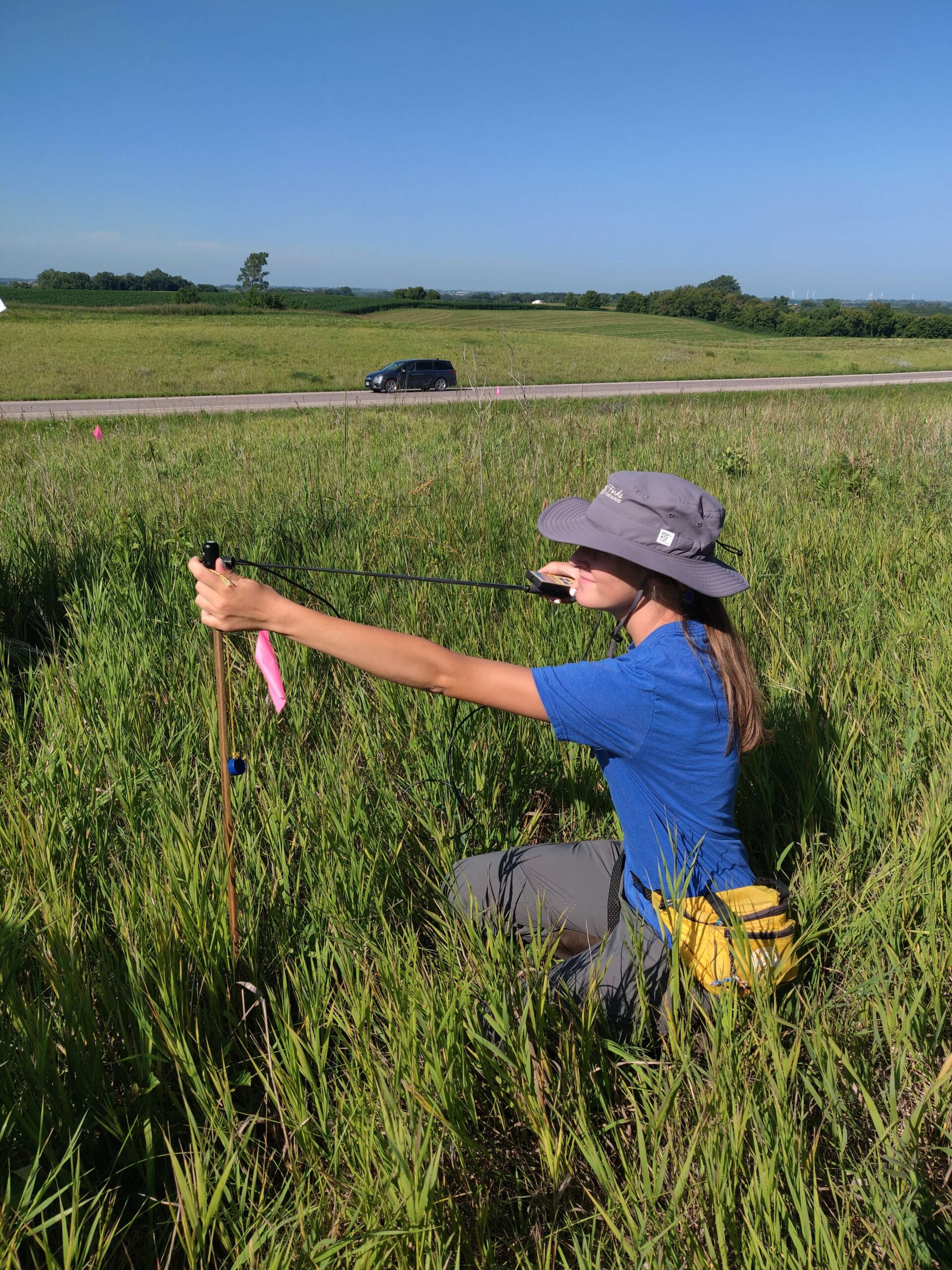
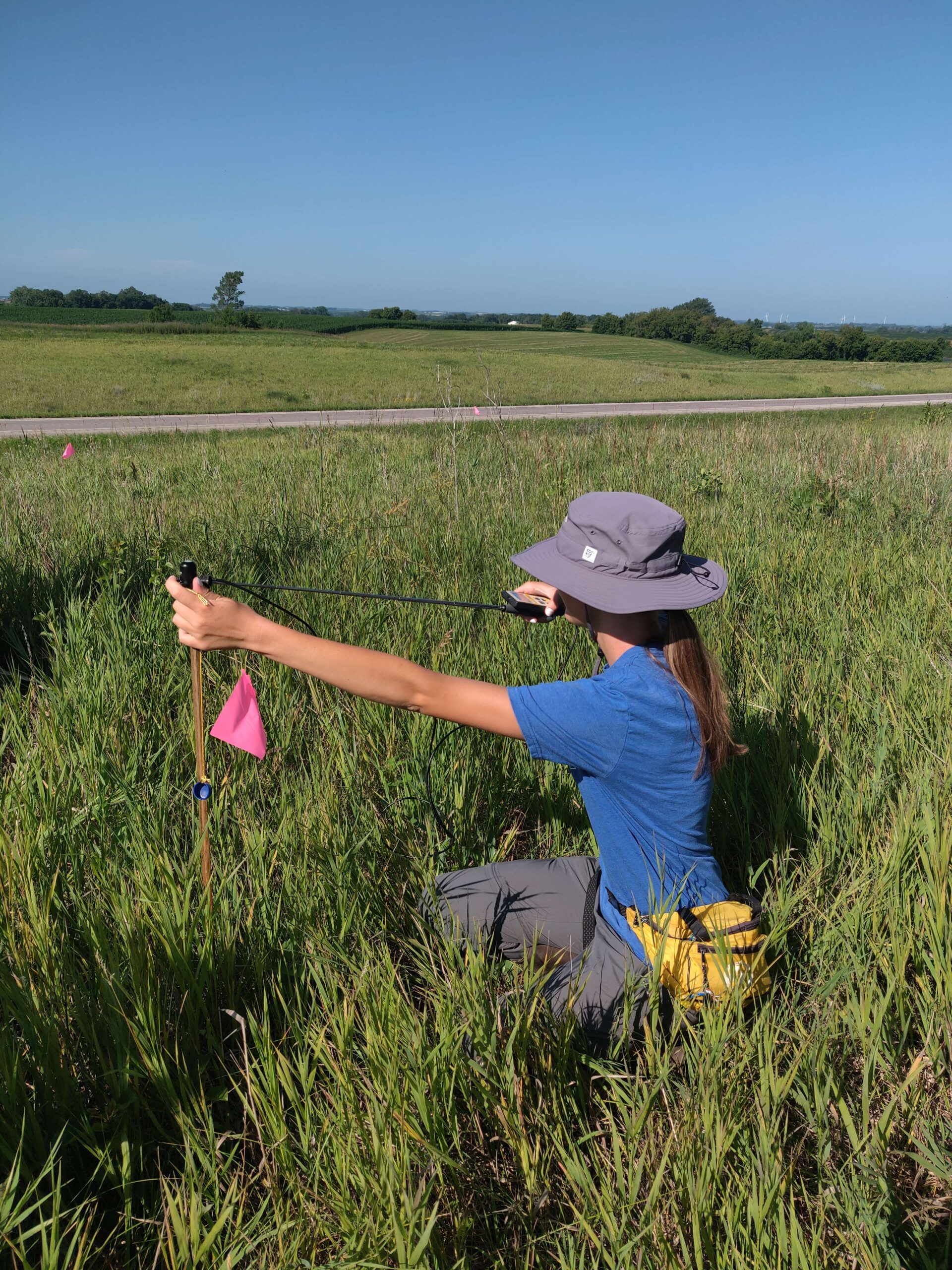
In this episode of a day we started off testing out Jared’s protocols for micro habitats. We gathered data like soil compaction, light availability and litter depth from random test points. We had lots of success and even more discoveries on how to make things run smoother. Tomorrow we will put the newly revised protocol to the test in the first official episode of micro habitats!
Grass so high Our vision fails Of flags off hiding Who knows where
Holes for hiding Insects who Like their grasses Tall and true
Today we helped dig soil cores for a “pitfall trap” project. The holes were dug near our ENRTF insect collection points and will grant greater insight on how burning prairies can affect insect population composition. The grass was pretty high, though, and we could hardly see the flags that had been placed earlier in the season! Rest assured, the holes were dug.
Also we did emergence traps. We always do emergence traps.