|
|
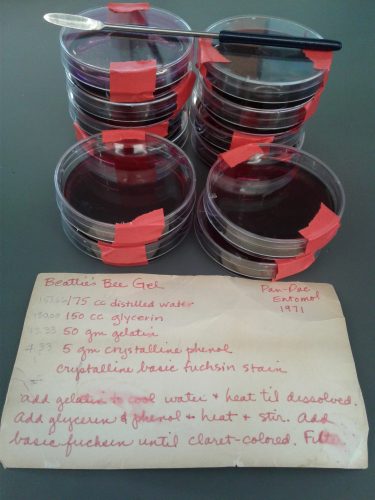
Tomorrow I will be coming back to CBG to work for a few days over break and I’m very excited! I just wanted to take the time and explain some of the things that I’ve done since the school year started. I finished entering two data sets of data; the data from pollen in the bank and the maternal repaints (technically I entered one and a half because Zeke filled out the pollen in the bank data with me). I’ve also been showing our new volunteer, Nate Scheerer, around the lab sense he’ll be helping me count the pollen on the styles Zeke, Mia, and I collected this summer out in Minnesota. But what I’ve completed that I was most proud of was making the fuschin dye that we’ll be using to stain the styles. Even though I was nervous when making the gel, the product turned out great! One thing that I recommend before making the gel is having all the materials that you’ll need nearby so you can keep a close eye on the gel (and so the people in the stockroom don’t get annoyed with seeing you every five minutes). I’m looking forward to a productive few days at CBG!
 Just a small amount of the gel that I made in the lab.
Hello from Chicago!
All members of team Echinacea have evacuated Solem Township for the season and migrated to warmer climates (well except for those who stayed in Minnesota). No worries though, we’ll be back soon to harvest the last 21 heads that just weren’t quite ready when we left. Once we have those heads, it will be time to start recording new data!
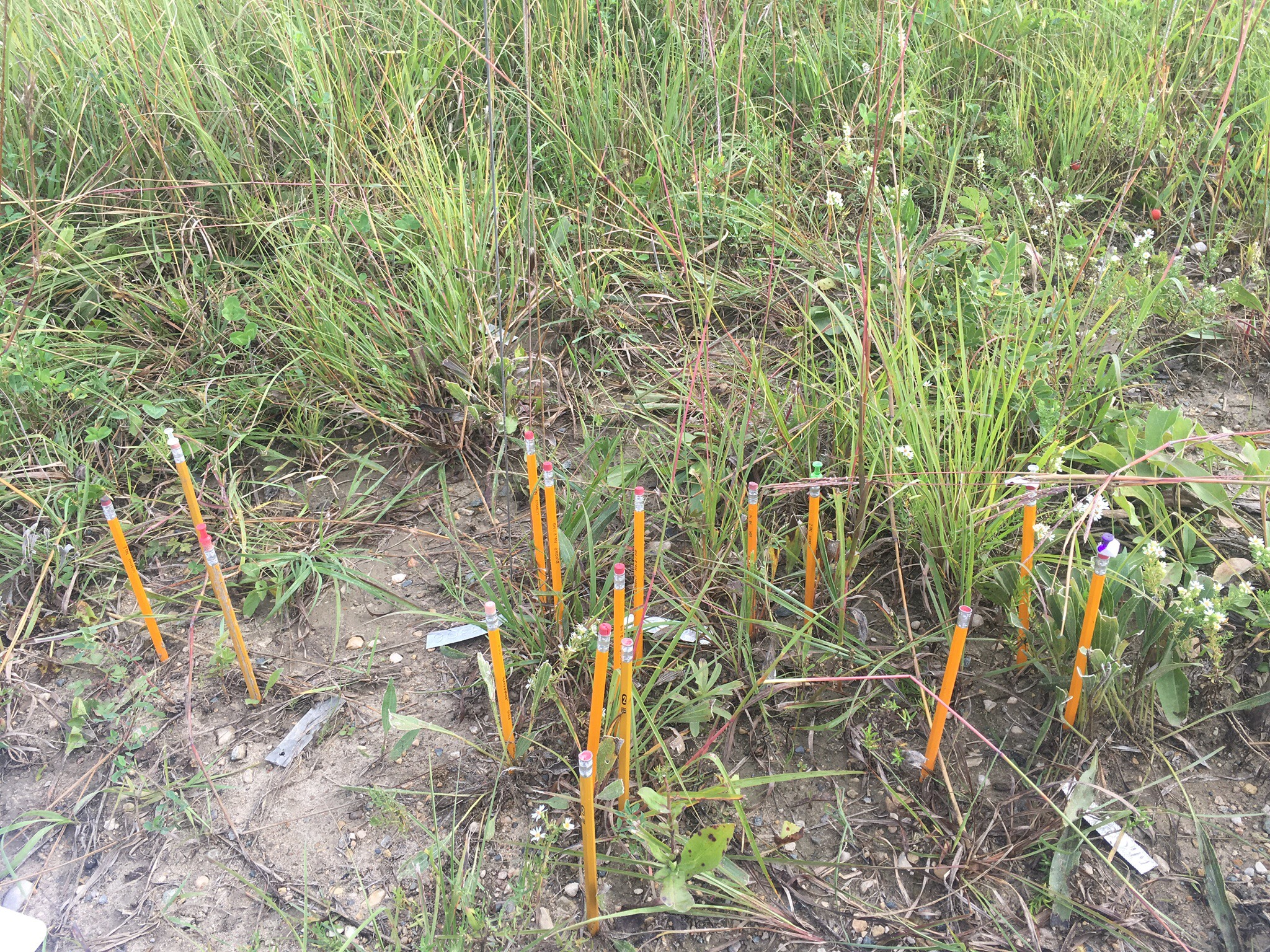
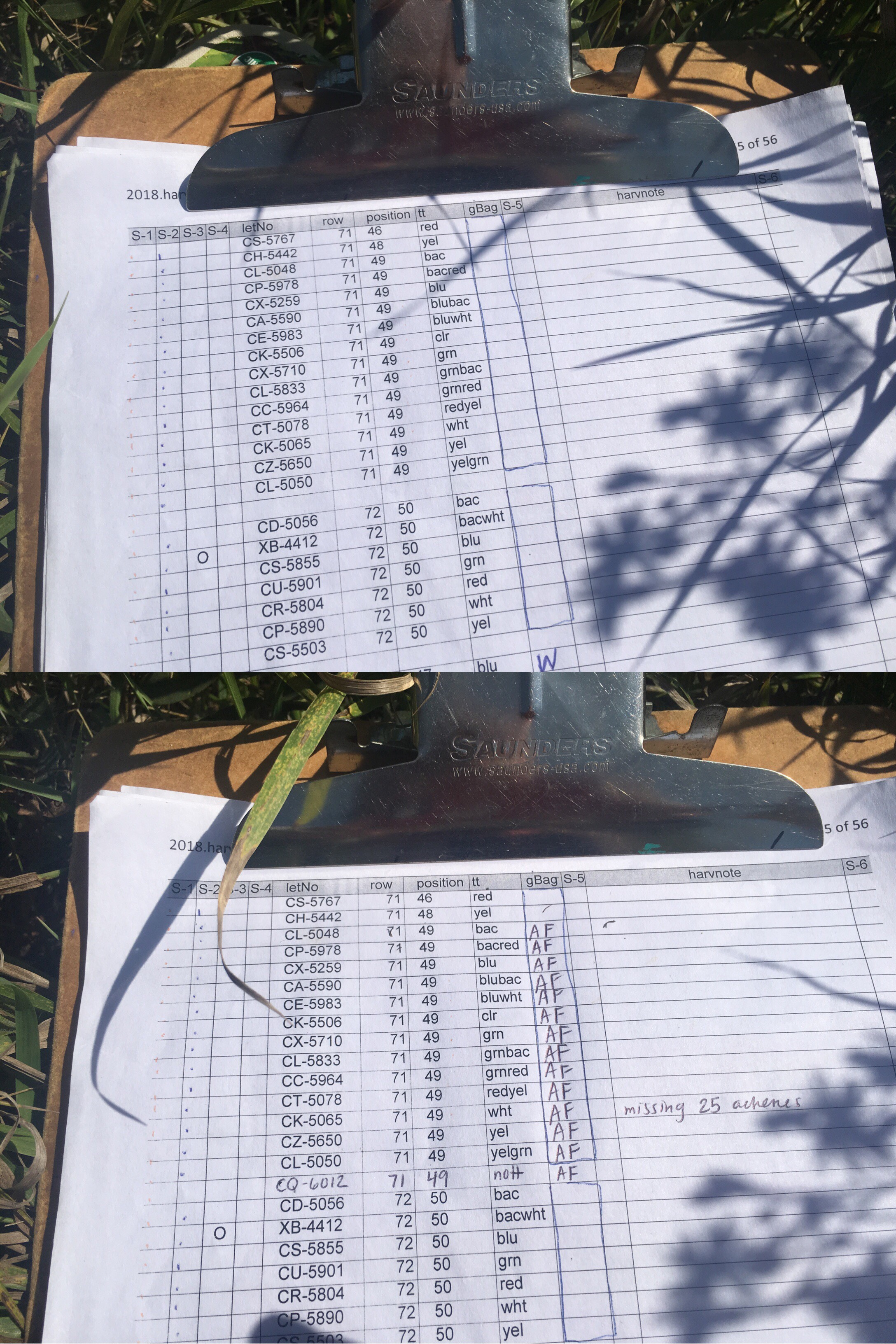
Back at CBG, we’re getting underway with processing the data that we collected this year. The first step, as always, will be inventorying the heads that we collected in the field this year. How many heads you might ask? This many:
We’ve definitely got our work cut out for us, but it’s nothing that we can’t handle!
Be on the lookout for our yearly project updates, they will start being published soon.
Thanks for reading!
Hello, Flog!
The field season in Minnesota has wrapped up, and we have all returned to continue working hard at our various institutions. For the members of this years team returning to the Chicago Botanic Garden, that means analyzing all of the data (including 1000+ Echinacea heads) that we collected in the field and in our experimental plots.
Our last few days at the Hjelm house have been filled with harvest and management, getting ready for our prescribed burns this fall and spring. We’ve harvested all sorts of species – everything from Asclepias to Viola – in preparation to spread them after the burns in p1 and p8.
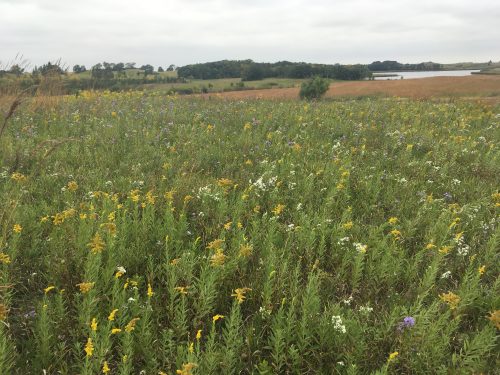
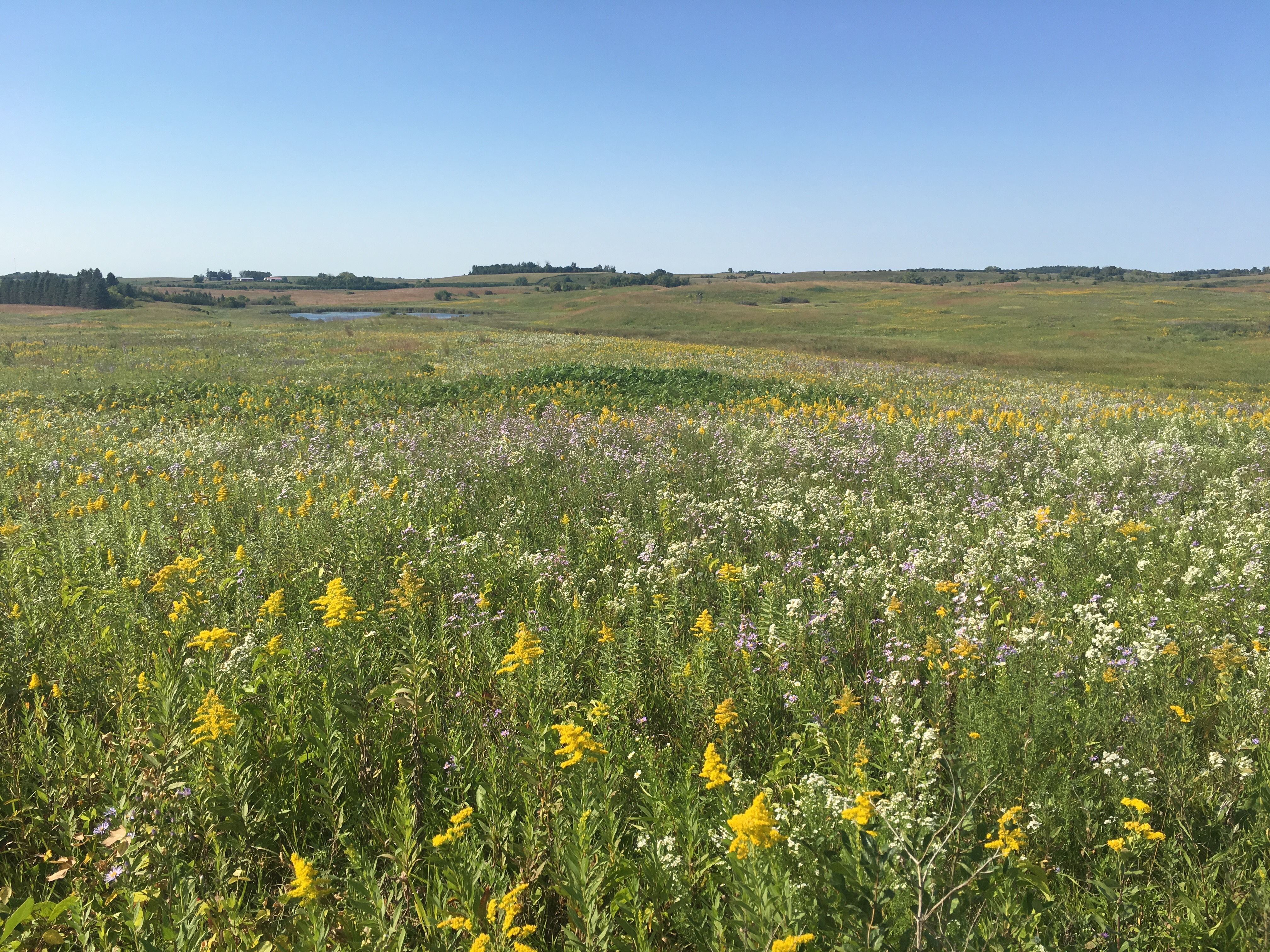
Thanks for reading the flog this summer! Here’s a parting shot of Hegg lake from the last day we were out there: white and purple asters with some great Solidago!

Today is a rainy day at the Hjelm house. Kristen left early in the morning and Michael and I are cleaning and organizing everything from seeds, to g3, to data sheets. We’ve wrapped up most of the field work and plan to leave Andes after some harvest tomorrow morning! Stay tuned for more progress updates in the fall as we bring everything back to the lab and get started processing all of the data from summer 2018!
Your photo-blog-flog fix.
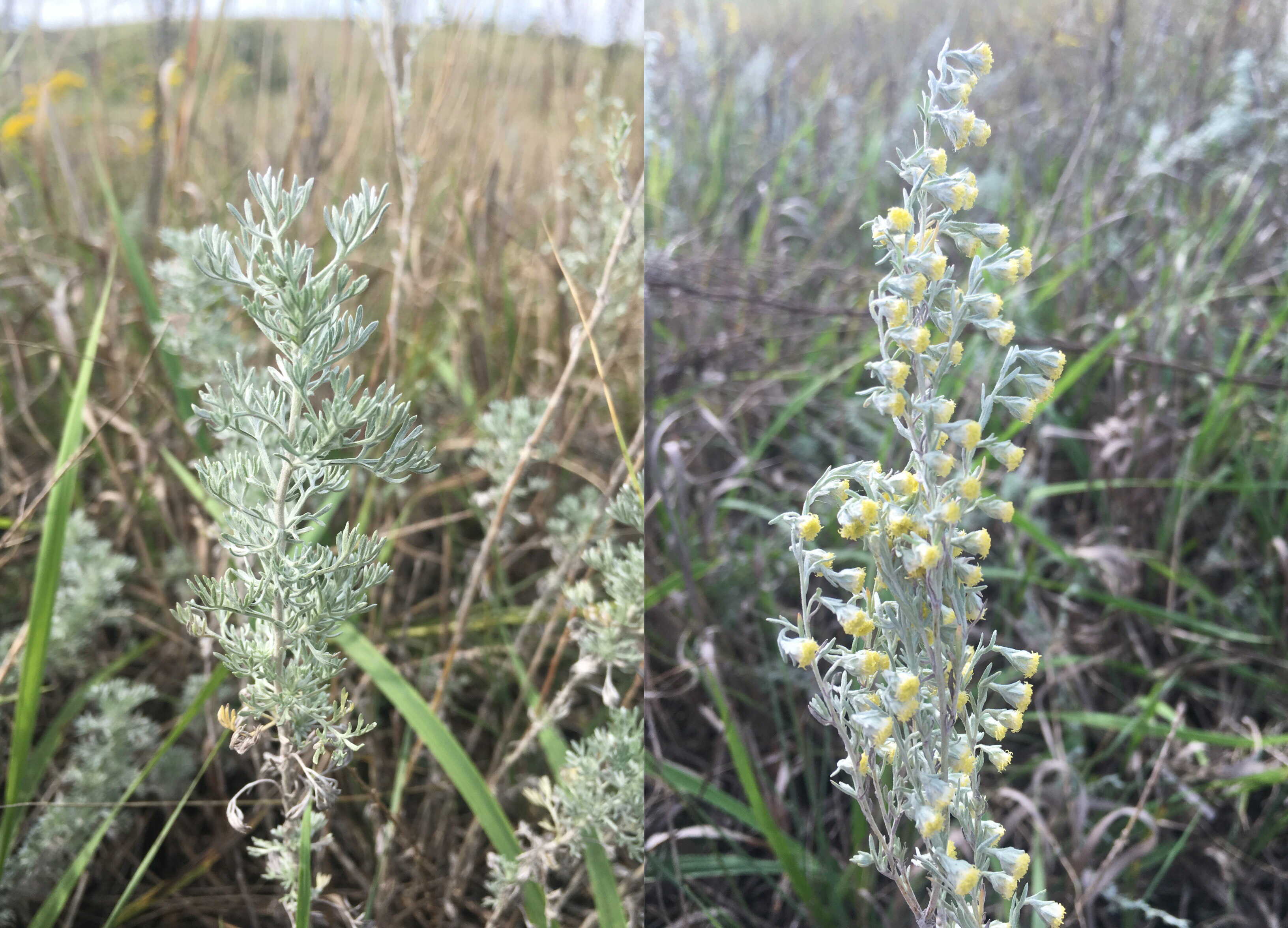
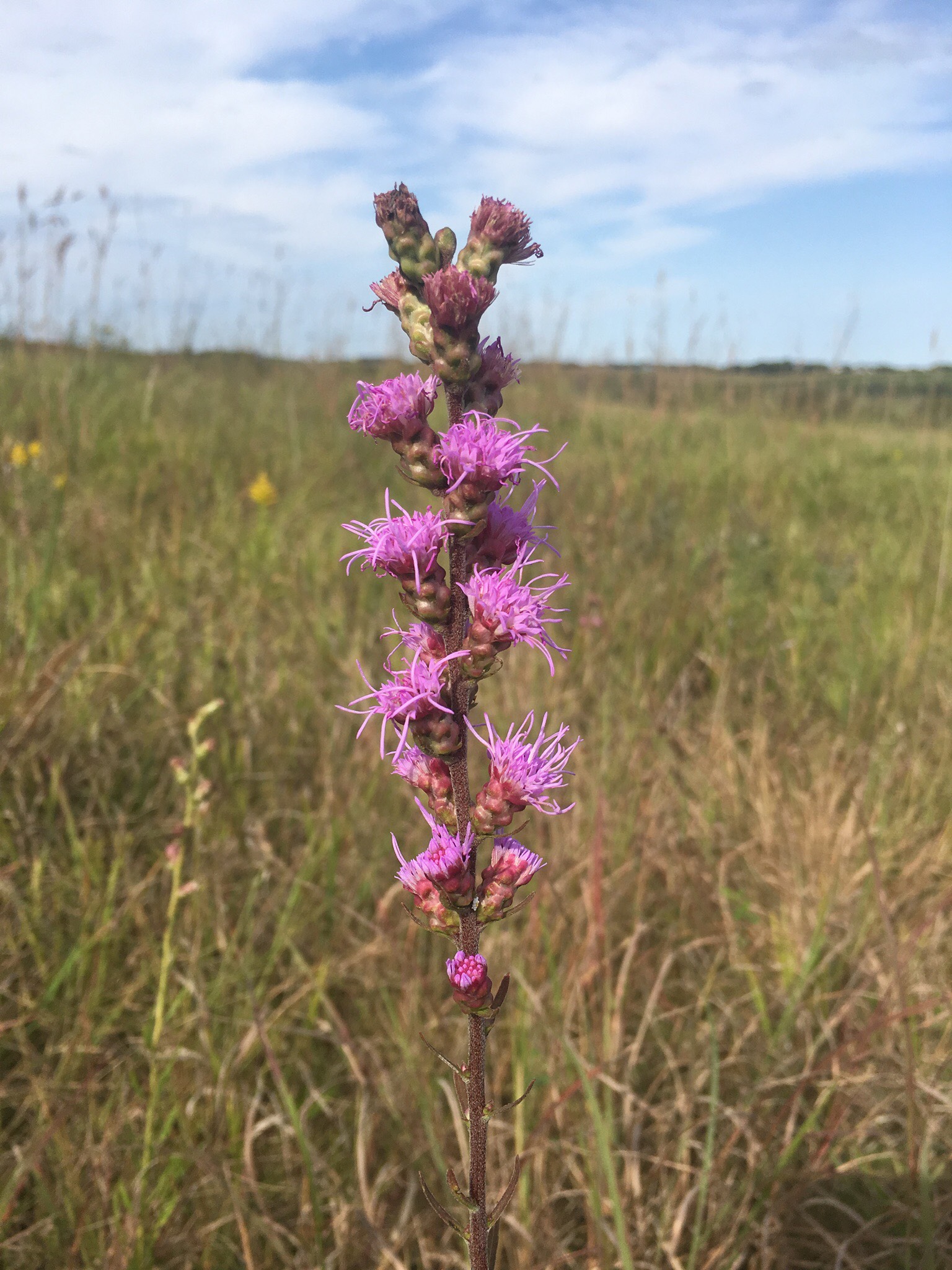
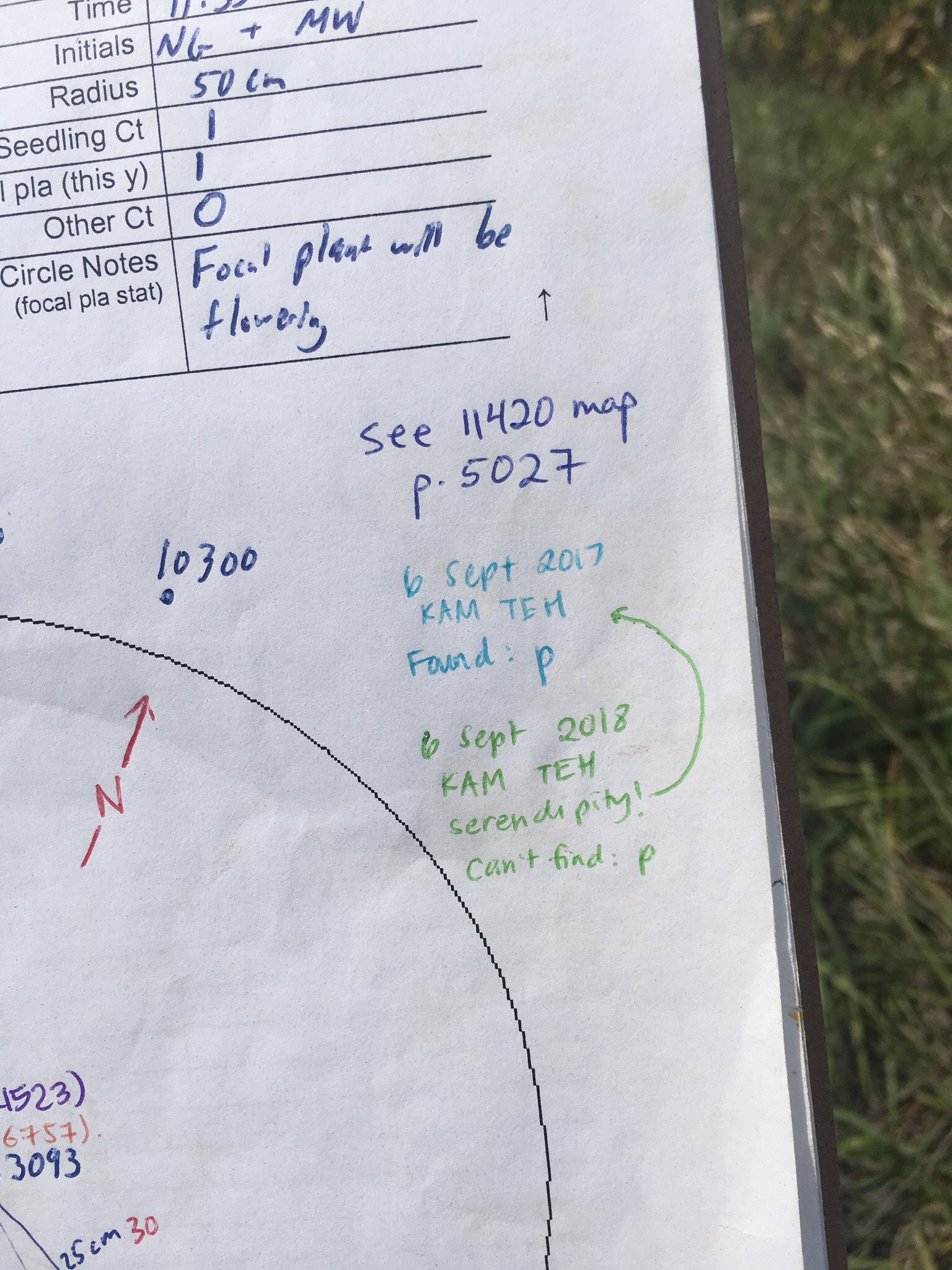
sling attack at eri this morning  Artemisia frigida at Loeffler’s Corner West! late bloomin’ liatris at lce Serendipity! Nessman sling!  Before and after: I harvested a 13 + 1 headed plant at p2 today! The beautiful late-season walk to p2! Sorry the daily flogging has been irregular these last few days. Since our last entry, we’ve been harvesting Echinacea from p1 and p2, sling-ing, p8 rechecks, and field checks. Lea has been working on demo, phenology, and surveying nearest neighbors along her spp transect, and Kristen has been moving traps and measuring soil and vegetation. We’ve been busy!
I’m so happy to be back in MN as our fieldwork for 2018 finishes up! There has been plenty to do, especially with harvest gearing up. We started out the morning finishing flagging p8 so that it will be easy to avoid Echinacea when we want to spray the Ash trees. Then, after a couple rows of harvesting p1, we had an early lunch so we could go help Kristen take down her emergence tents. We finished the day off with a long session of harvesting p2. A majority of the heads are ready for harvest, and a lot of them have lost achenes/entire heads, likely due to predation or the storm on Monday.
View of P8 from row 19, with Andy harvesting in the distance. I haven’t been here since burning in early spring and I’ve really missed it. Muscle memory has kicked in and I am getting into the rhythm of fieldwork again. Excited to be back and experiencing the late season prairie again!
The very damp morning began with flagging p8 on each nail that was spaced 1 m apart. A then very interesting meeting with Joe Montoyne from NCRS who provided us with much insight into prairie restoration and some local history of local prairies. After lunch Michael, Tracy, Andy and i wnet to p2 to harvest more flower heads. As the summer comes to an end i am so appreciative of the opportunity i have had this summer with the Echin Project and the group of quality young people here. Rest assured citizens, these kids will be our community leaders, parents and professors leading us into the next generation at a when the world needs such an intelligent thoughtful group in charge. I have also gained an appreciation for what we have been blessed with in our very own west central Minnesota. Everyone is within a few minute drive to a prairie with a diversity that may go unappreciated until you spend some quality time walking and observing what the prairie has to offer. Our zoo is right here. There is a diversity of plants and insects that will require thoughtful consideration of how we choose to treat the soil and water. It may be difficult to imagine that not too long ago west central Minnesota was acre after acre of prairie.
Hello, Flog!
Monday was, unfortunately, a rainy, rainy day. Well, okay, maybe it started out just a slightly rainy day. But the kind of rain that makes it just impossible to do any dampness-sensitive research. We started off the day with the usual moist trudges through the ever-present big bluestem, and even managed to complete a few of the many field rechecks we have to do.
What are field rechecks you might ask? Sometimes, we look over the data from a summer and go, “Huh? What? How did this happen?” Our data, frankly, just doesn’t make sense. Sometimes one person will look at an area and say “There’s one plant!” and another might say “There are six plants here!” When we look at this data later, we need another opinion as to how many plants are there. And in comes field checks! (They’re particularly easy to do because they require the least walking, and therefore the least wetness.”)
Now, after lunch, picture Michael, Andy, and Lea poised to do P2 harvesting. Imagine them with bags and clippers in hand, ready to save achenes from the cruel fate of the ground. Imagine the cars bursting with egg cartons and data sheets full of LetNos (the identifiers we use each head).
Now imagine rain.
You’re not imagining enough rain, imagine more!
Well, it rained enough to make harvesting impossible. So instead of experiencing the thrill of saving a head from dropping achenes, we did some coding in R and called it a day.
Here’s to less rain this week!
Michael
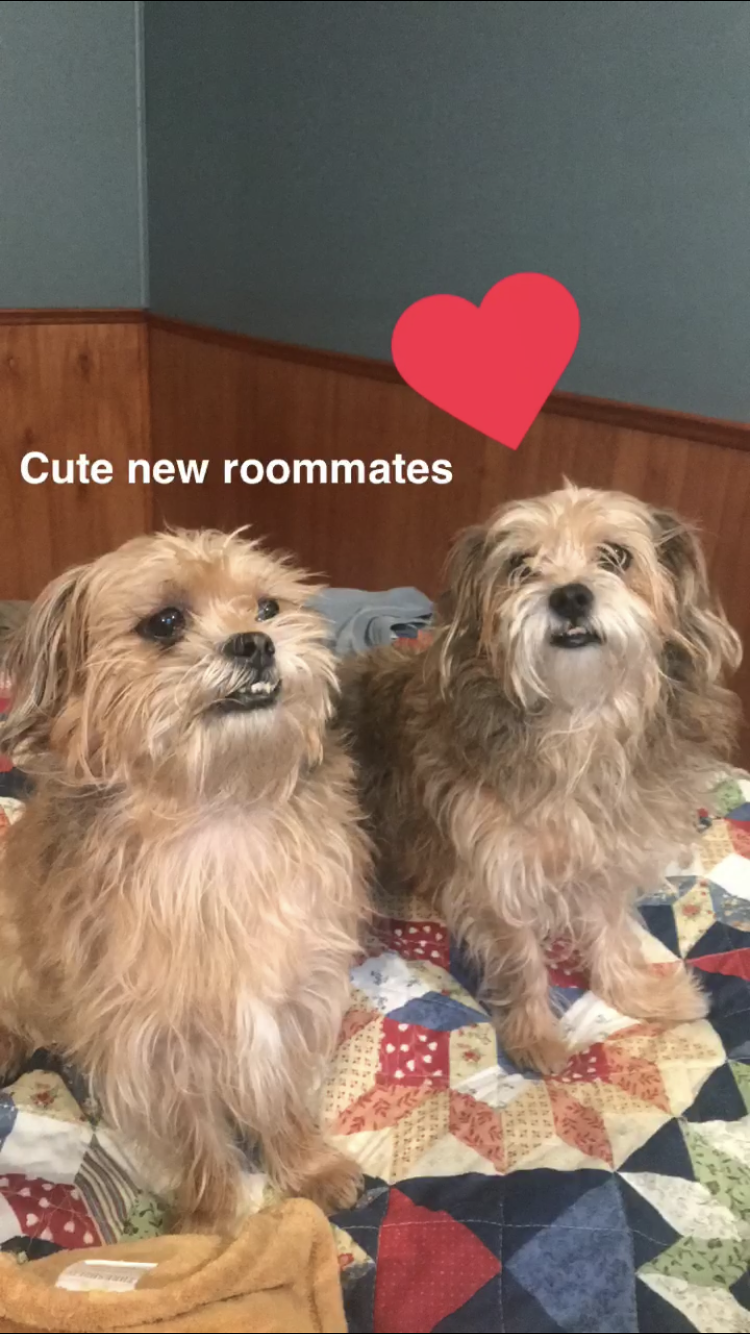
On Friday it was Riley’s last day so we knew going into the weekend that it was going to be rough. Luckily we have a few new roommates around to help us deal with the loss of the majority of the team.
 It’s okay that everyone has left us because we get to enjoy time with the famous Bellamy Salami Odysseus and Huxley Leopold. Furry roommates are the best! On Saturday, the weather was nice. Michael came with me in the afternoon to help move traps at my sites near 55 highway. It was hot and humid, but it went about twice as fast with some assistance.
The tents on the hill at a remnant prairie along highway 55. Saturday night we relaxed at Andes and watched a few movies: The Florida Project and Children of Men. Both fantastic films to round out our evening!
On Sunday, the morning was hazy and cloudy so I decided not to move traps. I spent most of the day inputing data in order to compare data frames and realized I have a lot of data entry to catch up on! But with the help of a handy function (written by Will) it’s all much easier on all of us. We also got to talk to a few of our favorite Wooster students (Mia, Zeke, and Evan). Mia virtually showed us around the new lab digs at Wooster. I also got a number of critical updates on their exciting first week back to school – new roommates, sneaking onto roofs, and class schedules. I suggested we Facetime every Sunday for the rest of the year. I am not sure if they felt as willing to commit to this plan as I am. Regardless, it is no surprise that CoWBee was already working hard in the lab on their first weekend back in class.
Sunday evening we relaxed at Andes and watched The Glass Castle, which is the movie depiction of an autobiography of the life of Jeannette Walls. It’s a great book and would highly recommend (although be prepared because it’s a tear jerker!)
We are sad to lose Andy this week but are so excited because Tracie will be here on Wednesday! Stay tuned for more exciting updates this week as things roll on with Team Echinacea 2018.
This morning the much-diminished Team Echinacea (Stuart, Kristen, Lea, Michael, and I) gathered at the Hjelm house to start the day. Lea went to Staffenson Prairie Preserve to measure the flowering phenology of Liatris and Solidago plants. Michael and Kristen began to prepare experimental plot 8 for management in the coming year. The team will treat rogue Ashe trees and collect and broadcast the seeds of several prairie plant species in this plot. This is part of an ongoing effort to ensure that the plant community within the plot is consistent throughout.
Meanwhile, I assessed the leaf damage and senescence of plants in the aphid addition/exclusion experiment in p1. This was the final component of the fieldwork involved in this experiment for the season, and the last step in my independent project before I begin statistical analysis. The next step is to gauge fitness differences between plants in the aphid addition and exclusion treatments by constructing an aster model. While it was exciting to finish this aspect of the project, I will miss spending time with my Aphis echinaceae friends.
Over lunch the team prepared for inclement weather by sharing our experiences of intense weather events. After that, Kristen presented an update on her master’s project. She shared some intriguing preliminary results about the nesting preferences of native ground-nesting bees. We are all looking forward to the results of her study! Due to the rainy weather, the team was ready to call it a day after Kristen’s presentation. We held a short meeting to plan next week’s schedule and then headed home for the weekend.
|
|