Today begins the field season! We had many activities planned to get everyone off to a good start for a productive and learning-filled summer.
introductions
safety training
getting gear
visiting sites
lunch
mapping orientation
directed observations & flogging
scheduling rest of week
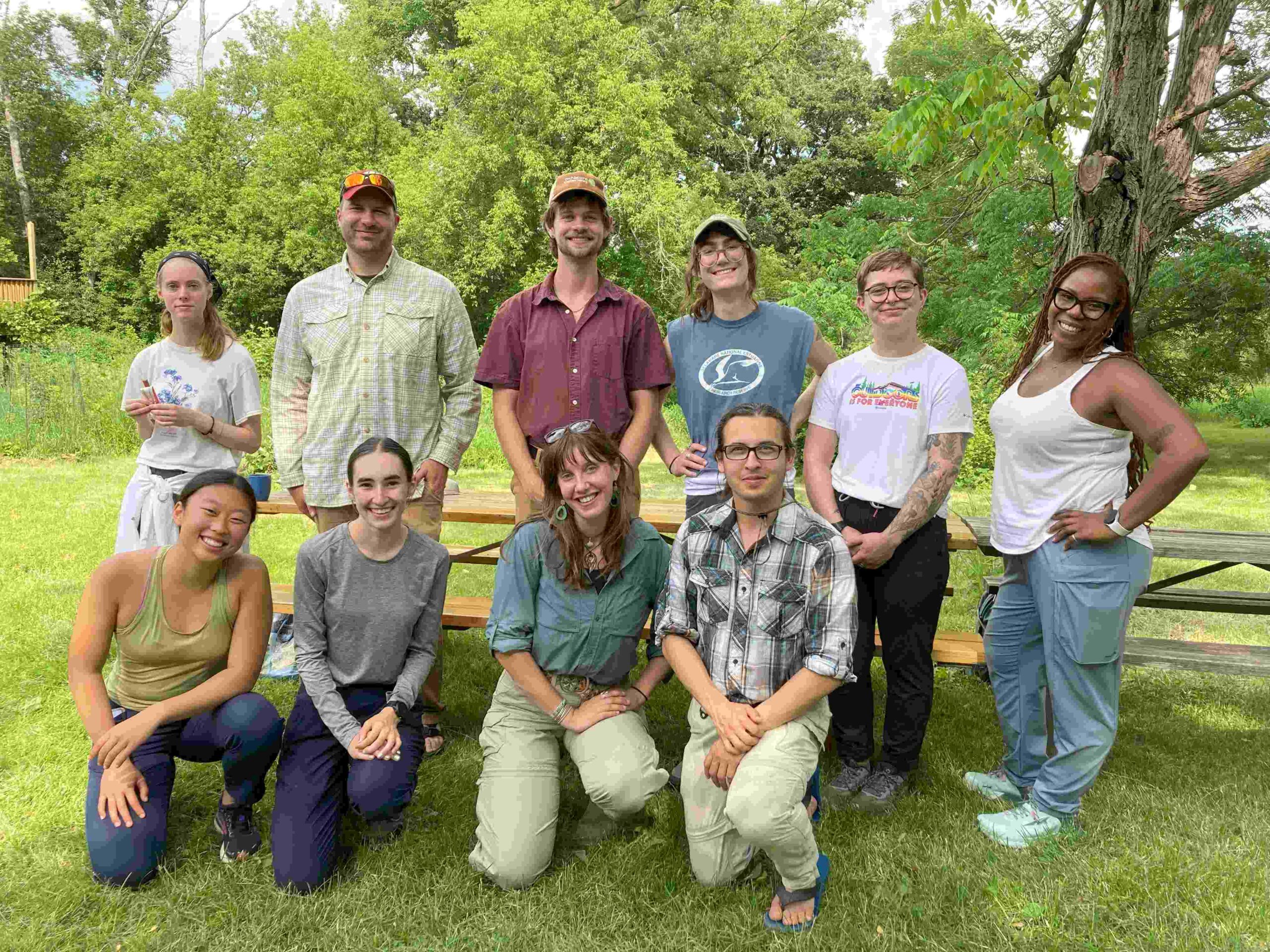
We wrapped up with watermelon and a group photo:
First row: Ning, Hailey, Abby, Liam. 2nd row: Emma, Jared, Ian, Wyatt, Maddie, Brittany. Not pictured: Zach & Elise will start next week because their schools run late. Ruth will come up Thursday or Friday. Stuart took the photo.
LCW- The study plot sits at the intersection of two roads, one of which is fairly busy. There were copious amounts of tall Brome grasses (cool season plant), and Lead plants (legume). These plants were observed throughout the study plot. There were also prairie roses lining about 5 feet of the roadside. We also observed one Echinacea angustifolia plant near the roadside. The study plot also contained trees and shrubs. It is suspected that this area was not involved in a recent burn. My group came to this conclusion based on the presence dried plant matter under the living plants. If there were a recent burn in this area, this would not be observed. There were not many flowering plants in this area. I hypothesize that it may be too early in the season or there is a lack of pollinators in the area.
YOHW- The study plot is located in an area with less observed vehicle traffic. There were no tall grasses or dead plant matter. We observed very few identifiable plant species. I hypothesize that this area was burned in the spring. In conclusion, these sites were vastly different. We observed far more plant species at the LCW study plot likely because the area had not undergone a recent burn.
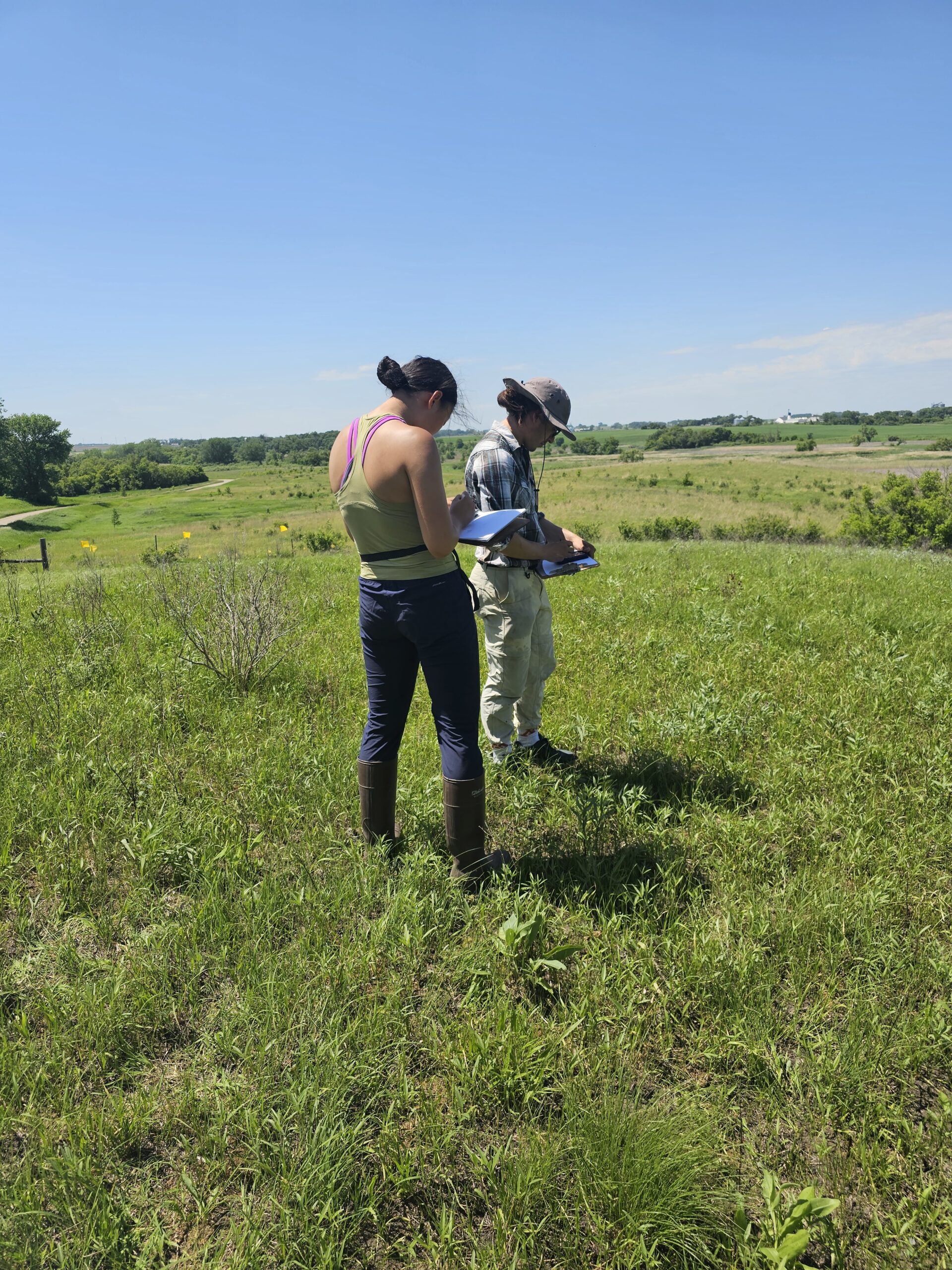
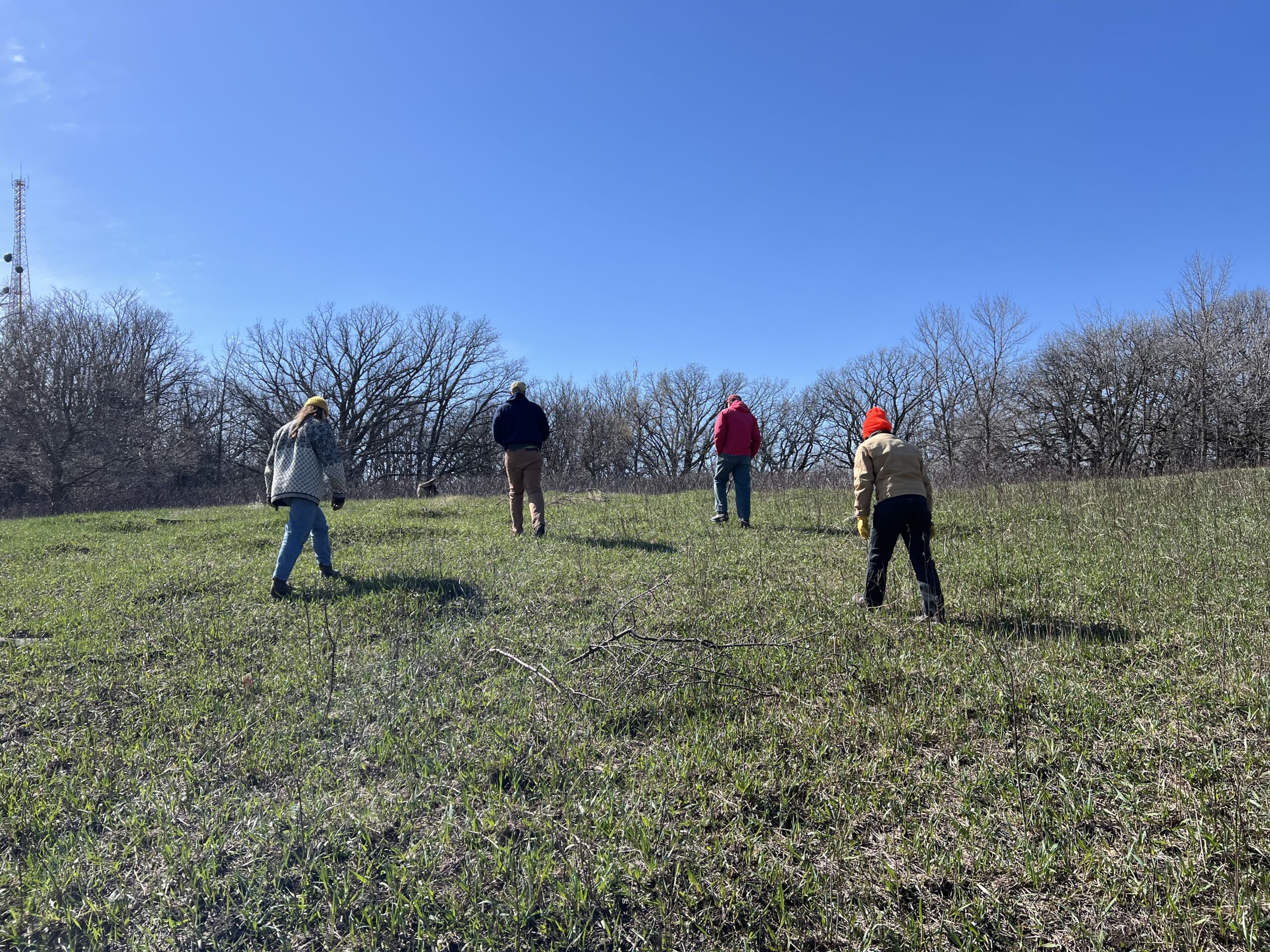
For our first day we did direct observations with the goal of practicing your observational skills along with plant ID for our four plant groups of focus: C3 grasses, C4 grasses, legumes, and forbs. The group I was placed in looked at sites ALF East and ALF West.
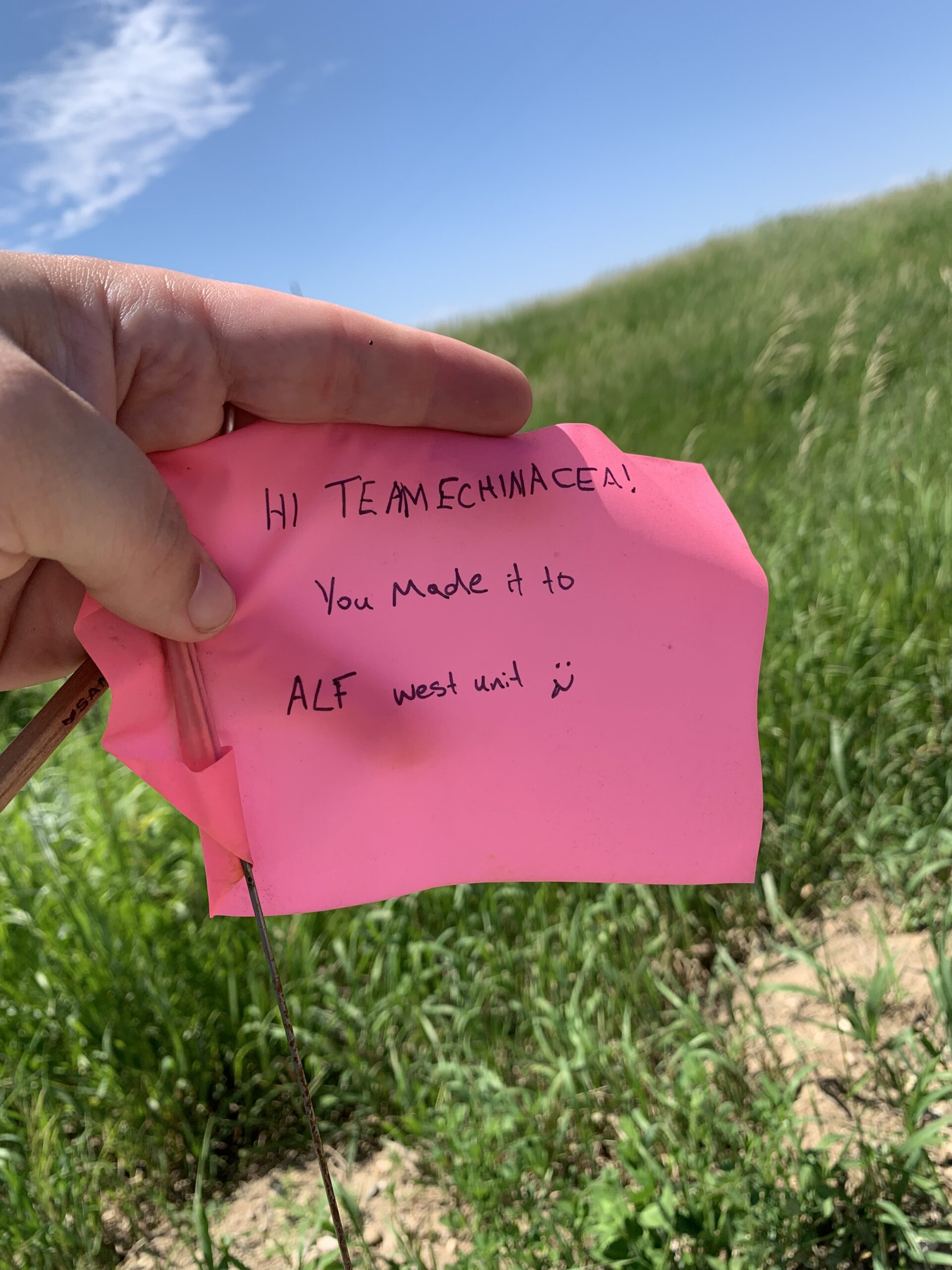
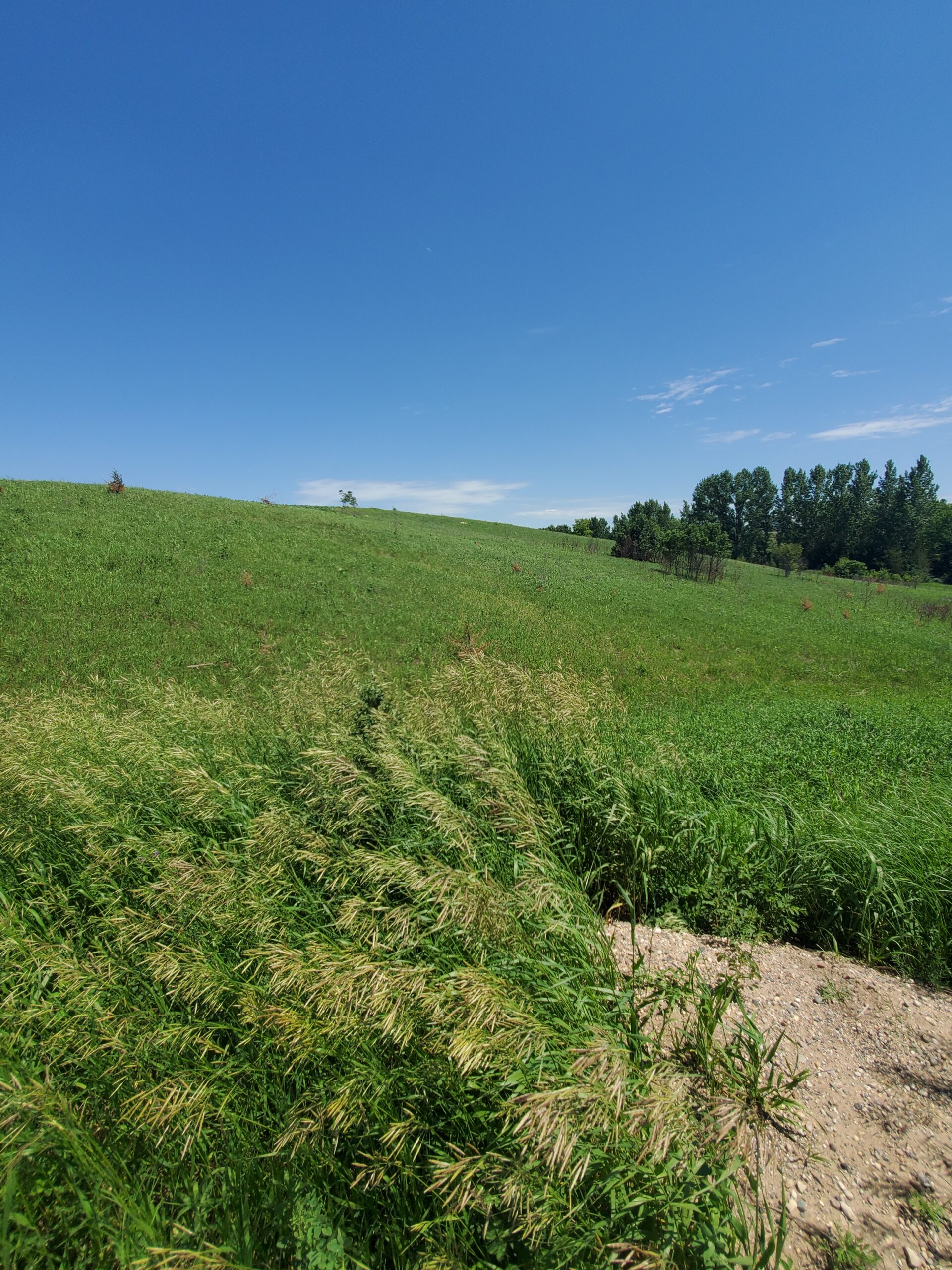
ALF West was our first stop. This site featured a fence line and natural hills that has been cut through by a gravel road. The site consisted mainly of C3 grasses. In the ditch and closer to the road we were able to see a handful of different legume and forb species, but the site lacked diversity in general. Due to this lack of diversity and over taking of C3 grasses the site appears to have not had a prescribed fire for a few years. Fortunately, we were able to see some emerging coneflower which is always exciting!
ALF East was very different in diversity in comparison to ALF West. Based on visual observations diversity was a lot higher and most of the plant species found belonged in the legume and forb plant groups. With diversity being so much higher, and the plot featuring several plants that have appeared to have been scorched by fire it was our assumption that ALF West had experienced prescribed fire in recent years. The landscape of ALF West not too visually different other than it featuring a corn field behind the prairie area unlike on ALF East.
My name is Liam Poitra and I am excited to be joing team echinacea for a second consecutive year. This summer I am hoping to deepen my knowledge further about the plant and animal interactions that make our prairies such dynamic ecosystems. For the first day with the whole team back, we spent the morning touring sites with Stuart and learning about common plants on the prairie. In the afternoon we worked as small groups setting out to remnants to familiarize ourselves the outcomes of burning on the prairie. Brittany, Ning, and I set out to observe 2 prairies 1 burned (yohw) and 1 unburned (loefflers corner). Yohw burned this spring was very short still all the plants were ankle height or lower and the soil was completely exposed without a thatch layer to cover it. However several plants showed great growth such as the heart shaped Alexander which seems to have already put out many leaves and was by far the plant to return the most vigorously at the site. Loefflers corner on the other hand showed plenty of brome and a thick thatch between plants. Both places seemed to have similar species however the forbs were easier to pick out at yohw
Today we explored two prairie sites, one which had been burned recently and one which had not. It was startling to see the dramatic difference in the plants inhabiting each site, and the mosaicism that shows in the landscape of the burned site.
ALF West, the site that hadn’t been burned, was overwhelmingly dominated by non-native brome grass, while at the site that had burned, ALF East, we observed more diversity in grass species, as well as a very noticeable absence of the brome grass where it looked like the site had burned. We also noticed the impact of the fire on shrubs and trees in ALF East, and compared that to the new saplings coming up in ALF West. There were two Echinacea angustifolia plants that we observed in ALF West, growing in the gravel on the side of the road.
The shiny heads of the brome grass in the ditch bordering the road, with the burned area behind it
The Alf west site had multiple echinacea angustifolia plants and a lot of tall cool season grasses. There was a natural hill, fencing, power lines, and a road by the area.
ALF East
The Alf east site had no echinacea angustifolia plants that I could see, but I saw a lot of diffrent forbs and legumes. There were also many cool season grasses which where more tall and dense near the road. There was a natural hill and trees in the area. I also saw signs of burning, for exsample there were left over burnt shrub branches and the plant life was more diverse.
Conclusions
The two sites differed. The west site which had echinacea angustifolia was less diverse compared to the amount of diffrent plants seen in the East site. The ALF East site was clearly the site that was burned. The leftover burnt branches and the great amount of plant diversity compared to the West site shows this.
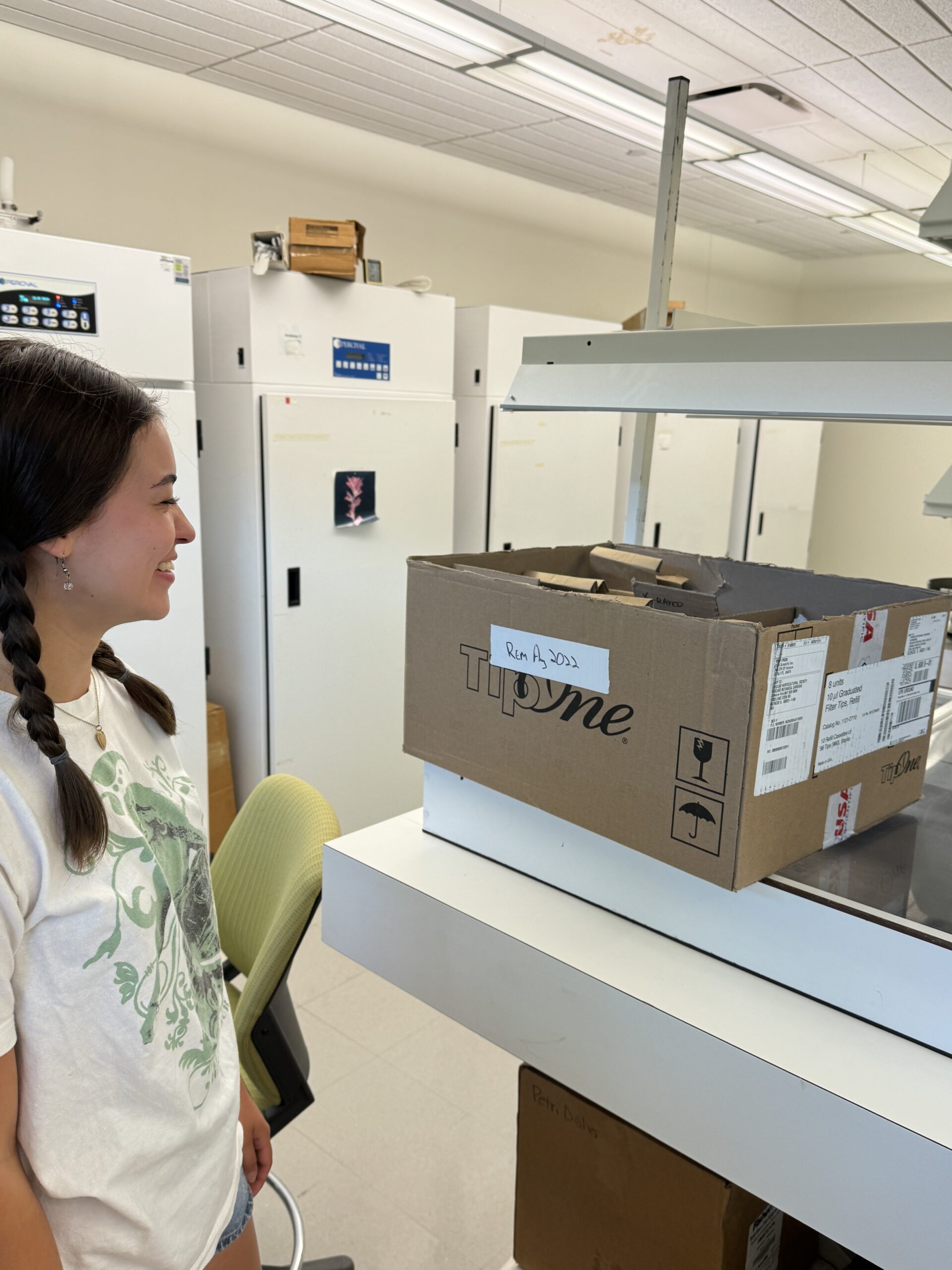
NU Work Study student, Maria, took on the task of xraying Andropongon samples for our project investigating fire’s impact on reproduction in big bluestem (Andropogon gerardii). We were about two samples in when we noticed that either this “lil box” containing samples was either very big or Maria had gotten very small.
Normal Boxes you’d find around our labMaria with giant box unlike things we commonly see
Members of Team Echinacea are freshly returned from a successful burn outing! We completed five experimental burns during our trip to western MN. A major win for the experimental design of our MN ENRTF funded research on prescribed fire and ground nesting bees as well as for conservation! Here is the scoop:
Late Friday night we got to the Hjelm House and were lucky enough to catch a glimpse of the Aurora Borealis. In hindsight, I think this auspicious sighting boded well for our good fortune in burning conditions.
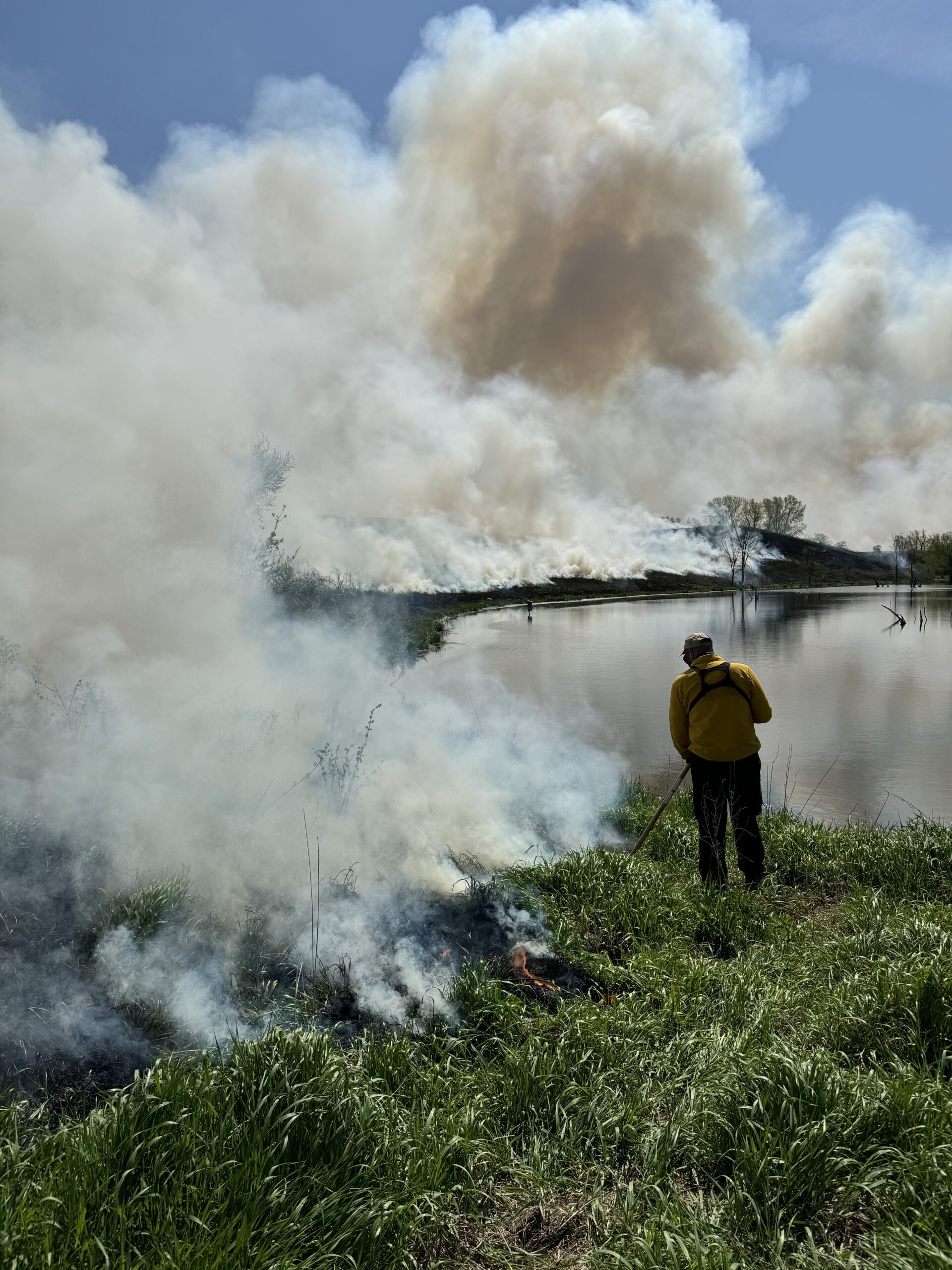
On Saturday morning we headed to Torgeson’s to burn the northern unit. Because it was predicted to be a dry day, we got an early start and were ready to burn by 10:45. We got to see lots of spring flora before the burn: pucoons, violets, sedges, pussytoes, etc… These plants will be even happier next year. With help from Lee, the burn went very smoothly. Torgeson’s is a hilly site, so the burn was slope driven and we had a great view. Things are pretty greened up in the area, so the burn was quite smoky. USFWS, who were burning a big restoration right next door must have been burning cattails- look at that thick, brown smoke coming from the other side of the road. Almost like we are having bonfires at neighboring campsites. Cute!
Jared secures the break at torgen before we stand back and watch the fire burn out.
Next we ventured into Grant County. No burning there- and if you’ve been following along that may not be a surprise to you. So it was back to Douglas Co. After lunch the crew headed to hutch to burn the western unit. Another Hilly site. We prepped our breaks and were ready to go! Burn number 2 down!
Sunday was a no-burn day because wildfire smoke from Canada was hanging over many counties in MN. A great day to get work done on the porch and venture into Morris to revisit old haunts. We anxiously awaited the next day’s updated report on burn restrictions.
Monday morning we got the go ahead to burn in Grant county!! We called in our backups (former team members Daytona and Liam plus a few of Liam’s friends) and headed to Yellow Orchid Hill West to train our first time burners in at a smaller site. The wind was squirrely but our burn was successful and we were just a hop, skip and a jump away from the revered hulze unit. After 3 failed attempts, was this finally our day?
Stuart and Jared watch the last flames burn out in the center of hulze.
Yes! Drive down highway 55 and you will see for yourself! A hilly expanse of charred earth! A sight for sore eyes after the last burn way, way back in 2003.
By this time, restrictions were lifted in Douglas Co. and the crew headed to Nice Island for a final burn before calling it a day and heading back to the farmhouse. Over Jean’s rhubarb cake we envisioned a utopian or maybe dystopian future on team Echinacea where we have a high tech call center and everything is drone operated. We’ll keep you posted on the call center and the rest of the burns we hope to get done this season.
Hello my Big BlueFamily, sorry for my lack of an update last week! Totally slipped my mind. Weighing is done, and the dataset is almost ready, I’m super excited!! People were kind enough to finish weighing for me because I am highly allergic to my study species…. oh well. We are moving on to concreting the question I want to ask and my hypothesis. Currently I have two different questions that I need to decide between. One is looking at the impact of black smut fungus on reproductive effort as measured by seed output, and the other is looking at the difference in black smut fungus’ impact on plant health between low and high density areas. There’s a lot of variables here that I need to figure out, like how pollination impacts seed output, as well. Next week I believe the dataset will be ready and I will be able to start my analysis, which is exciting!
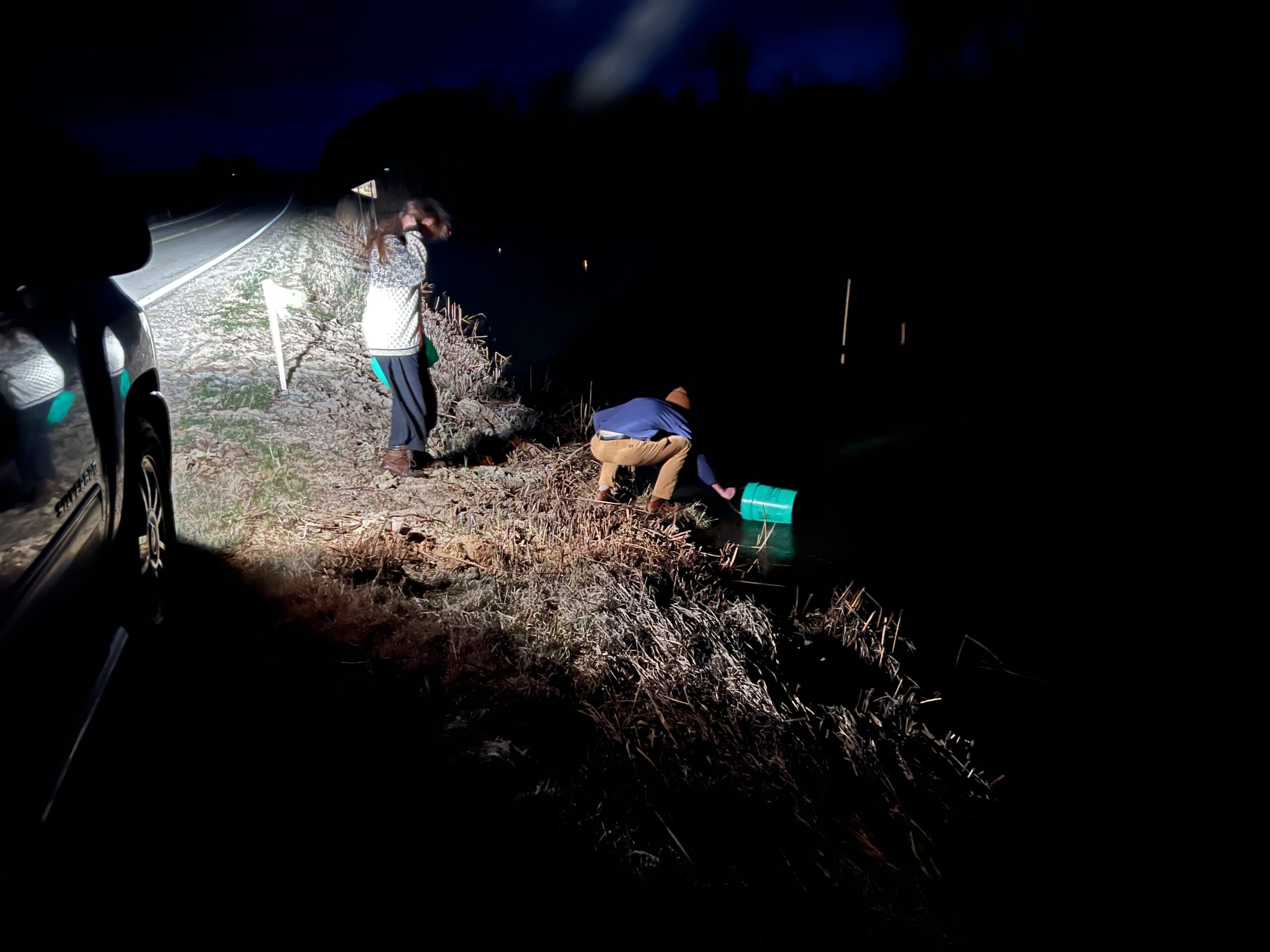
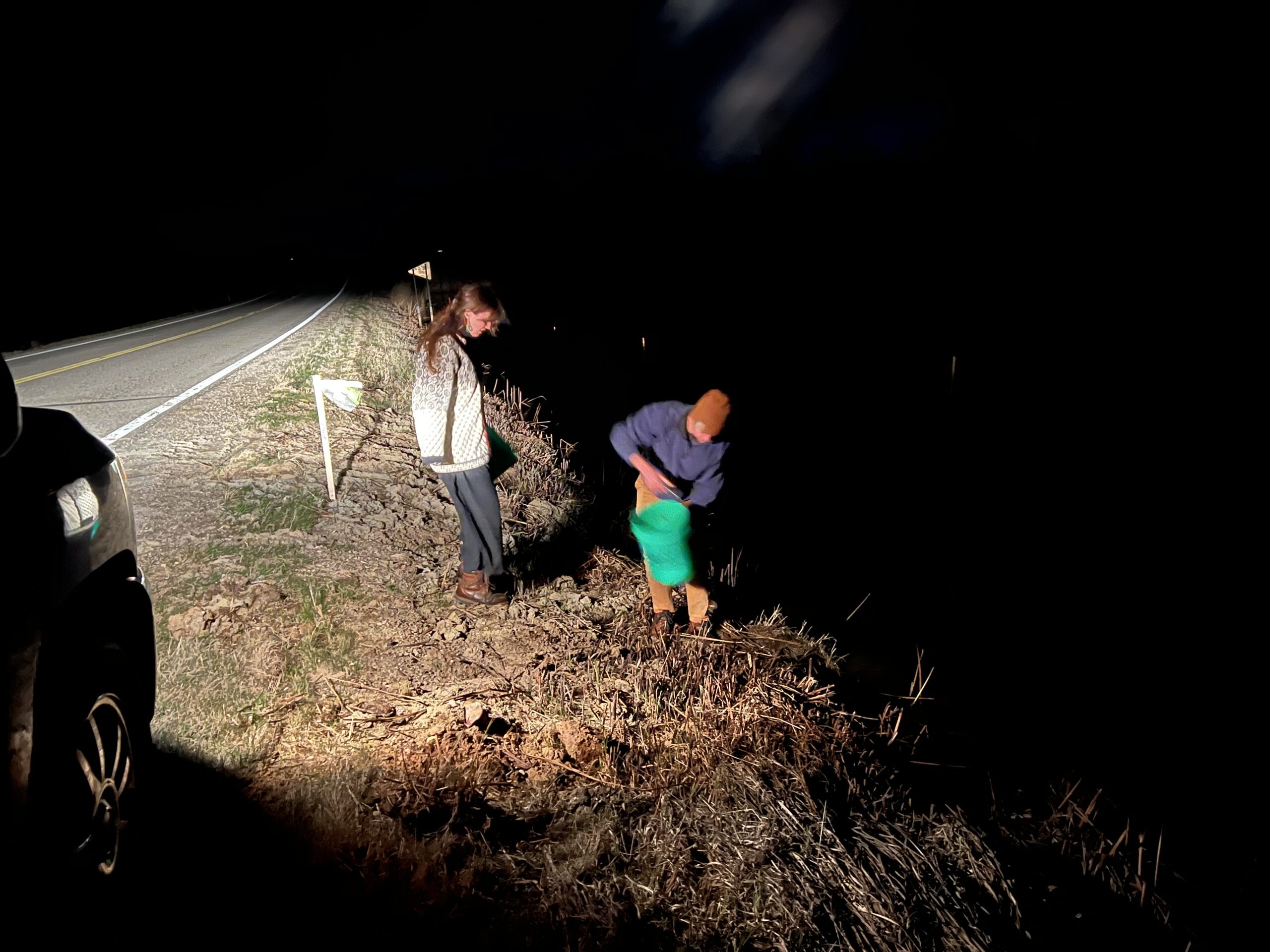
This weekend Team Echinacea had nothing short of an adventure. Expecting good burn conditions on Saturday, Sunday, Tuesday, and maybe even Wednesday, we packed our bags and headed northwest from CBG. After the quintessential falafel stop in the Twin Cities, we arrived at Hjelm around 9pm. Before we could hit the hay, however, we had one important issue to resolve: the farmhouse didn’t have any running water. We’d picked up some jugs of drinking water along the way, but we decided that it might be nice if everyone also got a turn to flush the toilet. So without further ado, we went and collected water from the roadside in 5 gallon buckets to have around for filling the toilet tank. This operation looked totally normal and chill.
Here’s the scoop.Water borrowers Abby and Ian make their getaway.
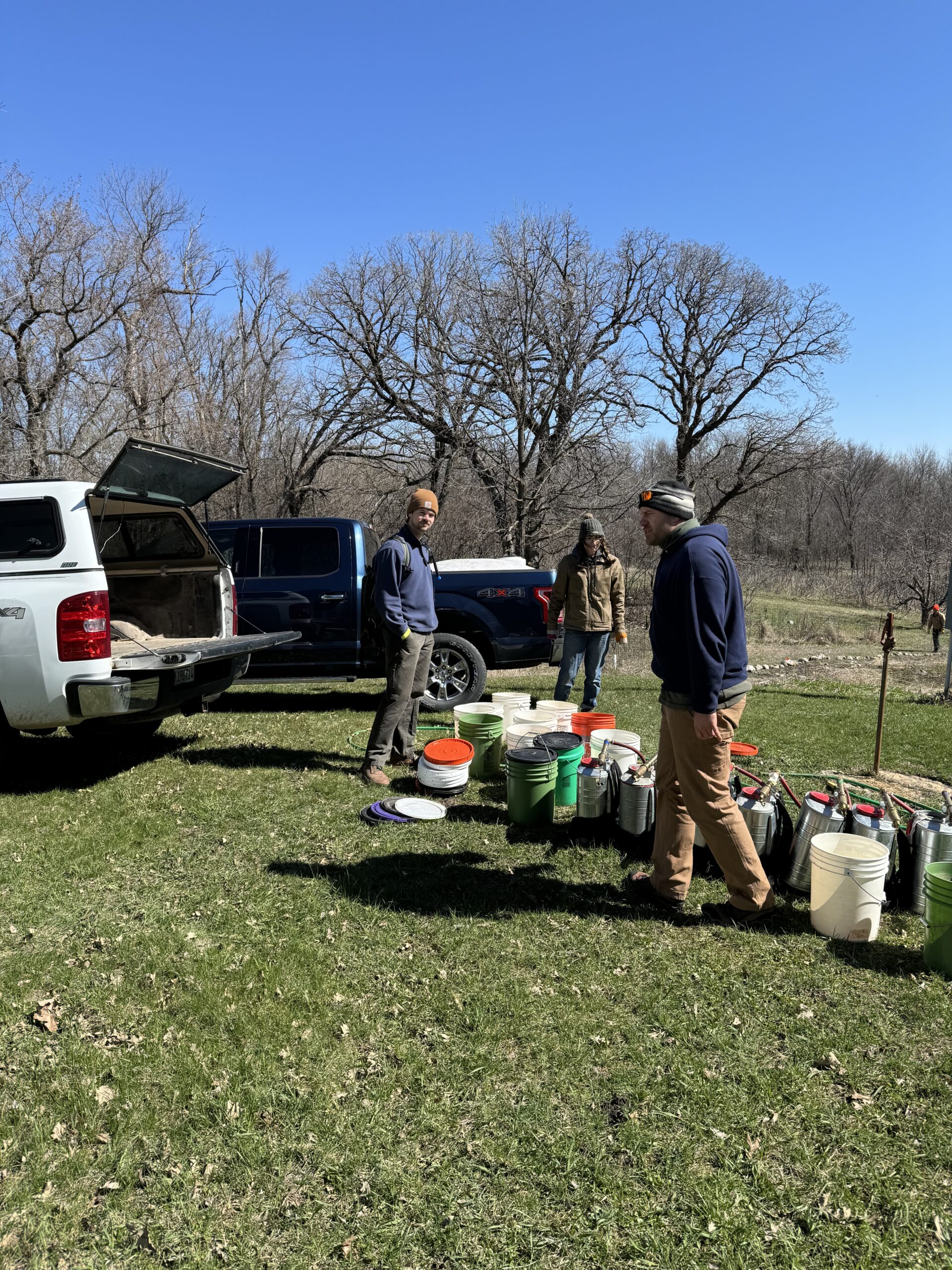
After eating breakfast and topping off the septic tank with pond water the next morning, we prepped for a burn at the hulze site. This involved filling water packs/buckets/tank, raking and mowing burn breaks, prepping radios, etc..
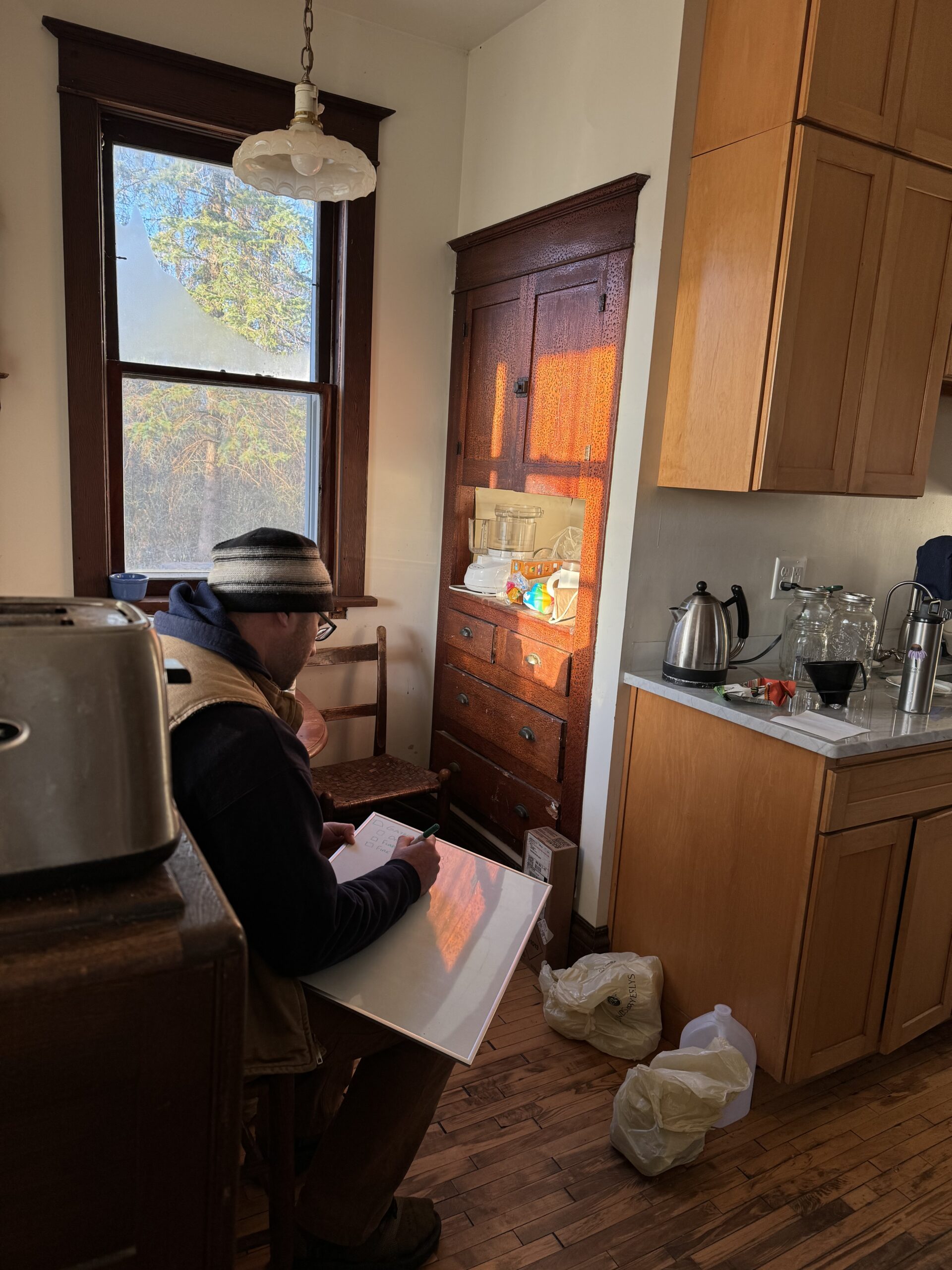
Jared plans out the burn on a whiteboard.Ian and I look on as Jared inspects our collection of water vessels.
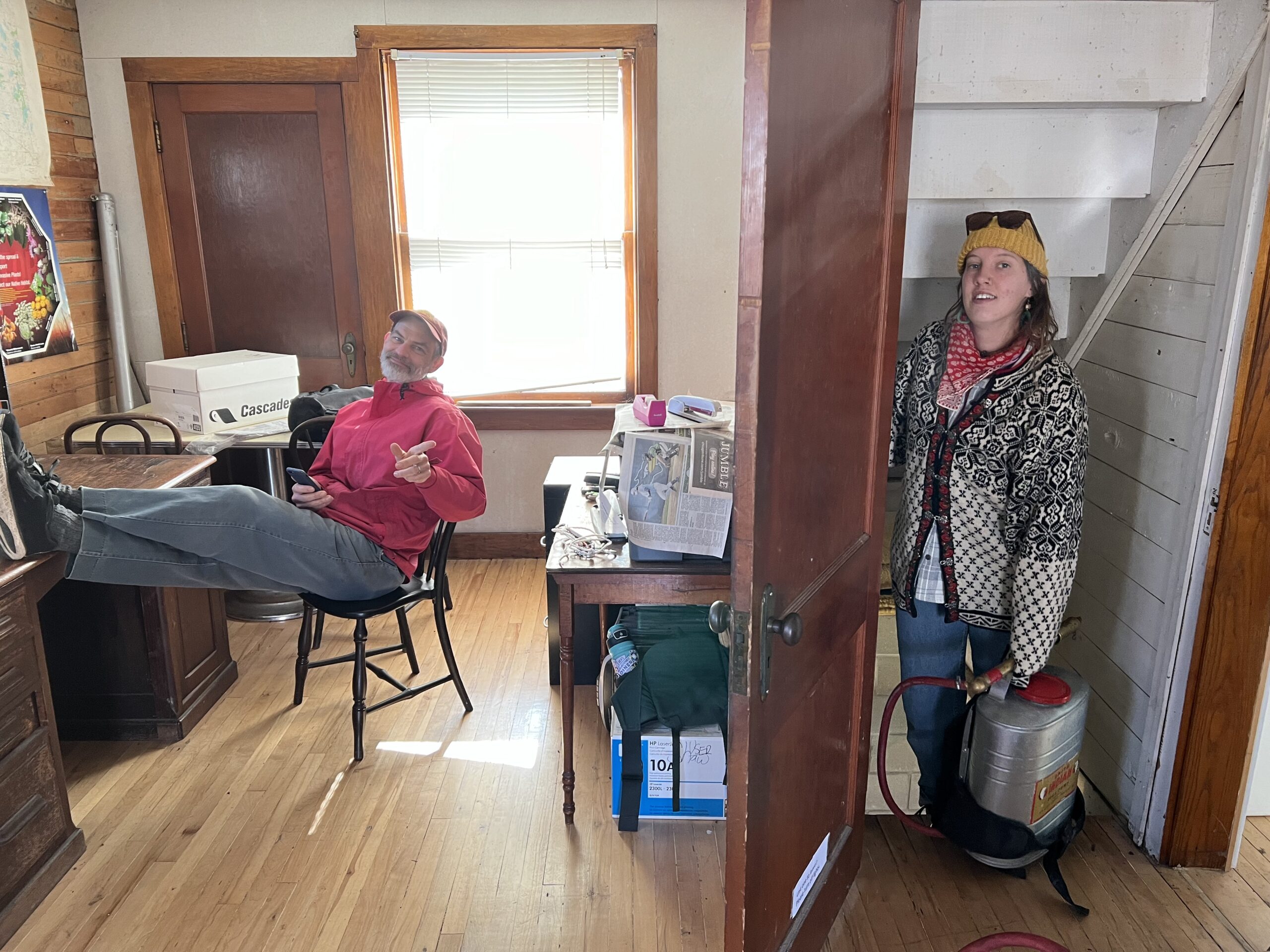
Once we finished our prep work, we returned to Hjelm and had a hearty chickpea meal. Yum! A classic! I like to add salt and pepper and paprika and olive oil and spinach and hot sauce to mine. This is also when our reinforcements arrived. This was a bigger burn relative to most of our sites, a whole 15 acres, so help was appreciated. Thank you Amy and Brad and Amy and Colleen! Jared briefed us on the mission, and we got to hear the frustrating tale about how we’ve been skunked at this unit two years in a row. Every time we’ve tried to burn it, it’s been called off last minute for one reason or another. Last year there was allegedly too much smoke from Canadian wildfires and we were told no go. Will this year be different? Third time’s the charm, right?
Wrong. Once again, after all of our prep work was complete and we were ready to light a test fire, Stuart called in the permit and was told to hold off. The county was concerned about gusts over 25 miles per hour, though that’s not what we were measuring at the site. We waited hopefully for over an hour for a call back giving us the go-ahead, and eventually gave in to the fact that there would be none. So we packed up and headed back to Hjelm. There’s still hope for burning this unit later in the spring, but needless to say we were slightly grumpy.
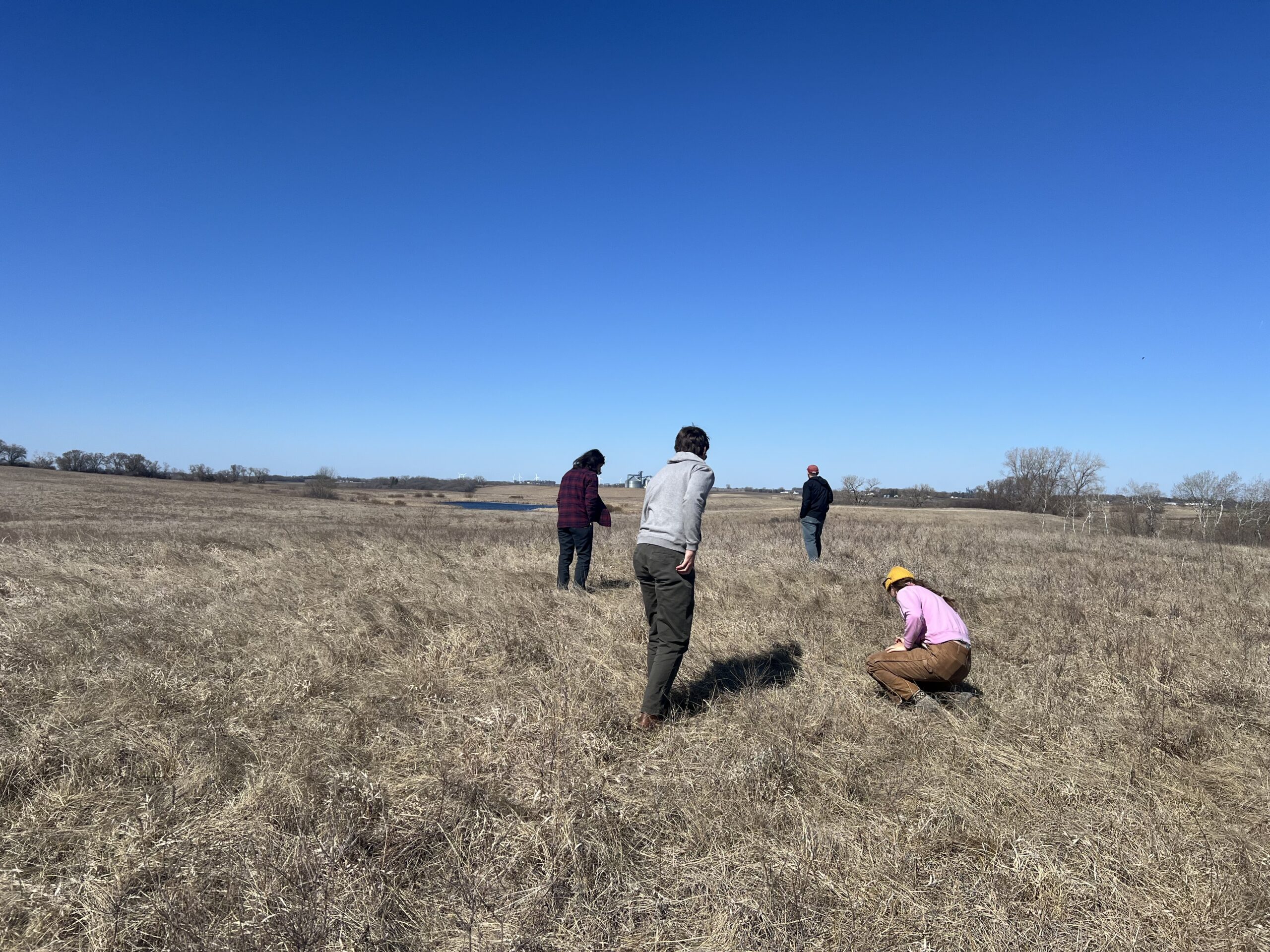
To raise our spirits, we took a walk around the Wagenius property to scout out areas to burn the next day and check up on places we had burned in the fall.
Abby, Blue, Jared, Stuart, and Gretel walk through the southeast corner that we burned in November. Hope you like galium! They were plentiful here (as was brome).
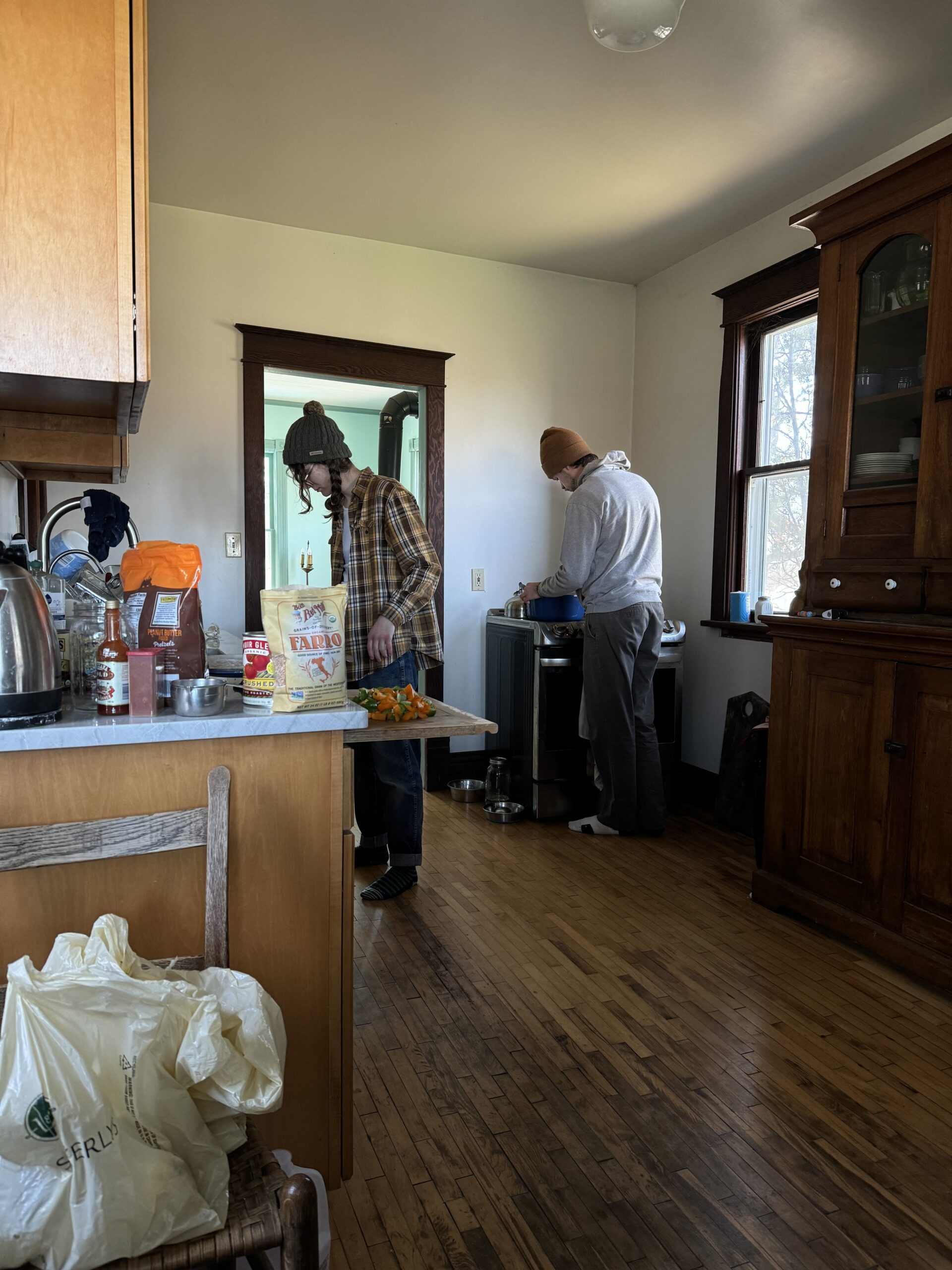
For dinner, Abby, Ian and I made Abby’s chili recipe (the secret ingredient is farro (and paprika) (and dark chocolate) (and love)) and Stuart and Gretel made their cornbread. Yum again! I mixed my cornbread and chili together with butter and hot sauce and honey and, upon Abby’s recommendation, apple cider vinegar, which is now an essential chili condiment in my book.
I do something cooking related while Ian stirs the pot.
Having full tummies and hearts, we went to bed with the knowledge that Jared and Stuart were excited about burn conditions tomorrow, and thus, so were we. But you know who wasn’t? The state of Minnesota. That’s right, we woke up bright and early to find that the DNR had placed burning restrictions on much of the western part of the state, including the counties we conduct our burns in. That means another day with no burns. And we thought Sunday would be perfect! ARG. This forced us to take a step back and consider our options. We didn’t have a ton of other stuff to do in the field, and the forecast for the next few days was getting more dicey. So, with great reluctance, we made the call to head home early. We put away burn equipment, packed our vehicles, and were on our way.
Stuart helpfully supervises as Abby caries a 40 pound water pack down a flight of rather unforgiving stairs to store until next time.
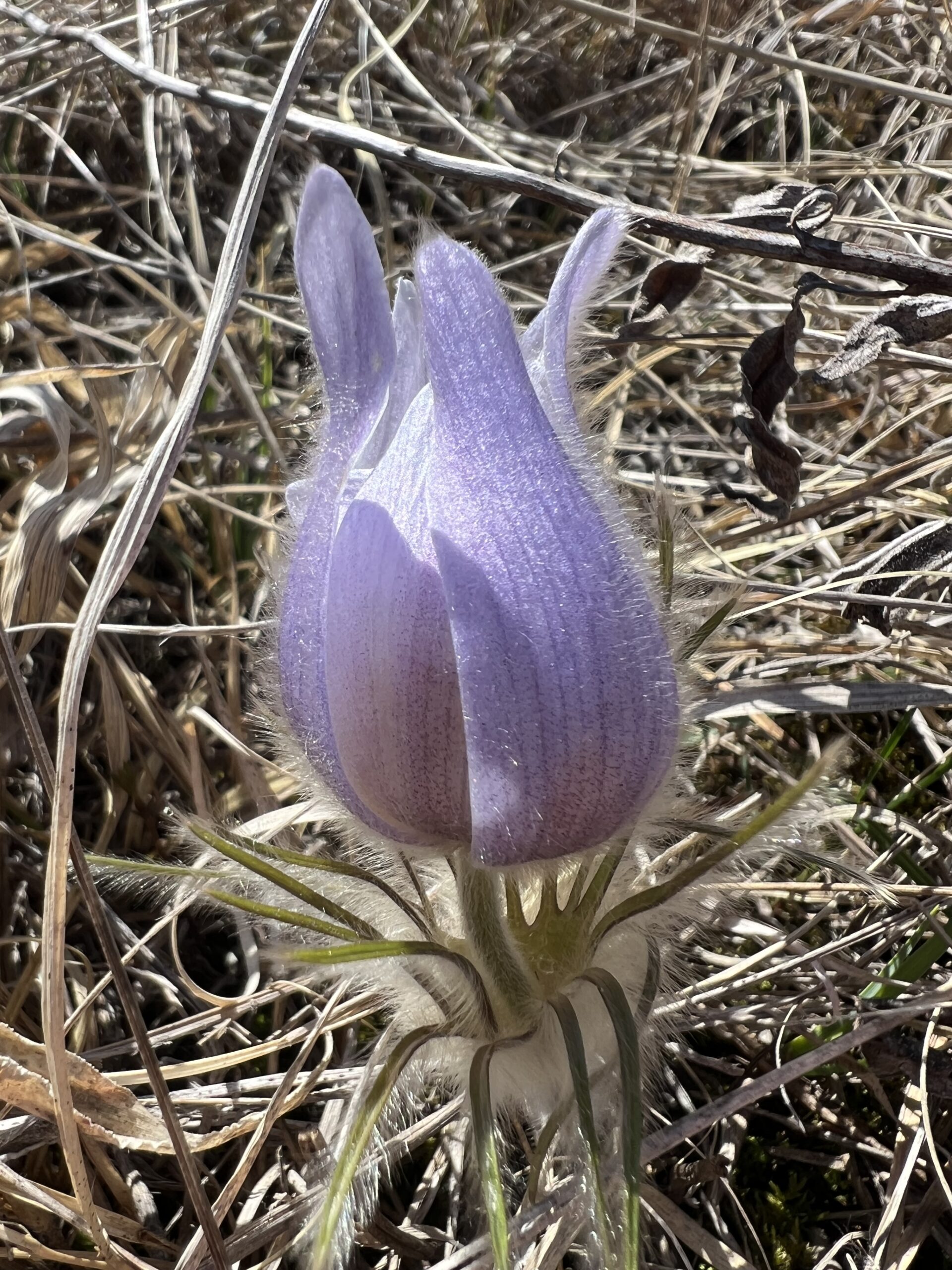
Not wanting to end our trip on a sour note, we stopped by Staffanson Prairie Preserve on our way out to see who was flowering.
The crew peruses the prairieLook who’s awake! A pasqueflower!
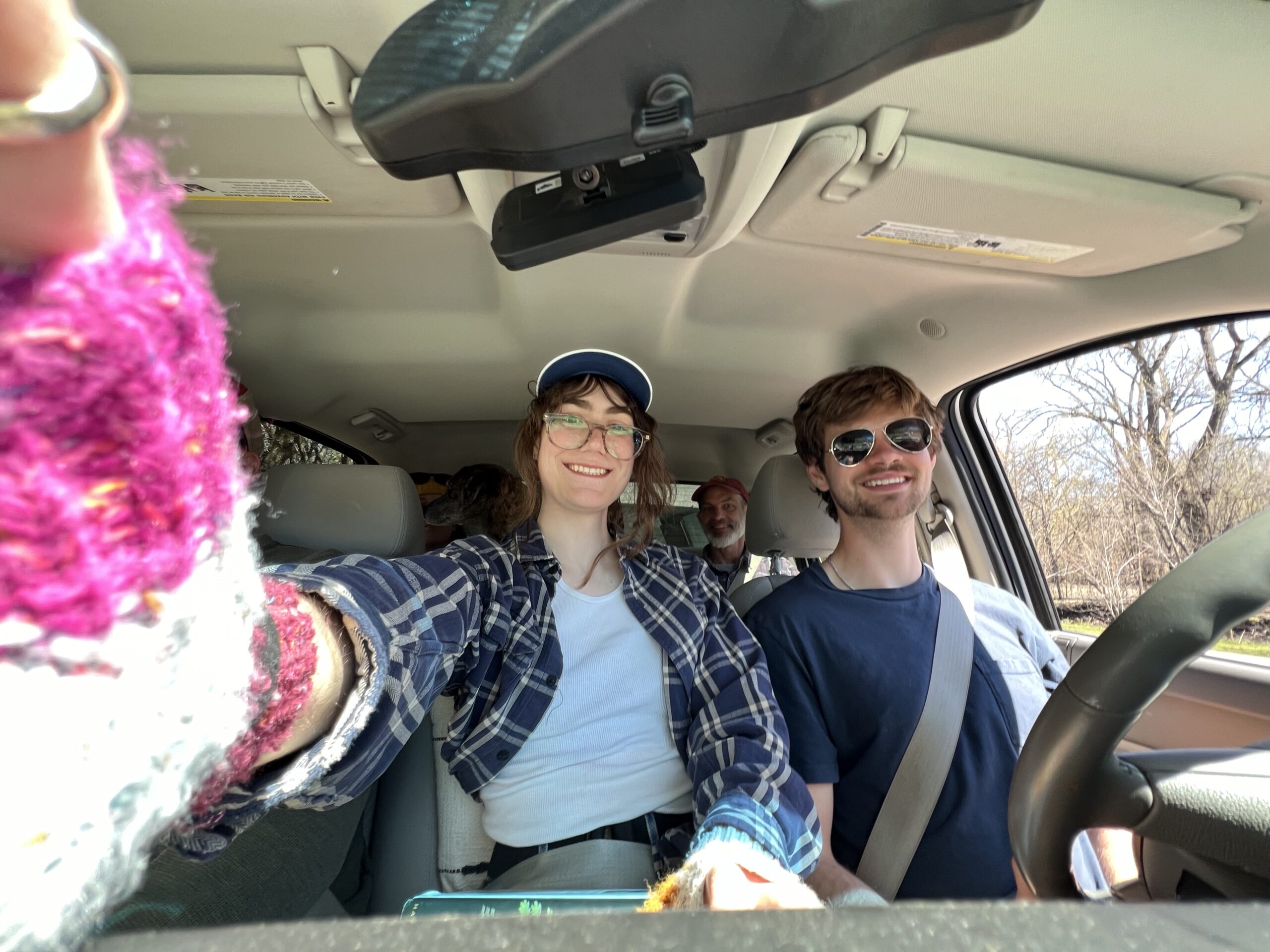
We stopped in the Twin Cities for lunch, donuts, and to drop off Stuart’s truck at his parents’ place for them to have handy. For those of you keeping track at home, that means we have a 7ish hour journey to make in one vehicle that will be carrying 7 souls (one of whom is a dog). This made for a tight squeeze, but we made it work.
I tried to take a selfie to capture the coziness of the moment, but failed. Ian and I are prominent in the front, and you can spot Blue and Stuart in the back. Behind me are also Gretel and Abby, and Jared is in the passenger seat next to me
By midnight, we’d all made it back to our homes safe and sound. While we didn’t accomplish what we set out to do on this trip, perhaps, as Ian suggested, the real burns were the friends we made along the way.