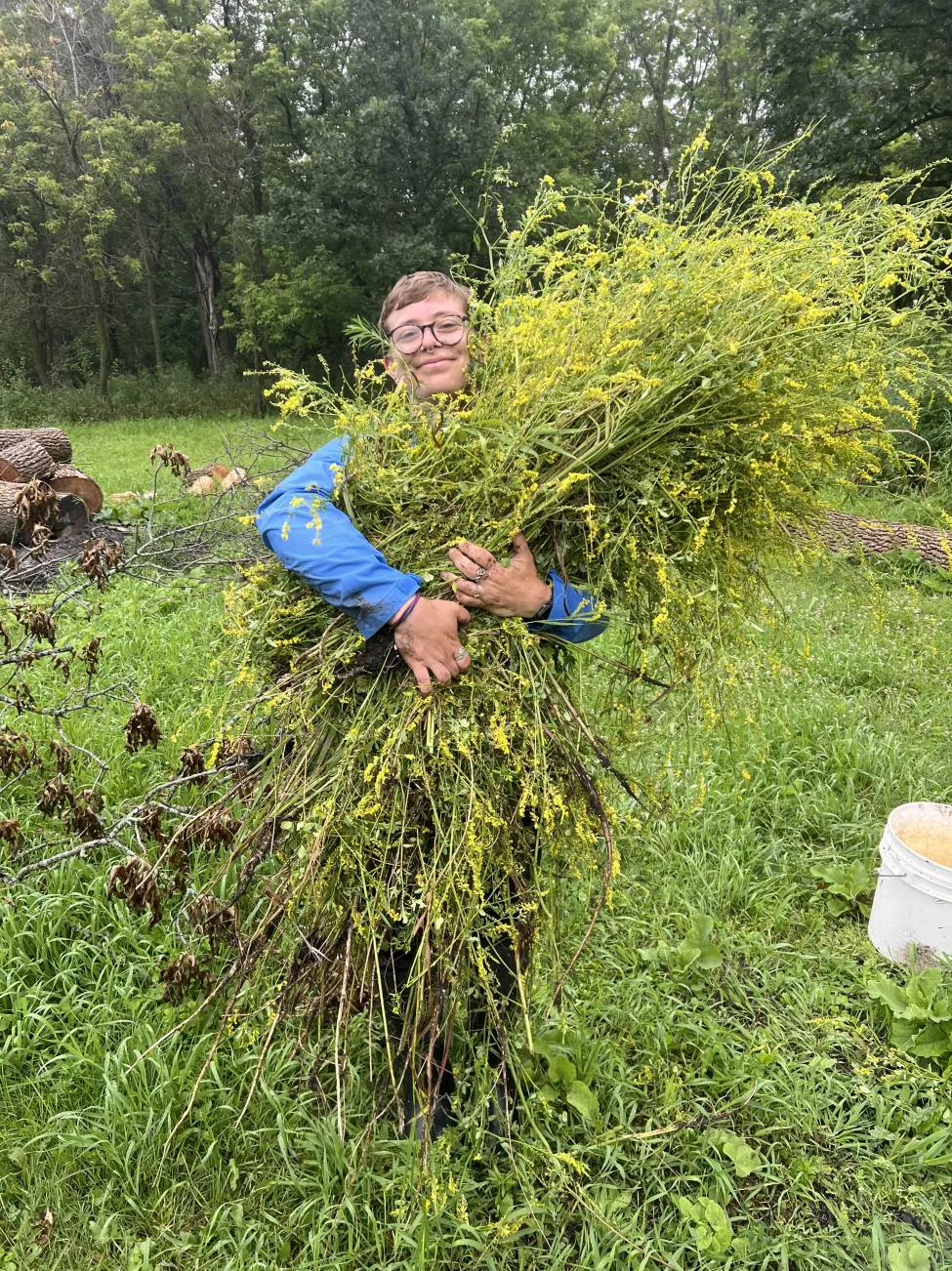
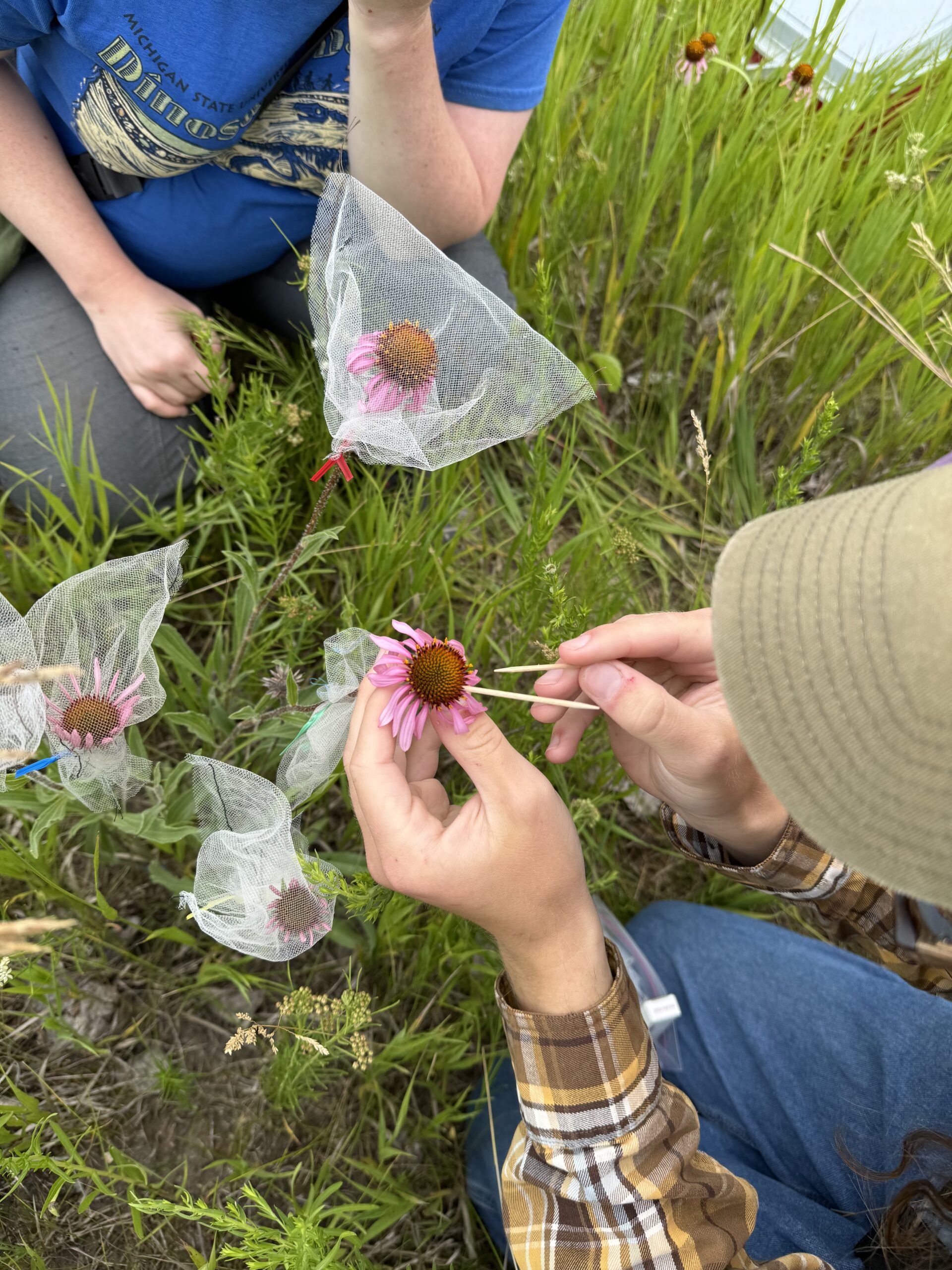
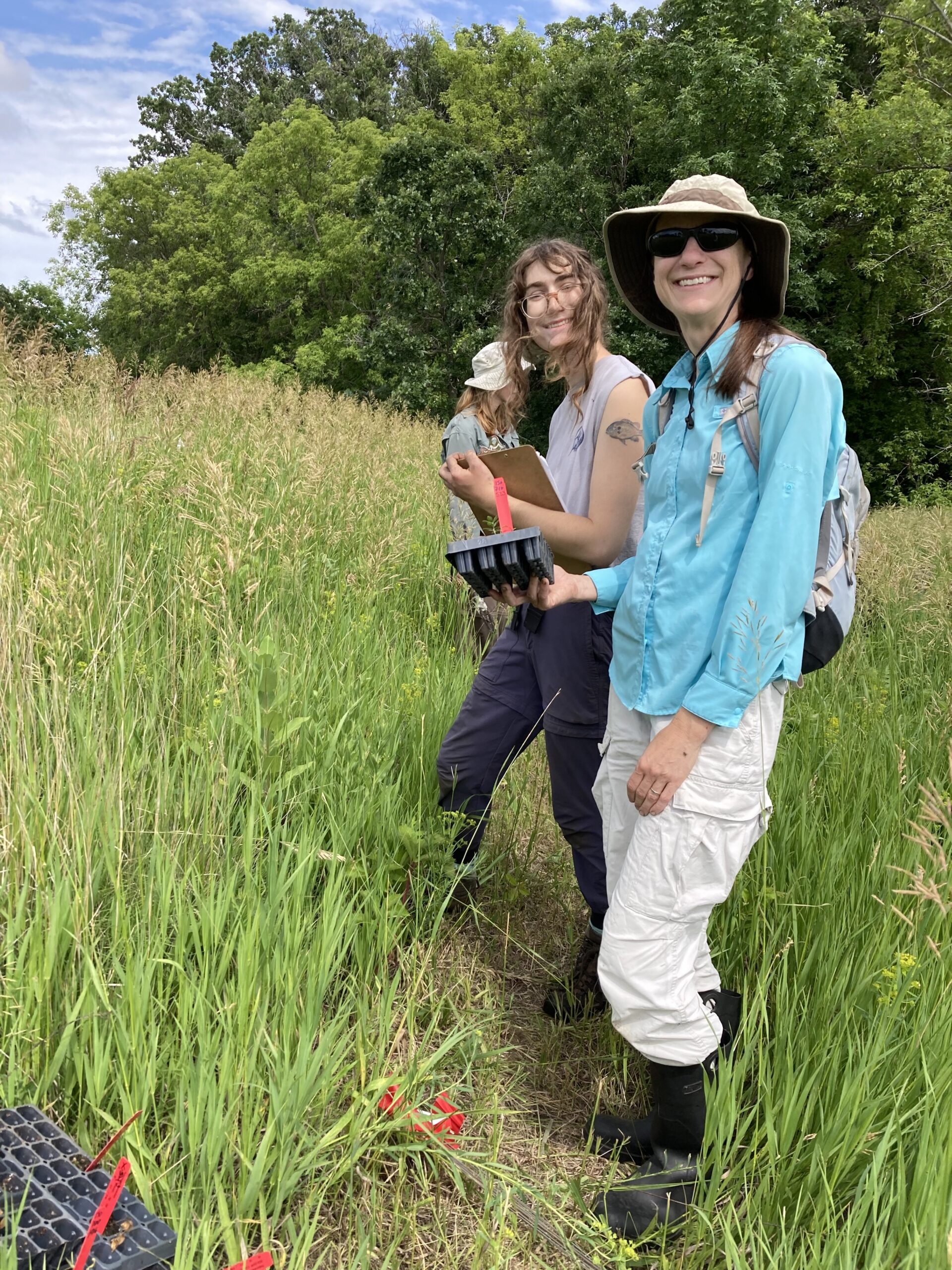
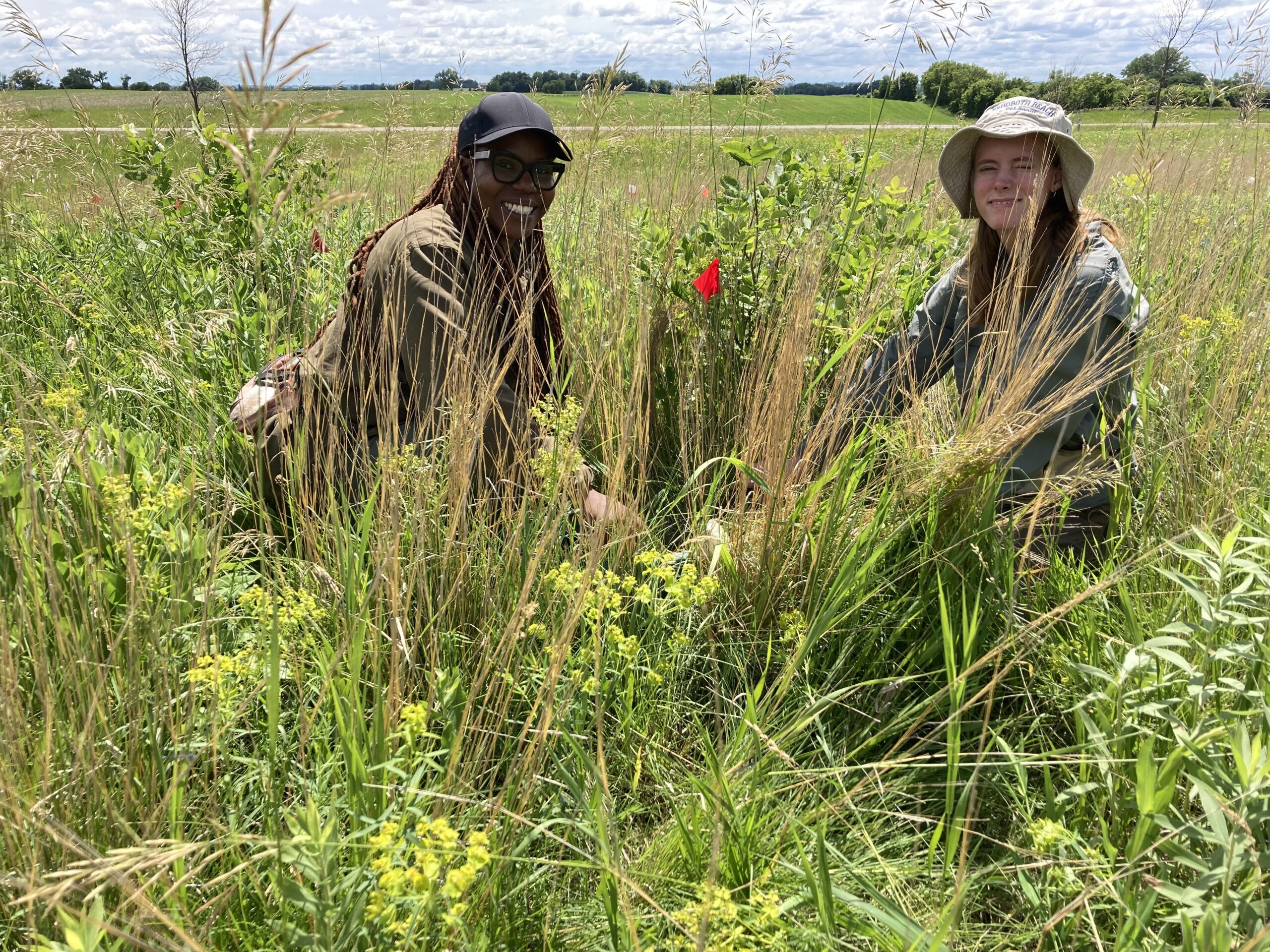
This week was a busy Monday for team Echinacea. Jennifer from College of Wooster joins us this week along with her research assistants Max and Indigo! This morning started off with round 2 of sweet clover pulling, and was promptly followed by a crash course in pollinator observations. We tried our hand in collecting species in small tubes for ID and then release. A big part of this was learning how to differentiate between flys and bees as some flies can look realllyyy close to a bee. But don’t be fooled! To round out the morning we went out in groups to collect pollen for our pollen and nectar study specifically looking at echinacea angustifolia.
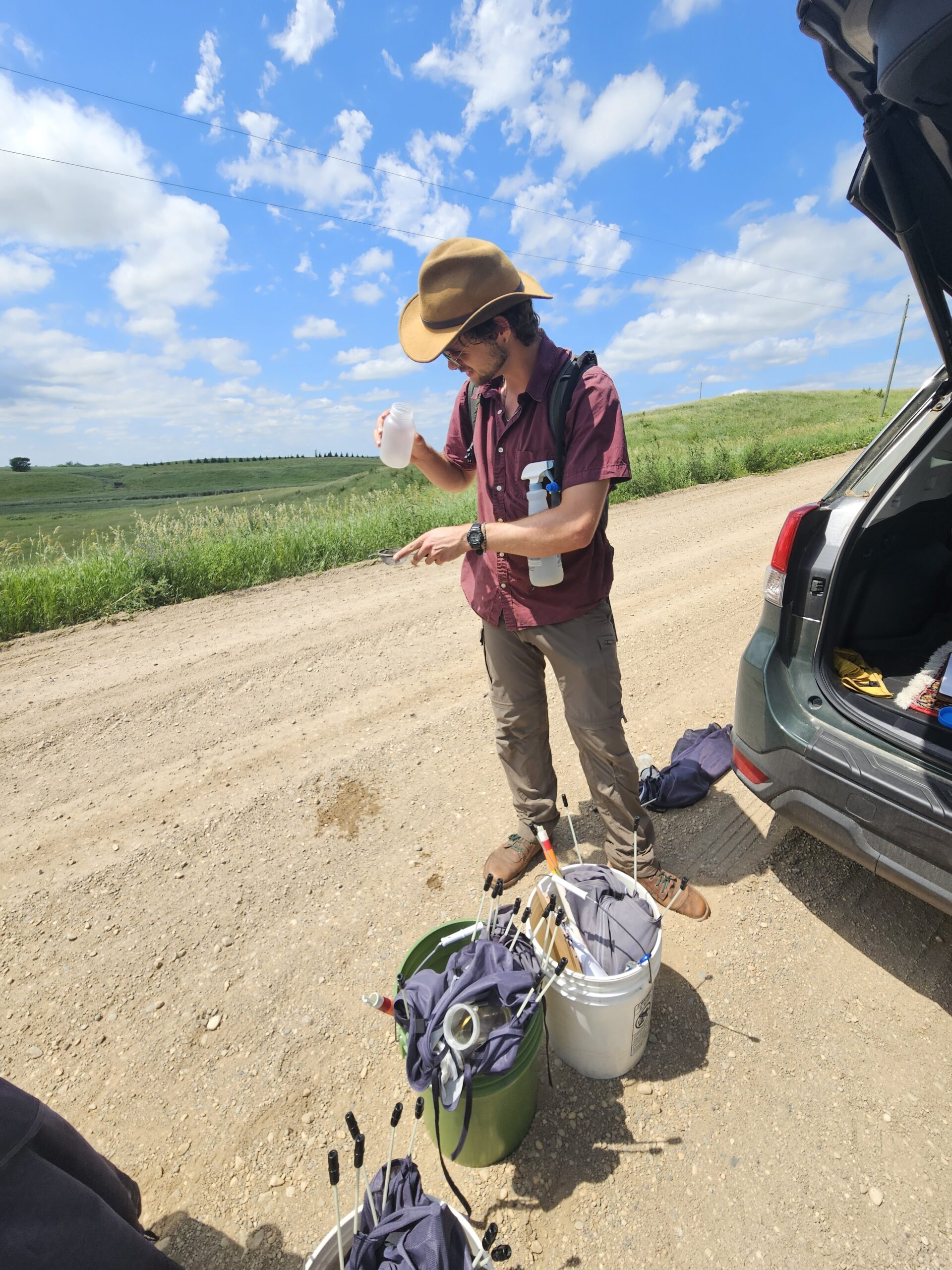
After lunch, half of us went and deployed another round of emergence traps while the other half went out and did nectar collection for the pollen and nectar study.
Maddie with round 2 of our sweet clover pulling bounty.
Jennifer prepping us for our crash course in pollinator observations.
Zach holding a micro-capillary tube with a whopping 7mm of nectar!
This morning the whole team got together to pull as much sweet clover as we could from p01. After the drippy morning faded, we split up to collect pollen from Echinacea angustifolia at sites throughout the area. This is part of an MN ENRTF funded project to help determine the impacts of prescribed burns on pollen and nectar quantity and quality in echinacea. After lunch, some people went to retrieve and deploy emergence traps and the rest of us went to collect nectar from echinacea plants. To collect the nectar, we are using tiny glass microcap tubes carefully inserted into the florets. Overall, we had a productive day, and enjoyed the nice weather after a wet 4th!
The beginning of flowering for Echinacea angustifolia means it’s time for Team Echinacea to get collect Echinacea pollen and nectar! This project is part of our MN ENRTF funded research to understand fire’s impacts on ground nesting bee habitat and food resources. It’s our second year of sampling and we have made some modifications and improvements to our protocol.
This year we are collecting from a total of 62 plants across 12 sites (some burned in 2023, some in 2024, and a few not burned in either year). Where possible, we are collecting from plants that we also collected from last year, which will make for some interesting comparisons. Many plants did not re-flower in 2024, so Wyatt and I bolstered our sample by randomly selecting other focal plants.
On Monday, Wyatt and I visited our first flowering focal plants with Grace and Rebecca from NDSU and tested out methods. We learned how to sample immature florets, a new method we are using to assess pollen quantity this year. We also brushed up on nectar and pollen collection.
Wyatt collects pollen from the anthers of a flowering Echinacea
By Tuesday we were able to train the whole team in on the protocol and start collecting! So far our data sheets have worked pretty well, and we are figuring out ways to improve efficiency in the field. Stay tuned as more of our focal plants begin to flower!
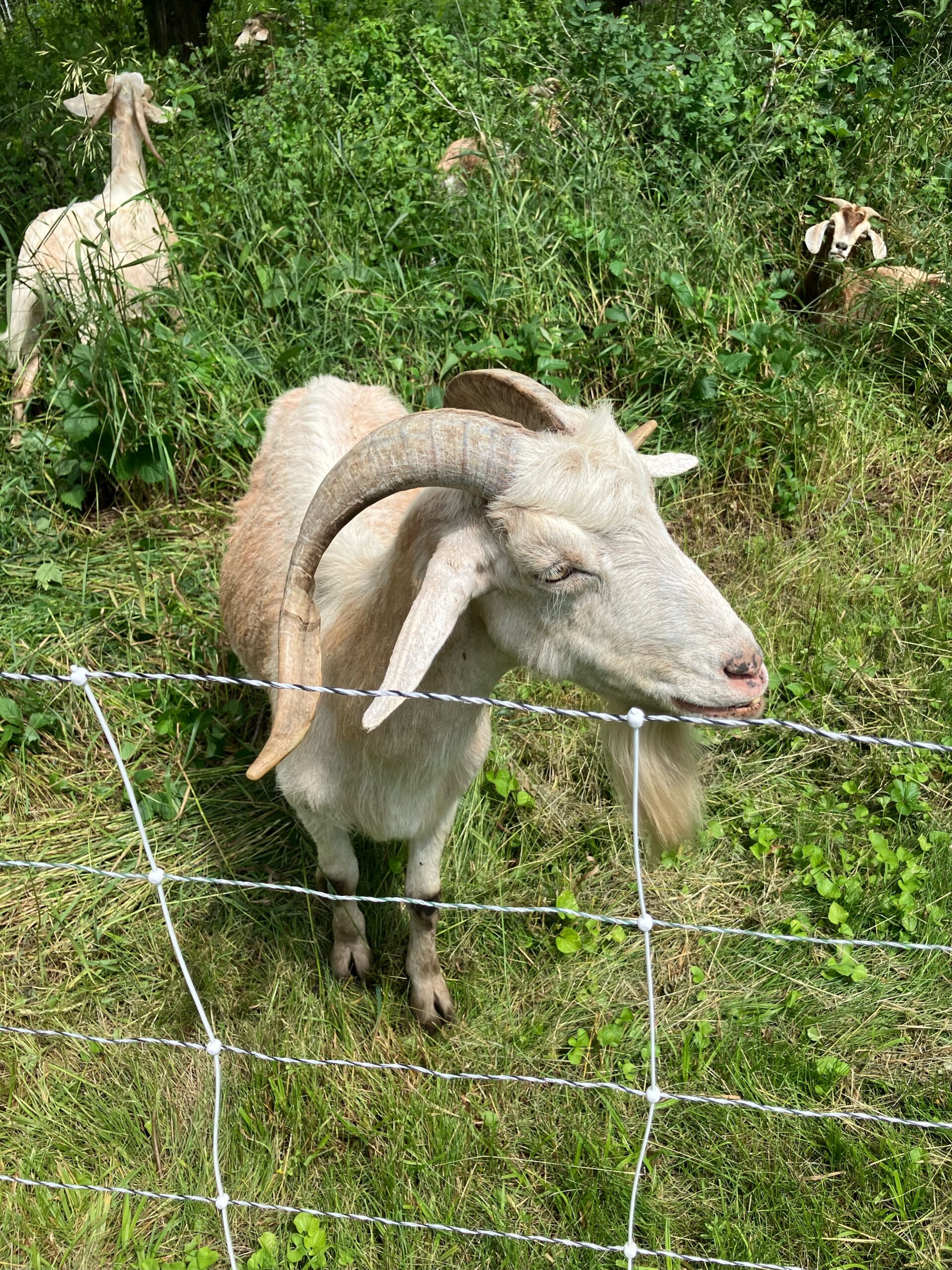
Today we welcomed goats to Hjelm. They are already hard at work eating their way through the foliage. Keep up the good work, goats! Most of the humans worked on finishing searching for Stipa in p01 and started planting a new production garden to generate seed to add to the experimental plots. Ian and Liam valiantly continued staking points for the pollinator emergence study. Wyatt and Abby are getting ready to begin a study investigating the effects of fire on pollen and nectar production in Echinacea angustifolia. This project has many excellent collaborators and is part of the MN ENTRF funded research on prescribed fire and ground nesting bees.
I am a high school science teacher from La Salle High School in Yakima, Washington. Before I was a teacher, I was an ecologist studying plant communities in savanna landscapes. At La Salle, our campus contains nine acres of restored riparian habitat that we manage in partnership with the Yakama Tribal Fisheries Project. My goal this summer is to participate in and learn from Echinacea Project’s ongoing activities and to develop a long-term research project to bring home for science students at La Salle.
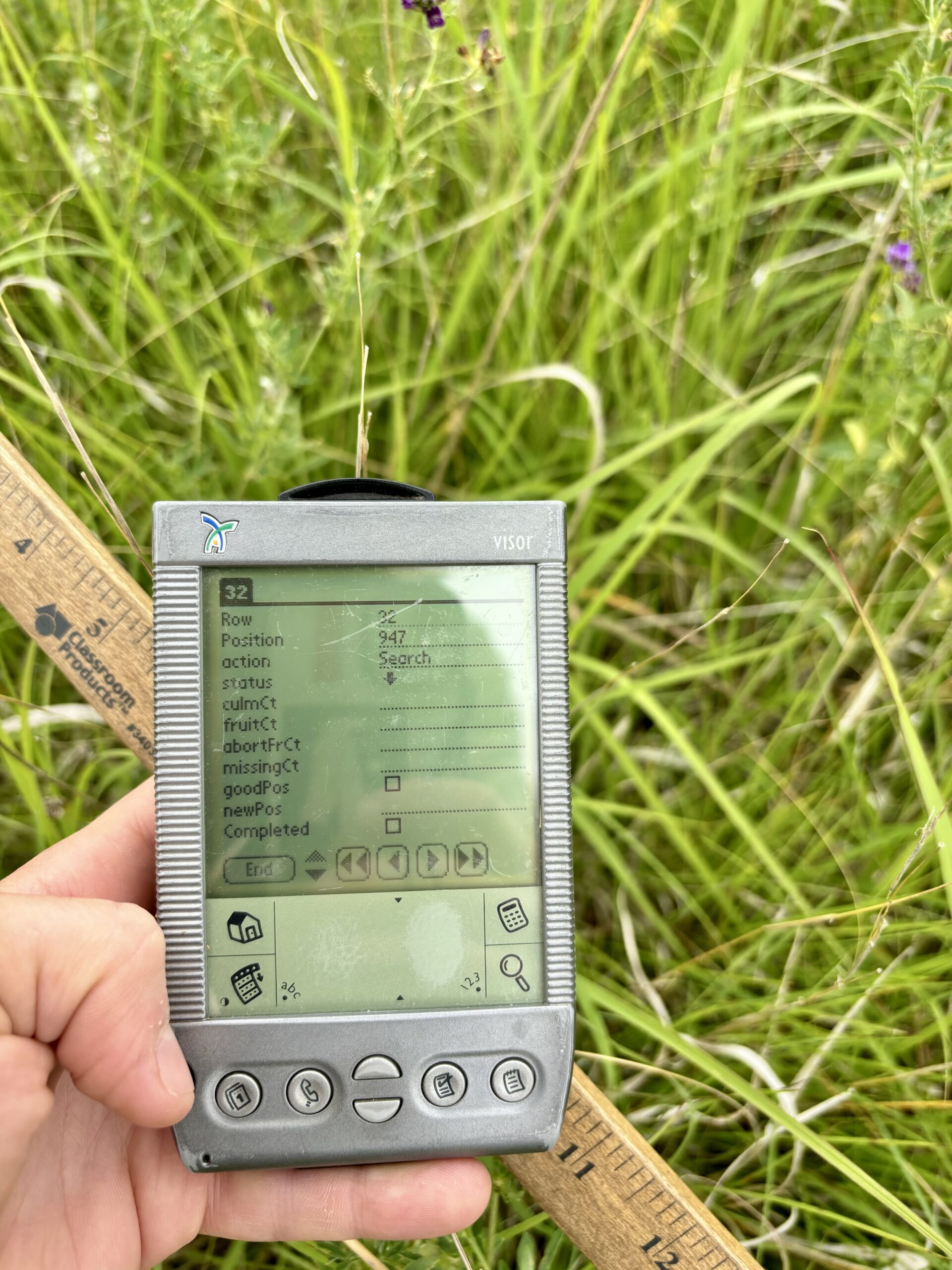
Today the team conducted the second day of Stipa search. This time we came back to know points with Stipa plants using our visor and confirmed if a plant was present. The team learned how to differentiate basal Stipa plants from other grasses in the plot and confirmed the presence of many Stipa grasses that weren’t logged during our first day of Stipa search. In the afternoon the team worked on staking more BB points and collecting/setting up more emergence traps.
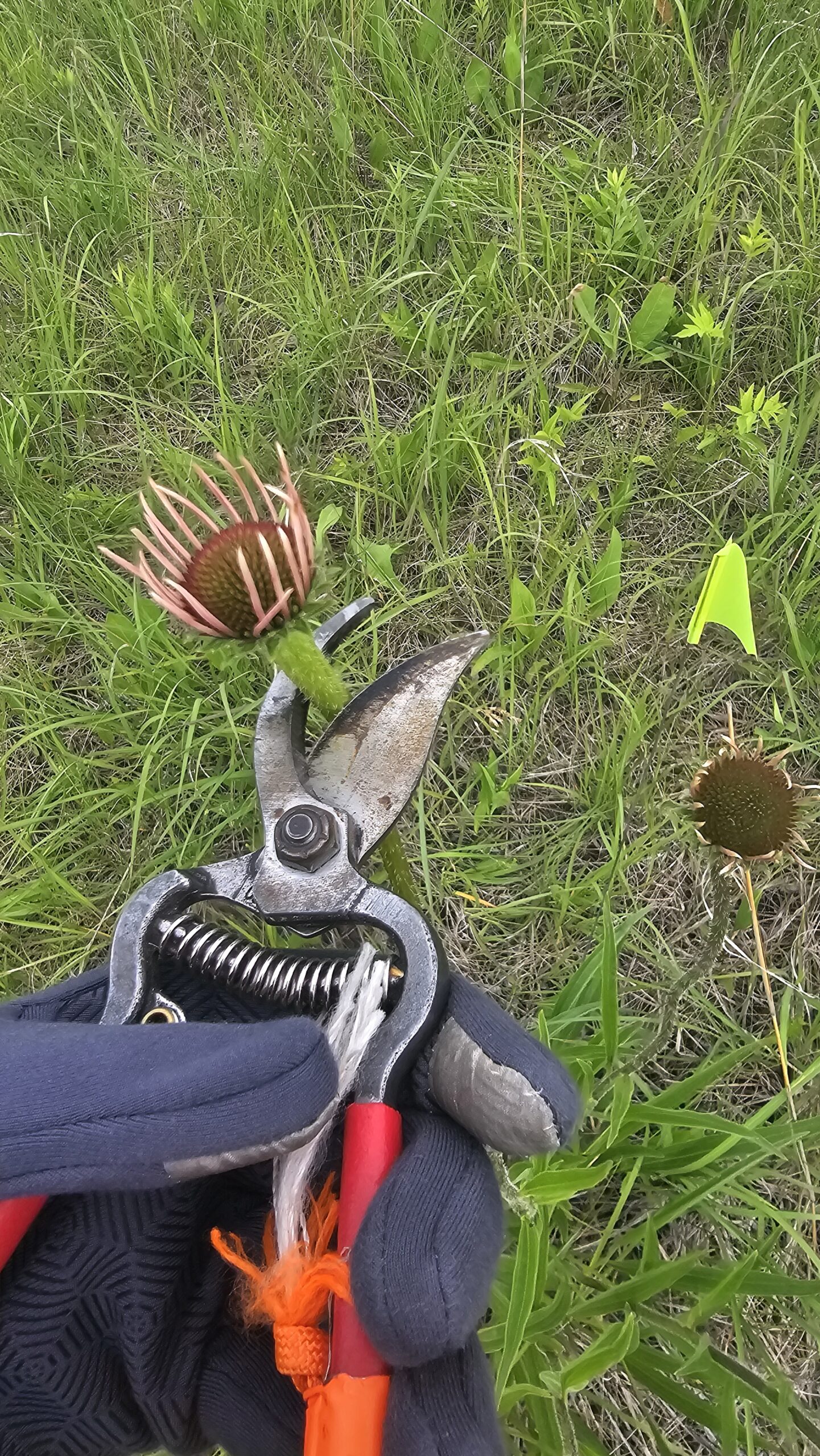
Today the team went out to Hegg Lake to flag flowering echinacea along with decapitating some pallida. We were joined by collaborators from NDSU who collected pallida samples for pollen and nectar studies. It was the first day of taking demographics of the echinacea this season. Taking the demographics went well and we estimated finding anywhere between 80 to 300 flowering echinacea pallida. Later in the afternoon the team split up to work on independent projects. Including, shooting bb points with the gps, working on proposals, and flagging more echinacea.
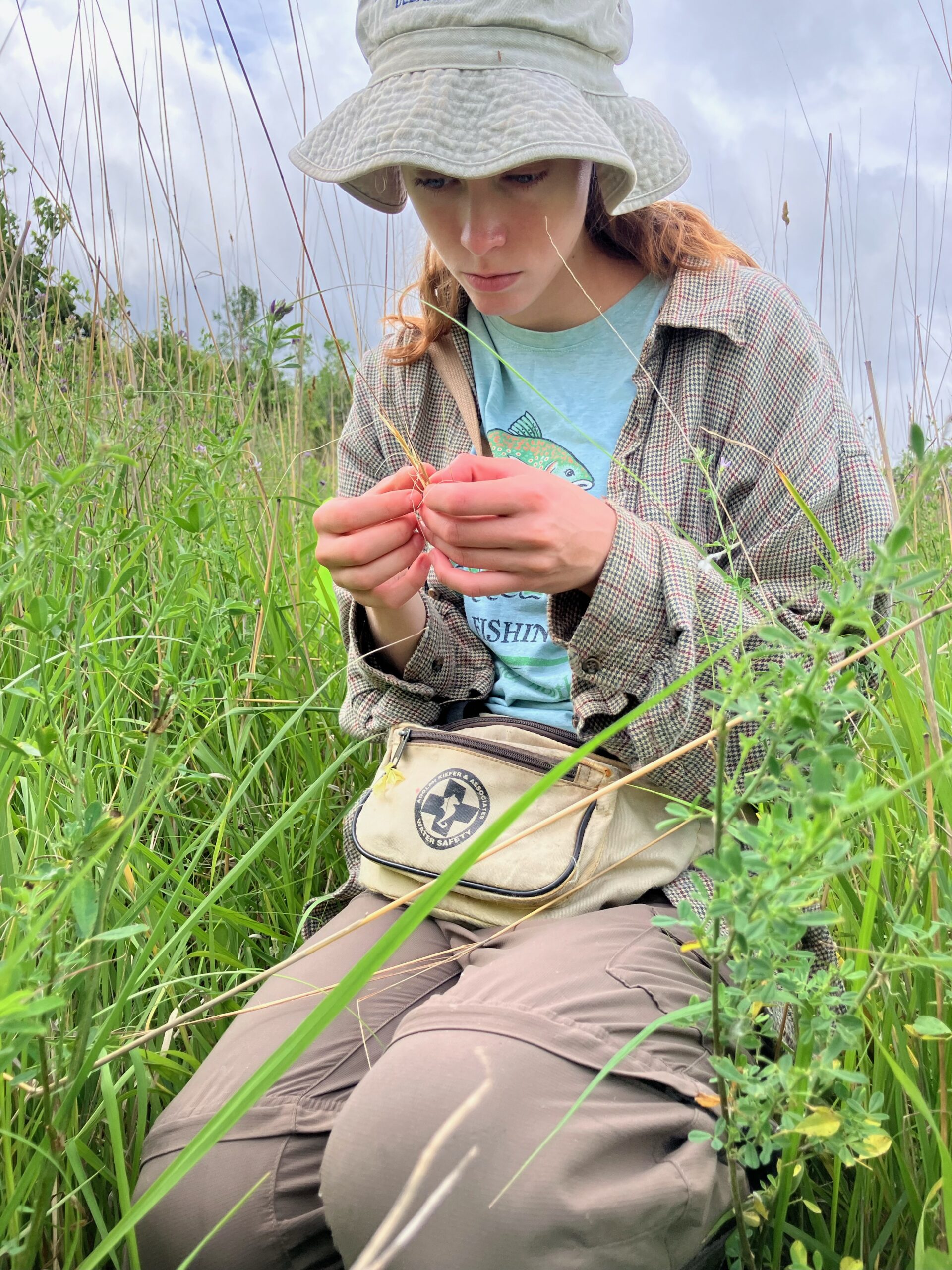
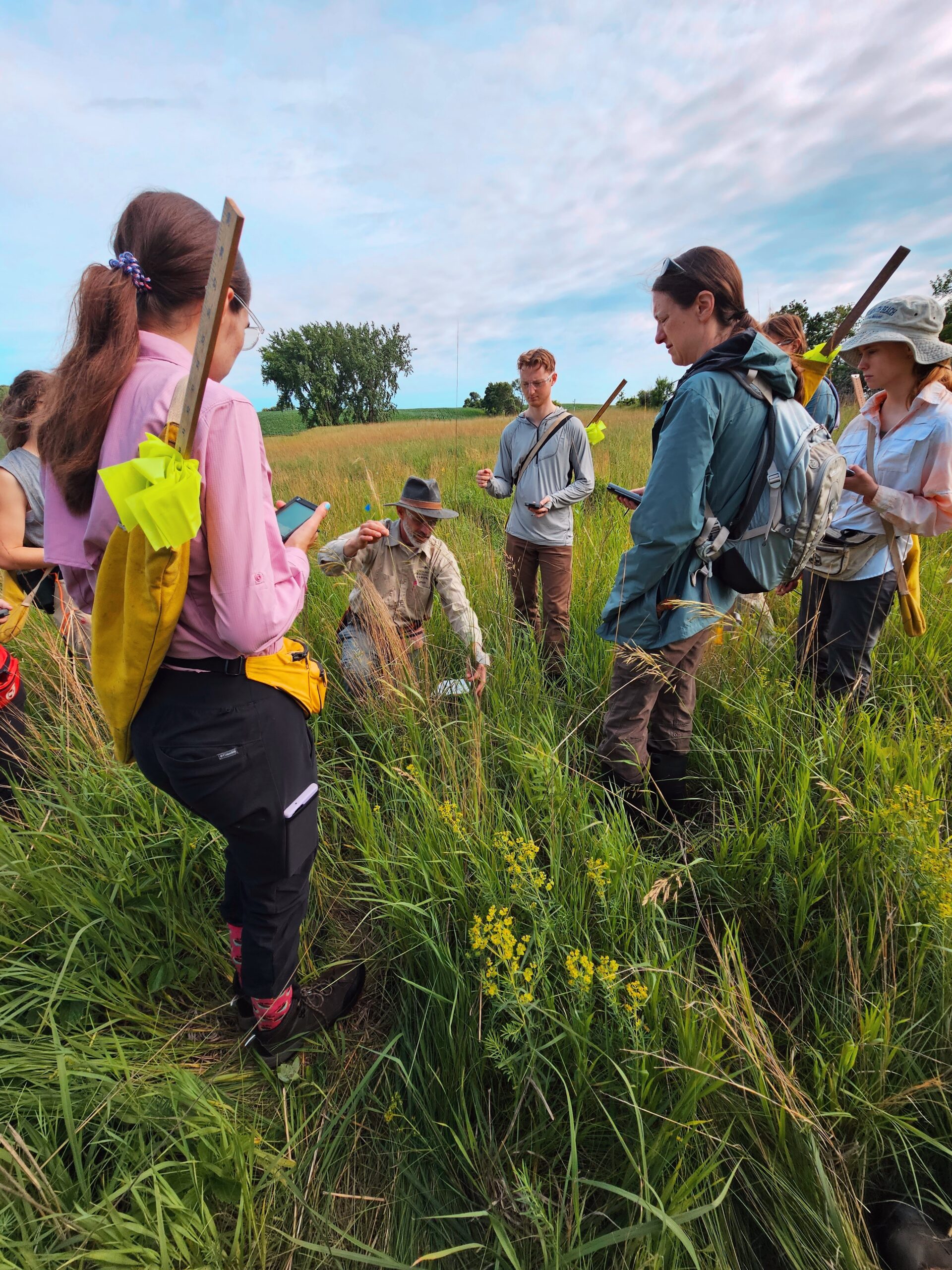
Today the team learned about Hesperostipa spartea (Stipa) which is affectionately known as porcupine grass. After reviewing the protocol for collection, we made our way down to experimental plot p01 where we received a lesson on identifying flowering Stipa and counting the fruits (imagine a long seed with a tail). We documented the number of culms (stems) and fruits as well as missing fruit in our field notes. This was only the first step but the information collected will help determine how the fitness – an organisms ability to survive and reproduce in an ecosystem – of Stipa grown in experimental plots differs from Stipa growing in prairie remnants.
Dr. Wagenius teachingteam Echinacea how to identify Hesperostipa spartea in experimental plot p01.
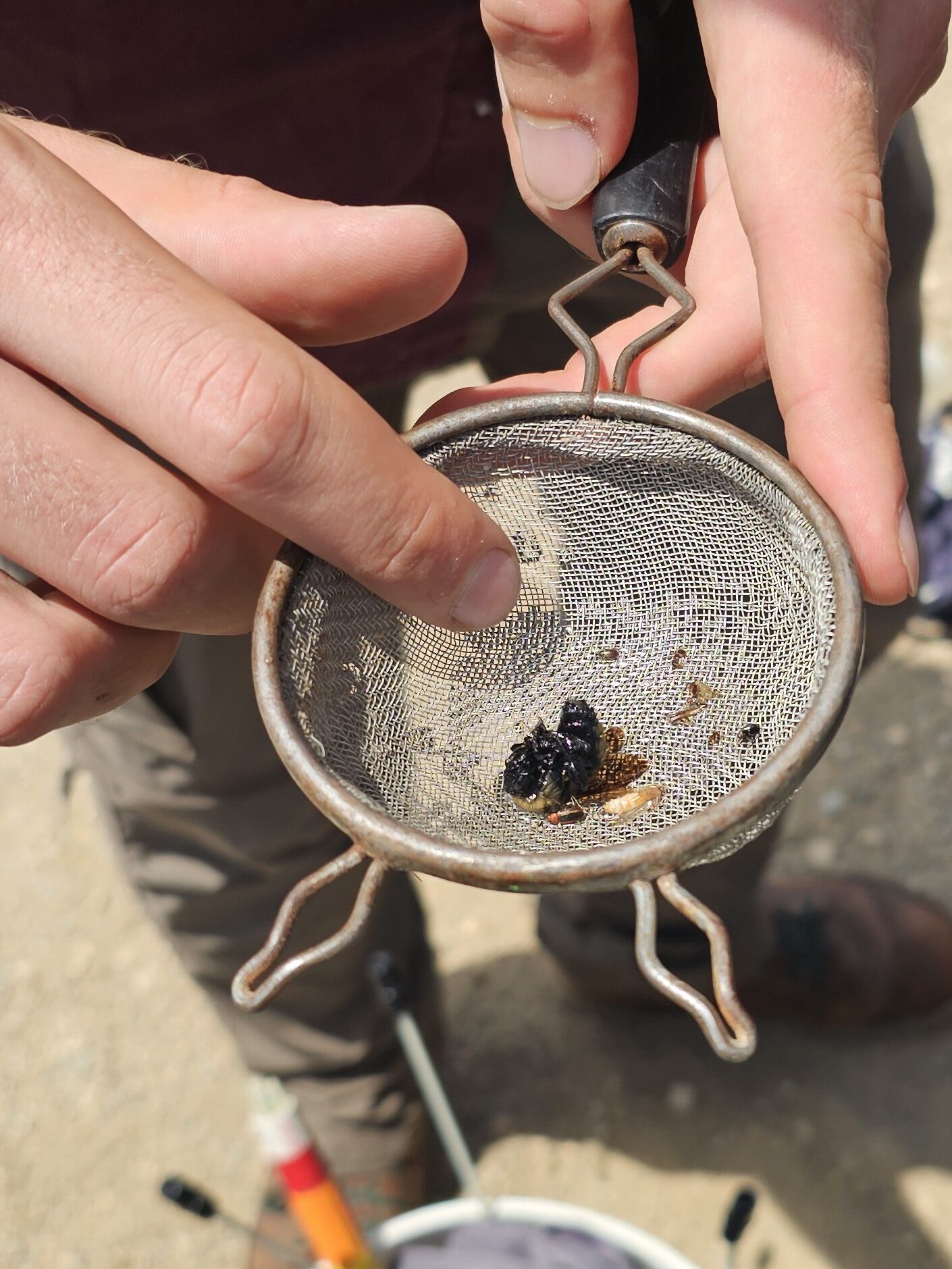
Later that afternoon, a small team retrieved and deployed emergence traps. The contents of the traps were examined and the specimens were prepared for classification.
Ian straining the contents of an emergence trap.
The contents of an emergence trap. That’s a big bee!
Today was a busy Friday full of many activities! It is officially the first day of summer! Ning, Liam, and Maddie worked in P1 today fixing flags that might be out of place or not in line and also putting signs for positions so it is easier to know where you are. They also checked the flags in the 99 garden. Zach and Emma headed out to P8, where they watered the prairie turnips planted yesterday and planted extra plants. An interesting thing they noticed was that the prairie turnips seemed eaten across the first 3 rows. The team hypothesized that it might be hungry rodent. Ian helped Elise learn how to use the GPS and how to shoot some BB points.
At lunch, the team had a discussion about their ABTs (And, But, So), which are goals for what each person wants to research or study further this year. There were many great ideas and lots of feedback in our discussion.
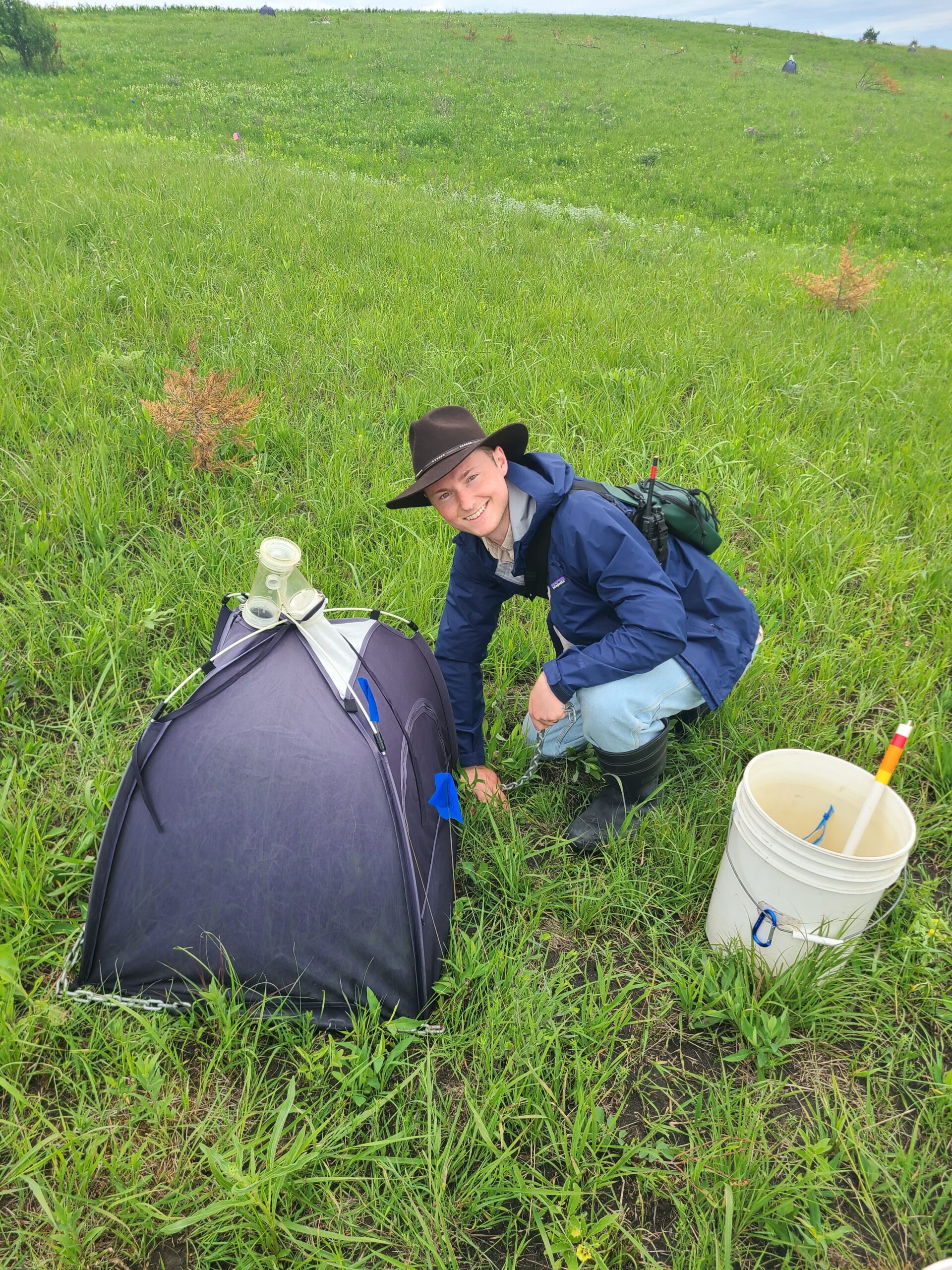
In the afternoon, Liam and Zach shot some more BB points. Ian, Maddie, Elise, and Emma and placed some more emergence traps!
Zach with an emergence trap placed yesterday(6/20/2024)
Today was a full day for team Echinacea! Not only is it Elise’s first day on the team, but it’s also summer solstice. This morning Brittany and I went out to Staffanson Prairie Preserve West to finish shooting bb-points. While another team started flagging/planting P8 for a new experiment. The new common garden experiment being added to P8 involves planting prairie turnip to learn how to grow and measure the species while establishing a basis for future studies.
This afternoon was busy finishing up planting in P8 while a handful of others went out and set the first emergence traps for the season! Woot woot!
Many more updates to come, along with daily posts from other members of the team.
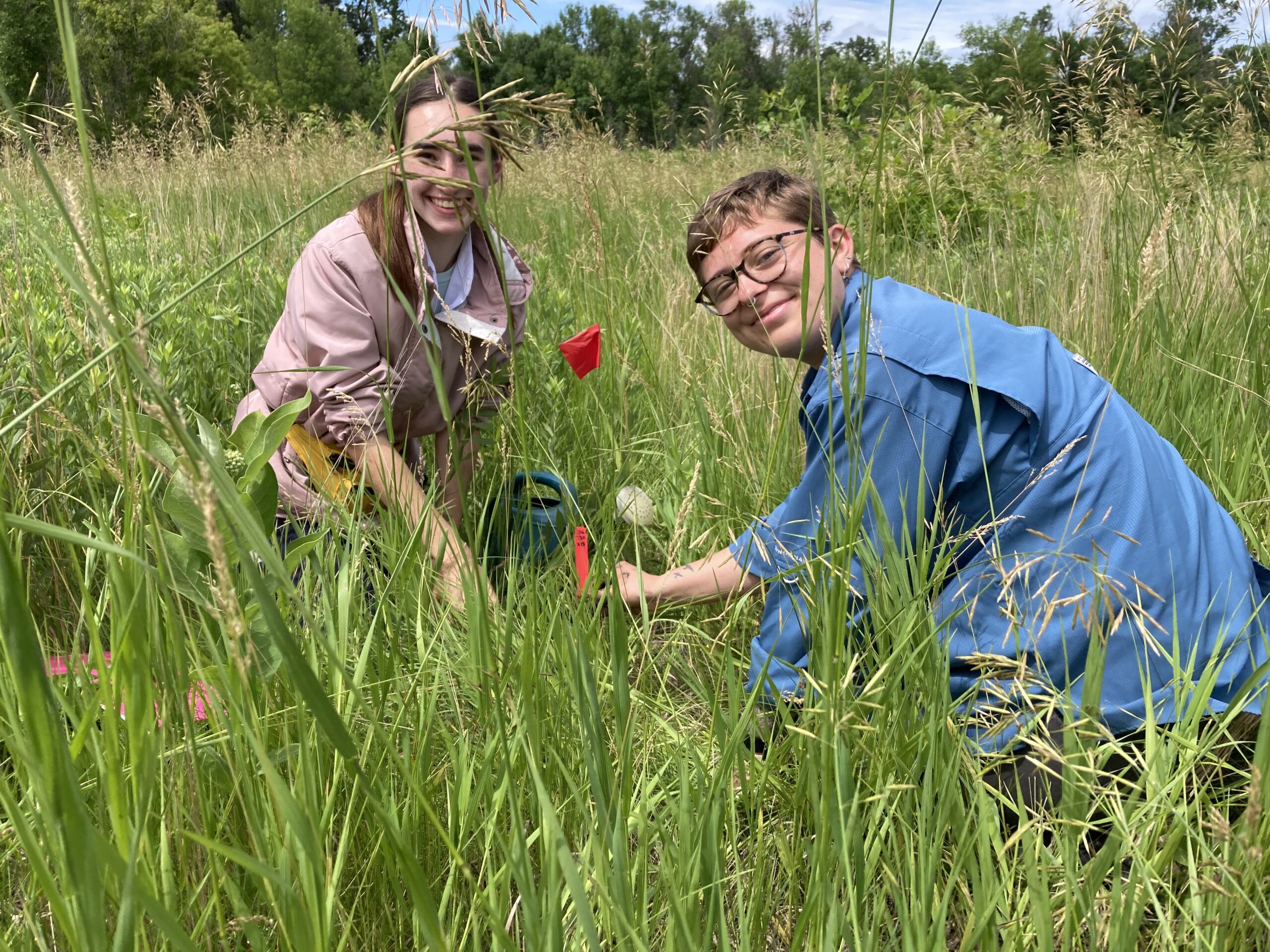
Hailey (left) and Maddie (right) flagging in P8.
Wyatt (left) and Elise (right) standing with some prairie turnip plugs.
Brittany (left) and Emma (right) planting some turnips in P8.