|
|
Howdy Flog Followers,
After the scanning is completed and all of the achenes have been counted, the next process is randomizing.
Randomizing consists of taking the top, middle, and bottom sections of achenes and separating their achenes into an informative and uninformative subcategory. The goal of this step is to get a random, and therefore representative, sample of achenes from the middle.
For the informative subcategory, the goal is to place 30 achenes from the top, middle, and bottom section into clear envelopes. The top and bottom achene sections normally have 30 achenes already within their section, due to the extraction method used that aimed to get 30 achenes from the top and bottom before moving on to the middle. So, in exchange the middle section of achenes normally has a larger number of achenes. In order to narrow the large sections of achenes down to 30, randomization is necessary.
Steps for randomizing:
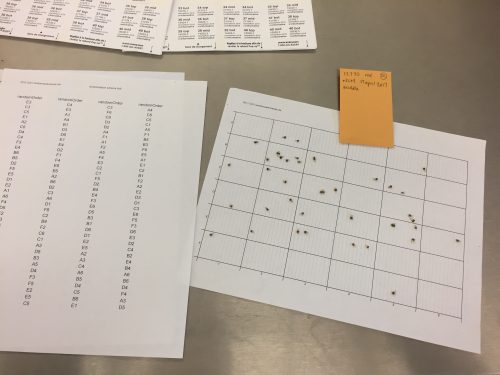
- Pour the section of achenes across a sheet with a labeled grid.
- Make sure that all of the achenes are clearly within a box of the grid. Go through and push all the achenes that landed on the lines and outside the grid space into a distinct box. This is to avoid bias.
- Follow the list of randomized letters and numbers, provided on a separate sheet of paper, until you have accumulated 30 informative achenes.
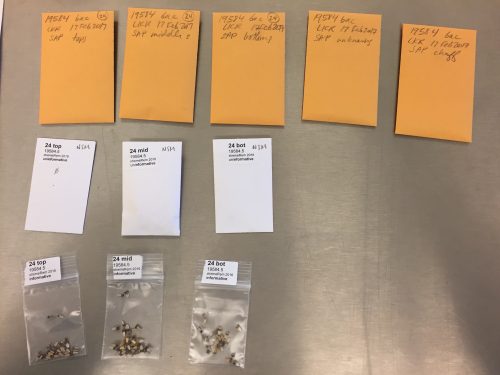
All of the remaining achenes from randomization that were not chosen are put into the uninformative subcategory. Ray achenes, achenes with holes, and achenes that have been crushed along the way are considered uninformative. These are placed in small white paper envelopes.
After the achenes are separated into their informative and uninformative subcategories, they must be labeled with their corresponding sticker. This is so that their identification, and therefore the extreme quality that the seed-head possesses, is not lost.

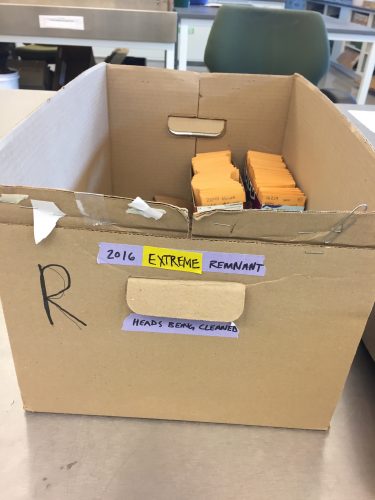
Seen in the image directly below is The Final Product: 11 envelopes. 3 of these envelopes are the clear bags full of the informative achenes, from the top, middle, and bottom sections, that will move on to be X-rayed. The use of clear bags is for X-ray purposes, so that a clear shot of the achenes is achieved.
‘Till next time folks,
Nicolette McManus
Howdy Flog Followers,
After cleaning a whole bunch of seed-heads, I began the process of scanning.
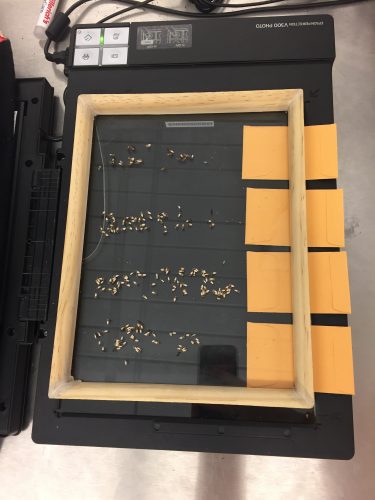
Scanning is a rather simple process. Out of the 5 achene envelopes for each seed-head, the four envelopes containing achenes (excluding the chaff) are used. Each section is poured out onto a glass ‘sheet’, that is placed onto the scanner. I loaded each section with its corresponding label from the paper envelope, for identification and to avoid confusion between the different sections. In the image below, from the bottom to the top of the glass sheet the achene sections : top, middle, bottom, other. The middle section is the most noticeable, as it normally has the largest number of achenes.
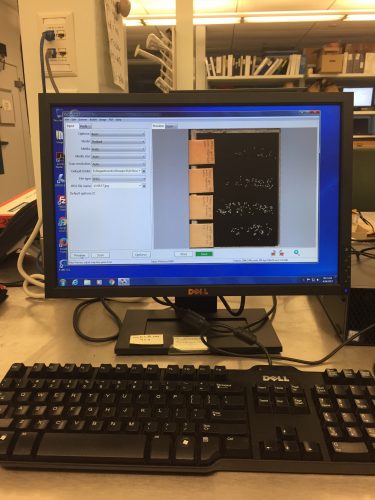
After all the achenes are placed onto the glass sheet, a cover is placed over the sheet, for the sake of darkness. Then the scanning can commence! Each resulting scan looks similar to the second image, on the computer screen.
Lastly, it is important to have a specific place to save all of the scans to. I have saved all of the extreme scans to the ‘EchinaceaCG2016’ Folder, under the I Drive. This way, everyone (including yourself) will be able to find your hard work.
 
The scanned images are then used to count all of the seeds found on that specific seed-head. Specifically, the seeds are counted in reference to their category (top, middle, bottom, or other), which can be combined for a total count value. As a result, we are able to compare the sizes of the seed-heads, based on achene count.
‘Till next time folks,
Nicolette McManus
Today was Amy Waananen’s last day working at the Chicago Botanic Garden with the Echinacea Project. The last few days were a flurry of activity with our potluck, preparing for prescribed burning in Minnesota, and getting ready for the summer field season. On top of that, Amy submitted a manuscript about reproductive synchrony to The American Naturalist. It’s sad to see Amy leave but we’re happy that she will be nearby. She is working out on the prairie in western Minnesota the summer with her new lab group. It is great she is starting a PhD program at the University of Minnesota this fall. Good luck, Amy!
 Amy W at CBG
Howdy Flog Followers,
I spent the past two weeks diving into the initial process for the ‘Extremes Project’: cleaning as many seed-heads as I can get my hands on. I’m sure that all of you seasoned flog followers are familiar with this process. To clarify, cleaning a seed-head consists of extracting all of the achenes. An achene is a white ‘case’ that contains the seeds (seen under the magnifying glass in the photo below). There is a range of 50 – 400 achenes found in a single seed-head. However, specifically for the extremes project, it is important to extract the achenes based off of their location on the seed-head: top, middle, and bottom.
Top, Middle, Bottom, Other, Chaff. There are five separate envelopes that need to be filled for the Extreme extractions. I have been able to develop a method of satisfying all the categories as precisely as possible. First, I start by extracting a minimum of 30 achenes from the top, followed by at least 30 achenes from the bottom. However, the bottom is tricky because of the sterile ‘ray achenes’ found along the bottom edge of the seed-head. These ray achenes, along with unknown / runaway achenes are placed into the ‘Other; category. Then, all of the remaining achenes on the seed-head are put into the ‘Middle’ category. Lastly, all of the chaff, the leftover ‘flower guts’, is collected into its own category envelope.
The small seed-heads that I have encountered require an even more delicate approach than the others. This is based on the fact that they do not have a full 30 top nor full 30 bottom achenes that could be extracted individually. So, as a compromise, I would extract five achenes from the top and then five achenes from the bottom. While alternating, I would continue until I had a maximized amount of equal top and bottom achenes.
It has been an interesting experience working with the Extreme seed-heads. I have found lots of variation in the Extreme seed-heads. For instance, there is a great difference in sizes between all of the seed-heads. There was even a seed-head that did not have any achenes, zero. Additionally, there are more frequent occurrences of running into dead larvae and cat frass (caterpillar poop, that looks like a spiderweb-like structure) on the heads, which keeps things interesting.
Now, on to the next step: Scanning! This step allows for me to be able to count all of the seeds in all of the categories while also documenting everything digitally. Tune in next week for more details on Scanning.
The flowers on these heads bloom from the bottom to the top. We can use this information to gather at what point the flower was being fertilized by pollinators. For example, if only the bottom achenes are fertilized, then that tells us that the particular seed-head was an early-bloomer or was fertilized early in it’s blooming process. This is the reason why it is important to isolate the top, middle, and bottom achenes. Plus, isolating the achenes into these categories allows for data comparisons and individual interpretations down the road.
By the end of my analysis, I hope to use the data that I have collected to help the echinacea team find positive fertilization patterns for this plant, in order to help to conserve their populations.
 
‘Till next time!!
Nicolette McManus
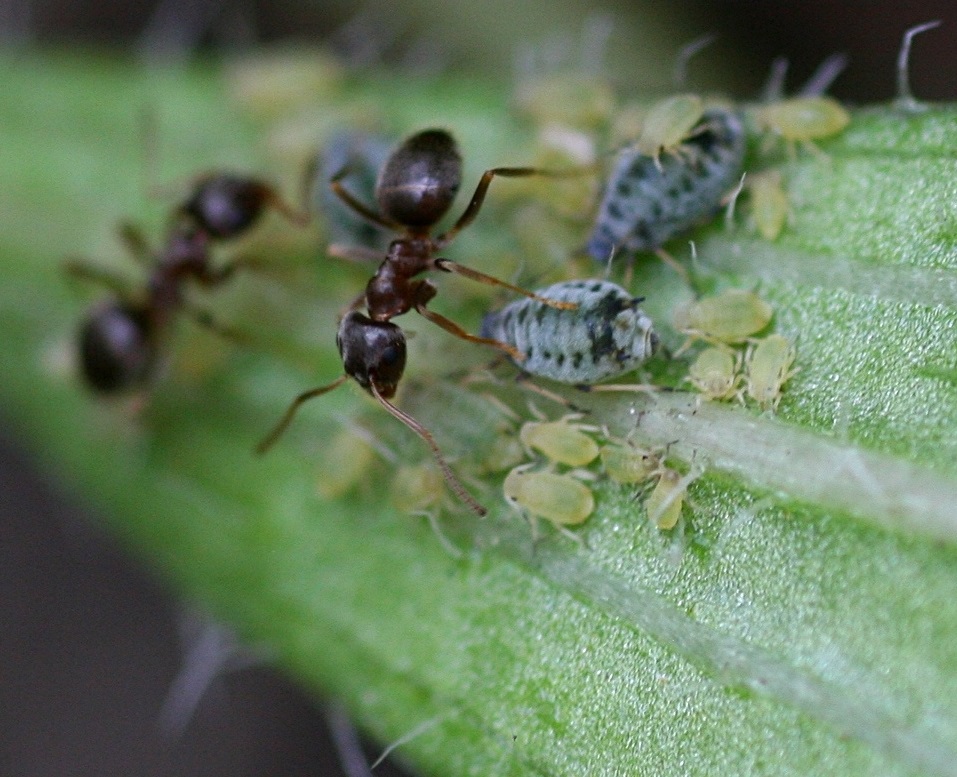
 Ants tending Aphis echinaceae Aphis echinaceae is a specialist aphid that is found only on Echinacea angustifolia. It feeds on sap in Echinacea leaves, and can also be found on flowering heads. This aphid also attracts “ant bodyguards”, which protect the aphids from predation, and in the process may also fend off other potential herbivores. Prior studies by Team Echinacea members have demonstrated that aphid presence does not lead to significant changes in plant fitness in observational studies, although in controlled experiments aphid presence does affect herbivore damage. Furthermore, inbred plants are more susceptible to aphid presence than outbred plants.
In 2011, Katherine Muller designated a sample of 100 plants in experimental plot 1 for aphid addition or removal. The presence or absence of these aphids is maintained by team members two to three times per week. In summer 2016, aphid levels were assessed and maintained 14 times on 70 of these plants (addition on 33, exclusion on 37) from early July until early August. In September, Amy Waananen recorded signs of senescence in the leaves of treatment plants. This data can be combined with data from our common garden measuring data to explore the richness of the Echinacea-aphid relationship.
Start year: 2011
Location: Experimental Plot 1
Overlaps with: Phenology and fitness in P1
Data collected:
- Aphid counts for each treatment plant on each observation day, on paper
- Leaf senescence data, recorded on paper
- Initial and final assessment of aphid counts on treatment plants, recorded on paper
- Paper records stored in ‘Aphids 2016’ binder, currently at Chicago Botanic Garden
- Aphid counts also included in p1 measuring data
Products:
- 2016 paper by Katherine Muller and Stuart on aphids and foliar herbivory damage on Echinacea
- 2015 paper by Ruth Shaw and Stuart on fitness and demographic consequences of aphid loads
- 2015 poster by Daniel Brown and Kyle Silverhus (Lake Forest College) on achene and seed set differences on treatment plants
You can read more about the aphid addition and exclusion experiment, as well as links to prior flog entries mentioning the experiment, on the background page for this experiment.
Hello all you flog followers,
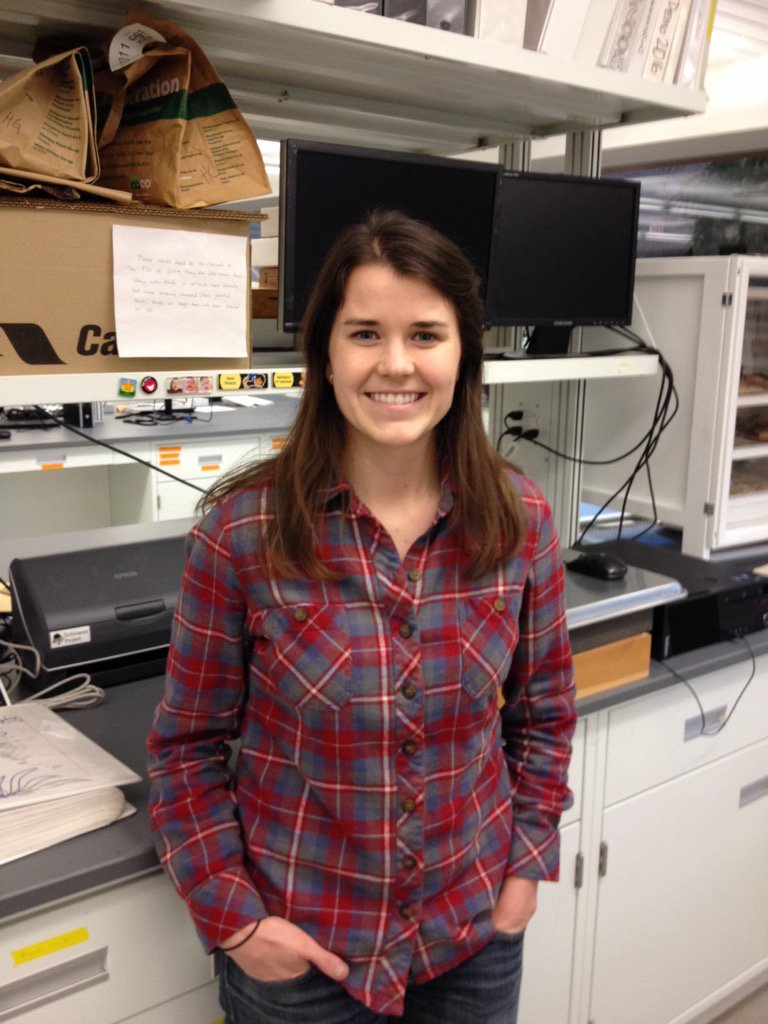
My name is Nicolette and I am a new student intern for The Echinacea Project team! I would like to introduce myself, as I will be posting along the way of my Echinacea journey. I am currently a sophomore at Northwestern University studying Environmental Science and Art Theory & Practice. I am super excited to be a part of a specific project here and I am intrigued to see the results!
I will be working on the “Extremes Project”. Essentially, this project will reveal the variations of seed fertilization among the ‘”extreme” plants. When I use the word “extreme”, I am referring to the echinacea plants who bloom earliest, latest, or are located at far distances away from other clusters of echinacea plants. We hope to use the data we collect in order to make sense of these patterns and further be able to help conserve this native prairie species.

I will begin extracting achenes from these “extreme” seed-heads today, and will keep you updated with the process and discoveries!
‘Till next time folks,
Nicolette McManus
Hey Flog readers, Sam here.
After a quarter of hard work, all of the achenes from my thirty-two flowerheads have been counted, x-rayed, and classified! I am looking forward to analyzing the data next quarter in R through a class Stuart teaches at Northwestern. It’s been quite a journey learning about both the nitty-gritty of going from flower head to data sheet and the conservation biology through which we contextualize our data. Special thanks to Stuart for giving me the opportunity to intern for the Echinacea project, to Amy and Scott for being wonderful, helpful mentors, and to everyone else in the lab for your amazing company and support. If anyone reading this would like to know more about what it is like to intern for the Echinacea Project, feel free to e-mail me at Samuelhamilton2017@u.northwestern.edu.
Best,
Sam
This morning I was devastated to find that our larva had died overnight–as we said in the previous post, we were hoping to raise them, and I had also become a little attached. My grief didn’t last very long, though, because I found two larva wreaking havoc in my second head of the day! Emma and I quickly repopulated our petri dish with wriggly pink bugs.
When a seed head has a larva, we can expect a good number of the achenes to have holes burrowed in their sides. Today, we finally caught a larva in the act! This little guy was found with the front half of its body inside an achene. It’s good to have conclusive evidence for what precisely is going on around these seeds…
Other exciting updates: we’ve officially passed the half-way point on cleaning our 110 seed heads. At closing, we’re working on #61. Woo for progress!
Ta ta for now,
Mikaela
The perpetrator (image quality fuzzy to better convey shadiness)
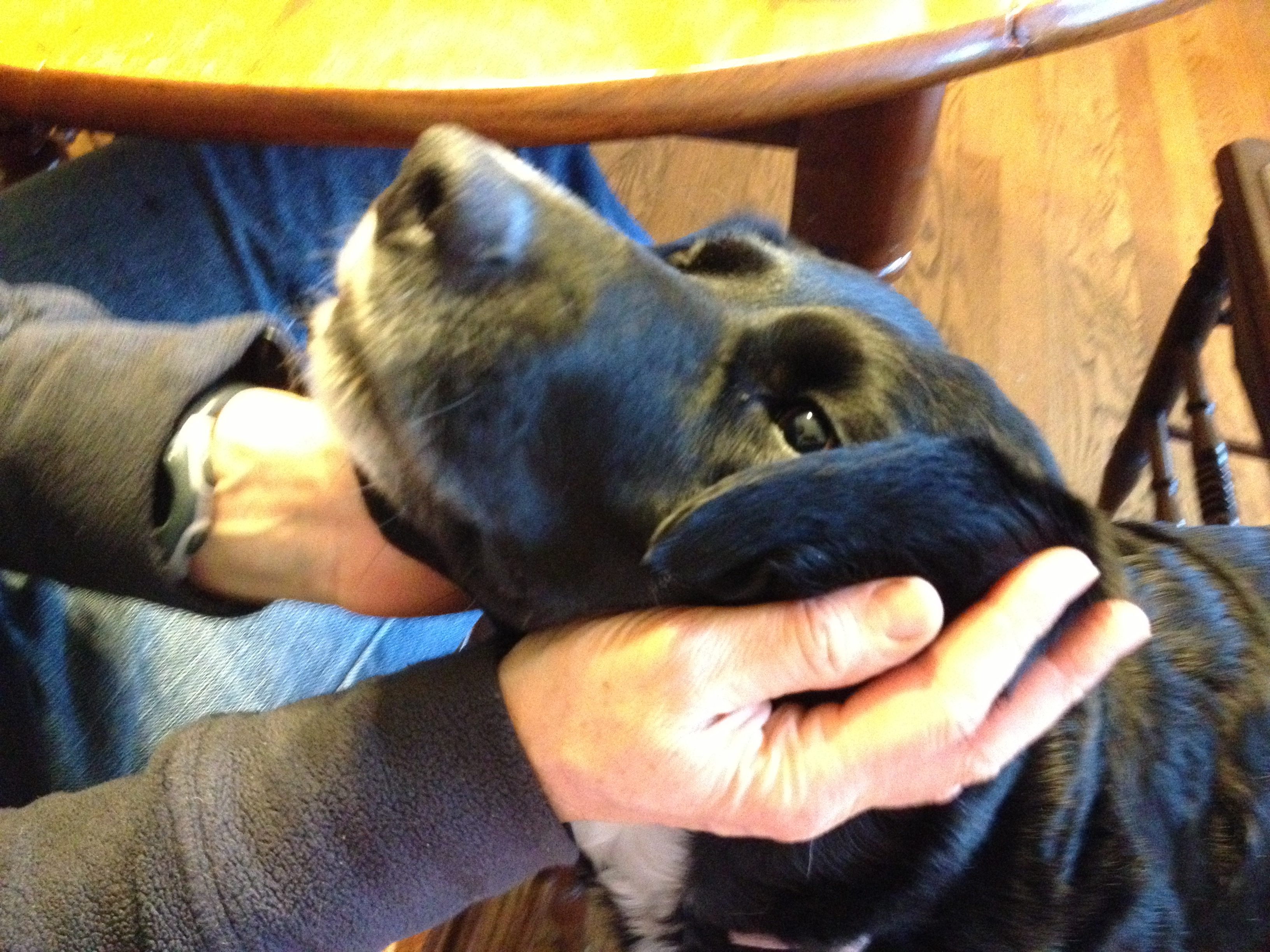
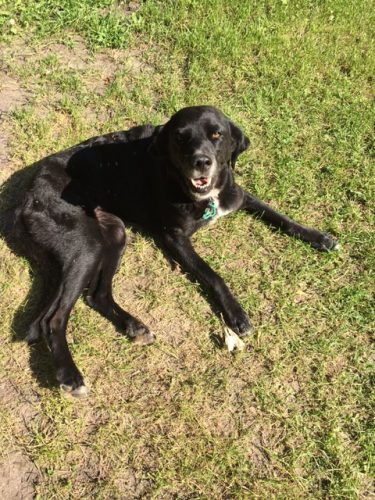
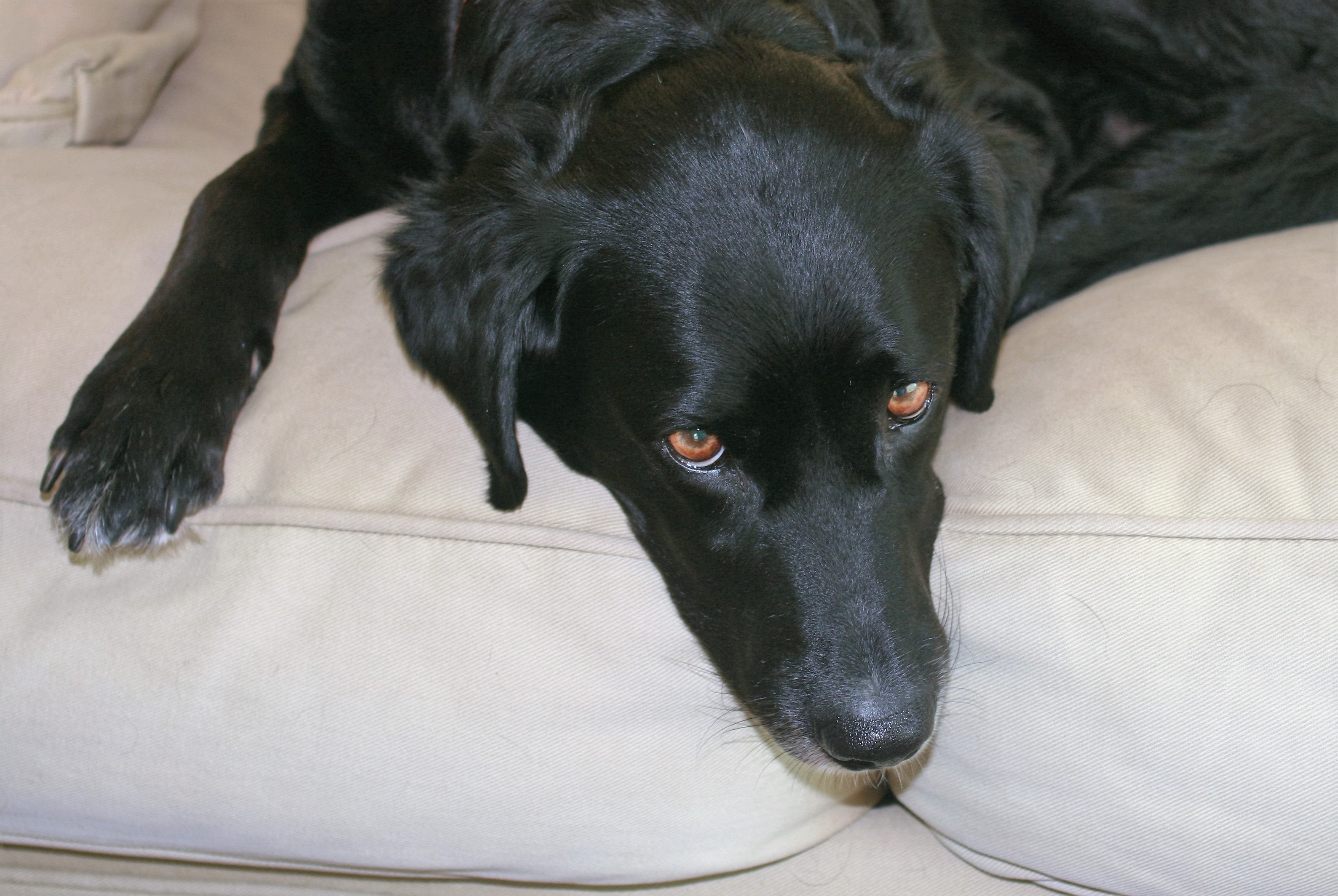
Roxy, a loyal companion to Team Echinacea during our summers in Minnesota, died today. She led a long and full life: running, digging holes & trenches, enjoying the companionship of people, eating smelly things, licking skunky gravel, basking in the sun, and chasing many critters, including chipmunks, 13-lined ground squirrels, rabbits, gray squirrels, fox squirrels, raccoons, ducklings, mice, red squirrels, and pocket gophers. She will be greatly missed.

Stuart recommends the below books as a good place to start thinking about time management. If you aim to manage time to better reflect your values, these books can help you develop strategies. The locations refer to NU libraries.
Mindset : the new psychology of success / Carol S. Dweck.
Dweck, Carol S., 1946-
New York : Random House, ©2006, 1st ed..
Checked out from Main Library Stacks (153.8 D989m )
Thinking, fast and slow / Daniel Kahneman.
Kahneman, Daniel, 1934-
New York : Farrar, Straus and Giroux, 2011, 1st ed..
Available at Qatar Library Stacks (BF441 .K238 2011 ) and other locations
Getting things done : the art of stress-free productivity / David Allen.
Allen, David, 1945 December 28-
New York : Viking, 2001
Available at Main Library Stacks (646.7 A425g ) and other locations
Succeed : how we can reach our goals / Heidi Grant Halvorson ; foreword by Carol S. Dweck.
Halvorson, Heidi Grant-, 1973-
New York : Hudson Street Press, ©2010
Available at Main Library Stacks (153.8 G762s )
Power of habit : why we do what we do in life and business / Charles Duhigg.
Duhigg, Charles, author.
New York : Random House Trade Paperbacks, 2014, Random House Trade Paperback edition..
Checked out from Main Library Lending Resource Sharing Requests (BF335 .D78 2014 )
Willpower : the rediscovery of humans’ greatest strength / Roy F. Baumeister and John Tierney.
Baumeister, Roy F.
New York : Penguin Press, 2011
Checked out from Main Library Stacks (153.8 B347w )
|
|