Research interests: I am hoping to build on my knowledge of native flora and how they affect the environment around them, especially the soil characteristics. I would love to learn more about how deep rooted perennials affect the hydrology of the landscape.
Statement: I am from Virginia, MN
I started getting interested in native prairie plants when i was in high school working with conservation corps MN and IA in their youth program, I love being outside and spending time in nature. My hobbies include running, snowboarding, fishing, hiking, and gardening.
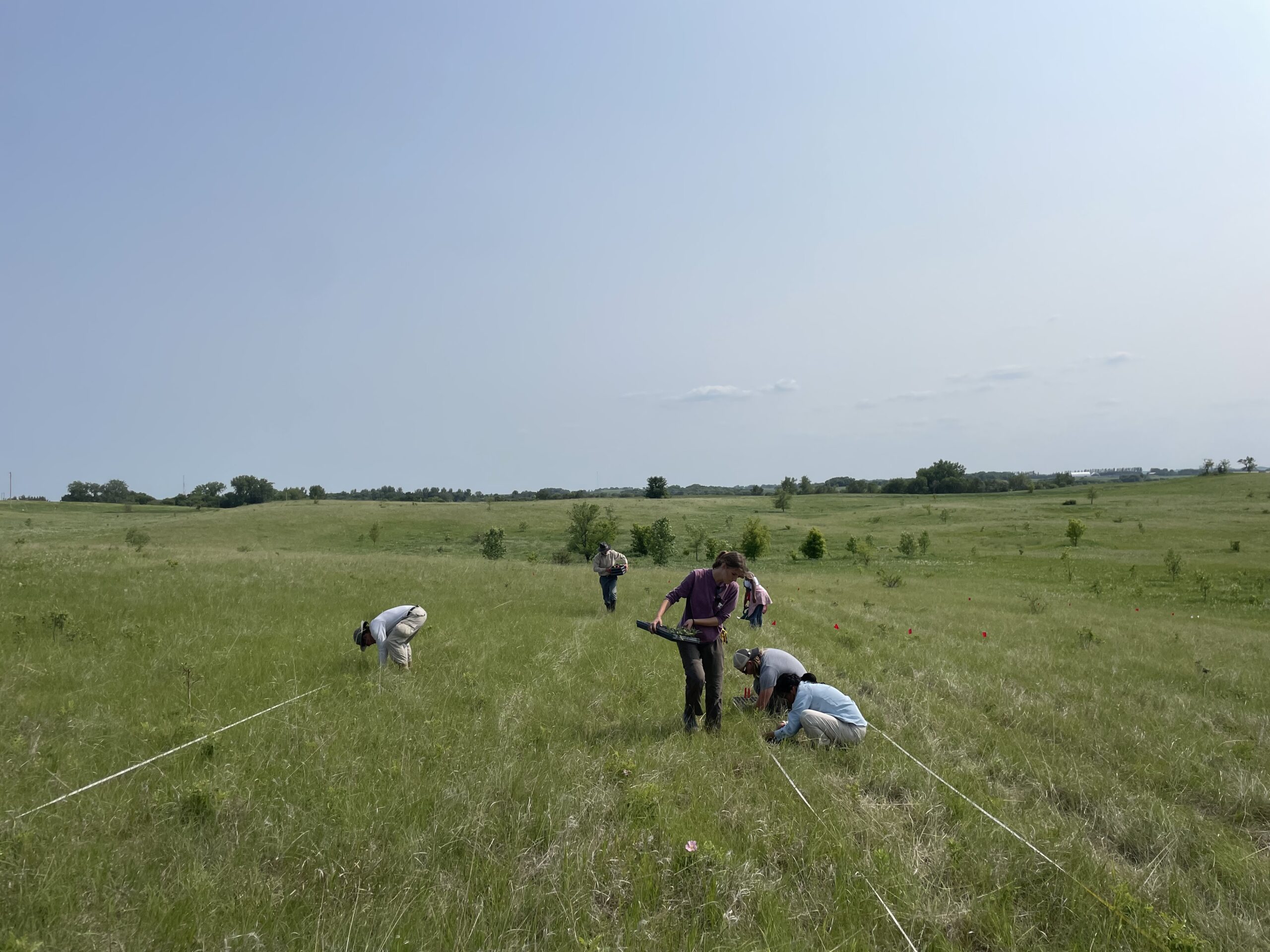
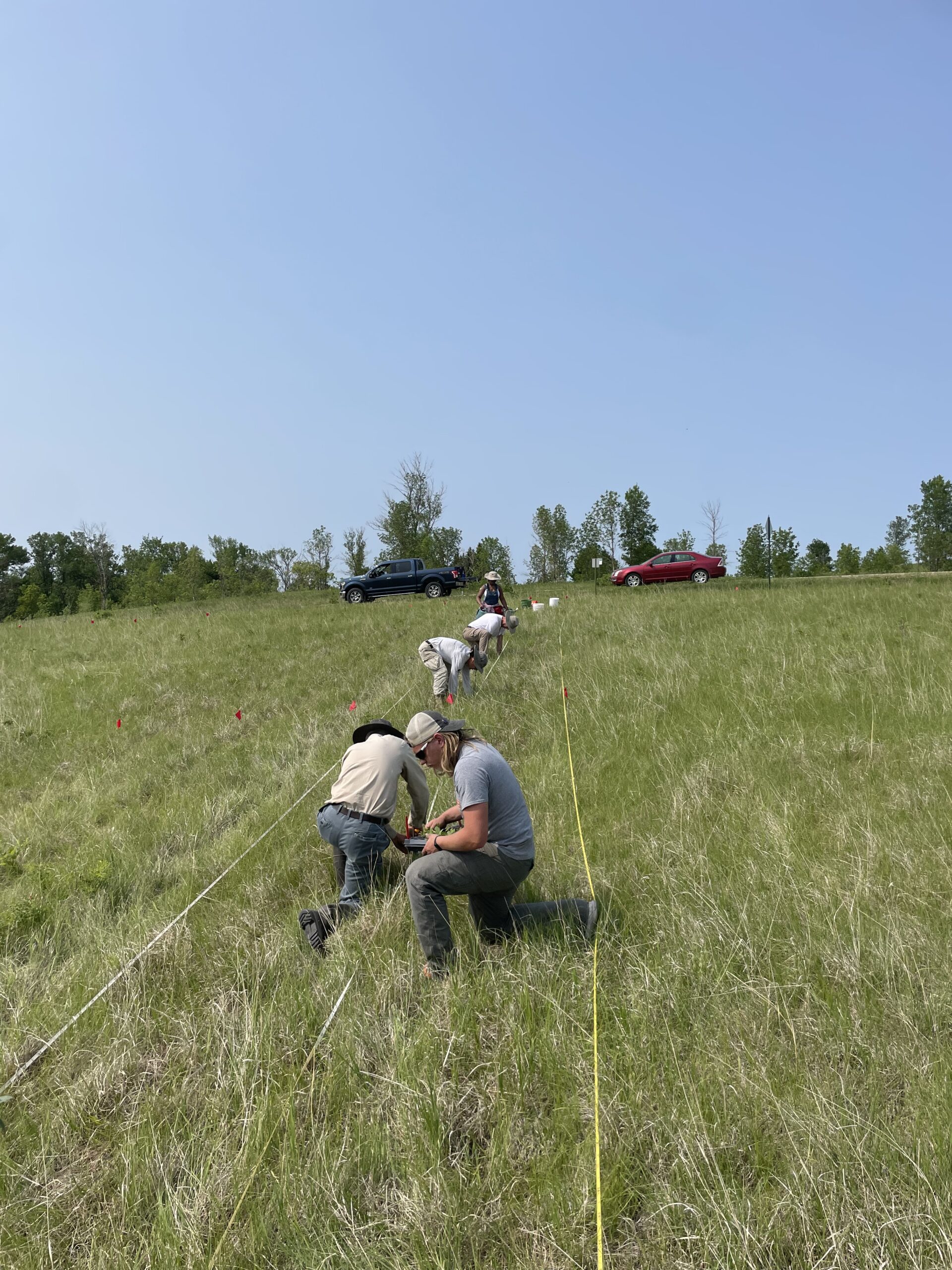
Today about half of the team got together and planted a new experimental plot. We all found our roles, worked efficiently, and got it done in 2 1/2 hours. Good work team! I’m excited to see what happens to the plot over the summer!
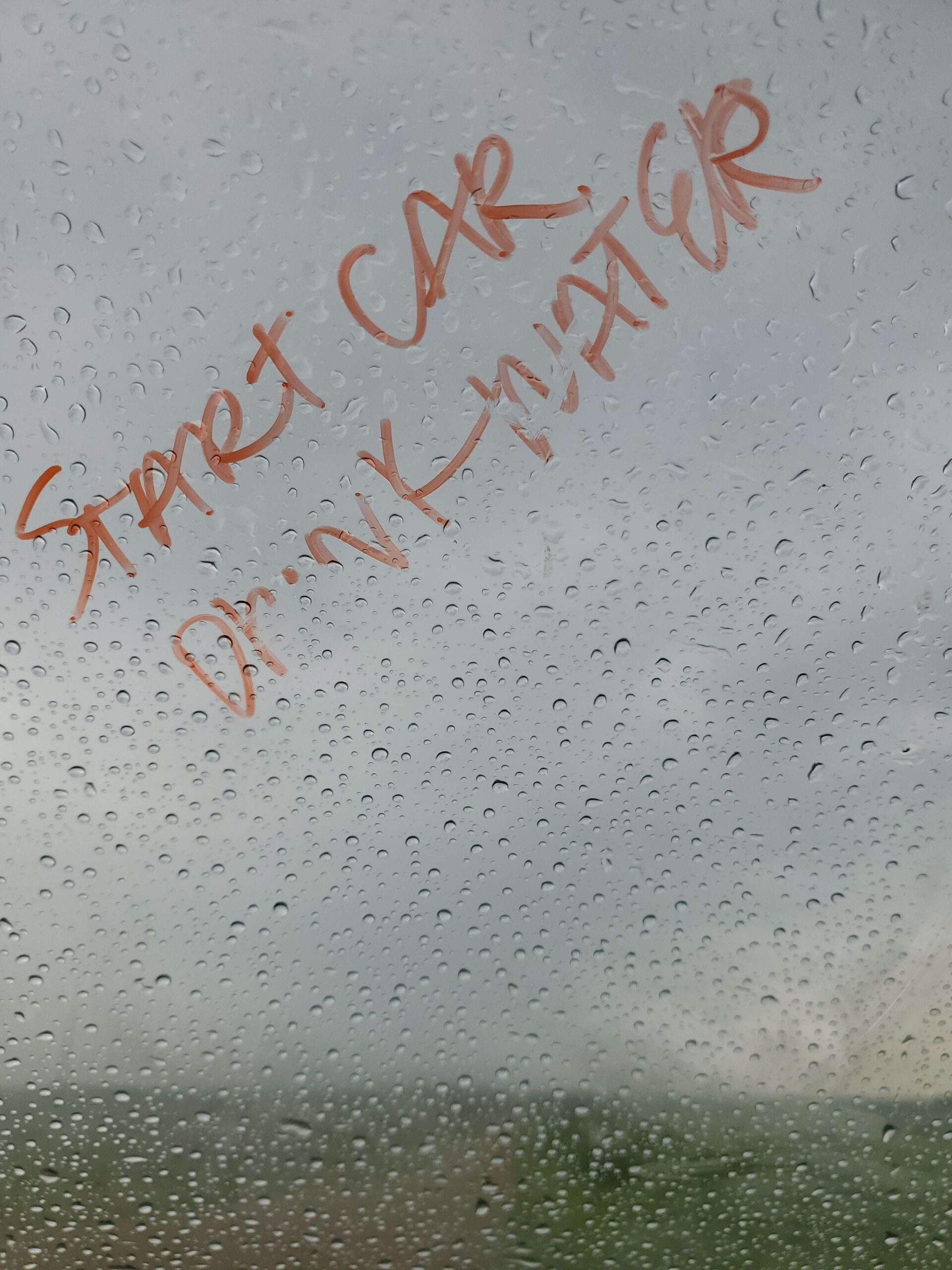
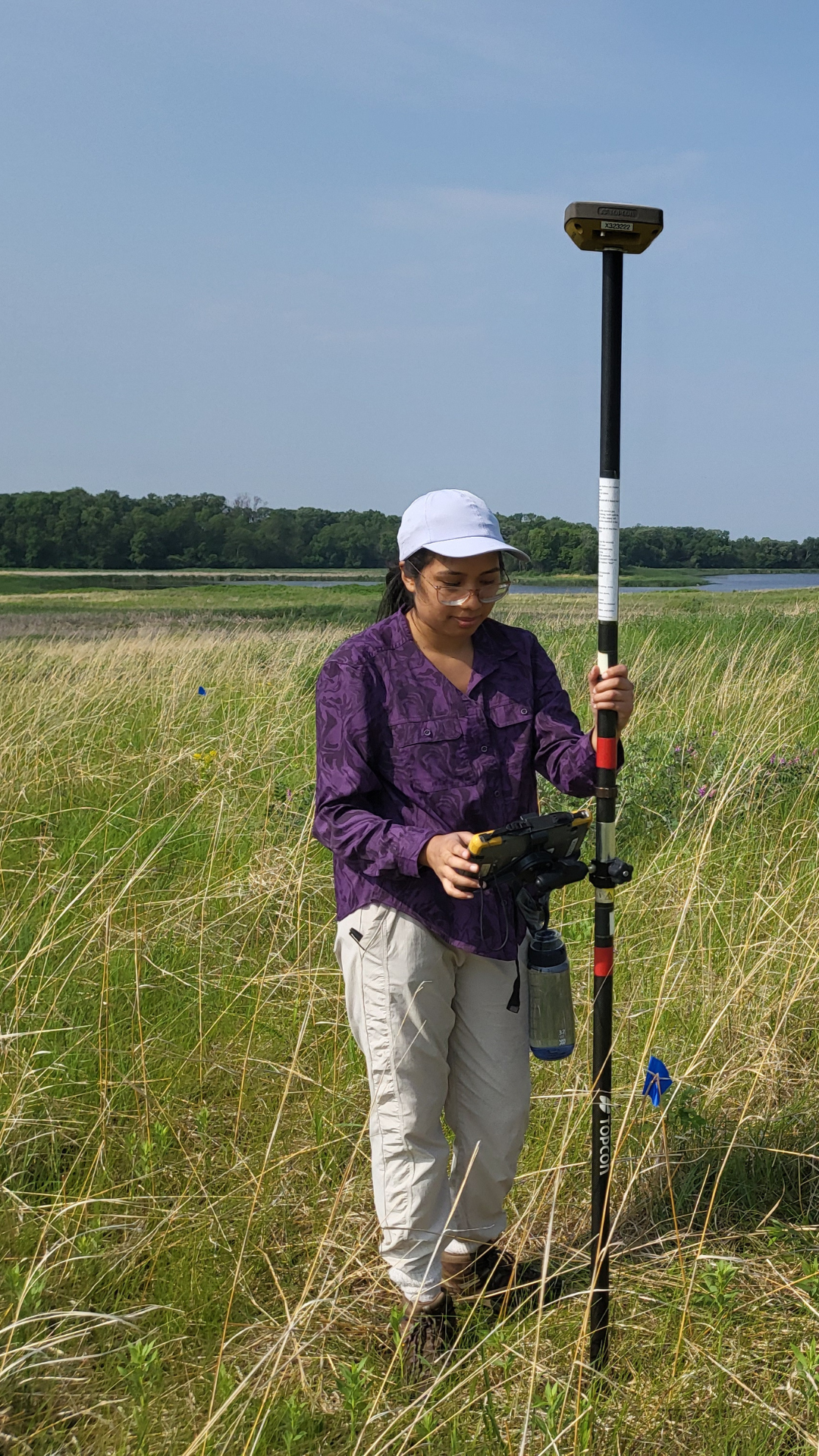
Slow start this morning drinking water as we waited for rain to pass so we could continue shooting ENRTF GPS points (we forgot it’s raincoat). After lunch we continued with more of the same work and saw some Heliopsis helianthoides conspiring with bees.
We started early today to beat the heat but instead were greeted with a cloudy and cool morning. Right off the bat, I started the morning by continuing to take some GPS points for the ENTRF-funded bee research project. While I was enjoying taking points in a site with minimal hills… other groups did not have the same experience. Public enemy #1 (Geese) showed their true colors by showering El with some “love”.
Taking GPS points!Geese 1 – El 0
After lunch, I learned how to take samples of the amount of light available along some of our transects using a light meter. My biggest trouble was finding all of our nails in the ground!
Around 80 8th grade students from Morris Junior High came by and learned about tools used in prescribed burns, plant identification, how to develop hypotheses, and methods for finding and trapping native bees!
Meanwhile…
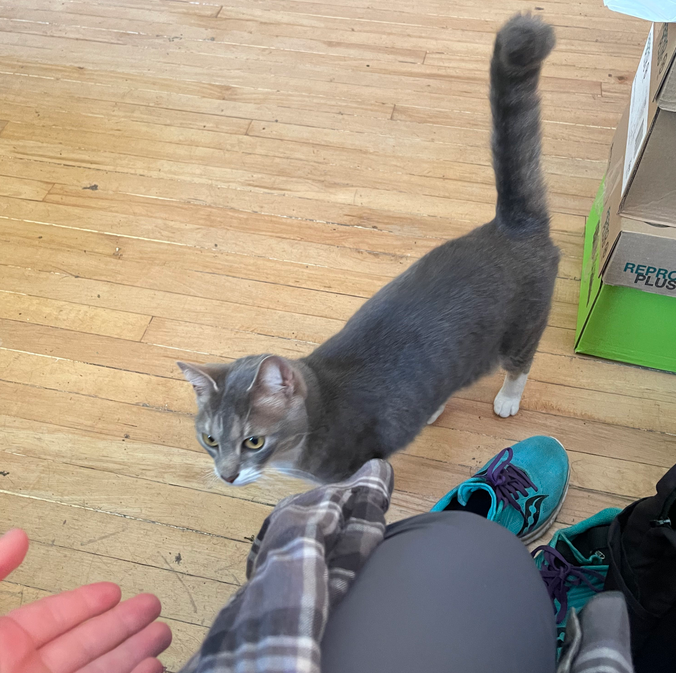
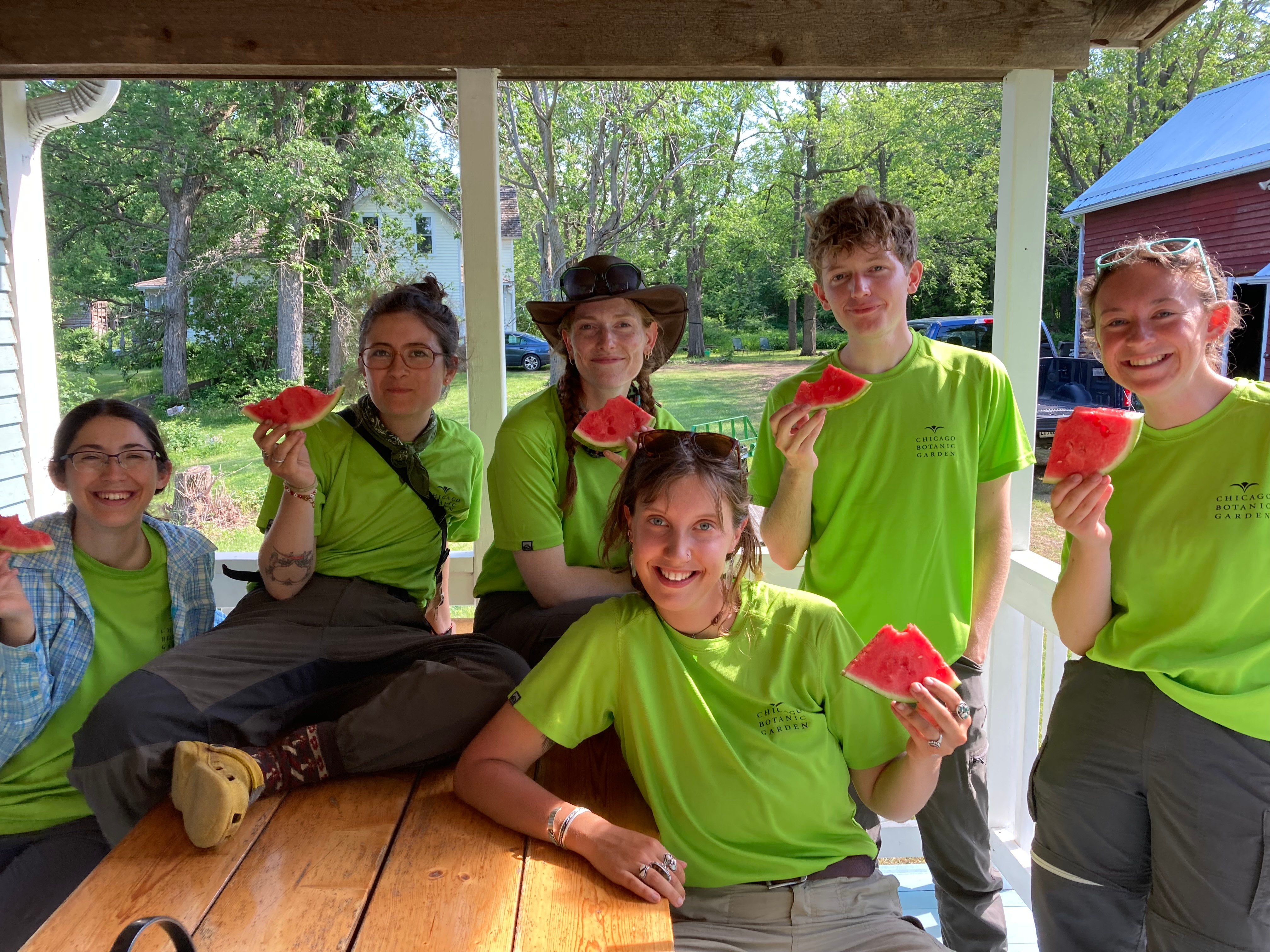
Other members of the team established points for our ENRTF-funded pollinator project, a rare species (Teeny catus) was spotted at the Hjelm House, and we all had watermelon at the end of the day to cool off.
Welcome back to this week’s episode of “What’s Flowering at Staffanson?”, where I will report to our avid flog followers the current blooms at one of our most beloved remnant prairies.
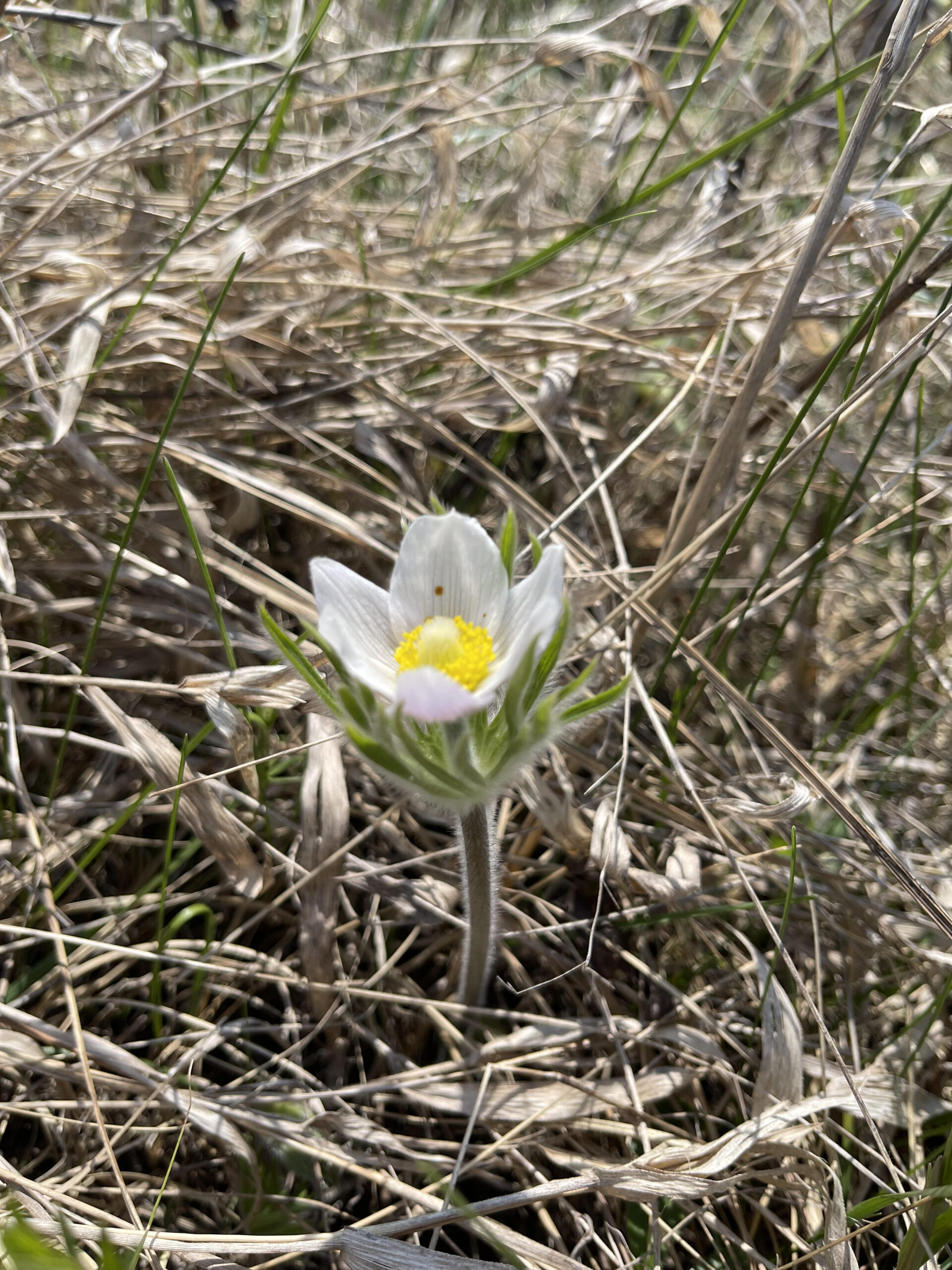
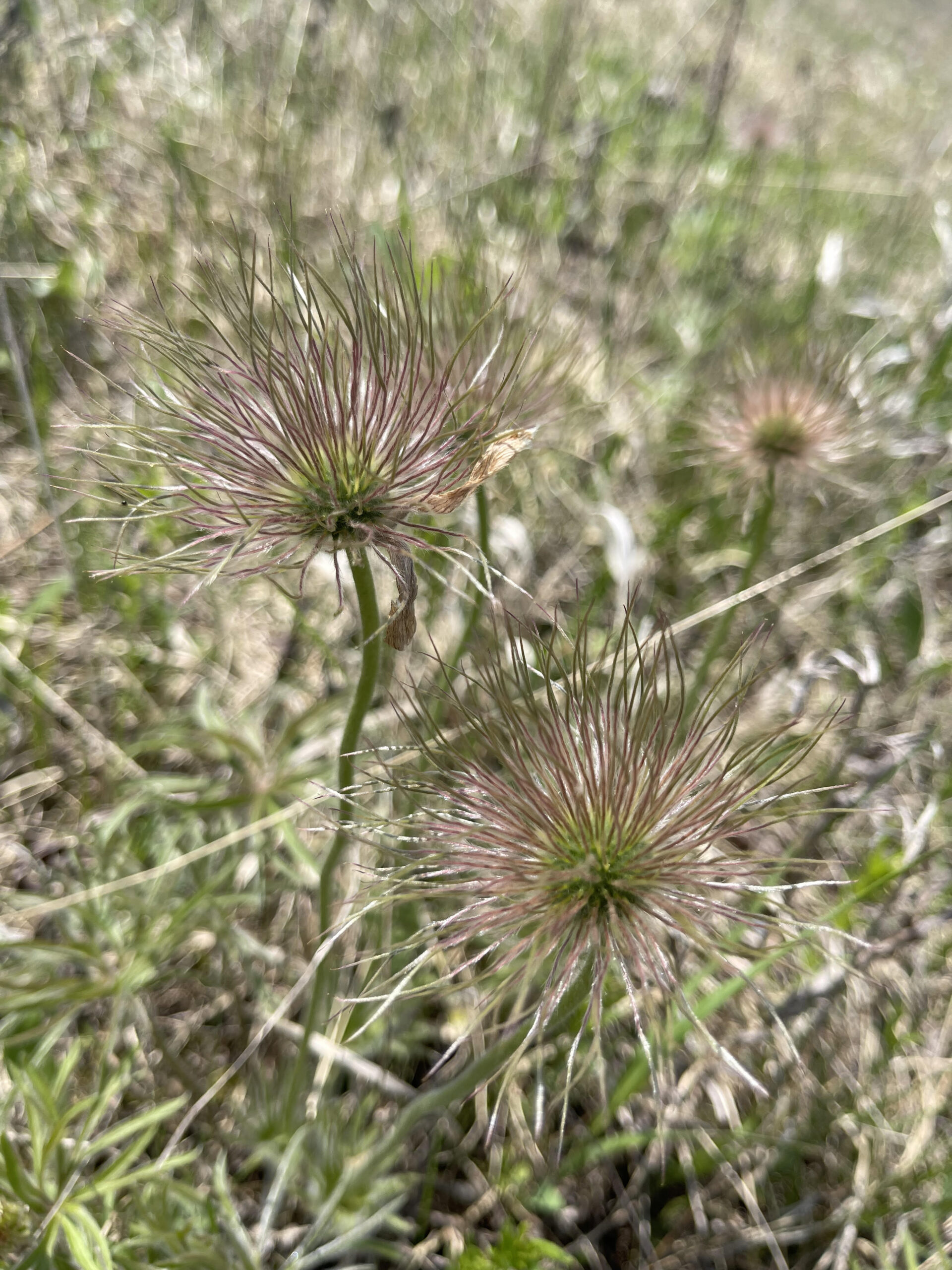
Pasqueflower (Anemone patens) is still flowering in some parts of the preserve, but most of the plants are producing fruits by now.
Only Paolo can take this……and give you a princess (let me know if you get the movie reference).
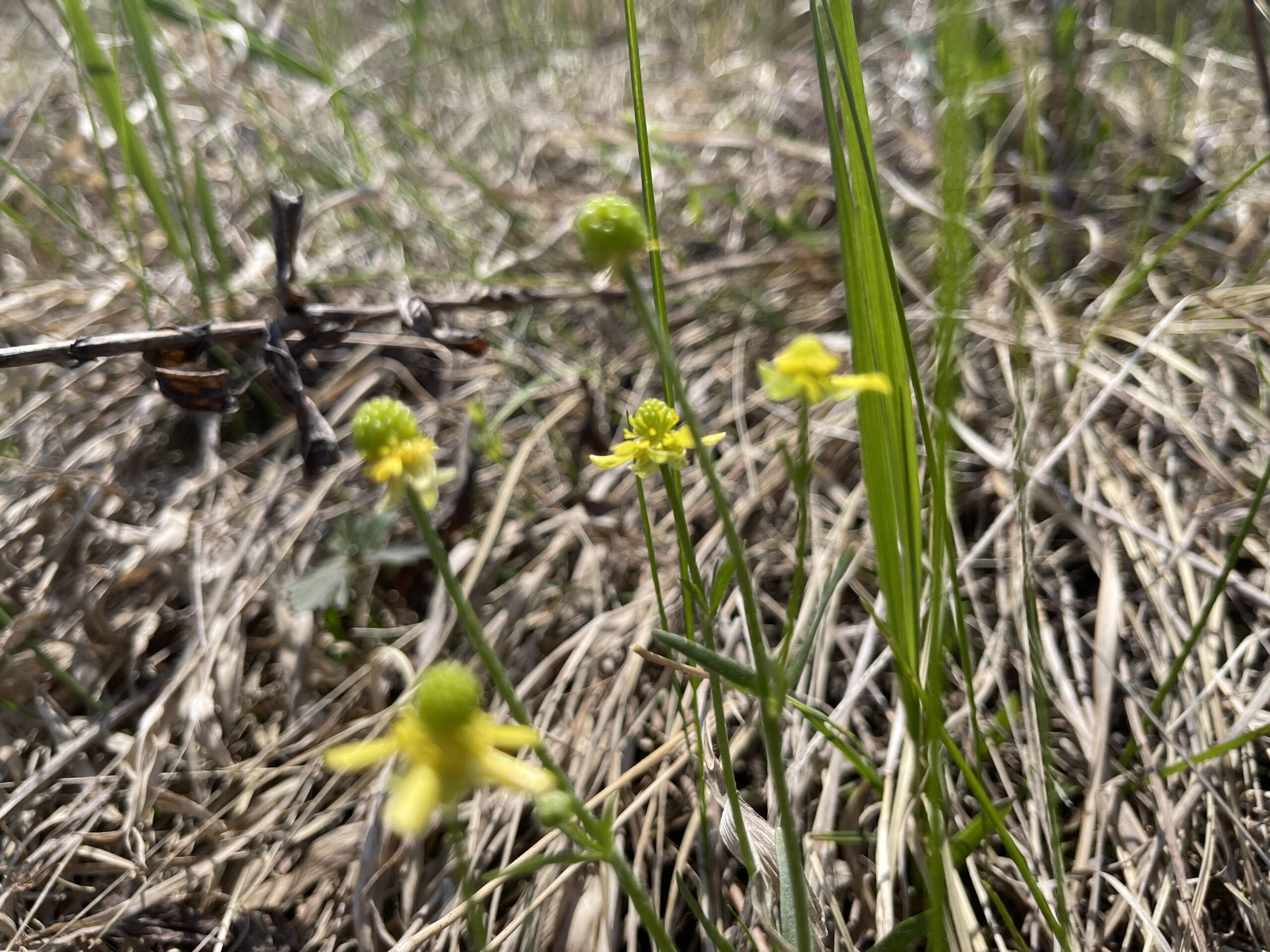
Next up we found some prairie buttercup (Ranunculus rhomboideus)
My camera decided to focus on one single flower.
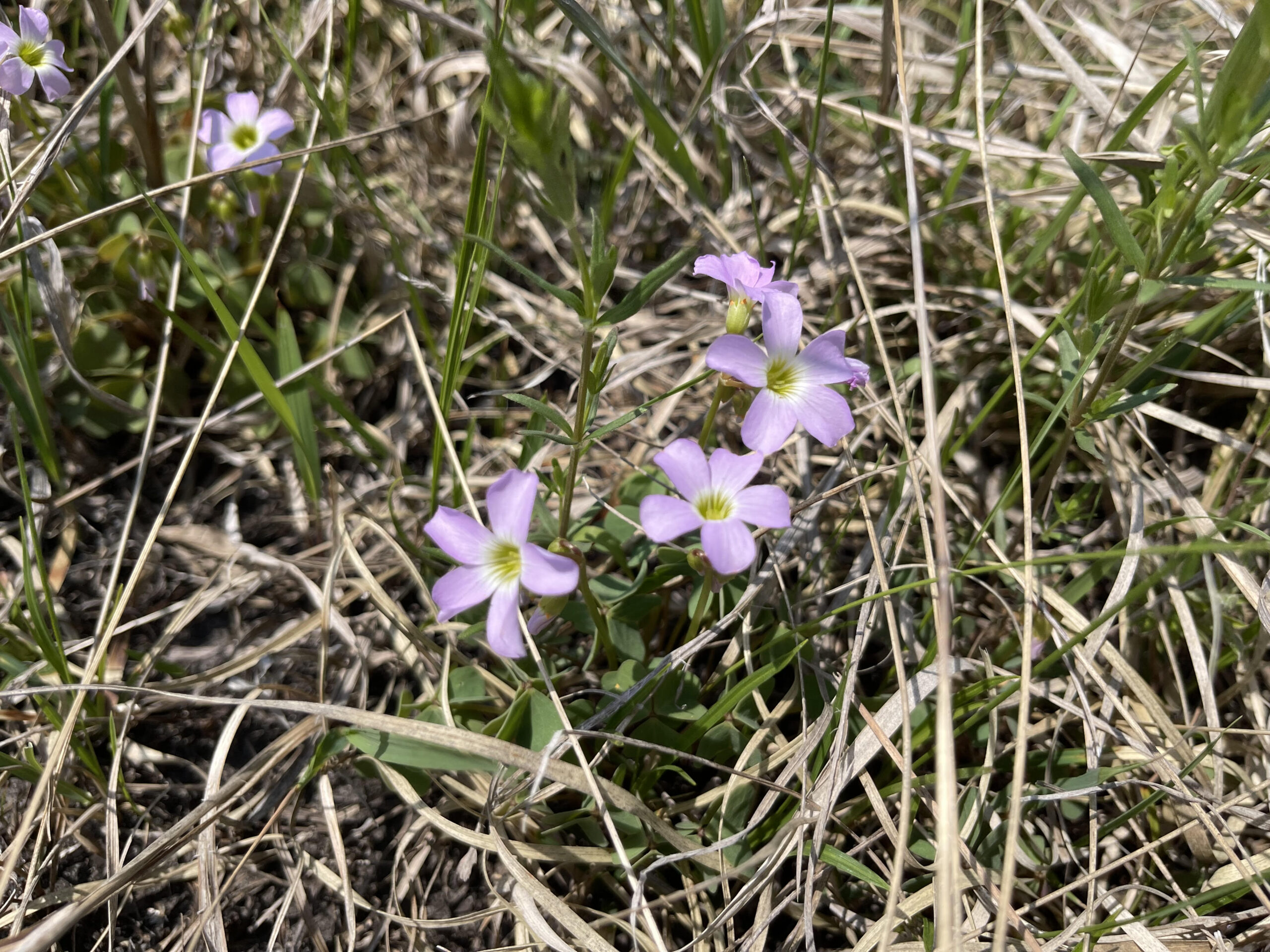
Jared wanted me to get a photo of Carex media, but like the photo above, my phone camera wouldn’t focus on the slender sedge (I tried, I swear!). So, picture everyone’s favorite sedge ~here~. Meanwhile, I can show you a non-blurry photo of violet wood sorrel (Oxalis violacea).
According to minnesotawildlflowers.info, this is the only lavender-colored wood sorrel in the state of Minnesota!
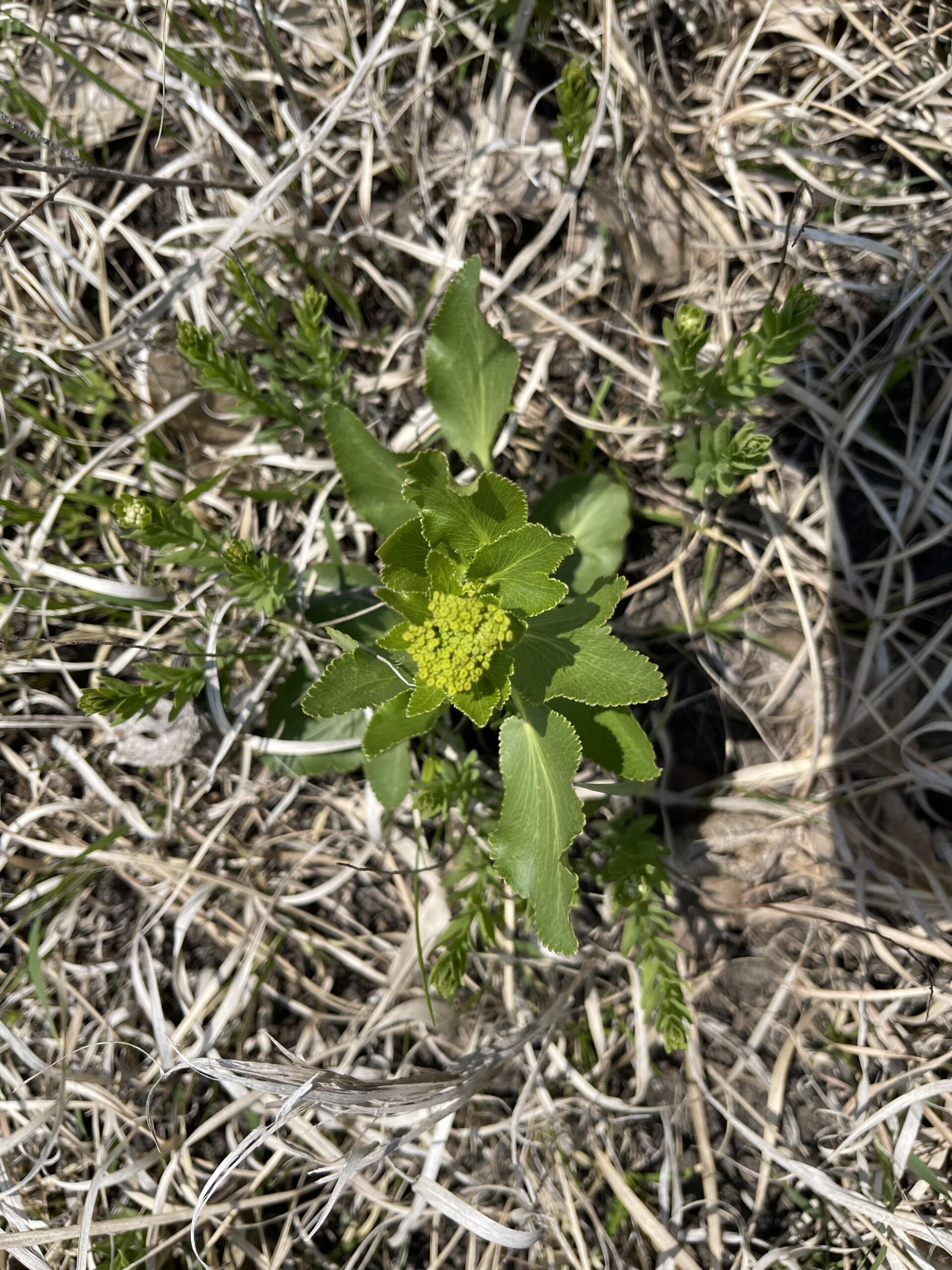
We saw a handful of heart-leaved Alexanders (Zizia aptera) beginning to produce their yellow umbels (or umbellets?).
This was the yellow-est one I could find!
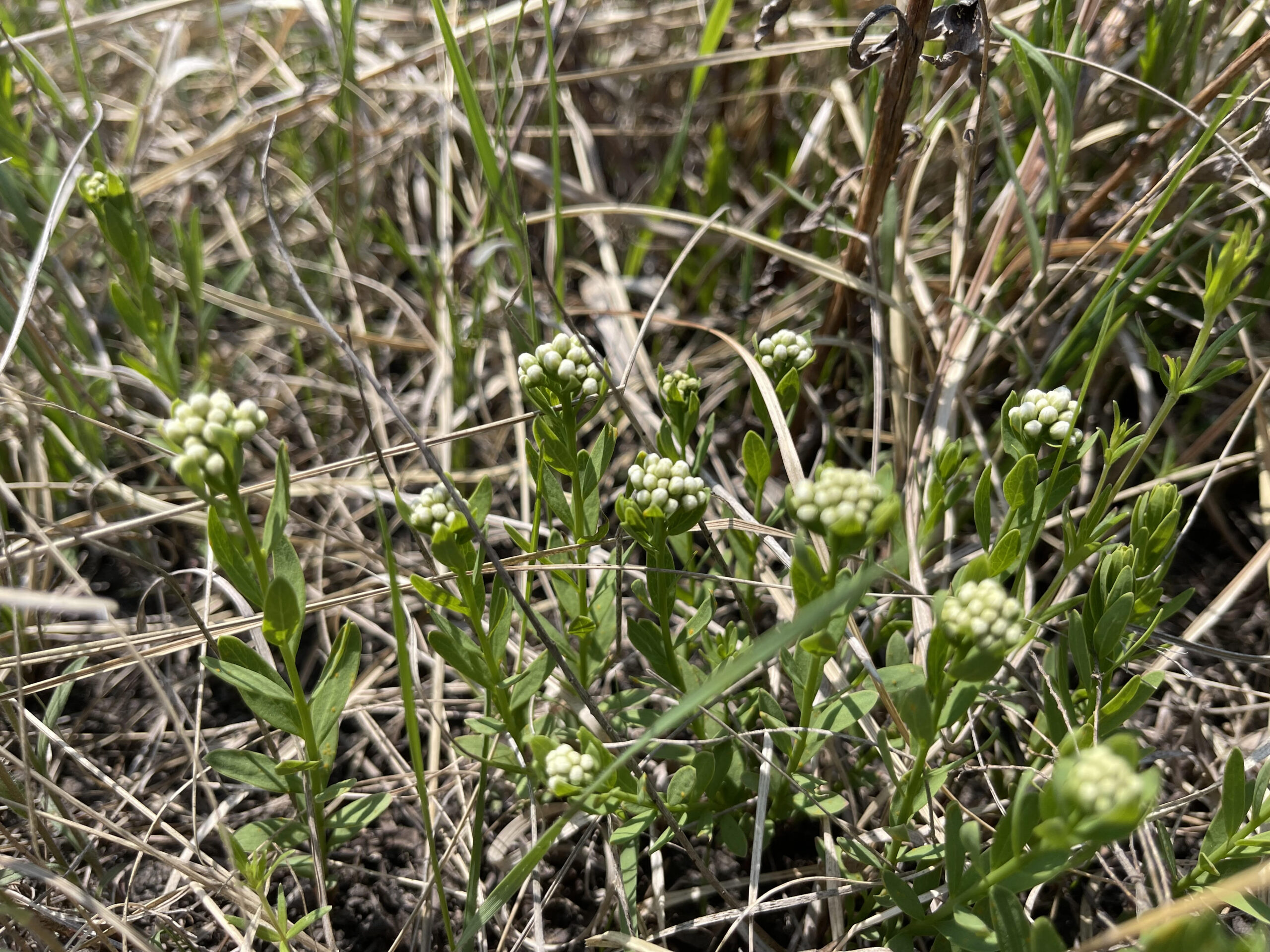
For some hemi-parasitic representation, we saw bastard toadflax (Comandra umbellata). Actually, we saw loads of Comandra, it seemed to cover large portions of Staffanson!
These plants really comandra my attention.
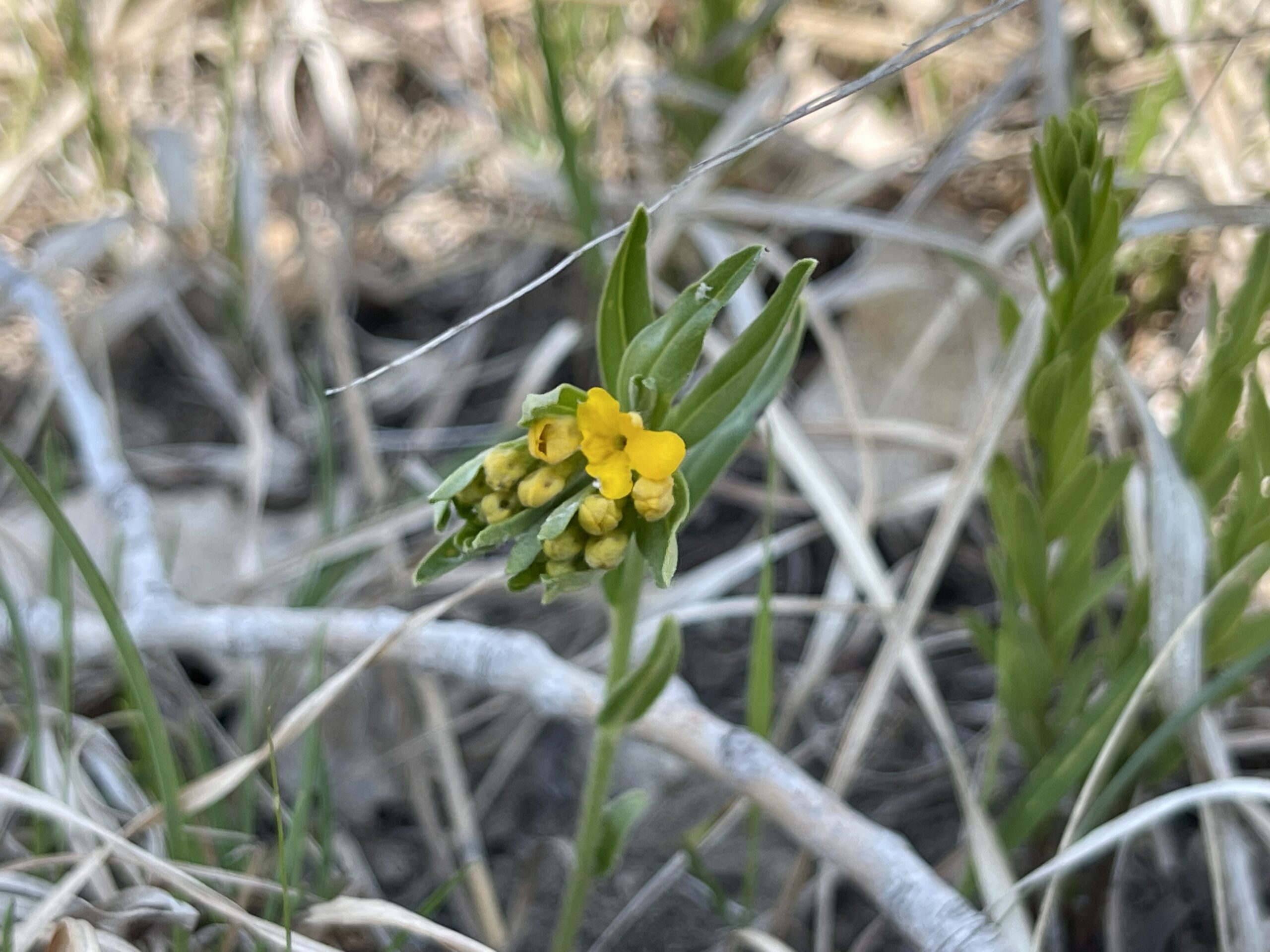
Hoary puccoon (Lithospermum canescens) was just beginning to show its Kraft mac-and-cheese-like colors.
One flower peeking out! So cute!
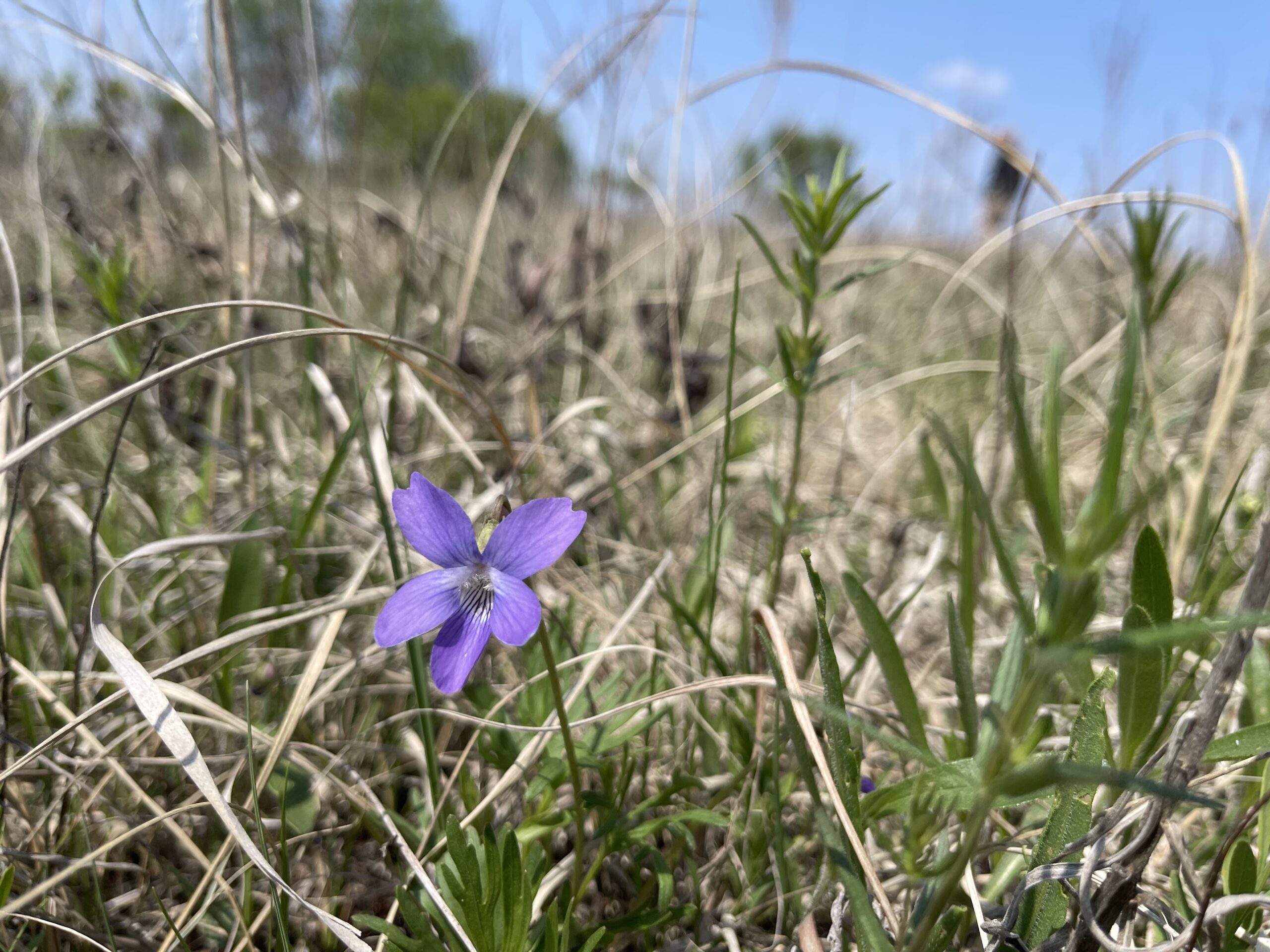
Perhaps my favorite photo of the day was of prairie violet (Viola pedatifida) and its dark purple striped veins. If you look closely, you can see Jared admiring the landscape in the background. Or is it Jared…?
Cryptid or determined ecologist? Who cares, look at the coloring of this violet!
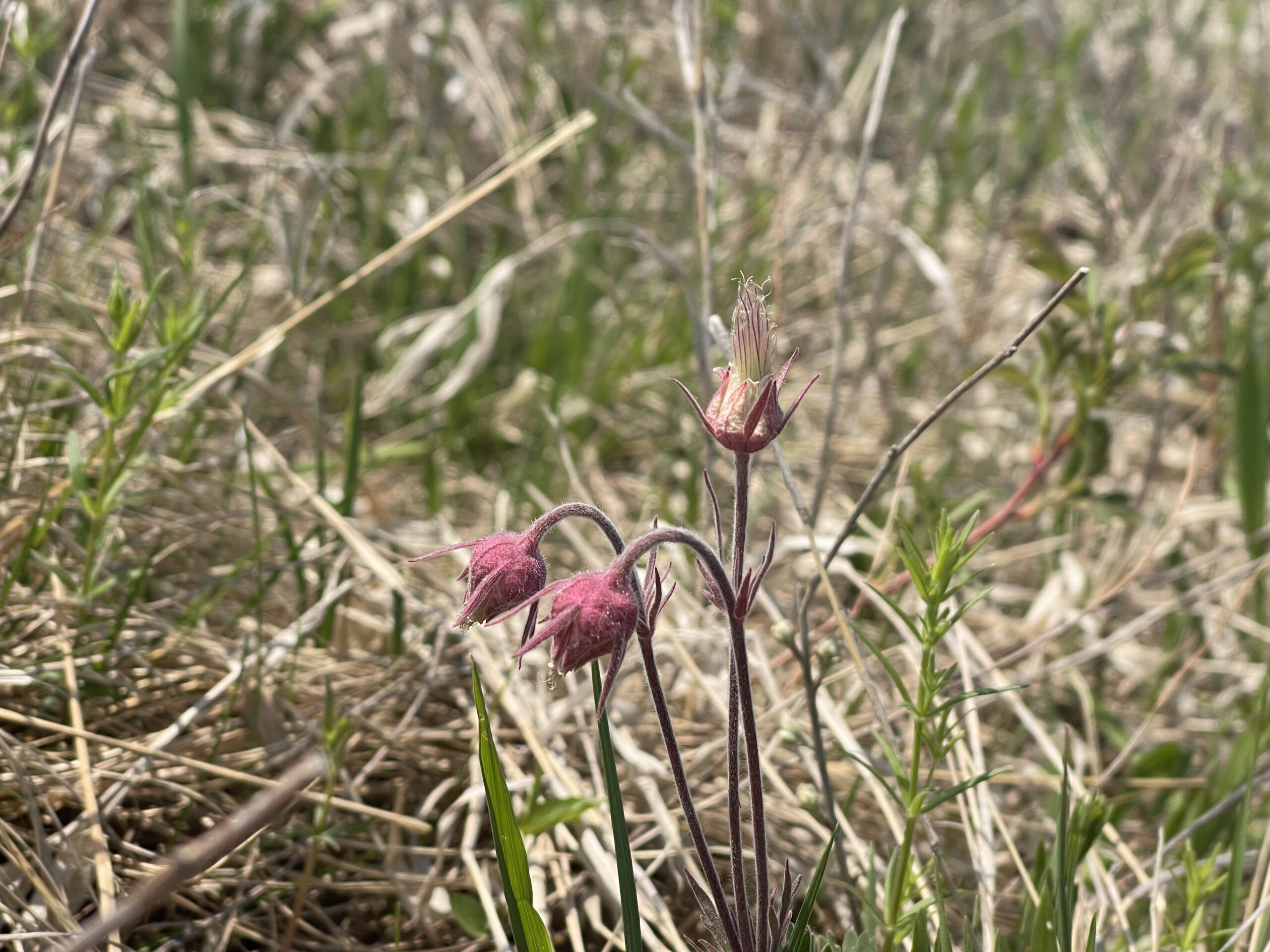
The true mystery of the day was the usually-abundant prairie smoke (Geum triflorum). We ventured all the way to the west end of Staffanson before we found a plant. While I appreciated the treasure hunt, I wonder why it’s a poor year for prairie smoke!
Is the lack of prairie smoke a bad omen?
I made all of these observations of Friday, May 19th. I’m excited to return to Staffanson in a few weeks and see how the prairie has changed!
B.S. Botany and Environmental studies, UW-Madison, 2023
Pronouns: She/her
Research Interests
I am broadly interested in plant ecology, restoration ecology, and fire ecology. I am curious about plant functional traits, especially those related to fire adaptation, and intraspecific variation.
Statement
I am from Milwaukee, Wisconsin and fell in love with prairies during my undergraduate years in Madison, Wisconsin! In my spare time, I like to run, bike, do ceramics, knit, and read.
Biology & Geography/GIS major, Gustavus Adolphus College ’22
Pronouns: she/her
Research Interests
My research interests include plant-insect interactions, the effects of fire on plant reproduction, flowering phenology and generally how human disturbance impacts prairie species. Currently, I am working on an experiment with Alex which investigates the effects of smoke on Echinacea flowering. I’m excited to gain more skills this summer in mentoring, data management and analysis, techniques like hand-crossing, and leading field crews!
Statement
I am from Minneapolis, MN and spent my college years in the great city of St. Peter, MN. I have been working with the Echinacea Project since last June as a research intern.
In my spare time I like to read lots of books, run long distances, play board games, embark on various crafting projects, listen to concerning amounts of Taylor Swift music, and spend as much time outside as I can.
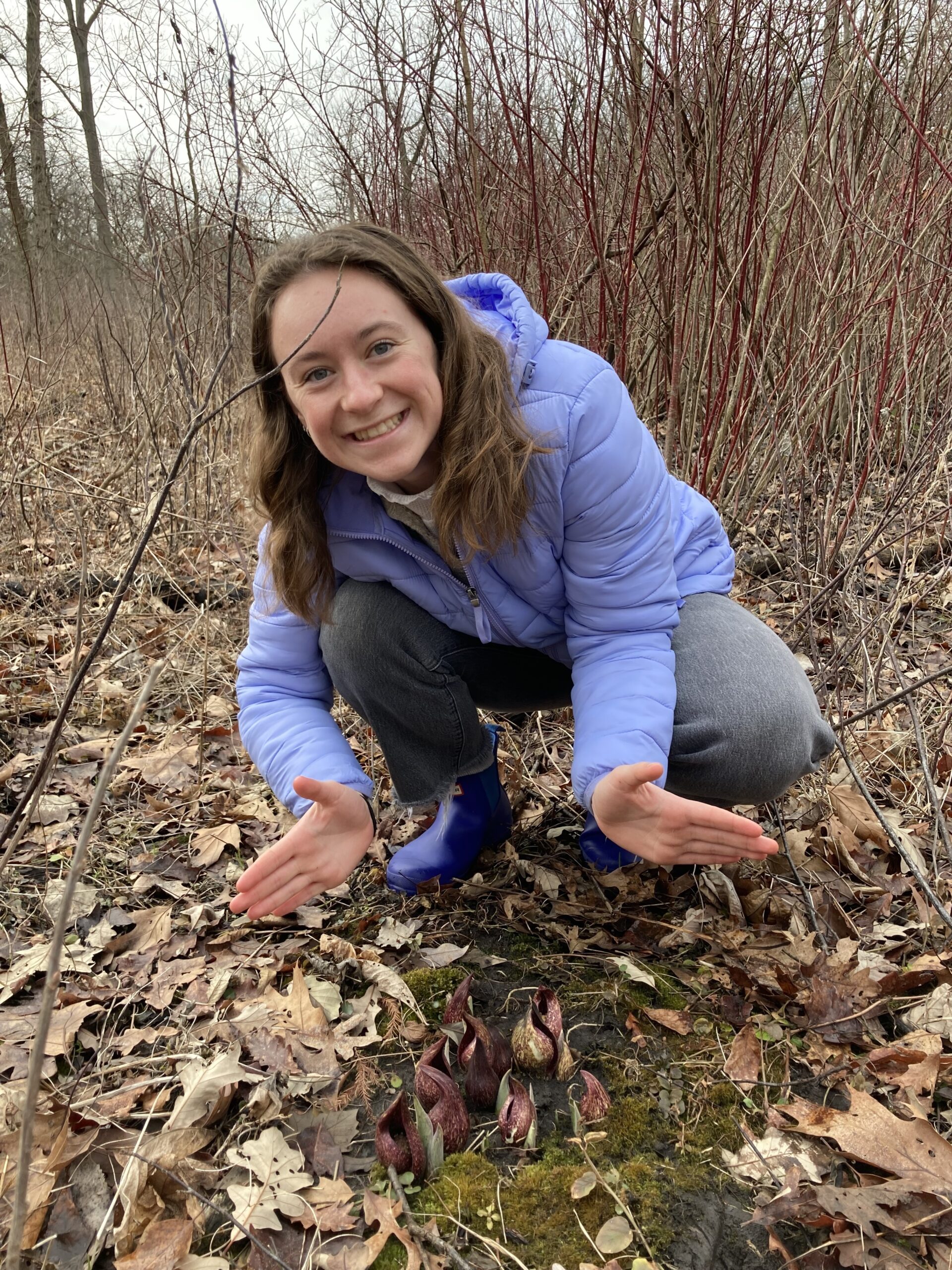
Me posing with the skunk cabbage in McDonald Woods this spring!