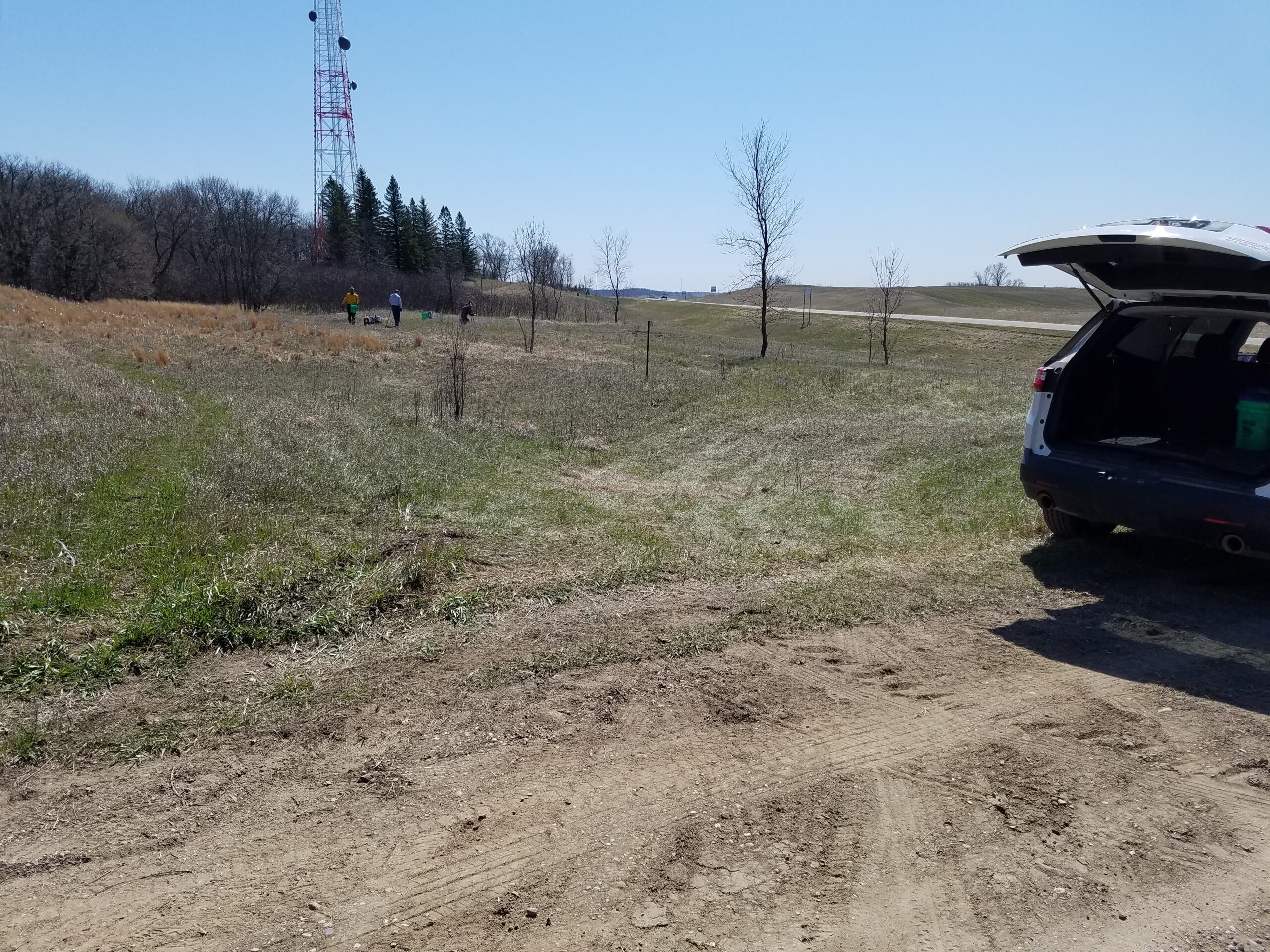
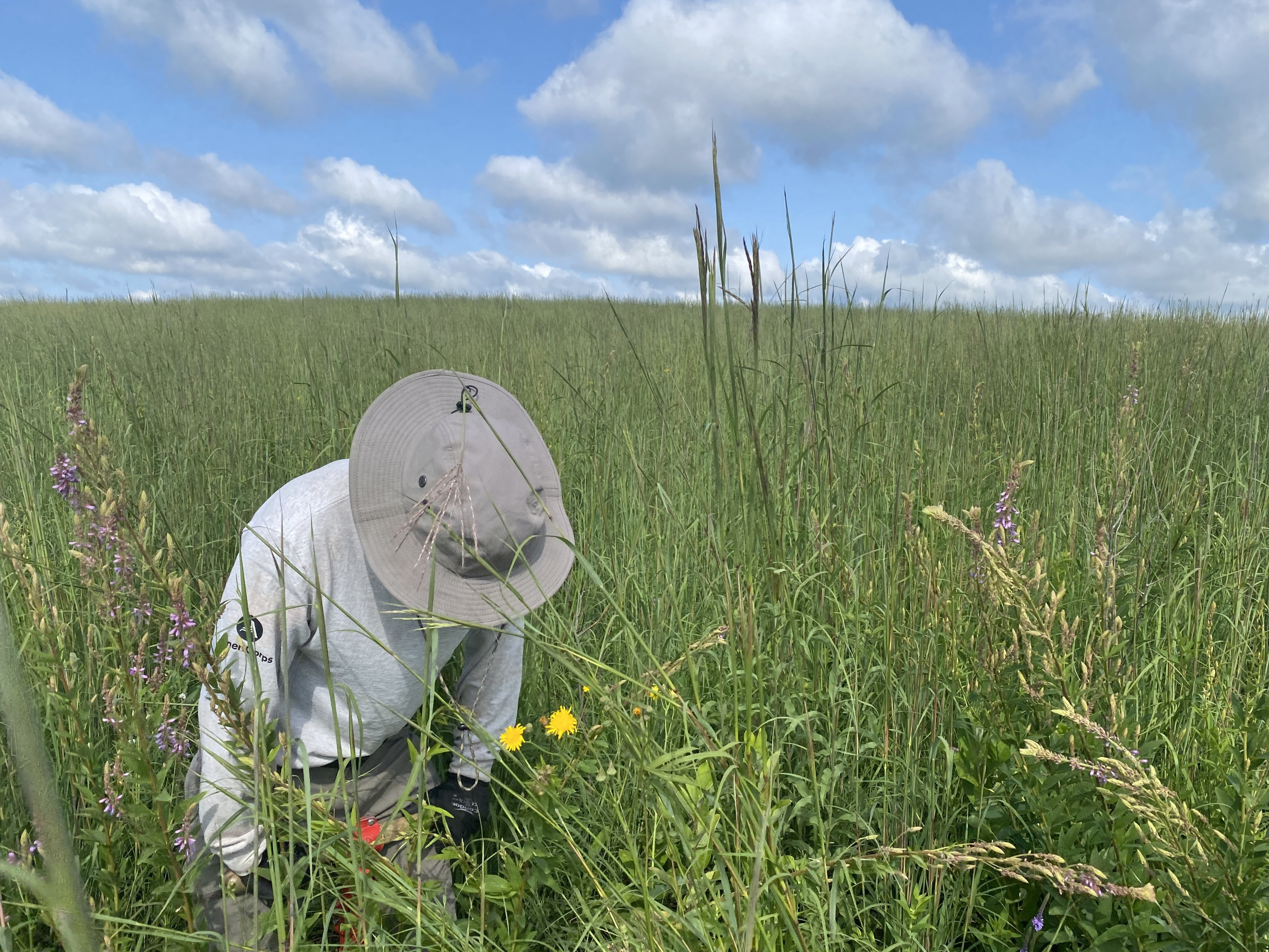
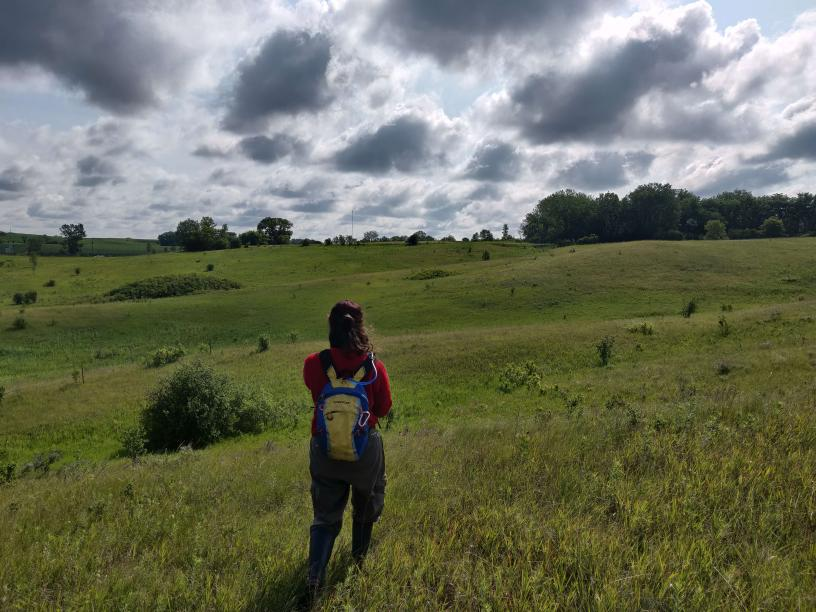
In summer 2020, Team Echinacea established two plots south of experimental plot 8 for a pilot experiment examining fire effects on Big bluestem (Andropogon gerardii) reproduction. Neither plot was burned during 2020. During spring 2021, we randomly selected the western plot to be burned. In spring 2022, we burned the western plot. Team Echinacea did not collect any new data from the Andropogon pilot experiment during summer 2023. In the lab, Elif and Stuart made progress on developing a protocol for x-raying Andropogon seed heads and processing the X-ray images. During December 2023, Carleton externs Vo and Rebecca are developing a protocol for quantifying seed set. Exciting times ahead!
Data collected: All reproductive effort data are housed within the remag repo. We are currently generating data on reproductive outcomes in the lab.
Samples or specimens collected: All harvested seed heads have been cleaned and x-rayed.
Products: Stay tuned for an updated in the next couple weeks!
You can read more about the Andropogon fire and flowering in exPt08 experiment, as well as links to prior flog entries about this experiment, on the background page for this experiment.
You guessed it! Jared AGAIN mapped a bunch of lilies in summer 2023… What a goof. We mapped 277 flowering plants within seven 60 x 40 m plots. Pods were harvested from ~20 plants.
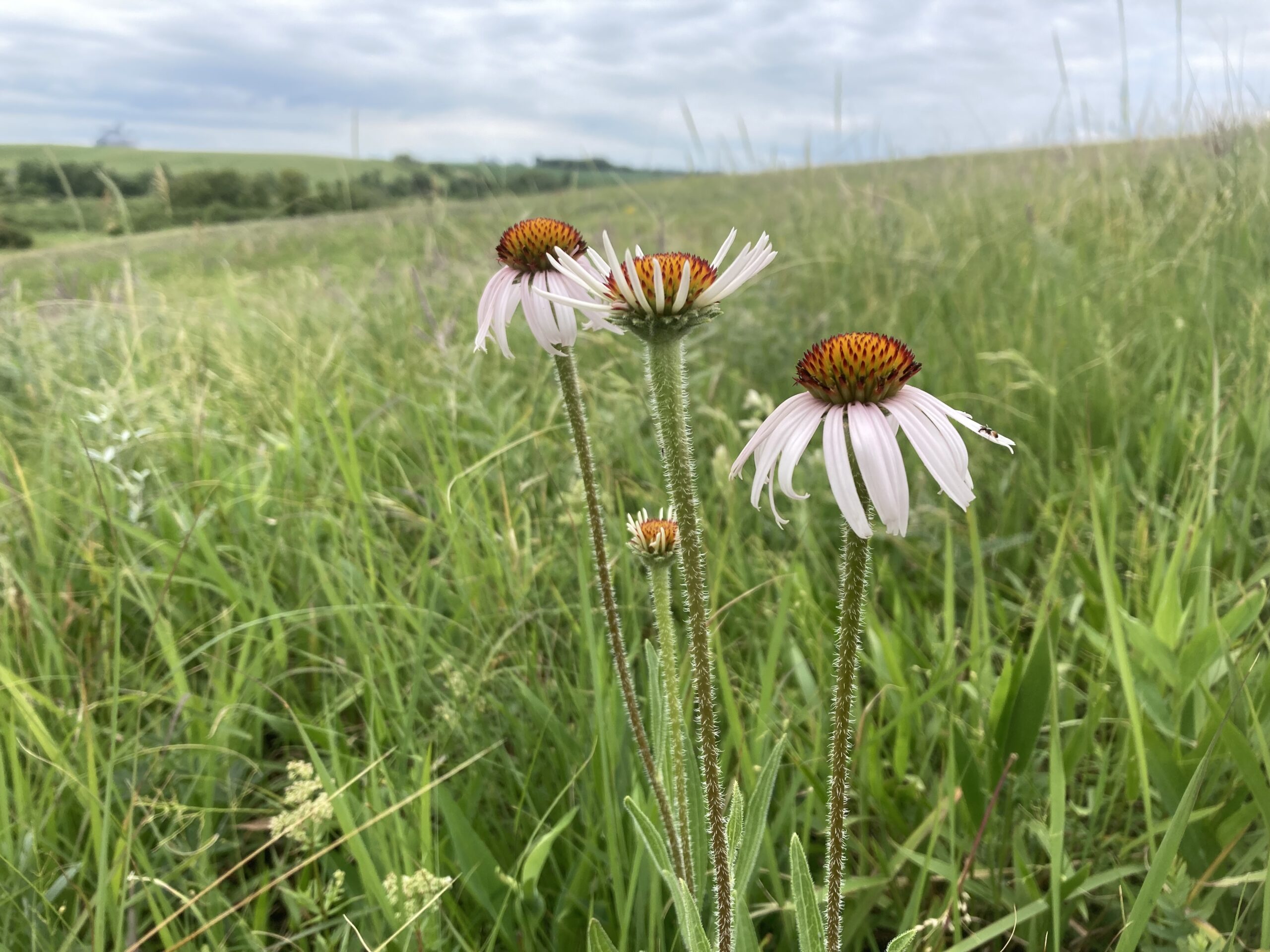
Wait, what were you saying about Echinacea? I got distracted…
Start year: 2021
Location: Remnant patches of prairie in and around Solem Township, MN
Overlaps with: The setting sun and a full night of sleep
Data collected: Spatial and demographic data are housed in the remlp repo.
Samples or specimens collected: Harvested pods are in Jared’s office. They have been cleaned. All unprocessed seeds from prior years were returned to western Minnesota.
Products: Stay tuned!
You can read more about the Lilium fire and flowering experiment, as well as links to prior flog entries about this experiment, on the background page for this experiment.
We did not collect any additional data on Echinacea angustifolia flowering phenology in remnants during summer 2023. During spring 2022, we curated remnant phenology data.
Rays up, rays spreading, first day flowering, and second day flowering all in one plant. If only there was someone studying how this variation influenced reproduct… oh wait, nevermind.
Start year: 1996
Location: Roadsides, railroad rights of way, and nature preserves in and around Solem Township, MN
Data collected: All data have been curated and added to the Echinacea Project’s ‘remPhenology’ data set. Jared also curated all remnant style persistence data.
Products: Check out our recent PNAS paper investigating fire effects on plant reproductive which utilizes our extensive phenology data set!
You can read more about the Flowering phenology in remnants project, as well as links to prior flog entries about this experiment, on the background page for this experiment.
In spring 2023 we planted about 100 Asclepias viridiflora seedlings in plugs to transects at site eth. The planting data sheets with all details are in Jared’s office. We did not monitor these seedlings after planting.
During summer 2023, we collected demographic data on 172 individual Asclepias viridiflora plants across 17 sites. We also collected 52 seed pods from 26 maternal plants.
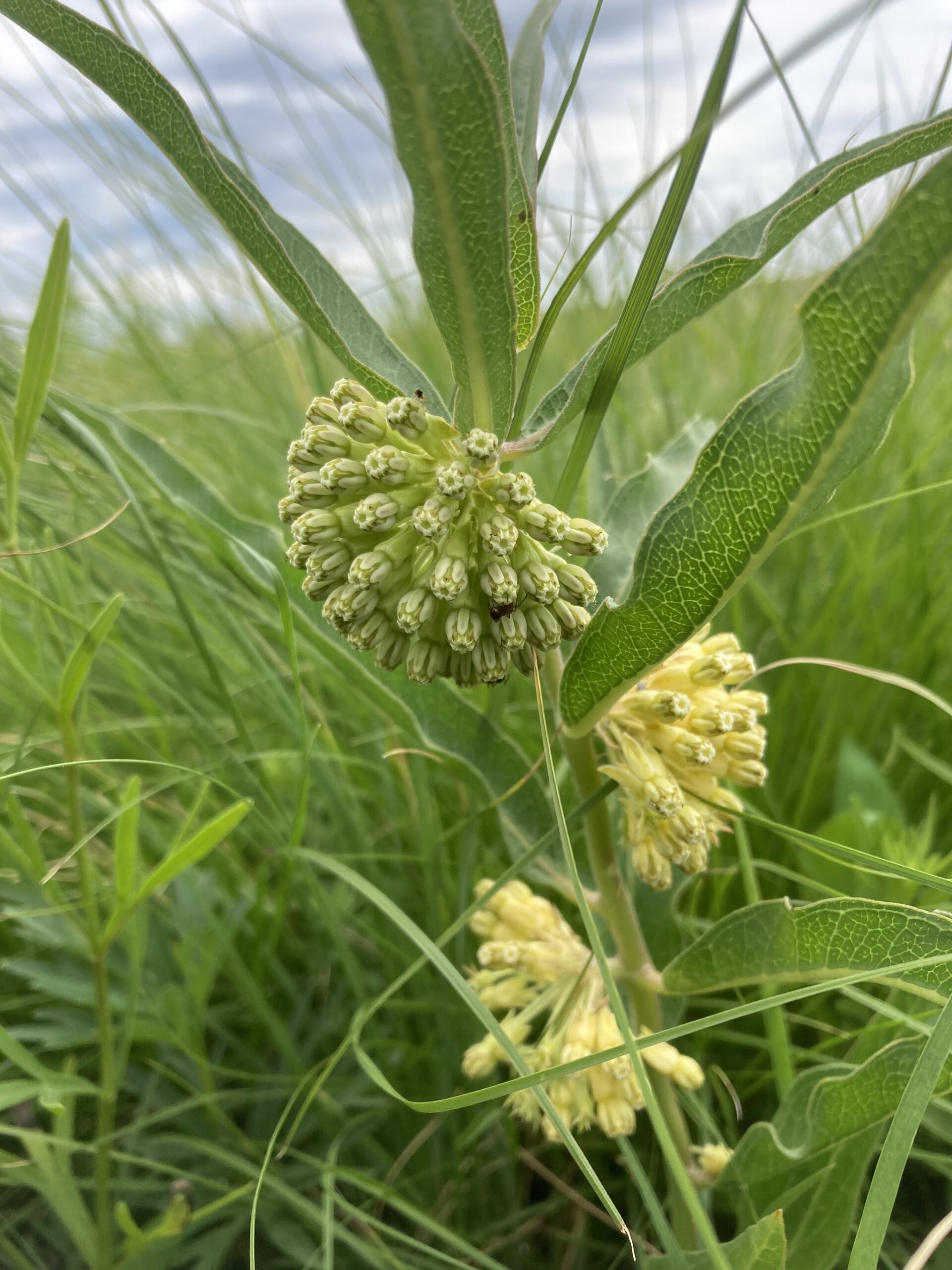
A very charismatic cryptid
Dathon Maton and Mary Ashley at the University of Illinois at Chicago have made great progress genotyping tissue collected from seedlings and potential parents in remnant populations. These genetic data coupled with our spatial and demographic data will help us understand the genetic structure of milkweed populations and patterns of gene flow within and among remnants.
Start year: 2021
Location: 17 patches of remnant tallgrass prairie near Solem Township, MN
Data collected: Spatial and demographic data have been curated and are housed within the remav repo. Harvested pods have been cleaned, counted, and x-rayed but need to be classified.
Samples or specimens collected: 2023 harvested seeds are in Jared’s office. Previous year’s seeds were returned to remnant populations.
Products: Stay tuned!
You can read more about the Asclepias viridiflora demography experiment, as well as links to prior flog entries about this experiment, on the background page for this experiment.
In summer 2021 and summer 2022, we investigated fire effects on Liatris aspera across 30 patches of remnant prairie in Solem Township, MN. We did not collect any new Liatris data in 2023. All harvested samples were processed in the lab during spring 2023. All data has been curated and are analysis-ready.
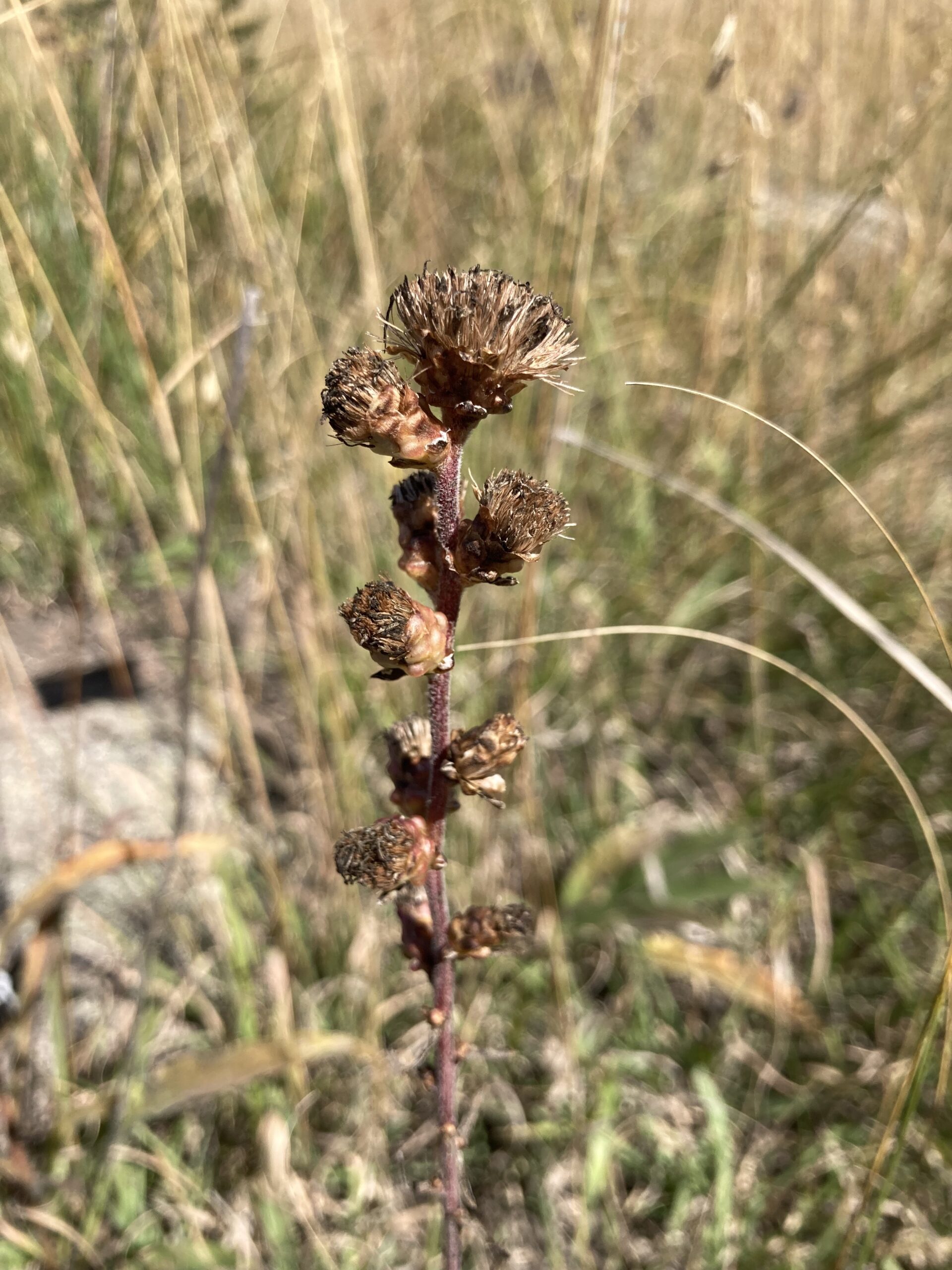
Had to go back to 2021 to get a Liatris photo, good riddance!
Start year: 2021-2022
Location: 30 patches of remnant prairie in and around Solem Township, MN
Data collected: Spatial location, reproductive effort, and reproductive outcomes data have been curated in the remLa repo. All data are analysis ready.
Samples or specimens collected: All harvested reproductive material have been processed in the lab. Half of the collected seed was sowed in the recently burned southeast hill at the farm. The other half have been reserved for sowing in P2 (provided it burns in spring 2024).
Products: Jared has conducted preliminary analyses. Stay tuned in 2024 for more info!
You can read more about the Liatris fire and flowering experiment, as well as links to prior flog entries about this experiment, on the background page for this experiment.
Since 1995, the Echinacea Project has been mapping and collecting demographic information on Echinacea angustifolia to generate long-term records detailing individual fitness in prairie remnants. In summer 2023, Team Echinacea visited 42 prairie remnants to search at 2443 locations where adult Echinacea plants had been previously mapped. We call this “total demo.” At small sites, the team took records for all adult plants found at a site (no change in total demo protocol from previous years). At larger sites, we scaled down and visited a subset of adult plants. Burning led to high flowering rates and lots of newly flowering plants entering the census, which stressed our system for total demo. This year we did not visit plants that were “not present” for the past 3+ years and we also capped total demo points at 100 per site. For example, at Landfill, we searched at 100 locations at Landfill East and 100 Locations at Landfill West.
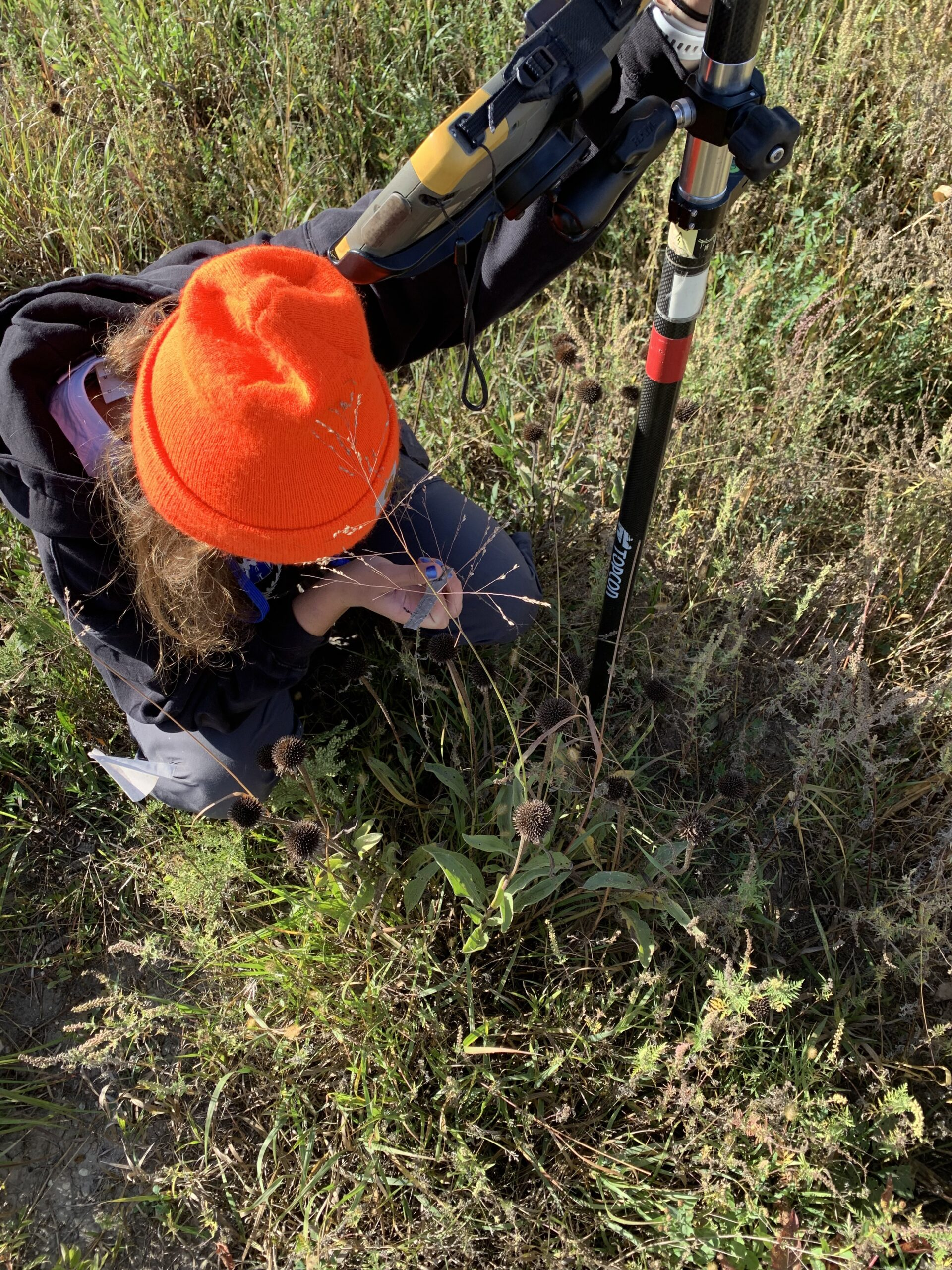
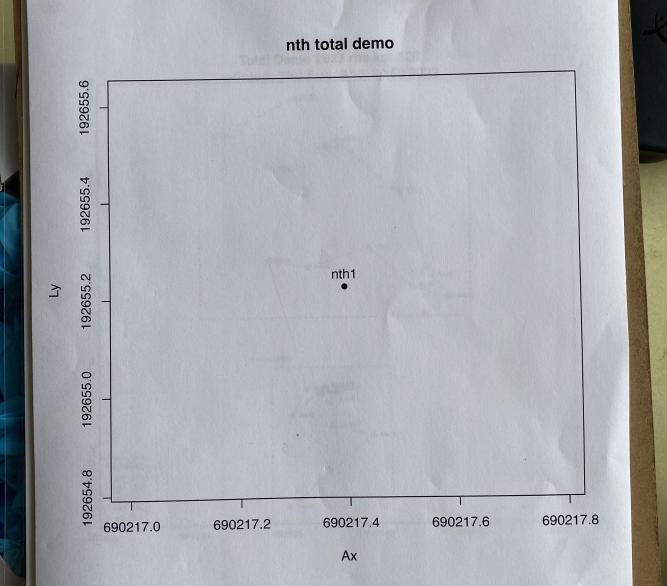
We used stake files on our high-precision GPS units to stake to each Echinacea plant in our total demo visit list, where we recorded flowering status, number of flowering heads, number of rosettes, and near neighbors of the plant on handheld data collectors (visors).
In addition to total demo, we searched and took records for all flowering plants in our remnant sites. For flowering demo, we visited 50 sites. In summer 2023, we took 5,601 demographic records in prairie remnants (demo) and 1929 GPS records (surv). We saw a much lower flowering year following 2022, with ~1586 flowering plants total. At Landfill, there were ~262 flowering plants and at Loeffler’s corner, there were 285.
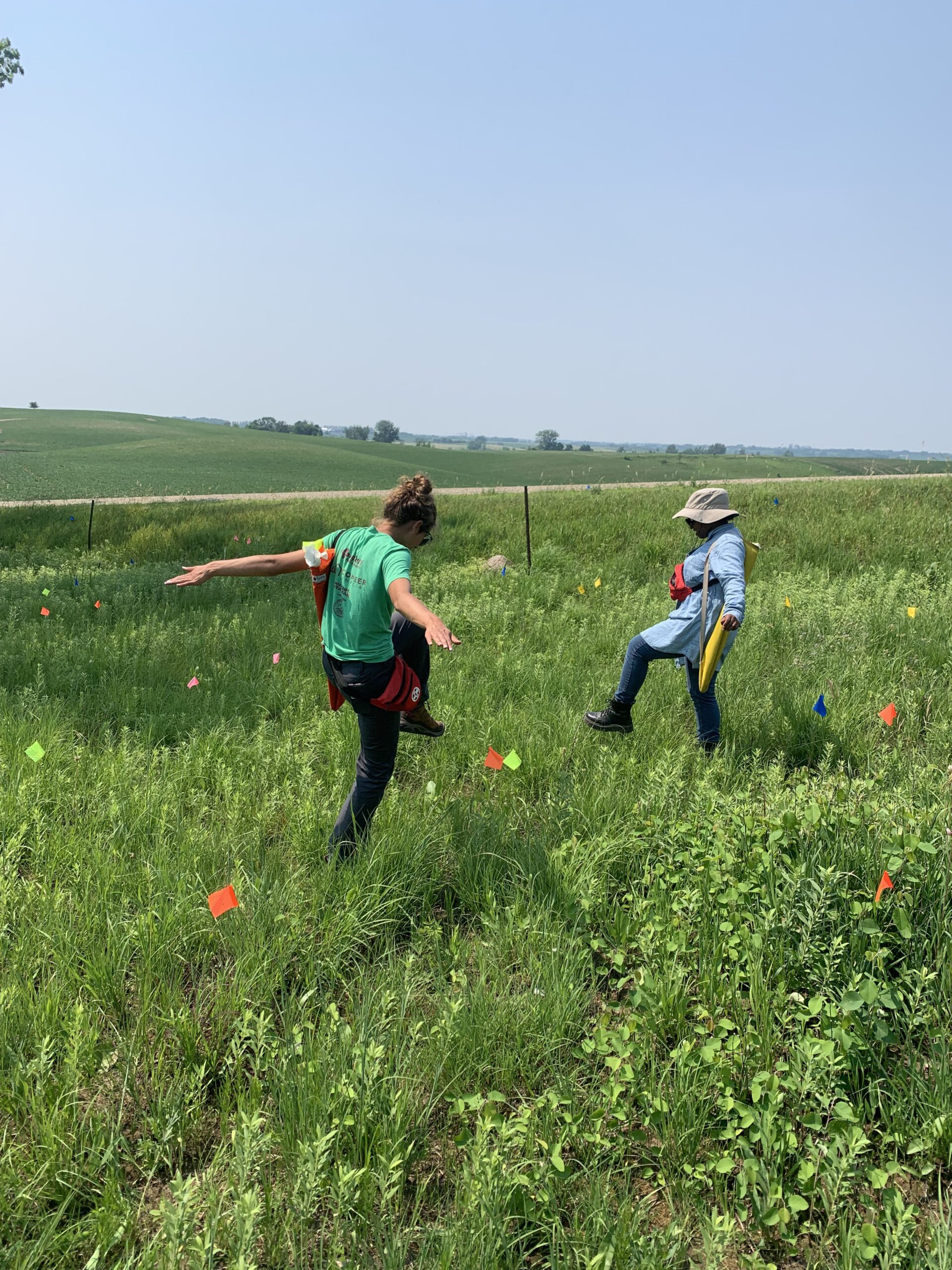
Alexa and Jak step carefully through Kjs as they search for flowering Echinacea plants. 63 plants flowered at Kjs in 2023!
We also took demo and surv data as part of our Pollen and Nectar project where we will compare characteristics of pollen and nectar in burned vs. unburned prairies. We collected demographic data at a subset of plants at several sites where we have never done demo or surv. We put out our first tags at hulze, hulzw, torges, torgen, hutche, hutchw, and koons.
This year, we put out 528 new tags which started at 28001. Two 29000 tags were accidentally created and placed in Landfill East, but those were quickly removed during our demo rechecks following completion of flowering demo and total demo.
Lindsey visits an 18 headed Echinacea plant at Steven’s Approach. This plant produced the most heads of any this year.
After revisiting a final round of recheck plants during a trip to Minnesota in mid-November, we are just getting ready to move data from aiisummer2023 into demap.
Start year: 1995
Location: Remnant prairie populations of the purple coneflower, Echinacea angustifolia, in Douglas County, MN. Sites are located between roadsides and fields, in railroad margins, on private land, and in protected natural areas.
Total demo: Bill Thom’s Gate, Common Garden, Dog, East of Town Hall, Golf Course, Martinson’s Approach, Near Pallida, Nessman, North of Golf Course, South of Golf Course, Sign, Town Hall, Tower, Transplant Plot, West of Aanenson, Woody’s, Yellow Orchid Hill, plus the recruitment plots REL, RHE, RHP, RHS, RHX, RKE, RKW
Annual sample: Aanenson, Around Landfill, East Elk Lake Road, East Riley, KJ’s, Krusemarks, Loeffler’s Corner, Landfill, North of Railroad Crossing, Northwest of Landfill and North of Northwest of Landfill (lumped), On 27, Riley, Railroad Crossing, Steven’s Approach, Staffanson Prairie
Plant status (can’t find, basal, dead this year’s leaves, dead last year’s leaves, flowering), number of rosettes, nearest neighbors, and head count, if flowering
All GPS files are found here: Dropbox/geospatialDataBackup2023
All demo and surv records are stored in the aiisummer2023 repo
The most recent copies of allDemoDemo.RData and allSurv.RData can be accessed at Dropbox/demapSupplements/demapInputFiles
Samples or specimens collected: NA
Products:
Amy Dykstra’s dissertation included matrix projection modeling using demographic data
The “demap” project is a long-term dataset that combines phenological, spatial and demographic data for remnant plants
You can read more about the demographic census in the remnants, as well as links to prior flog entries about this experiment, on the background page for this experiment.
Many plants, including Echinacea angustifolia, flower vigorously during the summer after a prescribed burn. We’ve demonstrated that the benefits of fire for seed production, in many circumstances, are bigger than just the increase in flowering. The additional boost to seed production results from better pollination after fires compared to other times. Now we are trying to figure out what’s going on with pollination–why is it better after a fire? It might be related to pollen or nectar, which are foods for the bees that pollinate Echinacea. Here are two possibilities: 1) after a fire, plants produce more or better pollen or nectar which draws in bees from farther away, so the plants get more visits and better pollination, presumably the bees are happier with abundant & healthy food. 2) after a fire, plants produce less or lower quality pollen or nectar which means bees need to fly to more plants to get a decent meal, so the plants get more visits, and the bees are probably frustrated with skimpier meals and bad food. The third possibility is that plants produce the same quality and quantity of pollen & nectar regardless of fires.
Over the summer we systematically collected pollen and nectar from many Echinacea plants in many populations (19) over many days. Our goal is to evaluate how fires affects the quality and quantity of pollen & nectar produced by Echinacea plants. We are getting close to wrapping up data-entry for our field collection of pollen and nectar from Echinacea angustifolia. Here’s a summary of data-entry progress so far…
Each “tagCt” is the number of Echinacea plants we sampled at each site. We will keep you posted!
Funding for this project was provided by the Minnesota Environment and Natural Resources Trust Fund as recommended by the Legislative-Citizen Commission on Minnesota Resources (LCCMR).
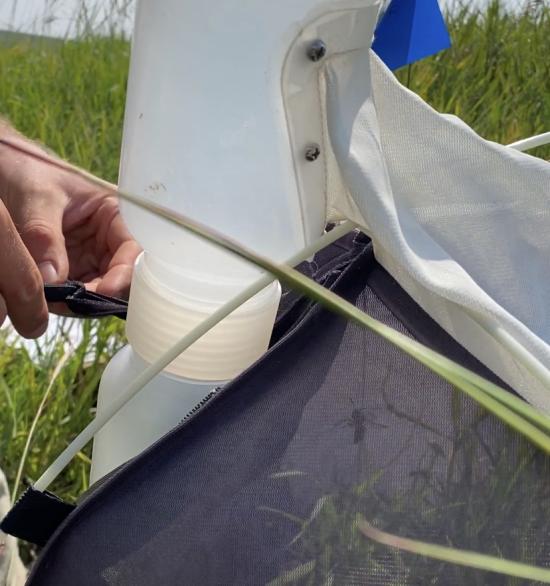
Today, while deploying emergence traps, we avenged our recently stung colleague (Ellysa Johnson). One of our randomly selected points was directly upon a hornets nest (a few are seen in this photo, but tens were present and buzzing furiously). Miraculously, neither of the crew members present were stung. Let this day mark our revenge.
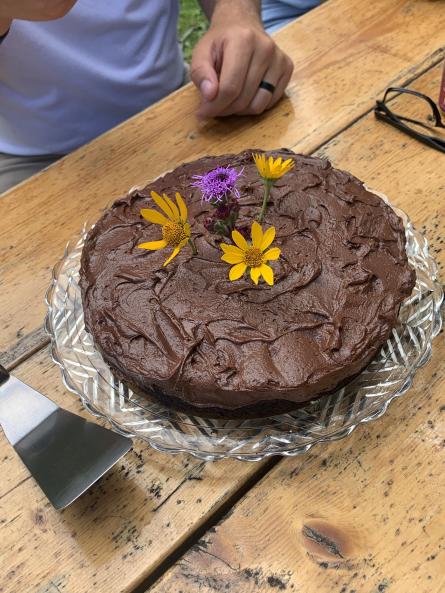
Today was Harrison’s last day with us 🙁 Stuart made a prairie-inspired cake to honor his time with the project. He is returning to teach young minds about ecological research. Farewell, Harrison, and good luck!
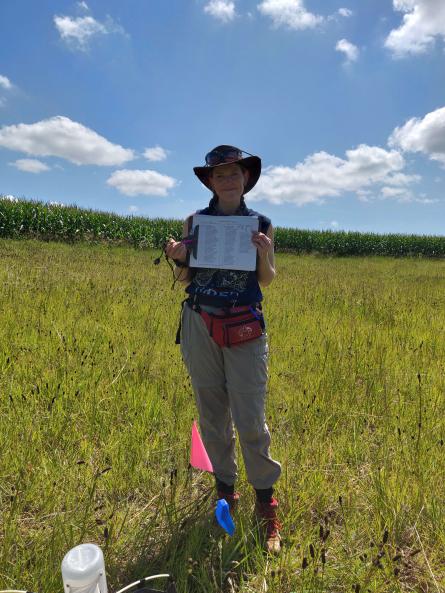
The team also conducted floral abundance surveys. Essentially, we want to see how many plants (and what kinds) may be associated with ground-nesting bees. That requires feet on the ground to estimate abundances and identify plants.
Lastly, a battle occurred today. While the crew did demography of echinacea plants- where we record data on this year’s flowering plants- I was stung by two wasps. Luckily, Lindsey was prepared to retaliate, though it wasn’t necessary.
All in all, farewells can sting, but at least there’s cake in the end.
Grass so high Our vision fails Of flags off hiding Who knows where
Holes for hiding Insects who Like their grasses Tall and true
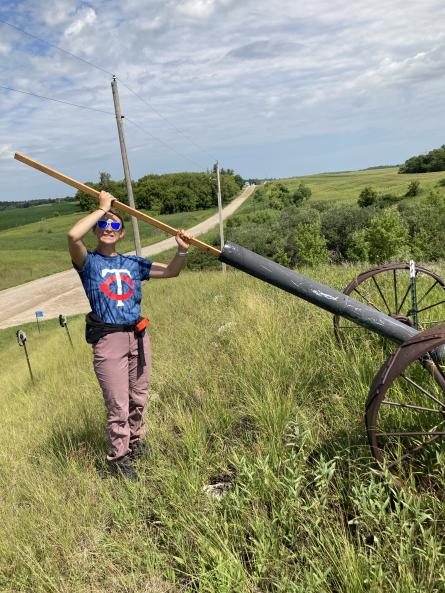
Today we helped dig soil cores for a “pitfall trap” project. The holes were dug near our ENRTF insect collection points and will grant greater insight on how burning prairies can affect insect population composition. The grass was pretty high, though, and we could hardly see the flags that had been placed earlier in the season! Rest assured, the holes were dug.
Also we did emergence traps. We always do emergence traps.