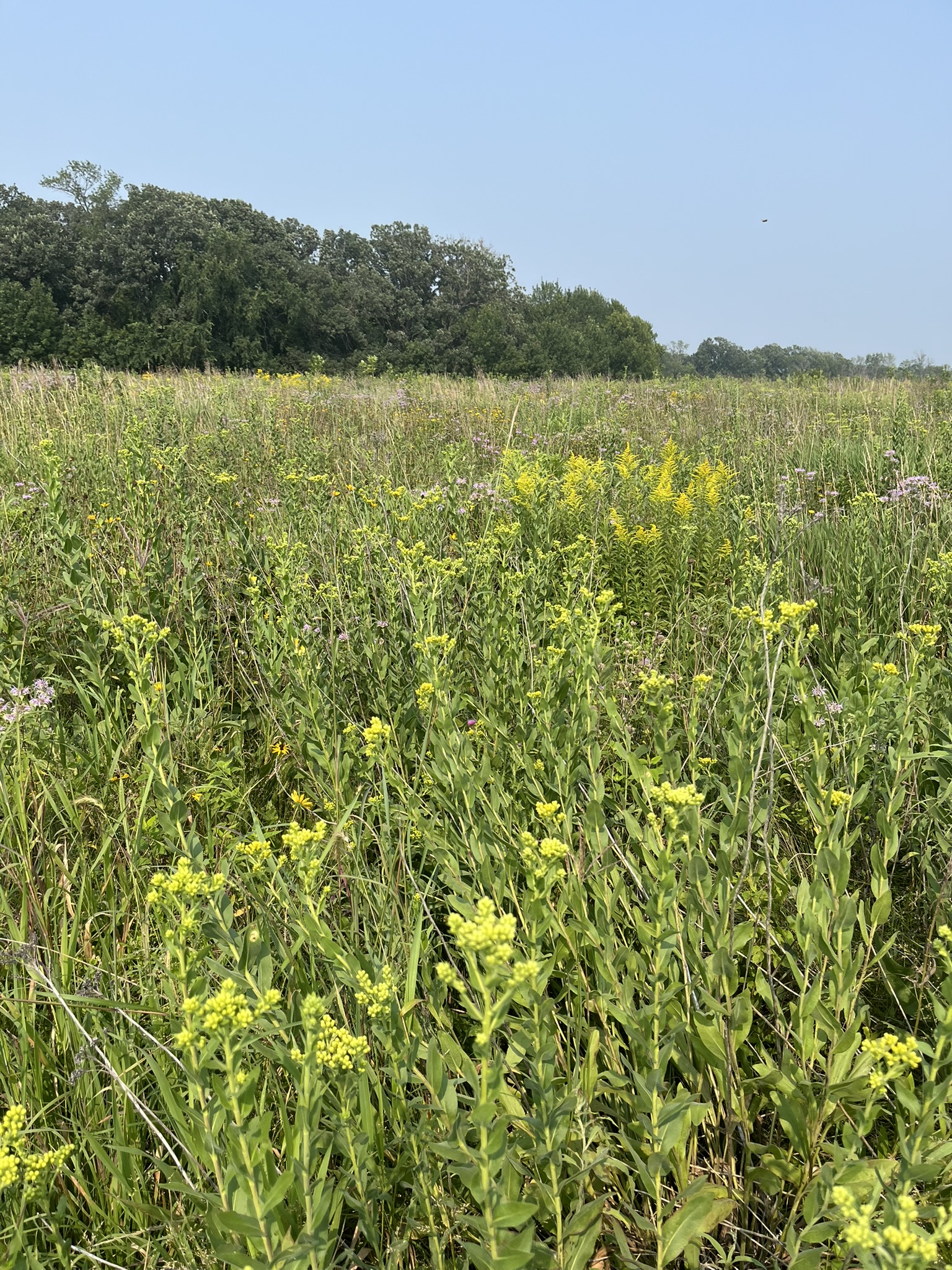
For my ongoing thesis research this summer I have been working hard collecting species presence data during this peak flowering time. For data collection I am doing a process where I go out to a specific prairie remnant or restoration and do a “meander walk”. This is where I walk along a winding path through a study area, systematically recording encountered species while trying to cover the most amount of area as possible with the goal of being able to create a comprehensive species list. The original project I had proposed “How prescribed fire affects species diversity and abundance in Aster plants in prairie remnants and restorations” has been scaled back drastically. This is in part due to time constraints, as well as working with a limited team this summer. The new focus moving forward is connected to the Minnesota Prairie Conservation Plan which is an initiative by MN Department of Natural Resources that is working to connect the small percentages of native prairies that are left in the state through a corridor. Multiple of the of the prairie remnants and restorations we do research in here at the Echinacea Project fall within or around this proposed corridor, but we don’t know if these remnants and restorations harbor rich plant biodiversity that could be beneficial to include on the proposed corridor. Therefore, I am investigating species presence of plants in the largest plant family found in prairies which is the Asteraceae in prairie remnants and restorations located in western Minnesota.
In terms of data collection, I have completed 15 remnant sites and 5 restorations of all varying sizes. Each sites offers a different array of plant species (many including our personal favorite Echinacea angustifolia, duh!). In the upcoming week site visits will be wrapping up and data organization will begin.