|
|
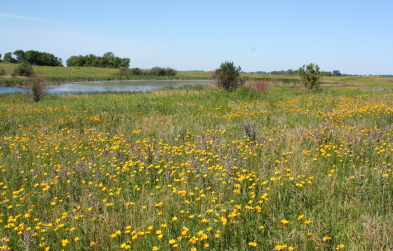
For her RET project, Lea gathered data to study the relationship between flowering density and seed set. She worked at Staffanson Prairie Preserve, which appears to have higher flowering density in burn years than non-burn years. This year, 2015, was a non-burn year. Lea and Team Echinacea kept track of the style persistence of about 50 individuals for which we have seed set information from prior burn years. These individuals were harvested and their achene count and seed set will be assessed in winter 2016 by Gordon Younkin, an undergraduate intern from Northwestern University. Gordon will work to build a model of seed set in Staffanson in a non-burn year and aims to compare this model to a burn year.

Site: Staffanson Prairie Preserve
Start year: 1996
Location: Staffanson Prairie Preserve
Overlaps with: phenology in remnants, phen for aii
Products: Lea is developing a dataset and lesson plan for high-school students to compare individual plants’ style persistence in burn years and non-burn years to test hypotheses about seed set in high- and low- flowering density. This lesson will introduce students to R and its use in data management and statistical analysis.
Read other flog posts about this experiment.
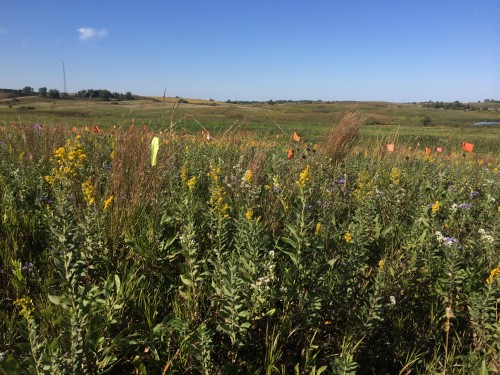
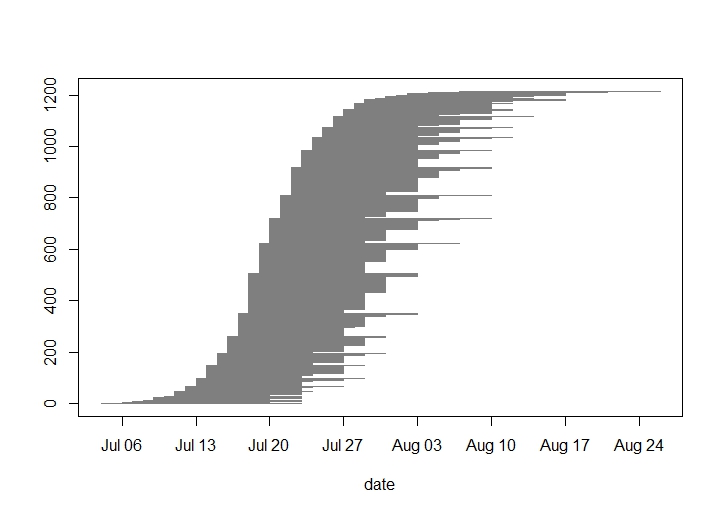
For his REU research project, Will is investigating heritability of flowering phenology in experimental plot 2 (p2), which was planted in 2006 with 3961 individuals selected for extreme (early or late) flowering phenology. This summer Will and Team Echinacea monitored the phenology of all 646 flowering plants (1216 individual heads) in p2, as well as the phenology of their parents in p1. Flowering in p2 began on the 4th of July and ended on August 26th. The peak day of flowering was July 27th when 1018 heads were flowering. The average duration of flowering for a head was 12.1 days. It was a huge year for flowering in p2 with nearly 5 times more heads than 2014 and over 16 times more than 2013. Will is comparing the flowering schedules of the p2 plants with the 2005 phenology records of their parents. As the plants in p2 mature, and perhaps flower more frequently, we will continue to gather data on family lines of Echinacea to discern the genetic component of their flowering phenology.
 Many flags indicate many flowering plants in experimental plot 2 Start year: 2006
Location: Experimental plot 2 (Hegg Lake WMA)
Overlaps with: phenology in experimental plots
Products: The 2015 phenology records from p2 will be added to the existing multi-year ExPt2 phenology dataset. Will is using tools from the R package echPhenology developed by Team Echinacea to analyze and produce visualizations of the flowering schedule observed in p2. He plans to present his findings at a conference in spring or summer 2016.
 2015 flowering schedule of all heads in p2: First day of flowering was July 4th, peak was July 27th, and the last day was August 26th.
Read previous posts about this experiment.
Read this article about prairie conservation from the Glencoe newspaper.
Some observations about phenology in p1: the peak day of flowering seems to vary quite a bit from year to year. In 2007, peak was the earliest observed, on July 3 (!) and in 2008, 2013, and 2015 the peak was latest, on July 27. Curiously enough, 2008, 2013, and 2015 were all burn years. But then again, so was 2006. Hopefully we’ll be looking into this dataset more closely this year. Stay tuned for updates!
| Year |
Peak |
| 2005 |
12-Jul |
| 2006 |
12-Jul |
| 2007 |
3-Jul |
| 2008 |
27-Jul |
| 2009 |
14-Jul |
| 2011 |
24-Jul |
| 2012 |
4-Jul |
| 2013 |
27-Jul |
| 2014 |
19-Jul |
| 2015 |
27-Jul |
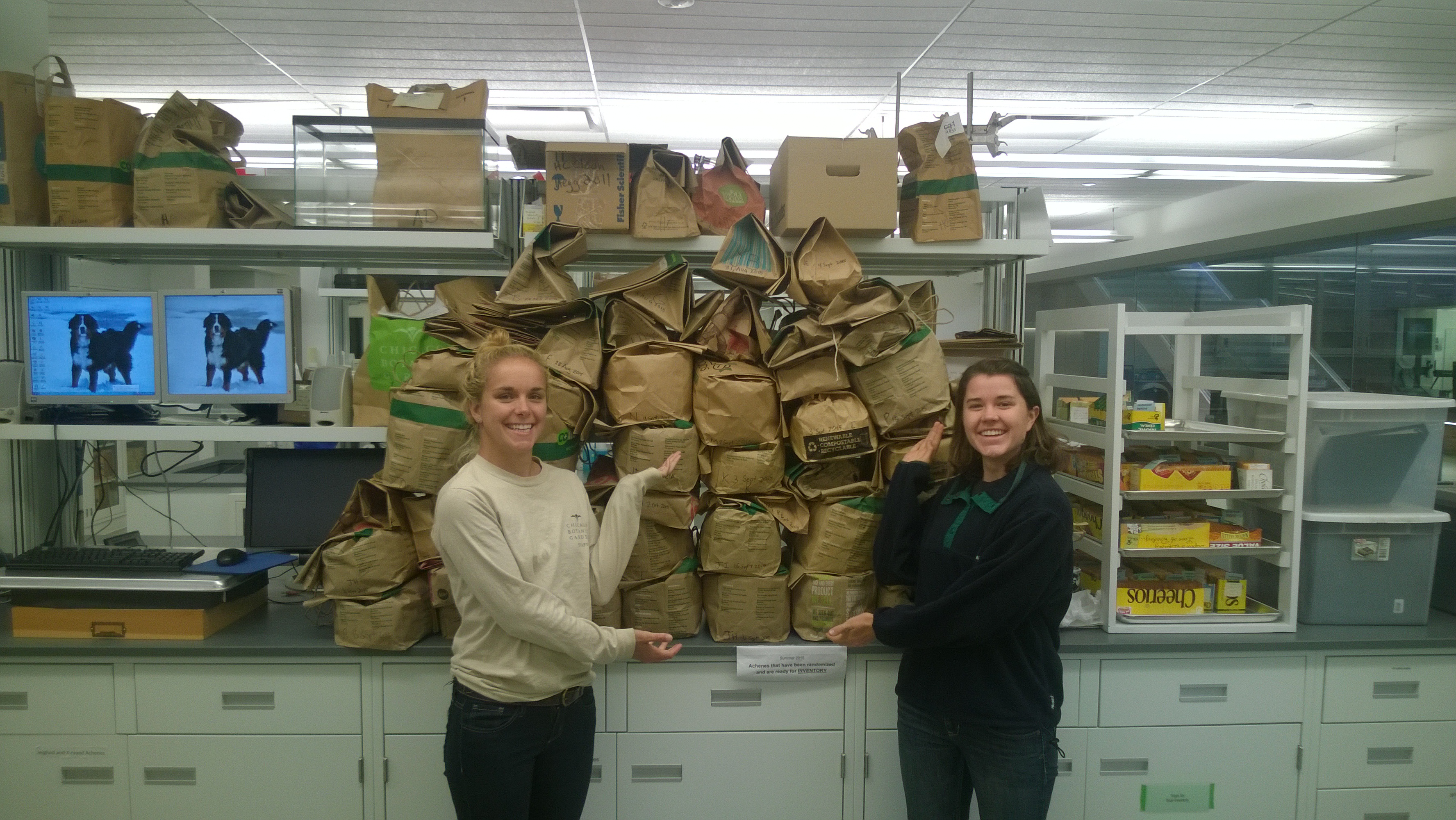
We brought all of the harvested heads back to the lab. There are still 4 heads back in p1 that aren’t ready to harvest but everything is officially in Illinois!
 All the heads with Amy and Ali for scale
September 28 started as any ordinary fall day would – in the lab at the Chicago Botanic Garden – but if one were to pay attention they would notice slight change from usual. Our backpacks were more full, the lab tasks were taking lower priority, and both Amy and I had brought a full bag of carrots as snacks. At around noon, Stuart arrived at the Garden after an already long day of traveling, informing us that he and Gretel had just arrived and we would be leaving as soon as possible for Minnesota. After a little more time in the lab, we were off in a white pickup truck with a skybox bearing the crest of the CBG. The journey was long, but uneventful besides a stop in the Twin Cities for ice cream. We arrived in Kensington after 11pm and quickly fell asleep in our former summer residence.
The next 4 days proved to be very productive for the group. We finished measuring at Caroline’s and Lydia’s plot, finished seedling refinds, finished all the “can’t find” rechecks in both P1 and P2, and we removed all the flags from P2. We prepped the burn site by mowing the burn breaks and cutting down branches that were in the path. The weather didn’t cooperate so we weren’t able to burn last week but the forecast was hopeful so we planned to try again Monday, October 5th. Amy stayed up in Kensington with Ali and Katherine and together, the three of them finished dissecting all the heads from Q3. I stayed in Northfield for the weekend, and Stuart and Gretel went back to Illinois.
Monday came and Stuart and I headed back up to the farm with hope in our hearts that we would have a successful burn. We got all the supplies ready, including water packs, buckets, giant containers, and most importantly, drip torches. We started the fire at 3pm, worried about the high humidity and lack of sunlight, but we knew we had to try. After an hour of patchy, inconsistent, slow moving fire, we decided to put out the fire and wait for a better day. Though we weren’t able to burn p8, we were able to create a great burn break and get the team experienced with our fire fighting gear.
On Tuesday, Ali, Katherine, and Amy drove the Ranger down to Illinois, while Stuart and I took the train. It had been a long week filled with many victories and only a single defeat. Though the weather won for a day, we know that we’ll be back and ready to burn once more.
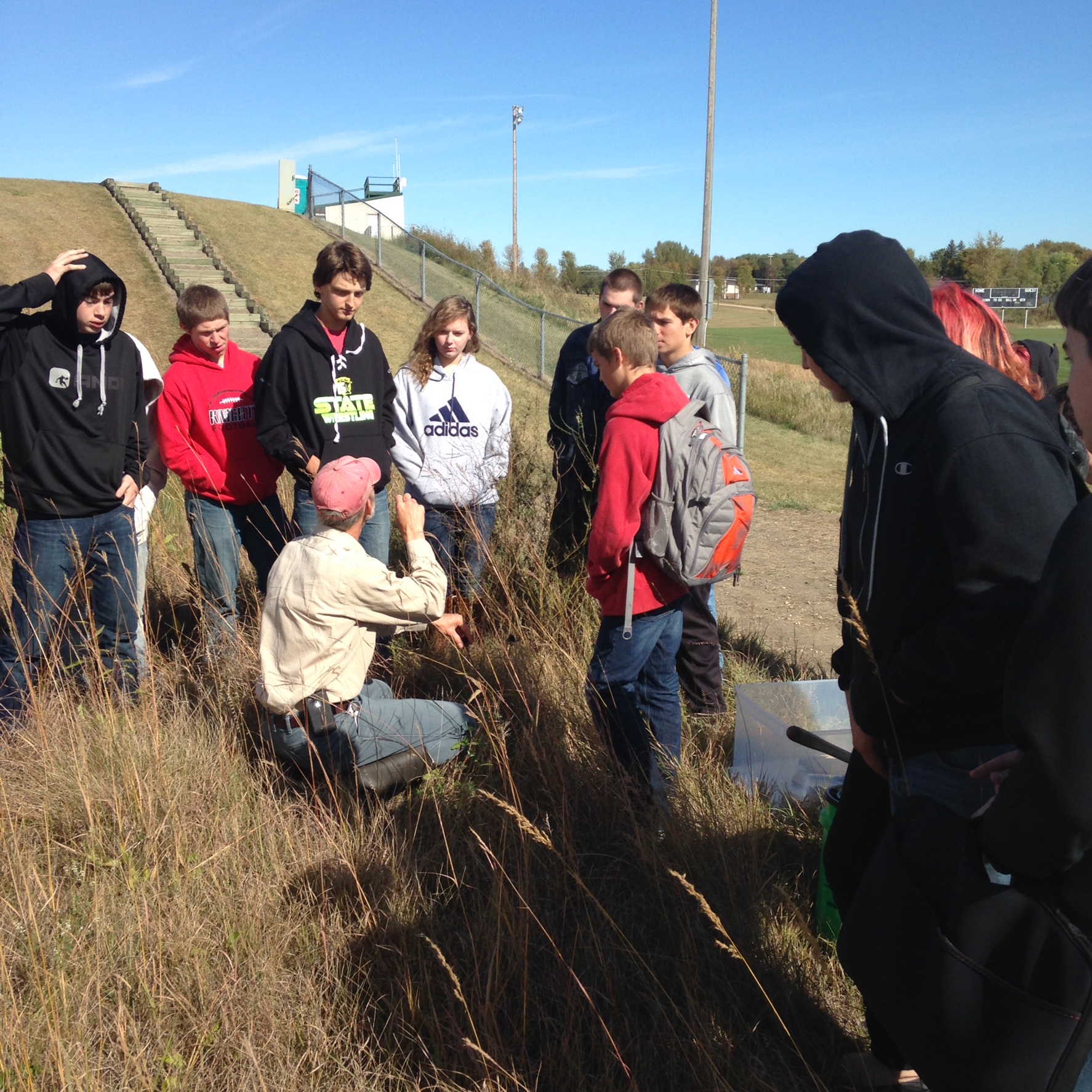
Stuart and Amy visited the West Central Area High School Environmental Learning Center on October 1st to work with Matt’s plant science class. The students helped harvest heads of echinacea purpurea that will be used in a competition study with echinacea angustifolia. Stuart also talked to students about prairies and some of the various prairie plants and then wrapped up the lesson talking about flowers and how they work. The students enjoyed the talk and had fun collecting the heads. WCA is excited to see what kind of experiments we can do in our ELC! Matt was hoping that Ali an Katherine might have been with also, but still plans on having them come and speak to his classes.
Here is a link to the poster I created for my independent project this past summer.
The efficiency of different collection and sorting techniques on the seeds of Galium boreale
Ben_poster_galium
Now that Danny and I are getting settled in at the lab, it’s time to head back to the field! Gretel, Stuart, Danny, and I will be heading out of Chicago on Monday afternoon back to Douglas County for the next week. We spent some time last Friday getting prepared for all of the remaining fieldwork, which includes things like removing flags, re-rechecking demo, and (hopefully!) burning the p8 plot, where the q3 experiment will be planted. We also began making plans for the lab in the coming year–there will be this year’s harvest to process, papers to write, students to mentor, along with improvements we hope to make on the project like a new data entry system to replace the beloved but frail Visors. We talked about who is going to do what and how we’re going to coordinate getting it all done! Rest assured, dear reader, that it will involve to-do lists and technology specially designed to maximize our productivity. Stay tuned as Team Echinacea returns to Minnesota for a busy week of fun and fieldwork!
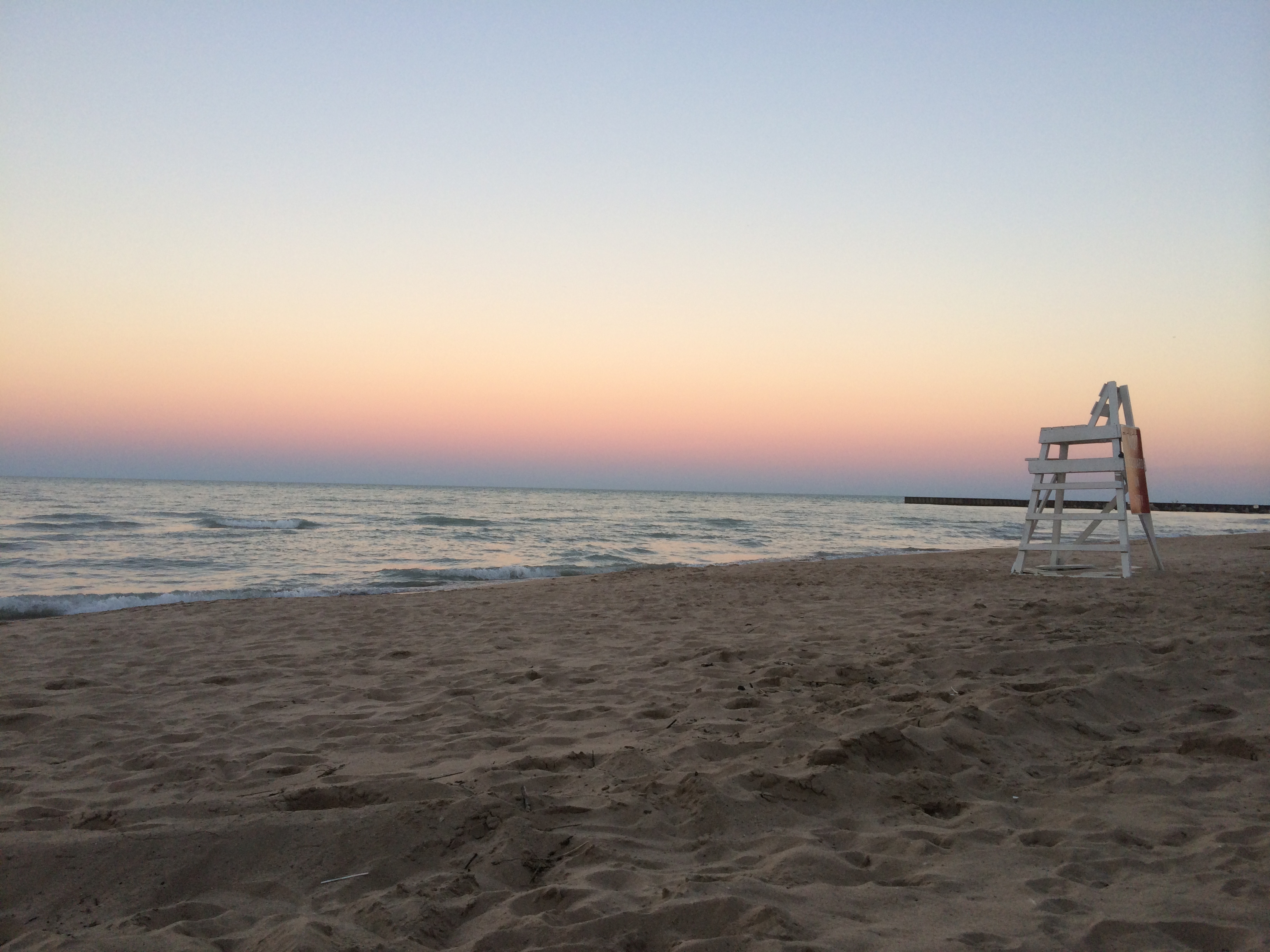
See ya Lake Mich
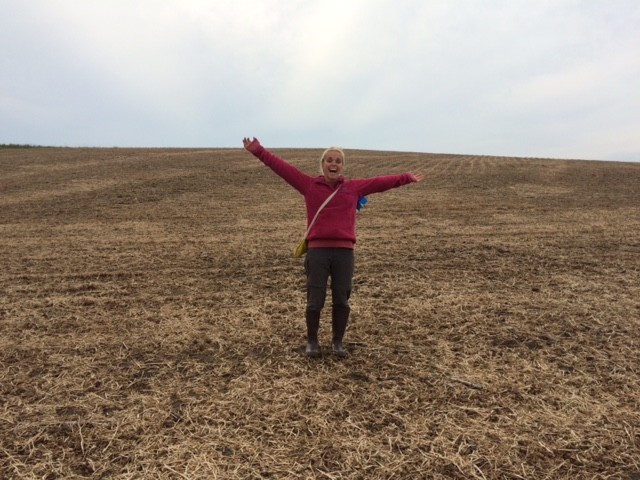
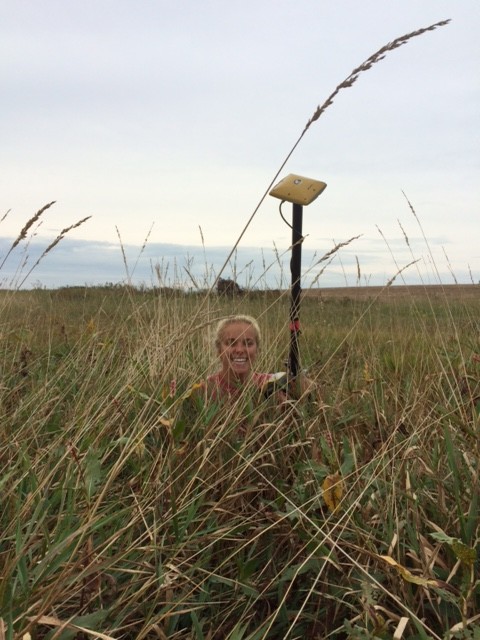
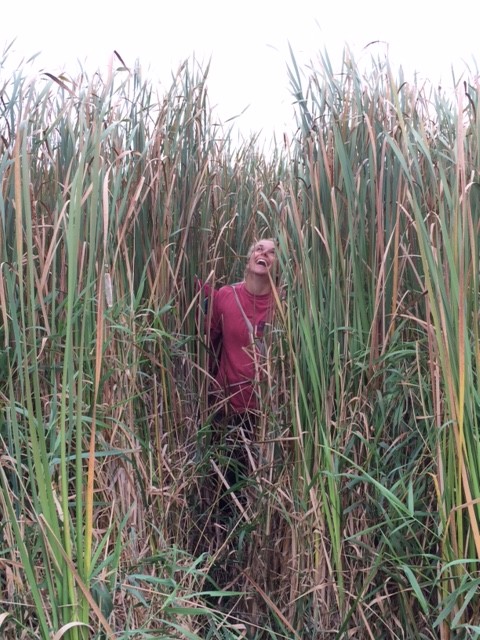
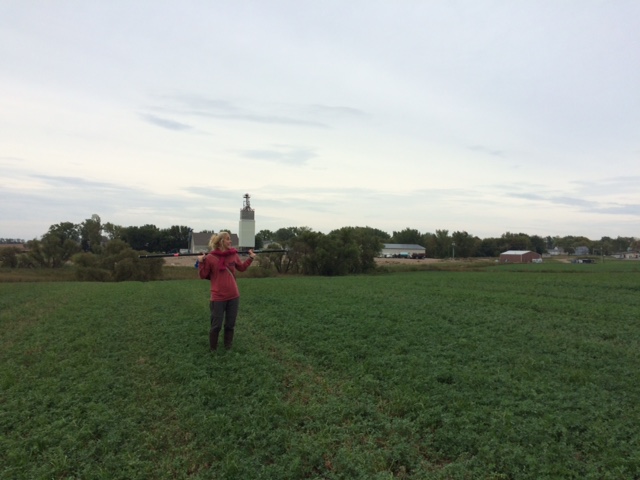
Yesterday afternoon, Ali and I went on a journey of epic proportions. What for, you ask? To find the elusive recruitment plot 7, of course! During the past couple weeks, we have been taking demography data on the Echinacea plants flowering in small recruitment plots planted by members of Team Echinacea in previous years. These plots are demarcated by poles in the corners and have generally been a breeze to find. Ali and I had just taken data at a plot north of Steven’s Approach, and were looking forward to finishing off the day with this last plot. We started out with spirits high; on the map, the plot appeared to be only a 5 minute walk from the road. Using the GPS unit to stake the point we needed to find, we realized that to get straight to the plot we’d need to plunge through the heart of a dark, swampy, scraggly forest that most likely contained a witch’s hut. To bypass this obstacle, we set off through a recently harvested corn field, keeping an eye on the GPS and hoping to cut back over to the plot as soon as we had a clear path to it. However, once we saw the complex of lakes and wetlands that lay to the north of the small woods, we realized that our path might not be as straightforward as we’d imagined. So began an hour and a half long journey through fields, marshes, pastures, mud, prairie, and a mysterious junkyard that I almost believed was a hallucination until Ali commented on its strangeness. We became increasingly convinced that the plot had been swallowed up by wetlands, or that it didn’t exist at all. Finally, having at last found our way back to the road about a half mile east of where we’d started, we decided that we had to give up and call it a day. These pictures are all we have to show for our adventure.
Started off with clear minds and hearts  “Where are we? Is this plot a prank??” “It’s probably just through these reeds!” “NOPE. That’s a lake.”
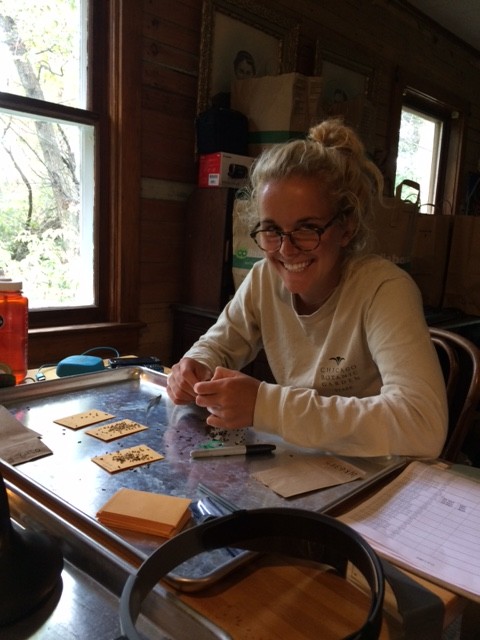
After escaping the junkyard of broken dreams…”Are we in Ireland now?” Aside from these misadventures, we took advantage of the damp and dreary weather to start dissecting Q3 heads. They’ve all been harvested by now (yay!!), so all that remains is to remove the achenes and sort them based on pollen donor. This takes some time and concentration, but it’s enjoyable and relaxing. So far we have dissected 20 heads…only 134 more to go before we take the achenes down to Chicago to be x-rayed!
Ali hard at work at her dissecting station
|
|