|
|
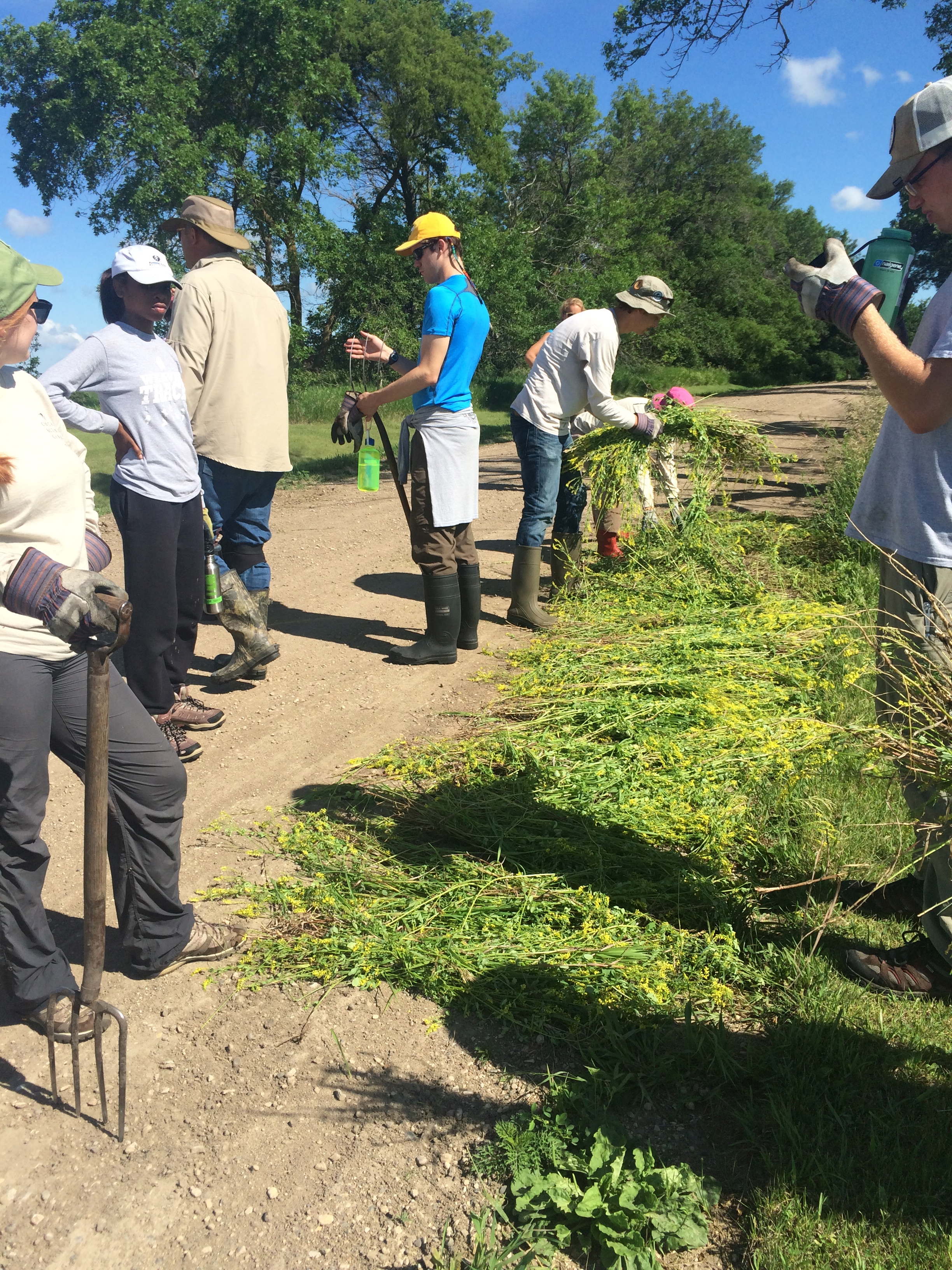
Our second Thursday got off to a strong start as we finished pulling sweet clover from p8. Last night’s rain meant prime clover-pulling conditions: wet and loose soil that allowed us to extract the full tap roots of the tenacious plants from the ground. Danny provided some a cappella background tunes to keep us moving through this herculean task. Despite the wet soil, there were still quite a few plants that were able to put up a good fight. Flexing my sore hands at the end of the hour or so we spent in p8, I relished the sight of all the pulled clover laid out to parch in the sun. P8 is now sweet clover free! (At least for now.)
 The Team lays out sweet clover pulled from p1 to dry in the sun. After pulling the clover we had time before lunch for a lesson in using GPS to map plants and help out with Echinacea demography. Stuart had started the day by checking the space weather–apparently a solar flare just missed us, very luckily leaving us in the clear to proceed with the Team’s two GPS machines (affectionately named Sulu and Chekov).
Using GPS to stake Echinacea plants! At lunch a few of us gave quick presentations about our summer project proposals, which have already made a lot of progress in the two weeks since we arrived! Some of the questions we’ll be attempting to answer this season include how aphids affect Echinacea fitness, how hybrid and native plants differ in fitness, which seed collecting methods are the most effective for species co-flowering with brome, and whether flowering phenology is heritable. Finally we got the chance to hear from professor Ruth Shaw about some of the latest work being done on analyzing the genetics of fitness in Echinacea (and other species as well!).
After this jam-packed morning, the Team got some down time to work on individual projects. I look forward to watching everyone’s research progress!
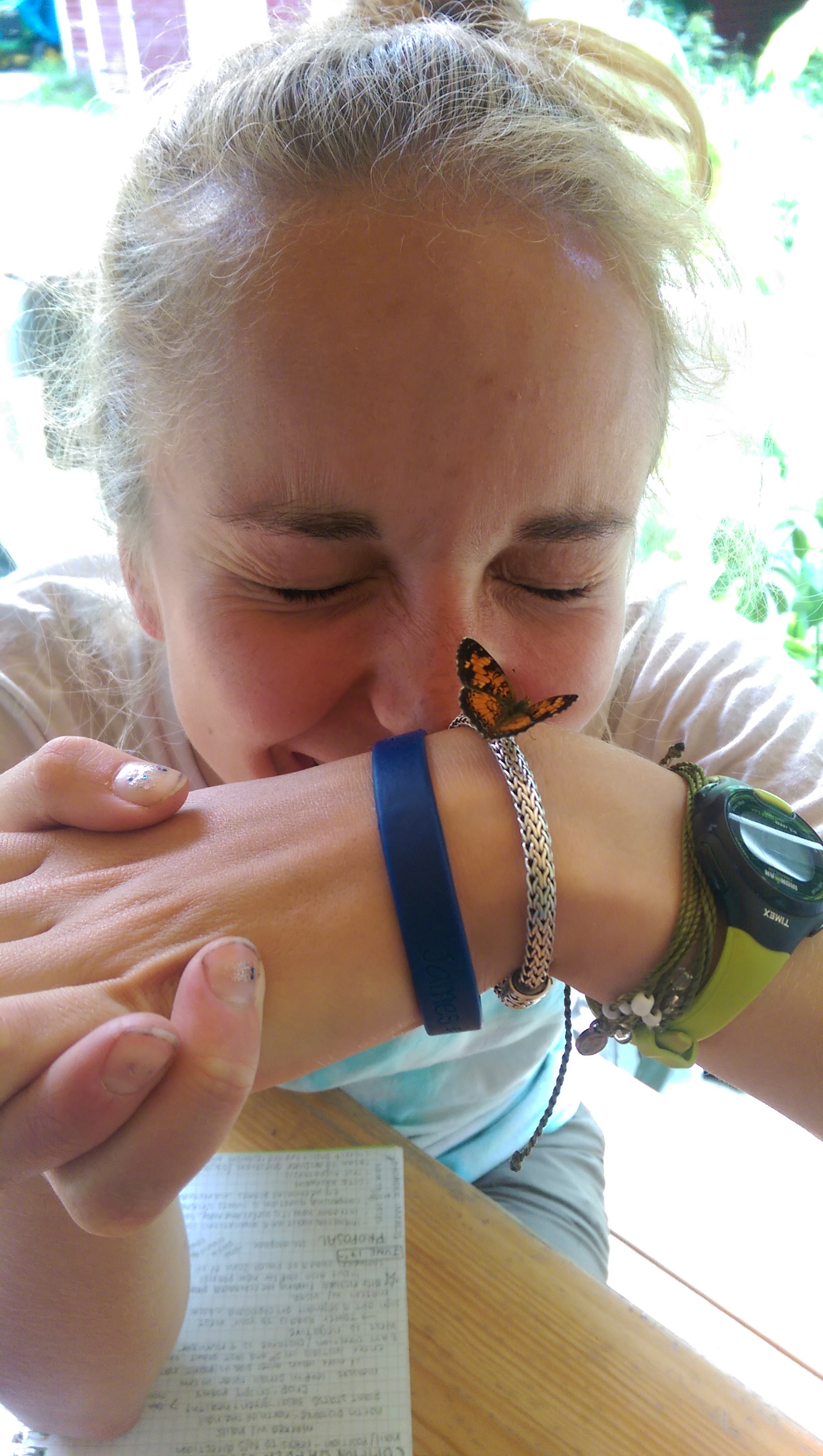
Today was a great day! We did some flagging in a few plots and also got a chance to meet Jennifer Ison via videochat. We also got a chance to speak with Stuart regarding our independent projects… In the midst of waiting for our appointments with Stuart, Ali was visited by this butterfly. It’s a Pearl Crescent Butterfly (Phyciodes tharos). Soon it’ll be stopping at some flowering Echinacea, but today we definitely enjoyed its visit on Ali.

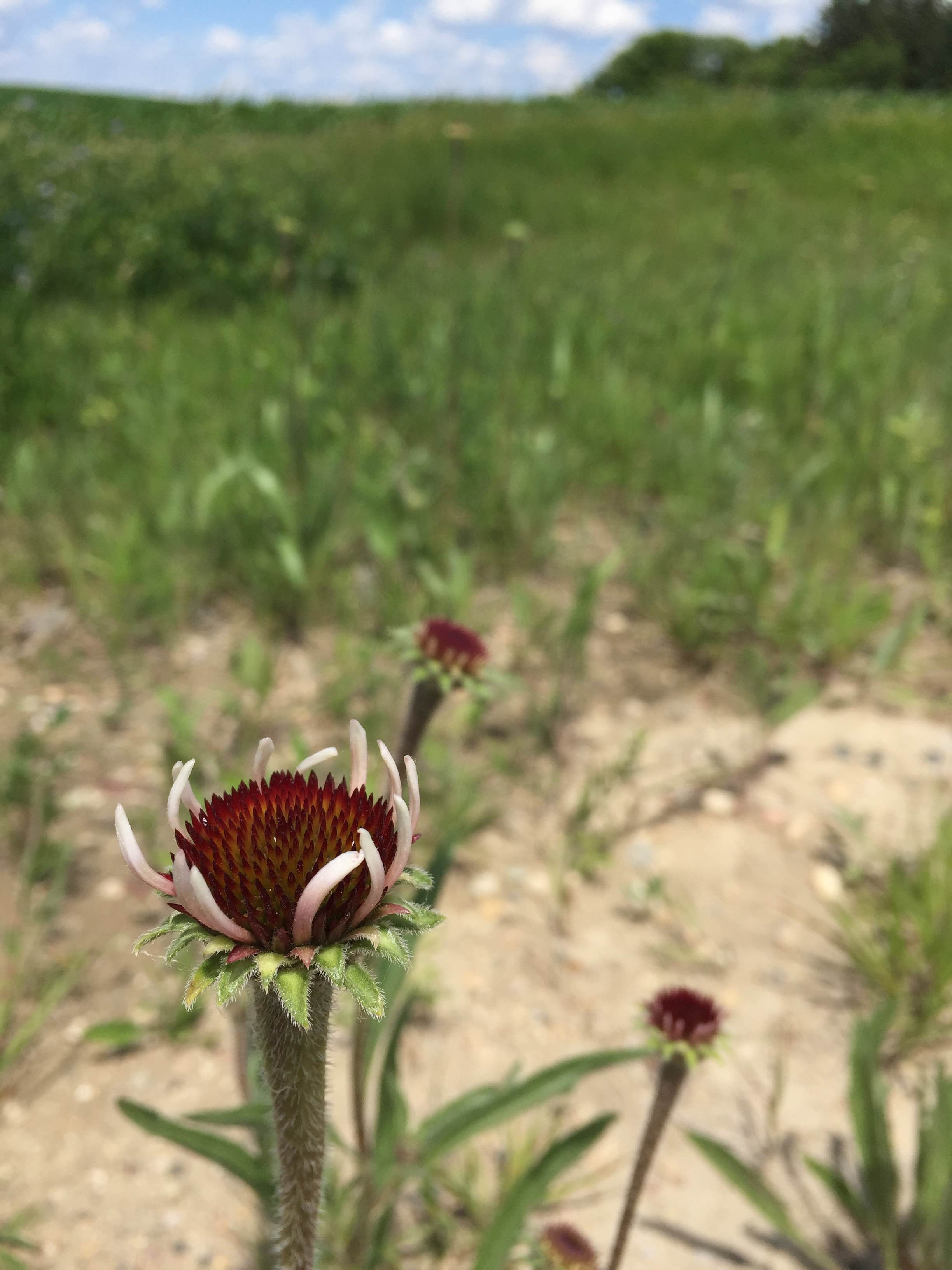
We took advantage of this sunny and beautiful Tuesday by visiting some more of the remnant prairie sites! In the morning we visited “On 27” an aptly named site bordering highway 27 that is a haven for Echinacea. We were able to practice tagging plants with heads to note the ones we can expect to flower this summer. This task was especially exciting because it allows for a preview of what the rest of the summer will look like. We will be frequent visitors to the plants that flower this summer in order to study flowering phenology. To characterize this trait, we will note the time that pollen is present for the first and the last times on the head. “On 27” had many heads scattered atop the hill, and down either side to the cornfields which surrounded the remnant prairie. We visited several other sites before lunch, tuning our “Echinacea eyes” and discerning between different stages of flower development. After lunch, we split into three groups to visit more sites. It appears that “Riley” site will be a popular destination this summer, there were many heads with emerging rays that were 1cm or longer! To the layperson (ie: me before I was a member of Team Echinacea) the rays are what you might call a petal— they are the pale purple florets that elegantly drape from Echinacea’s spiny center. Seeing longer rays is a sign that we will visit soon so as not to miss the first pollen. Among the sites that I visited in the afternoon, were the two sites that Matt and I explored last week for our “first impressions” outing! Returning to these sites serves as a reminder of how much I have come to understand about the beautiful purple coneflower in only a week.
Small ray florets at Riley Longer Florets at Riley
Today we started in P8 by pulling some sweet clover. It was not a task to be taken lightly, only the heartiest could master the “full pull.” It was really in the ground and being held tight by Brome grass. We did manage to pull on and get a lot pulled out and removed. Hopefully there will be a lot less in the plot from now on. Below is a picture of our bundles. We figured they were at least as big or bigger than Gina! We broke for lunch and then started flagging in P1 and at Hegg lake. We were all getting quite good at finding plants and/or staples and almost had all the 5 meter flagging done when a sudden, unexpected rain shower left us running for cover!

On Thursday, I took a field trip out to E. Riley. My first impression was that it
was a very small prairie. It’s a rectangular plot about 50m by 15m. One of the
long sides is bordered by a corn field and the other, a gravel road. There wasn’t
much evidence of it being a native prairie. I think they must have dug out the
ditch in order to build the road. I saw lots of Echinacea angustifolia. In fact,
there were over 100 heads along the 50 meters. The most common flowering
plants were the prairie rose and alfalfa. There weren’t any trees in the remnant,
but I saw and heard some bird flying overhead. I also saw a gopher standing on
the road for awhile. Overall, it was a cute prairie that surprised me with it’s large number of echinacea.
 
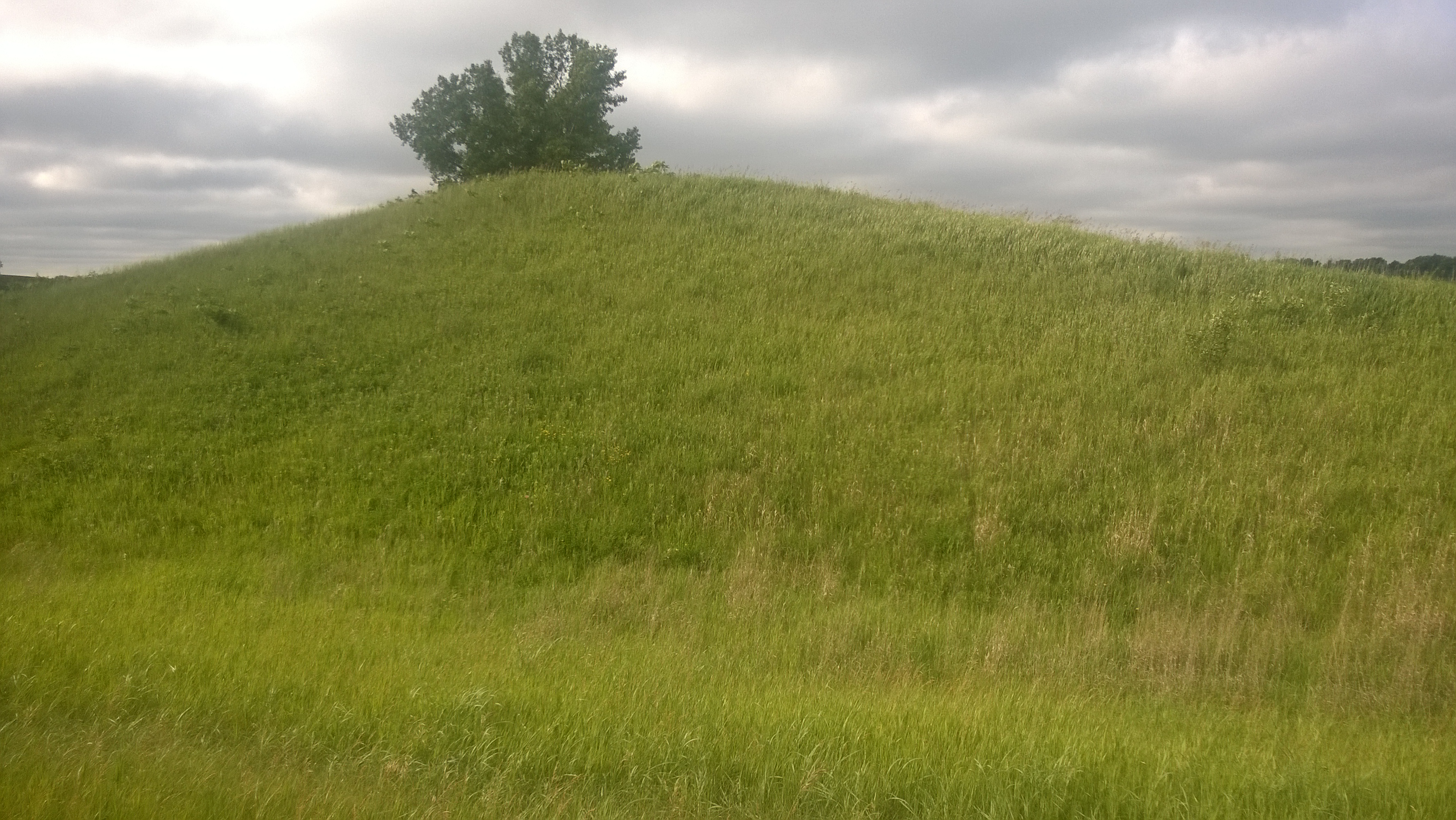
This area was indeed a remnant! The land was cliff-like; it looked as if it were a huge set of three steps that lead to a small lake. The rocks on the ground made it evident that the area was a native prairie. It looked as though the area may have been flat once upon a time, but was scooped up to contribute to the road we were standing on. This small region had a few Sweet Clovers and Wild Roses. We even spotted a patch of Poison Ivy (yikes!). There was plenty of Kentucky Bluegrass, a few trees around, and birds singing in the distance. Though I couldn’t spot it, Will & Abby saw the stem of a nearby E. angustifolia a few meters away. Hopefully, there will be some seedlings to look forward to at Woody’s!

I gazed upon the hill, basking in its slightly elevated majesty. My family’s roots in farming told me that it was likely too steep to have been plowed and was thus used for grazing livestock and having afternoon picnics. The uncomfortable steepness of the hill and proximity to the road told me the area had been disturbed and that soil was used to build up the road. This hill was not as small as I had expected and hope swelled in me as I thought of the other populations of Echinacea angustifolia fighting for survival.
A single tear gently rolled down my face as I observed the dominant species in the area: brome grass. Most of it was not yet flowering but I knew that without proper management, it would continue its grassy conquest. Though my identification skills are far from complete, I saw what I believed to be alfalfa or possibly pea plants. I saw a single wild rose beckoning me forward like the sirens of old, but alas, for fear of stepping on the Echinacea unseen I refrained and returned to my wheeled metal stallion.
As I left, I observed that the grass went around the hill and stopped only at the edge of the farm field and at the road. The experience left me humbled and eager to explore the vast fields of K-town and beyond.

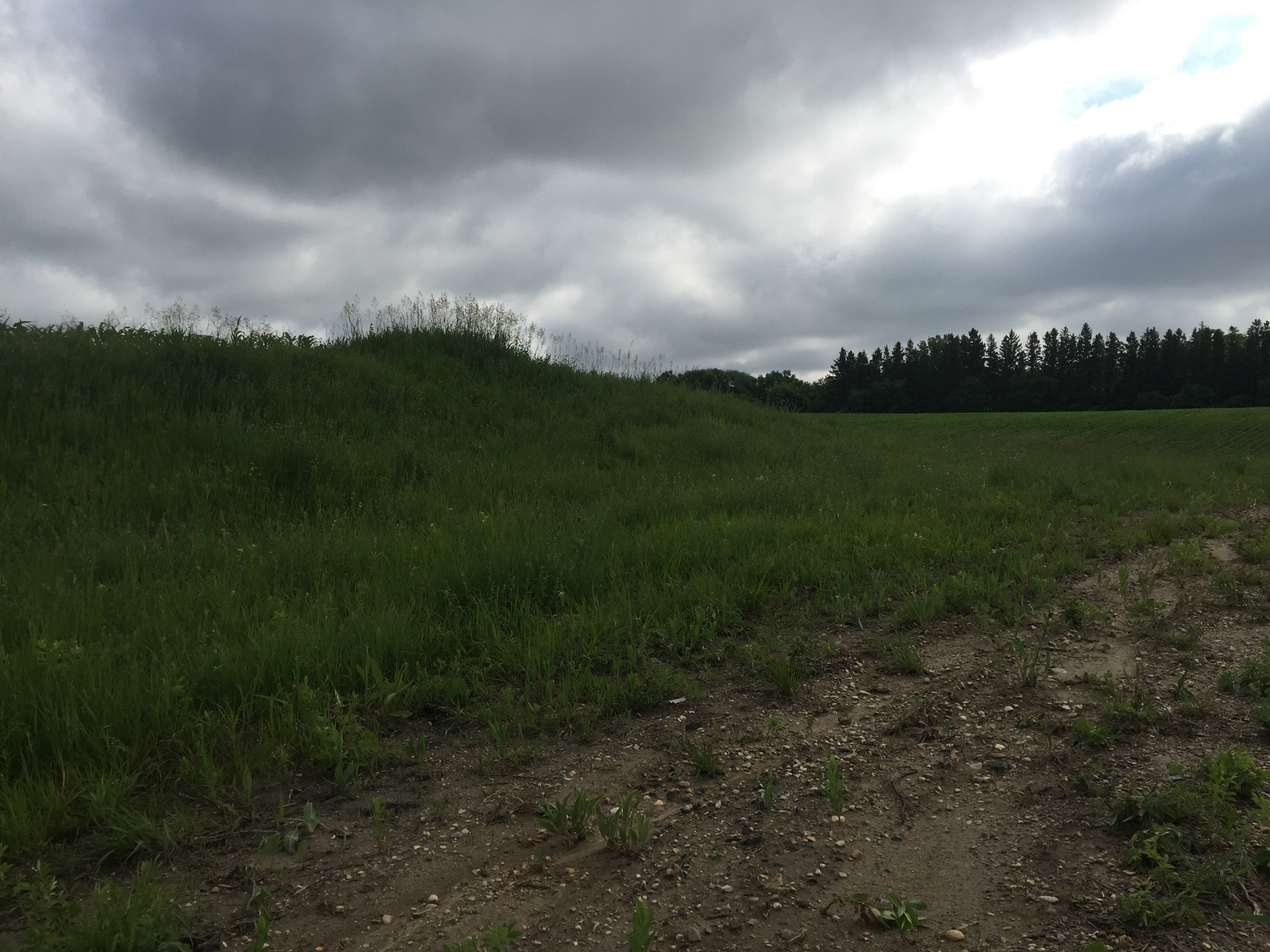
The Riley remnant is composed of two halves, one north of mellow lane and the other south. The two halves are quite a bit different for being separated by only a few meters. The northern half falls on the side of a hill that was most likely never plowed. The hillside is filled with the non-native Kentucky Blue Grass, with a few patches of another non-native: Brome. The most abundant flower was the wild rose, and amongst the grasses many soon to be flowering Purple coneflowers were apparent. Moving across the road to the southern half the dominant grass becomes Brome. There is wild rose here but not as much. There are a few tall grasses; the dead stalks from last year are visible. There is a path through the middle that is often driven over to get to an agricultural field about 100 meters south of the remnant. This southern half was probably scraped and used to create the road that now divides the remnant. There are several Purple coneflowers in the ditch surrounded by invasive sweet clover which has a tall yellow flower and is the most abundant flower in this half. From these first few minutes spent at the riley remnant it is evident that this site will soon be filled with Echinacea flowers. What a wonderful sight to see!

 The view of the Tower Site from the driveway. On the left is Highway 27 and on the right you can see the bottom on the tower. Ben Lee, interviewed by Amy Waananen
AW: So Ben, tell me about where you are.
BL: Well, I am standing here looking at the site which is between the microwave tower and Highway 27. The tower is at the top of a pretty large hill. The cars are whizzing at by on the highway just south of where we’re standing, probably going at least 60 mph. The site itself runs along a fairly steep hill that is probably around 30 meters wide, sloping down from a line of spruces planted around the tower to the road.
AW: What does it look like?
BL: It looks a lot like any other roadside in the area; I notice that there are a lot of invasives, especially as compared to some of the other, more managed, sites that we’ve seen like Staffanson Prairie Preserve and Hegg Lake. Brome and Poa are the dominant grasses here, and I can see species like bird’s foot trefoil, alfalfa, and red clover as well.
AW: Uh oh. Any native species?
BL: A few! I see a native pea plant and yarrow flowering. Hopefully there are some Echinacea angustifolia in there too, but we can’t see them yet. Plus, I can see some bumble bees flying over the tops of the grasses and I hear birds in the grove of trees on the north side of the hill.
AW: What do you think the history of the landscape is?
BL: I imagine that there has been quite a bit of construction around here. You can see how they shaped this hill to lower the grade of the road, and there was probably quite a bit of disturbance from installing the tower. There is a strip of land that is probably about 3 feet wide running from the road up towards the tower where vegetation looks sparse or stunted. I wonder if there is an underground wire there. Other than that though, looking around I can see all the undulating hills in the area and can see how large of an impression glaciers left in the area.
AW: What is your overall impression of the site?
BL: Well, it is a small patchof grassland in the middle of a busy area. The lack of native prairie species is probably due to both the disturbances due to construction and the lack of management to promote prairie species—it is unlikely that this particular spot ever gets burned being so close to both the road and the tower. Although I don’t see any Echinacea here right now, I hope to see some later in the summer. Overall, this site seems characteristic of much of the potential habitat for Echinacea today—fragmented and literally shaped by human influences. It’ll be interesting to see how it is similar and dissimilar to prairie remnants such as Staffanson Prairie Preserve andprairie restoration sites like Hegg Lake.
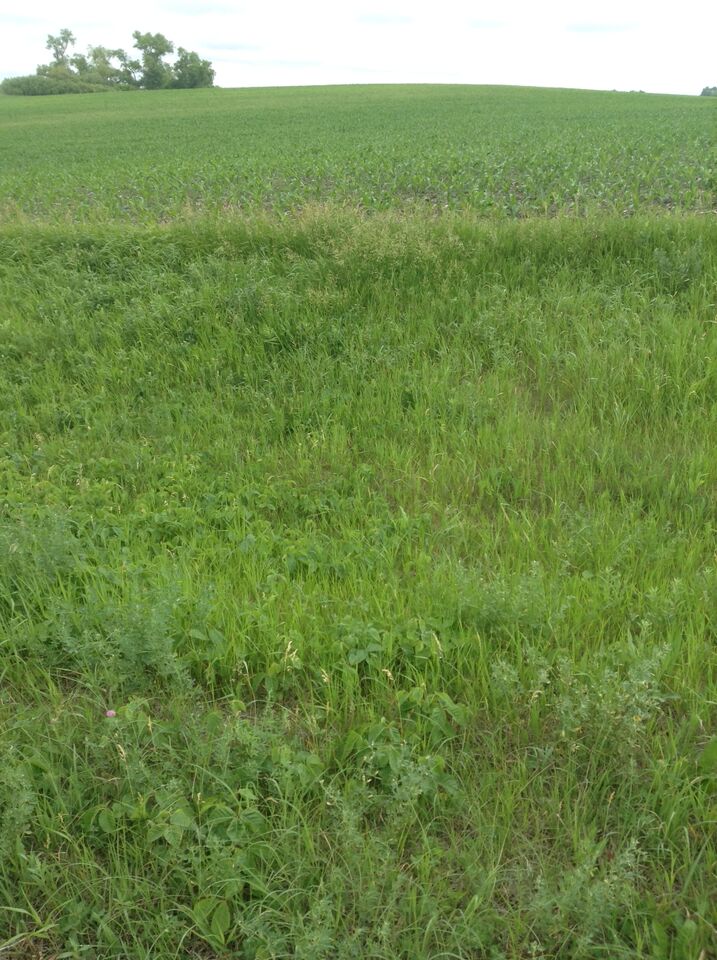
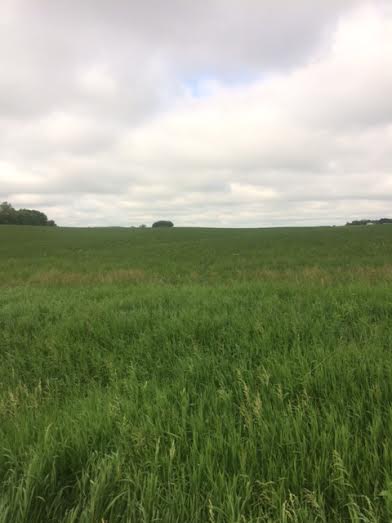
On our bikes, Amy and I crested the hill on Dairy Drive and received a view of the fields below. Somewhere below us would be the Nessman study site. We biked along the road to find the study site and ran into a dairy farm with very cute cows. After some deliberation and consultation of the map, we turned around and arrived at the Nessman Study Site. As Amy looked out over the study site straining her eyes for an Echinacea angustfolia, she noted the large amount of brome present next to the road. She then looked into the field beyond where she observed a distinct line between the brome and another field. Amy said that it is likely that there has been some sort of grazing or agriculture on that field because of the uniform height of grasses and other plants in that area. Out in the field Amy was brokenhearted when she realized that we could only identify invasive plants such as dandelions and Poa. Although there was mostly invasives in the field we could hear and see many birds in the surrounding area. A small bumblebee even joined us as we observed the large field. With her knowledge of geology and construction processes Amy determined that the ditch was caused by the building of the road and that the field had been smoothed out from the undulations of a prairie by agriculture. We then began to ride back and started to see more native species such as the prairie rose which lifted our spirits.
|
|