|
|
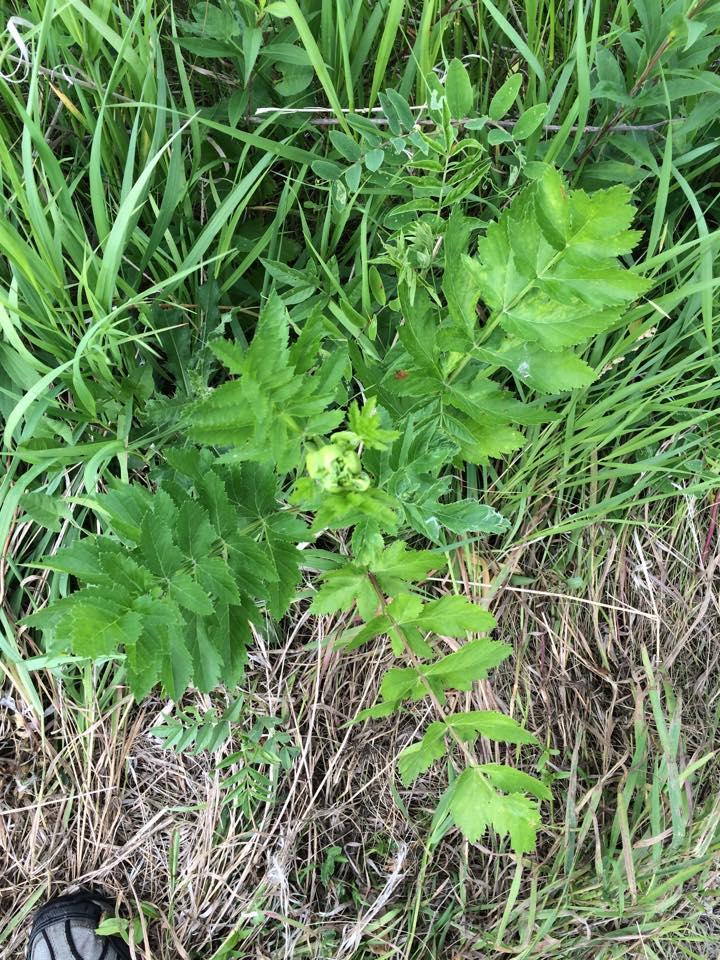
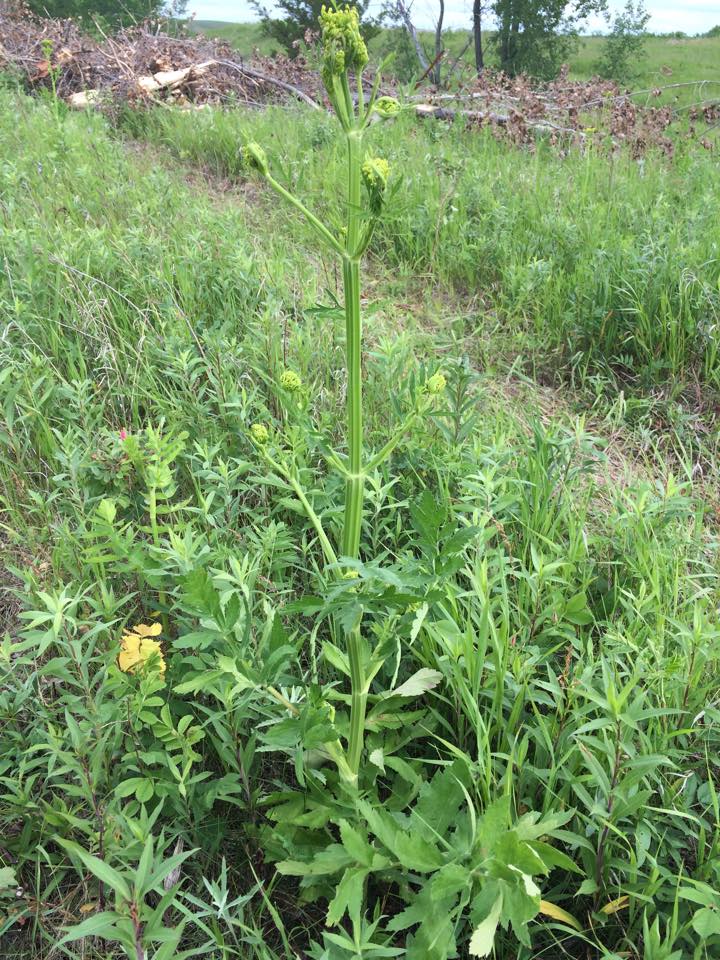
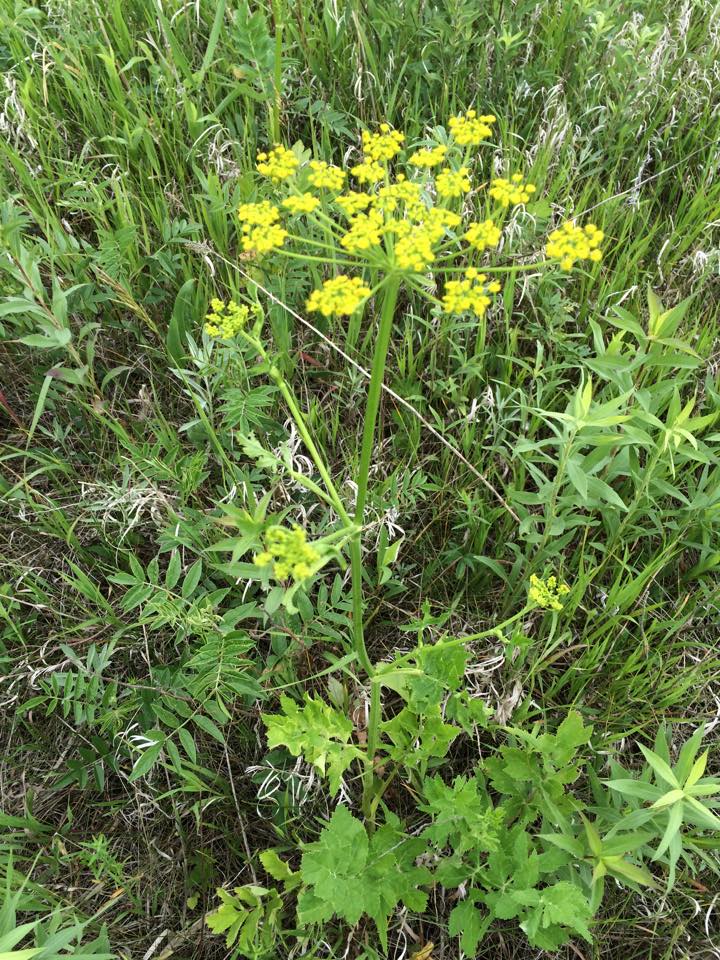
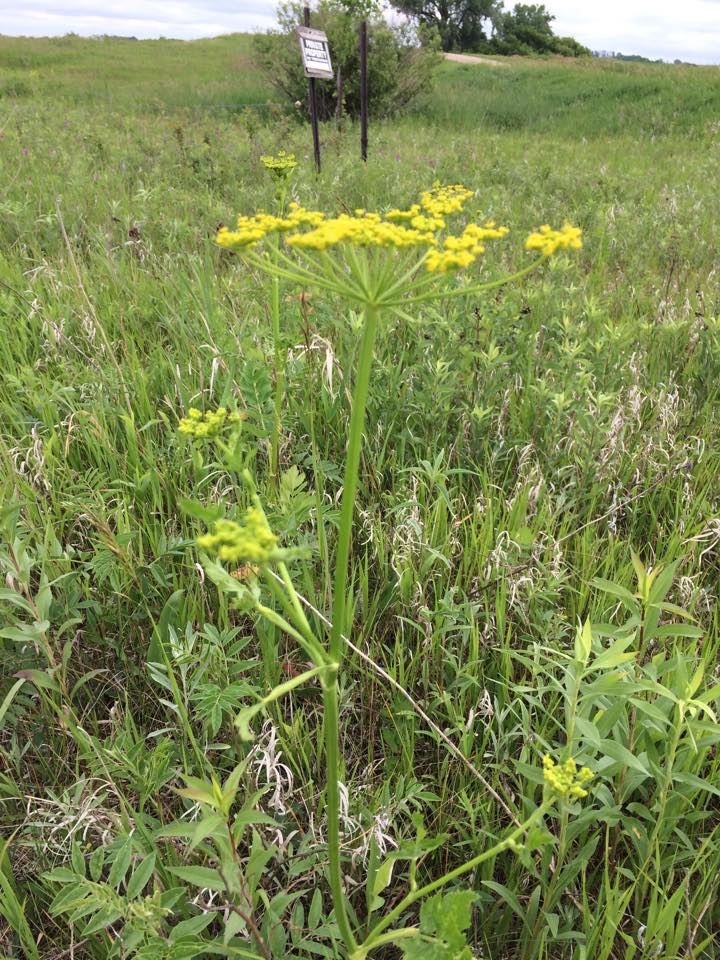
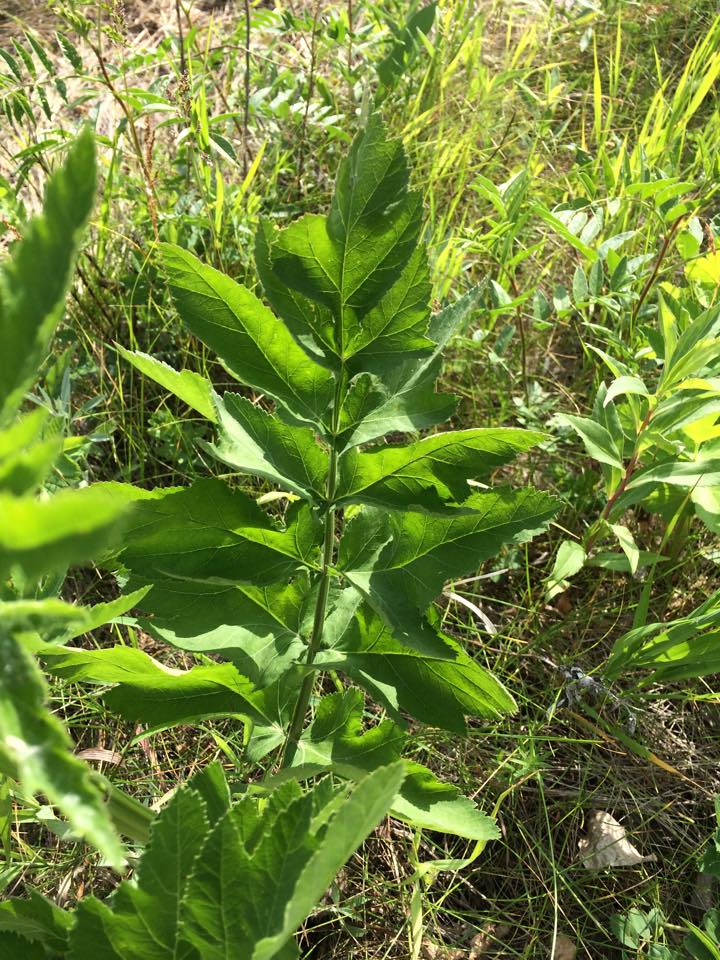
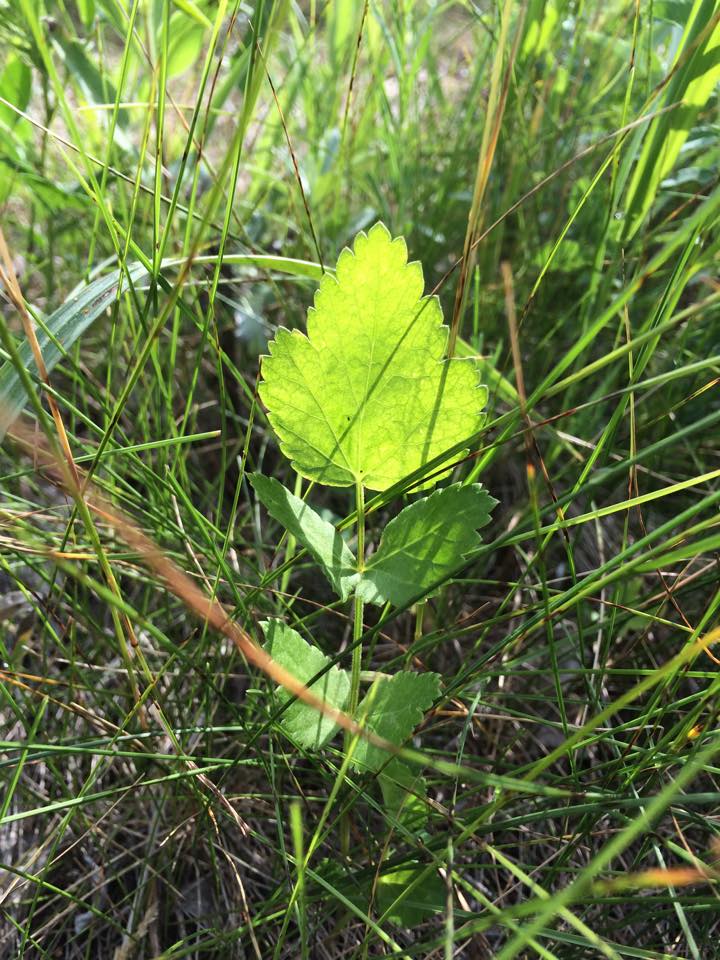
Here are some pictures I took of wild parsnip at RRX. The leaves are compound, fairly large, and have rough,toothed edges. The flowers are large, yellow, and flat-topped, kind of like a bigger, yellow version of Queen Anne’s Lace. The flowering stalks are thick, and can get pretty tall. However, not all the plants will be flowering, so make sure you know what the leaves look like! The foliage has oils that will make your skin incredibly sensitive to sunlight, so it can give you terrible blisters.

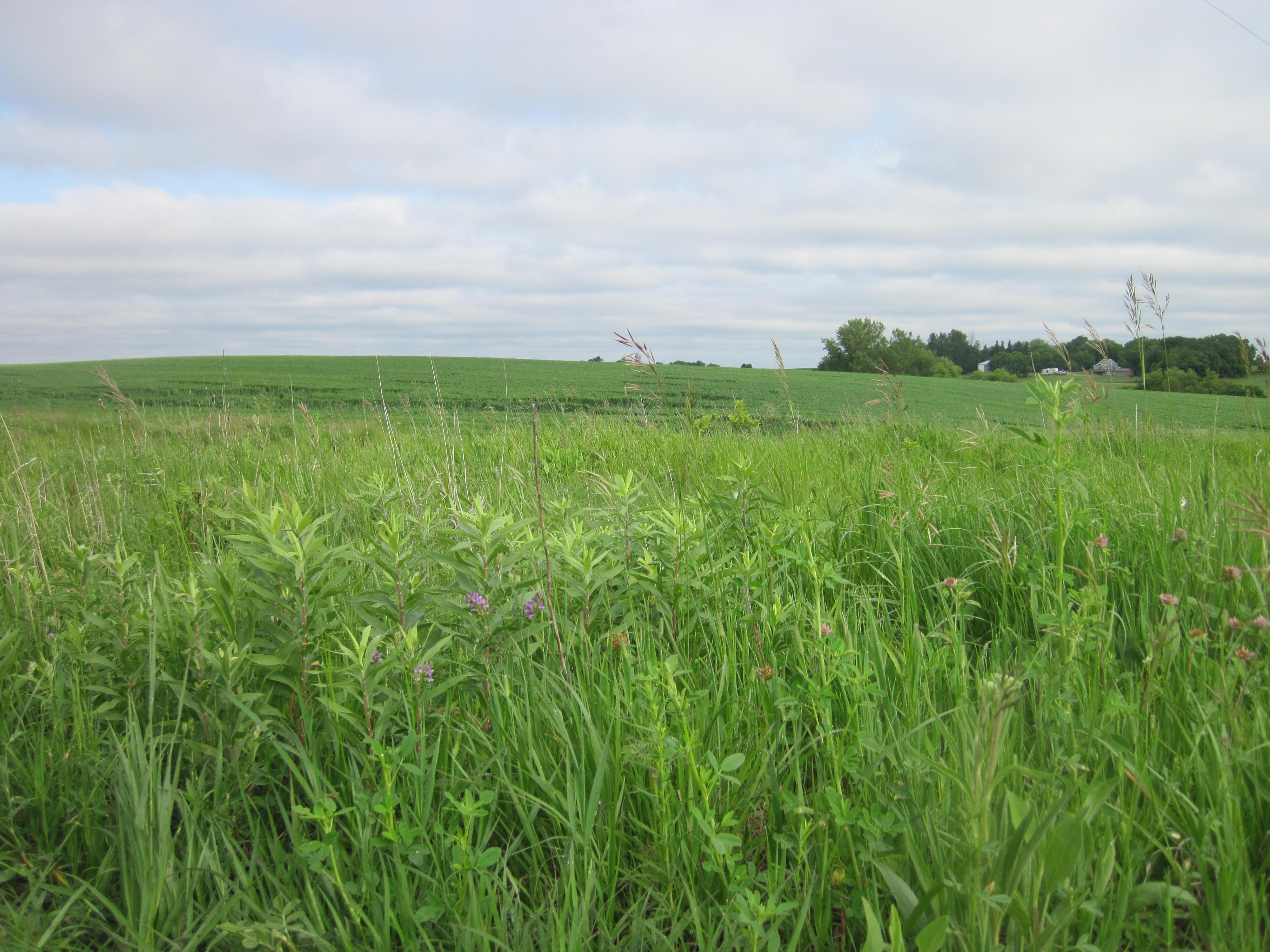
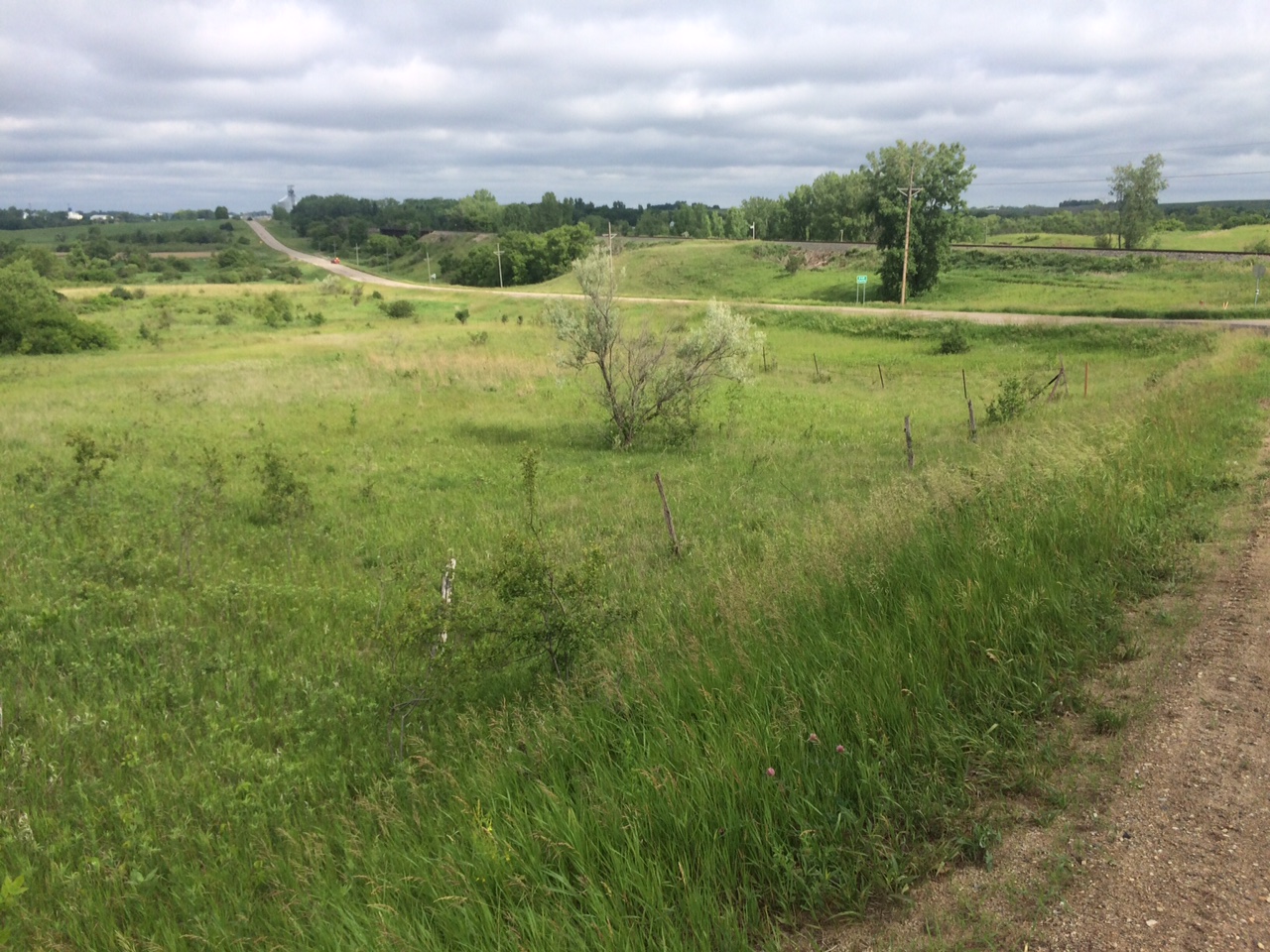
My first impression of this area was to wonder if it was actually a prairie remnant at all. All I could see was a ditch with lots of brome and Poa. There was a fence about 10 or 15 meters away from the tracks, beyond which the ground dipped down considerably. This seems to indicate that the area beyond the fence is an old field that has sunk due to plowing and soil erosion. Other than its higher surface, the only thing that immediately suggested to me that this site was a prairie was a couple of Rosa arkansana plants. The most common plants, however, were definitely brome, Poa, and wild parsnip. After a bit more observation, I noticed a couple more native plants: veiny pea and a Solidago species. There were a couple of trees growing in the area, a cottonwood and a juniper. Additionally, there were two large downed trees that looked like they had been lying there at least a year. I wonder if they fell due to a natural occurrence such as a windstorm, or if people cut them down as a management strategy. I thought that because it’s next to a railroad, it’s possible that this is native prairie, burned occasionally due to sparks from a passing train. However, the predominance of weedy, non-native plants and the lack of insect pollinators or other animals led me to think that this is a degraded site. I saw no Echinacea plants there. Although the area was larger than BTG, it still seemed small, perhaps too small for a reproducing population.

When we arrived to East Town Hall, Matt commented on the ubiquitous brome, and scarcity of flowering plants which was especially evident after our visit to Steven’s Approach. Matt immediately noted that there were trees surrounding a wetland area. Matt posited that the presence of this wetland area has influenced the management regime. Before even seeing the sign which confirmed his hypothesis, Matt recognized that this area that this area is probably managed by Ducks Unlimited for wetland health, not prairie restoration efforts.
Matt couldn’t hide his disappointment when he didn’t see any Echinacea angustifolia amidst the gently rolling hills of this site. His happiness, and mine, was restored when we noted the presence of lead plant, a plant which indicates healthy prairie. We will hold out hope for the purple cone flower, and look forward to returning to this site.
6/18/2015 –10 am
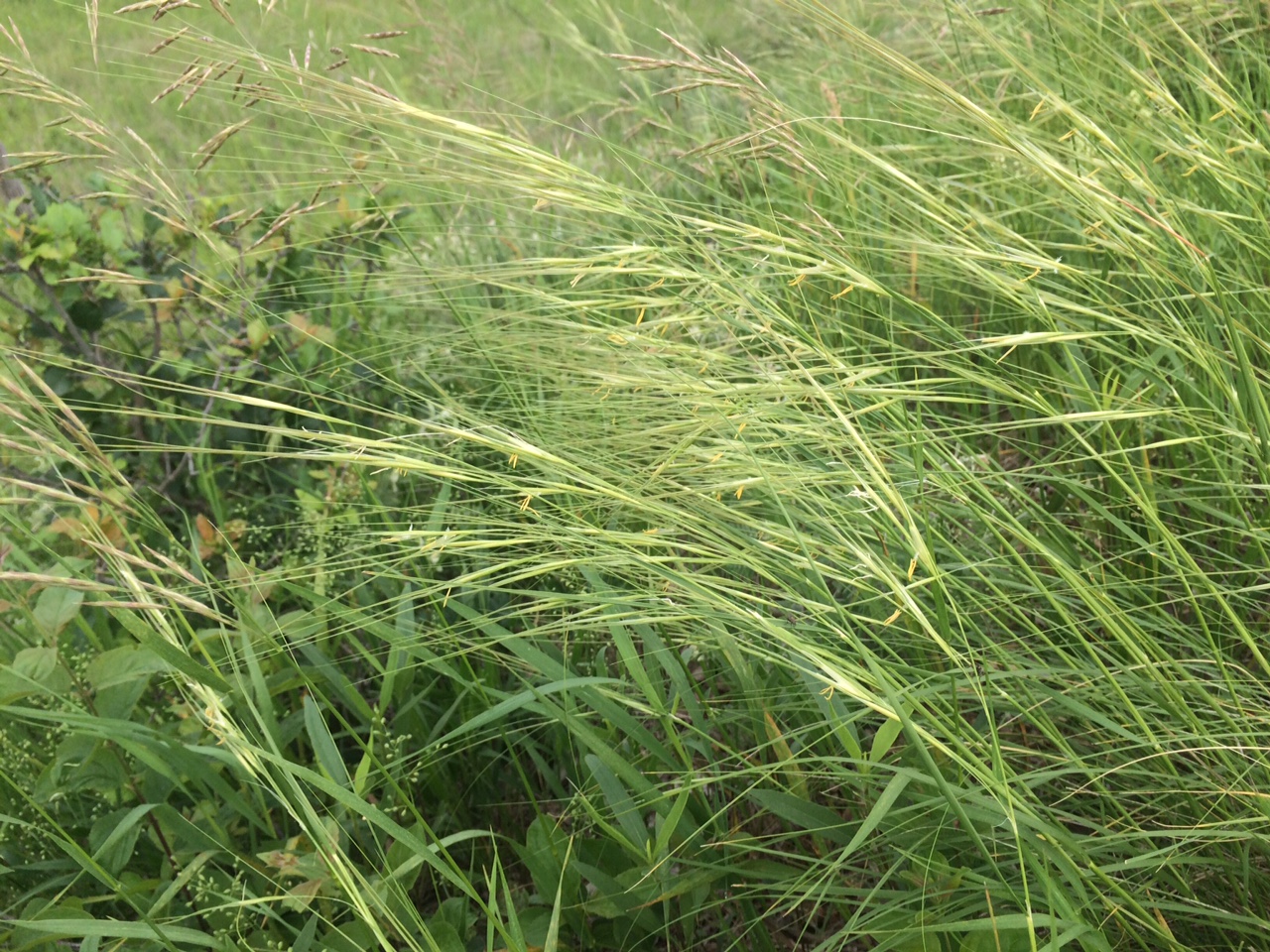
As I walked up to Loeffler’s Corner, I approached from the north, over the small hill created by the train tracks. At first glance, the southwest corner looked like any random piece of uncultivated land in the area. The brome and Poa were most visible from the 55, as the edges of the road were higher than surrounding land. There was a relatively short downward slope away from the road that gave way to a nice patch of prairie remnant. Walking closer to the edge of the remnant it became clear that the brome only dominated the raised edges of the road. In the depressed flatter area there was a diversity of species, some of which were prairie natives. First, I noticed the pink-hued prairie rose rising out of the assorted grasses, signaling the potential for other native plants. There is an old barbed wire fence about 20m from the road, parallel to the 55, that might create a boundary, but I decide to explore both sides of the fence anyway. There are a few trees a bit down Sandy Hill Rd, south of the 55, and one tree in the area between the fence and the 55, but very few trees overall. I begin to notice tall grass stems from the last summer season, and wonder which native grasses they might represent. I don’t wee any Echinacea angustifolia between the 55 and the fence, but I do see some porcupine grass, some yellow flower that looks to be from the Asteraceae family, a clover that may be native, and a few lead plants. I begin to look closer at the grasses and notice Dicanthelium and some bunches of grass that I assume are native. Overall, the area is slightly sloped and hilly. Moving south down Sandy Hill Rd, I notice brome and Poa are generally less visible away from the roadsides. I can see some patches of goldenrod, and in the distance some flowering wild parsnip. I look closer as I step into the remnant, and I see some echinacea plants! I move back to the road and start thinking about the potential history of this plot. Because I see less brome and Poa away from the roadside, I assume the area may have burned at some point in the recent past. I also wonder if the area was ever plowed. In general the area seems more hilly than most fields and I see some rocks which indicate that the area may not be a former field. In an attempt to asses the overall size of the remnant I move up the hill, southward down Sandy Hill Rd, just past a small crop of trees. From this vantage, I notice there is a clear southern boundary to this remnant. Beyond the trees is what appears to be an old field densely covered with alfalfa, brome and sweet clover. I see almost no evidence of native plants this far south. Therefore, this remnant is significantly larger than Bill Tom’s Gate but definitely much smaller than Staffenson Prairie Preserve. It looks to me like Loeffler’s Corner is a promising prairie remnant tucked between the railroad tracks and an old field.
-Steven’s Approach-
A profile of Prairie as observed by Ali Hall
Written by Matt Olhoft
“My impression is that the landscape has been carved out to make the road”. This was Ali Hall’s first thought as we stopped by Steven’s approach, a small prairie remnant located on Wolley Lake road. Steven’s approach is typical of most field approaches, being about 30 feet wide by about 40 feet long, just big enough to connect a field to a road bed. The field approach is bordered by a wheat field on the west and the road on the east.
Ali noted that there was Echinacea Angustifolia seen right away. Later the realization came that the field approach was loaded with Echinacea and that there may have been as many as 100 metal echinacea tags located right on the field approach. In fact, it was difficult to even stand in one place and not step on Echinacea. Several are setting flowers and will be in full bloom soon. Echinacea plants were in almost every square foot of the field approach.
In further observations, Ali noticed was that there were no rocks or trees present. “The area is kind of prairie like, but not really”, she said. There were several flowering plants seen, and they seem to be located on the upslopes along the ditch side and the field side. The majority of these flowering varieties seen to be birdsfoot trefoil, prairie rose, and alfalfa.
Some discussion ensued between Ali and myself as to the reason Echinacea loved this approached so much, even though it repeatedly gets run over by large equipment. We speculated that perhaps it was the soil type used to build the approach that may be a factor in why they are choosing this area.
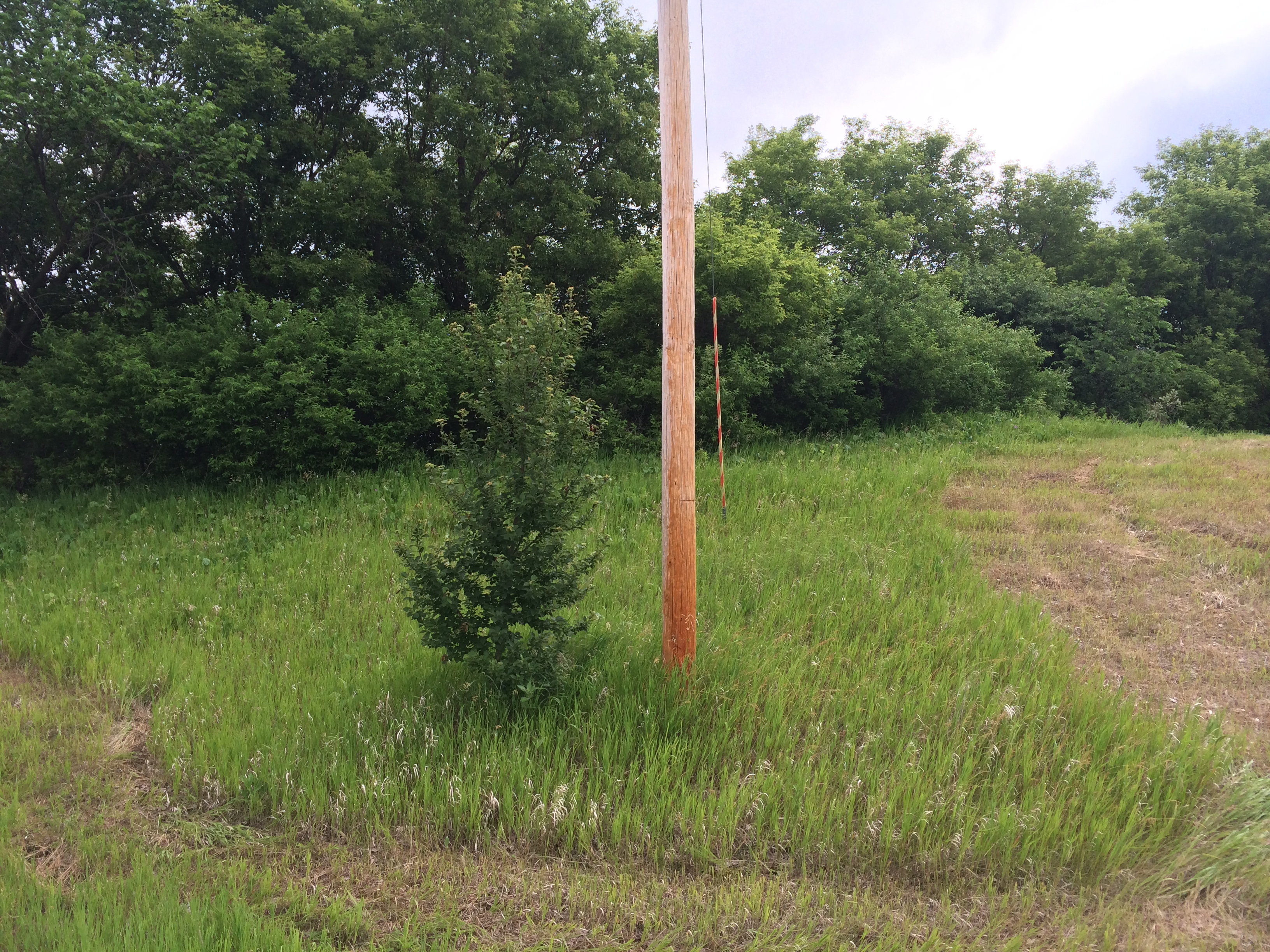
Turning right onto Unity Drive from Highway 27 you’ll quickly come upon a small patch of remnant prairie just off the right side of the road. The patch is squeezed in between a tree line and the heavily mowed roadside, and at first glance looks to be primarily invasive grasses. Brome, poa, and Indian grass–all non-native–clearly dominate. And creeping down from the tree line is a fair amount of poison ivy that actually seems to overtake the grasses up closer to the trees. We saw no evidence of the pale and narrow leaves of the Echinacea angustifolia poking up in between the grasses. Slightly disappointed with the apparent lack of diversity and absence of native species in this unassuming roadside patch, we were about to walk away when we spotted the soft metallic green of some leadplants crowning the top of the incline by the tree line. These native legumes are a sign of a healthy prairie, and finding them was without a doubt the redeeming highlight of our encounter with this otherwise sad patch of prairie.
Upon returning to the research base just down the road and showing the picture we took of the site to Stuart, we found out that much of the remnant had very recently been mowed and the patch we were examining was smaller than it had been even since Stuart’s last visit–a disappointing fact added to our investigation. We hope that this ever-shrinking prairie remnant sees better days soon.
Snapshot of “South of Golf Course” prairie remnant off of Unity Drive and Highway 27.
The summer field season is off to a great start! We have assembled an excellent team to investigate ecology and evolution in fragmented prairie habitat focusing on the narrow-leaved purple coneflower as a model organism. Meet members of the team.
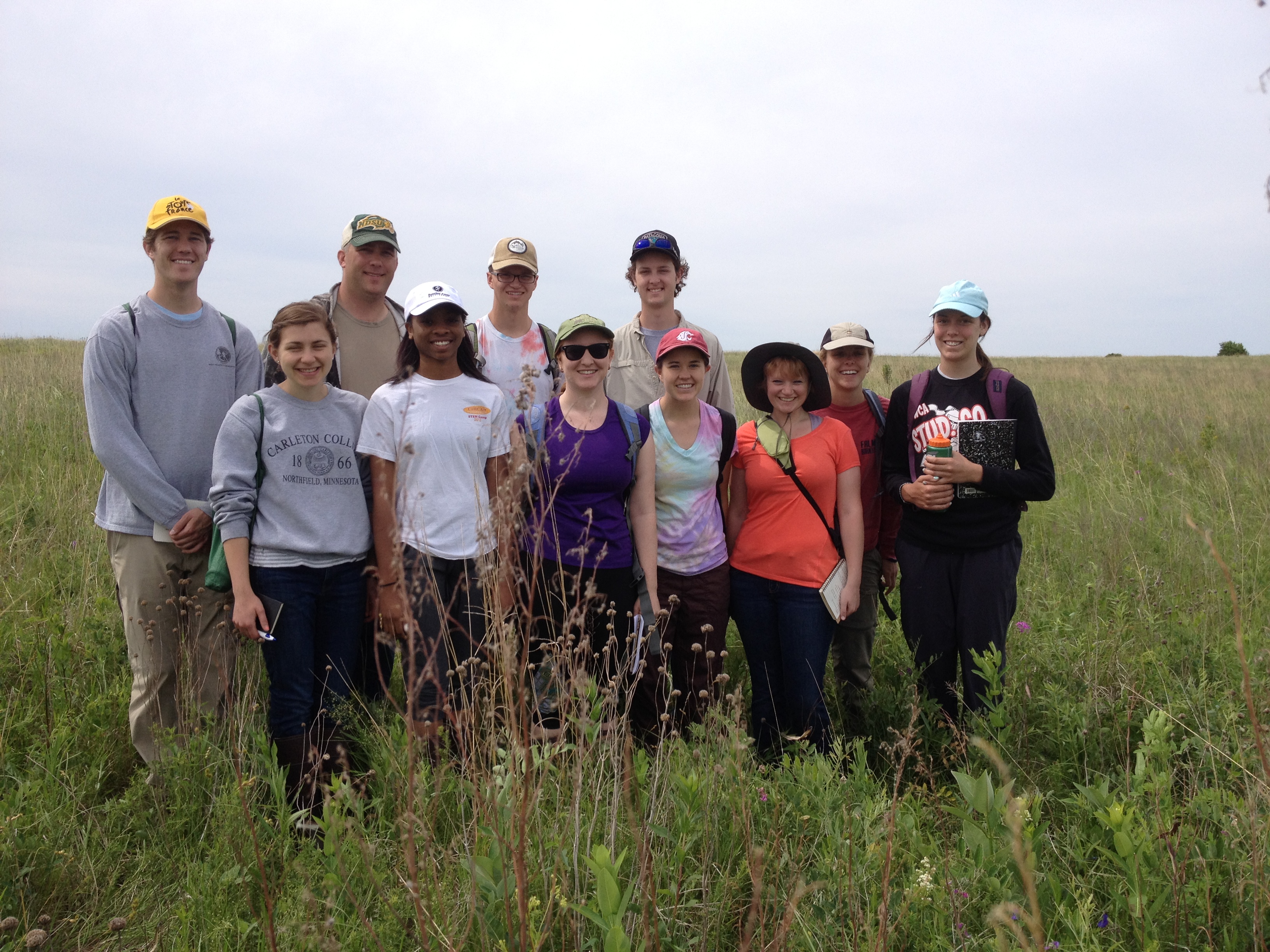
Team Echinacea 2015: Danny, Matt, Ben, Will, Gina, Taylor, Lea, Amy, Katherine, Alison, Abby
We started the season with tours of local prairies large and small, including Staffanson Prairie Preserve, Hegg Lake WMA, which are large and protected. Stay tuned for team-members’ first impressions of some of the nearby remnant Echinacea populations.
Team-members hail from near & far: Barrett, Elbow Lake, and Alexandria, Minnesota & California, Alabama, New York, and Rhode Island. They are excited to develop summer projects and they will post their proposals here next week. Our team includes four college students, four who just graduated college, two high school teachers, and one high school student. And there are the old-timers.
To get ready for field work, we took the Hjelm House out of winter storage and cleaned out our storage facilities (g3). We inventoried supplies and made signs and tags for fieldwork. Everyone got a pouch with tools and supplies and Gretel has assigned us all a data collector. This may be (should be) the last year for our trusty handspring visor data collectors. The visors are trustworthy, but the computers and software that run them are showing their age.
The first main activity of the season was assessing survival and growth of 2526 plants in the Q2 experiment, which is designed to quantify the additive genetic variation in two Echinacea populations. The amount of additive genetic variation determines a population’s capacity for adaptation by natural selection. Genetic variation is very important for the persistence of populations in prairie habitat. We’ll find out how much variation Echinacea has, which will give us some ideas about future prospects for these populations in the rough-and-tumble and rapidly changing world out here.
We got rained out several times this week, but managed to measure all 2526 plants. We found a few plants that escaped detection last summer and we even found one seedling. Welcome to the experiment, fellas! We’ve got our eyes on you.
Overwinter survival appears to be quite good and most of the toothpicks we used to identify individual plants made it through the winter too. The tallest plants were just over 20 cm and some plants had 3 or more leaves. This is great news for plants that were sown as seed in fall 2013. Growth conditions are challenging: a cold winter with little snow, a dry spring, shading out by established plants, chewing by herbivores, … it’s a tough life for a prairie plant.
All in all, it promises to be a great summer. We’ll keep you posted.
My, oh my how time flies! It seems hard for me to believe that today is already my last day. Working with Stuart, Gretel, the Echinacea Project volunteers, and the rest of Team Echinacea over the past year has been a wonderful experience. I have learned a tremendous amount and I feel very fortunate that I had the opportunity to spend time working on such a great project with such a terrific group of people!
Keep of the good work and good luck Team Echinacea 2015!
– Jared
We had a great luncheon for our volunteer citizen scientists today. We are grateful to the incredible amount of high-quality work they do for the project. Stuart gave a presentation about our accomplishments during the past year (many) and plans for the summer (focused). Jared presented some results about the effects of fire on reproduction at Staffanson (strong). A fun time was had by all.
At the luncheon we wished Jared well in his future endeavors. Friday is Jared’s last day. I has been great to work with him for the past year. We welcomed Taylor Harris to the Team. She is from Fisk University and will work in Minnesota this summer.
You can read more about the citizen scientists who work on Team Echinacea in our series of profiles recognizing their hard work and dedication volunteering for the Echinacea Project at the Chicago Botanic Garden. Two volunteers declined to have profiles posted due to modesty or to hide their identities as international spies–we won’t blow your cover. Read profiles here.
Stuart forgot to take photos during the event. Fortunately Robin took a group photo, which we will post as soon as we get it.
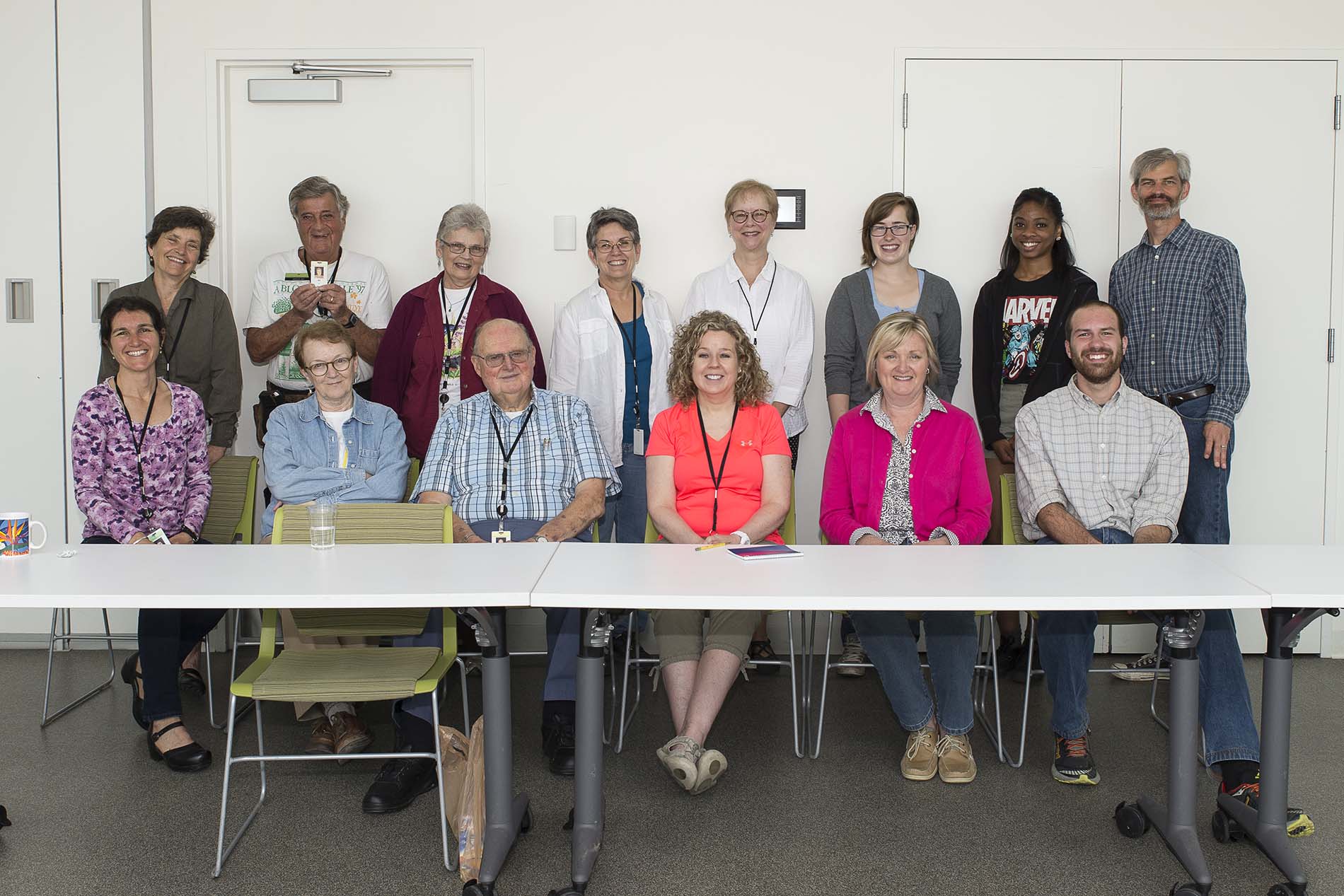
 Team Echinacea at the volunteer citizen scientist luncheon at the Chicago Botanic Garden.
Back row: Shelley, Art, Char, Anne, Leslie, Jessica, Taylor, Stuart
Front row: Gretel, Suzanne, Aldo, Laura, Kathryn, Jared
Not pictured: Bob, Lois, Susie, Susan, Naomi, Marty, Sam, Lou, Bill
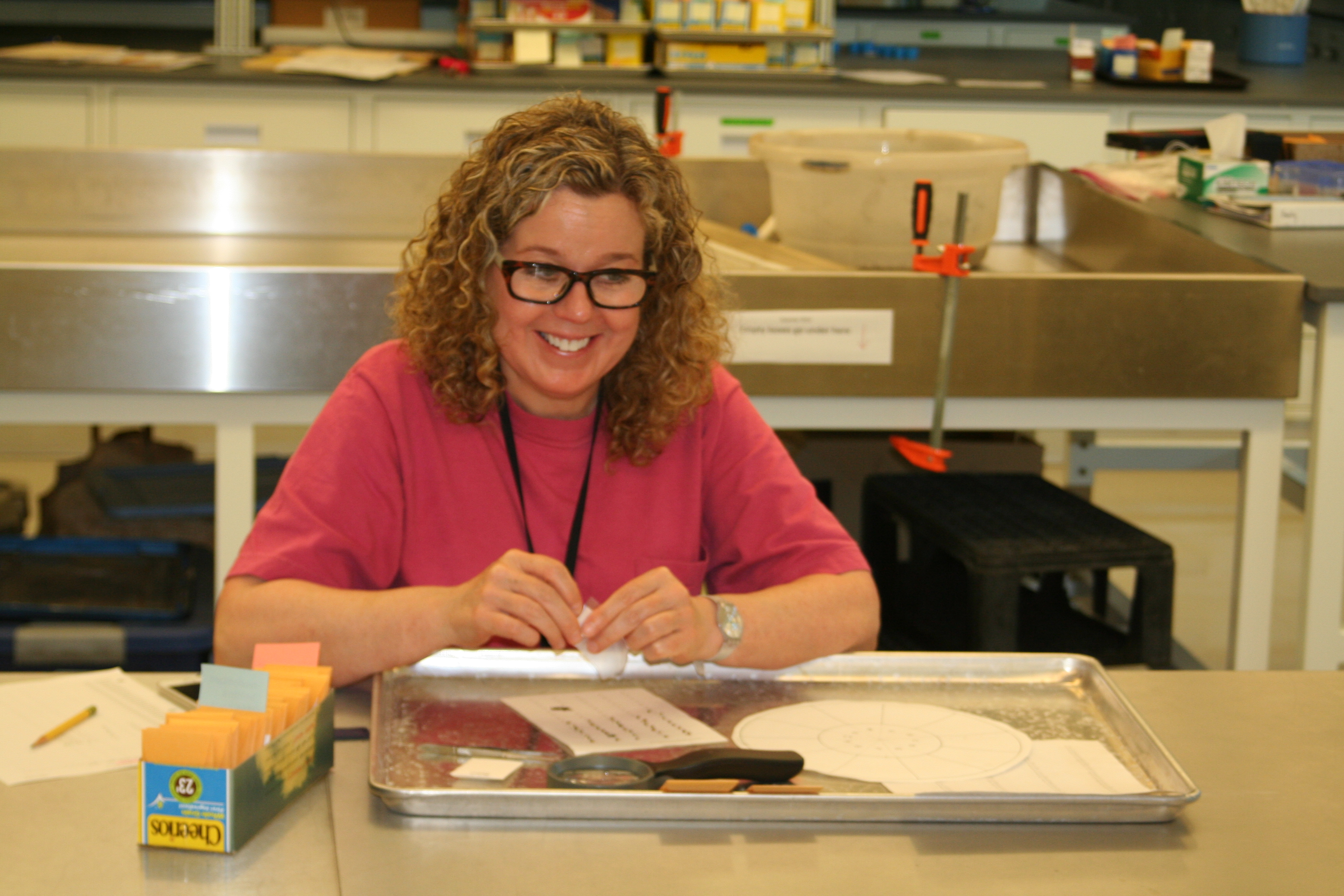
Laura joined began volunteering at the Chicago Botanic Garden in 2014 after retiring from a career at Abbott Laboratories. Though she has only been with the Echinacea Project a short time, Laura’s background in quality assurance and her lifelong interest in plant biology have already proved valuable in the lab. She has helped clean Echinacea heads, count achenes, and enter data among many other tasks. Apart from her work with the Echinacea Project, Laura volunteers with a charitable organization devoted to helping children in Lake County.
This is one in a series of profiles recognizing the hard work and dedication of citizen scientists volunteering for the Echinacea Project at the Chicago Botanic Garden.
|
|