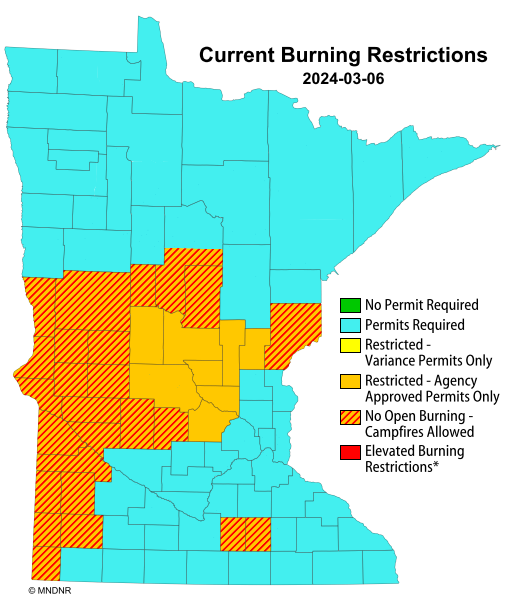
Good grief! As if regular old atmospheric inclement weather wasn’t enough to worry about, now we can worry about inclement ionospheric weather too! The fire season appears to be coming early and strong, which may make it difficult to conduct prescribed burns and work outdoors. The upcoming solar maximum appears to be coming early and strong, which makes it difficult to use our precision GPS machines, which are essential to our fieldwork.
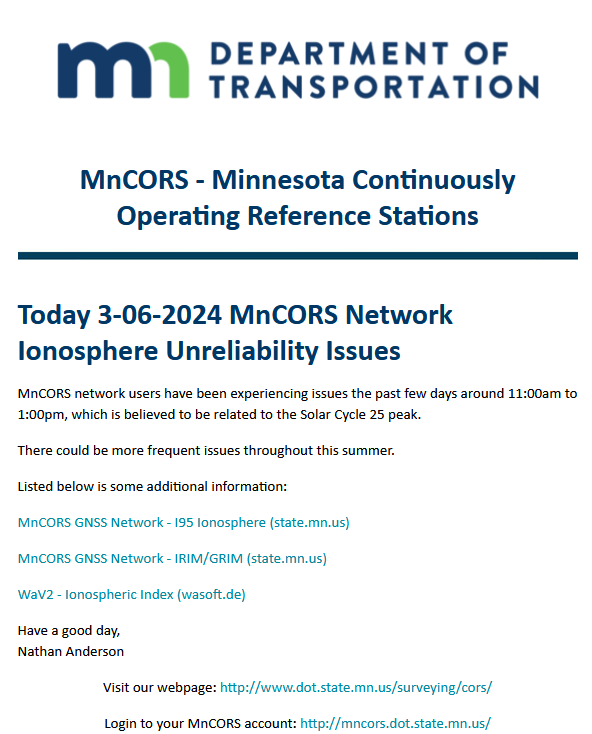
Here’s a MnDOT bulletin from today warning us to expect bad performance of gps due to space weather rocking the satellites.
Network Ionosphere Unreliability Issues – a bulletin from MnCORS Minnesota Department of Transportation on 03/06/2024
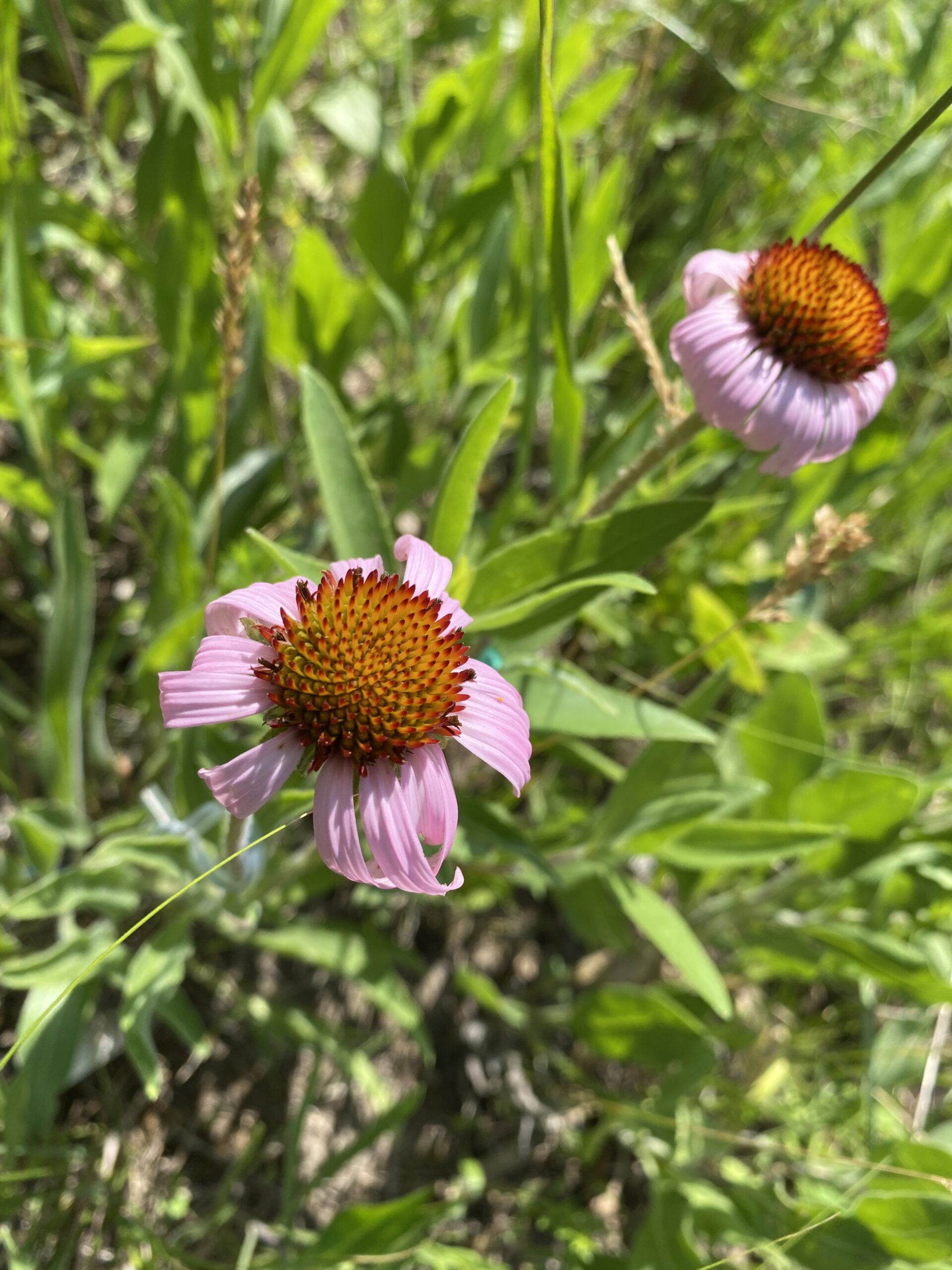
In the lab today we were talking about Fibonacci numbers. Somehow these numbers (1, 1, 2, 3, 5, 8, 13, 21, 34, …) relate to Echinacea flowerheads. The number of ray florets (aka “petals”) on ab Echinacea head are often Finbonacci numbers, like 13 & 21, but they are often not those numbers. This Wikipedia page describes the relationship between Fibonacci series and florets on flowerheads.
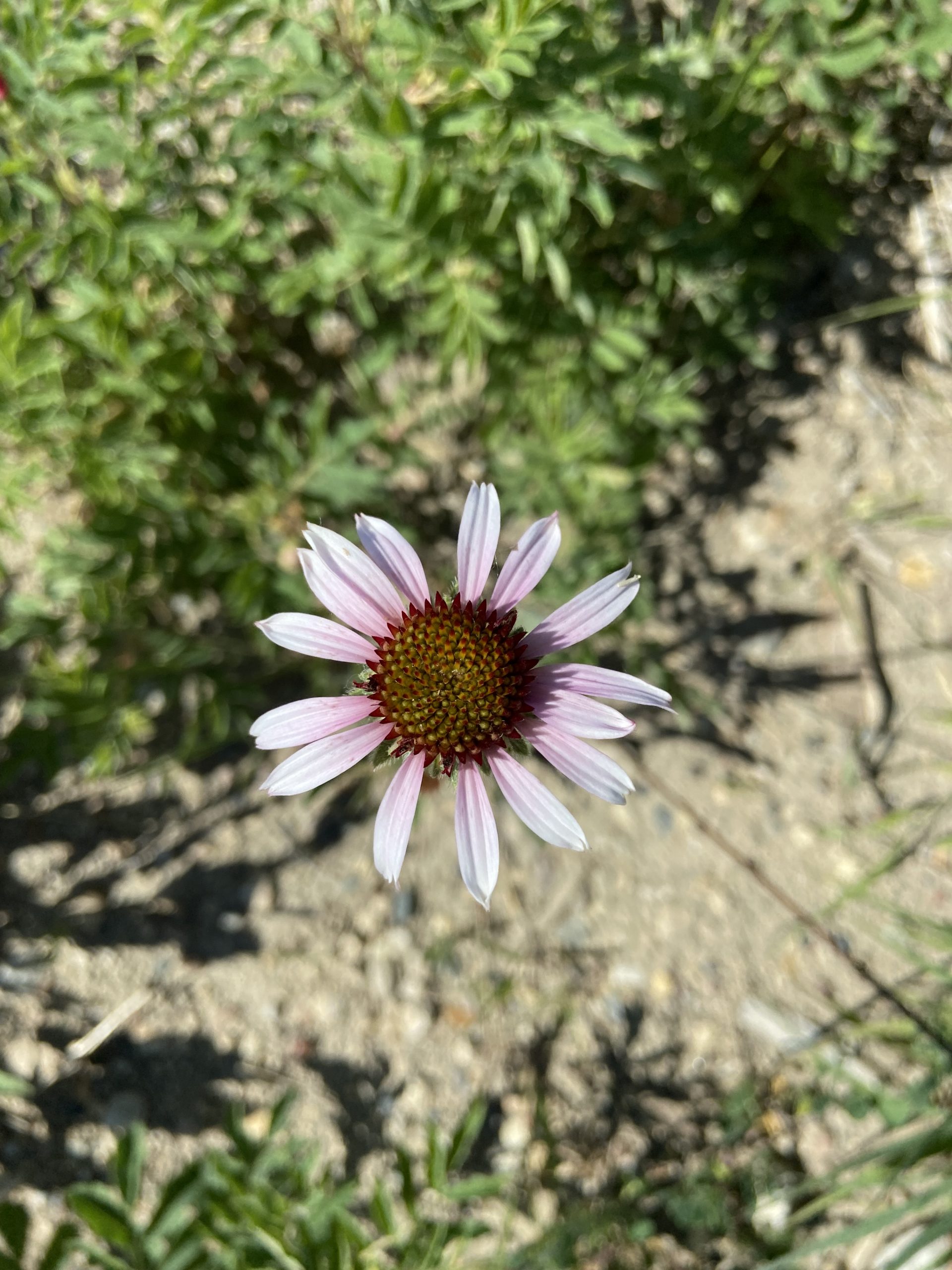
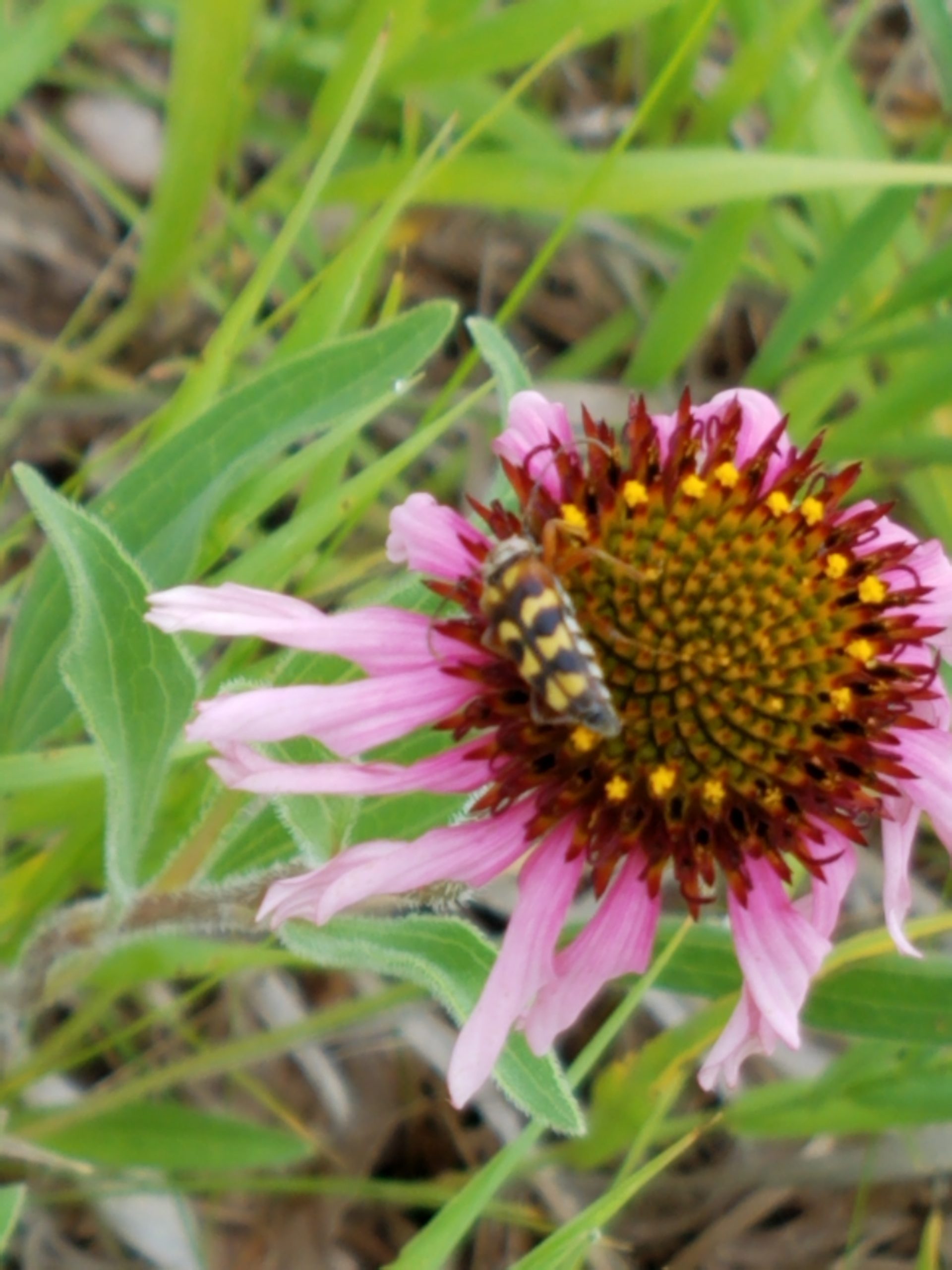
Here are some images of Echinacea heads from the summer (top views). Do you see any interesting patterns?
Top view of head of Echinacea angustifolia. How may ray florets? Click image to enlarge to see pattern of disk florets.Head of Echinacea angustifolia with two beesTwo heads of Echinacea pallida. This species is not native to Minnesota, but it was planted by accident in a prairie restoration in our study areabeetle on head of Echinacea angustifolia
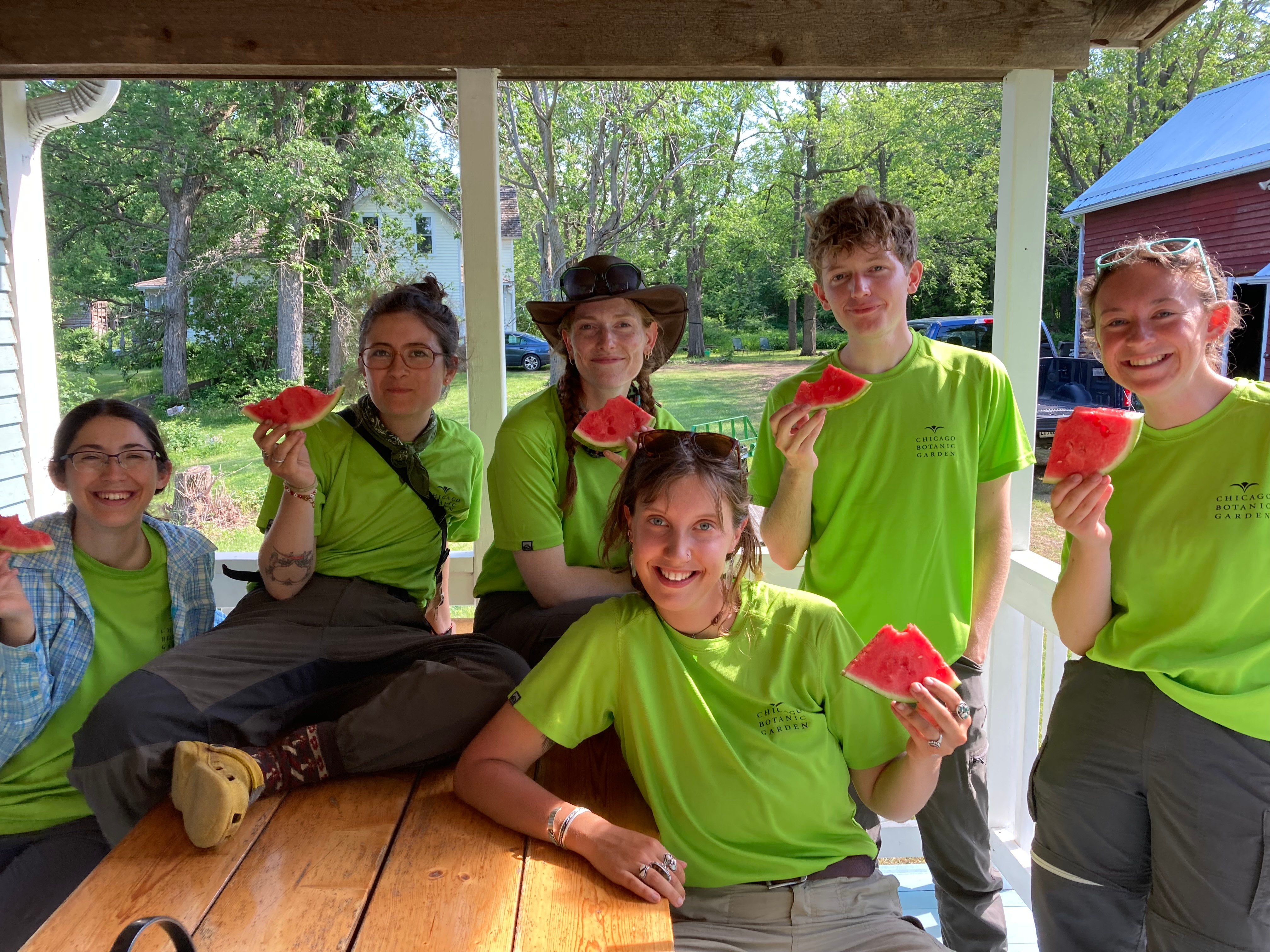
Team Echinacea seeks undergrads, graduate students, recent grads, high schoolers and teachers to join our summer team! Come hone your skills as an ecologist, conservationist, and evolutionary biologist while engaging in research in western Minnesota’s tallgrass prairies. There will be watermelon!
Members of Team Echinacea summer 2023 team enjoy a snack on the porch after a day of field work
We strive to create an inclusive, collaborative, stimulating, positive, fun, and productive environment for all regardless of race, ethnicity, gender, age, sexual orientation, and economic background. We welcome and encourage individuals from groups historically excluded from sciences and conservation. If you are interested in learning about and contributing to science and conservation, please join our team. We are committed to recruiting, training, and supporting individuals interested in science, education, and conservation from diverse backgrounds.
Registration is now open for MEEC! This conference, organized and directed entirely by students, highlights the work of undergraduate and graduate students in poster or oral format.
Many, many Team Echinacea members have presented their research at MEEC in the past (just search MEEC here on the flog). In fact, I presented a poster on aphids with Allie Radin in 2022! Will I be submitting an abstract this year? Only time will tell. But you should!
DETAILS
Location: Southern Illinois University Edwardsville
Abstracts due: 15 March, 2024
Conference begins: 6 April, 2024
Note: The total solar eclipse is on April 8th, not too far away from the conference…
Team Echinacea has a lot of ongoing projects. A lot! Some of them have been running for decades, and some are relatively new. Each project has a unique set of needs in terms of preparation, fieldwork, and post field management. We want to be efficient as each project progresses through the field season and we also want new team members to be able to pick up on the workflows.
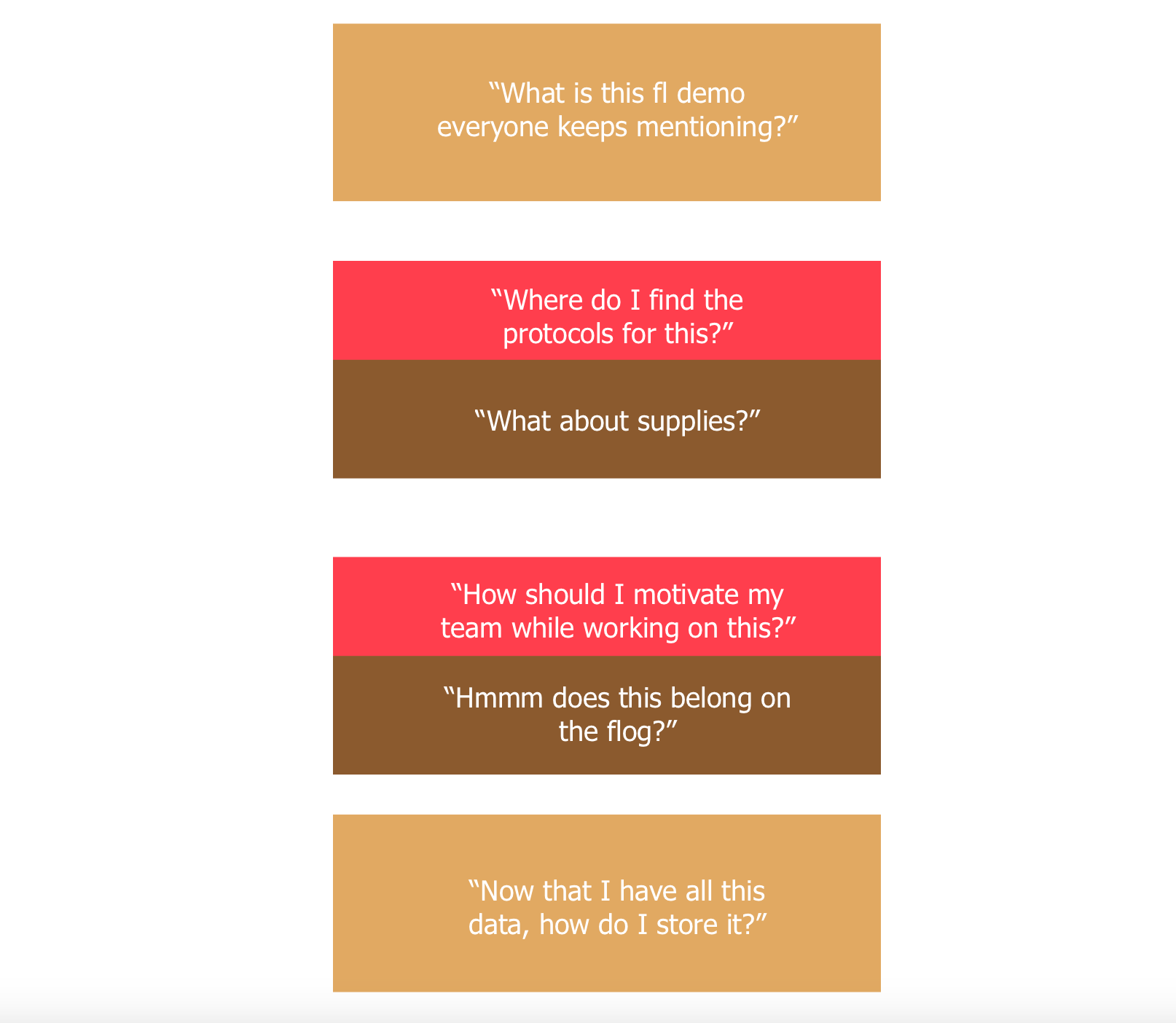
PB&Js might be just the thing to answer all our FAQs…
Here are some FAQs on an abstract ggplot PB&J.
This week, Stuart, Wyatt and I are experimenting with the PBJ format (project blueprint and journey). We hope to make easily digestible roadmaps for every project we have going on. These will keep our field season running smoothly (or not, if you like crunchy peanut butter… We have not discussed this yet). This also makes me wonder, what kind of jelly (or jam?!) is best for our PB&Js? I like Bonne Maman fig preserves. I will pitch that to Stuart and Wyatt.
You know, I can’t remember if I’ve posted any updates or info on my thesis to the flog before. So, I’ll do a more in depth update at some point in the near future explaining the background of the project, what work has gone on, etc. For now, I just want to make more of a celebratory post for making my first ever semi-complex function in R!
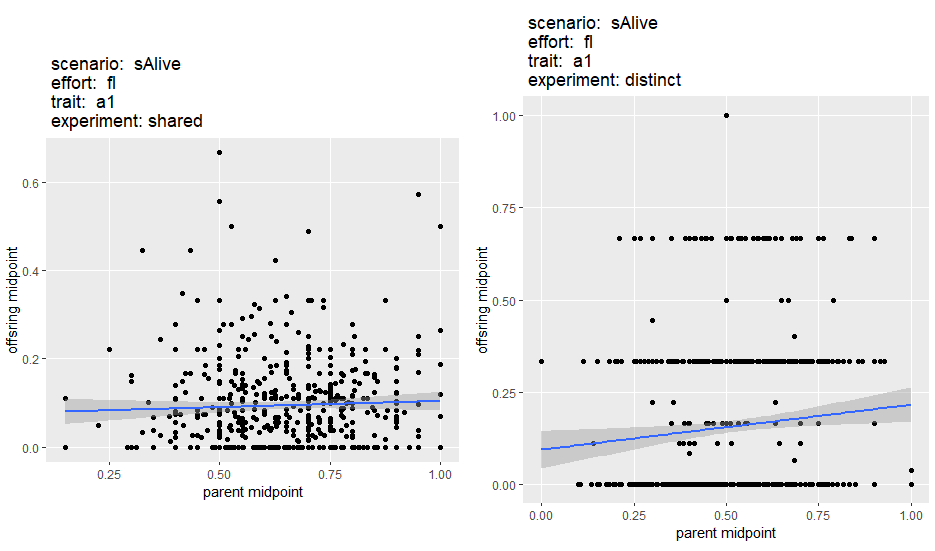
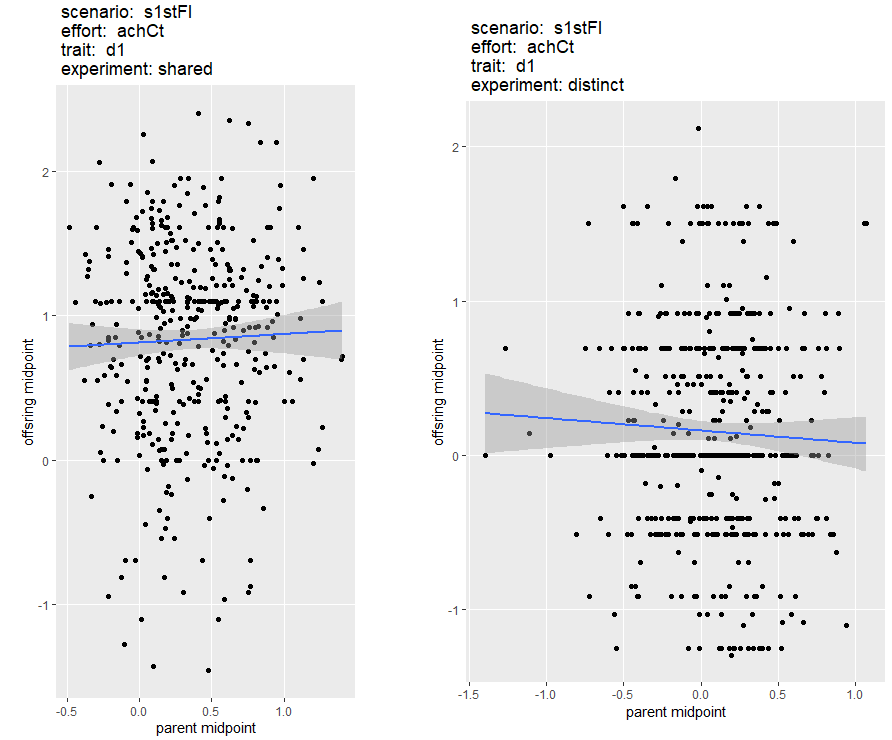
For the mathematical work of my thesis, I have multiple different datasets, measures of reproductive effort, and ways of quantifying a phenotype related to fire-stimulated flowering. Different combinations of these variables can significantly change what the end plots looks like. Again, a more in depth explanation is to come, for now, just function.
I developed a function where you can input these arguments as variables and it spits out several plots, the last of which is a parent-offspring regression for both my shared and distinct cohorts. (Did I mention there’s more context to come? This is in media res storytelling.) Check it out:
We know that prescribed fire is beneficial to native prairie plant species, but summer 2023 REU participant, Jak Davis, is also curious about how fires impact native pollinators. Their project this summer, investigated the effects of prescribed fire on pollinator fidelity/visitation to Echinacea. Jak collected bees in the field (Agopostemen virescens, Halictus and Augochlorella) and scraped pollen off their bodies. They counted and identified pollen grains under the microscope and calculated total proportion of Echinacea pollen grains.
Jak is continuing this work at part of their senior thesis! She has started data analysis and will have results to share soon!
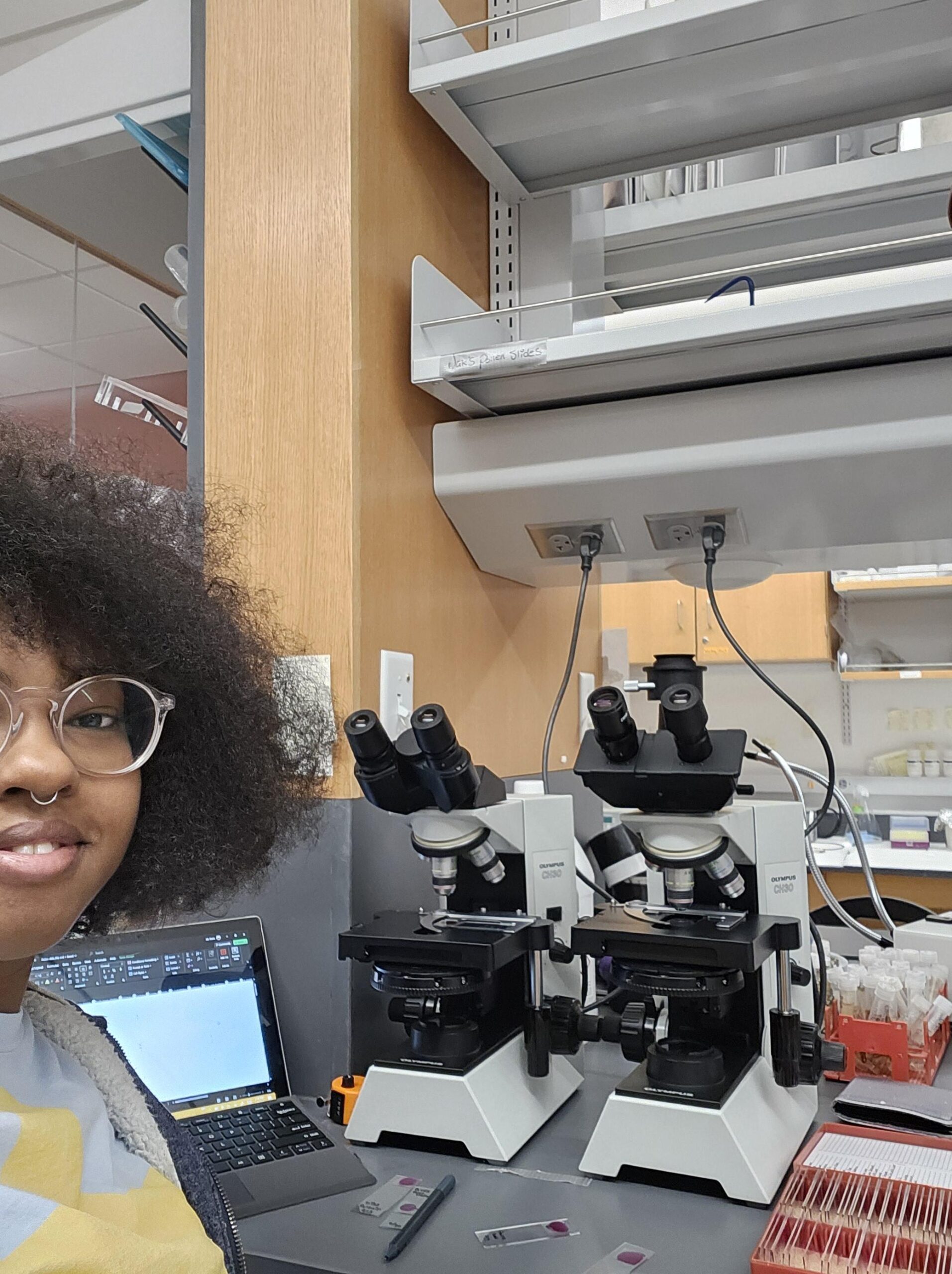
Jak has been hard at work in the lab at College of Wooster post-field season!
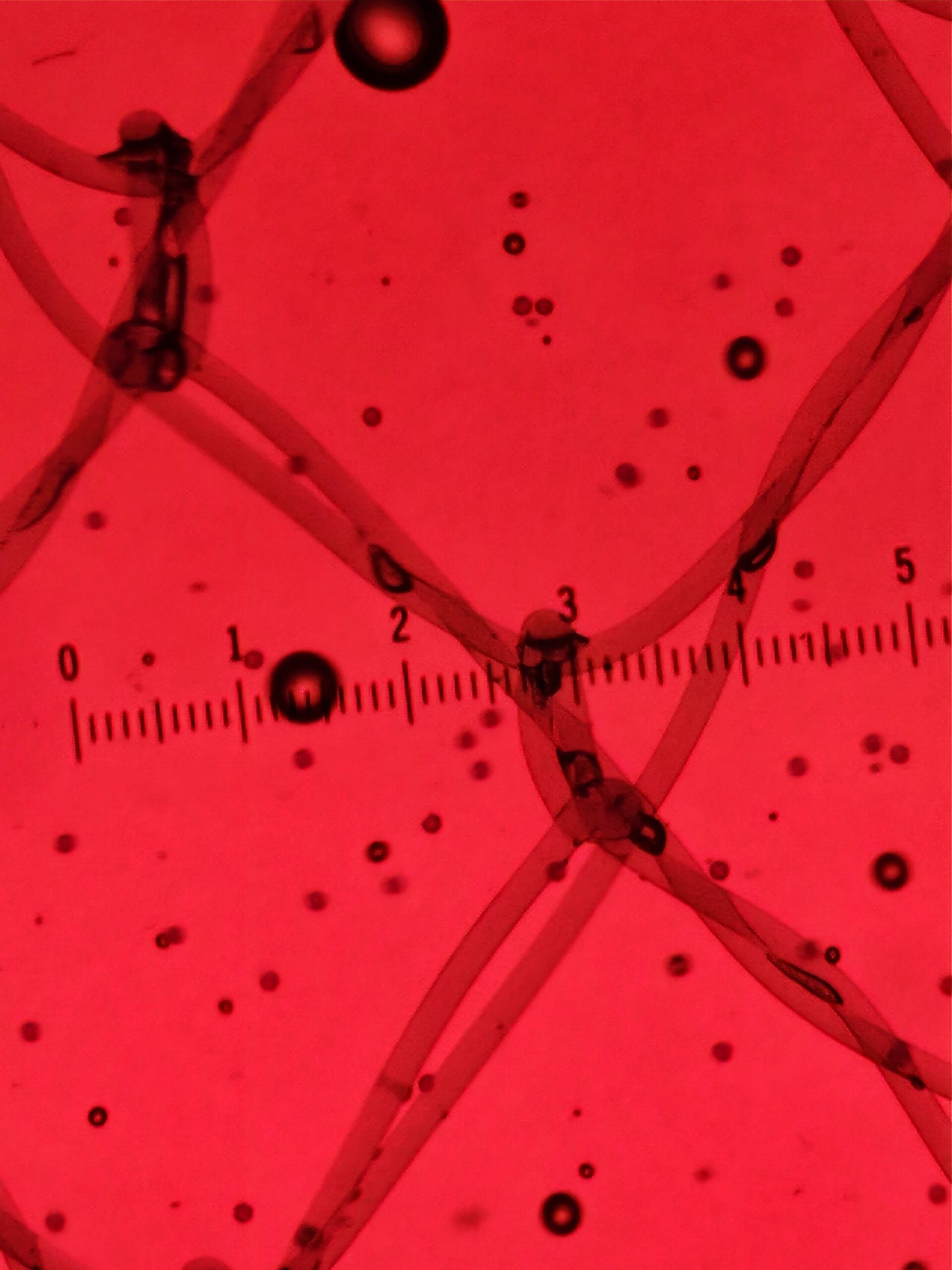
A closer look at pollen grains through the microscope! Jak is able to tell which grains are Echinacea- impressive!
Start year: 2023
Location: Remnant prairies in Solem township, MN and the lab at College of Wooster
Overlaps with: other projects in prairie remnants
Data collected: N/A
Samples or specimens collected: pollen scrapes from bees, floral specimens
It feels like forever ago that our summer team of plant demographers were taking demo and surv records on thousands of flowering and non-flowering Echinacea plants in the field! But for me, demo and surv work is still front and center, and it gets more exciting every day!
A few weeks ago, I cleaned up the 2023 data that Stuart and Jared kindly loaded into demap. Now, it is time to reconcile entries within years and between years. There is a lot going on in the demap repository where this happens, but luckily, former members of Team Echinacea wrote great protocols and annotated their scripts thoroughly.
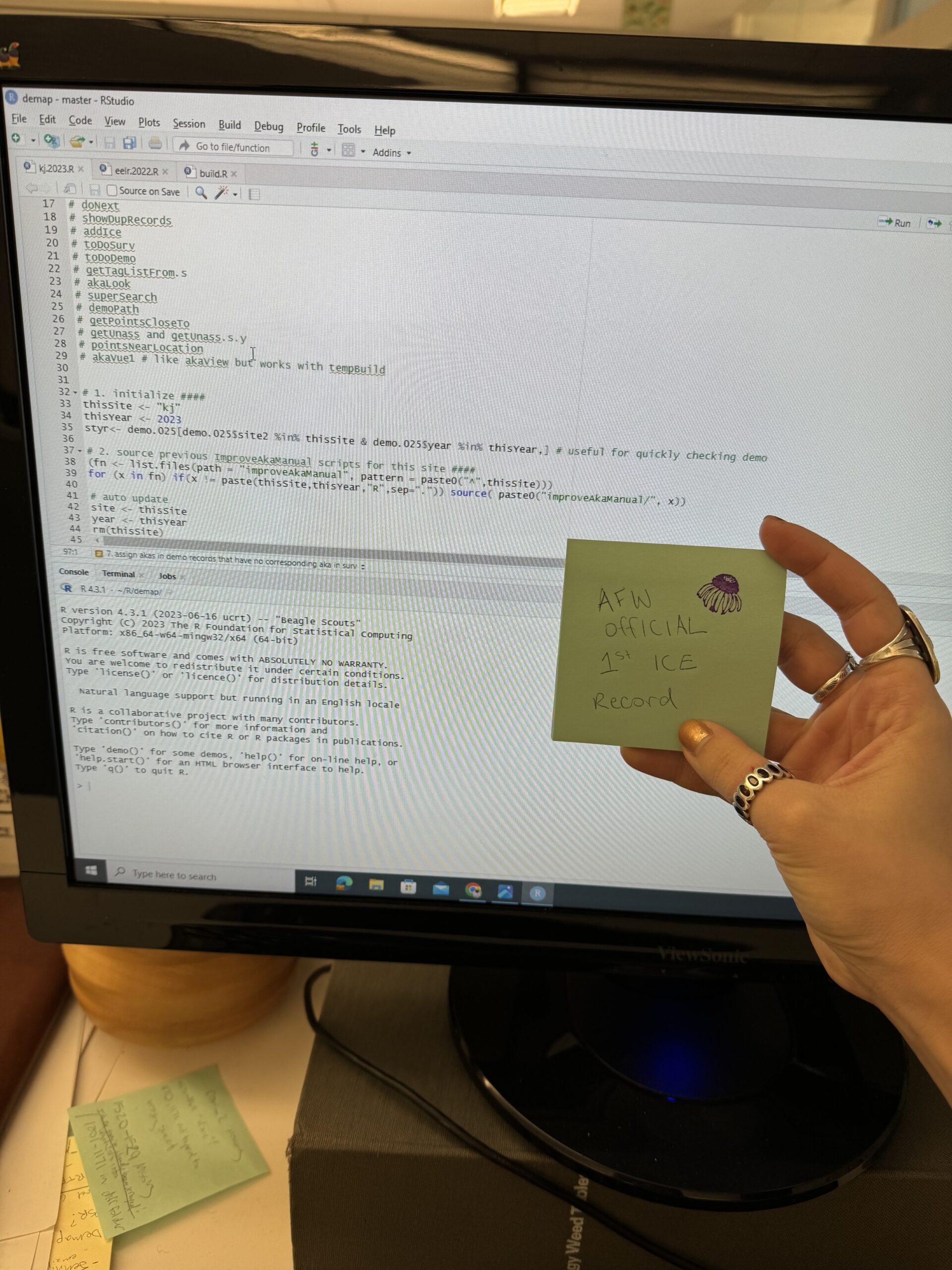
On Friday I wrote my first ever “ICE” record (informed census evaluation) for an entry at Kjs. There will be many more to come as I solve little mysteries from data collection. Hopefully soon we will have successfully incorporated 2023 demographic data into our long-term database. Stay tuned!
A very official certification of my first ICE record.