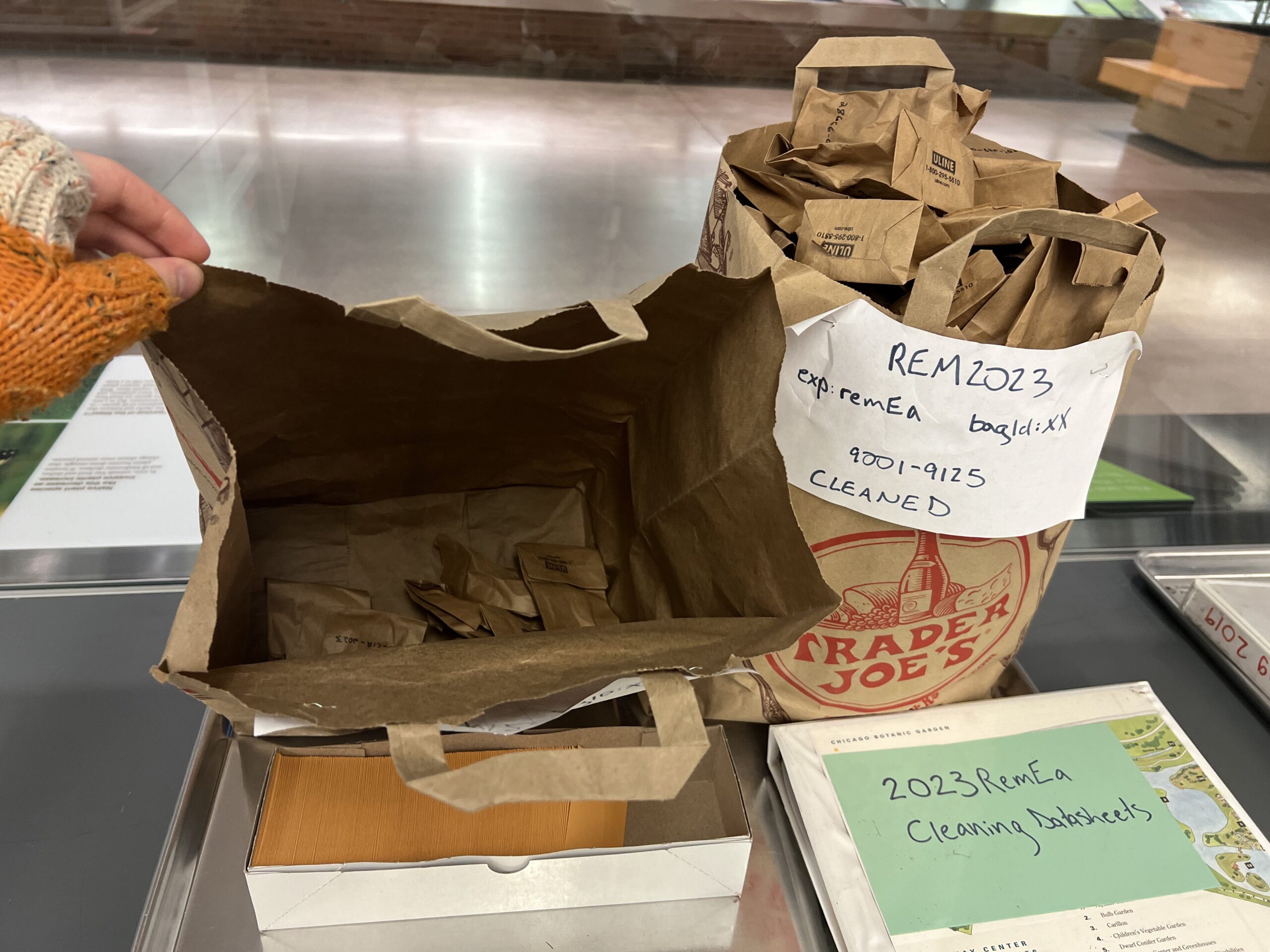
Most of the hundreds (or thousands!) of Echinacea heads we harvest every year are from our common garden experimental plots. But not all of them! We also harvest heads from local prairie remnants to learn about isolated natural Echinacea populations of different sizes. This year, we harvested 125 heads from the remnants, and they’ve begun their journey through our ACE process at CBG!
Next step next time?
The remnant heads are almost all through the first batch in our process, cleaning. By the end of the ACE process, we’ll be able to quantify multiple components of fitness, such as achene count and seed set, for each individual. But for now, one thing at a time!
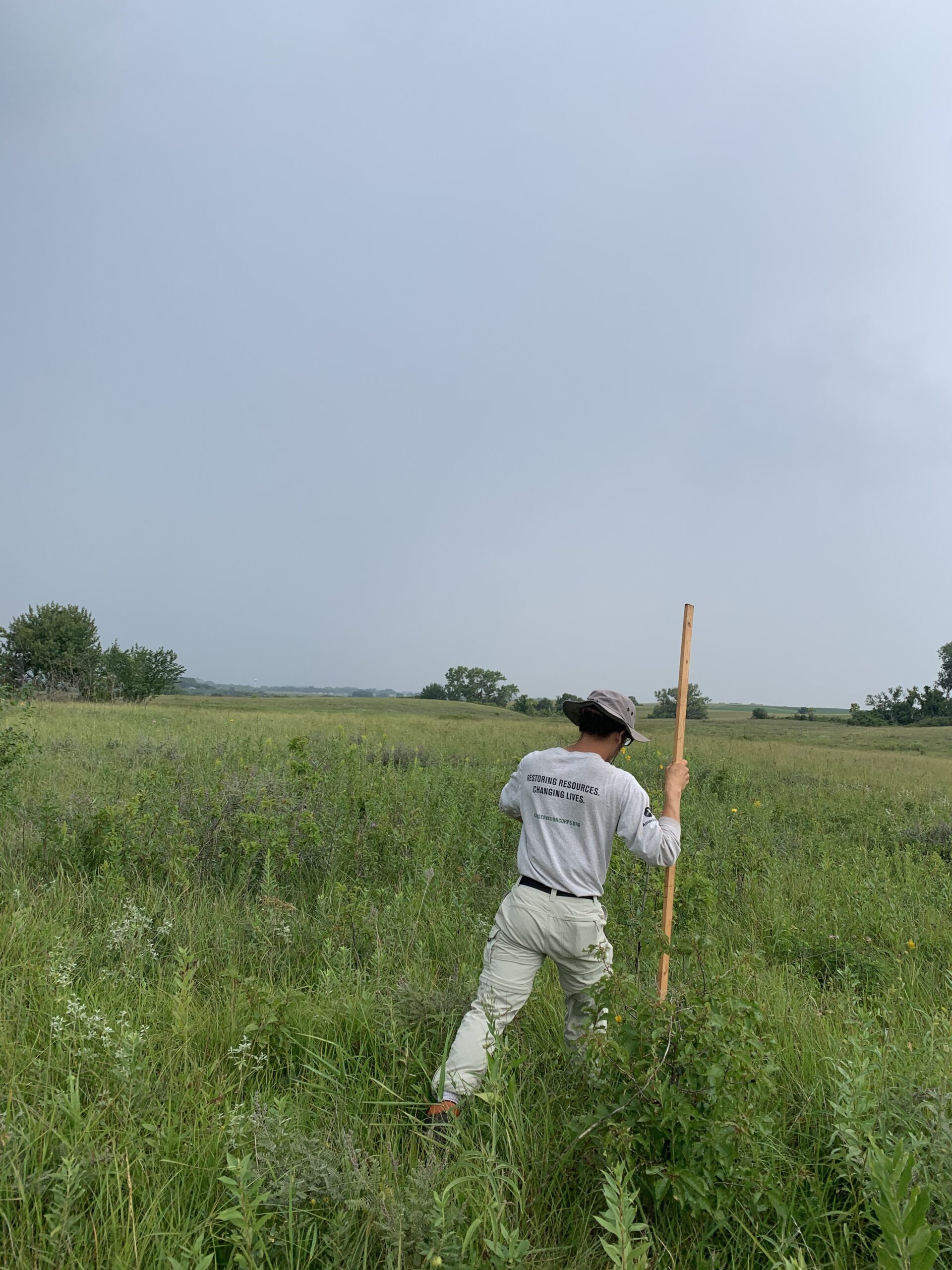
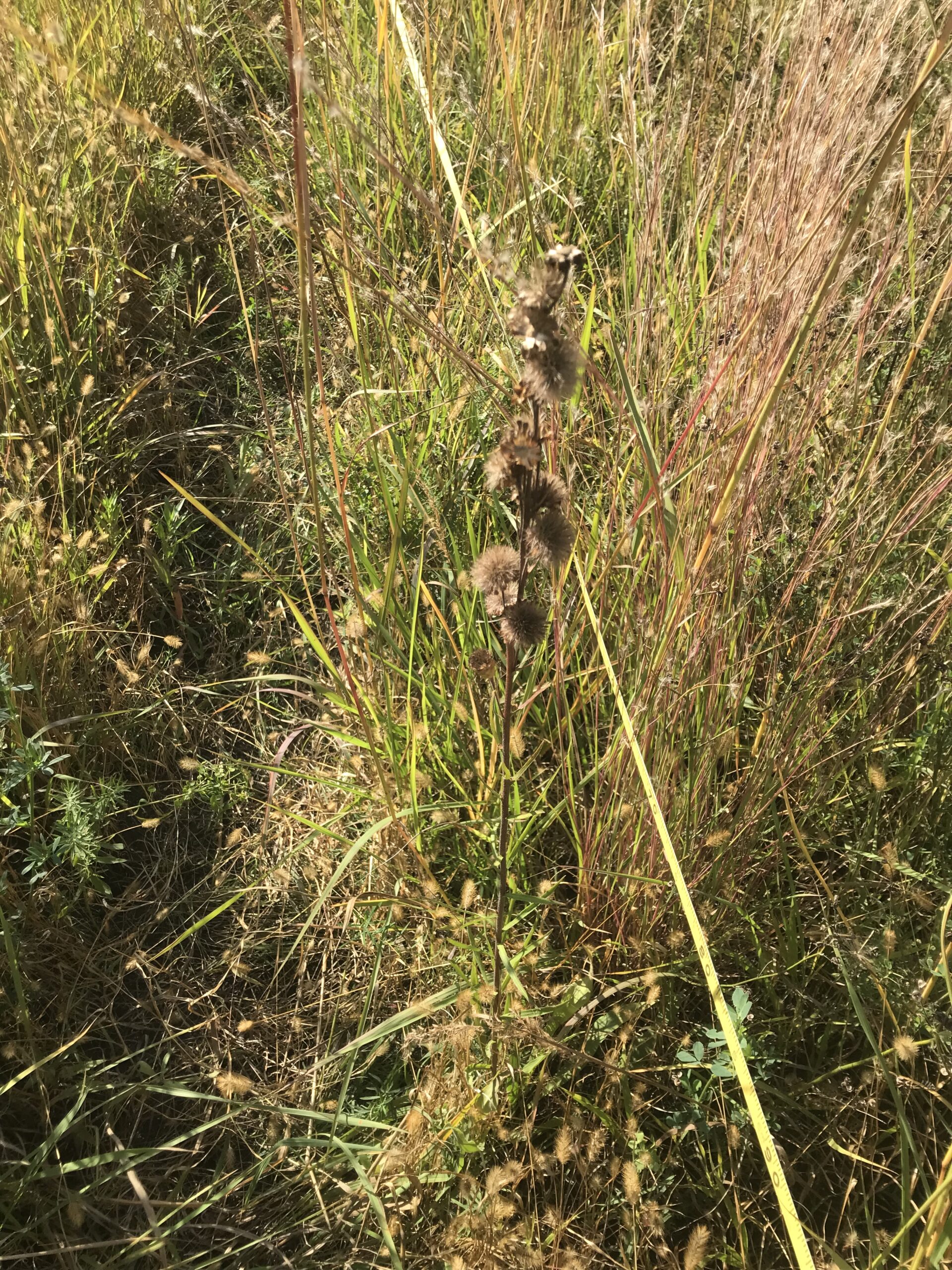
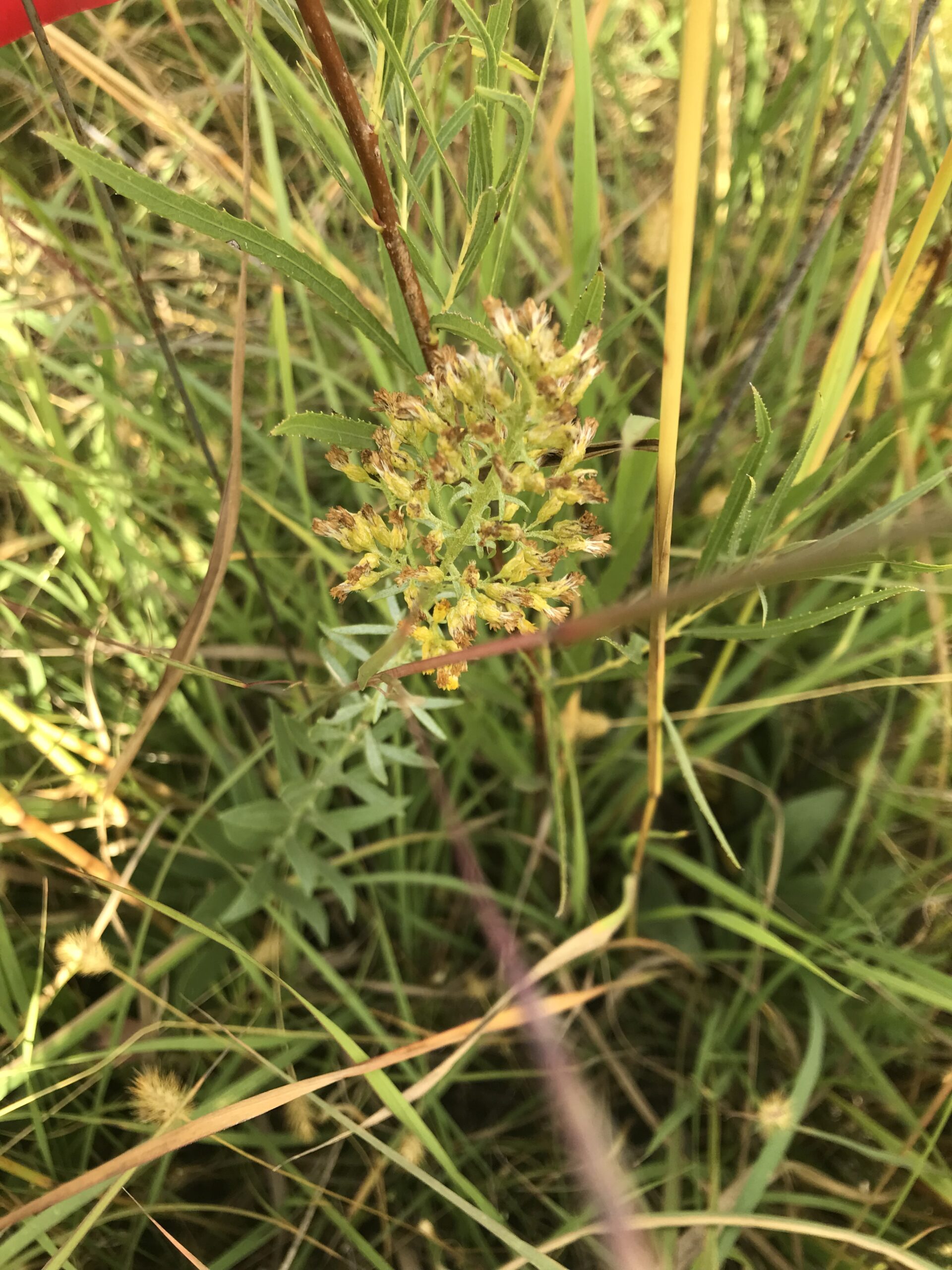
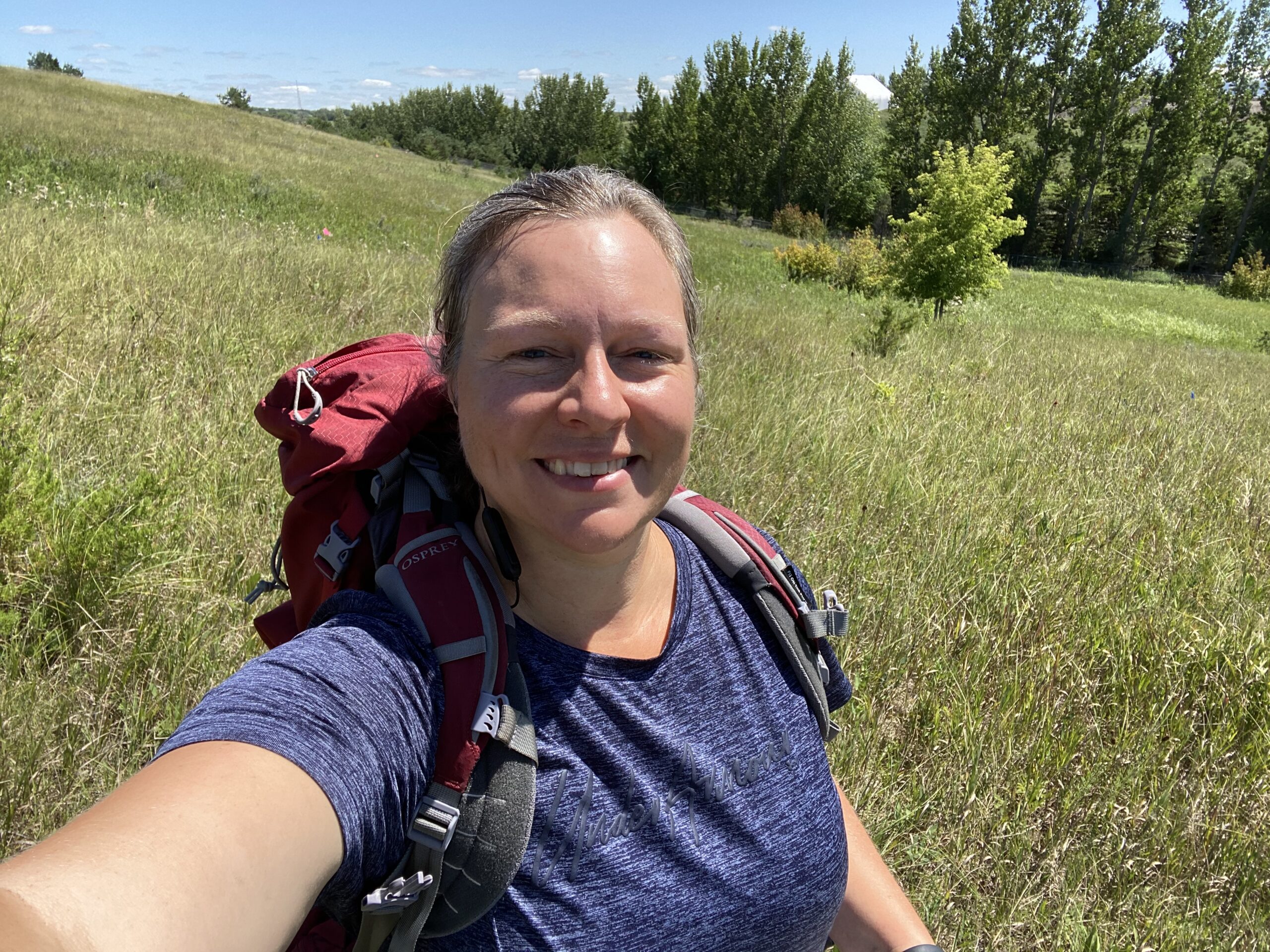
The Leadplant Flower Moth (Schinia lucens), is a species of special concern in Minnesota. It used to be common and have an extensive range, but now populations are few and far between. Douglas and Grant counties (our study area) are not included on its current range map. Nonetheless, REU participant Liam Poitra thought that it was possible that this moth might persist in some of the remnants in our study area. Liam planned and conducted a systematic search for the leadplant flower moth for his REU project. If Liam found enough moths to estimate populations sizes or density, then he would investigate characteristics of their habitat for his REU project. If not, then he would transition to another project. He found one individual moth and took some great photos. Details of the search are in Liam’s report.
Liam marches through Staffanson Prairie Preserve. This site was included in his systematic search for the leadplant moth.
Start year: 2023
Location: prairie remnants in Solem & Land Townships
The Echinacea Project is assembling an enthusiastic team of undergraduates, recent graduates, graduate students, high schoolers and teachers to engage in prairie research during the summer of 2024! Are you an aspiring ecologist, conservation biologist, or evolutionary biologist? Spend time in western Minnesota’s prairies and gain research experience in plant population biology, evolution and quantitative genetics, pollination biology, and plant-insect interactions!
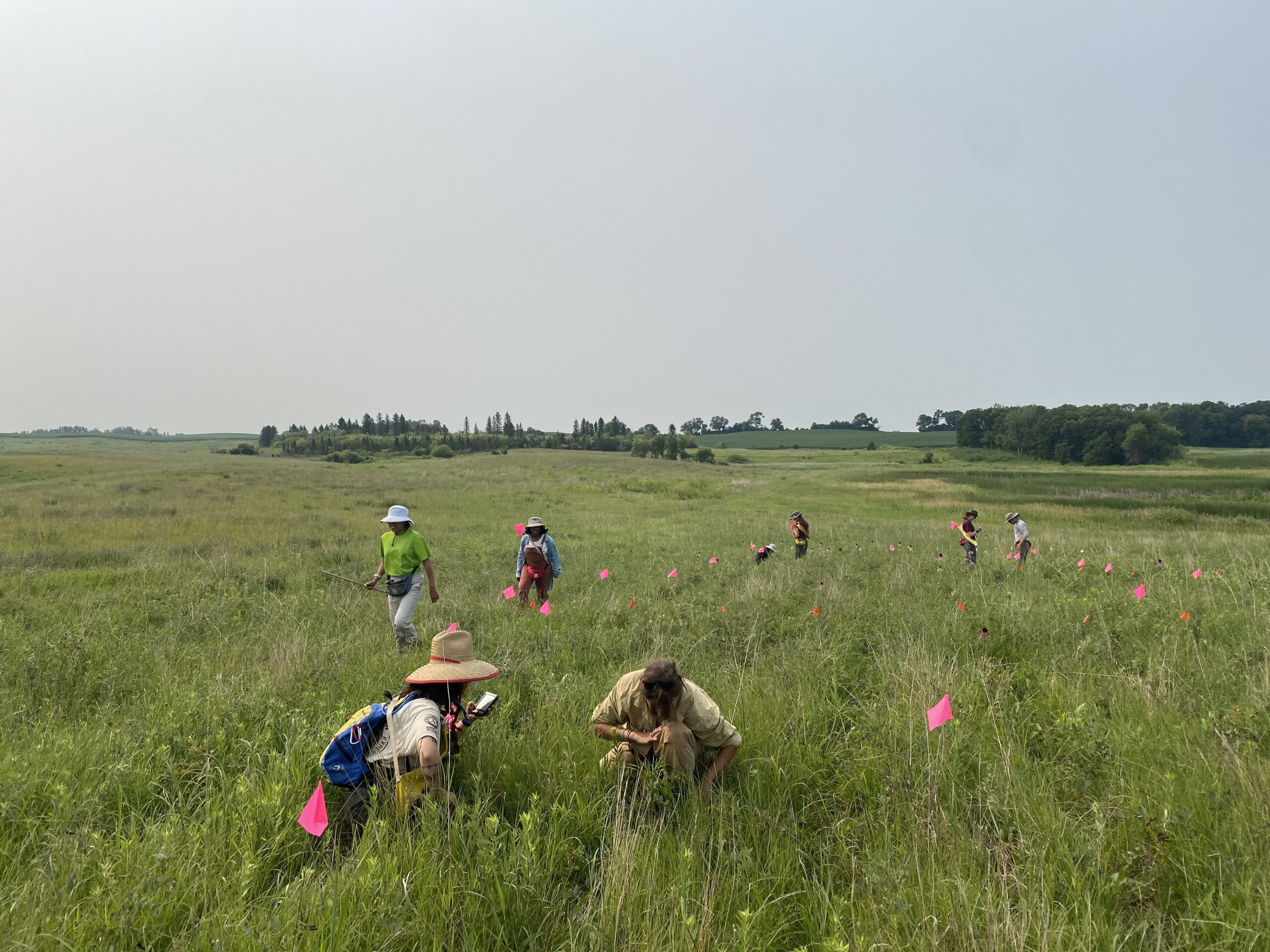
Members of Team Echinacea 2023 measure Echinacea plants in an experimental plot
We strive to create an inclusive, collaborative, stimulating, positive, fun, and productive environment for all regardless of race, ethnicity, gender, age, sexual orientation, and economic background. We welcome and encourage individuals from groups historically excluded from sciences and conservation. If you are interested in learning about and contributing to science and conservation, please join our team. We are committed to recruiting, training, and supporting individuals interested in science, education, and conservation from diverse backgrounds.
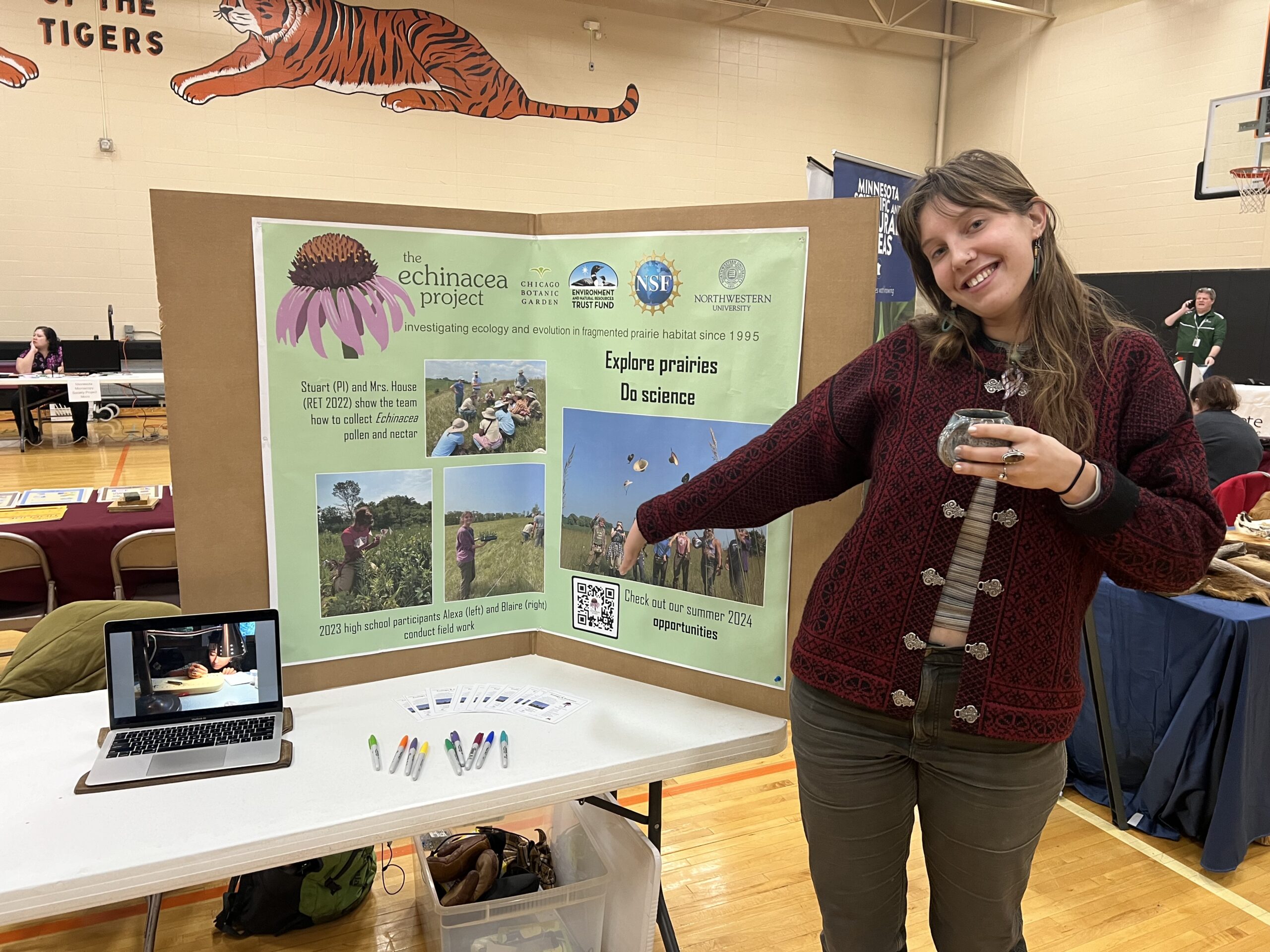
This week, Abby and I designed a poster, packed our bags, and headed to Minnesota to attend a science expo at Morris Area High School. The event was organized by Britney House (Team Echinacea RET 2022) and provided students of all grade levels an opportunity to explore different career paths and opportunities in science. There were folks with fancy robots and all the newest engineering tech in attendance, but we weren’t the only environmental sciencey group there; we were happy to see the MN DNR, USDA NRCS, and others in attendance.
Abby shows off our poster before the expo begins.
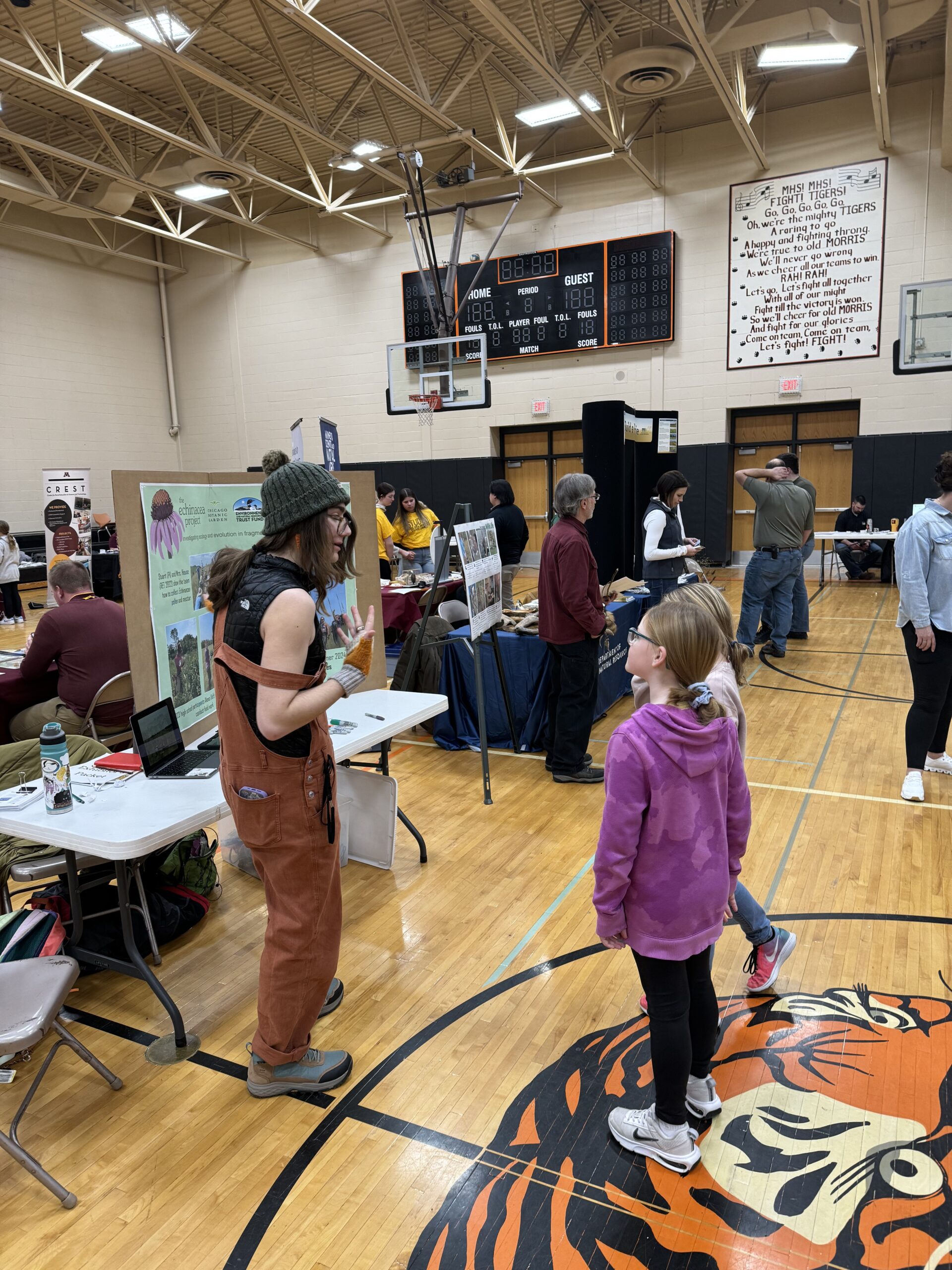
Our goals at the event were to inform people of our work in the area, get kids interested in conservation, and advertise our RET and RAHSS opportunities to local high school students and teachers. We got the opportunity to talk to lots of different people, from kids to community members to other exhibitors!
Wyatt sows seeds of conservation-mindedness in the youth. Future Echinacea Project members?
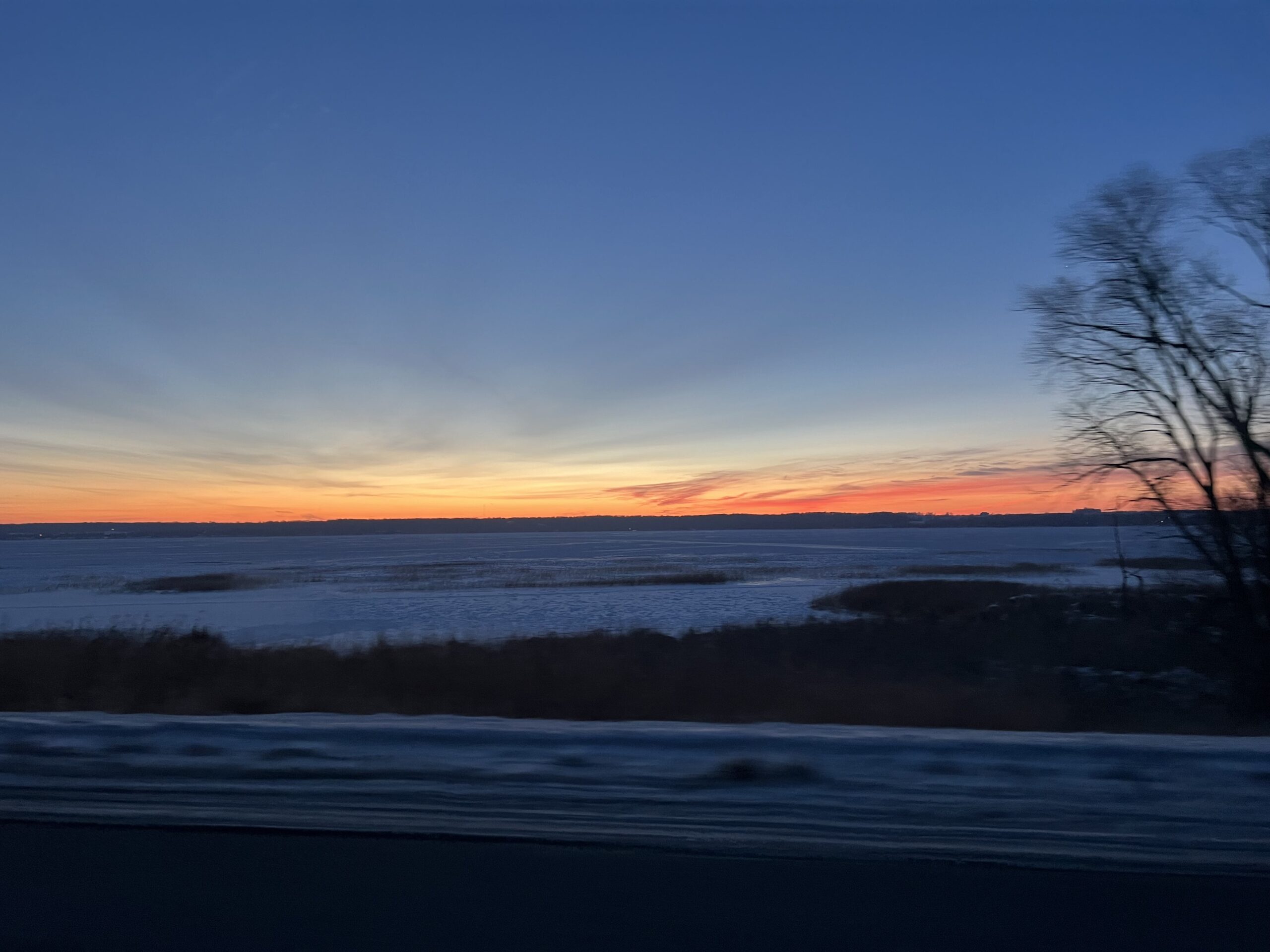
Many thanks to Britney and the rest of the crew at Morris for organizing such a great experience for students, the community, and orgs like us alike. After the event, we revisited some of our favorite spots around town before heading home the next morning. The jury has concluded that the prairie is just as pretty covered in a layer of snow, even if there’s not that much.
2023 RET participant, Victoria Romero, spent time over the summer designing a lesson plan for using the ABT format. She implemented this in her project-based learning class. Students presented their enzyme research in a “poster conference” style format. Each student had 3 minutes to describe their enzyme models using the ABT format. This project was implemented early in the year so there was hesitation, but Victoria may plan more ABT format presentations throughout the year.
Victoria also plans to implement ecology focused lessons later in the year. She is teaching an English for second language ecology course, so she may modify her lessons to fit that.
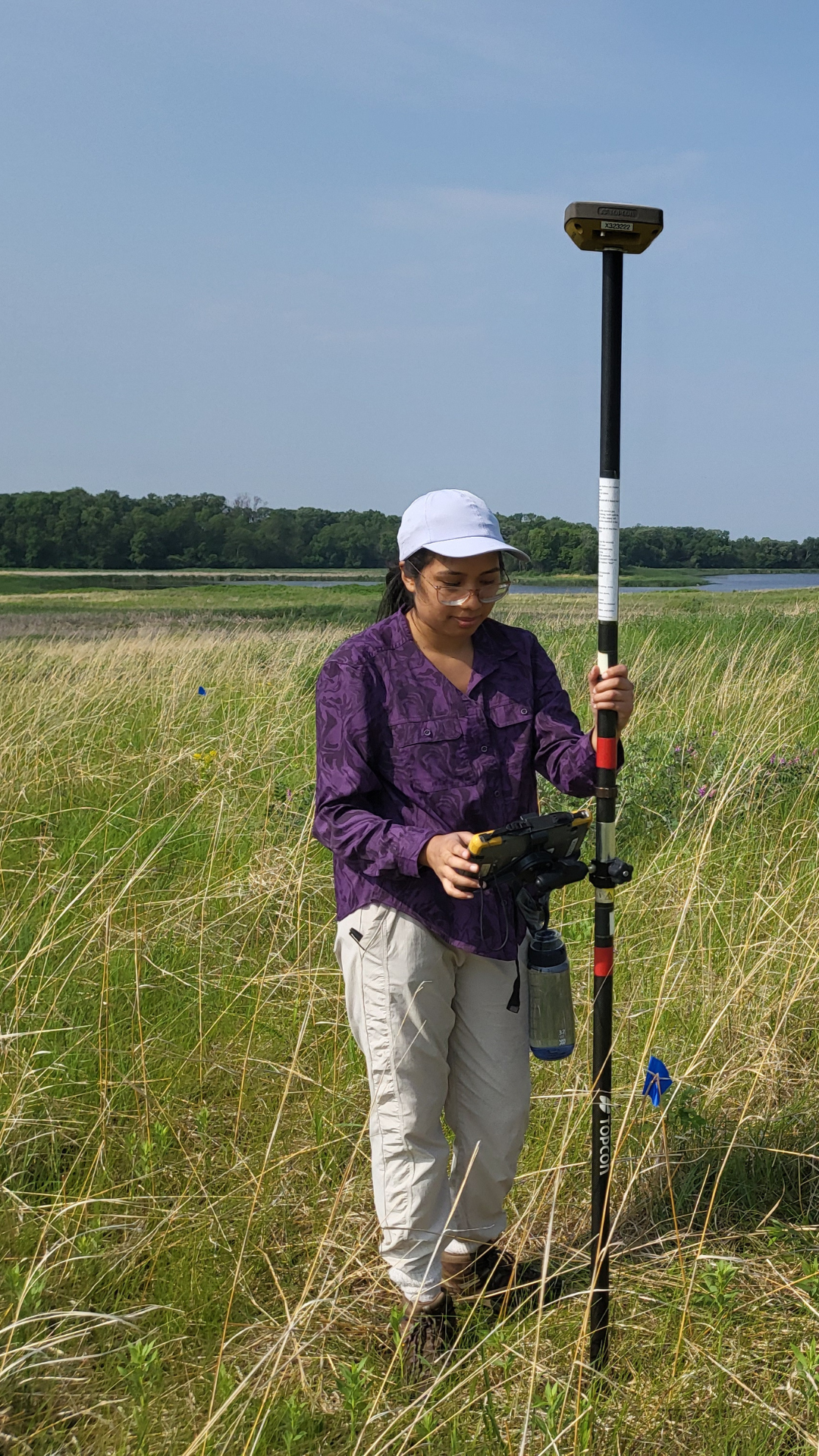
Victoria takes GPS points in the field! Team Echinacea had lots of time to think about and discuss ABTs for our work this summer.
Start year: 2023
Location: Western Minnesota and Gwinnet County Public Schools
Overlaps with: NA
Data collected: NA
Samples or specimens collected: NA
Products: Victoria’s website to introduce her students to the ABT format project can be found here: Enzyme Project Her presentation to the 2023 summer team is located in “Dropbox/teamEchinacea2023/victoriaRomero”
Hemiparasitic plants are associated with higher quality prairies, and many hypothesize that they are fundamental in generating this high-quality prairie potentially by impeding the growth of dominant grasses, allowing non-dominant forb species to establish. Additionally, if this is true, there are likely different effects associated with the abundance of hemiparasites. Therefore, we experimentally introduced Pedicularis canadensis to another restoration plot, experimental plot 10; however, this time we introduced P. canadensis at different densities around 8 different focal species. We measure the size and reproductive effort of these 8 focal species around each of our 66 hemiparasitic plant planting locations.
In 2023, we replanted 32 Pedicularis canadensis that hadn’t been seen since they were initially planted in experimental plot 10. Additionally, we took our annual measurements of our 8 focal species’ size and reproductive effort.
Pedicularis canadensis in experimental plot 10 at WCA high school. Drake planted this hemiparasite in different densities across the experimental plot.
Start year: 2019
Location: experimental plot 10
Overlaps with: parasitic plants addition experiment in p01
Data collected: size and reproductive effort of 8 focal species
Samples or specimens collected: NA
Products: This work is part of Drake’s Ph.D research. He will be wrapping up this year, so stay tuned!
Land managers seek to introduce hemiparasitic plants (plants that steal nutrients from other neighboring plant species but still produce some of their own sugars through their own photosynthesis pathways) to restorations because hemiparasitic plants are associated with higher quality prairie. However, whether or not hemiparasitic plants are the cause of the prairie being high quality or the product of the prairie being high quality is unclear. Therefore, in 2020 we experimentally introduced 72 Pedicularis canadensis and Comandra umbellata into the restoration plot, experimental plot 1.
In 2023, we replanted 40 Pedicularis canadensis that haven’t been seen since they were initially planted in experimental plot 1. Additionally, we took our annual measurements of Liatris ligulistylis and Solidago speciosa size and reproductive effort, as well as counts of seedlings present. This year was the first year since 2019 that we did not harvest aboveground biomass around our 216 total planting locations in experimental plot 1.
Liatrisligulistylis in an experimental plot. Solidago speciosa in an experimental plot.
Start year: 2019
Location: experimental plot 1
Overlaps with: pedicularis effects on host plants in p10
Data collected: size, reproductive effort, and seedling count in Liatris ligulistylis and Solidago speciosa
Samples or specimens collected: NA! This year we did not collect biomass
Products: This work is part of Drake’s Ph.D research. He will be wrapping up this year, so stay tuned!
Ants are an integral part of ecosystems, playing a role in seed dispersal, detritus removal, pest predation, and nutrient cycling. Because ants nest in the ground, they are particularly susceptible to any process that disturbs the earth and can be heavily impacted by land use practices and management decisions. Diane Roeder, at Augustana University, designed this survey to quantify ant species diversity in remnant and restored prairie patches in western MN. These sites are primarily managed by fire, a type of disturbance that has been hypothesized to impact ant species differently via mortality and/or changes in habitat structure. During the summer, Diane and members of team Echinacea sampled 45 prairie sites (30 remnant, 15 restored), deploying a total of 415 pitfall traps. Diane and her colleagues are in the process of sorting ants from other ground-dwelling invertebrates captured by the traps and will identify specimens to compare abundance, species richness, and community composition from sites under different management regimes. In addition to measuring diversity, They also deployed sentinel prey items to determine whether arthropod communities in these areas remove prey at different rates as a measure of ecosystem services provided by predatory arthropods. To do this, they set out small cages containing moth eggs and recorded the number of eggs removed. In the future, Diane hopes to compare the overall arthropod communities between these types of sites from multiple years of sampling.
Diane traveled all over our study area during her few days in Western Minnesota.
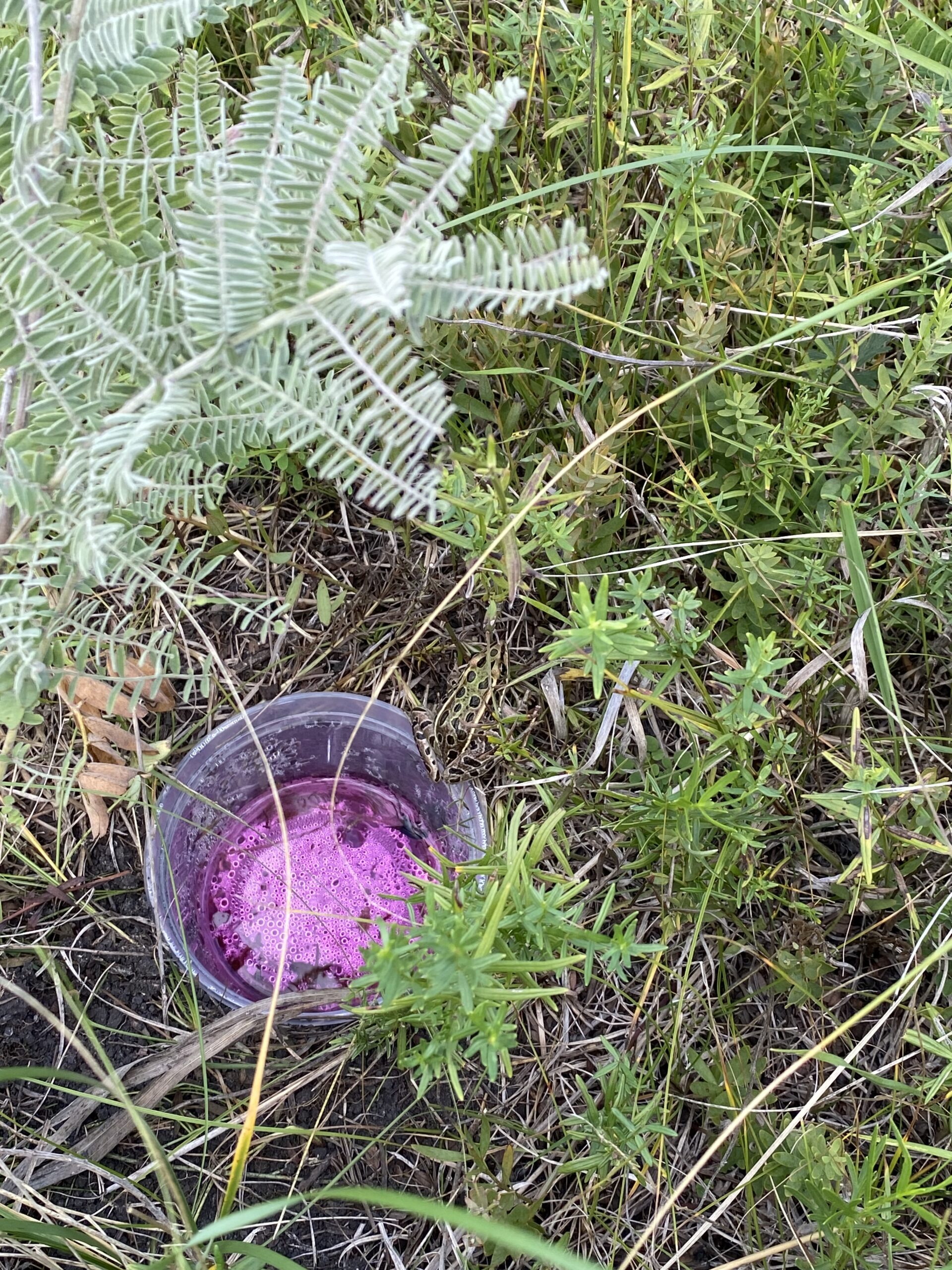
This pitfall trap was set up at a random bb point in our study area.
Start year: 2023
Location: Prairie remnants and restorations in Solem Township, MN.
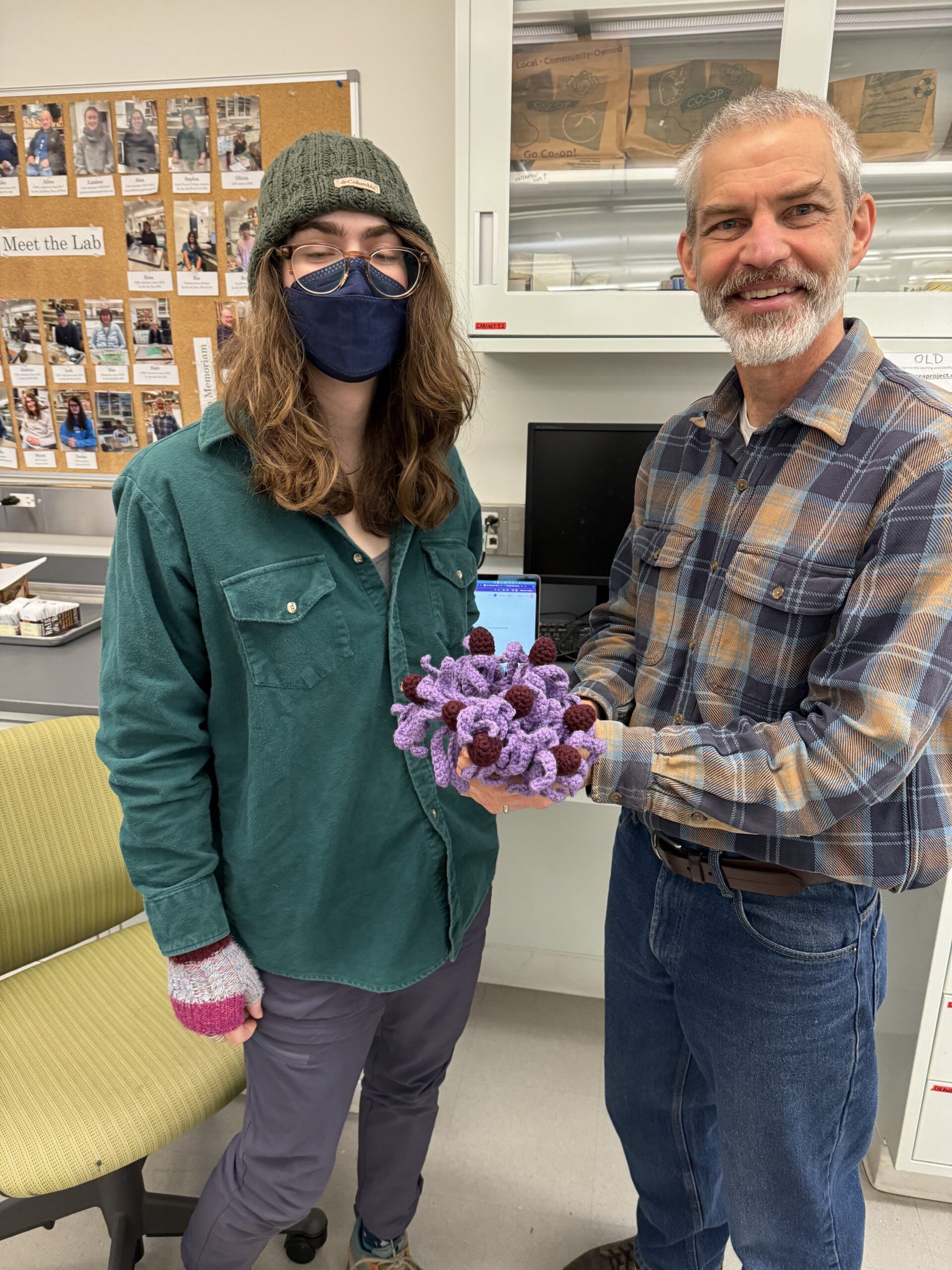
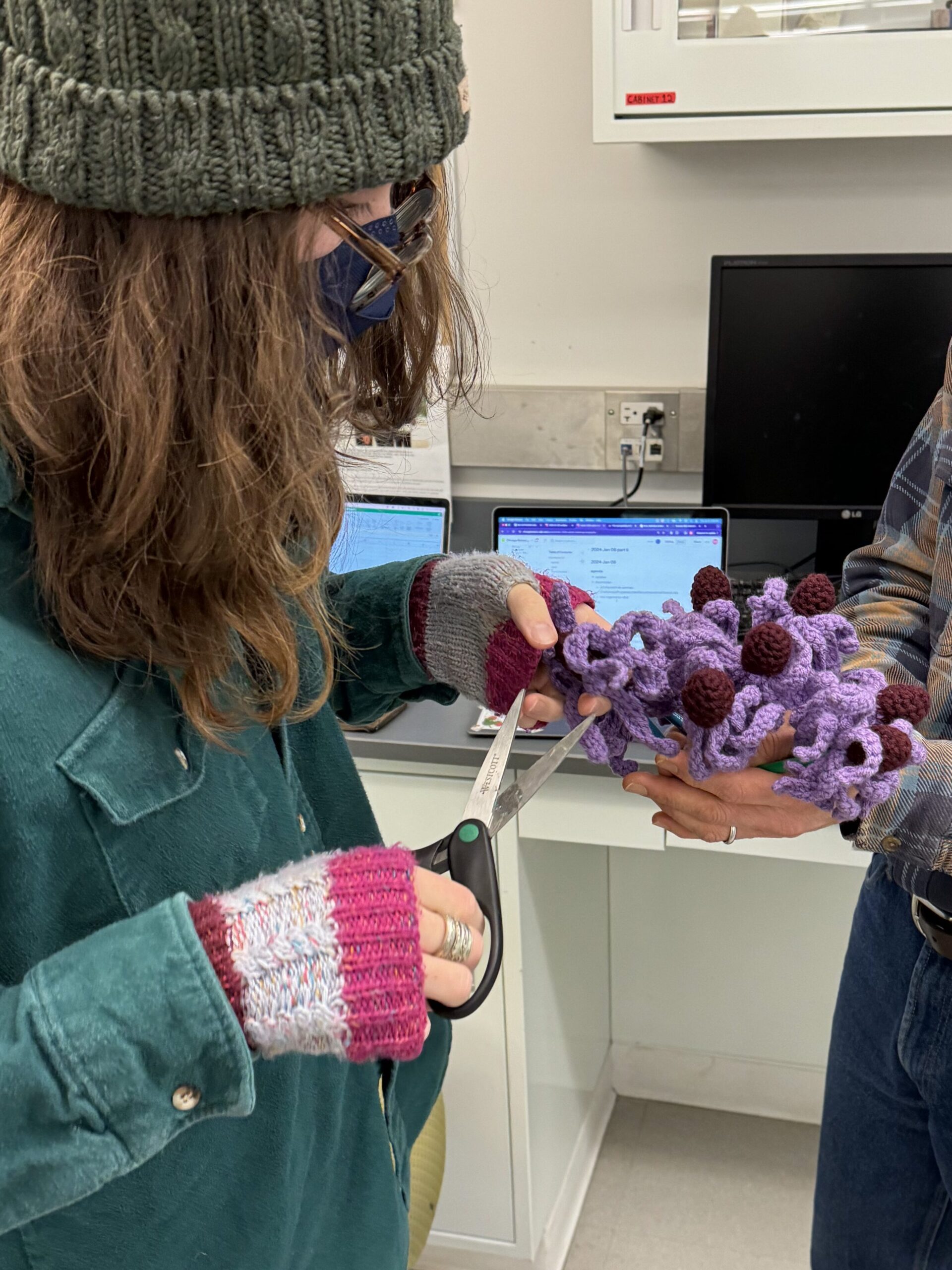
Forecasted snow turned up as rain in the Chicago area today. But this dreary morning was brightened by a delivery of crocheted Echinacea pens, courtesy of Hattie! Thank you for your craftsmanship!
Stuart presents Wyatt with a bouquet…
Old habits die hard. These are not for harvest, Wyatt!
This experiment was designed to quantify how well Echinaceaangustifolia populations are adapted to their local environments. In 2008, Amy Dykstra collected achenes from Echinacea populations in western South Dakota, central South Dakota, and Minnesota and then sowed seeds from all three sources into experimental plots near each collection site. Each year, Team Echinacea takes a demographic census at the western South Dakota and Minnesota plots; we abandoned the central South Dakota plot after it was inadvertently sprayed in 2009, killing all the Echinacea.
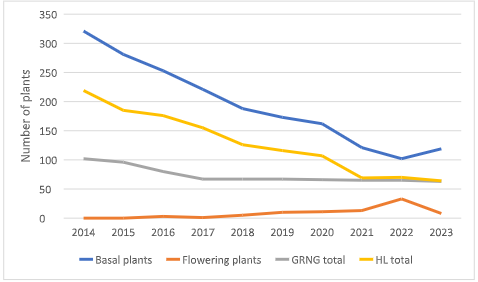
In 2023, we found a total of 119 basal plants and 8 flowering plants. All of the flowering plants observed in 2023 were in the western South Dakota sowing site. Only 2 plants in the Minnesota site have ever produced flowers. In contrast, 31 plants flowered in the western South Dakota site in 2022 alone. Mortality has been much higher in Minnesota than in western South Dakota; thus, the total number of plants at each sowing site is now about equal.
Surviving plants at GRNG (Grand River National Grassland in western South Dakota) and HL (Hegg Lake in Minnesota) in annual censuses from 2014-2023.
Start year: 2008
Location: Grand River National Grassland (Western South Dakota), Samuel H. Ordway Prairie (Central South Dakota), Staffanson Prairie Preserve (West Central Minnesota), and Hegg Lake WMA (West Central Minnesota).
Data collected: Plant fitness measurements (plant status, number of rosettes, number of leaves, and length of longest leaf)
Samples or specimens collected: Heads from all flowering plants; Amy stores the heads in her office at Bethel University.
Products:Dykstra, A. B. 2013. Seedling recruitment in fragmented populations of Echinacea angustifolia. Ph.D. Dissertation. University of Minnesota. PDF
You can read more about Dykstra’s local adaptation experiment and see a map of the seed source sites on the background page for this experiment.