|
|
The oldest Echinacea plants in experimental plot 1 will turn 20 this year. They are part of the 1996 cohort, which was planted in a common garden experiment designed to study differences between remnant populations and assess life history traits as they grew. Stuart sampled about 650 seeds (achenes) from eight remnant populations in and near Solem Township, representing the range of modern prairie habitat from small patches along roadsides to a large nature preserve. In 1996, he transplanted seedlings on a 1m x 1m grid, randomly assigning the location of each individual.
Every year, members of Team Echinacea assess survival and measure plant growth and fitness traits including plant status (whether it is flowering or basal), plant height, leaf count, and number of flowering heads. We harvest all flowering heads in the fall and obtain their achene count and seed set in the lab.
Of the original 650 individuals, 304 were alive in 2015. This year, 136 individuals from the 1996 cohort were flowering with a total of 303 heads. At present, these heads are in the lab where they await processing to find their achene count and seed set. We used 31 plants (45 flowering heads) from the 1996 cohort as maternal plants in crosses for the most recent heritability of fitness experiment (qGen3). We also used five plants from the 1996 cohort (8 heads total) as part of the pollen exclusion and addition experiment. We covered their heads with pollinator exclusion bags for the duration of the season.
Read more posts about this experiment.
 Stuart passes out pollen to Gina and Ben for crosses between 1996 cohort plants in the qGen3 experiment Start year: 1996
Location: Experimental plot 1
Overlaps with: phenology in experimental plots, qGen3, pollen addition/exclusion
Products:
Much of the work I have been doing up to this point has been to determine a single number for each head—the proportion of all achenes on a given head that contain a fully formed seed, or seed set. This gives a good indication of how successful that plant was in terms of reproduction. The most likely reason that an achene does not contain a seed is that the flower did not receive compatible pollen, either due to a lack of mates or due to a limitation on the part of the pollinators.
In order to determine seed set, I need two numbers: the total number of achenes and the number of achenes containing an embryo. While the achenes could be counted by hand, this would be a tedious and error-prone process. Instead, the achenes were placed on a glass tray and scanned into the computer and counted digitally.
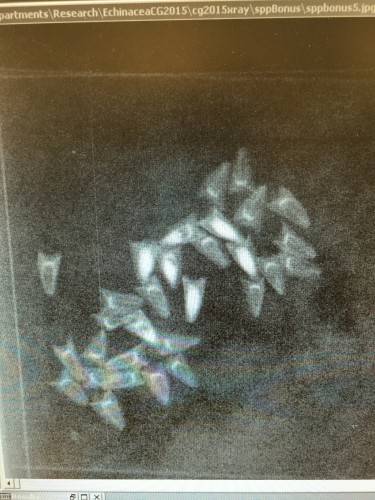
It is possible to determine whether or not an achene contains a seed by several methods. Germination experiments are useful because every achene that germinated certainly contained a seed, but they can be time-consuming and demand lots of attention and resources. Another possibility is to weigh the achenes. Heavier achenes are much more likely to contain a seed, and lighter achenes are most likely empty. We chose to use x-ray, which allows us to see directly inside of each achene. When achenes are x-rayed, empty achenes are barely visible while seeds show up as opaque. Ideally, all achenes could be easily categorized into “empty” or “full,” but some achenes are partially full, likely meaning they were initially fertilized but full seed growth was not entirely successful.
Together, these numbers are very important in allowing us to make inferences about what conditions are best for Echinacea reproduction.
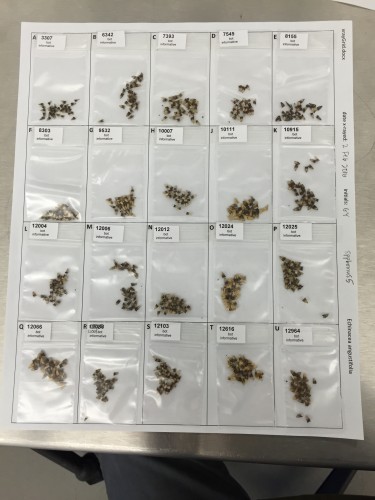
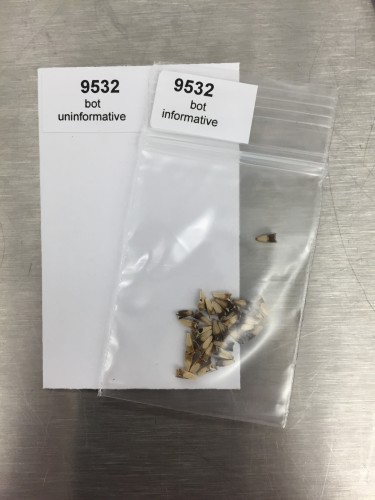
 Randomized achenes ready to be x-rayed.
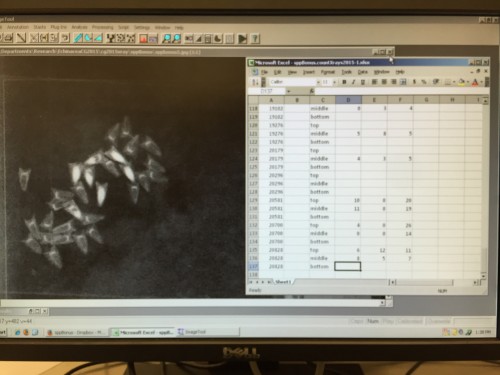
This is what x-rayed achenes look like. Achenes that contain a seed show up with a white oval in the center. Full, partial, and empty achenes are counted on the computer and entered into an spreadsheet.
Randomization is a critical aspect of any experiment. In almost all cases, the population being studied is much too large to study every individual, so a sample of the population is studied with the assumption that trends and relationships seen in the sample are also present in the population as a whole. In order for this to be a good assumption, the sample must be completely random in order to eliminate any bias towards a specific type of individual.
In an ideal world, all samples would be completely random, but this is not logistically possible in many cases. For example, at Staffanson Prairie Preserve, there are thousands of Echinacea that bloom every year. It would be a near impossibility to visit every single plant or even to select a completely random sample of plants within the preserve. For this reason, the Echinacea Project created a 10-meter wide transect through the preserve and studies the plants that fall within this transect. While this is not a truly random sample, it is able to approximate the range of conditions seen throughout the preserve.
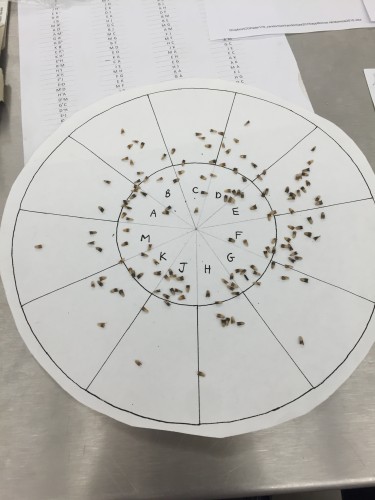
Another example of randomization is something I’ve been working on in the lab for the last week. Many of the heads contain several hundred achenes, so x-raying all of them to determine whether or not they contain a seed would be extremely time consuming and difficult. In order to simplify the process, I am randomly selecting 1/6th of the achenes from each head in order to estimate seed set for each head. While this will not give me the exact seed set, it will give me a very good approximation that will be sufficient for our analyses. Pictures of the randomization process are shown below—achenes are randomly dispersed on a wheel divided into twelve labeled sections of equal size. Next, two letters are selected from a list of random letters, and the achenes that fall within these sections are selected to be x-rayed.
Achenes on the randomization wheel Randomized achenes–labeled and ready for x-raying
Katherine Muller’s paper “Echinacea angustifolia and its specialist ant-tended aphid: a multi-year study of manipulated and naturally-occurring aphid infestation” was selected by the Editors at Ecological Entomology as the most interesting paper in the current issue (41:1). This means that her paper will be highlighted on the Journal’s website and made Open Access for the next two months, along with a summary of the paper and an image of the ants attending the aphids.
Congratulations, Katherine! This paper was based on Katherine’s MS thesis in the Plant Biology and Conservation graduate program at Northwestern University. Katherine is now in a Ph.D. program at the University of Minnesota.
Here’s the text that is on the Journal’s main page …
Aphid abundance was manipulated on the perennial coneflower Echinacea angustifolia, which hosts a specialist aphid (Aphis echinaceae) tended by ants. Both have undergone extensive habitat loss and fragmentation. Aphids did not harm host performance after two years, though they did accelerate seasonal senescence. This experiment found a negative association between aphids and other herbivore damage, suggesting ant protection. However, observations showed the opposite trend, with larger plants more likely to have aphid infestation and leaf damage. The results suggest plant size drives foliar herbivory more than aphid infestation.
The paper was co-authored by Stuart Wagenius, Katherine’s MS adviser.
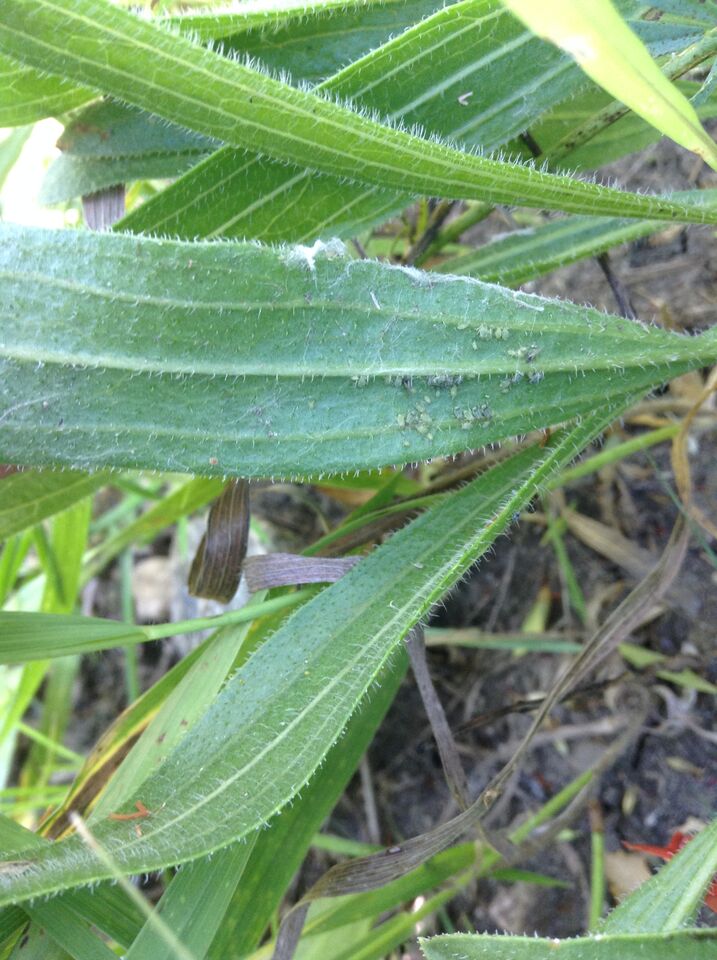
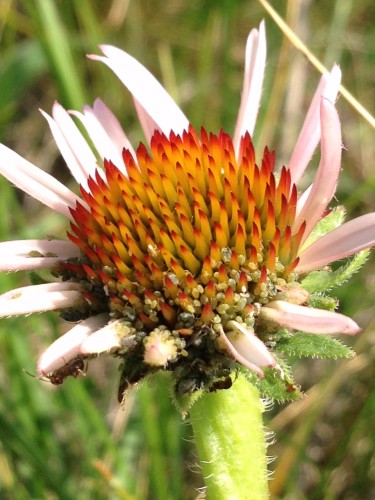
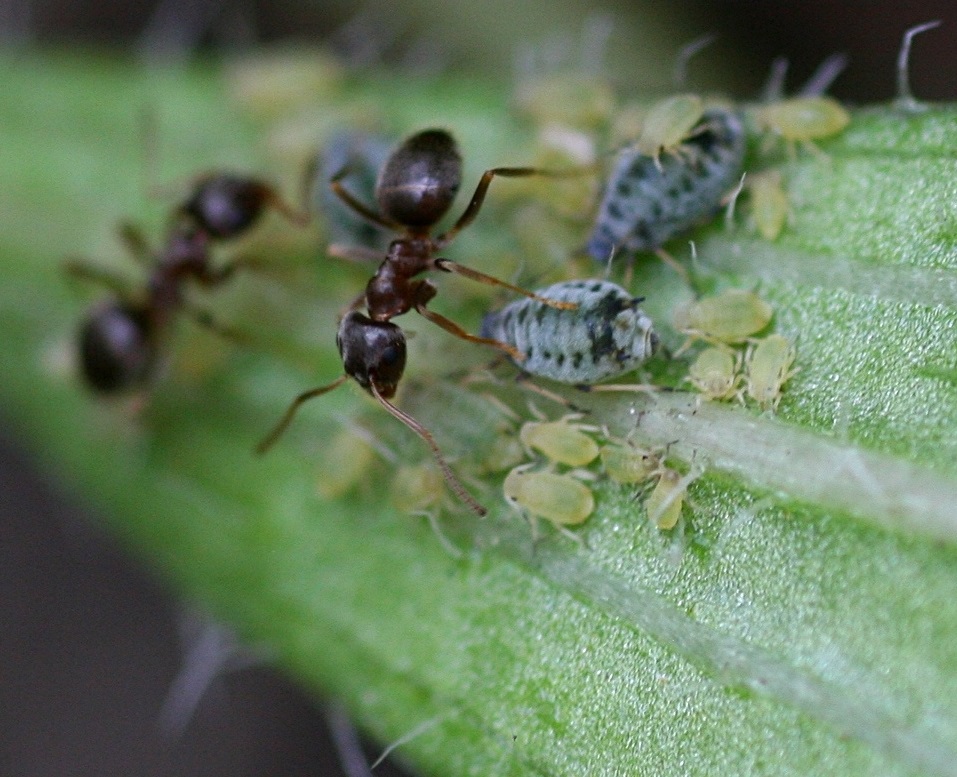
 Here are some of those cute little aphids!  This collection plant had some of the most aphids we’ve seen yet in one place! Specialist aphids, Aphis echinaceae, on a head of Echinacea angustifolia  Ants tending Aphis echinaceae
In 2015, we continued the study of mating compatibility in the remnants that began in 2014. This experiment is designed to assess population level compatibility and to investigate whether difference in flowering phenology and distance between plants predict whether or not a cross will be compatible. We do this by randomly selecting focal plants from remnant populations and then choosing pollen donors which are representative of the ‘extremes’ of these variables–early flowering, late flowering, nearest to focal plant, and furthest from the focal plant.
 Bracts are painted to identify the pollen donor for each style of the focal plant that is being crossed This past summer we conducted this study in six of our largest remnant populations with approximately ten focal plants at each for a total of 228 pairwise crosses. Occasionally we were unable to collect pollen from the most ‘extreme’ individuals because they flowered asynchronously with the focal plant, and in those cases we chose the most ‘extreme’ individual available. Excluding all other pollinators, we performed hand-crosses between the focal plants and their pollen donors and assessed style persistence the following day to evaluate the compatibility of each cross.
Read more posts about this experiment here.
Start year: 2014
Location: large remnant populations
Overlaps with: comprehensive compatibility
Products: The 2015 data from this experiment has been combined with the 2014 dataset and awaits analysis.
Team members who have worked on this project include: Danny Hanson (2015), Amy Waananen (2015), and Claire Ellwanger (2014). Flog posts authored by these team members may provide additional detail about day-to-day activities associated with this experiment.
I’ve been helping out around the lab since the fall, but this is my first post on the Flog, so I’ll go ahead and introduce myself. I’m Gordon, and I’m a senior at Northwestern University studying Environmental Science and Chemistry. I have the awesome opportunity to conduct an independent study here at The Echinacea Project—not only will I learn research techniques and scientific writing skills, but I’m also able to get class credit for my research, allowing me to devote more time to the project.
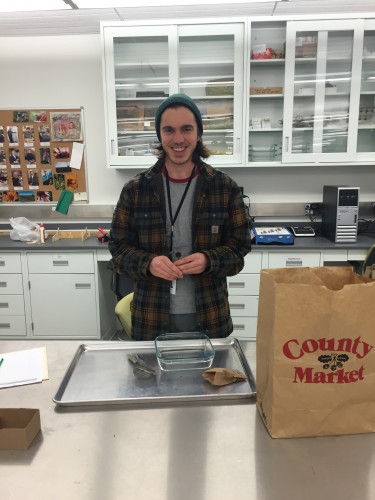
Me with one of the many heads I’ve dissected
The main focus of my research is how fires affect the reproductive success of Echinacea. The existing scientific literature suggests that fires (or a lack thereof) redistribute resource availability, giving a survival advantage to certain species of plants. For example, a fire can burn tall prairie grasses to the ground, allowing shorter plants to access sunlight and contributing to their survival. In areas where prairie fires are suppressed, which includes many locations where prairie remnants exist today, it is thought that plants that benefit from fires will become scarcer. However, there is scant scientific literature regarding how fires influence the reproductive success of prairie plants.
At Staffanson Prairie Preserve, prescribed burns are conducted every five years, providing an ideal setting in which to conduct this observational study. I will be examining at plants that flowered both in 2015 (a non-burn year) and in a previous burn year. By comparing their reproductive success in both the burn year and non-burn year, I hope to gain an understanding of what influence fires may have on Echinacea reproduction. The measures I will use to study reproductive success will include: achene count, which indicates resource availability and reproductive effort; style persistence, which measures the pollen availability and limitation; seed set, which measures the success rate of seed production; and fecundity, which serves as an indication of total reproductive success.
Stay tuned for weekly updates about my procedure and progress over the next several months!
The air temperature in Hoffman, MN this weekend got down to -20°F (-29°C). The Echinacea roots are surely a little bit warmer. Here are a few photos to help remember the warmth of last summer and get us thinking about the spring.
-

-
Happiness!
-

-
-
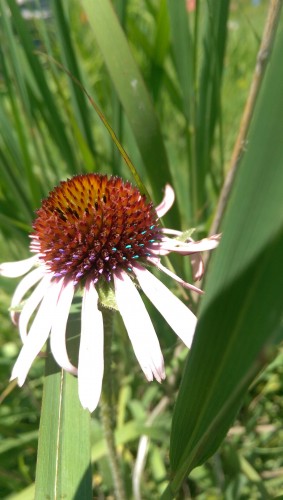
Rare sight! This plant hasn’t begun flowering yet!
-
-

-
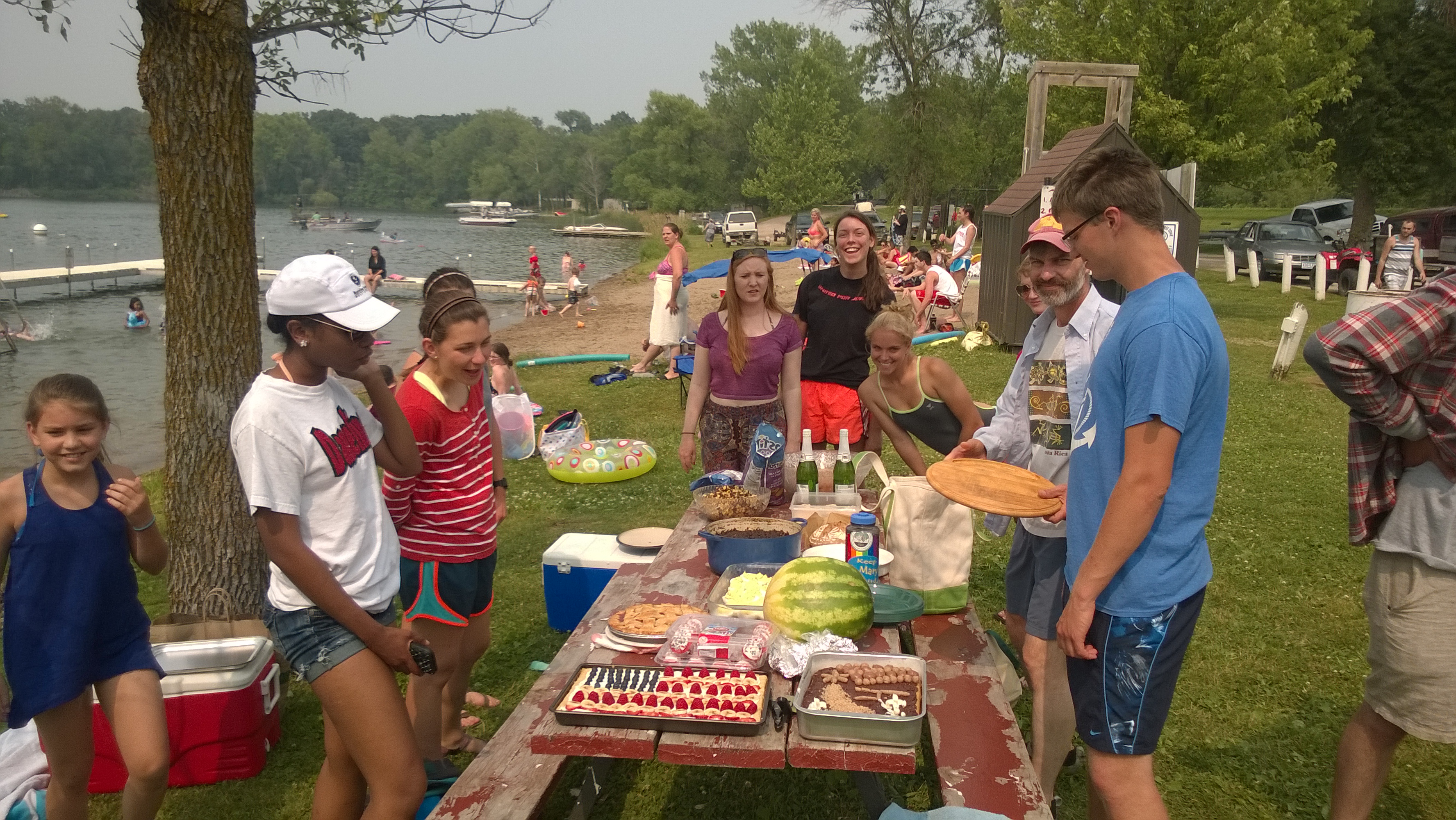
The delicious food cooked by various members of the team
-
-
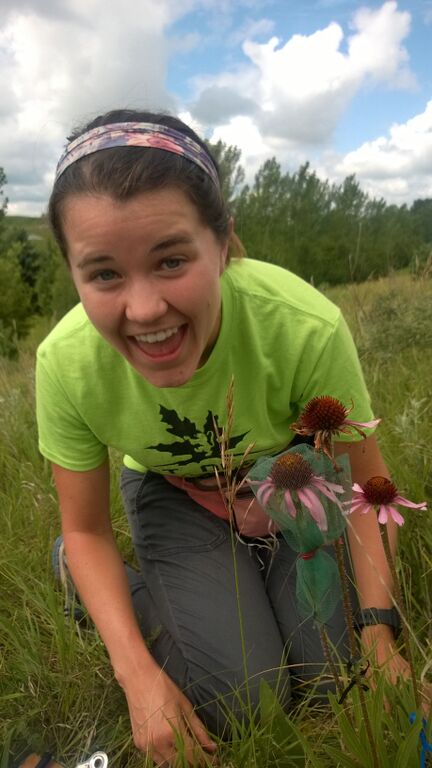
Happiness!
-

-
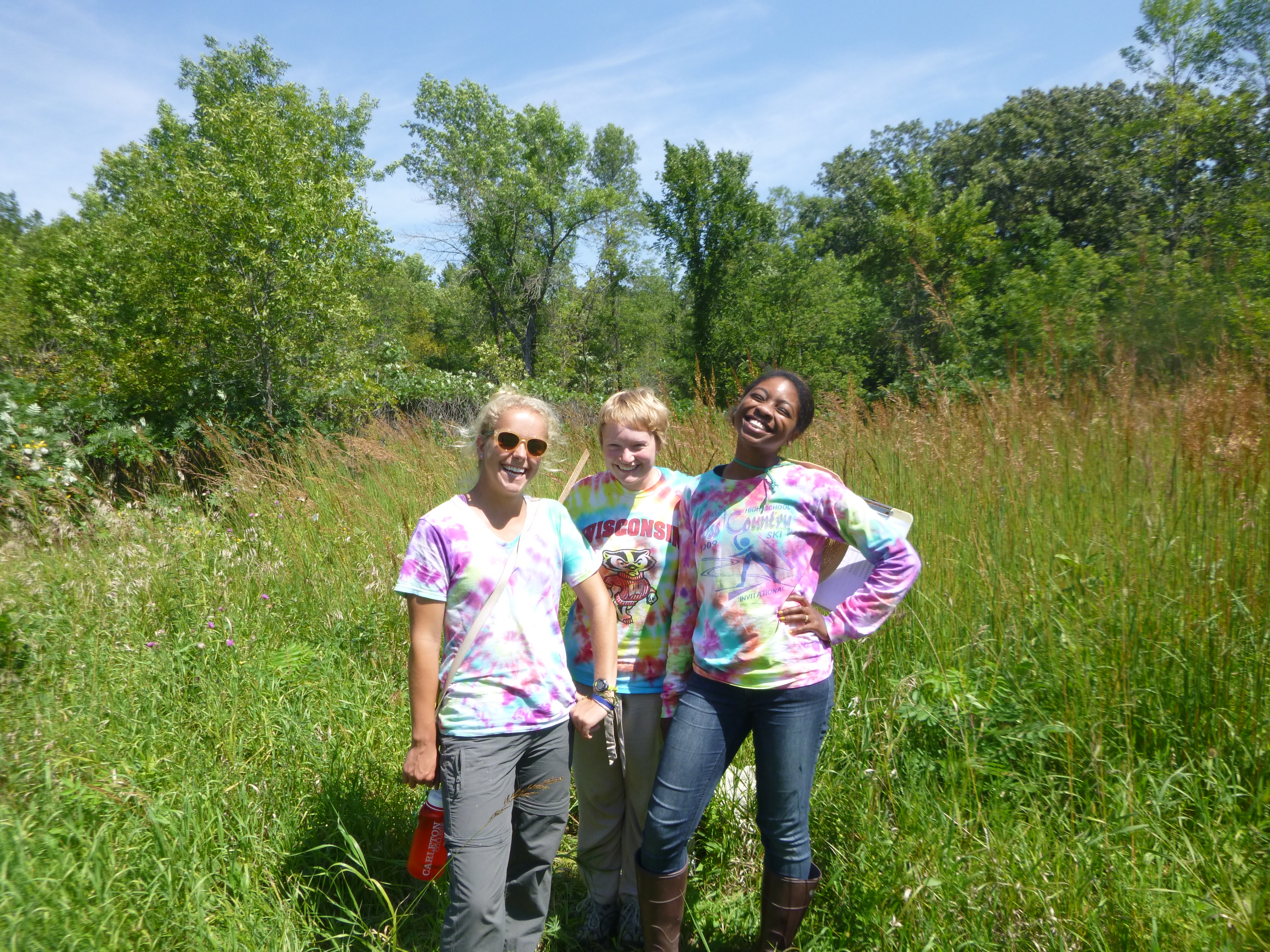
Happy to be finished with a full day of work!
-
-
-
Done flagging the hybrid plot!
-

-
Amy is excited to bag heads at landfill!
-
-
-
Danny’s bouquet
-

-
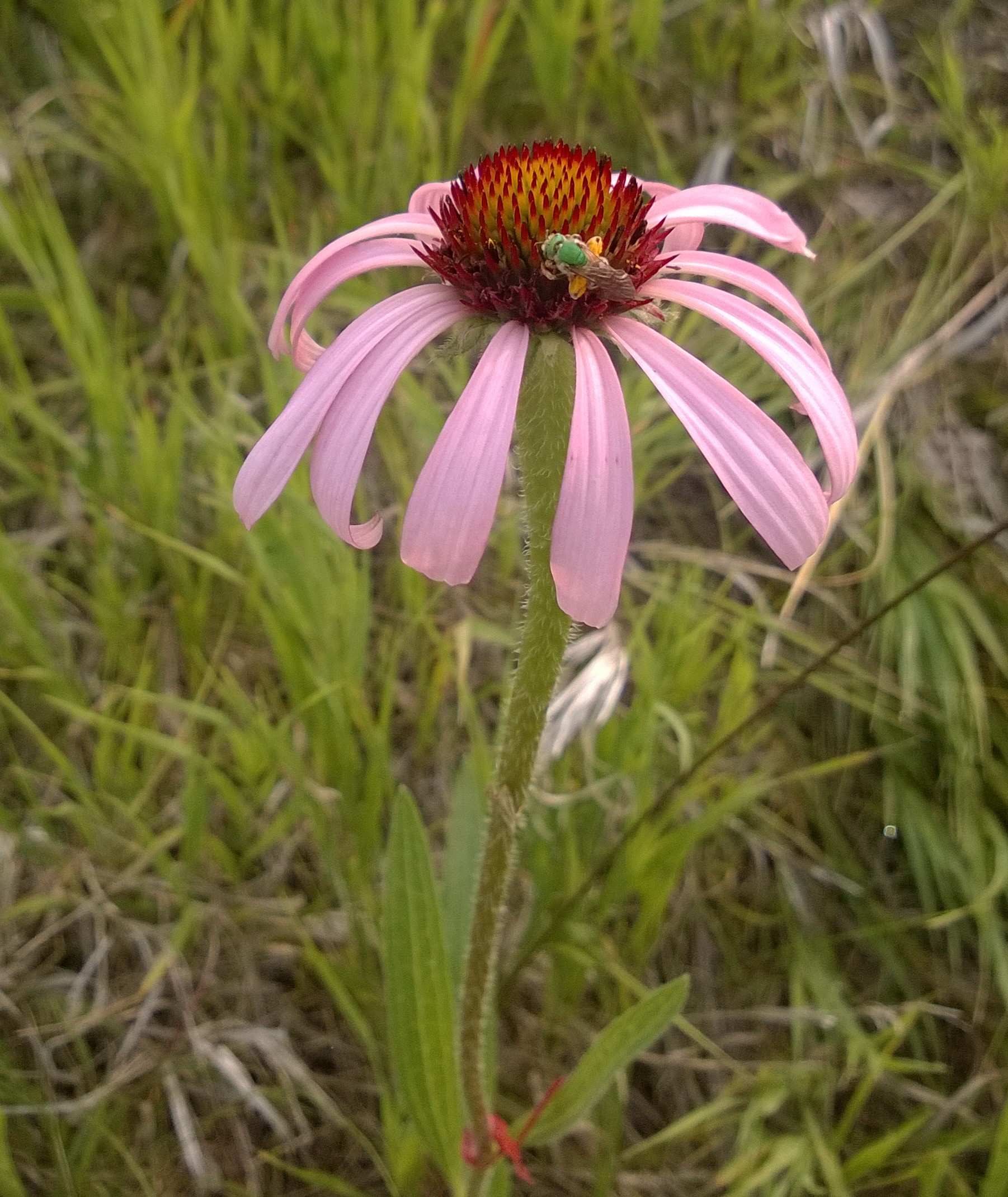
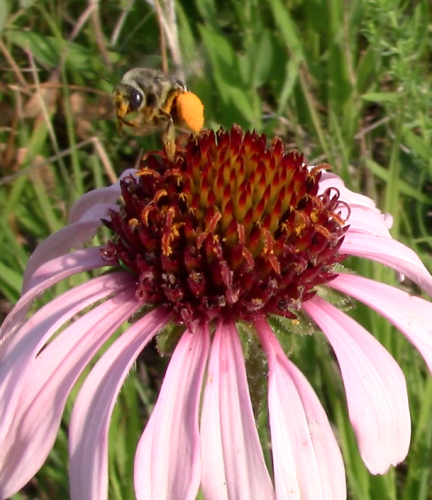
One of our Halictid friends visits a flower. I see style shriveling in this plants future
-
-
A cozy home for a bold caterpillar
-
-
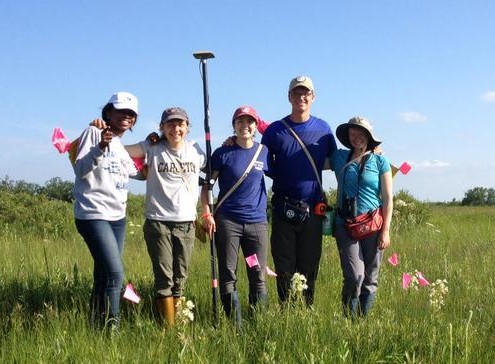
Using GPS to stake Echinacea plants!
-
-
-
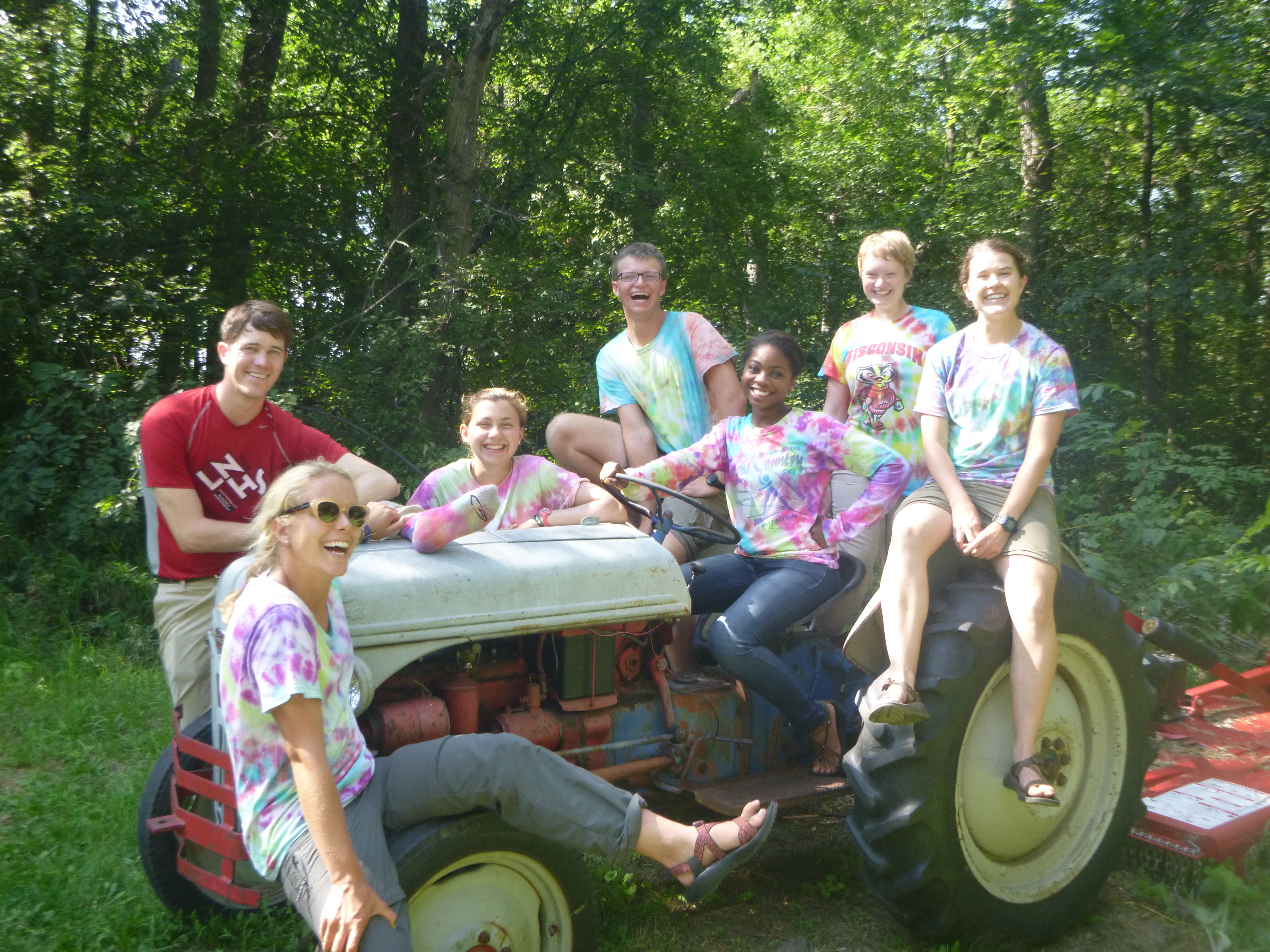
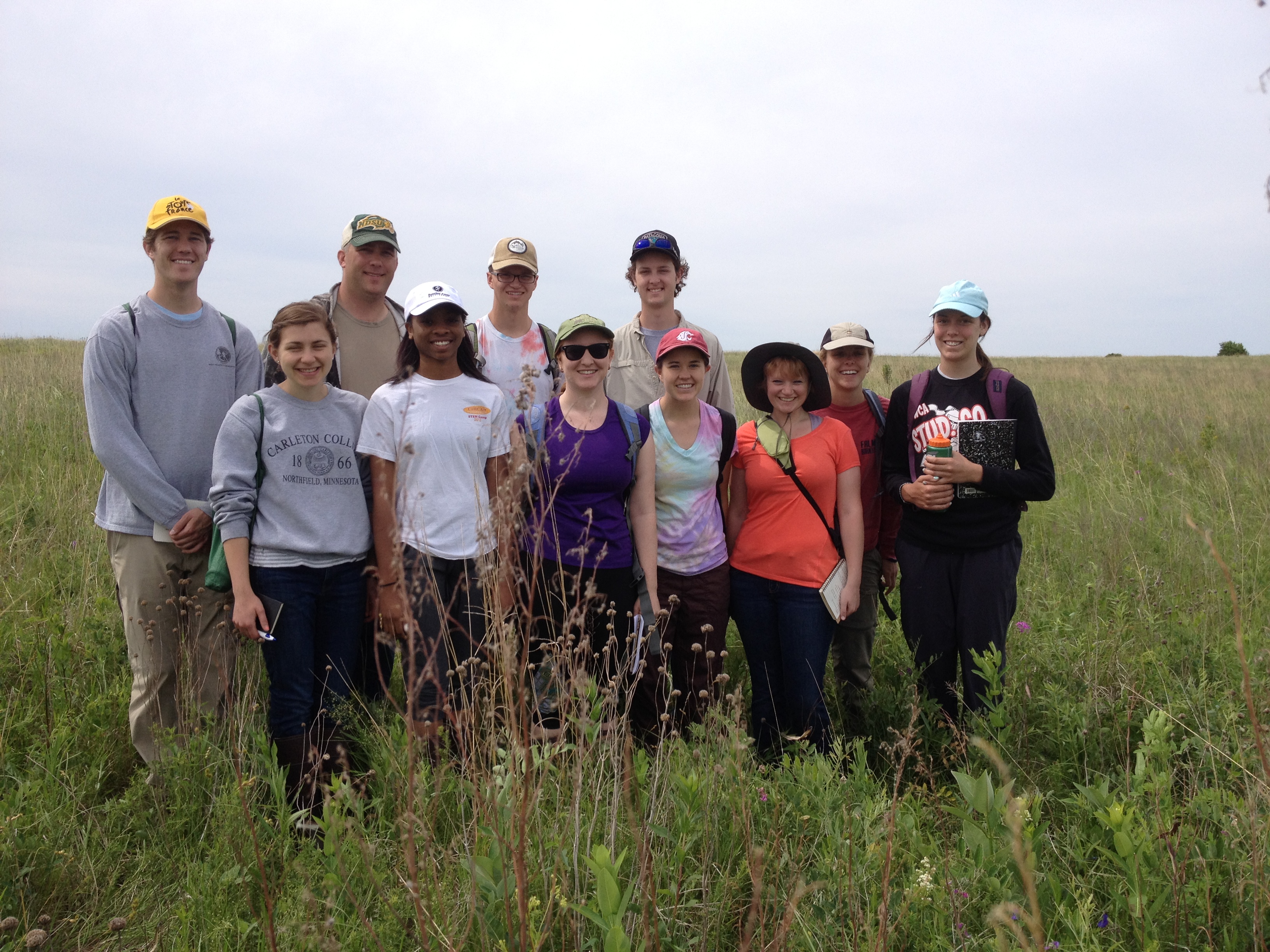
Team Echinacea 2015: Danny, Matt, Ben, Will, Gina, Taylor, Lea, Amy, Katherine, Ali, Abby
-
-
Small ray florets at Riley. straight surrounding the purple center of the head.
What an incredible three weeks! I wouldn’t have bee-lieved you if you told me three weeks ago everything I would learn! I would have said “quit pollen my leg”. On my first day working at the Chicago Botanic Garden I didn’t know a thing about native bees. Now, I have learned all about the bees that visit Echinacea, from their size to their nesting habits to fun facts about pollen regurgitation and flight velocity. I learned how to navigate DiscoverLife and how to examine a specimen under the microscope, looking for all the little distinguishing traits that make each species special, from the color on the tips of their mandibles to the distance from the rim the hair band on the T4 section of the abdomen rests. The collection of over 900 specimen is now all neatly organized and a reference collection is all packed and waiting to be used in the field this summer. The Echinacea Project youtube account is now set up and loaded with videos of all these little pollinators visiting Echinacea and working their hardest. And, finally, the database on the Echinacea webpage is complete, filled with links and beautiful pictures galore, ready to be poured over by future bee-lovers and scientists alike in the quest to explore the worlds of these bee-utiful pollinators! I want to thank the team here so much for your kindness and for all of your help along the way. Hive-five, everyone!
If you have been obsessively checking the Echinacea Project website every few minutes today (as I often do), you will probably have noticed we have added an addition to our beautiful home! After many hours of crashing, banging, hammering, crying, and all those fun things that come with construction and home renovation, we now have a bee field guide. Take the time to explore it, but explore with great caution, as I am positive there are still bugs (hehe) to be fixed. Over the next few days I will right the wrongs and tie up all the loose ends.
What pun should I end with? Perhaps I will continue the metaphor- back to the buzzing of the drill!
We thought the worst was behind us- that all the heads had been cleaned. Today, we found out we were wrong. After digging up (literally) the remaining heads to be cleaned, cleaning, scanning, counting, and randomizing them, it seems like all that’s left is some x-raying and our data set will be complete.
That is, we would be done, if at the end of the day we hadn’t finally found the very last uncleaned head. It had been filed away a little precariously, but no matter. We look forward to tomorrow, when we will have hopefully finished most of the data collection, and can start into our analysis.
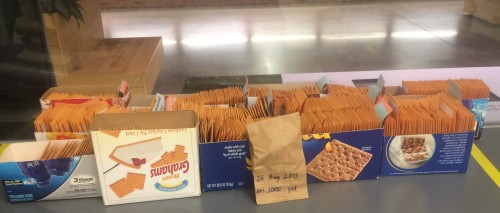
See Below- the impressive (to me, anyway) quantity of coin envelopes we’ve filled with seeds from different sections (top, middle, bottom) of each head, and (officially) the very last head to be cleaned.

|
|