|
|
Today I swam in a lake for the first time, a lake that Katherine thought was called Elkbow Lake which caused her to wonder why there would be both an Elkbow Lake and an Elbow Lake. But in reality, I swam in Elk Lake. This was after a surprise pancake breakfast cooked by Danny. We had banana pancakes, chocolate chip pancakes, plain pancakes, and banana-chocolate chip pancakes, all with REAL maple syrup. Breakfast happened around 10:30am. Lake swimming began around noon. All in all we spent a few hours in the sun. We laid out towels, tried to avoid the kids with water guns, and swam out to the little dock that had a diving board. The diving board warned us to “plan our dives” before attempting, and also mentioned that it had a weight capacity of 250 lbs. While the majority of the group continuously jumped, flipped, and dove off the dock, I tended to stay in the water. I enjoy treading water so I did that most of the time we were in the lake. Later in the afternoon we headed back to town hall to shower up and get ready for our trip to Alex. After showers, a little primping, and a set of “normal” clothes (no CBG shirt?) we headed off to two different destinations in Alex. One car headed to Taco John’s and the grocery store, one headed to RIBFEST! You can tell which car I was in. We met up with Will and ate some ribs, cheese curds, grilled corn, and kettle corn. As the clouds rolled in we decided to wrap up the night. While driving back to K-town the rain started, lightening and all. Now, I’m ending the night in town hall with some peppermint tea and a pleasantly full stomach. Good Saturday!
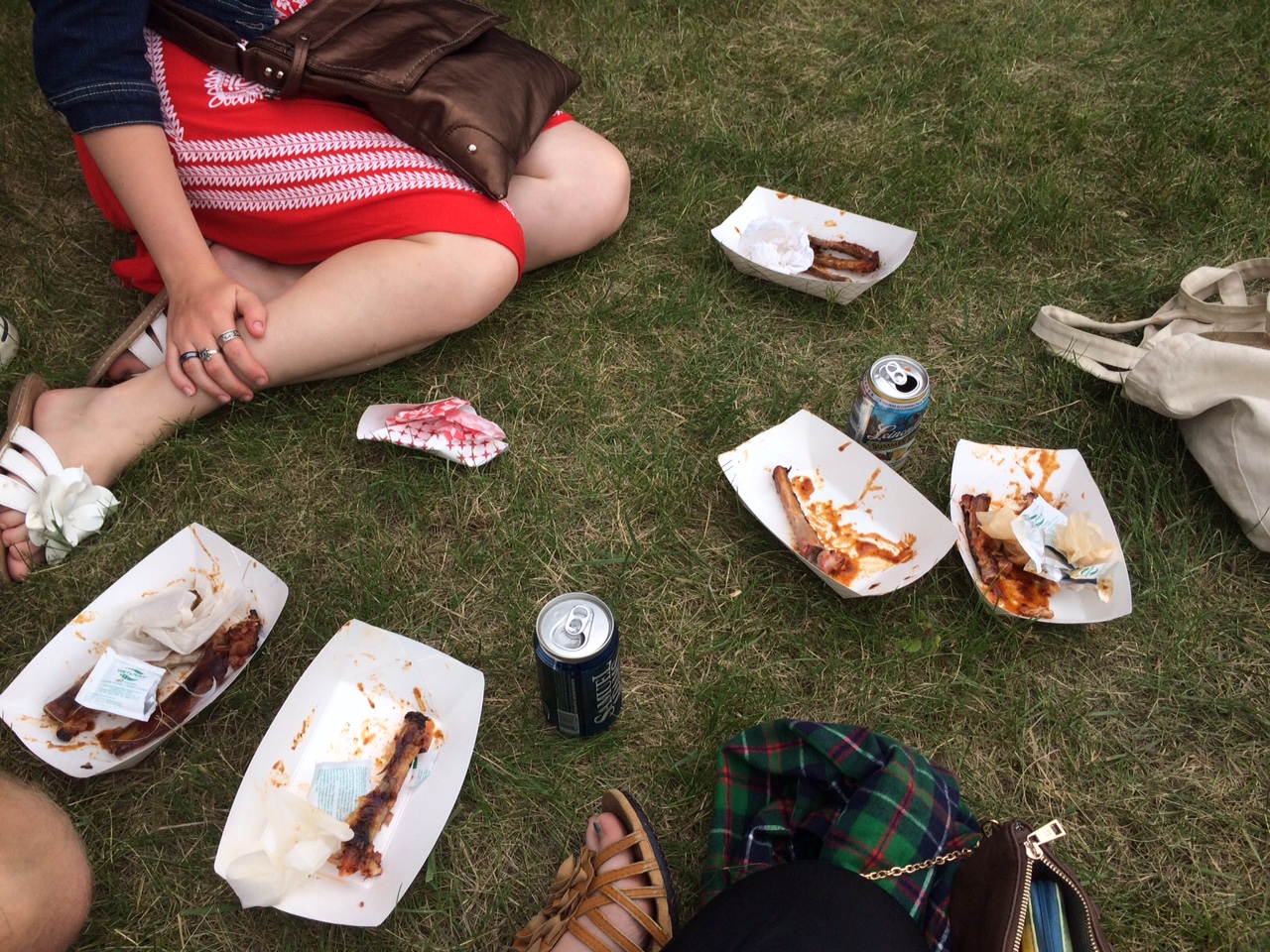
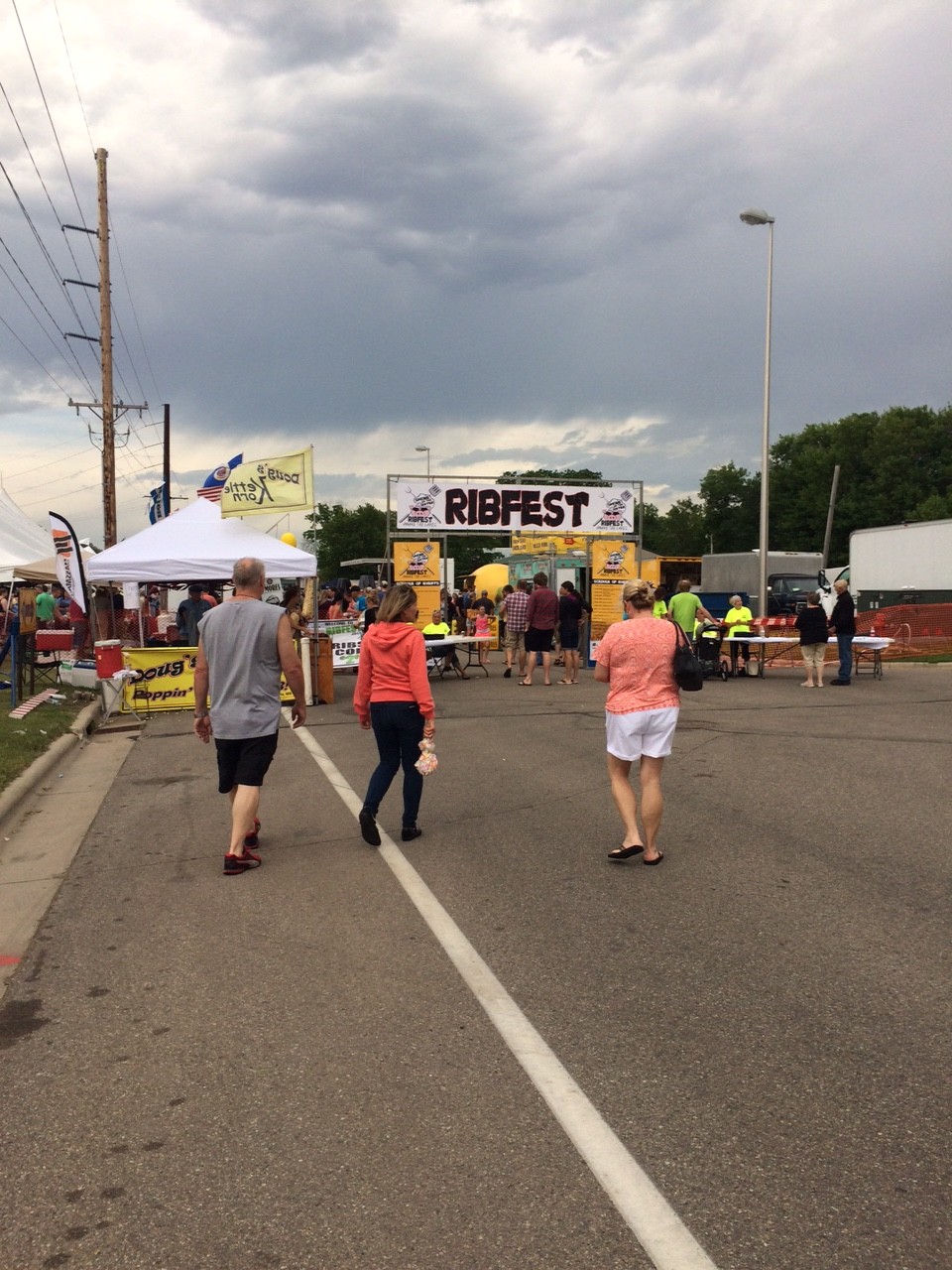
 Just SOME of our rib-remnants…we definitely ate more than this!  Ribfest entrance, notice the sign is in ALL CAPS
Today marks our second Friday of the summer field season and also the beginning of flowering season for Echinacea. We spent the day working in teams to track phenology in the remnants, and found that several plants have already started producing pollen. Woohoo!
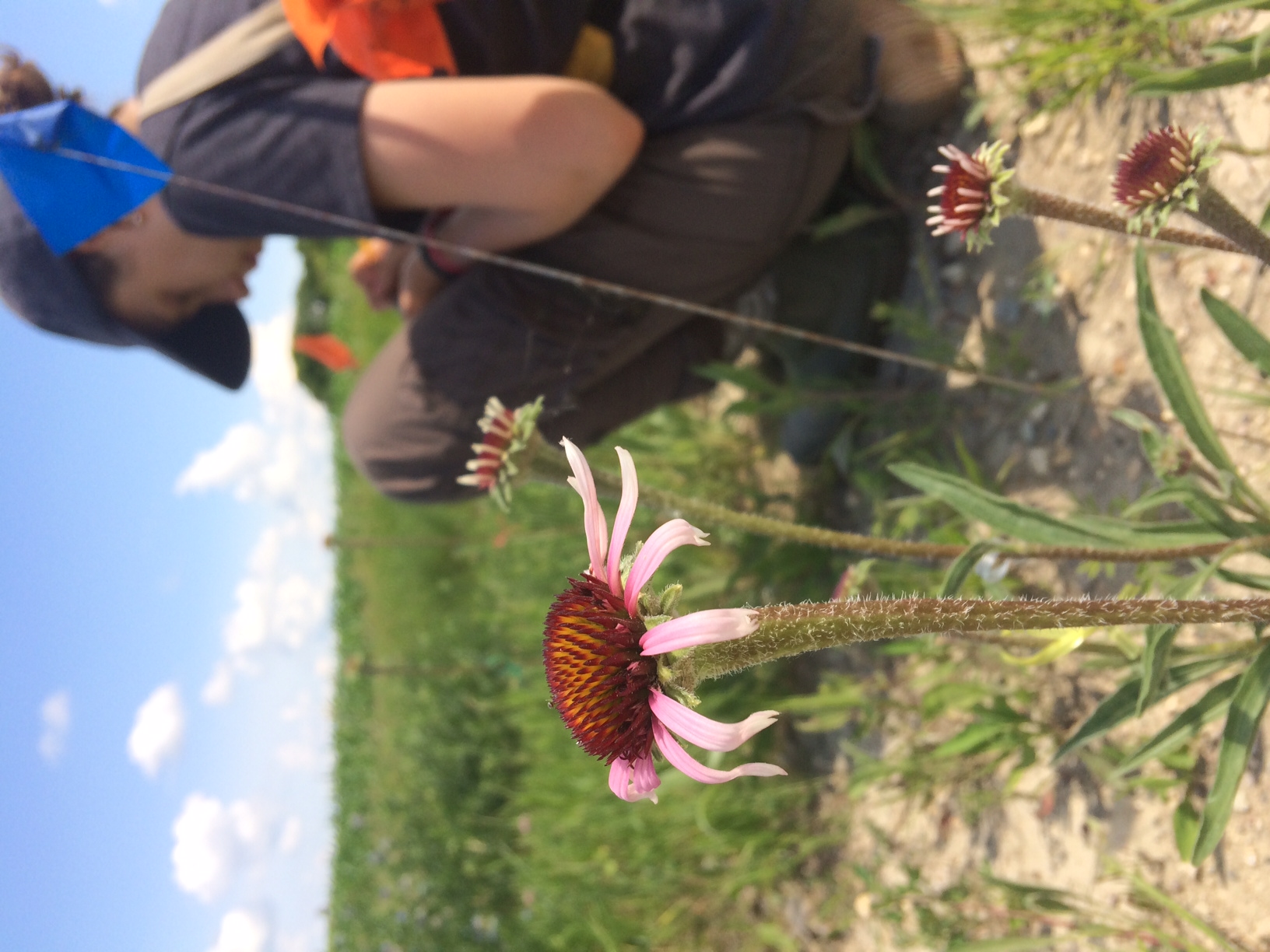
 Gina records the status of plants at East Riley. We can estimate how many days a plant has been flowering because Echinacea florets follow a specific pattern of development:
On the first day of flowering, anthers emerges from above the bract that subtends (or supports) the floret. The anther is the male, pollen-producing part of the flower. Flowering occurs from the outermost florets of the Echinacea heads and moves inwards; on the first day of flowering, only florets in the outer ring of florets will produce anthers. On the second day of flowering, styles (the female, pollen-receiving part of the plant) emerge from the florets that had anthers the day before. Also, florets in the second row of florets could start producing anthers. On the following day, these florets will have their styles emerge, and the pattern continues.
Today we learned how to identify anthers and styles. We caught most of the flowering plants on their first or second day of flowering, but we estimated that some of them had already begun 3 or 4 days ago based on the number of rows that had already had anthers and styles.
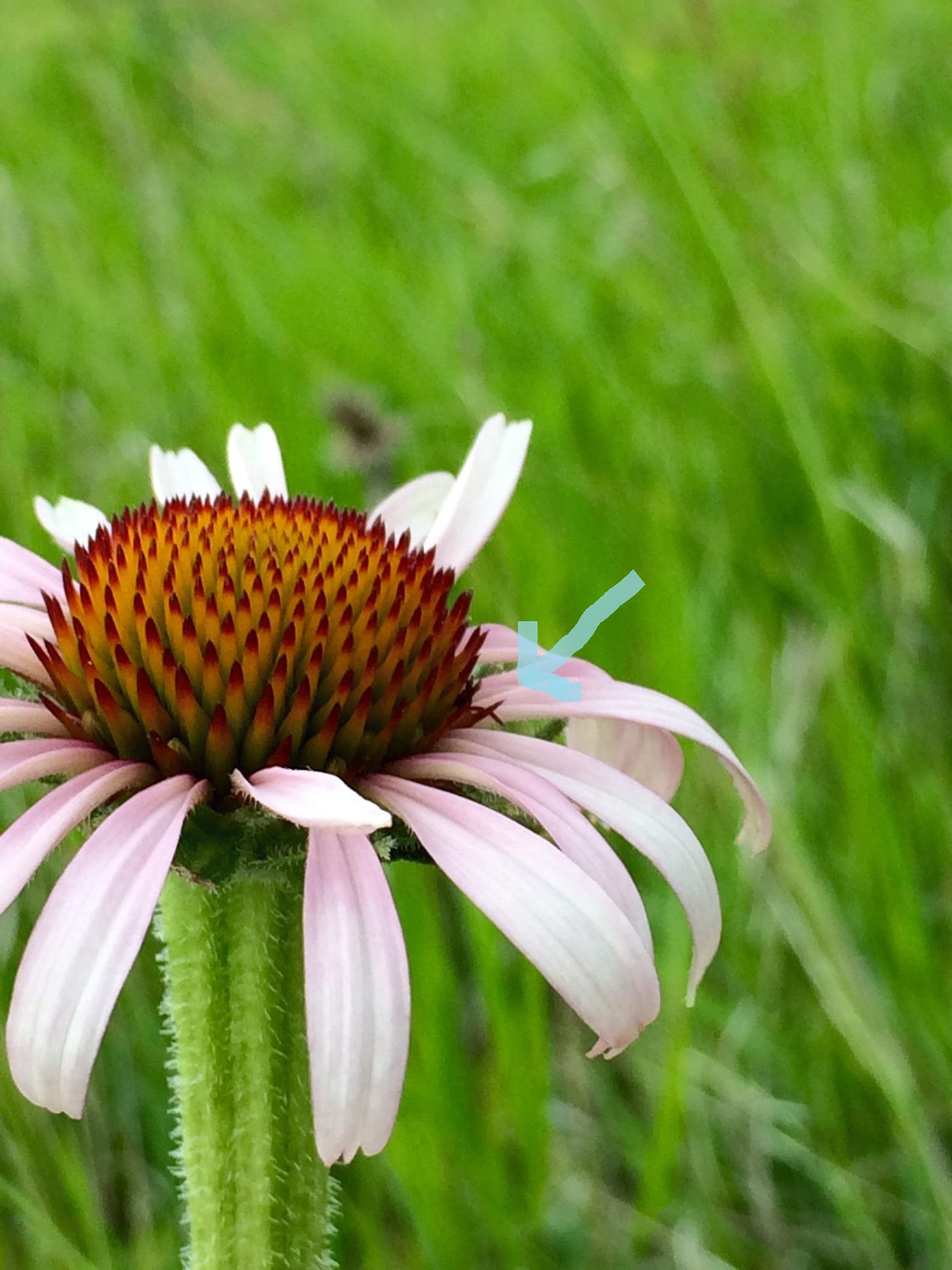
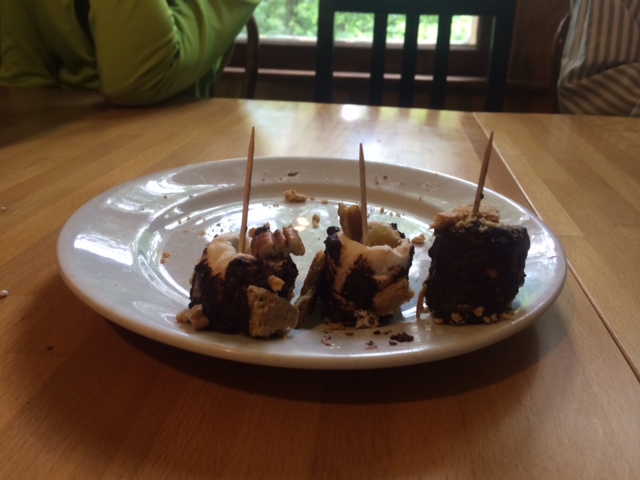
 Here’s a plant on it’s first day of flowering. The light blue arrow points at an anther. Matt’s wife, Melinda, and the Brazilian exchange student that they are hosting, Thiago, ate lunch with us and brought a strawberry pie with cool-whip and blueberries. Yum!! And then at the end of the day Hattie and Per brought out a surprise treat for us! It was an original recipe: ginger-stuffed marshmallows coated in chocolate and rolled in graham crackers and ginger. How lucky are we??
 Scrumptious delicacies courtesy of Hattie and Per! Yum! We ended a little early today because we were scared off by a little rain and ominous-looking storm clouds rolling in from the west. It turned out that we didn’t get much of the storm and we went swimming in Elk Lake after work.
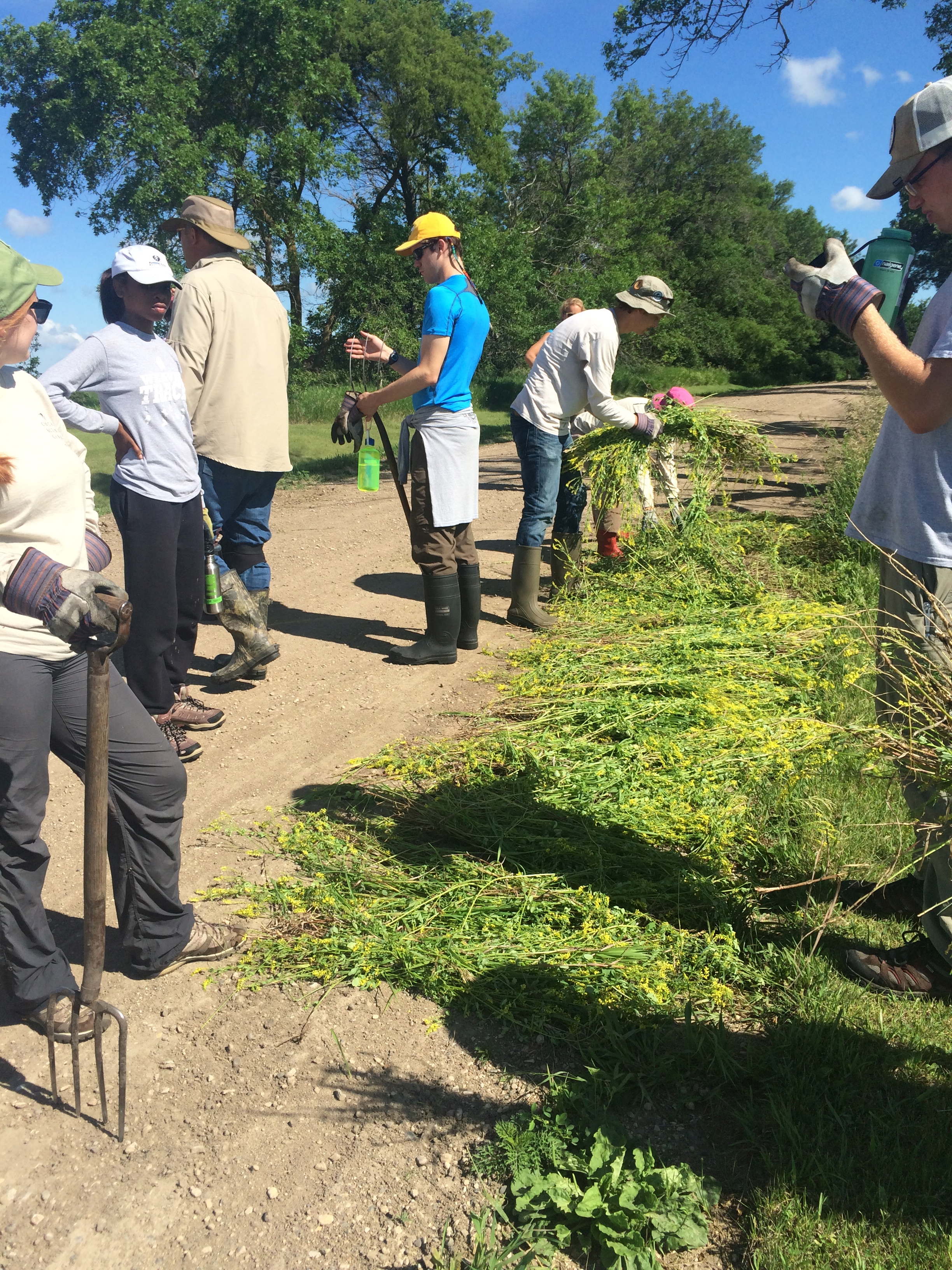
Our second Thursday got off to a strong start as we finished pulling sweet clover from p8. Last night’s rain meant prime clover-pulling conditions: wet and loose soil that allowed us to extract the full tap roots of the tenacious plants from the ground. Danny provided some a cappella background tunes to keep us moving through this herculean task. Despite the wet soil, there were still quite a few plants that were able to put up a good fight. Flexing my sore hands at the end of the hour or so we spent in p8, I relished the sight of all the pulled clover laid out to parch in the sun. P8 is now sweet clover free! (At least for now.)
The Team lays out sweet clover pulled from p1 to dry in the sun. After pulling the clover we had time before lunch for a lesson in using GPS to map plants and help out with Echinacea demography. Stuart had started the day by checking the space weather–apparently a solar flare just missed us, very luckily leaving us in the clear to proceed with the Team’s two GPS machines (affectionately named Sulu and Chekov).
Using GPS to stake Echinacea plants! At lunch a few of us gave quick presentations about our summer project proposals, which have already made a lot of progress in the two weeks since we arrived! Some of the questions we’ll be attempting to answer this season include how aphids affect Echinacea fitness, how hybrid and native plants differ in fitness, which seed collecting methods are the most effective for species co-flowering with brome, and whether flowering phenology is heritable. Finally we got the chance to hear from professor Ruth Shaw about some of the latest work being done on analyzing the genetics of fitness in Echinacea (and other species as well!).
After this jam-packed morning, the Team got some down time to work on individual projects. I look forward to watching everyone’s research progress!
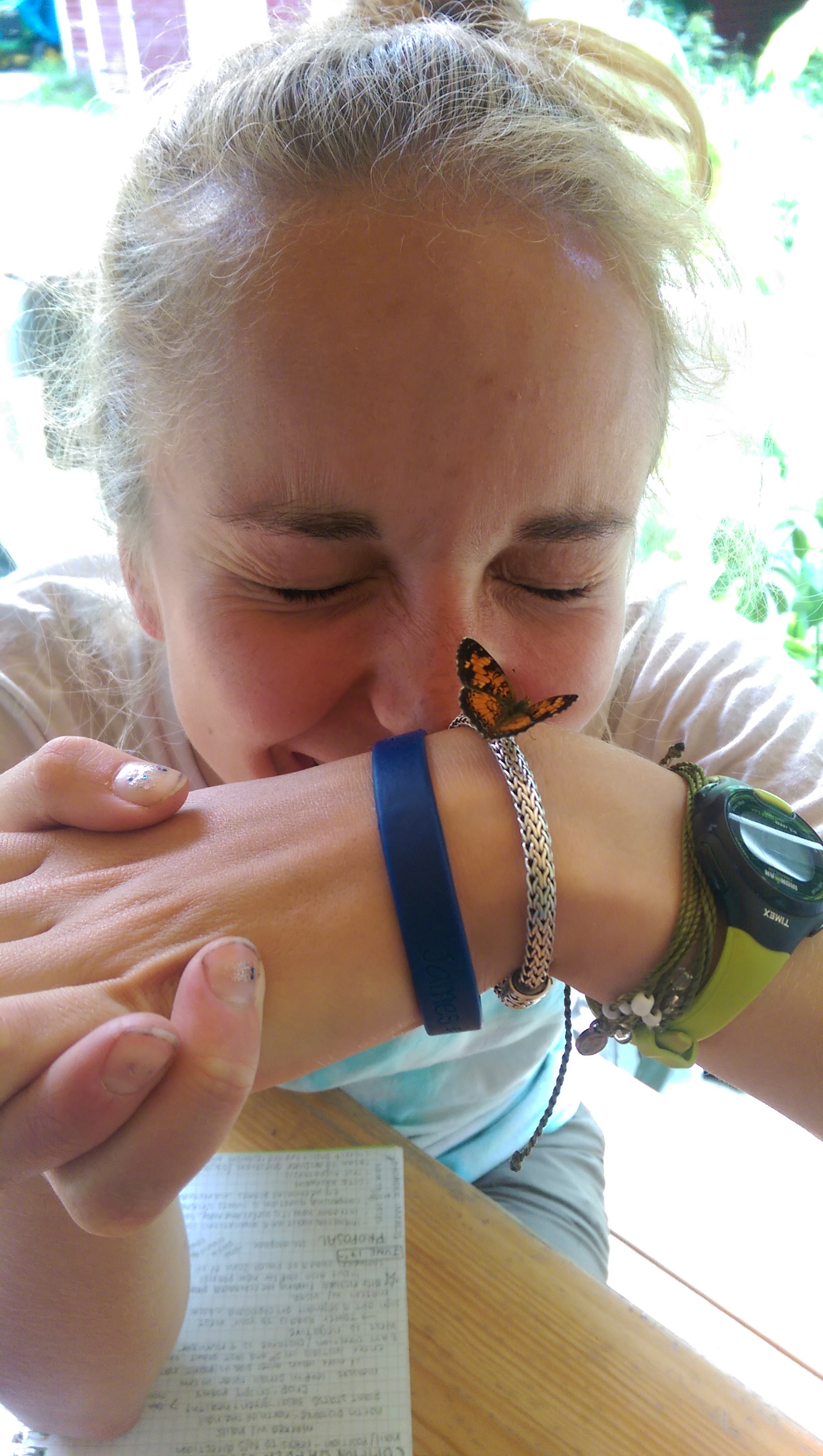
Today was a great day! We did some flagging in a few plots and also got a chance to meet Jennifer Ison via videochat. We also got a chance to speak with Stuart regarding our independent projects… In the midst of waiting for our appointments with Stuart, Ali was visited by this butterfly. It’s a Pearl Crescent Butterfly (Phyciodes tharos). Soon it’ll be stopping at some flowering Echinacea, but today we definitely enjoyed its visit on Ali.

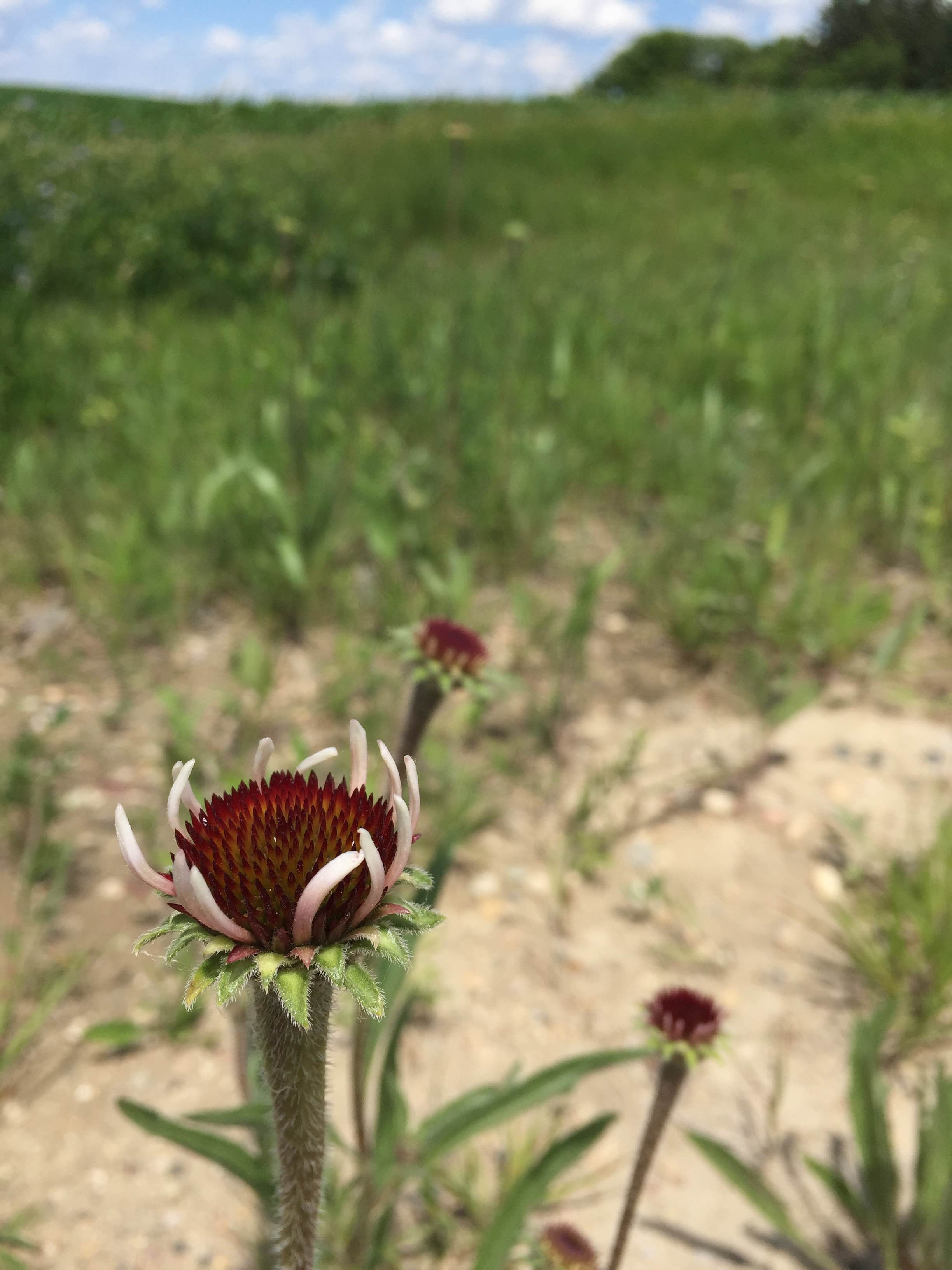
We took advantage of this sunny and beautiful Tuesday by visiting some more of the remnant prairie sites! In the morning we visited “On 27” an aptly named site bordering highway 27 that is a haven for Echinacea. We were able to practice tagging plants with heads to note the ones we can expect to flower this summer. This task was especially exciting because it allows for a preview of what the rest of the summer will look like. We will be frequent visitors to the plants that flower this summer in order to study flowering phenology. To characterize this trait, we will note the time that pollen is present for the first and the last times on the head. “On 27” had many heads scattered atop the hill, and down either side to the cornfields which surrounded the remnant prairie. We visited several other sites before lunch, tuning our “Echinacea eyes” and discerning between different stages of flower development. After lunch, we split into three groups to visit more sites. It appears that “Riley” site will be a popular destination this summer, there were many heads with emerging rays that were 1cm or longer! To the layperson (ie: me before I was a member of Team Echinacea) the rays are what you might call a petal— they are the pale purple florets that elegantly drape from Echinacea’s spiny center. Seeing longer rays is a sign that we will visit soon so as not to miss the first pollen. Among the sites that I visited in the afternoon, were the two sites that Matt and I explored last week for our “first impressions” outing! Returning to these sites serves as a reminder of how much I have come to understand about the beautiful purple coneflower in only a week.
Small ray florets at Riley Longer Florets at Riley
Today we started in P8 by pulling some sweet clover. It was not a task to be taken lightly, only the heartiest could master the “full pull.” It was really in the ground and being held tight by Brome grass. We did manage to pull on and get a lot pulled out and removed. Hopefully there will be a lot less in the plot from now on. Below is a picture of our bundles. We figured they were at least as big or bigger than Gina! We broke for lunch and then started flagging in P1 and at Hegg lake. We were all getting quite good at finding plants and/or staples and almost had all the 5 meter flagging done when a sudden, unexpected rain shower left us running for cover!

The summer field season is off to a great start! We have assembled an excellent team to investigate ecology and evolution in fragmented prairie habitat focusing on the narrow-leaved purple coneflower as a model organism. Meet members of the team.
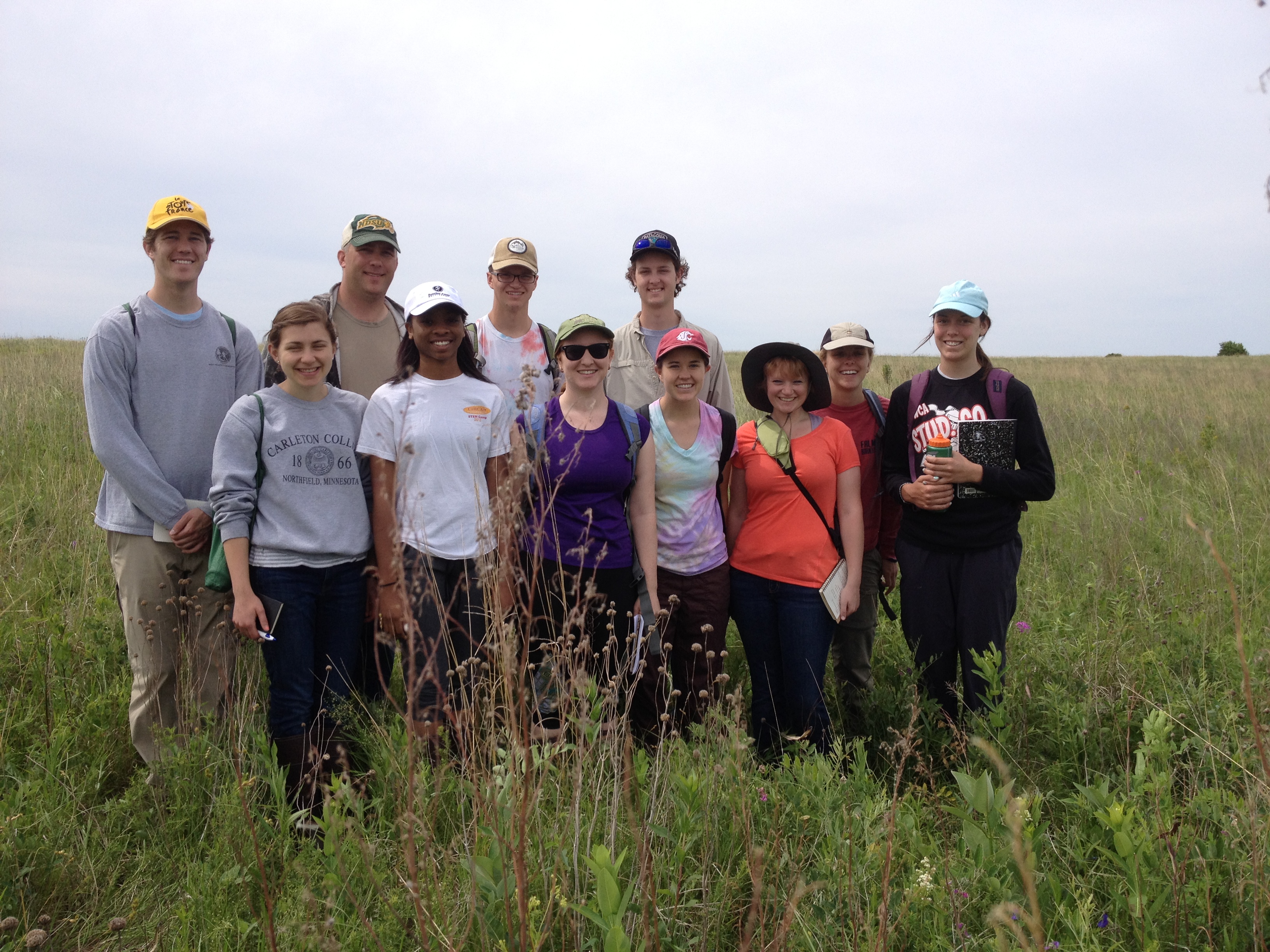
Team Echinacea 2015: Danny, Matt, Ben, Will, Gina, Taylor, Lea, Amy, Katherine, Alison, Abby
We started the season with tours of local prairies large and small, including Staffanson Prairie Preserve, Hegg Lake WMA, which are large and protected. Stay tuned for team-members’ first impressions of some of the nearby remnant Echinacea populations.
Team-members hail from near & far: Barrett, Elbow Lake, and Alexandria, Minnesota & California, Alabama, New York, and Rhode Island. They are excited to develop summer projects and they will post their proposals here next week. Our team includes four college students, four who just graduated college, two high school teachers, and one high school student. And there are the old-timers.
To get ready for field work, we took the Hjelm House out of winter storage and cleaned out our storage facilities (g3). We inventoried supplies and made signs and tags for fieldwork. Everyone got a pouch with tools and supplies and Gretel has assigned us all a data collector. This may be (should be) the last year for our trusty handspring visor data collectors. The visors are trustworthy, but the computers and software that run them are showing their age.
The first main activity of the season was assessing survival and growth of 2526 plants in the Q2 experiment, which is designed to quantify the additive genetic variation in two Echinacea populations. The amount of additive genetic variation determines a population’s capacity for adaptation by natural selection. Genetic variation is very important for the persistence of populations in prairie habitat. We’ll find out how much variation Echinacea has, which will give us some ideas about future prospects for these populations in the rough-and-tumble and rapidly changing world out here.
We got rained out several times this week, but managed to measure all 2526 plants. We found a few plants that escaped detection last summer and we even found one seedling. Welcome to the experiment, fellas! We’ve got our eyes on you.
Overwinter survival appears to be quite good and most of the toothpicks we used to identify individual plants made it through the winter too. The tallest plants were just over 20 cm and some plants had 3 or more leaves. This is great news for plants that were sown as seed in fall 2013. Growth conditions are challenging: a cold winter with little snow, a dry spring, shading out by established plants, chewing by herbivores, … it’s a tough life for a prairie plant.
All in all, it promises to be a great summer. We’ll keep you posted.
We had a great luncheon for our volunteer citizen scientists today. We are grateful to the incredible amount of high-quality work they do for the project. Stuart gave a presentation about our accomplishments during the past year (many) and plans for the summer (focused). Jared presented some results about the effects of fire on reproduction at Staffanson (strong). A fun time was had by all.
At the luncheon we wished Jared well in his future endeavors. Friday is Jared’s last day. I has been great to work with him for the past year. We welcomed Taylor Harris to the Team. She is from Fisk University and will work in Minnesota this summer.
You can read more about the citizen scientists who work on Team Echinacea in our series of profiles recognizing their hard work and dedication volunteering for the Echinacea Project at the Chicago Botanic Garden. Two volunteers declined to have profiles posted due to modesty or to hide their identities as international spies–we won’t blow your cover. Read profiles here.
Stuart forgot to take photos during the event. Fortunately Robin took a group photo, which we will post as soon as we get it.
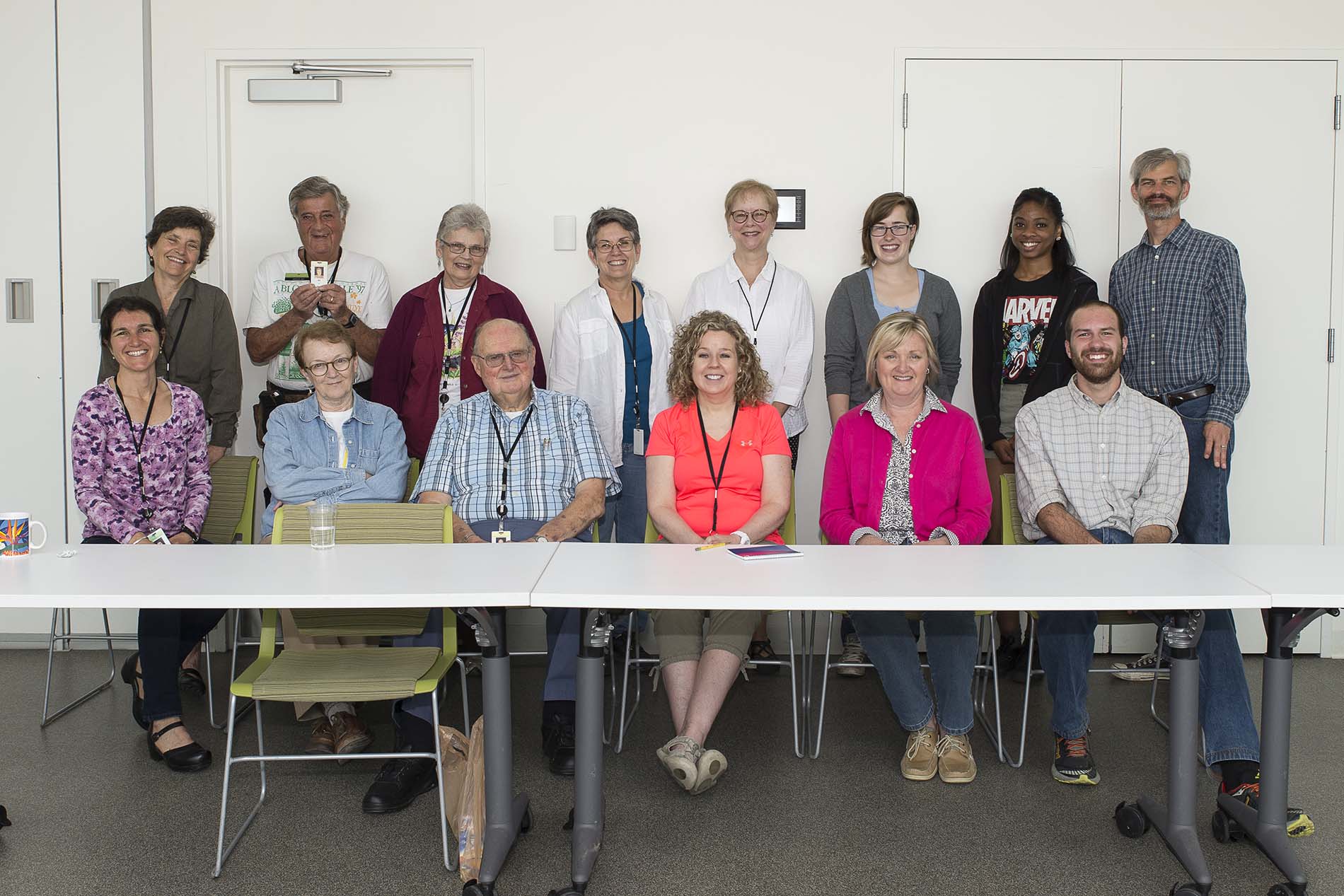
 Team Echinacea at the volunteer citizen scientist luncheon at the Chicago Botanic Garden.
Back row: Shelley, Art, Char, Anne, Leslie, Jessica, Taylor, Stuart
Front row: Gretel, Suzanne, Aldo, Laura, Kathryn, Jared
Not pictured: Bob, Lois, Susie, Susan, Naomi, Marty, Sam, Lou, Bill
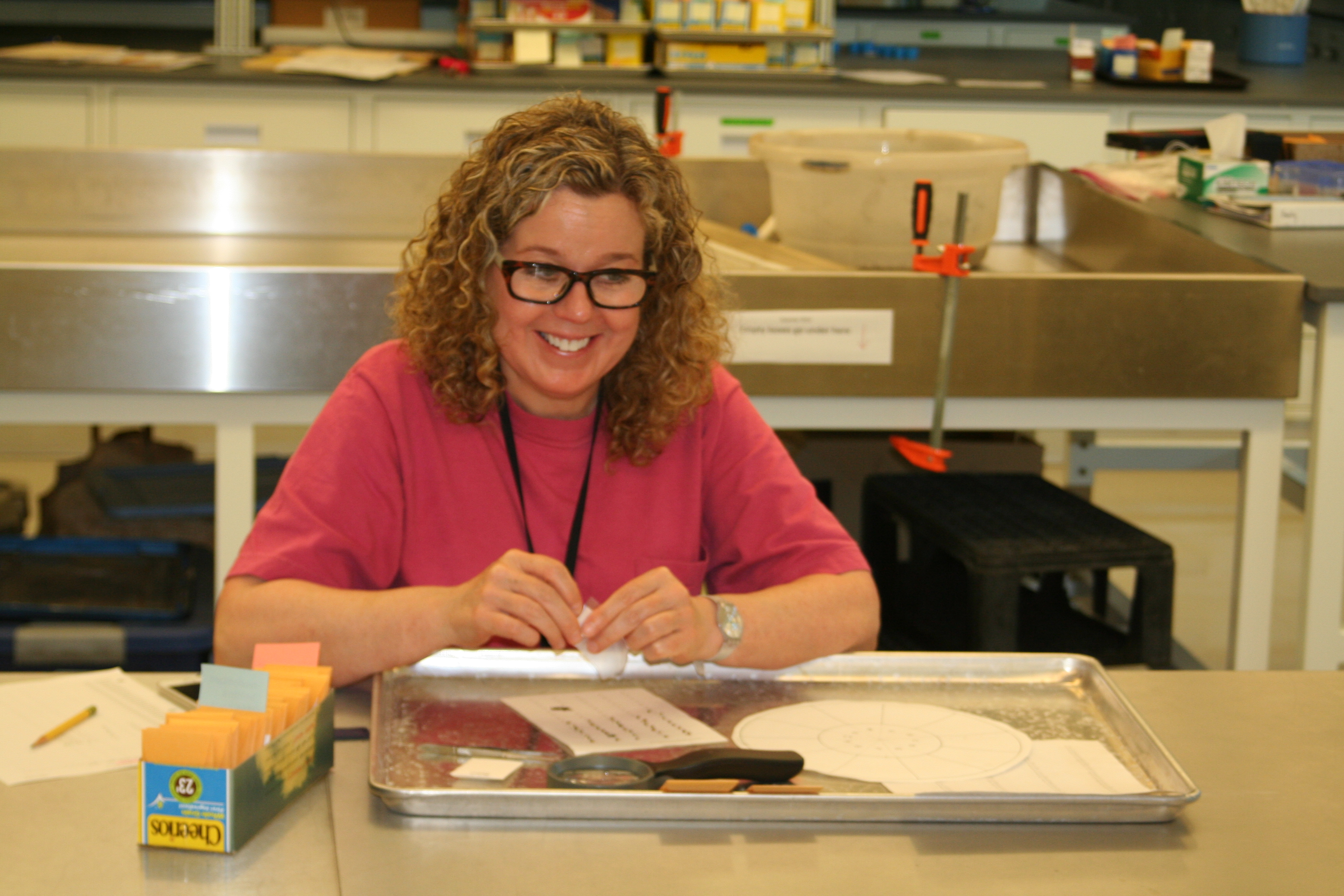
Laura joined began volunteering at the Chicago Botanic Garden in 2014 after retiring from a career at Abbott Laboratories. Though she has only been with the Echinacea Project a short time, Laura’s background in quality assurance and her lifelong interest in plant biology have already proved valuable in the lab. She has helped clean Echinacea heads, count achenes, and enter data among many other tasks. Apart from her work with the Echinacea Project, Laura volunteers with a charitable organization devoted to helping children in Lake County.
This is one in a series of profiles recognizing the hard work and dedication of citizen scientists volunteering for the Echinacea Project at the Chicago Botanic Garden.
Shelley joined the Echinacea Project in 2015 making her the newest addition to our team of citizen scientists. During her brief time with the Echinacea Project, she has helped clean Echinacea heads and randomize achenes. Shelley has long been fascinated with prairies. She planted her very own prairie restoration and volunteers as a land steward at Wadsworth Prairie Nature Preserve. In her spare time, Shelley enjoys spending time outdoors restoring the native habitats on her property and exploring local natural areas.
This is one in a series of profiles recognizing the hard work and dedication of citizen scientists volunteering for the Echinacea Project at the Chicago Botanic Garden.
|
|