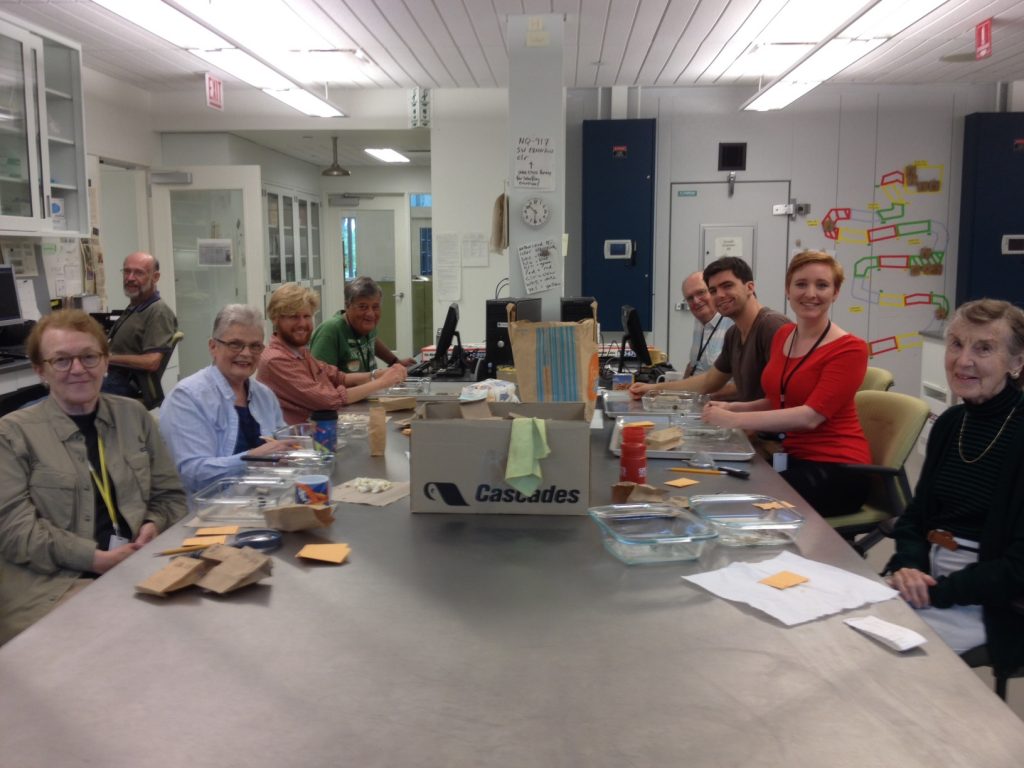
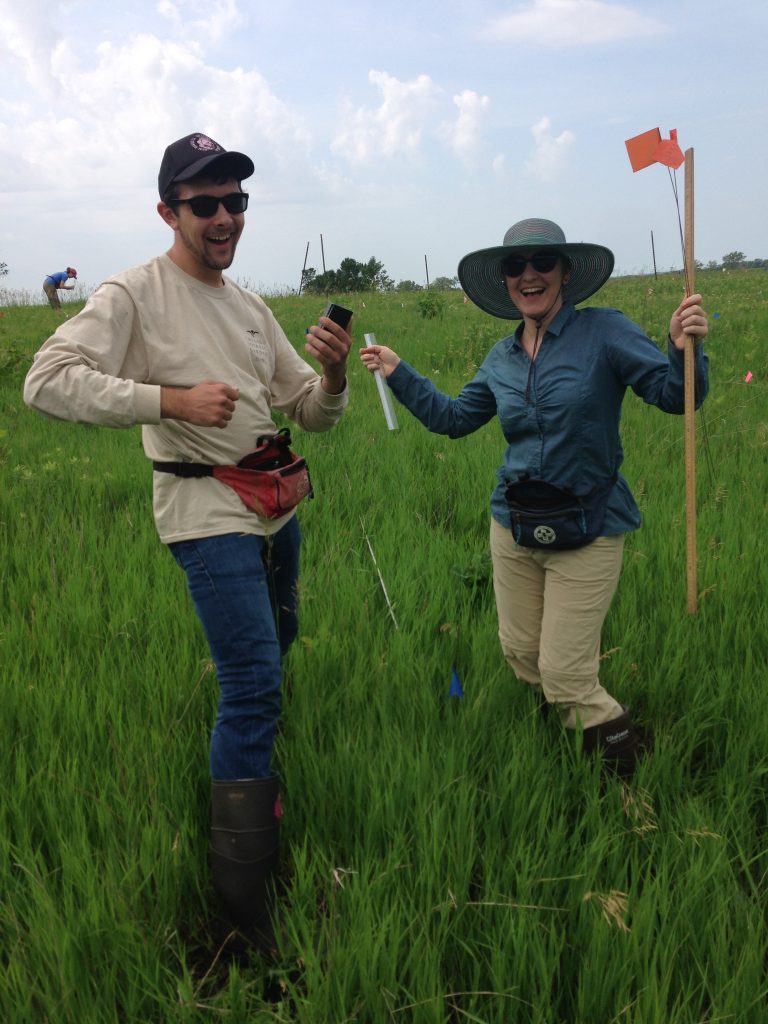
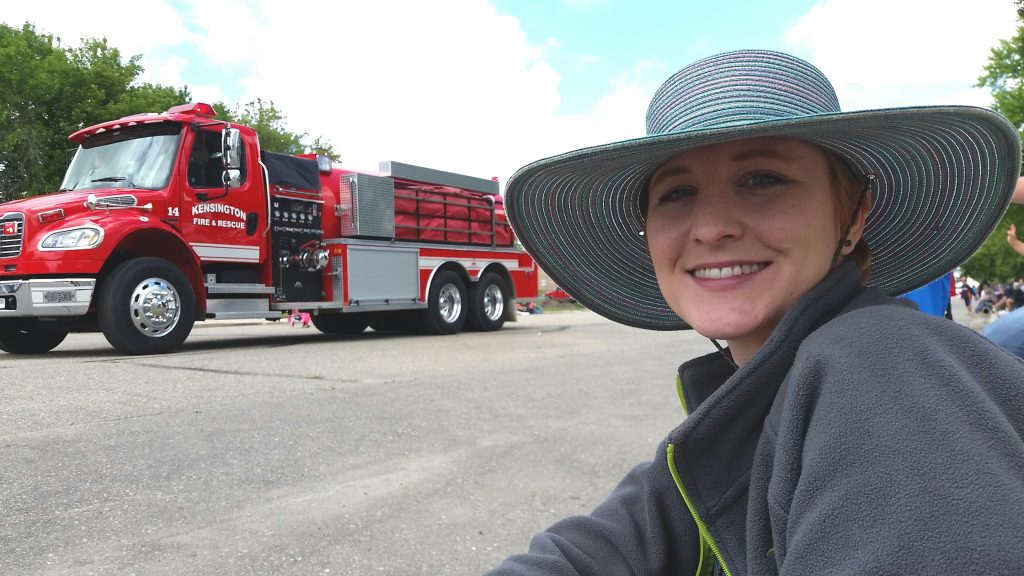
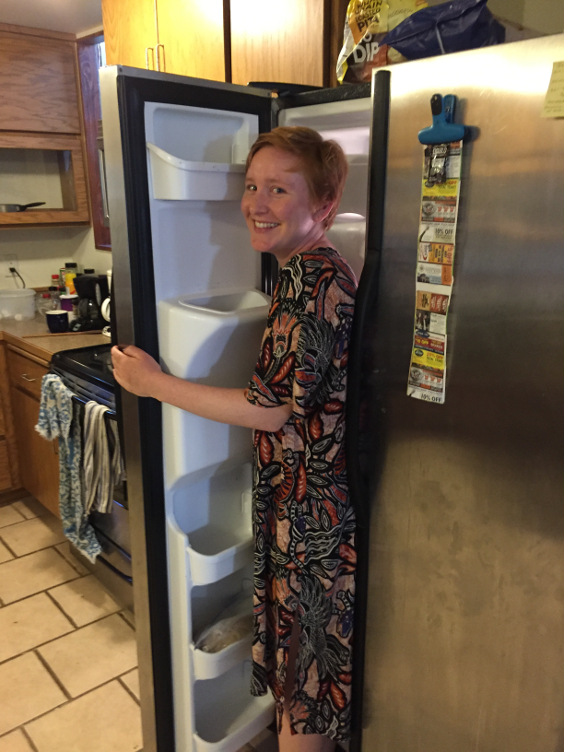
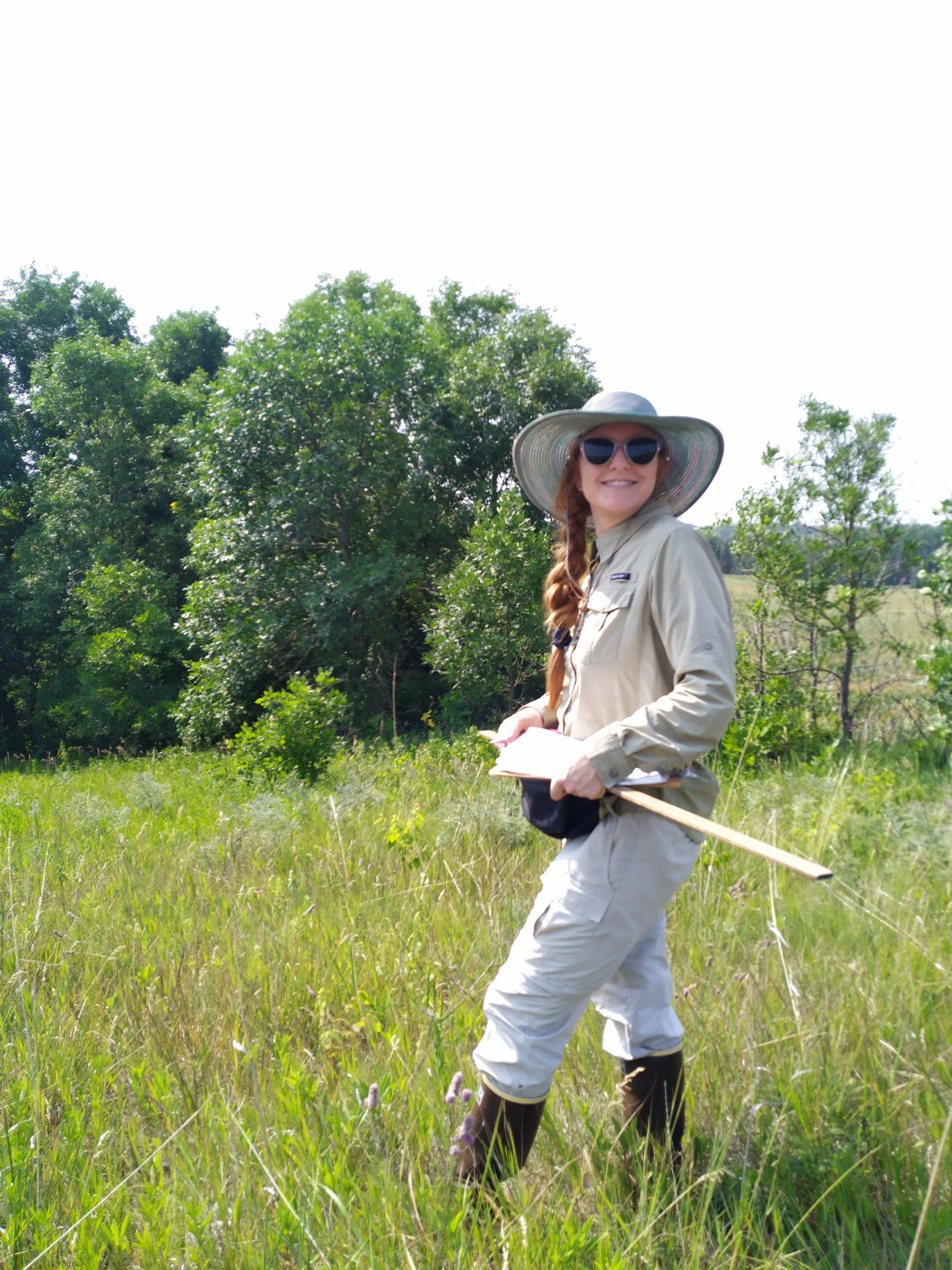
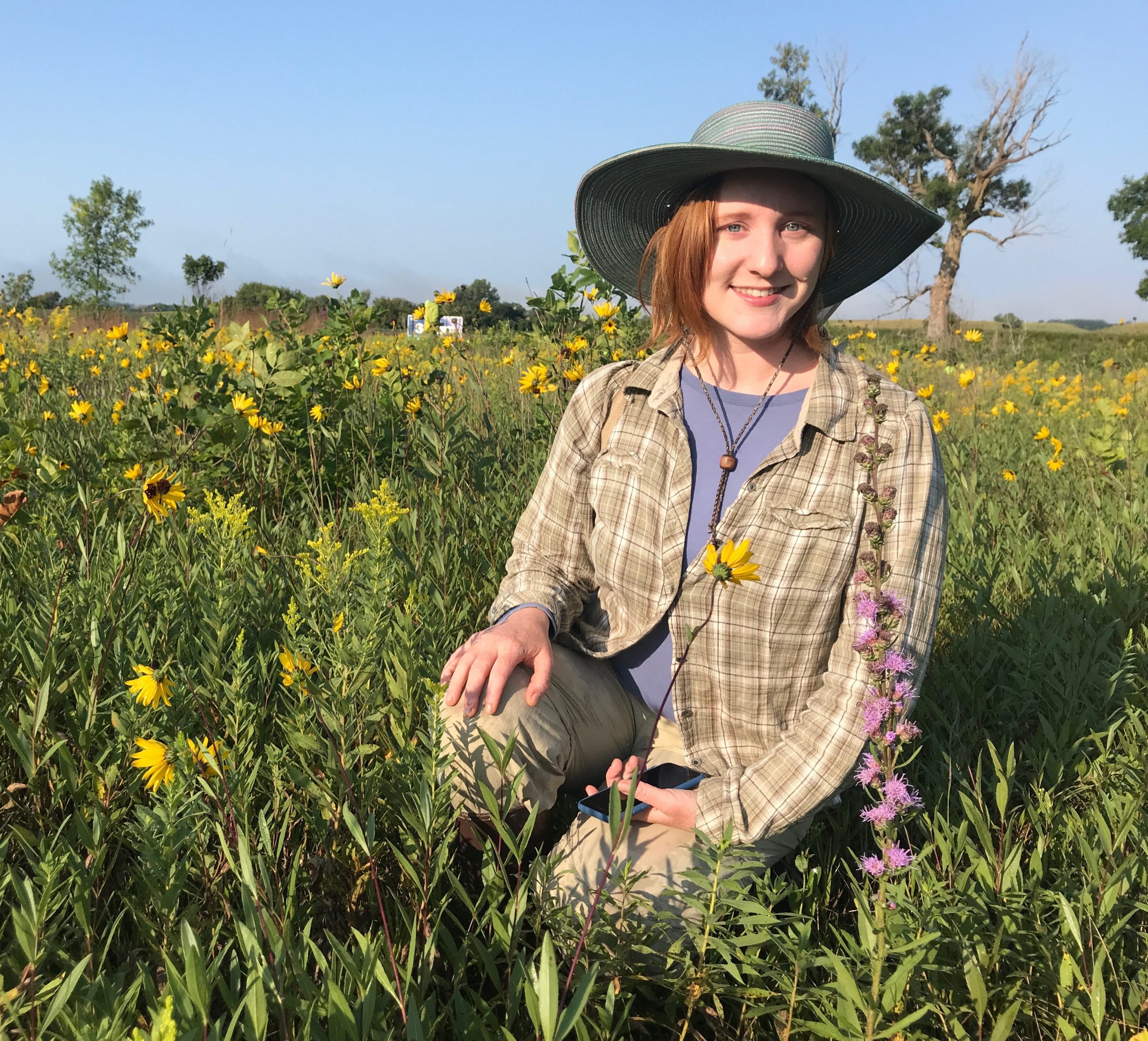
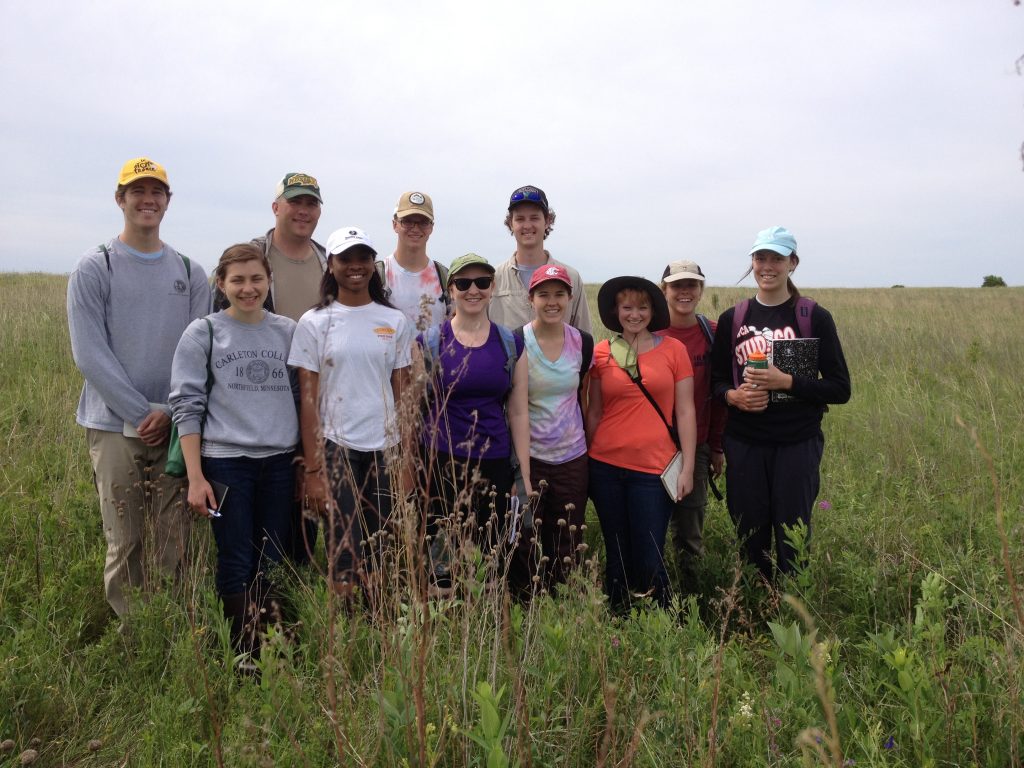
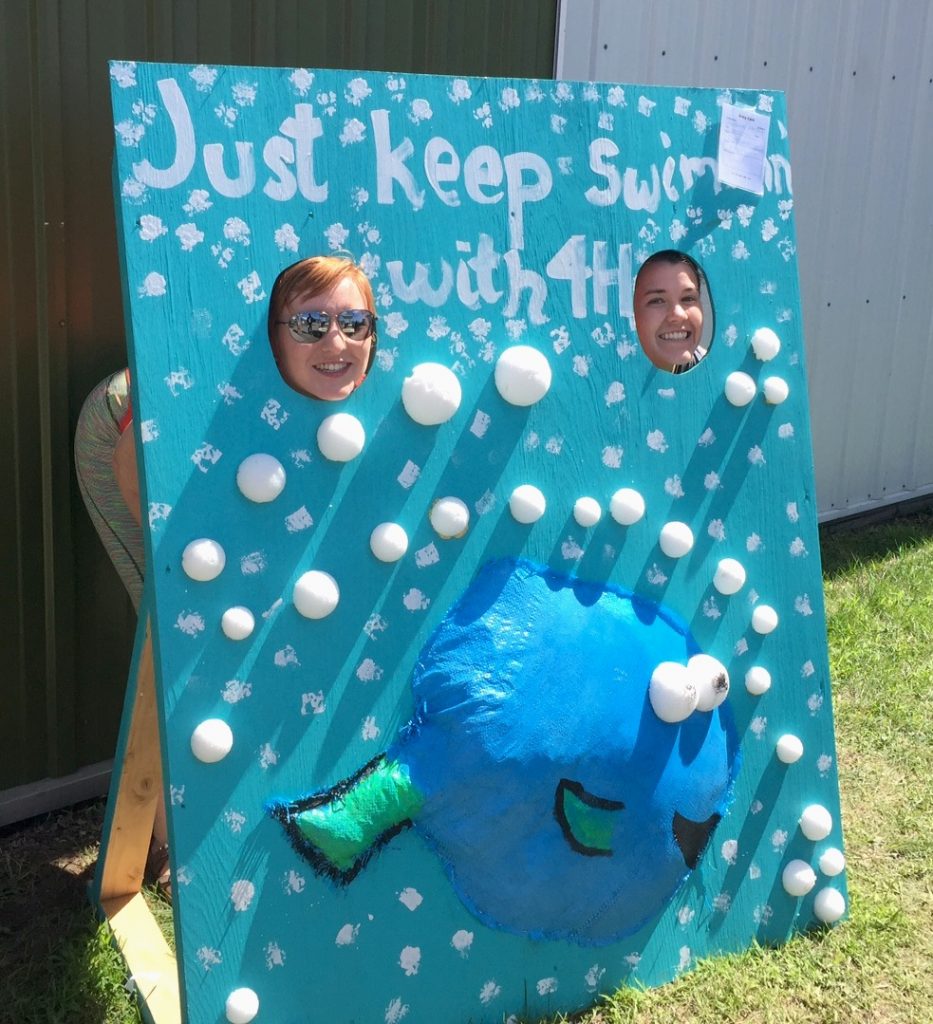
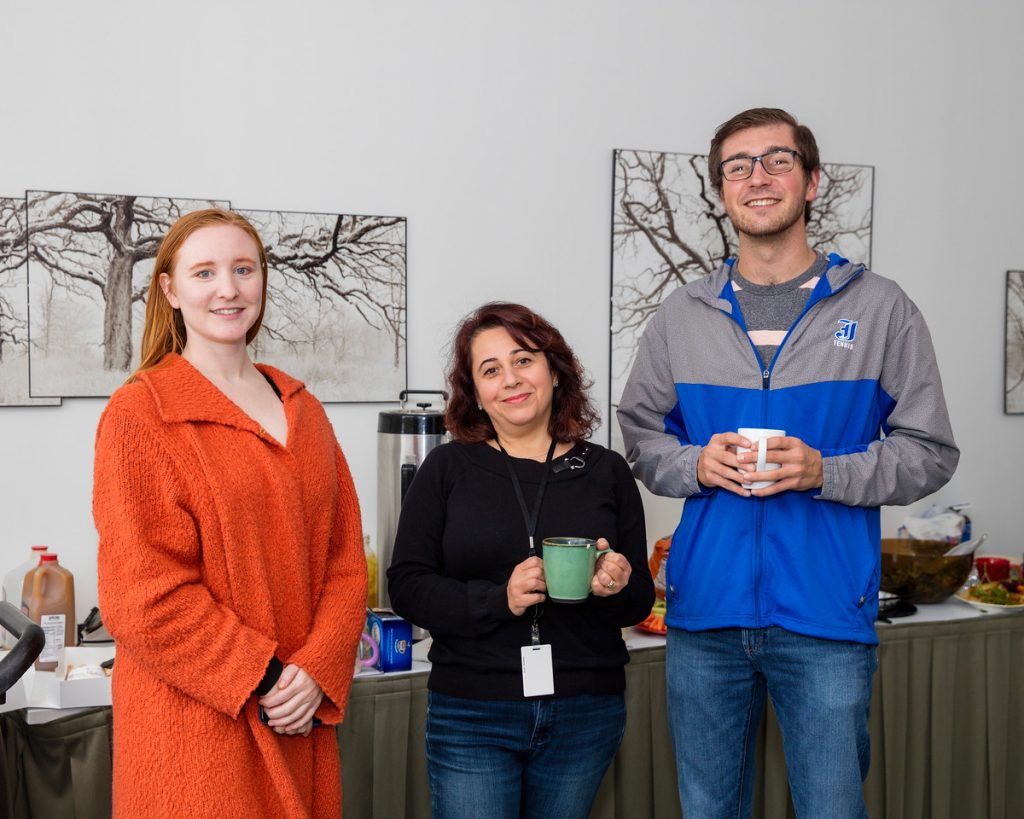
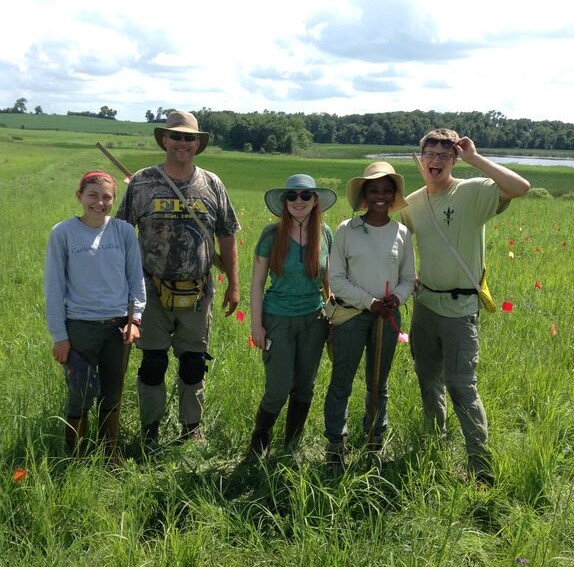
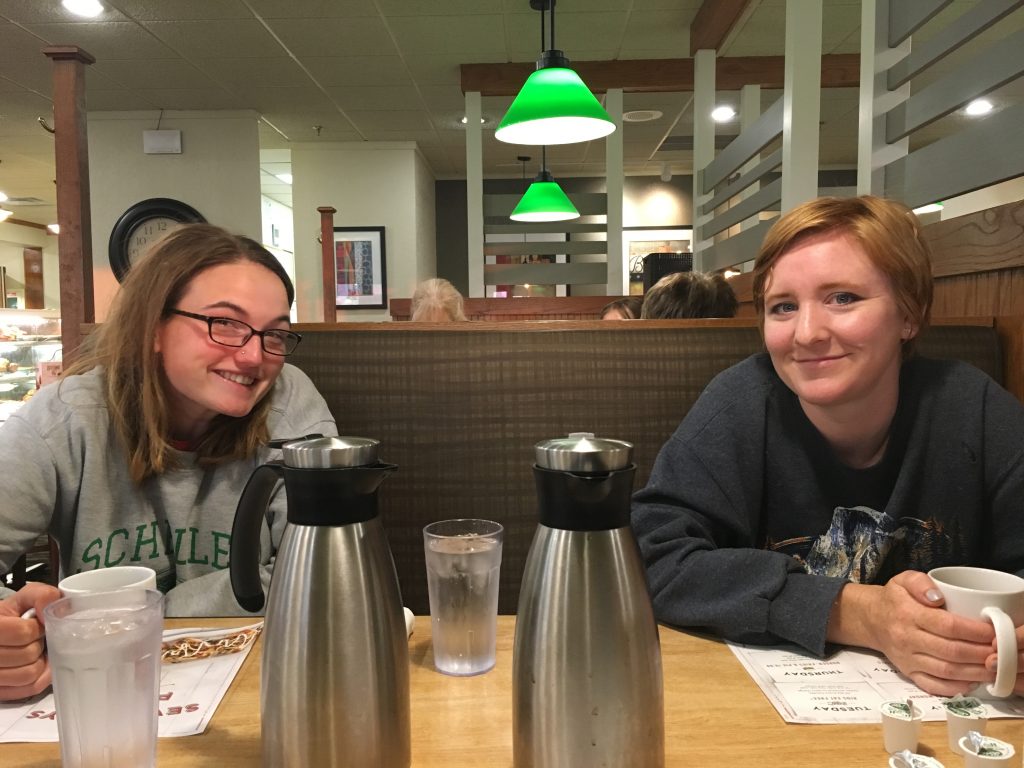
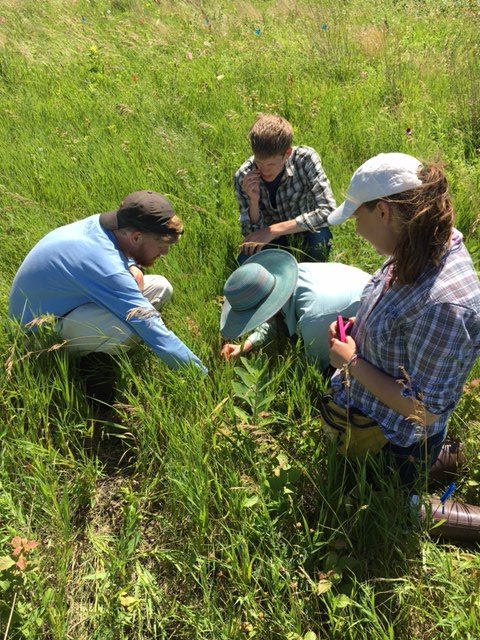
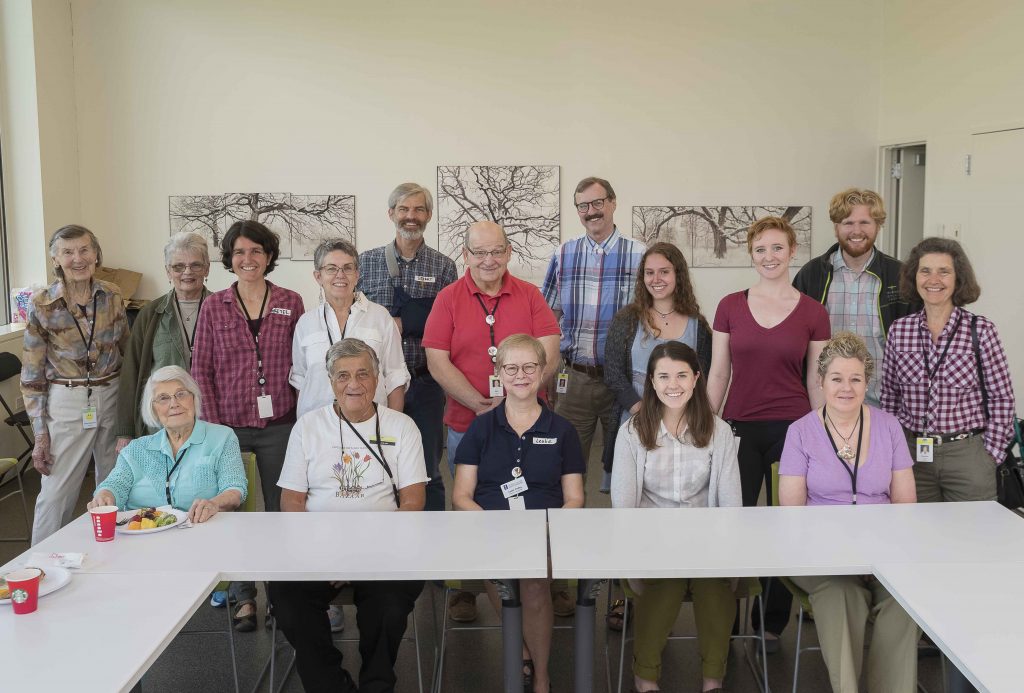
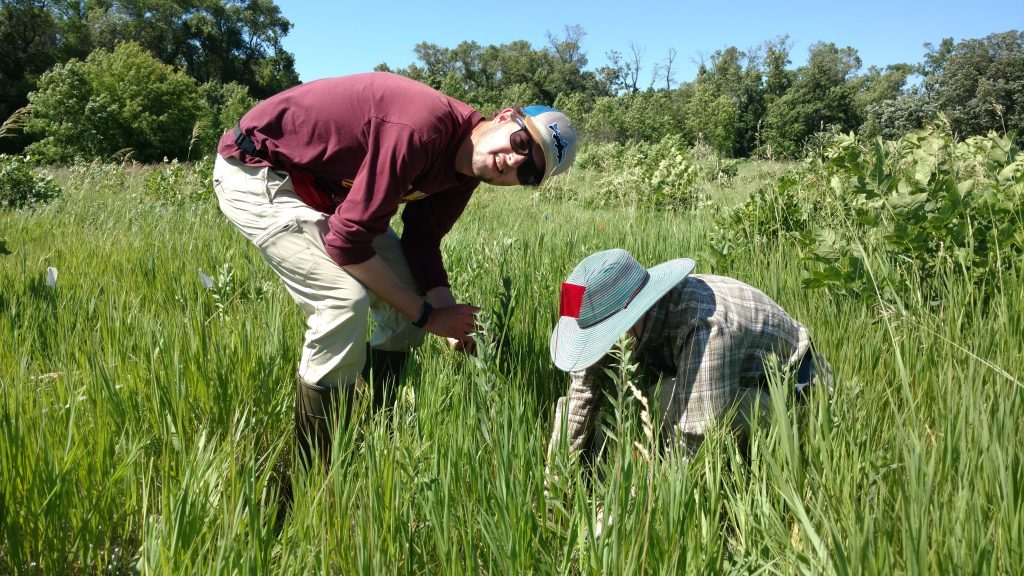
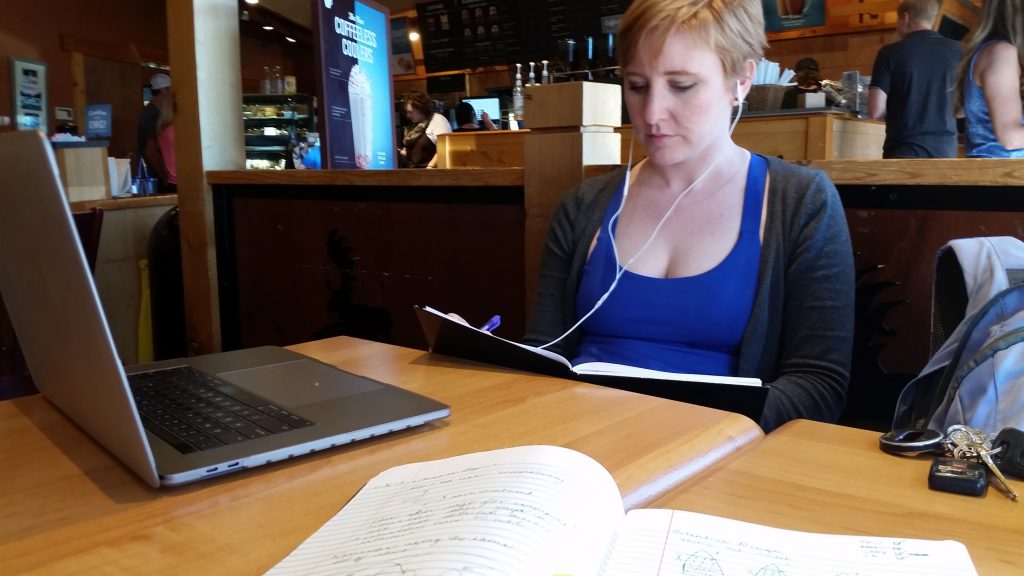
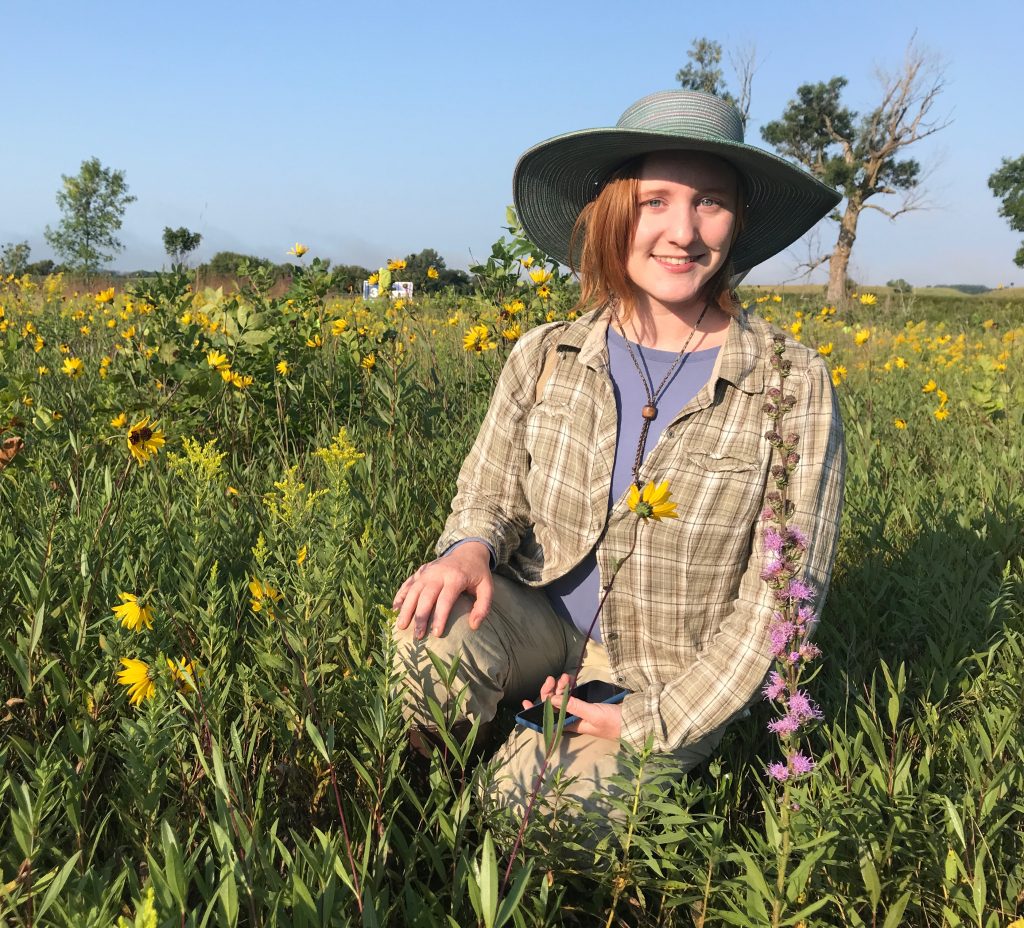
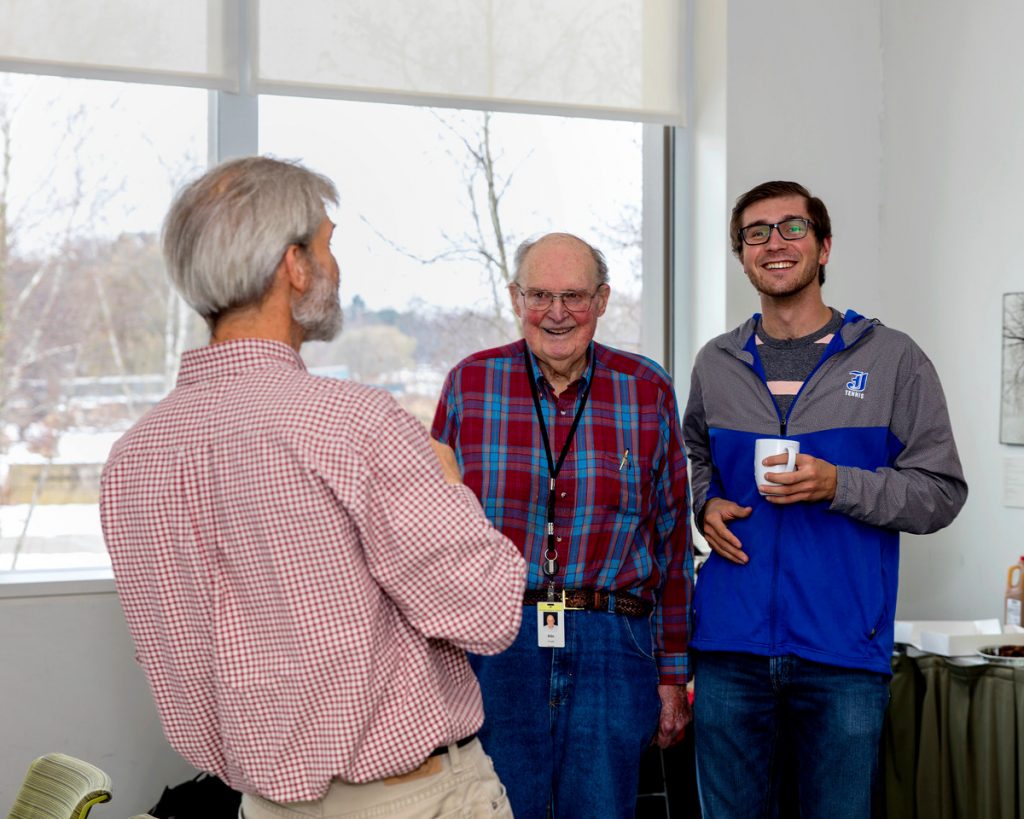
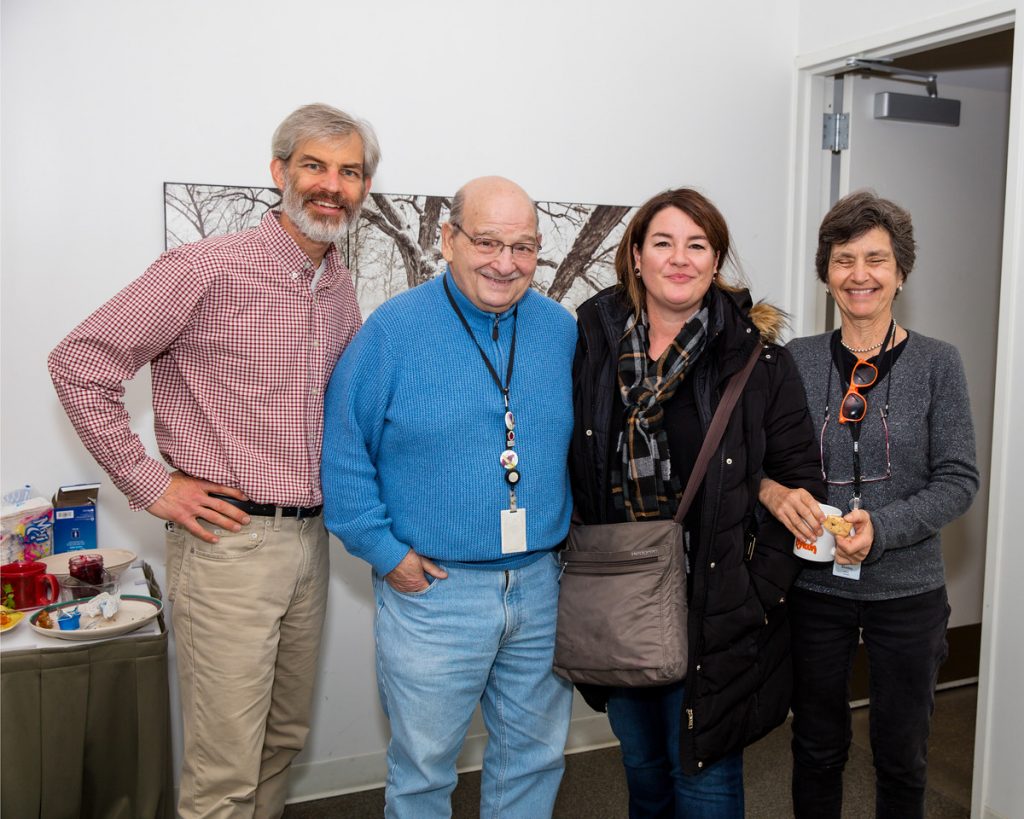
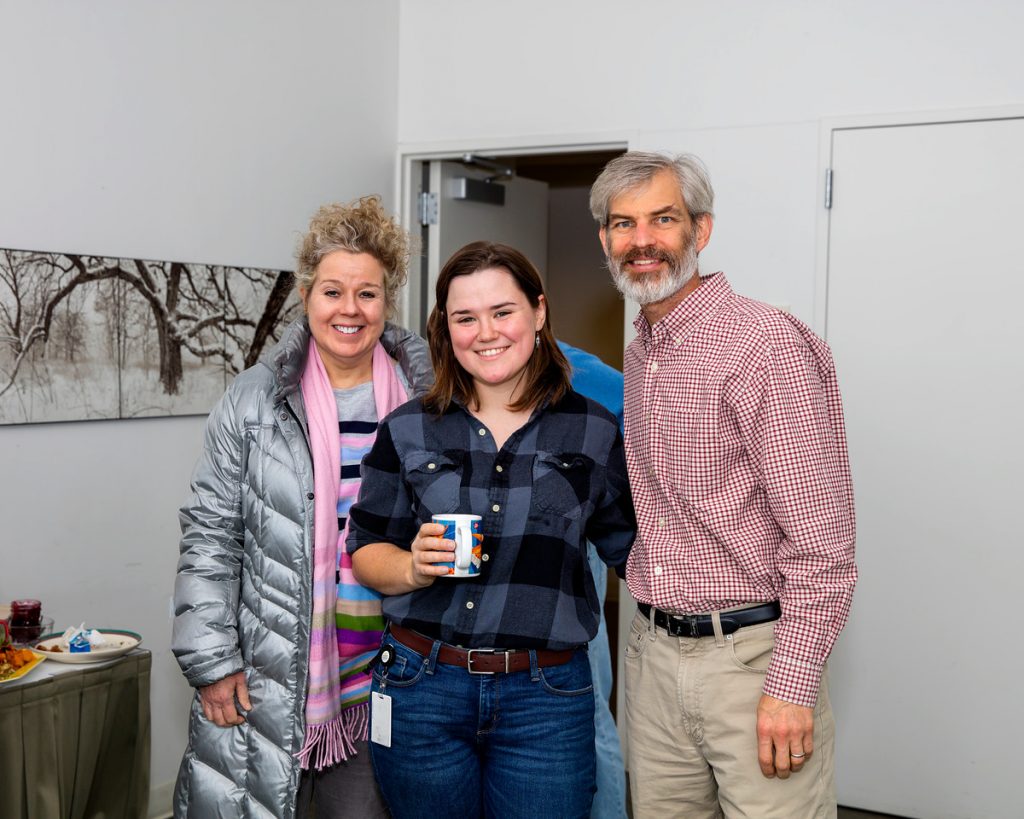
Lea Surveys Plants at Staffanson Prairie Preserve August 2018Volunteers show Sam, Lea and me how to dissect heads and count achenes. From left, Suzanne, Bill (in back), Char, me, Art, Aldo, Sam, Lea, Suzie.Interns, graduate students, volunteers, and full-time scientists convene for the Team Echinacea annual potluck! 2019Lea and Alex Leah watching the Runestone Days parade.The Team from summer 2017Lea does the reverse-sauna in the freezer.Lea in the prairieLea in 2016Lea Richardson in the prairieTeam Echinacea 2015Lea and AmyLea, Elif, and Riley at a volunteer appreciation eventGina, Matt, Lea, Taylor, and Ben 2015Lea and Ashley in Perkins.Team members learning the ways of aphids. First row (L to R): Lois, Art, Leslie, Amy, Laura; Second row: Susie, Char, Gretel, Anne, Stuart, Allen, Mike, Ivy, Lea, Scott, Shelley. Not pictured: Aldo, Susan, Michele, Marty, Naomi, Sam, Kathryn, Lou, Suzanne, Nicolette, Sarah.Searching for somethingthe scholar at work
Lea Richardson died on Friday April 3rd due to complications from melanoma. She was surrounded by friends and family in a hospital in California.
Lea joined Team Echinacea in June 2015 when she participated in a Research Experience for Teachers internship at our field site in Minnesota. It was a bold move for a teacher from Los Angeles public schools to try out research in rural Minnesota. She loved working with the team and developed a passion for fieldwork. She also relished fun times like swimming at the lake after work and adventures with the team. Lea liked it so much she stayed longer than she planned that summer and returned the next summer.
Lea joined the Ph.D. program in Plant Biology and Conservation at Northwestern University and conducted research at our field site in Minnesota. Lea was a valued member of the department and looked out for those excluded from opportunities and advancement in science. She was a stellar student earning many academic honors.
Lea was an accomplished teacher and believed in the power of education to empower students—especially those from disadvantaged backgrounds. In addition to classroom teaching, Lea engaged students from diverse backgrounds in her research and conservation activities in the field and in the lab. She modeled a growth mindset in formal and informal settings.
Lea enjoyed facing the many challenges (physical, intellectual, and logistical) of conducting ecological research. Lea’s dissertation made substantial contributions to basic science and to conservation. She used multi-year experiments to investigate how prescribed fire and other disturbances affect the timing of flowering of prairie plant populations and their persistence in the face of environmental change. We are proud of Lea and of the good work she did for people, the prairie, and the planet. She made many diverse contributions through her work with Team Echinacea.
After her graduation Lea returned to California as a post-doctoral research fellow. Lea dedicated her substantial talents to science, mentoring, and conservation. She continued to collaborate with Team Echinacea on research papers and projects until she fell ill in spring 2025.
Team Echinacea gained so much from Lea. Lea will be missed.
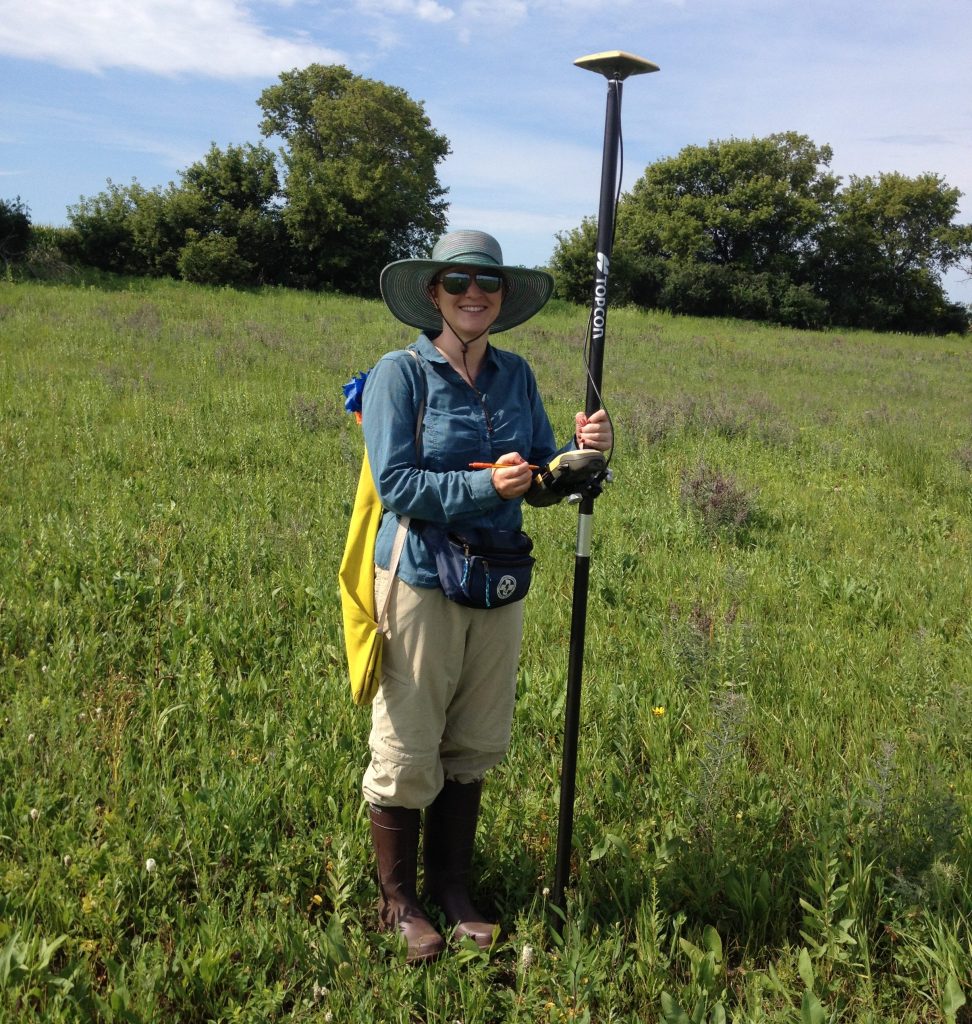
Lea Richardson in a prairie in western Minnesota.
UPDATE: Memorial service Friday, May 8th at 2 pm All Saints Church 132 N Euclid Ave Pasadena, CA 91101
In 2021, Lea Richardson conceived and initiated a 2-year study designed to test how fire affects community flowering phenology in remnant prairies in MN. We randomly sampled points in burned and unburned remnants for a total of 294 points. In a 1m radius around each random point, the number of flowering stems were counted for every plant species present in the circle twice a week from July 1-August 31. For some species, the radius extended past 1m. Random points used in this study were the same points used in the stipa project as well as other projects associated with Jared Beck’s postdoc studying fire in remnants. Lea also obtained estimates of total number of flowering plants of certain species for the whole site if the species in question was not in any of the random circles placed on the site (these additional observations should allow for more accurate flowering abundance curves to be obtained). Sites were divided into two driving routes with roughly half of the points visited on Monday and Thursday, and the other half visited Tuesday and Friday. This sampling protocol for the same sites will be repeated in 2022 to be able to compare points with and without fire across two years and among sites. Over 100 flowering species were identified within the circles. Data analysis will proceed on this first year of data in Spring 2022 and will be included as Chapter 4 of Lea’s dissertation.
Lea searches for flowering plants at a random point
Data collected: community phenology data, using visor form ptPhen (all data in aiiSummer2021 repo in ptPhen folder)
Samples or specimens collected: none
Products: [eventually] chapter 4 of Lea Richardson’s dissertation and hopefully a manuscript after 2022 data collection
You can read more about the community flowering phenology in remnants experiment, as well as links to prior flog entries about this experiment, on the background page for this experiment.
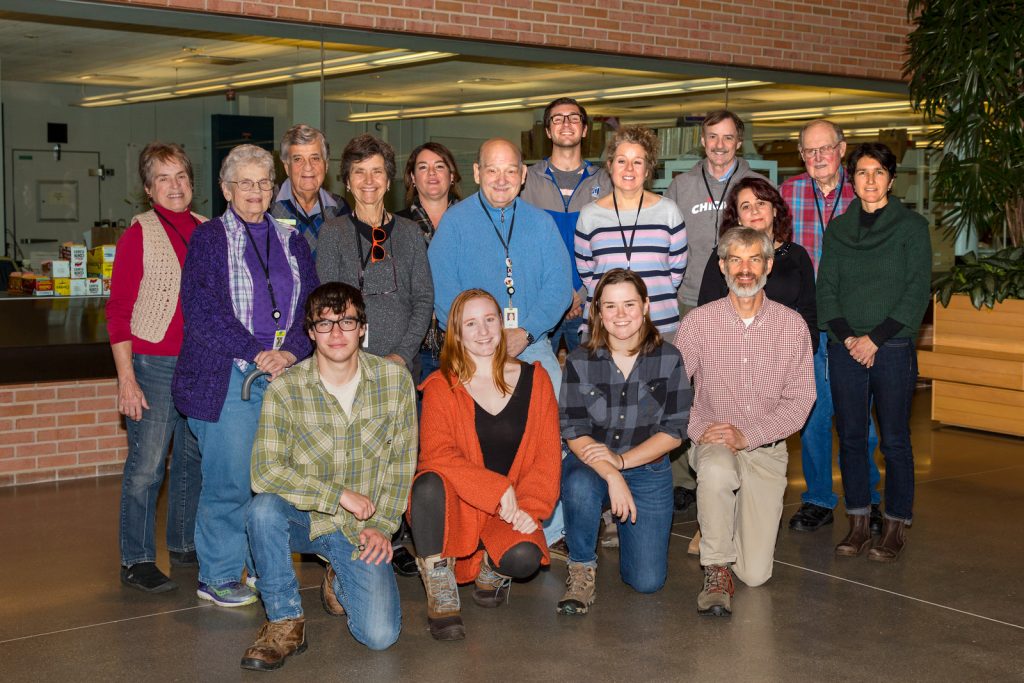
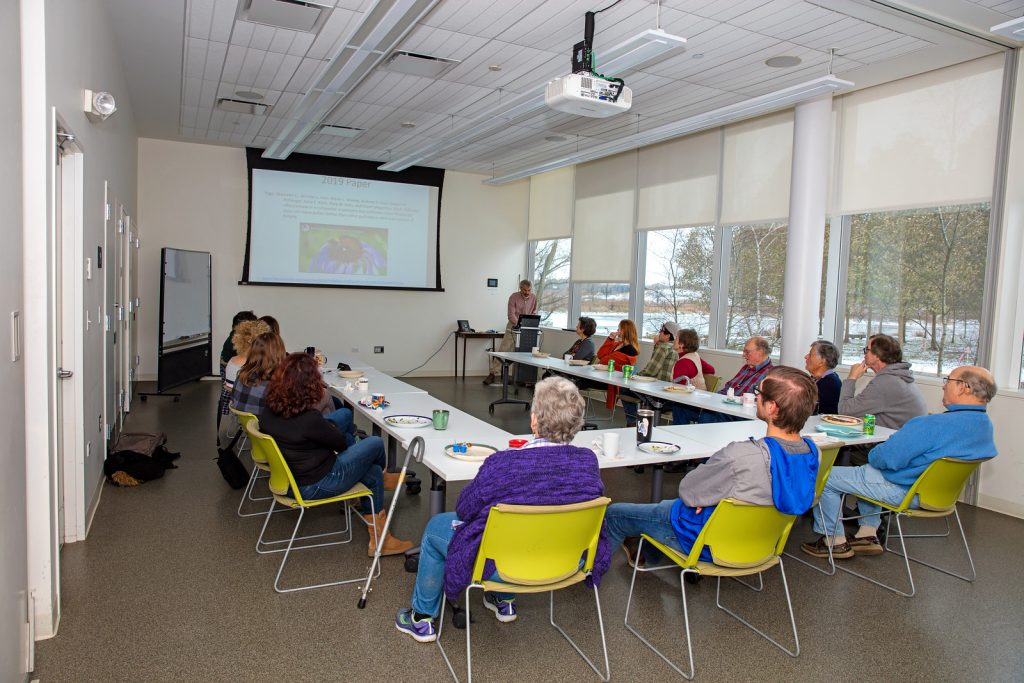
Last Thursday, we had our annual Team Echinacea potluck to honor the work of lab volunteers over the past year. Stuart discussed why what we do is so important and how the work of volunteers helps us to answer important scientific questions. Some great recent milestones accomplished by volunteers include:
Allen, Sam, and Anne reaching 500,000 achenes counted
All 2017 heads have been cleaned, rechecked, and scanned
670,000 achenes were counted and 113,000 achenes were classified in 2019 (so far)
In addition to a general overview of the Echinacea Project’s goals, members of the lab who have individual projects talked about what they are working on. These projects are: Erin’s remnant flowering intervals, Drake’s prairie parasites, Lea’s floral neighborhood, Elif’s congener ploidy project, and Riley’s prairie fragment crosses. It was really great to talk about research and hear about a number of projects.
Most importantly, though, I want to thank all people who volunteer their time to the lab. Without you, the cutting-edge science we do is impossible. Truly, you are making huge contributions to science and our understanding of plant reproductive fitness in anthropogenically fragmented landscapes. Your work is so appreciated, and we are so lucky to have you all around!
Oh, by the way, the food was absolutely wonderful. 11/10.
Team Echinacea IL! Front (L to R): Drake, Lea, Erin, Stuart Middle (L to R): Char, Shelley, Allen, Laura, Elif, Gretel Back (L to R): Marty, Art, Tessa, Riley, Mike, AldoFolks eat and Stuart talks about an Echinacea Project paper.Stuart tries to get a good angle on a photo of Riley and Aldo – photoception.Lea, Elif, and Riley. Stuart, Allen, Tessa, and Shelley. Shelley did not see that someone was taking a photo. Laura, Erin, and Stuart.
All of these photos are courtesy of Ray, a volunteer in the photography group. Thank you very much, Ray!!
In the summer or 2018, Lea collected data for the third year of her observational study quantifying
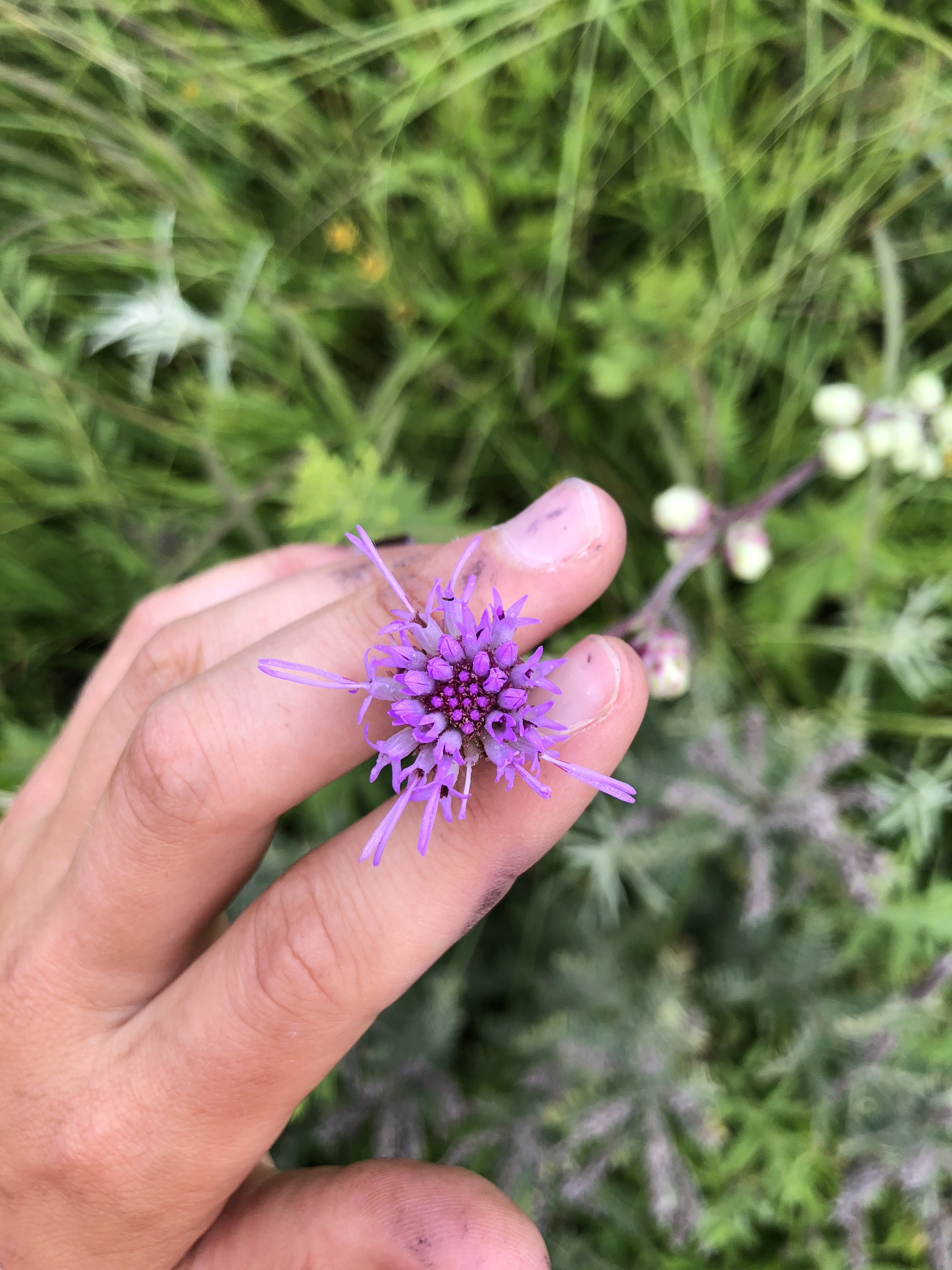
Flowering Liatris
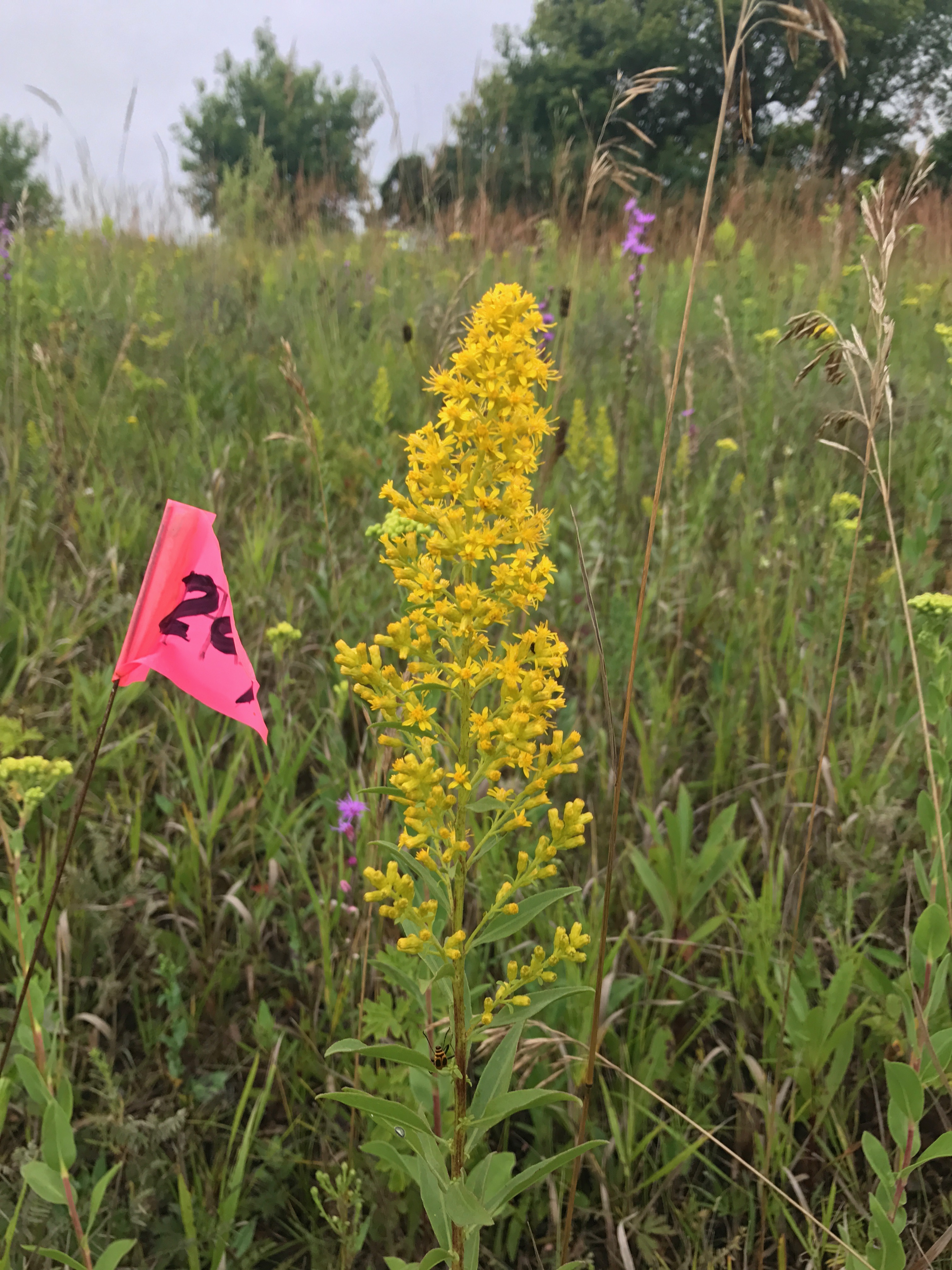
flowering phenology and reproductive success (seed set) for Liatris aspera and Solidago speciosa plants located along a transect at Staffanson Prairie Preserve. Staffanson is divided into east and west units. The west unit of Staffanson was burned Spring 2016. In 2016, Lea looked for differences in phenology and reproduction of east vs. west Liatris and Solidago plants. In 2017, neither unit was burned. In 2018, the east unit burned. Data collected this year combined with data collected in 2016 and 2017 will enable us to to see if burns influence phenology or reproduction. To assess phenology, Lea visited plants three times a week and recorded if they were flowering. She took GPS data for each plant included in the study. She also mapped the seven nearest neighbors of all flowering plants within her transect in 2018. Additionally, Lea visited all plants in the 2016 and 2017 datasets to see if they were still present and if they were flowering. To assess reproduction (seed set), plants were harvested and brought back to the Chicago Botanic Garden so that seeds could be removed from the plant and x-rayed. This study helps us understand how fire, phenology, and reproduction are linked in species that are related to Echinacea angustifolia.
~80 harvested Liatris aspera specimens from summer 2018, located at the CBG
~80 harvested Solidago speciosa specimens from summer 2018, located at the CBG
Data collected: Phenology data was taken on the visors every Monday, Wednesday, and Friday through the growing season. Paper harvest data sheets were used and brought back to CBG.
GPS points shot: ~543 GPS points were visited or shot, one point was visited for each plant monitored in summer 2016 and 2017, and points were shot for each plant in the 2018 dataset along with its seven nearest neighbors.
Flowering Solidago speciosa at Staffanson Prairie Preserve.
In the summer or 2017, Lea repeated her observational study quantifying flowering phenology and reproductive success (seedset) for Liatris aspera and Solidago speciosa plants located along a transect at Staffanson Prairie Preserve. Staffanson is divided into east and west units. The west unit of Staffanson was burned Spring 2016. In 2016, Lea looked for differences in phenology and reproduction of east vs. west Liatris and Solidago plants. In 2017, neither unit was burned. Data collected this year combined with data collected in 2016 will enable us to to see if burns influence phenology or reproduction. To assess phenology, Lea visited plants three times a week and recorded if they were flowering. She took GPS data for each plant included in the study. To assess reproduction (seedset), plants were harvested and brought back to the Chicago Botanic Garden so that seeds could be removed from the plant and x-rayed. This study helps us understand how fire, phenology, and reproduction are linked in species that are related to Echinacea angustifolia.
Start year: 2016
Location: Staffanson Prairie Preserve
Overlaps with: Fire and fitness of EA, Flowering phenology in remnants
Physical specimens:
70 harvested Liatris aspera specimens from summer 2017, located at the CBG
70 harvested Solidago speciosa specimens from summer 2017, located at the CBG
Data collected: Phenology data was taken on the visors every Monday, Wednesday, and Friday through the growing season. Paper harvest data sheets were used and will remain in Minnesota until the final harvest of the season.
GPS points shot: ~140 new GPS points were shot, one for each plant monitored in summer 2017 and ~180 points were staked to revisit plants that flowered last year. For each point staked, the plant status was recorded as either basal, flowering, or not present.
Today was another relaxed Saturday. Each of us at Andes had a number of errands to run including the very important task of getting the doggies groomed and cleaned before heading back to Evanston! Lea took the doggies in to Bark n Bubble in town for an all over spa treatment.
Later in the evening Lea, Tracie, and I celebrated Lea’s last day by enjoying some wine and having a ladies night in.
I wrote this after boarding a train in St. Cloud, MN late Friday evening. Little did I know the route I was on had no wifi, so this is a belated post about my last day in Kensington.
Today was the last day of my time with Team Echinacea 2016- a second amazing summer out in Douglas County, MN. While I’m sad to be ending my field work, I’m looking forward to my impending move to Evanston, IL where I’ll be starting graduate school at Northwestern’s Plant Biology and Conservation program. Regardless, I was looking forward to my last day in the field. In the morning, I immediately left the Hjelm house for Staffanson to assess the flowering phenology of the Liatris and Solidago plants in my transect. Meanwhile, the rest of the team went to Hegg Lake for a morning of demo and harvesting in p2. Almost as soon as I arrived at Staffanson I noticed the mosquitoes were swarming worse than I had ever experienced! Luckily, Hegg wasn’t as bad, and we were able to finish harvesting at p2 before lunch. After lunch, harvest continued in p1. With just a couple remaining hours in the afternoon we headed out to Staffanson to work some more on Total Demo. Sulu and Chekhov were feeling a bit finicky, taking a good while to make an adequate data connection. By the time we actually started working, the mosquitoes were swarming again and after Amy had 20 bites on just one of her arms, we decided to call it a day and admit we had been “mosquitoed” out of field work. After tidying up the Hjelm house, my last day of 2016 field work came to a close. Back at town hall, Amy made us what might be my new favorite cake, oatmeal cake with cream cheese frosting, and James made some delicious baked mac and cheese. We enjoyed a game of Catan, took an evening walk around Kensington, then drove to St. Cloud where I boarded my Midnight Train to Spokane and settled in for a 27 hour ride.
B.S. Biology 2009 California State University Los Angeles
Masters in Education 2012 University of California Los Angeles
Research Interests
As part of Team Echinacea I am certainly interested in understanding more about how Echinacea populations respond to their heavily fragmented environment. I’m also interested in learning more about species interactions from a community level, how species influence each other, and how learning more about those interactions might contribute to restoration and conservation efforts.
Statement
I am from Los Angeles, but have been living in Spokane, WA for the last year. In addition to science I love cooking, taking barre classes, spending time with my dogs, creating random art projects (which may not be worth looking at given the fact I have no expertise at all), and teaching. I was on Team Echinacea last year as a high school teacher and I’m excited to be back this summer as I make the transition back into graduate school!