|
|
 Successful pollination leads to full achenes and higher fitness later in the season! This summer we counted shriveled and non-shriveled rows of styles three times per week for every Echinacea head in 8 of the 28 remnant populations. We also harvested 121 Echinacea heads to be analyzed for seedset data. This year we selected heads for harvest based on their position within randomly selected plots where Tracie Hayes and Lea Richardson collected vegetation data. In every randomly selected vegetation plot, all species were identified and we recorded their abundance. We marked any Echinacea head within a vegetation plot for harvest. Harvested heads are ready to be processed by citizen scientists at the Chicago Botanic Garden. In the lab, heads will be cleaned so that all achenes can be counted and x-rayed to determine seedset.
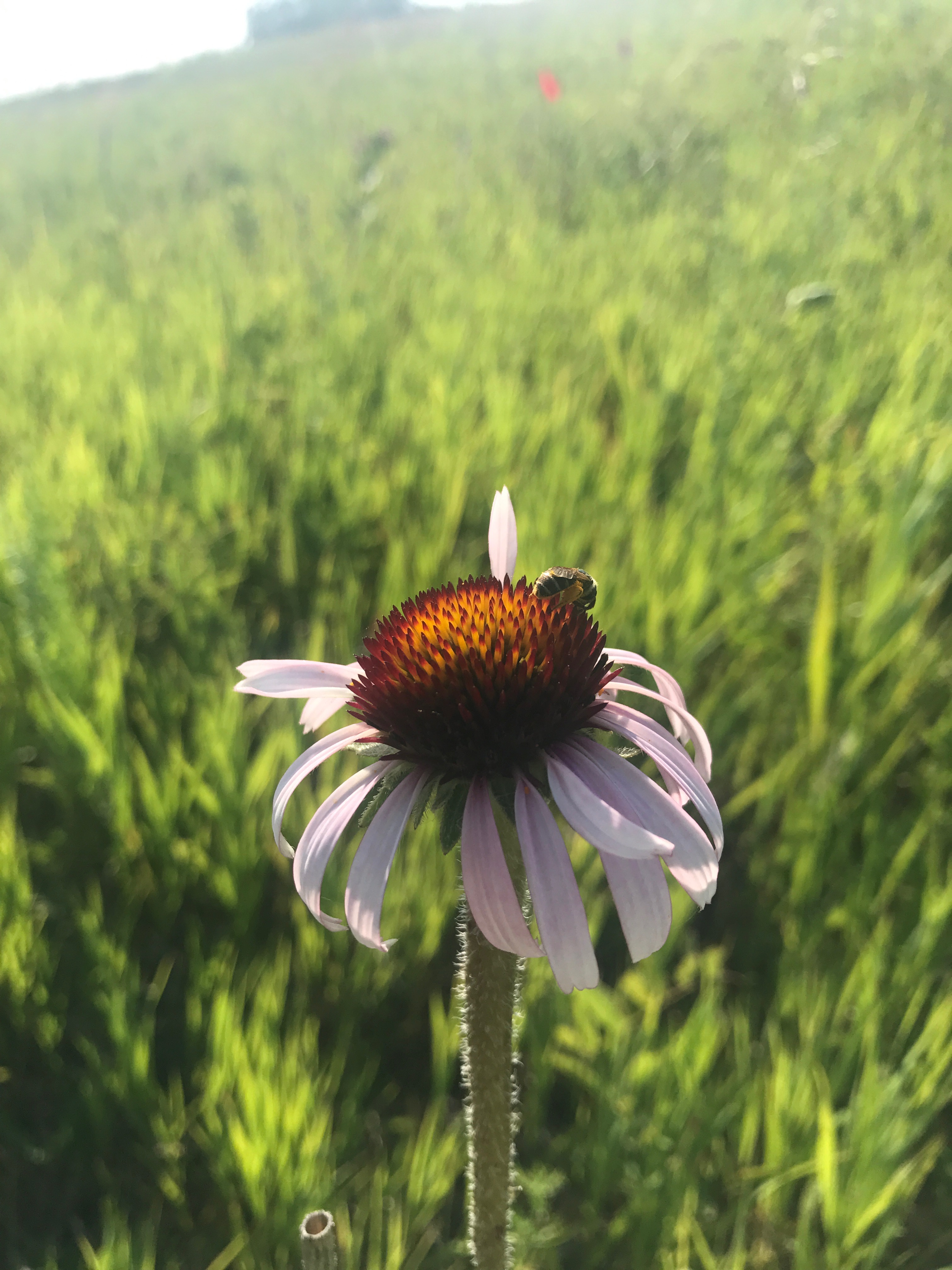
Measuring the reproductive success of an Echinacea angustifolia head gives insight into the fitness of the individual. In remnant populations, we measure reproductive success using two methods: style persistence and seedset. Seedset is the proportion of all seeds that are viable in an Echinacea head, and is measured in the lab after heads have been harvested. Style persistence is a fitness measure that can be taken during the field season. Styles, the showy female reproductive structures that emerge from every floret in an Echinacea head, shrivel within 24 hours if they receive compatible pollen. Keeping track of how many styles shrivel and how many persist can give us a sense of the reproductive success of that head without any lab work.
Year: 1996
Location: Roadsides, railroads and rights of way, and nature preserves in and near Solem Township, Minnesota.
Overlaps with: flowering phenology in remnants, mating compatability in remnants
Physical specimens: 121 harvested heads, currently at the Chicago Botanic Garden
Data collected:
- Style persistence data for each flowering head, collected three times per week, stored in remData
- Dates and identities of harvested heads, stored on paper datasheets entered electronically into richHood
GPS Points Shot: A point for each flowering head, stored under PHEN and SURV records in GeospatialDataBackup
Products:
You can find out more about reproductive fitness in the remnants and read previous flog posts about it on the background page for the experiment.
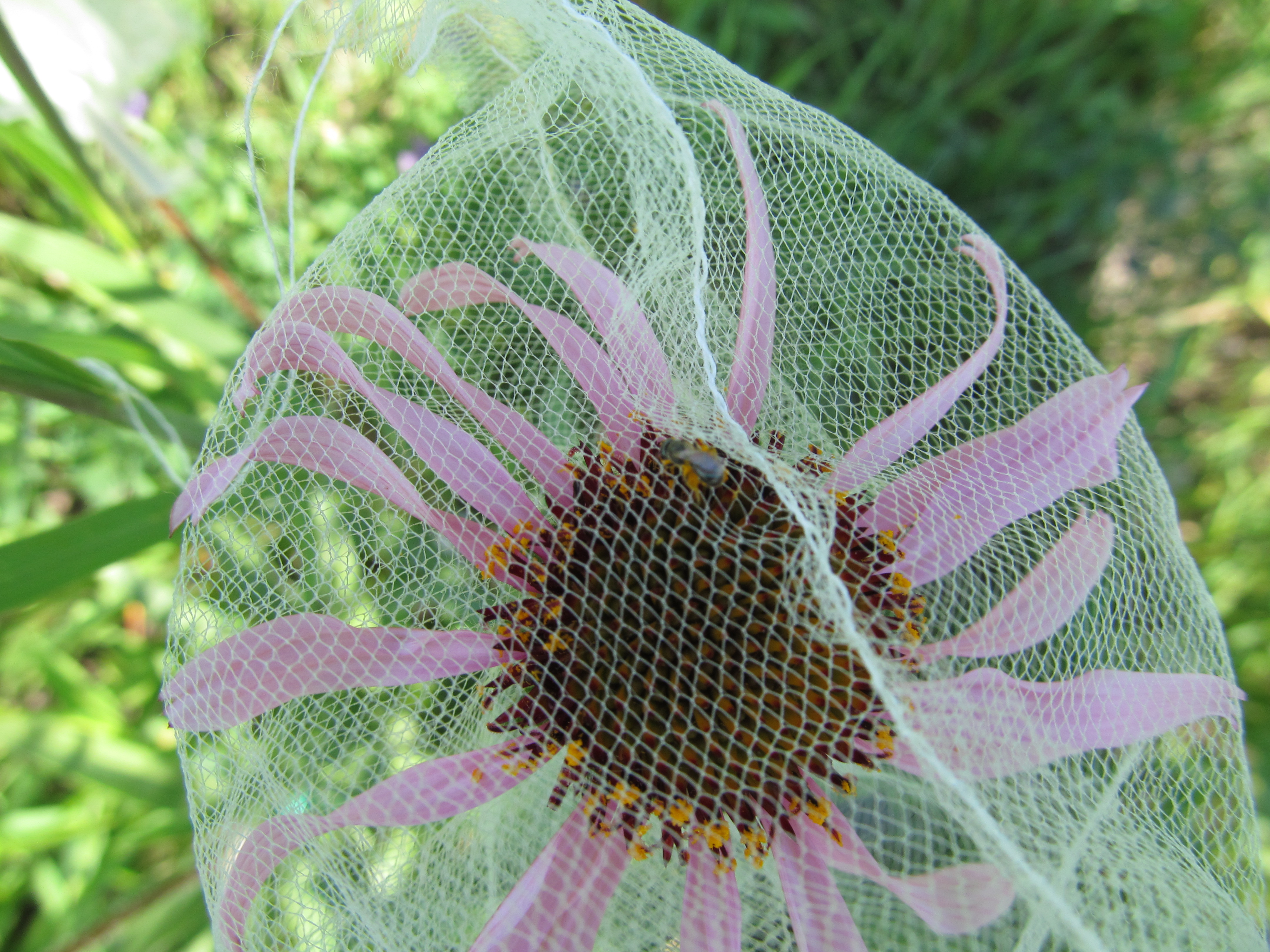
 Echinacea head with pollinator exclusion bag. Does receiving the maximum amount of pollination vs. no pollen at all affect a plant’s longevity or likelihood of flowering in subsequent years? We are trying to find out in this long-term experiment, but flowering rates have been so low in the past few years we are not learning much.
This summer, only three plants flowered of the 27 plants remaining in the pollen addition and exclusion experiment. We continued experimental treatments on these flowering plants and recorded fitness characteristics of all plants in the experiment. Of the original 38 plants in this experiment, 13 of the exclusion plants and 14 of the pollen addition plants are still alive.
In this experiment we assess the long-term effects of pollen addition and exclusion on plant fitness. In 2012 and 2013 we identified flowering E. angustifolia plants in experimental plot 1 and randomly assigned one of two treatments to each: pollen addition or pollen exclusion. When plants flower in subsequent years they receive the same treatment they were originally assigned. Because flowering rates have been so low in 2016 & 2017, differences in flowering due to treatment are not detectable.
Start year: 2012
Location: Experimental plot 1
Physical specimens: We harvested three flowering heads from this experiment that will be processed with the rest of the experimental plot 1 heads to determine achene count and proportion of full achenes.
Data collected: We recorded data electronically as part of the overall assessment of plant fitness in experimental plot 1. We recorded dates of bagging heads and pollen addition on paper datasheets.
You can find more information about the pollen addition and exclusion experiment and links to previous flog posts regarding this experiment at the background page for the experiment.
 Aphids on an Echinacea leaf This summer Team Echinacea continued adding and excluding aphids to plants in the experiment that Katherine Muller started. In 2011, Katherine Muller designated a sample of 100 Echinacea plants in experimental plot 1 for aphid addition or removal. The presence or absence of these aphids was maintained by team members once a week in the summer of 2017, for a total of 7 weeks from early July to mid August. We maintained addition on 31 plants and exclusion on 30, for a total of 61 plants. Will Reed set up a data entry system where we could enter data twice from the paper sheets and check for data-entry errors. In early October, Lea Richardson and Tracie Hayes recorded signs of senescence in the leaves of treatment plants. This data can be combined with data from our common garden measuring data to explore the richness of the Echinacea-aphid relationship.
Aphis echinaceae is a specialist aphid that is found only on Echinacea angustifolia. Read more about this experiment.
Start year: 2011
Location: Experimental Plot 1
Overlaps with: Phenology and fitness in P1
Data collected:
- Aphid counts for each treatment plant on each observation day, on paper
- Aphid counts recorded in csvs, on the teamEchinacea2017 dropbox
- Leaf senescence data, recorded on paper
- Initial and final assessment of aphid counts on treatment plants, recorded on paper
- Aphid counts also included in p1 measuring data
Products:
- 2016 paper by Katherine Muller and Stuart on aphids and foliar herbivory damage on Echinacea
- 2015 paper by Ruth Shaw and Stuart on fitness and demographic consequences of aphid loads
- 2015 poster by Daniel Brown and Kyle Silverhus (Lake Forest College) on achene and seed set differences on treatment plants
You can read more about the aphid addition and exclusion experiment, as well as links to prior flog entries mentioning the experiment, on the background page for this experiment.
This year we monitored the original 28 C. hillii rosettes at Hegg Lake WMA to check the fitness and persistence of our original individuals/population. Presently, 10/28 rosettes remain, all as non-flowering basal rosettes. For each rosette, we measured the length of the longest axis and the corresponding perpendicular axis. No burns were conducted this year.
This experiment assesses effects of fire on the fitness of Cirsium hillii (Hill’s thistle) plants at Hegg Lake WMA. Like Echinacea, C. hillii inhabits dry prairies, but Hill’s thistle is listed as a Species of Special Concern in Minnesota and little is known about how it responds to fire. Burn and non-burn units were created prior to an experimental fall burn conducted by the Department of Natural Resources (DNR) in 2014. That year, we mapped 28 C. hillii rosettes (basal and flowering).
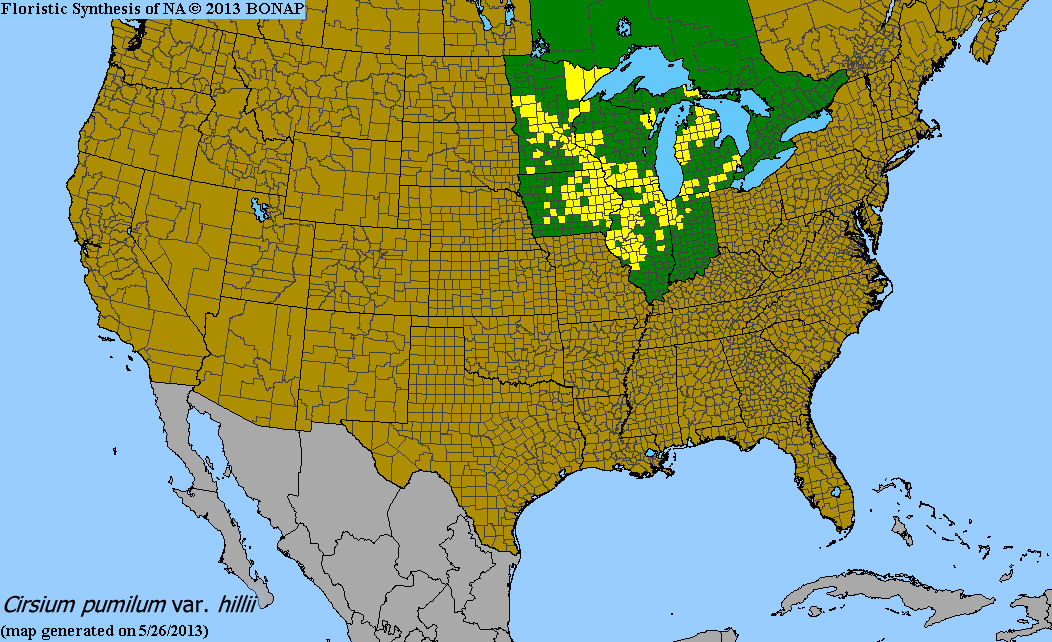
 The distribution of Cirsium hillii, a rare endemic to the Great Lakes region. Last year was also a non-burn year, although of rosettes found, there were three flowering rosettes. It’s challenging to determine cases of mortality with this species, since C. hillii is clonal, and it’s possible that each rosette is not a unique individual.
In 2015, Abbey White found that there was only one or two individuals in our C. hillii “population!” We don’t know of any other C. hillii populations in Douglas County. We are possibly monitoring the last individual in the area.
You can find out more about Cirsium hillii fire & fitness and read previous flog posts about it on the experiment background page.
Over the next several weeks we are going to post updates on all the projects we worked on during summer 2017. Whew we did a lot–it might take a couple of months!
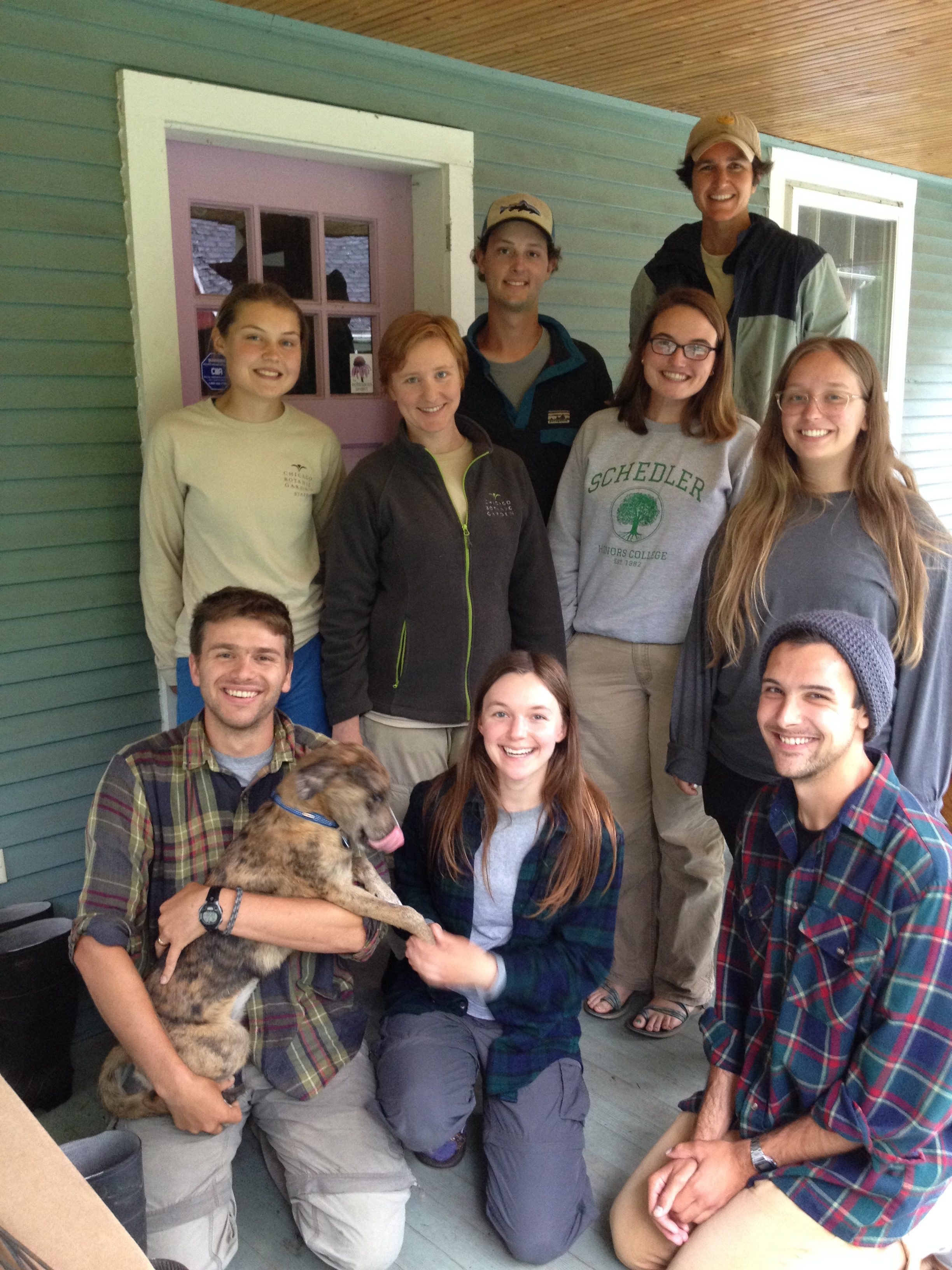
 Team Echinacea summer 2017 Put a bookmark on our update page to stay caught up. We’ll post all updates on that page.
Two new projects to look out for are Richardson’s “Liatris and Solidago phenology” and “Pollinators on roadsides.” Also, we’ll recap Barto’s & Braker’s REU projects. Stay tuned!
We didn’t work on the project Fire & flowering at Staffanson Prairie Preserve
or on Mating compatibility in remnants this summer. We didn’t do the first one because no burns were conducted at the preserve before this growing season. We contemplated assessing compatibility for another year, but there seemed to be more things that we wanted to do than there were people and time to do them.
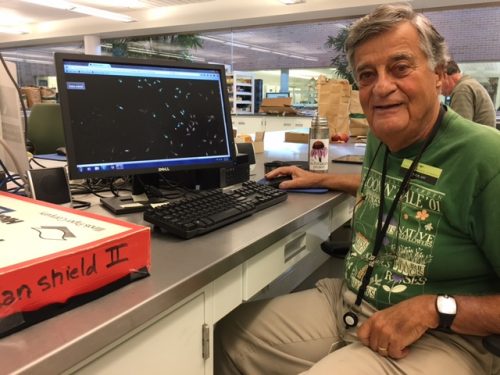
Art is spending the morning today counting achenes at the computer. One great thing about counting achenes is you can still tell stories while you’re doing it, and Art has quite a lot of funny and interesting stories about his earlier days volunteering at the garden.
 Art counting Echinacea achenes in the lab
Today Char and Susie have been cleaning Echinacea heads from 2016. Char is interested in Art’s idea of using the seed counter to count out achenes once they have been cleaned. She wants to know if the seed counter will be able to count achenes that come from small heads that have tons of tiny achenes. An experiment is in the works!
Counting the total number of achenes provides important information regarding seed set to access the female fitness.
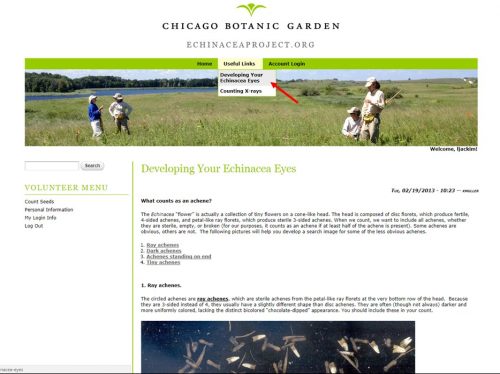
Before you start to count achenes you may want to get adjusted to looking at them. Under the tab “Useful Links” on the echinaceaproject.org/lab page you will find “Developing Your Echinacea Eyes” click on it to get familiar with the different types of achenes you may see. Achenes range from rays to tiny achenes so it’s important to make sure you know what to count( Figure 1).
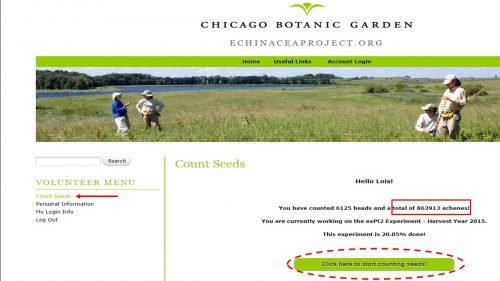
 Figure 1. Familiarize yourself with what different achenes look like The “counters” (people who count achenes) use the scanned image of the achenes to count how many achenes come from a single head. This is done by logging on to the echinaceaproject.org/lab website to access the page to count seeds; a detailed protocol is available in lab. All volunteers and staff will need a username and password for this website to be set up in advance. Once logged on to the website, click the link under the side Menu entitled “Count Seeds” (Figure 2).
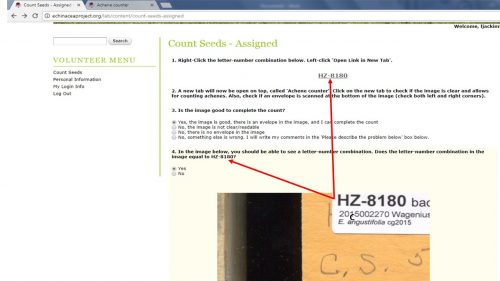
 Figure 2. Lois (the Achene Queen) has counted 862,912 achenes and counting… This will then lead you to another screen where you will have information on the progress of the project you are working on as well as the number of seeds you have counted. The example shows our Achene Queen Lois’ stats, she has counted well over 800,000 achenes! Start counting seeds by clicking on the green button aptly titled “Click here to start counting seeds!” (Figure 2). The next page will provide you with a set of questions to answer regarding the head from which you will count seeds. The letno (Letter/Number combination) of the head will be provided and you should open the image in a separate tab. Once you see the image is of good quality you will be shown the envelope that should have the same letno combination (Figure 3).
Figure 3. Make sure you are counting achenes from the correct Echinacea head! At times there is nothing in the image in question four but if the envelope in the scan you opened matches the letno the question asks about then you should mark “yes” they do match (Figure 4).
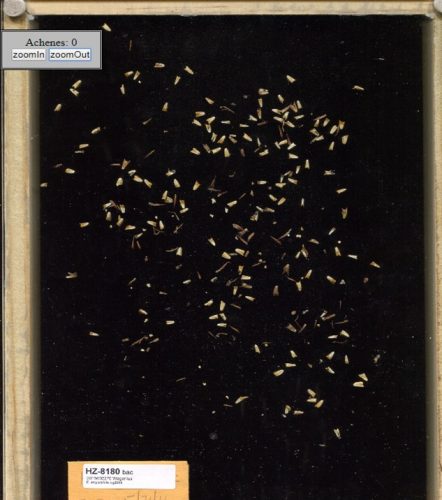
 Figure 4. Full image of achenes with the envelope and LetNo in lower left corner
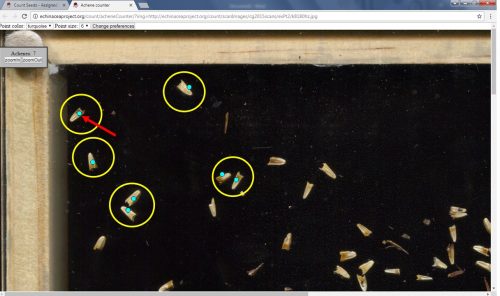
In the tab with the scanned image you will see a floating counter. When you click on an achene you will see a cyan dot appear and the number of dots, i.e. achenes, will be recorded (Figure 5). You can get rid of dots by double clicking on them and the counter will adjust to a new total.
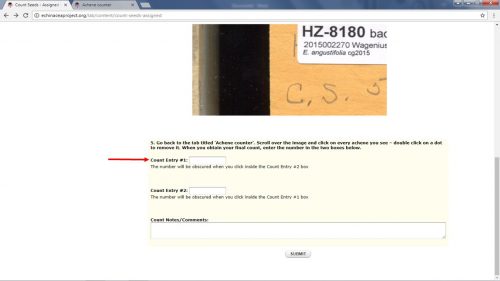
 Figure 5. Circled achenes that have been counted. Red arrow points to a cyan dot that the floating counter in upper left corner tracks. Once you have counted all the achenes the total should be recorded in question five (Figure 6). Once you are done with that head you can submit the information and you will be asked if you want to count another head.
Figure 6. Return to the other tab and fill in the count information Now you can start counting like the Achene Queen Lois!
Yesterday was my last day with the Echinacea Project and on Tuesday, I presented what I worked on this summer. Using R Studio, Google Earth, and Soil Web, I learned a lot about programming and soil in general. After plotting the plant points on Google Earth, I found 9 different soil codes in 8 sites. The most common type was BaC2 with 51% of the plants followed by LeF with 20%. These two soils were both classified as well-drained and have slopes or hills. However, the horizon of the main series of soil they are each made up of is quite different. I included my powerpoint with some of the information I found. Soil is a very large topic, so I am hoping to continue learning!
I had a blast this summer learning and working with everyone! Thanks again!!
soil types in Echinacea
P.S. Plexipus and Angustus both transformed into beautiful butterflies!:)
Flog post for August 29th, 2017.
This morning we broke into two teams to do flowering demography at three sites. The team I was on went to Around Landfill. Normally the cows at Around Landfill stay unseen in a different part of their pasture, but today a few of them cam right up to the fence. Maybe they were telling us to stay away from their calves? We combed the site for any Echinacea that had flowered that previous year, and while we’ve been visiting the site often to collect phenology data, we still managed to find a few previously missed flowers. Both groups converged on the On 27 site after an hour or two and collaborated to sort through the sumac and uncover the Echinacea there.
After lunch, the majority of the team went to harvest Echinacea heads and Bouteloua grass. The county has recently been cutting roadsides in preparation for winter, so we thought we had to act fast to snap up the Bouteloua seed. As it turns out, the mower didn’t reach us yesterday, but we still managed to gather another gallon of seed to spread on P1 after the fall burn.
In an effort to spice up head harvest, we tried to communicate the head I.D.s via the NATO phonetic alphabet. We decided at one point to make some more creative changes to the typical code.
A-Alpha
B- Bravo
C-Charlie
D-Dingo
E-Echo (echo, echo, echo)
F-Foxtrot
G-Gopher
H-Haute
I-Indigo
J-Joey
K-Kangaroo
L-Linda
M-Mancy
N-Norbert
O-Oscar
P-Papa
Q-Quebec (said in a heavy Irish Accent)
R-Roscoe
S-Shwifty
T-Tango
U-Uniform
V-victor
W-whiskey
X-Xylophone or Xray (depending on how confused you are on the spelling of Xylophone)
Y-Yankee
Z-Zulu (or Xylophone, don’t judge us on our spelling).
I think this adapted version is far superior to the current version, and NATO needs to update it stat.
We finished the day with a cookout at Elk Lake. The Andes crew supplied chocolate cake and some CSA veggies, and Stuart supplied vegetables from the garden and cooked. The lake was absolutely beautiful, and everyone went home happy and full of food.
|
|