Today begins the field season! We had many activities planned to get everyone off to a good start for a productive and learning-filled summer.
introductions
safety training
getting gear
visiting sites
lunch
mapping orientation
directed observations & flogging
scheduling rest of week
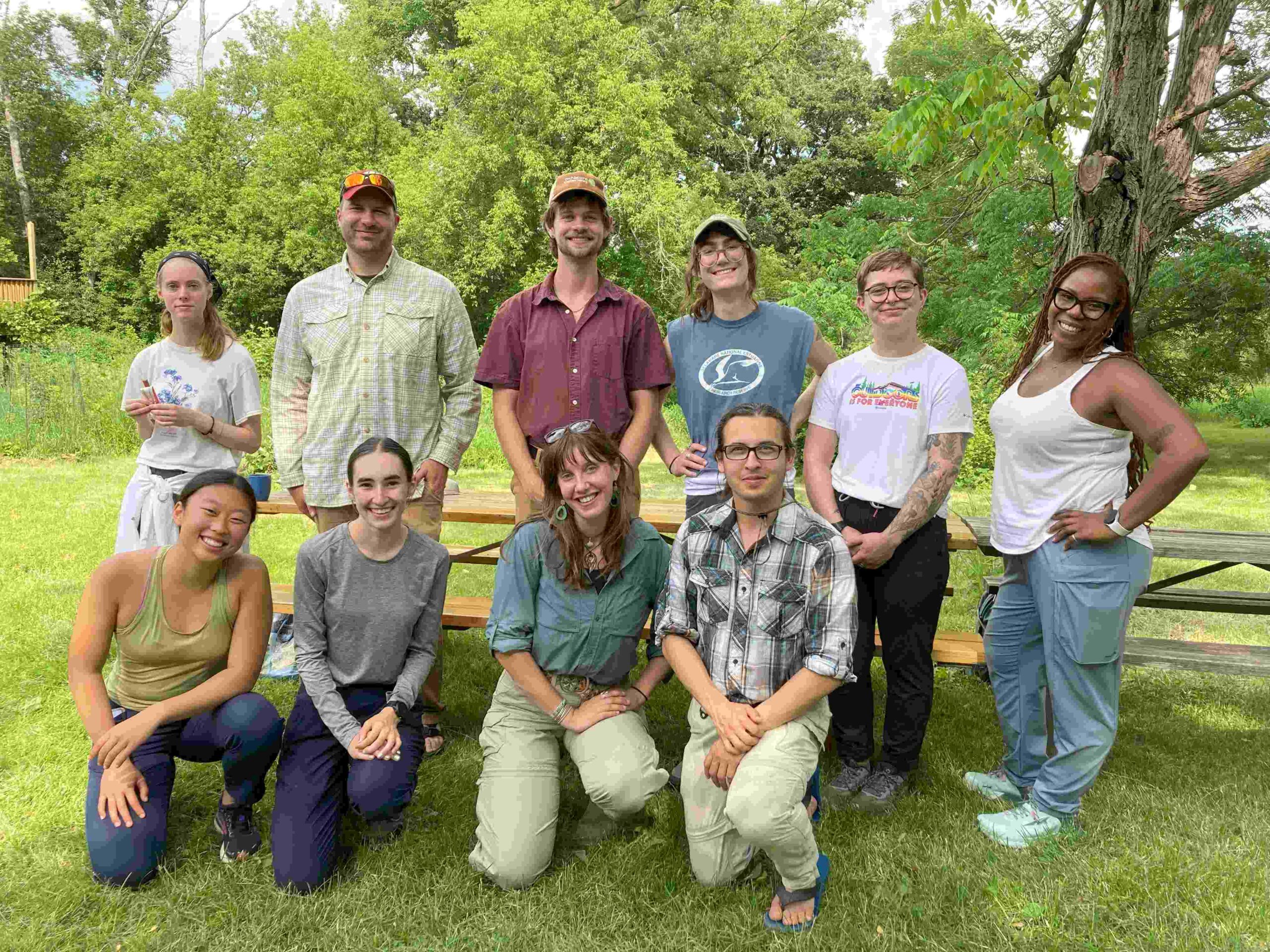
We wrapped up with watermelon and a group photo:
First row: Ning, Hailey, Abby, Liam. 2nd row: Emma, Jared, Ian, Wyatt, Maddie, Brittany. Not pictured: Zach & Elise will start next week because their schools run late. Ruth will come up Thursday or Friday. Stuart took the photo.
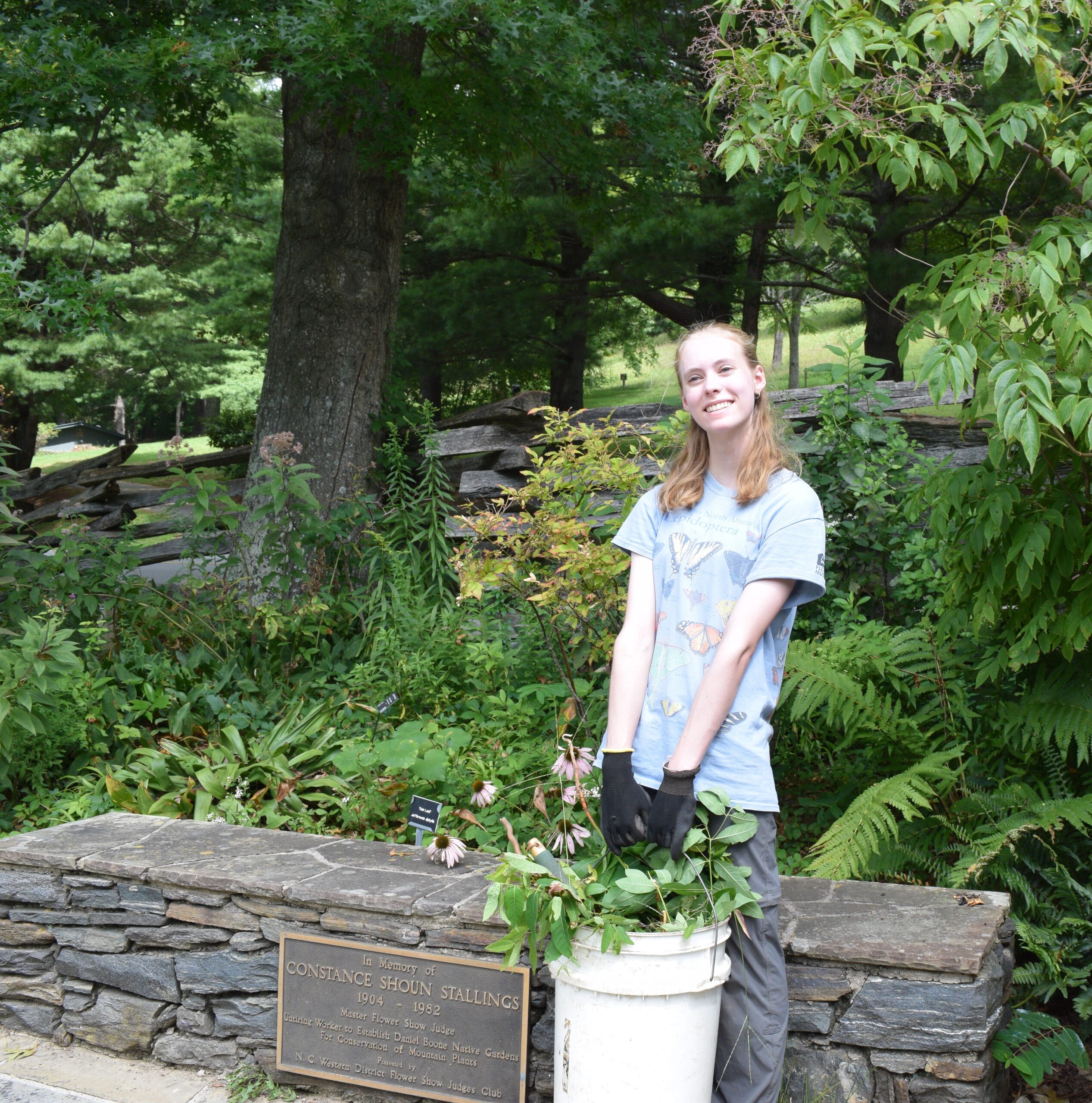
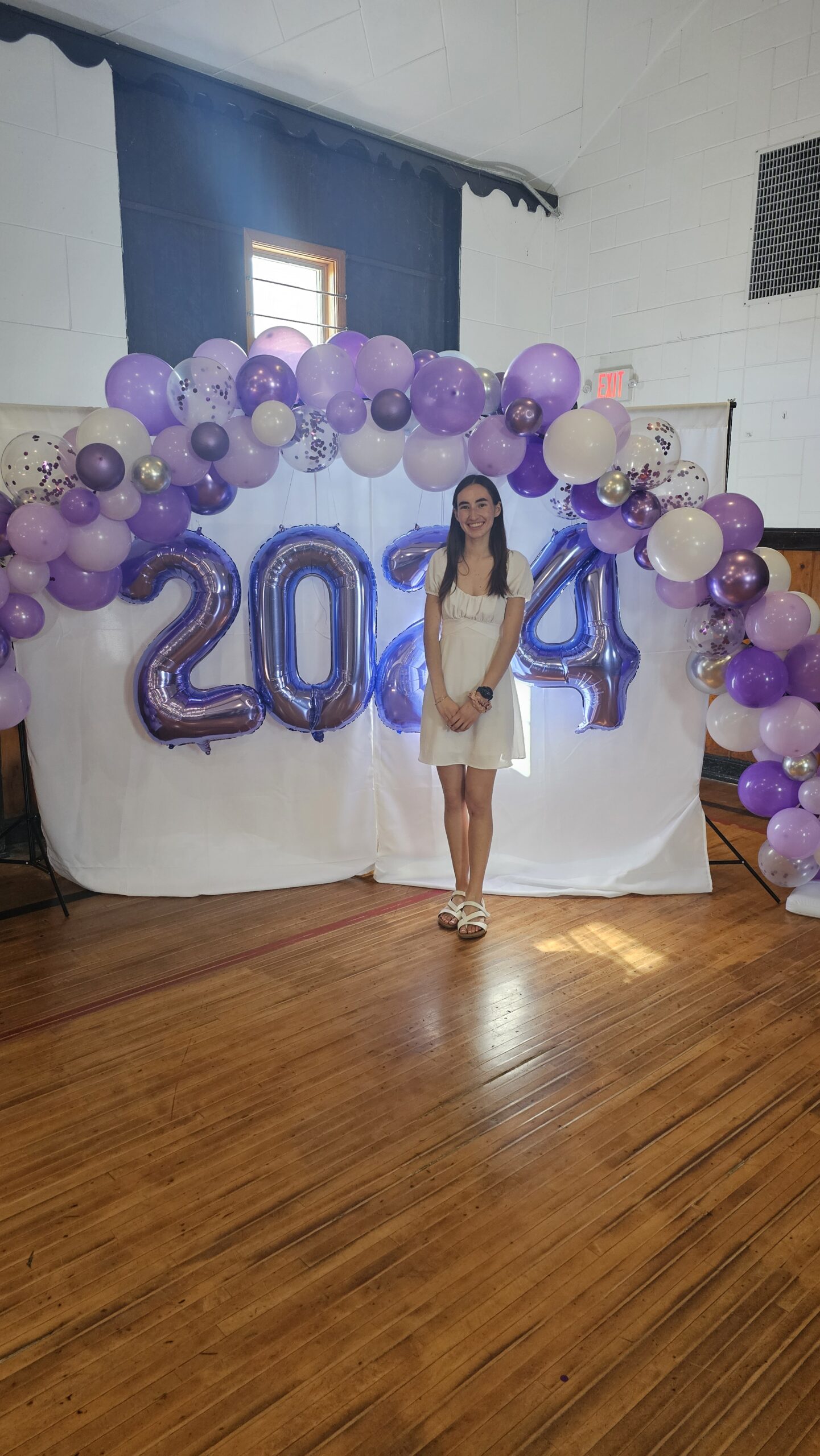
I graduated from Smith College this spring with a B.A. in Biology and concentration in Biodiversity, Ecology, and Conservation.
Pronouns: any pronouns
Research Interests
I am interested in botany and entomology, particularly plant-insect interactions such as pollination and herbivory. I am also interested in taxonomy and biodiversity and enjoy learning about organisms that fill unique biological niches.
Statement
I am from Boone, North Carolina and grew up exploring the biology of the southern Appalachian mountains. I love hiking, hammocking, and spending time in the woods. I also enjoy playing music and painting.
I graduated from Alaska Pacific University in 2022 with a B.S in Marine and Environmental Science with a concentration in Ecology and minored in Mathematics for Environmental Science. Currently I am an incoming graduate student at Northwestern University / Chicago Botanic Garden, pursuing a M.S. in Plant Biology and Conservation starting this fall.
Pronouns: She/They
Research Interests
I am very much interested in restoration ecology and land management. Prairies have always had a special place in my heart as my mom worked to restore the 20 acres of prairie surrounding my childhood home. My biggest interest is looking into plant-pollinator resources post fire.
Statement
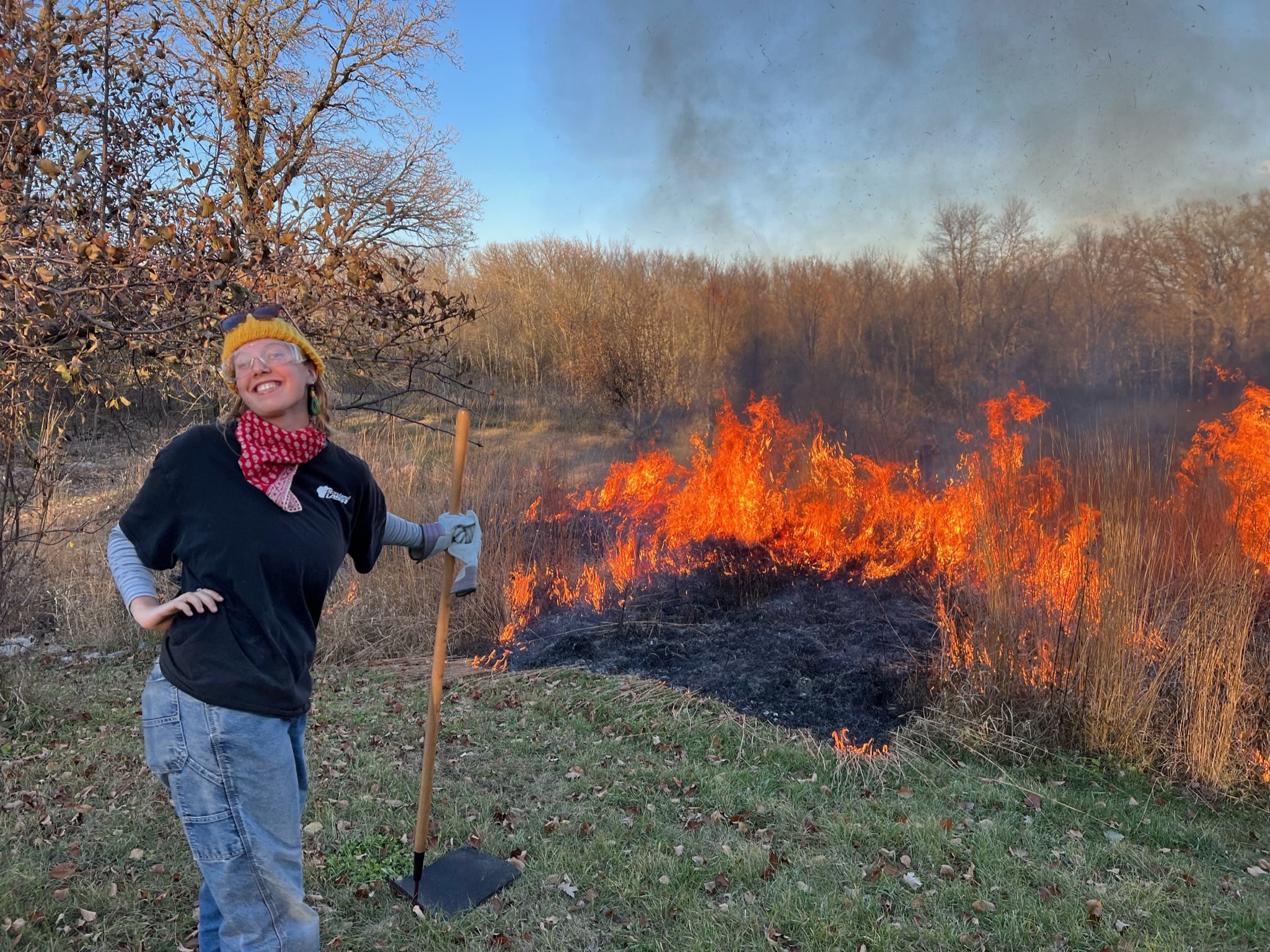
I grew up in southeast Iowa, but have been living in Illinois for the past year and half. While there I worked for a land management company specializing in prairie restoration, invasive species removal, commercial herbicide application, and prescribe fires with many of the projects being contracted by Illinois Department of Natural Resources.
When I’m not working I love to be paddle boarding, hammocking, cooking a large meal, reading with my toes in the grass, or snuggling my 5-year-old tuxedo cat named Mo.
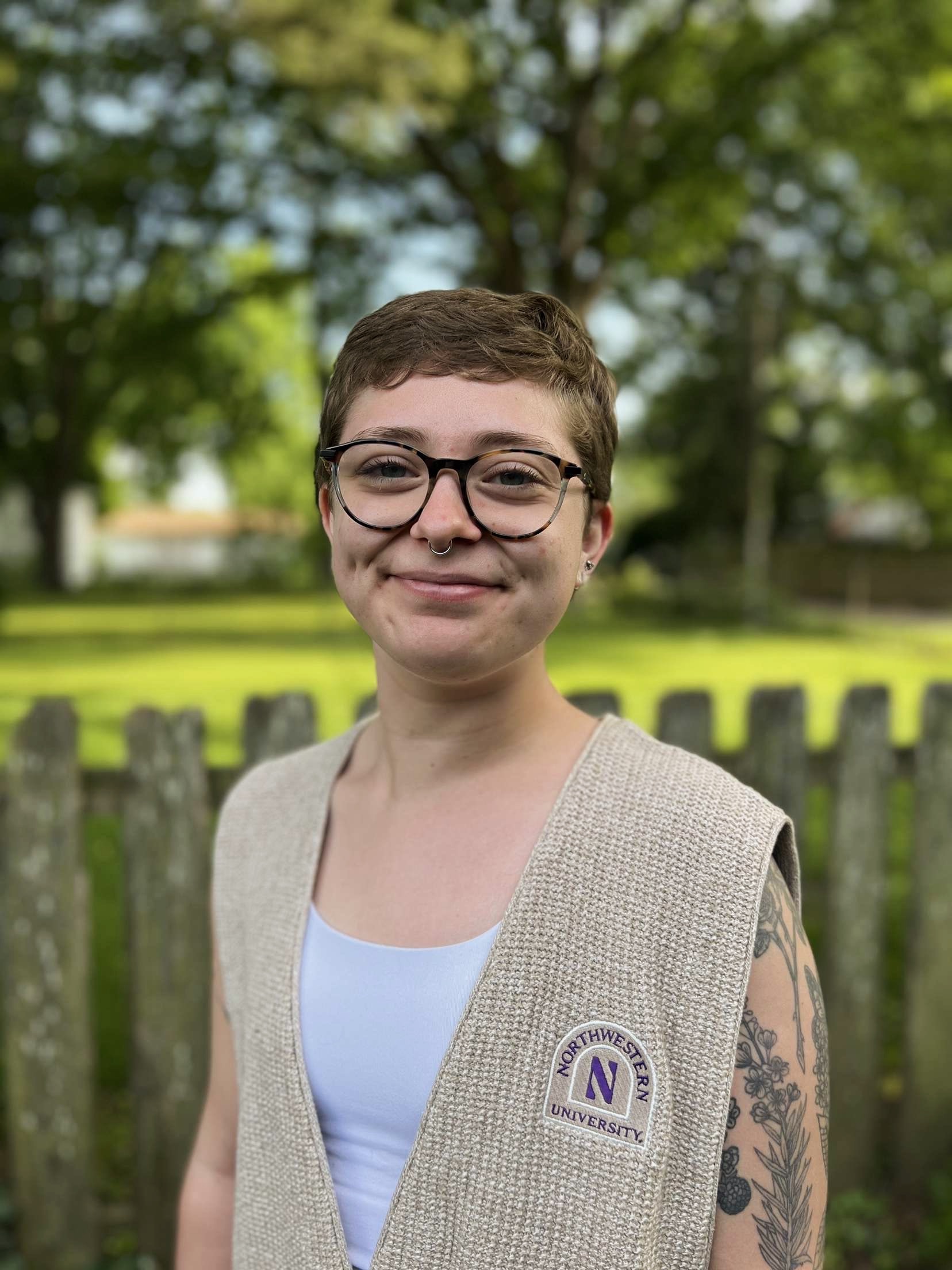
I did my undergrad in journalism and environmental science at Northwestern University, graduating in 2023. I also did my master’s at Northwestern, and defended last Tuesday (June 4, 2024)! This summer I’ll be finishing up my revisions to get my degree at the end of August
Pronouns: She/her
Research Interests
My thesis focused on the heritability of fire-stimulated flowering in Echinacea, which I think is pretty neat. I enjoyed using our awesome experimental plots to look into how parent and offspring plants might be behaving similarly (or not!). And of course, fire is super neat. As time allows, I’d love to expand upon my thesis work to make it more robust, including looking into selection of phenotypes, phenotype expression of plants in remnants, comparing remnants, and more.
Statement
I’m from Chanhassen, MN, but have spent the last 5 school years in and around Chicago. I feel lucky to continue to spend my summers up in Minnesota, as I love the prairie and the lakes and the people. My favorite activity once I get home from work is cooking with friends, and I hope to do lots of that this summer. I’m also looking forward to fishing with folks on the crew, and hopefully taking home the catch and making a meal of it. Yum!
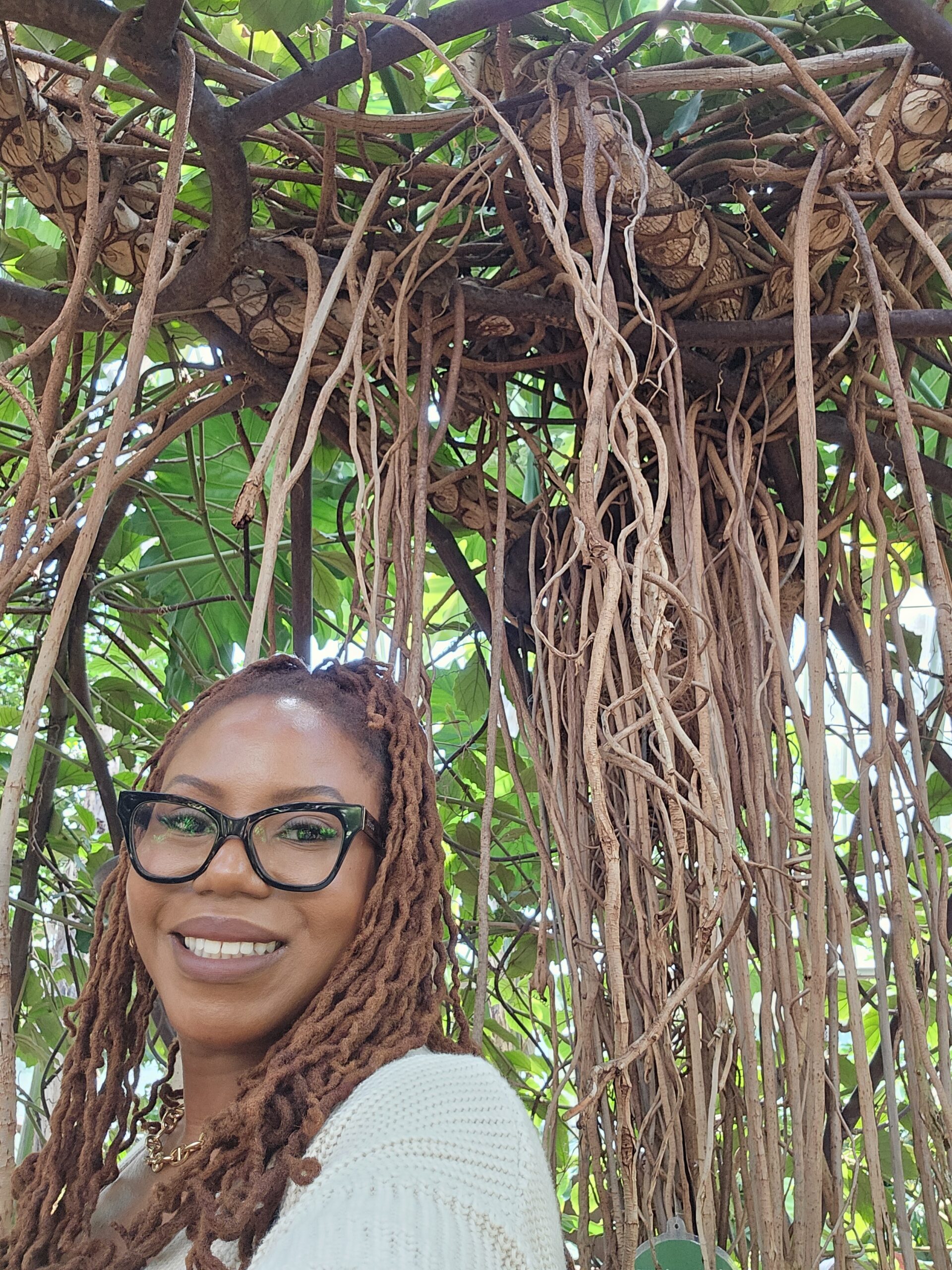
Me pondering an Echinacea (purpurea, shhh) after graduation at the Chicago Botanic Garden
I graduated from the University of North Carolina at Charlotte. I majored in Biology and minored in Environmental Science.
Pronouns: She/Her
Research Interests
I am interested in learning more about the effect of prescribed burns on pollinator species.
Statement
I am originally from Charlotte, North Carolina, and I currently reside in Dallas, Texas.
In my spare time I play a mean game of Wordle (I usually get it in 3 or less attempts). I enjoy jigsaw puzzles, reading, talking to my houseplants, and watching reruns of Star Trek. Live long and prosper.
I Graduated University of Minnesota Class in 2022 with a B.S. in Ecology, Evolution, and Behavior, and a B.A. in Classics (aka. Latin). Currently I am a graduate student at Northwestern University/Chicago Botanic Garden, pursuing a M.S. in Plant Biology and Conservation.
Pronouns: He/Him/His
Research Interests
I am interested in restoration ecology, in particular for grassland ecosystems like prairies. Bees have always had a special place in my heart, especially the ground-nesters! Much of my the data for my master’s thesis will be coming from Echinacea Project’s ENTRF study on bees and fire in prairies.
Statement
I grew up in Saint Paul, Minnesota, and remained in the area until I moved to Chicago to start my M.S. When not in the field, I like to run, climb, get on the water in any capacity, make my own kombucha, read, and hang out with my pet python!
I graduated from the University of Wisconsin-Madison in 2023 with a B.S. in Botany and Environmental Studies. Since then I’ve worked with the Echinacea Project as a research assistant and lab manager.
Pronouns: she/her/hers
Research Interests
I am interested in processes that impact mortality in plant populations, like woody encroachment. I also get to help manage our demographic database for Echinacea, and I’ve really enjoyed gaining skills in this area.
Statement
I am from Milwaukee Wisconsin and spent my undergrad years in Madison, WI where I got acquainted with some really special places that sparked my interest in prairies and plants
In my spare time I like to bake pies, read books, climb rocks, swim in lakes, and grow my collection of knitting works in progress!
As part of my recent independent study with Stuart and Northwestern undergrad Lena Parnassa this spring, I took an initial pass at analyzing the data from our 2023 emergence traps. These data are an important contribution to the broader ENRTF project, which is geared at understanding how ground-nesting bees respond to prescribed fire in prairies. This independent study enabled me to learn a great deal about database organization, coding, and collaboration between data scientists. Before we could run any of our analyses, we had to wade through quite a bit of data cleaning to ensure all our joins were functioning properly. This meant that we had to prioritize the bee analysis rather than the bycatch in our traps (millipedes, grasshoppers, and so forth), so stay tuned for more in that department! We were also working with abundance data rather than species data, as identifications of all the bees we caught in 2023 are still forthcoming. This means that some of the data points in our analysis are most likely incidental, but nevertheless, here’s a visual of what we found!
Figure 1: Mean bee catch rate by site type. Catch rate refers to the proportion of traps which had bees.
Figure 2: Bee catch rate by site. Catch rate refers to the proportion of traps which had bees.
Mean bee catch rate by burn history. Only three sites were 3 years post-burn in 2023, other burn treatments had 7-8 sites.
It looks like remnant prairies had more bees than restorations, but there’s a ton of variation across sites of the same land use type. It’ll be interesting to see what other factors may be associated with this variation, if any. Once we get those species ID’s and confer with our taxonomist, we’d like to tweak our protocol slightly going into this summer to maximize our chances of catching the bees at a given site. We’re considering stocking our traps with propylene glycol to better preserve specimens, trimming the vegetation around traps to make sure bees can find the entrance, and deploying later in the day to give foraging bees time to find their way back to their nests. Looking forward to kicking of the 2024 trapping season!
NOTE: Funding for this project was provided by the Minnesota Environment and Natural Resources Trust Fund as recommended by the Legislative-Citizen Commission on Minnesota Resources (LCCMR).
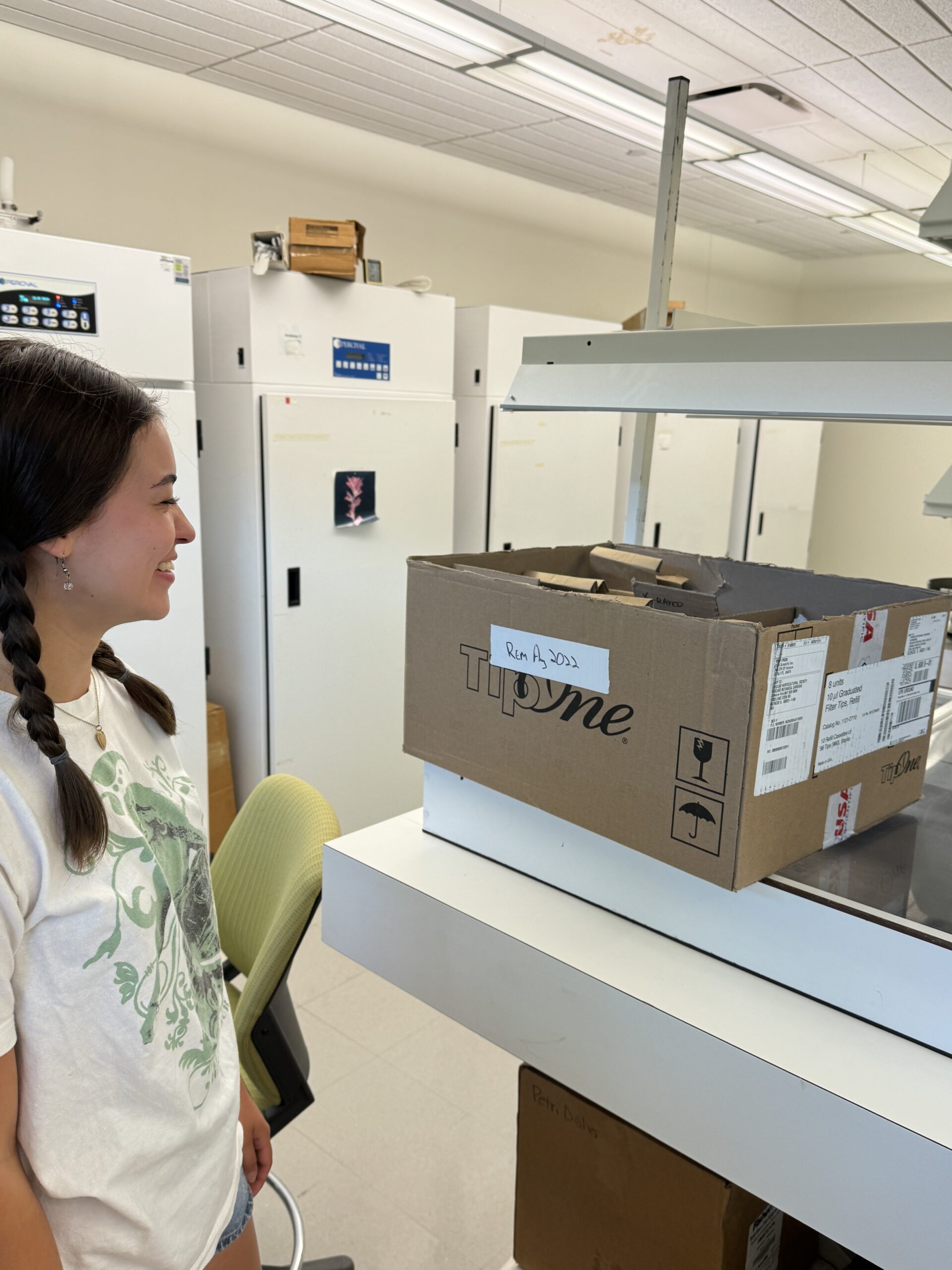
NU Work Study student, Maria, took on the task of xraying Andropongon samples for our project investigating fire’s impact on reproduction in big bluestem (Andropogon gerardii). We were about two samples in when we noticed that either this “lil box” containing samples was either very big or Maria had gotten very small.
Normal Boxes you’d find around our labMaria with giant box unlike things we commonly see