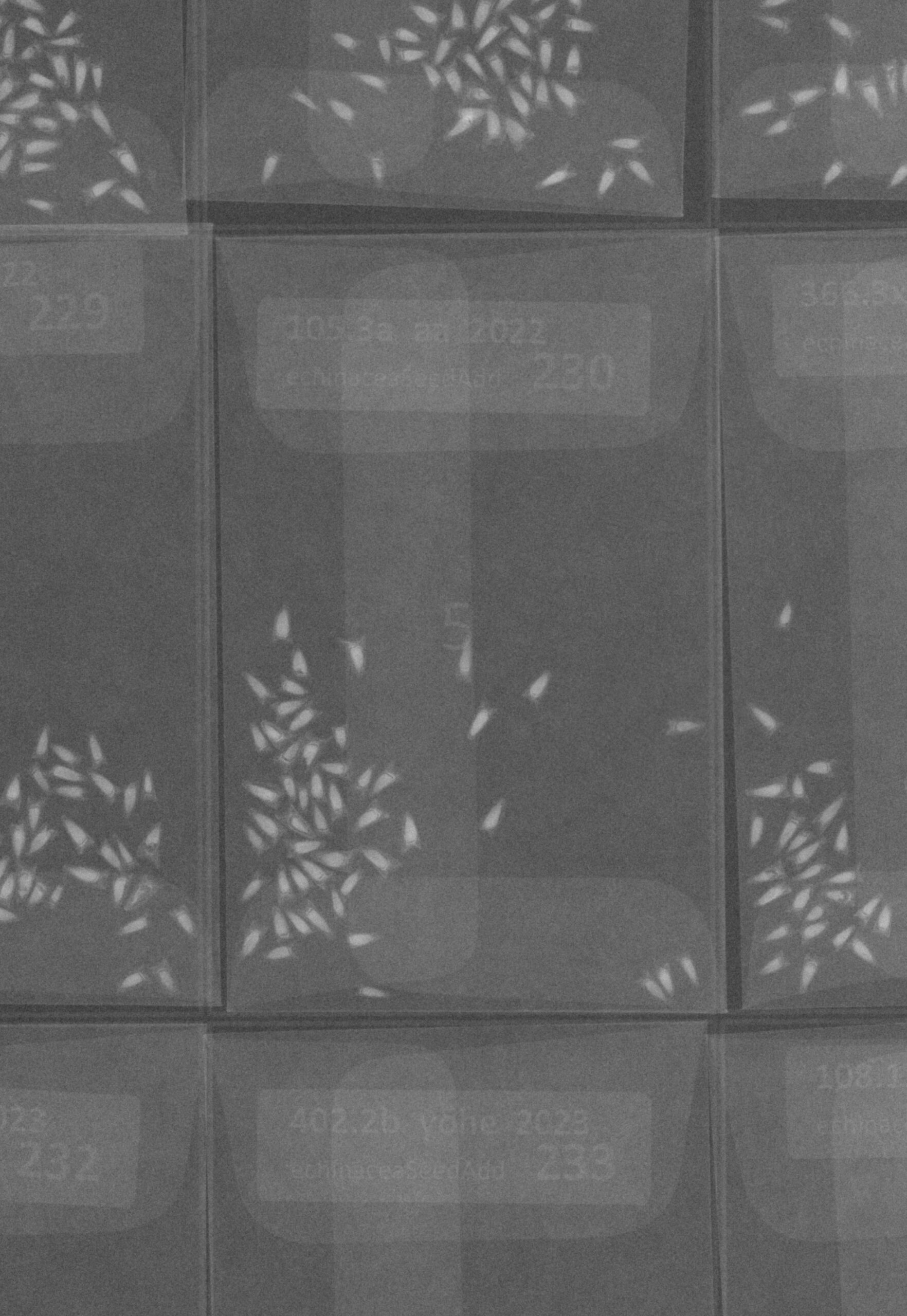
For our seed addition experiment, we want to know exactly how many seeds we planted in each 1 m transect. Each transect got seeds from one envelope. Before planting, we took xrays of the fruits in the paper envelopes. With minimal processing, the radiographs look good! We have a batch of 251 images to classify. This sounds like a job for Allen Wagner aka “the Count” (of Achene County).
Radiograph of Echinacea fruits in envelope 105.3a /230. Other partial envelopes are visible on the margins.
We used the column blower and other techniques to remove empty fruits. We aimed for about 50 seeds per envelope. How many do you count?
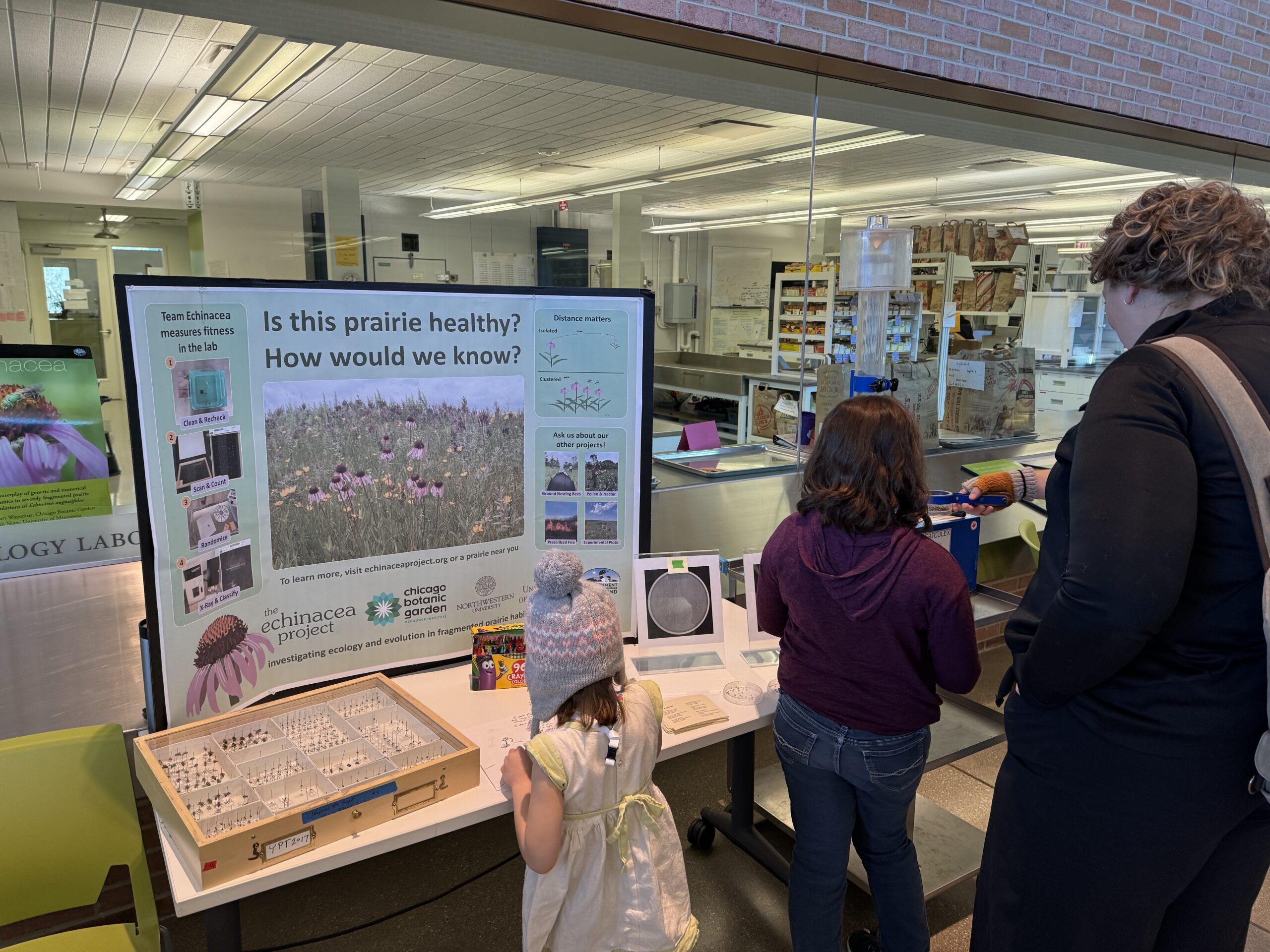
Chicago Botanic Garden has a new logo! To celebrate its launch, we got to relive the good old days of science fairs. Stationed in the atrium of the plant science center, Wyatt, Stuart, and I chatted with all kinds of people about the work we do!
“Is this prairie healthy?” “How would we know?” These questions helped us engage visitors with discussions on reproductive fitness of populations in fragmented habitats. As Wyatt and I participate in more events like this, we are learning a lot about how to be more effective communicators and how to engage others.
Many curious eyes perused a case of bees from our yellow pan trap experiment
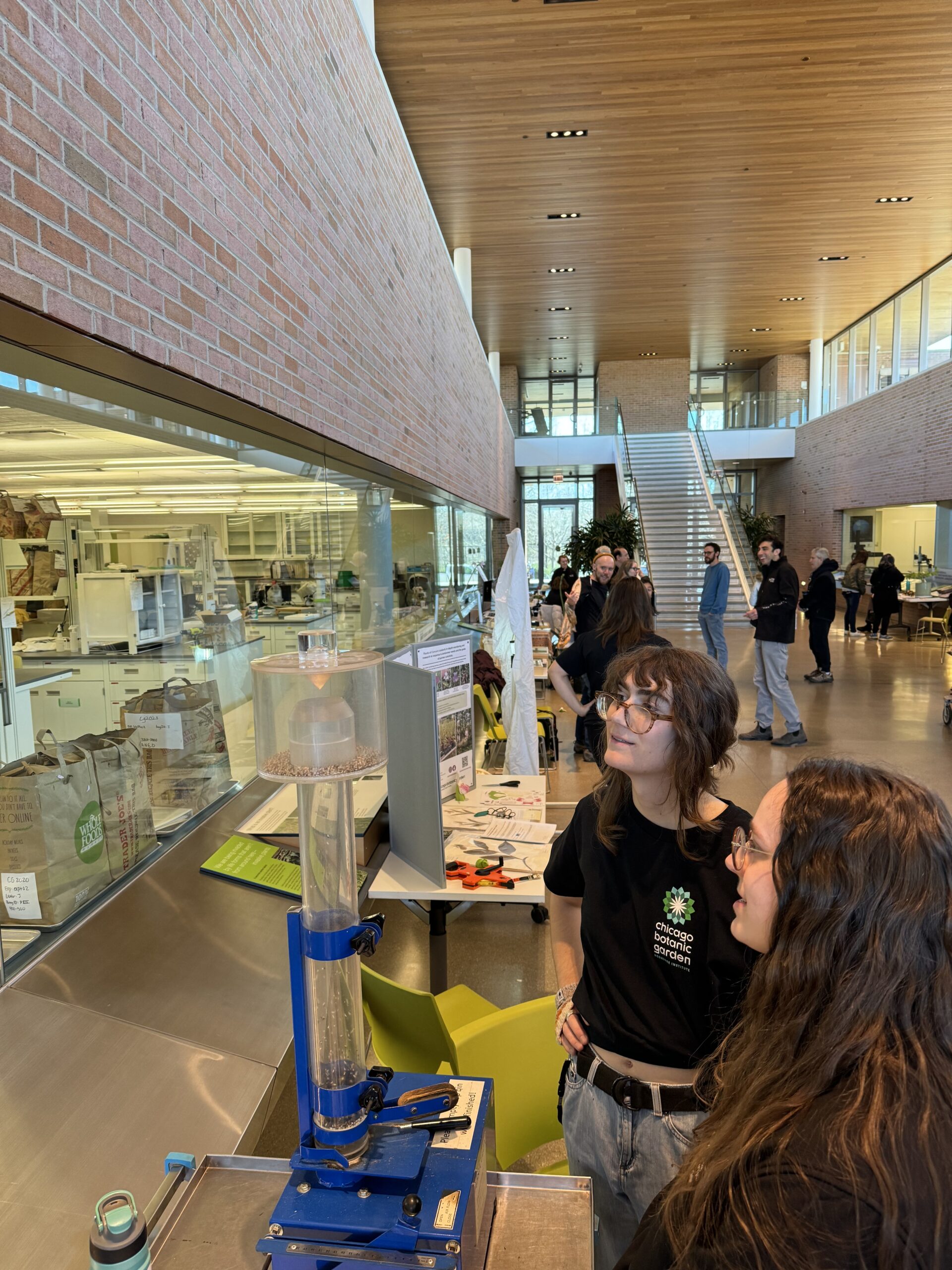
This event was also a great excuse to pull out the column blower, a crowd favorite. Wyatt, donning a t-shirt with our department’s new logo, demonstrated how we use it to separate full and empty achenes.
Today is pi day and we are posing some of our most burning questions for consideration. Here are a few:
How far could you go if you multiplied the number of bb points in our study area by pi? If you took the actual length of the Pomme de Terre River and divided it by its length as the crow flies, would it be pi? If we flipped a coin pi times, would the number of heads be equivalent to bee abundance in a square meter?
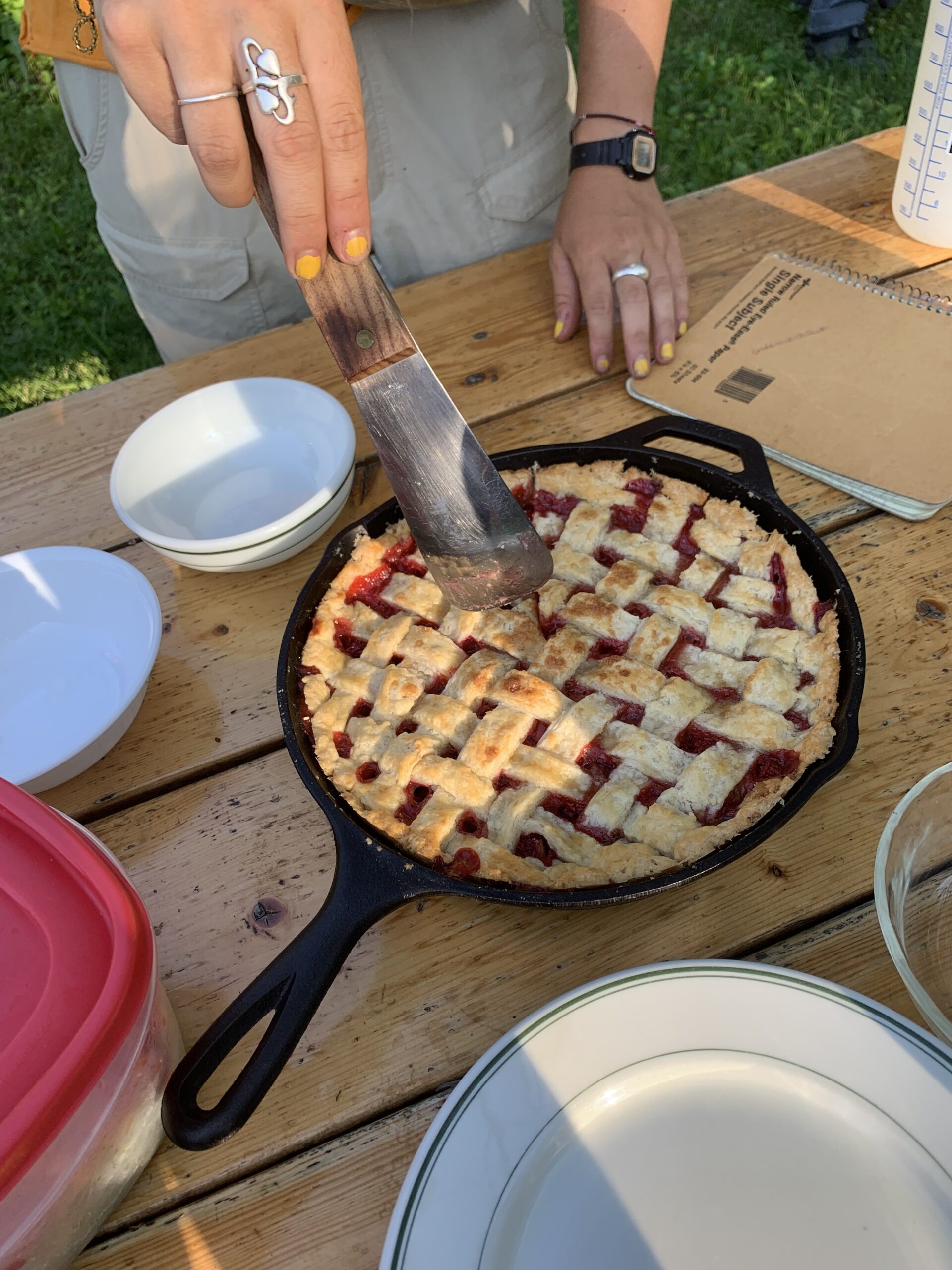
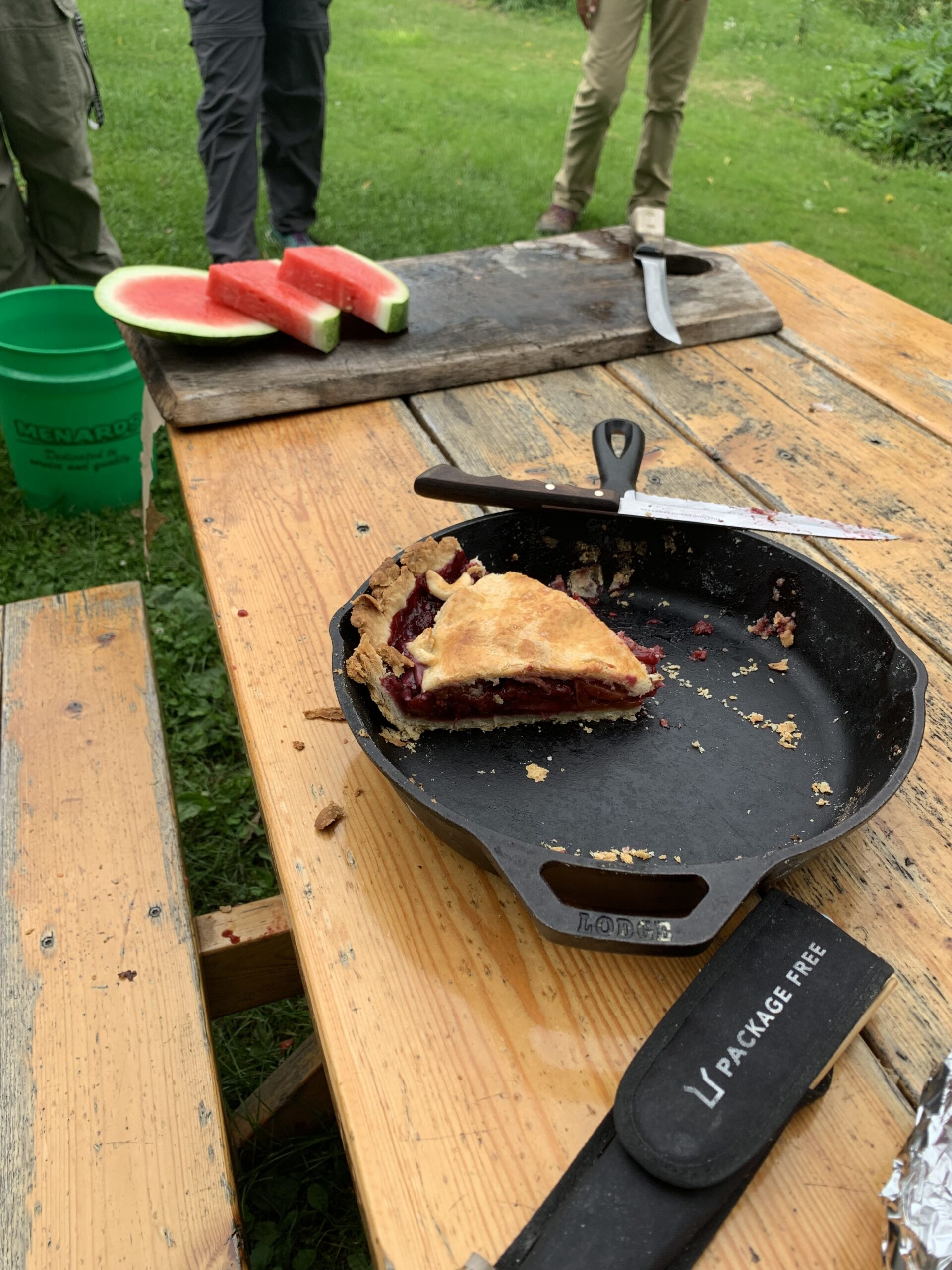
Importantly, if you give members of team echinacea a pan, when does pi equal the number of pies made during the field season?
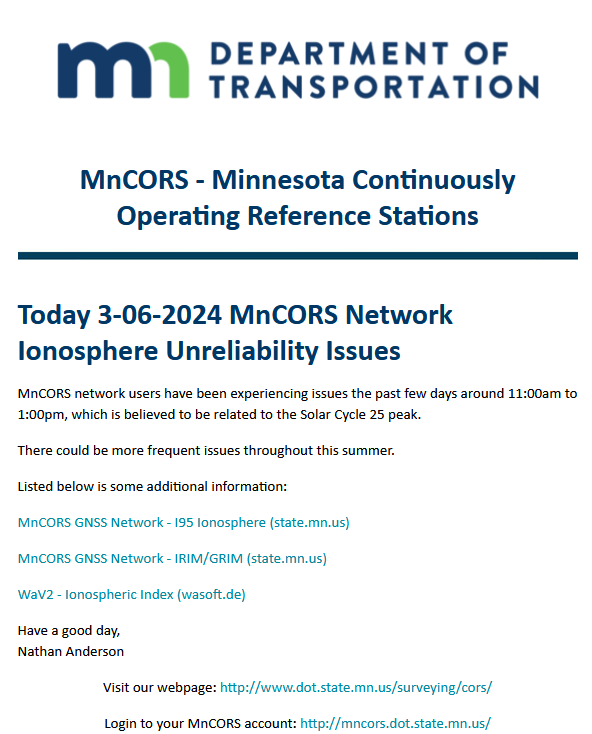
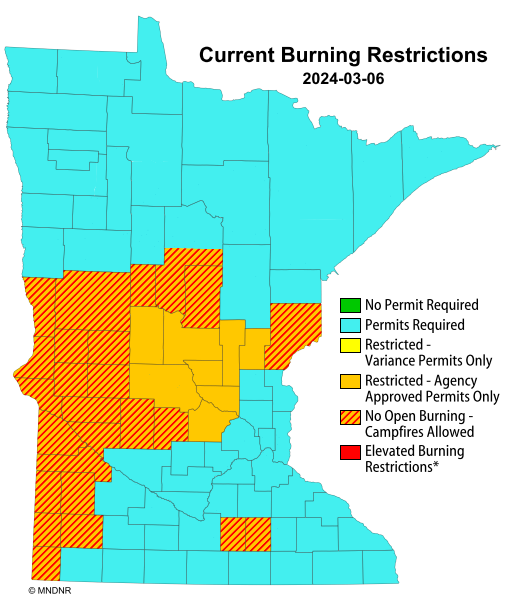
Good grief! As if regular old atmospheric inclement weather wasn’t enough to worry about, now we can worry about inclement ionospheric weather too! The fire season appears to be coming early and strong, which may make it difficult to conduct prescribed burns and work outdoors. The upcoming solar maximum appears to be coming early and strong, which makes it difficult to use our precision GPS machines, which are essential to our fieldwork.
Here’s a MnDOT bulletin from today warning us to expect bad performance of gps due to space weather rocking the satellites.
Network Ionosphere Unreliability Issues – a bulletin from MnCORS Minnesota Department of Transportation on 03/06/2024