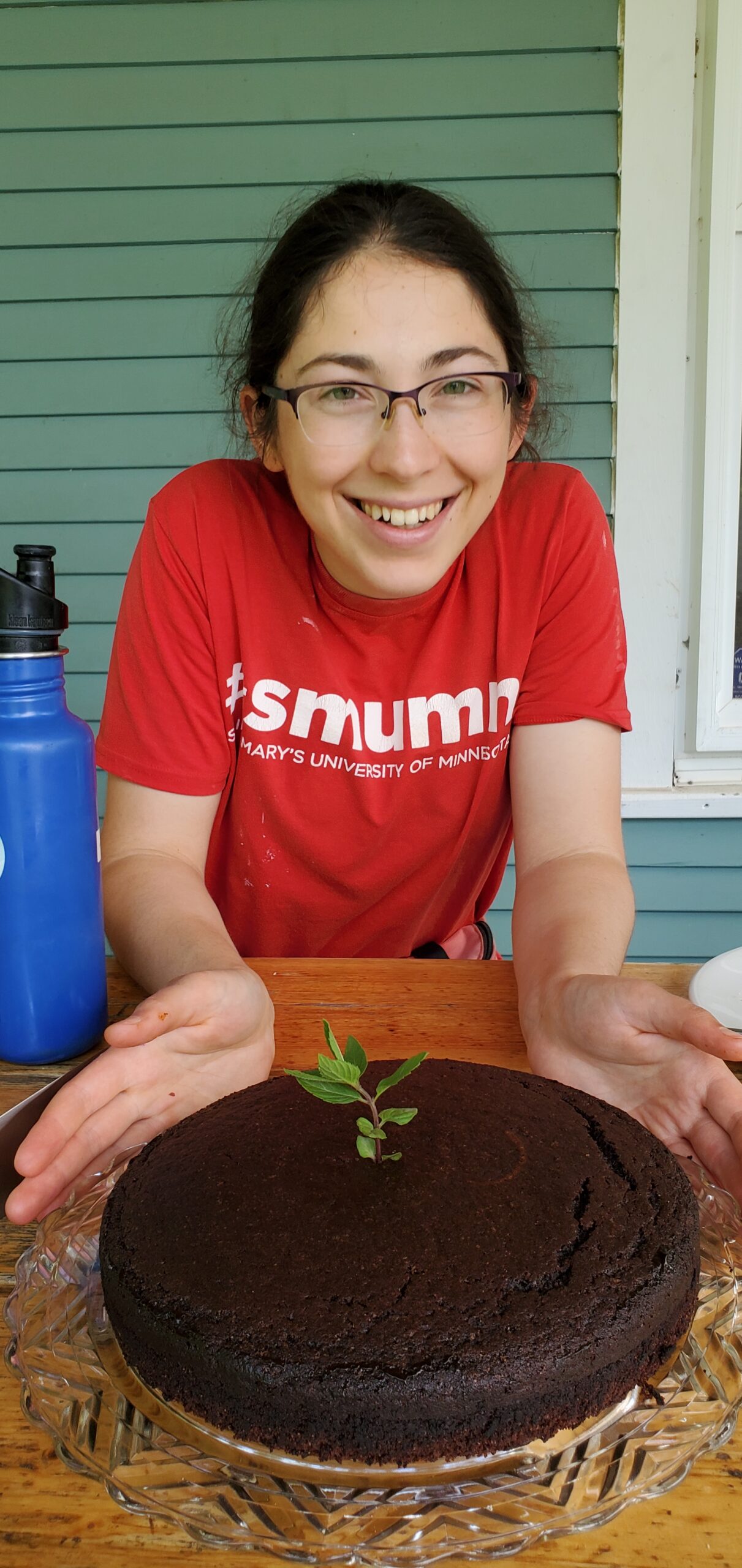
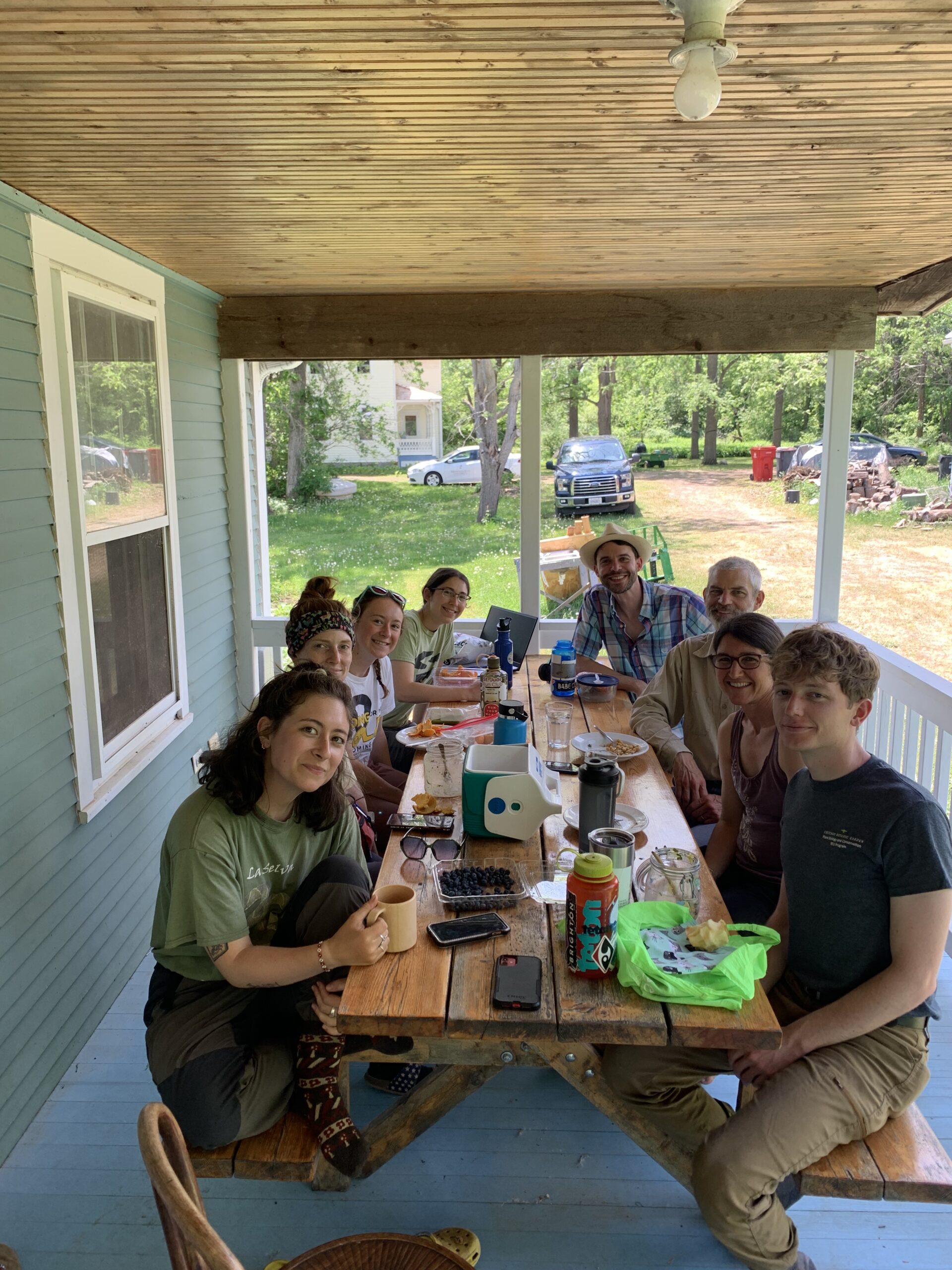
Around 80 8th grade students from Morris Junior High came by and learned about tools used in prescribed burns, plant identification, how to develop hypotheses, and methods for finding and trapping native bees!
Meanwhile…
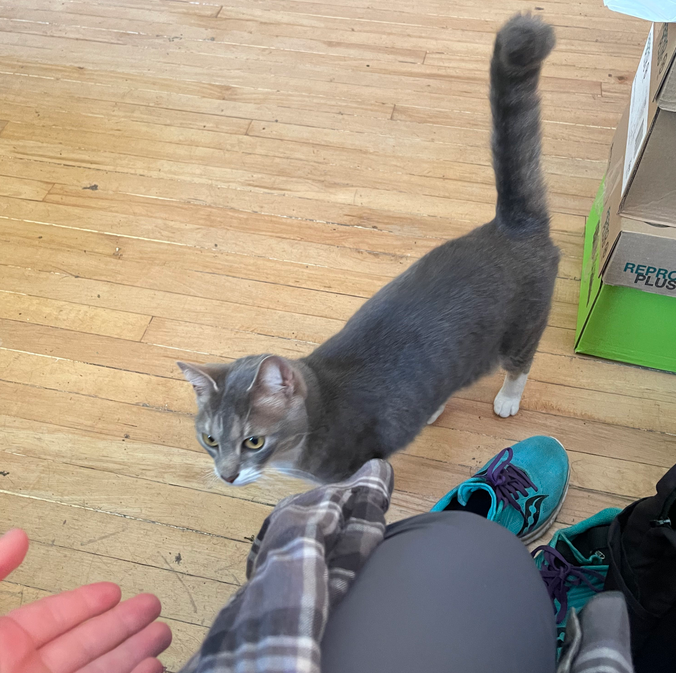
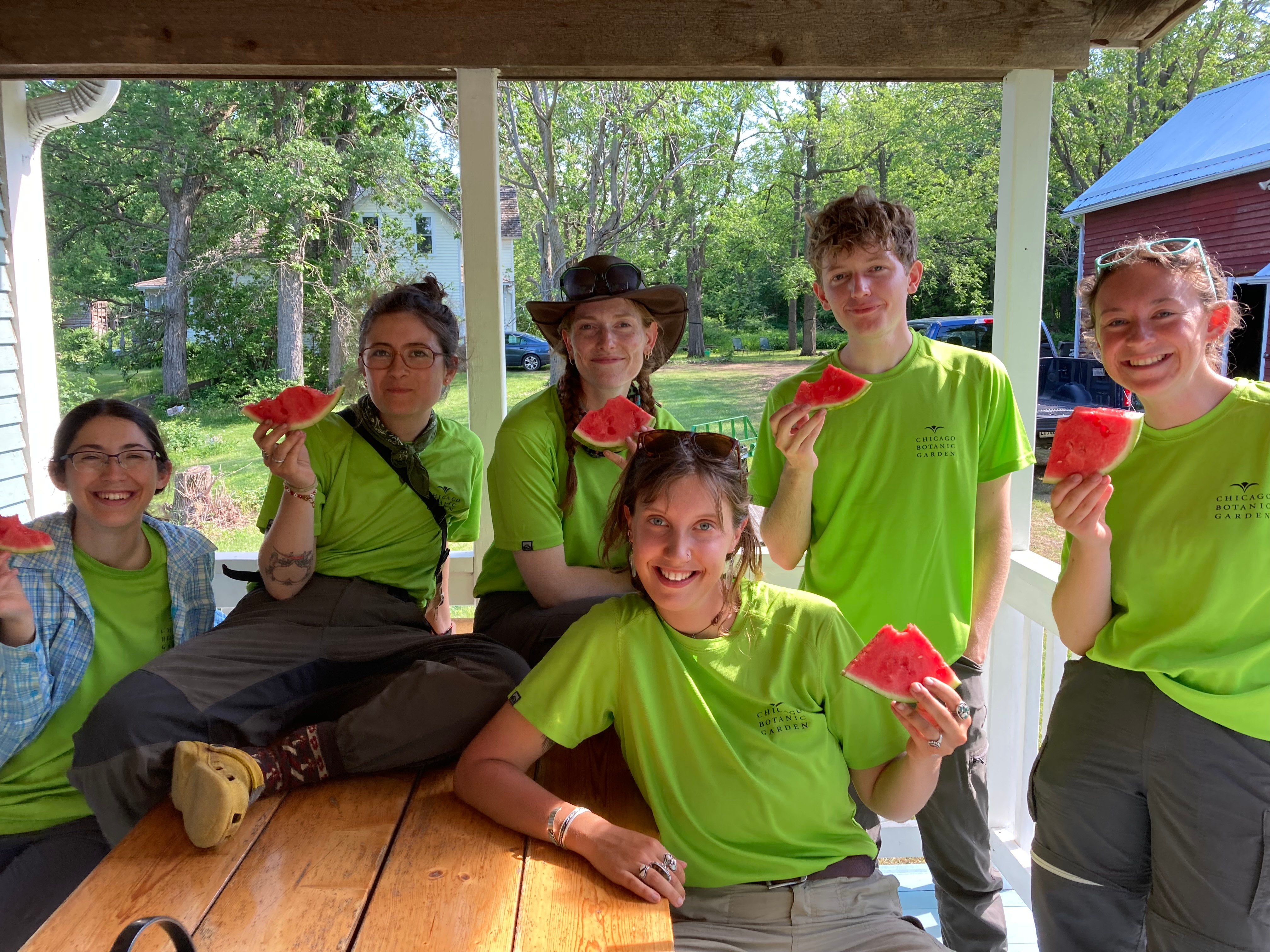
Other members of the team established points for our ENRTF-funded pollinator project, a rare species (Teeny catus) was spotted at the Hjelm House, and we all had watermelon at the end of the day to cool off.
Today we were visited by Dr. Matt Kaproth, who came up from Minnesota State University Mankato! He is interested in investigating soil properties in our ENRTF pollination study, and we will hopefully see more of him this summer as he samples our sites!
The weather quickly turned stormy, so the team is now stationed at Hjelm, glued to our weather apps.
“Funding for this project was provided by the Minnesota Environment and Natural Resources Trust Fund as recommended by the Legislative-Citizen Commission on Minnesota Resources (LCCMR).”
Welcome back to this week’s episode of “What’s Flowering at Staffanson?”, where I will report to our avid flog followers the current blooms at one of our most beloved remnant prairies.
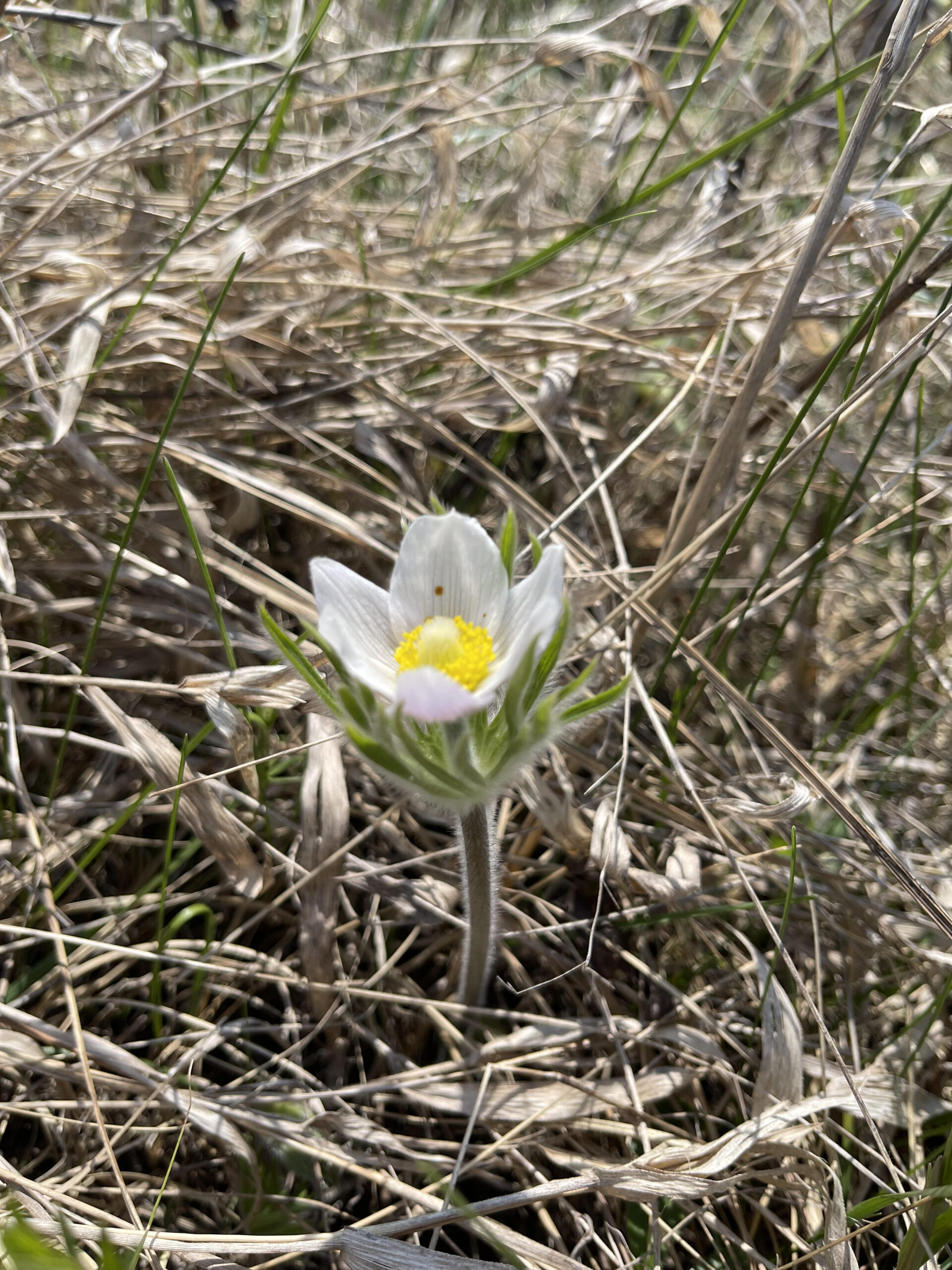
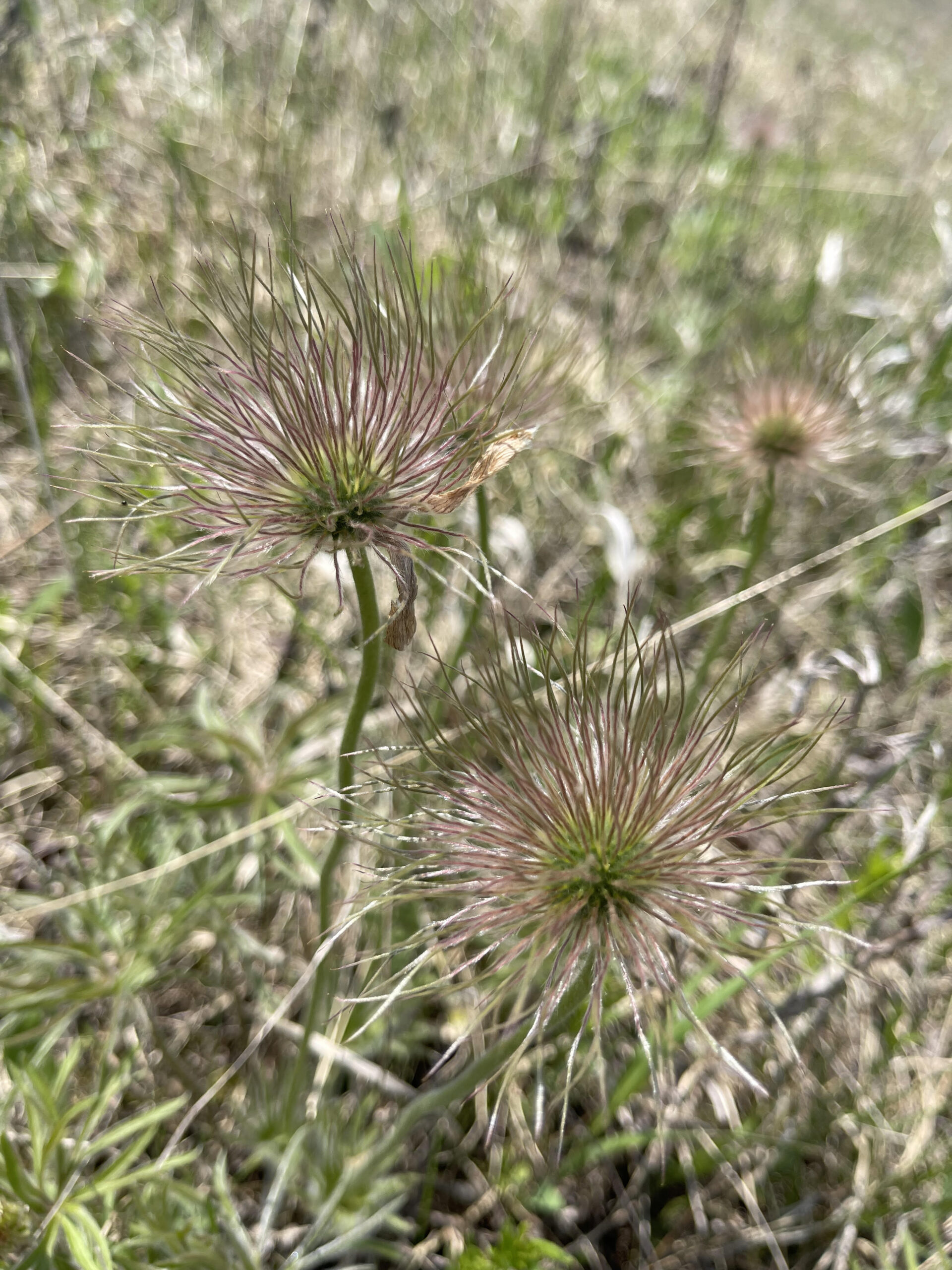
Pasqueflower (Anemone patens) is still flowering in some parts of the preserve, but most of the plants are producing fruits by now.
Only Paolo can take this……and give you a princess (let me know if you get the movie reference).
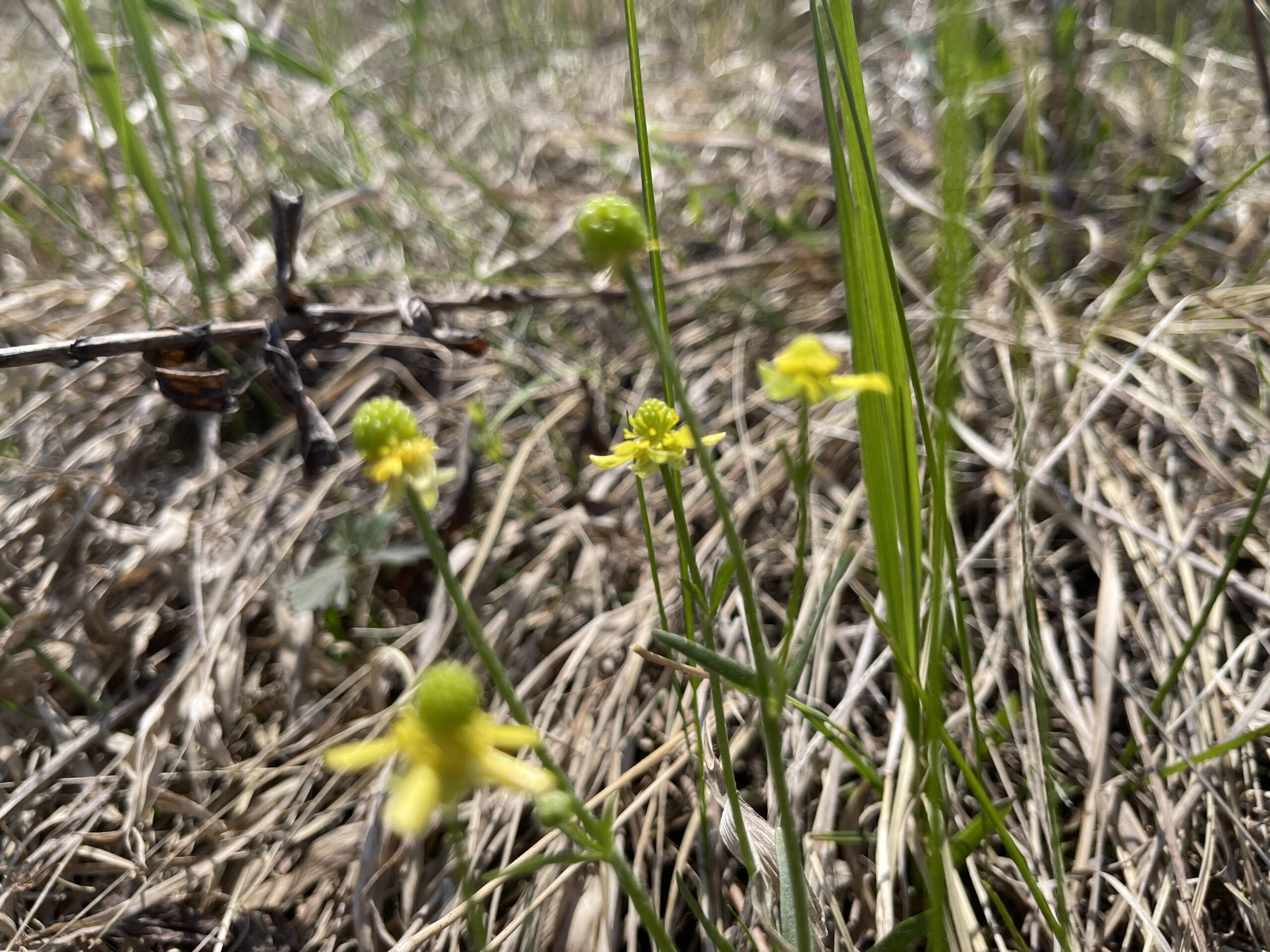
Next up we found some prairie buttercup (Ranunculus rhomboideus)
My camera decided to focus on one single flower.
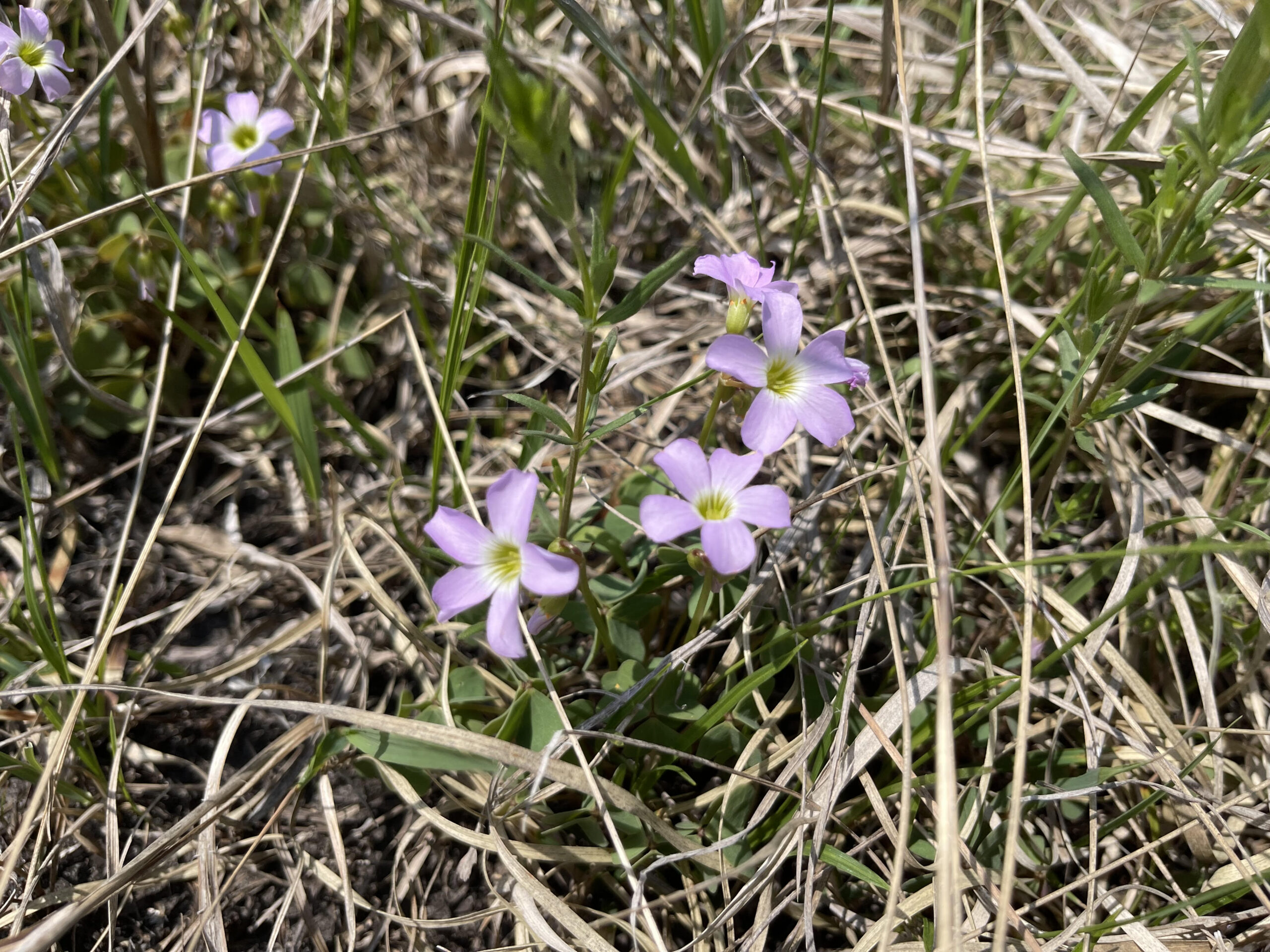
Jared wanted me to get a photo of Carex media, but like the photo above, my phone camera wouldn’t focus on the slender sedge (I tried, I swear!). So, picture everyone’s favorite sedge ~here~. Meanwhile, I can show you a non-blurry photo of violet wood sorrel (Oxalis violacea).
According to minnesotawildlflowers.info, this is the only lavender-colored wood sorrel in the state of Minnesota!
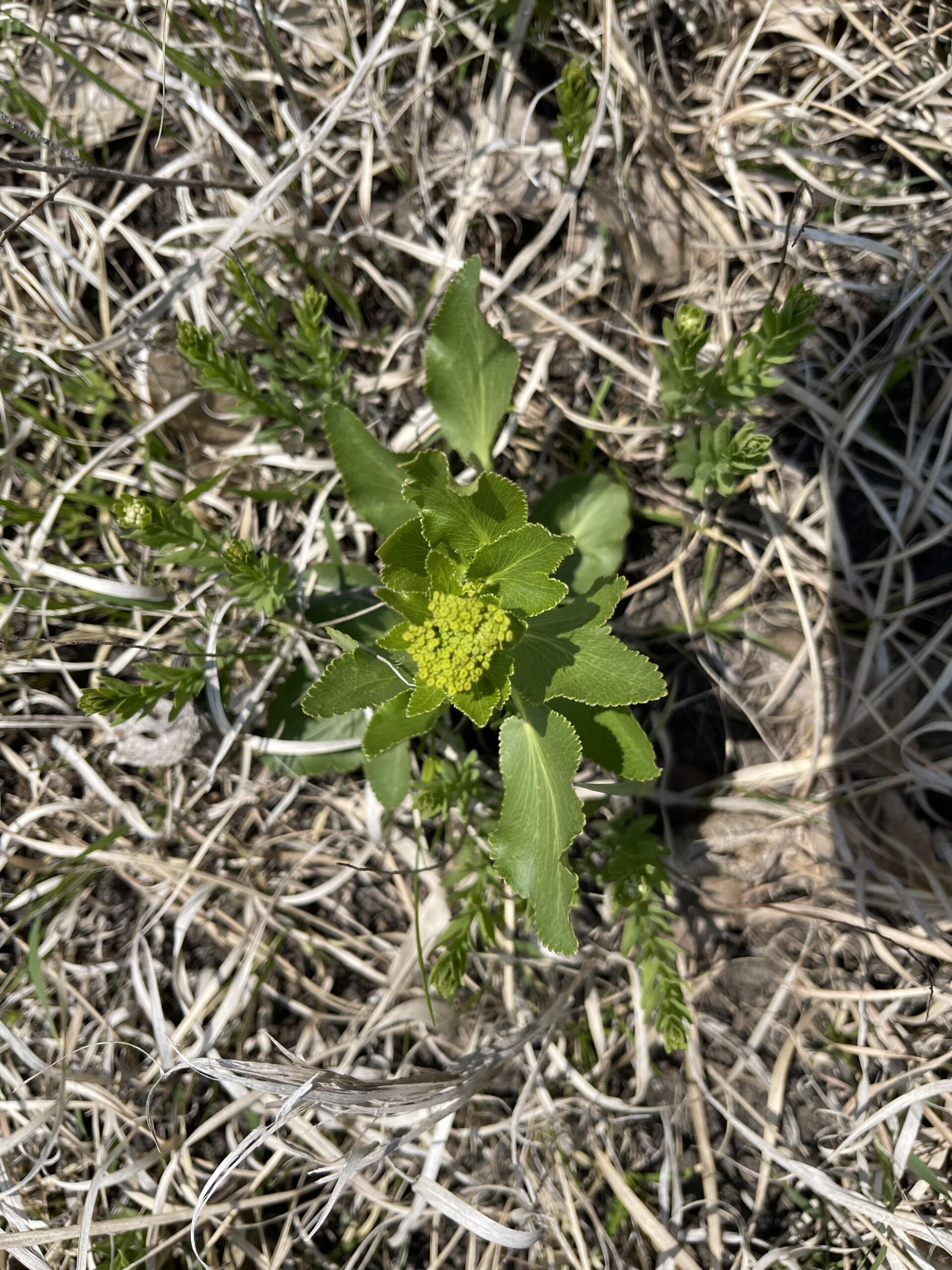
We saw a handful of heart-leaved Alexanders (Zizia aptera) beginning to produce their yellow umbels (or umbellets?).
This was the yellow-est one I could find!
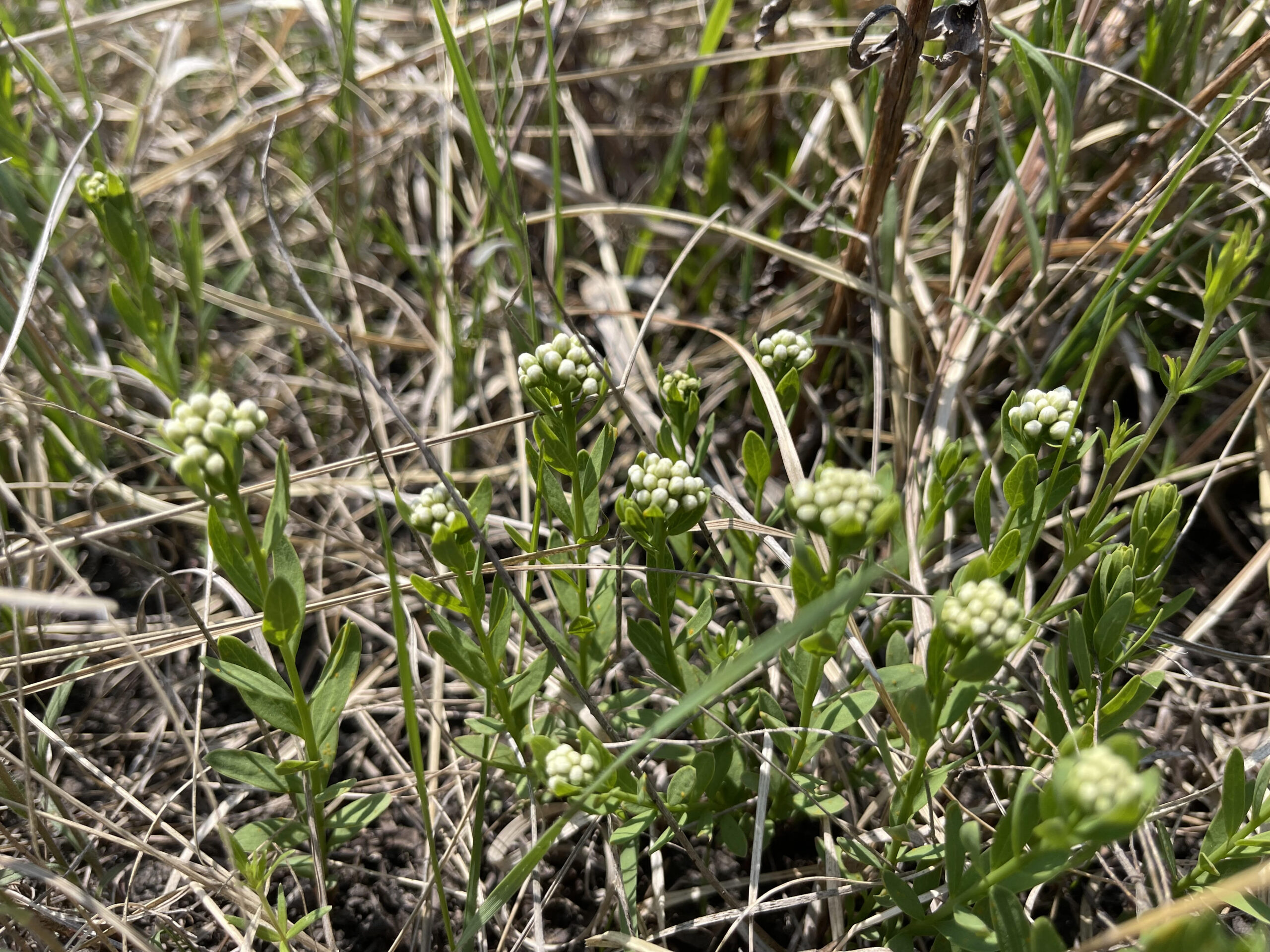
For some hemi-parasitic representation, we saw bastard toadflax (Comandra umbellata). Actually, we saw loads of Comandra, it seemed to cover large portions of Staffanson!
These plants really comandra my attention.
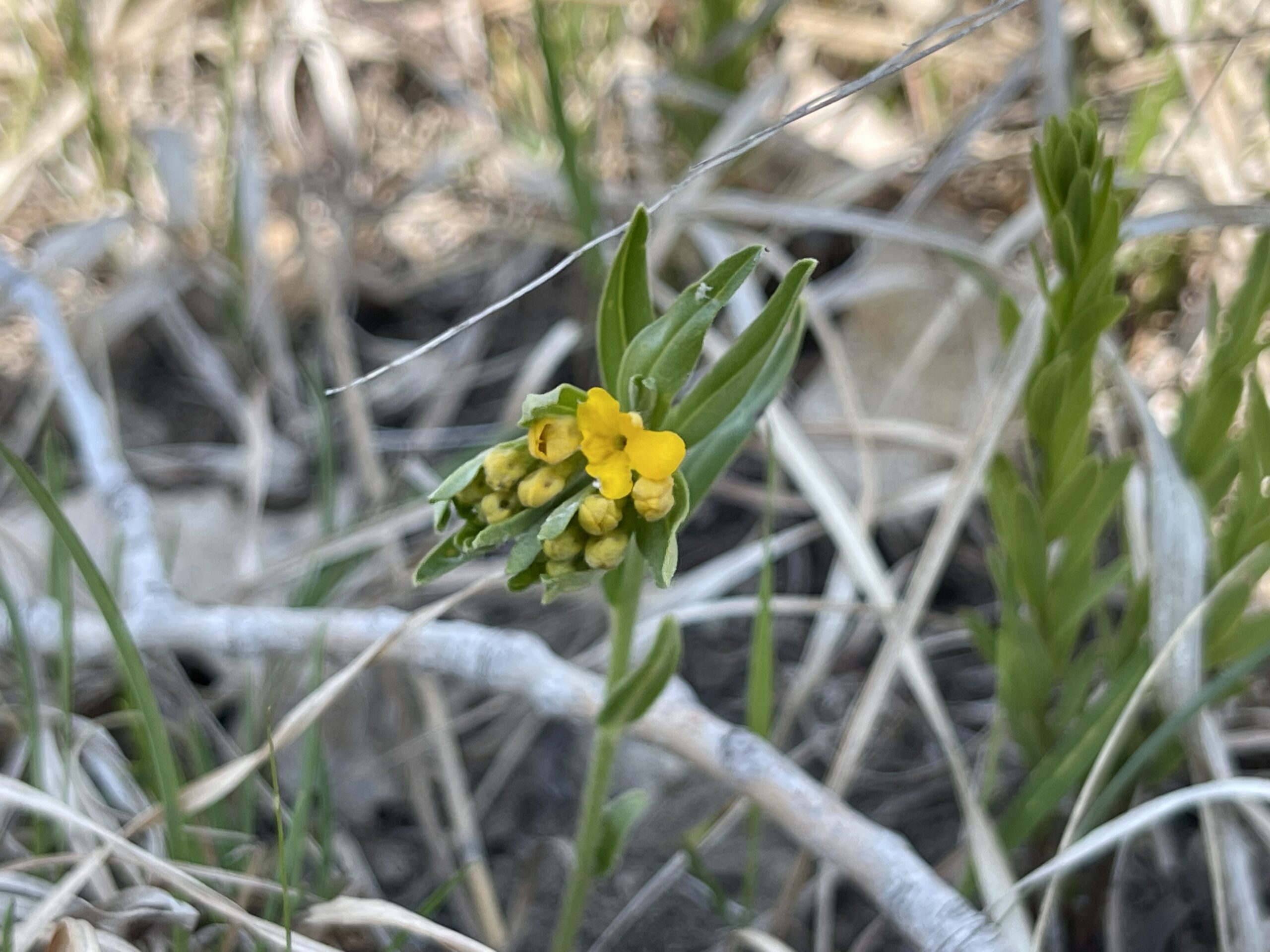
Hoary puccoon (Lithospermum canescens) was just beginning to show its Kraft mac-and-cheese-like colors.
One flower peeking out! So cute!
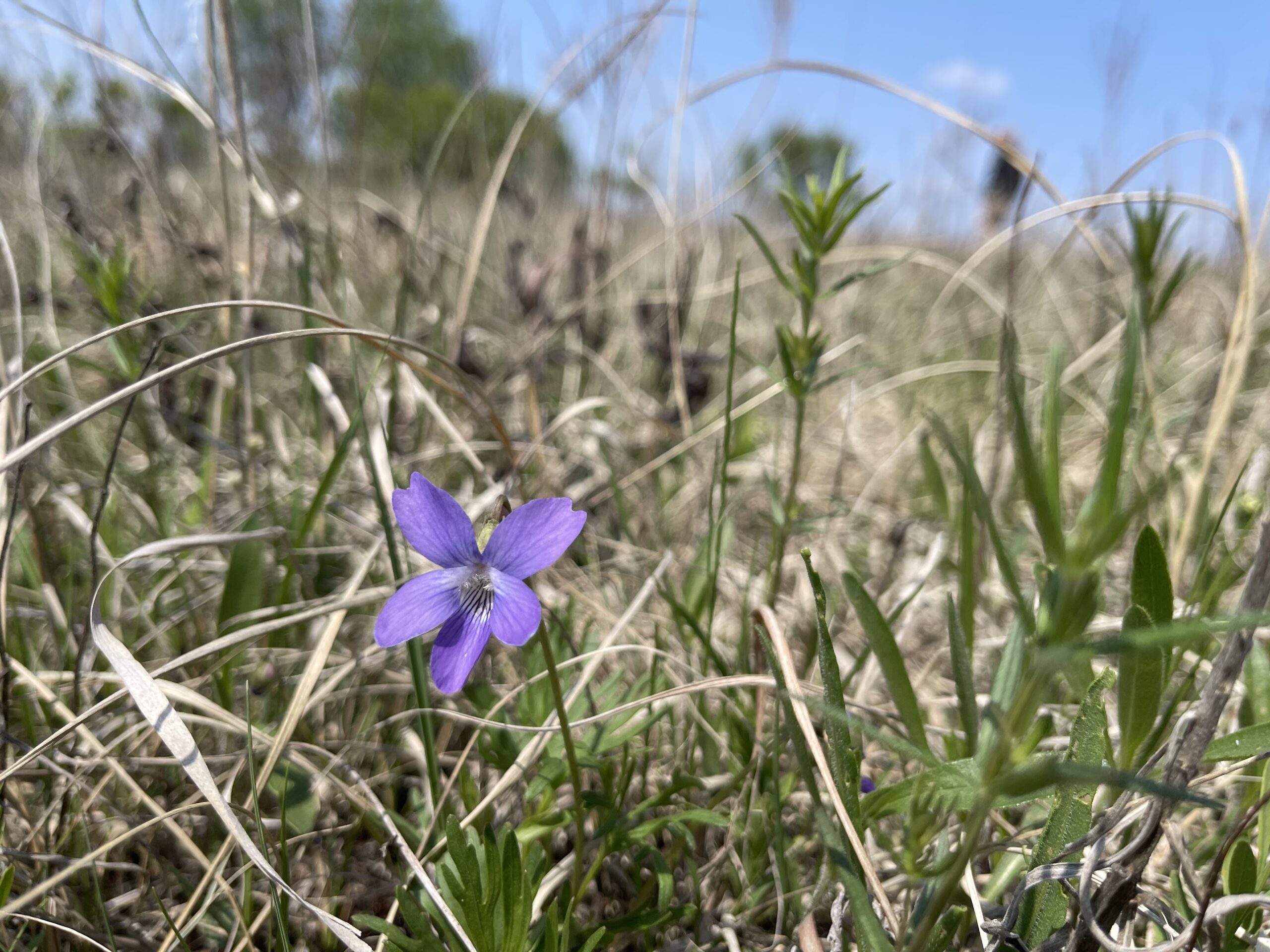
Perhaps my favorite photo of the day was of prairie violet (Viola pedatifida) and its dark purple striped veins. If you look closely, you can see Jared admiring the landscape in the background. Or is it Jared…?
Cryptid or determined ecologist? Who cares, look at the coloring of this violet!
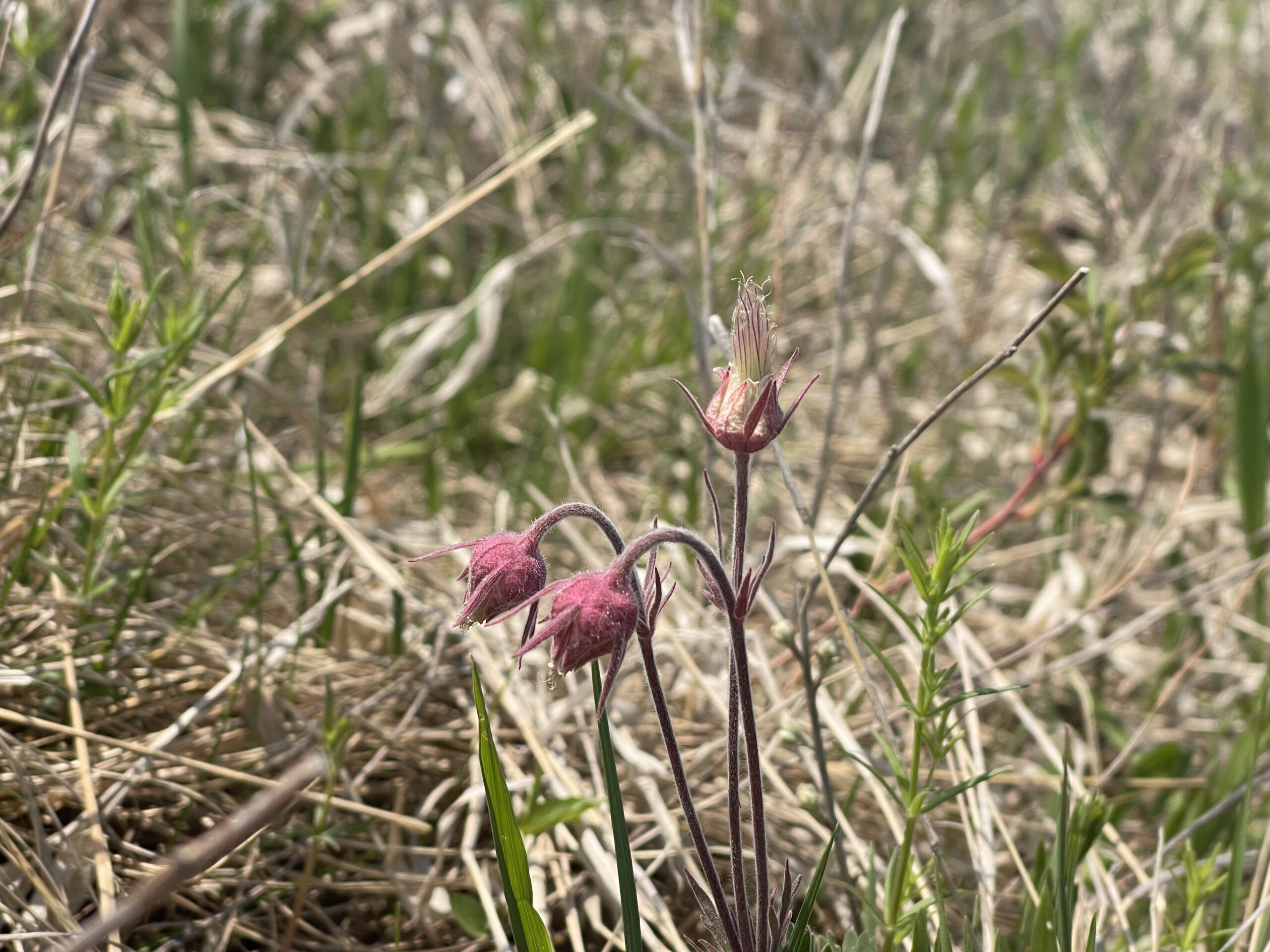
The true mystery of the day was the usually-abundant prairie smoke (Geum triflorum). We ventured all the way to the west end of Staffanson before we found a plant. While I appreciated the treasure hunt, I wonder why it’s a poor year for prairie smoke!
Is the lack of prairie smoke a bad omen?
I made all of these observations of Friday, May 19th. I’m excited to return to Staffanson in a few weeks and see how the prairie has changed!
B.S. Botany and Environmental studies, UW-Madison, 2023
Pronouns: She/her
Research Interests
I am broadly interested in plant ecology, restoration ecology, and fire ecology. I am curious about plant functional traits, especially those related to fire adaptation, and intraspecific variation.
Statement
I am from Milwaukee, Wisconsin and fell in love with prairies during my undergraduate years in Madison, Wisconsin! In my spare time, I like to run, bike, do ceramics, knit, and read.
Biology & Geography/GIS major, Gustavus Adolphus College ’22
Pronouns: she/her
Research Interests
My research interests include plant-insect interactions, the effects of fire on plant reproduction, flowering phenology and generally how human disturbance impacts prairie species. Currently, I am working on an experiment with Alex which investigates the effects of smoke on Echinacea flowering. I’m excited to gain more skills this summer in mentoring, data management and analysis, techniques like hand-crossing, and leading field crews!
Statement
I am from Minneapolis, MN and spent my college years in the great city of St. Peter, MN. I have been working with the Echinacea Project since last June as a research intern.
In my spare time I like to read lots of books, run long distances, play board games, embark on various crafting projects, listen to concerning amounts of Taylor Swift music, and spend as much time outside as I can.
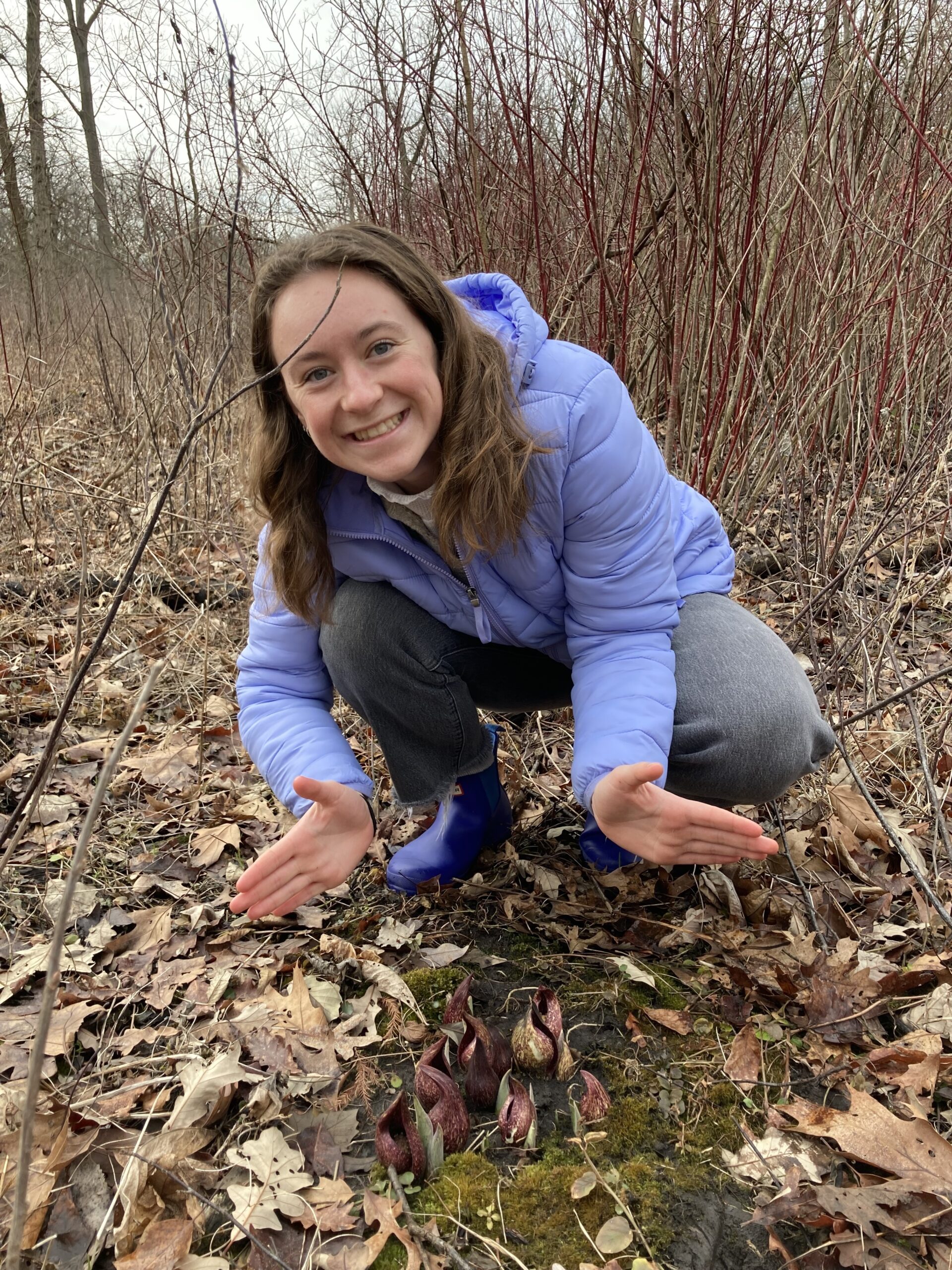
Me posing with the skunk cabbage in McDonald Woods this spring!
This Saturday was a glorious day: Independent Bookstore Day! Every year on the last Saturday in April, the nation celebrates indie bookstores in all sorts of ways. In Chicago (and the Twin Cities and maybe other places), local bookstores participate in a passport event – visit as many bookstores as you can, get a stamp at each one, and win a prize based on how many you visit!
With 40 participating stores this year, visiting 10 would get you 10% off at all the bookstores for a year, and 15 would get you 15% off. Individual stores also often had their own special goodies for the day, including snacks, pencils, tote bags, and other exclusive (and often free!) merchandise. Alex and I were up for the challenge. In fact, we even took on a non-book related side quest, more on that later.
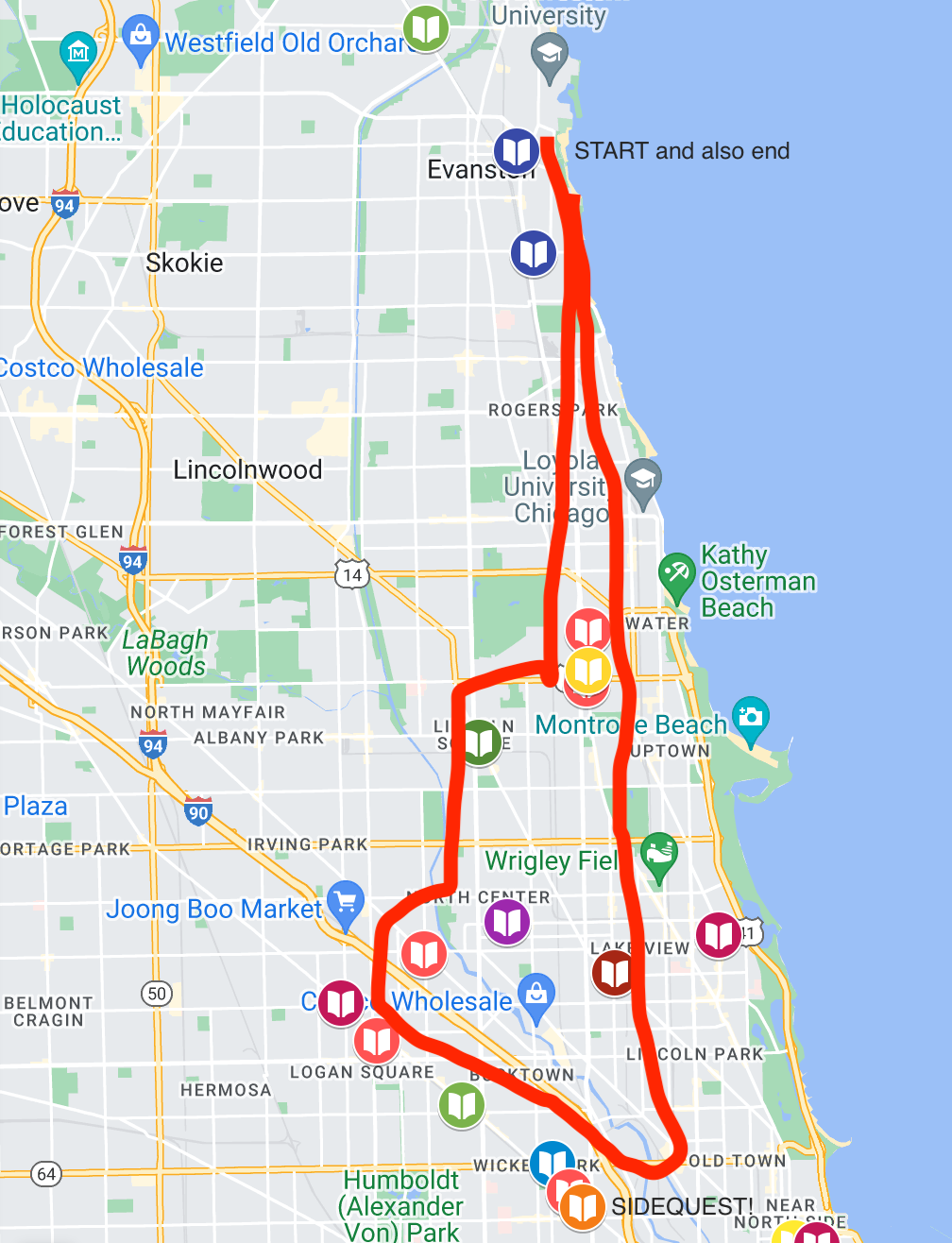
An approximate map of our odyssey
We started out strong with Bookends & Beginnings in Evanston, where we got free totes, some books, and our passports with our first stamp. We made our way south, visiting stores both familiar and novel.
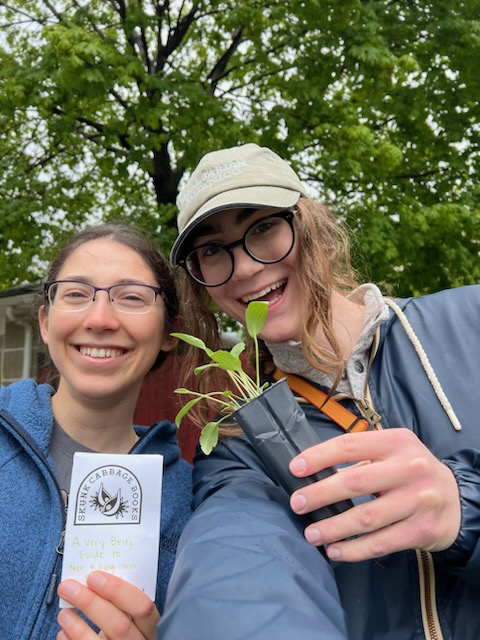
A much needed tamale stopSkunk Cabbage Books gave us a Ratibida seedling with our purchase!
Upon reaching our tenth bookstore, we were both awarded pins that will give us a 10% discount at all 40 stores for the rest of the year. We rejoiced! But at our 11th bookstore, tragedy struck. I couldn’t find my passport anywhere, and I fear it was left at our tenth stop. We mourned! The show didn’t stop though, because Alex still had her passport, we had four more bookstores to go, and one very important side quest.
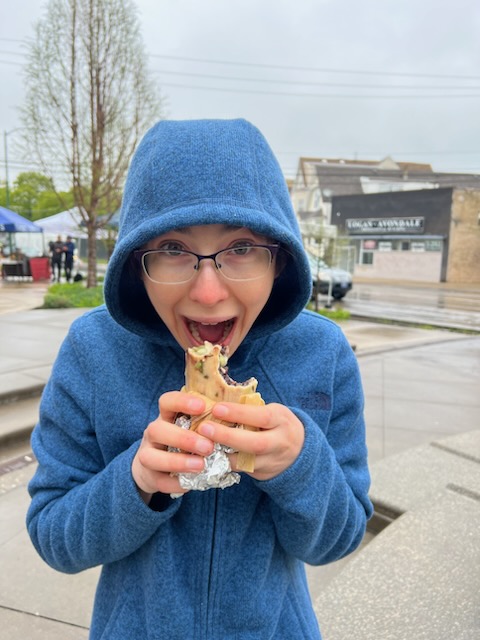
Stores 12-14 were located within walking distance of each other in Wicker Park, so we visited them all in one stop and got falafel sandwiches and waffle fries to boot. With full stomaches and a clear bath forward, we took of to Goose Island, home of the holy Restaurant Depot.
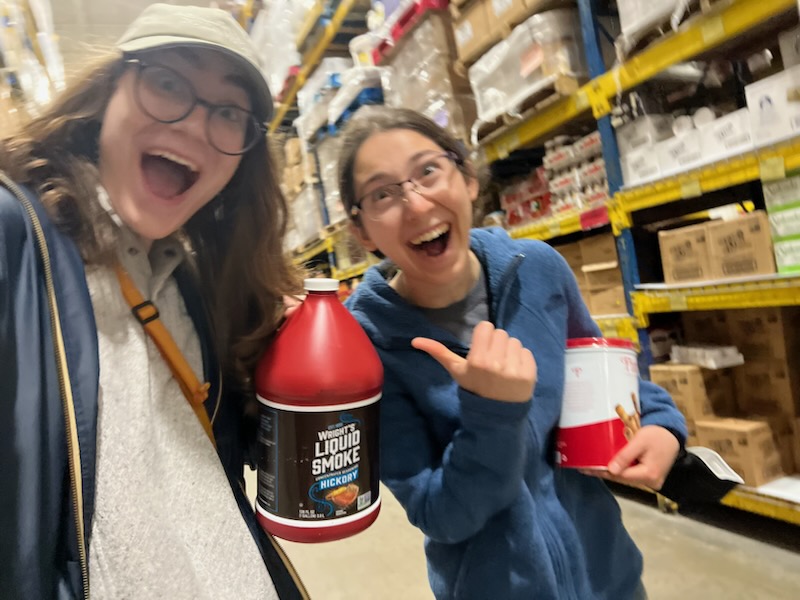
Our secret mission was to locate and extract one gallon of Wright’s Smoked Hickory for Alex and Lindsey’s smoke experiment. The job was difficult; mammoth quantities of random everyday ingredients tantalized us at every turn. However, I am happy to report the mission was a complete success. We escaped with our sanity intact and only one extra item (who can say no to a big ol’ container of chocolate hazelnut wafer rolls?).
Mission success!!!!
We hit our 15th bookstore on our way back north, where Alex was celebrated as a grand winner of the day (though they had run out of 15 store pins). Victorious, we made our way back to Evanston. Until next time, bookstores!
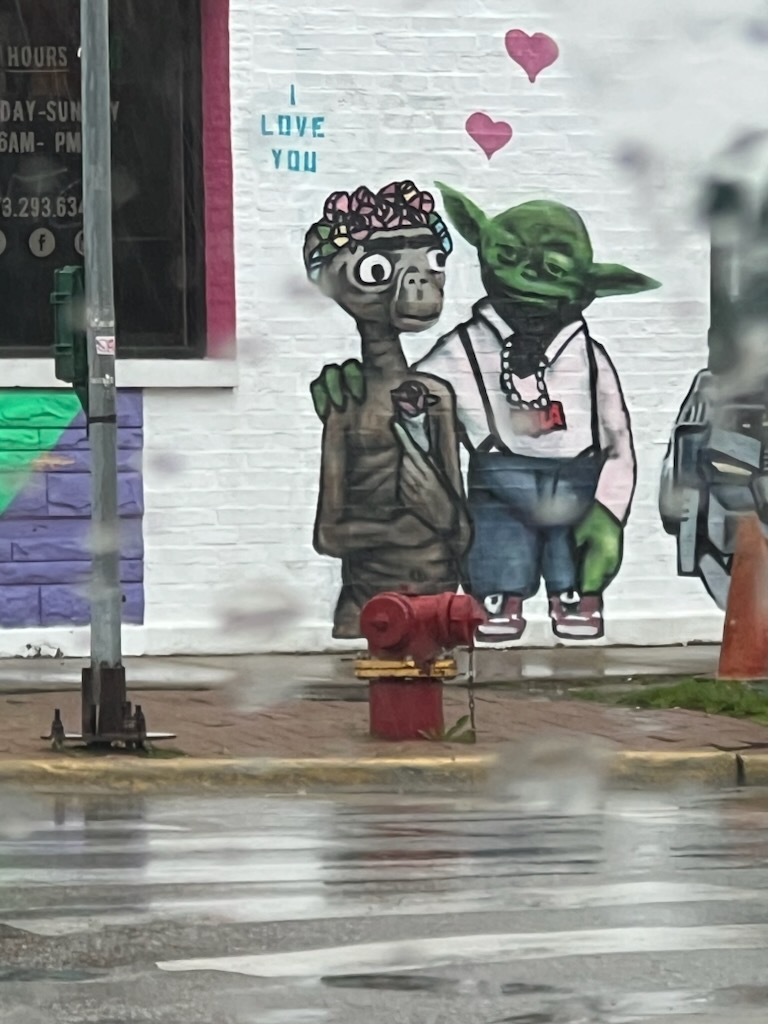
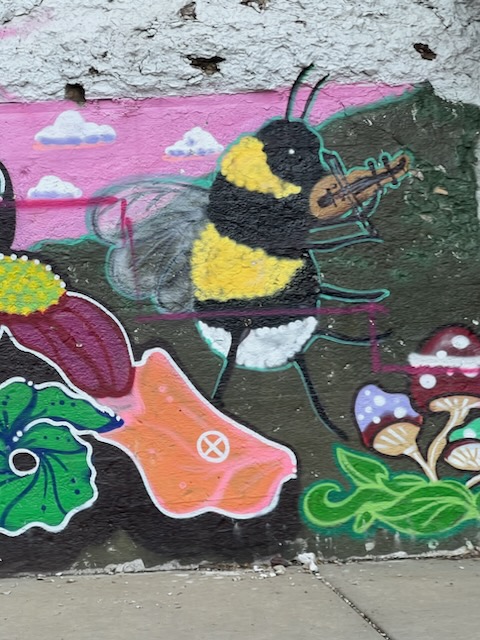
(we also saw some lovely street art)
LoversPlaying some Rimsky-Korsakov on the world’s smallest violin
Reliable forecasts and accurate assessments of current conditions are critical for conducting prescribed burns. We are fortunate to have many weather resources. Here are the sources I use for planning and conducting prescribed burns.
Things are movin’ and groovin’ in the lab at the Chicago Botanic Garden!
Now that we’ve wrapped up remnant Echinacea, it’s time to reenter common garden territory. Ah, sweet sweet common garden, where all plants exist neatly* on a grid unlike the unruly remnants.
One of the main things we’ve been tackling is cleaning the 2022 common garden heads. There are 2,116 heads to be cleaned and we’ve already cleaned 561 (or ~27%) of them! Wow, amazing progress! The only remaining and 3 additional bags from 2020. Once those are done, we’re caught up from the backlog that COVID augmented. As for other steps in the ACE process…
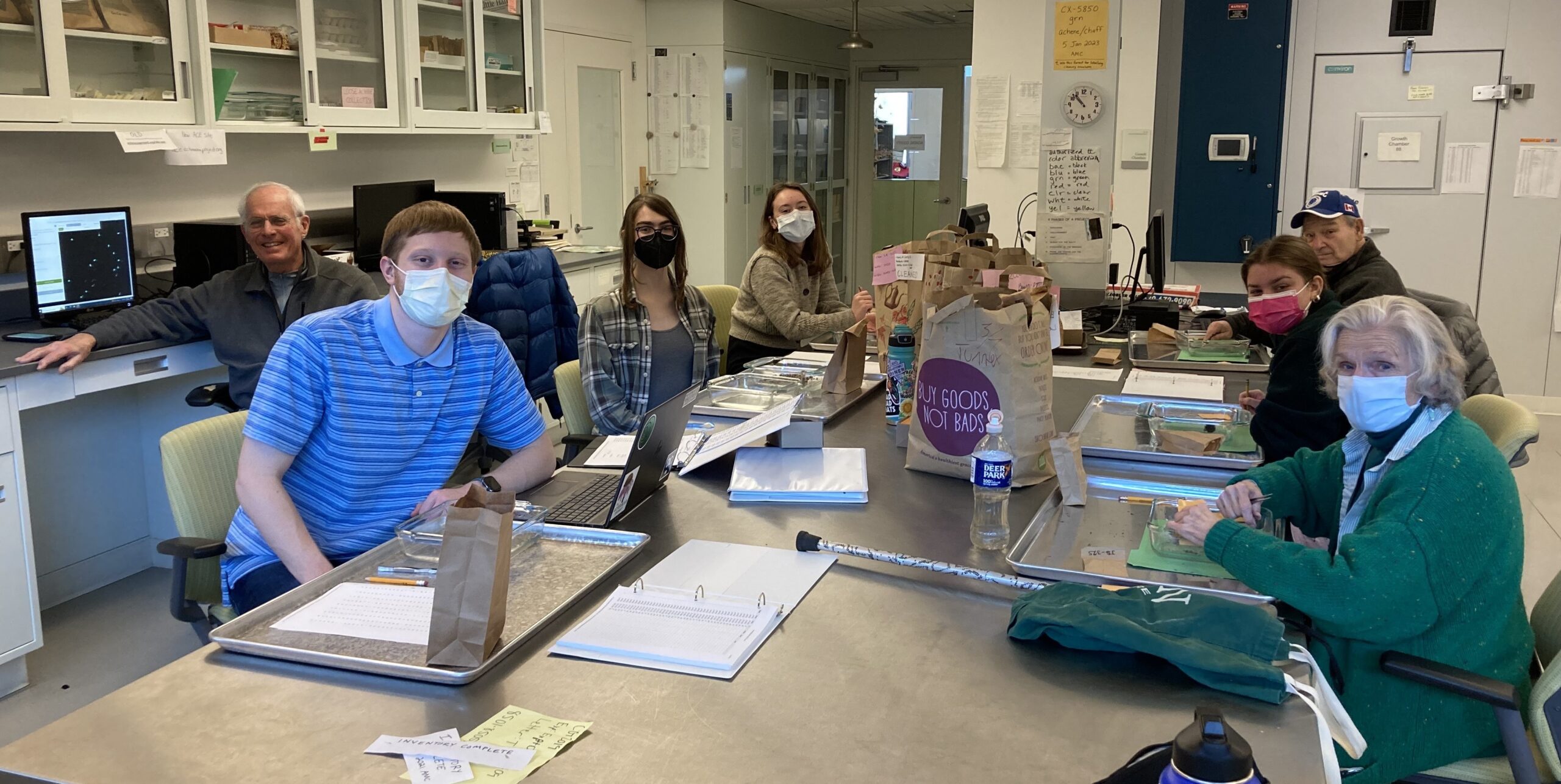
Volunteers and students cleaning way!
After cleaning comes rechecking, and we’ve had students working on rechecking Echinacea heads from experimental plot 1 in 2019 and 2020. Once these have been rechecked, we’ve got scan-master volunteer Marty prepare our achenes for uploading to the ACE website!
Our volunteers have also been catching us up on counting from 2017 through 2019 to get data ready for Wyatt’s masters thesis! I won’t spoil what she’s investigating, but just know it’s a burning question that I’m stoked about!
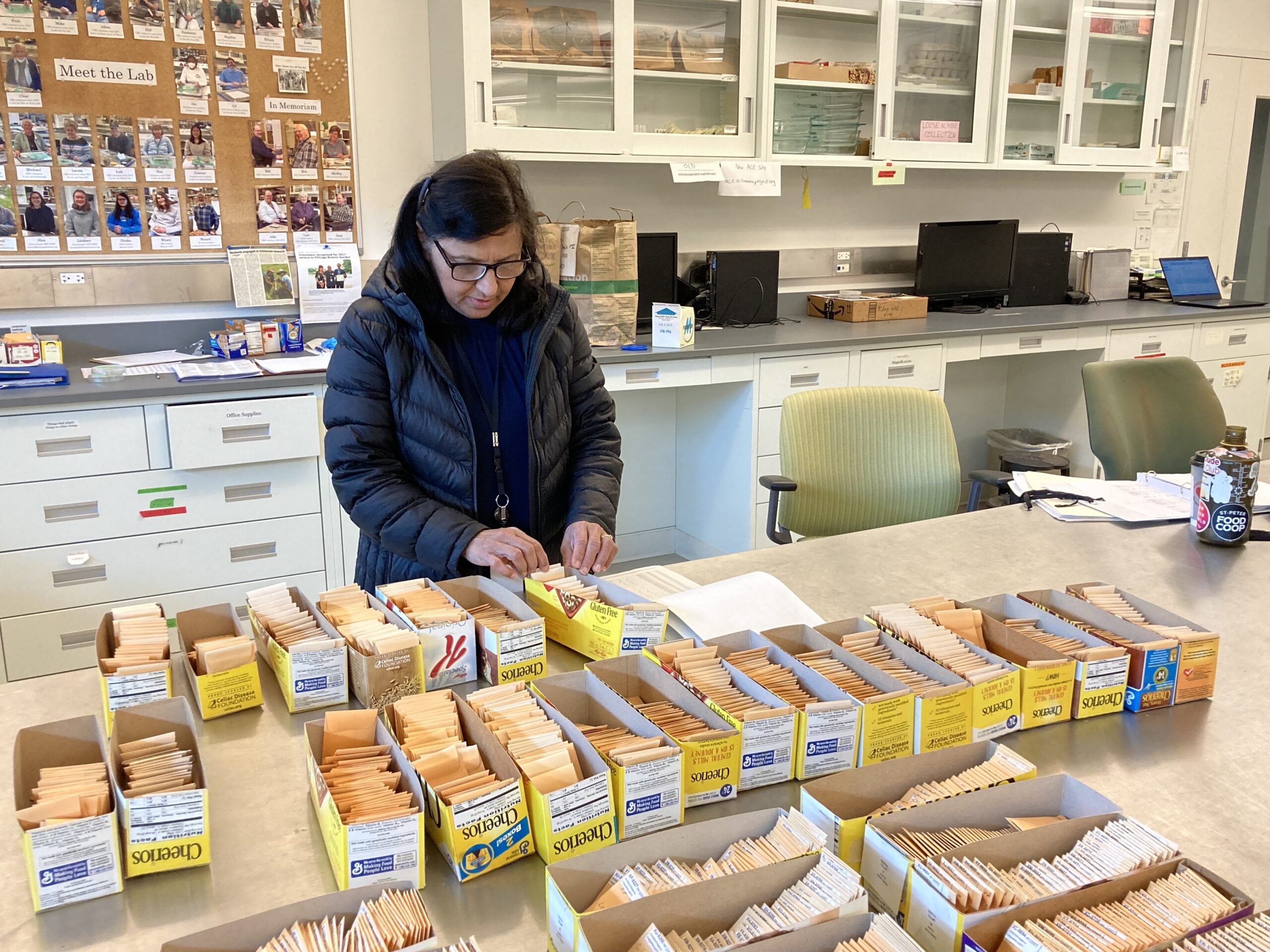
Alex and I have also been attempting to clean up the Cheerios boxes that line our lab window. These boxes contain achenes from the past 20 years and many different experiments, all at different stages of the ACE process. Volunteers have started assembling some of the achenes into x-ray sheets for the years 2017 and 2018.
We also had Priti help us inventory boxes from 2016. We took seeds out of these boxes for our seed addition experiment, but were unsure what achenes actually remained. These seeds did not germinate, so we will put them in storage. However, we have other seeds that are still viable, so we are hoping to freeze them and put them in the seed bank here at CBG!
Priti with all the boxes!
We’re hoping to keep moving forward this spring with all steps of the ACE process, and create an efficient system for taking data off the ACE counting and classifying website!
*it would be neatly if it weren’t for those meddling rogue plants!
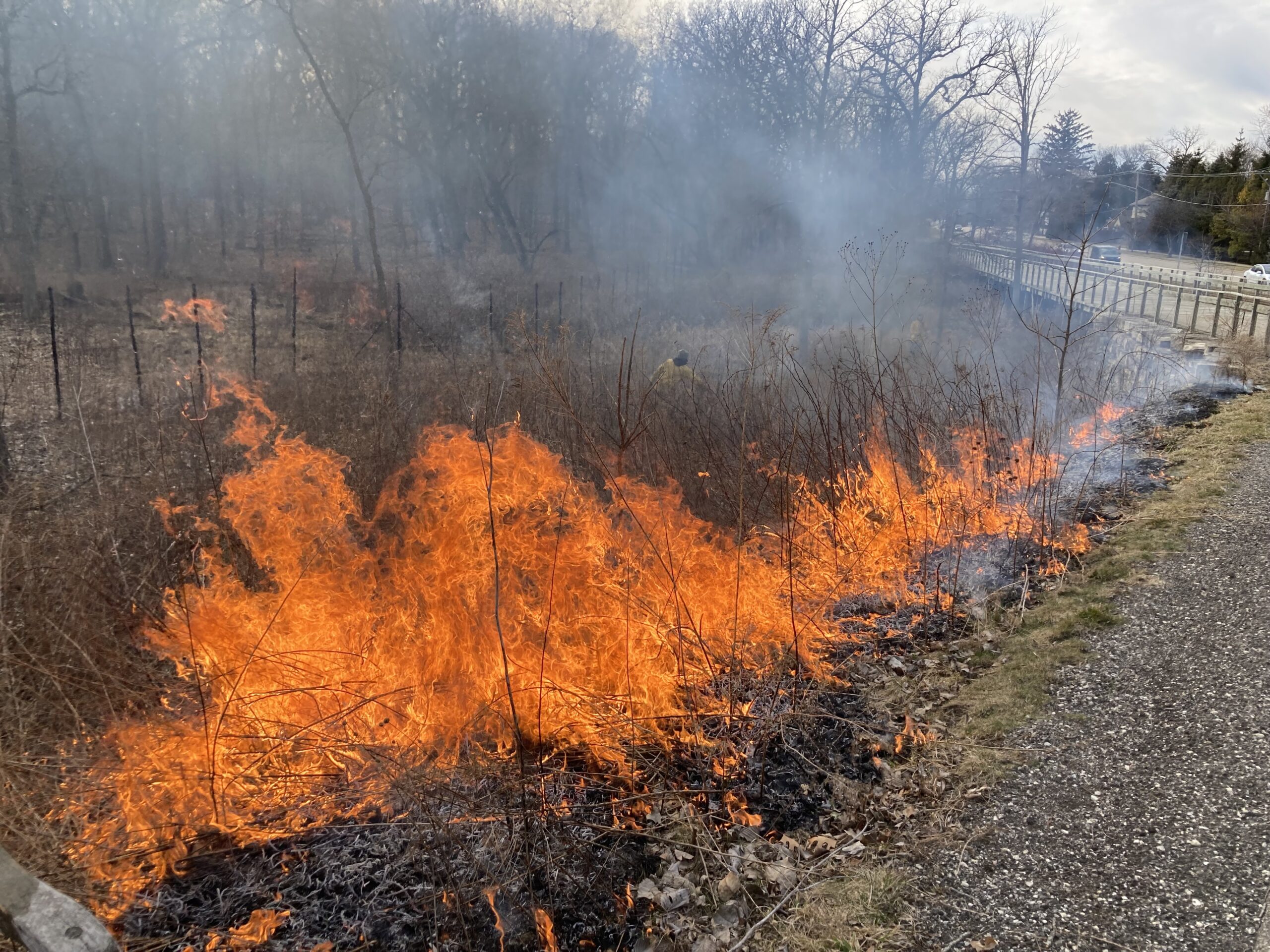
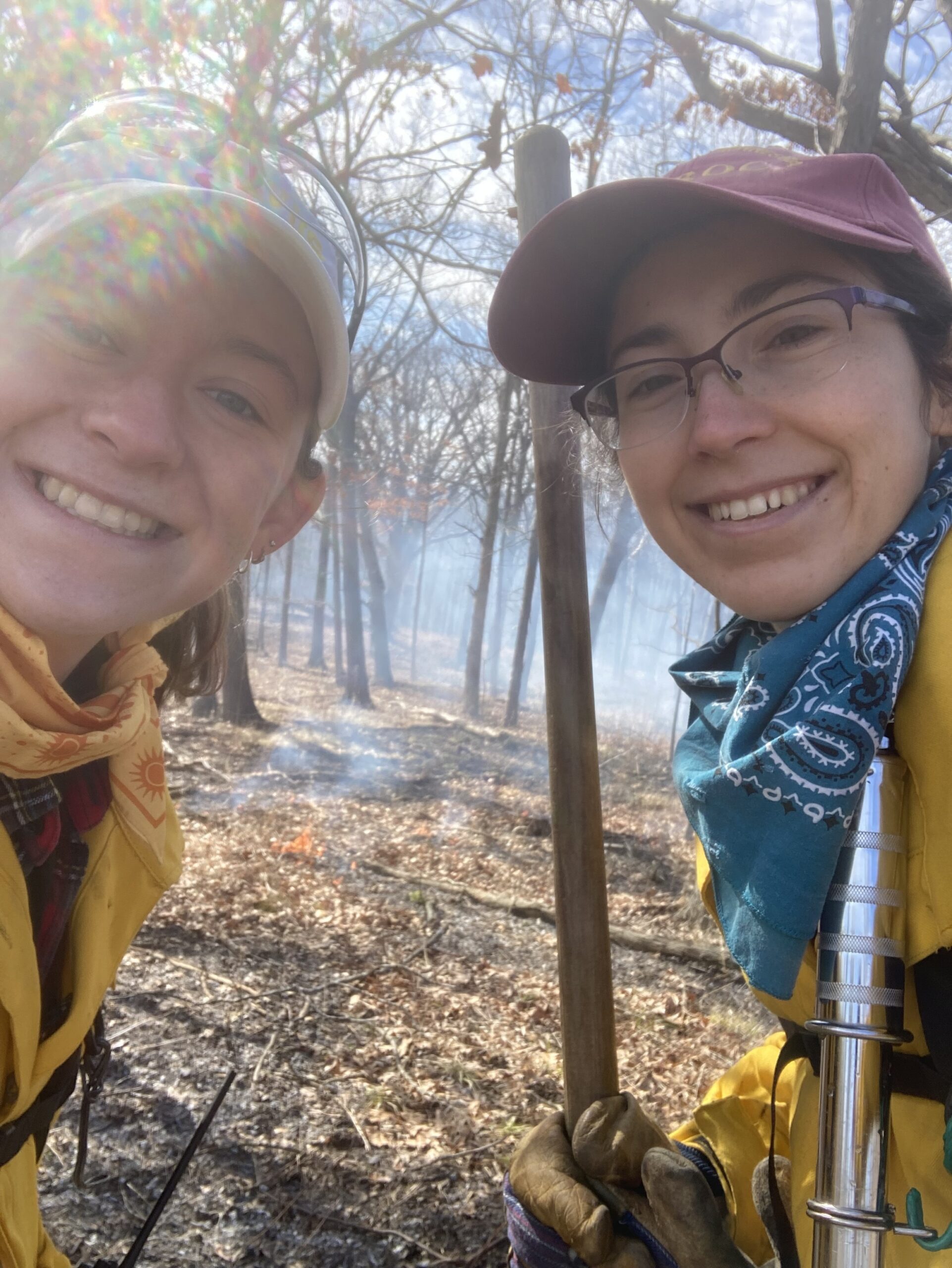
This February, Lindsey and I attended the Chicago Wilderness prescription burn training at the Morton Arboretum. This month, we put our burn training to good use and joined Jared and the burn crew at the Chicago Botanic Garden for a woodland burn. I participated in prairie burns in Minnesota last spring, but this was my first woodland burn, so I was glad to gain more diverse fire experience.
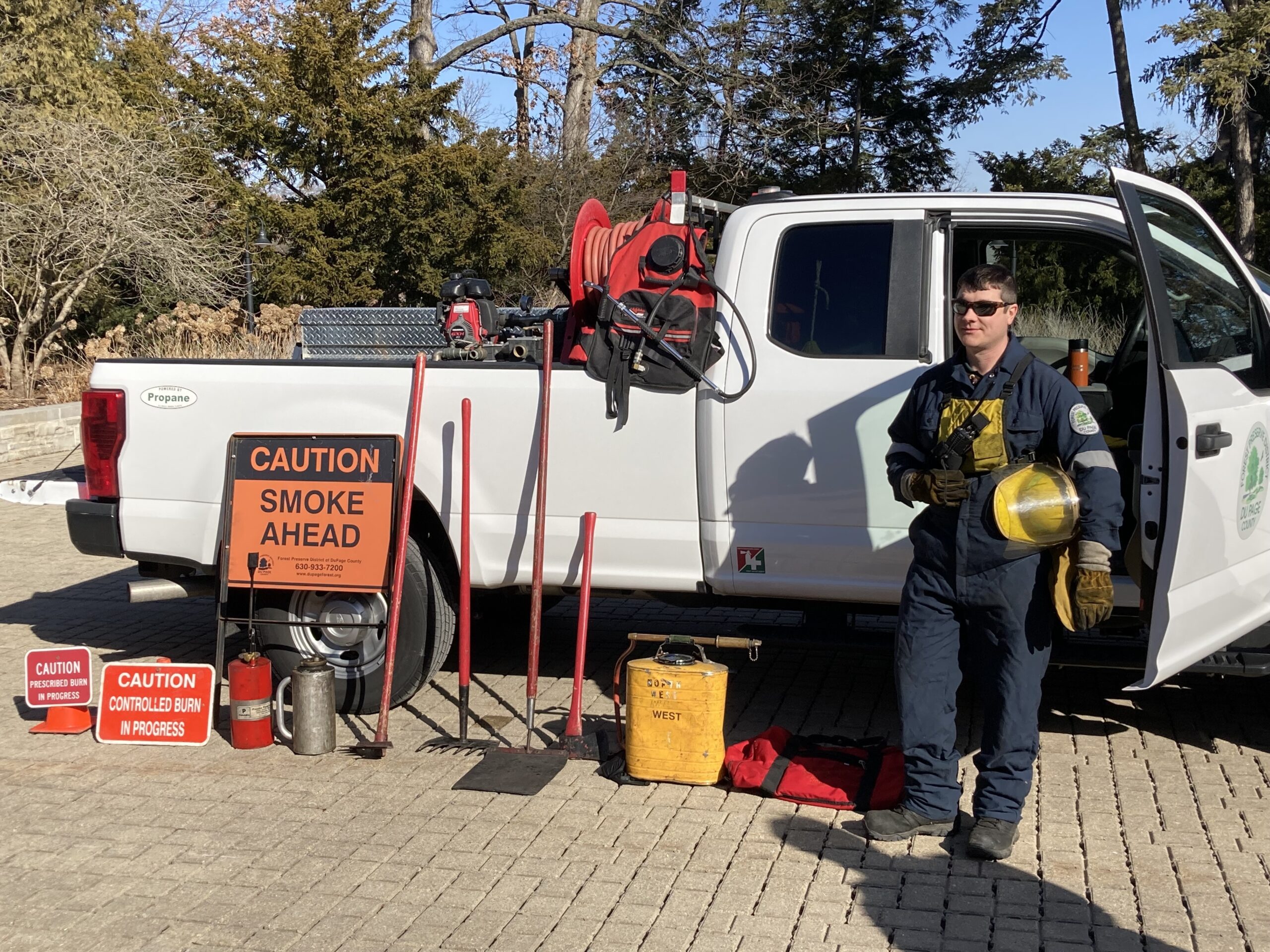
A member of the DuPage burn crew shows off prescribed burn equipment
We burned part of McDonald woods on the east side of the garden, and we needed an east wind to keep the smoke off of Green Bay Road. The wind was ~11 mph, but we were burning down in a gully which blocked the wind, so the fire crept very slowly. Overall, the woodland burn was much slower and patchier than the past prairie burns, but that was what I expected from the woods. I also got to use a drip torch for the first time, which was very fun!
Burning along the bike pathLindsey and Alex in PPE