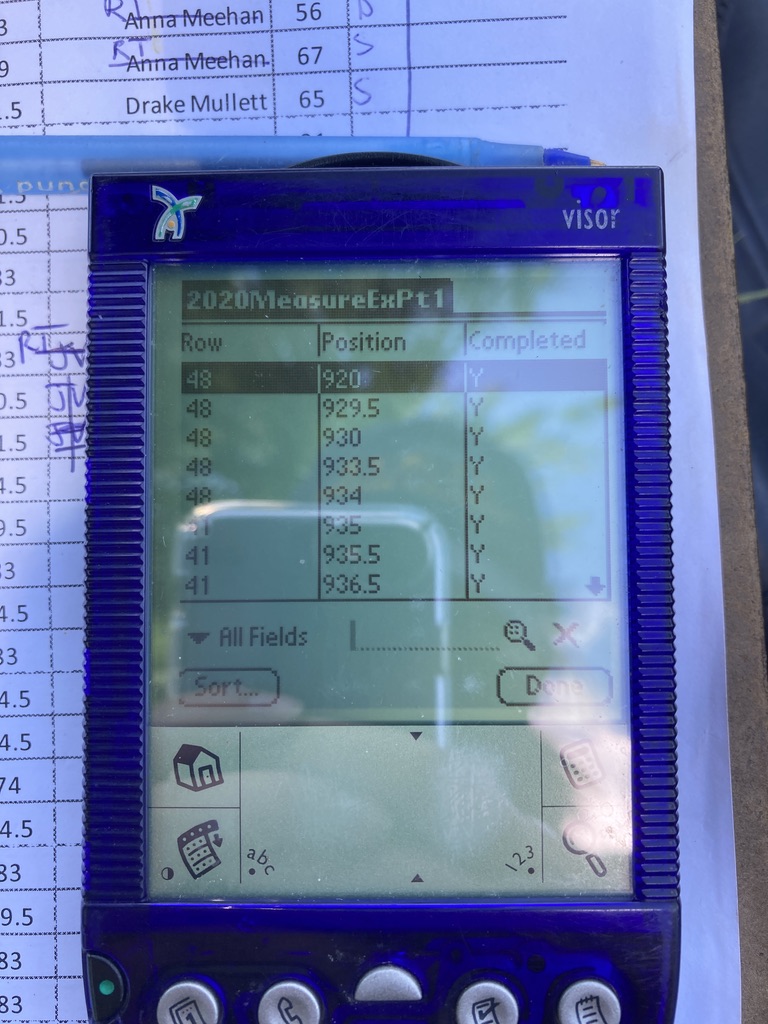
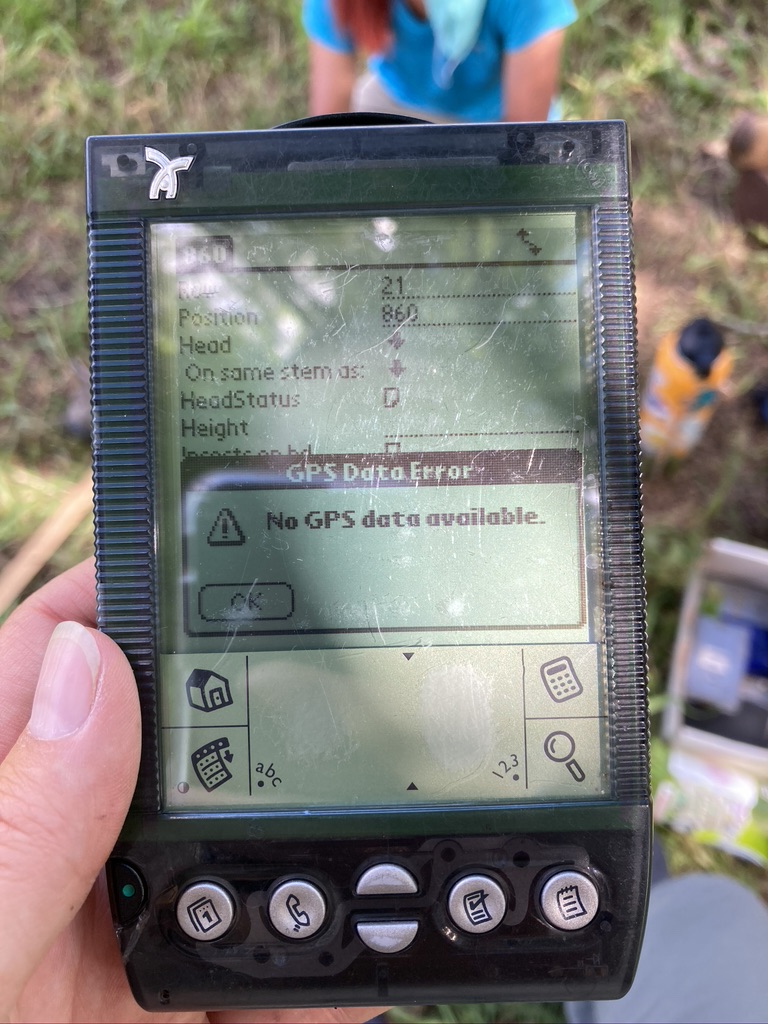
Our current data collection system software is pendragon forms run on Handspring Visors. This system works well, we love the visors, they are cheap and do the job. However, the Visors are 2000’s technology and the system is starting to become somewhat precarious. So we are starting to consider alternative systems. Gretel looked into potential new systems in 2016 with minimal luck.
We are hoping in the past six or so years that technology has devolved that will allow us to potentially replace the visors!
What we need in a Data Collection System:
allow for pre-loading data (list of positions to be measured)
allow for fast and efficient data entry (including ability to switch between records using a back or next button)
allow for parent-child form relationship (plant — heads)
auto-repeat of child form
safeguard against data loss
allow viewing of form/data entry in record view vs. field view
include dropdown, multi-selection boxes
ability to hold more than 250 records without slowing down
physical hardware is backlight making it easy to read in the field
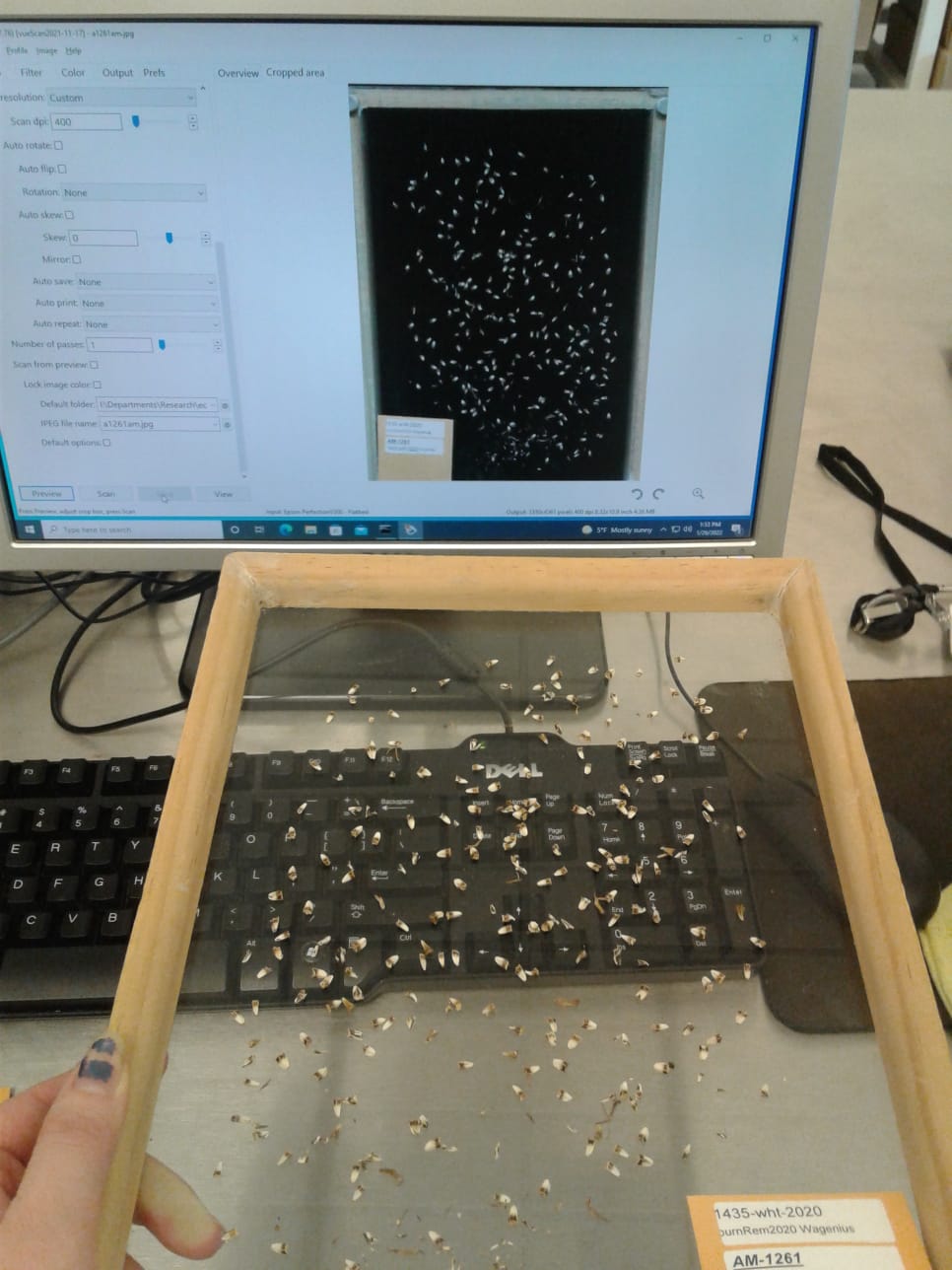
This week I continued to make progress on cleaning and scanning for the lilium project (Figure 2). All the pods have been cleaned and we have established a scanning protocol for lilium pods. These protocols allow for others to replicate our methods in future projects with lilies.
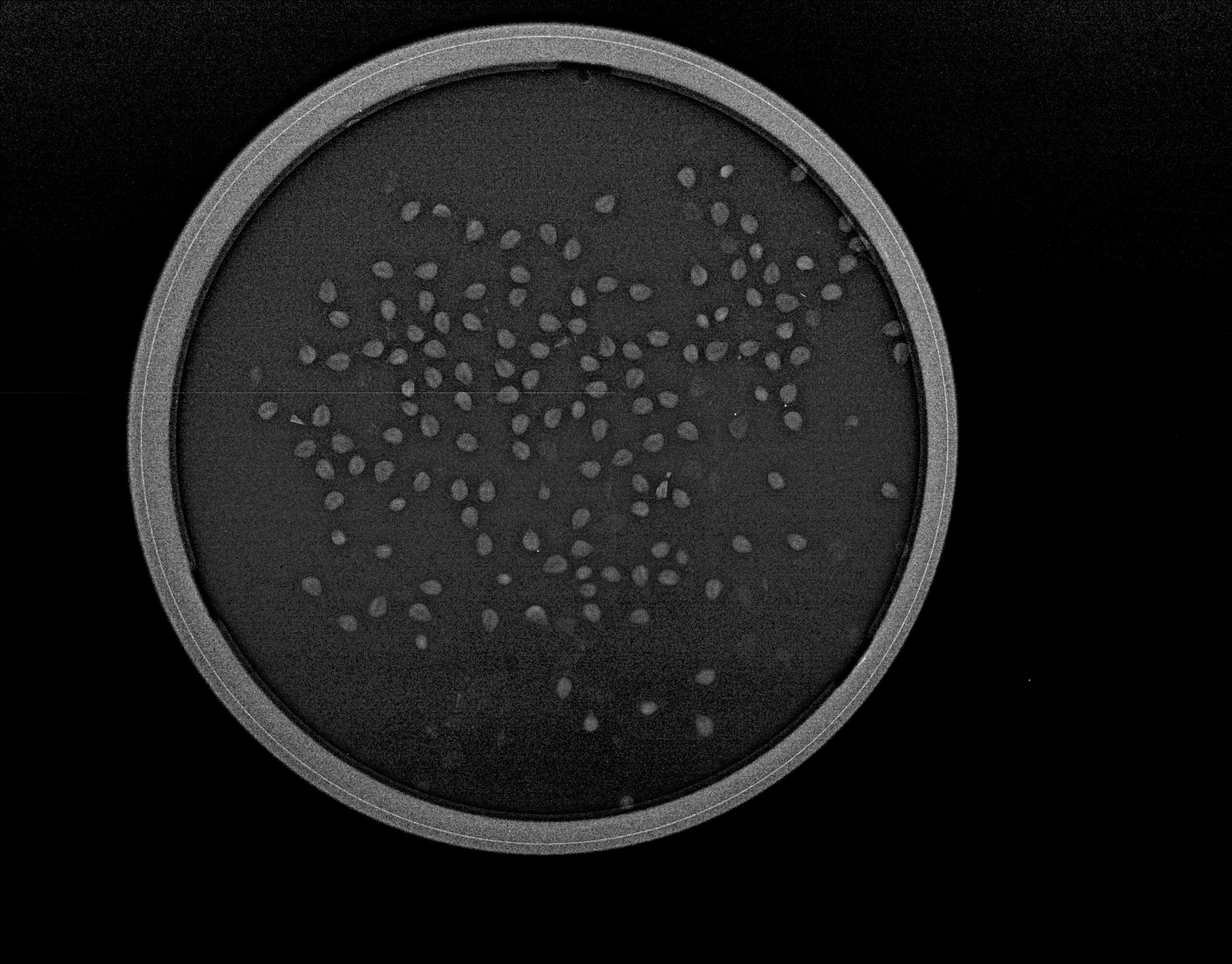
Jared and I conducted a couple trials with x-raying the lilium seeds. We will experiment with adjusting the settings on the x-ray and after effects for the images. Further experimentation is necessary to generate high quality x-ray scans in order to classify the seeds. In the x-ray images, the seeds that contain fertilized embryos will appear bright white (Figure 1). We use this to classify which seeds contain fertilized embryos and which ones are empty. The contrast of appearance in the x-ray is due to the increase in density of the fertilized embryos.
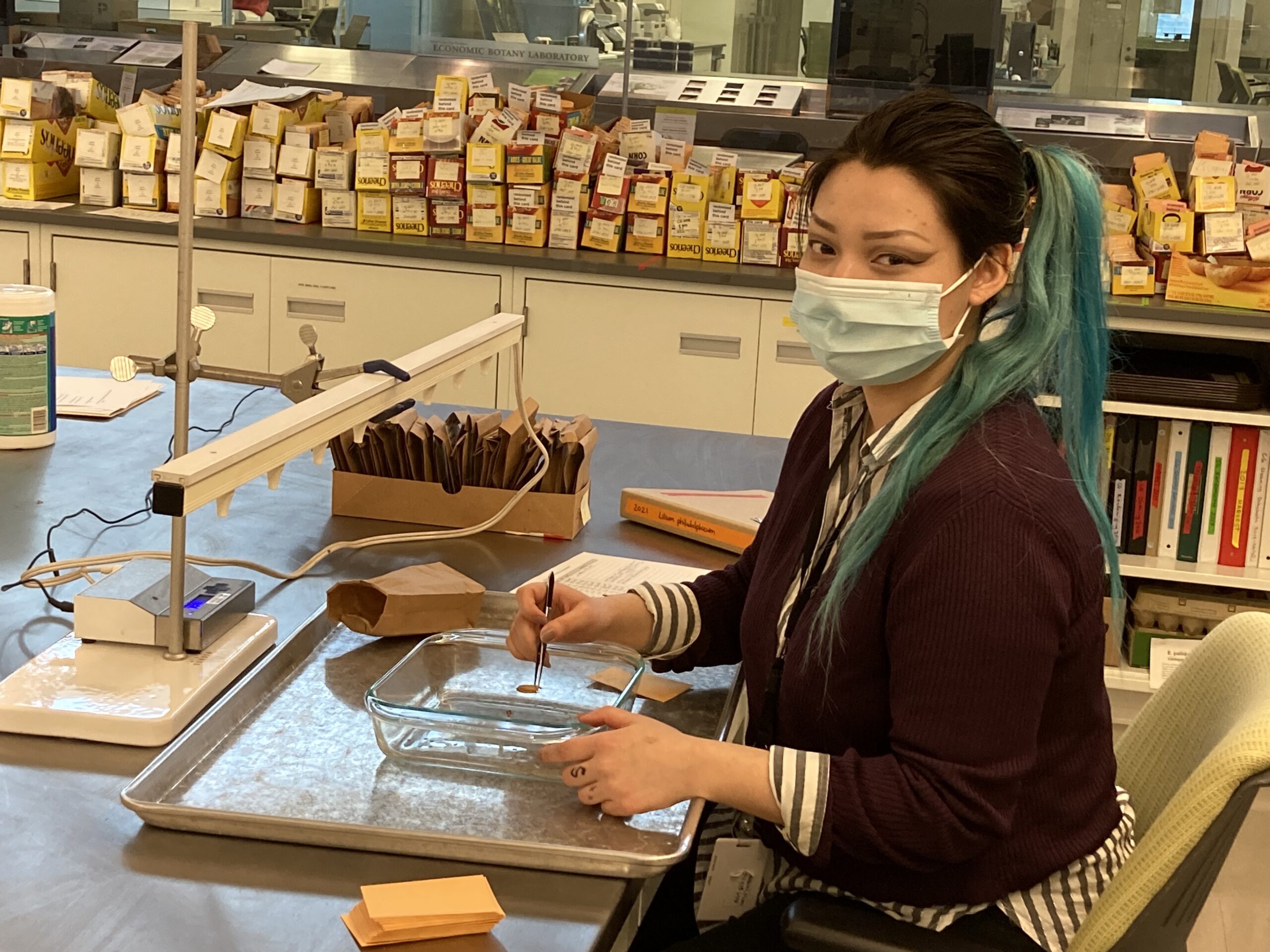
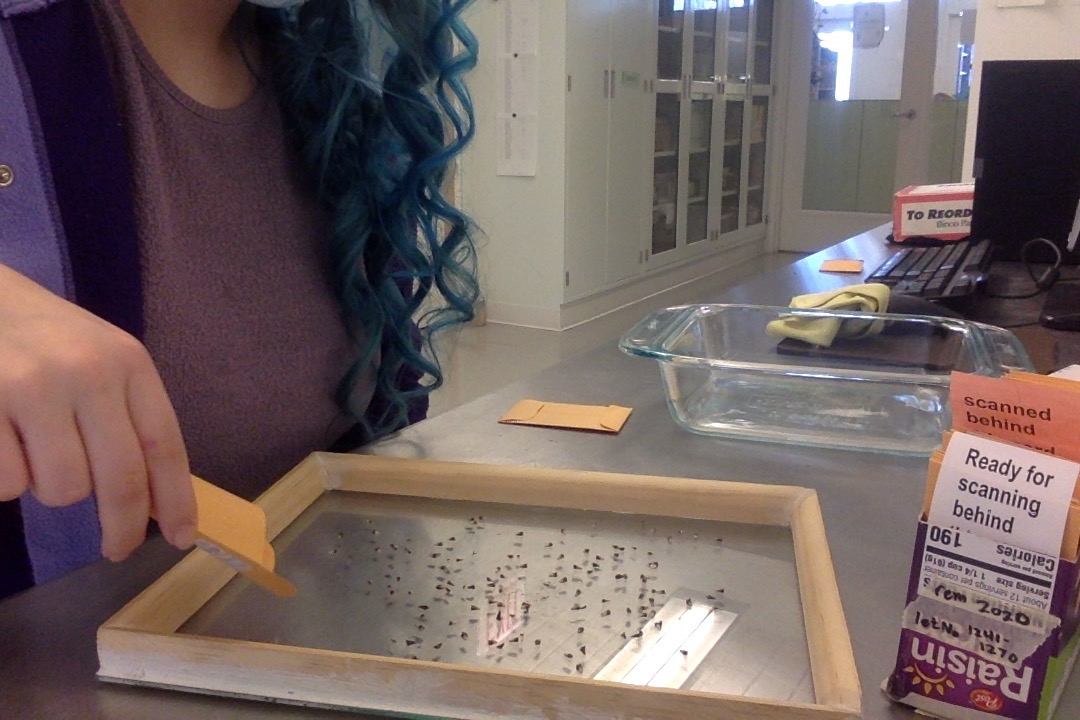
This week I was able to clearly define the research question for the L. philadelphicum project. My research question is focused on investigating pollination and reproduction success in wood lily. Specifically, does seed set increase with the proximity of neighboring flowers. If lilies have closer proximity to neighboring flowers, then the proportion of fertilized seeds will increase as well. We will be able to test our hypothesis with the collected seed data and recorded GPS location of each individual plant. Additionally, I made progress on cleaning lilium seeds and started writing the scanning protocol. We found that using an ionizing bar will help prevent static which causes the seeds to be difficult to handle (See Fig 1).
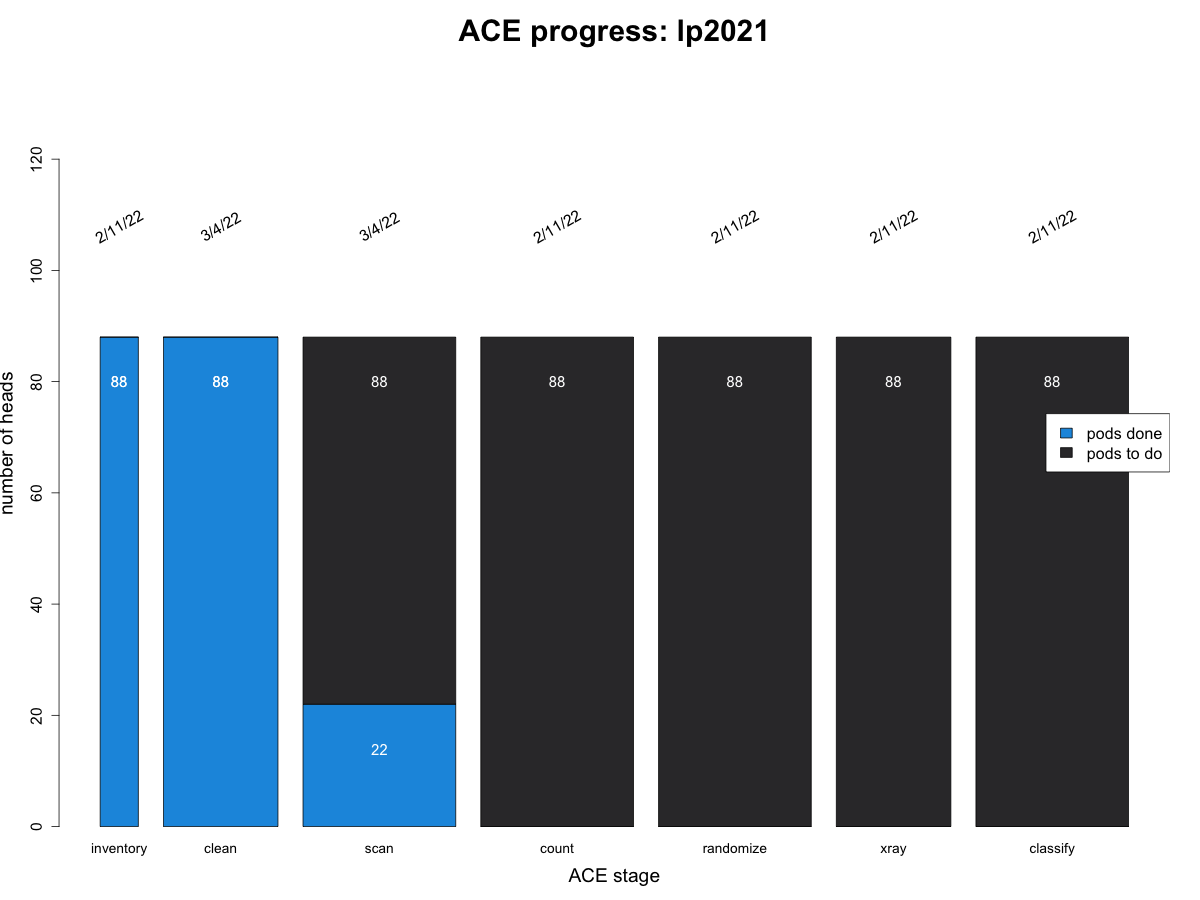
Furthermore, I was able to create a graph representing the progress of the lilium project with the help of Alex (Fig 3). Similarly, to echinacea, the lilium project will also go through the main steps of cleaning, scanning, counting and x-raying. This graph allows us to visualize the progress being made in the ACE protocol for L. philadelphicum. Stay tuned for next week while we experiment with methods in counting and x-raying lilium seeds!
Figure 1. Sophia cleaning ilium pods with ionizing bar
This week, I have decided on my independent project for the rest of my internship! I will be working with Lilium philadelphicum, wood lily and investigating questions surrounding its pollination and reproduction. I felt more informed on the past research by the Echinacea Project after hearing presentations from Stuart and Jared. Jared further taught me the benefits of fire on prairie ecosystems. Prairie plants are fire dependent and thrive after burns. This is due to the natural landscape and indigenous traditions. It was very interesting to learn about the natural history of our region and how plants grew before impacts of modernization. Results from past research in the lab has shown benefits from prescribed burns on the reproduction of echinacea. This applied conservation method could potentially benefit other fire dependent prairie plants as well! I hope to observe patterns and variation of pollination success in L. philadelphicum. I am currently developing a hypothesis for this project. Later on I will analyze the data set collected by Jared over the summer.
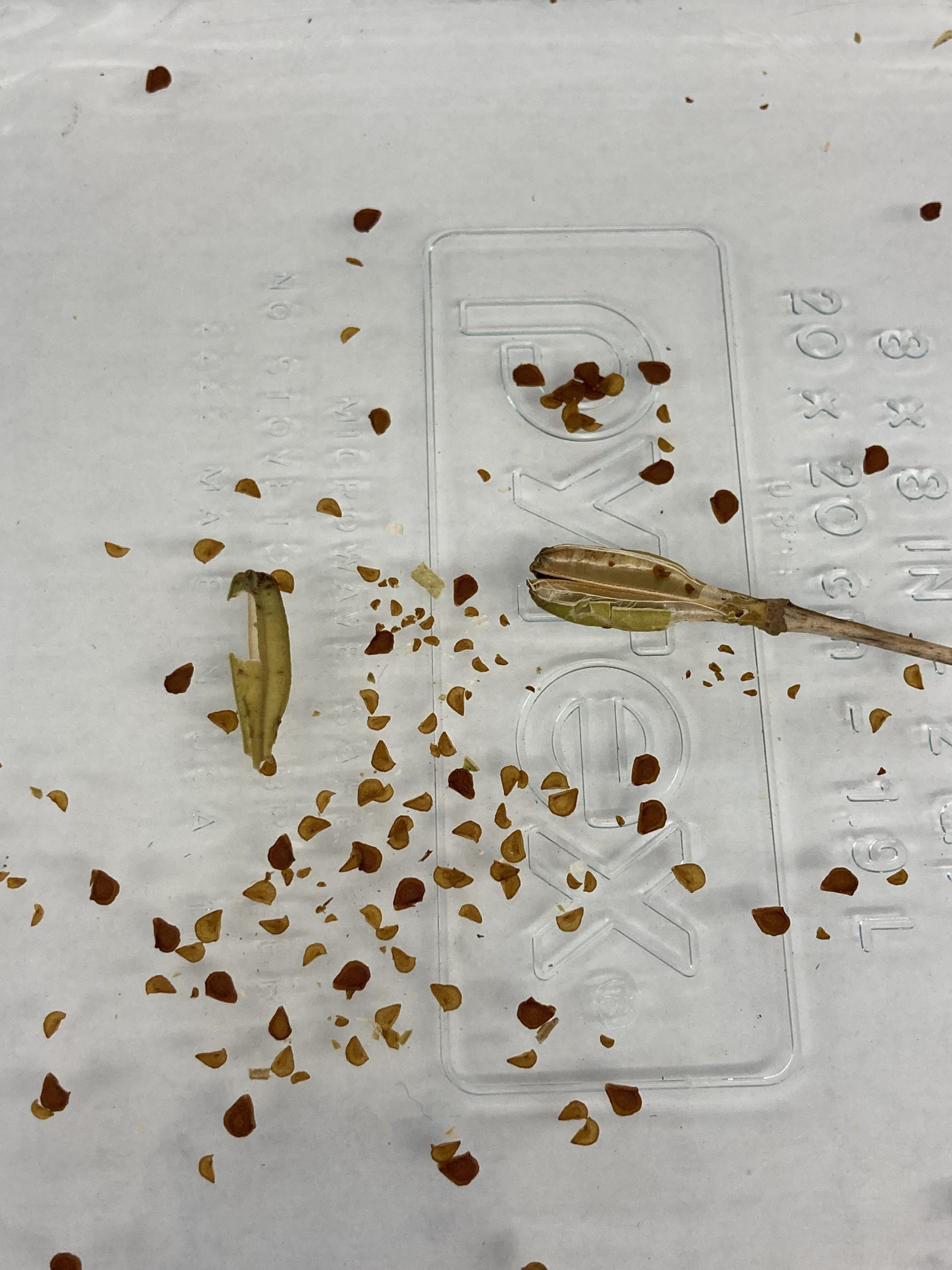
We have already completed inventory of the data set and started on the cleaning process of L. philadelphicum. The fruits of L. philadelphicum can be seen in the picture below. It contains many seeds, some of which are large and dark, others small and lighter in color. We hope to find interesting information through the variation of these seeds. Stay tuned for next week, as I will be working on developing the protocol for cleaning, scanning and counting these seeds.
The fruit/pod of wood lily contains three separate chambers stacked with seeds.
This summer we harvested seed pods from 25 Green Milkweed (Asclepias viridiflora) plants in the study area. Green Milkweed is uncommon and seems to be declining in our study area. This species prefers similar habitat to Echinacea. Plants tend to be sporadically distributed across dry prairies on steep hillsides, sandy soils, and well-drained gravelly areas. Our experience has been that flowering plants often fail to produce seed. We rarely find more than a handful of plants that produce pods in a given year.
Flowering Green Milkweed with bumblebee visitor at Staffanson.
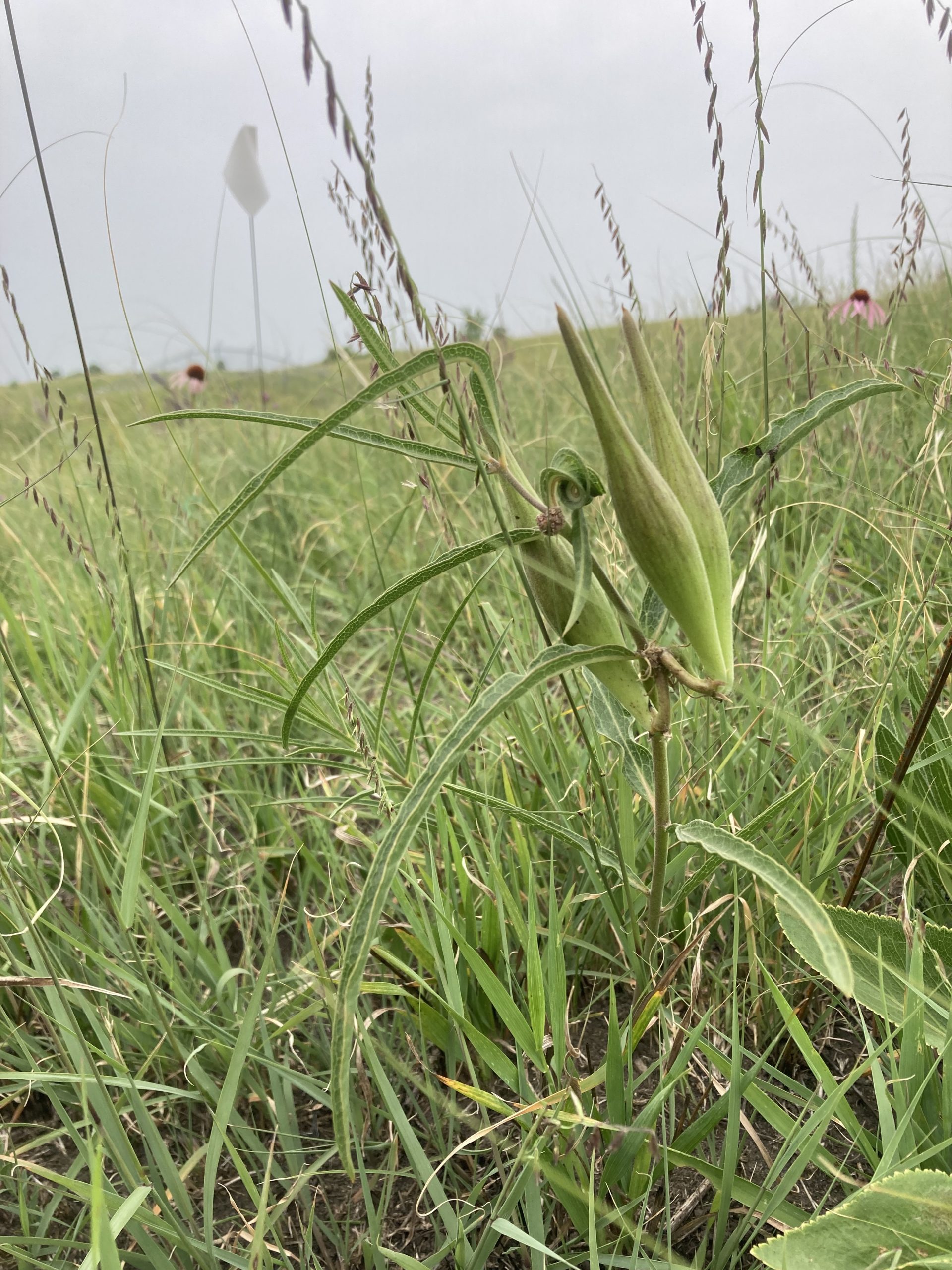
Green Milkweed with three pods at Landfill East.
After harvesting and drying seeds, Jared cleaned seed by removing their fluffy coma. Jared then counted all the seeds and randomly selected a minimum of 30 seeds for x-raying. X-rays revealed variation. Some ovules lacked an embryo , others had whole, intact embryos. Many ovlues fell somewhere in between. They contained embryos that were undersized, shriveled, or fragmented. There was no external evidence of seed predation. The proportion of full ovules ranged from 0 to 100 percent. We are not sure whether “partials” reflect resource limitation and seed abortion, a form of late-acting self-incompatibility, or something else entirely. We are doing some research to help us interpret the biology underlying these patterns.
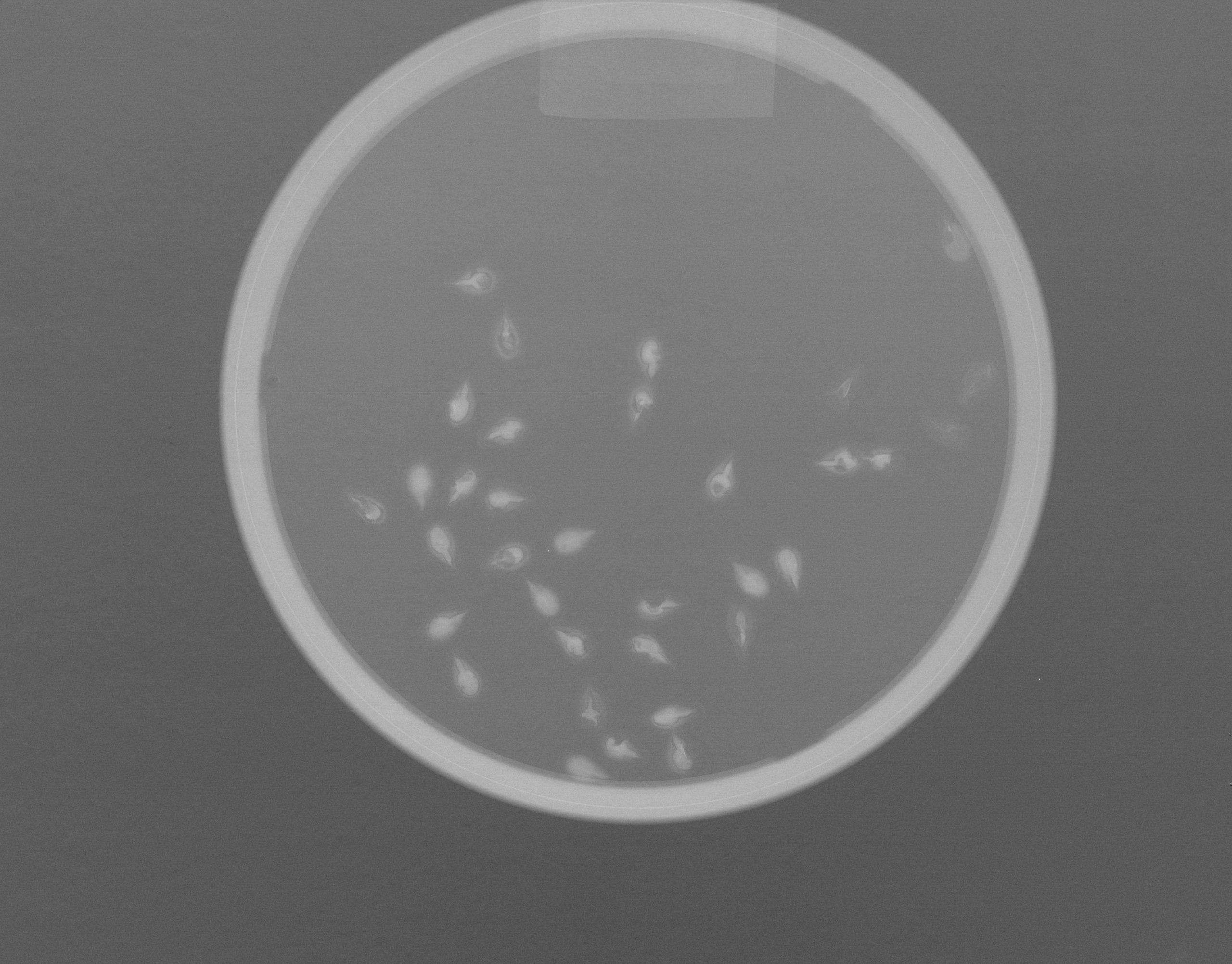
X-ray image of Green Milkweed seeds. Note the variation in embryo size, shape, and integrity in the x-ray image.
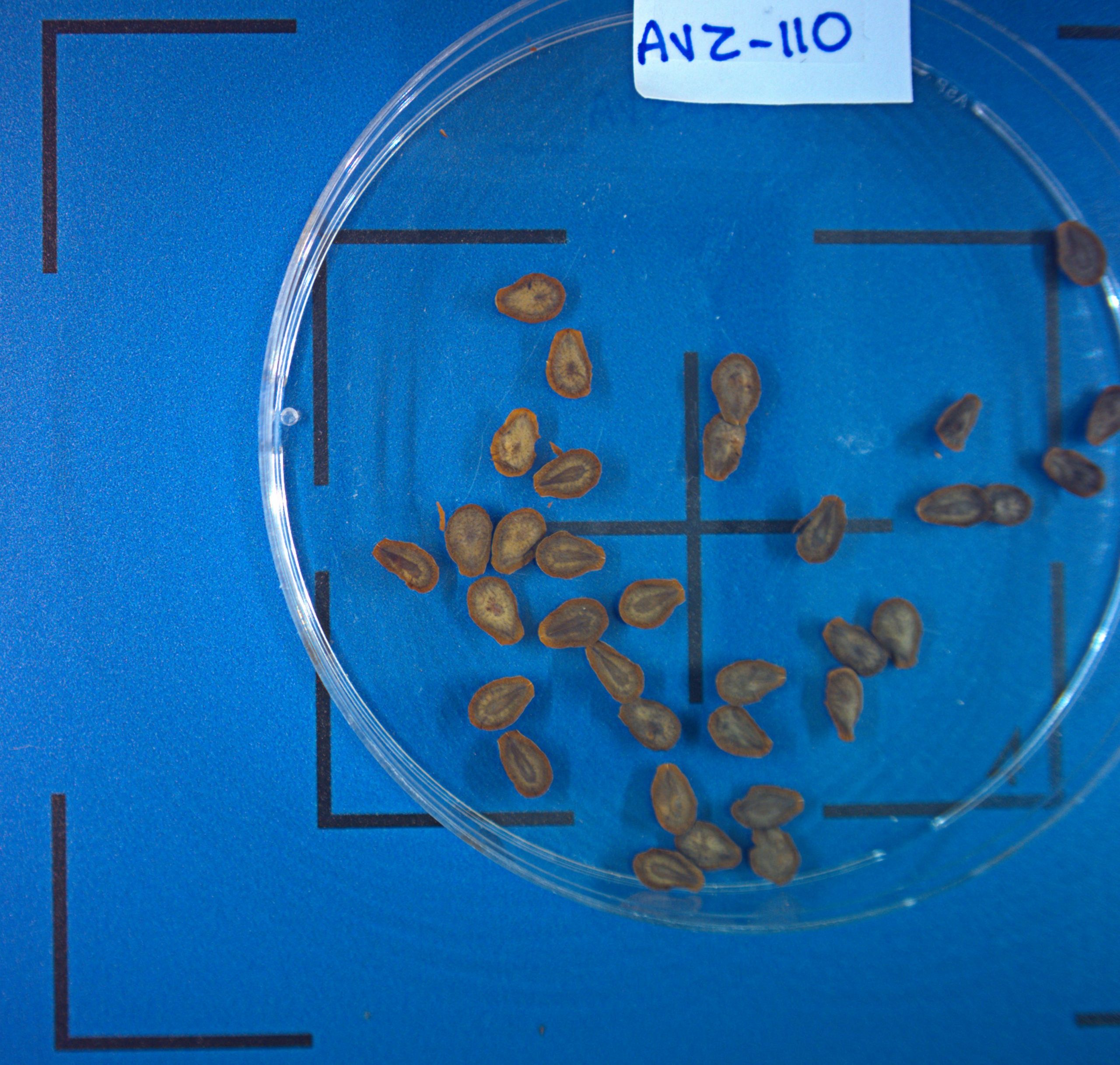
Scanned image of the same Green Milkweed seeds.
After cleaning, counting, and classifying, Jared prepared a subset of Green Milkweed seed for germination. CBG’s production greenhouse will germinate and grow 392 milkweed seedlings representing 15 maternal lines. We will plant these seedlings in an area south of P8. Although these plants grow slowly, our hope is that they will be an excellent resource for investigating milkweed pollination in a couple years. We also hope to harvest seed from these plants and include Green Milkweed in our seed mixes for restoration!
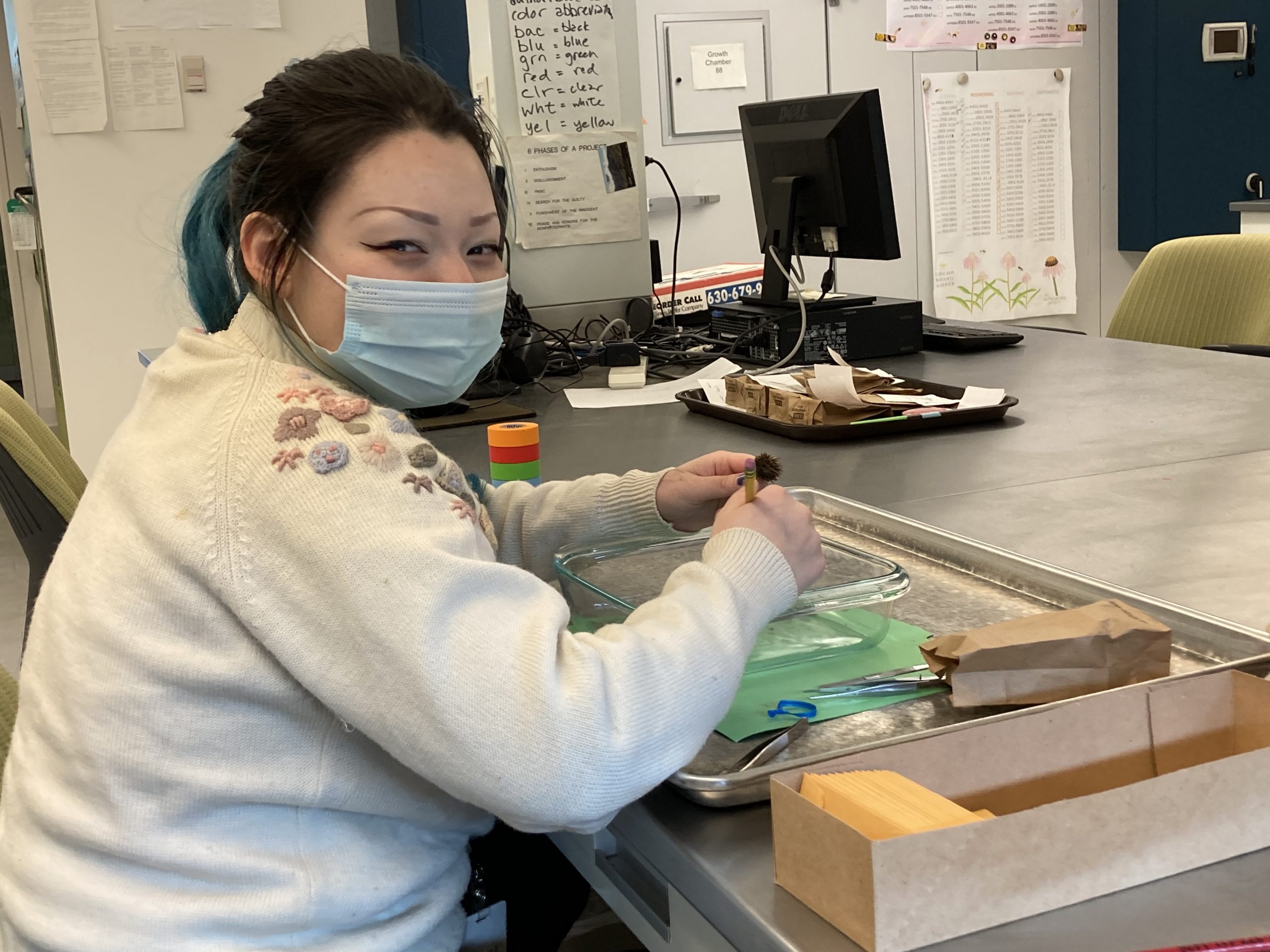
In the first two weeks of being at the Echinacea Project Lab, I have become well acquainted with parts of the ACE protocol. I have done counting, cleaning, re-checking, randomizing, and scanning. In my first week, Alex showed me how to clean echinacea heads. During the cleaning process, we press the dried echinacea head into a glass pyrex tray. Usually, the achenes will fall out. However, i’ve gotten some really tough flower heads where the achenes were firmly attached to the bracts and other parts of the head. Alex taught me a good method to gently grab onto the achene with tweezers and wiggle them out of the head. After adapting that hack, things went much smoother. The contents of each head get separated into two envelopes. The achenes are stored in the achene folder and the bracts and dust are stored in the chaff folder. The achenes are ready to be scanned after a round of rechecking to ensure all achenes are accounted for!
I found it fascinating that there is so much variation in achenes between different echinacea heads. On the other hand, there are many similarities between achenes from the same flowering head. I also realized that handling achenes is a very delicate process because they have a tendency to fly away. I was very impressed with the organization system of all the achenes going through the ACE protocol. Different boxes and labels indicate which stage the achenes are currently at in a certain box.
Next week, I will be developing some questions for my own research project. I am excited to start my journey to uncover the secrets of echinacea!
Me cleaning an echinacea head! Picture taken by Alex.
I am part of the Class of 2025 at Carleton College and I plan to major in Environmental Studies.
Research Interests
In general, I am interested in helping to conserve natural prairie areas through networks and corridors so that they can become more resilient to climate changes. I am also curious about how to connect with stakeholders and landowners to make this happen, but also how to combine my interest in GIS with prairie restoration.
Statement
I am from Rochester, MN, but my home away from home is our cabin near Lanesboro, where I help to restore the surrounding native prairies, forests, and savannas. I also greatly enjoy hiking the bluffs there with my family and dogs.
Collecting seed with my dad at our cabin for Project Wingspan
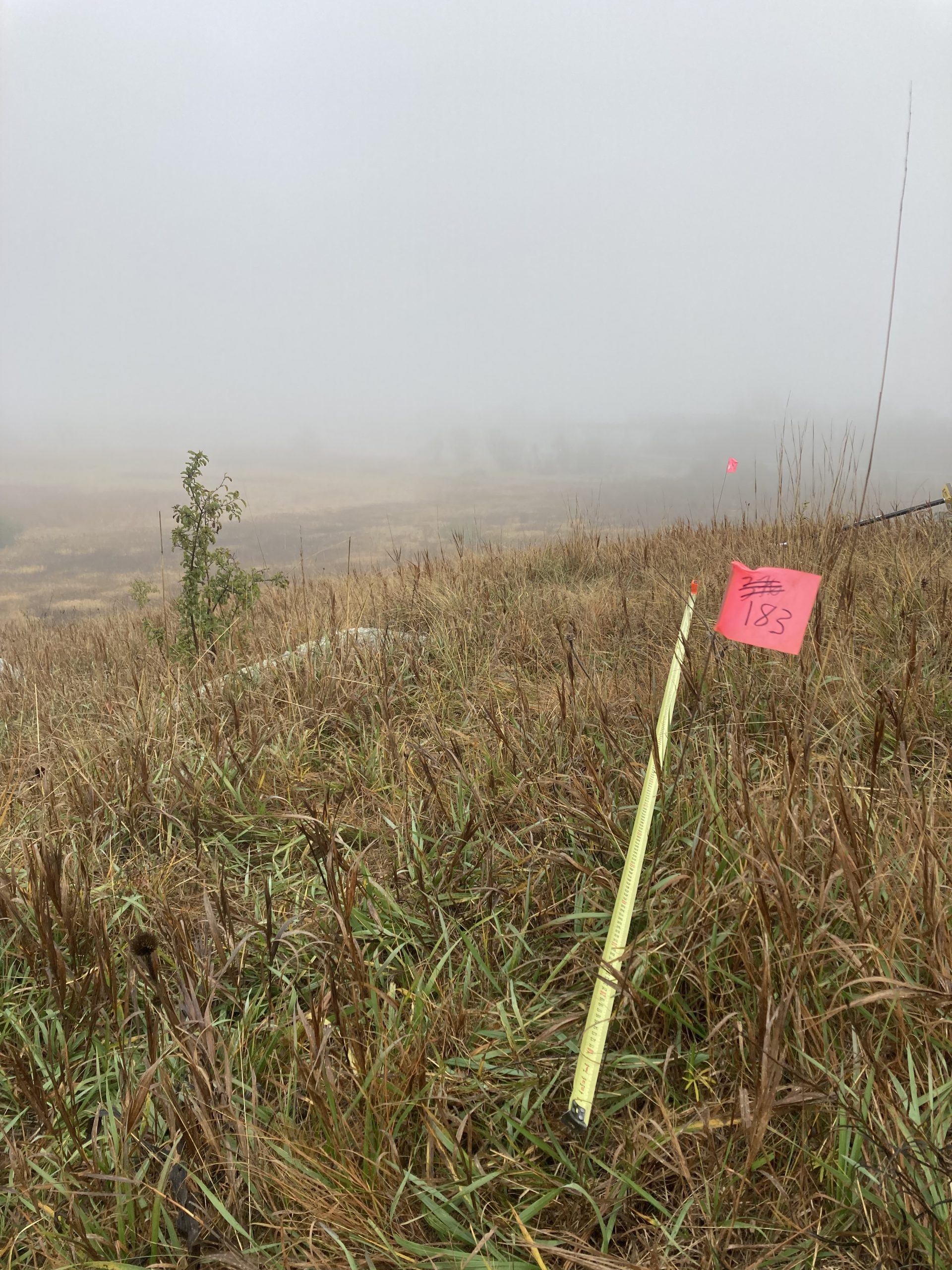
It has been a hectic couple weeks for the Echinacea Project. Last week we braved fog, wind, and rain to wrap up the 2021 field season. Mia and Alex drove up from Chicago to help finish planting and pick up flags in the remnants.
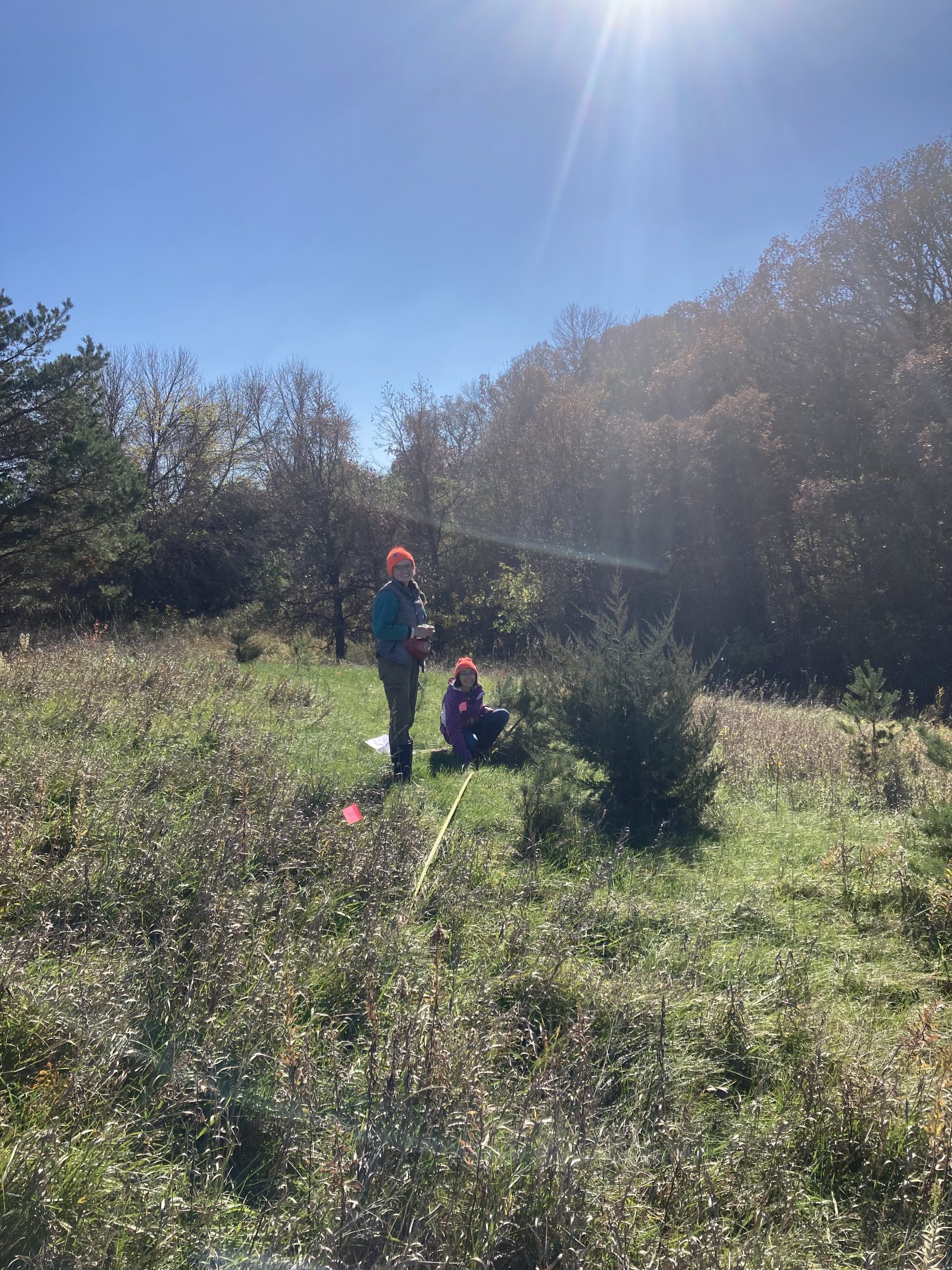
On Thursday and Friday, Mia, Alex, and I sowed Echinacea seed in the 76 transects that comprise our seed addition experiment. This experiment will help us quantify the effects of fire and other environmental variables on seedling emergence and survival.
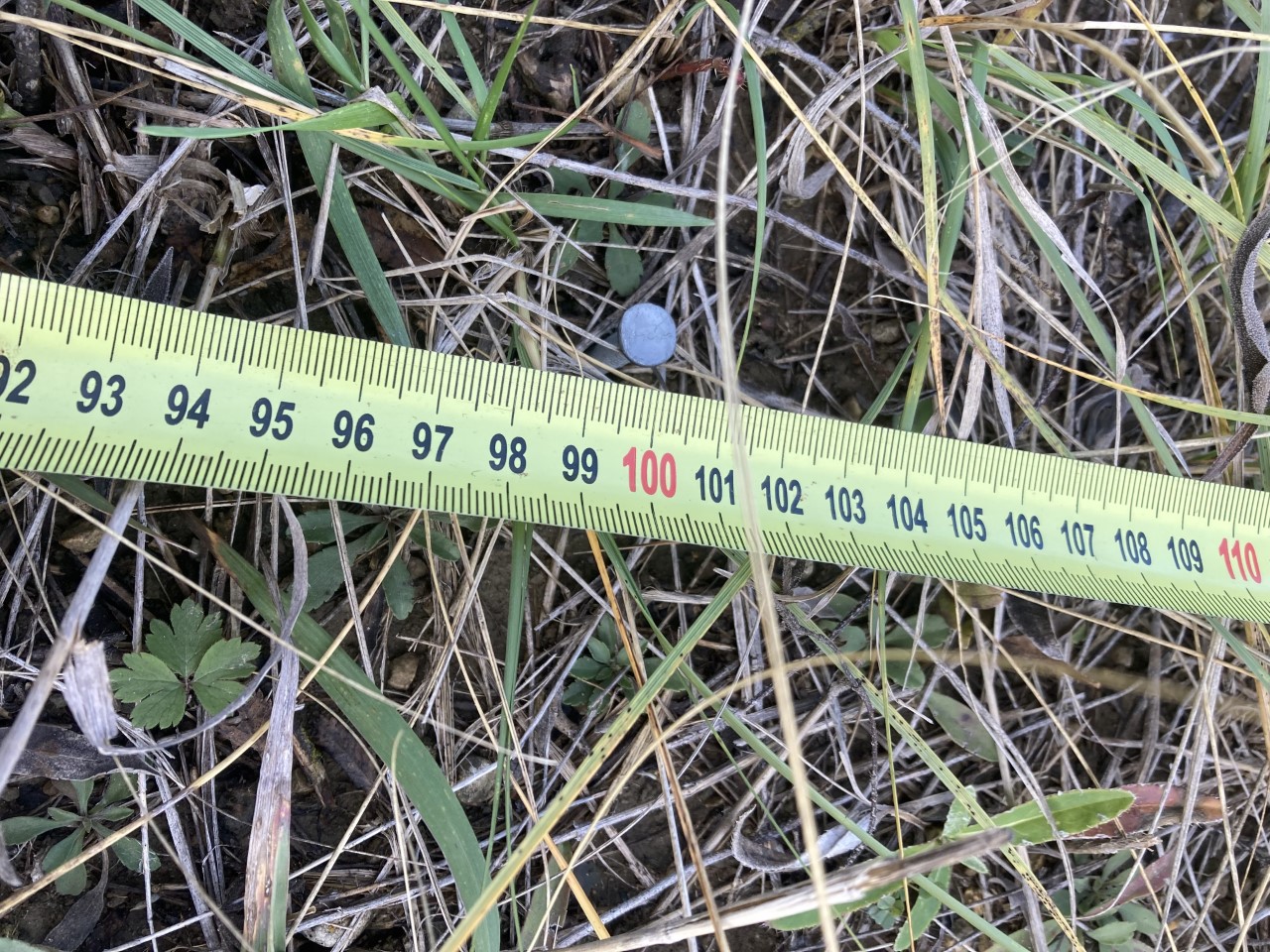
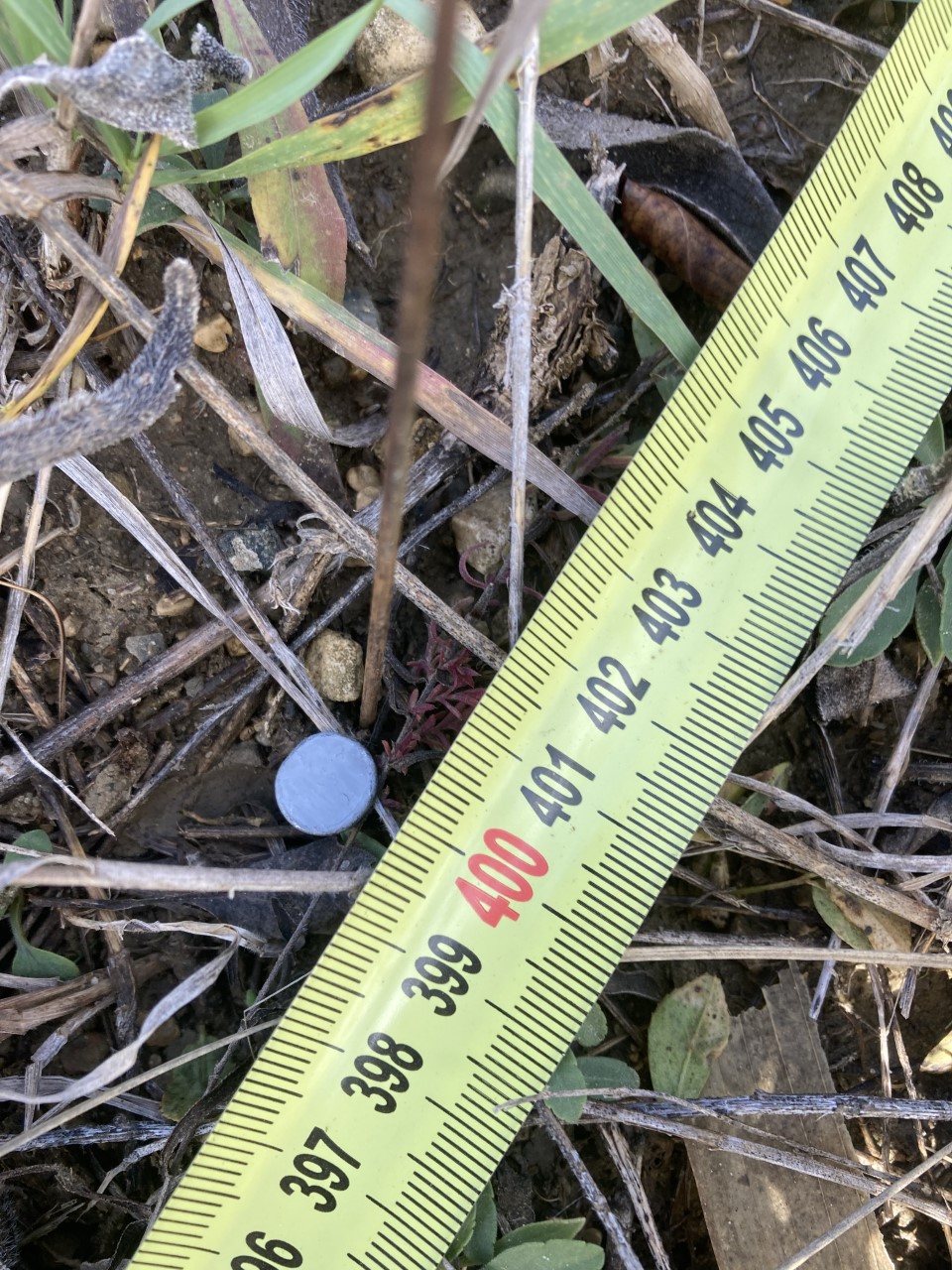
The planting went smoothly, we averaging approximately 2 minutes per transect. Prior to sowing seeds, we located transects and found nails designating the start and end of focal 1-m segments. We laid a meter stick on the ground stretching from start nail to end nail. We then spread seeds evenly between the 5 and 95 cm marks of the meter stick in line with the transect. Once empty, each seed envelope was given one last flick to dislodge any stubborn achenes and we gently tapped the meter stick against the ground to ensure any achenes that landed on blades of grass or other vegetation were not catapulted across the prairie when we picked up the meter stick.
Barring a shift in the weather that brings more favorable conditions for burning, Team Echinacea has moved indoors for the winter.
As part of the 2020 NSF grant to study fire effects on plant reproduction and population dynamics, we are implementing a seed addition experiment in numerous remnants. From previous studies, we know that fire can improve recruitment which is important for population growth. However, our previous observations of recruitment in remnants conflate the amount of seed entering the seed bank and the seedlings emerging from the seed bank. The goal of this seed addition experiment is to help us directly quantify the effects of fire on seedling emergence and early seedling fitness. We will use these data to parameterize demographic models for Echinacea.
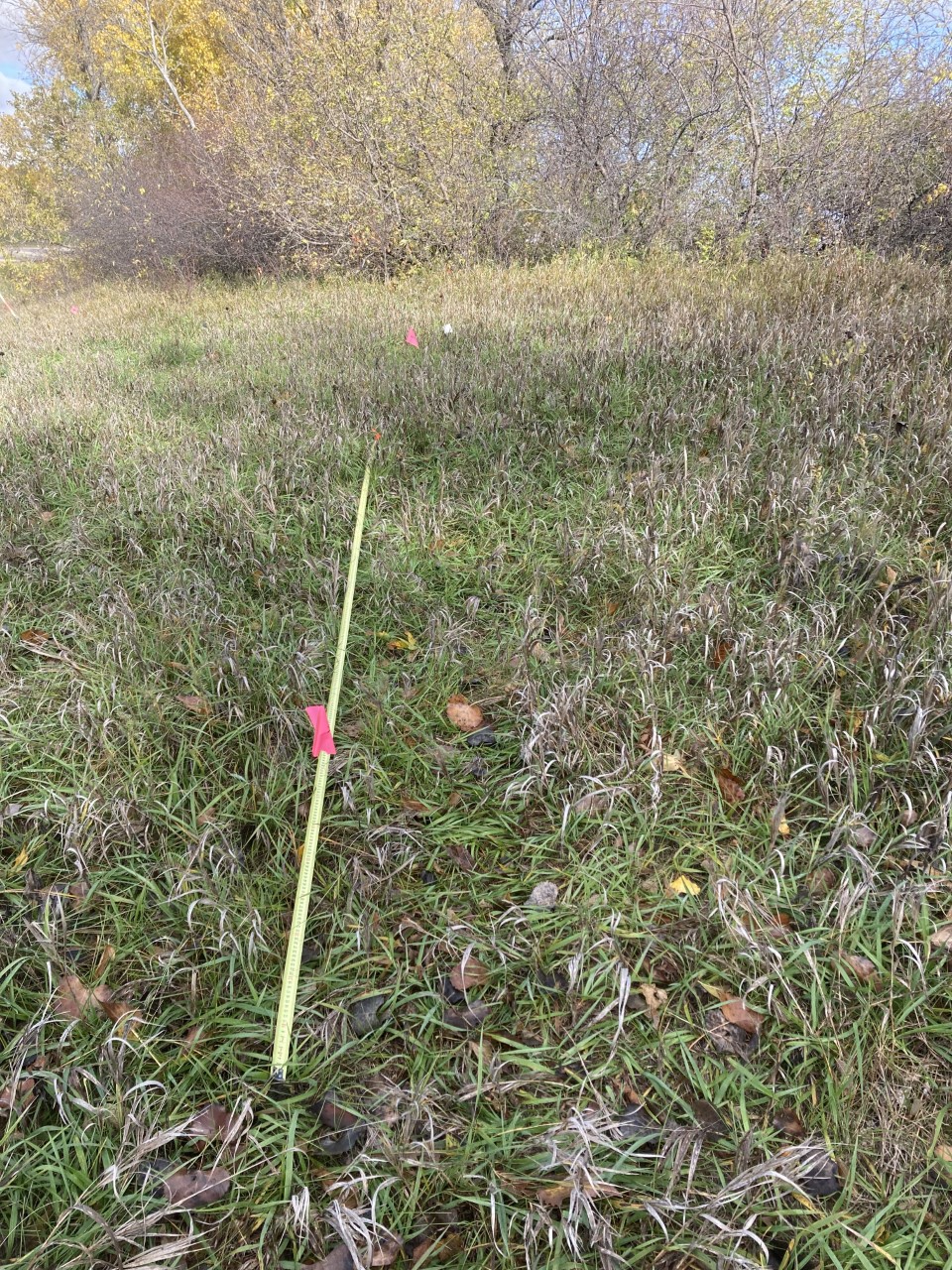
For the seed addition experiment, we established 76 transects distributed across 32 prairie remnants with Echinacea. Transect locations were determined by generating an ordered list of random points (random integers corresponding with MN state plane coordinate system) within each remnant and selecting the first 2-4 random points that were located within ~5m of an adult Echinacea but avoided dense patches of flowering plants where we may have difficulty distinguishing experimental seedlings from natural recruits. Each transect originating at a random point is 4-m long and contains four 1-m segments. Most transects extend North from the random point but some extend East (in sites where North-South transects may span an entire ditch). One segment per transect was chosen at random to be planted in fall 2021 and one transect chosen at random to be planted during fall 2022. The study includes 9 sites burned during spring 2021 as well as 7 sites slated to burn during spring 2022.
Over the past week, I have been using a GPS unit to stake the transect locations. I marked the start and end point of each transect using a blue pin flag and installed nails at 1-m intervals using measuring tape (this will facilitate the use of meter sticks and/or measuring tapes in the field). We used 4 inch galvanized common nails. Pro tip: these nails were considerably less expensive at Fleet Farm than other vendors. I plan to finish setting up transects either this afternoon or tomorrow afternoon. Our goal is to begin sowing seeds later this week.
After a balmy stretch of weather (at least balmy for Minnesota in October), colder temperatures and shorter days have descended upon western MN. We experienced a killing frost Saturday (Oct 16) morning. Dwight and Jean reported that their tomatoes and other frost-sensitive garden plants are done for the year. I also awoke to frost this morning after a cold and rainy Wednesday (Oct 20).
During two of the next three nights, overnight lows are predicted to dip below 30 F. The forecast is also calling for a chance of snow (mixed with rain) Sunday morning. We had hoped for a dry, sunny stretch of weather this fall favorable for burning but the next week looks iffy.