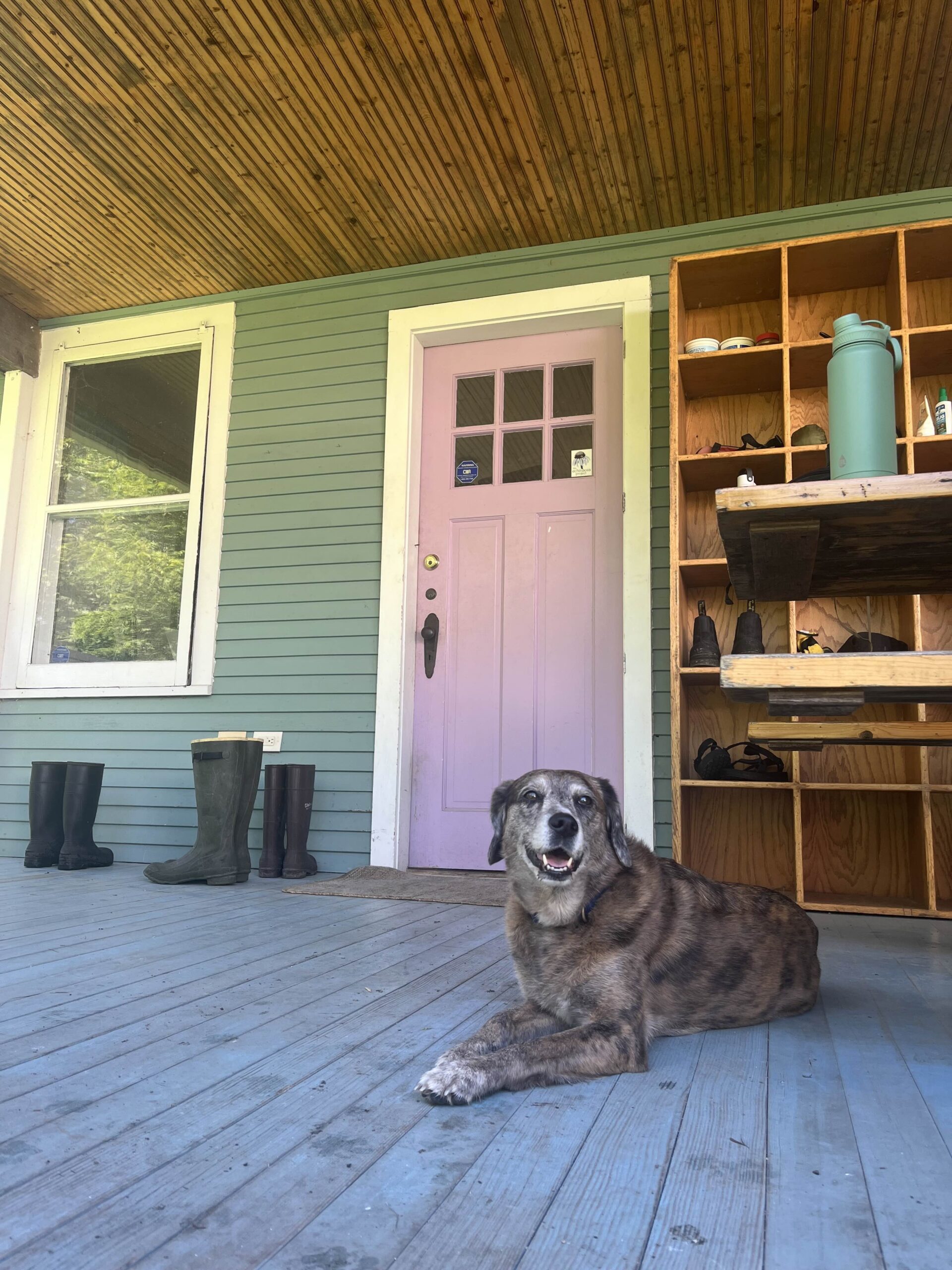
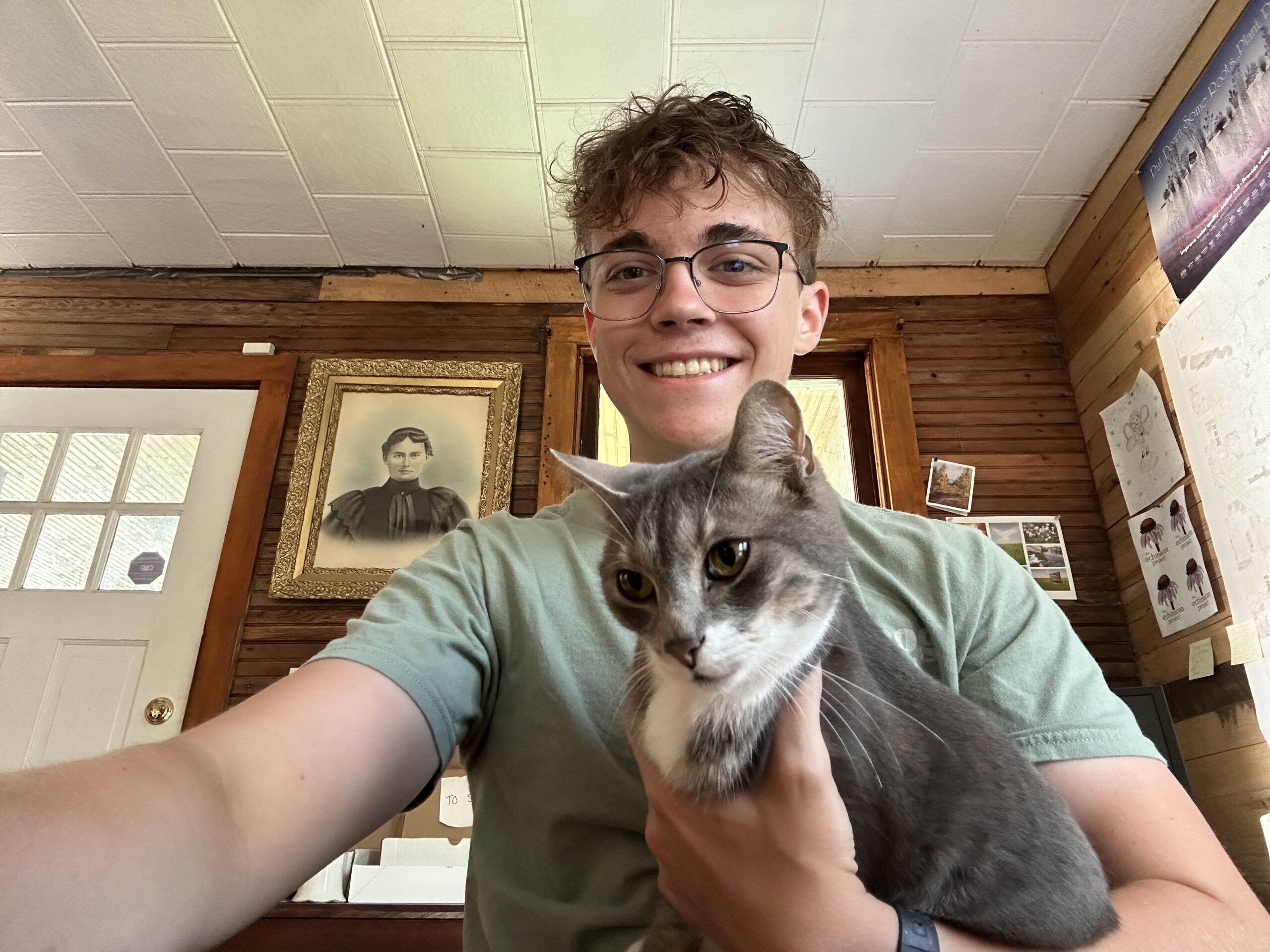
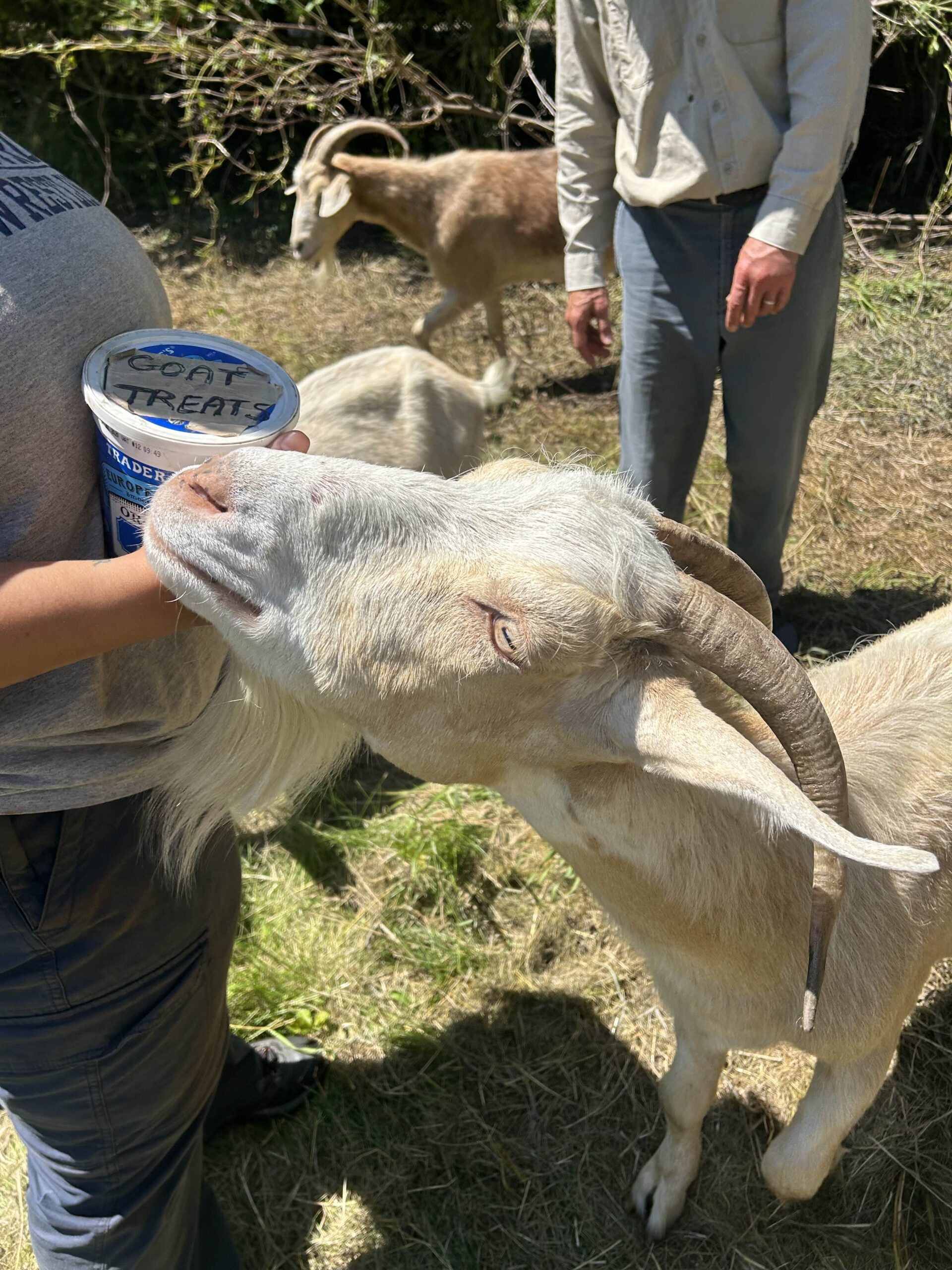
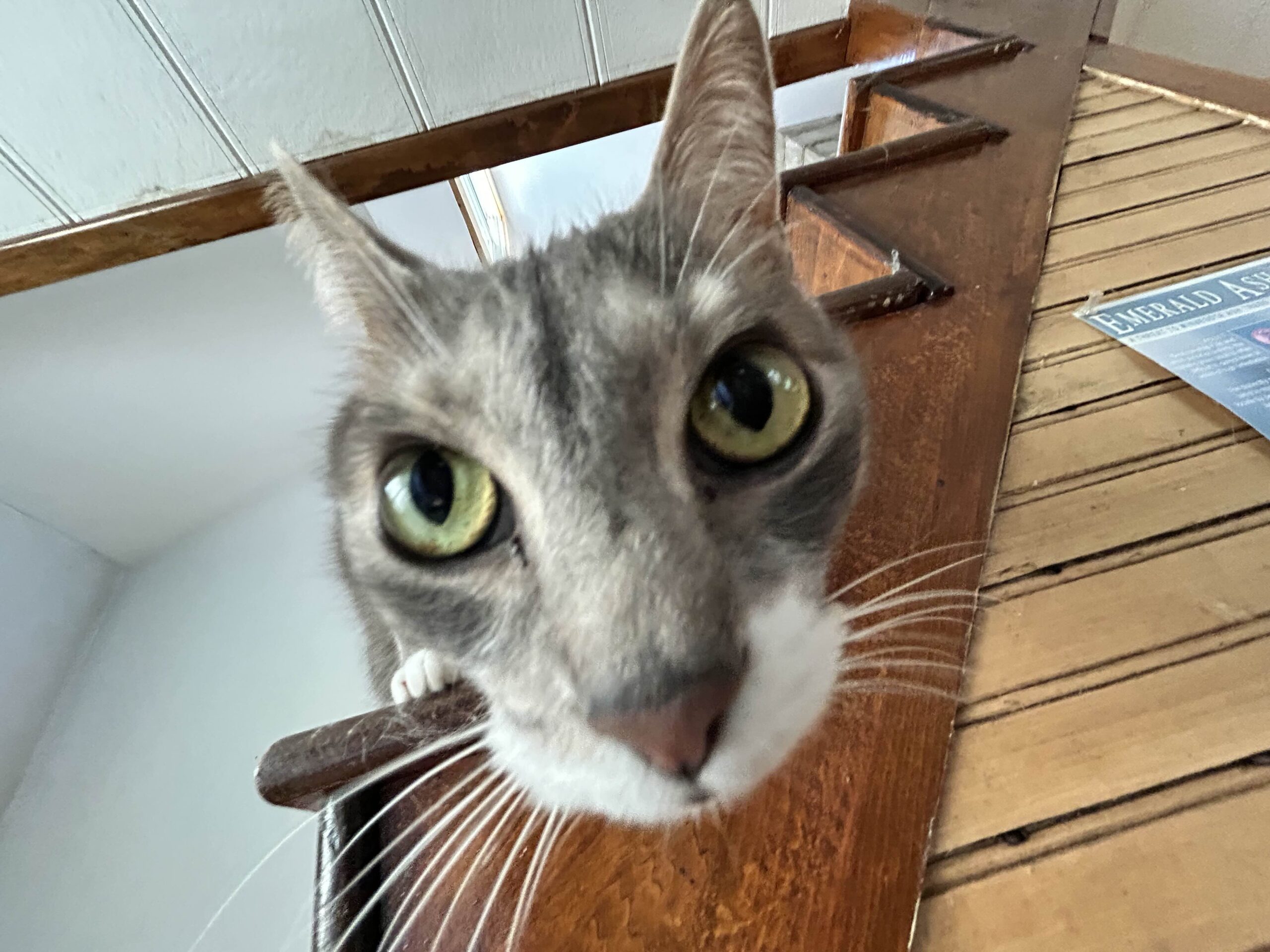
New members of team Echinacea! This week, we moved in our newest members—goats. The goats assist in weed removal. These animals are particularly good at removing the persistent and invasive buckthorn from patches around Hjelm. They’re also great for team morale. We have also had some time with Gretel and Stuart’s dog (Blue) and cat (Teenie).
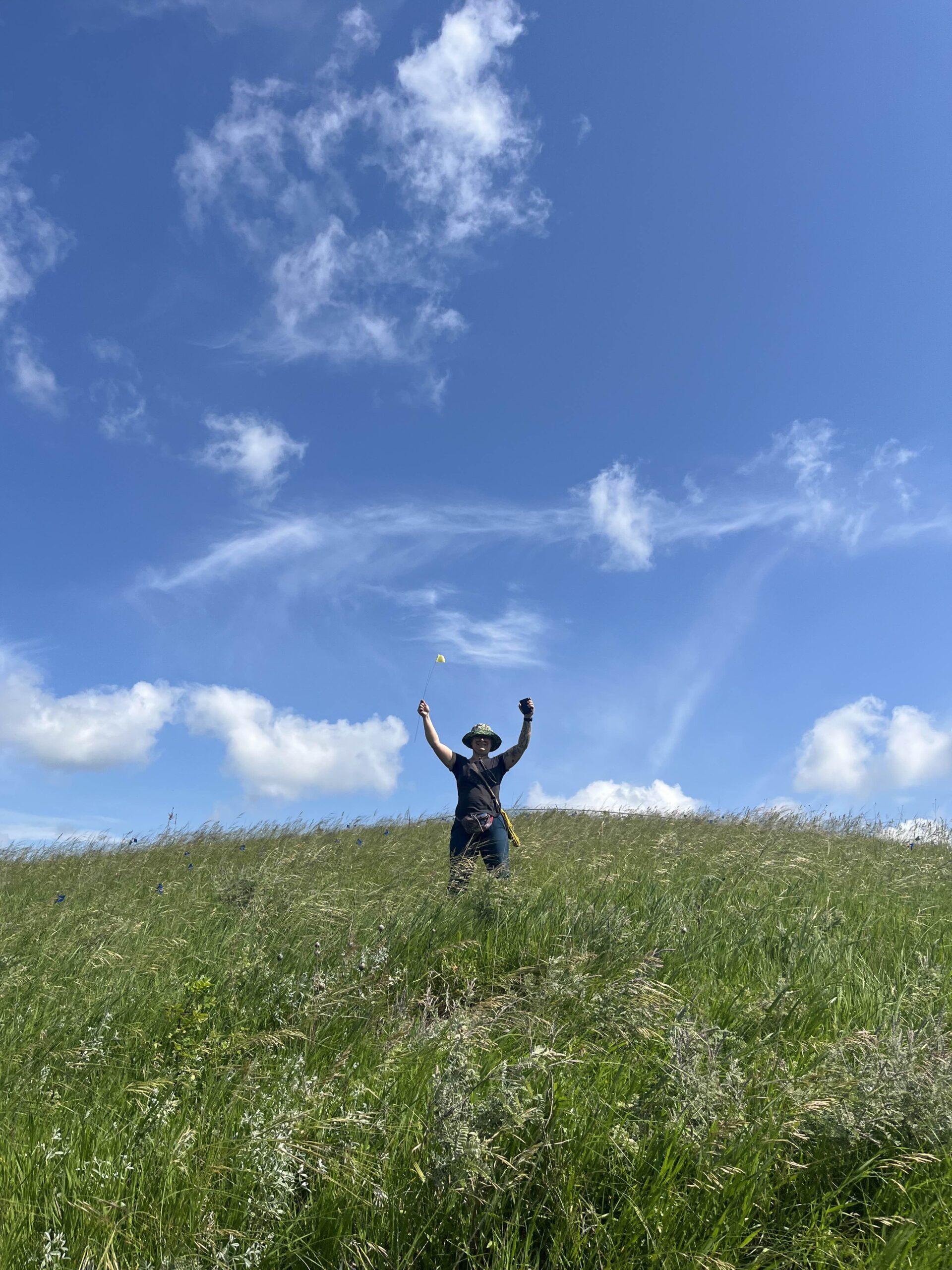
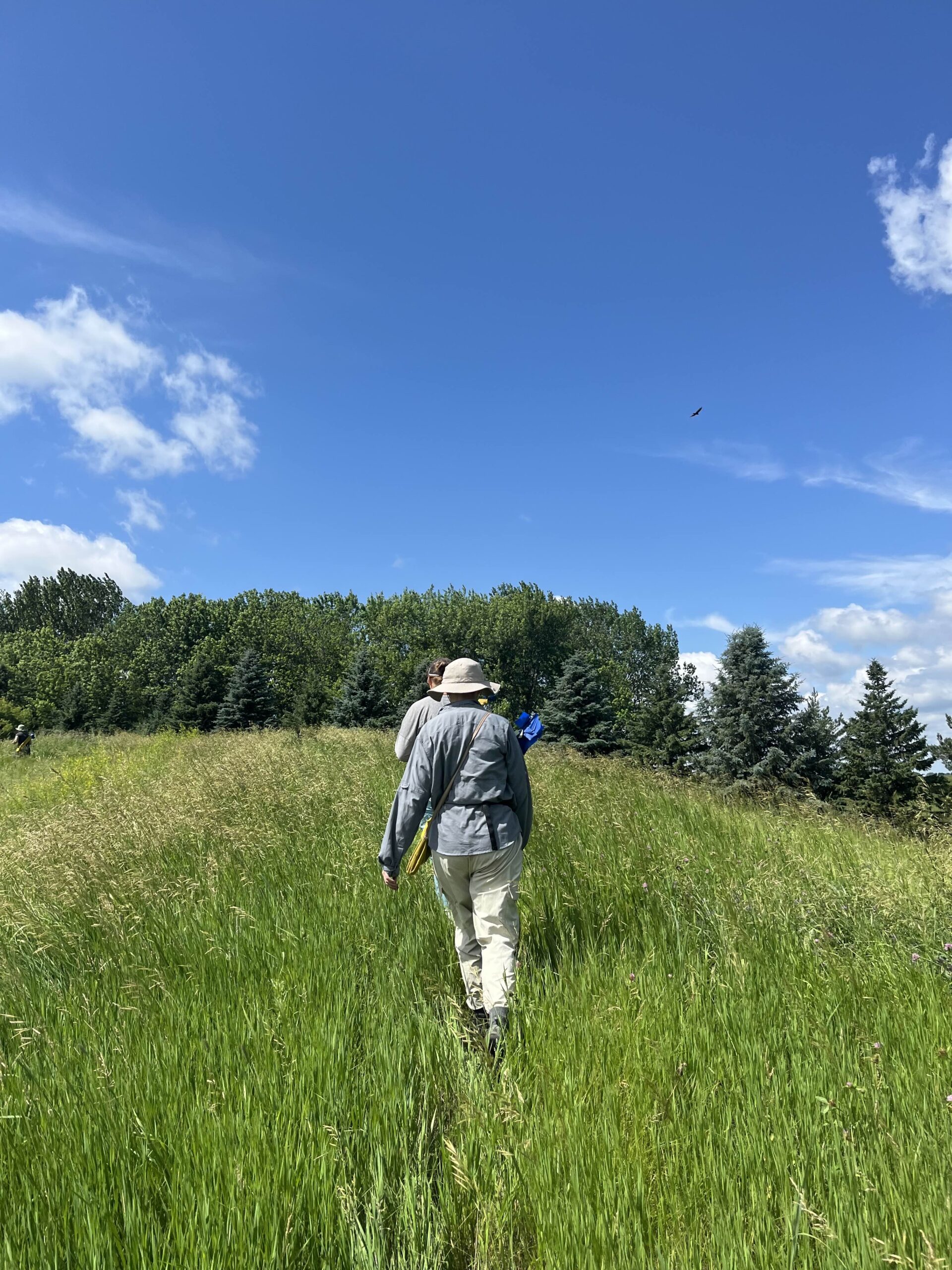
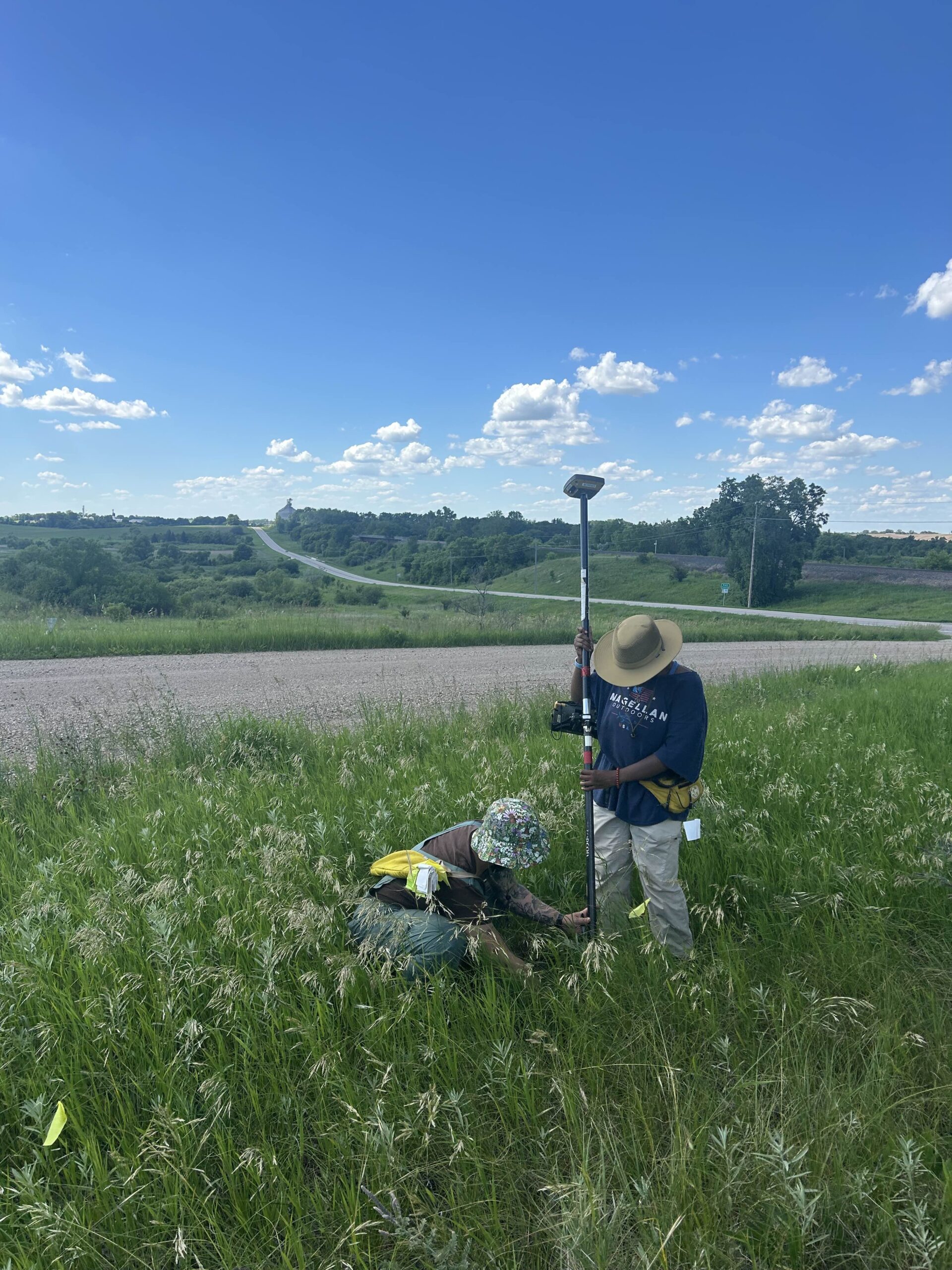
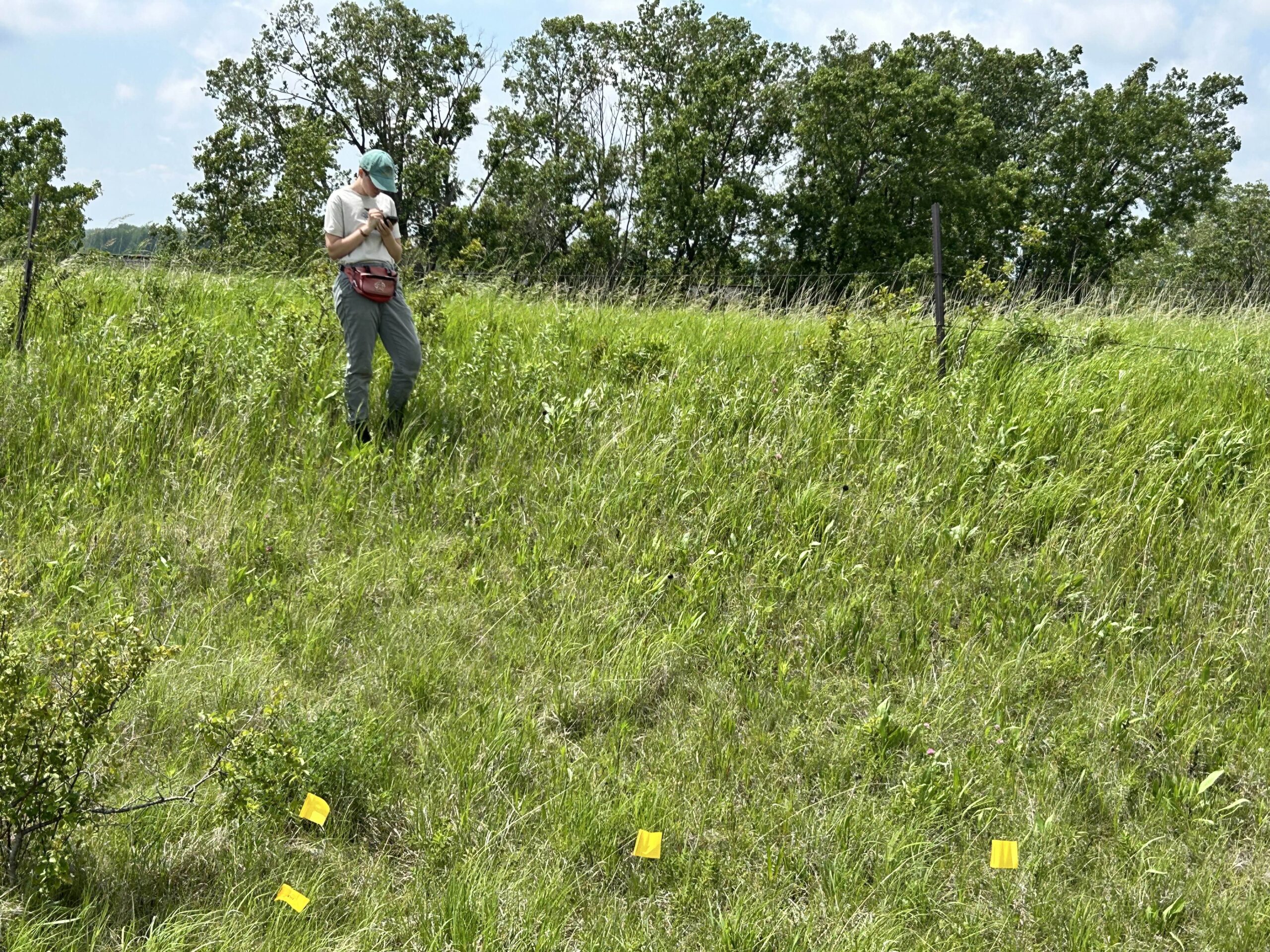
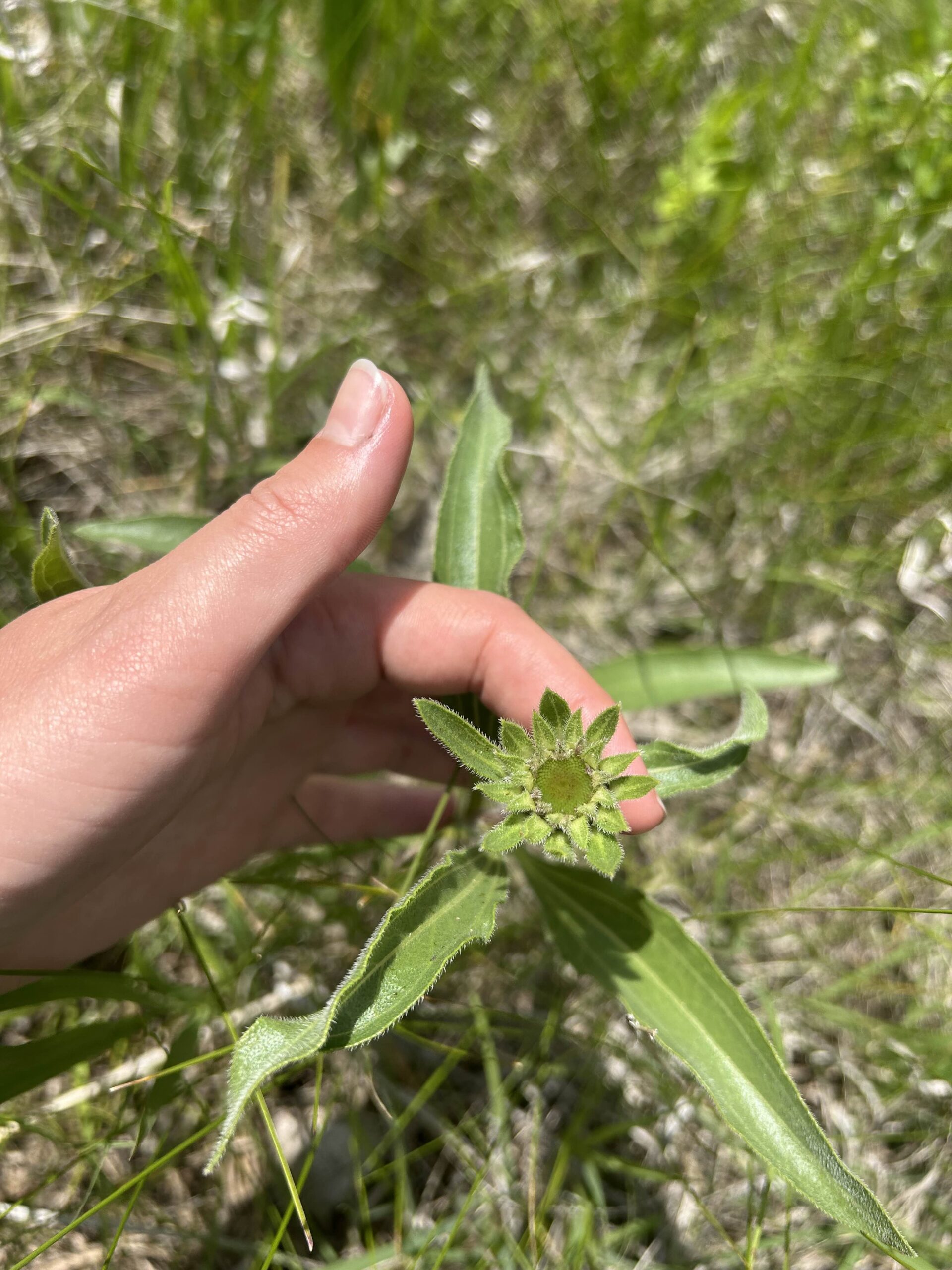
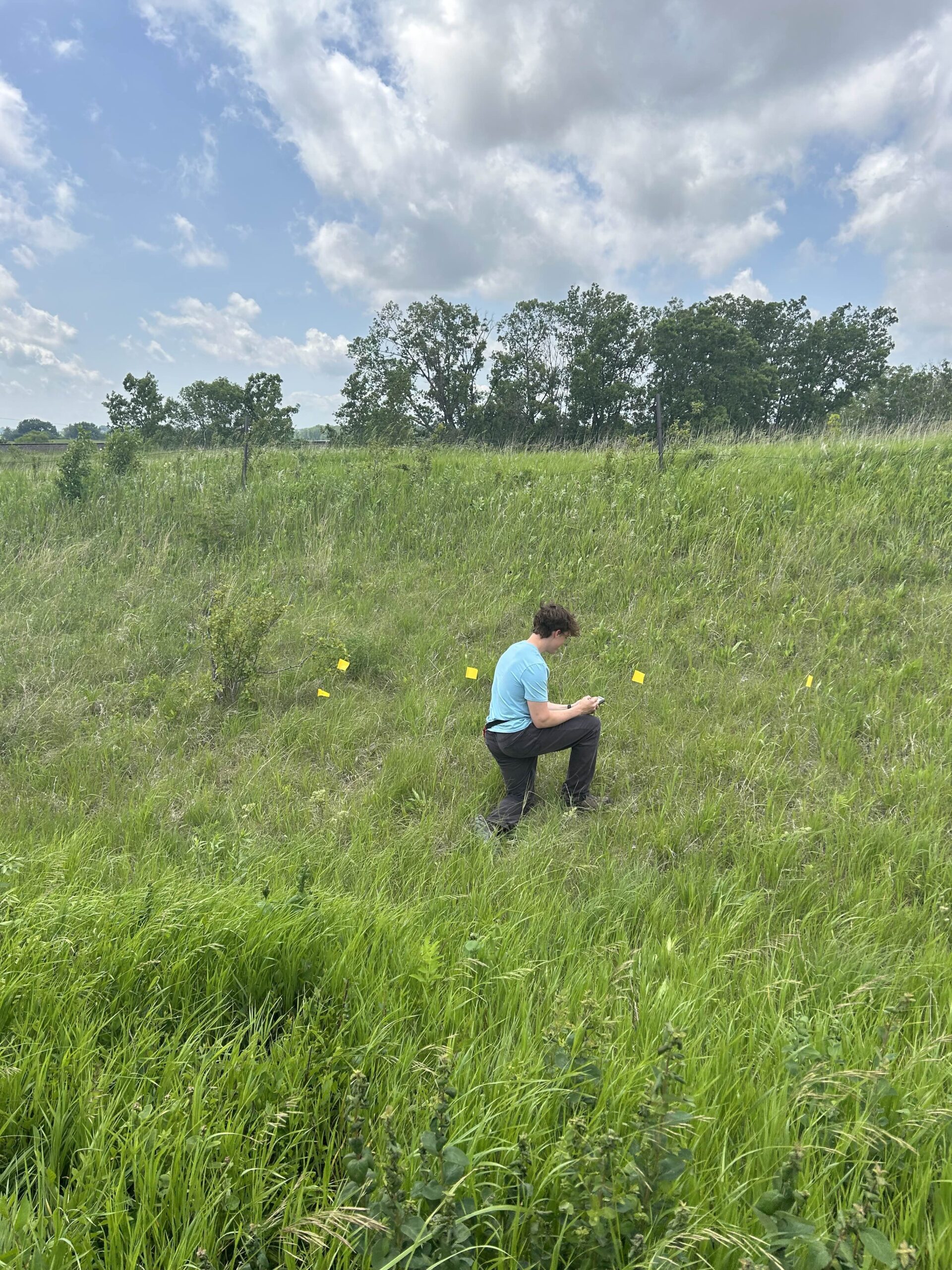
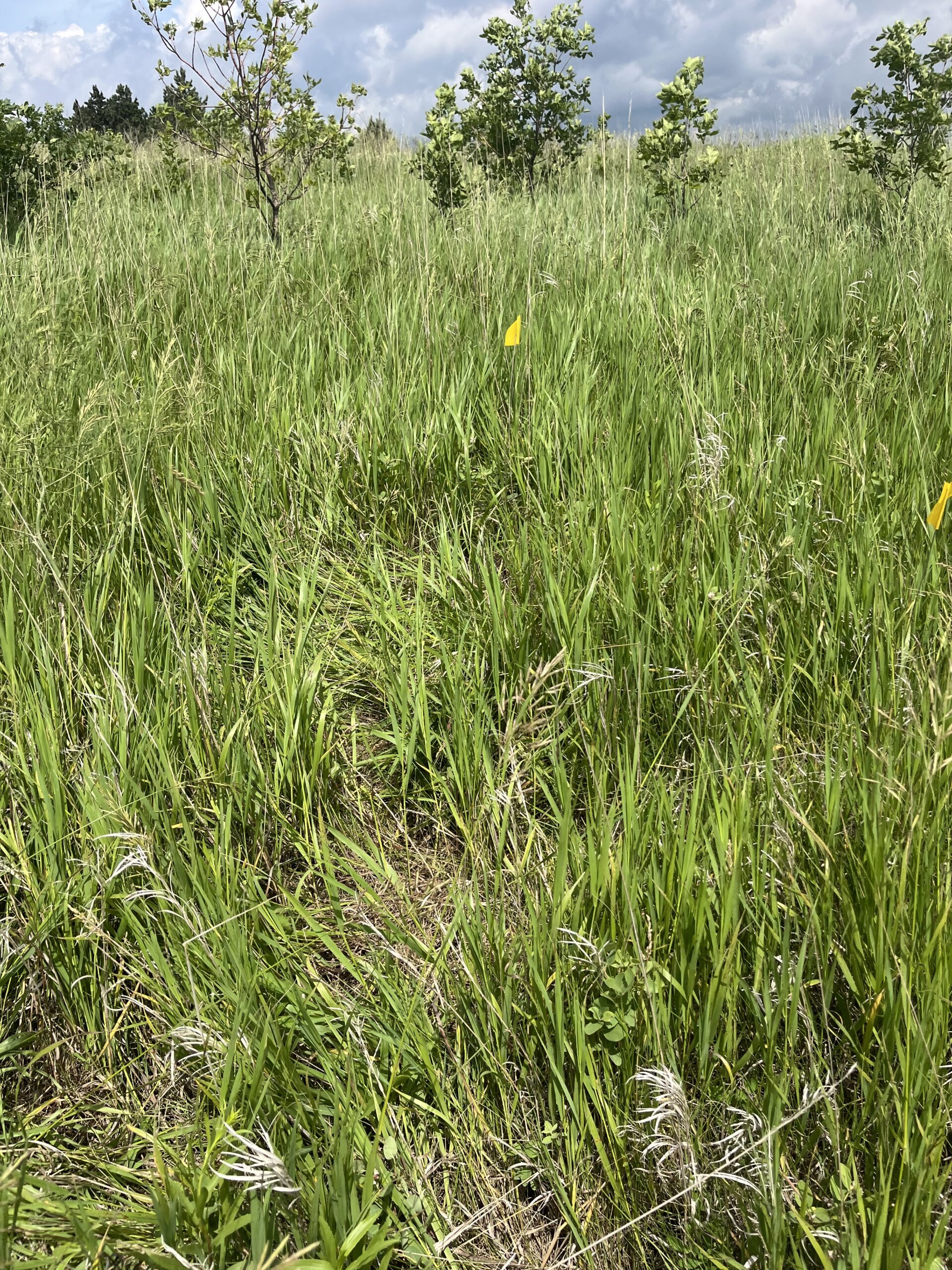
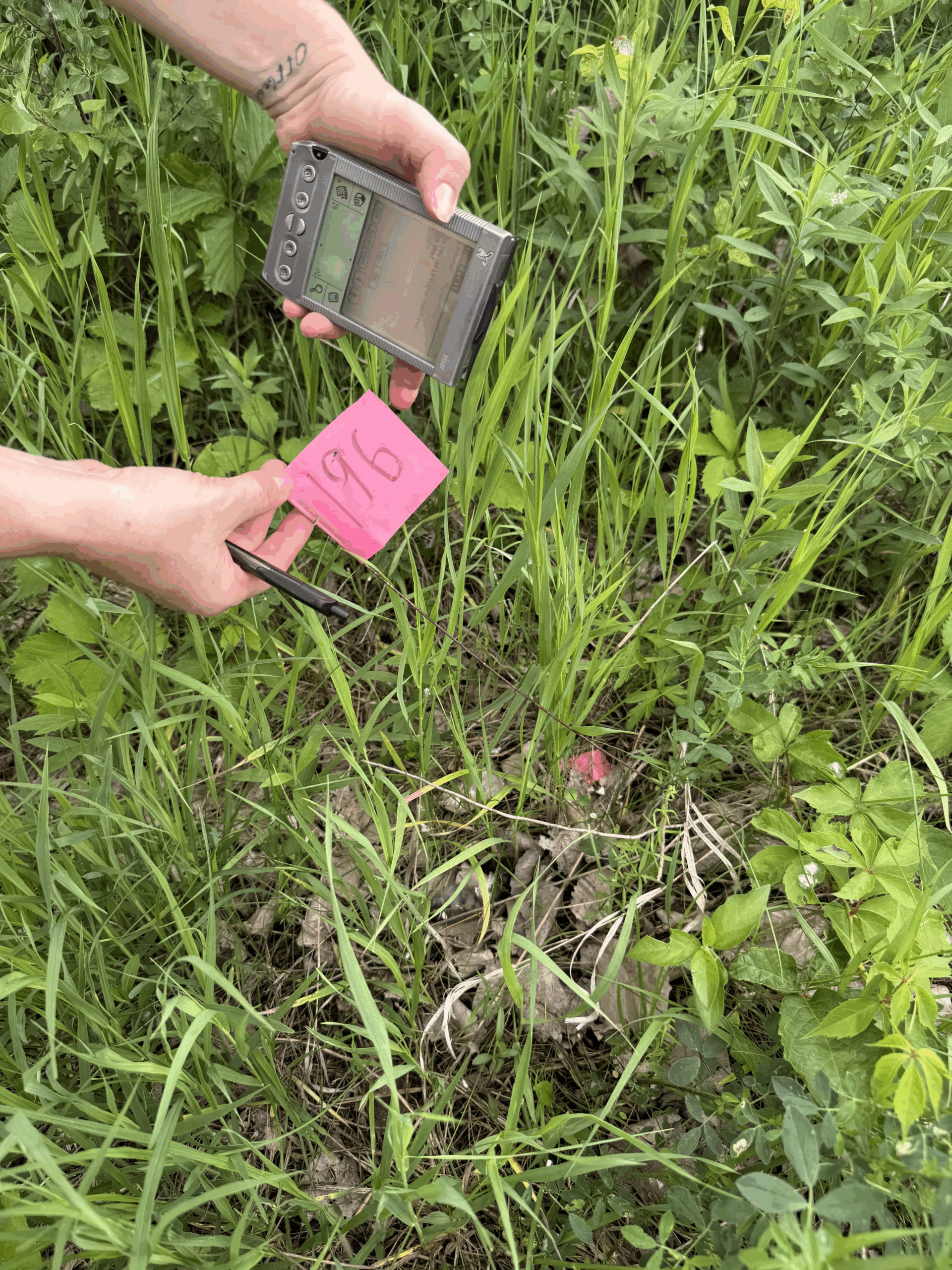
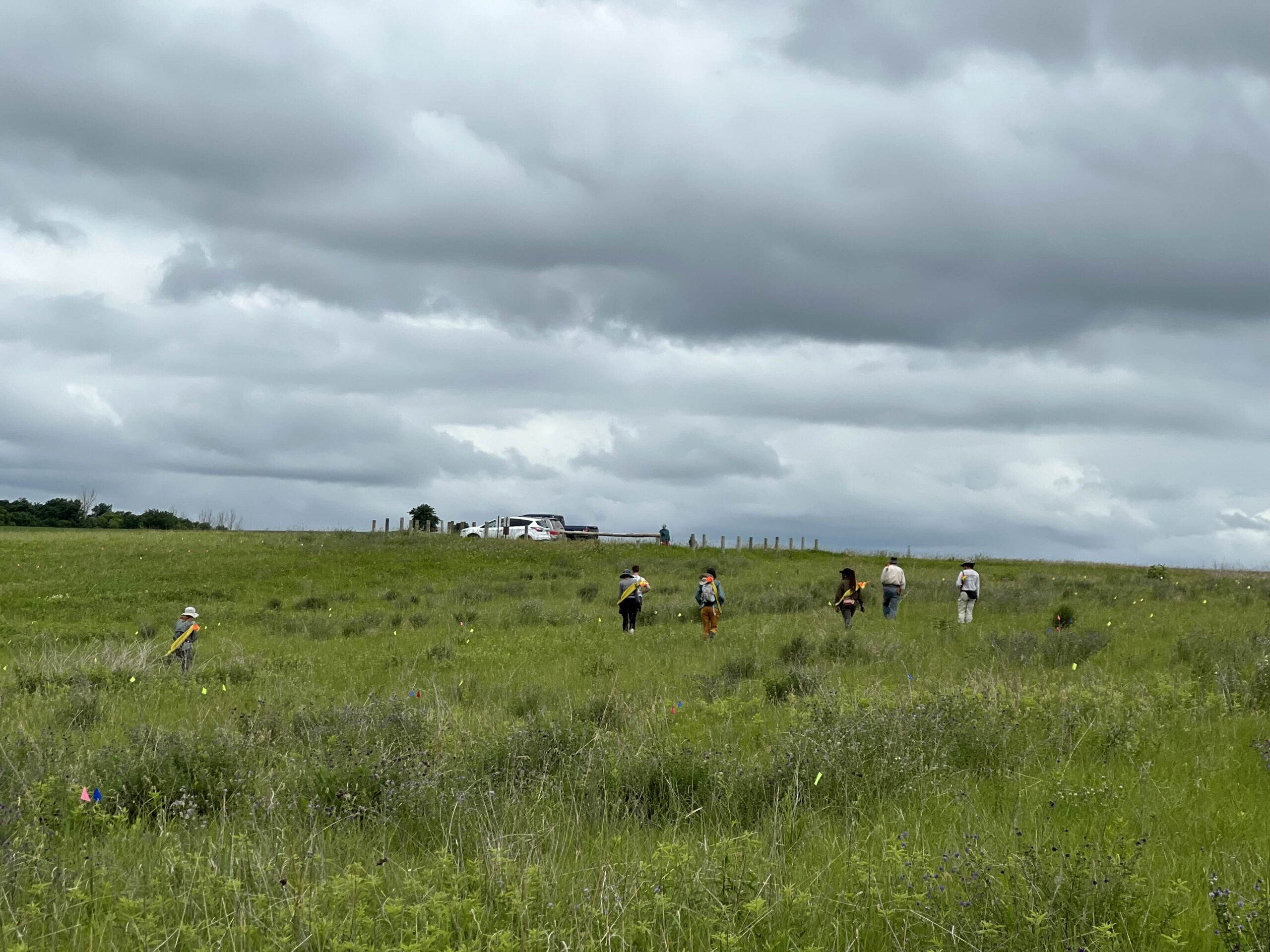
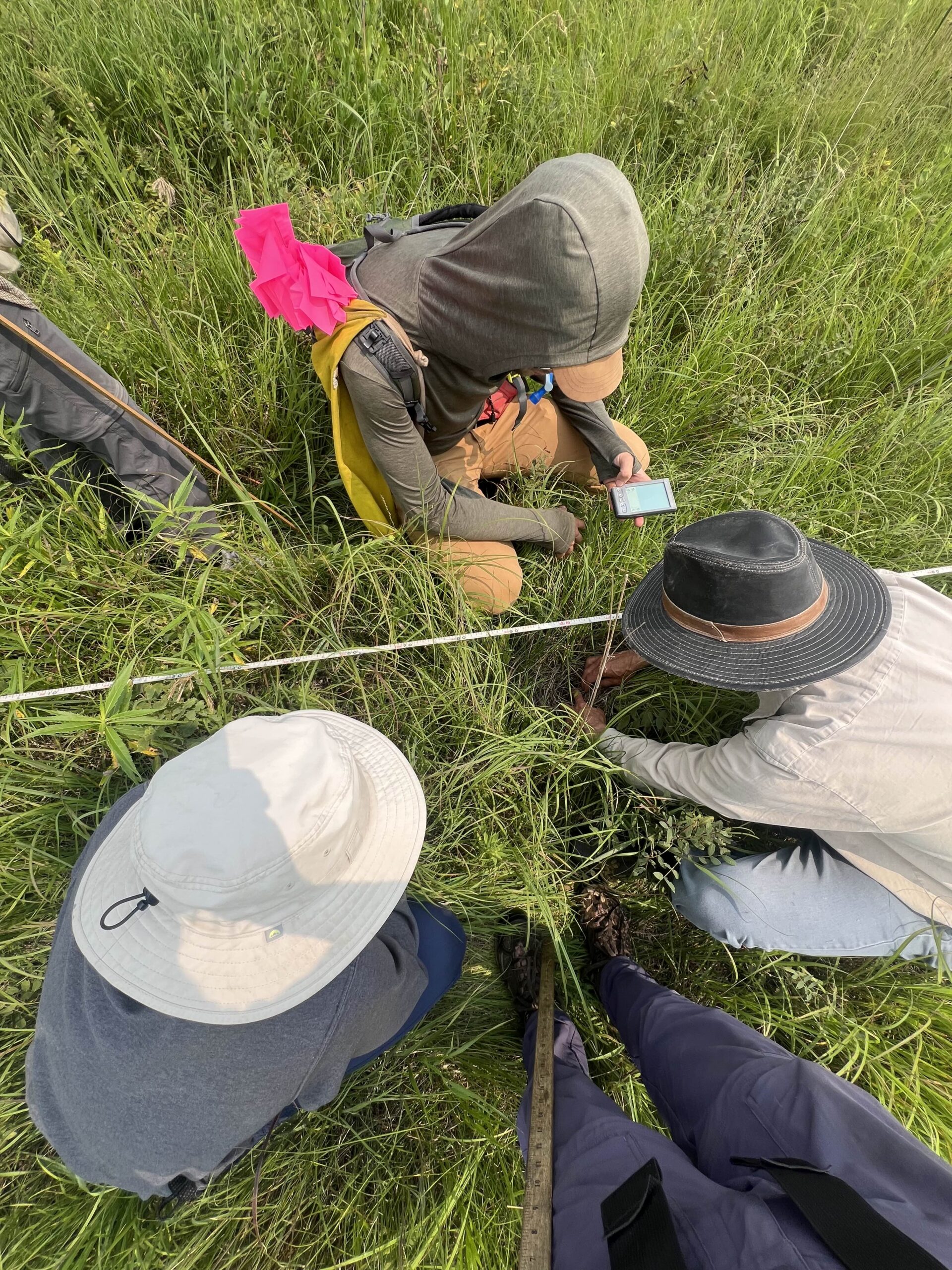
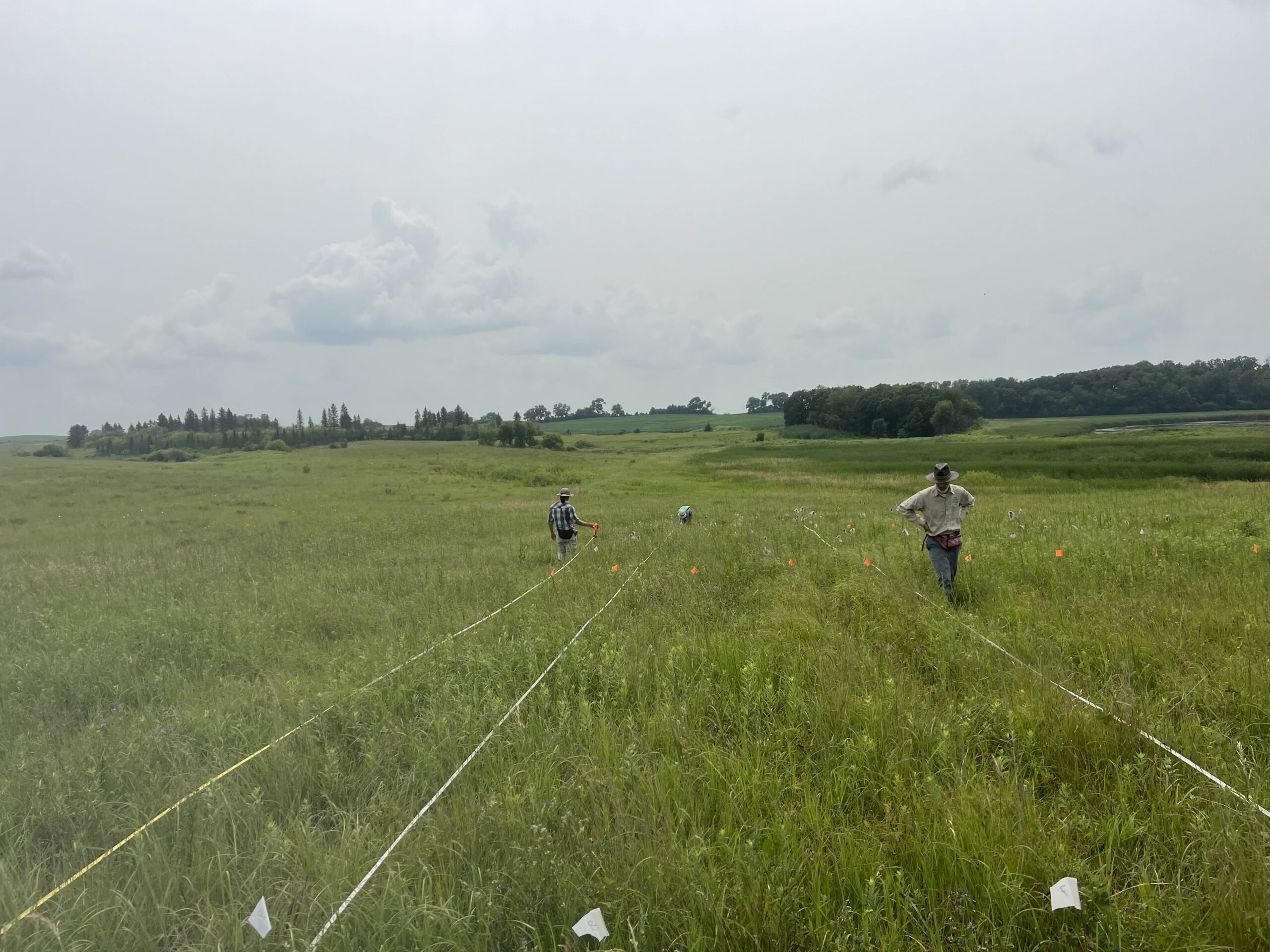
Demography and surveying Echinacea angustifolia is a long-lived perennial, but we are unsure how long they actually live. To track individual plant lifespans, we “demo” every season. This marks the 30th year of demography data for the Echinacea Project! This week, we have made good headway demo-ing and surveying the remnant prairie field sites. As a team, we have taken demography on over 300 plants in the past two days. Our high school and REU students practiced their echinacea spotting, visor usage, and GPS skills.
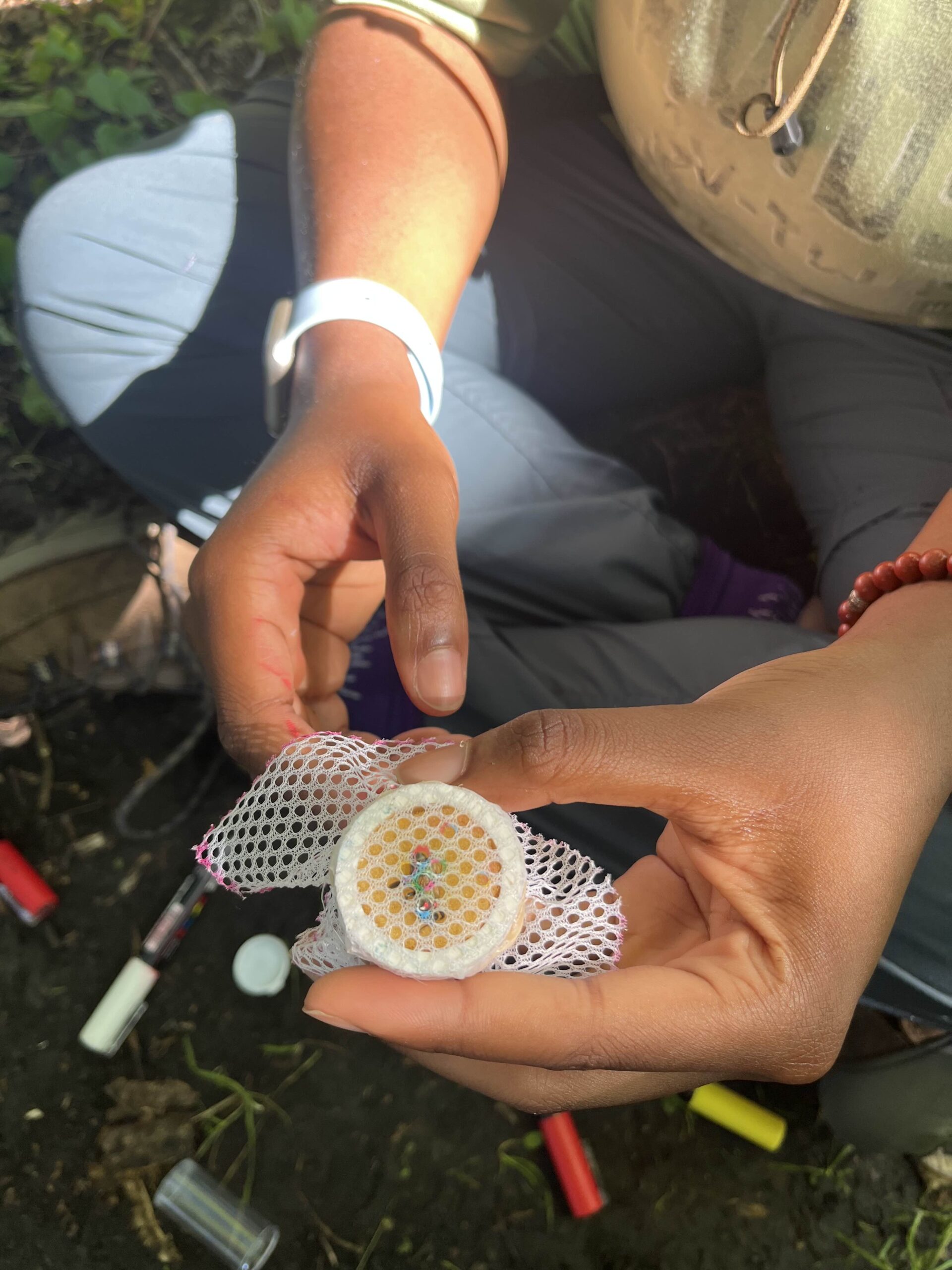
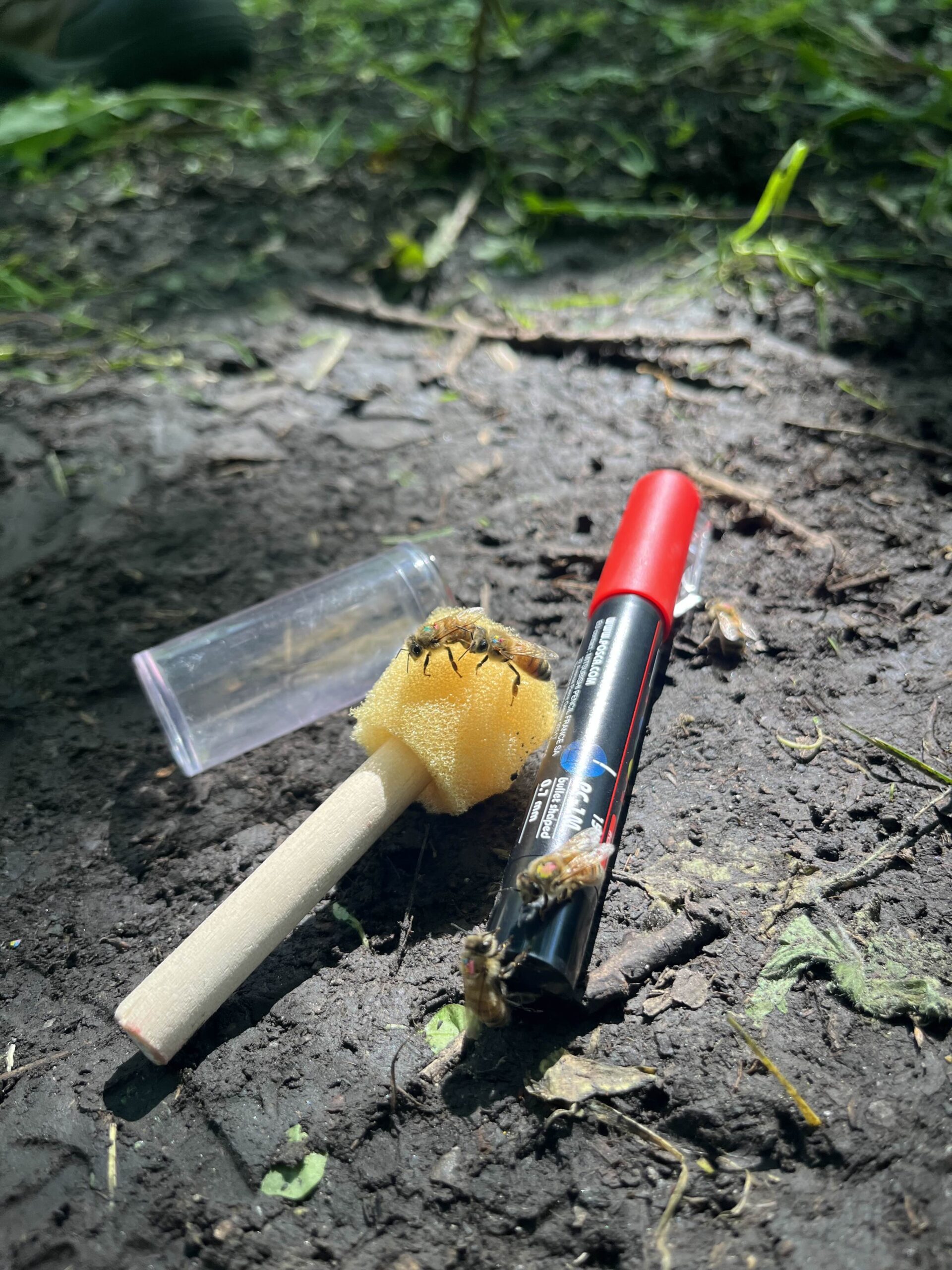
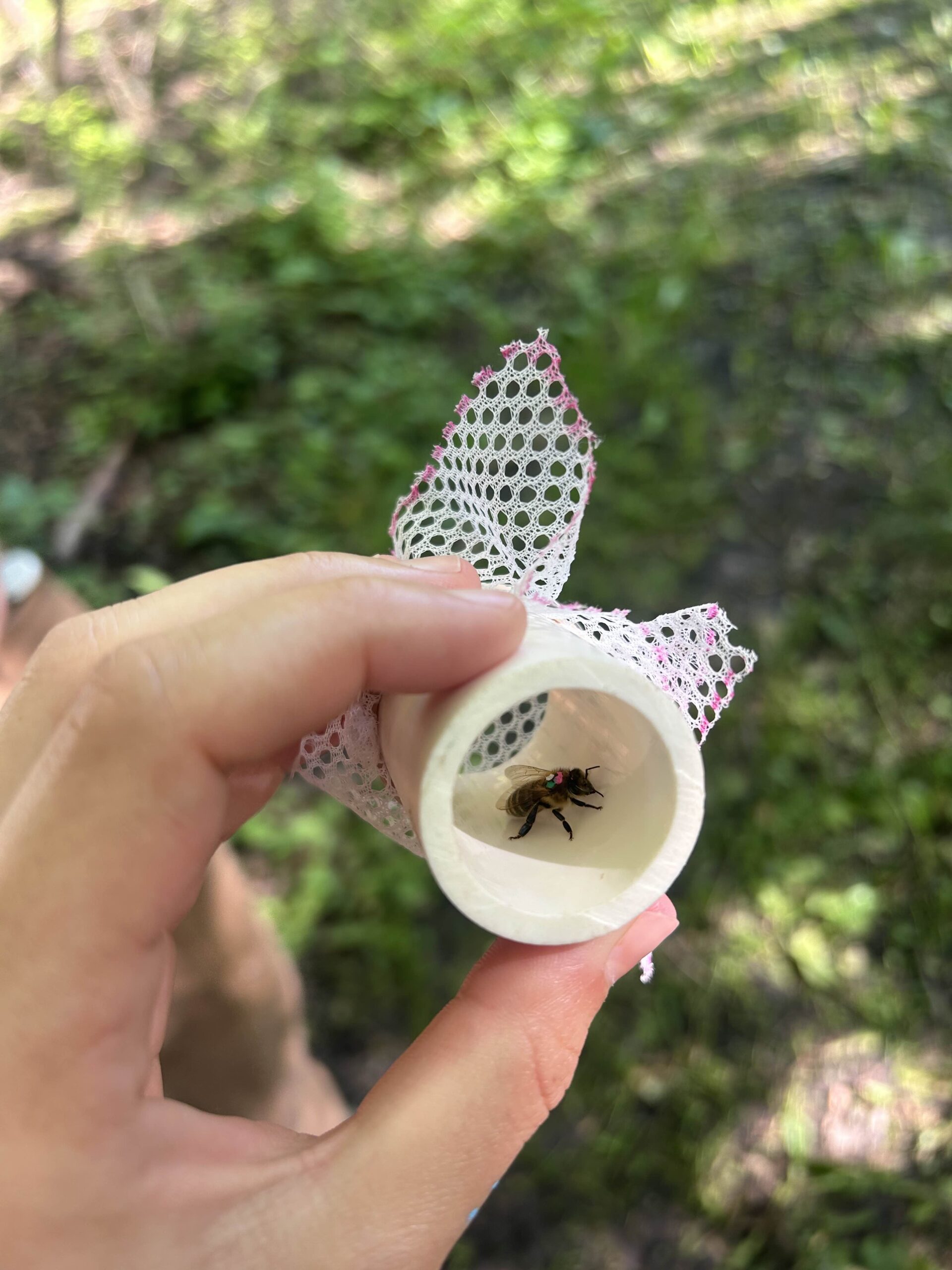
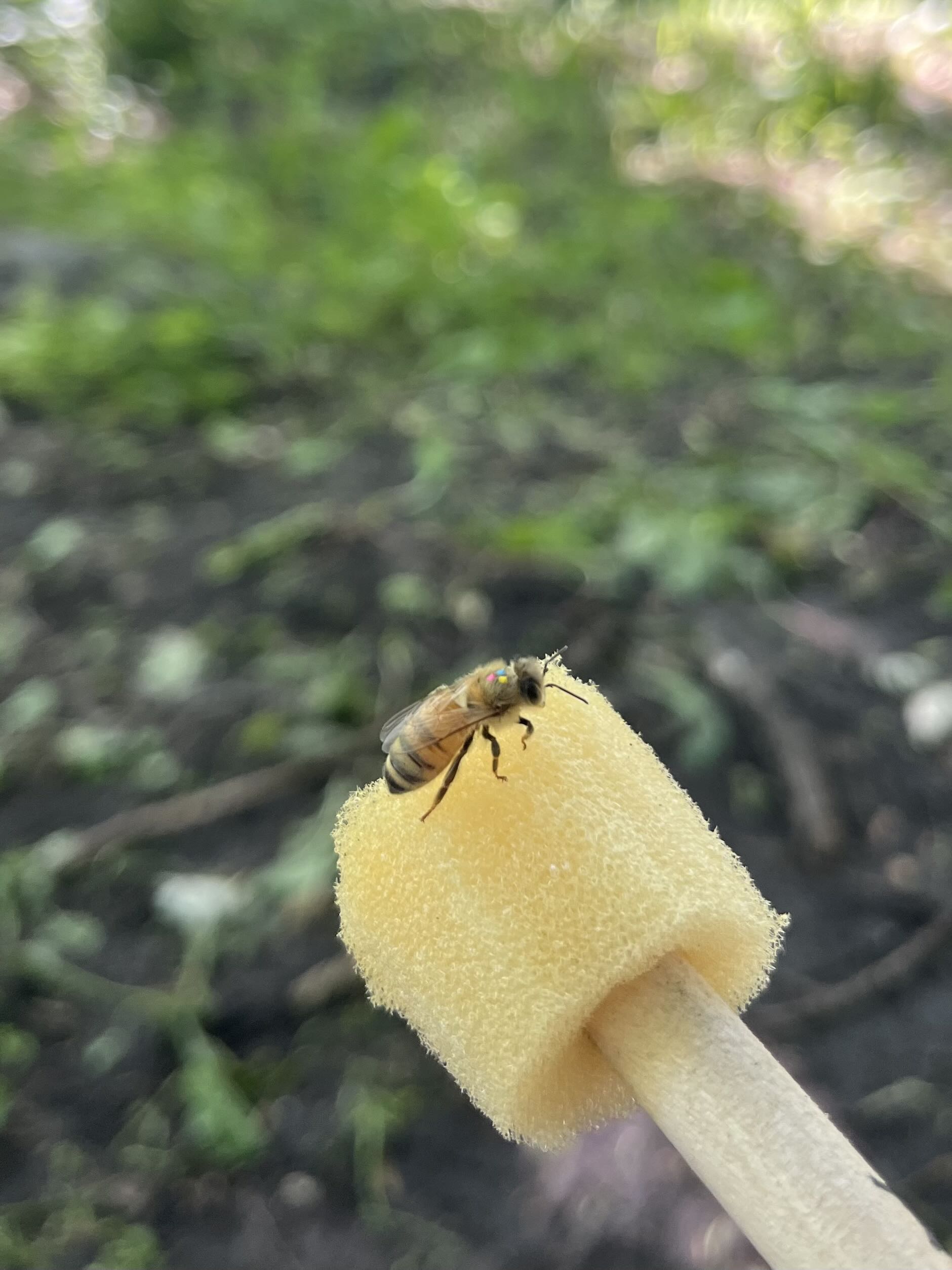
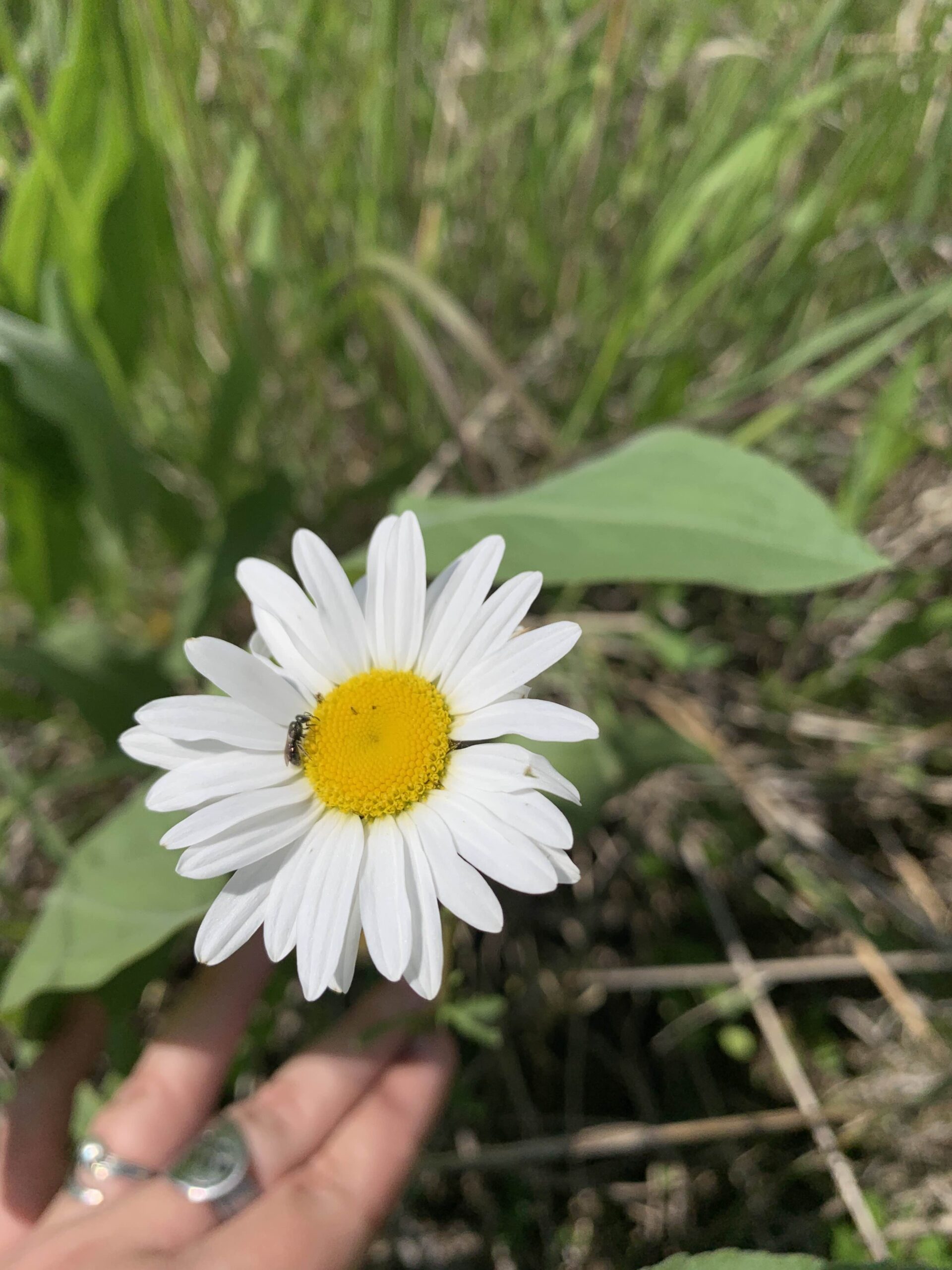
Pollinator projects REU interns Grace and Kyra have solidified their experimental design on their pollinator mark and recapture project. We used nets and vials to capture local honey bees as practice before we move on to bee populations in the remnants. To mark them, we placed the bees in our constructed “bee plungers”, easing them to the top of a mesh-covered tube, where we could them use paint marks to place tiny dots on their abdomens. The order and color of these dots will allow Grace and Kyra to keep track of each individual bee that they capture throughout the project.
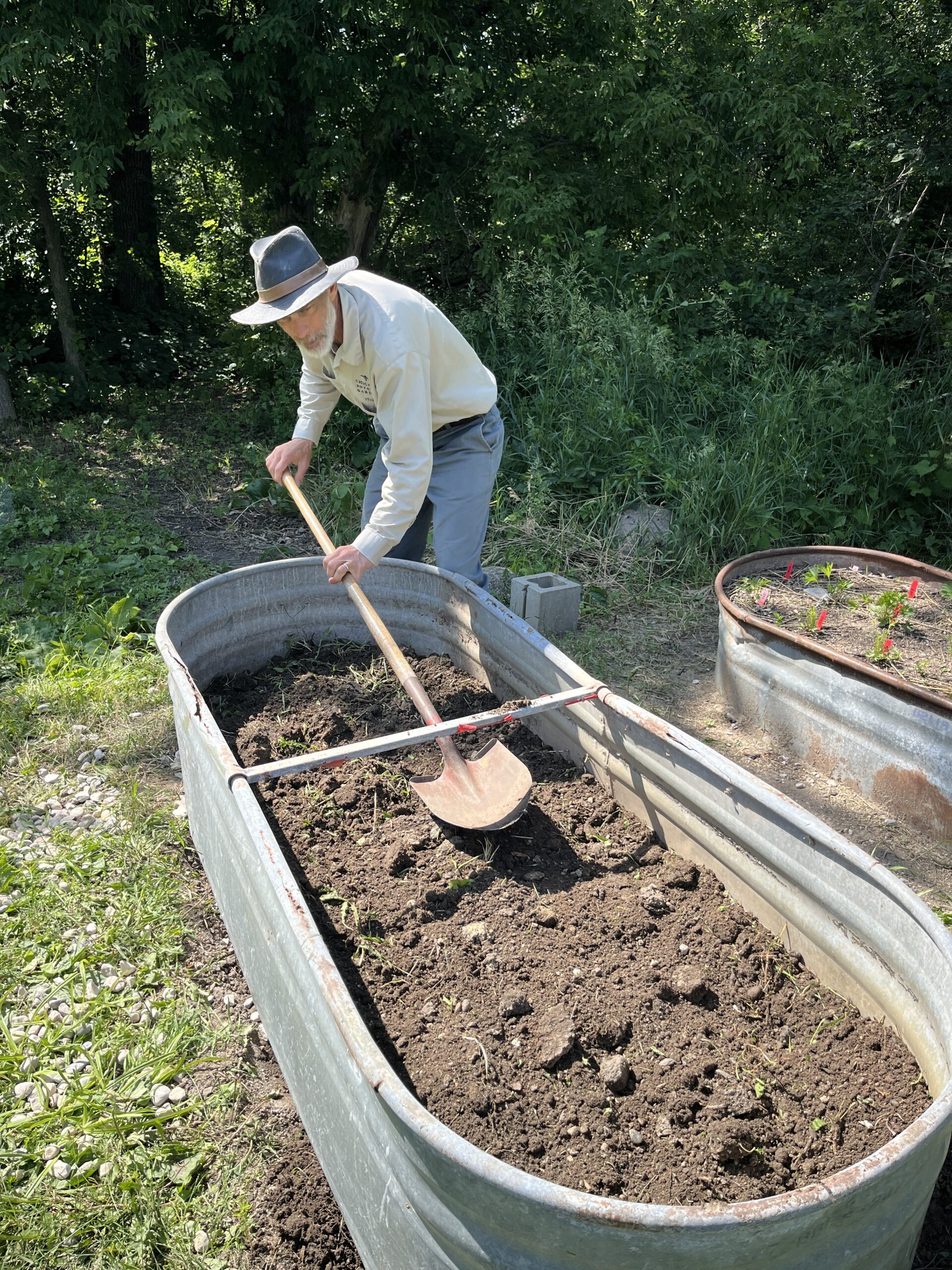
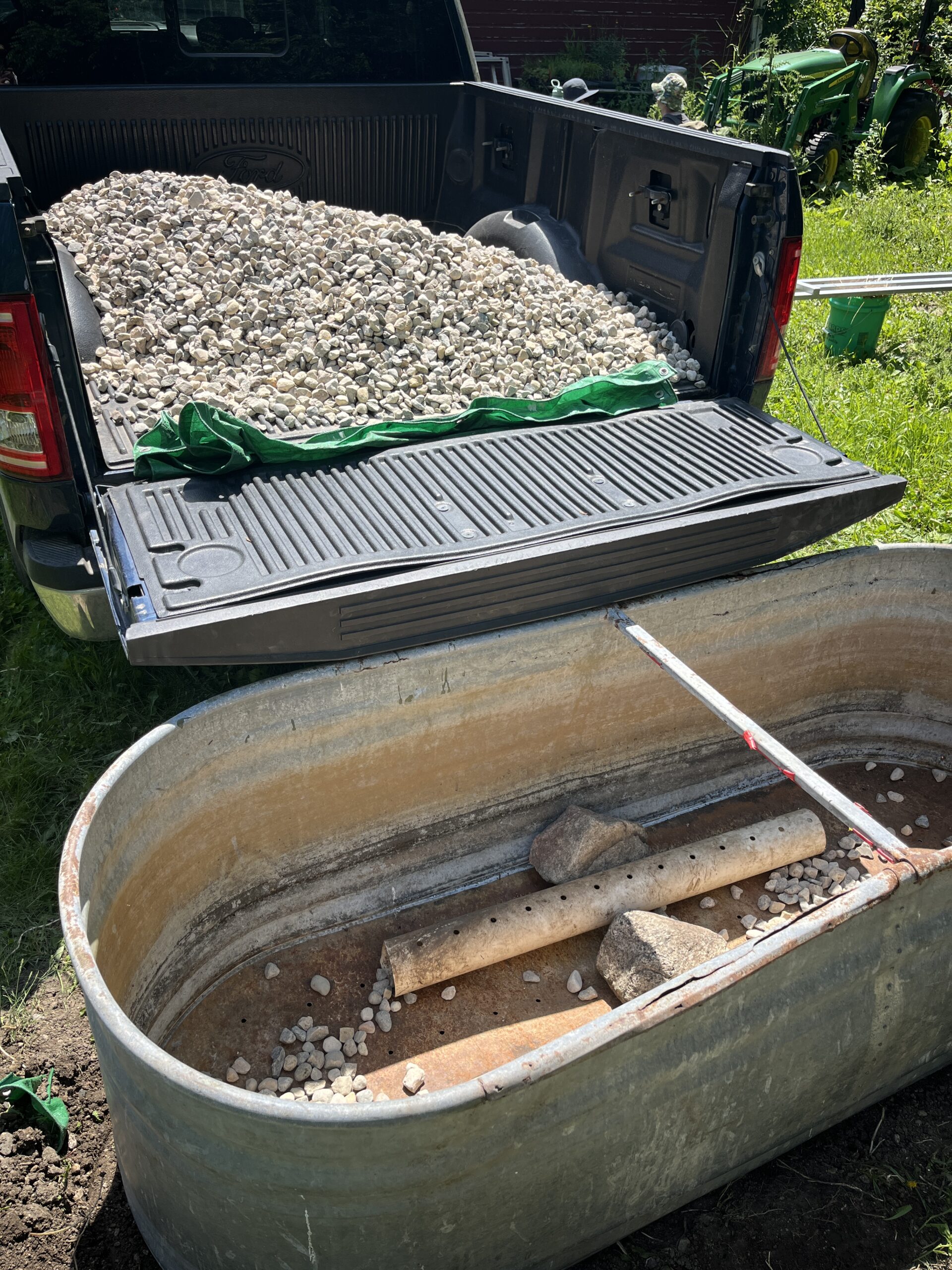
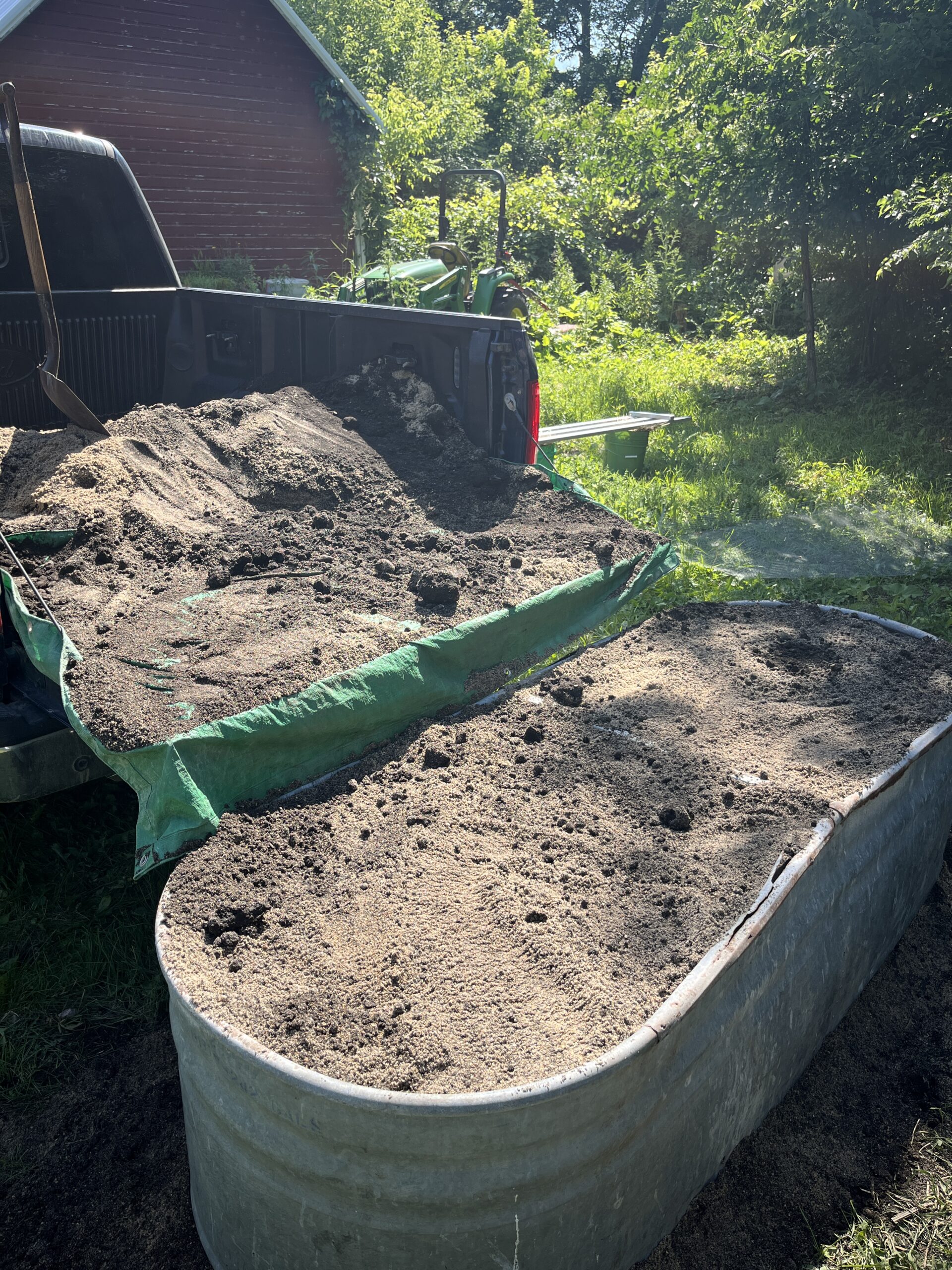
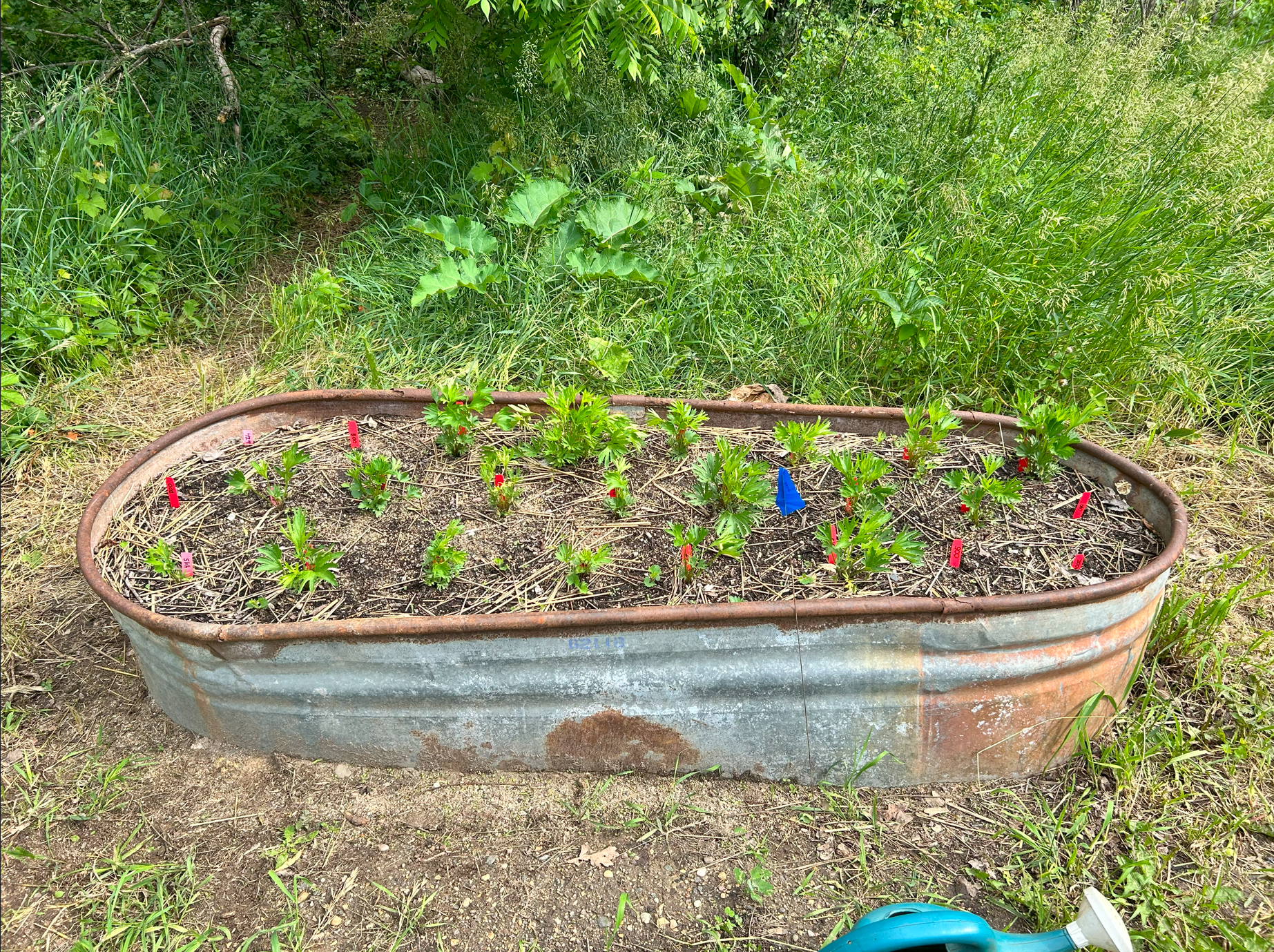
The project I will be working on this summer is transplanting and growing Comandra umbellata with either its field host or with a Galium boreale plug. Today, I prepared the growing container for the plants. We leveled off the ground, drilled holes in the container, cut and placed the drainage tile, and purchased river rock, black dirt, and beach sand, which we used to fill the container. See pictures below.
The next step is to decide which sites and which plants we are going to collect. Finally, we will plant the plants in the growing container and record observations about their growth.
Yesterday Team Echinacea took the afternoon to do some transplanting in P8. We planted 4 different species: Dichanthelium leibergii, Solidago missouriensis, Bromus kalmii, and Carex bicknellii. All of these species we want to establish in P8 because seed collection is very difficult and by starting plants from plugs we hope to establish enough plants to be able to successfully collect seeds to distribute in other areas of the experimental plot. These species are of interest to prairie restorationist and could serve a basis for future projects by members of the Echinacea Project. Solidago missouriensis are a colonel species but flower infrequently making them hard to collect seed from. In the past we have had another member of team Echinacea research Dichanthelium leibergii and could be used as a great focal species to conduct a future study on pollination biology.
The transplanting yesterday also served as good experience for folks to come together and design a plot together, get experience flagging out a new plot, as well as give them good experience with planting different types of plugs in different settings. Everyone did a great job in working together and delegating tasks and got 120 plants planted in only ~90 minutes!
Planting List:
Species
# of plugs planted
Dichanthelium leibergii
40
Solidago missouriensis
20
Bromus kalmii
30
Carex bicknellii
30
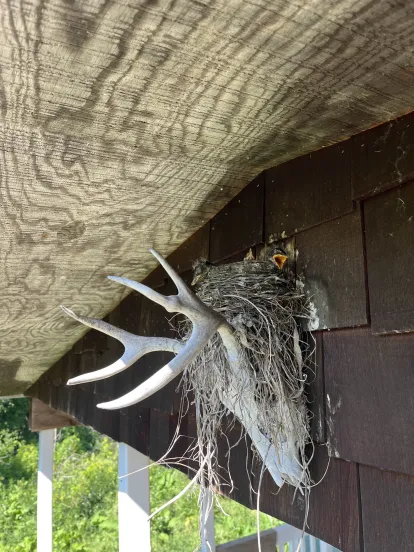
Bonus Update: The robin babies are growing up and getting big enough to watch while at lunch. Soon enough they’ll be off on their own!
Today we went to the surrounding areas of P1 and P8 —Experimental Plot number 1 and Experimental Plot number 8 respectively— to take care of the weeds found in those places (birdsfoot trefoil aka Lotus corniculatus, and sweet clover aka Melilotus officinalis).
We know that invasive plants have been expanding around the remnants of prairie and that these invasive plants represent a risk for native prairie plants (Echinacea angustifolia, porcupine grass, little bluestem, big bluestem) as they compete for the remaining space and resources, but after trying for some time we have not found a herbicide that eliminates those weeds without damaging native prairie plants, therefore we choose to manually get rid of these weeds. We spent the whole morning getting rid of the invasive plants and we did enjoy it and it made us very happy to make plants happy. 🙂
Grace with a jumping spider found in P8Kyra with the painted turtleFemale painted turtle found near P1Grace with the pile of bird’s foot trefoil by P1Aaron with the longest taproot of the bird’s foot trefoil we extracted (he did)Gael surprised by the amount of bird’s foot trefoil we got rid of
This week the team went out to experimental plot one with one clear goal, locate Hesperostipa Spartea, commonly referred to as Porcupine Grass. The team divided the plots and went off and searched–rows 42-49 were excluded from data collection. With an average time of 13 minutes per row and an extraordinary performance by Gael being the team member with the most data gathered with 17 rows. While the plants were not dry enough for seed collection, they were marked for a quick trip back to gather seeds.
Maddie and Kyra went to two remnant sites in Aanenson and West Aanenson to observe individual characteristics and compare the differences between the two sites and transects within. The transects at both sites were located on a natural hill, however the transects at West Aanenson were closer in proximity to a roadcut. Among both sites, it did not look like there were any recent burns. We observed more echinacea plants among transects in Aanenson in comparison to the transects in West Aanenson. Both sites seemed to have no history of agricultural use, though there were active corn crops across the road. We observed a larger diversity of plants at the Aanenson site, and we hypothesize that this is due to a difference in land management techniques as sites are owned by different agencies, though overall there are more similarities than differences between the two sites.
We saw many different plants at the different sites including:
Site observations by Grace K., Aaron, and Brittany
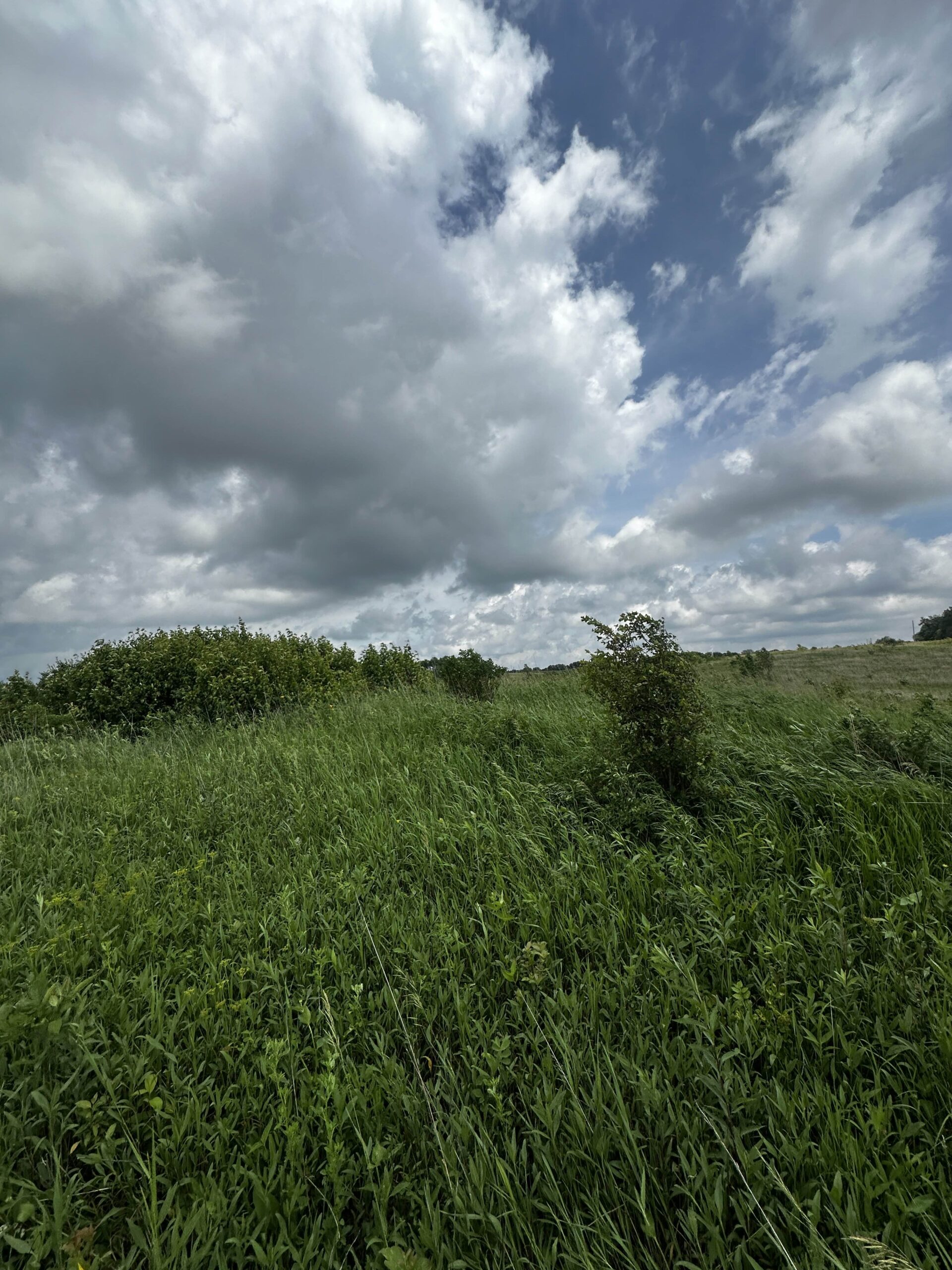
This site was a small prairie remnant on the upwards slope on a roadside ditch. The opposite of the road was a large field of predominantly bean crops, while the remnant side was only agriculturally disturbed far up over the slope. Our immediate impression of the site was a clear distinction between the downhill slope of the ditch by the road, and the remnant on the upwards side. Along the roadside and down the roadside slope of the ditch, there was a large community of forbs and non-native plants. This included large quantities of brome and cool season grasses, as well as clover, alfalfa, and roses. However, the prairie remnant contained mostly warm season grasses and echinacea seedlings, and there was significantly more exposed ground. This created a visual juxtaposition between thicker and greener vegetation on the left side, with slightly sparser vegetation with more ground and dead growth on the right. This dead growth led us to believe the site has not been burned this past season. Once the ditch flattened out at the top, the brome reestablished.
We hypothesized that the steep upwards slope of this section of the ditch made it untenable for plowing, and it was left undisturbed as the surrounding land was developed for agriculture. We also hypothesized that the increased disturbance immediately along the road may also benefit the growth of clover and forbs.
Site: Loeffler’s Corner West (LCW)
Site observations by Grace K., Aaron, and Brittany
This site is a remnant of the prairie, found on the corner of two roads. Both sides of the road were nonagricultural sites. There were signs of terraforming on the land. A clear distinction of plant life between the ditch and prairie remnant was clear. Much of the ditch on the road side was populated with tall brome grass, with some native grasses in the mix. The landscape of the site was steep and near a lake, making it unfit for cattle grazing and agricultural needs. The site was populated with many warm season grasses like porcupine and big blue. As well, was a significant amount of dried out plant life suggesting that there was not a control burn recently.
We hypothesized that due to the steep nature of the land and the wetland surroundings, it allowed for the land to be untouched by farmers and cattle alike. We also hypothesized that due to the artificial terraforming to build the nearby road, it allowed for non-native species of plant to populate the roadside of the ditch.
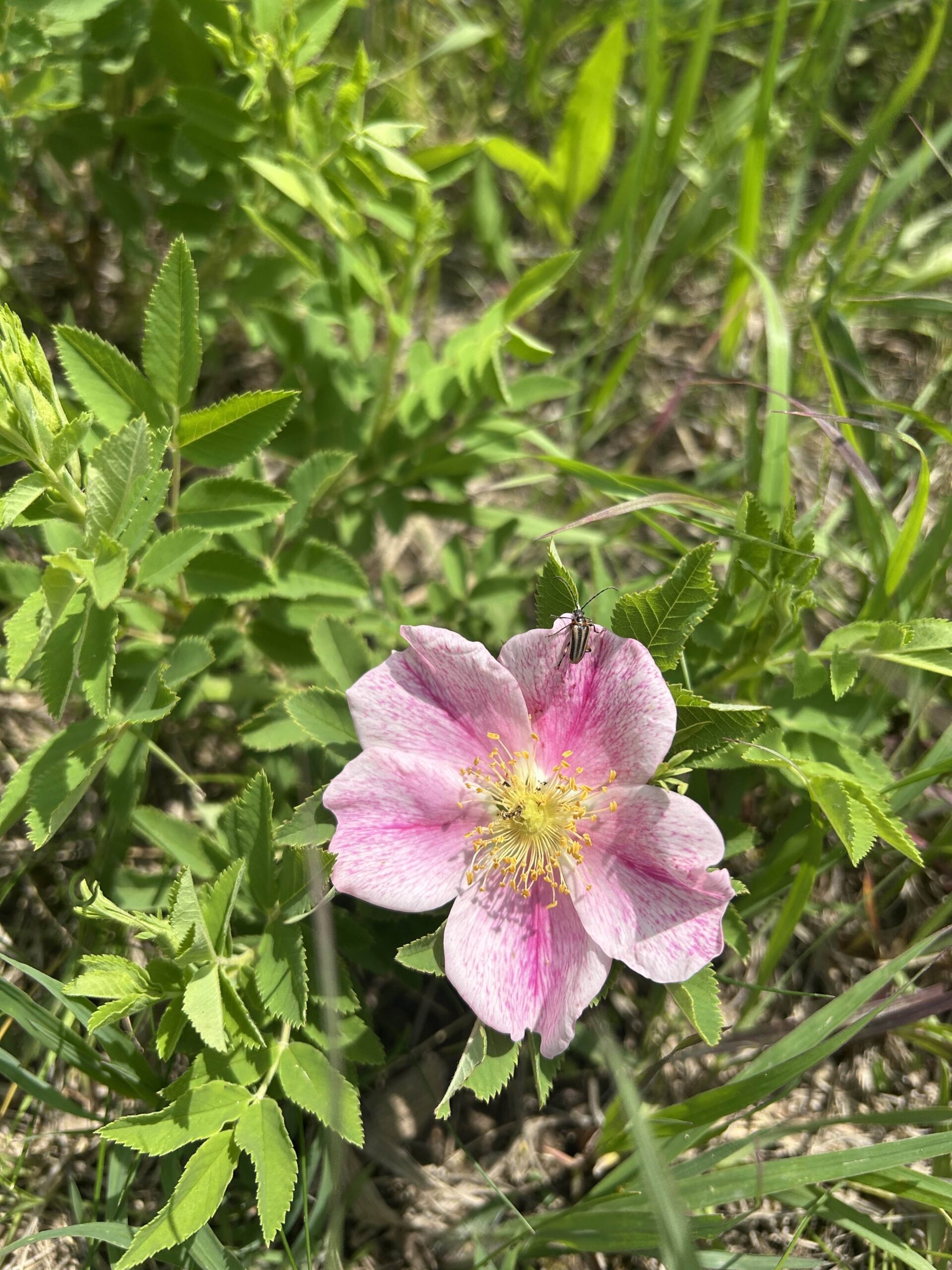
We visited the sites East Elk Lake Road and KJ’s . Both sites were small, bordering on either mowed private property or agricultural fields. We hypothesize that neither site has been burned recently, because there was remnants of old plant matter and the presence of fairly large trees and scrubs. For legumes, there was veiny peas, but no clover. For cold grass, there was brome and porcupine grass, and for warm, there was big blue grass. Otherwise, there were yellow asters and prairie roses.
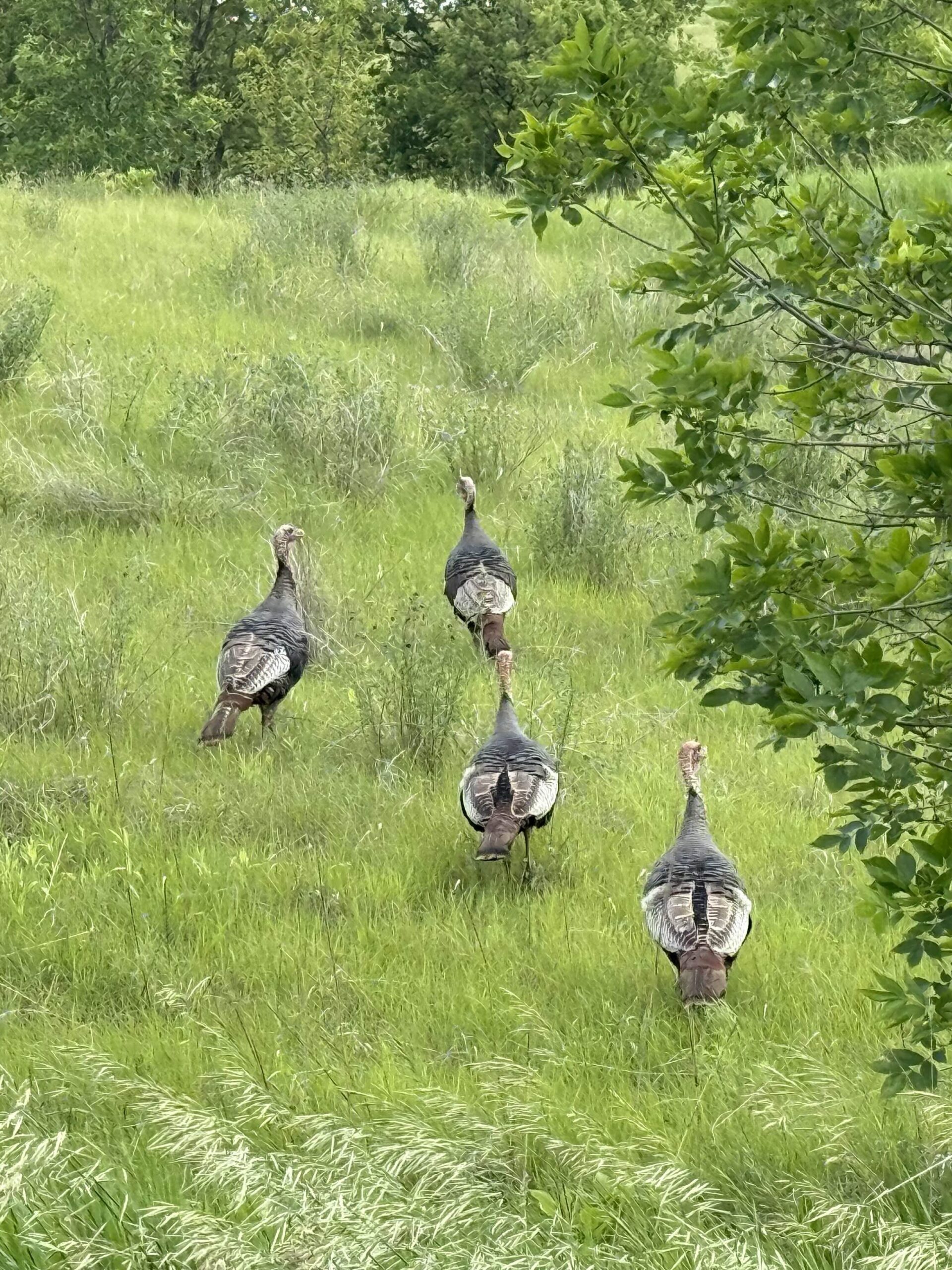
KJ’s was extremely small, wedged between the road and the tree line, and was probably too small the ever consider planting. There was also a large animal den/hole and turkeys near the road at KJ’s. We also found an old flag at KJ’s, possibly demarking an old transect. In terms of legumes, we found clover, veiny pea, and alfalfa. For cold growing grass, there was lots of brome on the roadsides. However, there was not a lot of big blue grass for warm growing grass. There was also poison ivy, prairie roses, milkweed, and thistle.
EELR had many round bulbs on the plant matter, we hypothesize that these are wasp galls of some sort. EELR was much larger, with a higher diversity of plants, and likely was preserved because it was too steep to plow. Between the two sites, there was a fair number of trees, many of them pine, especially at KJ’s. There was evidence of significant animal activity, including a section of flattened grass where an animal, probably a deer, bedded down for the night, bordering on one of the segments at EELR.
Matted section of grass at the fourth segment of transect 131 at EELRFound flag at KJ’s along the eastern section, near the two tract roadTurkeys seen on the side of the road at KJ’sGall found on woody plant in many sections of EELR
Echinacea pallida is a species of Echinacea that is not native to Minnesota. It was mistakenly introduced to our study area during a restoration of Hegg Lake WMA around 2006 (Stuart’s recollection). This is concerning, because we don’t know how a similar species may impact or local Echinacea angustifolia! Will they hybridize? Could pallida outcompete angustifolia? Ever since pallida have started springing up, Team Echinacea has visited the pallida restoration, taken flowering phenology, and collected demography on the non-native plant. We have decapitated all flowering E. pallida each year to avoid cross-pollination with the local Echinacea angustifolia. Each year, we record the number of heads on each plant and the number of rosettes, collect precise GPS points for each individual, and cut off all the heads before they produce fruits.
This year, we cut E. pallida heads on June 26th. Overall, we found and shot 172 flowering E. pallida plants with 512 normal heads in total, averaging 2.98 heads per plant, though the max was 20 on a single plant! These non-native plants were hearty with an average rosette count of 7.20 rosettes and an astounding individual with a maximum of 88 rosettes. We did not take phenology data on E. pallida this year.
Team 2024 returns to their vehicles after flagging, taking demography data on, and decapitating Echinacea pallida at Hegg Lake WMA
Demography data: head counts, rosette counts, etc.
data in aiisummer2024 repo: ~/aiisummer2024/demo/demoGood2024.txt
Spatial location for every flowering E. pallida
data in aiisummer2024 repo: ~/aiisummer2024/surv/survGood2024.txt
Samples collected:
Echinaceapallida were not collected: decapitated heads were left on the ground next to the plants
A flowering echinacea at the aptly named nearby remnant “near pal” looked suspiciously like a hybrid (more robust than an angustifolia). We put a pollinator exclusion bag on the single head to prevent pollen spread, and later harvested the head and brought it back to the lab, where it is currently in the seed dryer. Keep an eye on tag 29239 in the future
Products:
None… yet! Besides a prairie with significantly less E. pallida reproduction
You can find more information about E. pallida flowering phenology and previous flog posts on the background page for the experiment.
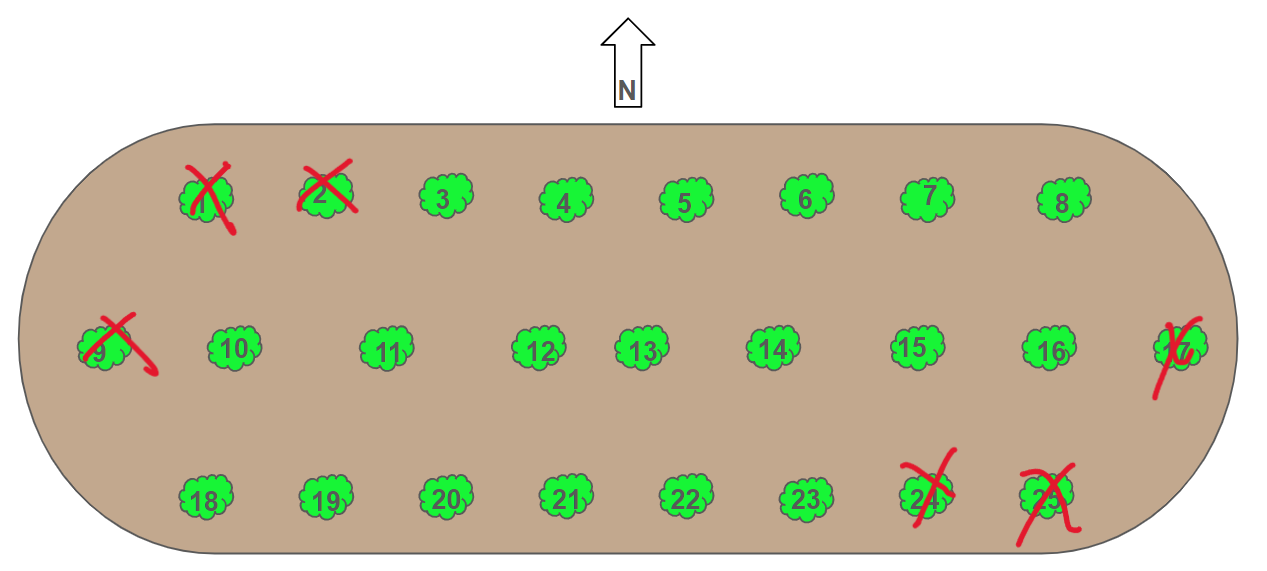
Experimental plot 6 was the first E. angustifolia x E. pallida hybrid plot planted by Team Echinacea. A total of 66 Echinacea hybrids were originally planted. All individuals have E. angustifolia dams and E. pallida sires. In 2024, we visited 23 positions, 4 of which were can’t find year 3 in 2023 and didn’t get their final double check. We found living plants at all positions but those four (so, 19)! Last year, for the first time, 3 plants flowered in this plot. This year, no plants flowered.
Start year: 2011 (crossing) and 2012 (planting)
Location: Wagenius property
Overlaps with:
Common garden experiment
Data collected:
Measure data (status, size, etc.)
data in SQL database
Samples collected:
None (no flowering plants)
Products:
None… yet!
You can find more information about experimental plot 6 and previous flog posts about it on the background page for the experiment.
Experimental plot 7 is the second E. pallida x E. angustifolia plot. It contains conspecific crosses of each species as well as reciprocal hybrids, totaling 294 pdeigreed individuals. We took phenology records between July 10th and July 18th. There were 42 flowering plants this year; from these we harvested 87 heads. Heads in this plot were covered by pollinator exclusion bags during the growing season to prevent cross-pollination with nearby Echinacea populations.
Stuart demonstrates proper measuring technique in exPt07
Start year: 2012 (crossing) and 2013 (planting)
Location: Hegg Lake WMA (MN DNR)
Overlaps with:
Common garden experiment
Data collected:
Phenology data (dates of flowering stages)
data in cgData repo: ~/cgData/summer2024/exPt79Phenology
Measure data (status, size, etc.)
data in SQL database
Harvest data (IDs of harvested heads, missing achenes, etc)
detailed data in dropbox: dropbox/CGData/140_reconcile/reconcile2024/reconcileOut/2024harvestListReconciledExport.csv
data in echinaceaLab package (hh.2024)
Samples collected:
87 heads harvested
at CBG for processing
Products:
None… yet!
You can find more information about experimental plot 7 and previous flog posts about it on the background page for the experiment.
There were originally 745 seedlings planted in exPt09. Experimental plot 9 is a hybrid plot, but, unlike the other two hybrid plots, we do not have a perfect pedigree of the plants. That is because the E. angustifolia and E. pallida maternal plants used to generate seedlings for exPt09 were open-pollinated. At this point, some but not all plants in this plot were tested for paternity, revealing that there are some hybrids. This year, we took phenology records between July 9th and July 18th. During measuring, we searched at 292 positions and found evidence of 234 living plants in 2024. Of these individuals, 70 were flowering. We harvested 110 heads from this plot! Heads in this plot were covered by pollinator exclusion bags during the growing season to prevent cross-pollination with nearby Echinacea populations.
The team runs out reel tapes to aid in measuring exPt09
Start year: 2014
Location: Hegg Lake WMA (MN DNR)
Overlaps with:
Common garden experiment
Data collected:
Phenology data (dates of flowering stages)
data in cgData repo: ~/cgData/summer2024/exPt79Phenology
Measure data (status, size, etc.)
data in SQL database
Harvest data (IDs of harvested heads, missing achenes, etc)
detailed data in dropbox: dropbox/CGData/140_reconcile/reconcile2024/reconcileOut/2024harvestListReconciledExport.csv
data in echinaceaLab package (hh.2024)
Samples collected:
110 heads harvested
at CBG for processing
Products:
None… yet!
You can find out more information about experimental plot 9 and flog posts mentioning the experiment on the background page for the experiment.