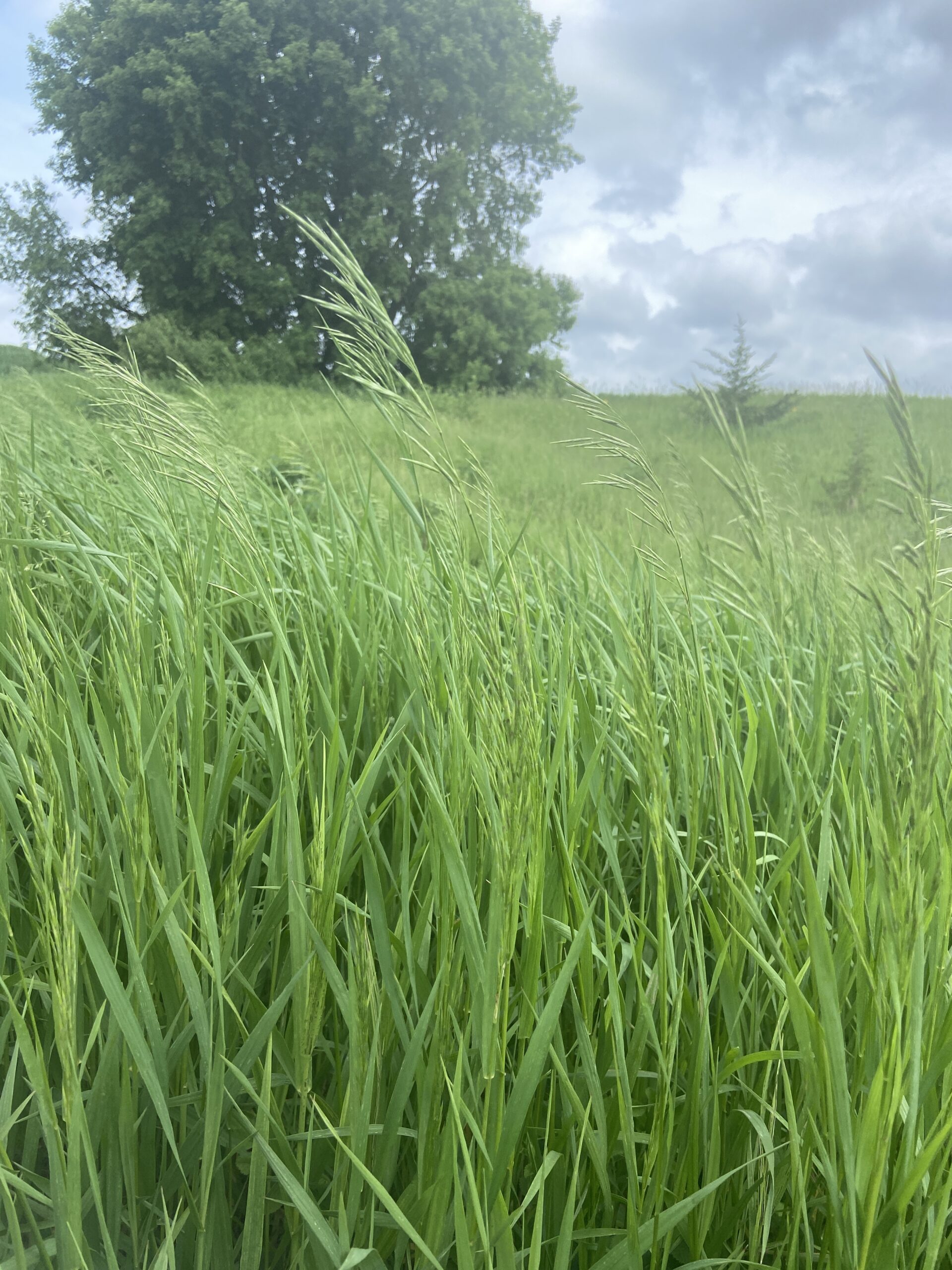
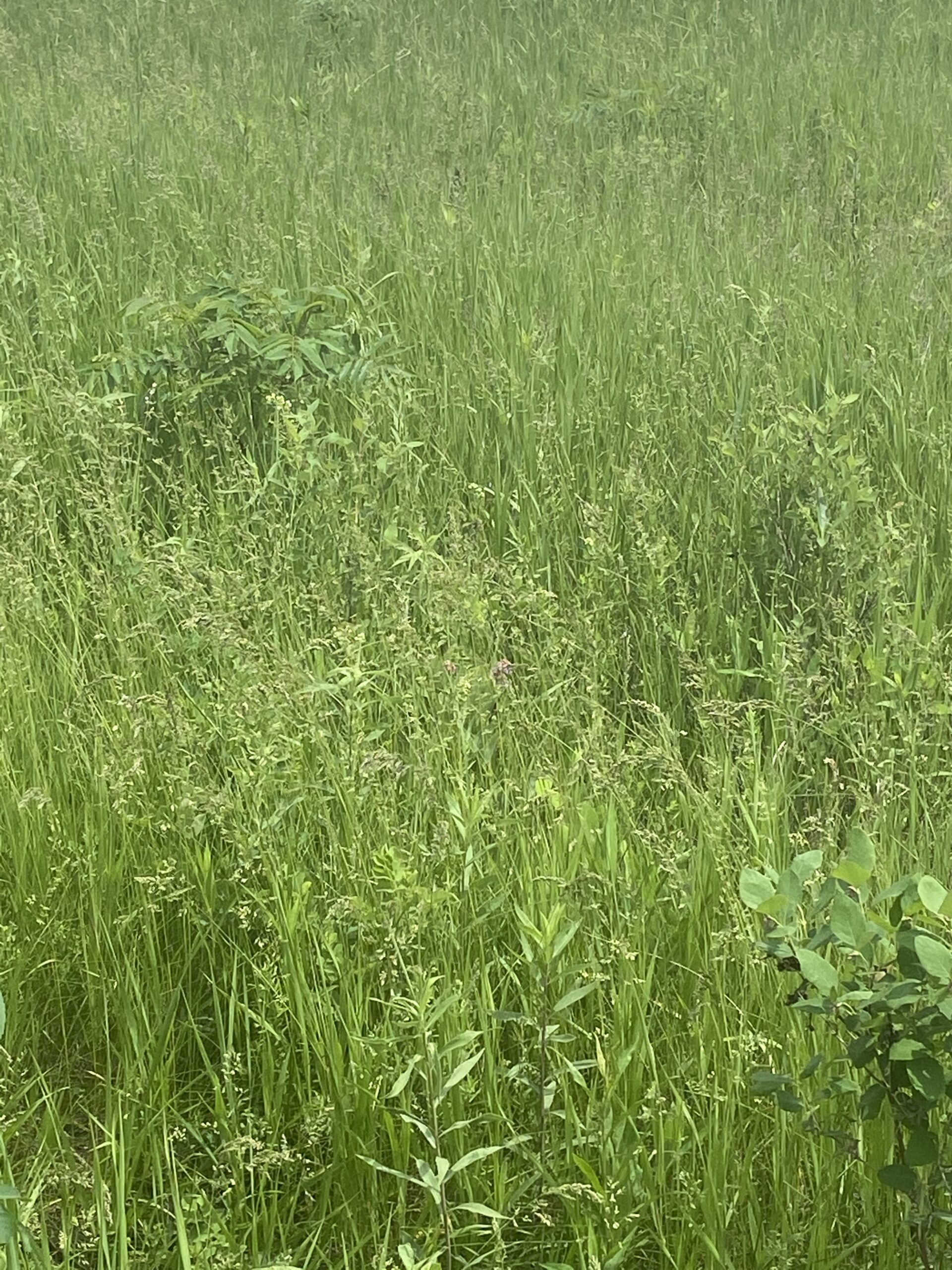
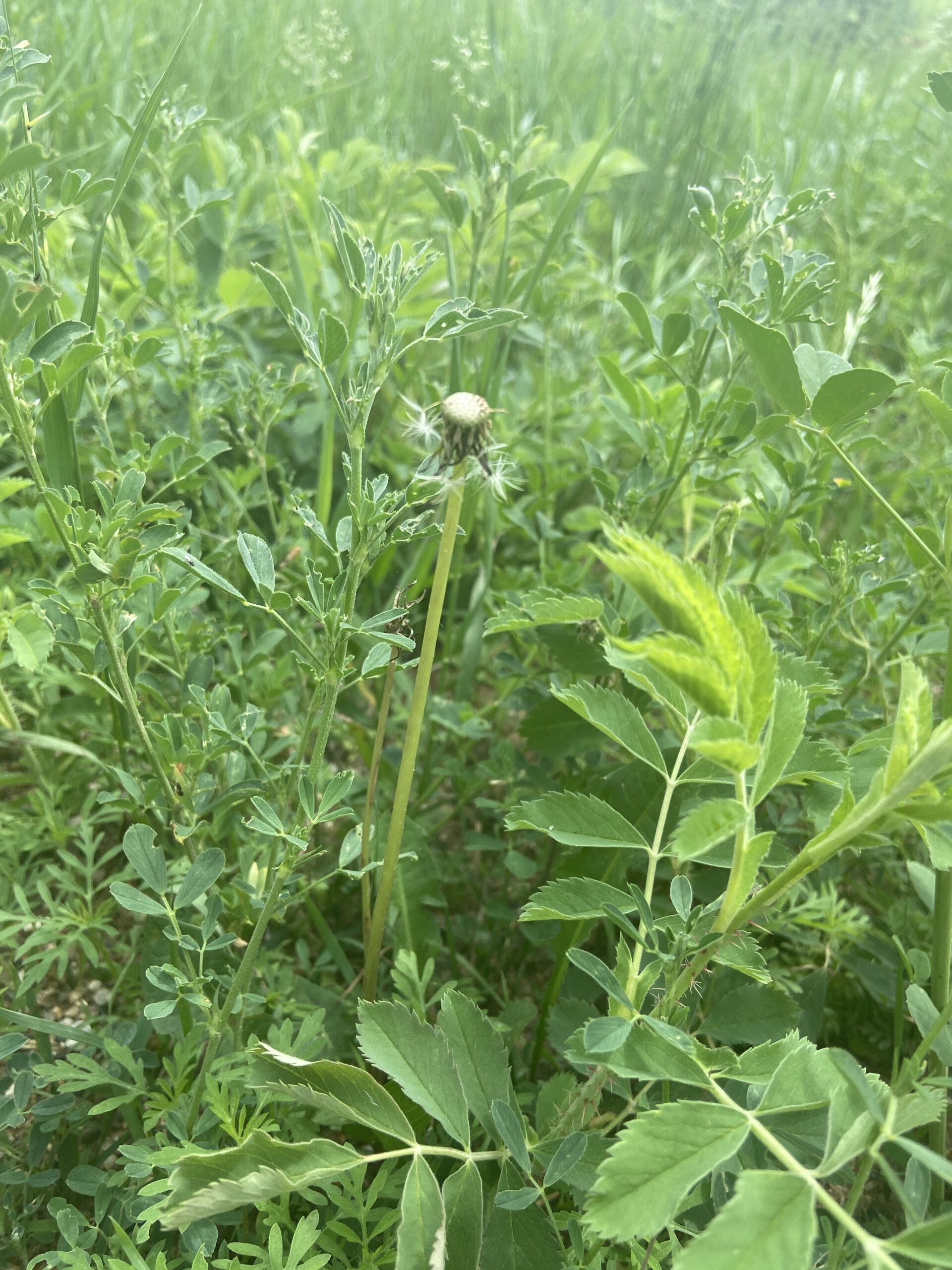
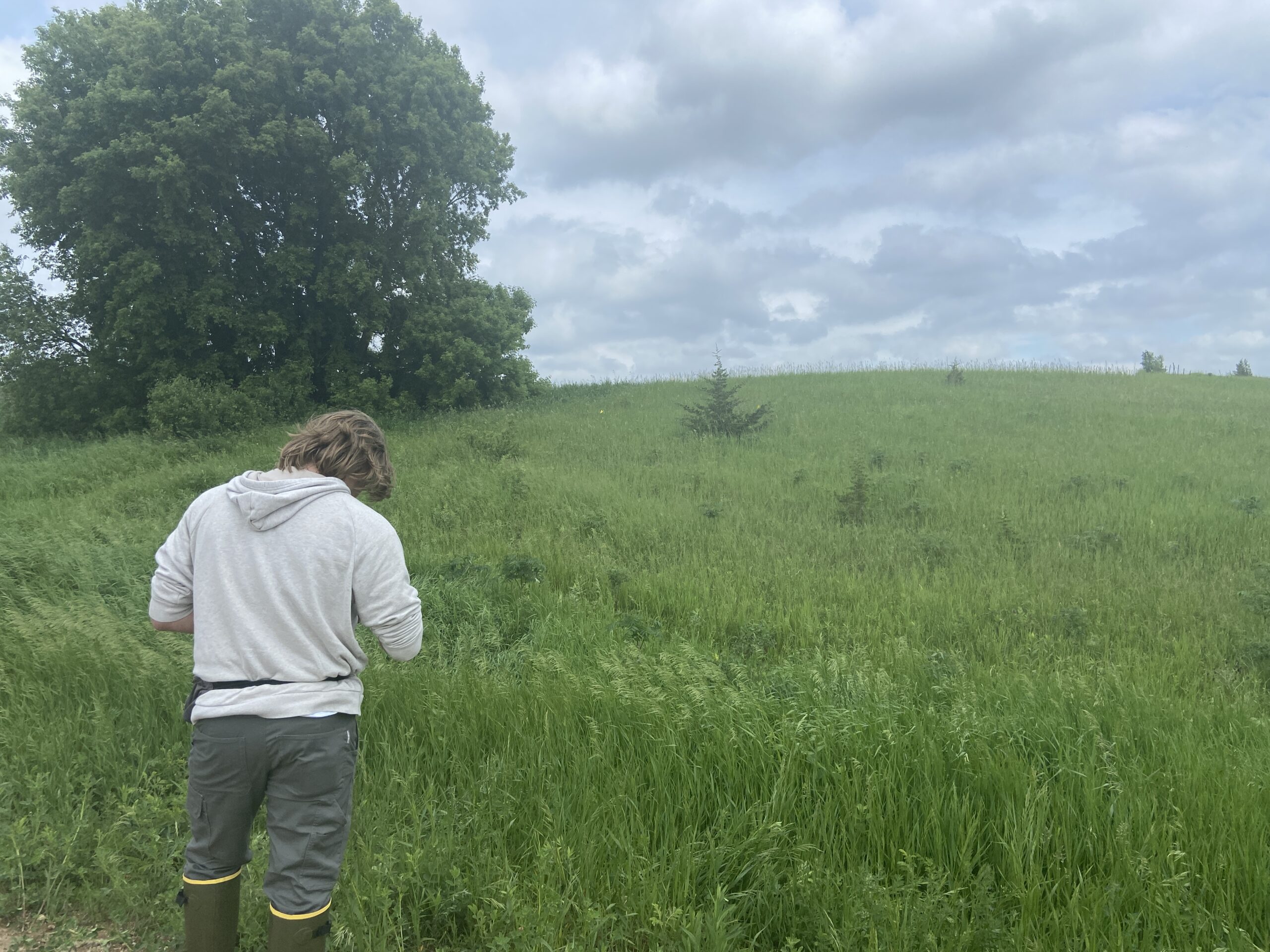
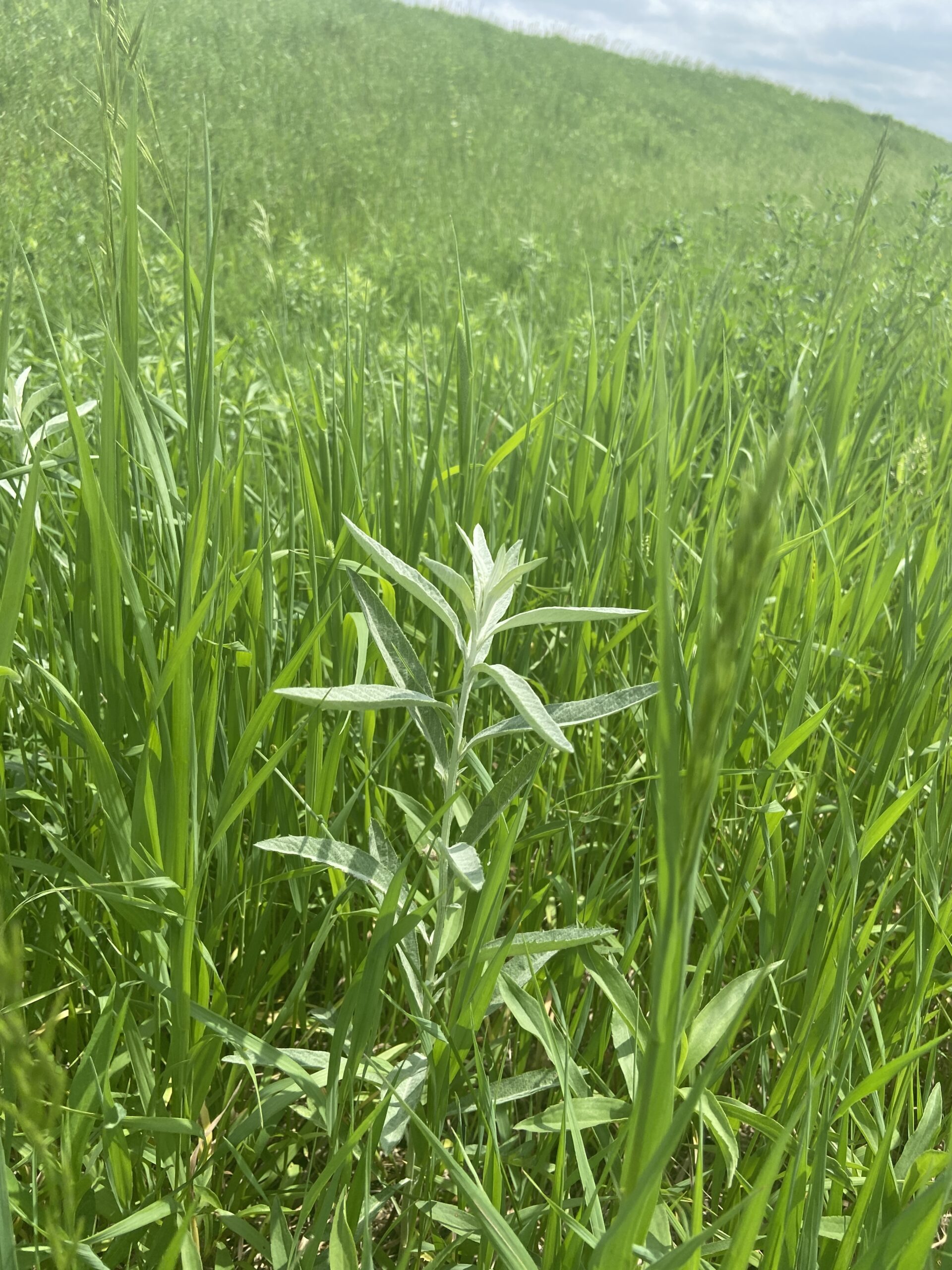
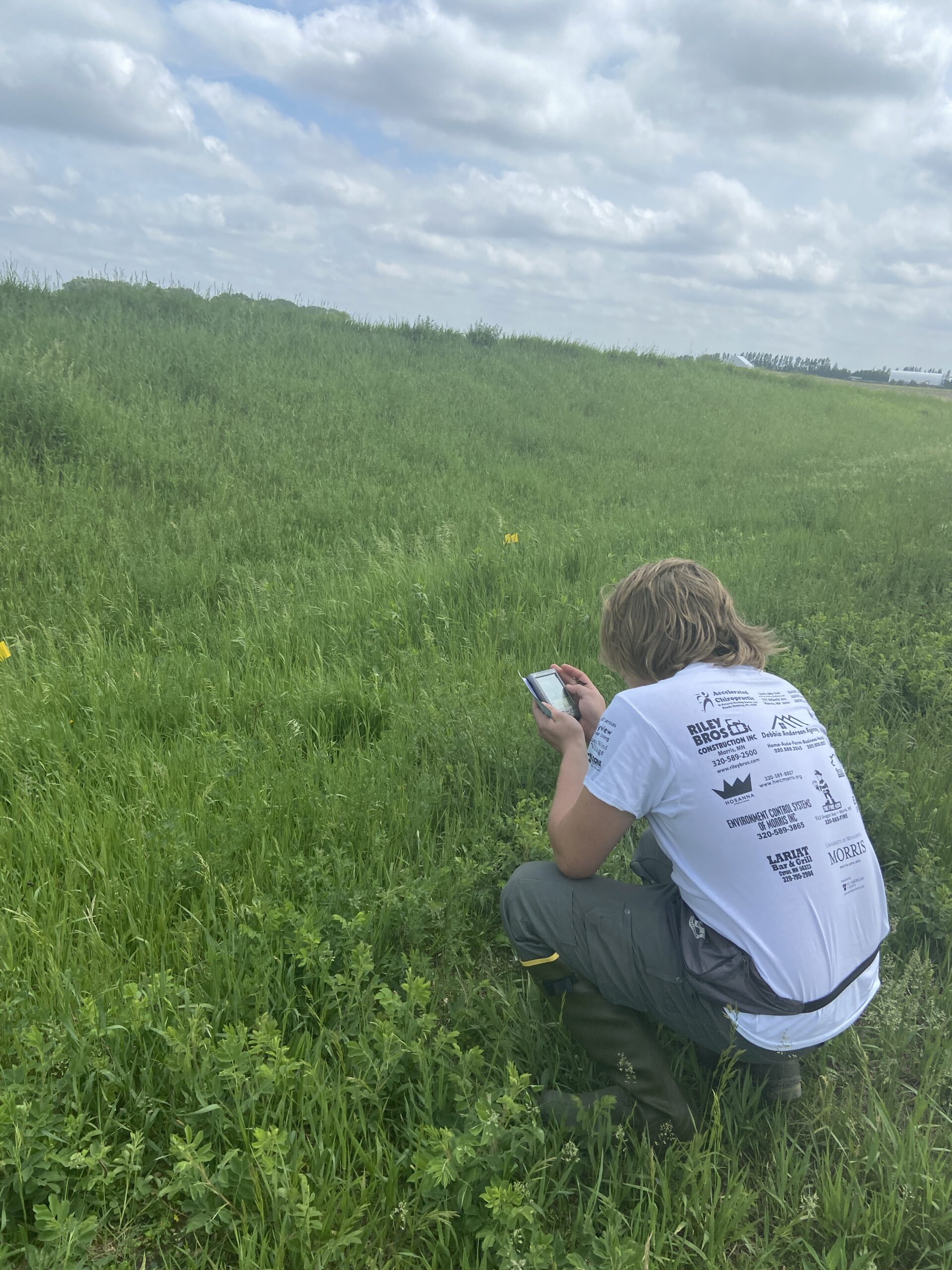
Happy Monday! We found out this morning that some of our echinacea plants in the remnants had a great weekend: they started flowering! This means they have developed male styles and started to produce pollen.
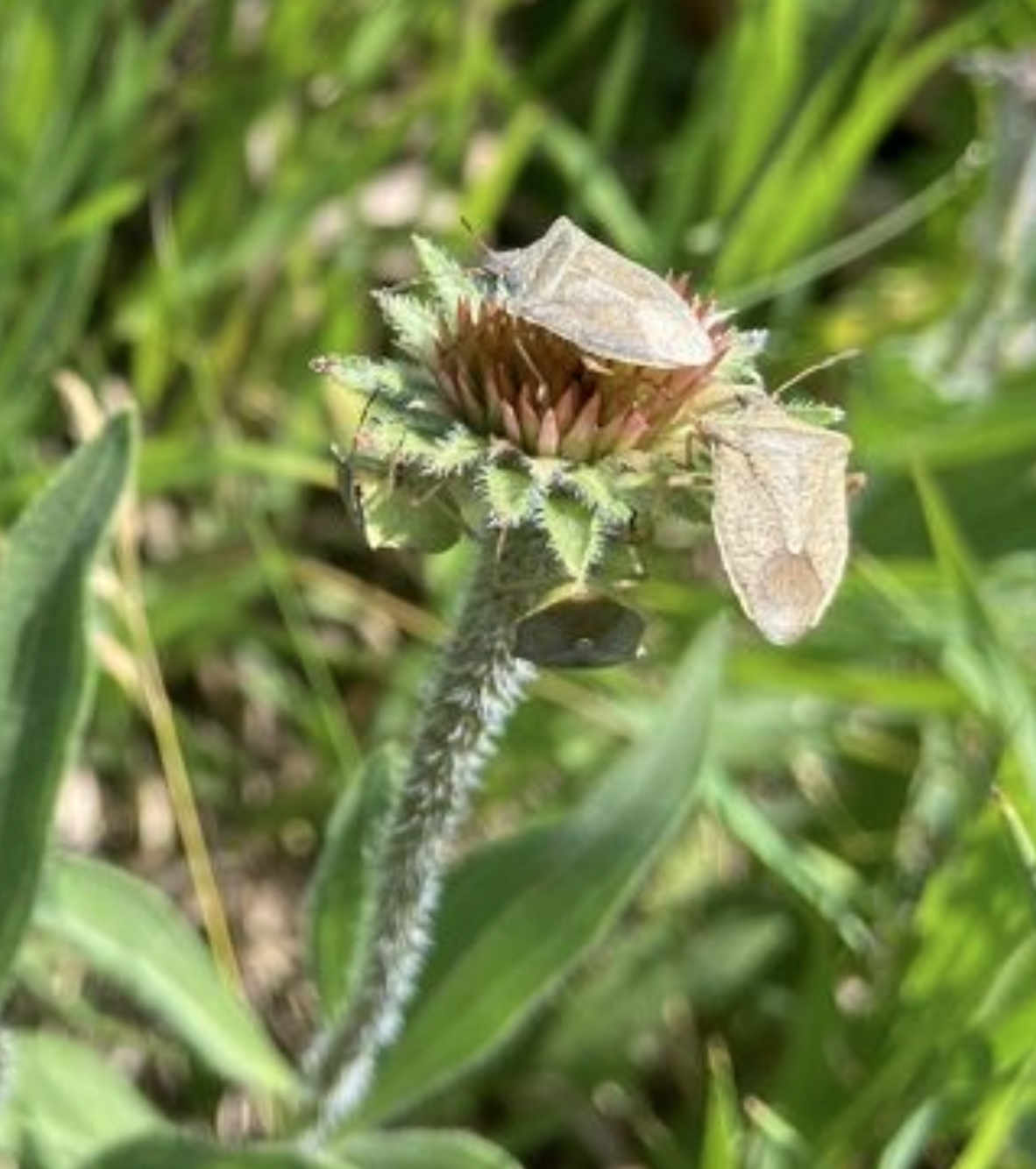
Today the team continued demo and surv in the morning. We are making steady progress and are continuing to check off completed sites on our list. Several sites have flowers that flowered today or yesterday. Emma and I saw one echinacea that was the designated party spot: 6 stink bugs were hanging on to the head!
The party bus.
In the afternoon, most of the team headed to P7 and P9 to measure. This was lots of fun because the plants there are much larger than any we have measured before!
Mia showing us how to measure a flowering plant.
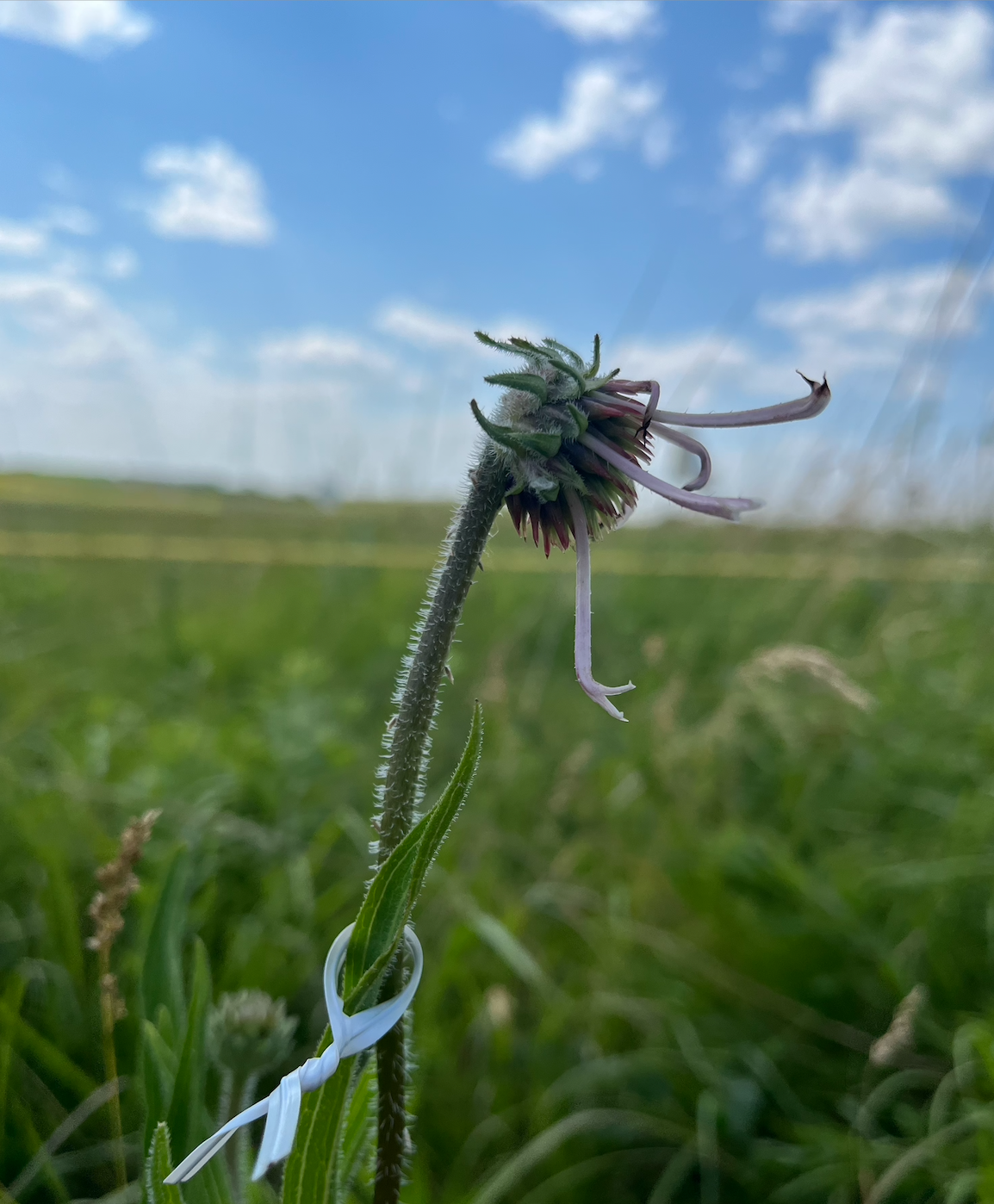
There were a lot of cool things to see at these plots. We saw a bobolink (in his backwards tuxedo) on a date with his bobolink girlfriend (fun fact: bobolinks are polygamous-multiple wives- and polyandrous- multiple husbands) We also saw a couple of mutant flower heads:
Sideways head…where is he looking?
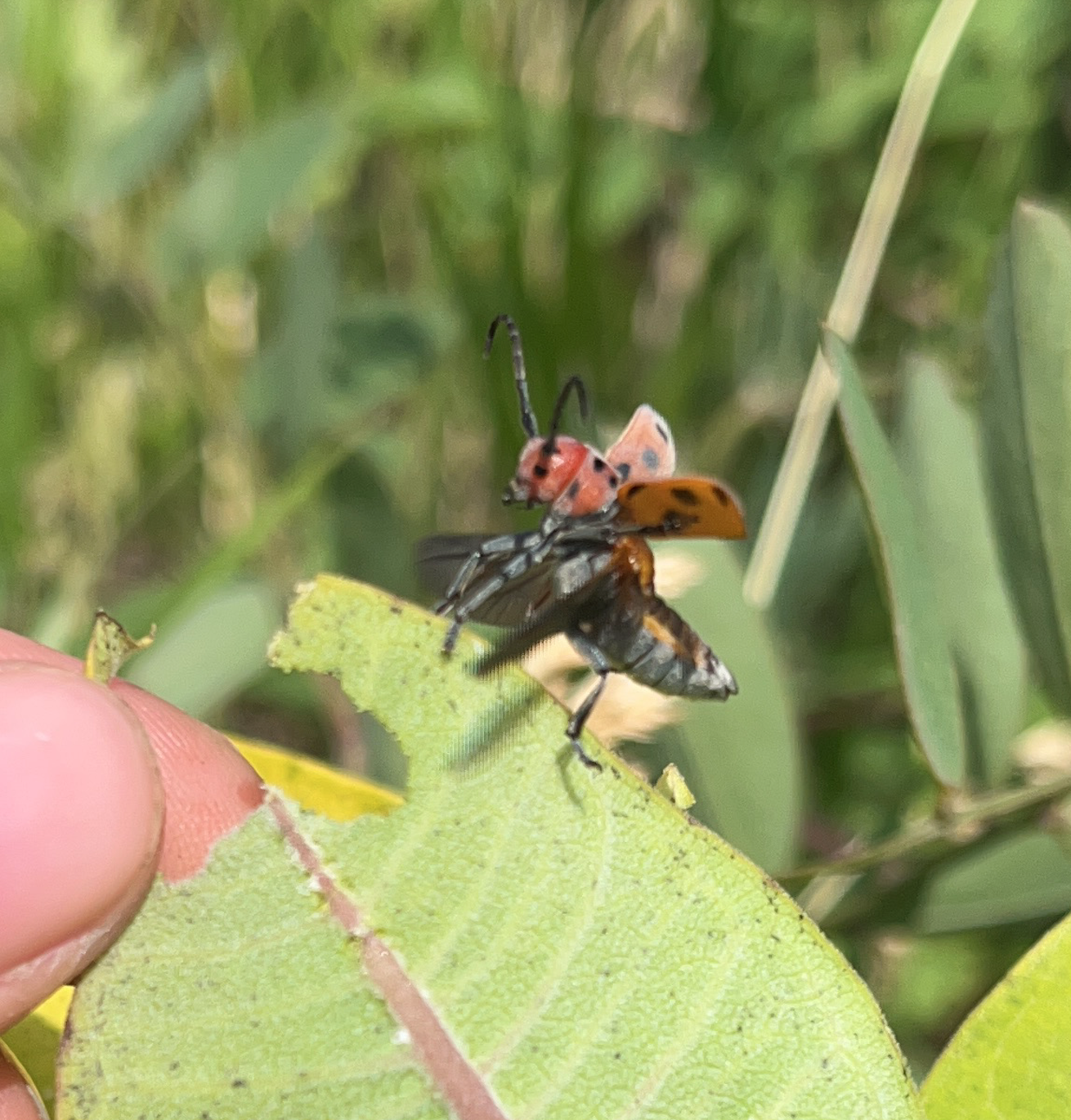
And lots of cool bugs:
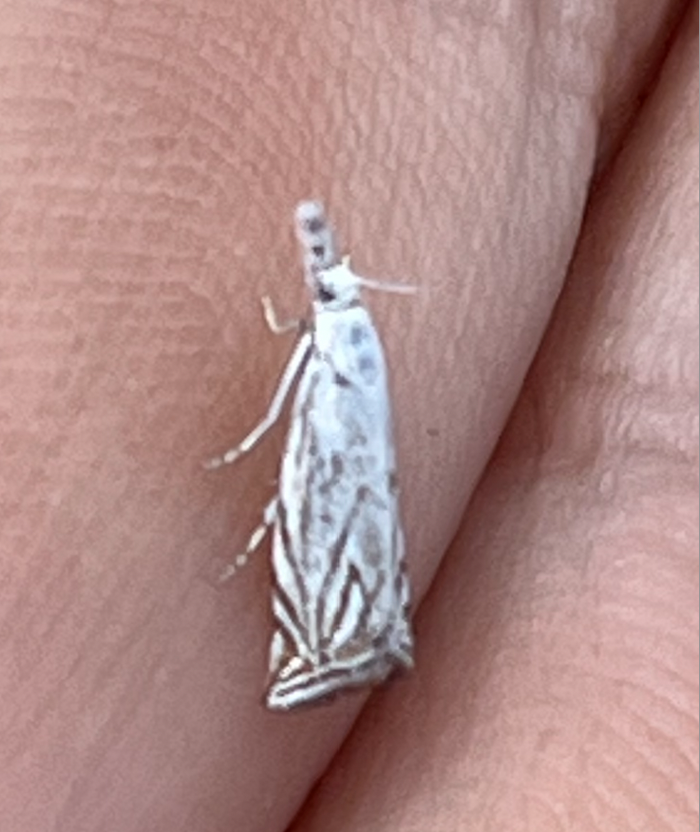
Red Milkweed Beetle mid-flight.Small White Grass-veneer: a moth with a snout.
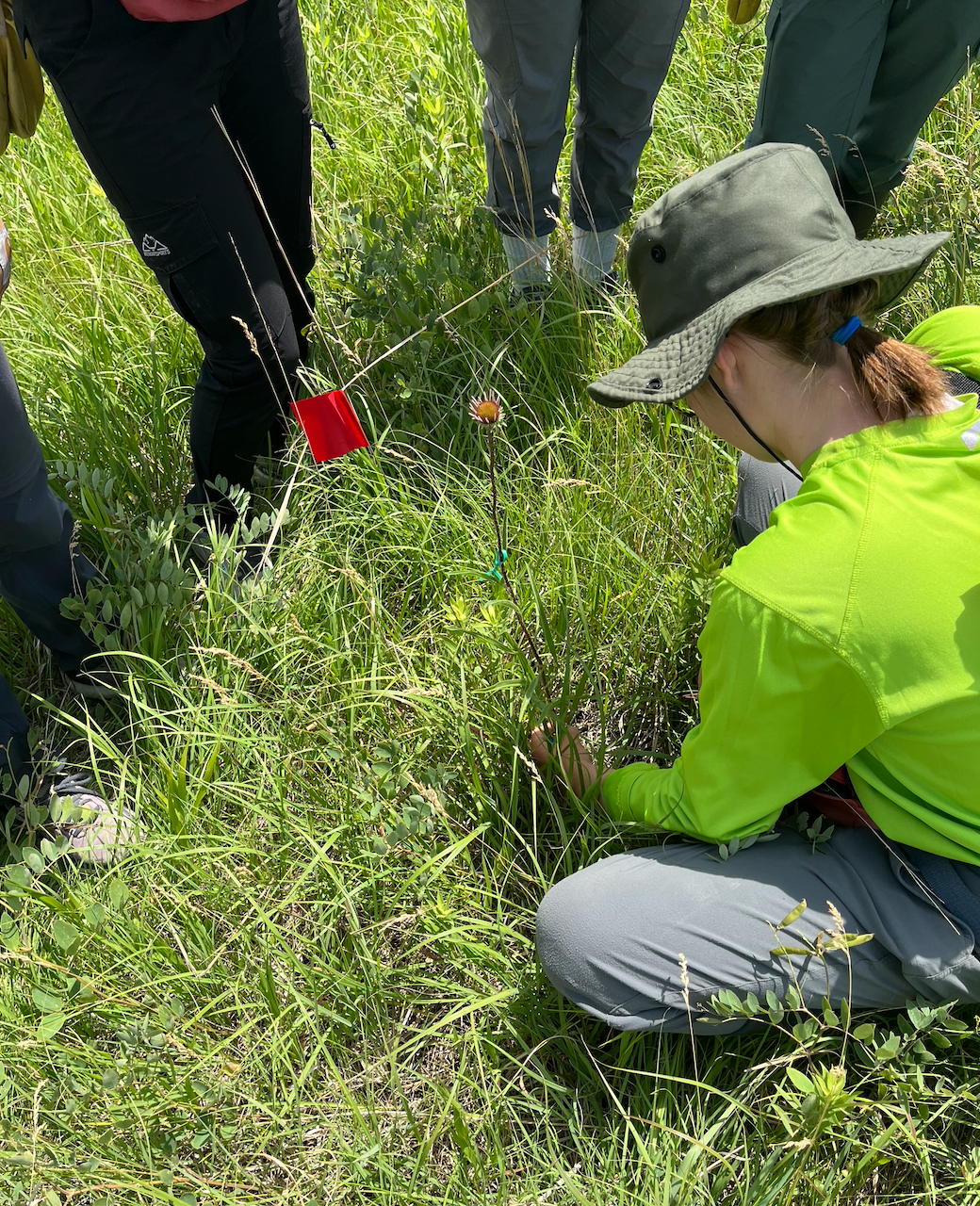
As I watch the sun rise, I wonder what type of day it will be. Will I have ants crawling on me, or will I have a shield bug perched upon my head? As the sun grows higher, I see a group of large animals walking on two feet, carrying lots of brightly colored items. I watch as they come closer to me and my other plant friends. They start marking all the other plants that look like me, I wonder what they are doing. I even get a blue flappy thing of my own. They finally leave, but soon after these big creatures return. They take their time looking at each of us, recording strange data and replacing the flappy thing for another colored one. I wonder what is going on. Finally they get to me, I am the only one left with a blue flag, the others all have a neon. First the creature bends down and places something around the base of my head. I feel pretty, like I was accessorized. Then I feel them dig around near my roots and they find something sharp and metallic. It was placed there years ago and had grown into the dirt around me as time had passed. They dig it out and look closely at it, talking to the other creatures as they examine. Then they start to prod at me, feeling my rosettes and counting my heads. It feels weird, why am I getting all of this special attention? And what do they want from me? Will I be okay? Finally, they stand up, but I see the creature reach around their back to grab something. I fear the worst as they bend down with a sharp pin, but they don’t hit me. Instead, they replace my blue flag with a neon one like the rest had received, and walk away.
I start to relax, thinking it is all over. The creatures had gotten what they had come for. Unfortunately, they didn’t seem to be done. A group of two of them started working their way through all of us who were marked, along with a tall stick they seemed to keep looking at. I worry what they are doing. I think that it may be the end. When the group arrives at me, I can feel the stick being placed next to me, nearly on top of me. I fret that I will be squished. One of the creatures bends down, again looking at the foreign metal object which seemed to be assigned to me. The two creatures talk for a moment, then my flag gets replaced again, this time I get a white one. I can’t relax, not when they seem to be coming back so often. But as the sun dips below the horizon, I think that the normal hush of the prairie may have finally returned, and I can again grow to my hearts content.
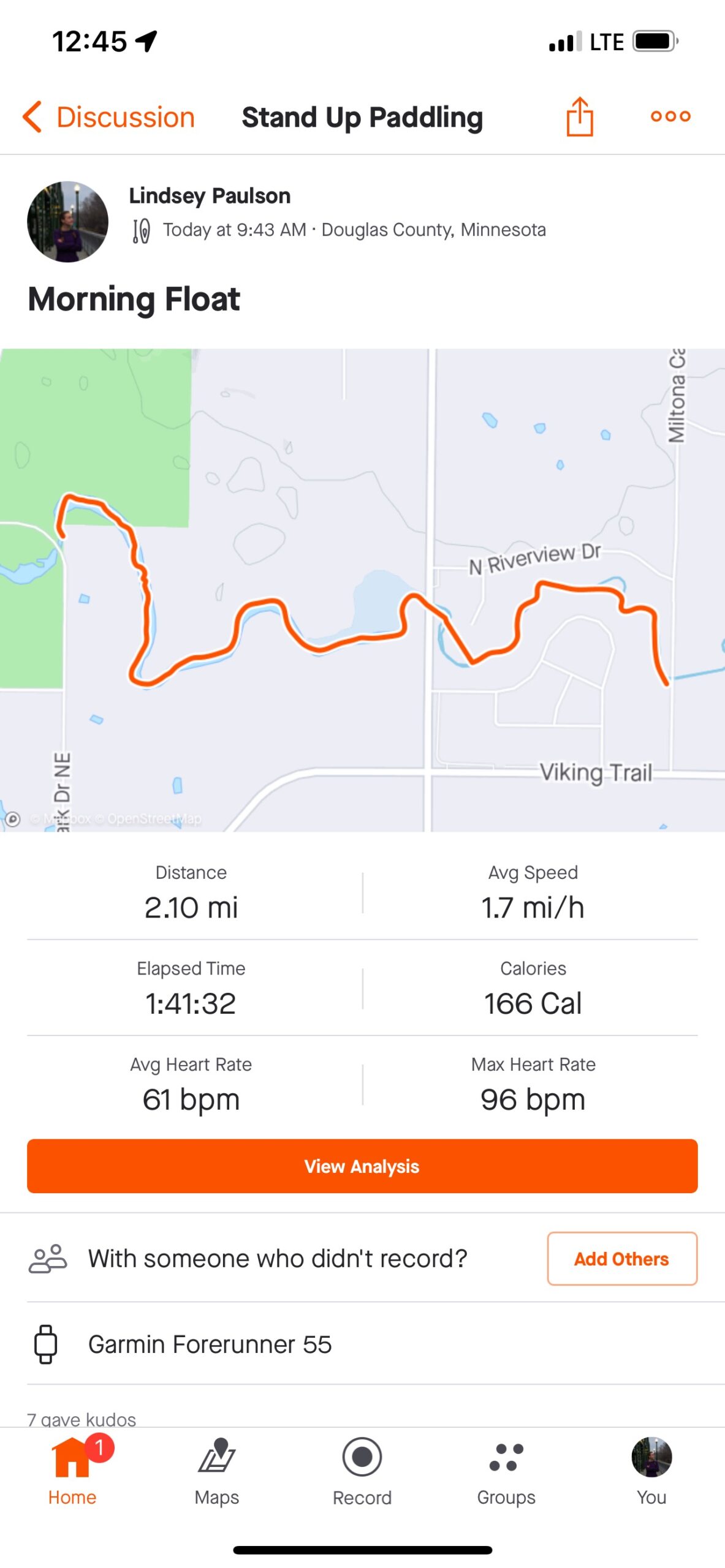
Andes crew (Johanna, Geena, and Sophia) and Elk Lake house (Lindsey and Mia) headed out at 9am this Sunday morning to beat the heat by tubing down Long Prairie River. A balmy 99 degree Fahrenheit was the high for the day, but we kept it cool in the water. Our 2 mile lazy-river ride clocked in at an average speed of 1.7 mph, and on the way we saw red-winged blackbirds, dragonflies, fish (both dead and alive), dogs, and sea monsters.
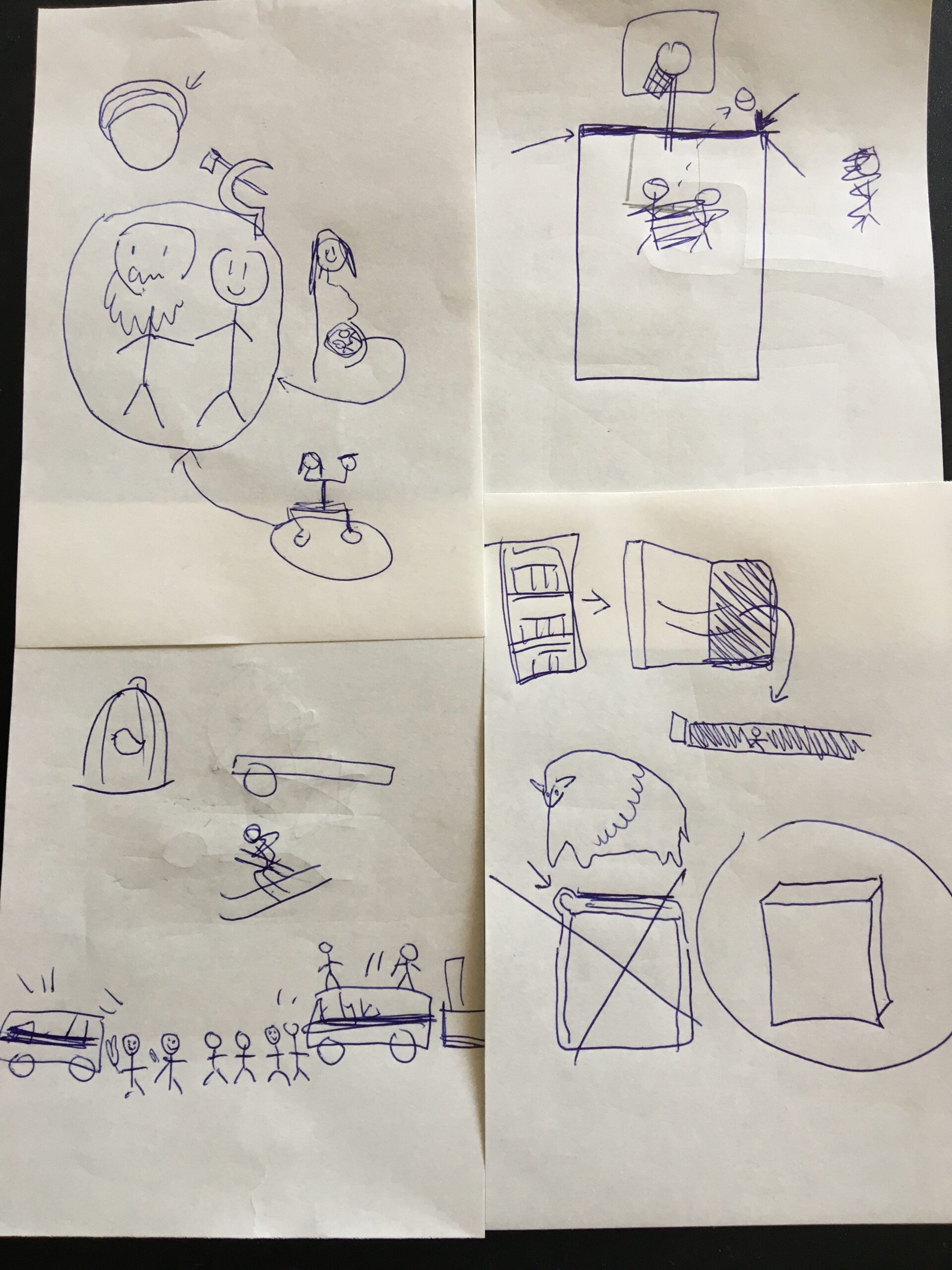
Andes Crew decided to stay in after a wild night of street dancing on K-Town Friday night. Mia and Lindsey representing Elk Lake house competed in the pictionary tournament against the Andes Crew, Sophia, Geena and Johanna. Andes won, however the competition was neck and neck. Check out some of our fan favorite and winning art pieces includes, canary, buffalo, foul line, Marx brothers, paper back, parade. See if you can guess from the pictures! Stay tuned and join the next pictionary tournament hosted by yours truly, Andes Ski Hill and Friends.
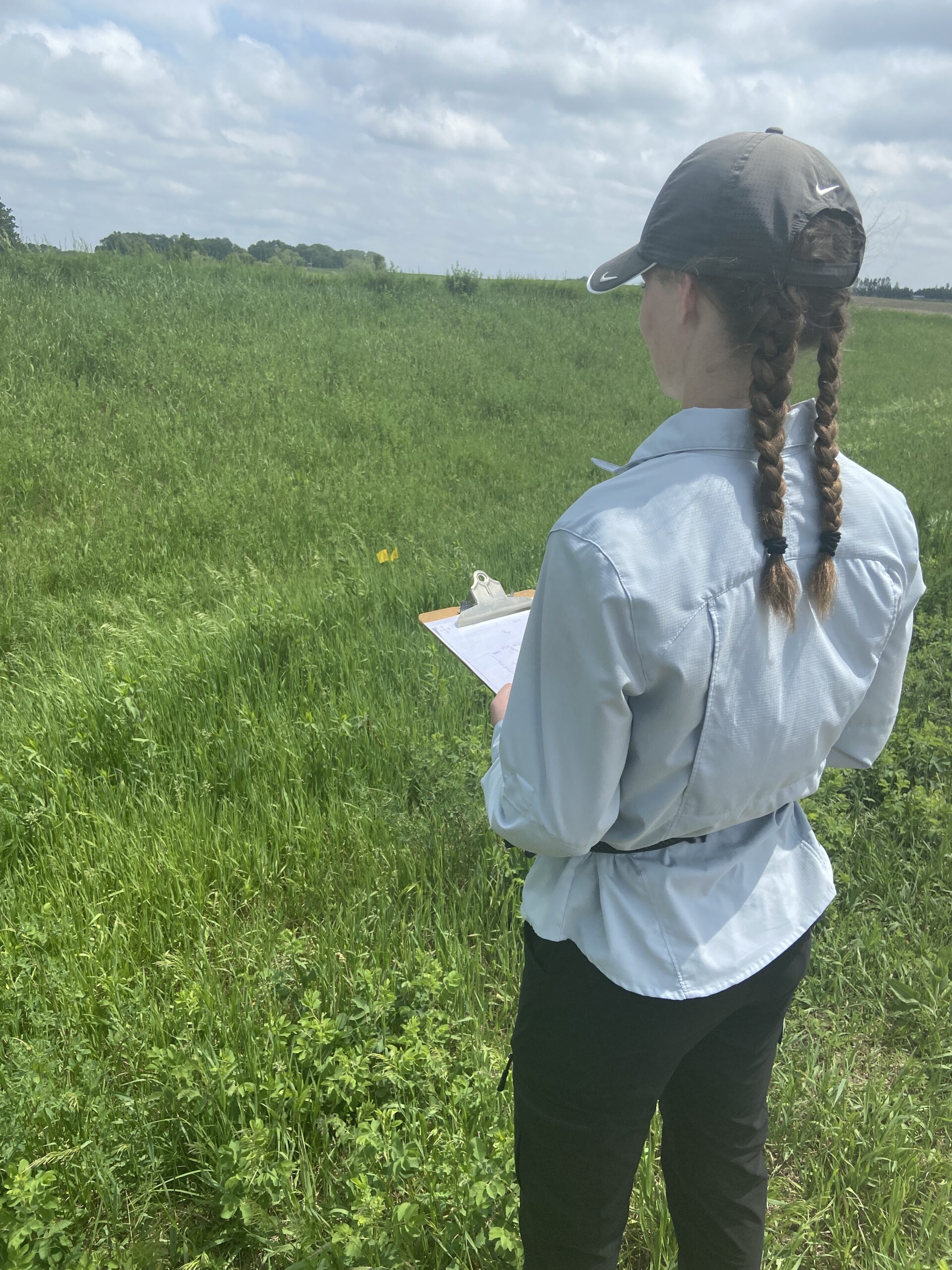
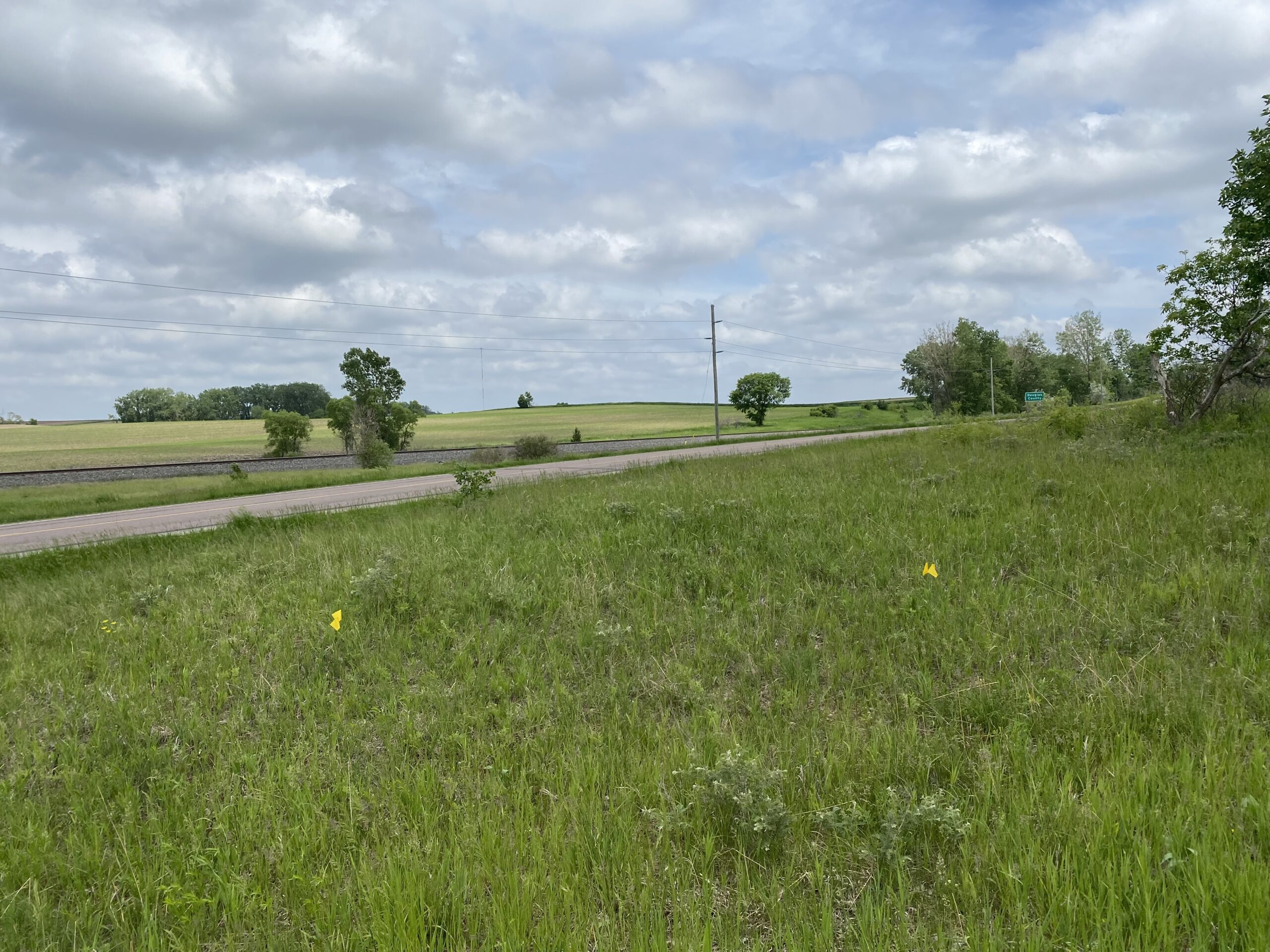
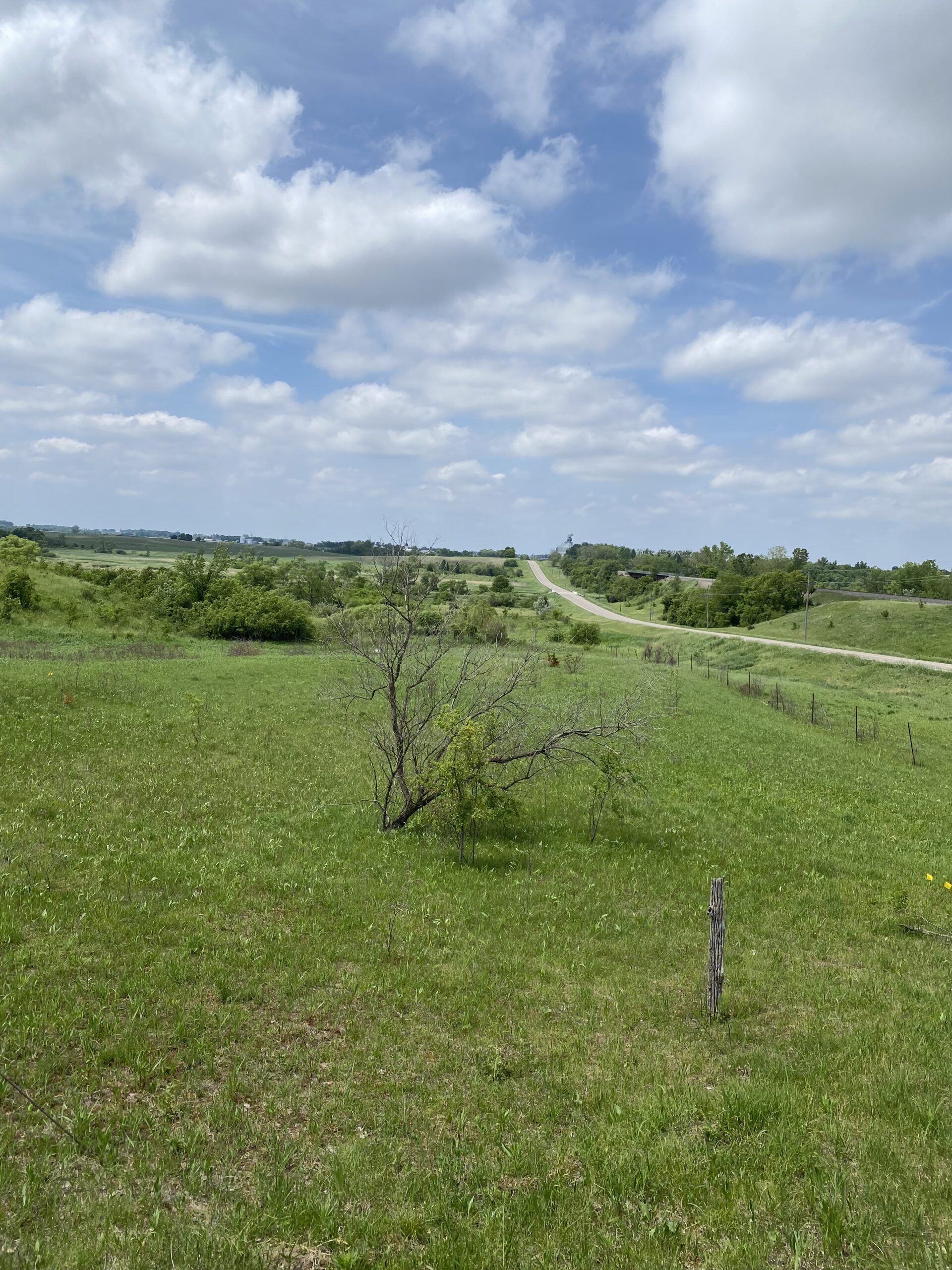
Daytona and Emma visited Around Landfill (ALF) and Northwest of Landfill (NWLF) today. Each site was visited for around 15 minutes and was observed from the side of the road.
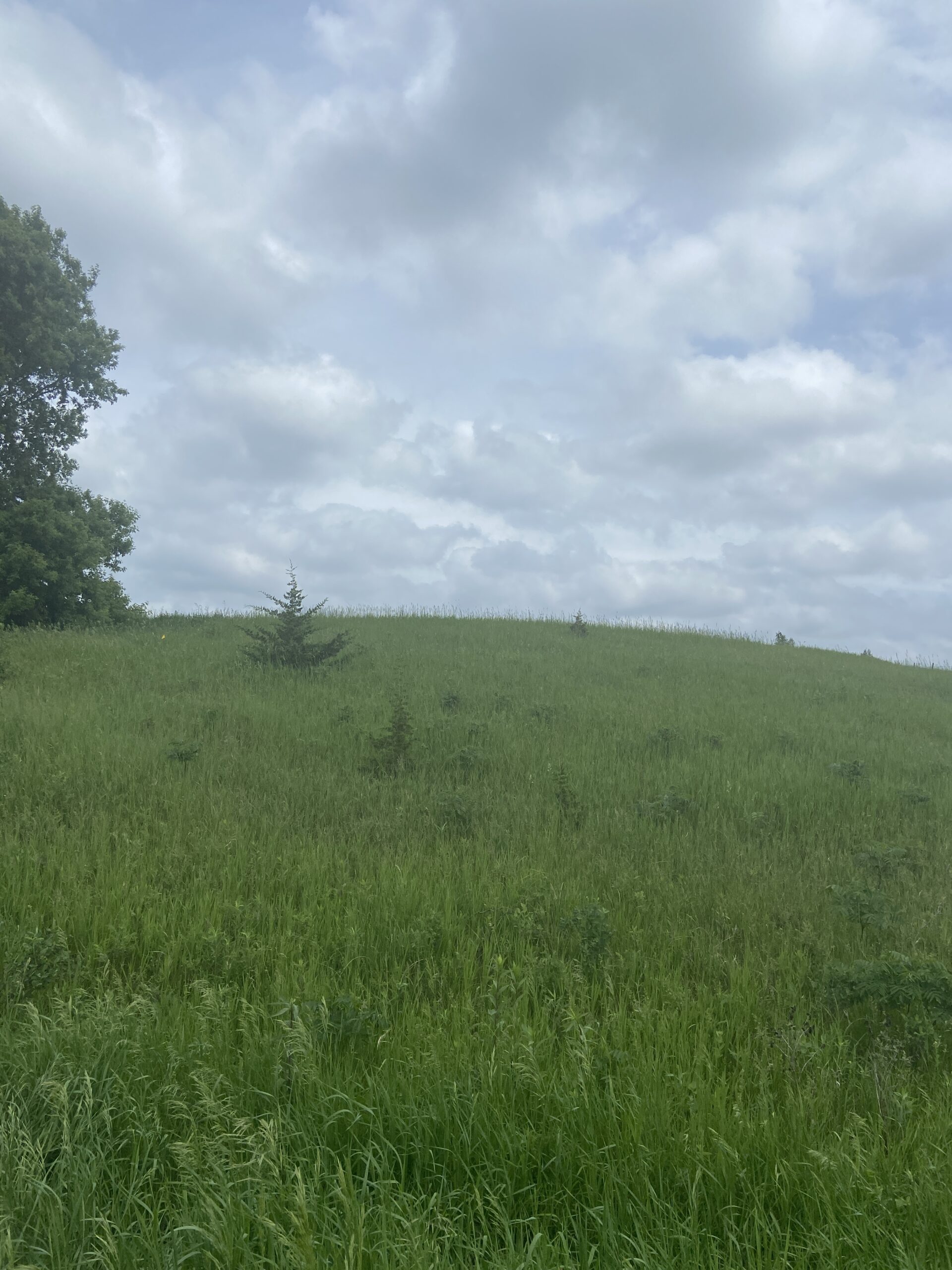
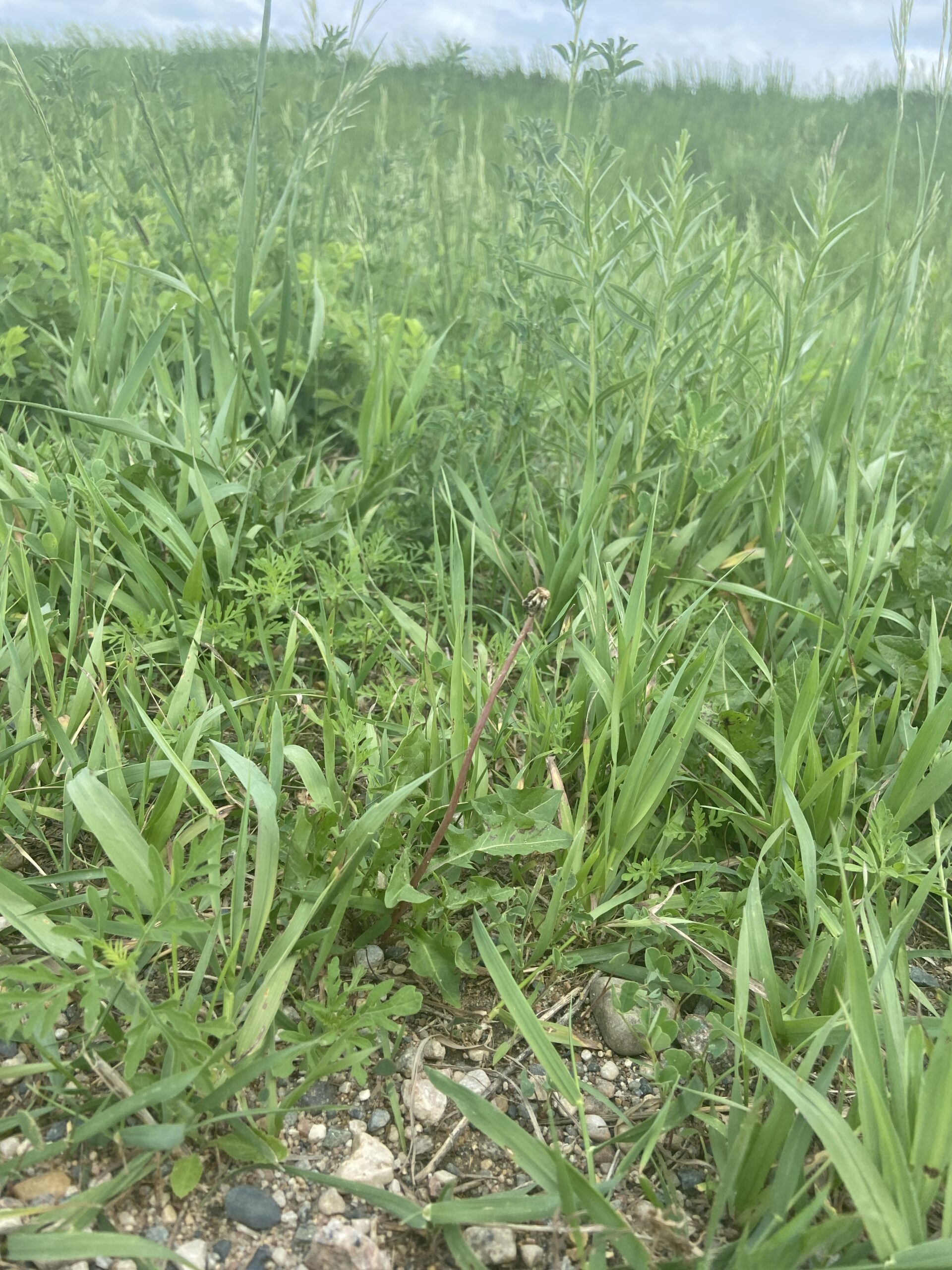
ALF did not look burned and contained a lot of shrubs and brome. We also noticed the warm grass big blue stem, as well as the forb dandelion and the legume veiny pea. This concluded all 4 plant communities within this site. We discussed how the shape of the land, namely the hill and the ditch, were both naturally occurring and man-made. Among the site we saw trees, some fences (one of which was electric), and a few cars passed us, which we made sure to wave to! We managed to spot some echinacea as well as the veiny pea at this site, which was exciting.
NWLF did looked burned. We agreed upon this because of the lack of previous years’ growth and the lack of brome in the area. We found lots of plants in each of the 4 plant communities, some being brome, silver leaf pea, big blue stem, and dandelion. At this site we saw echinacea plants, but did not find any veiny peas.
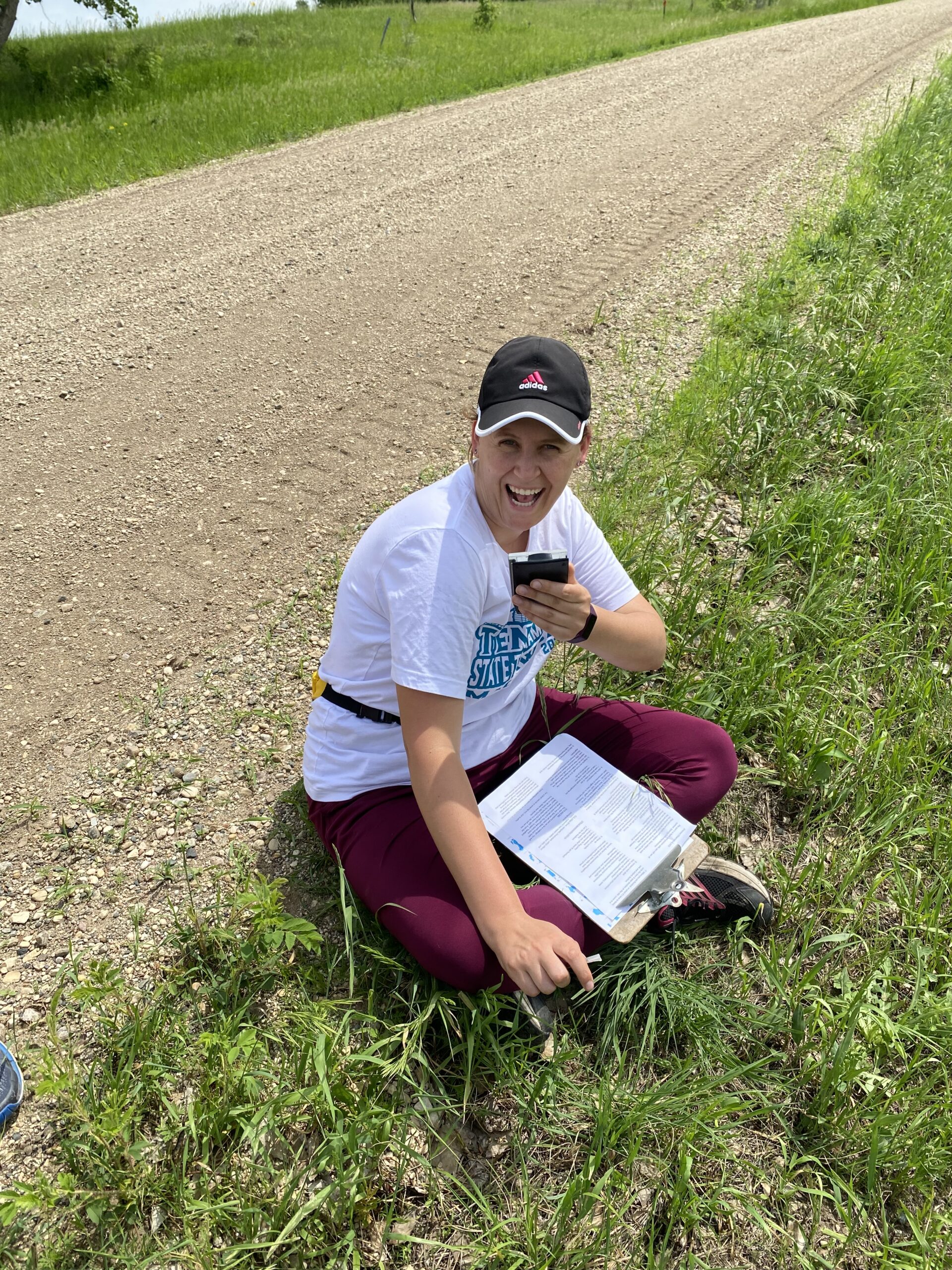
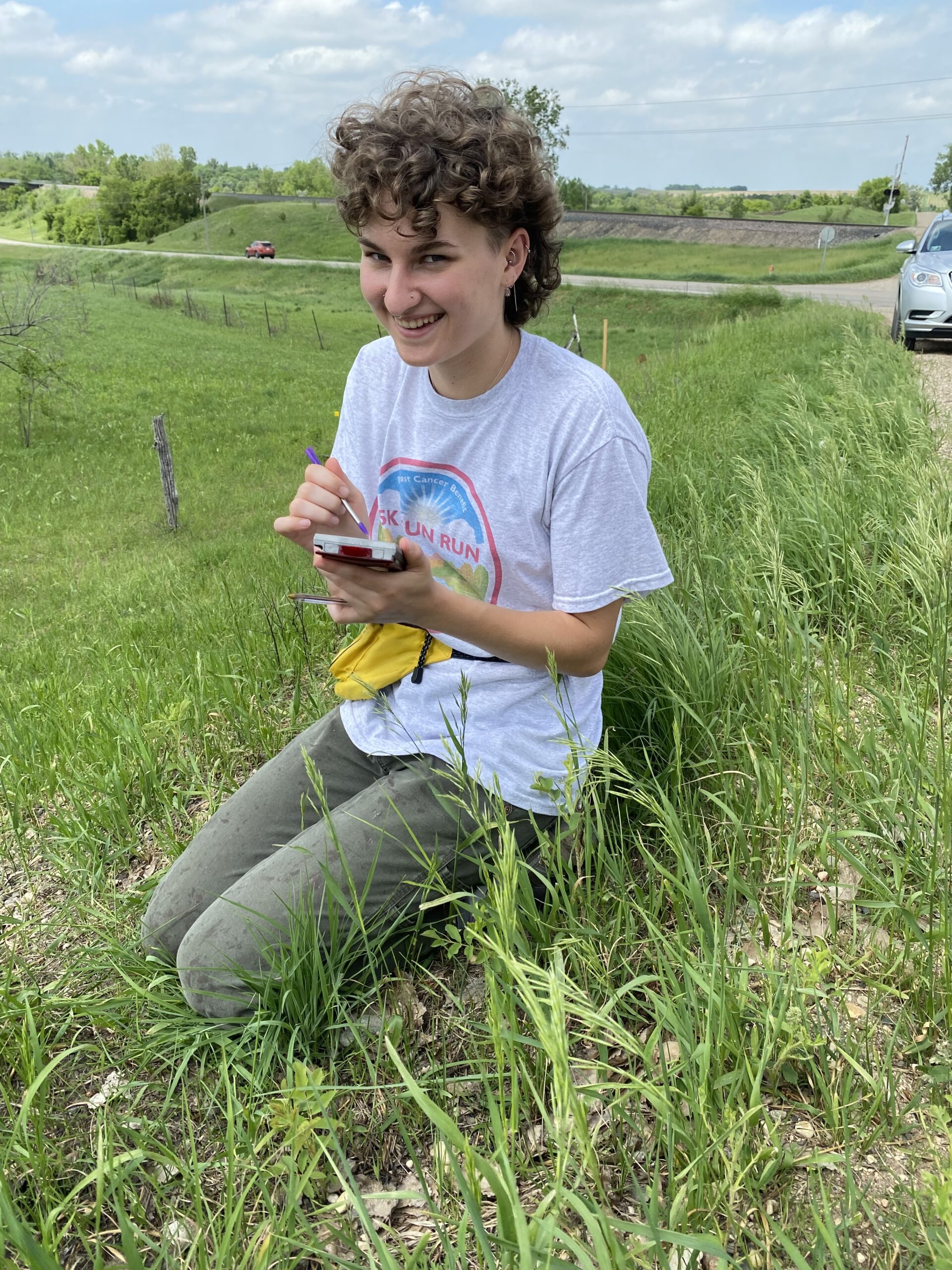
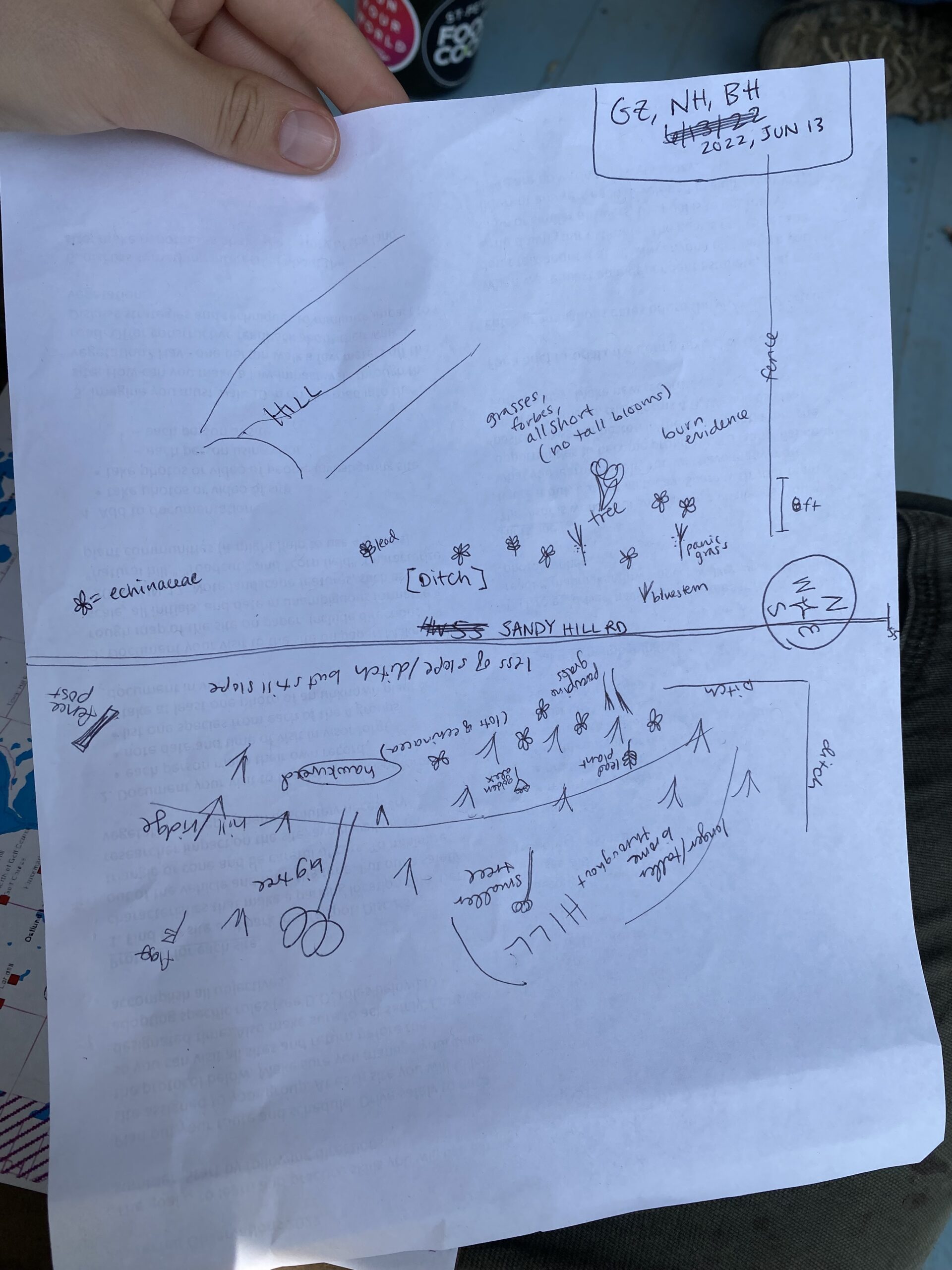
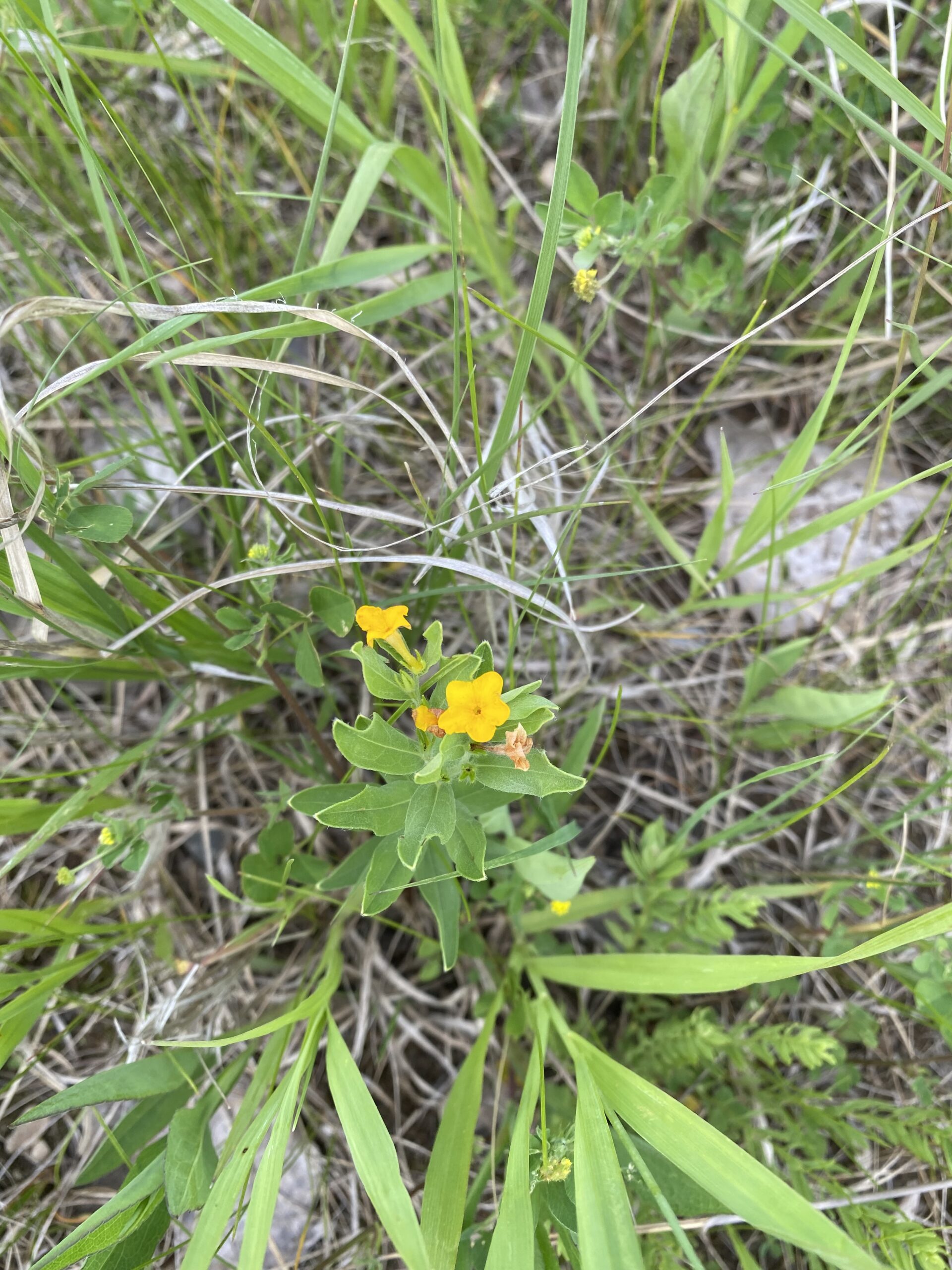
Pulling up to these two “empty” fields after crossing Highway 55, I think that everyone in our group immediately felt let down by what seemed to be a run-down patch of farmland split by an equally run-down gravel road. It took about 5 minutes of investigation which, aided by our Visors, encouraged us to paint ourselves’ a picture. What jumped out to me initially was that the West side of the plot housed significantly shorter plants as a whole compared to the East. With a little bit of prompting from our Visors, this led us to the conclusion that the West field had been through a burn in the recent past. We did end up finding a few Echinacea plants, as well as other plants we were introduced to earlier in the day, namely; Panic Grass, Lead Plant, Brome Grass, and Golden Alexander. (Our unknown plant was an orange flower we found on both sides of the plot)
West side of Loeffler Corner
After completing our Visor document and map (pictured below) for the West plot, we turned to the East. The East plot clearly hadn’t seen fire in a long time. It was overgrown and we quickly were able to identify many of the same plants we found on the West corner. Echinacea, Big Blue Stem, Lead plant, Hawkweed, and a bunch of Army Worms. I thought this was a better test of our skill to pick out the plants in an environment with more competition between producers. After finishing the other section of the map, we walked up and down the gravel road to explore the farthest reaches of the fields. Overall I think we all enjoyed working in a new place, and got the chance to flex our foraging skills.
After navigating uncertainties about weather and electricity, we ventured up to western Minnesota for a promising burn window. Steady northwest winds, dry fuels, and suitable conditions left us eager to burn on Monday, May 16. Alex, Per, Stuart, and I worked all morning to ready burn breaks in preparation for the afternoon. We were joined by Brad D., Dwight, and Ed C.
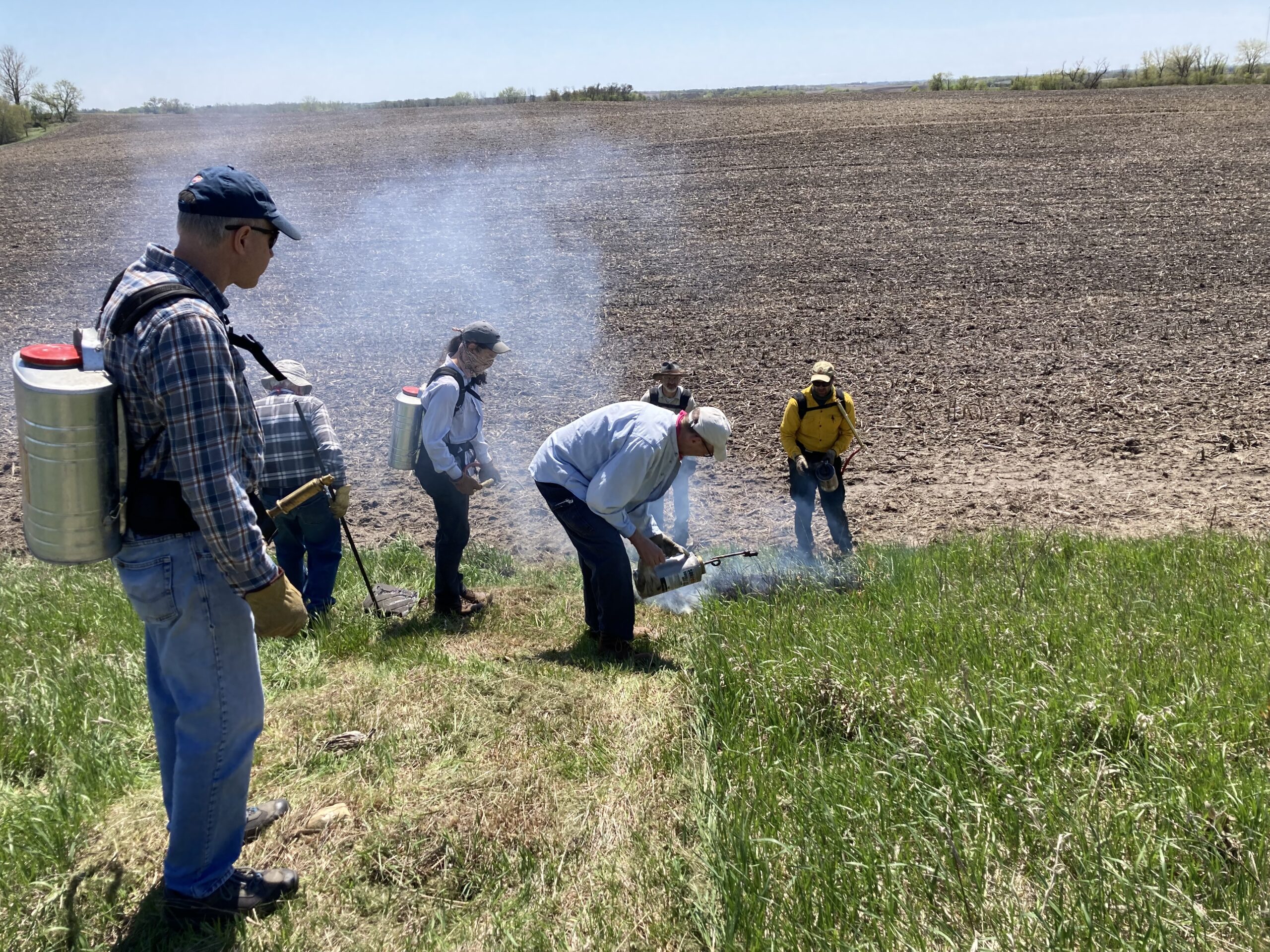
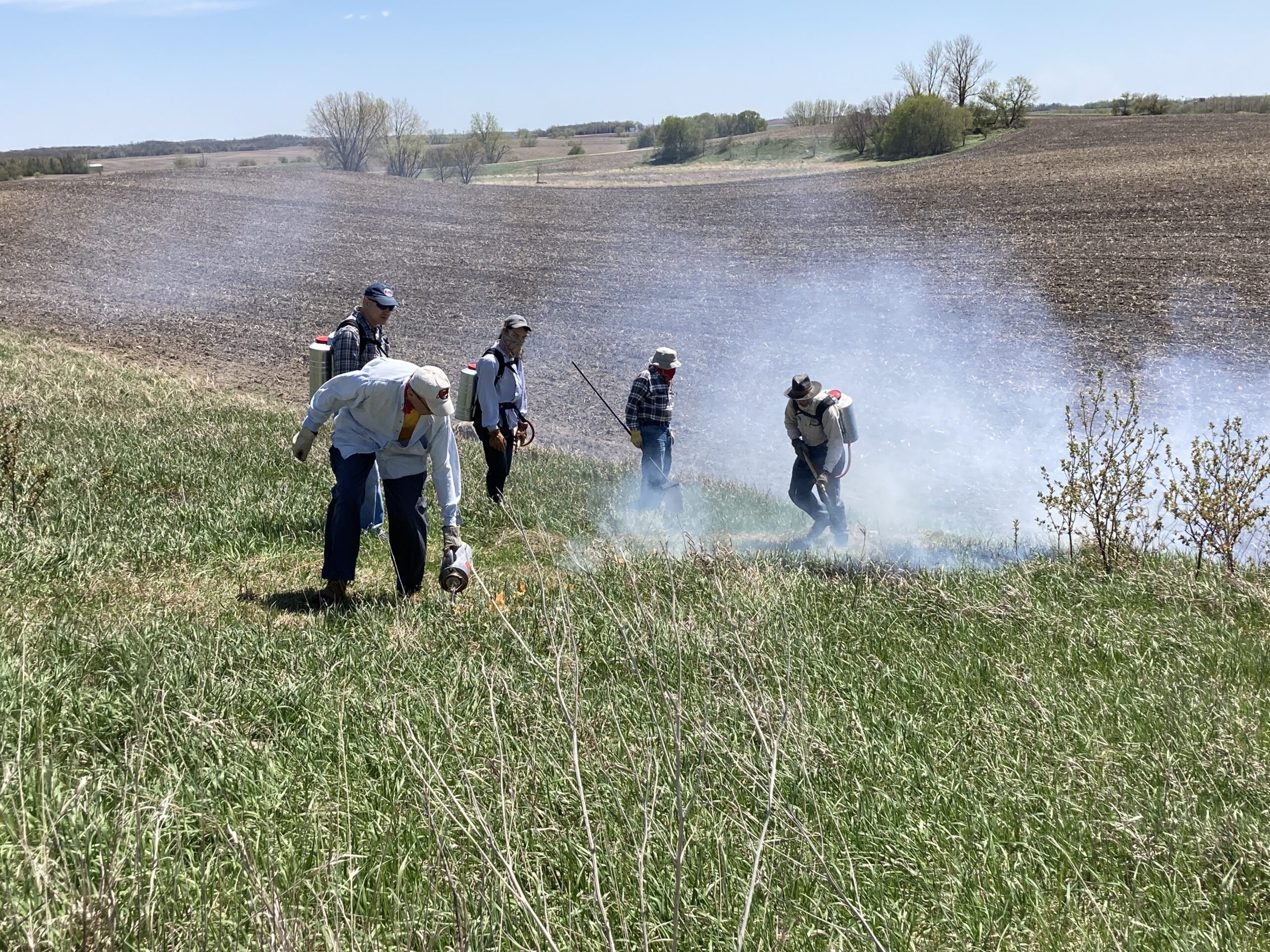
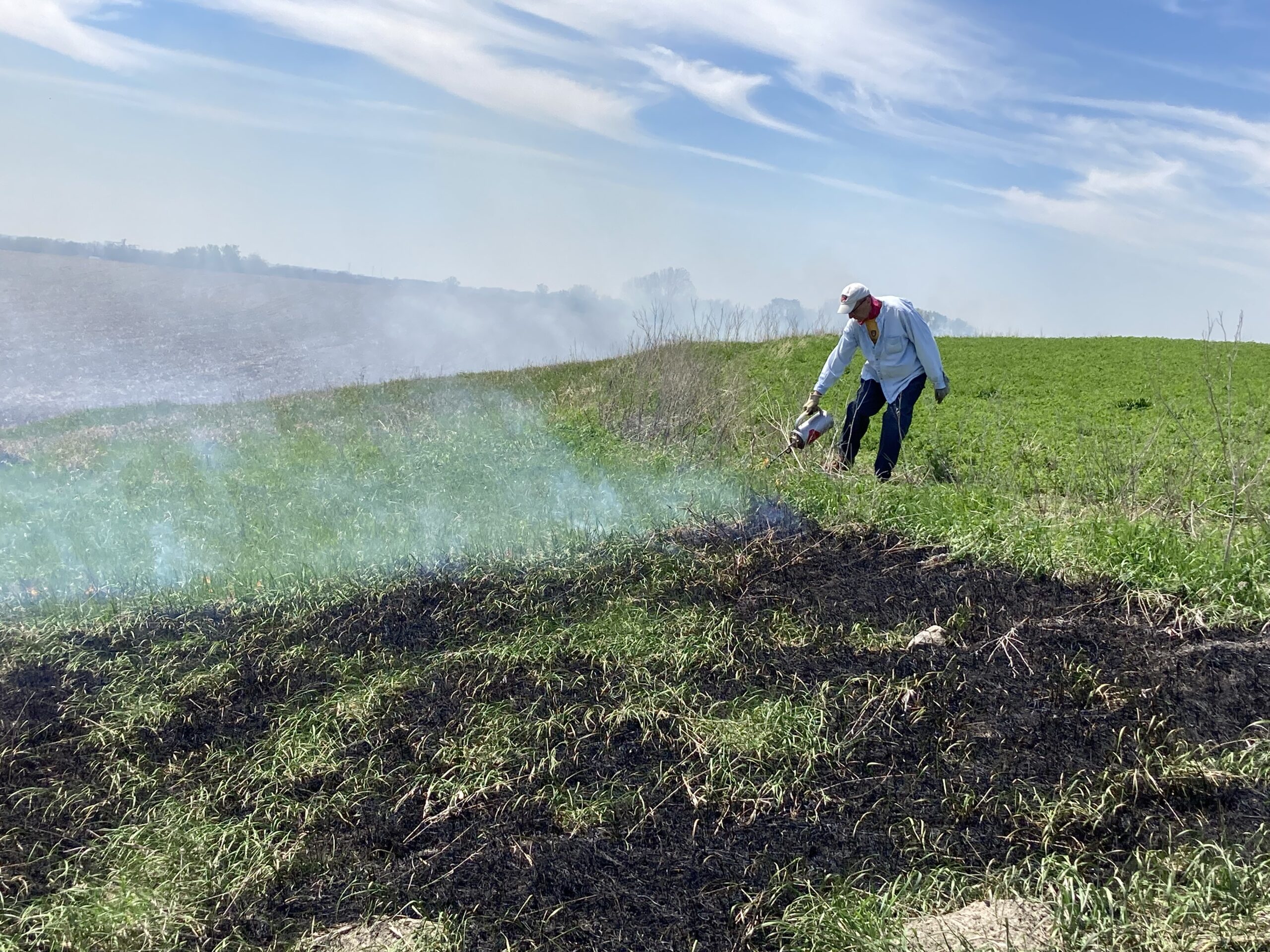
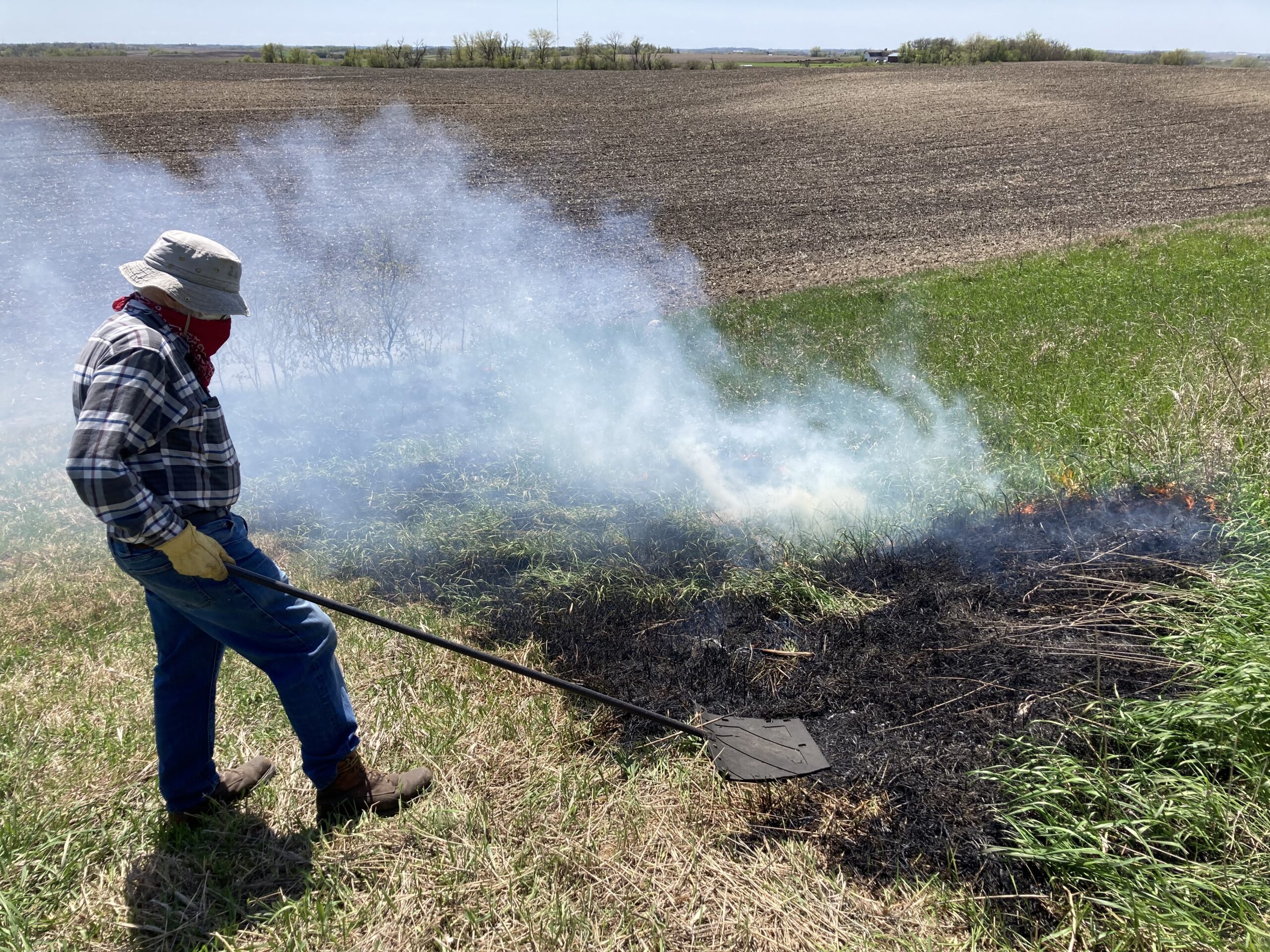
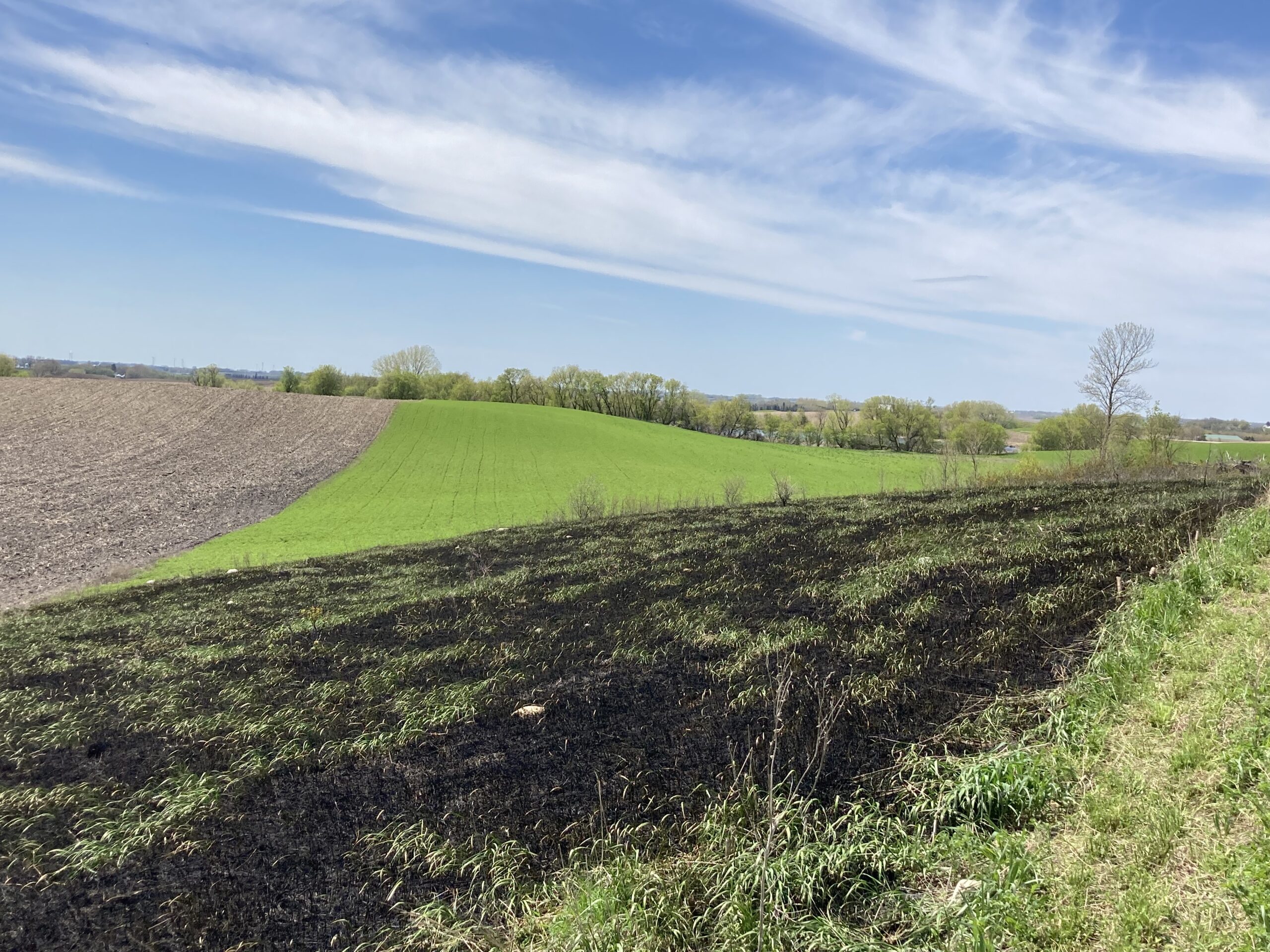
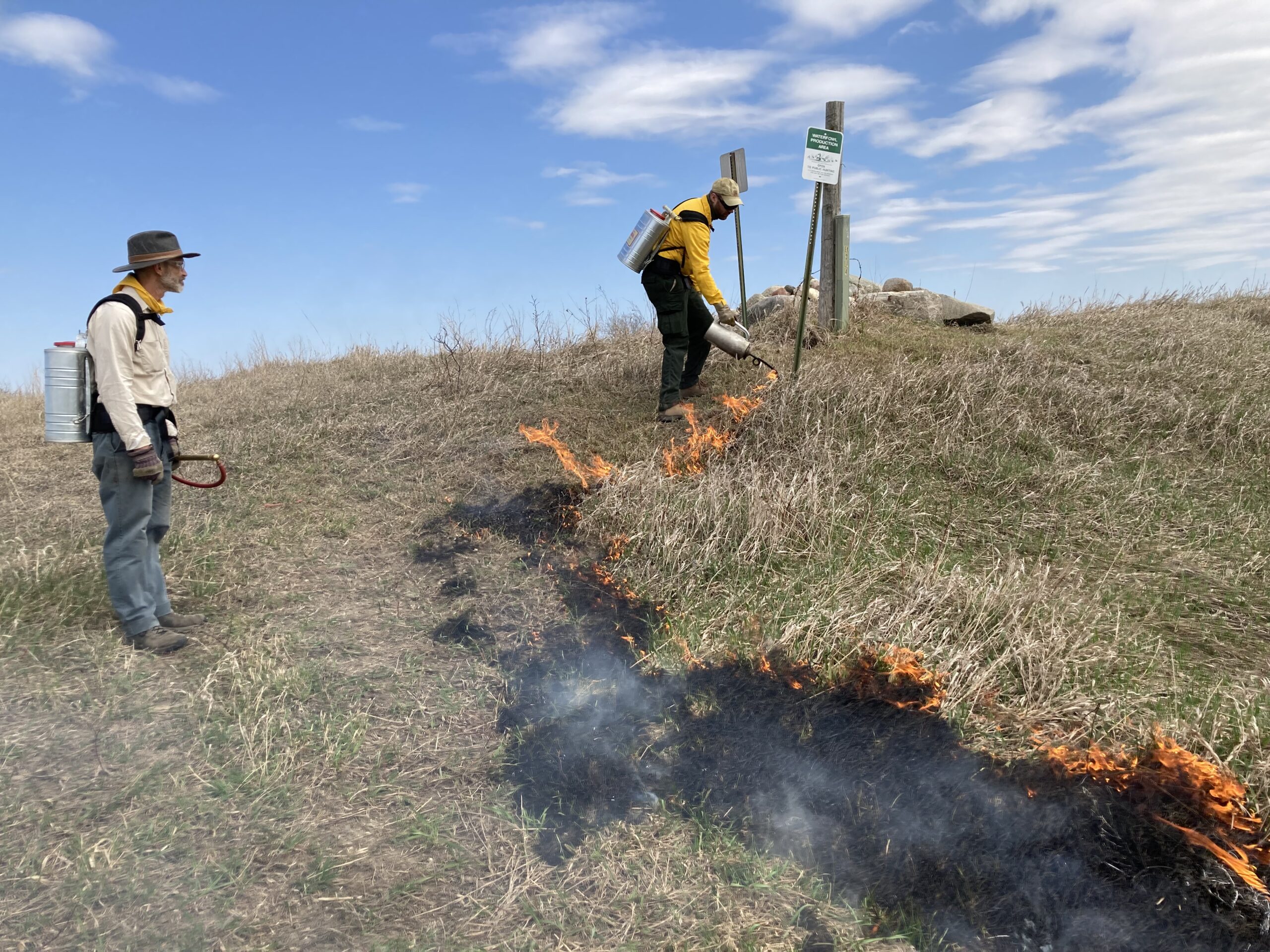
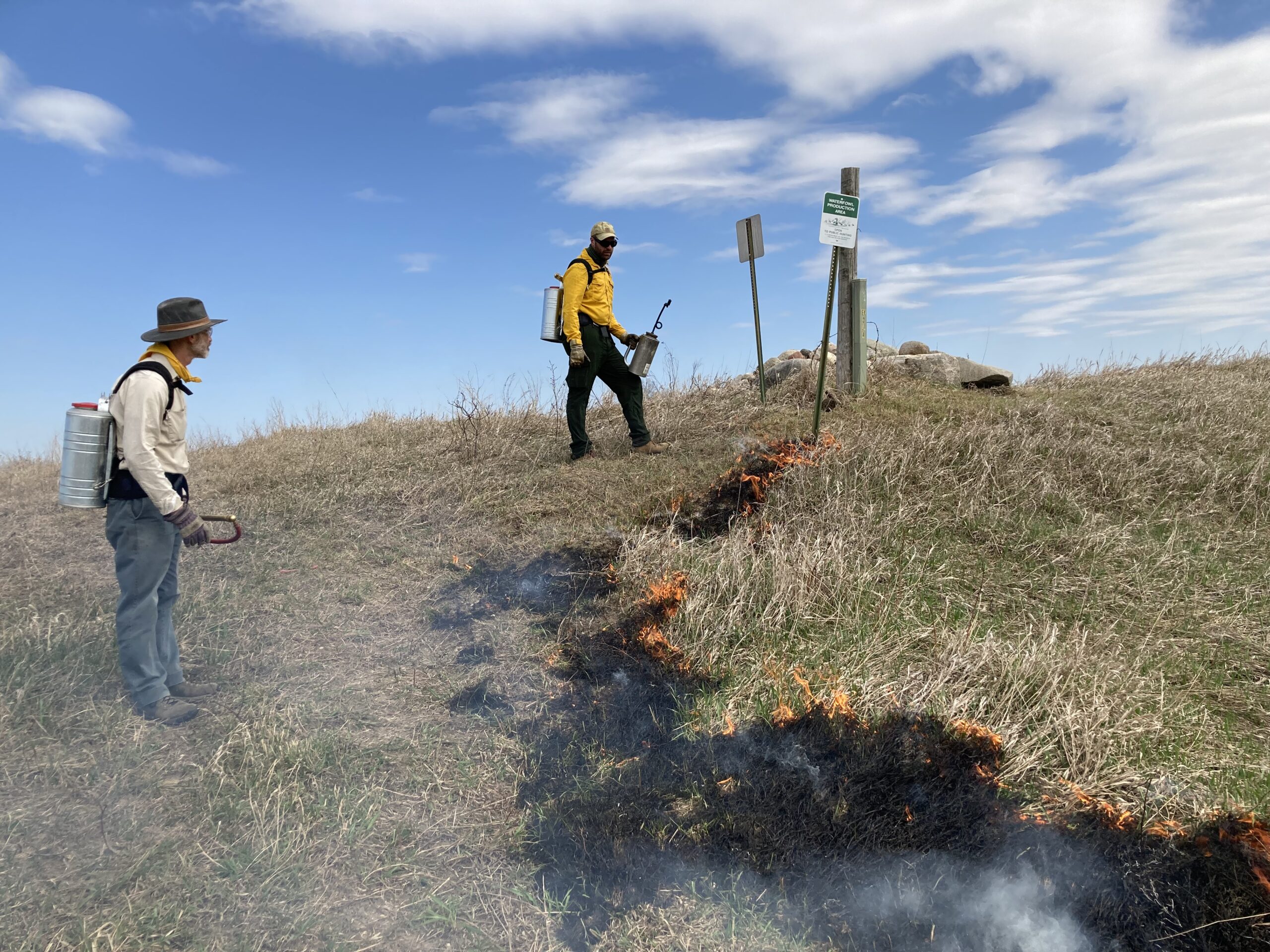
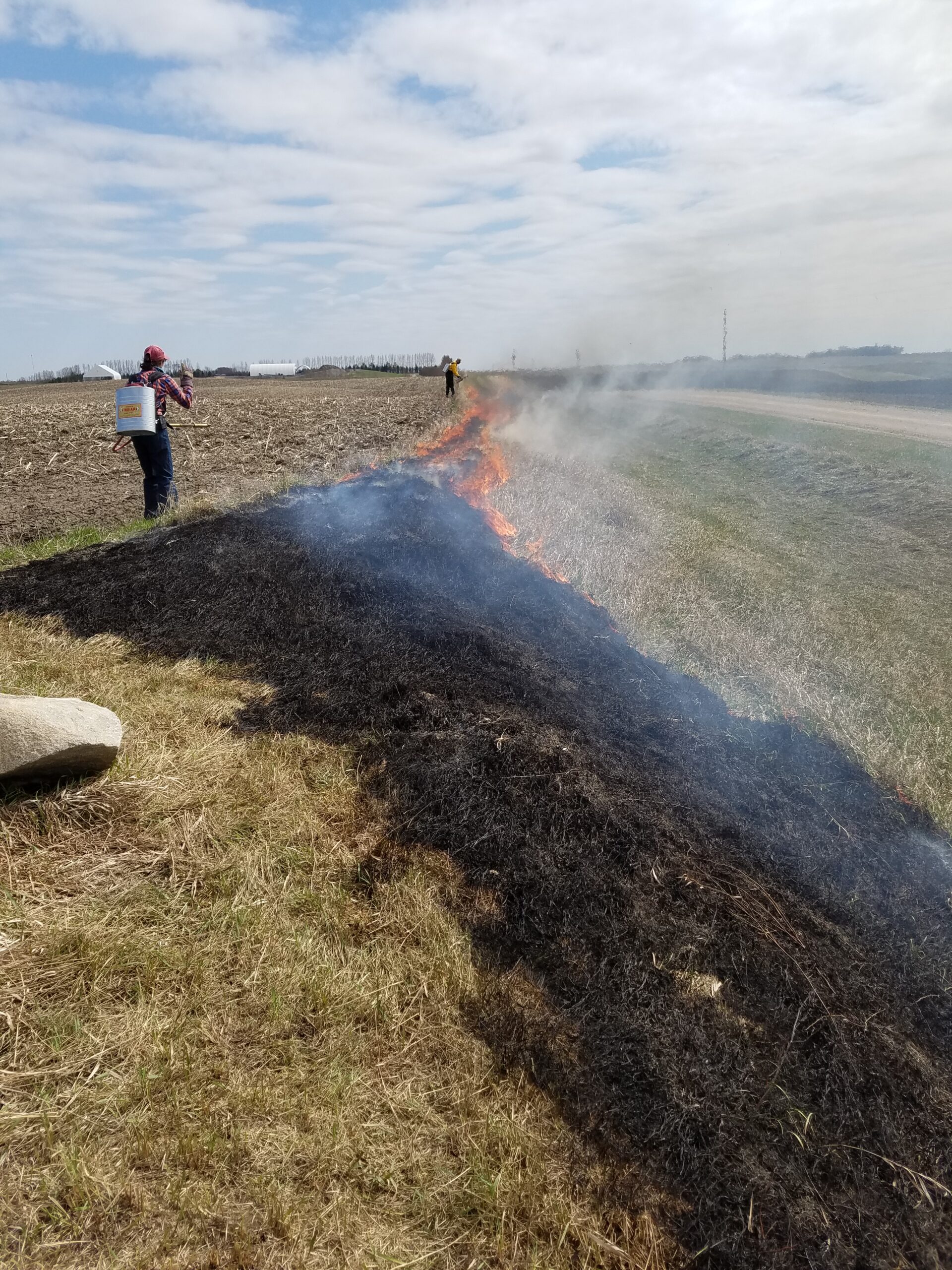
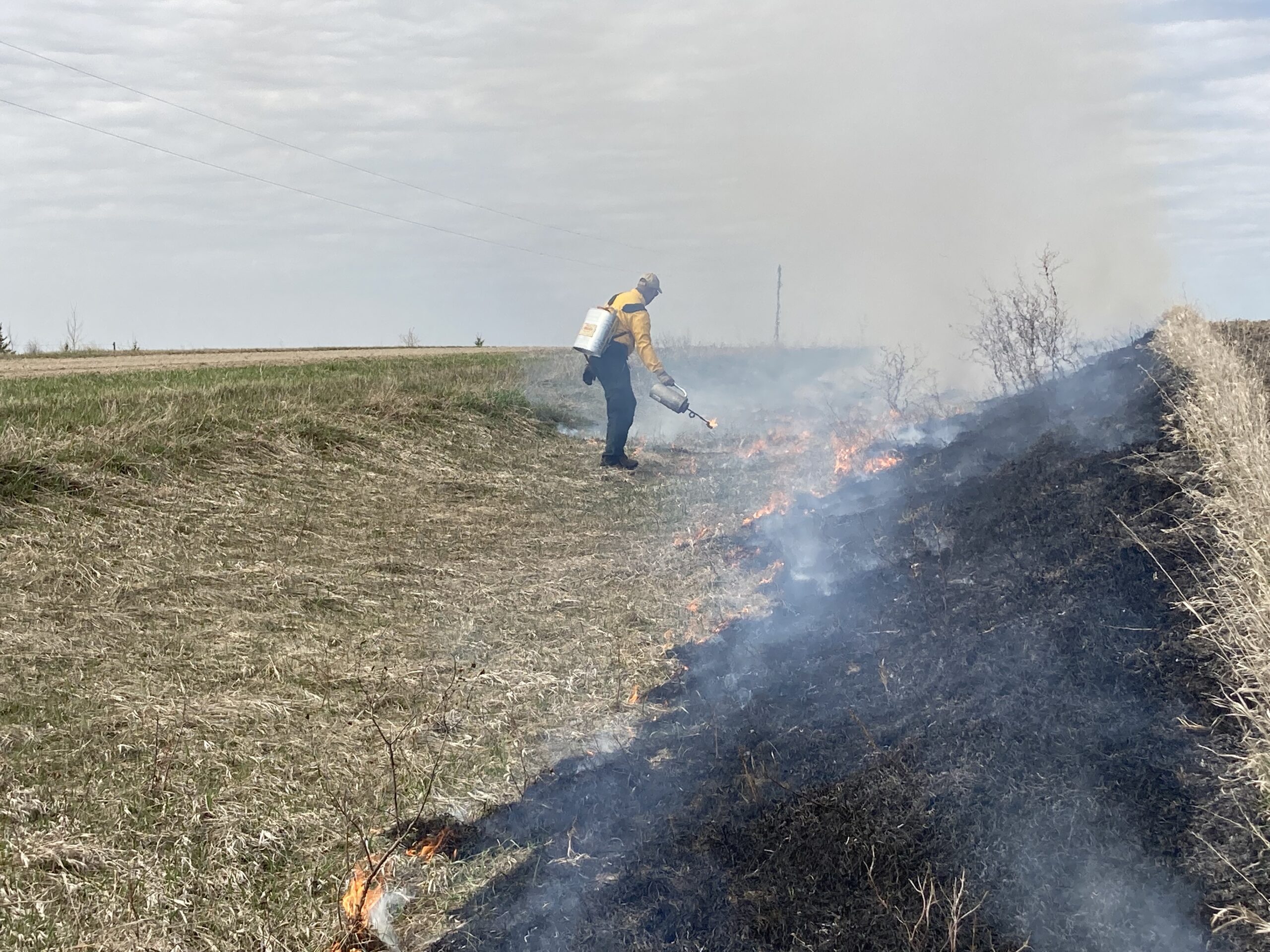
Our first unit of the afternoon was the ironically named “nice island.” This unit comprises an eggplant-shaped peninsula of grass extending into an agricultural field. We are studying Green Milkweed and Rough Blazing Star reproduction at this site. After taking weather, discussing the burn plan, and orienting new crew members to their tools, we ignited a test fire in the southwest corner of the unit. The crew then split in half. One group secured the eastern burn break while the second group ignited and secured the western burn break. Once sufficient black had been established, Brad ignited west along the northern edge of the unit while I ignited east along the southern edge. Our hope was the fire would close on itself rapidly but this burn was much slower and smokier than expected (probably owing to the higher relative humidity and the abundance of brome that had greened up after rain and warm temperatures). Slowly but surely, the flames came together leaving a uniformly black burn unit. We are excited to see a nicer post-burn version of nice island this summer.
Thanks to Alex C. for this series of photos illustrating our smoky and slow burn at nice island.
Temperature: 64 F Relative Humidity: 44 % Wind Speed: 11 mph Wind Direction: NW Ignition time: 1:32 PM End time: 2:29 PM Burn Crew: Jared, Stuart, Alex C., Per, Dwight, Brad D., Ed C.
Continuing our May 6 burning adventures, we departed mapp and drove west to nwlf. Our goal was to burn nwlf when conditions were most extreme to maximize burn coverage at nwlf.
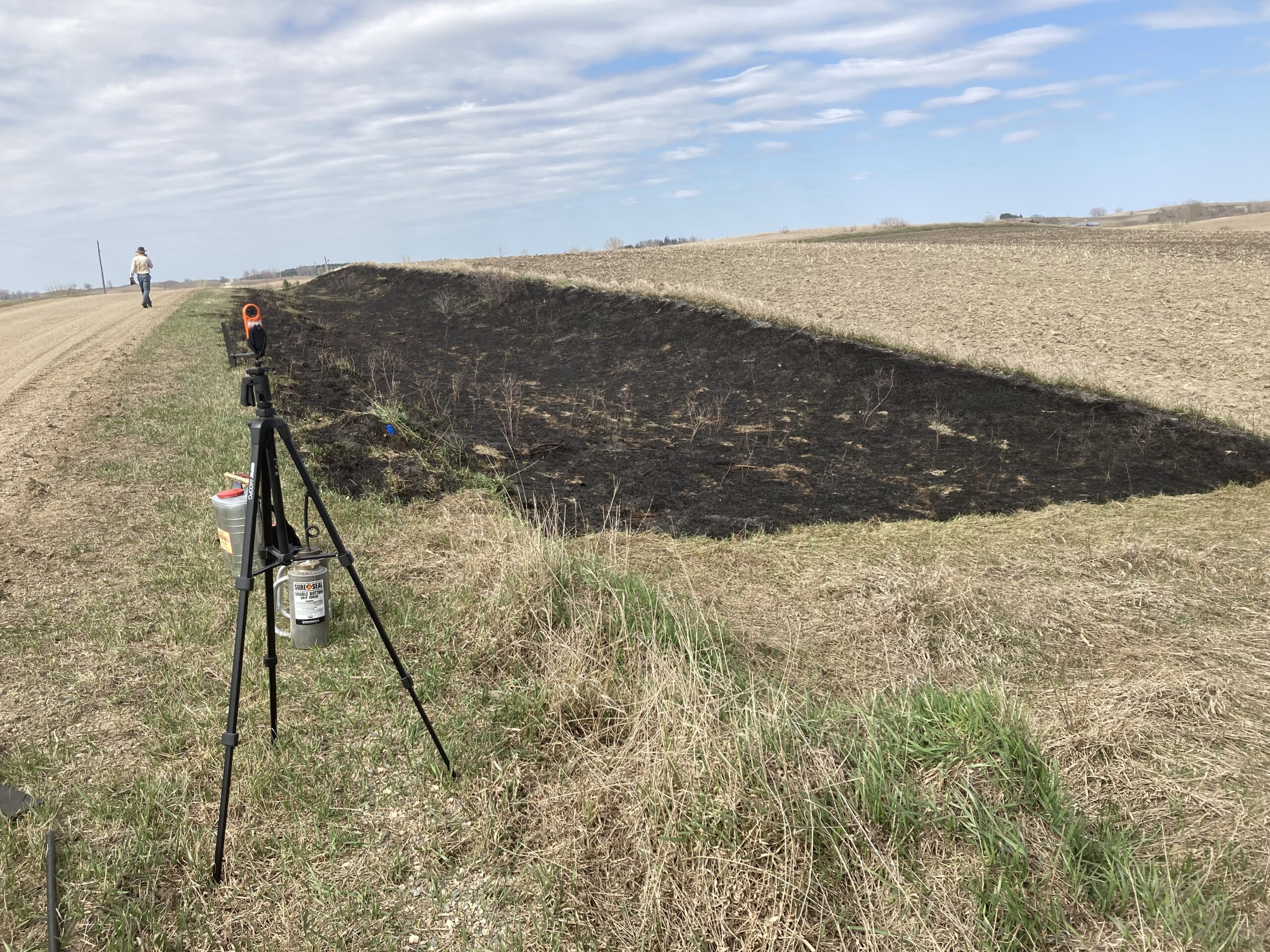
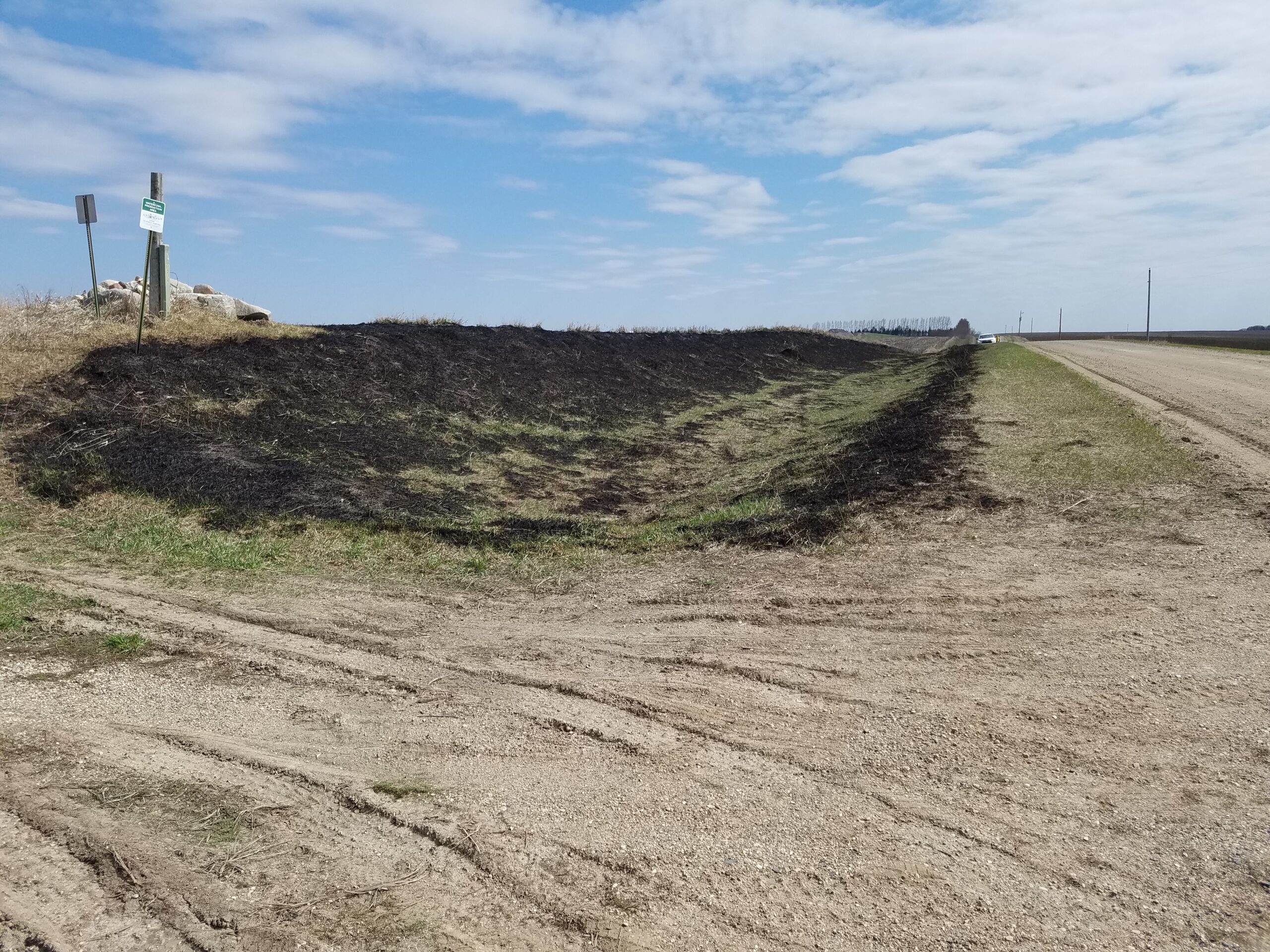
After arriving at the site, staging equipment, and taking weather, I ignited a test fire in the NW corner of the unit. We were pleased with fire behavior and went ahead with securing the north edge of the burn unit. After rounding the tricky northeast corner, I tried extending the black in the ditch with little success. The fire did not carry well in the bottom of the ditch. We decided the best course of action was to ignite along the eastern edge of the unit before igniting in the ditch. I used a lot of fuel in the bottom of the ditch. This generated a lot of smoke but didn’t dramatically improve burn coverage in the bottom of the ditch at the north end of the unit. I ignited one more line along the western edge of the unit for good measure. The smoke soon subsided and we were left with a sufficiently charred ditch to leave us proud of our work. We packed up and departed for our last remnant burn of the afternoon.
Igniting along the north edge (Alex’s photo)
Securing the north break was strenuous work (Alex’s photo)
Lighting in this ditch bottom was an exercise in futility (Alex’s photo)
Jared re-evaluating tactics from the ditch (Alex’s photo)
Fire carried much better along eastern edge of unit (Stuart’s photo)
Jared dismayed by ratio of fire to drip torch fuel in the bottom of the ditch (Alex’s photo)
Who made all this smoke? (Stuart’s photo)
Pretty complete burn on south end of unit
Patchy burn in ditch on north end of burn unit (Stuart’s photo)
Temperature: 69 F Relative Humidity: 31 % Wind Speed: 13 mph Wind Direction: SE Ignition time: 3:30 PM End time: 3:58 PM Burn Crew: Jared, Stuart, Alex C., Trygg
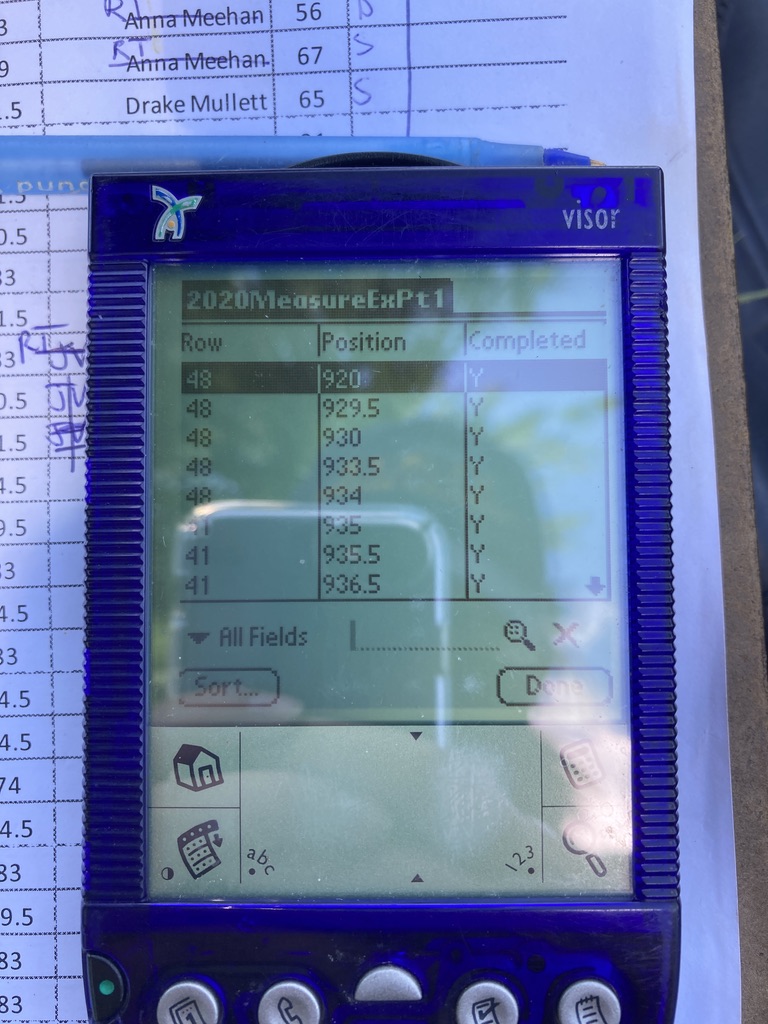
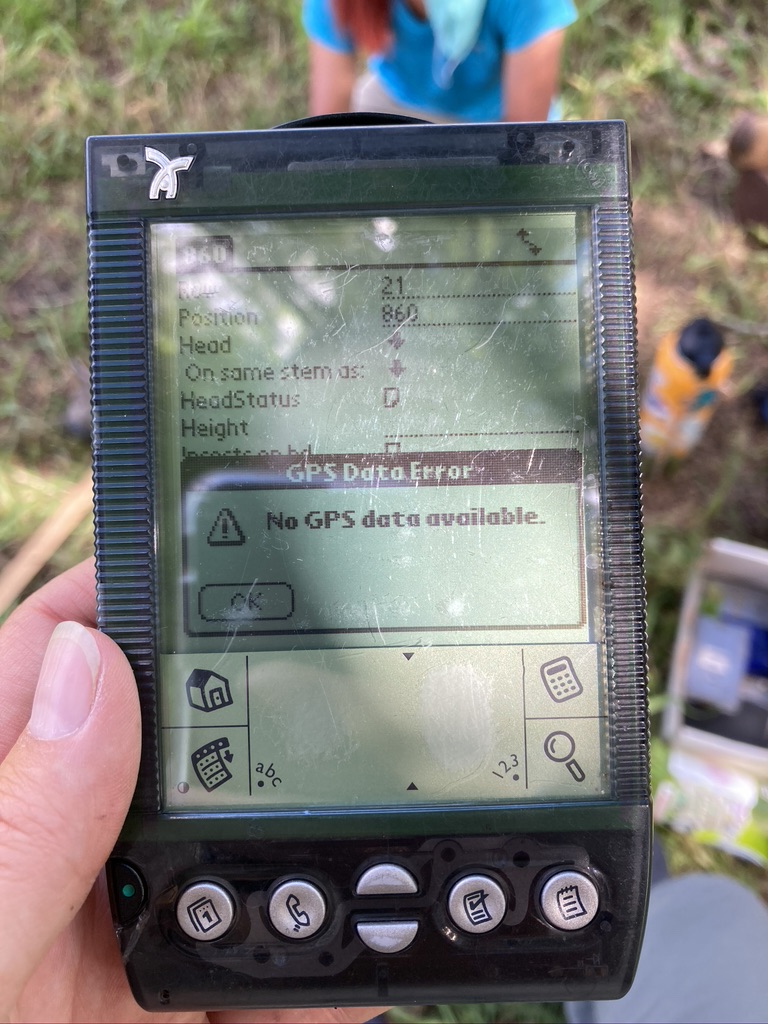
Our current data collection system software is pendragon forms run on Handspring Visors. This system works well, we love the visors, they are cheap and do the job. However, the Visors are 2000’s technology and the system is starting to become somewhat precarious. So we are starting to consider alternative systems. Gretel looked into potential new systems in 2016 with minimal luck.
We are hoping in the past six or so years that technology has devolved that will allow us to potentially replace the visors!
What we need in a Data Collection System:
allow for pre-loading data (list of positions to be measured)
allow for fast and efficient data entry (including ability to switch between records using a back or next button)
allow for parent-child form relationship (plant — heads)
auto-repeat of child form
safeguard against data loss
allow viewing of form/data entry in record view vs. field view
include dropdown, multi-selection boxes
ability to hold more than 250 records without slowing down
physical hardware is backlight making it easy to read in the field
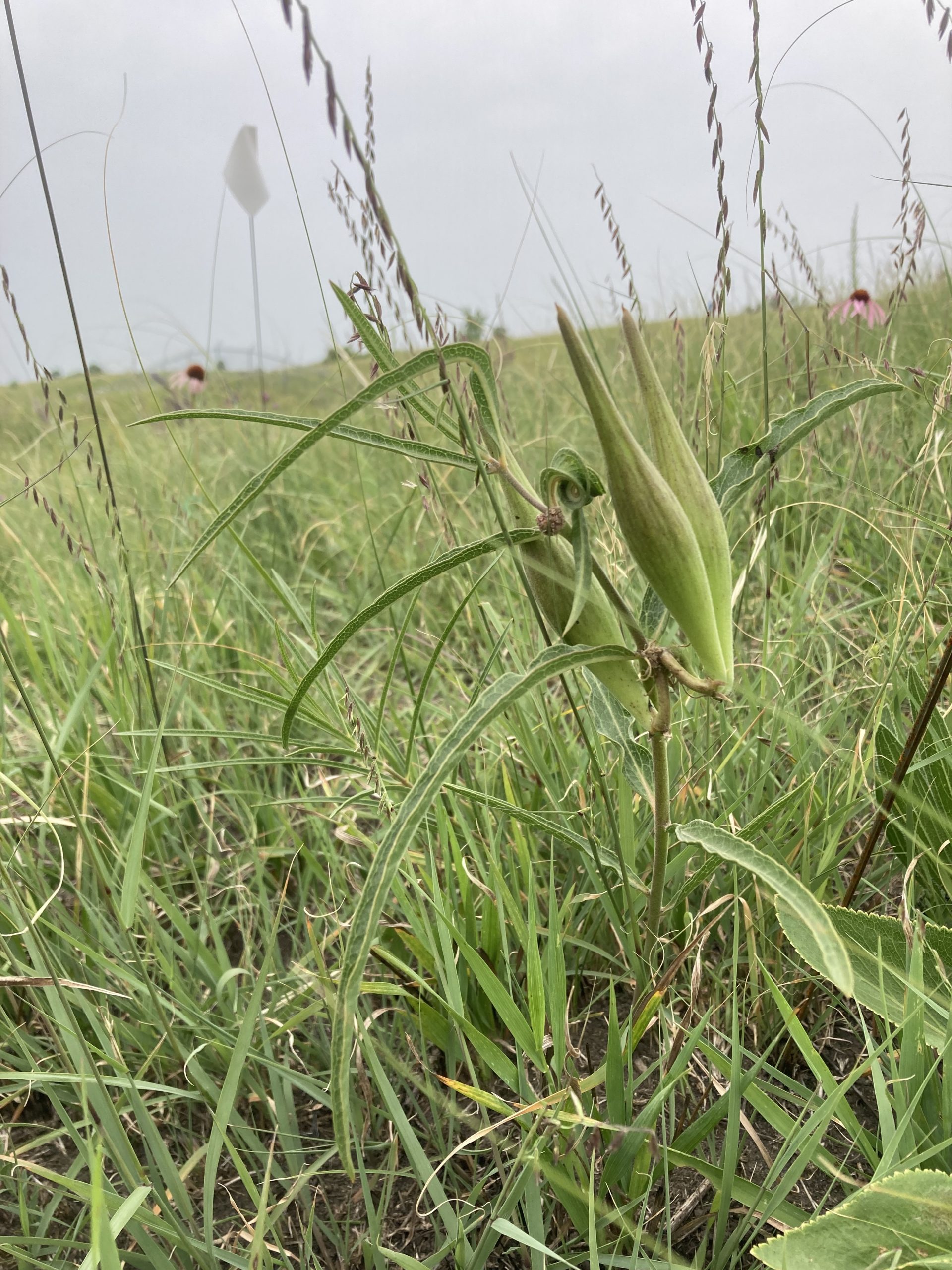
This summer we harvested seed pods from 25 Green Milkweed (Asclepias viridiflora) plants in the study area. Green Milkweed is uncommon and seems to be declining in our study area. This species prefers similar habitat to Echinacea. Plants tend to be sporadically distributed across dry prairies on steep hillsides, sandy soils, and well-drained gravelly areas. Our experience has been that flowering plants often fail to produce seed. We rarely find more than a handful of plants that produce pods in a given year.
Flowering Green Milkweed with bumblebee visitor at Staffanson.
Green Milkweed with three pods at Landfill East.
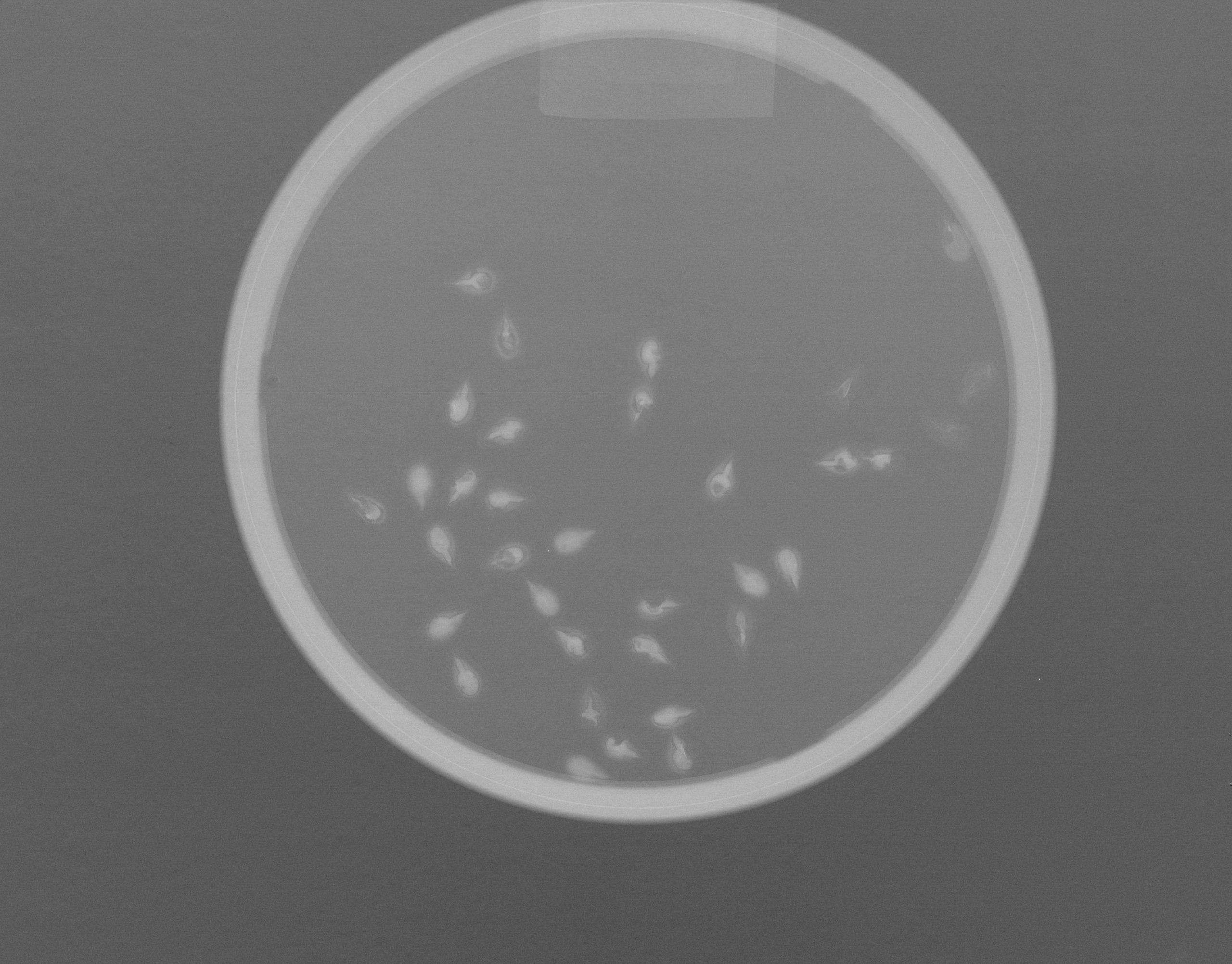
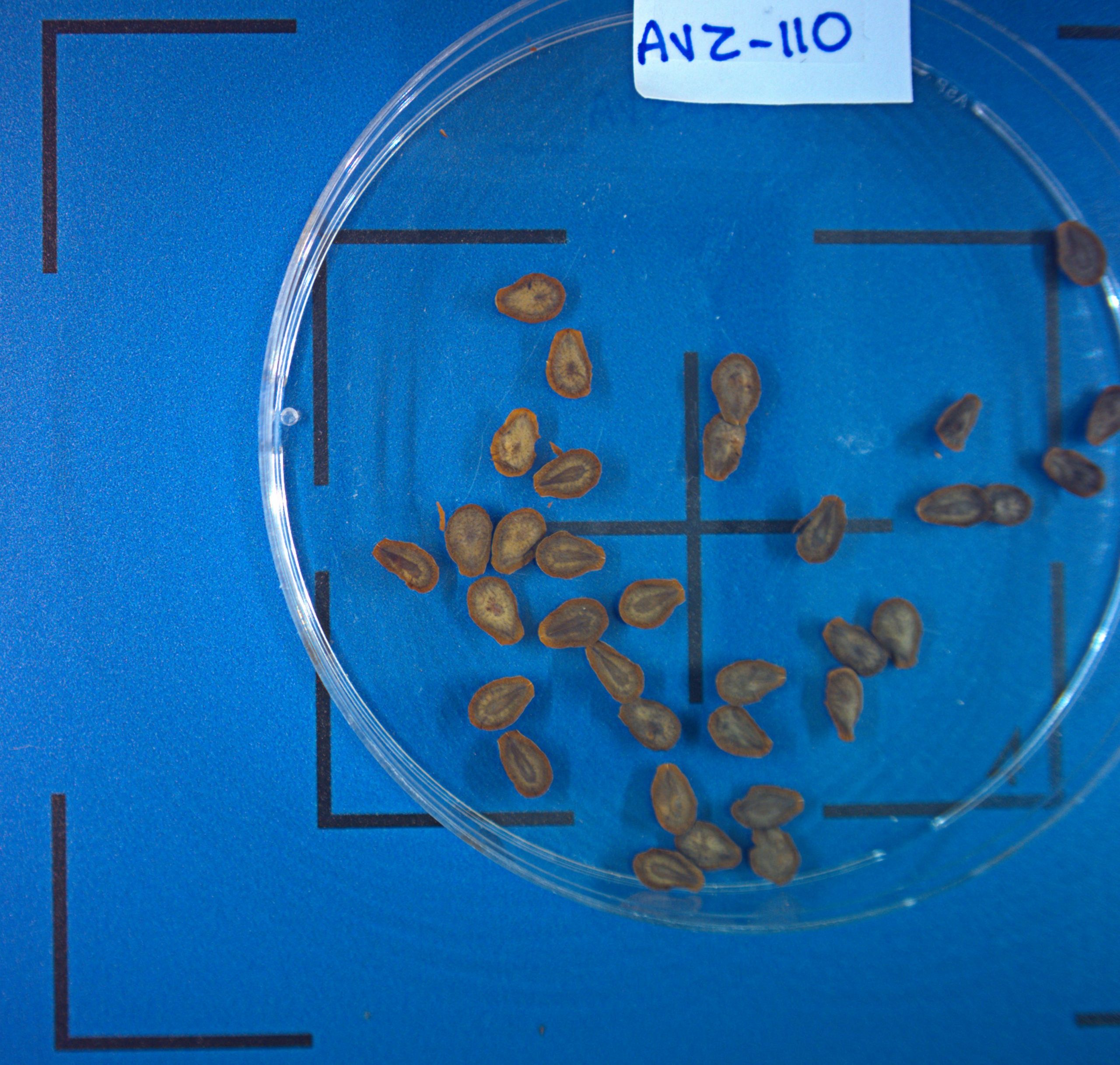
After harvesting and drying seeds, Jared cleaned seed by removing their fluffy coma. Jared then counted all the seeds and randomly selected a minimum of 30 seeds for x-raying. X-rays revealed variation. Some ovules lacked an embryo , others had whole, intact embryos. Many ovlues fell somewhere in between. They contained embryos that were undersized, shriveled, or fragmented. There was no external evidence of seed predation. The proportion of full ovules ranged from 0 to 100 percent. We are not sure whether “partials” reflect resource limitation and seed abortion, a form of late-acting self-incompatibility, or something else entirely. We are doing some research to help us interpret the biology underlying these patterns.
X-ray image of Green Milkweed seeds. Note the variation in embryo size, shape, and integrity in the x-ray image.
Scanned image of the same Green Milkweed seeds.
After cleaning, counting, and classifying, Jared prepared a subset of Green Milkweed seed for germination. CBG’s production greenhouse will germinate and grow 392 milkweed seedlings representing 15 maternal lines. We will plant these seedlings in an area south of P8. Although these plants grow slowly, our hope is that they will be an excellent resource for investigating milkweed pollination in a couple years. We also hope to harvest seed from these plants and include Green Milkweed in our seed mixes for restoration!