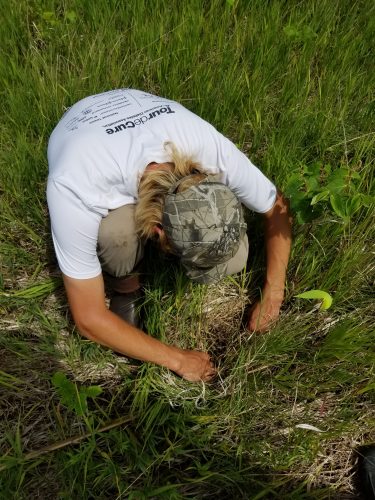
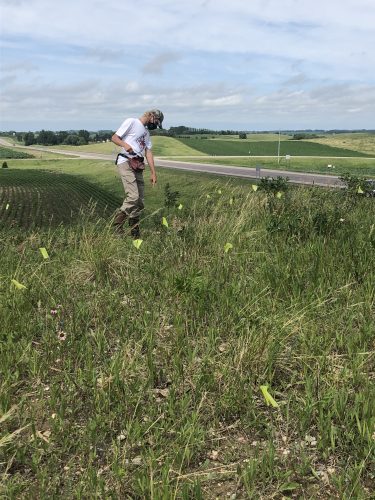
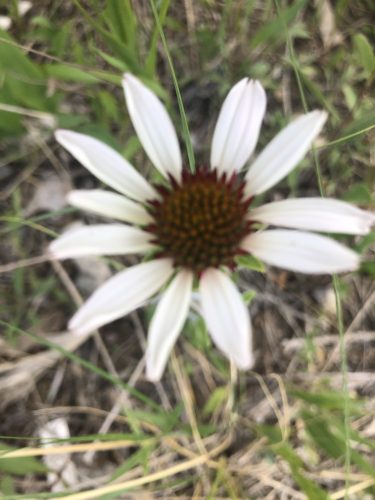
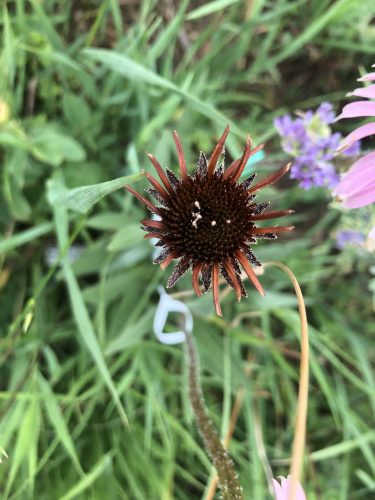
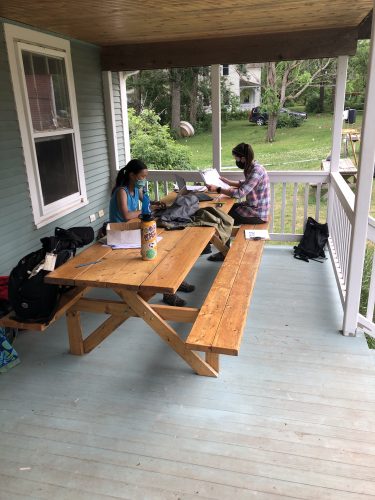
We began the day doing phenology in P1, assessing the flowering status for each plant in the plot. Soon after we began phenology, the rain started so we regrouped at the Hjelm House and made an alternative plan. We split up into groups because we weren’t sure the Hjelm House could handle maintaining social distancing and the wifi for a Zoom meeting. We took turns discussing several articles posted in Dropbox having to do with racism. A few phrases that have kept me thinking were: ” Status quo is the problem,” ” We are blind to what we don’t know” “everyone is racist, but not everyone is antiracist” “my white privledge is having not to have to think about race”.
We also thought it may be a good idea to instead of only discussing racisim, but that we do an activity in the future.
After lunch, we returned to the plots, finishing phenology in P1 and the ’99 gardens.
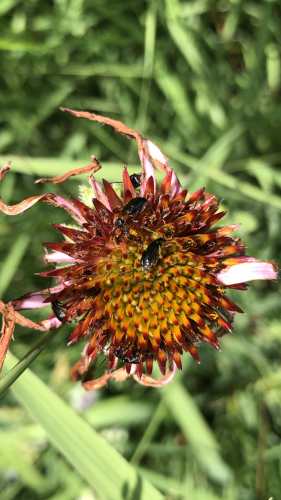
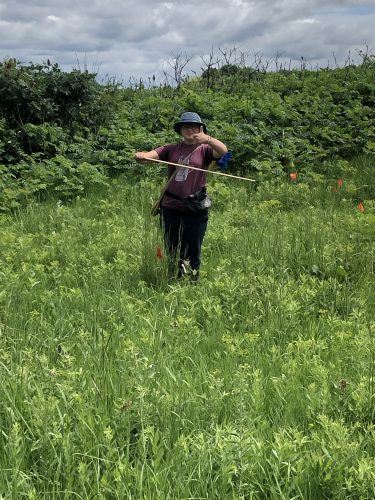
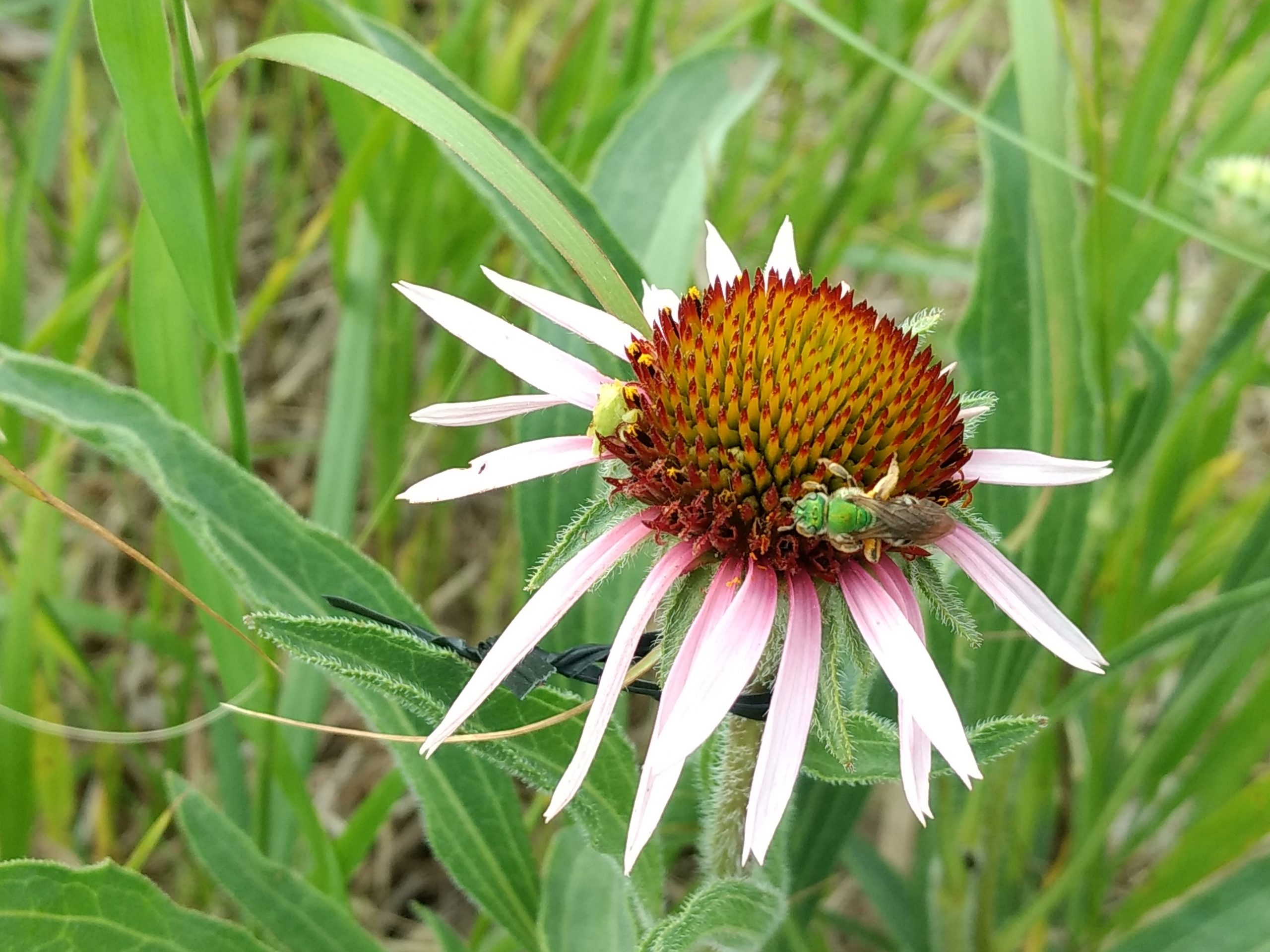
A bee foraging on the freshly emerged pollen. Several flowers had these beetles on them in P1 .Anna A doing phenology after the rain.
Completing that task left us with finishing up the measuring being done in P8, assessing the Echin plants in each row and position. A very satisfying day as we were able to check off everything as completed for the day. We’ve got a great team with great attitudes. We could have just as easily packed it in after P1 phenology but several team members wanted to cross measuring P8 off the list.
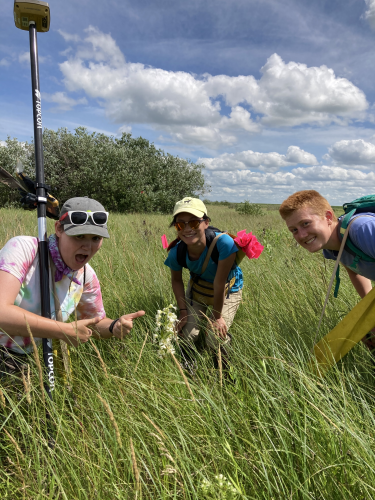
Yesterday the team took its biannual trip up to Pembina nature preserve and surveyed western fringed prairie orchid. There was many wildlife sightings including a few prairie chickens, a magpie, a deer and even a snipe!
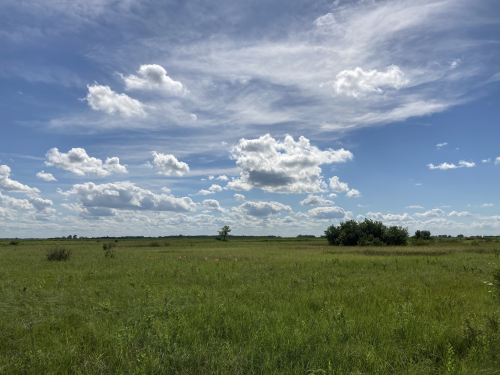
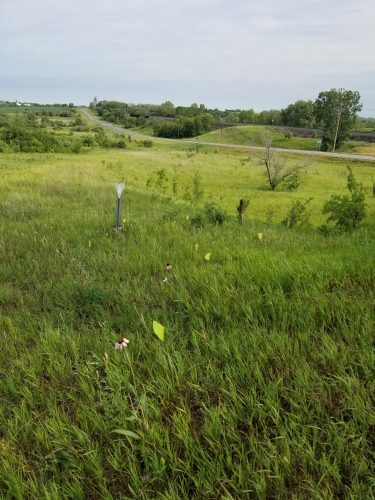
The beautiful scenery of the wet prairie
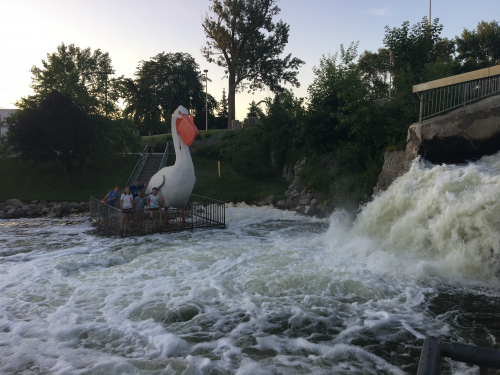
After finding around 300 orchids we headed to Pelican Rapids to have dinner with our new friend Pelican Pete!
Darwin, Erin, Allie, and Emma posing with an orchid with 18 flowers!The team with our new friend Pete
All in all it was a good day and we had a good day but Gretel was truly missed.
Bur bye
Mia
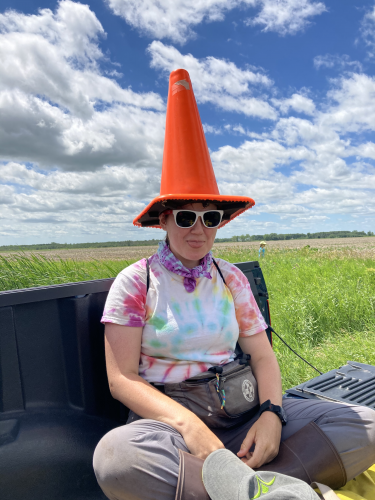
Erin showing off part of her new fashion line that will drop in the fall
Today was a wild ride, to say the least. Our morning started off with an intense thunderstorm. Some Team Echinacea members reported strong thunder as early as 2 AM, which persisted into the early morning. Although it left the remnants wet and muddy, we were lucky to start at our usual time.
I spent the majority of the day working with Riley T. as we conquered the phenology route we affectionately call “Choo-Choo Corner.” This path inculdes remnants such as Loefflers’ Corner and Railroad Crossing. Thankfully, Stuart was there to take care of Yellow Orchid Hill and North Railroad Crossing.
Some happy Echinacea are thriving in their flowering state at Loeffler’s Corner West!
While at Loeffler’s Corner, Riley had a strange encounter with a baby deer. The surprise was well justified, as the fawn was alone and near a highway. Unfortunately, the deer left before Riley could take a picture, but he reports the experience as “shocking” and “unusual”.
We ended the morning with some flowers in our on-site experimental plot, “P8.” After a much needed lunch, we returned to the site to conduct measuring. If you’re a seasoned flog-reader, you’ll know that measuring is the process we use to assess the Echinacea planted in our experimental plots. By measuring, we’re able to keep track of plants that survived, were lost, and their physical fitness over time. P8, one of our largest plots, is notorious for its heat and humidity. However, we persisted, and made great progress!
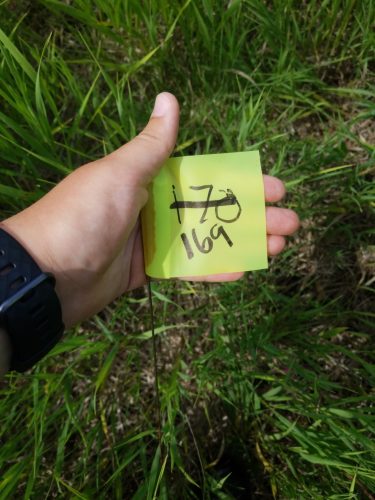
Half-way through our P8 excursion, Riley and I had another wacky experience. One of the rows we were assigned to measure had a constant rate of lost plants and toothpicks, our universal seed-identifying material. During burns and harsh winters, toothpicks (and often plants) tend to go missing. However, row 169 was unusually bare. This is when we realized we had made a dire mistake.
Images taken moments before disaster, featuring Riley T.
To our demise, we discovered that the unusual row was mislabeled. Because of this, we had compared visor records to a completely irrelevant row. Although it was somewhat disappointing, we were glad to know that our mortality rate was much lower than we thought. It was also a good experience that taught me it’s okay to make mistakes, and that we must learn in order to improve. Even with our minor setback, it was an extremely successful day for the team, and a great kick-off to our P8 studies!
All mistakes are “happy accidents” if you learn and grow!
We concluded the afternoon with some Wednesday Watermelon, and a rhine-throwing contest. Watermelon is a team-favorite treat on hot days!
Hopefully you’ve enjoyed our “Wacky Wednesday” as much as we did. It’s always great to have a little excitement at work, and a bit of “phun” with phenology!
Today we were back at it again in the remnants, well-equipped with knowledge of both the phenology protocol and the phonetic alphabet for our radio chatter. John and Mia cruised to Wiley in the Bombusmobile, the New A Team of Anna, Anna and Amy stomped Around the Block, Emma and Riley teamed up in the Big East and Stuart, Allie and I chugged through Choo-Choo Corner. We were all back around 11:30, setting a land-speed record for 2020 rem phen!
chugga chugga buzz buzz
On Wednesday I wrapped up the first round of surv this season, so now every site has a map of flowering plants that the team can use during phenology. Though we’ll keep shooting through the season as we find more plants, the major surv push is over! Now I have time on my hands to help with phenology, so Allie gave me a brief tutorial and then it was off to the races this morning.
I started on Yellow Orchid Hill West, which threw just about every possible problem at me. I had new plants, old plants without phen records, mutant heads and two-small-plants-or-one-big-plant? questions to ponder.
The pollinators were out and about this morning, with a bold augochlorella coming in for a landing on an echinacea I was examining for style persistence. Maybe I should have checked back in a bit to get a more accurate assessment of shriveling! While doing phenology I also interrupted mating beetles and accidentally knocked a goldenrod crab spider off its hiding place on a flowering head, so today I guess I was bugging arthropods instead of the other way around.
In observance of July 3rd, that fateful day preceding the day when soon-to-be ex-British-colonists signed the Declaration of Independence, we ended work at noon. Lunch proceeded with a reduced crew and a lively discussion of all the different kinds of fruit preserves we could think of. It turns out that the good folks at Wikipedia have already made a list which seems to be a lot more comprehensive than ours (did anyone come up with fruit butters or curd? I sure didn’t.)
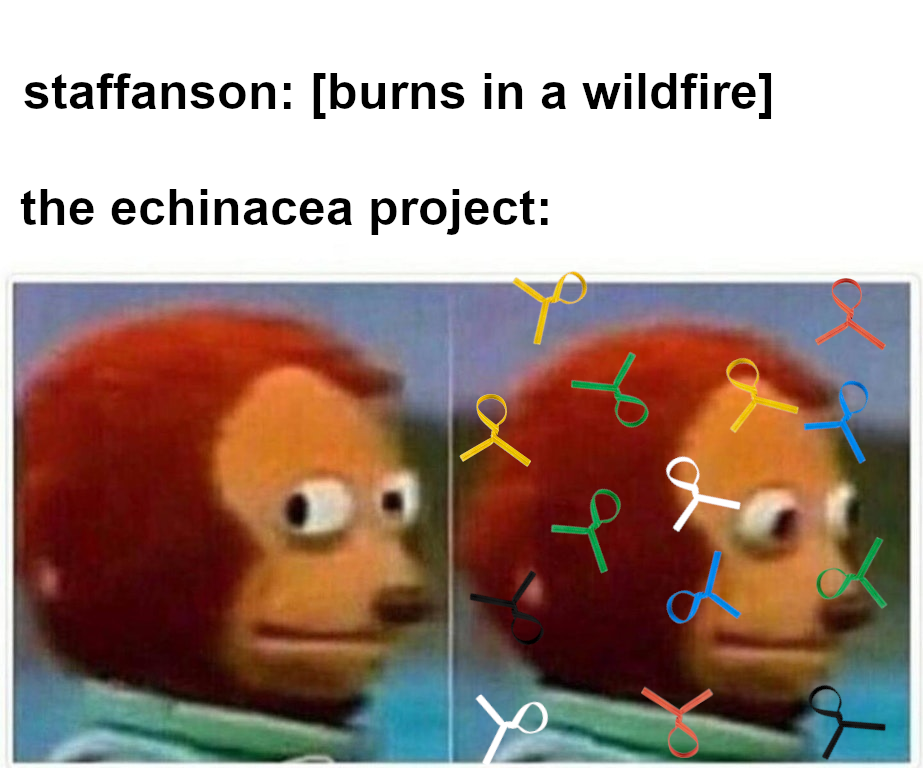
I’ve kept myself busy this week making memes. Emma and I are cooking up some hot new lingo that we’re excited to unveil to the rest of the team in the next few days, but until then enjoy this biting commentary on the West Central Minnesota Arsonist (still at large?)
The Echinaceas Team has been hitting the phenology of the Echinacea angustifolia on the remnant prairie plots in western Douglas Country. This morning, the team split up, divided and conquered each remnant’s flower’s status . (Latin phrase: Veni, Vidi, Vici – which tranlates to we came, we saw, we conquered). We have been assessing each flower that has been uniquely identified with a number tag and a colored twist tie so that we can be as certain as we can of each of the flowers. The Echinacea Team has been gathering data for 25 years which makes us the world’s foremost authority on Echinacea angustifolia (according to me).
Riley T puts the “f’ in phenology on a site we call on27.
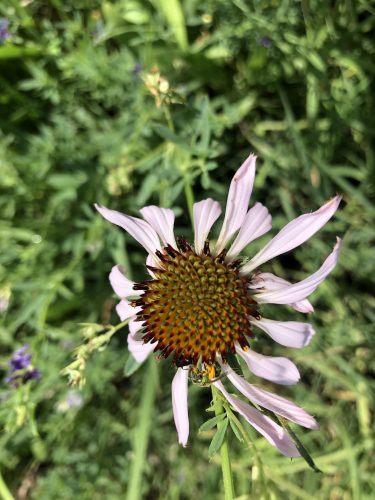
There’s much variation in the flowers, not only in there stages of flowering, but in their differences in color, age and height.
Nearly white petalsBrown petals
The afernoons have been filled getting caught up on Stipa searches in P1, flagging P8 and planning out the execution of our individual projects.
We began week #2 stalking Staffanson Prairie for Echinacea first in the rain and then if the pleasant breeze. We estimated about on 150 flowering plants on the East quadrant and will hopefully get to the West tomorrow morning. It’s simply amazing the variety of species found there and also the colors present. We then spent the afternoon visiting some remnant plots looking for flowering plants.
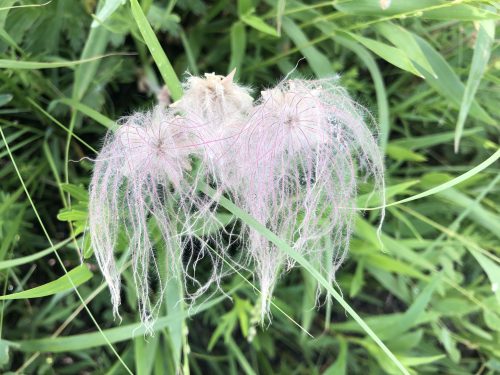
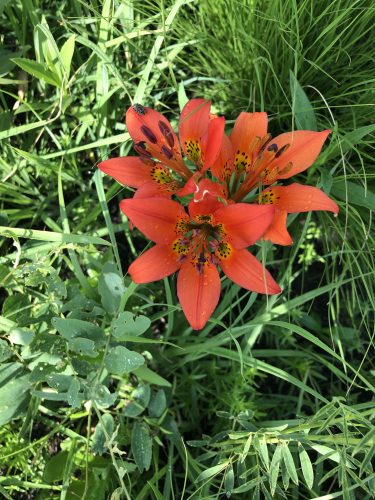
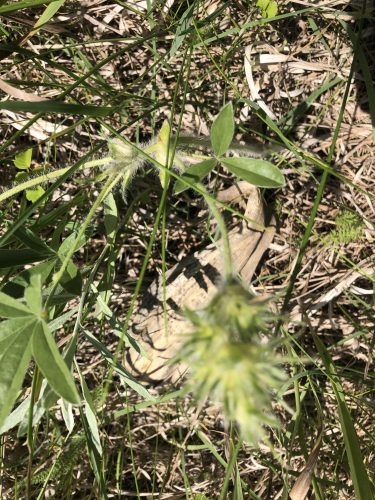
Prairie Smoke from Staffanson’s PrairieWood LillyPrairie Turnip – my new favorite this summer, replacing Monarda fistulosa
We then had an afternoon Zoom meeting wth Jarred Beck, Echinacea Project Alumni from 2014 discussing the history and benefits of burning praire. He also discussed upcoming research on burning some remnant prairies starting next spring.
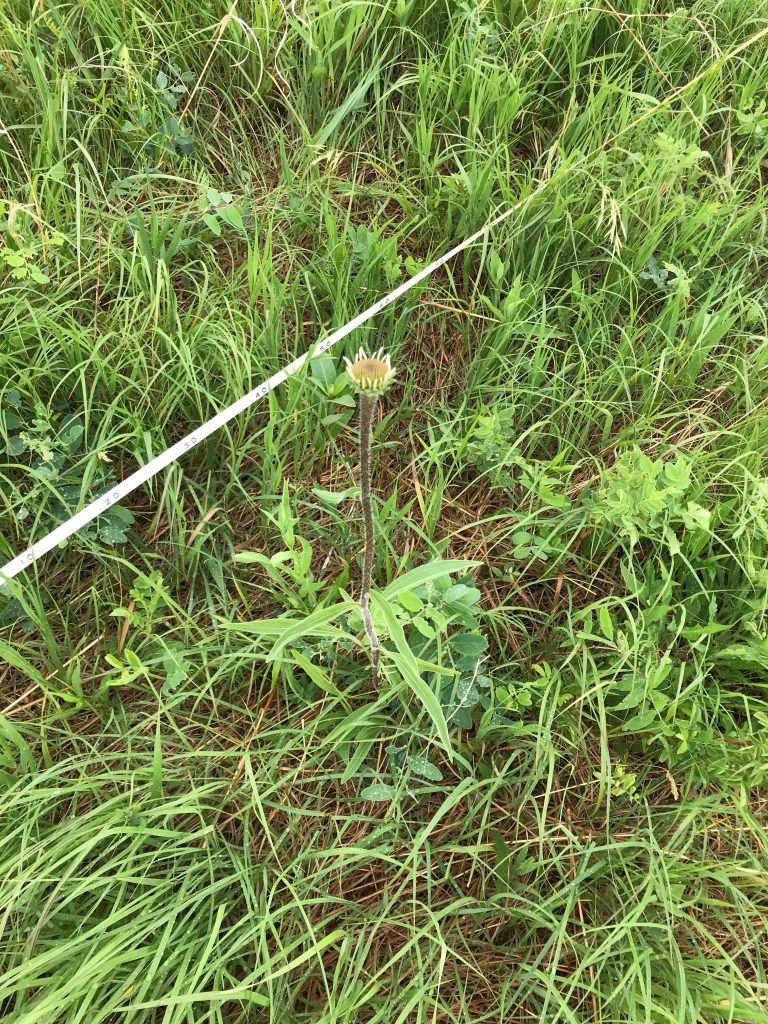
Today was a demo day! Demo day is where you collect data from flowering Echinacea. During demo day I went to the Landfill site and found all the flowering plants. When I found the plants I collected how many heads there were, and tagged all of them. After I collected data I changed out the color of the flags so others would know I was there.
Here is a picture of an Echinacea plant that is flowering!
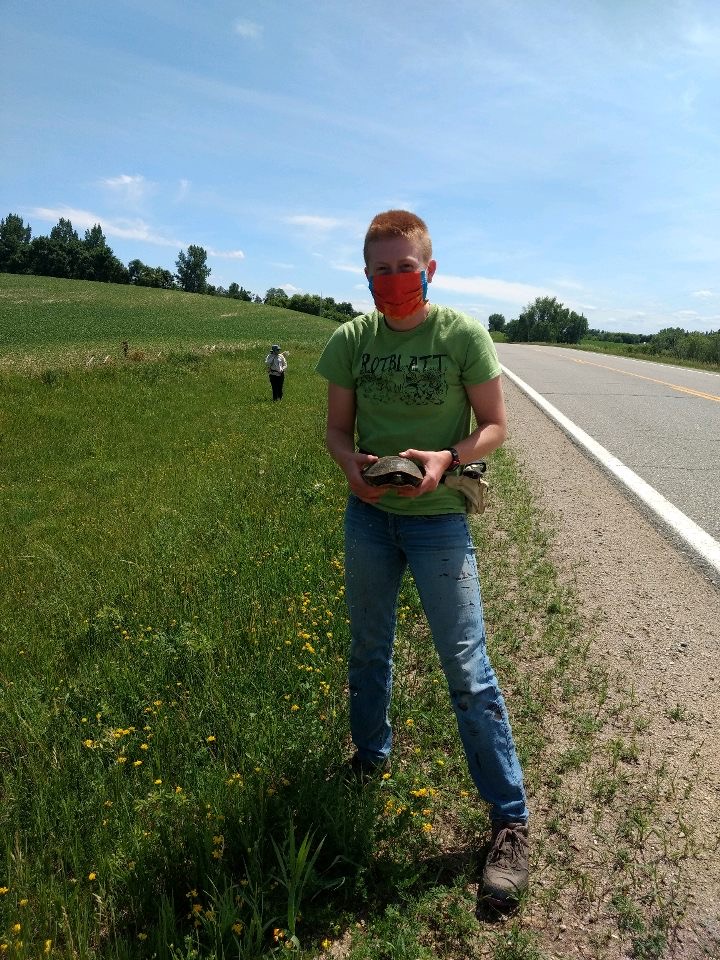
In this picture Emma is holding a turtle that was crossing the road and she decided to help it out. But when she was moving it, the turtle started peeing all over. Luckily it wasn’t on her.
Hello Echination! It’s me again, Riley. I’m finally returning to regular summer flogs, and I am beyond excited to be doing so. As regular flog subscribers may know, I spent the winter with Team Echinacea at the Chicago Botanic Garden, and I have been looking forward to adventures in west-central Minnesota for a while now. I like to think my return to the prairie was as epic as Kurt Angle’s TNA debut.
Nonetheless, we had a productive team day today. This morning, Anna M, Mia, and I went out to hybrid exPt7 and exPt9 and flagged the plots for future measuring. It went very smoothly relative to previous years! Additionally, we found a flowering plant in experimental plot 7! We expect it is either an Echinacea pallida plant or a hybrid. I think it may be in the same plant that flowered in 2018 in exPt7. Other team members weeded in exPt1 this morning, and Erin worked on preparing Darwin to stake and shoot plants in the remnants. Finally, Amy W and Emma went to remnants to take demography records on plants that have initiated flowering.
We had a fun lunch and headed over to West Central Area High School for an afternoon of meetings. First, we talked about team norms and expectations over Zoom. We started by trying to all Zoom from the same room, but that was a disaster. We decided to split into separate rooms, and the meeting went well thereafter. Finally, we talked as a group (this time, in-person) about COVID-19 expectations and preparedness. Once again, our meeting went well, and we have clearer ground rules to mitigate COVID transmission opportunities.
Well, flog readers, thanks for having me! I’ll talk to ya soon!!! Peace out Echination.
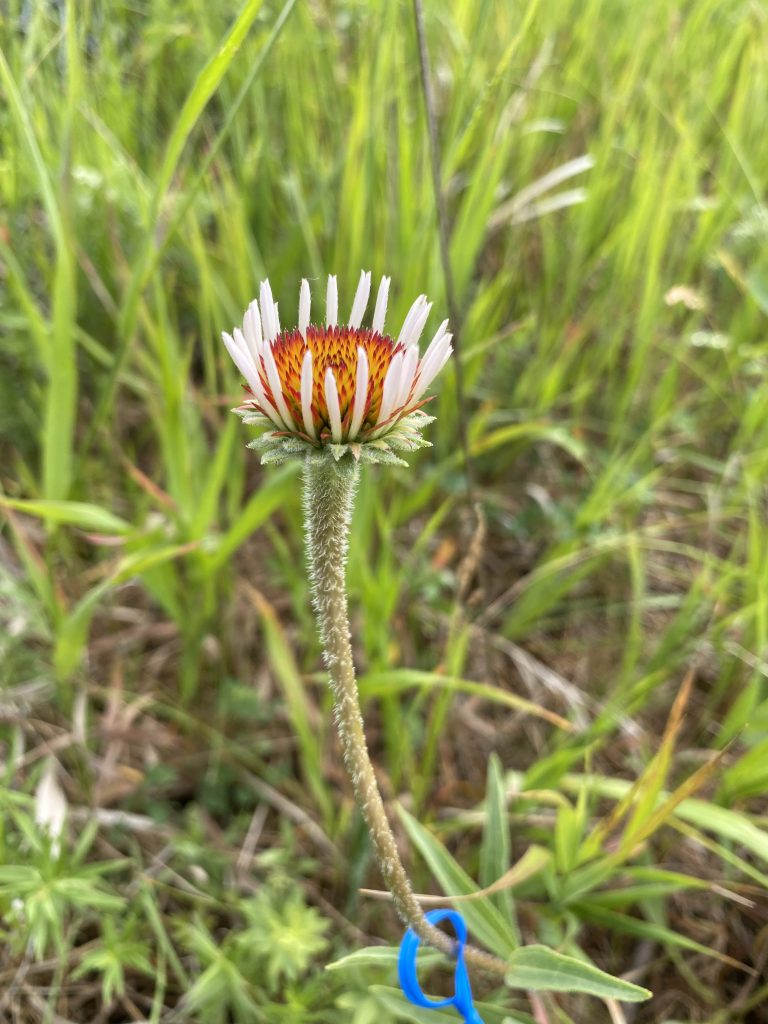
First rays up of the year in the study area!! (except we think it’s pallida. rat.)
At the Echinacea Project Evanston Outpost Riley and I have been chugging along with our work for the past two and a half months. We’ve had countless remote meetings, surrendered precious square feet of floorspace to binders of datasheets, migrated the infallible sticky-note kanban to our walls (me) and online (Riley,) and begun coordinating with our summer team to prepare for the field season. Expect to see some new faces on the flog in the coming week!
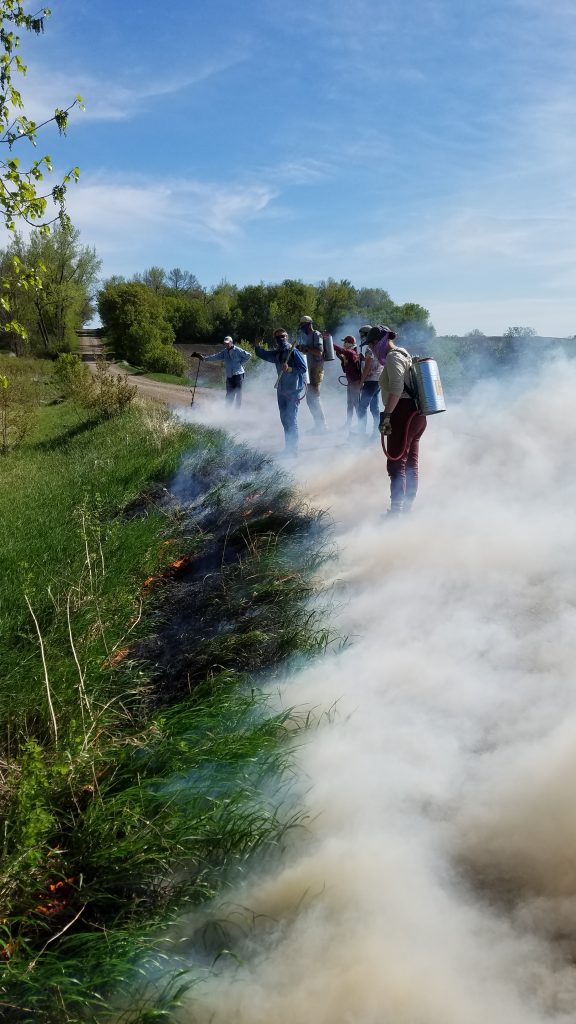
We started on the northwest corner of P1 and split into two groups to work around the plot. The burn was long and slow!
As we approach the field season, we’ve gotten the chance to stretch our legs outside our apartment. In late May a team dashed up to the field site to capitalize on a narrow window of perfect burn conditions. Changeable winds made our burn of the 99-south plot a little more exciting than we had hoped, but we took the burn low and slow and very safely across experimental plot 1.
Drake headed up to our field site several weeks ago, where he’s been germinating seeds for a parasite competition experiment he’ll conduct this summer. When we return to the field in a couple weeks we’re looking forward to seeing the hoop houses he’ll have set up to house his plants!
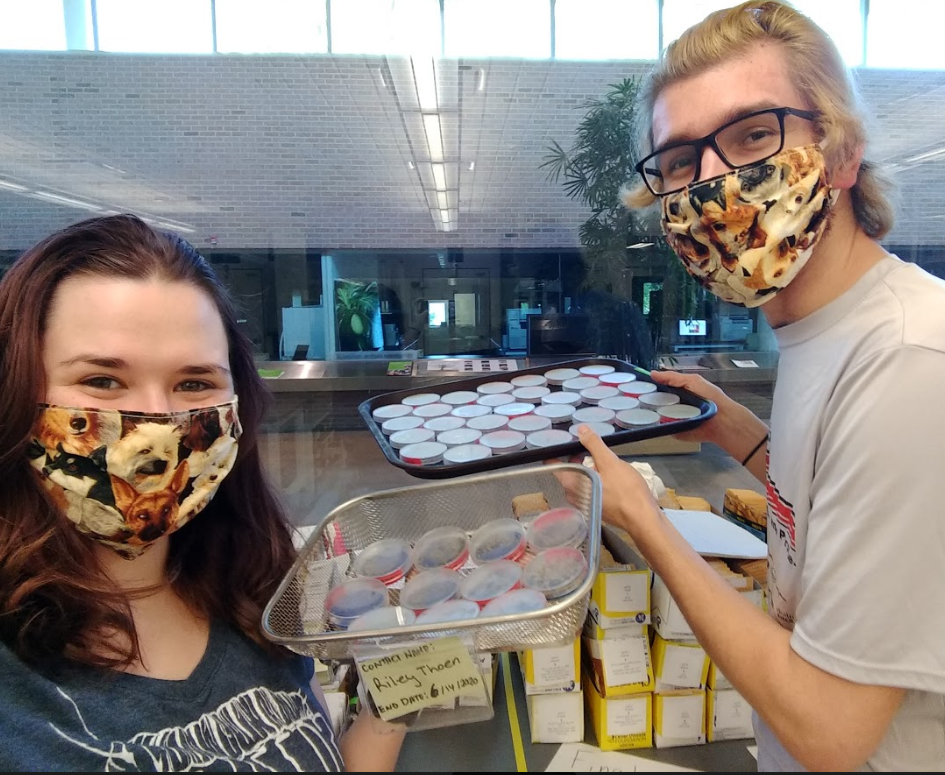
Drake is planning to germinate some 40 plant species this summer, but he forgot our favorite species in Illinois– Echinacea angustifolia! Riley and I have gotten special permission to return to the Chicago Botanic Garden to start a pre-germination treatment of Echinacea achenes in the lab. I’ll bring Drake the achenes when I drive out to the field site in the next couple weeks– what are the odds that radicles start emerging in my car?
It’s been exciting to get back to the garden, though we may look a little different from the last time we were here!
The garden will start a limited reopening next week, when visitors will be allowed to walk the perimeter of the grounds. We took a peek outside when we were preparing the pre-germinants, and it looks like the grounds crew have been doing a beautiful job maintaining the garden. We’re excited to see more before we head back to Minnesota!
Sadly, Riley and I have also made use of our visits to the garden to clean out our desks. Access to the plant science building is limited and we will not be working full-time there again, as we are headed off to graduate school following the field season. This will be the first time Riley and I have lived apart since meeting last June! However, we’ll only be a few states apart– Riley is headed to the University of Georgia in Athens, GA and I’ll be at North Carolina State University in Raleigh, NC.
Once a team member, always a team member
As the field season gears up, we will return to our daily summer flogging schedule. We’re all very excited to get out to the field and to meet the new team members!
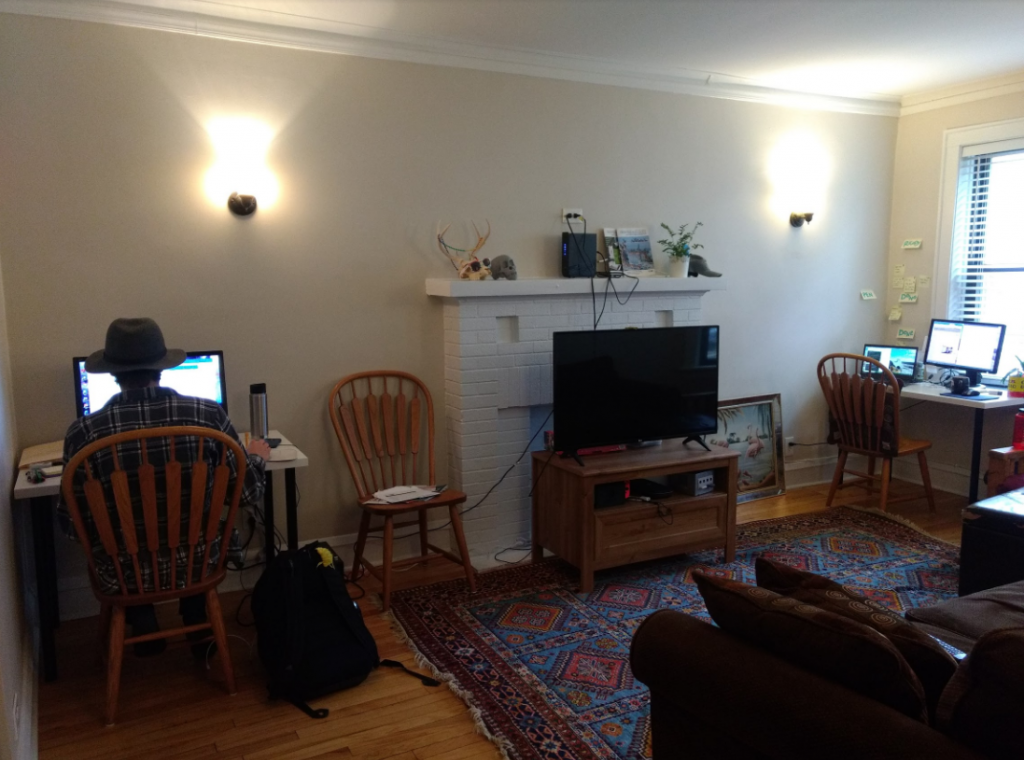
In conjunction with the CBG’s current policy, the Echinacea Project’s base of operations has moved out of the Plant Science building and into our living room! The lab is closed to volunteers and staff through the month of March and potentially longer as the situation develops. Despite this hiccup, we are continuing with our work and we’re looking forward to the productivity the next few weeks will offer!
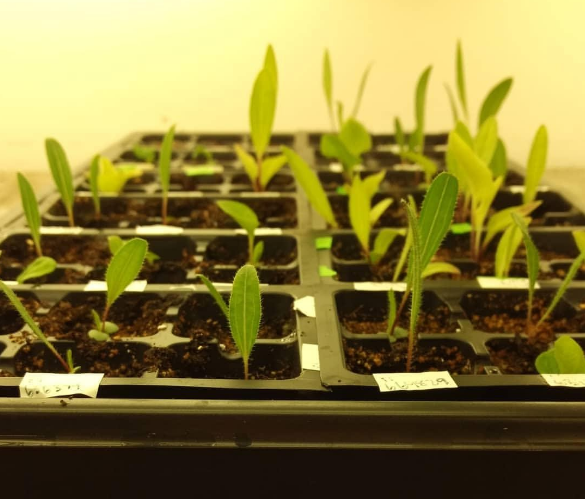
All three species are represented in this tray
Over the last few months we’ve been germinating E. angustifolia, pallida and purpurea for our investigation into Echinacea ploidy. Elif, Riley and myself have been caring for the seedlings and will be working with people at the CBG to determine how we can maintain an appropriate watering schedule and safe social distancing practices.
Fingers crossed the little guys can hang in there til we get a schedule worked out!
Though our ACE head processing protocol is on hold for the foreseeable future, our excellent volunteer force has made great progress in 2020. We’re about 3/4s through cleaning the 2018 heads. Our counters are overflowing with cereal boxes of achene envelopes and with help from the volunteers, Riley cleared up some space by moving our 2015 achenes into the Dixon National Tallgrass Prairie Seed Bank (fancy title for “that big freezer on the other side of the building.”) We’ll be moving 2016 in there too when we return!
There’s plenty of work for us to do outside of the lab, so fear not our idle hands! Riley’s looking ahead to the 2020 field season by preparing for measuring in our common gardens. He’s working on a snappy measuring field checks function to hopefully streamline a process which took us a lot of time in Fall 2019.
Currently I’m working on uniting our 2019 demo and surv records in demap. First I tackled our largest 2019 flowering site (Aanenson,) and now I’m working through sling sites to hopefully have maternal plant data ready for our collaborative sling project.
The superteam of Team Echinacea members and alums working on sling in 2019/20 is hopeful about making some great progress in the coming weeks. Perhaps this cross-country collaboration was the original social distancing initiative? Video calls are the hip new quarantine hangout these days, so we were ahead of the curve on that front!
comfy!
classy!
Since we’re now the masters of the office dress code, we’ve been stretching our fashion wings. I’ve busted out my favorite slippers and jeans, and Riley’s switching up his hat game from baseball to brimmed. Check back in with us in a few weeks– we’re working on getting our Spring 2020 collection ready for debut!