|
|
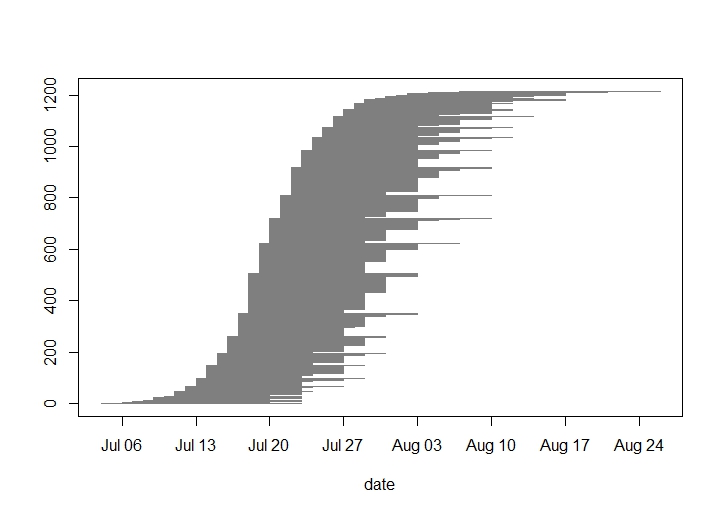
For his REU research project, Will is investigating heritability of flowering phenology in experimental plot 2 (p2), which was planted in 2006 with 3961 individuals selected for extreme (early or late) flowering phenology. This summer Will and Team Echinacea monitored the phenology of all 646 flowering plants (1216 individual heads) in p2, as well as the phenology of their parents in p1. Flowering in p2 began on the 4th of July and ended on August 26th. The peak day of flowering was July 27th when 1018 heads were flowering. The average duration of flowering for a head was 12.1 days. It was a huge year for flowering in p2 with nearly 5 times more heads than 2014 and over 16 times more than 2013. Will is comparing the flowering schedules of the p2 plants with the 2005 phenology records of their parents. As the plants in p2 mature, and perhaps flower more frequently, we will continue to gather data on family lines of Echinacea to discern the genetic component of their flowering phenology.
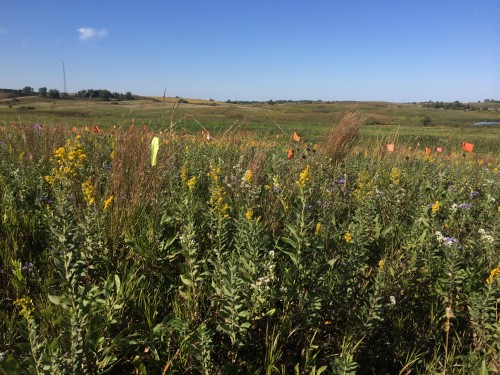
 Many flags indicate many flowering plants in experimental plot 2 Start year: 2006
Location: Experimental plot 2 (Hegg Lake WMA)
Overlaps with: phenology in experimental plots
Products: The 2015 phenology records from p2 will be added to the existing multi-year ExPt2 phenology dataset. Will is using tools from the R package echPhenology developed by Team Echinacea to analyze and produce visualizations of the flowering schedule observed in p2. He plans to present his findings at a conference in spring or summer 2016.
 2015 flowering schedule of all heads in p2: First day of flowering was July 4th, peak was July 27th, and the last day was August 26th.
Read previous posts about this experiment.
September 28 started as any ordinary fall day would – in the lab at the Chicago Botanic Garden – but if one were to pay attention they would notice slight change from usual. Our backpacks were more full, the lab tasks were taking lower priority, and both Amy and I had brought a full bag of carrots as snacks. At around noon, Stuart arrived at the Garden after an already long day of traveling, informing us that he and Gretel had just arrived and we would be leaving as soon as possible for Minnesota. After a little more time in the lab, we were off in a white pickup truck with a skybox bearing the crest of the CBG. The journey was long, but uneventful besides a stop in the Twin Cities for ice cream. We arrived in Kensington after 11pm and quickly fell asleep in our former summer residence.
The next 4 days proved to be very productive for the group. We finished measuring at Caroline’s and Lydia’s plot, finished seedling refinds, finished all the “can’t find” rechecks in both P1 and P2, and we removed all the flags from P2. We prepped the burn site by mowing the burn breaks and cutting down branches that were in the path. The weather didn’t cooperate so we weren’t able to burn last week but the forecast was hopeful so we planned to try again Monday, October 5th. Amy stayed up in Kensington with Ali and Katherine and together, the three of them finished dissecting all the heads from Q3. I stayed in Northfield for the weekend, and Stuart and Gretel went back to Illinois.
Monday came and Stuart and I headed back up to the farm with hope in our hearts that we would have a successful burn. We got all the supplies ready, including water packs, buckets, giant containers, and most importantly, drip torches. We started the fire at 3pm, worried about the high humidity and lack of sunlight, but we knew we had to try. After an hour of patchy, inconsistent, slow moving fire, we decided to put out the fire and wait for a better day. Though we weren’t able to burn p8, we were able to create a great burn break and get the team experienced with our fire fighting gear.
On Tuesday, Ali, Katherine, and Amy drove the Ranger down to Illinois, while Stuart and I took the train. It had been a long week filled with many victories and only a single defeat. Though the weather won for a day, we know that we’ll be back and ready to burn once more.
Now that Danny and I are getting settled in at the lab, it’s time to head back to the field! Gretel, Stuart, Danny, and I will be heading out of Chicago on Monday afternoon back to Douglas County for the next week. We spent some time last Friday getting prepared for all of the remaining fieldwork, which includes things like removing flags, re-rechecking demo, and (hopefully!) burning the p8 plot, where the q3 experiment will be planted. We also began making plans for the lab in the coming year–there will be this year’s harvest to process, papers to write, students to mentor, along with improvements we hope to make on the project like a new data entry system to replace the beloved but frail Visors. We talked about who is going to do what and how we’re going to coordinate getting it all done! Rest assured, dear reader, that it will involve to-do lists and technology specially designed to maximize our productivity. Stay tuned as Team Echinacea returns to Minnesota for a busy week of fun and fieldwork!
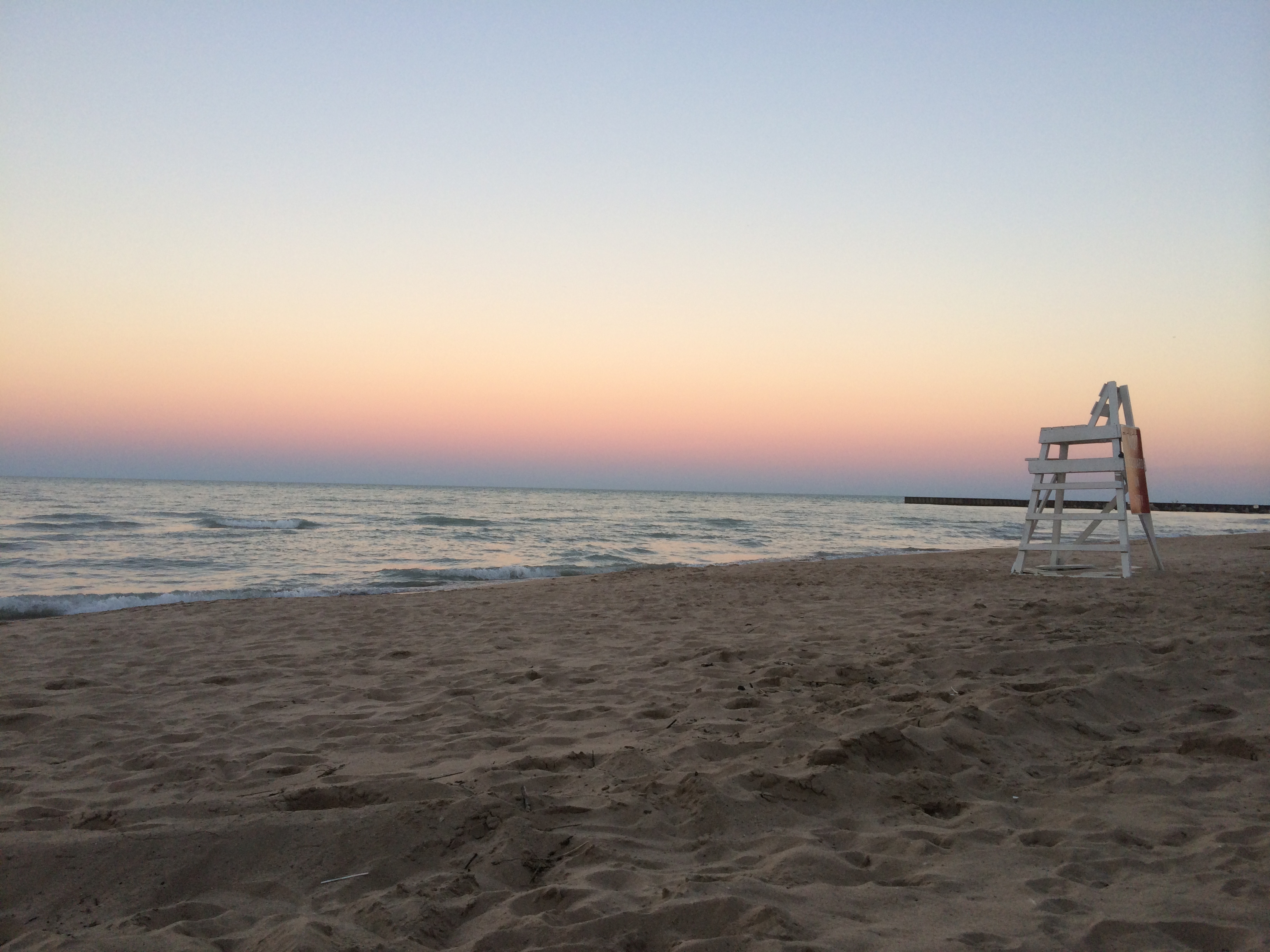
See ya Lake Mich
Today and yesterday Katherine and I harvested most of the heads from P1 and P2! It’s an all day affair now that it’s just the two of us, but we enjoyed seeing how much progress we’ve made- many of the rows and all of the heads for Q3 are completely harvested! Today at P2 we had a picnic lunch in the field to maximize efficiency and enjoy the beautiful and clear fall day. I also gained a deeper understanding for just how caring of a person Katherine is. As we were harvesting she carefully ensured no bugs made it into the bag declaring, “Why must I have such a respect for the sanctity of all life!” as she herded another small bug back into its home at hegg. Unfortunately as we headed home, the truck didn’t quite start! Luckily, a kind passerby helped us jump it and after at the auto body shop we got to play with Bo, the friendly and pudgy yellow lab.
We started off today by receiving a post card from Ben! It’s addressed to all of Team Echinacea, so I urge everyone to return to read it in person (and so we can see you)! To say we were overjoyed would be an understatement, and it reminded us how much we miss our buddies who have returned home, to school, and to continue work in Chicago! Unfortunately as you can see from the pictures, some members were not so fortunate as to remain humans after the summer. So much time spent studying Echinacea has caused Gina to turn into an Echinacea and from eating too many cucumbers from the Wagenius’ garden, Ben has become a cucumber! We are impressed by how much this summer influenced our friends both academically, and physically.
 Katherine cuddles Bo while the car is expected!  Gina misses the project so much she’s turned herself into an Echinacea! We miss Ben, but we like him as a cucumber too
As of Tuesday, 139 out of 153 total Q3 heads have been harvested. That means there are only 14 more to go. Yay!!!
With Gretel having left for Chicago after lunch today, Ali and I are officially alone here in Kensington! While holding down the fort for a week will likely be challenging due to the large amount of fieldwork left to be done, we’re confident that we’ll be able to handle it. Our newfound ability to drive stick-shift has already proved invaluable, and we’re gaining confidence with it every day. This afternoon, we drove around to harvest at the remnants, and we finished off the harvest at Steven’s approach, NW of landfill, and Hegg. Now the truck is parked safely in our driveway, which will be its home for the next month!
Here are some photos from the week!
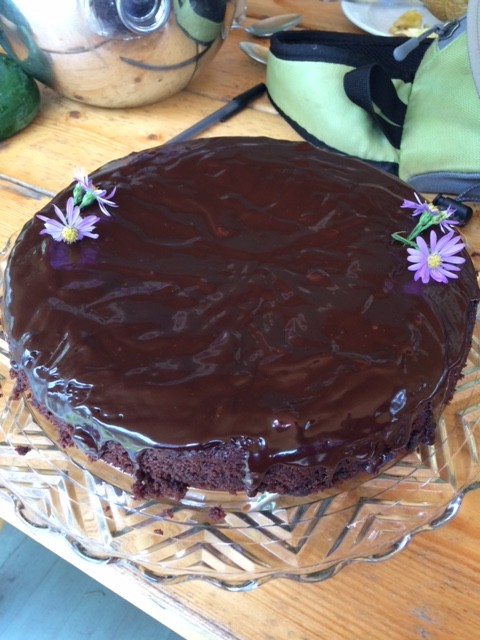
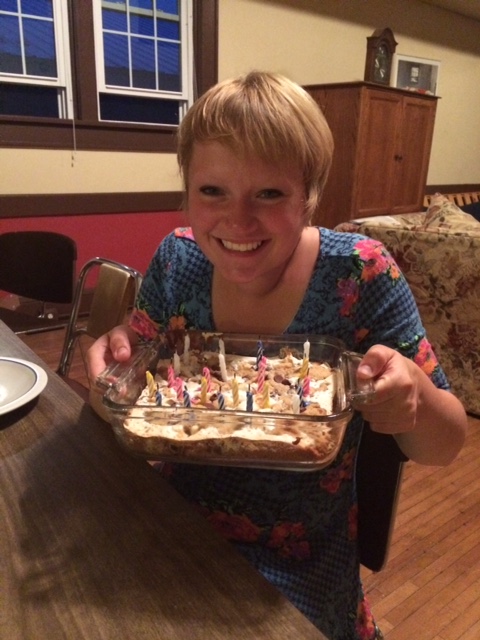
 The beautiful birthday cake Gretel made me!
Ali also made me a cake!! Being hooligans in P1, as usual
This morning we split into 2 groups. Amy and Danny headed over to KJs. They staked points and are now ready for seedling refinds sometime next week. Ali, Katherine and I harvested Q3 heads. We got 40 in all! It sprinkled a little this morning, so the heads were a little damp. We set up a drying station for them.
Ali and Katherine with the beautiful Q3 heads!
Lots of colors! After everyone finished up that, Stuart taught Ali and Katherine how to dissect the harvested heads.
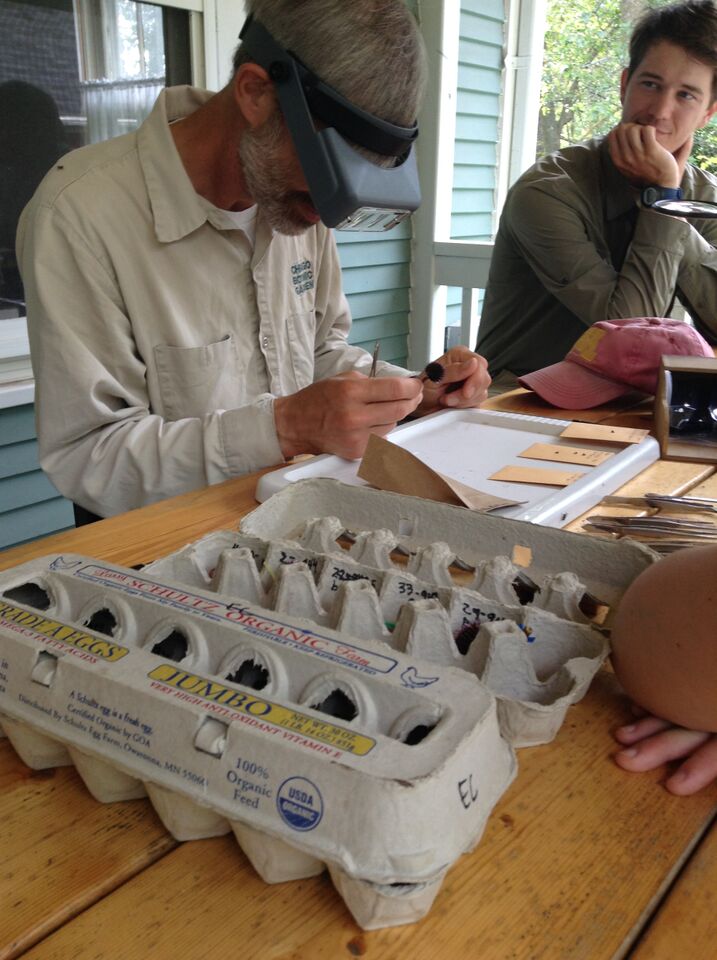
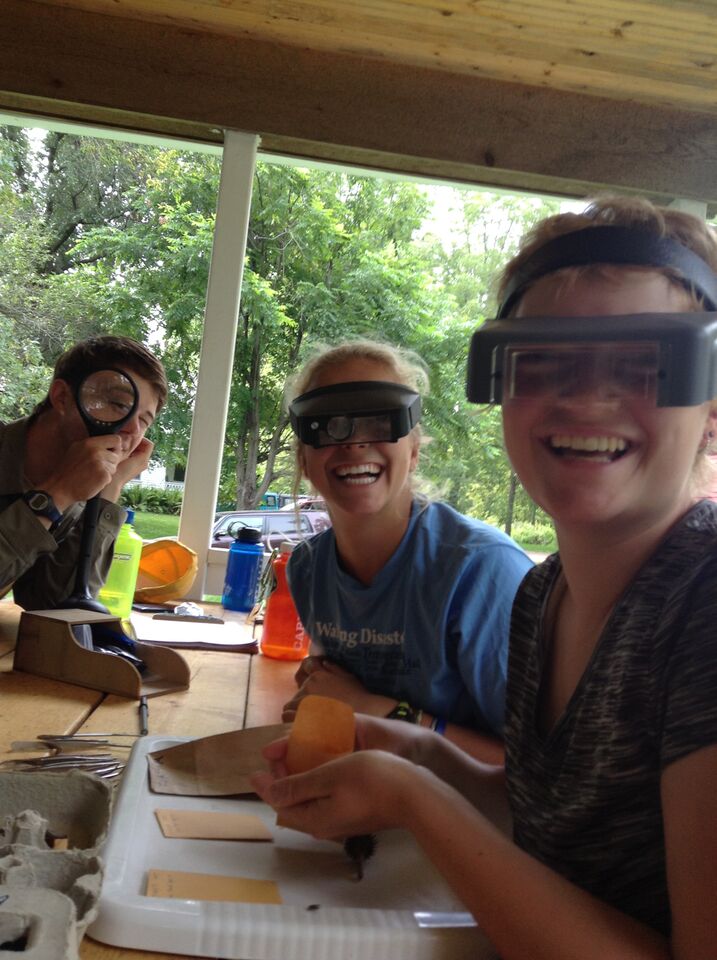
 Stuart demonstrates proper dissection methods. Ali and Katherine practice dissection while Danny does absolutely nothing productive. It sprinkled a little after lunch, so we waited until about 2:00 to head out to P2 to harvest. Although we started a little later than we would have liked, we still finished up in about 2 hours! A lot faster than yesterdays P1 harvest!
To celebrate a week full of hard work and fun, we had root beer floats! Unfortunately, today was my last day with Team Echinacea. I start my senior year at West Central Area High School on Tuesday. I had a great summer and I learned so much! 🙂
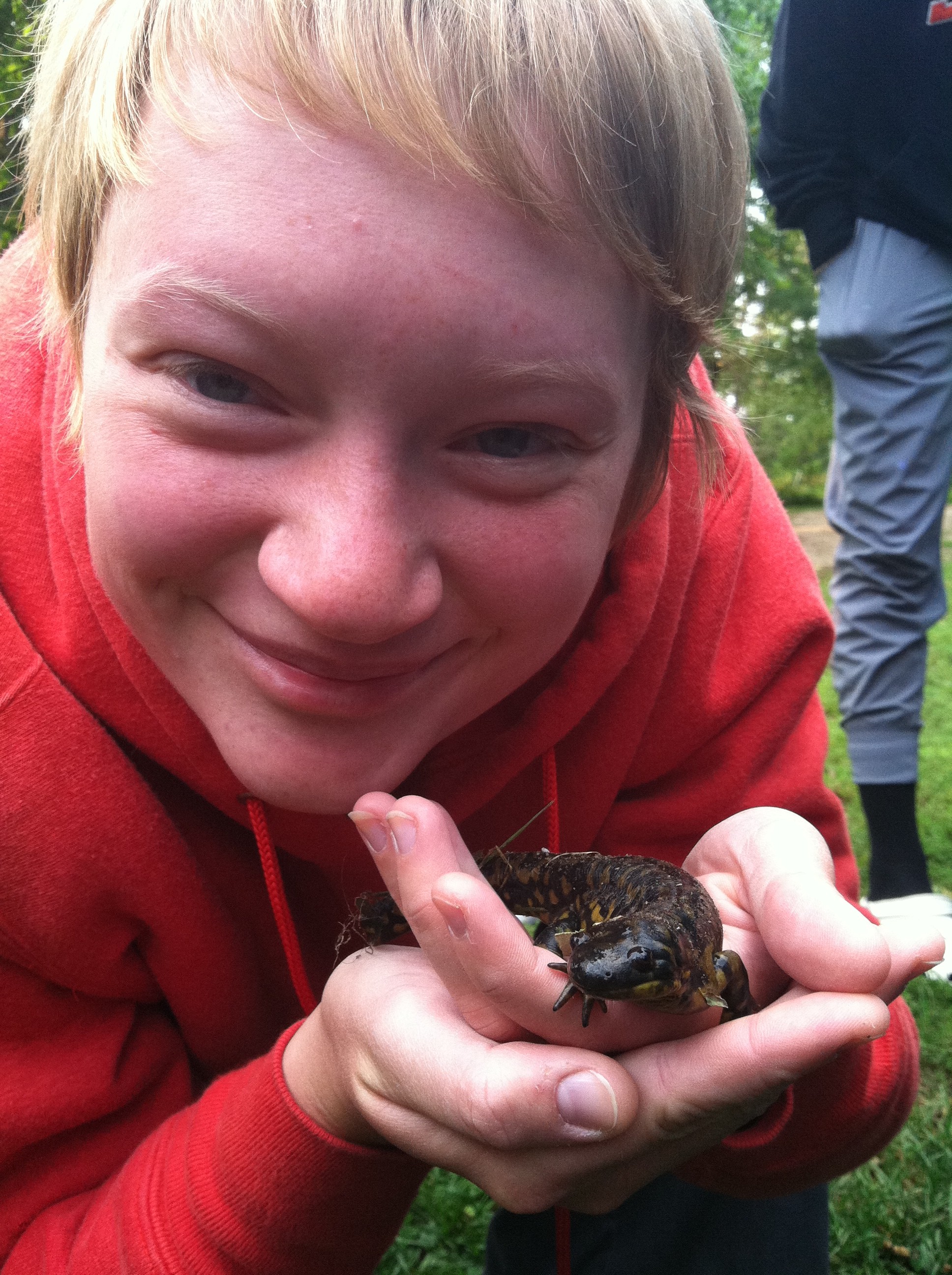
Today marked our third day without Stuart. But our arrival to a Stuart-less Hjelm house was made brighter by the appearance of a tiger salamander! (In Roxy’s absence, we’ve noticed quite a bounty of wildlife roaming the area.) Katherine, who has known since the age of 8 that the majestic and bafflingly cute creature is her favorite animal, was especially excited. After an extended photo op and cuddling session, the team finally managed to set the salamander back down and get on with the day’s work. We all agreed that he was an upgrade from Ricky.
Katherine holds her first tiger salamander! Obvious soulmates. We spent most of the morning doing demography at the Rileys. Despite some grief and hardship caused by the abundance of mowed plants, we finished strong and well before lunch. Back at the Hjelm house we set to work cleaning and organizing, dealing with clutter that had been neglected for too long. Things got really exciting when Amy dug out the label maker. We spent lunch dreaming up big plans to label everything in the Hjelm house–in between fighting off the hornets.
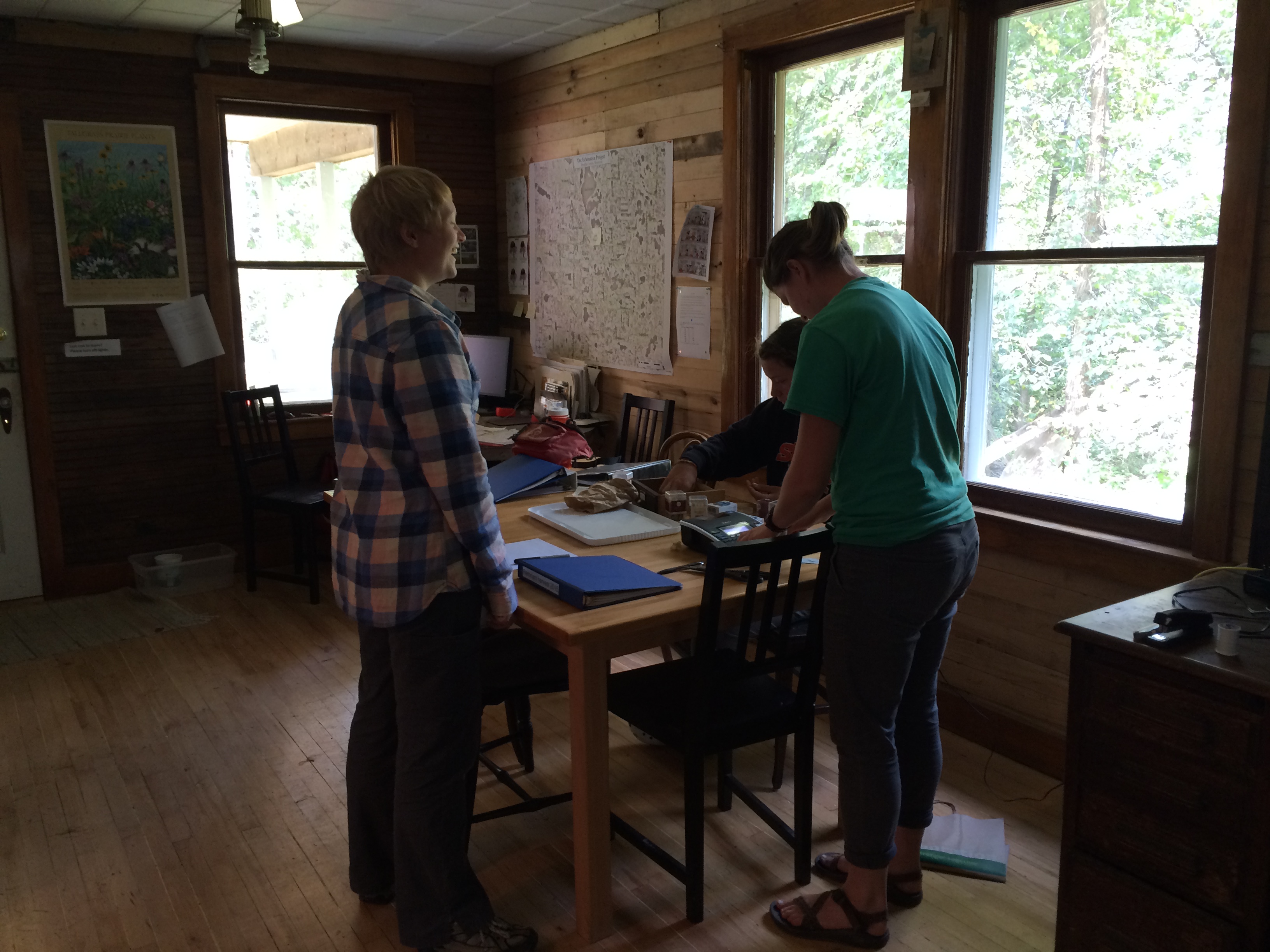
The Hjelm house is looking pretty good. After lunch, Will and I collected tissue samples from the Cirsium hillii at Hegg (that will be used to determine if the plants are distinct or actually one large plant) while Abby and Danny collected tissue from the angustifolia plants nearby the pallida restoration. Meanwhile, Katherine, Ali, and Amy stayed back to touch up the paint jobs on the heads for q3.
Our work done at Hegg, we headed back to Hjelm and packed away the tissue samples to dry out. We printed labels for the samples, but unfortunately the label maker ran out of paper before we could get on with the rest of our big labeling plans. Oh well. We’ll have to continue to do our best navigating the house with its very average level of labeling.
Heads for q3 wait in p1 to be harvested.
Today when we arrived at the Hjelm house it was only 50 degrees! Brrrrrr! We were also down to a team of six following Ben’s last day on Friday and Stuart and Gretel heading back to Illinois over the weekend. (Abby was gone for her senior pictures). With so few people we got off to a quick start, because we knew we would need all the time we could get to get as much done with fewer crew members.
Our skeleton crew headed out to p2 to continue measuring that we started last Thursday. It was slow going but, having gotten through the thickest of the flowering plants on Thursday it was faster than it could have been. It is always windy at p2 since it is on top of a hill but today was especially windy and cold, most crew members could barely feel their hands which made entering data on the visor a challenge. We managed to get by, completing 20 rows before heading in for lunch.
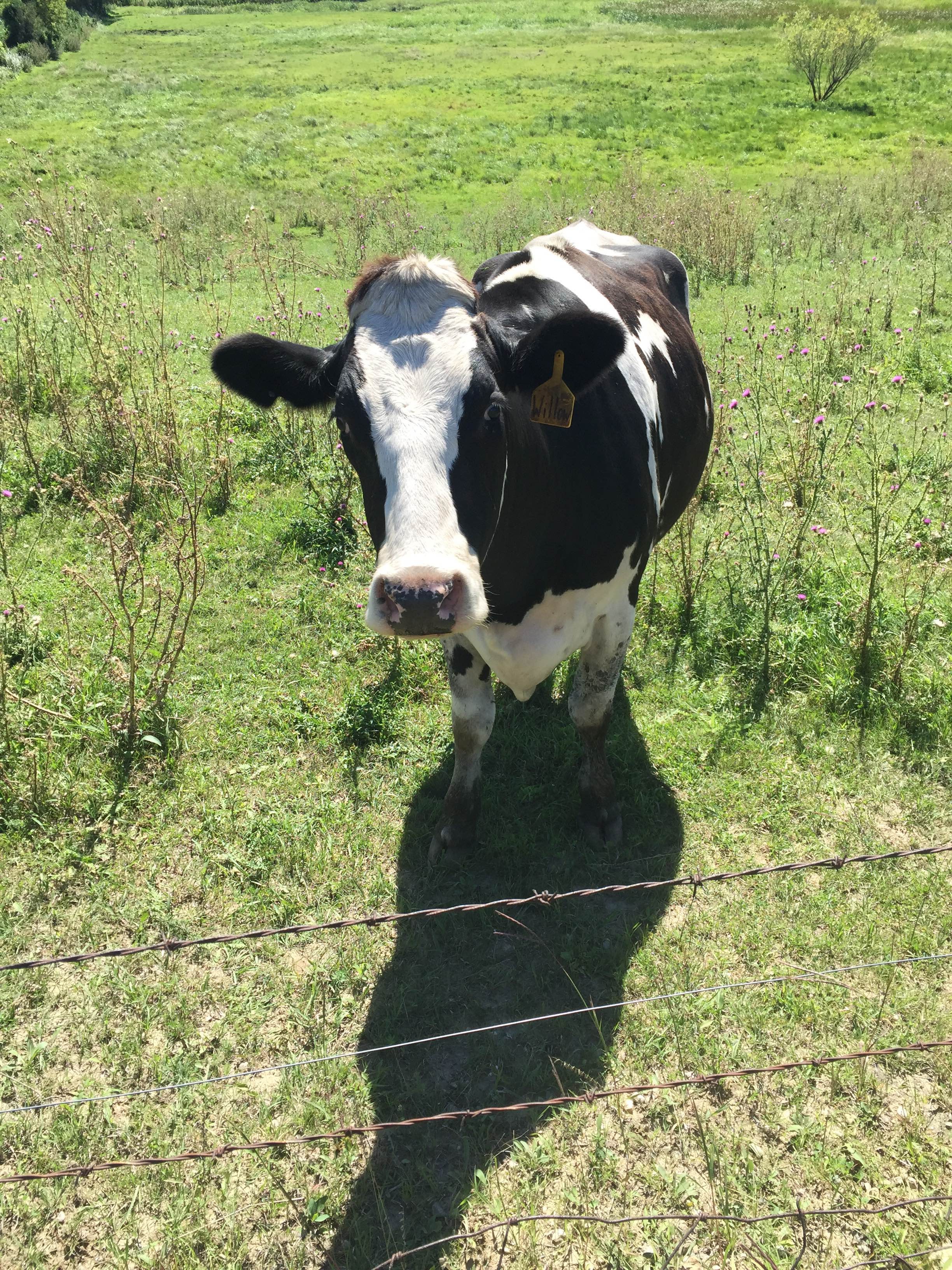
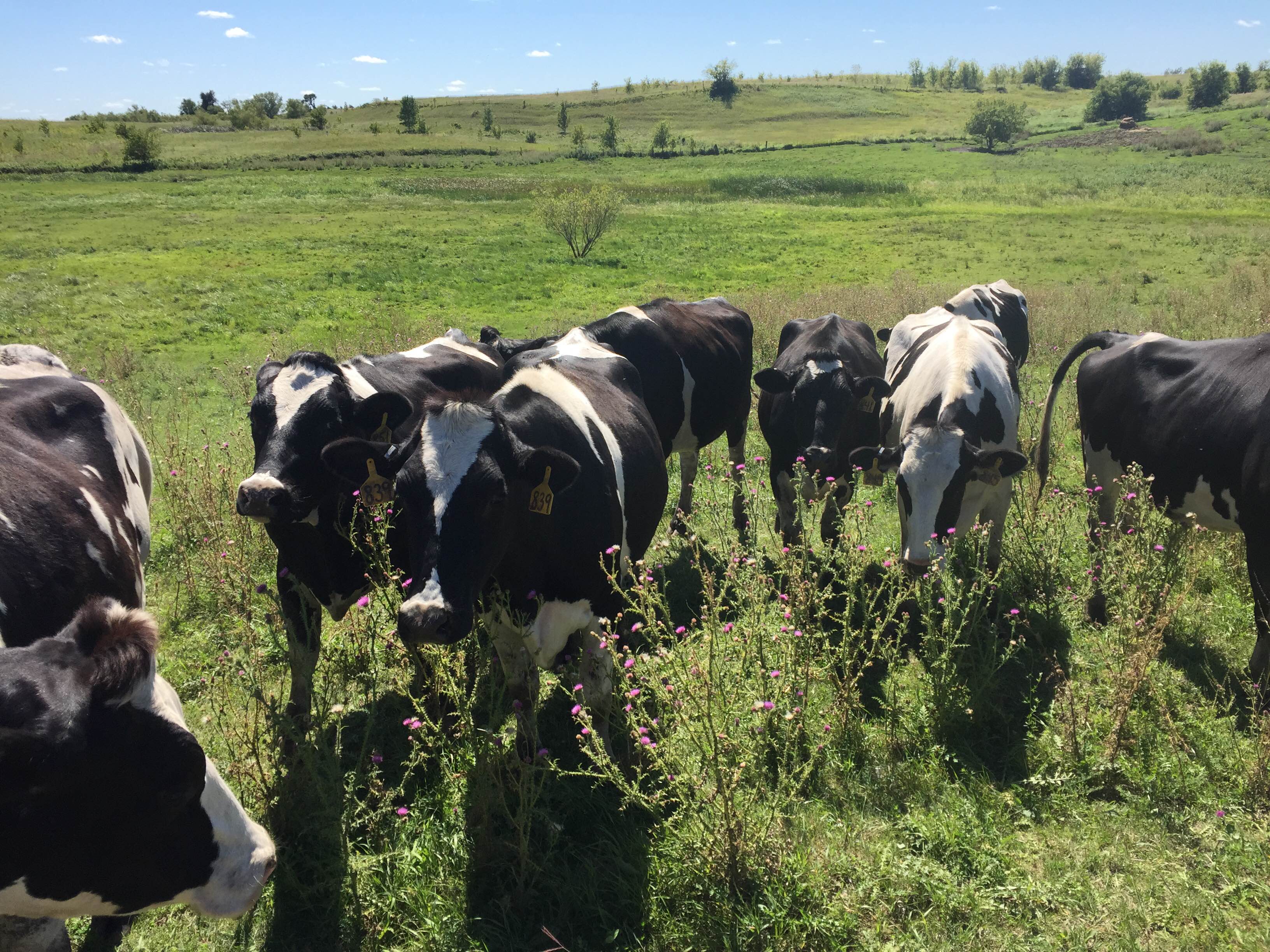
After a warm up with some hot chocolate at lunch we headed out to do various things in the afternoon. Danny, Amy, Gina and I went to harvest heads in the remnants based on a sampling method that Danny and Amy developed. Ali and Katherine rechecked some funky measurements in p1 and harvested a few of the heads that will be used in the q3 experiment (exciting!). Amy and I went to a ton of different remnants and encountered a few problems, like at Stevens approach were most of the heads were mowed. The highlight of our afternoon was at Aanenson where we met a really friendly cow named Willow! she came up to the fence and let us pet her. Her not-so-outgoing friends were hesitant and we didn’t pet them. Willow even gave Amy’s hand a lick, “it felt really weird” said Amy shortly after the licking. Sadly we could not spend all afternoon with our new friend and went to continue harvesting.
Willow the cow investigates her new, soon-to-be friends, Will and Amy Willow’s friends investigate us from afar, clearly not as outgoing or cool as Willow.
Invasive Potential of E. pallida in Western Minnesota:
TAYLORS
After a very heavy rain last night, we got to start our work day 45 minutes later than usual. Even though we started late, we were able to finish phenology at all of the sites (including P1 and P2), and crosses for Q3 before lunch. At peak flowering time, we had over 2000 plants to check on in the remnants and today that number was down to 211.
Rare sight! This plant hasn’t begun flowering yet!
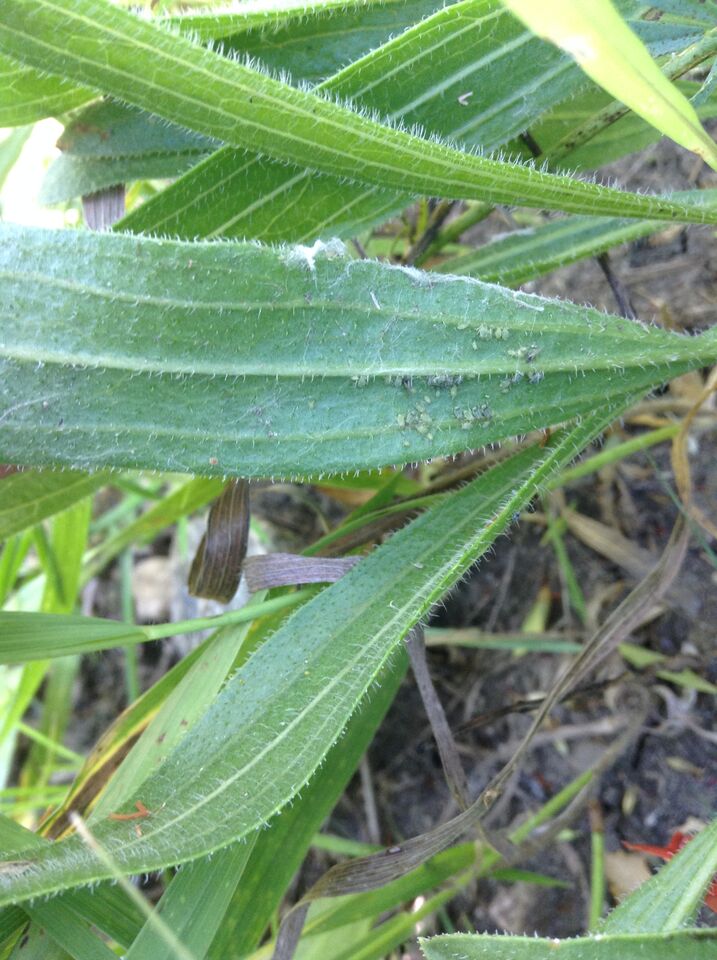
Gina and I had time to do an aphid treatment today. The results were very exciting! Of our 33 addition plants, 25 already had aphids on them. We also only found 1 aphid during our exclusion treatment!
Here are some of those cute little aphids!
Everyone measured for awhile before heading out to P2 to finish off our thistle pulling job. Stuart brought a watermelon out there for everyone to enjoy. It was the perfect way to end a great week!
|
|