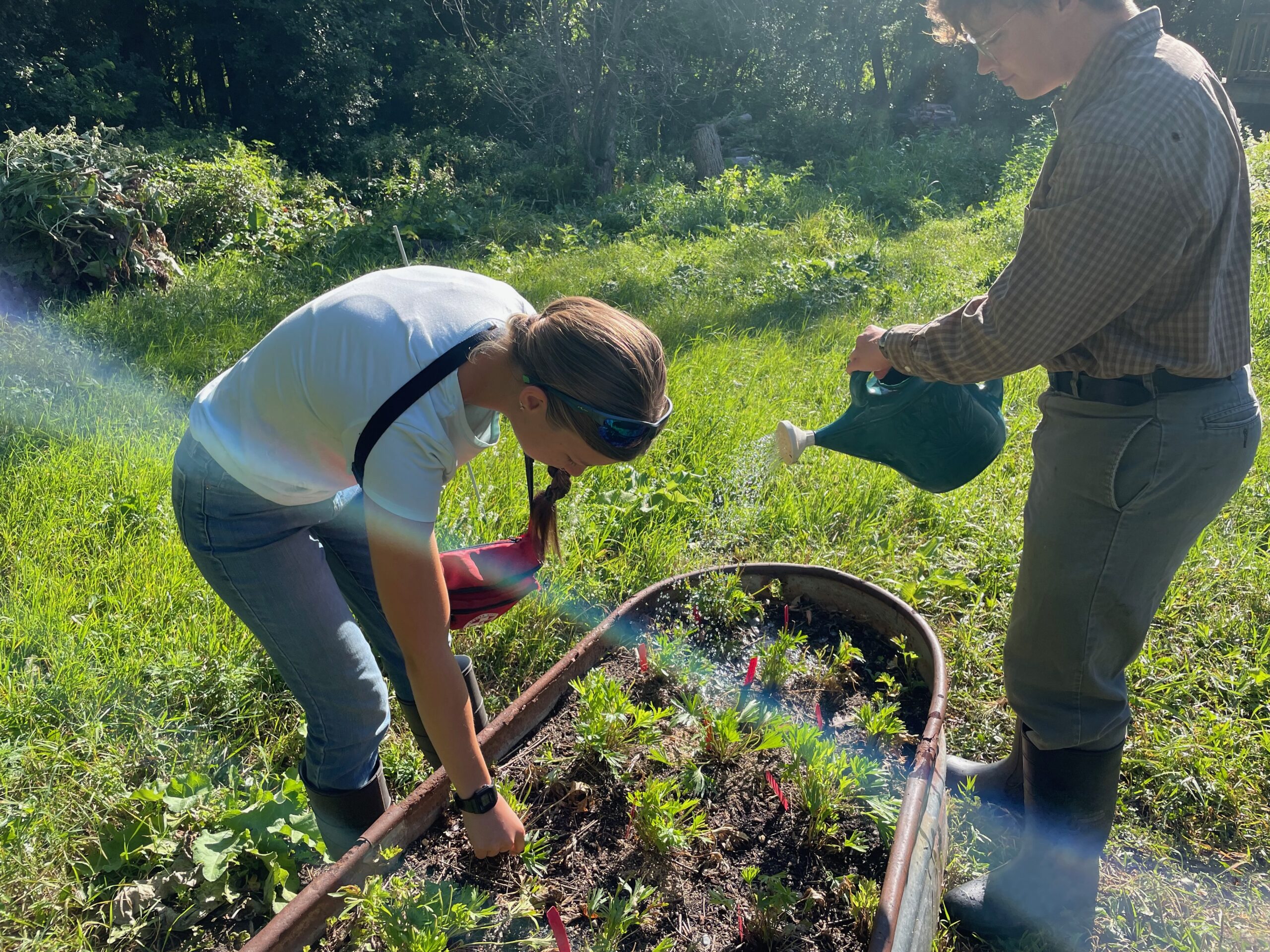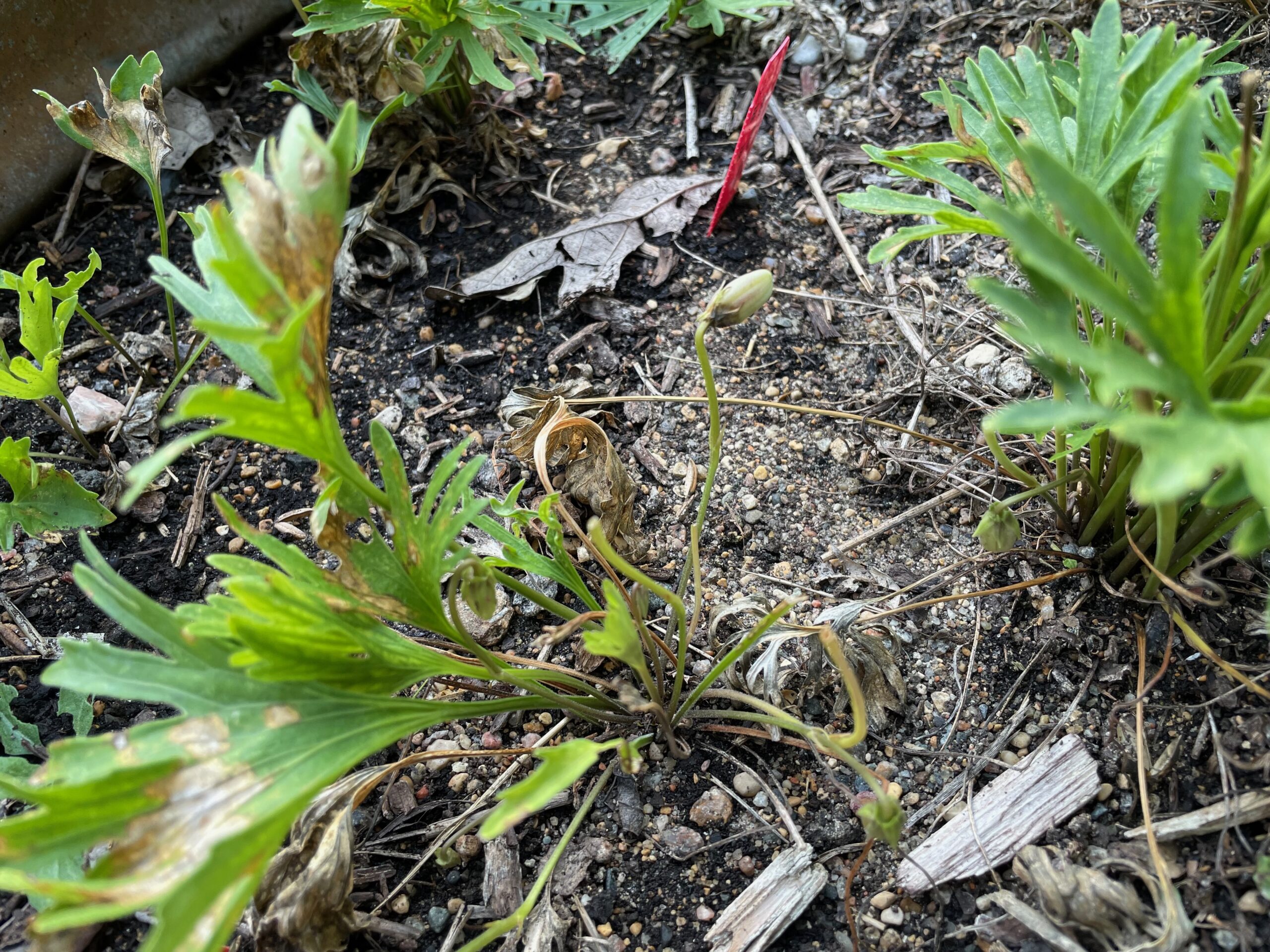
This year, Team Echinacea designed a new experiment to look at Viola pedatifida seedling establishment. V. pedatifida (prairie violet) is a species native to our study area which is a desirable addition to prairie restoration projects. In 2024, Team Echinacea installed a Viola propagation tub at the Hjelm house to produce seed for future restoration and research projects. Two years later, our Viola tub is producing enough seed for us to conduct our first experiment.
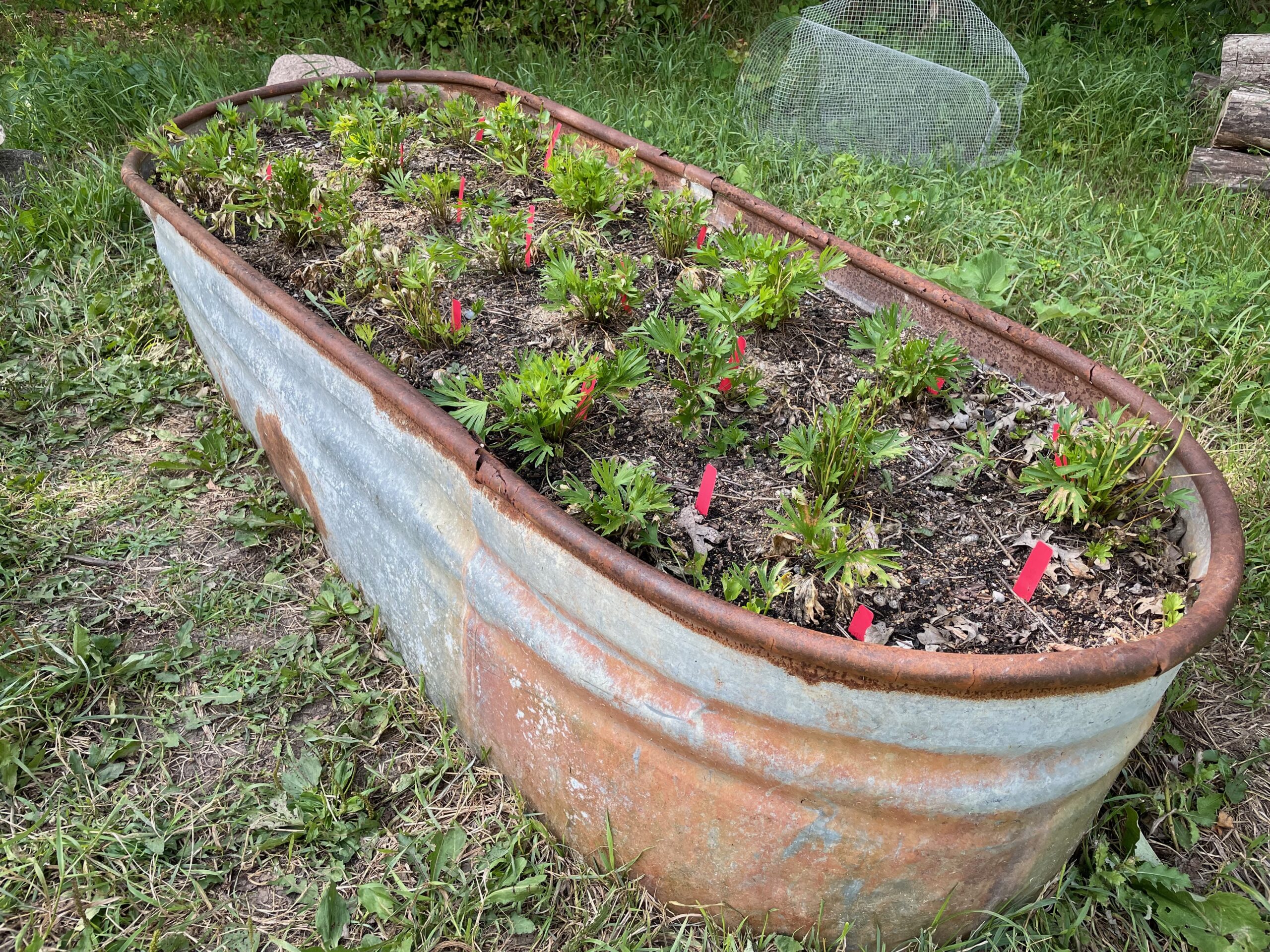
The goal of this experiment is to test the effects of seed age and planting date on V. pedatifida seedling establishment. Between August 3rd and September 22nd, we planted roughly 15,000 Viola seeds in exPt08, spread out across 76 two-meter segments. Each segment is marked by one or more neon flags. The planted seeds range in age (time since harvest) from 1 to 10 weeks. We will revisit these segments in the spring of 2027 to measure seedling establishment.
For more information about the design of this experiment, see this flog post.
- Start year: 2026
- Location: exPt08
- Overlaps with:
- Planting data:
- Viola planting location datasheet: dropbox/teamEchinacea2026/zz.viola/viola2026plantLocSheet.xlsx
- exPt08 viola segments map: dropbox/teamEchinacea2026/zz.viola/violaMapAndDatasheet.pdf
- Products:
- None yet. But stay tuned for more Viola excitement!
As I write this on the final day of the field season (2-Oct-2026), the Viola tub is still producing seeds! In fact, the rate of Viola pod production has remained relatively constant since the start of August. The final Viola harvest will be this afternoon.
We have not observed any seedlings in the Viola tub, despite the many seeds which have surely dispersed there, which leads us to believe that germination will occur in the spring. There are plans in the works to conduct a controlled burn of exPt08 at some point this fall or in the coming spring. Whether this will affect Viola pedatifida seedling emergence is yet to be determined.
Team Echinacea is excited to report on this new experiment! We hope to have some results to analyze in spring of 2027.