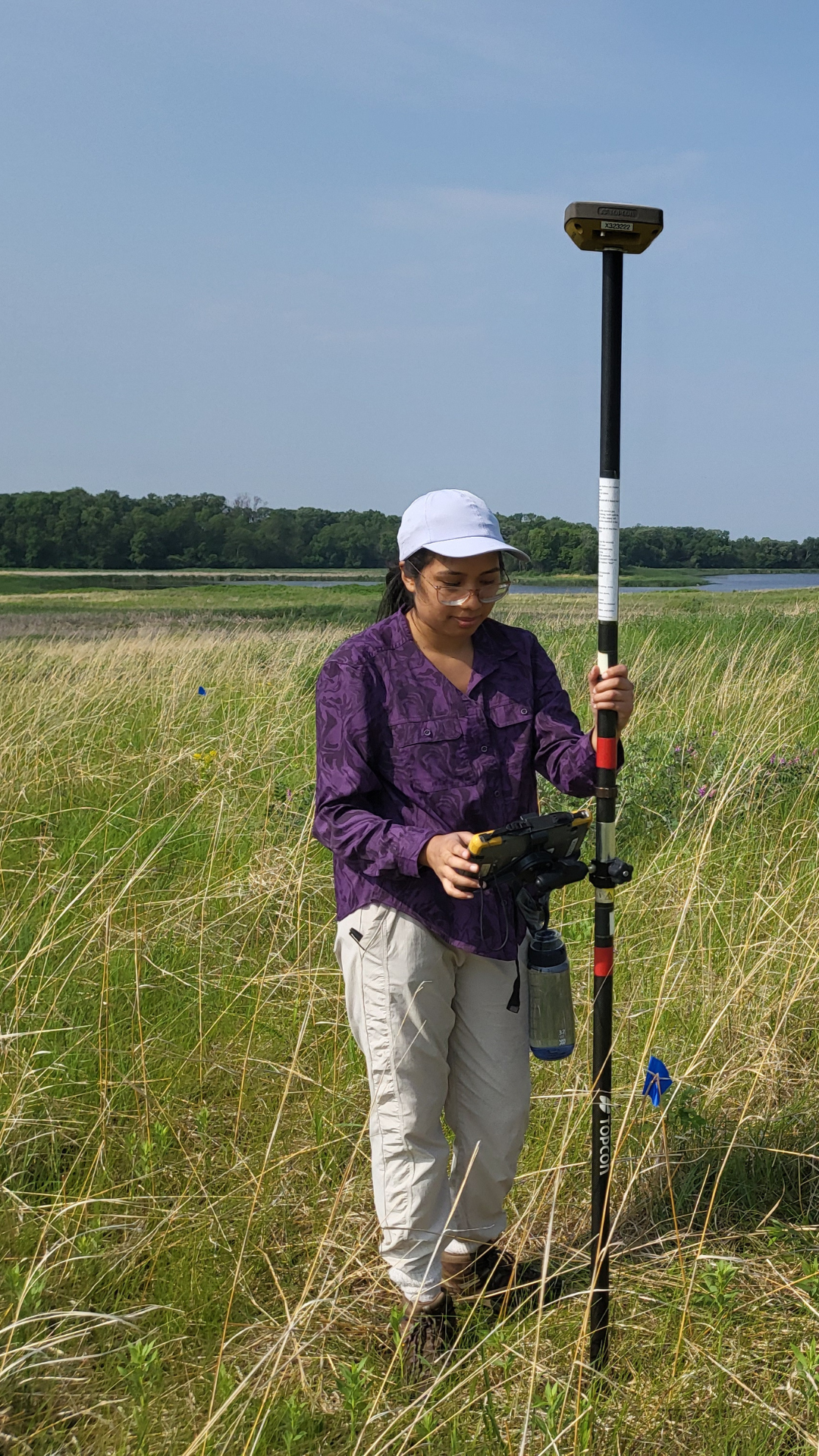
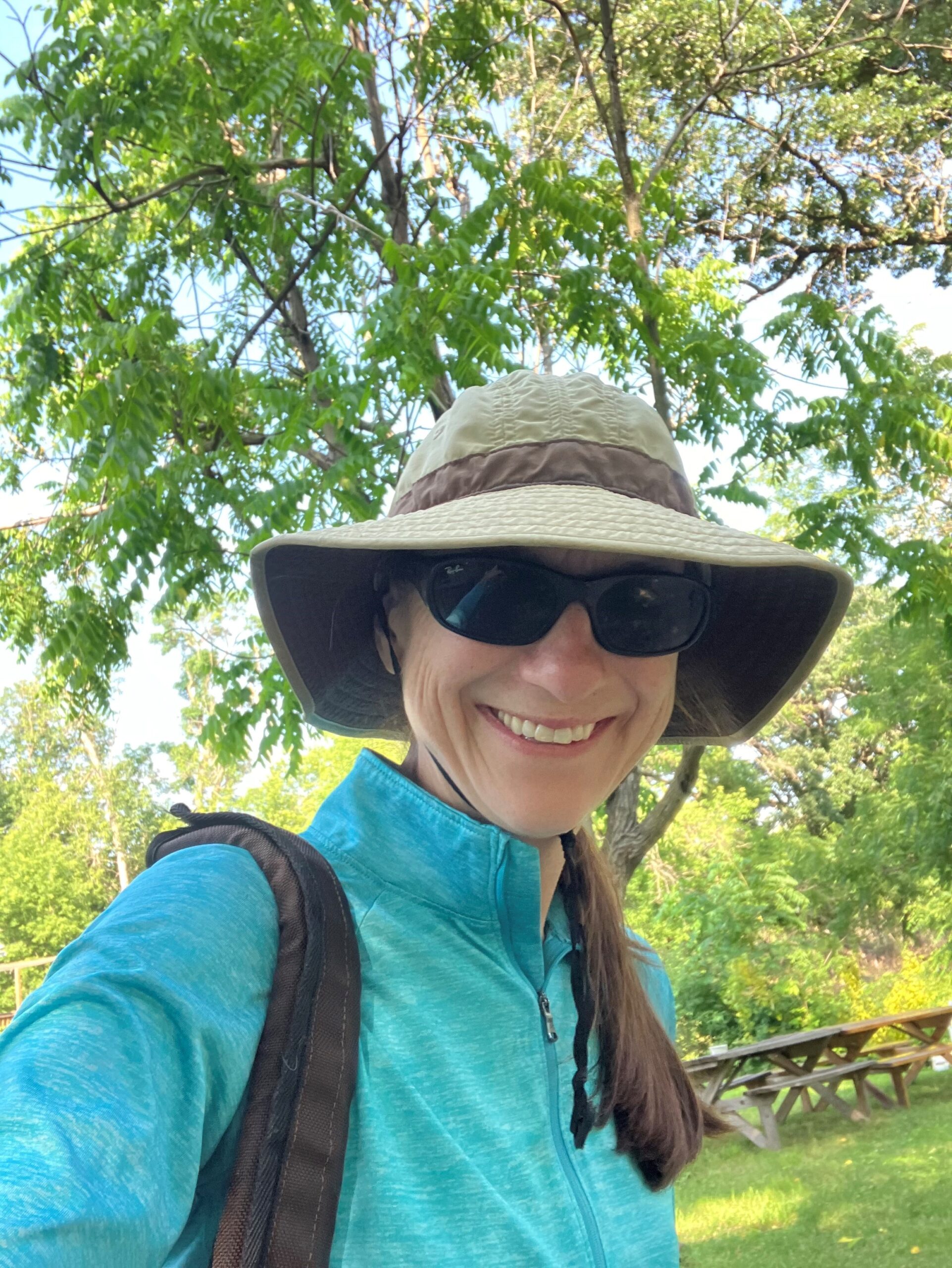
Goodbye for now, Minnesota and Team Echinacea! My fellow RET teacher, Brittany, and I are back to school. Brittany started back this week and I start Monday. For our project, Brittany and I worked together this summer to locate and describe the rare plant, Astragalus adsurgens, also called Prairie Milkvetch. We searched many remnant sites but were able to find plants at only two locations. Brittany used the Chicago Botanic Garden’s Plants of Concern app to submit information about the plants that will help us understand how these rare plant subpopulations are doing. I created a gps layer so that they can easily be revisited in future years and made a small seed collection. These seeds will hopefully be the start of a restoration project that will reintroduce A. adsurgens into suitable sites in Douglas County.
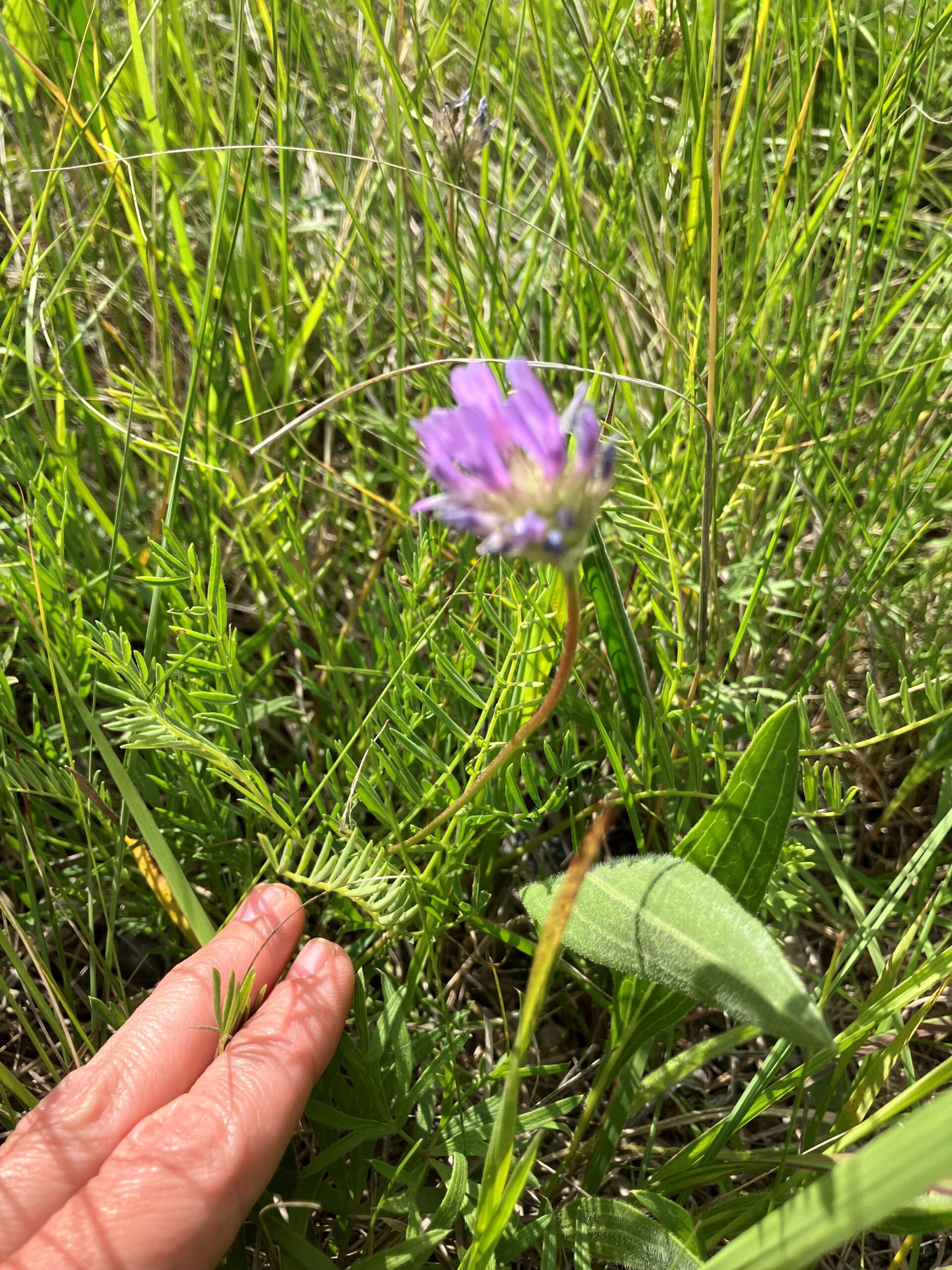
Prairie milkvetch (Astragalus adsurgens) in bloom in a remnant prairie.
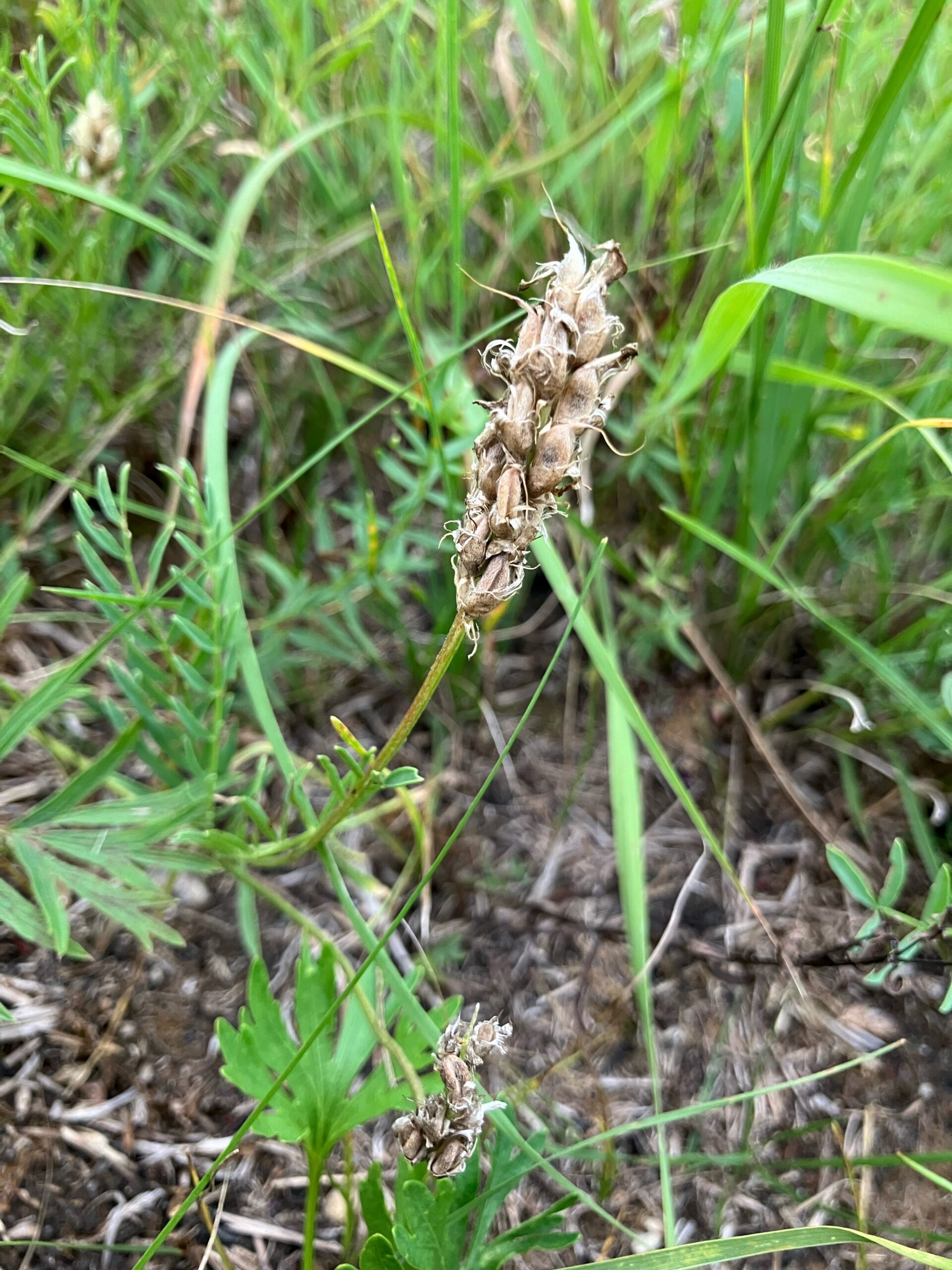
The seeds of Prairie milkvetch are enclosed in a two-sided pod and multiple pods attach to the stem.
I also spent time this summer collecting Carex seeds that will be planted in recruitment plots. The recruitment plots will grow Carex plants for the purpose of generating even more seed that can be collected and used in restoration projects or added to existing experimental plots. I kept track of the sites I collected seed from so that the collection contains locally-adapted, genetically diverse sample.
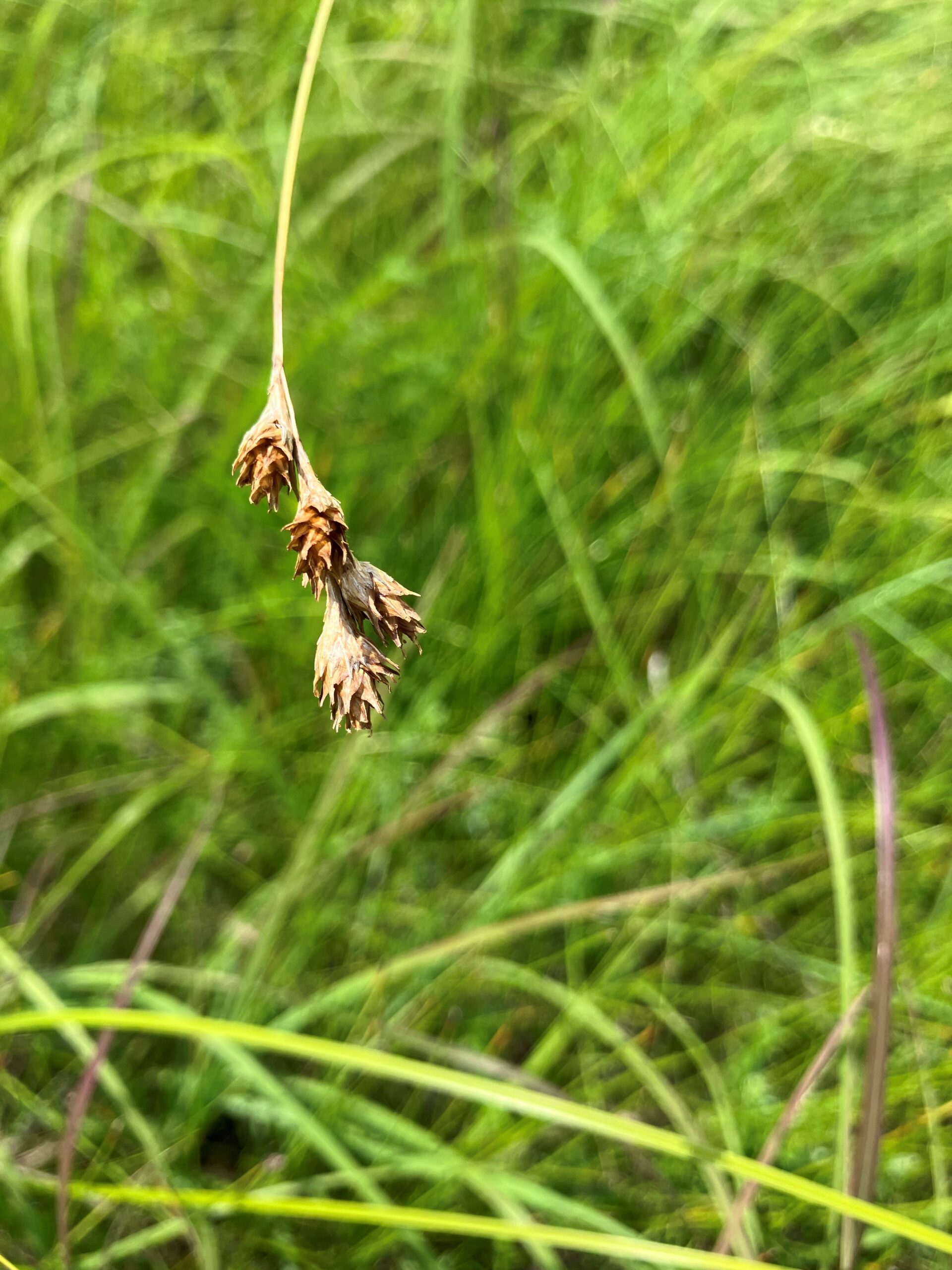
Short-beaked sedge (Carex brevior) found around Hegg Lake.
I chose to work with seed collections for my project this summer because the seed collection represents the first step in establishing a long-term research project in a restoration setting. At La Salle High School in Yakima, WA, we are fortunate to have riparian habitat on campus that can be used as outdoor learning space. However, it is horribly invaded with a who’s who of Washington’s worst invasive plant species. I have created a lesson plan in which students use seed collections for a native plant restoration project on campus. Students will have opportunities to test hypotheses related to germination and seedling survival, learn about plant anatomy and life cycles, and work with tribal biologists on projects that are important to our community. This will be a long-term project with probably a few wrong turns and negative results as is the way with science, but each class of students will have the opportunity to work on one or two important questions related to successfully restoring the vegetation on our creek.