|
|
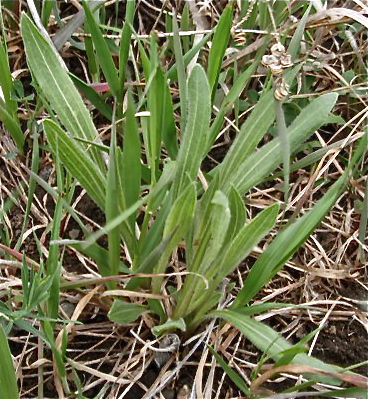
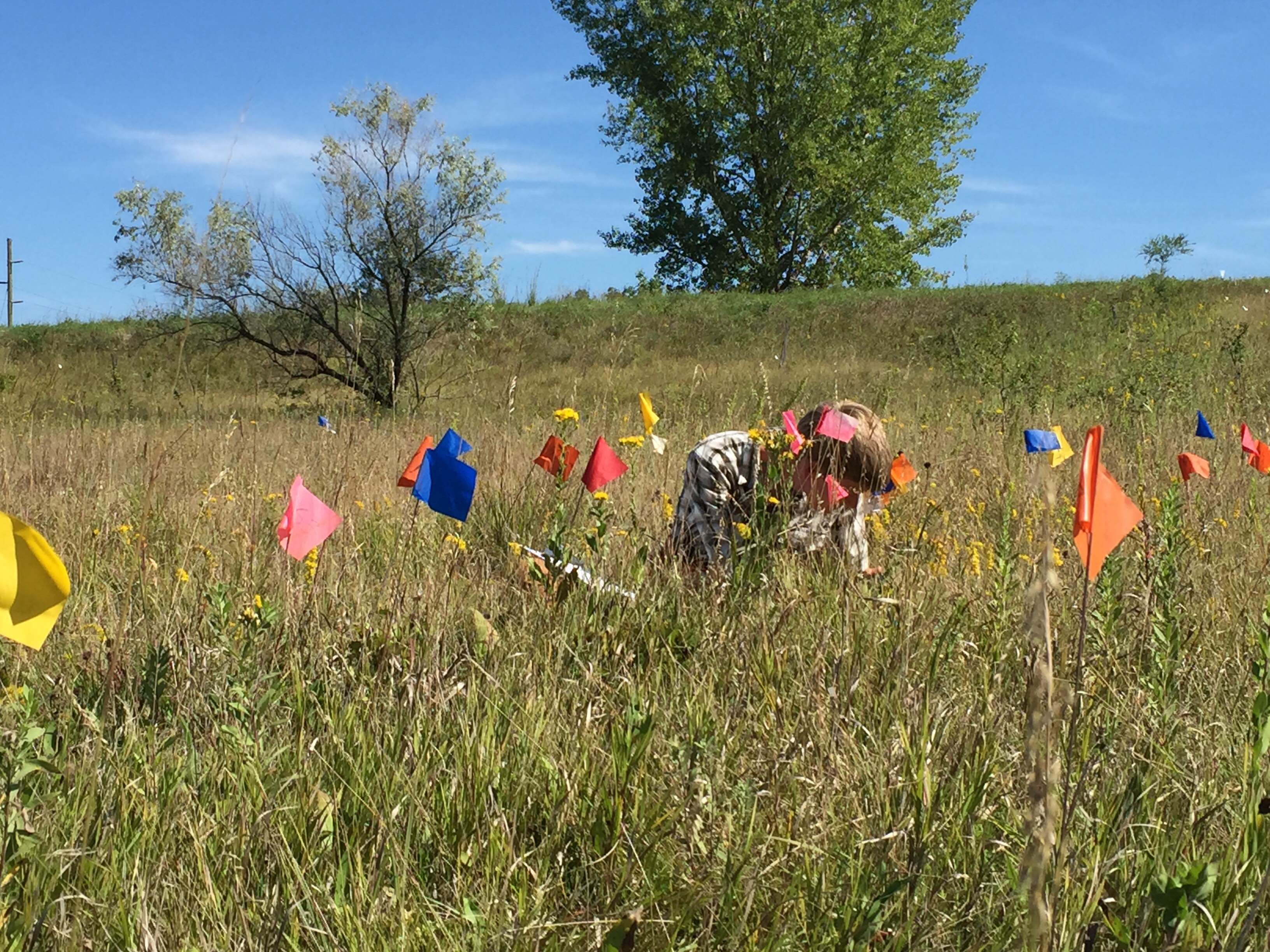
 We observed that 95% surviving members of the 1996 cohort were basal in 2016 The oldest Echinacea plants in experimental plot 1 are 20 years old. They are part of a cohort planted in 1996 in a common garden experiment designed to study differences in fitness and life history characteristics of remnant populations. Stuart sampled about 650 seeds (achenes) from eight remnant populations in and near Solem Township, representing the range of modern prairie habitat from small patches along roadsides to a large nature preserve. In 1996, he transplanted seedlings on a 1m x 1m grid, randomly assigning the location of each individual.
Every year, members of Team Echinacea assess survival and measure plant growth and fitness traits including plant status (i.e. if it is flowering or basal), plant height, leaf count, and number of flowering heads. We harvest all flowering heads in the fall and obtain their achene count and seed set in the lab.
Only 15 plants from the 1996 cohort were flowering this year. We were very curious to know if this small number was a result of a low rate of flowering or due to high mortality in the cohort. We found that of the original 650 individuals, 291 were alive in 2016, only 13 fewer than last year. That means only 5% of living individuals flowered. In contrast, 45% of living plants flowered last year (and 37% in 2014, 34% in 2013, 40% in 2012). We’re not sure why so few plants flowered this year; it’s possible that individuals flower less as they age, but we also observed low rates of flowering in younger cohorts in experimental plot 1, suggesting that environmental factors may also be responsible.
Start year: 1996
Location: Experimental plot 1
Overlaps with: phenology in experimental plots, qGen3, pollen addition/exclusion
Physical specimens:
- We harvested all 17 heads and at present they await processing at the lab to find their achene count and seed set.
Data collected:
- We used Visors to collect plant growth and fitness traits—plant status, height, leaf count, number of flowering heads, presence of insects—and it has been added to the database (?)
- We used Visors to collect flowering phenology data—start and end date of flowering for all individual heads—which is ready to be added to the exPt1 phenology dataset
- Eventually, we will have achene count and seed set data for all flowering plants (stay tuned)
Products:
You can find more information about the 1996 cohort and links to previous flog posts regarding this experiment at the background page for the experiment.
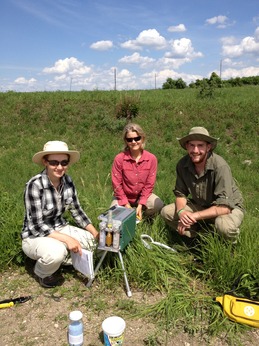
 Reina, Pamela, and Mike with the photosynthesis machine used in Kittelson et al. (2015) In 2016, we continued the INB2 experiment to investigate the relationship between inbreeding level and fitness in Echinacea angustifolia. Each plant in experiment INB2 originates from one of three cross types, depending on the relatedness of the parents: between maternal half siblings; between plants from the same remnant, but not sharing a maternal or paternal parent; and between individuals from different remnants. We continued to measure fitness and flowering phenology in these plants.
This year, of the original 1,470 plants in INB2, 557 were still alive. Of the plants that were alive this year, 2% were flowering and 75% have never flowered.
Read previous posts about this experiment.
Start year: 2006
Location: Experimental plot 1
Overlaps with: Phenology and fitness in P1, Inbreeding experiment–INB1
Physical specimens: We harvested 9 heads from INB2 that will be processed in the lab with other heads harvested from P1.
Data collected: We used handheld computers to collect fitness data on all plants in INB2.
Products: The below papers were published in summer 2015:
Kittelson, P., S. Wagenius, R. Nielsen, S. Qazi, M. Howe, G. Kiefer, and R. G. Shaw. 2015. Leaf functional traits, herbivory, and genetic diversity in Echinacea: Implications for fragmented populations. Ecology 96:1877–1886. PDF
Shaw, R. G., S. Wagenius and C. J. Geyer. 2015. The susceptibility of Echinacea angustifolia to a specialist aphid: eco-evolutionary perspective on genotypic variation and demographic consequences. Journal of Ecology 103:809-818. PDF
You can find more information about the Inbreeding experiment–INB2 and links to previous flog posts regarding this experiment at the background page for the experiment.
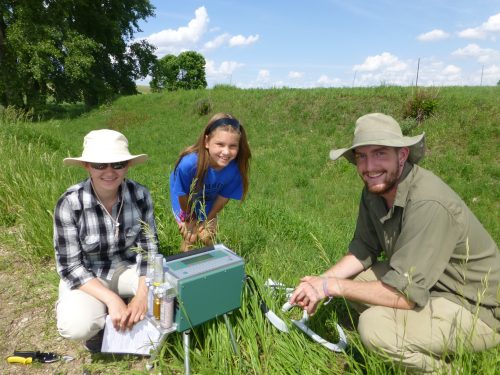
 Reina, Hattie, and Mike with the instrument to measure photosynthesis. In 2016, we continued the INB1 experiment to investigate the relationship between inbreeding level and fitness in Echinacea angustifolia. Each plant in experiment INB1 originates from one of three cross types, depending on the relatedness of the parents: between maternal half siblings; between plants from the same remnant, but not sharing a maternal or paternal parent; and between individuals from different remnants. We continued to measure fitness and flowering phenology in these plants.
This year, of the original 557 plants in INB1, 191 were still alive. Of the plants that were alive this year, 7% were flowering and 24% have never flowered.
Read previous posts about this experiment.
Start year: 2001
Location: Experimental plot 1
Overlaps with: Phenology and fitness in P1
Physical specimens: We harvested 13 heads from INB1 that will be processed in the lab with other heads harvested from P1.
Data collected: We used handheld computers to collect fitness data on all plants in INB1.
Products: The below papers were published in summer 2015:
Kittelson, P., S. Wagenius, R. Nielsen, S. Qazi, M. Howe, G. Kiefer, and R. G. Shaw. 2015. Leaf functional traits, herbivory, and genetic diversity in Echinacea: Implications for fragmented populations. Ecology 96:1877–1886. PDF
Shaw, R. G., S. Wagenius and C. J. Geyer. 2015. The susceptibility of Echinacea angustifolia to a specialist aphid: eco-evolutionary perspective on genotypic variation and demographic consequences. Journal of Ecology 103:809-818. PDF
You can find more information about the Inbreeding experiment–INB1 and links to previous flog posts regarding this experiment at the background page for the experiment.
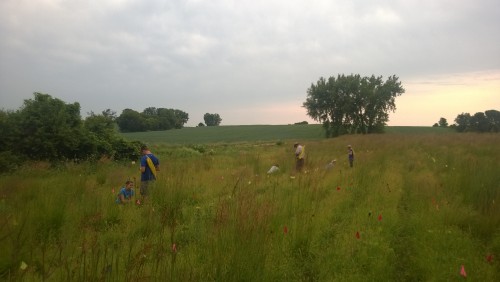
 Team Echinacea measuring plants in big batch The qGen1 (quantitative genetics) experiment is designed to quantify the heritability of traits in Echinacea angustifolia. We are especially interested in Darwinian fitness. Could fitness be heritable? During the summer of 2002 we crossed plants from the 1996 & 1997 cohorts of exPt1. We harvested heads, dissected achenes, and germinated seeds over the winter. In the Spring of 2003 we planted the resulting 4468 seedlings (this great number gave rise to this experiment’s nickname “big batch”). In 2016 we assessed survival and fitness measures of the qGen1 plants. 2,187 plants in qGen1 were alive in 2016. Of those, 5% flowered in 2016 and 49% have yet to flower.
Start year: 2003
Location: Experimental plot 1
Overlaps with: qGen2 & qGen3
Physical specimens: We harvested 116 heads from qGen1 in 2016. These heads will be processed in the lab to determine achene count and seed set.
Data collected: We collected fitness measures using handheld computers.
Products: We have an awesome dataset that we will share once the paper is published. Ruth Shaw is working on an analysis of the qGen1 dataset.
You can find more information about Heritability of fitness–qGen1 and links to previous flog posts regarding this experiment at the background page for the experiment.
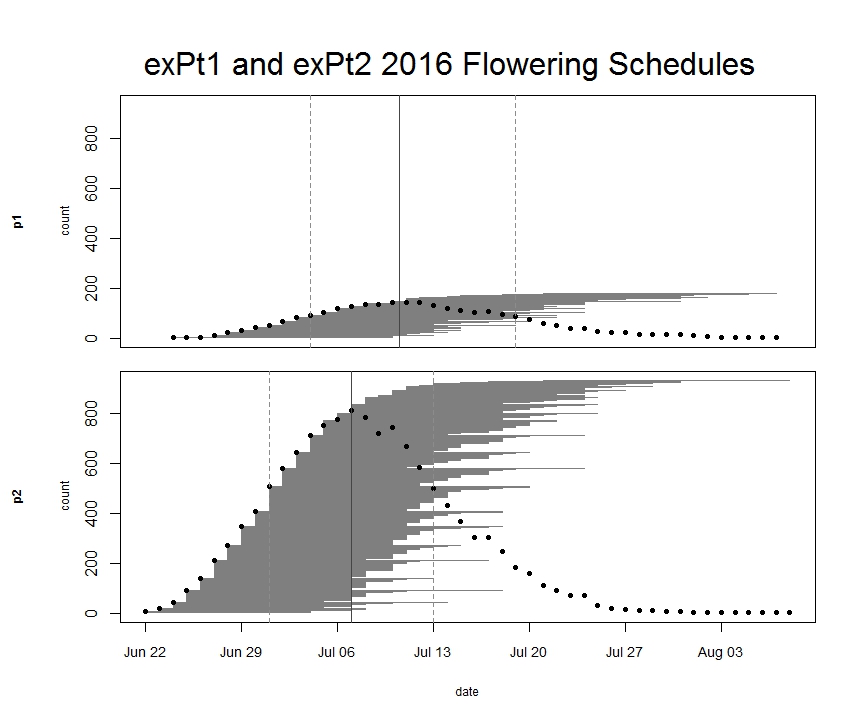
Every year we keep track of flowering phenology in our main experimental plots, exPt1 and exPt2. Fewer plants than usual flowered in exPt1 in 2016: 149 plants (179 heads) flowered between June 24th and August 7th. The population’s mean start date of flowering was July 5th and the mean end date was July 18th. Peak flowering in 2016 was on July 10th, when 143 heads were in flower. For comparison, peak flowering in 2015 was on July 27th, when there were nearly 10x as many heads flowering as on this year’s peak. The earlier phenology and low numbers of flowering we observed this year relative to 2015 is likely due at least in part to the plot burn schedule (2015 was a burn year and 2016 was a non-burn year), but there were still many fewer flowering plants than any season, burn or non-burn, in the past 10 years.
We kept track of 934 flowering heads in ExPt2, where the first head started shedding pollen on June 22 and the latest bloomer ended flowering on August 8th. Peak flowering was on July 7th, when 810 heads were flowering. ExPt2 was designed to study the heritability of phenology—you can read more about progress of that experiment in the upcoming 2016 heritability of phenology project status update.
At the end of the season we harvested the heads and brought them back to the lab, where we will count fruits (achenes) and assess seed set.
 ExPt1 and Expt2 flowering schedules from 2016. Dots represent the number of flowering heads on each date. Horizontal line segments represent the duration of each heads flowering and are ordered by start date. The solid vertical line indicates peak flowering, while the dashed lines indicate the dates when 25% and 75% of heads had begun flowering, respectively. Click to enlarge! Start year: 2005
Location: Experimental Plots 1 and 2
Overlaps with: Heritability of flowering time, common garden experiment, phenology in the remnants
Physical specimens: We harvested 177 heads from exPt1 and 870 from exPt2. Attentive readers may note that we harvested about 64 fewer heads than we tracked for phenology. That’s because before we could harvest many seedheads at exPt2, rodents chewed through their stems and ate some fruits (achenes). We recovered most of the heads that were grazed from the ground and made estimates of number of fruits lost due to herbivory, but we couldn’t find some heads. Arg. We brought the harvest back to the lab, where we will count fruits and assess seed set.
Data collected: We visit all plants with flowering heads every three days until they are done flowering to record start and end dates of flowering for all heads. We managed phenology data in R and added it to the full dataset. The figure above was generated using package mateable in R. If you want to make figures like this one, download package mateable from CRAN!
You can find more information about phenology in experimental plots and links to previous flog posts regarding this experiment at the background page for the experiment.
 We revisited locations in remnants where flowering plants were observed in previous years. We tag each Echinacea plant we see flowering in our prairie remnants, and record its location using the GPS. This is useful because it allows us to revisit the same plant in future years, checking to see if it is still alive, and if so how large it is and whether or not it is flowering. This has provided us with a very rich longitudinal dataset of life histories, dating back two decades and including thousands of plants. This year, we did total demo, visiting each plant in our database, at several sites including Staffanson, Loeffler’s Corner East, Northwest of Landfill, and East Elk Lake Road. In the interest of time, we only did flowering demo (only visiting plants that flowered this year) at several sites, including Landfill, Around Landfill, and Railroad Crossing. For each plant visited, we recorded its status (e.g., basal, flowering), its number of rosettes, and any neighboring Echinacea within a 12 cm radius. This data can be used to study inter-annual variation in flowering, population dynamics, and response to fire.
Year: 1996
Location: Roadsides, railroad rights of way, and nature preserves in and near Solem Township, Minnesota.
Overlaps with: Flowering phenology in remnants, fire and flowering at SPP
Data collected: Flowering status, number of rosettes, number of heads, neighbors within a 12 cm radius of plants found, stored in demo2016
GPS points shot: Points for each flowering plant this year shot mostly in PHEN records, stored in surv.csv. Some points of flowering plants stored in SURV records, also in surv.csv. Each location should be either associated with a loc from prior years or a point shot this year.
Products:
- Amy Dykstra’s dissertation included matrix projection modeling using demographic data
- Project “demap” merges phenological, spatial and demographic data for remnant plants
You can find out more about the demographic census in the remnants and links to previous posts regarding it on the background page for this experiment.
Hey guys! Long time no flog!
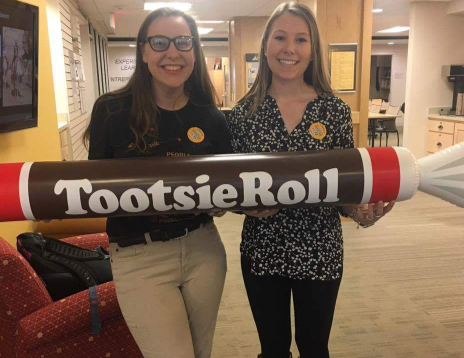
Remember back in June when Leah and I started working on our Independent Study Theses for The College of Wooster? Well, we finished! If you can remember that far back, I was examining the effect of removing buckthorn on the edge of a bog. I found that soil pH and canopy cover change after just a month of buckthorn removal – more similar to that of the bog interior! Leah found that bees exhibit decreasing floral fidelity towards Echinacea over time! So interesting!!!
We love and miss the beautiful Minnesota and our amazing pals in Team Echinacea so much! Thanks for everything, guys. We couldn’t have done it without you.
Love,
Alyson & Leah
 Me and Leah holding our Tootsie Roll, a Wooster tradition in honor of finishing our thesis!
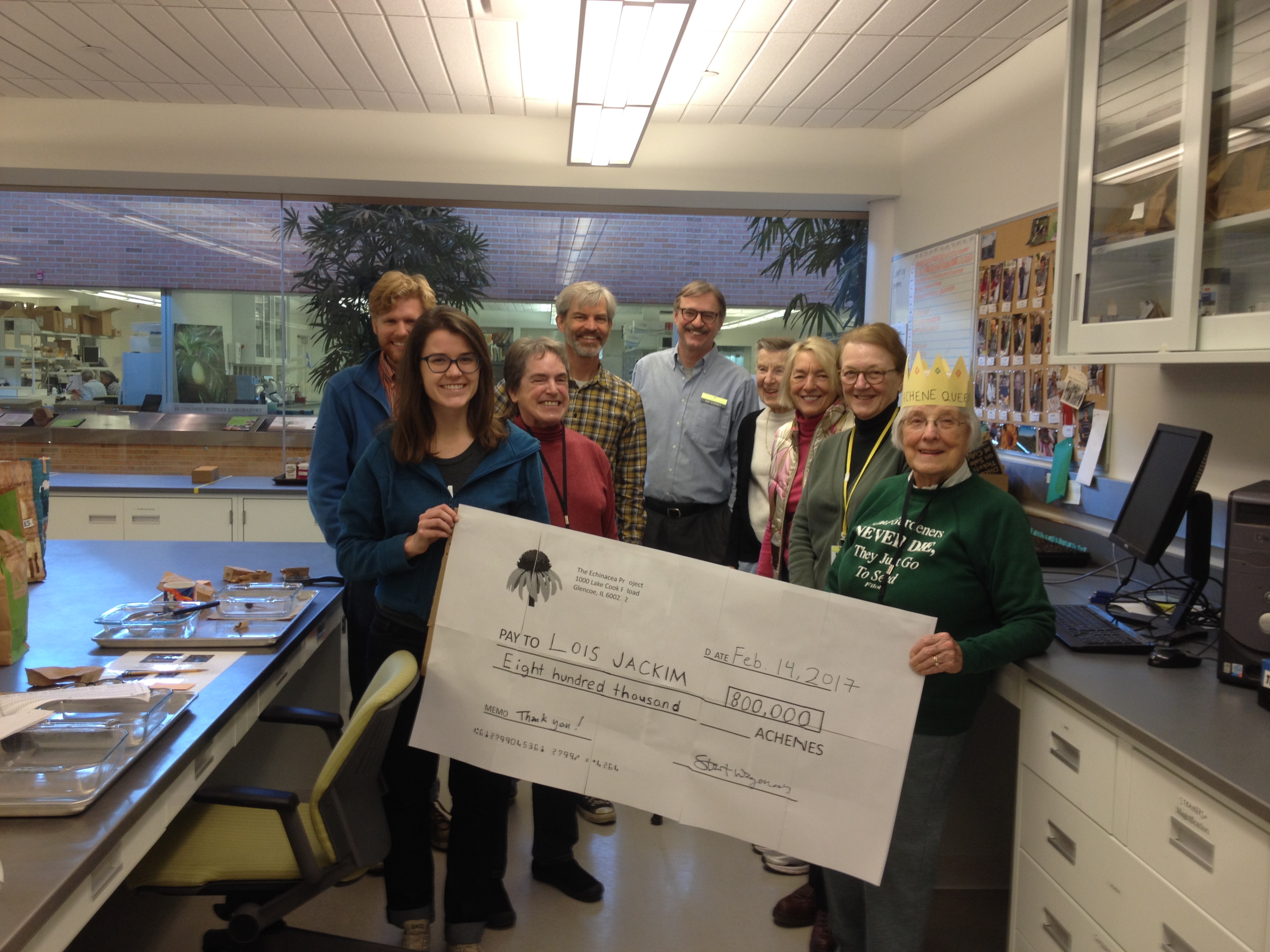
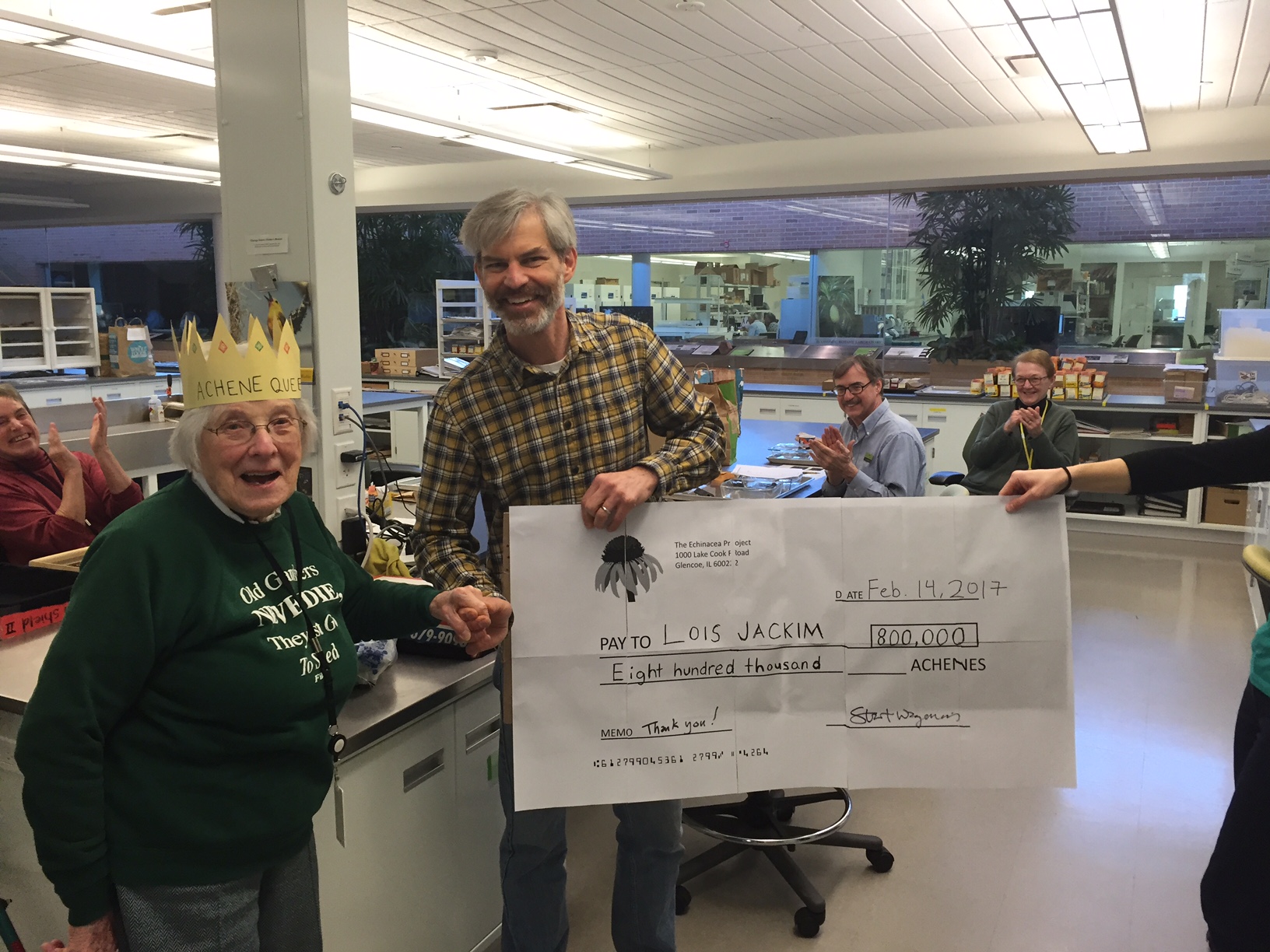
Lois Jackim, citizen scientist working on Team Echinacea since 2009, counted her 800,000th Echinacea achene this morning around 9:30 AM. Scientists from the Chicago Botanic Garden and Northwestern University were present as Lois was presented with a giant check thanking her for her dedication to plant science and conservation. Lois wore her “Achene Queen” crown, which she earned in 2015 after surpassing the half-million mark. Lois was not aware she was so close to the 800,000 milestone.
Counting fruits, also known as achenes in Echinacea, is a critical activity for scientists measuring reproductive fitness of plants. The Echinacea Project conducts experiments to assess environmental and genetic factors that influence plant fitness. Echinacea Project research contributes to basic ecological and evolutionary science in addition to informing conservation of perennial plants and prairies.
Other citizen scientists present this morning were cleaning and preparing seedheads and making digital images for counting. Each year the Echinacea project harvests heads from experimental plots and volunteer citizen scientists at the Chicago Botanic Garden count all achenes from each head. Citizen scientists also x-ray samples of achenes from each head to count how many of the achenes were pollinated.
 Team Echinacea celebrates Lois counting 800,000 achenes Stuart presents Lois with a giant check to thank her for counting over 800,000 achenes.
Hi Flog! It’s me, Amy!
This winter we’ve been working on ‘demap’, a project to coordinate 20+ years of demography and spatial data from remnant populations of Echinacea in Solem Township. When we are done we will have a great long-term dataset of over 3000 individuals in 27 remnant populations. We can use that information to answer all kinds of questions about flowering dynamics in natural populations, population growth, and the consequences of disturbances such as habitat fragmentation and fire! In particular, this January we focused our efforts on answering questions about the demographic consequences of fire. Does fire’s stimulation of flowering contribute to increased population growth over the long term? Do reproductive benefits of fire outweigh potential survival costs? We’re not sure, but we hope to find out by analyzing four populations– a large population that had one fire event, a large population that has not been burned in the past 20 years, a small population that burned once, and a small population that has not burned in the past 20 years. We’ll combine our demography data about flowering and survival with other information, such as the seedling recruitment and remnant seed set data, to project population growth.
Will was here to help out with the project in the first two weeks of January. We got a lot done with demap and made meaningful progress on other big questions such as “Is kale overrated?” and “What does overrated mean statistically?”. We also made big strides in terms of professional development by studying business mogul DJ Khaled’s keys to success. Stay tuned for updates!
Sincerely,
Amy
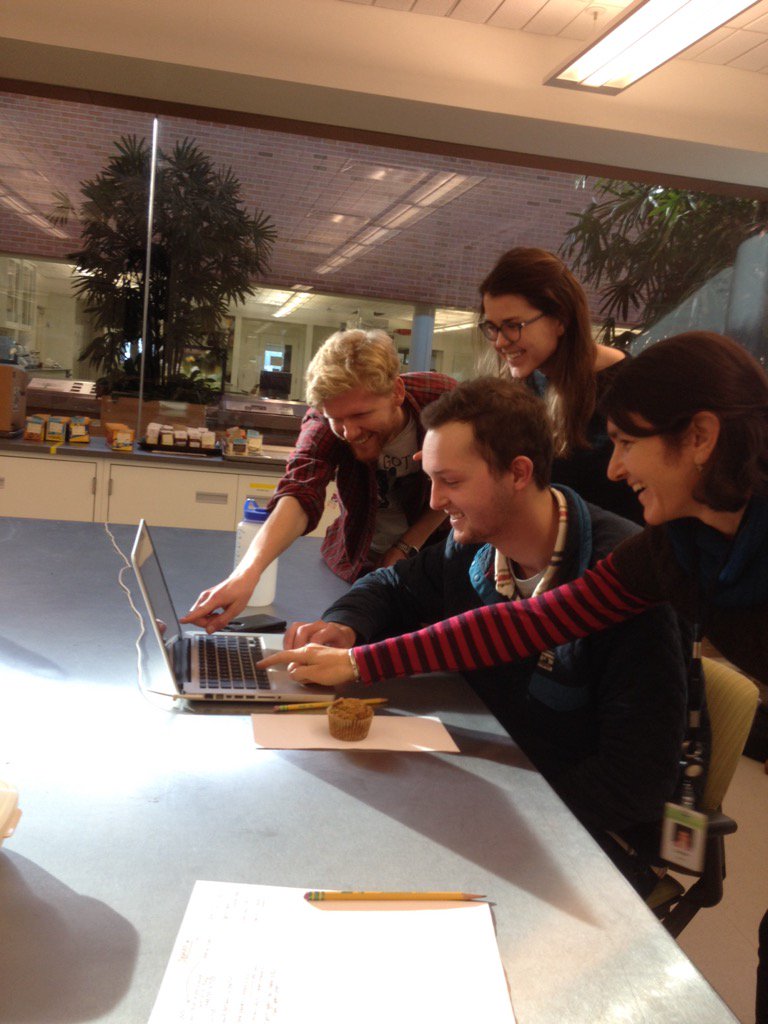
 Demap is a team effort! In this shot, we are helping Will find a plant on the computer.
Hey Flog readers, Sam here.
After a quarter of hard work, all of the achenes from my thirty-two flowerheads have been counted, x-rayed, and classified! I am looking forward to analyzing the data next quarter in R through a class Stuart teaches at Northwestern. It’s been quite a journey learning about both the nitty-gritty of going from flower head to data sheet and the conservation biology through which we contextualize our data. Special thanks to Stuart for giving me the opportunity to intern for the Echinacea project, to Amy and Scott for being wonderful, helpful mentors, and to everyone else in the lab for your amazing company and support. If anyone reading this would like to know more about what it is like to intern for the Echinacea Project, feel free to e-mail me at Samuelhamilton2017@u.northwestern.edu.
Best,
Sam
|
|