|
|
Long story. This morning, I managed to put on a Facebook like button, a search box, and a link to the Echinacea website under the Links heading; but later discovered that the Categories links and RSS feed links were not working properly (led to xml files rather than html files), but the Archives and Monthly Archives were fine. Not sure whether this was due to the addition of the Facebook like button or the search box or accidental changes to the rest of the script or due to older changes. Josh backed up the templates and then returned the templates to default settings, but the categories still weren’t working. I also discovered that the formatting for the Monthly Archive pages were lost, and couldn’t figure out how to restore the backup templates. To at least salvage the main page of the flog, I decided to switch to a new style (hence the change in the appearance of the flog), re-added the Facebook like button and search box and clustermap. But rest assured that the content of the flog has not been changed, just that the formatting/appearance may not look so nice right now.
So sorry for the mess-up T_T At this point, I’m not sure what else I can do. Josh suggested posting on the support forum, so I just did that. Hopefully I will be able to get some help from the forum. If anyone reading this has any idea, please do not hesitate to comment. Any help is greatly appreciated!
-Maria
p/s Are people okay with the current layout? Or is the original layout better? Thanks
I made some updates to my project proposal. You can read them here:
link
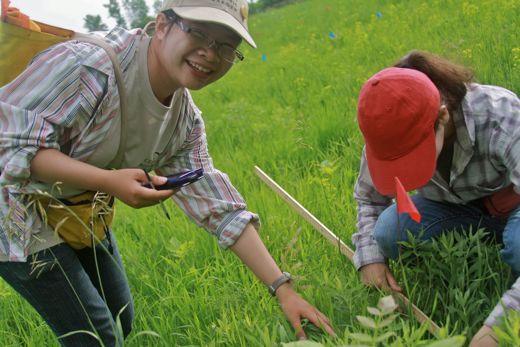
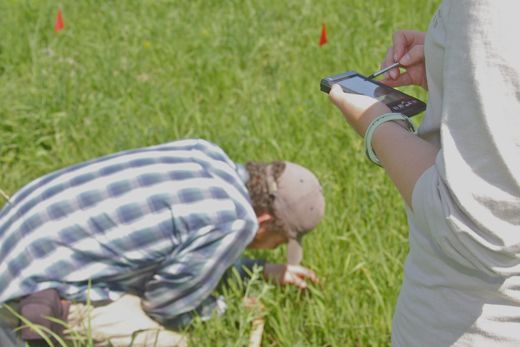
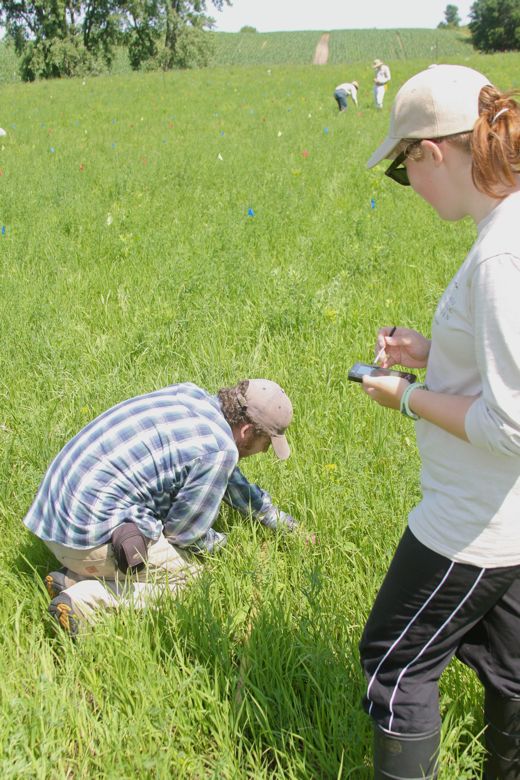
Today we surveyed a patch of the common garden for aphid infestation. I chose my survey area based on observations I made Wednesday morning, during my initial search for aphids. I wanted my square to include at least one heavily-infested plant with ant domatia (dirt structures that ants build to cultivate aphids). Otherwise my choice of positions and rows was random.
Here is a description of today’s survey. This weekend I will go over the data and make a map of aphid infestation. Because it’s still early in the season for aphids, I hope to repeat this survey one or more times this summer to look for spatial and temporal patterns of infestation. Thank you to the Echinacea team members for your diligent data gathering.
Aphid survey protocol 1June2001.doc
I’m happy to say the survey went smoothly. Everyone seemed to have an easy time recognizing aphid life stages and ant domatia. My only goof-up was accidentally assigning the same row to two people, leaving us one row short, but thankfully we caught it in time to finish up before a thunderstorm hit. Next time I will be more careful about my row assignments.
I would like to repeat this survey several times throughout the summer–maybe once every two weeks. Here are some thoughts I have based on my observations in the common garden:
1. We have observed that plants with heavy infestations early in the season tend to have wrinkly, stunted leaves–possibly due to aphid overwintering. I suspect that these plants may serve as aphid source populations that spread to surrounding host plants. It will be interesting to see whether aphid infestation is more prevalent among plants nearby heavy aphid infestations (i.e. plants with all three aphid life stages, wrinkly leaves, and ant domatia).
2. I noticed that on plants with small infestations, ants seemed to be carrying away gravid females. Perhaps ants play a role in mitigating population-wide aphid infestation by concentrating aphids on a few heavily-infested plants. This survey won’t tell me much about the role of ants, but I am curious to see whether some plants lose their aphids throughout the season.
Thanks again everyone for helping me gather my first data set!
Attached is the “weather-tested” search protocol. While my partner found more than a dozen out of 75 or so, I found two out of 100. Maybe I am not the right person to write a protocol about finding these plants.?!
It is very neat to think about these things being seedlings a year or two ago and now they are 20+ cm tall? plants that will produce seed…….sometime.
Hesperostipa spartea Search Protocol.docx
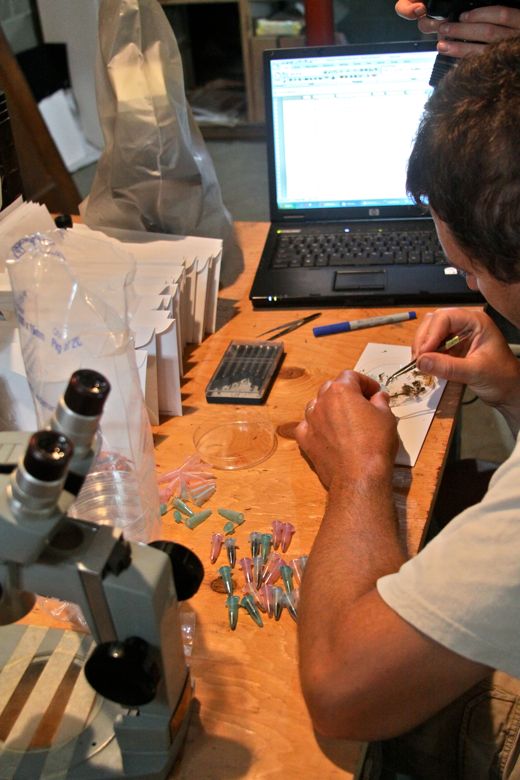
This is the 3rd summer in a row that I have taken part of the Echinacea project! I teach 9-12 sciences (10th grade Biology)at Great Plains Lutheran High in Watertown, SD. Conducting summer research is the best way to incorporate real science into my classroom! While I was a pollen collector and image maker the first summer and a pollen crosser last summer; this summer I am going to collect insects that may or may not be moving pollen. Following the floral neighborhood study of 2009, I will collect and categorize insects from different sites to make an inventory of insect life. I hope it will shed some light on exactly which insects can be found and relate it to the diversity of the plants at sites. It will also be a useful collection for my students in the future.
Here’s a link to a useful, online statistics textbook.
http://www.statsoft.com/textbook/
Today Josh, Gretel, Nicholas, and I found lots of E. purpurea (eastern purple coneflower), plenty for me to study as part of my independent project! We did not find much E. pallida (pale purple coneflower) though, so I unfortunately won’t get to study that species this summer.
Here’s an updated version of my project proposal for studying the breeding systems of E. purpurea, H. helianthoides, and C. palmata:
ProjectProposal.doc
Here is a more detailed project proposal. This one focuses on what I want to accomplish this summer:
https://docs.google.com/document/d/1PqYExtOCkmHzcLkLP3bS04_4X9OlVSZ5pjSZEiV-xp4/edit?hl=en_US&authkey=COLOz7cO
Please let me know if the link doesn’t work.
We have all been busy updating our project proposals. At the end of this post my updated proposal is attached.
Soon we will go out and try again to assess if their is enough Echinacea pallida for me to do crosses between it and Echinacea angustifolia. Until then, my proposal still includes both a Plan A and Plan B.
Echinacea Project Proposal 26 Jun2011.docx
This week was much less strenuous than the last, thanks to a bout of rainy weather. Monday we took advantage of a dry day to conduct seedling searches and re-flag the common garden. Tuesday and Wednesday were too soggy for field work, so we stayed inside to work on independent projects and the new media initiative. Things finally dried up by Thursday afternoon, much to the relief of the antsier among us. That afternoon we learned how to conduct seedling recruitment surveys. These surveys are part of a long-term study to assess how Echinacea populations establish and persist in restorations (see Wagenius et al. 2011). Friday we conducted seedling searches at several sites (Landfill, NW of Townhall, and Staffanson Prairie Reserve) and planted seedlings at Staffanson.
That about brings us up to date, workwise. On Saturday we took a trip to Alexandria and enjoyed the wonders of the Runestone Museum. Callin took some delightful photos that he will share here shortly.
|
|