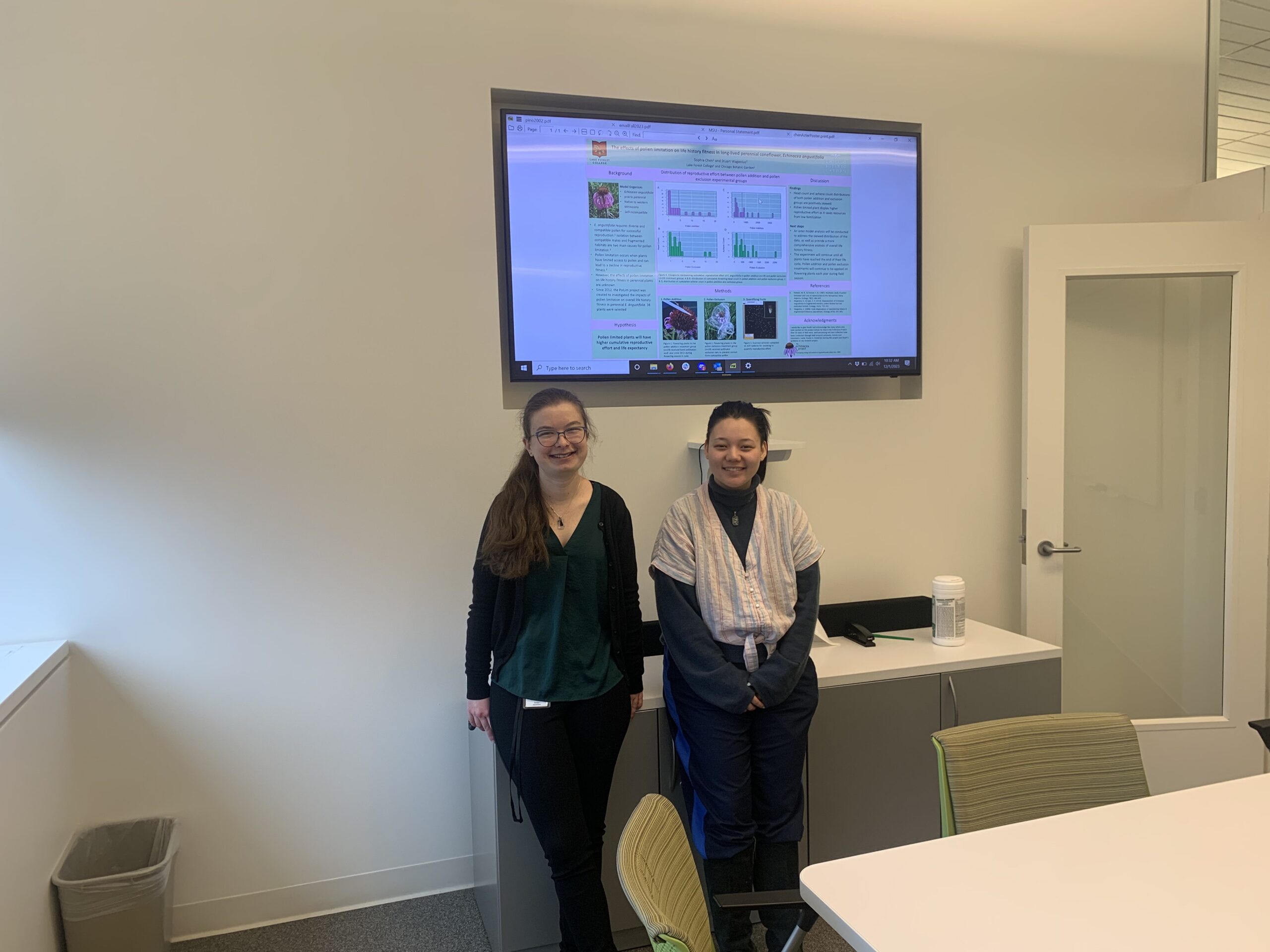
For many, the end of the year brings thoughts of final exams, final reports, and final projects. Here at the Echinacea Project, we don’t believe in final anything, but we do believe in updates! Last week, two of our Lake Forest College interns, Sophia and Olivia, shared project updates with the lab: a culmination of their semester in the lab.
Olivia shared results from her study on plant and reproductive health indicators (more here)
Olivia and Sophia present research updates at lab meeting!
Sophia shared a poster with the lab and also with attendees of a Lake Forest College research symposium! Sophia’s research focuses on the effects of pollen limitation on life history fitness in Echinacea. (More info to come!)
Sophia Presents a poster at Lake Forest College’s Glassman Symposium.
I’ve had an amazing semester here in the Echinacea Lab, and today I presented my final update on my internship project. I was able to receive feedback on how to improve both my project and presentation skills. One of the suggestions I received was to add more background to my presentation, so here is some supplemental information to go along with the PowerPoint (attached below). I was working with the P01-nat batch for two consecutive years, 2021 and 2022. I was looking at the plant health indicators of number of basal leaves and length of the longest basal leaf from 2021 because plants receive energy through photosynthesis. My though process was that leaves that are longer and more abundant would lead to a greater ability of an individual plant to photosynthesize and therefore invest more energy in reproduction. I was looking at the reproductive effort and success in the following year, 2022, since Echinacea angustifolia are long-lived perennials. The individual plants that I was working with were originally planted in 1996, so they were pretty well established in the study sites in Minnesota.
I also received feedback on my experimental design, including changing my experimental design a little bit. My current study is phrased as causally linked factors but is more in line with exploring an association between basal leaves and reproductive effort and success rather than a causation. In order to explore more of a causal relationship, one of the suggested studies was to clip leaves so that there was a randomized manipulation on the plants instead of an observational study. Limiting the basal leaves of random plants could allow for a stronger causal relationship to be established between the two factors. A second suggestion to strengthen my current study was to include data from multiple years, since Echinacea angustifolia are long lived and potentially have certain years where reproductive effort spikes over their life cycle and doesn’t spike again, as is one of the potential implications in Sophia’s pollen limitation study.
My hypotheses were not supported by my data, but they still have implications for the further potential future study I mentioned above. The data I collected did not support my hypothesis because the p-values were too high, meaning the data was not statistically significant. I received a suggestion that I should investigate one plant seen in the total achene count graphs (slide 6 of my presentation) that had no basal leaves but produced 200 achenes in the following year. It is possible that this individual only had cauline leaves in 2021, in which case it wouldn’t be relevant to a correlation between basal leaves and reproductive output. Two directions for additional studies that I suggested were the relationship between plant height and reproductive output and overall reproductive fitness as it relates to the number of heads on a plant. The latter question is one that I was going to explore, but I chose to combine the data for my study so that each data point represented the plant as a whole.
I am really grateful to have had the opportunity to be a part of the Echinacea lab this fall. I learned a lot about working in a lab and data analysis using R. I want to give special thanks to Wyatt, Stuart, and Sophia for helping me with R and my project overall, and to all the volunteers and student workers who helped me count, classify, and randomize the 2022 P01-nat data.
Members of team Echinacea went back to Minnesota to do some final field work and winterization of our field station. We had fantastic weather for field work but northerly winds brought chilly temps by the end of the week and reminded us that winter is near . Here are some updates from all we got done these past few days!
Seed Add
We added seeds to 84 experimental transects at 36 sites for our seed addition experiment, which measures the effects of prescribed fire on seedling germination and emergence in Echinacea. We made quick work and were able to get this done in just 1 day plus an extra morning!
Here is Wyatt sprinkling E. angustifolia achenes along our seed addition transects.
Prescribed Burning and Broadcasting Seed
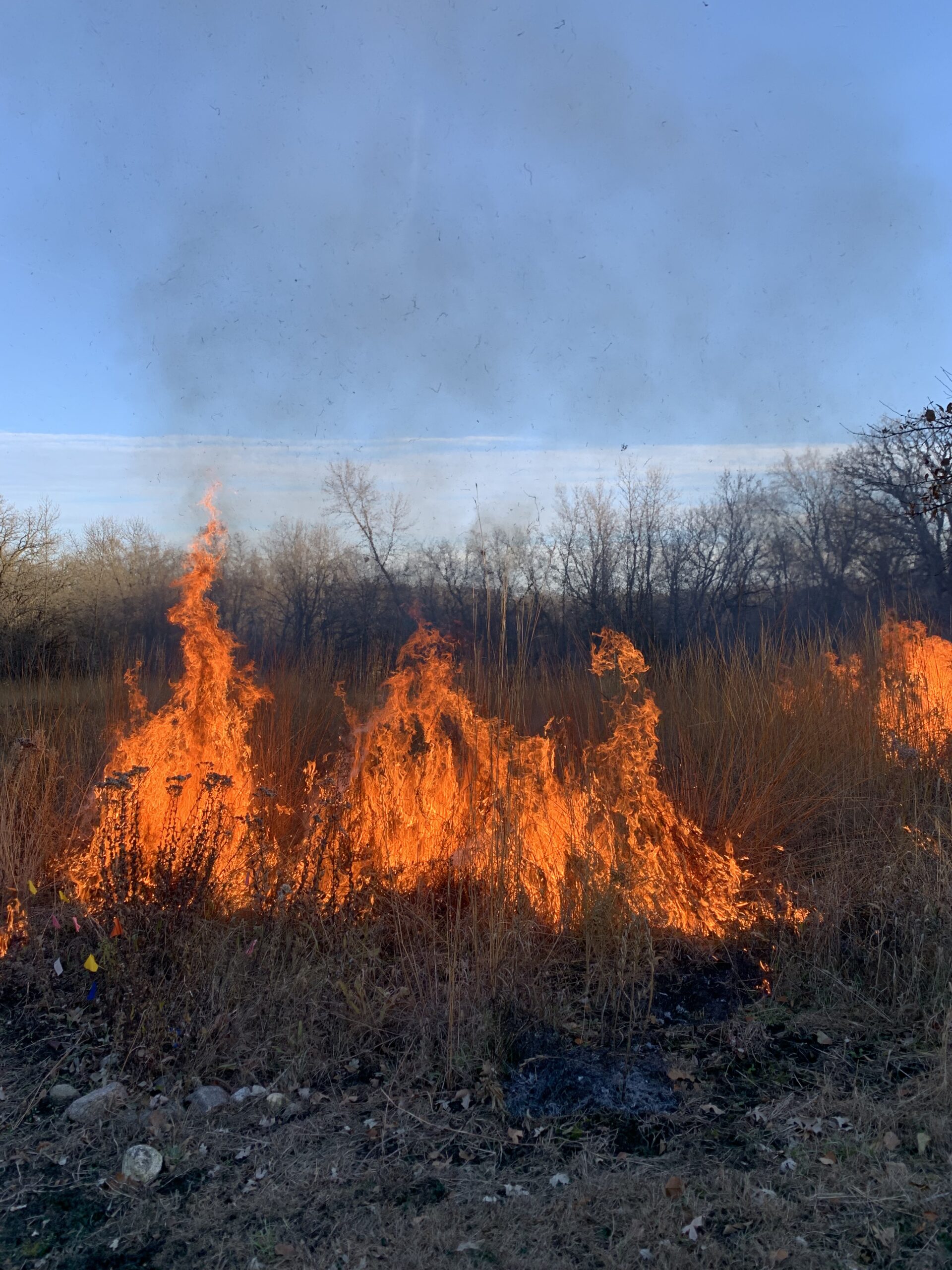
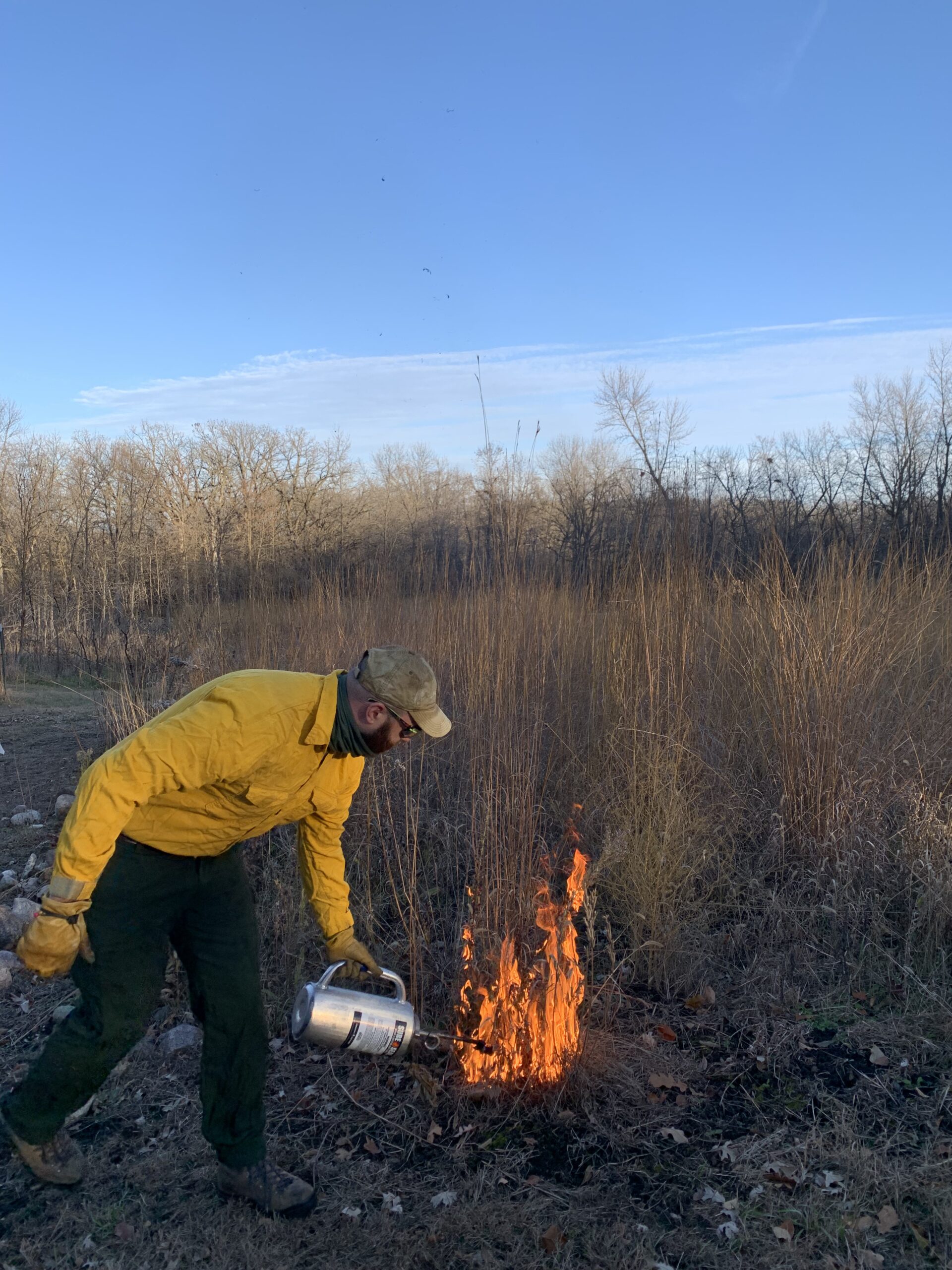
We got two solid days of good burn weather– more than any of us predicted! Over this window we burned six units, including the production plot, a few oak litter areas, Jean’s prairie garden, and the southeast hill. After all this burning, we broadcasted native seed collected by the team this summer. We’re excited to see what happens in these units next year!
Jean’s prairie garden burned in ~5 minutes
Jared gets our 1st burn started
Wyatt broadcasts seed into this freshly burned unit
Return Achenes to Remnants
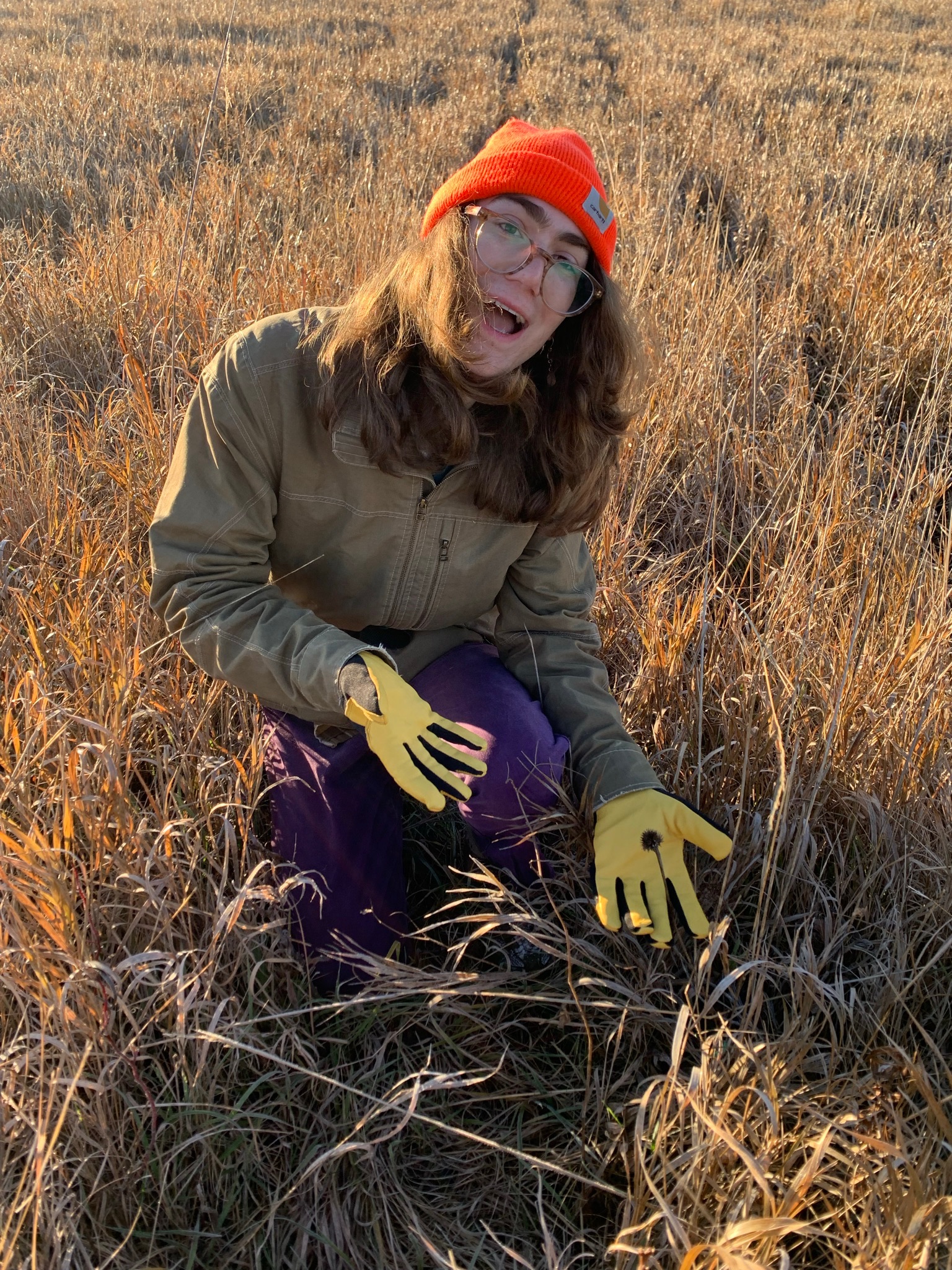
Every summer we harvest a subset of Echinacea heads from remnant sites to assess fitness. In order to ensure that we are not disrupting these populations, we later return the achenes to their maternal plants in a way that mimics natural dispersal. On this trip, we visited many small sites, where this process is essential as well as a few bigger ones.
Woody Encroachment Pilot
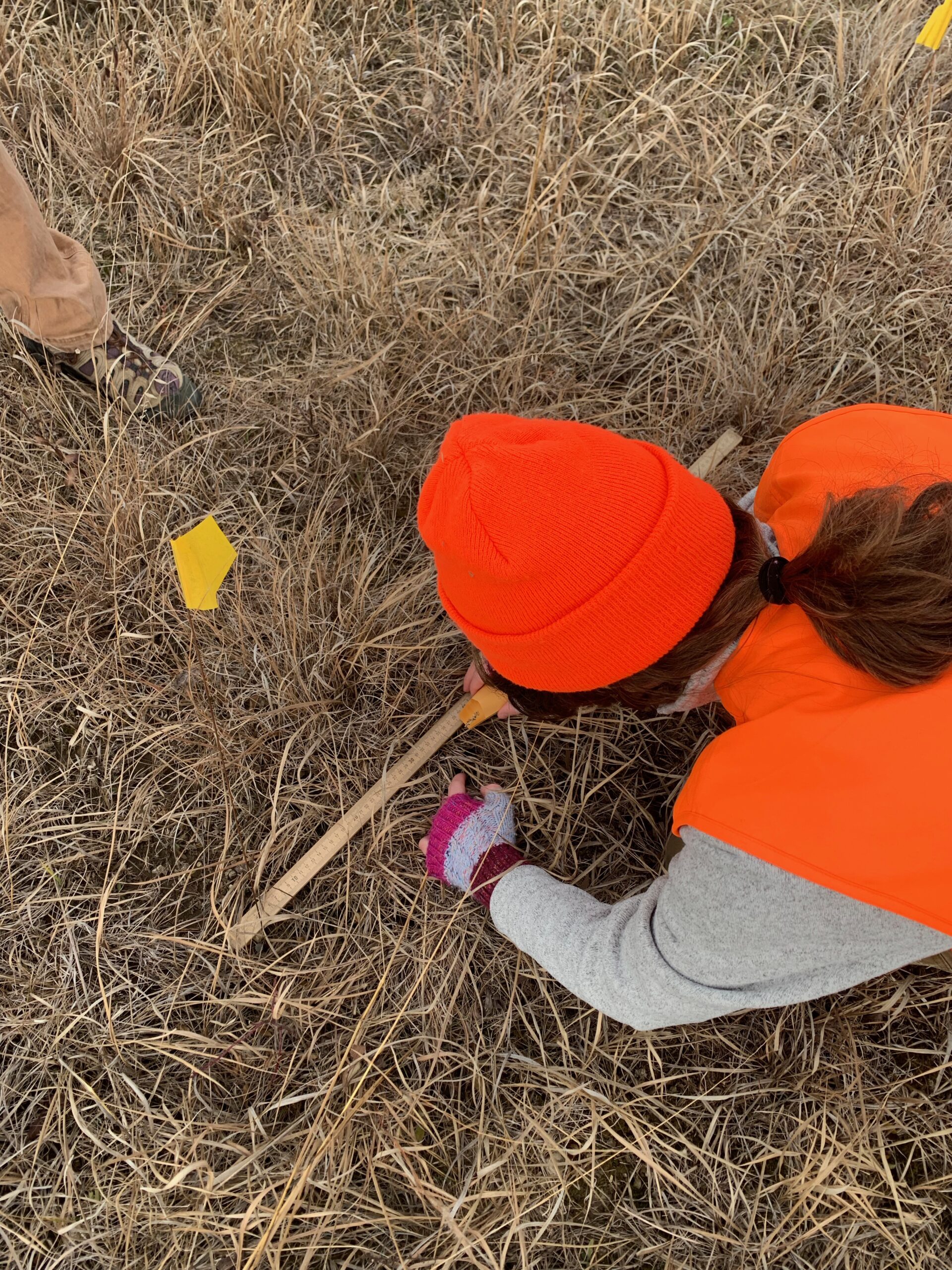
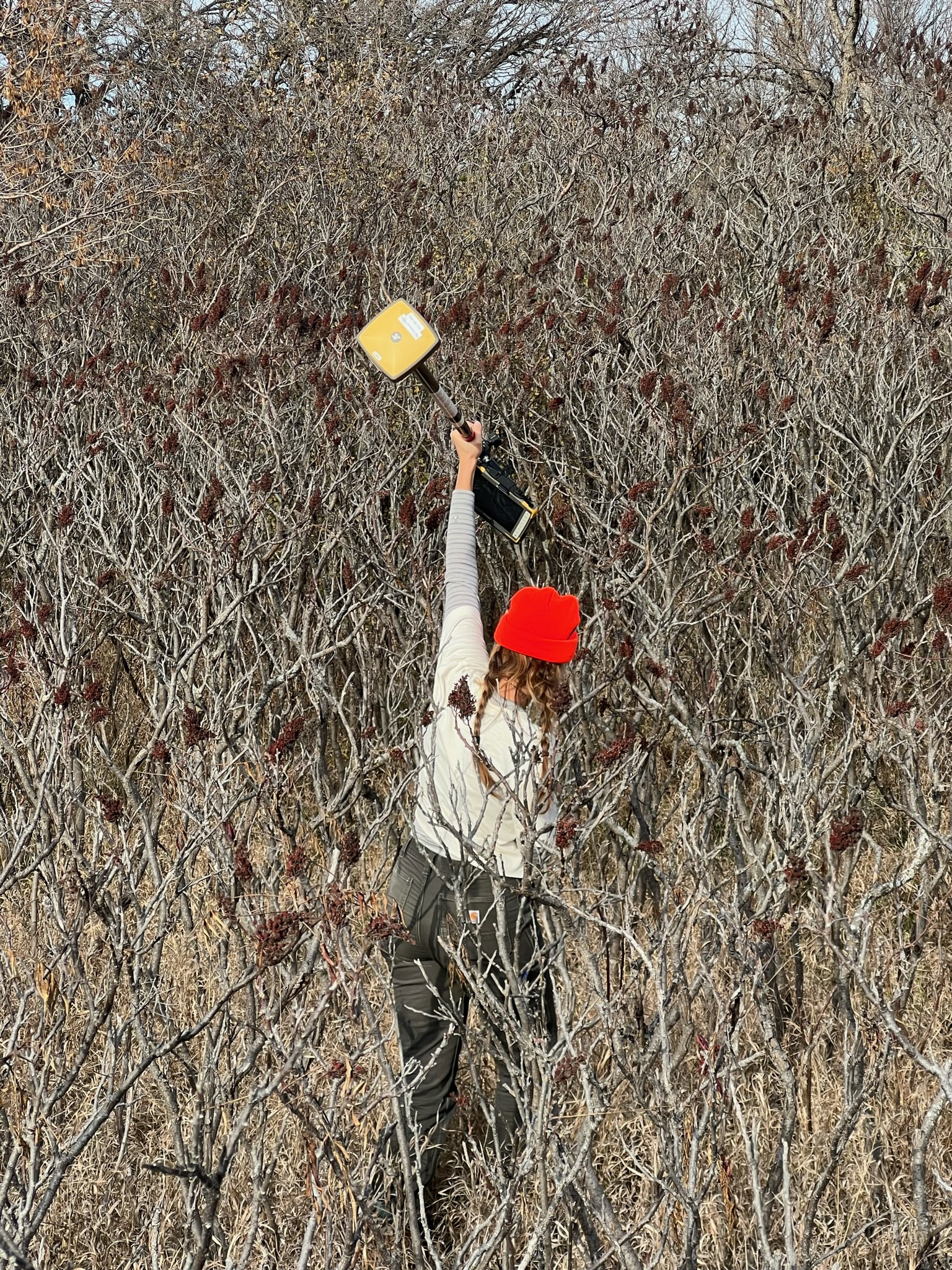
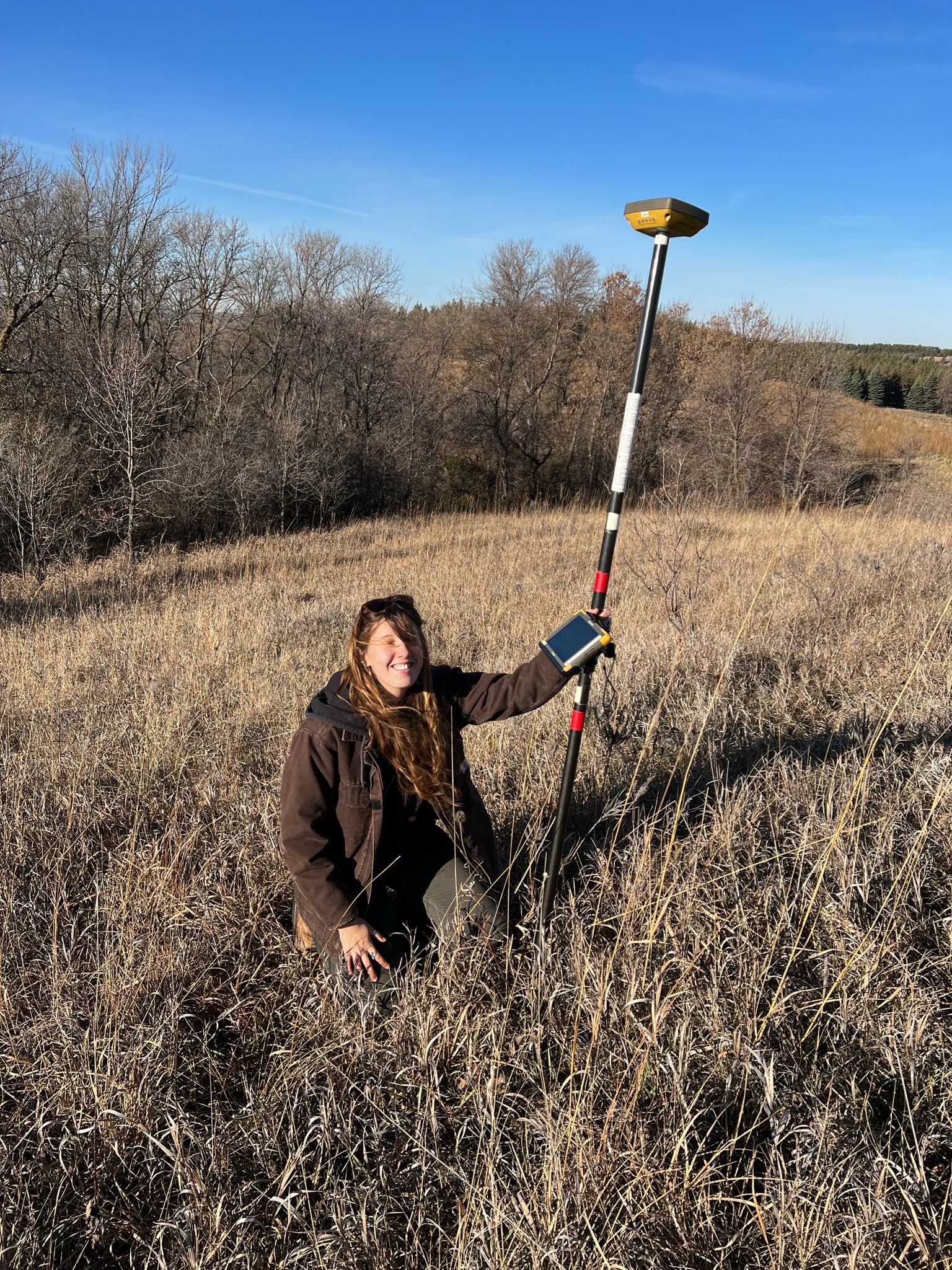
I tested out methods for my research project looking at the effects of Sumac encroachment on Echinacea fitness and mortality. I collected height and spatial location information on Sumac plants in order to quantify encroachment. In an encroached site like Tower, this process was no walk in the park…
Here I am staking to one of my random points
Post- Summer Sleuthing
When mistakes during summer data collection happen, it takes some investigating to figure out where we went wrong. On this trip, we revisited plants with issues from demographic data collection AND we found a P02 plant that was never harvested during the summer!
This week I worked on randomizing and counting. Thanks to the help of the student workers and volunteers, there is only about a quarter of the P01-nat batch left to randomize. I am hopeful that I will be able to complete the randomizing by the end of next Tuesday.
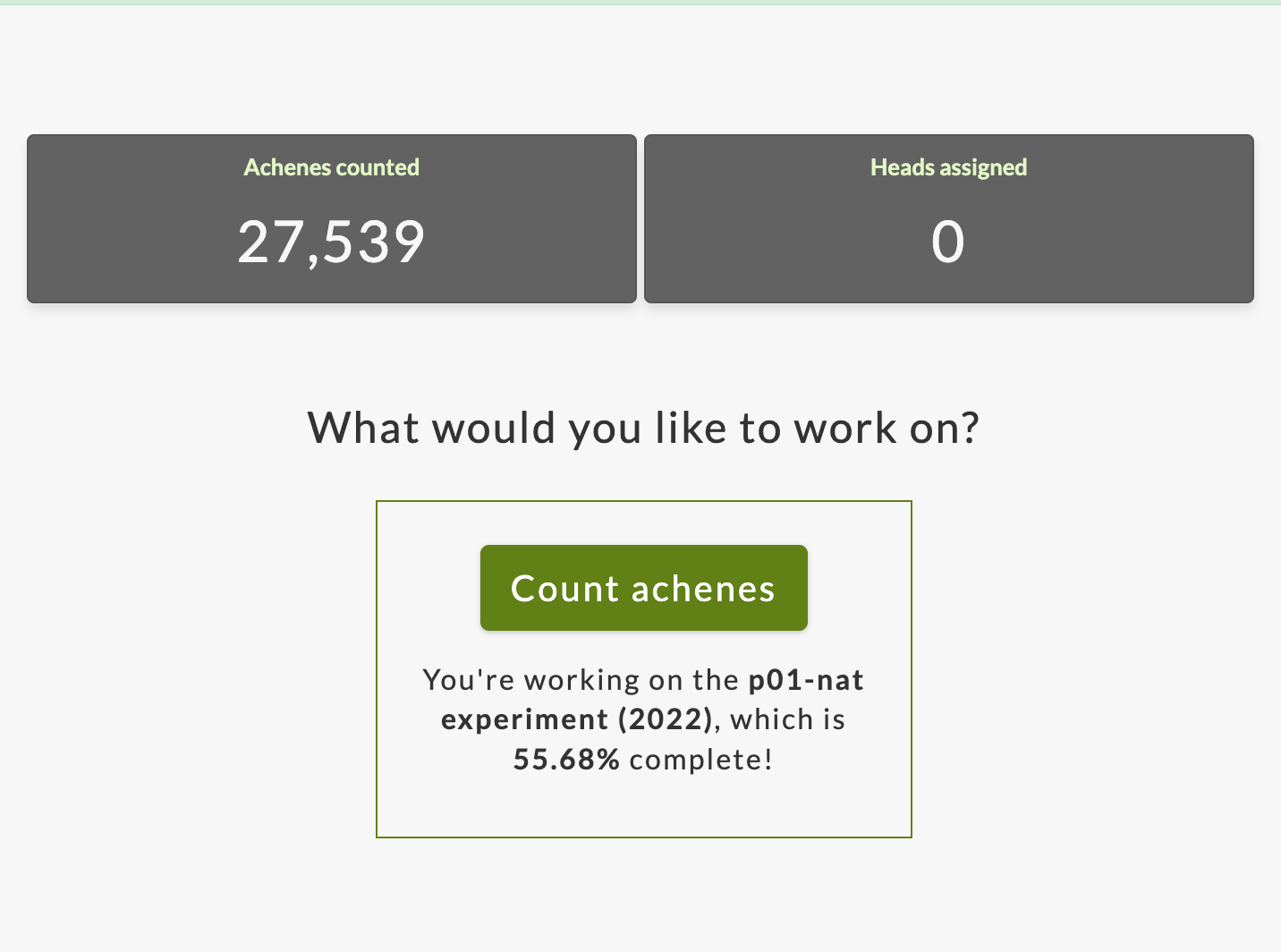
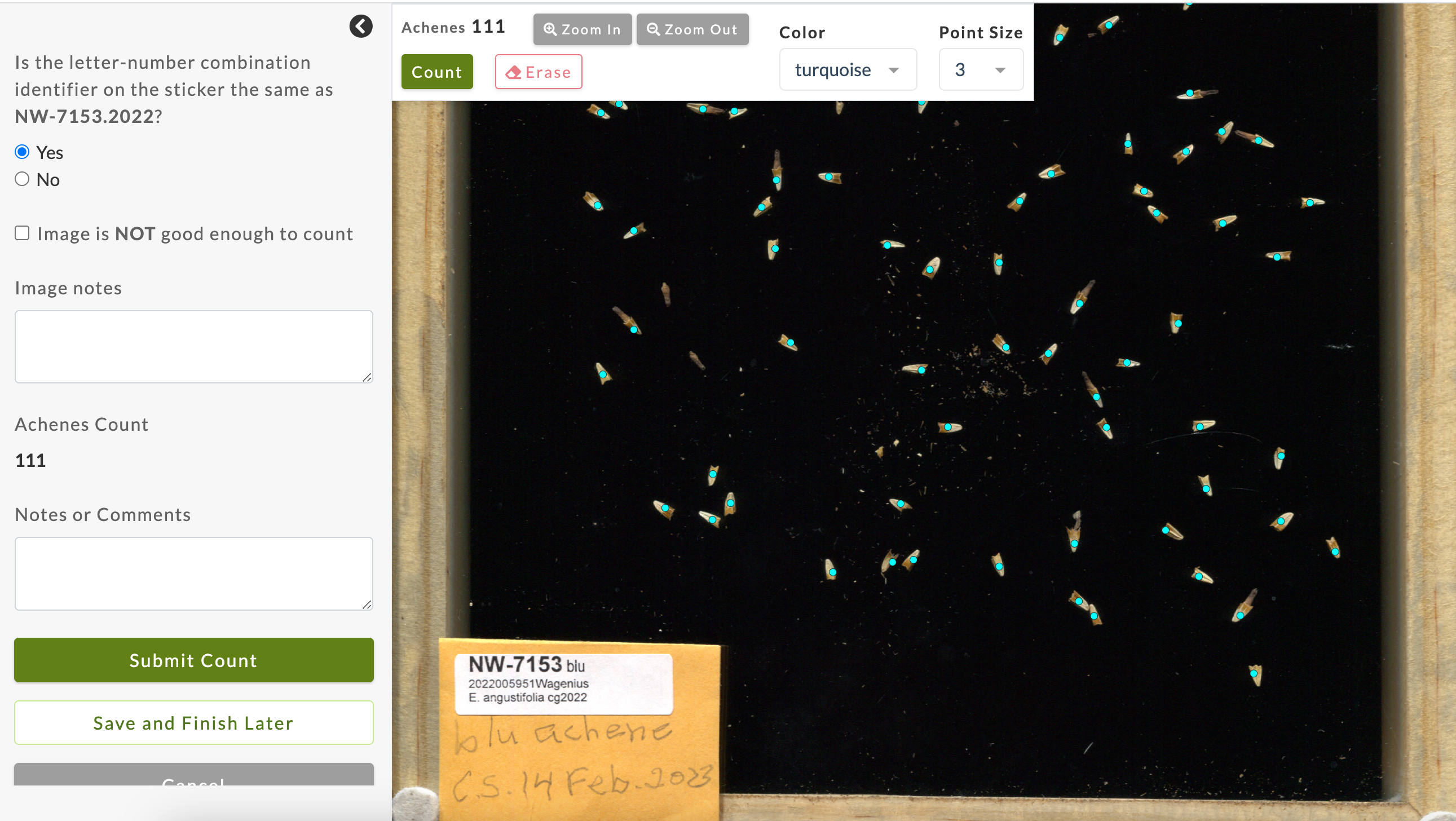
Today I spent my day counting achenes from the scans that I completed earlier this month. The counting process takes place on the ACE website. Each individual scan requires three different people to count it, and then the average of those three counts is taken as the most accurate one. I am completing one of the three counts for the entire batch. The ACE website is very user friendly and straight forward. The images are counted in a random order to keep the process as accurate as possible. To begin counting, I click the “count achenes” button on the dashboard (Right of Image 1). The first thing I do for every new scan is to confirm that the file name matches the envelope displayed in the scan (Image 2). After I confirm the file name and letno, I click on each achene and a blue dot is overlayed on the image (On the right of Image 2). The software keeps track of how many achenes I have counted in the image. Once I have double checked that I have accounted for every achene, I click “submit count”. The website goes back to the dashboard, and I begin the process over again. As of the end of the day today, I am 55.68% done with counting P01-nat (On the bottom of Image 1). Many thanks to the volunteers for helping me reach this point!
Image 1. ACE dashboard Image 2. A scan after all achenes have been counted.
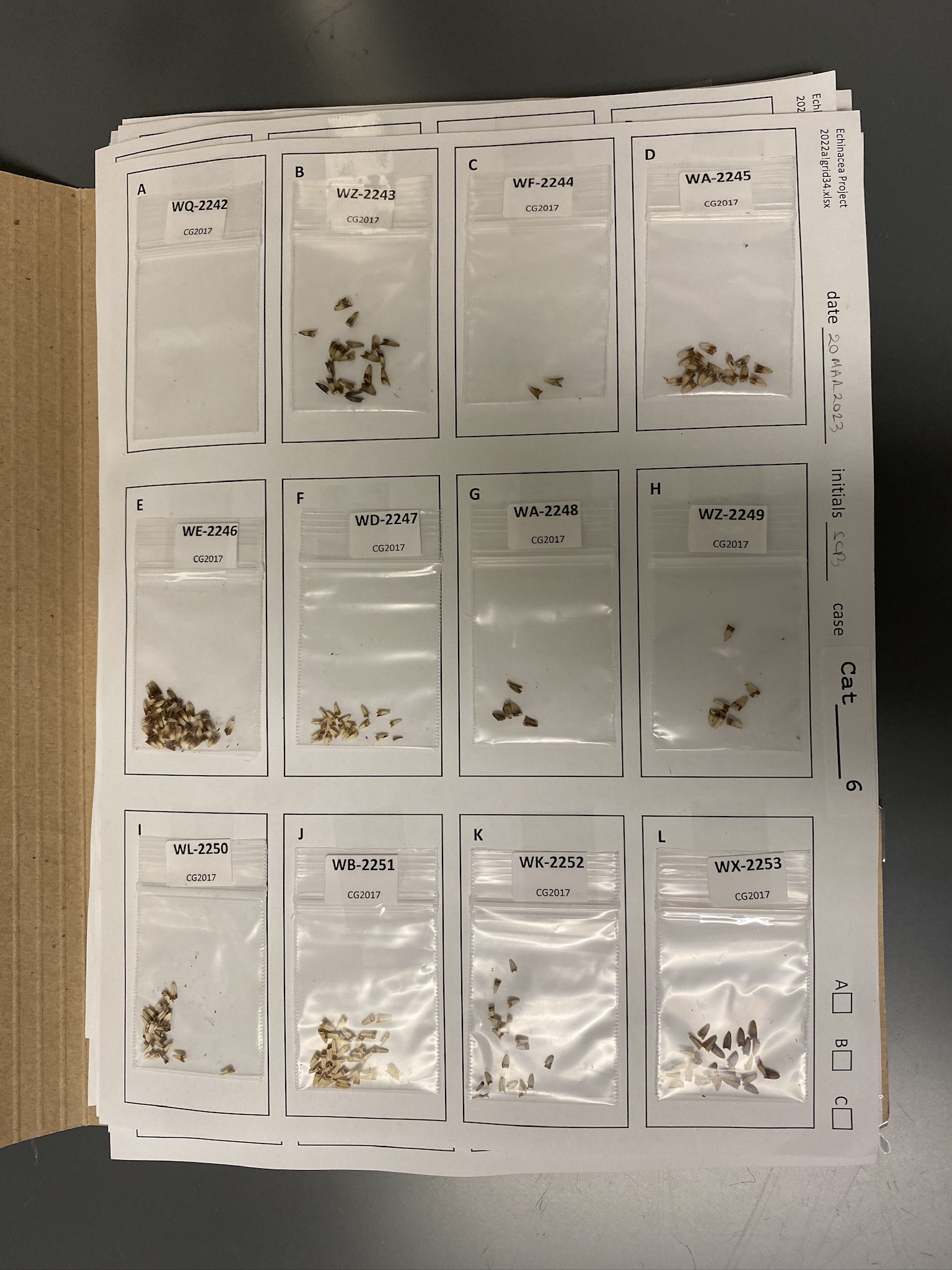
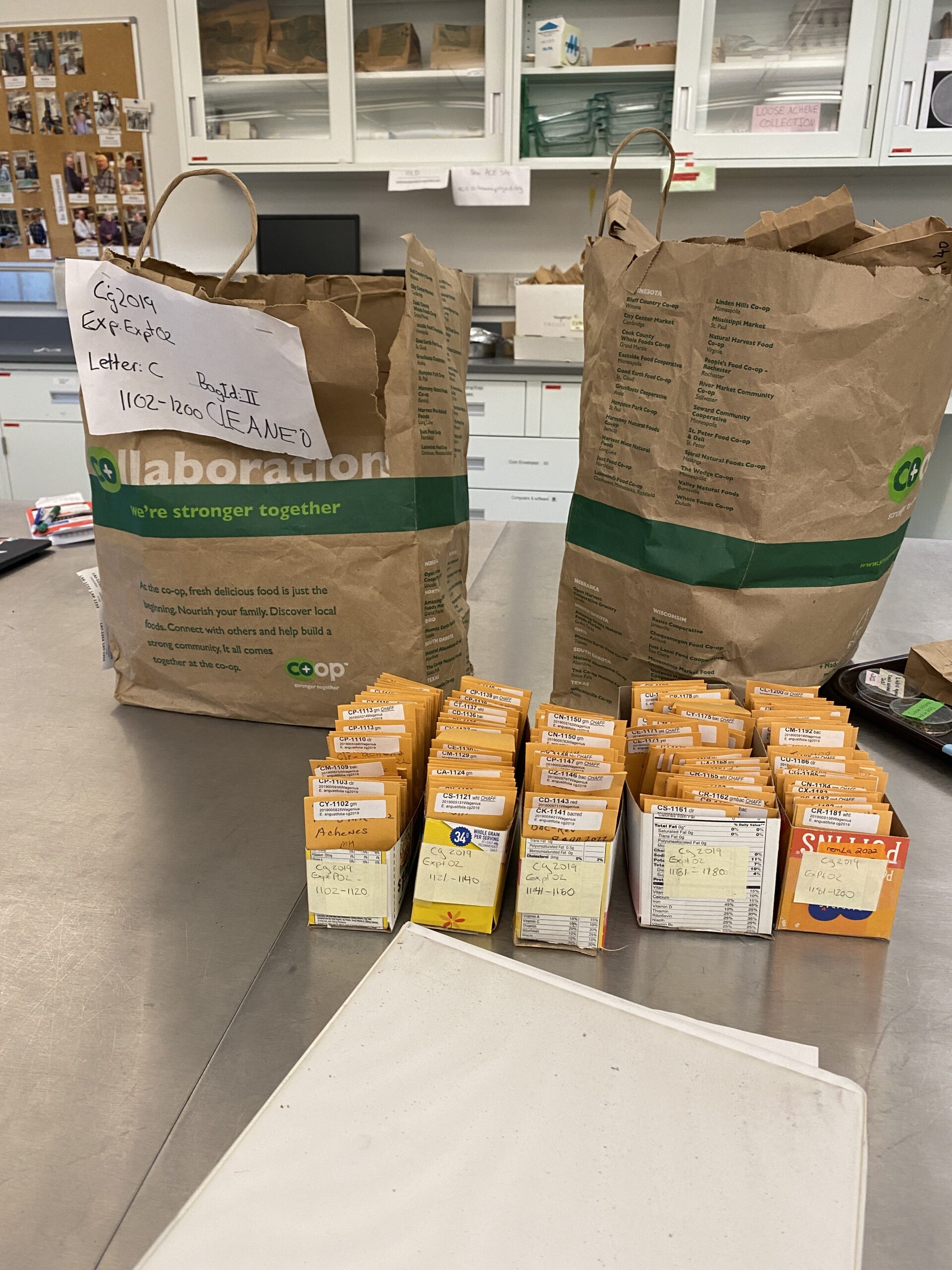
This week I worked on scanning, randomizing and counting for P01-nat. The batch is now entirely scanned, and the images are up on the ACE website for counting! The other volunteers and I have completed 26.2% of counting as of the end of the day today. We are half done with the randomizing for the batch, and I am hoping to have that step of the process completed by the end of next week. Today I was also trained in how to prepare sheets for x-ray (end result of that process pictured below in Image 1), and I should be completing that process with P01-nat within the next couple of weeks! I have also included a picture of the end result of the rechecking process, which I detailed in my post last week (Image 2).
Image 1. Informative achenes ready for scanning.Image 2. Labeled envelopes and bags after rechecking is completed.
For my research project, the Echinacea heads in batch P01-nat have to go through the processes of cleaning, rechecking, scanning, counting, randomizing, x-raying and finally classifying before I can analyze the data. In my last blog post I detailed the methods of randomizing, and in this one I will be describing the processes of cleaning, rechecking, and scanning, the latter two steps which I have been working on in the past couple of weeks for P01-nat.
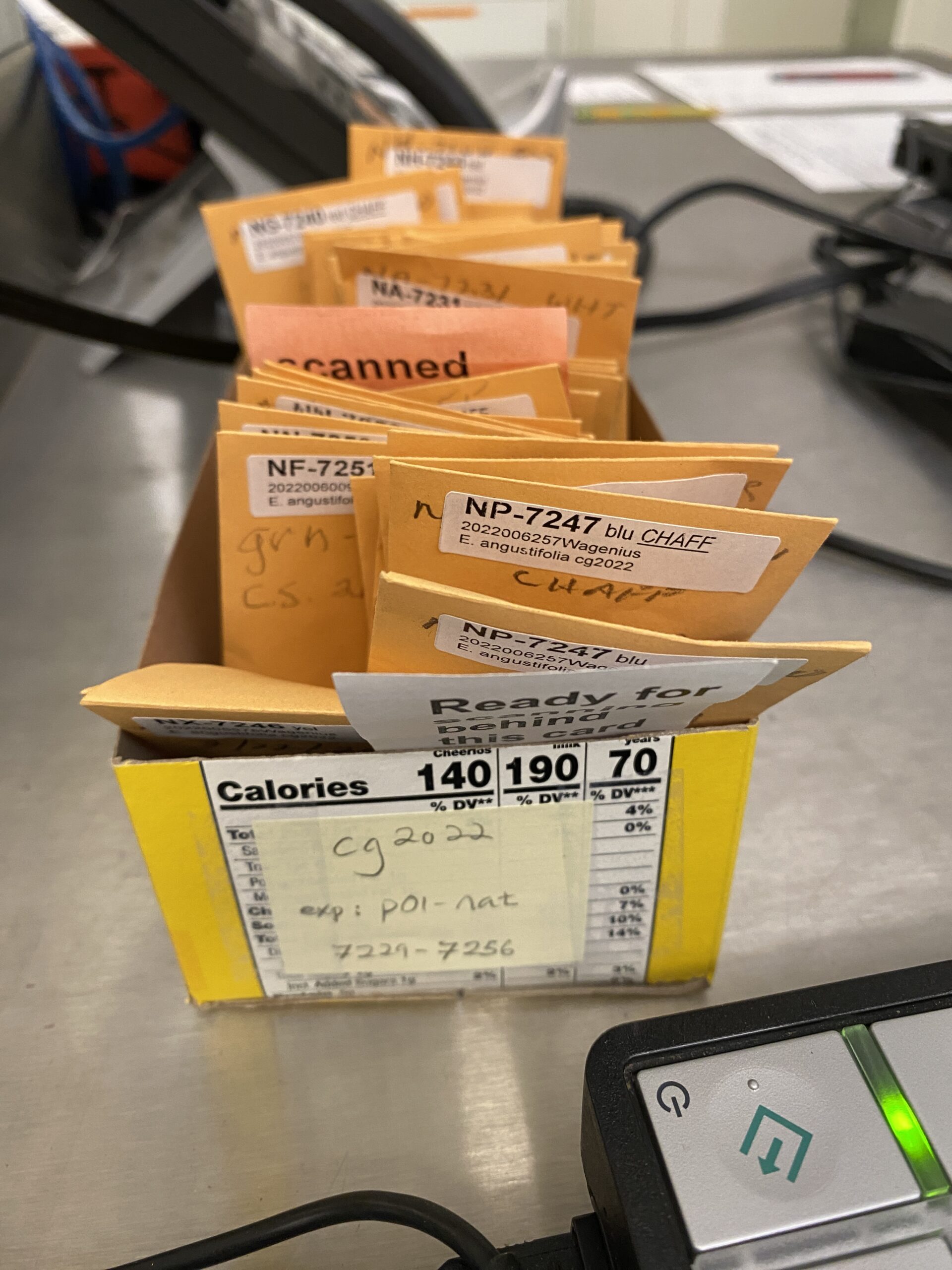
Cleaning and rechecking are very similar processes. During the cleaning process, I gently crush the Echinacea head against a Pyrex dish to separate the achenes from the head, and I use forceps to carefully remove the achenes that don’t fall out on their own. Once all of the achenes are removed from the receptacle, I put the chaff in one envelope and achenes in another and label each envelope with my initials, the date, the twist tie color, and the contents of the envelope. I put the twist tie, empty receptacle, and the two coin envelopes in the small brown paper bag. I initial and date the data sheet next to the proper letno. The rechecking process is done to check for achenes that might have been missed during the initial cleaning. For this step, only the chaff, receptacle, and twist tie are looked at again by a second person. At the end of rechecking, letno stickers are placed on the coin envelopes and the coin envelopes are then placed in numerical order in cereal boxes in preparation for scanning (Fig. 1). The same information that was recorded in the data sheet for the cleaning is recorded again under a new column for rechecking. Stay tuned, photographs of this process will be added next week!
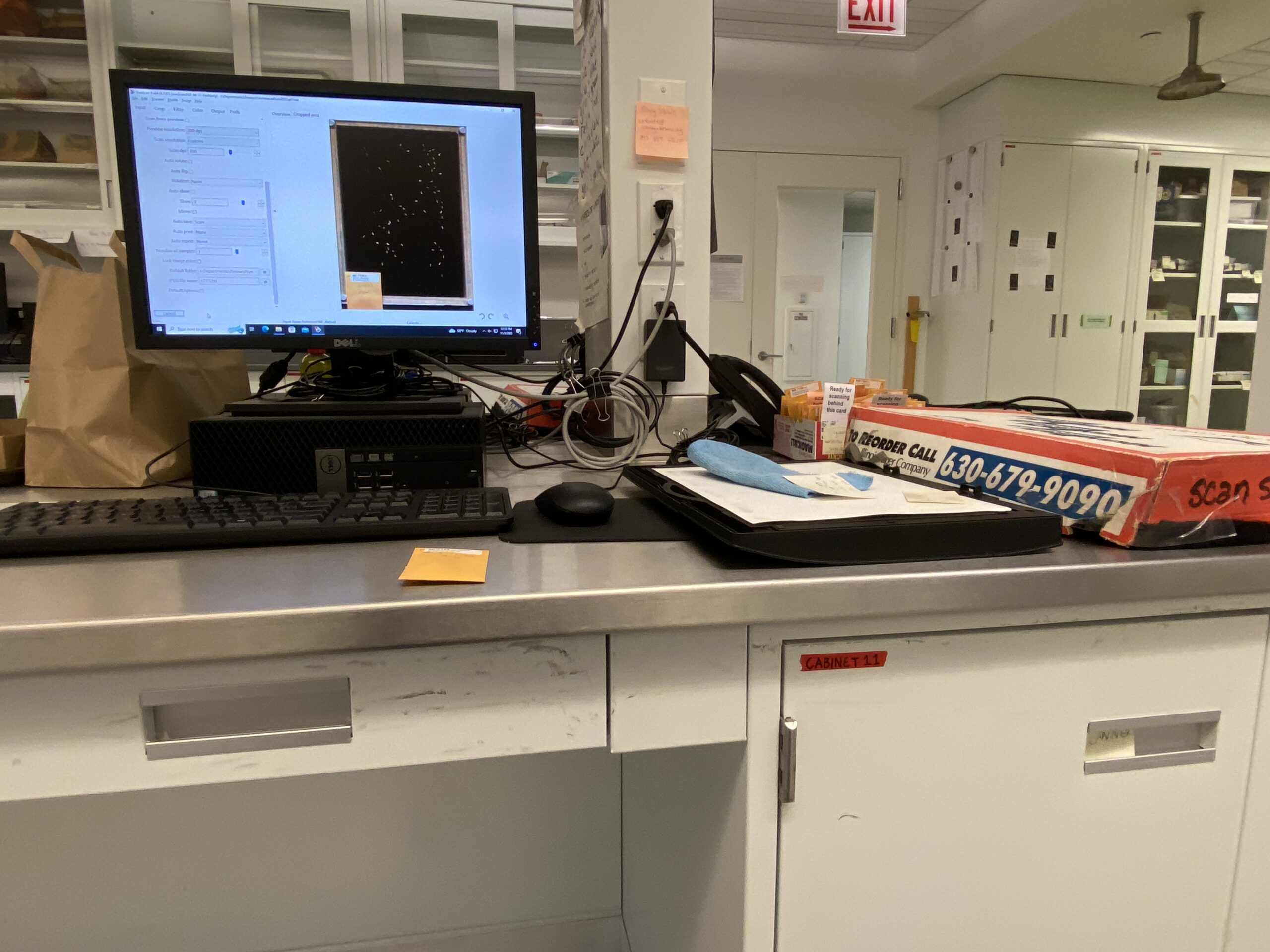
The method for scanning the achenes is straight forward. The scanning setup is pictured below (Fig. 1 and 2). I scan each envelope of achenes one at a time by scattering the achenes evenly on a glass bottomed scanning tray, which is placed directly on the scanner. I place the coin envelope, letno label down, underneath the scanning tray and make sure that no achenes are behind it. Each scan is done at 400dpi, and saved to the server in the P01-nat folder under the same file name as the letno in the format “N-number-letter”. Once all of the achenes in each set are scanned, they are moved to the randomizing tray, which is a process I detailed in my last post. The digital files will be uploaded to the ACE website for counting once all of P01-nat has been scanned, which could be as early as next week!
Fig. 1 – Coin envelopes of achenes scanned and waiting to be scanned. Fig. 2 – Scanning setup.
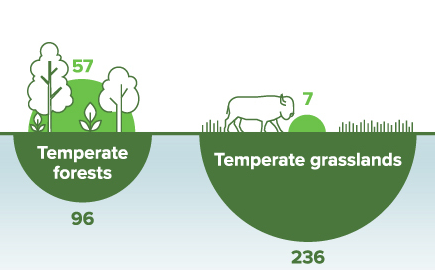
There are many reasons we don’t want to lose prairie remnants to woody encroachment or conversion to agriculture. One of them is because we don’t want the Carbon in the soil to go to the atmosphere. Here’s a nice visual derived from IPCC data, 2022.
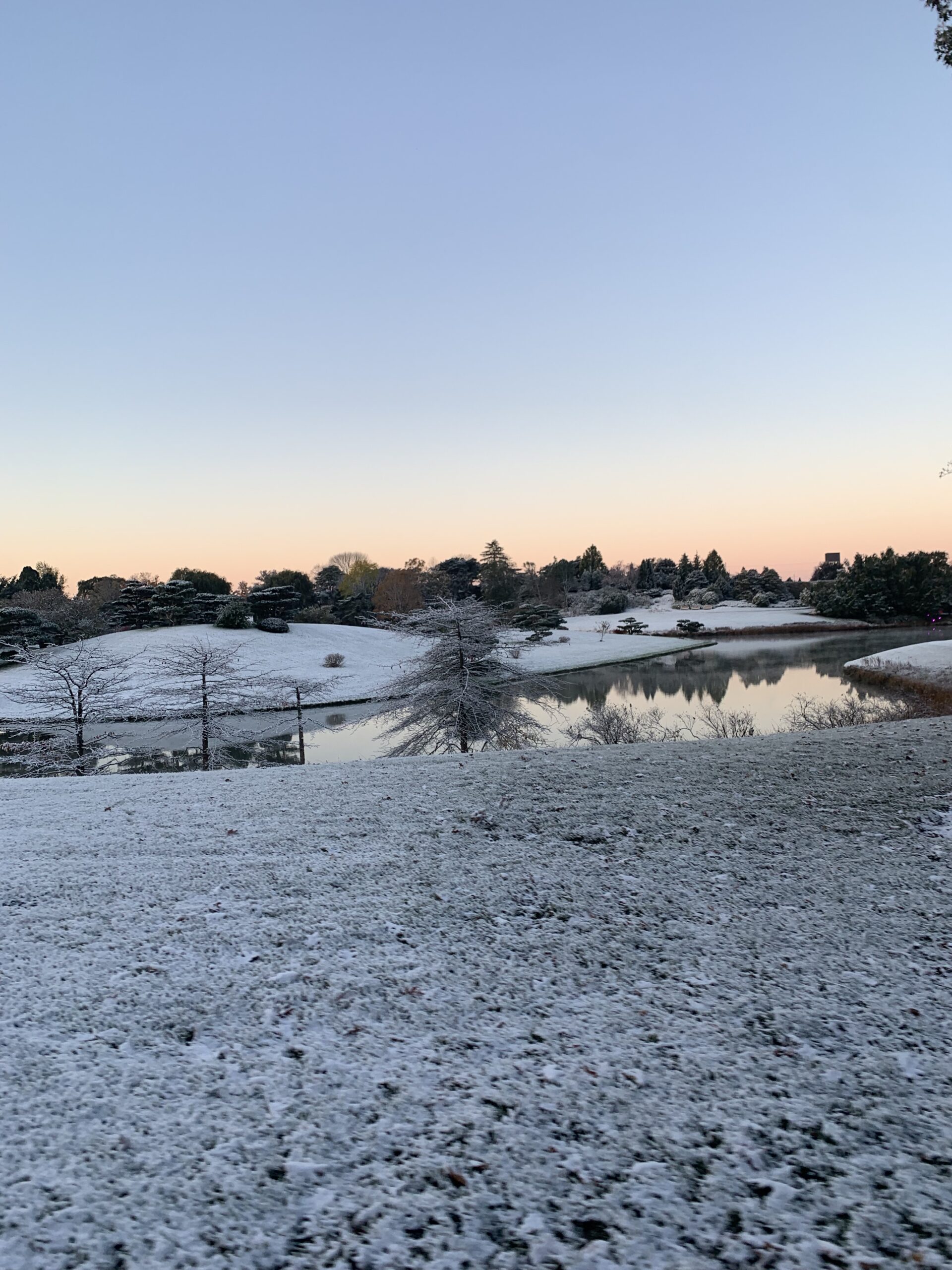
It’s autumn at Chicago Botanic Garden! Geese fly south overhead, the trees are ablaze, goldenrod has gone to seed, and there was even a dusting of snow on the ground this morning (which made for a treacherous bike ride along the Green Bay Trail).
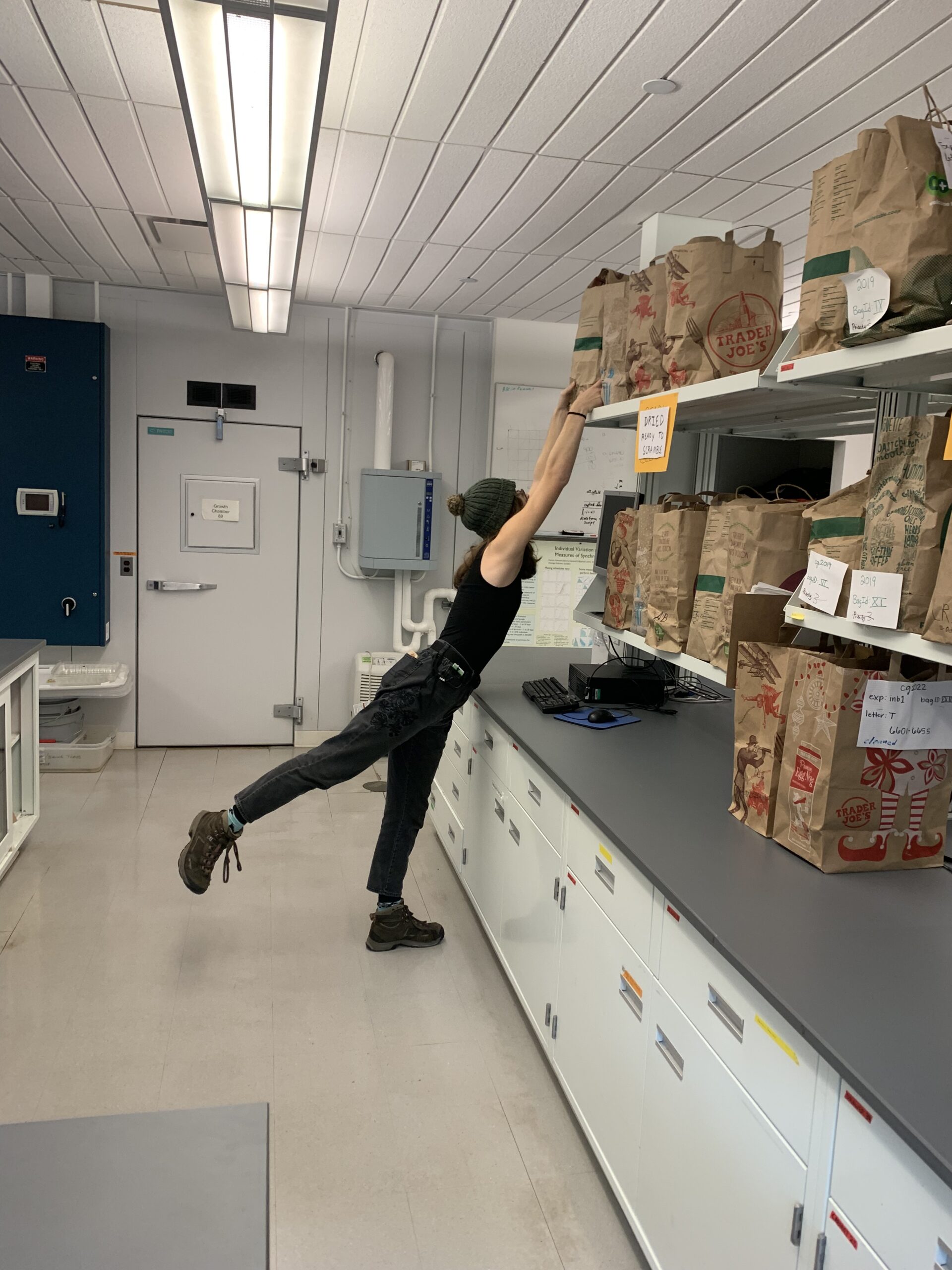
But there are also many other signs within the Population Biology lab that will tell you fall is in the air. All of our heads from 2023 are done drying and we have just begun to inventory our harvest.
Here is Wyatt, pulling out the very first bag for 2023 inventory.
How else do we know it’s fall? We are gathering seeds and datasheets in preparation for a final return to Minnesota. We put these seeds out in experimental plots/transects or remnants “as late as possible, but not to late”. Ian is entering the last of the data from pollen and nectar collection this summer and it feels like forever ago. And when 4pm hits, the sun shines though the atrium and fills our lab with natural light. This doesn’t happen very often, but it’s a treat when it does.
Maybe it is all these tell-tale signs from the Echinacea Project that told the wild geese- “It was time to go”.
Many plants, including Echinacea angustifolia, flower vigorously during the summer after a prescribed burn. We’ve demonstrated that the benefits of fire for seed production, in many circumstances, are bigger than just the increase in flowering. The additional boost to seed production results from better pollination after fires compared to other times. Now we are trying to figure out what’s going on with pollination–why is it better after a fire? It might be related to pollen or nectar, which are foods for the bees that pollinate Echinacea. Here are two possibilities: 1) after a fire, plants produce more or better pollen or nectar which draws in bees from farther away, so the plants get more visits and better pollination, presumably the bees are happier with abundant & healthy food. 2) after a fire, plants produce less or lower quality pollen or nectar which means bees need to fly to more plants to get a decent meal, so the plants get more visits, and the bees are probably frustrated with skimpier meals and bad food. The third possibility is that plants produce the same quality and quantity of pollen & nectar regardless of fires.
Over the summer we systematically collected pollen and nectar from many Echinacea plants in many populations (19) over many days. Our goal is to evaluate how fires affects the quality and quantity of pollen & nectar produced by Echinacea plants. We are getting close to wrapping up data-entry for our field collection of pollen and nectar from Echinacea angustifolia. Here’s a summary of data-entry progress so far…
Each “tagCt” is the number of Echinacea plants we sampled at each site. We will keep you posted!
Funding for this project was provided by the Minnesota Environment and Natural Resources Trust Fund as recommended by the Legislative-Citizen Commission on Minnesota Resources (LCCMR).