Two files showing the design of the Echinacea-mycorrhizae experiment and the locations of the sampled plants:
designMycorrhizae2009.xls
dataSheetMycorrhizae2009.xls
|
||||
|
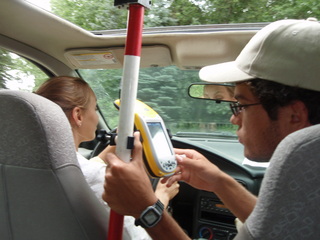
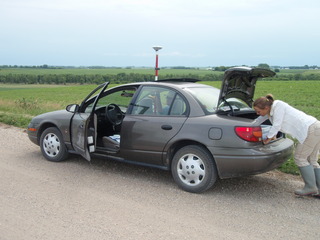
This morning, Amy and I searched transects in Staffanson. We did random points 15, 36, 19, 5, 20, 40, 12, 28, 1, 14, 3, 37 and 27. They were 10 metre long and half meter wide transects, some of them half a kilometre apart. We found 1 plant (!) total in the transects, and 3 plants nearby. *whew*. Lotta walking… The Protocol for Style collection tomorrow is a bit different, so, everyone needs to get to the farm at 7:15 so we can go over it! But let me give you a quick overview of the main points: • We will only be collecting styles at the end of the observation period. ONLY COLLECT STYLES ONCE! Thanks again for your help and your patience! -Kate Monster Two files: pollCompMemo06jul.txt and mimimemo070809.doc Here’s the file. RESULTS FOR NAME THAT POLLEN Slide 1: Heliopsis Slide 2: Coreopsis But don’t they all kind of look the same?? Yesterday, between ten people at ten remnants, we collected… A big thanks to all who participated. You had an impressive capture rate and recorded your vials flawlessly. We will go out to collect again tomorrow morning, each person to a different randomly chosen site (I will post these on the flog later today). Please arrive at Hjelm House at 7:30 to synch visors and pick up supplies so that we can all begin observations at 8:00 AM. I will provide muffins and coffee. Here are some updates to the pollinator collection protocol– please read them and jot them down (if necessary) on your printed protocol before going out tomorrow morning. 1) As you all noticed, the visor option for “pollinator observed” does not allow you to move on unless you provide a response. There are two methods for selecting either “yes” or “no”. What I would prefer that you do is click on the words “pollinator observed” and click either “yes” or “no” on the resulting screen. The other possible method is to check the box for “yes” or check and un-check the box for “no”, but this should only serve as a backup plan. 2) When entering your stopwatch time, please use a decimal between minutes and seconds. So, if it takes six minutes and twenty seconds for a pollinator to arrive, your entry should read “6.20”. 3) If you observe but do not capture a pollinator, enter the data for the observation, select “no” for “pollinator captured?” and move on to the next plant. Do not stay at that plant to wait for more pollinators. If you have any other questions or helpful tips for tomorrow’s collection crew please write them in the comments and we will address them before tomorrow morning. Thanks again, guys– I guess dreams really do come true. So, for those of you who were wondering what Team Echinacea will be doing tomorrow, here is the field protocol for the transect searches that we will be using. Any questions, please let us know! Also, we were searching for Stipa today (a prairie grass that Dr. Ridley is planning to add to the common garden), and this is the setup we used to mark the sites with the GPS:
The antenna allowed us to get about a 9 cm margin of error when using the Trimble. And yes, that is yours truly manning the antenna, ensuring that the carrier lock is not lost. We were all ready to tell the next person who asked us what it was that we were searching for nuclear waste.
I have returned to take images of pollen as seen below. It will still be a few hours/days/more? to get the images as desired but this is a start. I am predicting some trouble to distinguish between coreopsis, helianthus, and echinacea so be ready to be distinguishing. |
||||
|
© 2026 The Echinacea Project - All Rights Reserved - Log in Powered by WordPress & Atahualpa |
||||