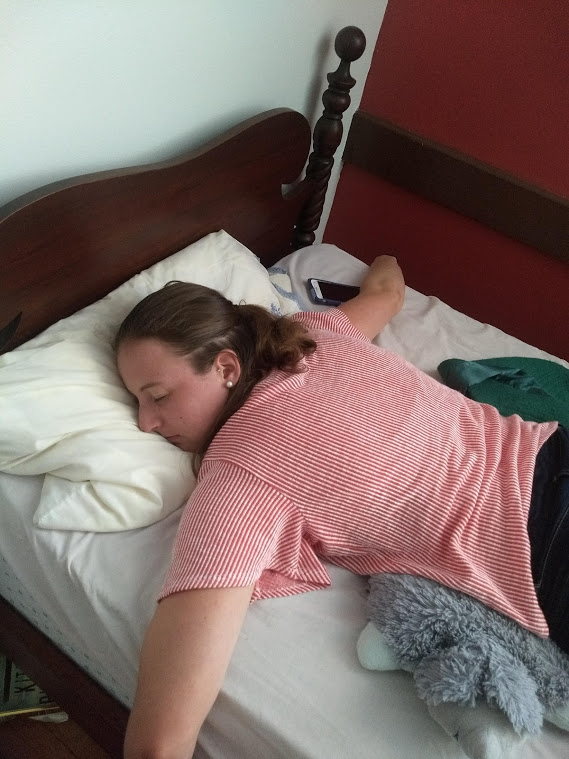
Today’s flog will address a serious illness taking over the occupants of Town Hall. Mad Snail Disease (MSD) has been introduced to members of the Echinacea Project through direct contact with Avery Pearson, who carried the disease to Minnesota from her home in Ohio.
Those infected by the debilitating disease appear to be unable to make rational decisions and have been seen getting up to all kinds of shenanigans.
We hope for the speedy recovery of these individuals who have been infected. Sadly, there is no treatment for Mad Snail Disease; prevention is the only cure. If you are experiencing MSD-like symptoms, do not hesitate to talk to your doctor.
This has been a public health report by Ren Johnson.
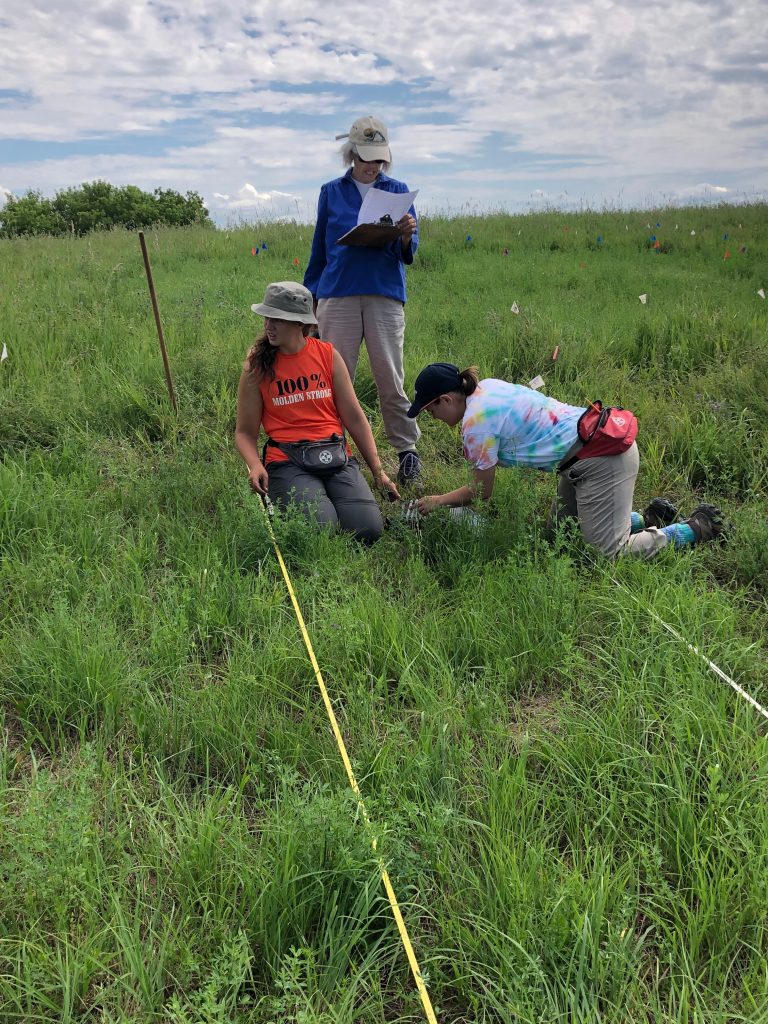
Town Hall woke up bright and early this Saturday– or at least those of us left, since four of us are traveling this weekend! We had intended to perform the steady treatment in the pulse-steady pollination experiment before it got too hot and the bees beat us to all the pollen, but the end of yesterday’s thunderstorm system was still rolling through Kensington and we decided to wait it out. After the rain let up we finally arrived at the plot but found neither pollen nor pollinators. We futilely scraped wet pollen out of anthers until deciding to return when the sun came out.
A little over an hour later it had become a gorgeous day, and we were greeted by insects of all kinds.
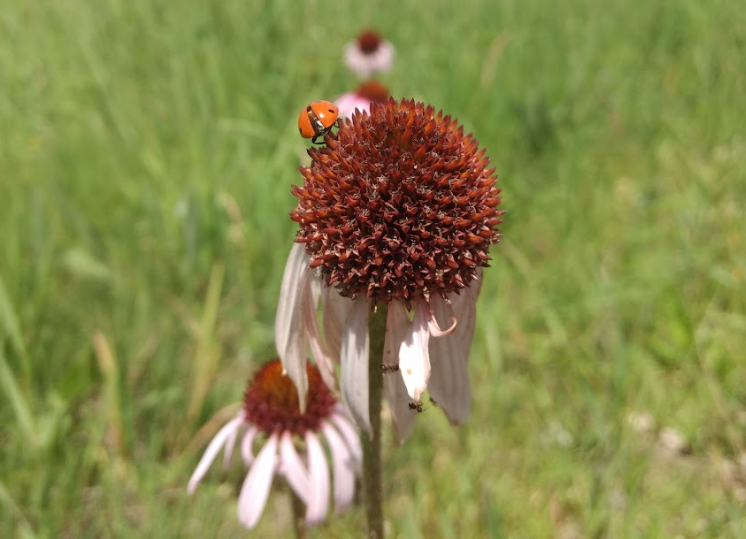
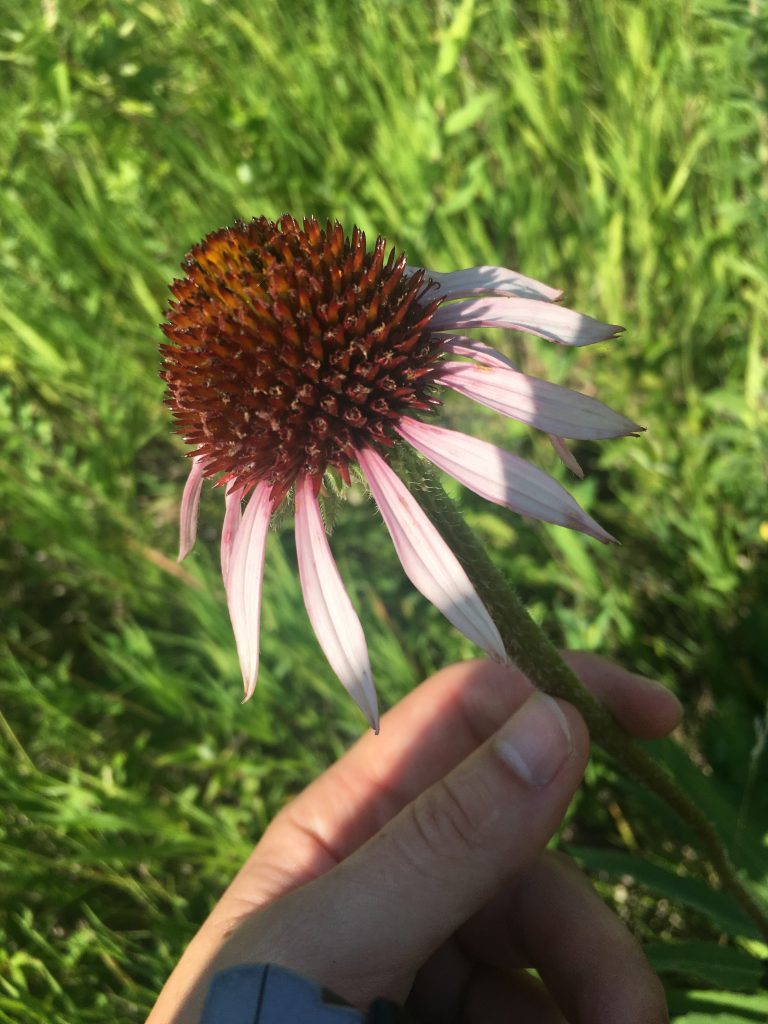
A ladybug trundles around a finished flowering head
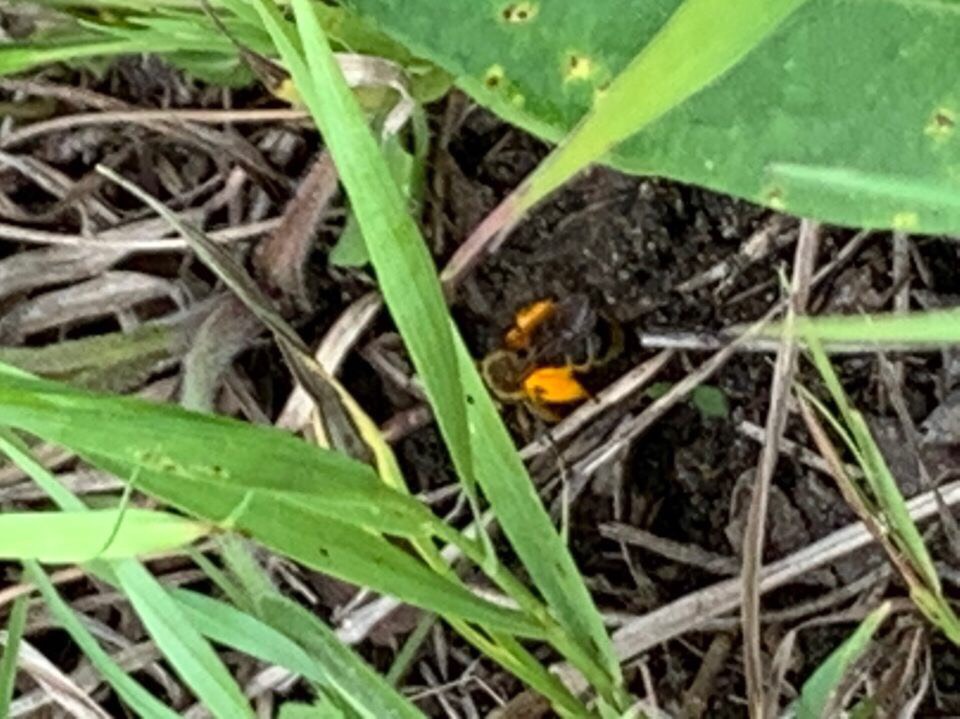
Unfortunately the heavy rains and the cold front seem to have scrambled pollen production. The heads we bagged to harvest pollen from didn’t show signs of presenting pollen any time soon, and heads in P2 were lucky to have one or two anthers with pollen on them. We collected what data we could, but decided to hold off on pollination until tomorrow. Our expedition wasn’t for naught, however, because Miyauna found an Andrena nest!
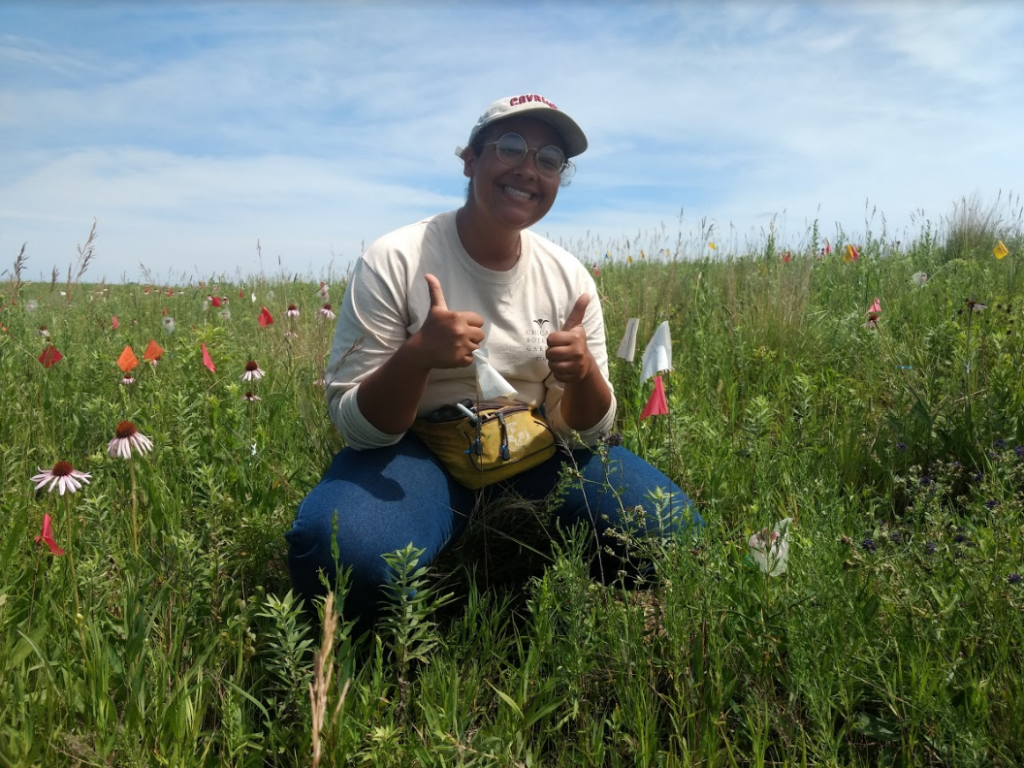
Miyauna models with the bee hole she spotted a fluorescent-dyed female scrambling into!
We bagged a few more heads in the area around P2 so that tomorrow we’ll be able to harvest plenty of pollen. Though Miyauna found a tiny bee nest with ease, she was briefly puzzled when Avery disappeared into the prairie.
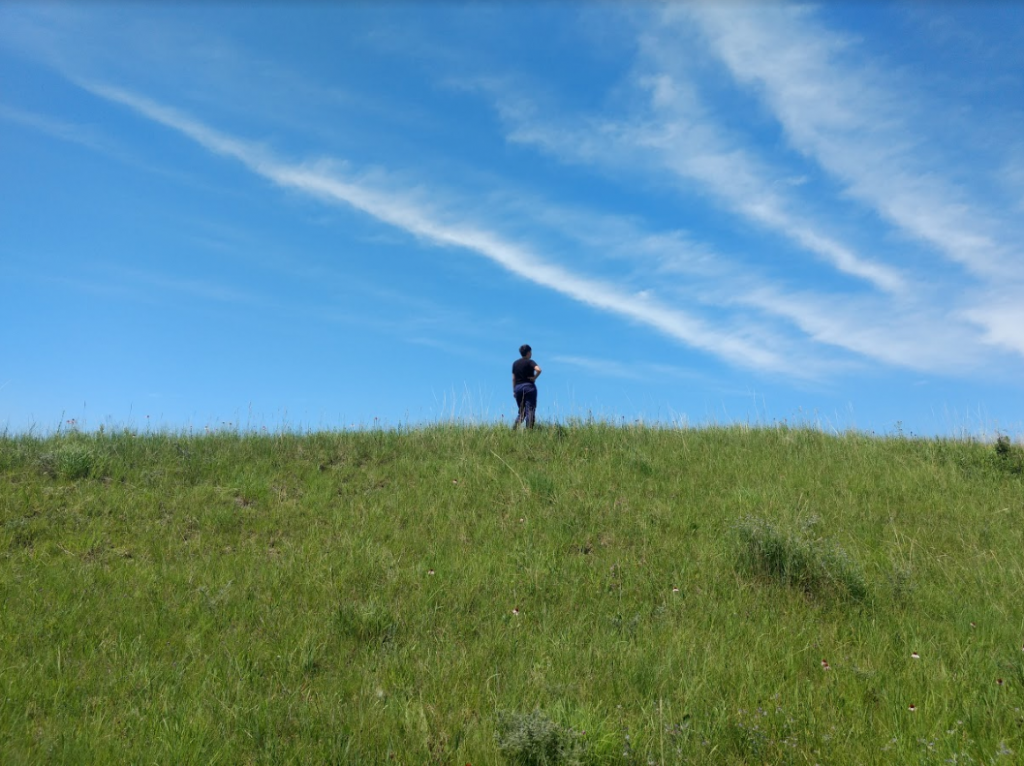
Miyauna briefly considers fluorescent dying Avery to keep track of herRen lends a helping eye and admires the beautiful weather
With Avery located, we headed back to Town Hall to nap and putter around doing chores. We celebrated the bee hole discovery by voyaging out to the DQ in Starbuck, which has the most charming signage and most savage mosquito population of any ice cream joint we’ve visited.
The employees took money and returned change with lightning speed to avoid inviting the bloodsuckers beyond their sliding window
I’m writing from Sacramento, CA, where I am staying for the 2019 International Pollinator Conference at UC Davis. Today I heard talks about new quantitative methods for studying pollinator ecology and I also learned a whole bunch about pollinator disease ecology. Tomorrow will be full of more pollinator-themed talks and I will present my poster in the afternoon. I’ll post a copy of my poster below. I’m looking forward to learning more tomorrow! That’s all for now,
Today was
a legendary day in the history of Team Echinacea. It was raining this morning
and we started late, but the weather fortunately cleared ub and the forecast
was combletely ubended for a nice, sunny, day! The day brought glory. We went
out to exberimental blot 2 this morning to take bhenology data and work on our
new bulse-steady bollination exberiment. All went well with Echinacea in B2,
and all was made astronomically better when the Wooster team found an Andrena
nest just outside of the blot! WOOHOO! This was truly a great moment in the history
of the Ison lab, as Jennifer’s goal of seeing an Andrena in its home was finally
combleted.
In the afternoon, we went out to B2 again to begin measuring the blot (we got nine rows done, but they had a TON of flowering heads). The Wooster crew dug ub the Andrena nest they found earlier in the day but were ultimately unable to find any cells that hold Andrena larvae. We did end a bit late, but it is safe to say that the skills we honed today in B2 are some we will be utilizing for the entire summer!
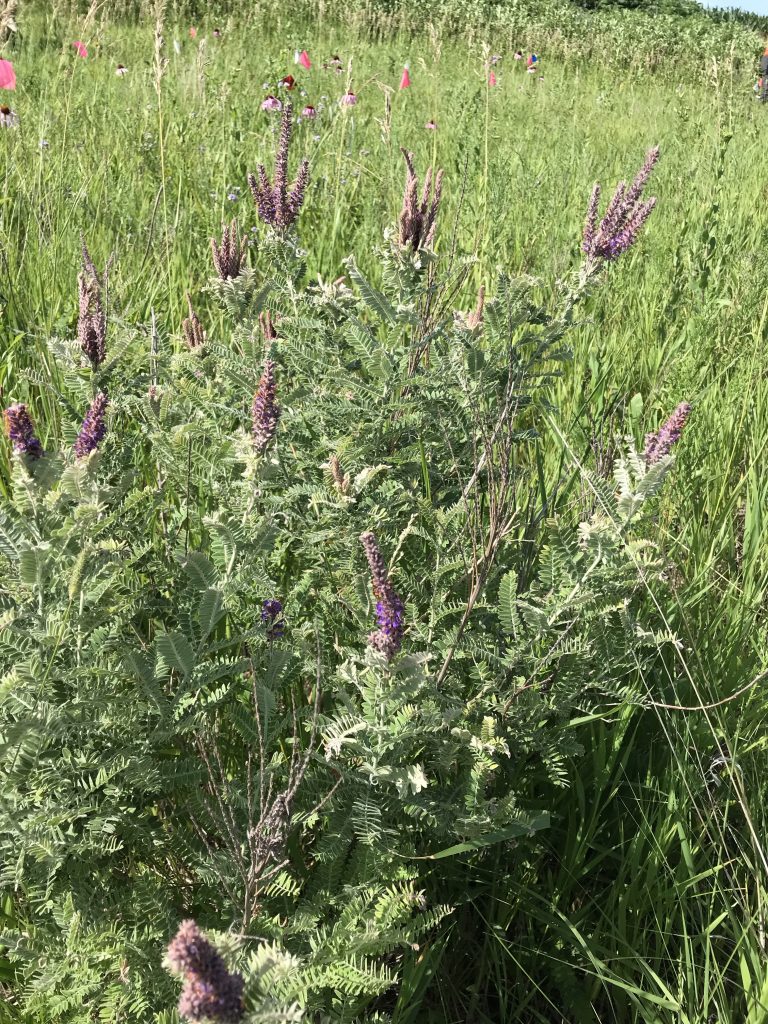
An Andrena mom walking into her nest!Leadplant (Amorpha canescens, my favorite plant) is starting to flower!
Today began with the pulse/steady experiment at P2 in which pollen is collected and added to viable styles either on a daily basis (the steady part of the experiment) or every three days (yep – the pulse part of the experiment). The goal is to determine if a steady treatment of pollen to the styles versus the pulse treatment of pollen leads to greater seed set. We quickly found another reason to be impressed with bees and their pollen collecting ability. The bees typically had their pollen sacs quite full while we could barely muster up enough to use in our experiment.
Stuart demonstrates how to use the most interesting of the four fundamnental forces – gravtiy, to collect pollen from the anther to use in the pulse/steady experiment.
The afternoon led to another planting expedition at West Central Area Schools (WCA) in Barrett, MN. The already 1700 or so Echinacea plants were united with The College of Wooster’s 300 plants. The twelve plots are filling up. The ultimate goal for these twelve plots is to determine how burning affects prairie, specifically if fall or spring burns are more beneficial to the prairie. Along with the Echinacea Team, WCA students will be able to use the plots for their own experiments along with assisting Stuart and The Echinacea Project for future years. A tremendous opportunity for our students to be able to be involved in a meaningful research experience while still in high school.
Erin, Ruth and Shea planted the basal plants in the WCA plots, making sure to get the correct plant in the correct location.
After returning from our long day of grit-cultivation in the wet prairie for the orchid-hunting excursion, the team started back with a hard day’s work here in Kensington. The morning included phenology for several different plots, including P2. As the plants progress through the process of flowering, some of them are already beginning to approach end flowering, or have even finished flowering completely! It’s crazy to see how fast they progress!
Almost done flowering!
After a lunch break, the afternoon included a contingent who trekked out to P8 to (finally) finish up measuring for the plot. Despite the grueling conditions of 90+ degree heat, the team pushed through to finally finish off the last few sections, which made for a satisfying end to the day.
Shea and John, powering through the last few sections of P8!
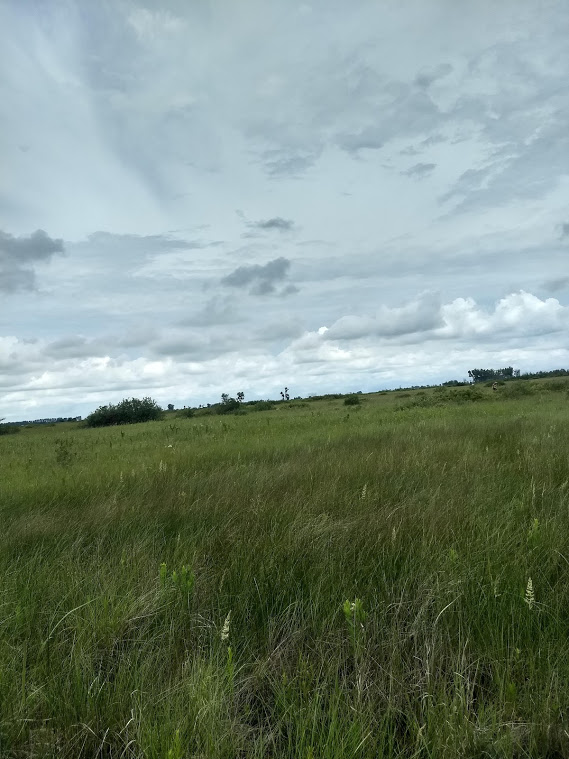
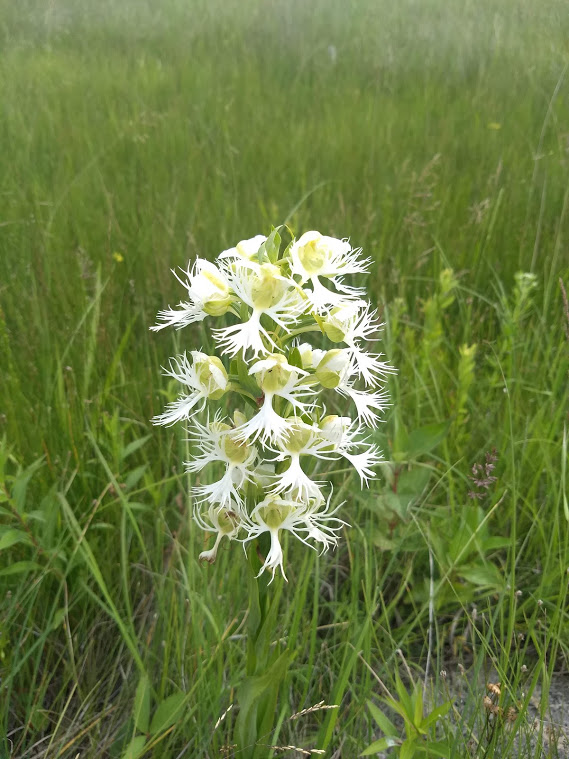
Team Echinacea had an exciting weekend when Stuart, Riley, Julie, Amy, Avery, Miyauna, Jay, Erin, and I joined Gretel, who works at the Chicago Botanic Gardens, to monitor orchids at the wet prairie near Fertile, MN. We had a great time working with some new plants and learning about an ecosystem different from the ones we typically work with.
It was a long day, but we cultivated a lot of grit and were glad to help Gretel. We’re grateful that she gave us this opportunity and we’d be happy to help again!
So, I have decided to break my flog posts in two so that readers can be updated on the goings-on of the team and my personal research.
Town Hall
Saturday started off with breakfast and everyone cleaning up the mess around the place that had accumulated all week. However, most of the cleaning was done while I showered. I did many of the dishes and emptied the dishwasher but when I got out to the living room I was blown away by how quickly 7 people can clean a kitchen, dining room, and living room.
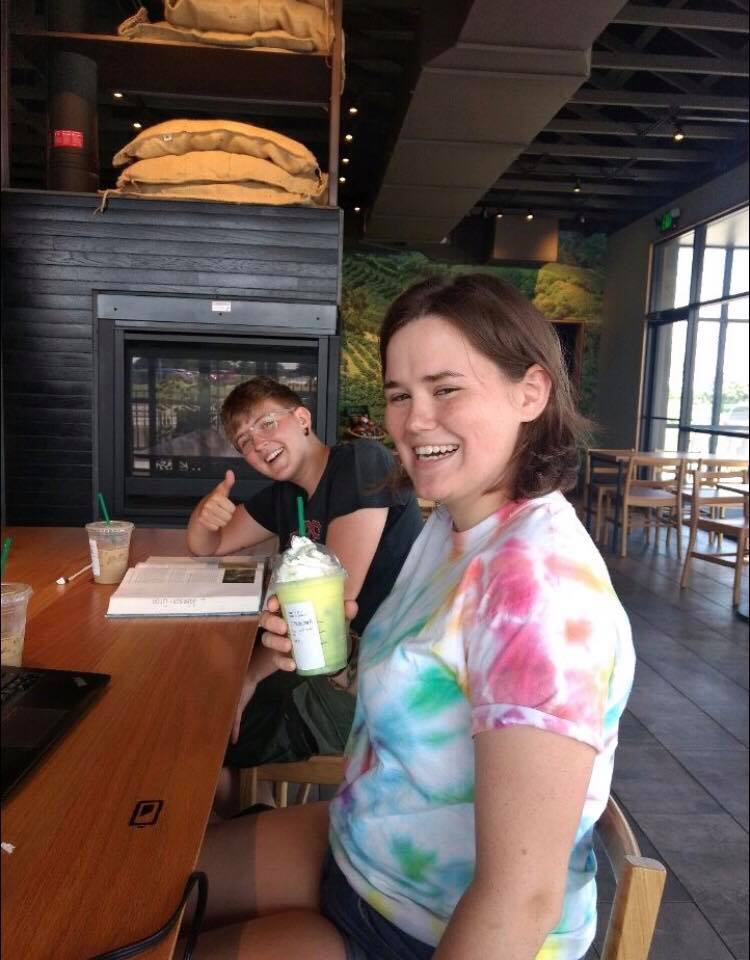
After cleaning, some people (I believe Ren, Avery, and Miyauna) went grocery shopping and others (Erin, Jay, and myself) went to a coffee shop and then bought groceries for the week.
Jay and Erin at Starbucks.
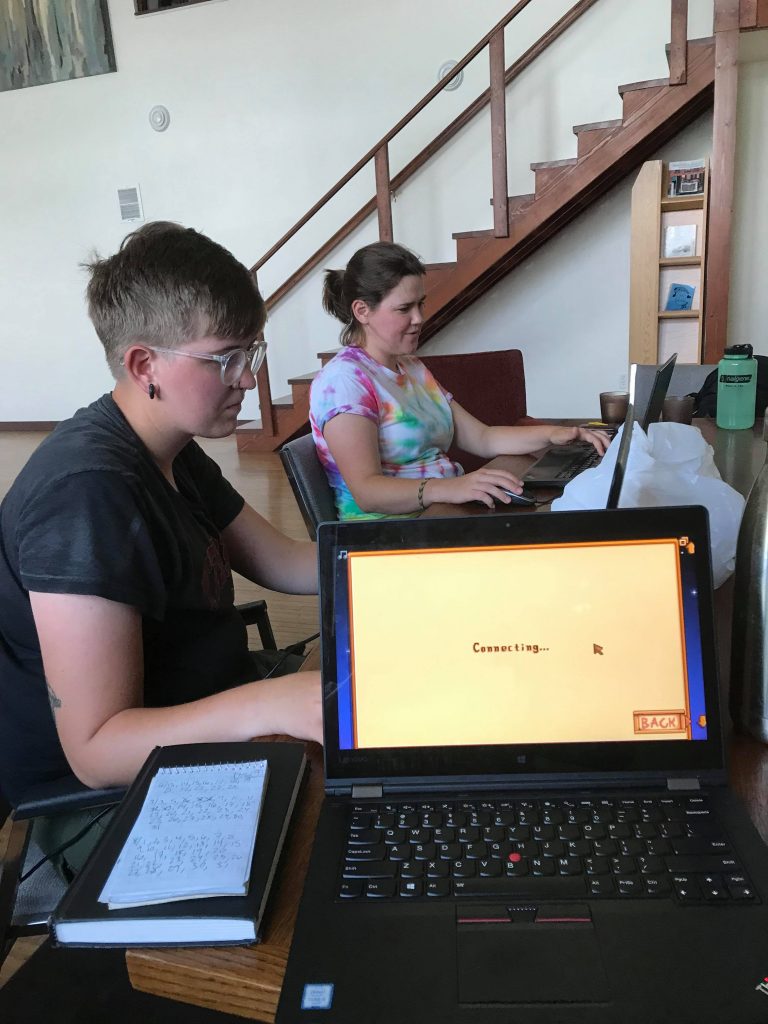
When we returned to Townhall, Erin, Jay, Julie and I started a new game of Sundew Valley together. We had some trouble with it crashing in the beginning but we eventually got it going. Jay and Erin’s characters were accidentally wearing the same outfit (talk about a fashion faux pas…) and since I had never played before I spent ~15 minutes playing the fishing mini-game only to catch on herring and some seaweed. Despite Sundew Valleys innocent appearance the game is a lot more involved than I anticipated.
Not pictured is Julie who was sitting across from Jay… Sorry!
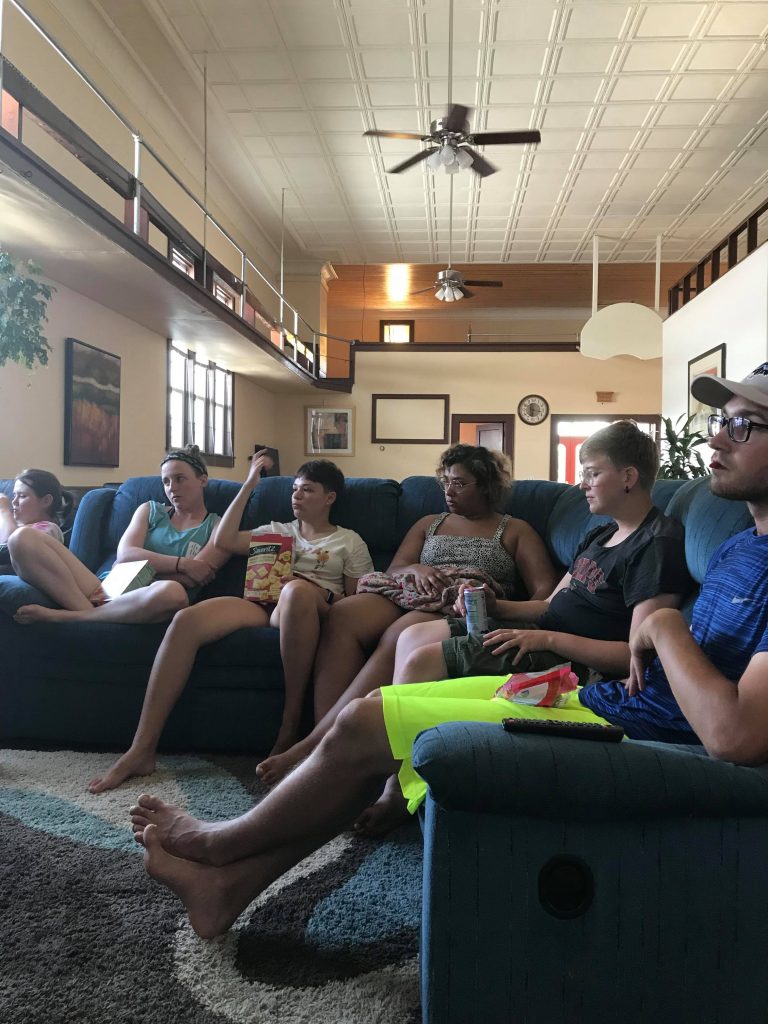
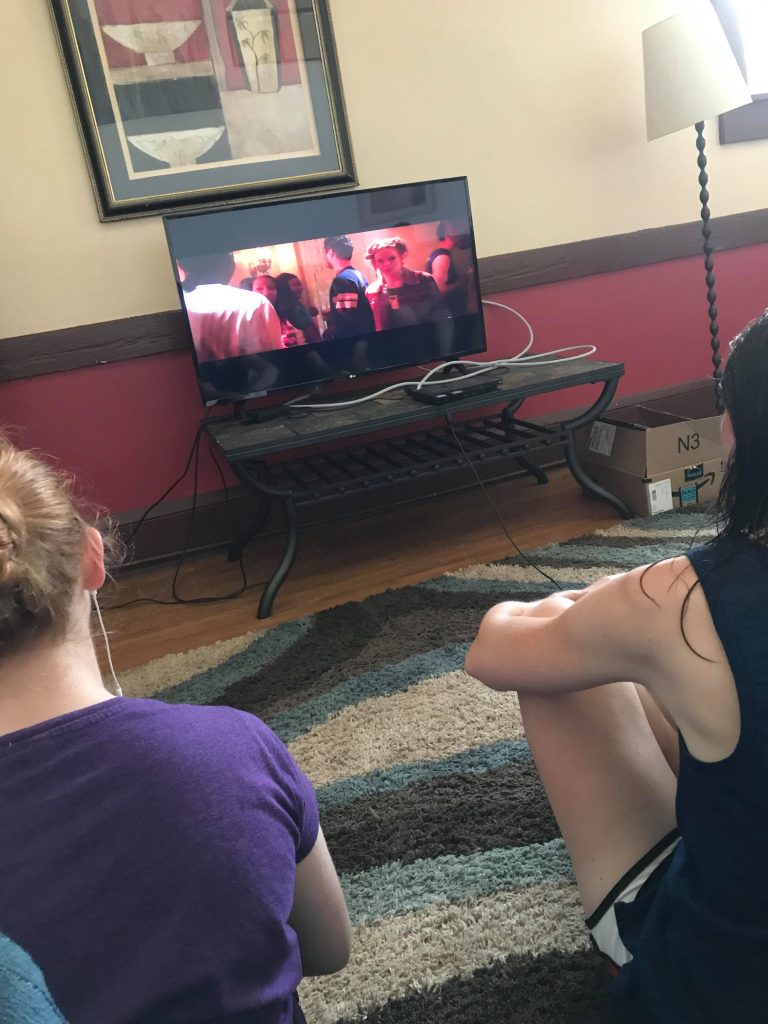
After some videogames, the whole gang watched the 2005 blockbuster hit and should-have-been-oscar-winner-for-best-picture movie, Sky High. Which some might describe as, “A clever hybrid of Harry Potter and The Incredibles”. Which I had purchased at an Alexandria gas station for $9.00.
Erin, Avery, Ren, Miyauna, Jay, and Riley watching Sky High.
Julie and Amy watching too!
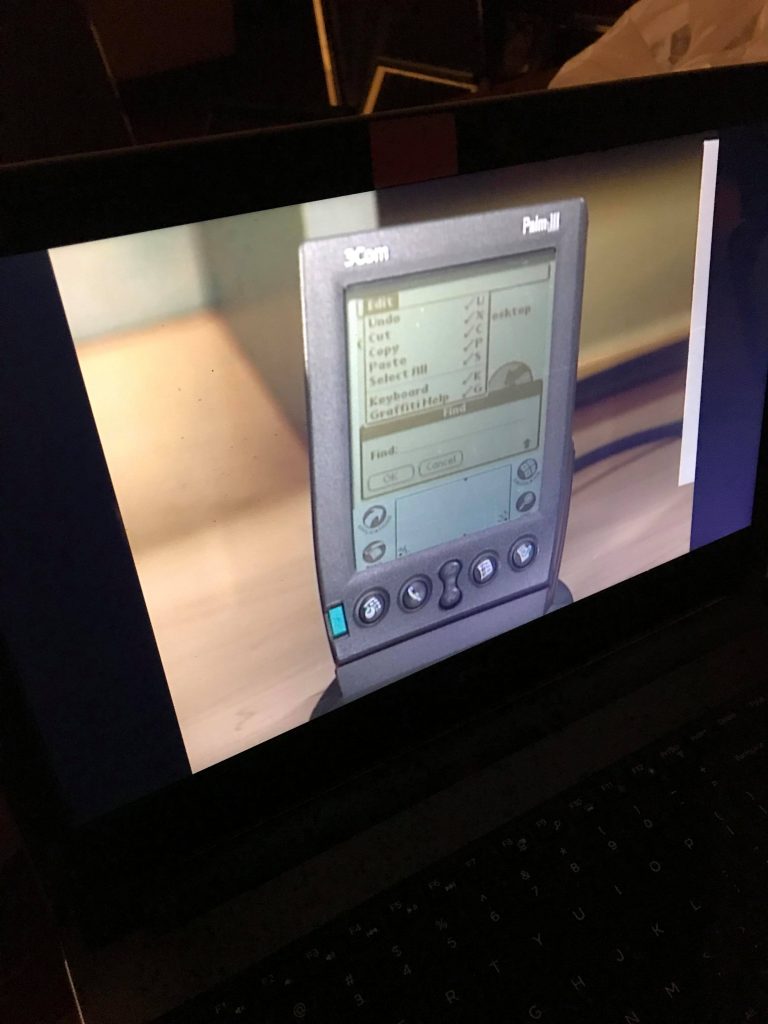
At the end of the night some of us relaxed by watching Jeopardy episodes from the year 1999-2000. We were all amazed to see our work equipment as a part of the second place winner’s prize package.
Graffiti help anyone?
Then everyone went to sleep because everyone minus me had to get up for a 6 am adventure to check out orchids!
Personal Research Update
For our readers that are unfamiliar, I am Stuart’s incoming Ph.D. student starting in the Fall. So, this Summer has been a lot about me exploring the tallgrass prairies and beginning the research that I will be doing for the foreseeable future.
Here is a brief-ish research statement for what I am doing this Summer:
“Parasitic plants are keystone species in many environments they’re found in and they act as keystone species by playing a role in nutrient cycling and in prairies they are hypothesized as being keystone species by keeping dominant grasses in check by suppressing their growth. However, it is unknown if parasites are keystone species in prairies and if they are, it is unknown which species serve this role. Therefore, I aim to collect seeds from many common species that could possibly serve as hosts. I will do this in order to conduct an experiment in which I grow parasites and hosts together in order to determine the effects of parasites on common plant species.
Common potential hosts I aim to collect seed from are:
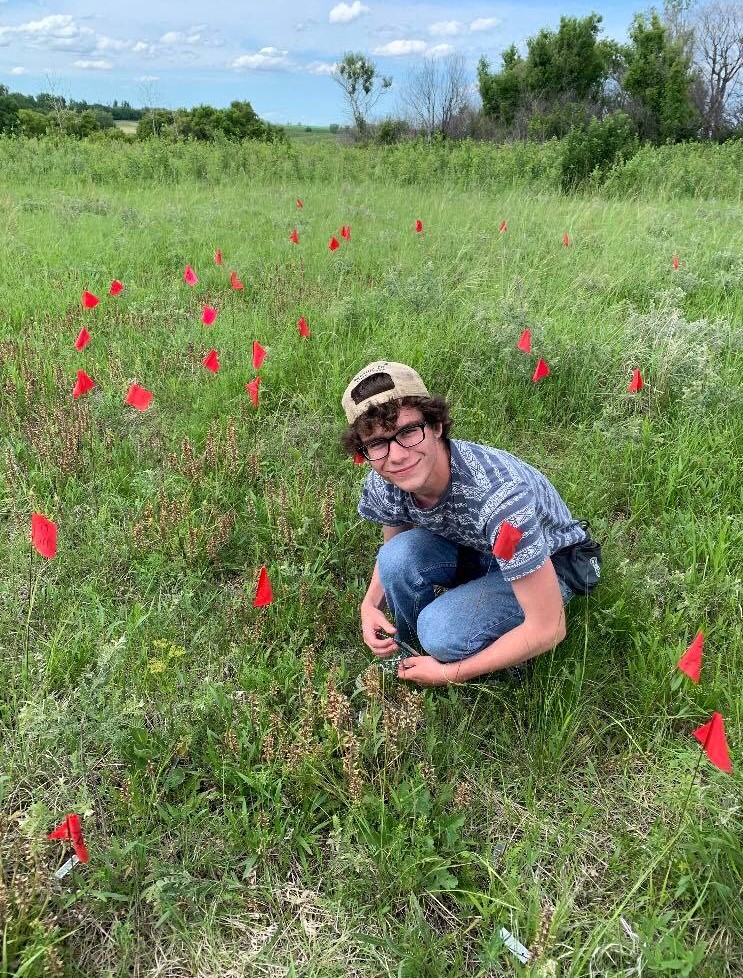
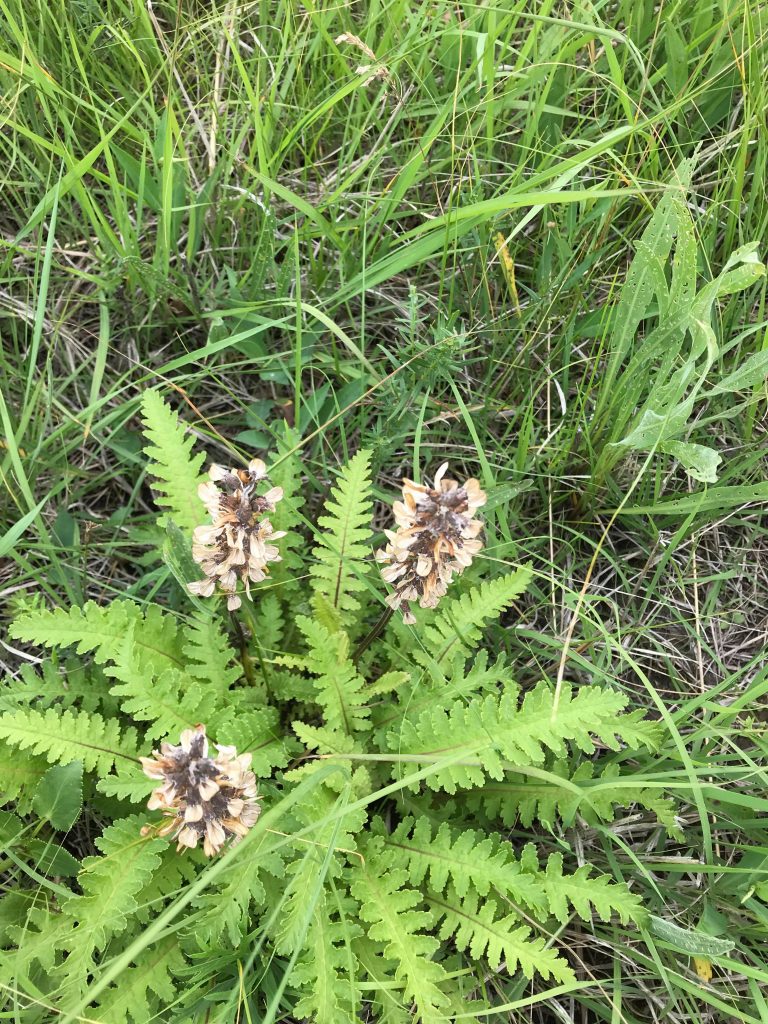
Here is me with one of my parasitic plant species, Pedicularis canadensis.
P. canadensis was the first plant I collected seeds from this summer.
P. canadensis flowering stalks have already gone to seed and dispersed all of their seeds. Luckily they produce a ton of small seeds and I was able to quickly collect them all with the help of Julie, Riley, and Ruth earlier in the Summer.
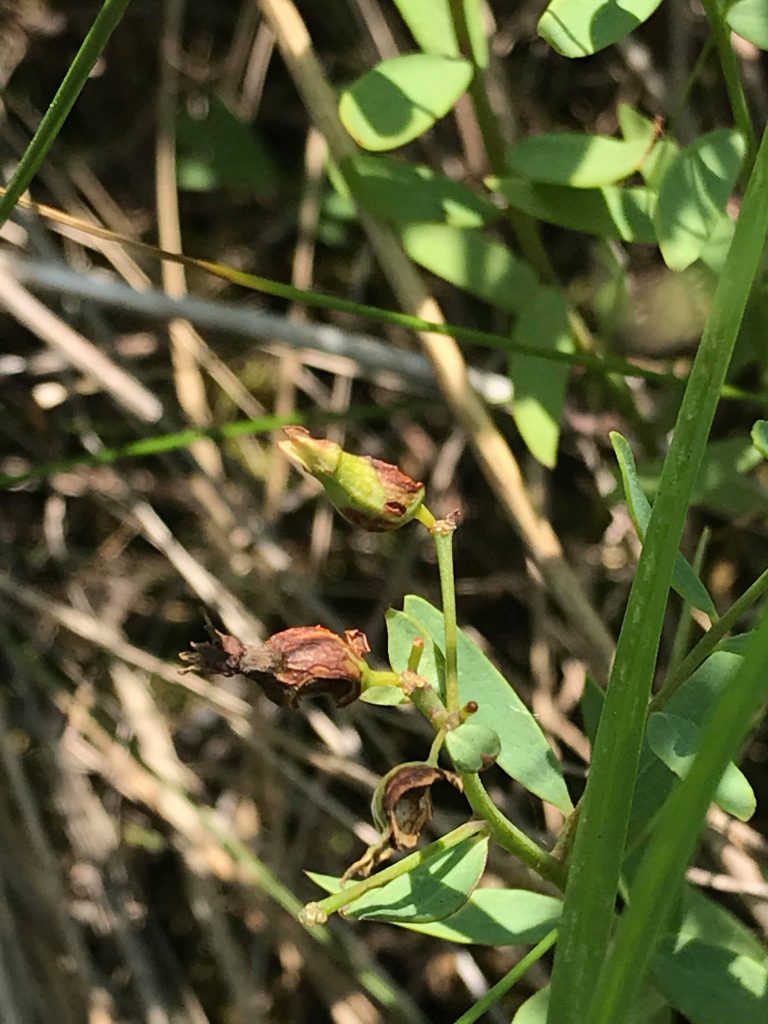
I also collected seeds from Hesperostipa spartea (Porcupine Grass) and a handful of other host species. I have been struggling to finish collecting seeds from the parasitic Comandra umbellata (Bastard Toadflax) because many of its seeds have been eaten by some pesky granivore.
Some eaten C. umbellata fruits.
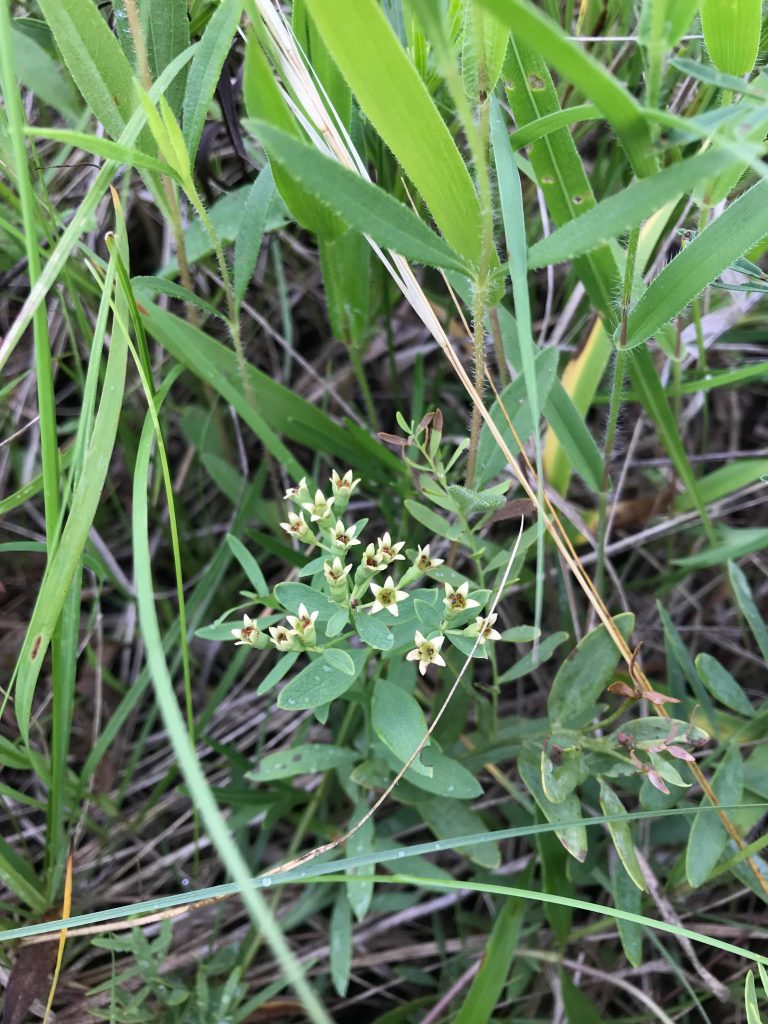
Luckily, I have been able to collect 1700 C. umbellata seeds and I am only 100 shy of my goal. Even luckier, some of the C. umbellata are beginning to flower again!
This is just one of many. Many haven’t even opened their buds yet! I hope they produce fruits I can collect.
This summer has already been a fun one and full of exciting events and challenges I’ve had to overcome. Here is to many more weeks in Minnesota and me accomplishing my fieldwork goals!
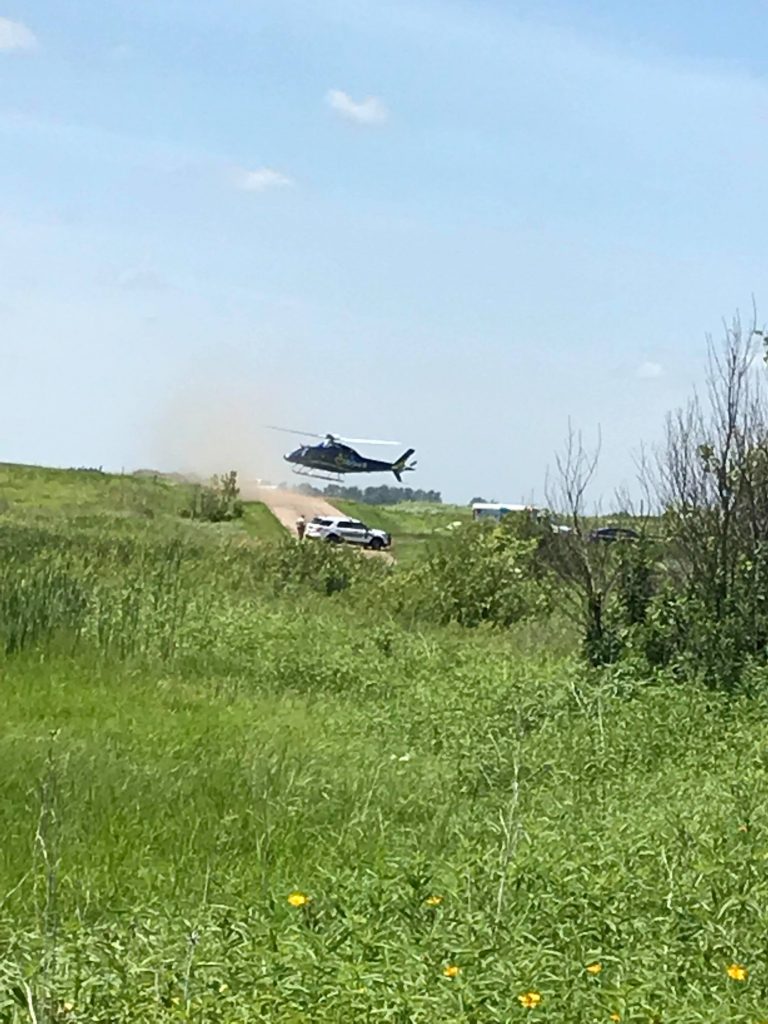
Also, I watched someone get airlifted when I was collecting C. umbellata fruits. Crazy… Hope they are doing alright!
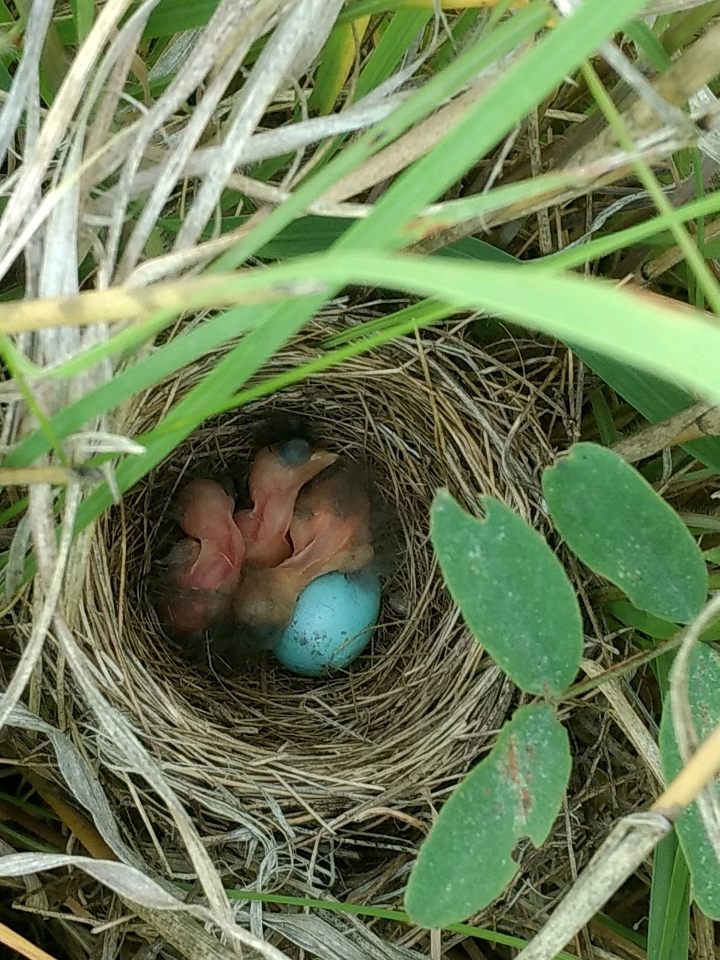
Today was Phenology Phriday! Much of the team recorded flowering progress in P1, P2, and P8 this morning, where Erin found an adorable nest of baby Field Sparrows!
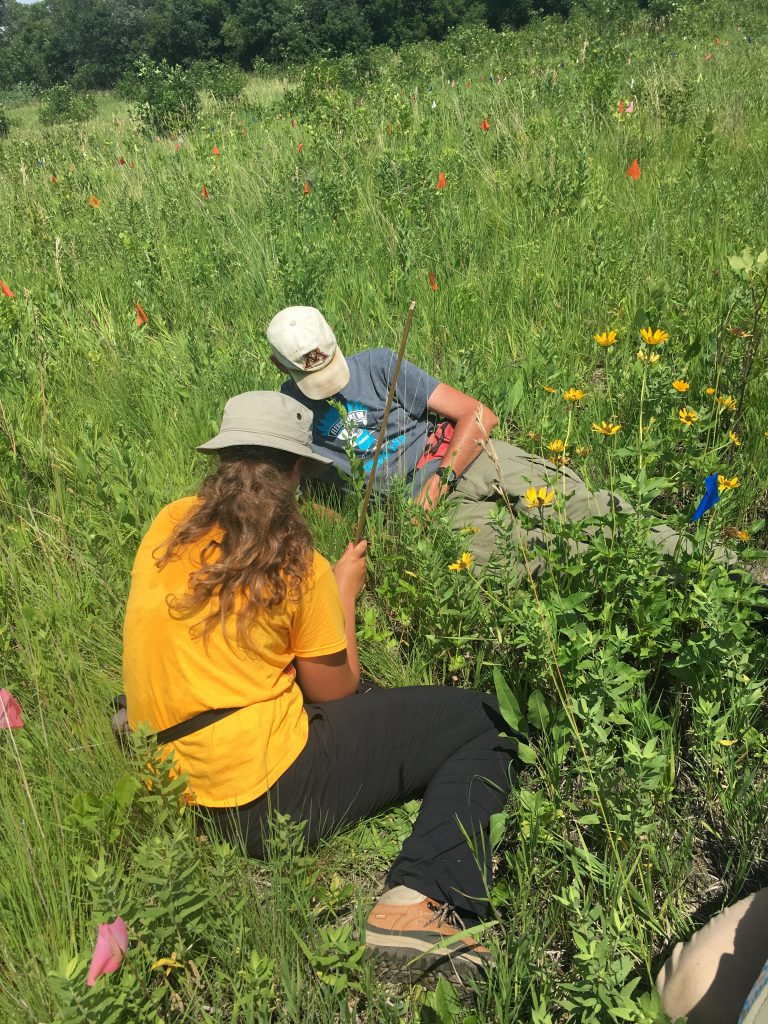
Amy and I split off to check on the plants in the remnants. Near East Elk Lake Road, I also practiced collecting Heliopsis helianthoides pollen for my upcoming pollen interference experiment. Excited to start my crosses next week!
The other teammates were also making progress on their projects. Jay finalized details for data collection for the Ash Annihilation experiment. Drake continued collecting seeds from parasitic Comandra and a variety of host plants. Meanwhile, Jennifer and Miyauna tried dipping bees in fluorescent dye to follow their activity around the plots. I must say, their new costumes look lovely!
In the afternoon, Shea, Miyauna, and Jennifer pinned the bees they caught earlier this week, while much of the team returned to P8 for a full afternoon of leaf measuring. We’ve nearly canvased the whole plot of basal plants with fresh toothpicks, so thoroughly that we almost ran out of toothpicks! Overall, a productive day in the field.
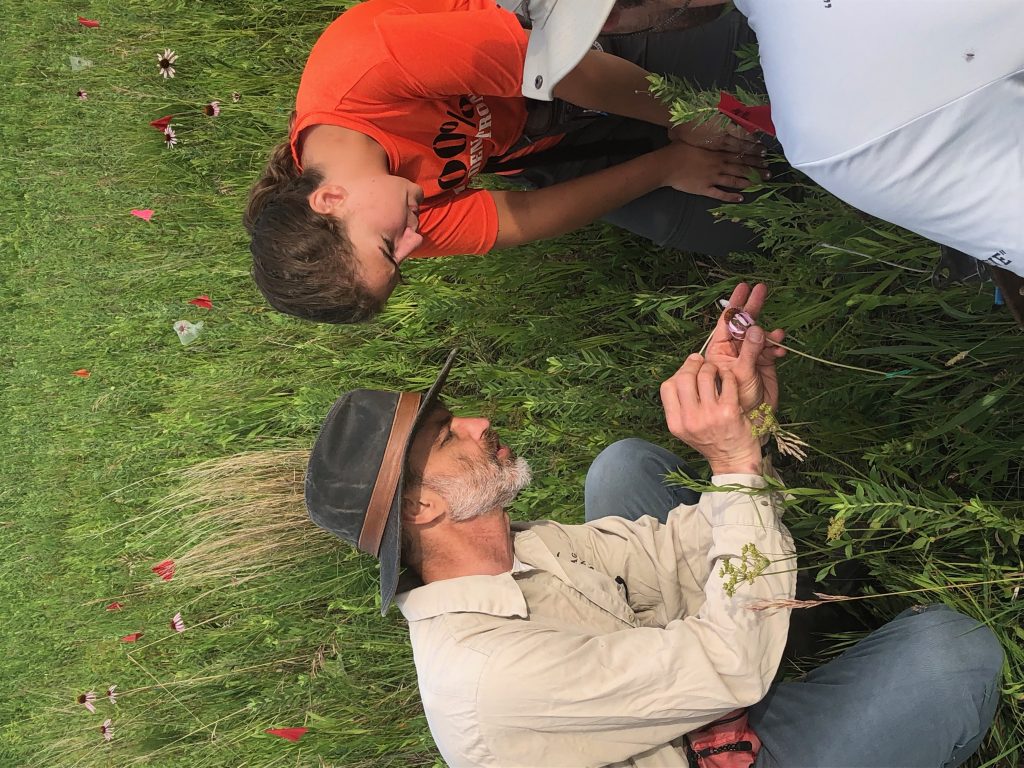
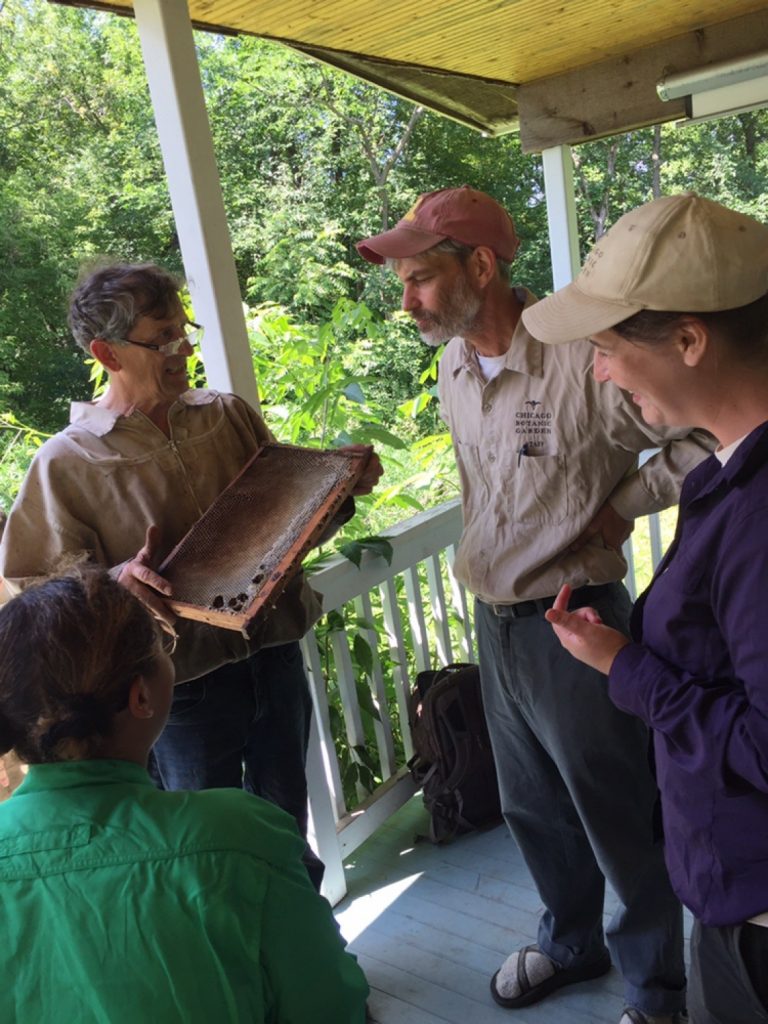
After a long few days of dreary weather, today was bright, sunny, and breezy. It was beautiful. Everyone got outside and worked on personal projects in the morning and we worked hard in P8 in the afternoon. and The team also got a visit from a local beekeeper today! We ended the day with a delcious watermelon and a trip to the beach- and an amazing sunset this evening.
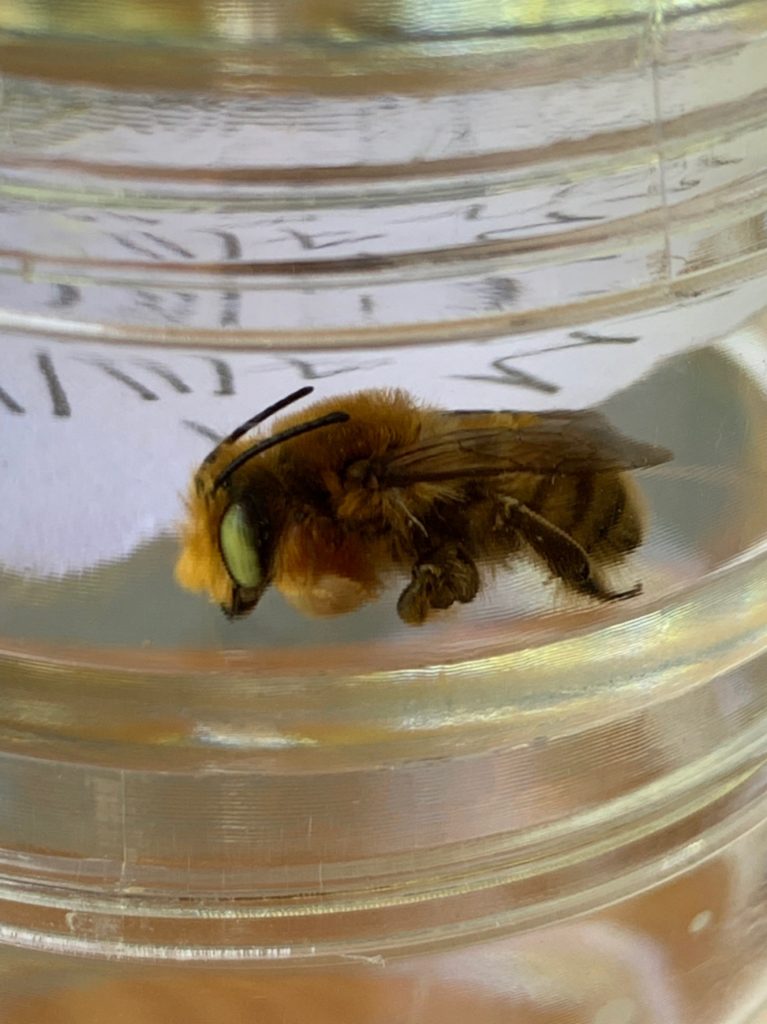
Miyauna and Jennifer found a handsome green eyed bee in the field this morning The team was visited by a local beekeeper who even let everyone partake in the honey straight from the comb.