|
|
Rainy weather covered the research area this morning, so the team worked on their independent projects, entering data, working on plant identification, web resources, and learning R! At 11 Stuart gave us all a lesson in statistics, that involved analyzing Taylor’s data using a linear model and an ANOVA test. The analysis gave some interesting results!
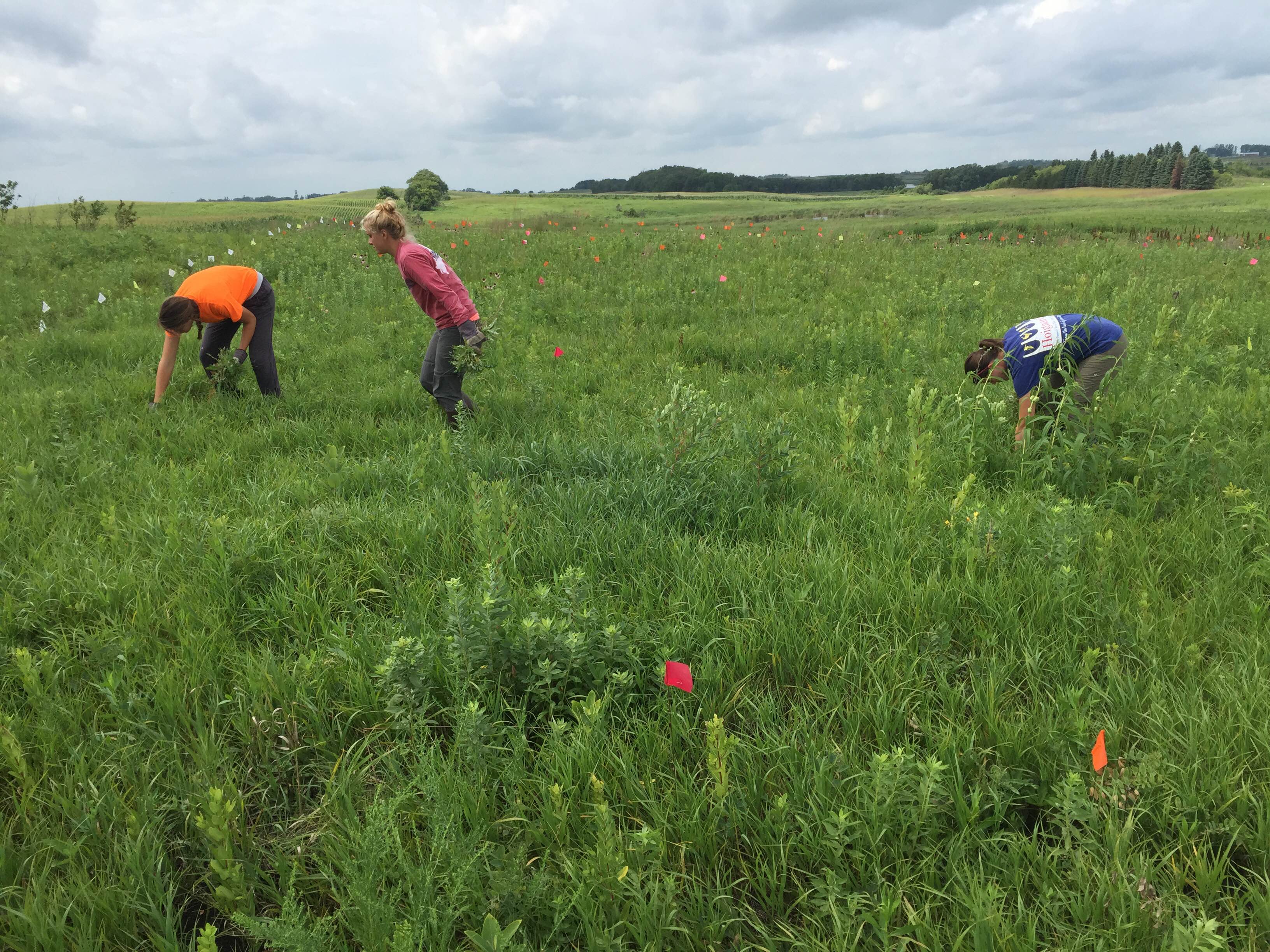
After lunch the whole team headed out to P2 at Hegg lake to pull thistles. We pulled hundreds of thistles, maybe even thousands.
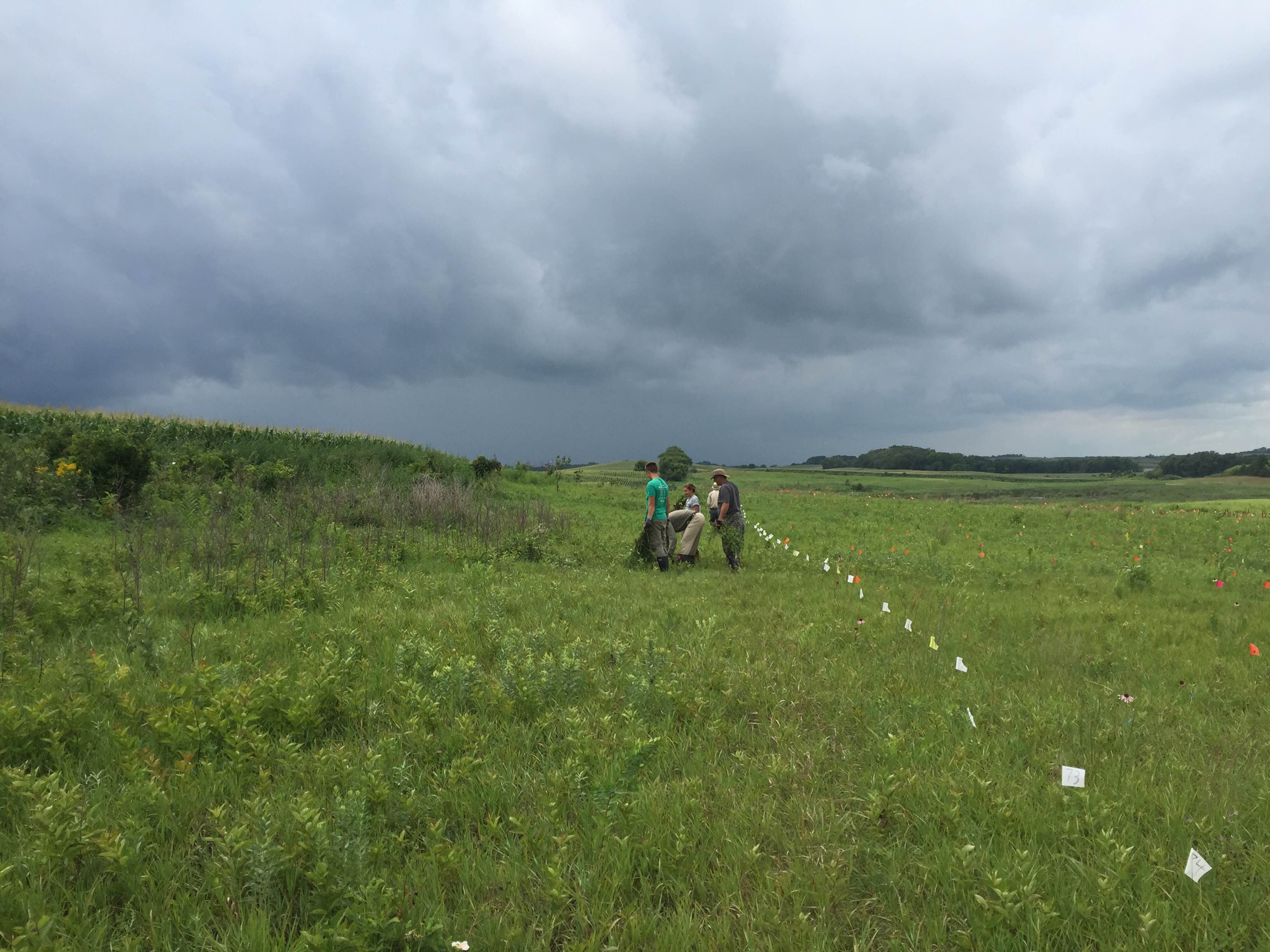
 Abby, Ali, and Amy pull thistles in p2  Katherine in pain as she holds a bundle of thistles waiting for me to take a picture After an hour or two storm clouds started to roll in over Kensington, headed in our direction. We decided to call it a day before we got to wet.
Storm Clouds headed towards us
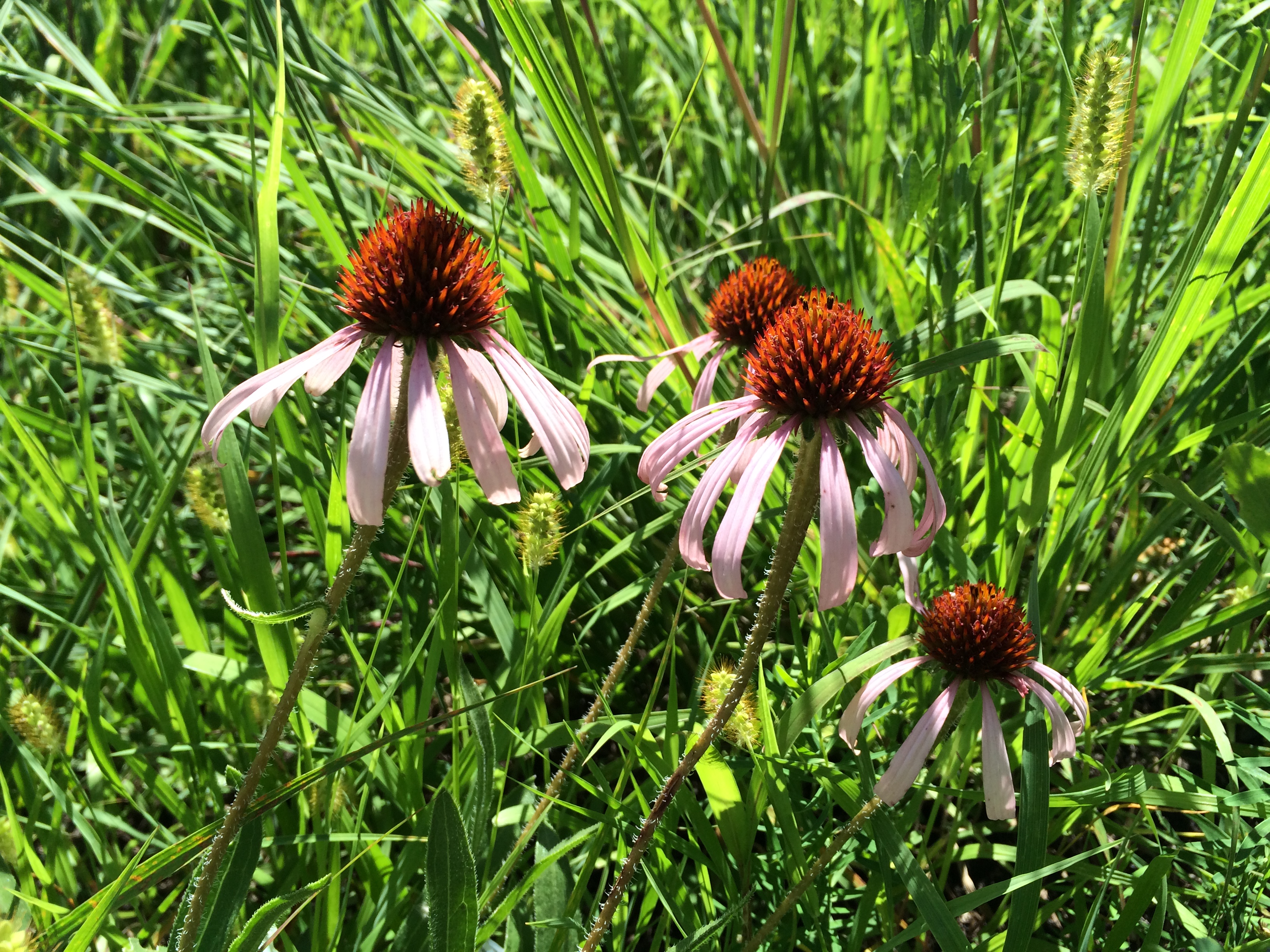
Some heads in p1 that are just about done flowering. With so many of our remnant Echinacea done flowering (less than 300 down from the 2,000 we visited at peak!), this past Tuesday found the team with some extra time on their hands. Instead of starting out with phenology, we got a chance to make progress on our independent projects. Abby and I headed out to p1 to spend some time with the specialist aphid, Aphis echinaceae. For the past few weeks we’ve been applying addition and exclusion treatments to 100 study plants in the plot with the goal of understanding some of the effects of the aphid on its host plant–continuing a study that Katherine Muller began a few years back.
The wet and dewy Tuesday morning marked our seventh round of treatments. Since starting out we’ve learned a lot about handling (“herding”) our aphids–how best to coax them from their colonies, how to keep them happy during the move between leaves, how to get them settled on their new leaves. Aphid transferring is a delicate process that requires patience and a loving touch. Offering words of comfort and encouragement seems to help ease the transition for the aphids.
While we started out with a pretty scarce supply of aphids in the garden, only able to add a couple of aphids to each of our plants and struggling to get colonies to establish, we’ve noticed a recent spike in the population. After managing to apply about 10 aphids to each plant in one of our recent treatments, we finally had some successes. On Tuesday, we found about half of our additions plants with small colonies taking hold.
This collection plant had some of the most aphids we’ve seen yet in one place! Some hypothesize that specialist aphids can have a more positive effect on their hosts as compared to generalist aphids. In just a week or two we’ll start assessing our study plants for fitness characteristics like basal leaf count and length of longest leaf, as well as for patterns in herbivory and senescence, to see if years of these addition and exclusion treatments have impacted the plants. I’m excited to move on to this phase of the research!
Today was one of the first days where the end of summer felt notably, and sadly very near. A big contributer to this feeling was that we finished doing phenology at all of the sites (p1 and p2 included!) before lunch. Several of the sites including East of Town Hall, KJs and North of Golf Course, are finished flowering all together! While Riley’s used to take many hours, it only took me and Will a few minutes to finish up phenology there this morning. At lunch Will taught us a puzzle/riddle which while difficult to explain in a flog post, elicited many laughs and caused hats to be thrown in frustration across the picnic table of the Hjelm house. After lunch, the most of crew went to p1 to continue working on crosses for the Q3 experiment. Many of those are done now too, and we have seen a lot of style shriveling hopefully indicating compatible pollen addition and a successful cross between flowers! Tonight we have a special guest appearance from Erica, Lea’s sister! While we’re all excited that she’s here, it’s bittersweet because it means that Lea is leaving tomorrow morning 🙁 We’re all feeling a little snuffly about Lea’s departure, but excited to stay in touch with all members of the 2015 Echinacea team.
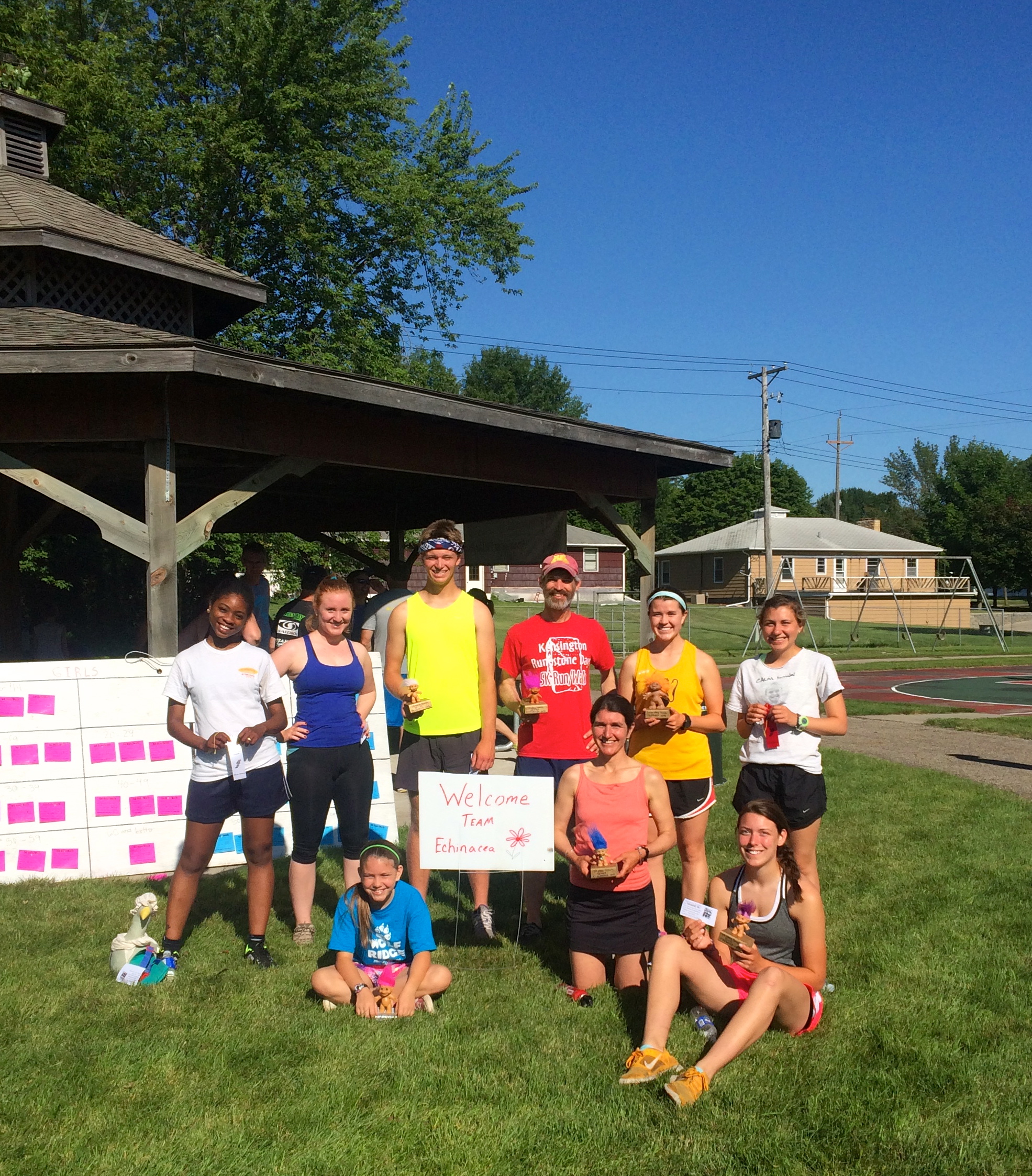
 Team Echinacea shows off the many troll-phies and ribbons earned at the Flekke-5k! Today was a winning day for Team Echinacea! Ten members of the crew (including Hattie and Per) got up early to run the 5k at the annual Elbow Lake Scandinavian festival with the catchy name “Flekkefest.” The humidity let up for us and the morning was a cloudless, cool, and crisp one as we assembled for the race. Approaching the registration table we found that Abby’s dad, who was in charge of organizing the race, had made us a “Welcome Team Echinacea” sign. The sign must have been some encouragement; five kilometers later we had quite a few trophies under our belts. Our very own Amy got first place overall for women! Between the rest of us we also earned second and fourth for women, as well as a few wins for our respective age groups. My favorite part about the race was that they gave out troll trophies–which we dubbed “trollphies” for short.
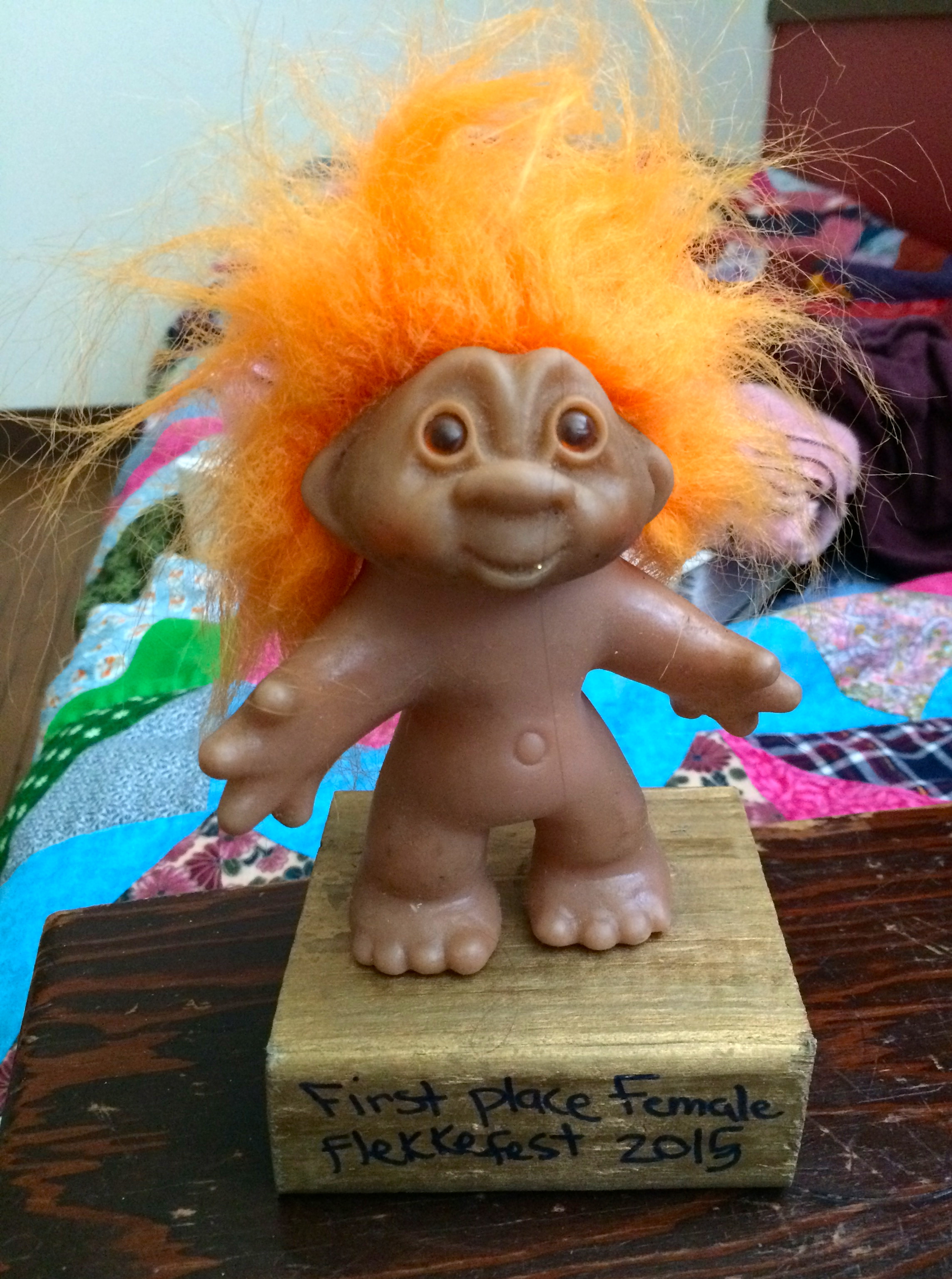
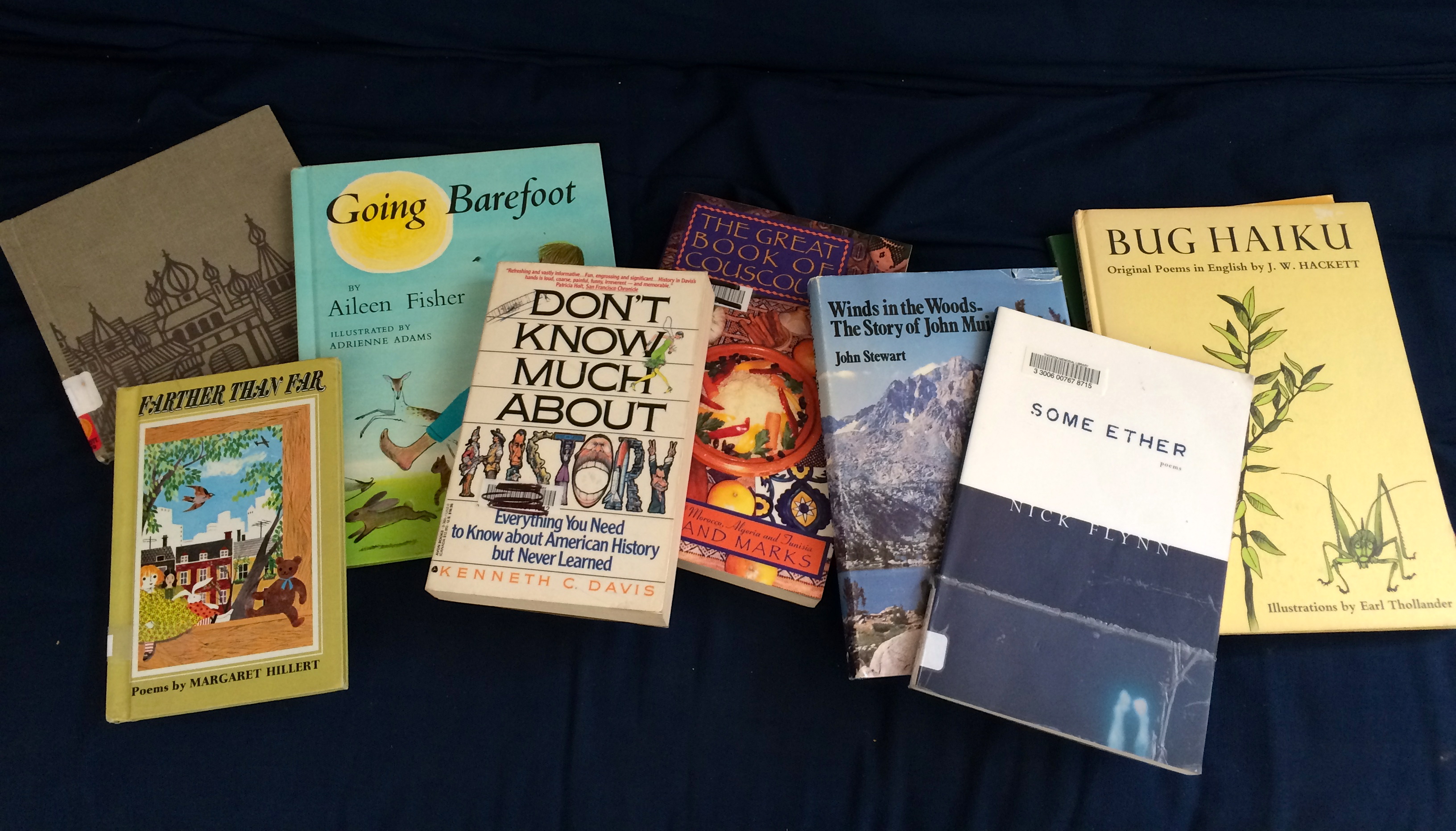
 Amy’s troll-phy for first place! Maybe most exciting of all, however, every participant of the race got a free book coupon for the book sale going on downtown. We spent the next hour after the race finding used book gems (like the ones below), before enjoying an all-you-can-eat breakfast buffet at a small place across the street.
 Some treasures picked up at the Flekkefest used book sale. Home, well-fed, and showered, we proceeded lazily with the rest of the day at Town Hall. Curled up with our new (old) books, a few of us ended up napping–not surprising given that our day started at 6am!
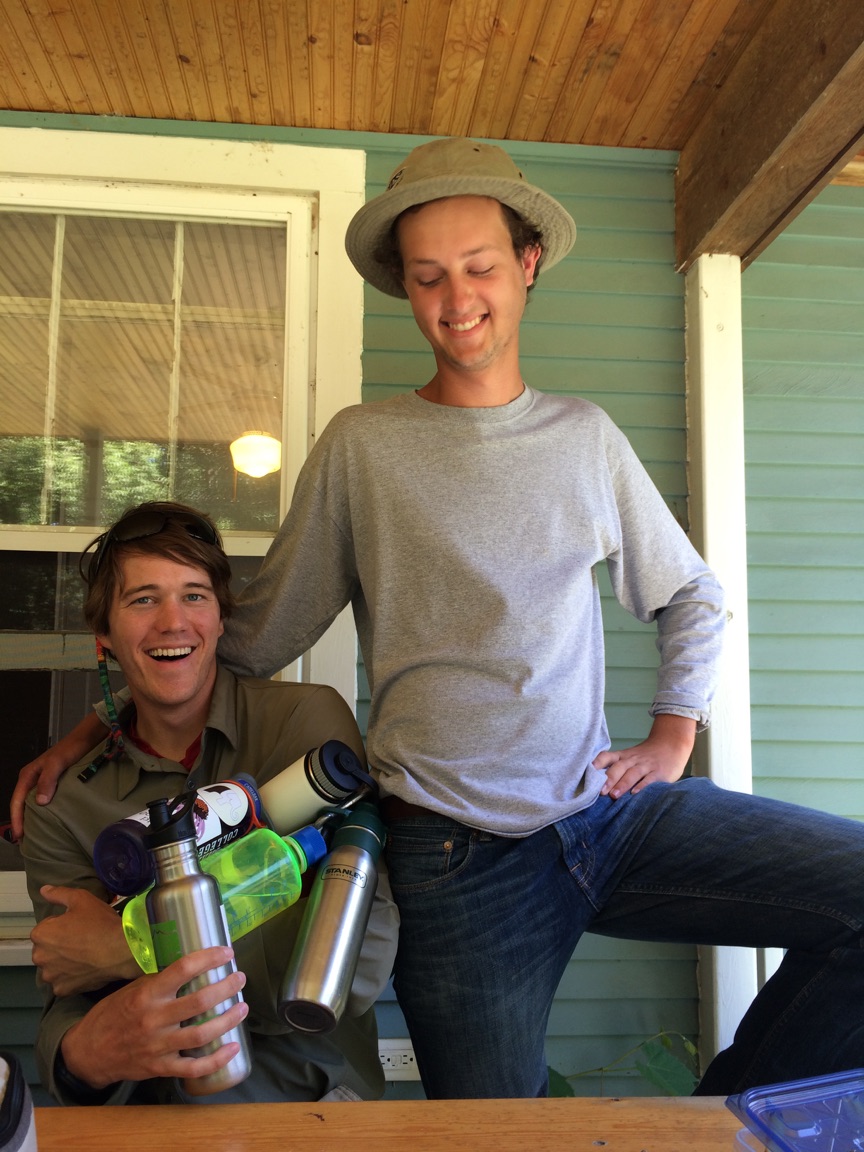
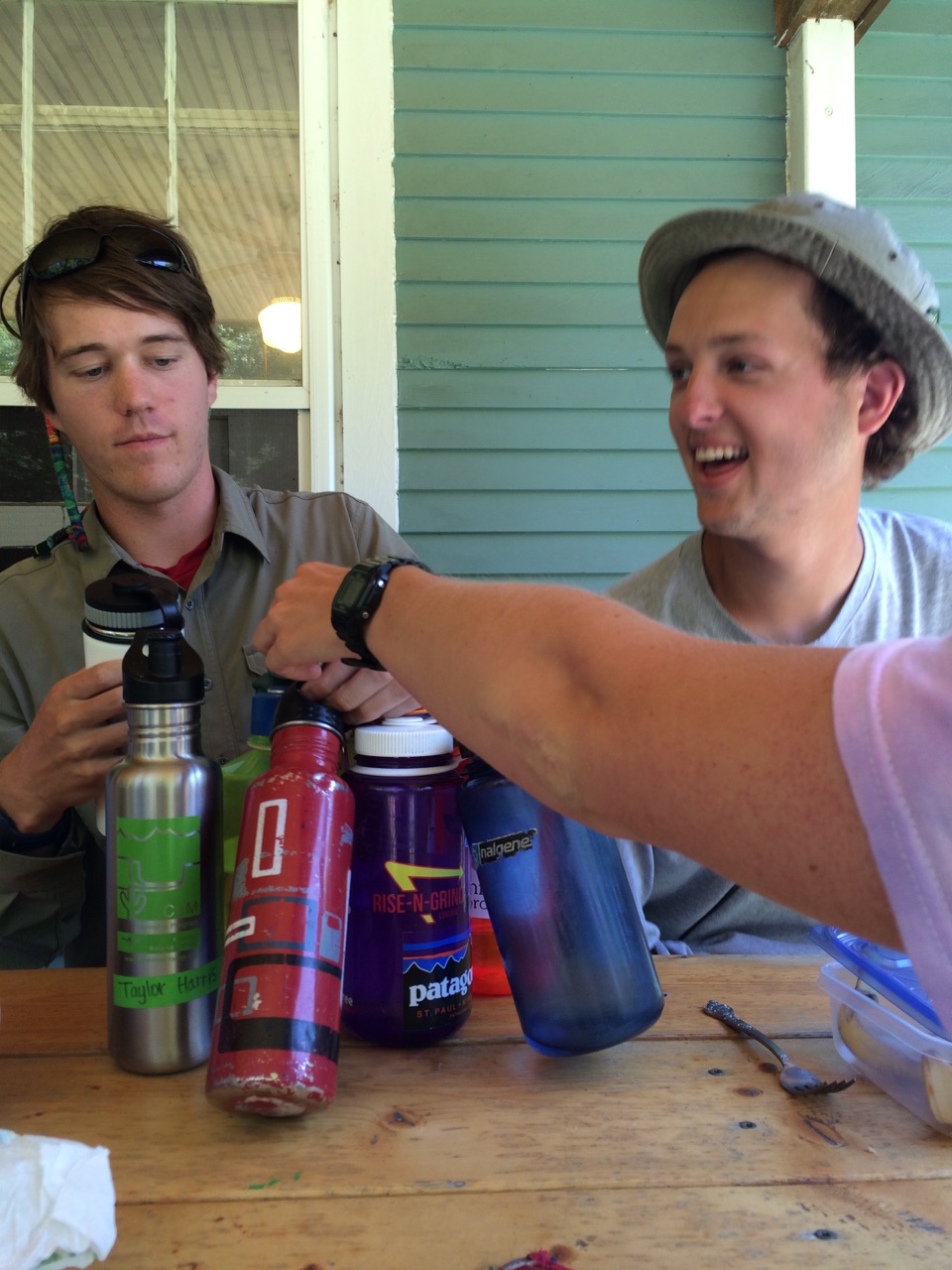
Is the Minnesota humidity too hot to handle? Are you tired of refilling your water bottle every so often? If so, the Grand Water Bottle Clip 3000 is just what you need! Tested and proven by our very own, this small piece of equipment is guaranteed to hold at least 10 bottles—- that means no more trips to refill your bottle! The GWBC 3000 is sure to have you well-hydrated enough to concentrate on recording proper phenology data AND increase your performance in sire/dam crosses! Get your Grand Water Bottle Clip 3000 today!— but it’s not in stores! Call 1-800-GWBC3000 to receive yours today!
*TODAY ONLY* BUY ONE, GET ONE 50% OFF GWBC3000! Call today and to order your very own Grand Water Bottle Clip 3000 & get the second 50% off (buyer pays separate shipping & handling) (no money back guarantee) (may not work if you are not a member of Team Echinacea) (bottle clips are not meant, for 10 bottles, please don’t try at home) (may not enhance phenology data recording or ability to cross Echinacea plants).
This morning started off beautifully with slightly slower winds than yesterday, perfect for crossing Q3 plants. The team crossed all the Staffanson and Landfill plants before lunch! I was tasked with capturing video for an instructional video on how to cross pollenate plants so that future team members could view the procedures at any time. I had a lot of fun documenting each member of Team Echinacea pollenating various plants across the experimental plot. In the afternoon Stuart again tasked Taylor and me with working on a short video documenting the correct way to flag, tag, and twist tie a new plant in the field.
 Making Taylor’s dream of being a an actress come true!
After Taylor and I completed the filming for the flag, tag, and twist tie video Abby, Gina, and I headed over to Hegg Lake where I was able to test out the vacuum harvester I am borrowing from the DNR, I was also able to think about my experimental design and figure out what needed to be done.
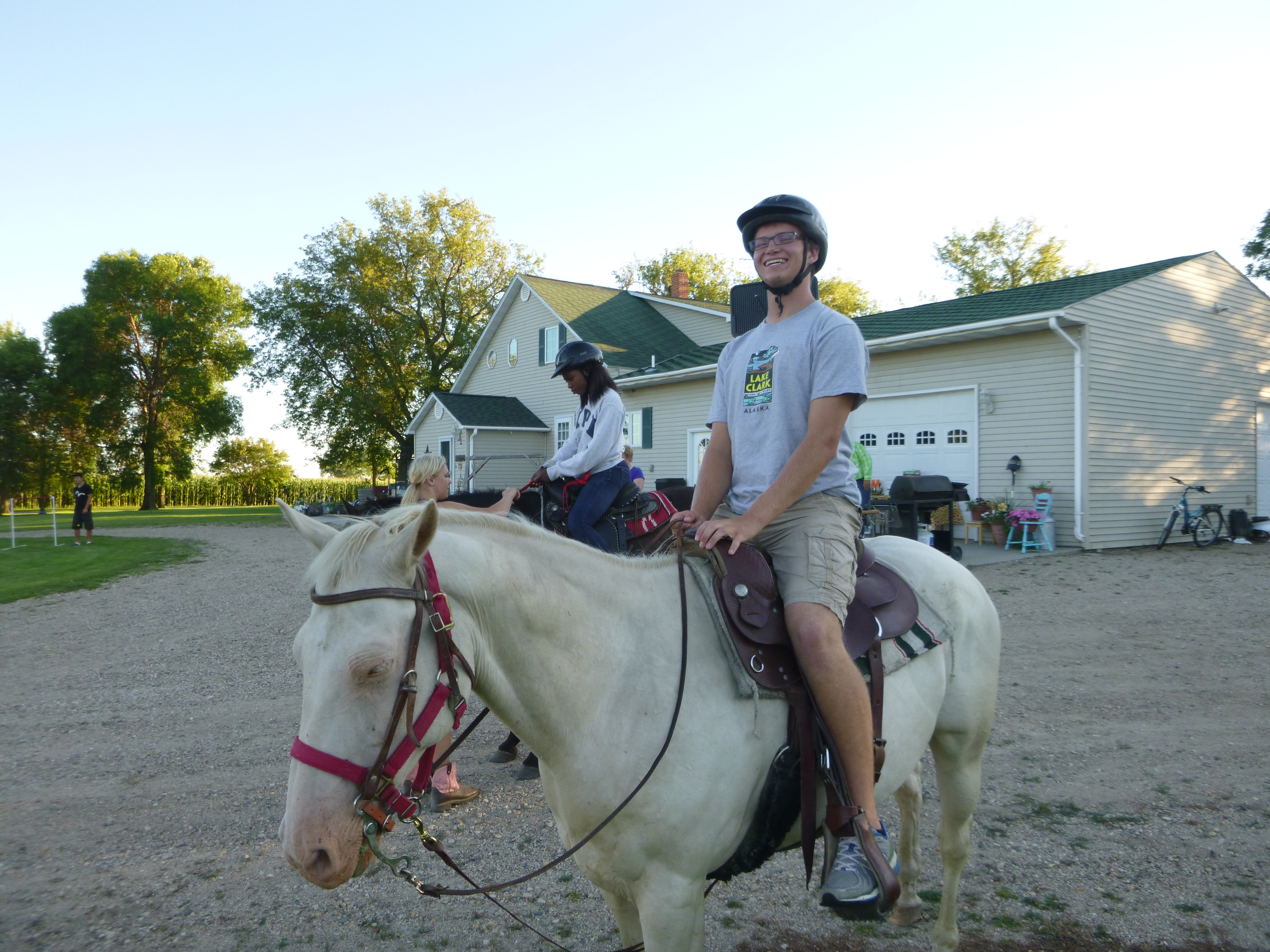
After Work the team got cleaned up at home and headed to Matt’s house for some kebabs and a bonfire. Matt was gracious enough to allow us to ride his horses and gave us lots of vegetables from his garden. For most of us this was our first time riding a horse which was very exciting!
MAJESTIC!
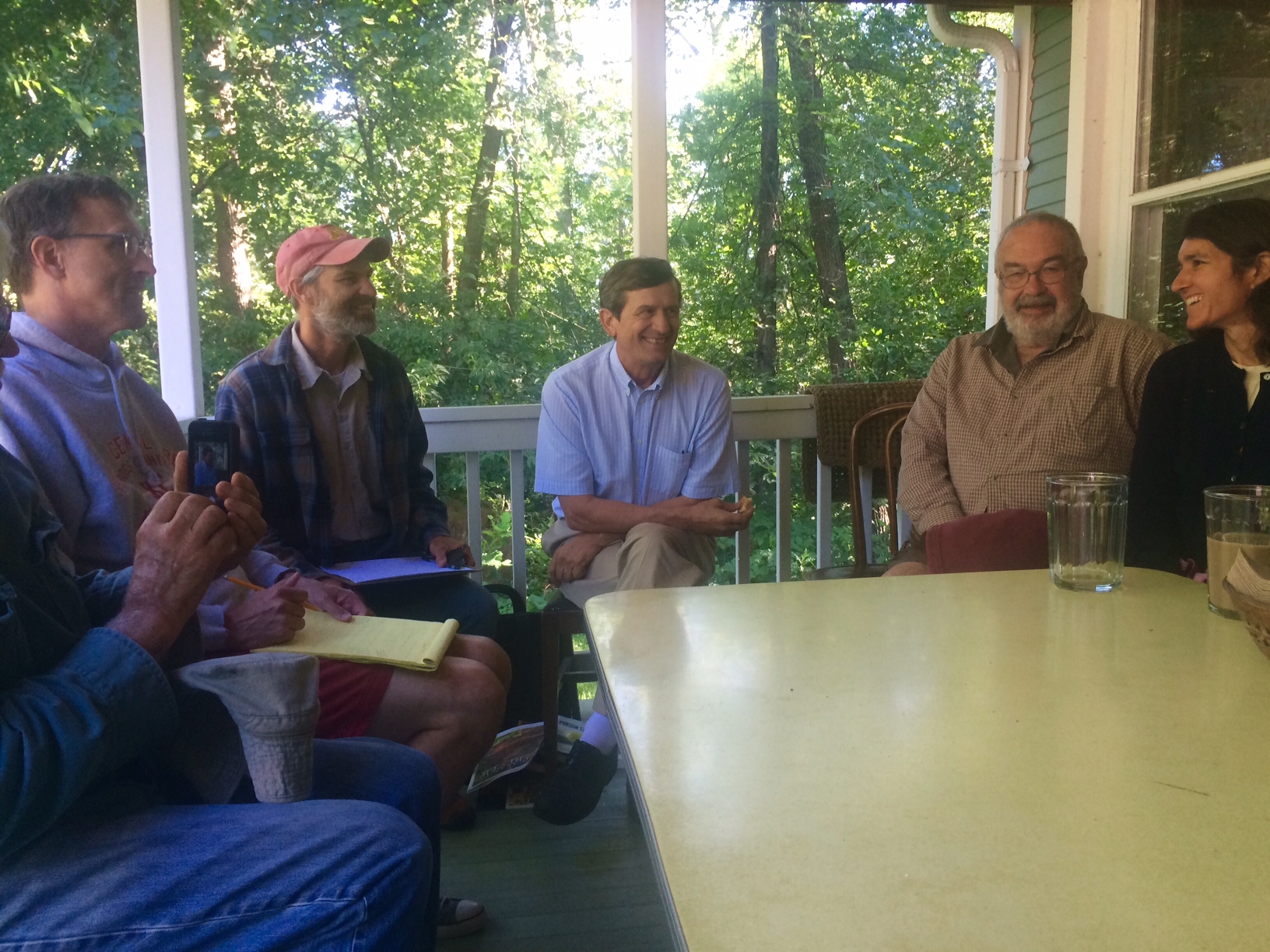
We started off today with freshly baked scones and a visit from Steve Ellis, a local beekeeper. Steve is currently involved in a court case, Ellis vs. EPA, which seeks to increase regulation on the use of pesticides, especially neonicotinoids, when used in areas where bees forage. He told us about how neonicotinoids are nearly ubiquitous in today’s agricultural system, coated on corn, soybean, and many other crops. These are systemic pesticides which means that the chemicals are taken up by all parts of the plant. Anything that eats the plant—including the pollen that the plant produces—is exposed to the chemicals. Although they are basically safe for humans, they cause mortality to bees in high dosages. Even more troubling, though, is that they frequently have sublethal effects on bees even at very low concentrations. This can compromise their ability to forage, overwinter, effectively provide pollination, and reproduce. Steve emphasized that there is a lot that we don’t know about the effects of neonicotinoids, such as their long-term effects in the ecosystem. Steve is very active as an advocate for bee health, spending much of his time talking to legislators and people like us to spread the word about what is happening to bees. He told us that one of the most important things that we can do are to buy organic food, which will reduce both our own and the bees’ exposure to chemicals.
Local beekeeper and activist Steve Ellis visited this morning We finished up some phenology before lunch. It was too windy here (gusting up to 40 mph) to do crosses for the q3 experiment, so instead we did more phenology (less to do tomorrow!) and sent teams out with the GPS units to make sure the maps we are using include all of our plants. Tomorrow we will hopefully be able to do a lot of crossing. We will also do some more GPS surveying and work on independent projects.
Today started on the porch. We gathered at the table and talked about the tasks at hand. The first order of business involved organizing the mapped GPS data. Maps of all the remnants needed to be checked for missing GPS points and tag errors. Next up was an R Lesson. I loved learning the basics of loading/correcting data and executing a basic statistical test. After the morning lesson, we headed out to do a bit of GPS-ing and phenology at a few remnant sites, then gathered on the porch again for lunch.
After lunch, we started by pulling invasive thistles out of p1. After walking all the rows, we pulled 117 thistles in total! The two most impressive pulls were giant roadside plants seen below.
 Matt’s huge thistle!  Danny’s bouquet
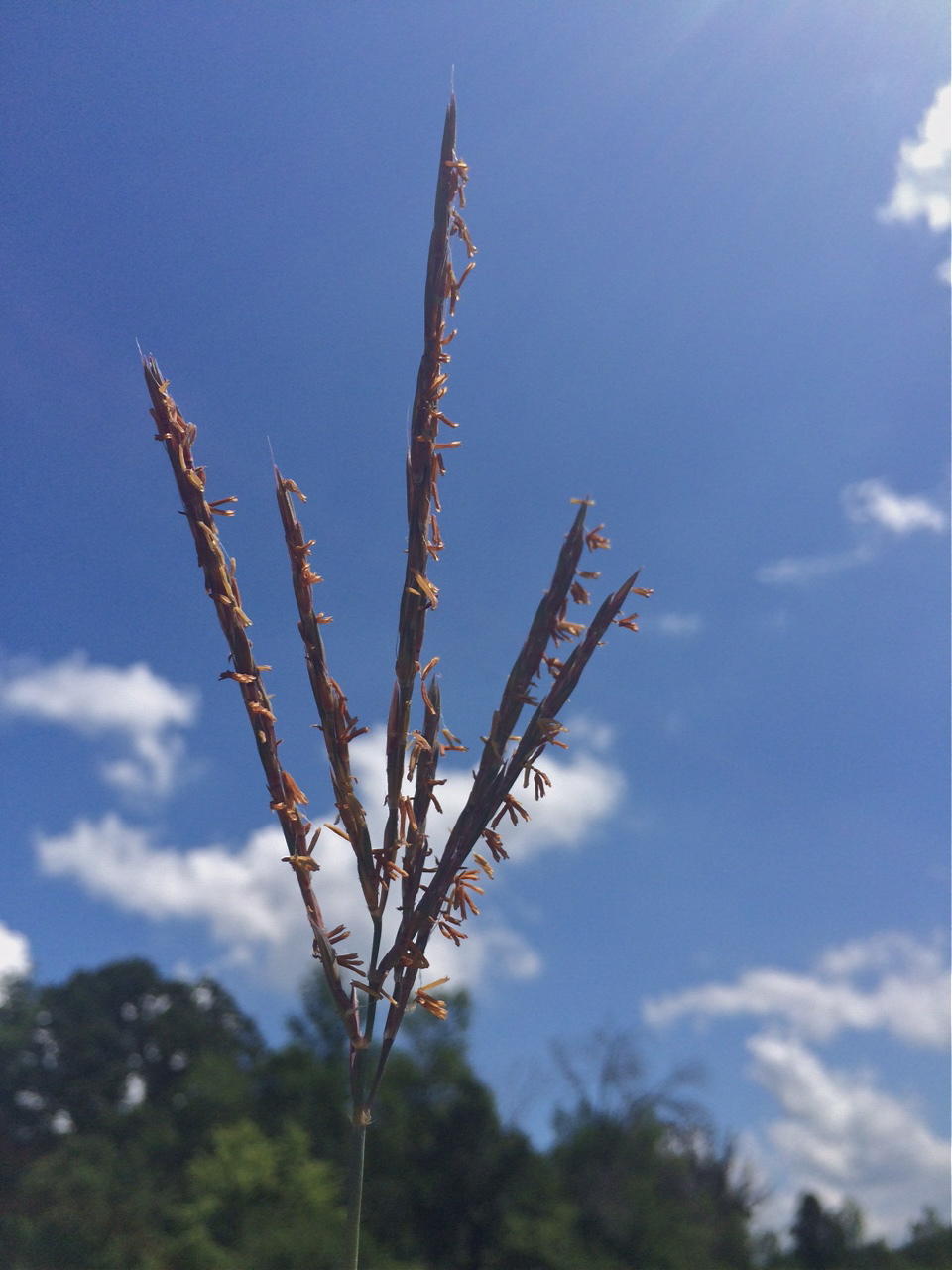
After the thistles were pulled, we moved on to hand crossing heads for Q3. On the way out to cross, I noticed some flowering grasses!
 
Staffanson pollen was organized and put into insulating styrofoam containers that correspond to each data sheet. We worked consistently until all 28 data sheets were complete, and all heads crossed.
 Crossing is almost done! Stuart passes out pollen.
We started the day with phenology in all of the remnants as well as p2. It’s quite apparent that we’re past peak within the remnants and many of the big sites have more flowers that are done than still flowering. It’s an exciting time to be an Echinacea because the styles have shriveled and the achenes will be forming soon.
 An early afternoon meeting We spent the afternoon finishing the crosses between the landfill sires and dams in p1 and then wrapped up with watermelon! Stuart, Danny, and Will had a watermelon seed spitting contest and Stuart’s rapid fire technique left all of us wondering where the seeds had went. In the end Stuart was victorious, spitting it roughly 4-5 meters and impressing us all.
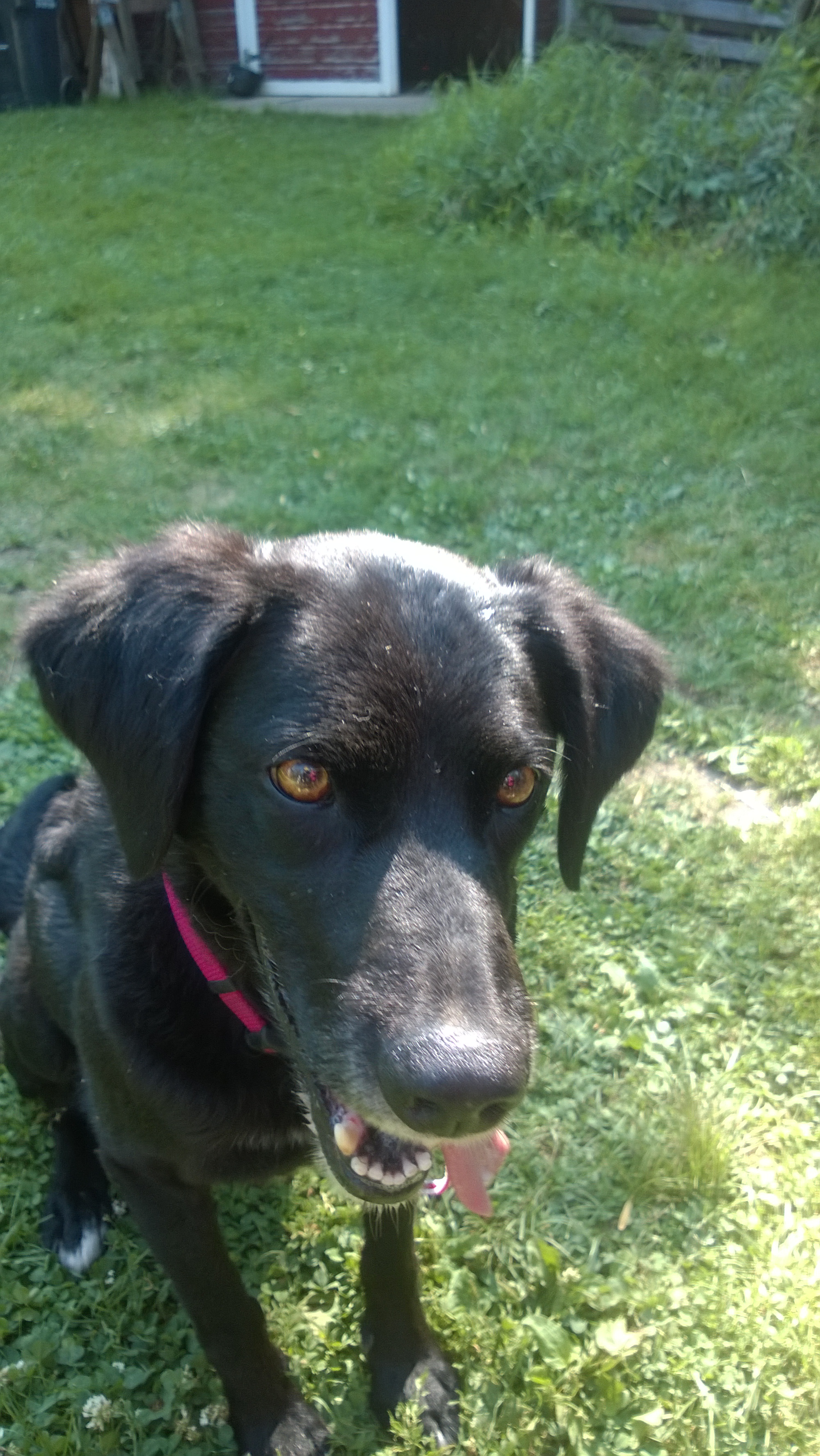
 Roxie is excited about the watermelon!
|
|