
This afternoon we are going to measure plants in Jennifer’s Phenology plot at Hegg Lake WMA. Here is a script that makes a datasheet that assigns us rows to measure. The order is approximately 1 – 80, but they are slightly mixed up (just to keep us on our toes): measurePHENatHeggLakeRows.r
|
||||
|
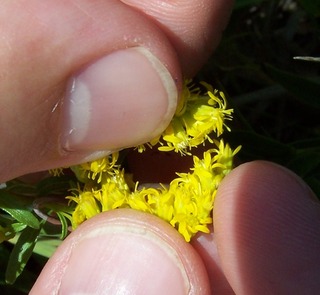
If someone is able- some in the CG and some at Nice Island to be pollinated still exist. Psoralea argophylla Solidago missouriensis
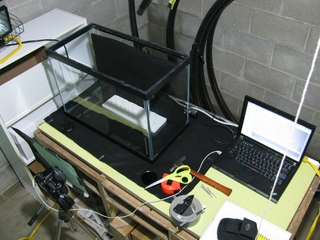
For Solidago missouriensis at Nice Island: Flag ID Self ID Sprig Outcross ID Sprig Date Site helandechfinaldataset3.csvAs all of you know katie and I are leaving this weekend to go back up to CBG, and I am hoping that Echinacea will be just about done flowering at all of my sites by then. It is looking hopeful and today I had my first site that was done flowering! I still need to tag the Echinacea at some of my sites though. I finished entering most of my data this weekend, and am very excited to see what the graphs and analysis will reveal. I am posting the cvs files for Stuart below, and some pics of a very interesting bug katie found today let me know of you can open this one.. So I think I have my basic setup for the time-lapse photography for checking out those stipa awns. Using one of Greg’s aquariums, a camera, tripod, computer and such. I’ll be able to change the humidity soon enough and really start the experiment. Some of the stipa, just as a test And here’s my setup. Off to the left of the aquarium is the 500W halogen light. The seeds and black felt are inside the aquarium. In front of that is the camera with a blind on the front to help knock down some glare from the front glass. Attached is the computer, which is what I’m using to control the time-lapse. There are only two plants from Steven’s Approach left in the Common Garden that have yet to finish flowering! I have the rest of the start and end dates of all other flowering plants attached to the csv file below. Ian This site explains the circumstances where burning permits are required in Minnesota: http://www.dnr.state.mn.us/forestry/fire/questions.html This graph summarizes the First and Last Day of Flowering for Echinacea plants in the common garden. It looks like peak flowering was July 8, 2010.
I analyzed my data and put together a couple of tables and figures. one thing that is interesting to me is that each species of bee was more sucessful in pollinating styles that had been 2 days old rather than 1 day old styles. hmmm? Maybe styles that are out for more than a day are more susceptable to shriveling..? Also, when Gretel compiles the data for CG phenology into a figure, I will use the figure to match up dates for when I did the insect visits and which species I saw most on those days. It should be interesting because it seems to be that in the beginning of flowering and towards the end of flowering, the smaller bees such as Augochlorella appear. Whereas during the peak of flowering, Melissodes dominated and I didn’t see any Augochlorella. -Katie |
||||
|
© 2026 The Echinacea Project - All Rights Reserved - Log in Powered by WordPress & Atahualpa |
||||


-thumb-320x242-50642.jpg)