We started our day off by splitting into teams and heading out to collect pollen from a few Echinacea heads. Daytona and his team had a volunteer trying to hitch a ride to the site on the side of the truck (a very adorable volunteer at that). The would be tiniest member of team Echinacea was removed safely due to a lack of sufficient credentials and inability to meet BF standards.
Once we finished out the morning collecting pollen we headed back out in the afternoon to collect nectar and I saw this echinacea with a large head that looked like a strawberry. Though tempted, I did not taste to see whether it was an echinacea or a strawberry.
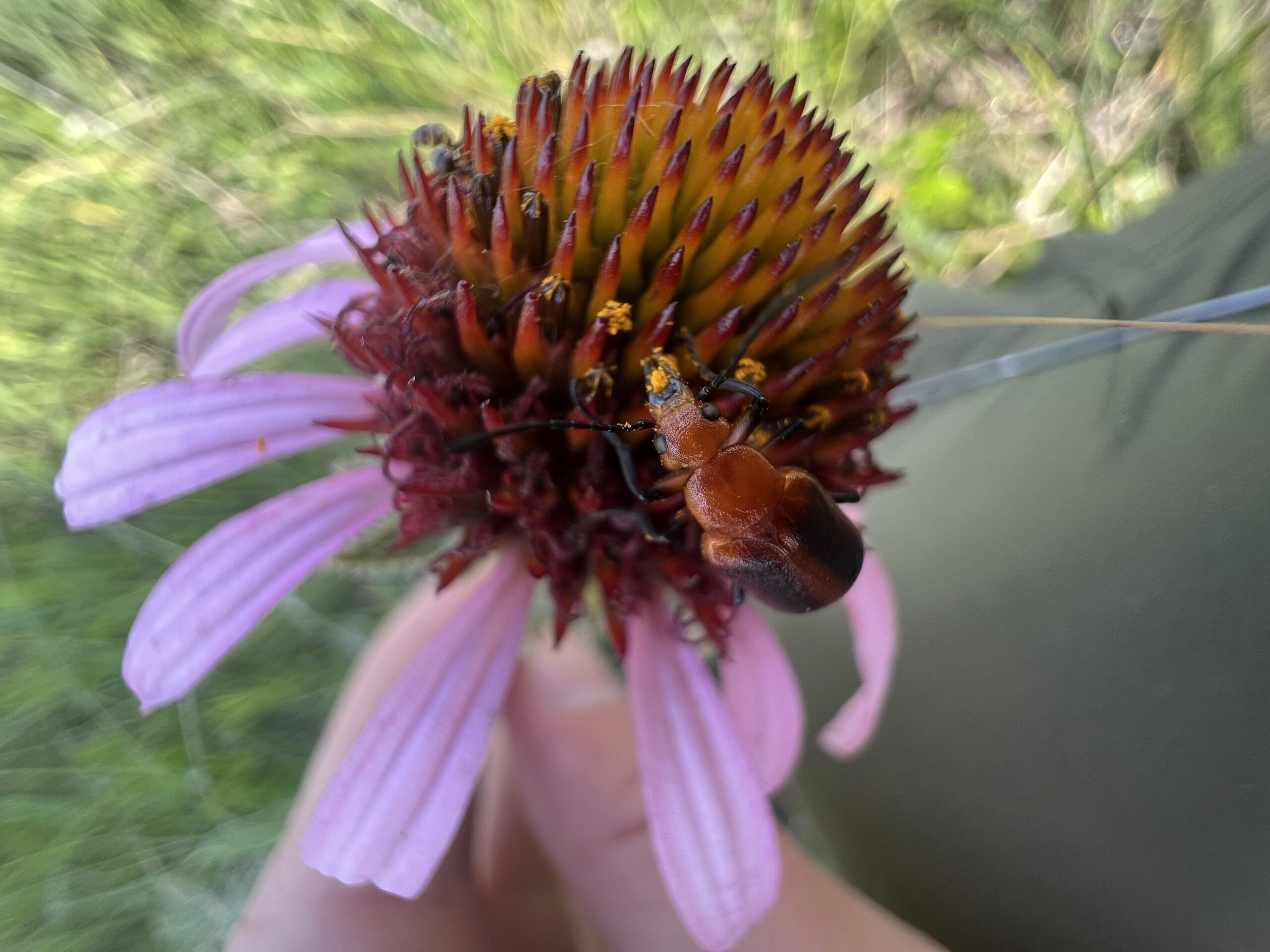
A beetle was seen allegedly stealing pollen from Echinacea Angustifolia this morning at Staffanson Prairie preserve. The insect’s motives are currently unknown and the suspect is still on the loose.
The crime in progress
Witnesses say the crime occurred around 9:40, when the critter began apparently attacking Angustifolia’s anthers unprovoked.
“It was like nothing I’d ever seen,” said Amorpha Canascens, Angustifolia’s neighbor. “My forby friend was just going about their business trying to reproduce when this cranky creature started pocketing all their pollen for itself.”
Officials have reported that 2023 is a relatively low flowering year for our favorite prairie flower in the area, so Angustifolia may not have had many mates anyway. Still, they would have liked to have had a chance to reproduce.
“A whole day of pollen production wasted! This is going to throw off my synchrony stats for sure,” Angustifolia said.
Despite the hardship, Angustifolia remains committed to their goal.
“I still have some more flowering days in me yet,” they said. “And for every selfish beetle, there’s a benevolent bee to help me out. Because in the prairie, we look out for each other.”
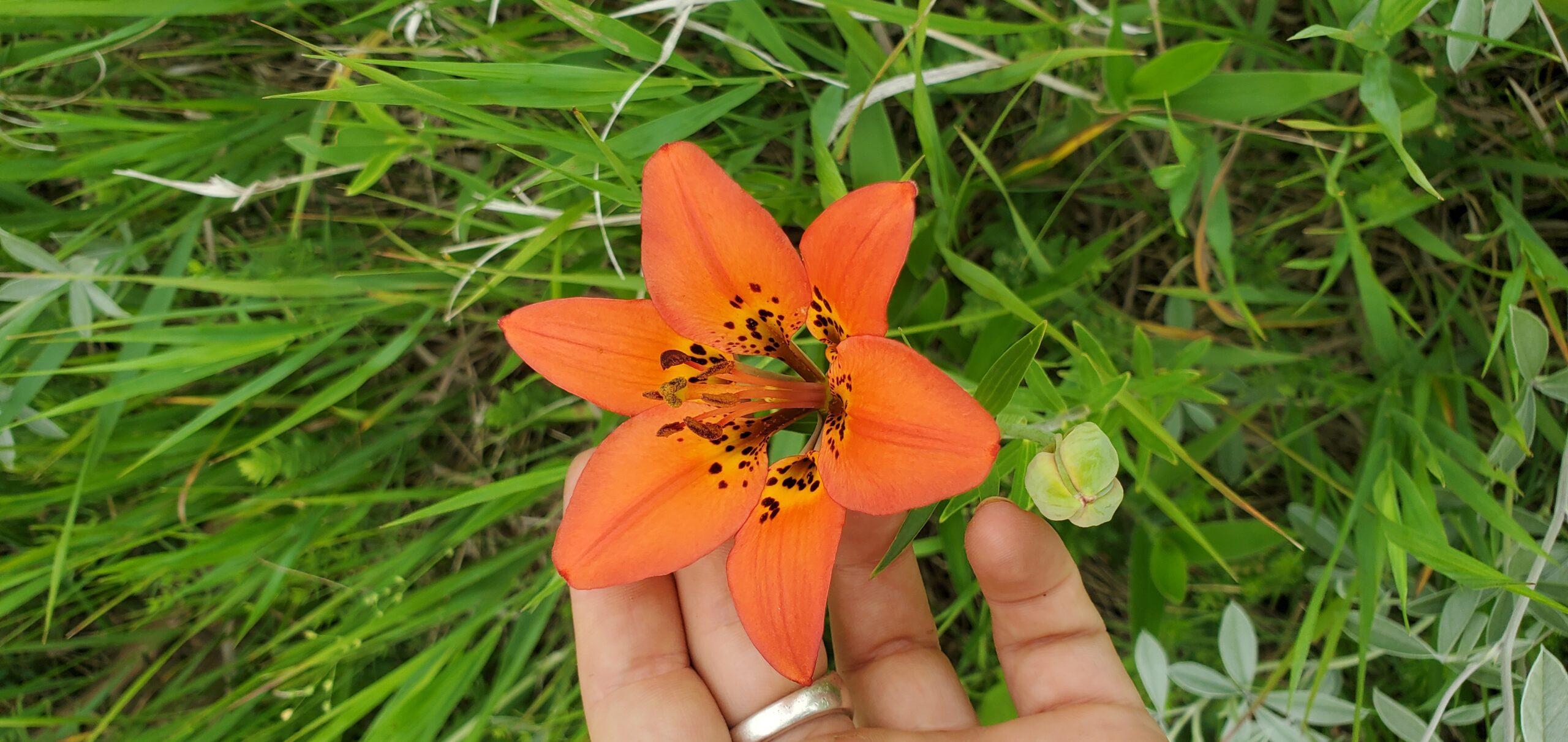
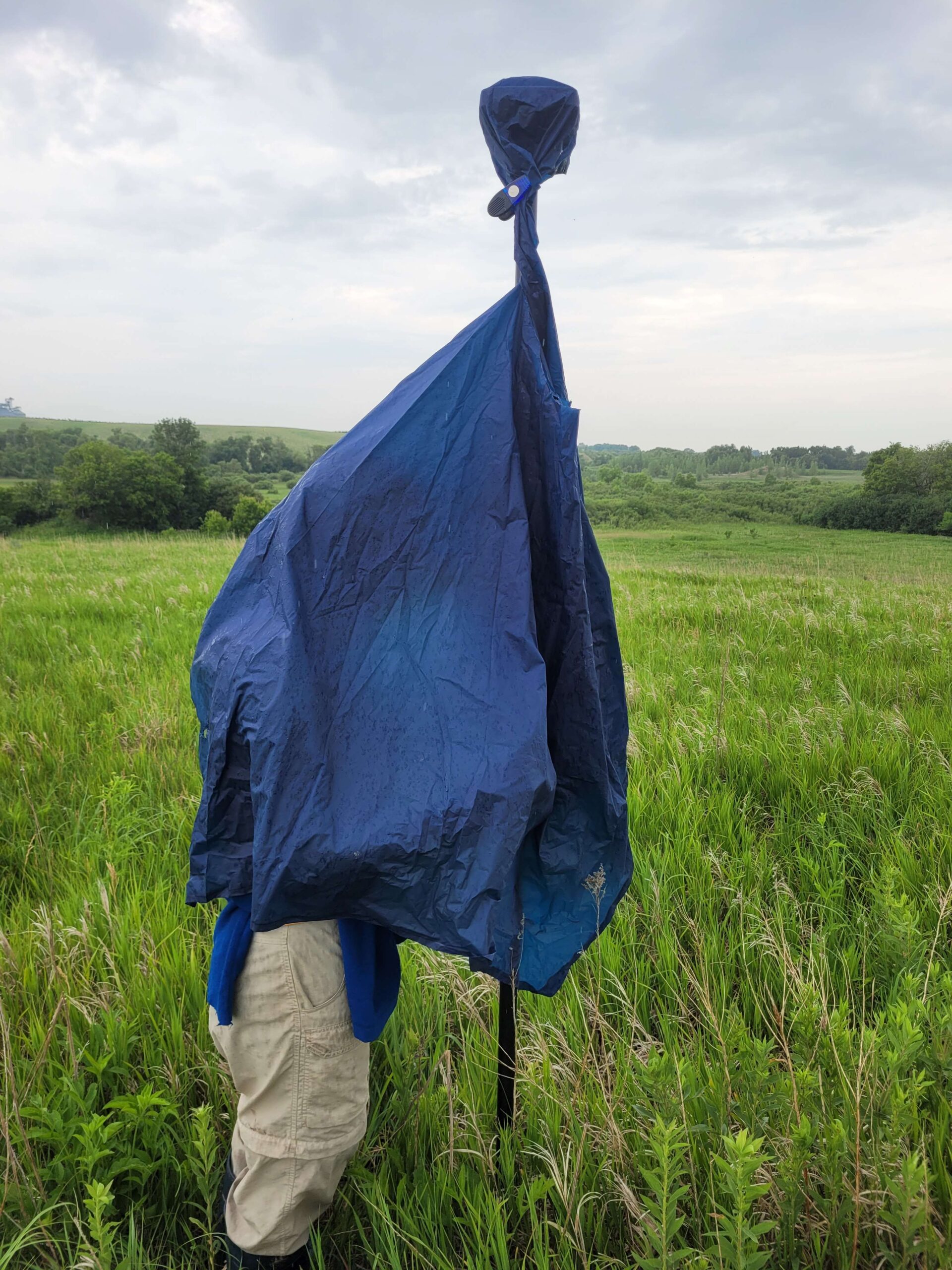
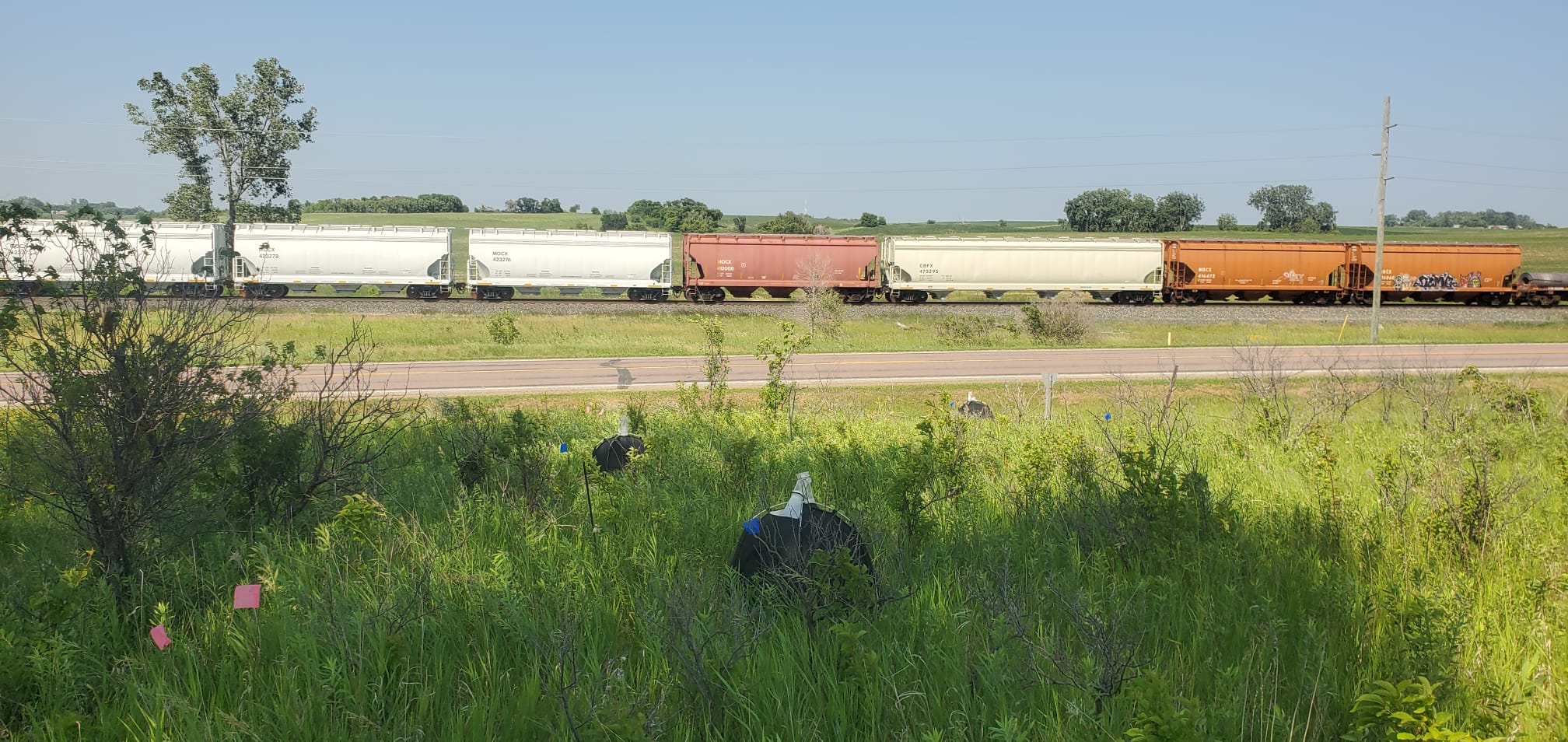
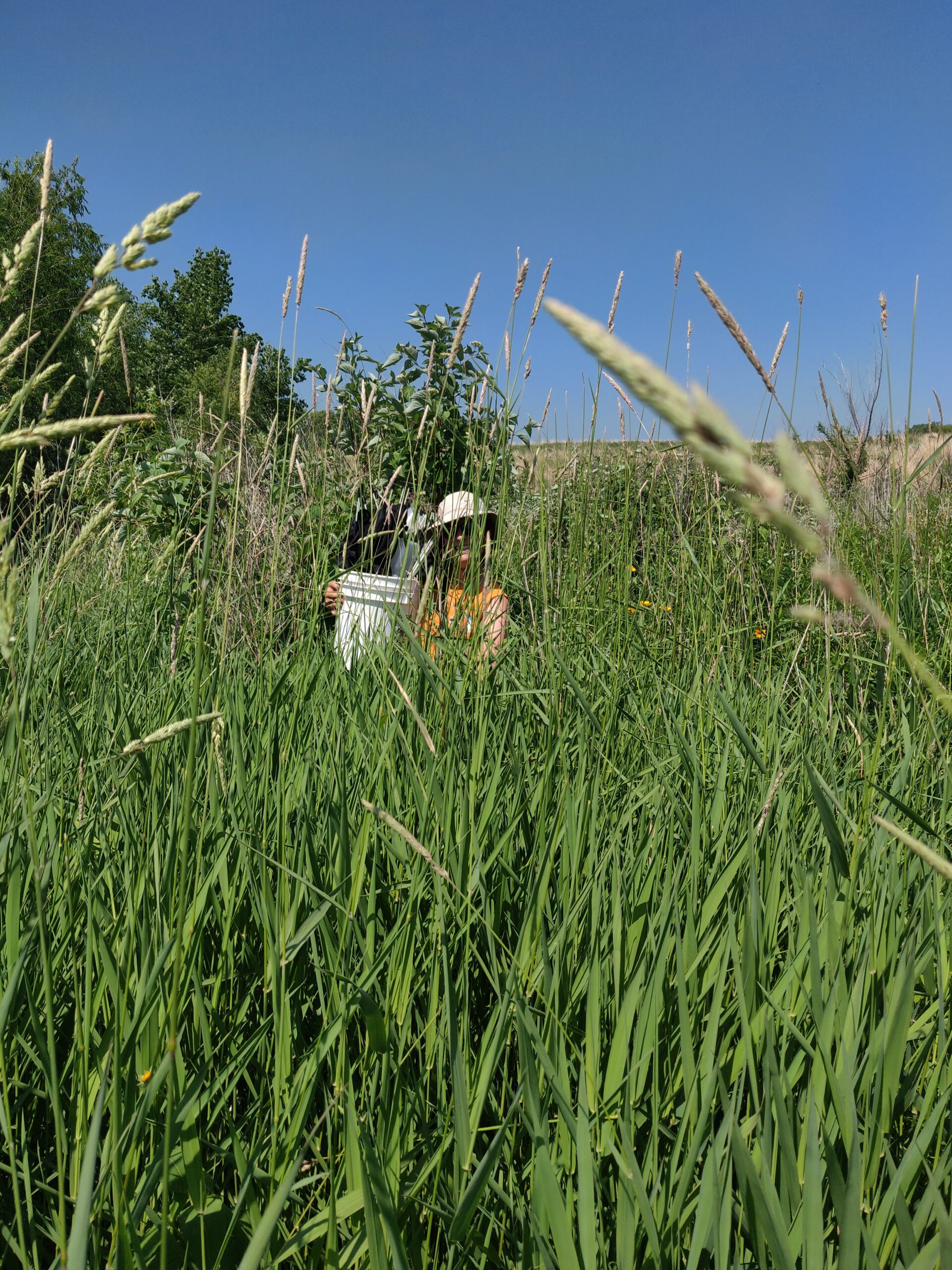
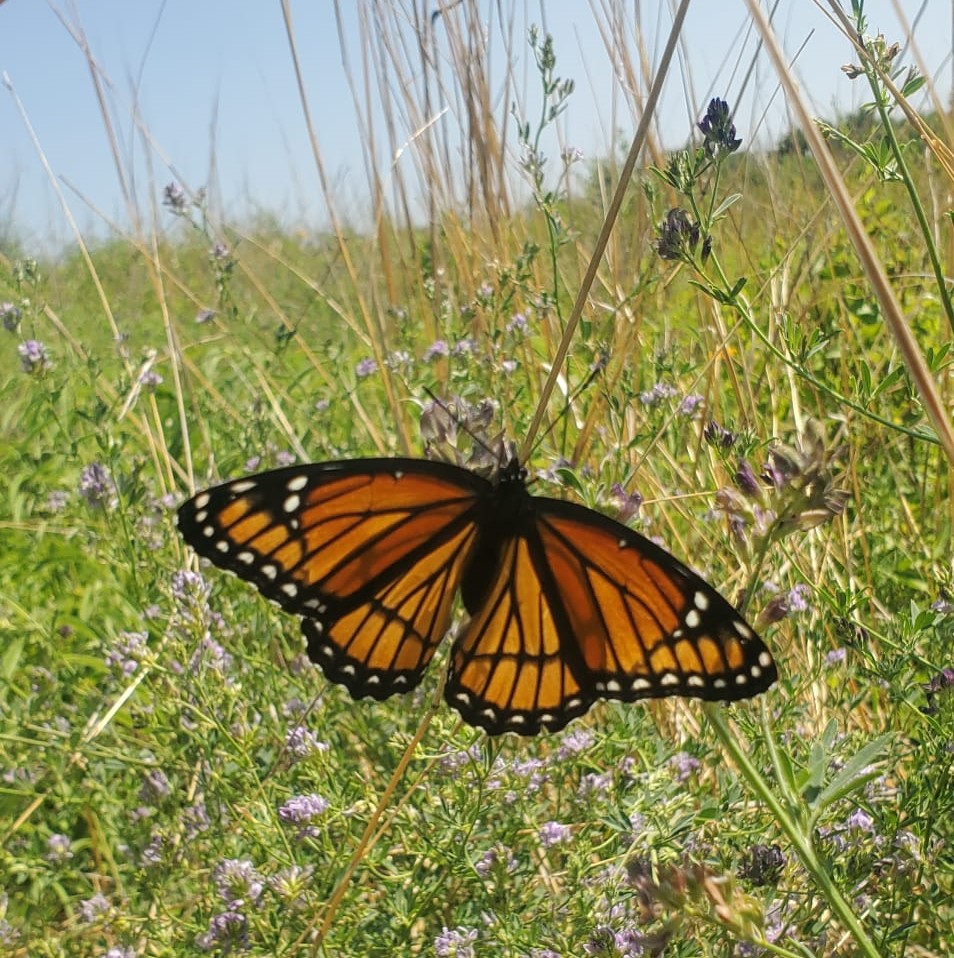
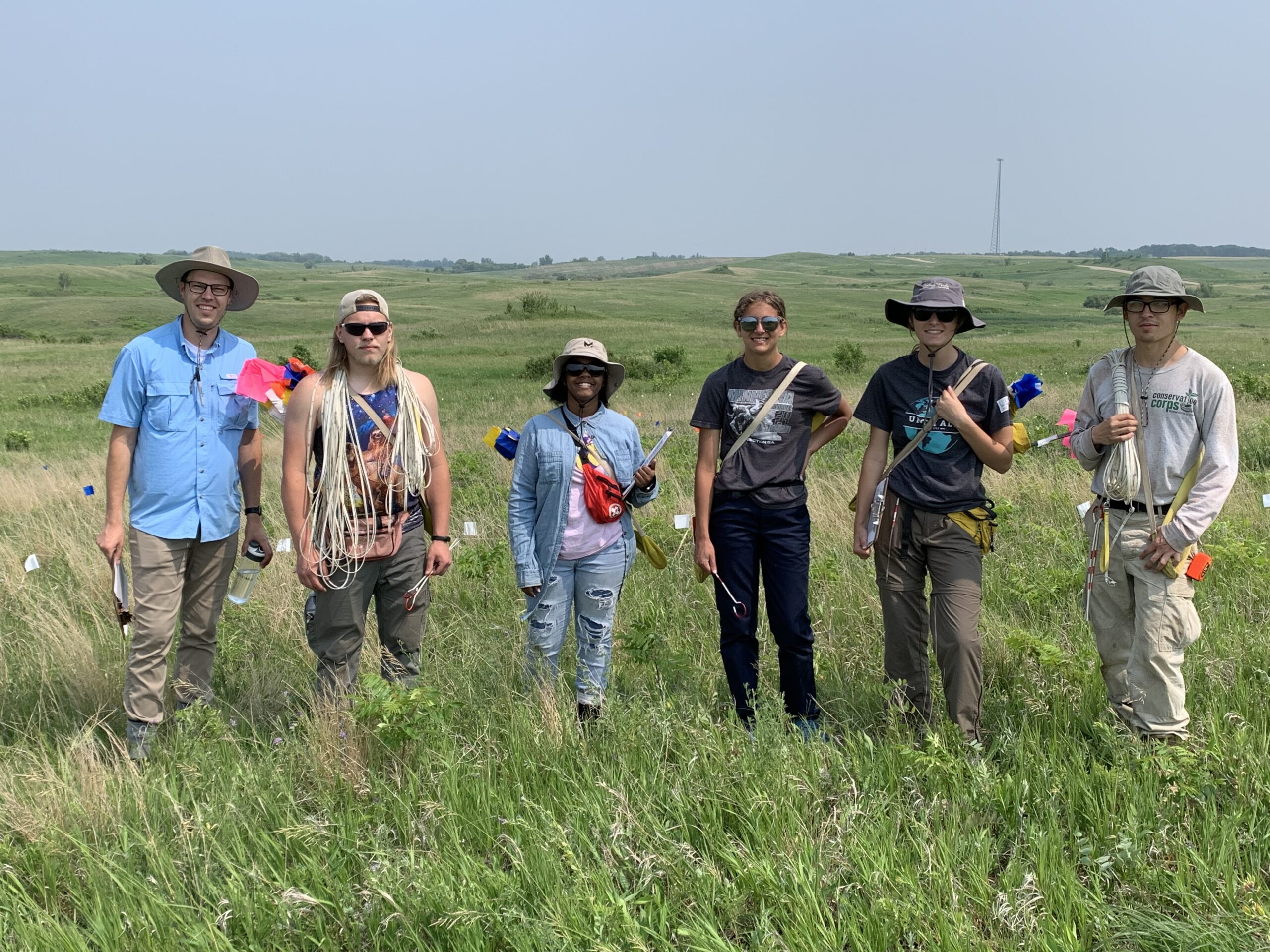
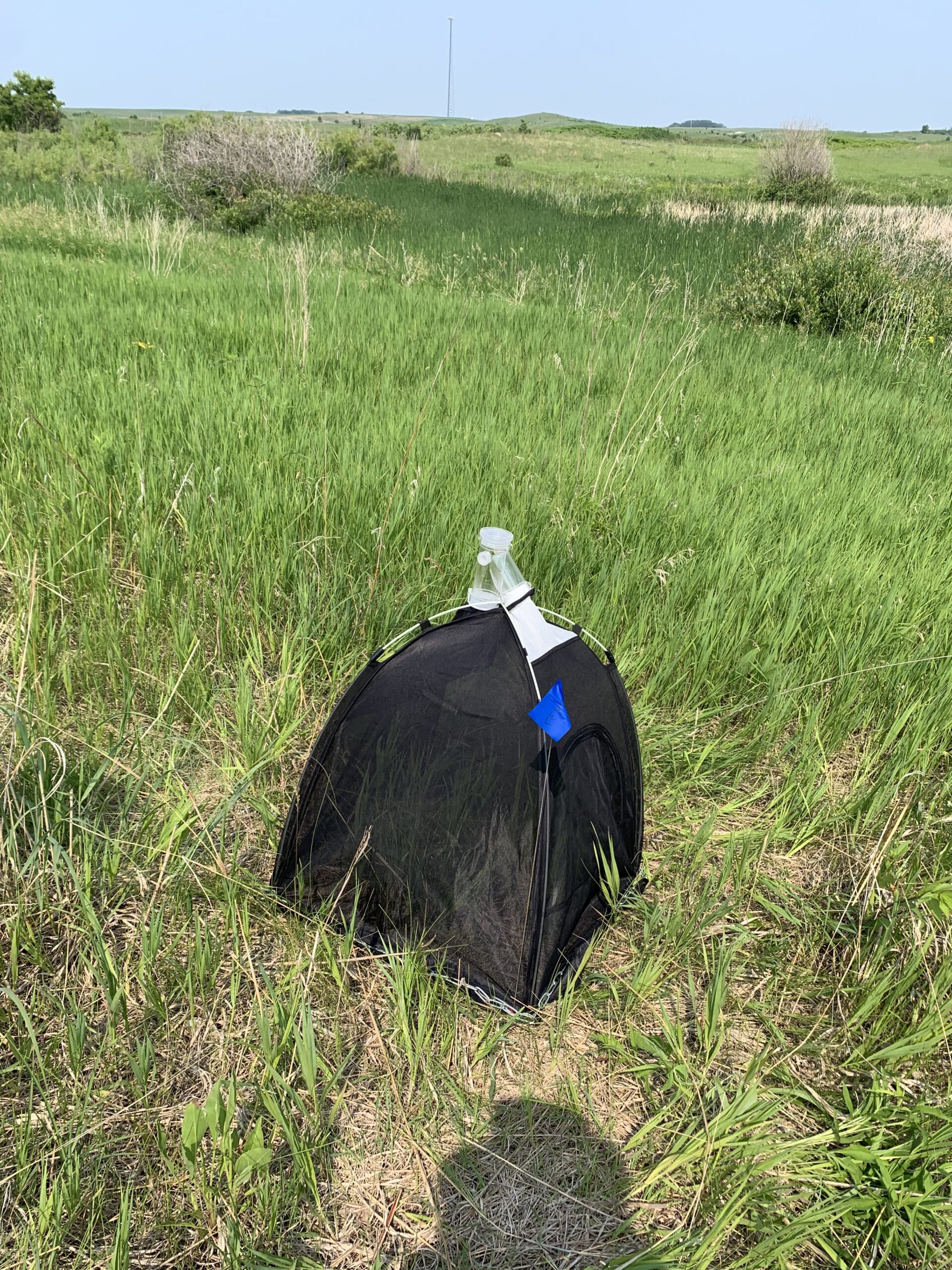
The pollinator team set out to recover some emergence traps (picture 1) this afternoon. While we didn’t find ground-nesting bees, which this project is centered around, we did see another pollinator while sifting through grass that extended beyond our own heads (Jan for scale; picture 2). The viceroy (Limenitis archippus; picture 3) looks incredibly similar to the monarch (Danaus plexippus), except for the black, horizontal line that cuts across their dorsal wings. We hope to see even more pollinator friends as the field season goes on!
This morning a group of us went out to flag P2 (thank you Wyatt for taking that picture). We created a new path to the plot, we divided, we flagged and we conquered. We also saw a few flowering Echinacea along the way. We had lunch and Lindsey gave a presentation on her smoke project and taught us about the ABT method before we all discussed our own possible projects for the summer. Then in the afternoon I went out with the pollinator team to place emergence traps! We know that poison ivy is a common hazard out in the plots, but we weren’t watching out for it and ended up stepping in a patch of poison ivy. Therefore, we should work as a team to be more aware of our surroundings. (See what I did there?). Watch your step out there and great work today team!
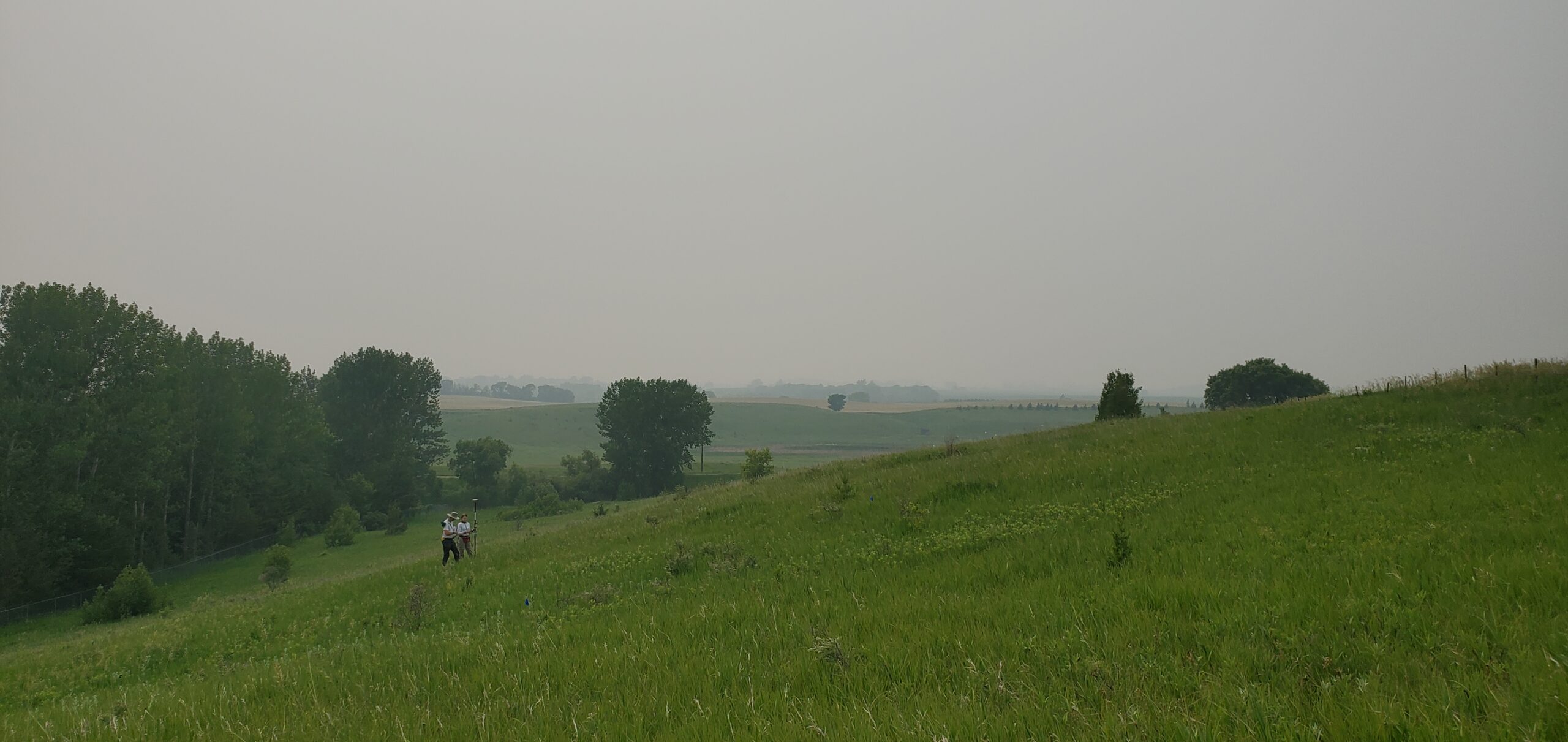
Yesterday, we spent the early afternoon at the picnic tables outside of the Hjelm house. It was a lovely day save for the smoke in the air (see Jen’s poem). After we all ate lunch, Jared gave a talk, bringing the team up to speed on the work we do in the remnants. We learned all about the work that started in Staffanson and is now in 35 different prairie remnants in our area. And, though Echinacea will always be our darling study species, we’re starting to look more into other fun species, like different grasses and more forbs (shoutout to Liatris).
Jared giving an impassioned talk
Afterward, we did our annual team norms activity, where we discuss 4 questions pertaining to how we learn and conduct science and come together to agree on how we can best support each other this summer. With everyone contributing, we were able to come up with norms that we all liked. Hurray for discussion and repetition and communication and repetition!
Me with our responses to question 2 (I forgot to change the number on the board)
I want to study bees while I am on team echinacea, specifically how burning the prairie impacts them. I also want to learn to identify native plants!
Statement
I am from Plainfield, IL originally but I spend most of the year in Wooster, OH on my college campus.
In my spare time I like to get on some wheels (skateboarding, biking, rollerblading, roller skating etc.) to take my dogs out, camp, read, binge shows, craft, play games or nap with my cat.
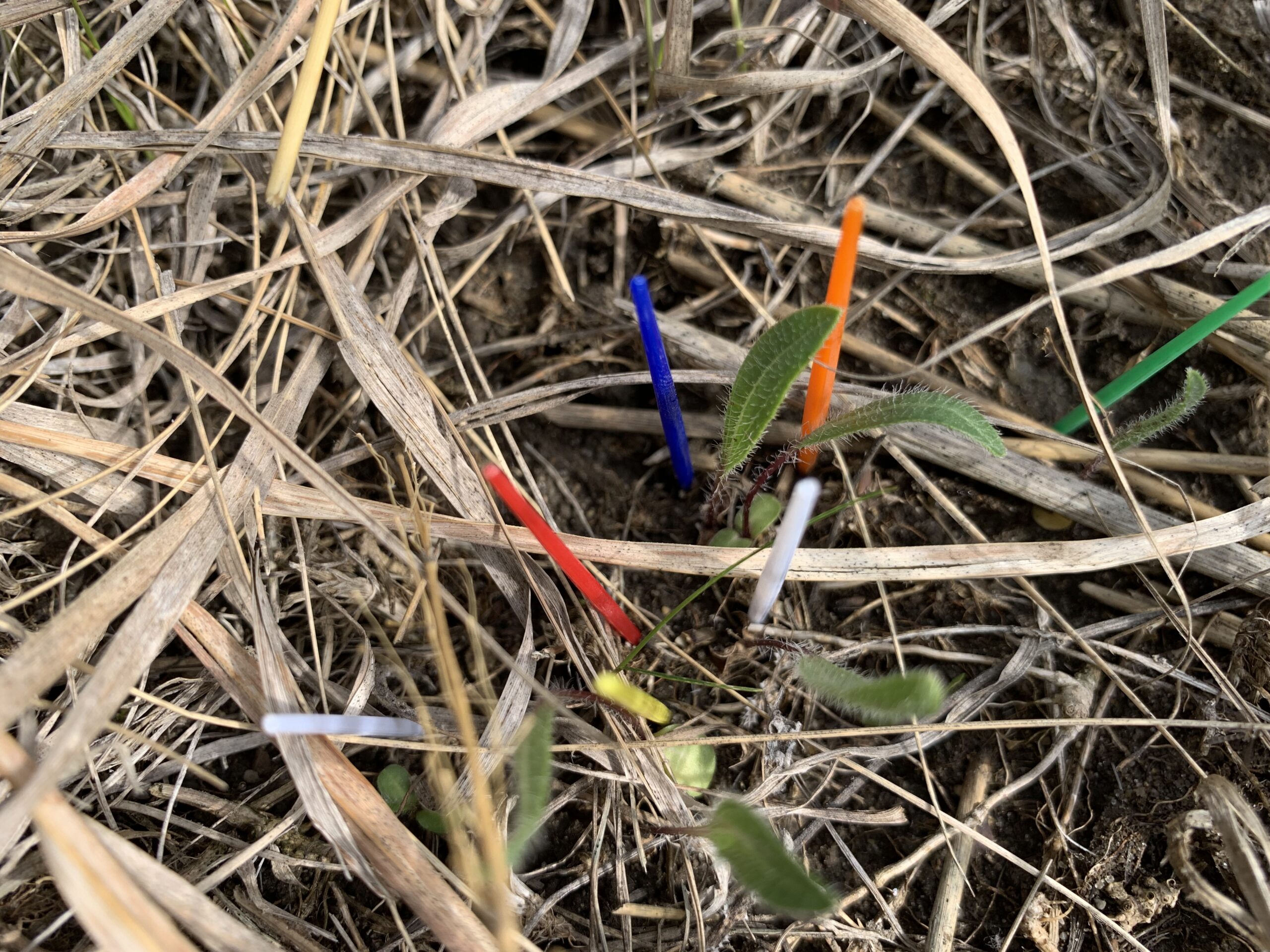
I spent the day searching for echinacea seedlings in our seed addition transects. With the help of Lindsey and advice from other seasoned experts, I have complied a list of tips and tricks that will lead to highly accurate data collection.
DO:
Upon arrival at a segment, announce yourself to the echinacea. Why have you come here and what are you doing?
Consider making an offering. Perhaps an invitation to collaborate in future studies, or the opportunity to review any relevant manuscripts.
Be gentle when combing through their home. Clumsy fingers lead to broken echinacea and broken hearts.
Of course, search actively! Change your angles and consider the topography. But also, let the echinacea find you.
Never stab your toothpick into an echinacea root. I think this needs no explanation.
Before your final sweep, verbally announce that you are done looking. This will most likely lead to the instant detection of one more plant. We can’t explain it, but it happens.
Say your goodbyes before heading off. Offer words of encouragement to the seedlings as they, too, have a long summer ahead.
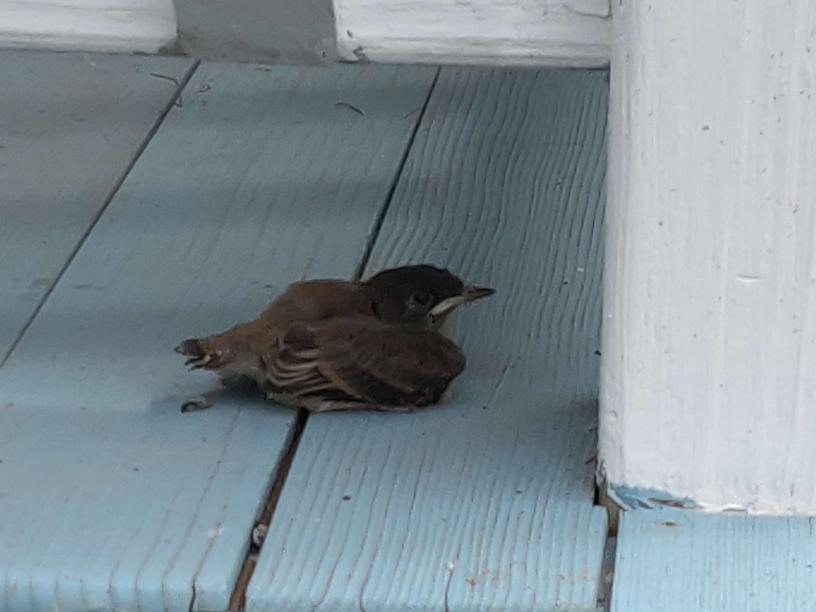
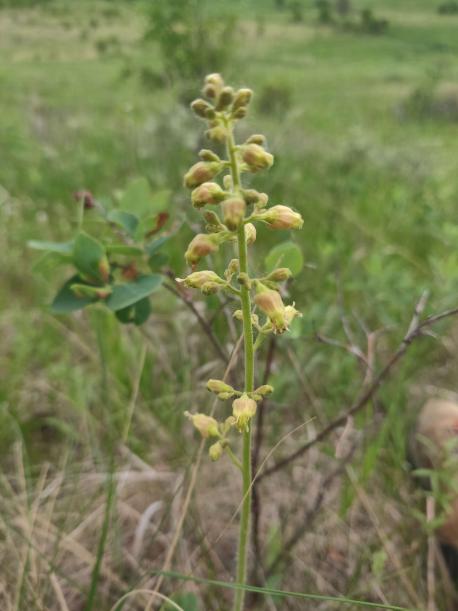
To counter expected high temperatures, we started earlier in the morning with GPS points for the ENTRF-funded bee research project and found some cool plants. After lunch, some of the team continued to stake and shoot points, while others planted some green comet milkweed (Asclepias viridiflora) seedlings in a previously burned site. We also saw a baby Pheobe on the deck after it attempted to fledge.
One of our hard-working employees finding points with our handy dandy GPS units.Pheobe fledgling (or attemptee).Alumroot (Heuchera richardsonii) at one of our sites.