For the past several years we have been investigating effects of prescribed fire on native ground-nesting bees in remnant prairies and restorations across our fragmented prairie landscape. We have a paper about effects of fire on the abundance and diversity of nesting bees in prep for a peer-reviewed journal. We are posting recommendations from this investigation now as a one-page non-technical document.
Funding for this project was provided by the Minnesota Environment and Natural Resources Trust Fund as recommended by the Legislative-Citizen Commission on Minnesota Resources (LCCMR) and by the National Science Foundation.
For the past few years we have been studying effects of prescribed fire on pollination, pollinators, and plants across our fragmented prairie landscape. We have a paper about effects of fire on pollen that we are preparing to submit to a peer-reviewed journal. We are posting recommendations from this investigation now as a one-page non-technical document.
Funding for this project was provided by the Minnesota Environment and Natural Resources Trust Fund as recommended by the Legislative-Citizen Commission on Minnesota Resources (LCCMR) and by the National Science Foundation.
For the past few years we have been studying effects of prescribed fire on pollination, pollinators, and plants across our fragmented prairie landscape. We have three papers we are preparing for submission to peer-reviewed journals. From each, we have recommendations for land managers interested in conserving native prairie bees and plants. We are posting these recommendations now in a one-page non-technical format.
The first paper is about prescribed fire effects on pollination and pollinator visitation. Read the recommendations that are based on the paper.
Expect two more one-pagers tomorrow.
Funding for this project was provided by the Minnesota Environment and Natural Resources Trust Fund as recommended by the Legislative-Citizen Commission on Minnesota Resources (LCCMR) and by the National Science Foundation.
The Echinacea Project flog has been silent since shutting down lab activities at the Chicago Botanic Garden. Even though lab work has ceased, other work has been progressing quietly. After Thanksgiving we will post updates.
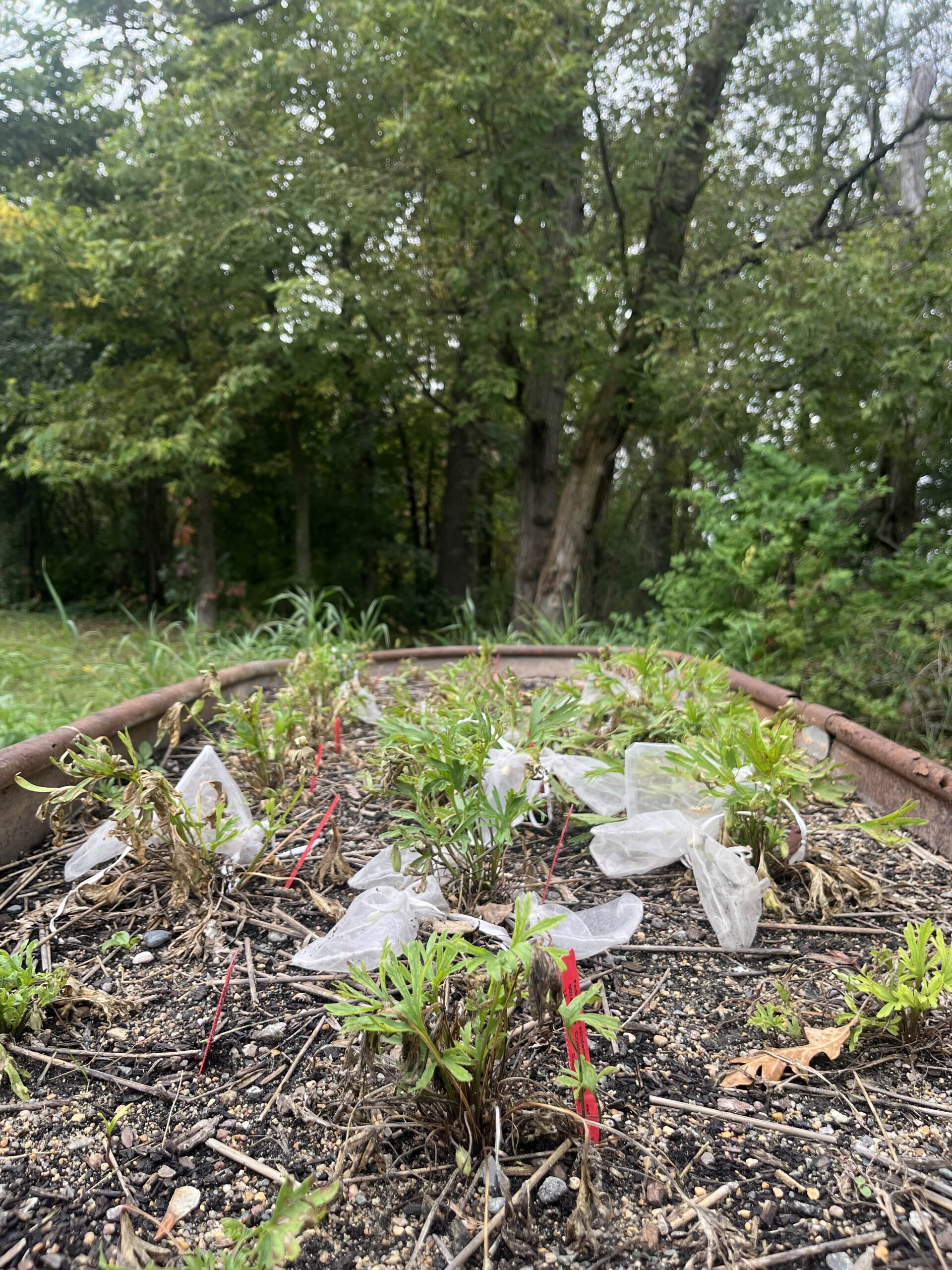
We are continuing to monitor the Viola pedatifida (Prairie Violet) and Comandra umbellata (Bastard Toadflax) experiments. The Viola plants are continuing to develop new growth and produce pods consistently, with dried seed pods collected daily. Between August 20th and September 21st, 131 pods were collected! The seeds will be sorted into randomized groups for use in remnants and experimental plots. At the end of the field season, the Viola will be covered in a mulch of straw for overwintering.
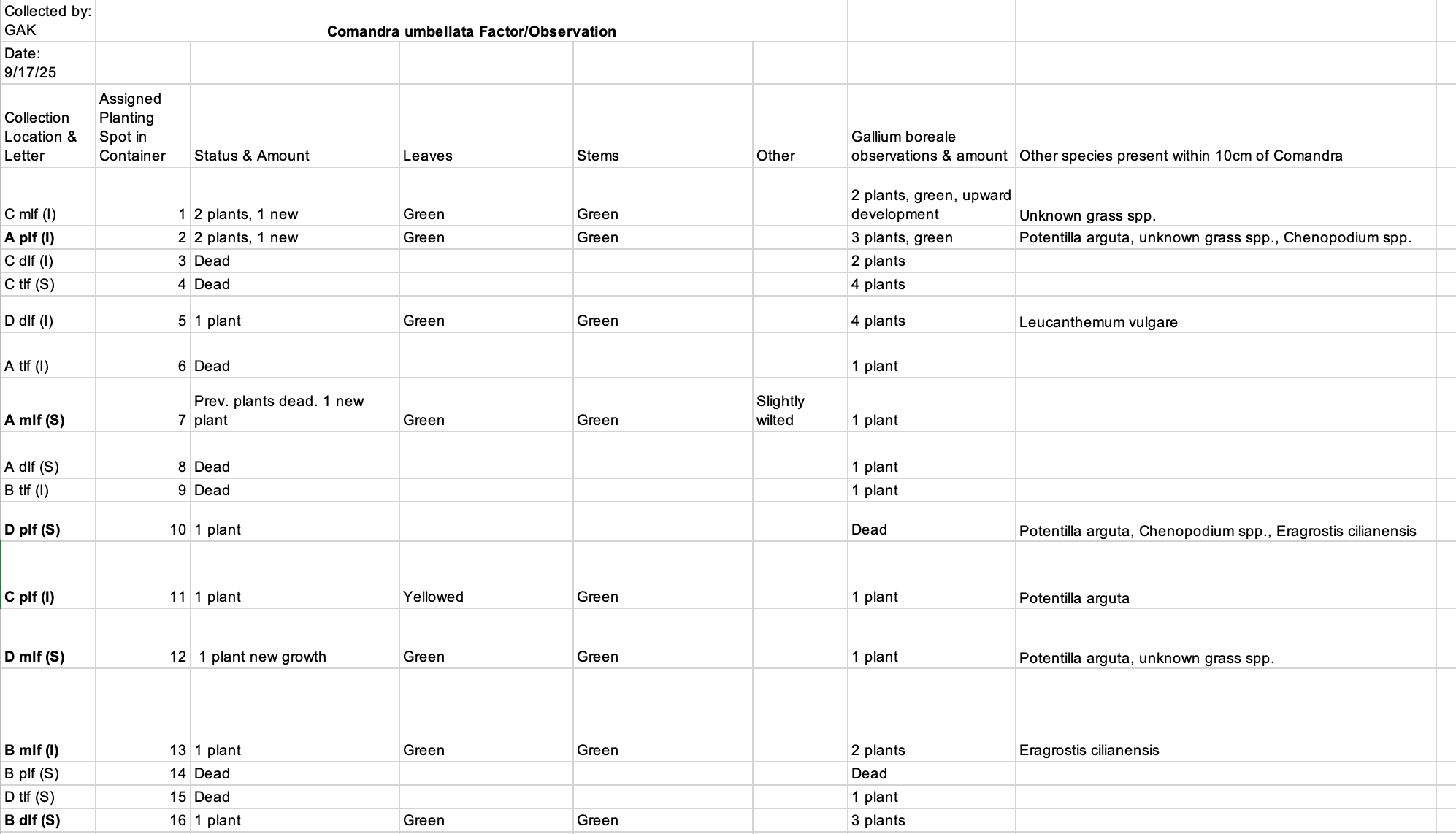
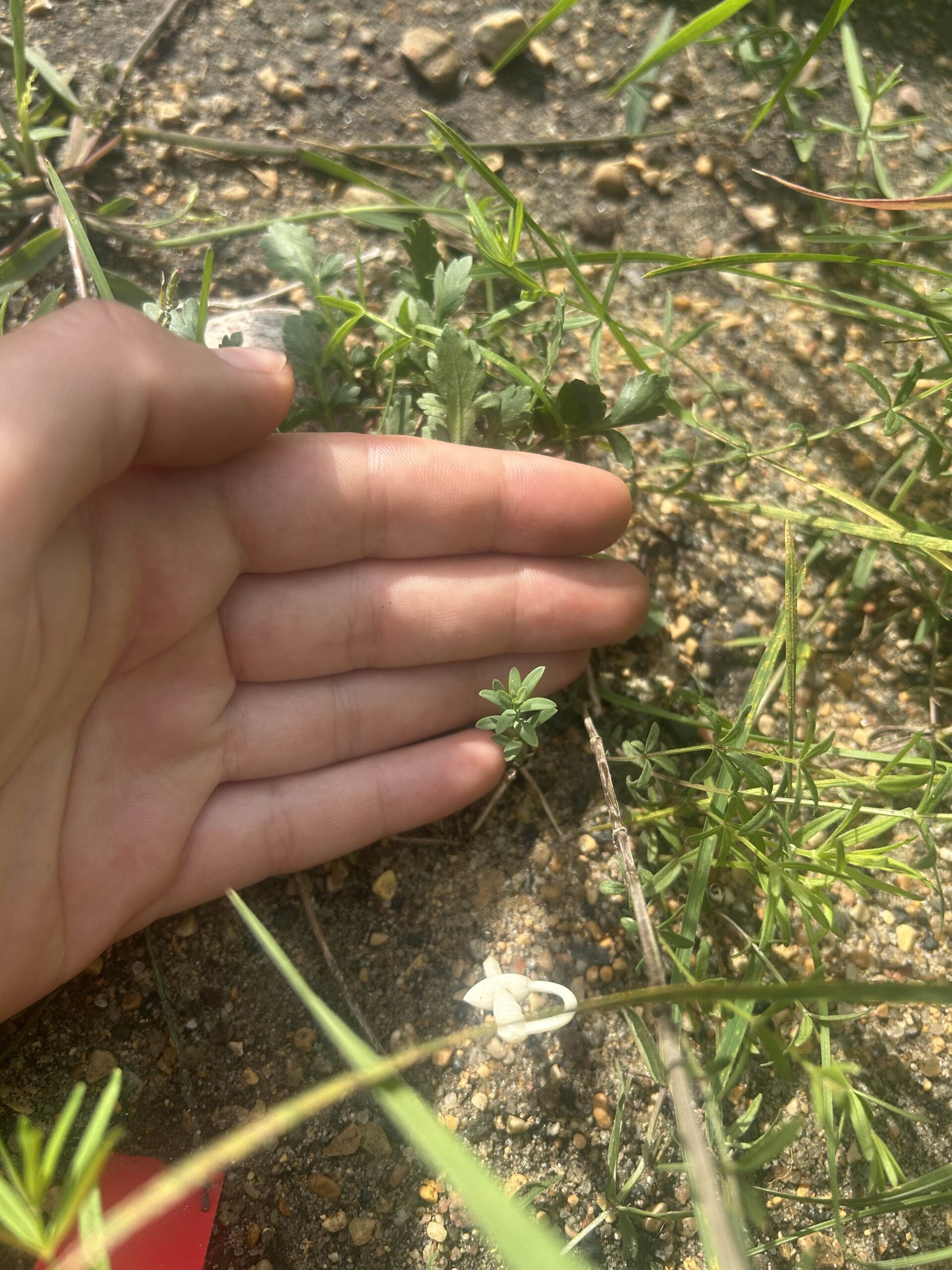
The Comandra initially struggled with sun exposure in the transplant tub, but have since rebounded! There are currently 12 plants growing, alongside gallium and a large number of volunteer species. These have been left undisturbed to avoid accidentally removing any Comandra host plants. See the spreadsheet below for a full update on each plug.
As the season nears its end, the seasonal members of the Echinacea Project have all returned to school. This week, Grace flew back to California to start her junior year at UC Santa Cruz, leaving only a lone juggling ball for us to remember her by. Now only me (Maddie DiMarco) and Maddie Sadler remain as interns to conclude the field season. With measuring done in the experimental plots and (almost) all demo sites finished, our main focus is harvesting. We spent the first few days of the week harvesting whenever possible, filling up several bags with harvested echinacea heads. Soon, they will all be ready for cleaning and counting of achenes.
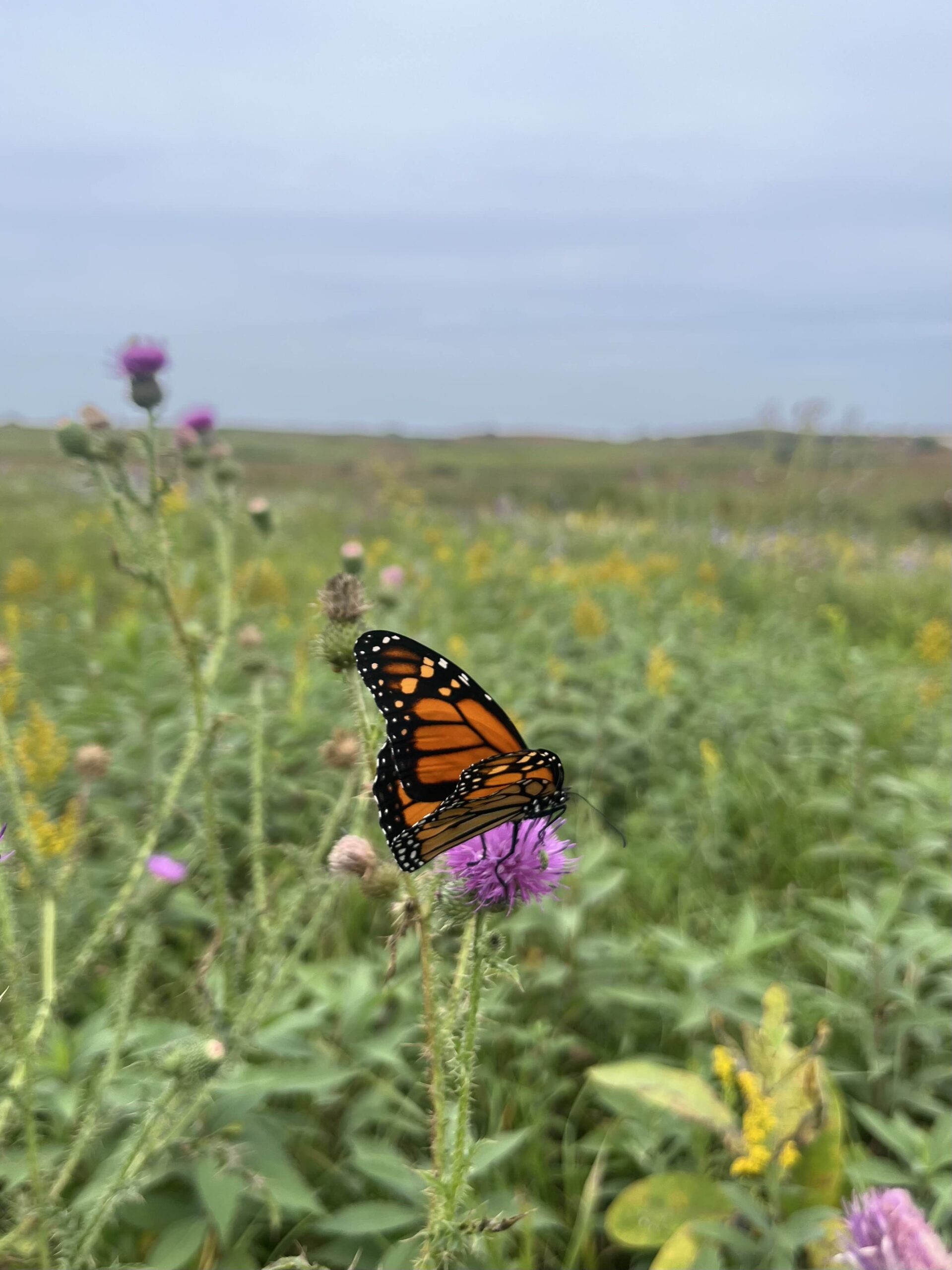
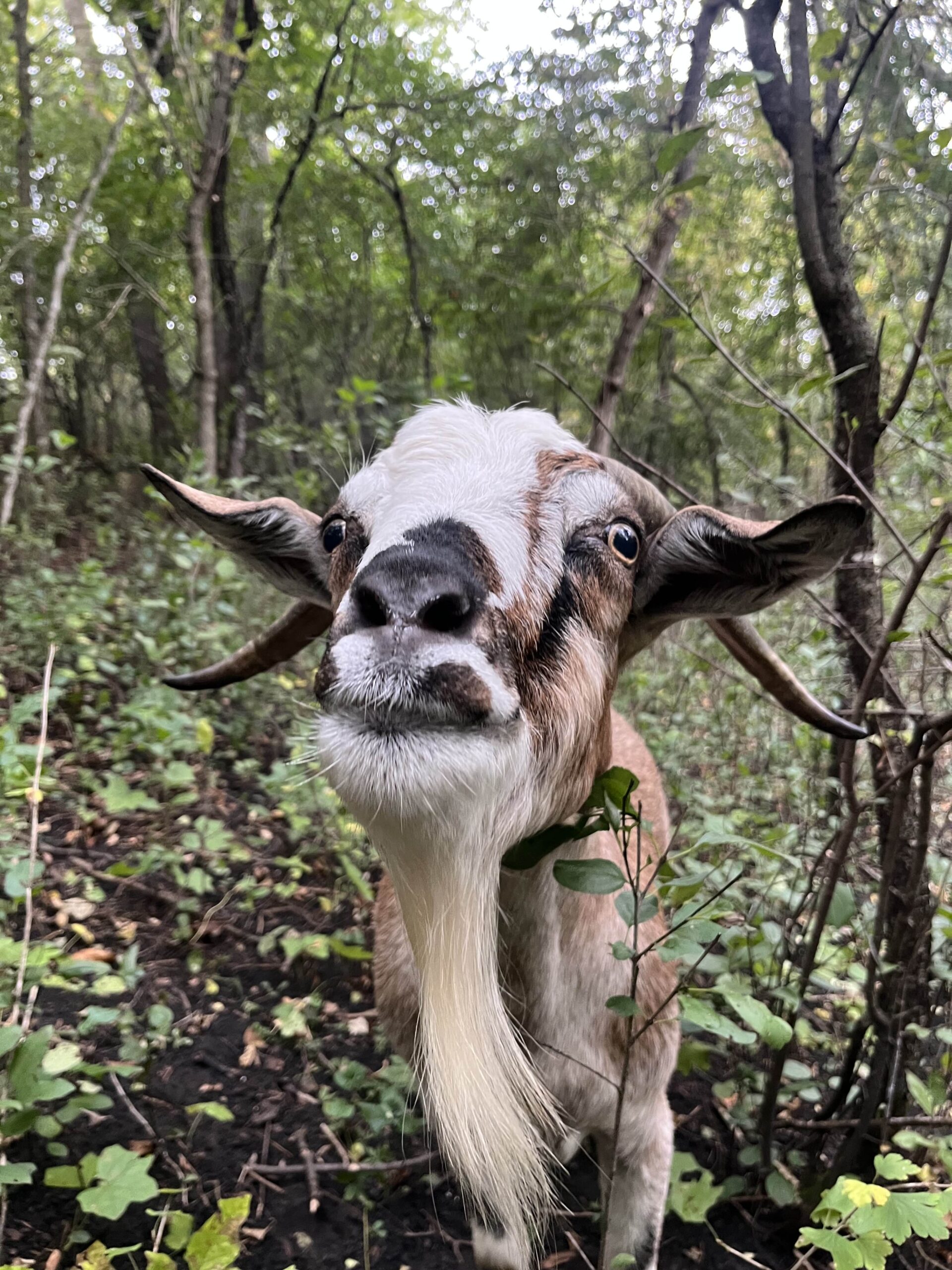
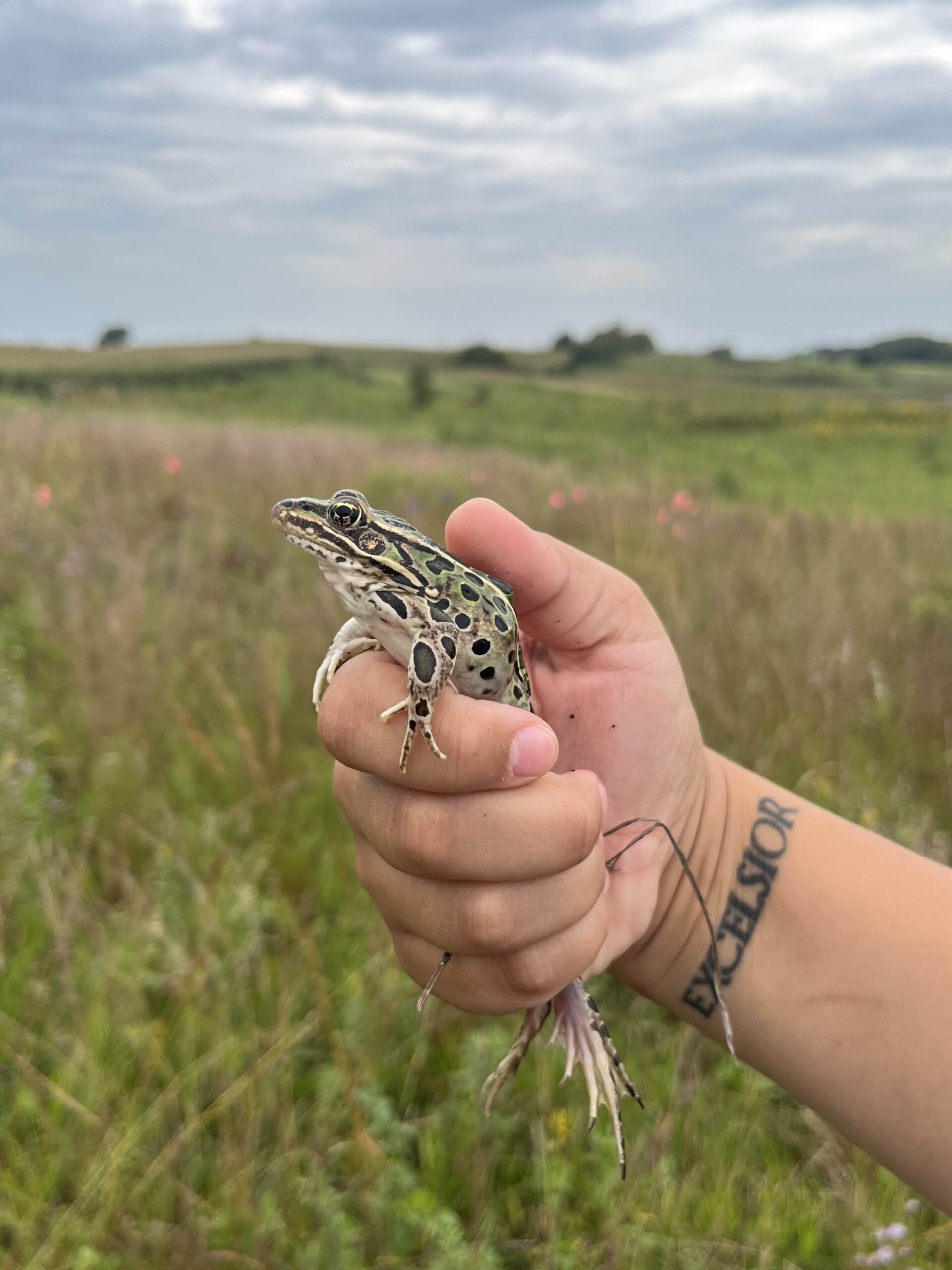
A monarch nectaring on thistleOne of the goats, which we have named DirtA leopard frog at ExPt02, who was not as fast as I am
However, we cannot harvest in the rain, and this week had lots and lots of rain. While we are trapped inside, Maddie and I have been working with our data, ensuring that there are no missing, duplicate, or incorrect records. During a break in the rain, I also trekked out to exPt01 to revisit some of the plants we needed to check.
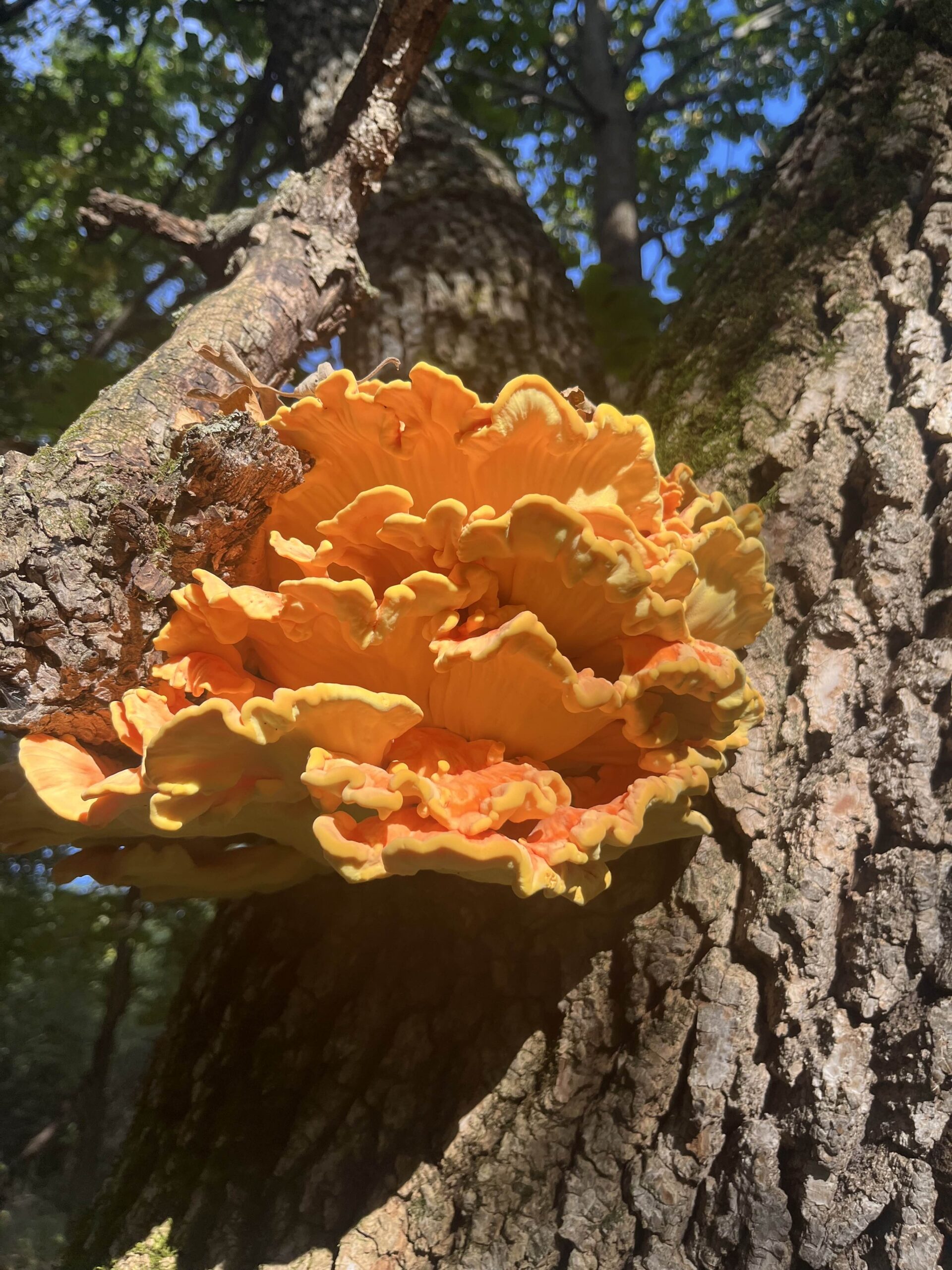
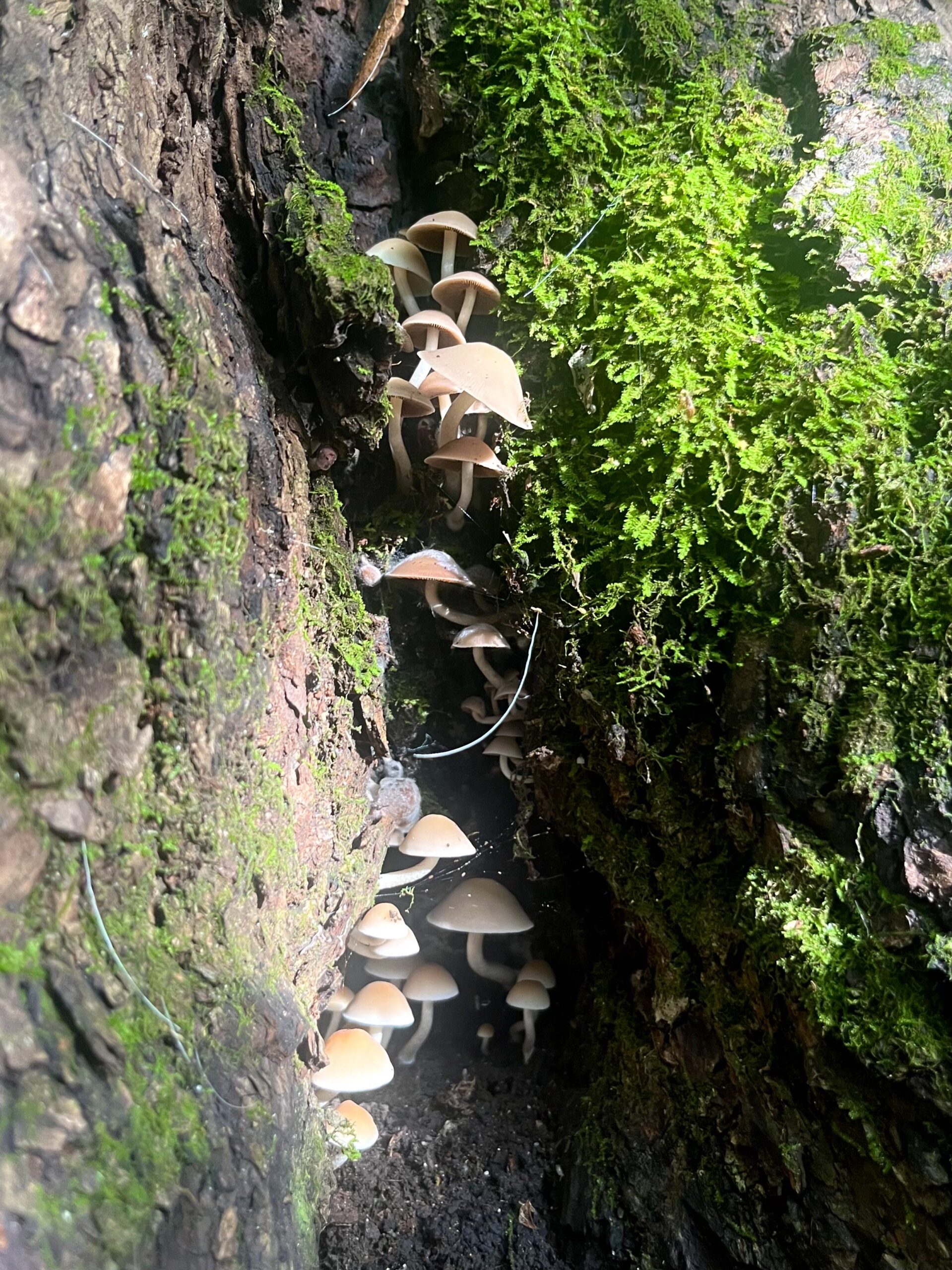
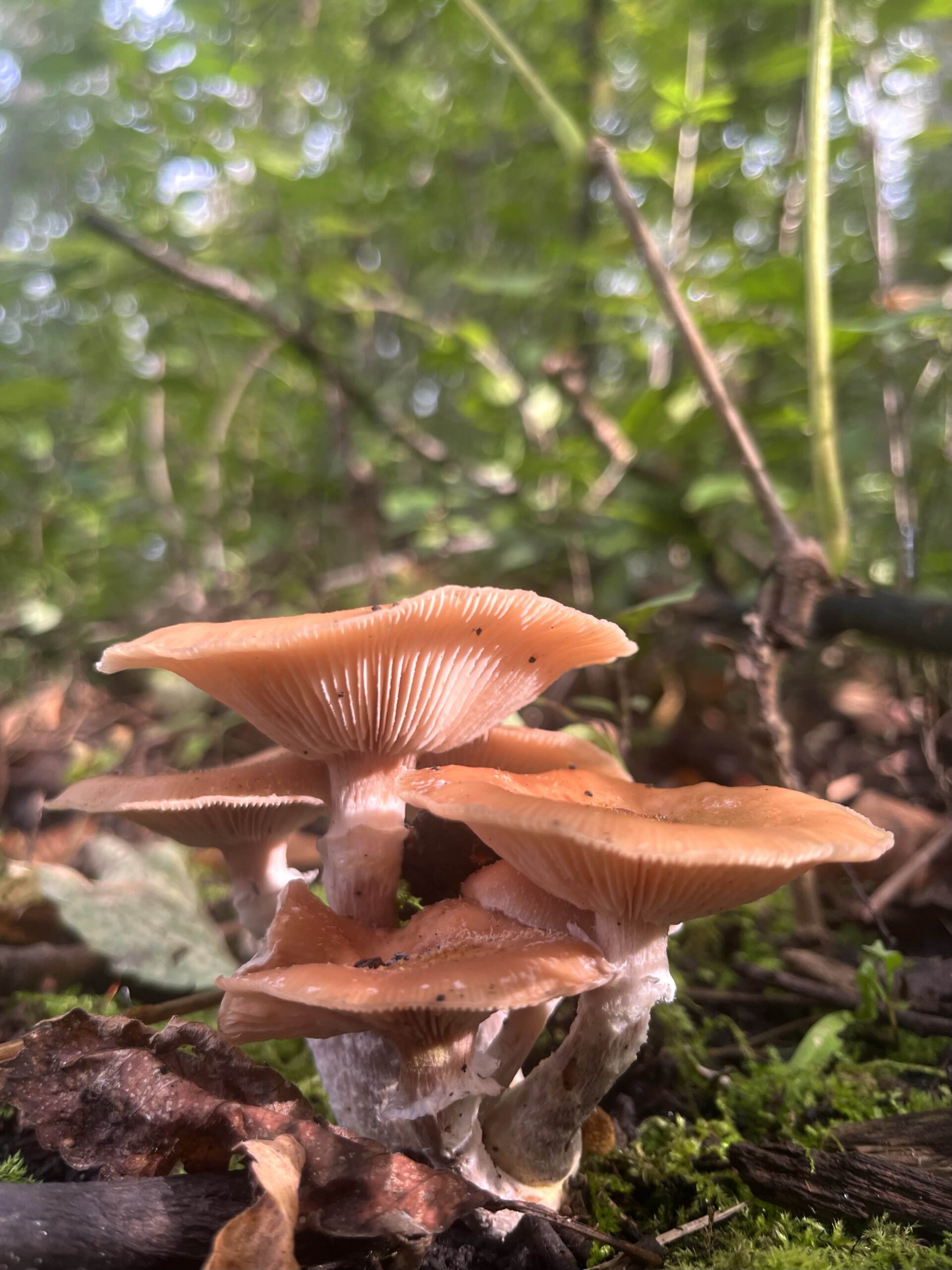
Massive Chicken-of-the-WoodsA secret mushroom spotFound en route to exPt01
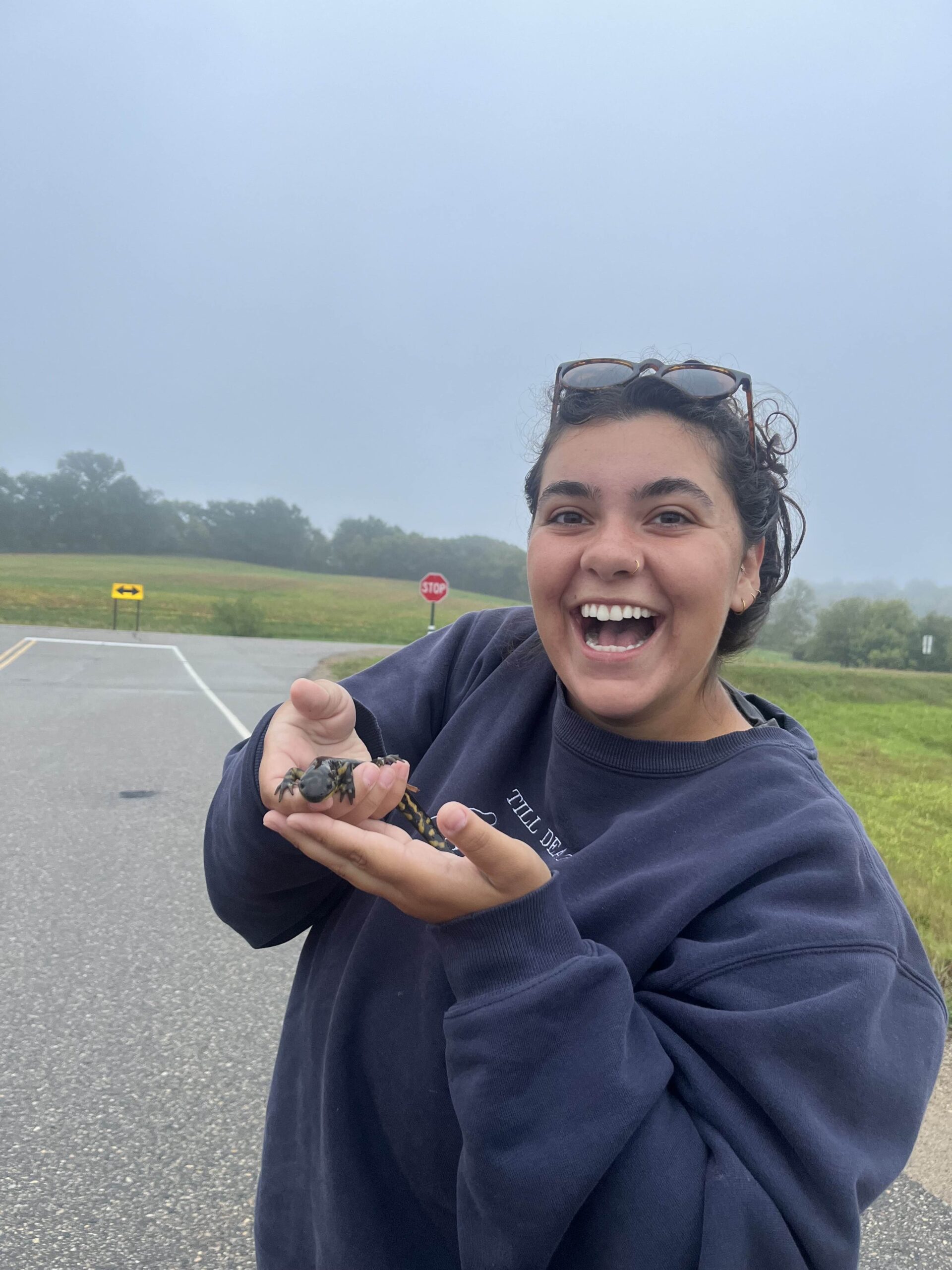
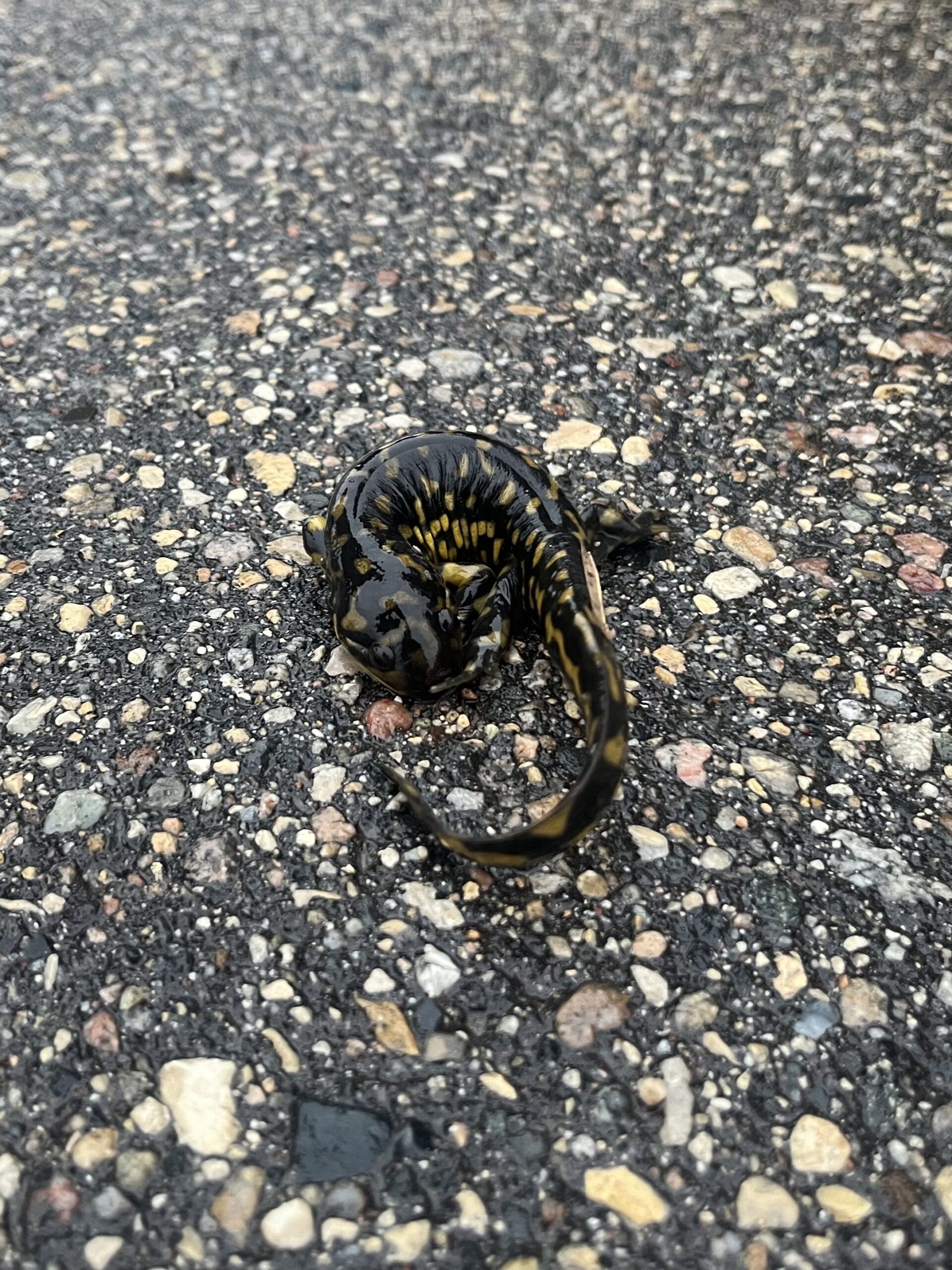
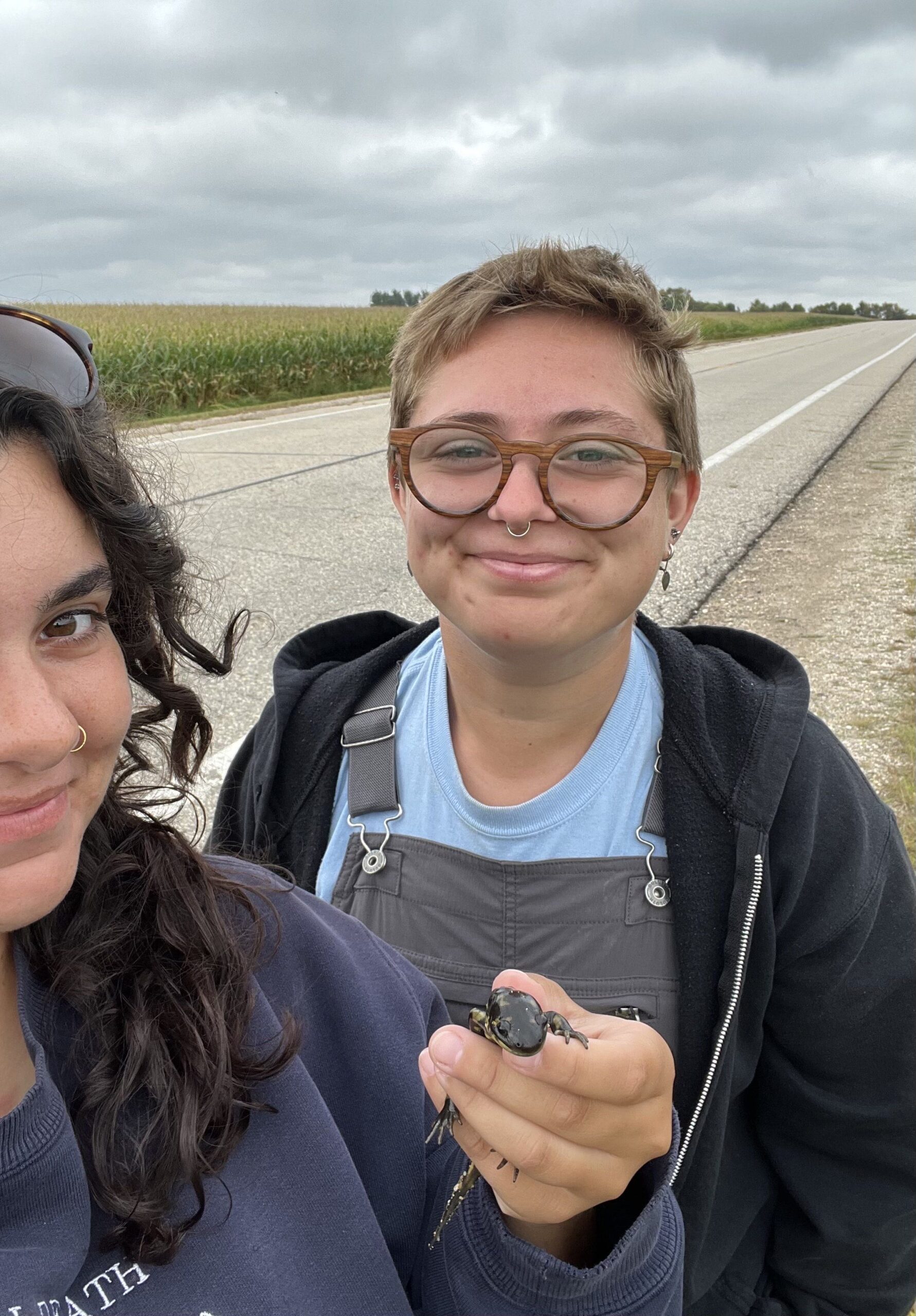
The rain has brought us many boones. Mushrooms were plentiful, found near the goat paddocks and the experimental plots, including a magnificent Chicken of the Woods. We have also seen our first salamanders of the season. Two eastern tiger salamanders were spotted on the roads—we shuttled them to safety. You can tell by my face how excited I was.
Me, clearly having the best moment of my lifeTiger salamander #1Tiger salamander #2 with Maddie and I
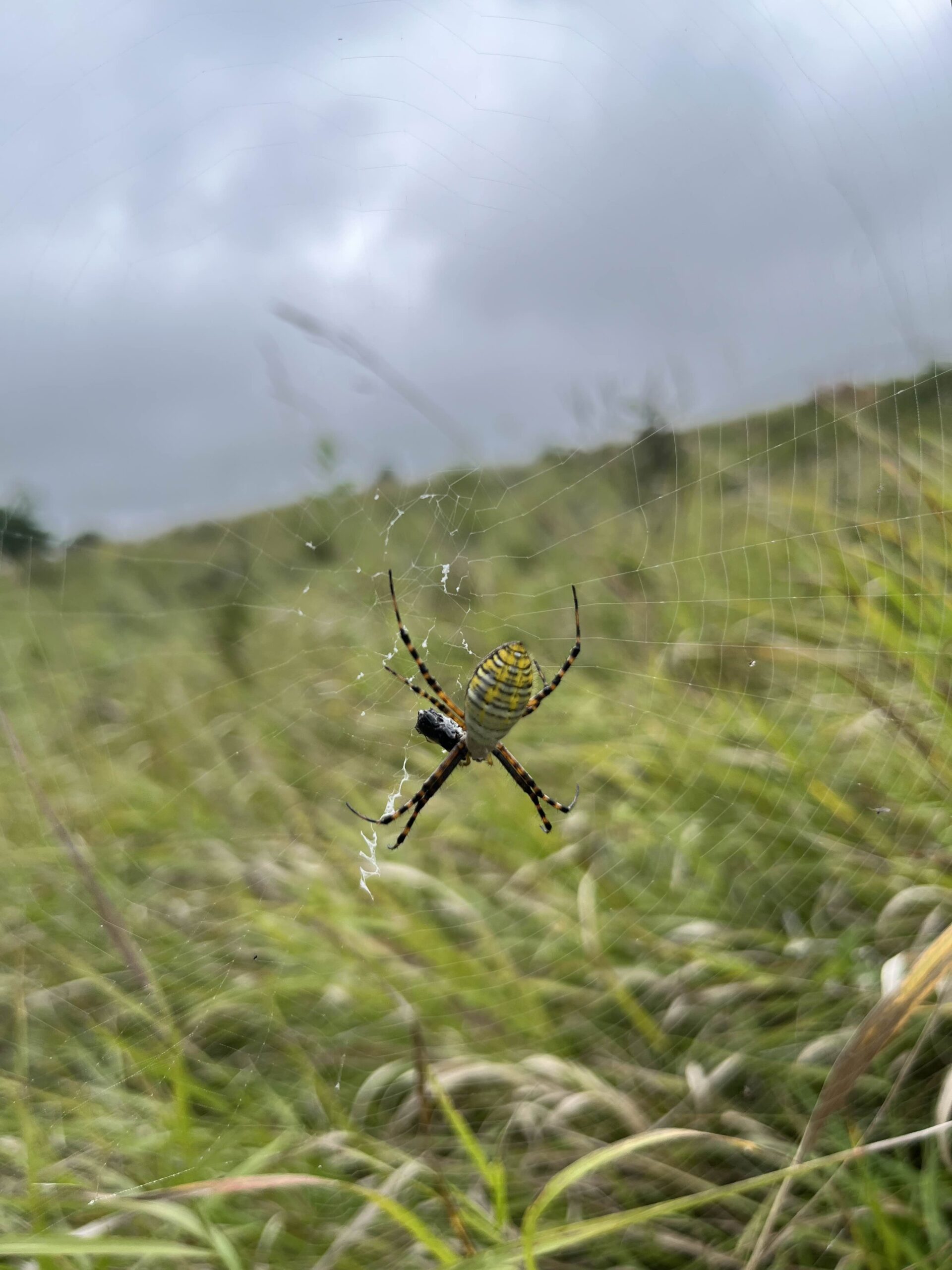
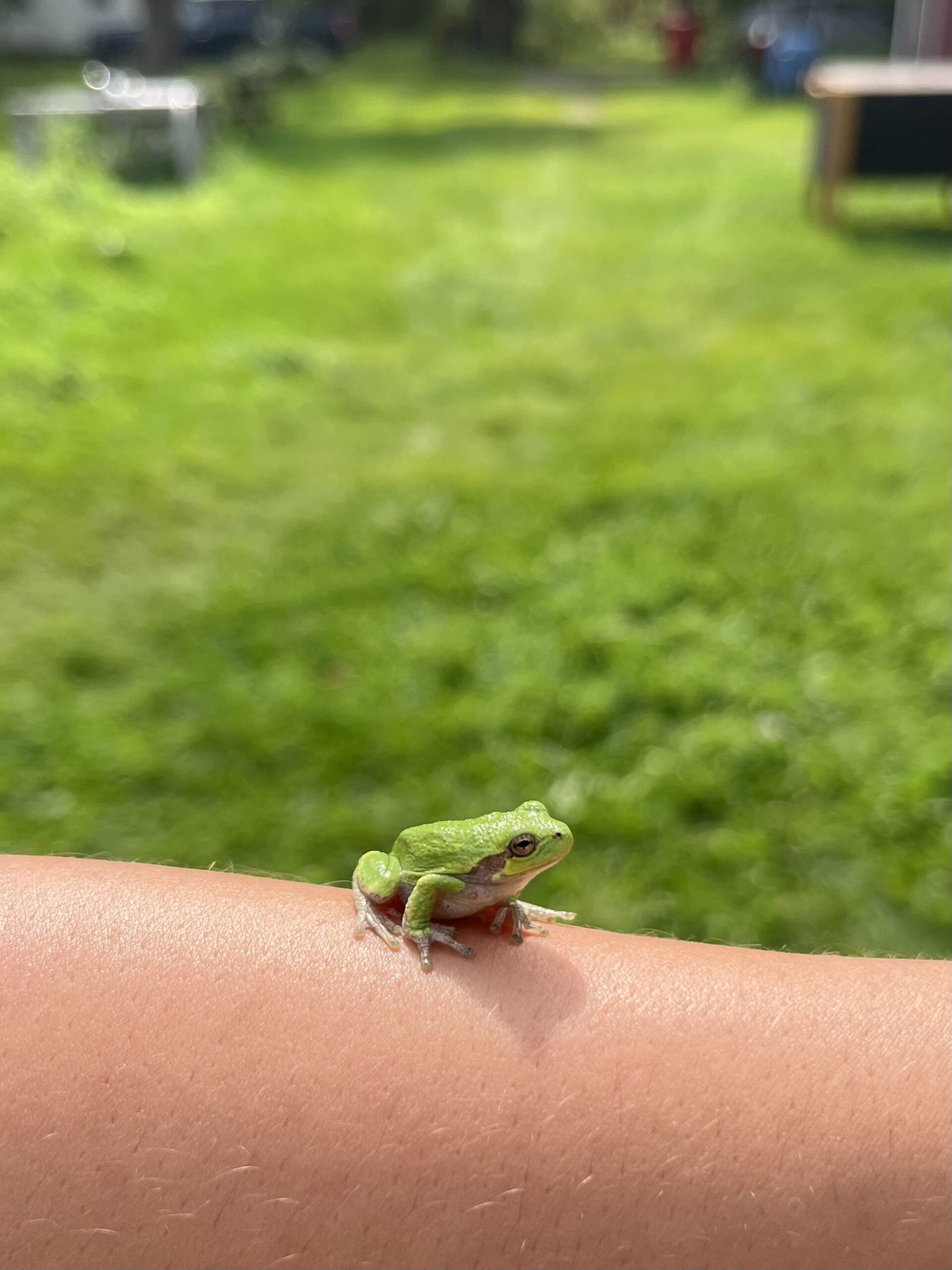
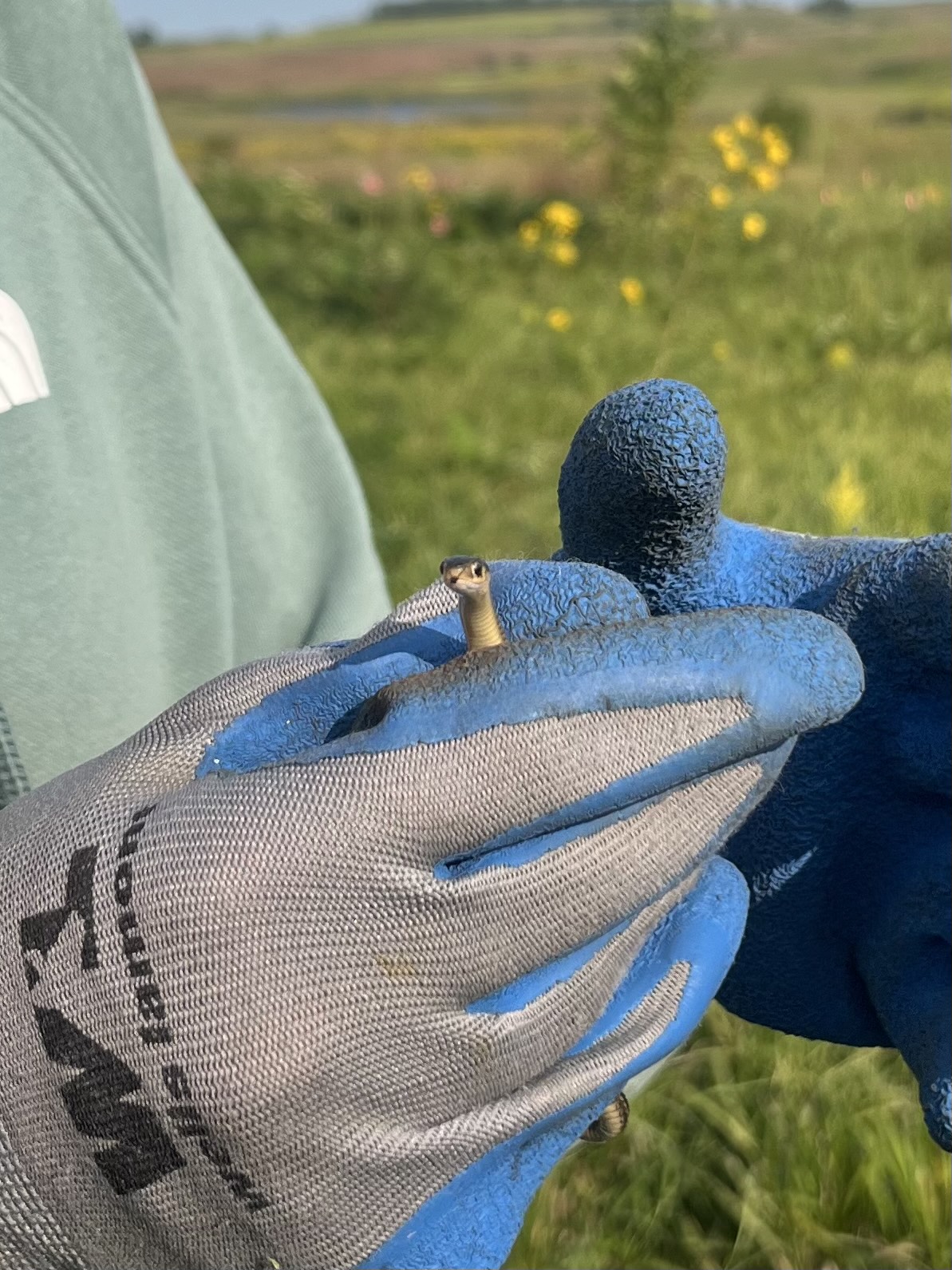
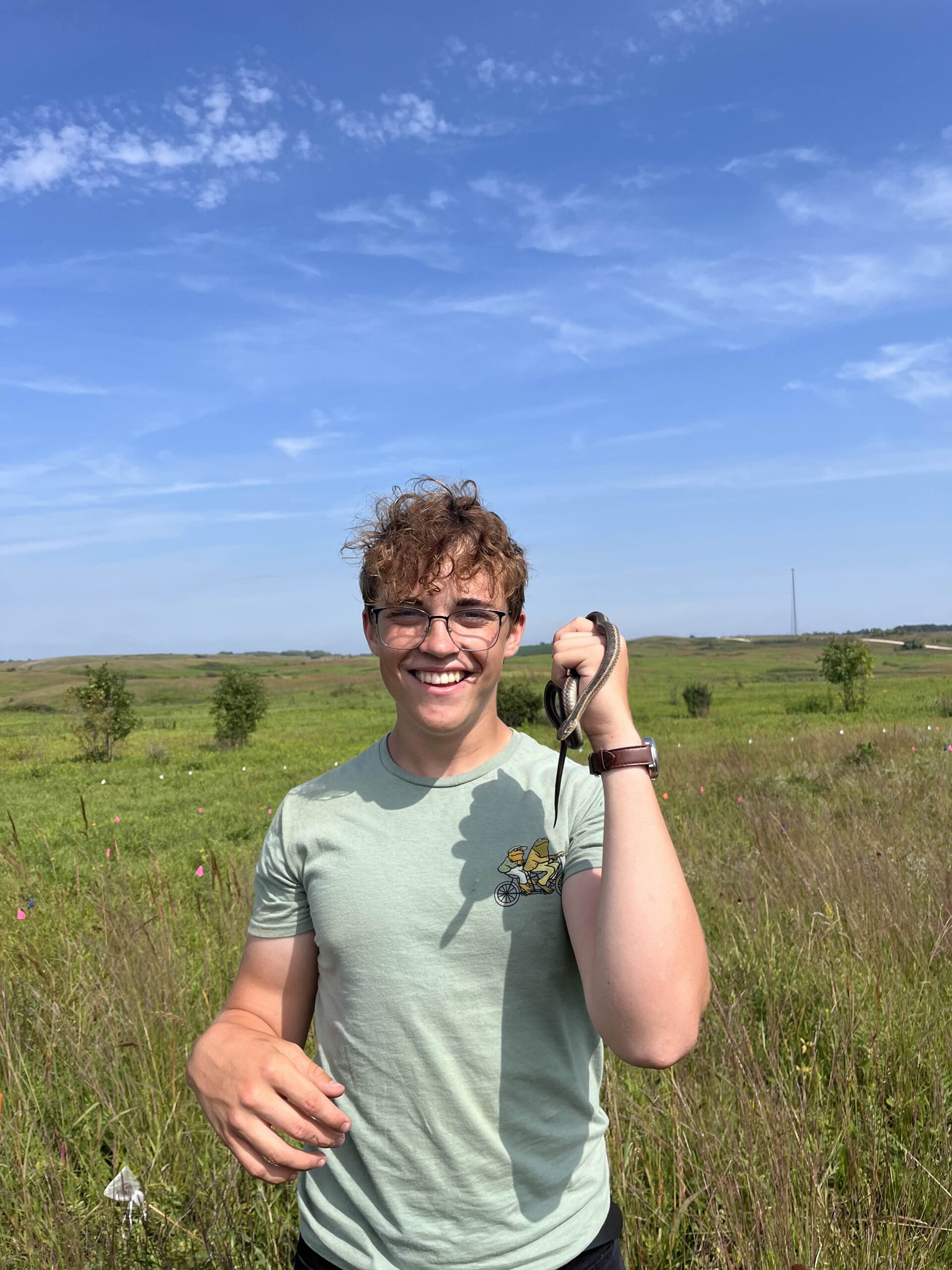
This week at the Echinacea Project we had a few visitors. On Monday and Tuesday Maddie, Grace and I worked hard in P2 to wrap up measuring and ran into an abundance of different creatures. From frogs, to spiders, a garter snake, and grasshoppers there was no shortage of helpers at the experimental plot.
Harvesting is in full swing as fall begins to roll around, also bringing many different caterpillars and monarchs along the way for our viewing pleasure. On Wednesday we had some real human visitors! Gasp! Riley and Amy W. came and paid Echinacea Project a visit and helped with the collection of measure data in P7 and P9 and contributed an abundance of harvesting in P1 and P8.
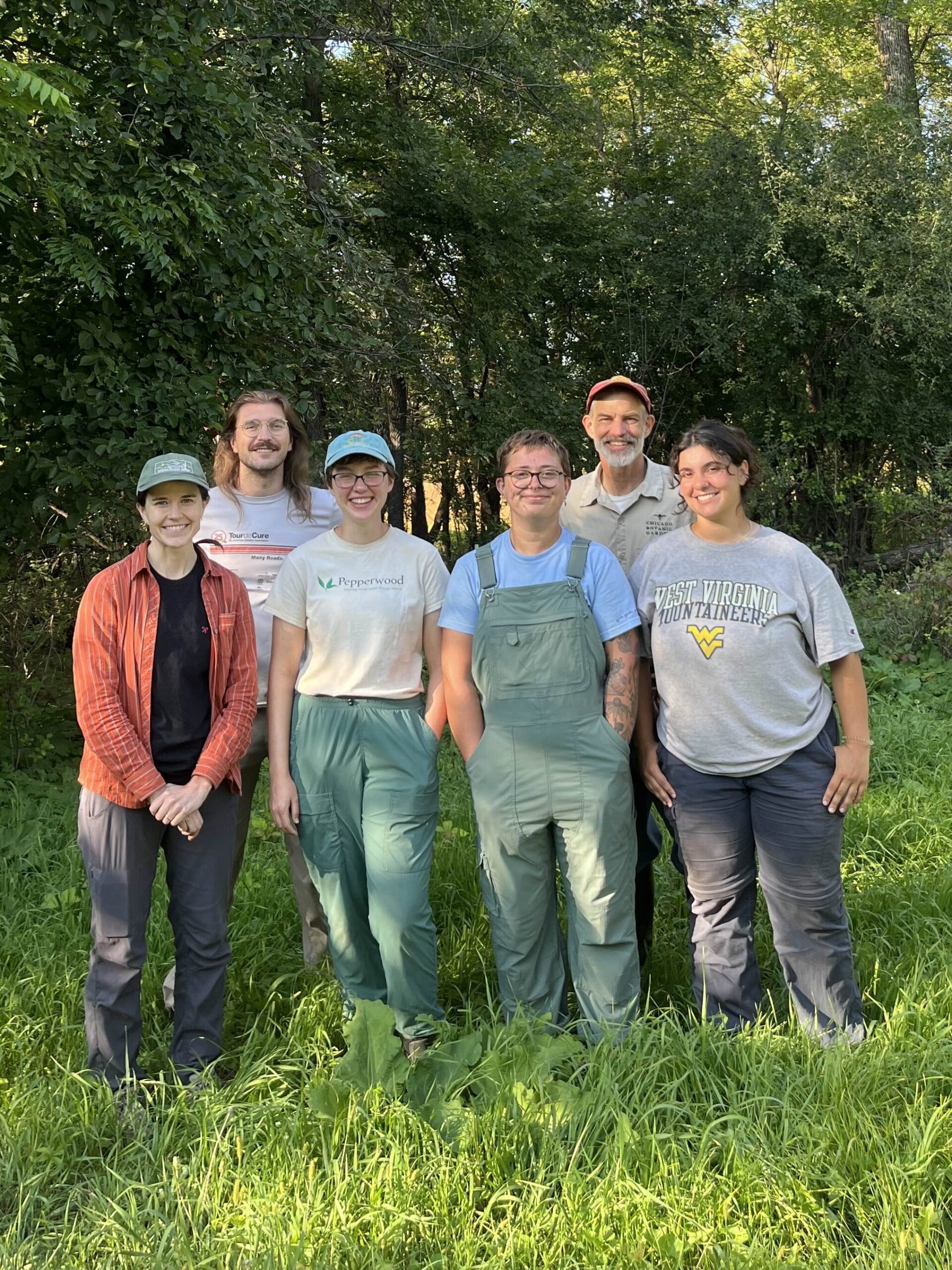
The gang back together!
In the final days of this week, we got an additional human visitor Aaron who came back to help us for a morning before returning back to school for the afternoon. We regaled on memories from this summer and thought about the ending of the season while reflecting on everything that has been accomplished by our mighty team of 8. Thousands of demo records, tons of surv records, measuring, and many healthy heads that have been harvested.
Aaron giving us the plot of Into the Woods in LOTS of detail.
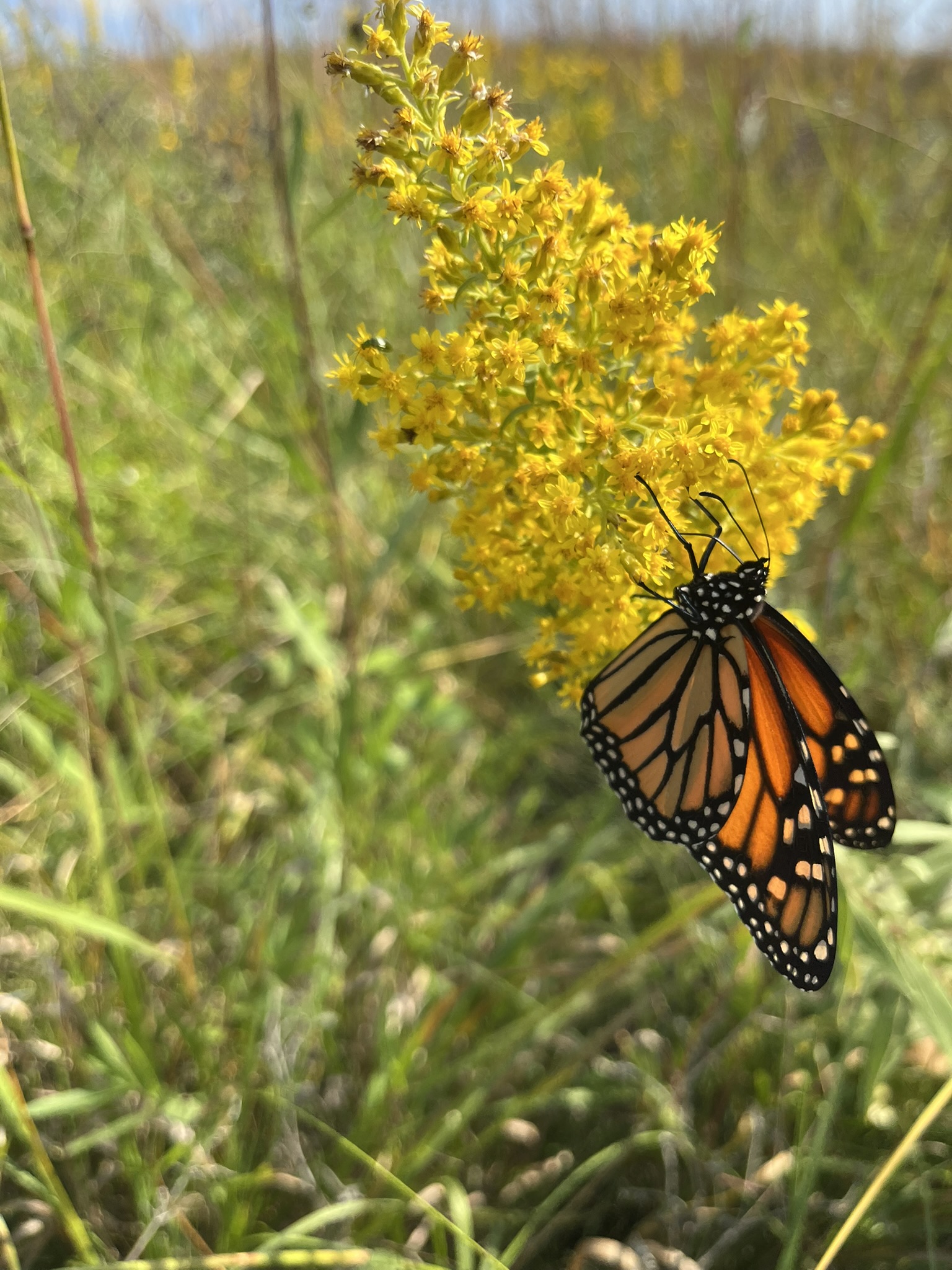
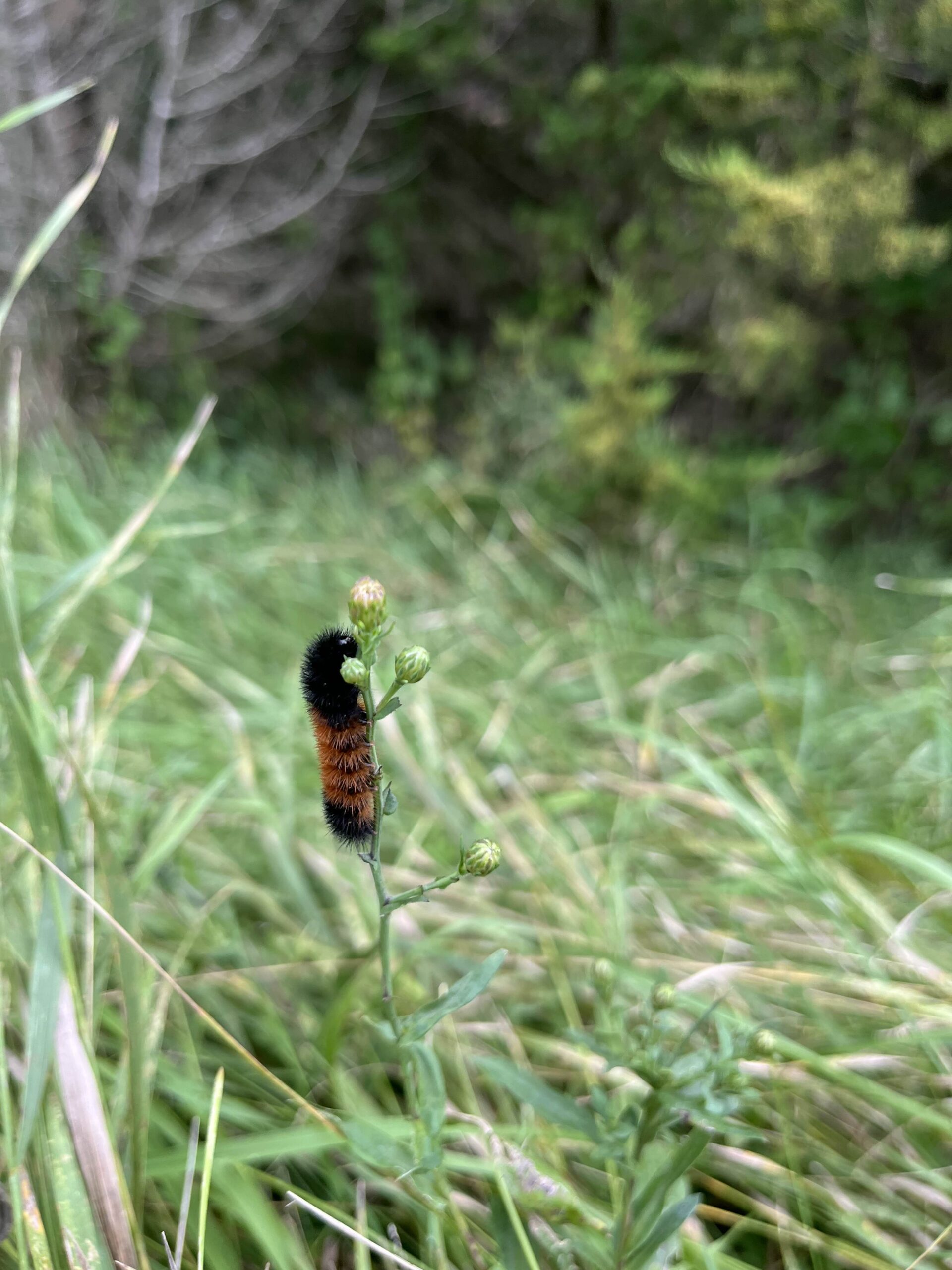
For me, I spent many hours doing aster walks this week for my thesis encountering many different friends in the prairie along the way. This included monarchs, a mysterious caterpillar, many spiders, and a handful of wooly bear caterpillars (or as I like to call them wooly worms). The record for the most amount of aster species at a single site was broken this week at 27 different species at Staffanson E (previous winner was HeggW with 25).
Additional tidbit: We had found an injured monarch on the way to harvest and created a monarch motel for the little diva to recoup before hopefully taking flight again.
It’s been a chilly first week of September! After days of rain and temperatures in the 50s, the team is looking forward to more temperate conditions next week. We’ve been hard at work finishing up the last few sites of demo and surv, and are now halfway done with an expedited measuring of exPt2. Just this morning, Maddie S., Maddie D., and I (Grace) completed 602 records! In addition, a bountiful harvest is in full swing in exPt1 and exPt8–collecting the dried heads for multiple experiments on long-term fitness.
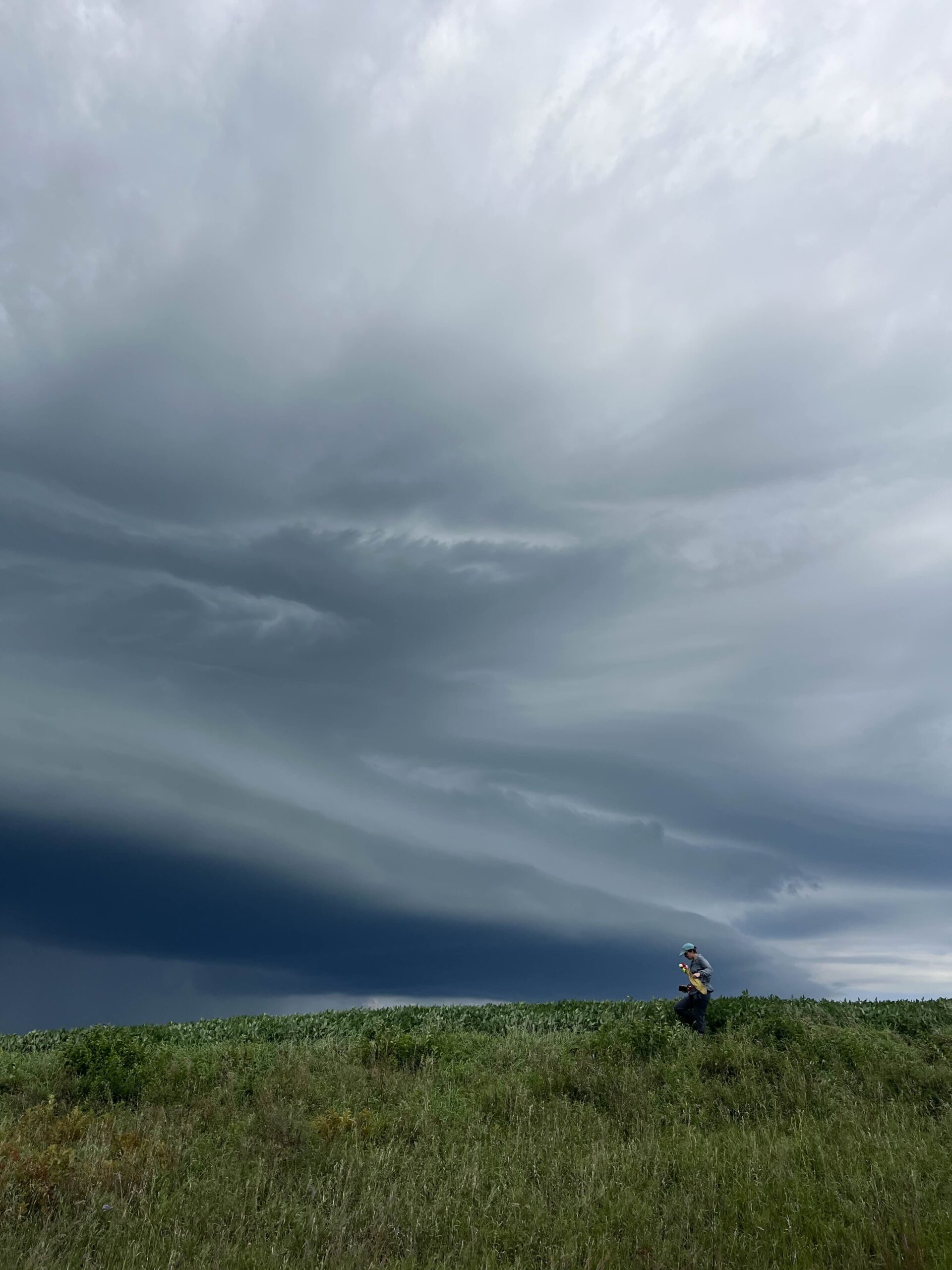
Storm chasing during total demoBaby bunny in exPt1gBags are filling up!exPt2 in autumn colorsFrog adventures gone awry in Hjelm
I want to be in two places at once. I am shutting down & packing up my lab at Chicago Botanic Garden and wrapping up the field season in Minnesota. The lab’s been running for decades and there is a lot of stuff to pack. The annual harvest of Echinacea heads from experimental plots is also underway–this year the crop is big and it’s late due to late spring fires. Two big jobs in two distinct places. Thanks to everyone who is helping!
Due to technical issues I can’t be in two places at once. Please stop by the lab or field site and say hello or goodbye.
Monday, 24th In the morning Aaron, Grace, and Maddie D. went out to East RILEY to do some total demo, while Maddie S. went out to work on her thesis and did some Aster Walks. In the afternoon, all four of us went out to ExPt02 to do some double checking on the twist ties to get ready for measuring and harvest.
Tuesday, 25th In the morning Aaron, Grace, and Maddie D. went out to RHS, NTH, and REL for total demo, while Maddie S. went out to do some Aster Walks. In the afternoon, all three as well as Maddie S went out to ExPt02 to do twist tie again!
Wednesday, 26th In the morning Aaron, Grace, and Maddie D. went out to RILEY for Total Demo. After, Grace and Aaron went out to RKW for more Total Demo. After lunch, Grace and Aaron went out to ExPt02 to finish twist tie.
Thursday, 27th In the morning Aaron, Grace, Maddie D, and Maddie S. went out to ExPt02 for measuring. After lunch Aaron and Grace went out to RKE for Total Demo, and the two Maddie’s did computer work. After Aaron and Grace finished, Grace went out to NICE.
Friday, 28th In the morning Aaron and Grace went out to NICE to survey five plants that were involved in the Ag. Virescens experiment earlier this summer. While that was happening, Maddie D. was working on cleaning up ExPt01 forms for harvest. After lunch, all three went out to ExPt01 to harvest, and it was bountiful.
P.S. This was my last week with the team and it was great! I learned so much about the Prairie and got to meet so many new people and creatures outdoors. I had so much fun and I cannot wait to get back in the field in the future! – Aaron
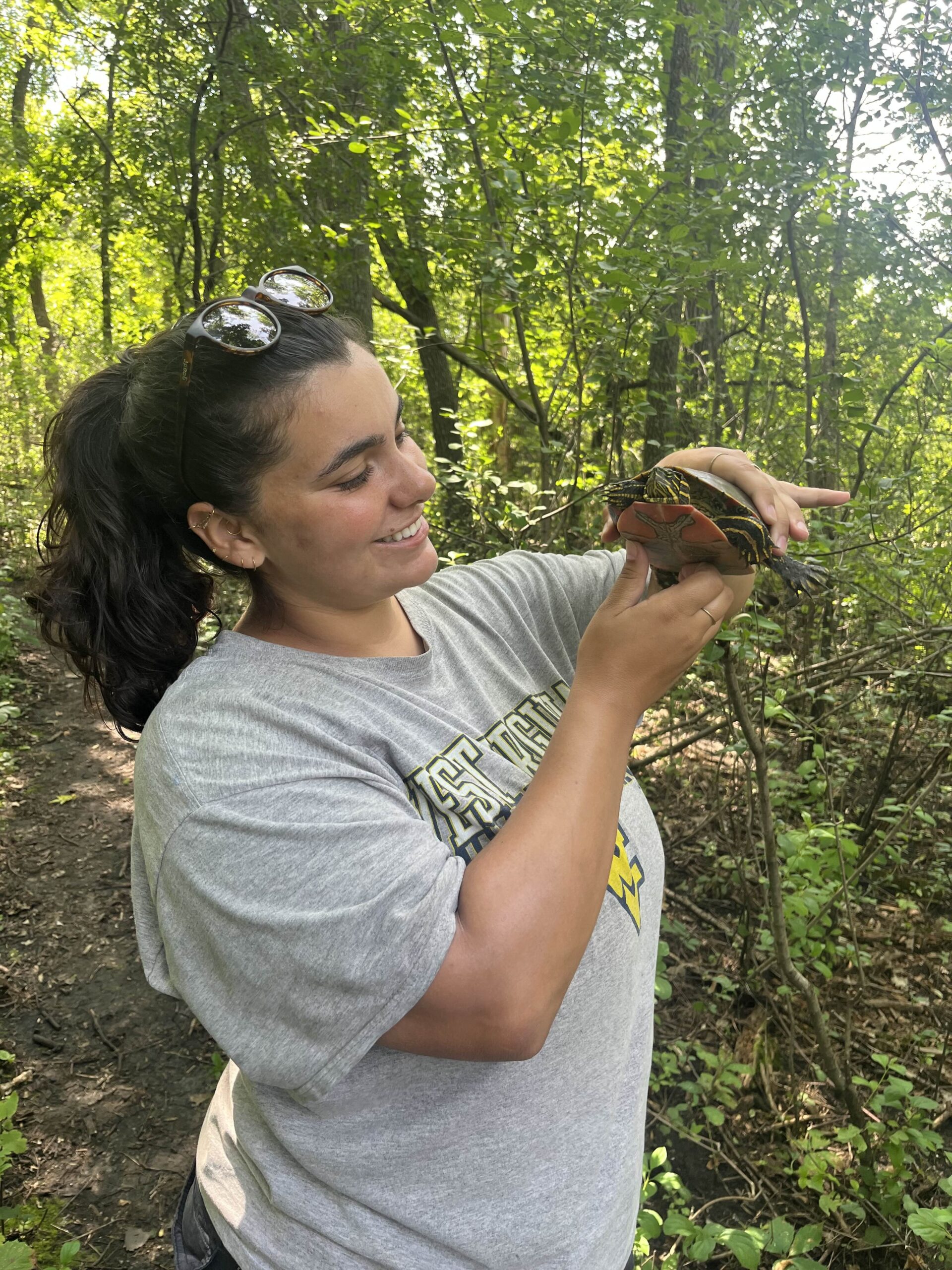
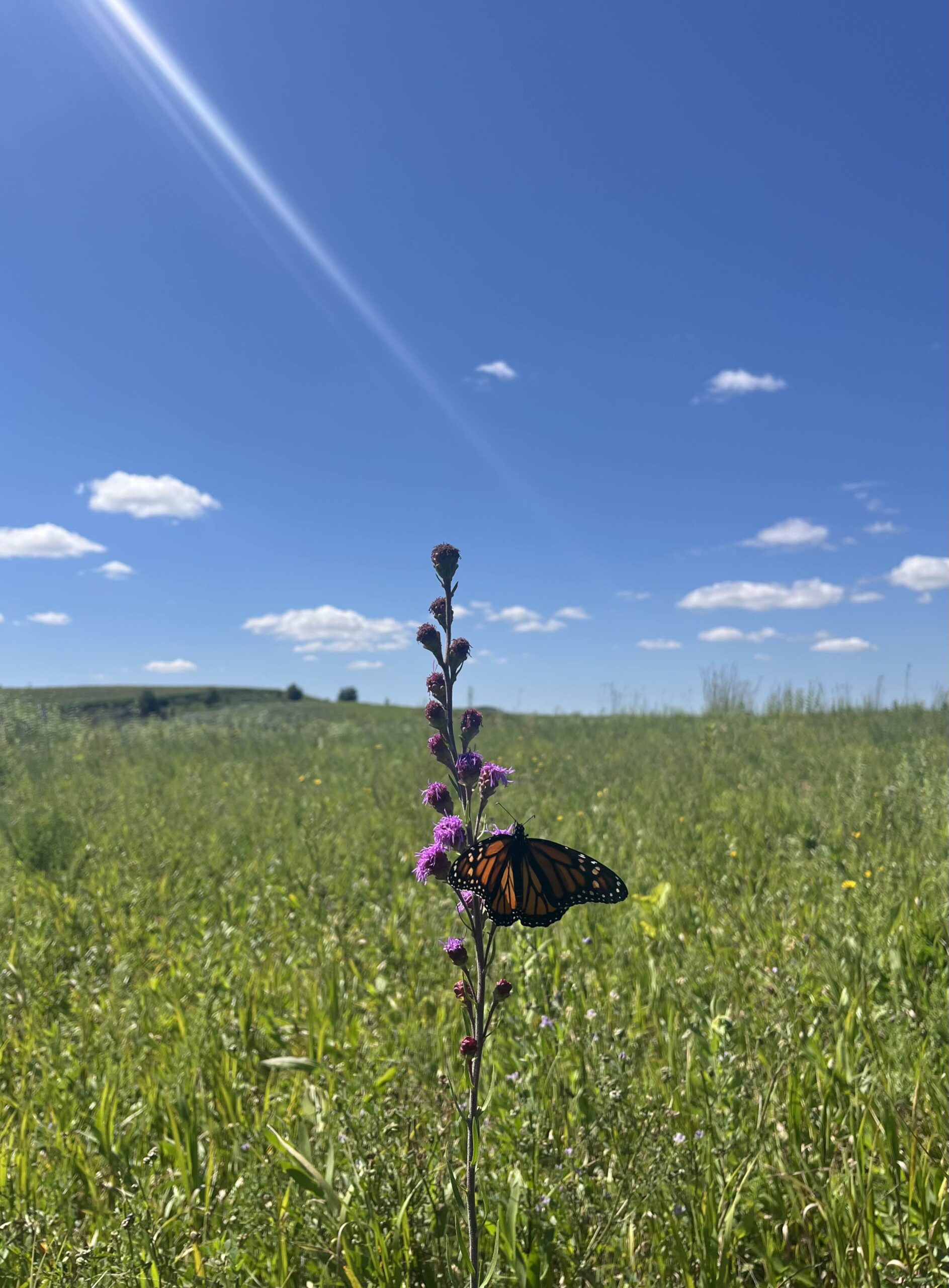
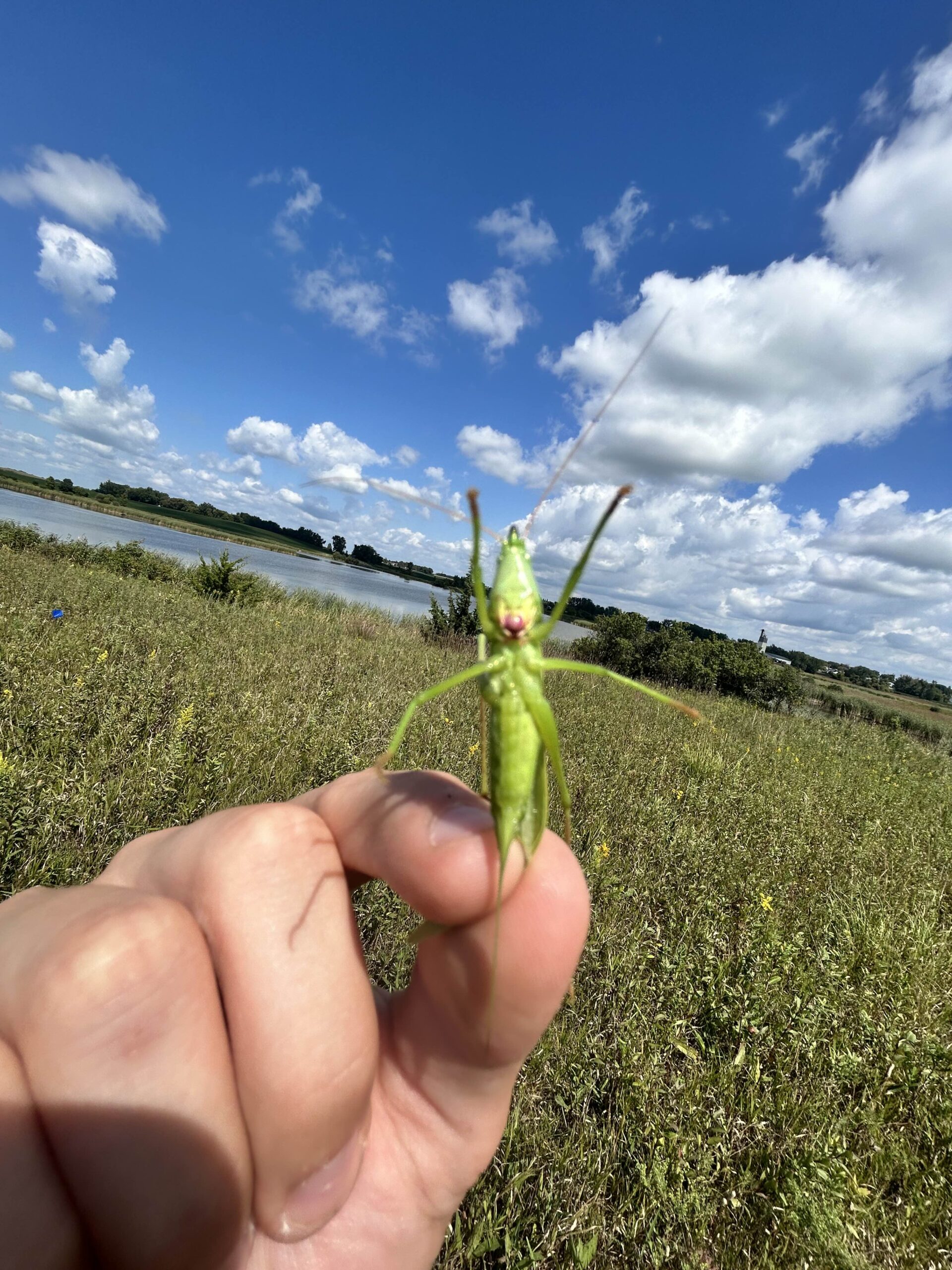
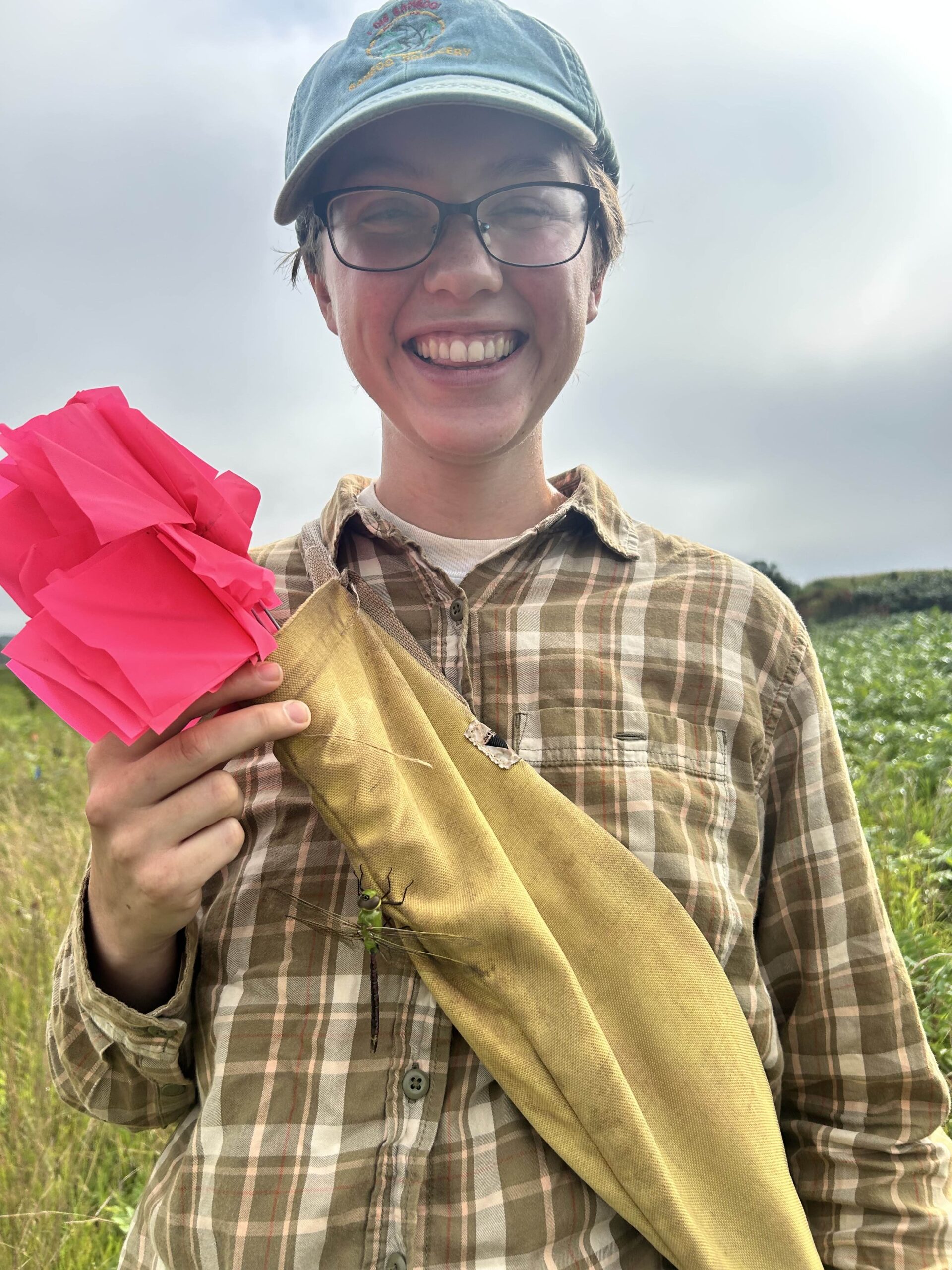
Maddie S. with a Painted Turtle near ExPt01Monarch Butterfly near Hegg LakeKatydid near RKEGrace with a Green DarnerAaron with a Garter Snake found in ExPt02