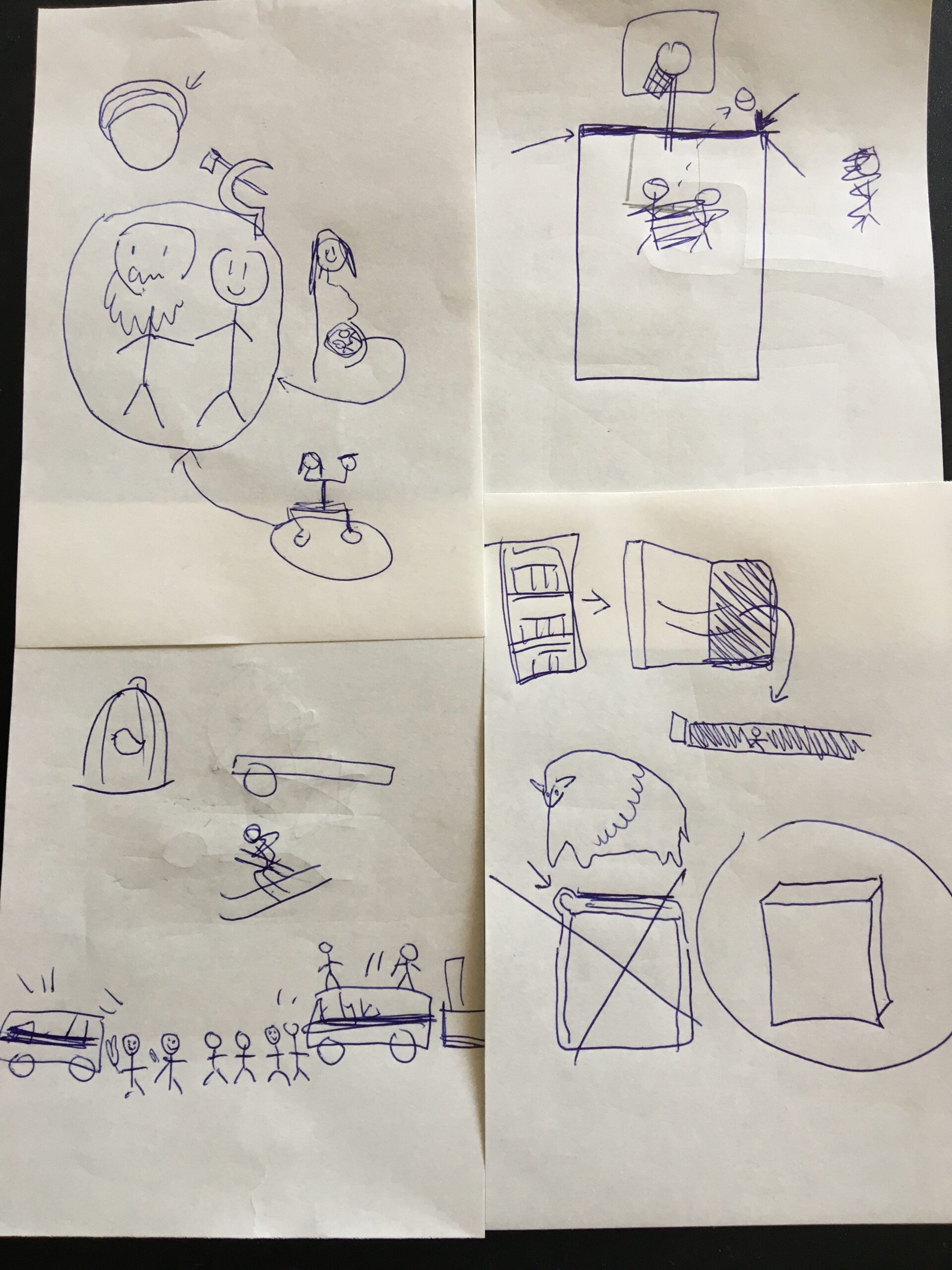
Andes Crew decided to stay in after a wild night of street dancing on K-Town Friday night. Mia and Lindsey representing Elk Lake house competed in the pictionary tournament against the Andes Crew, Sophia, Geena and Johanna. Andes won, however the competition was neck and neck. Check out some of our fan favorite and winning art pieces includes, canary, buffalo, foul line, Marx brothers, paper back, parade. See if you can guess from the pictures! Stay tuned and join the next pictionary tournament hosted by yours truly, Andes Ski Hill and Friends.
Biology and Environmental Science, University of Minnesota-Morris 2021
Research Interests
I am interested in studying plant and insect conservation, plant-insect interactions, and the effects of fire on plant reproduction.
Statement
I am from St. Paul, MN, and I joined Team Echinacea as an intern last summer in August. I’m excited to actually see some flowering Echinacea this year! In my spare time, I like to climb trees, bake pastries, and read books about dragons.
When we arrived at Hjelm in the morning we were informed that the Elk Lake House had declared today Big Hat Friday! It was a hot day without a cloud in the sky, so the big hats were definitely appropriate.
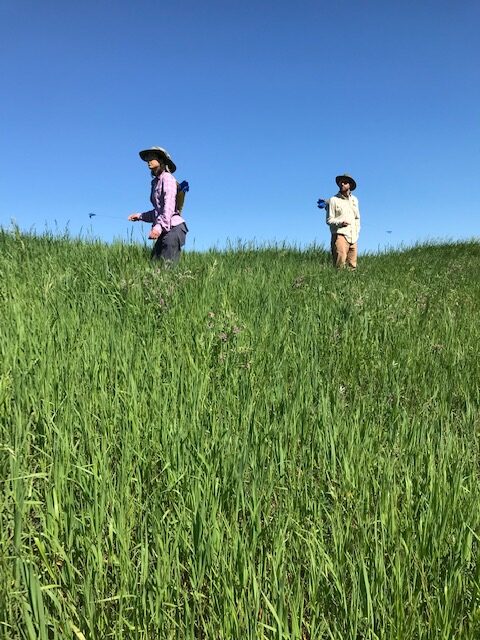
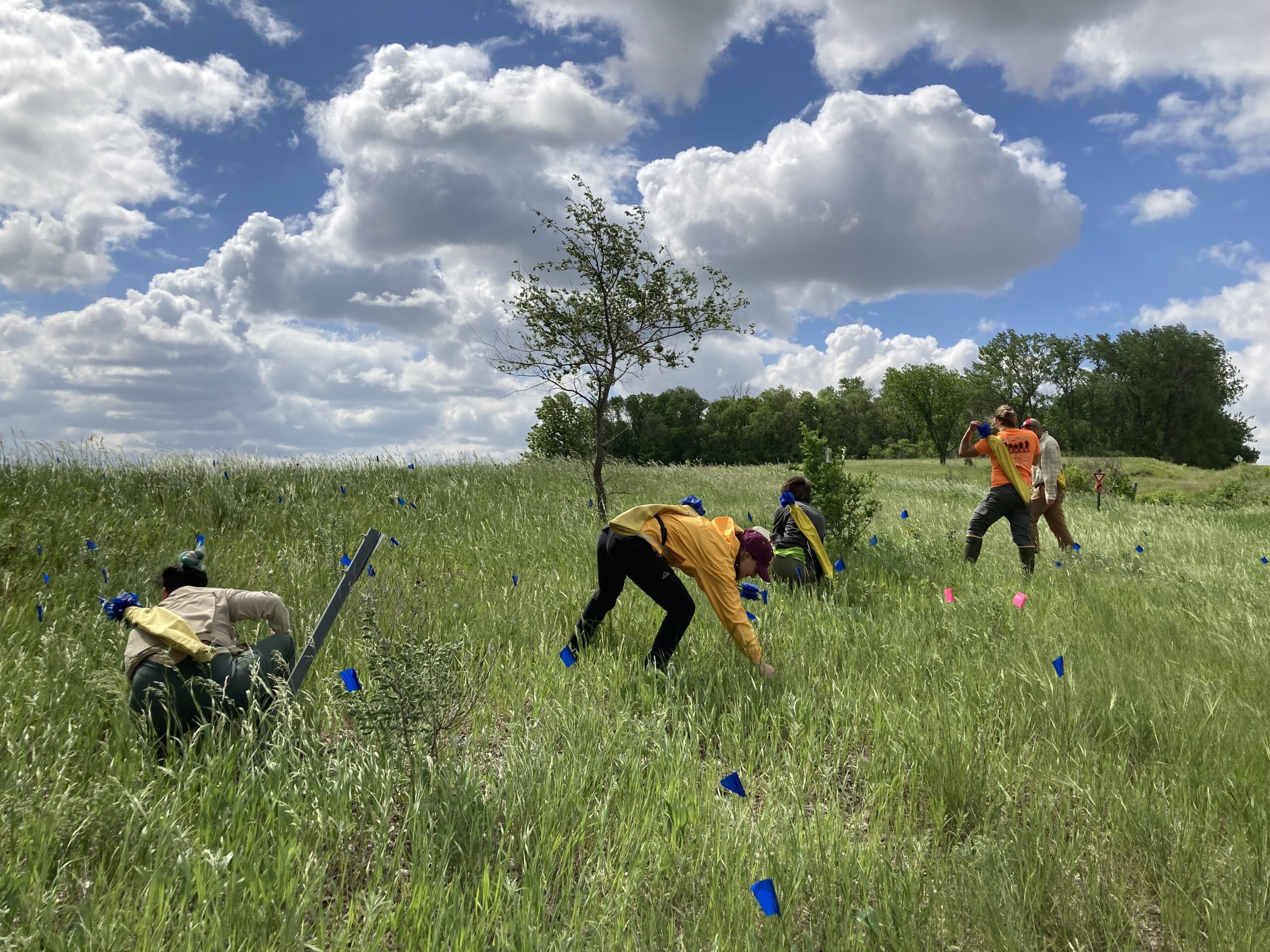
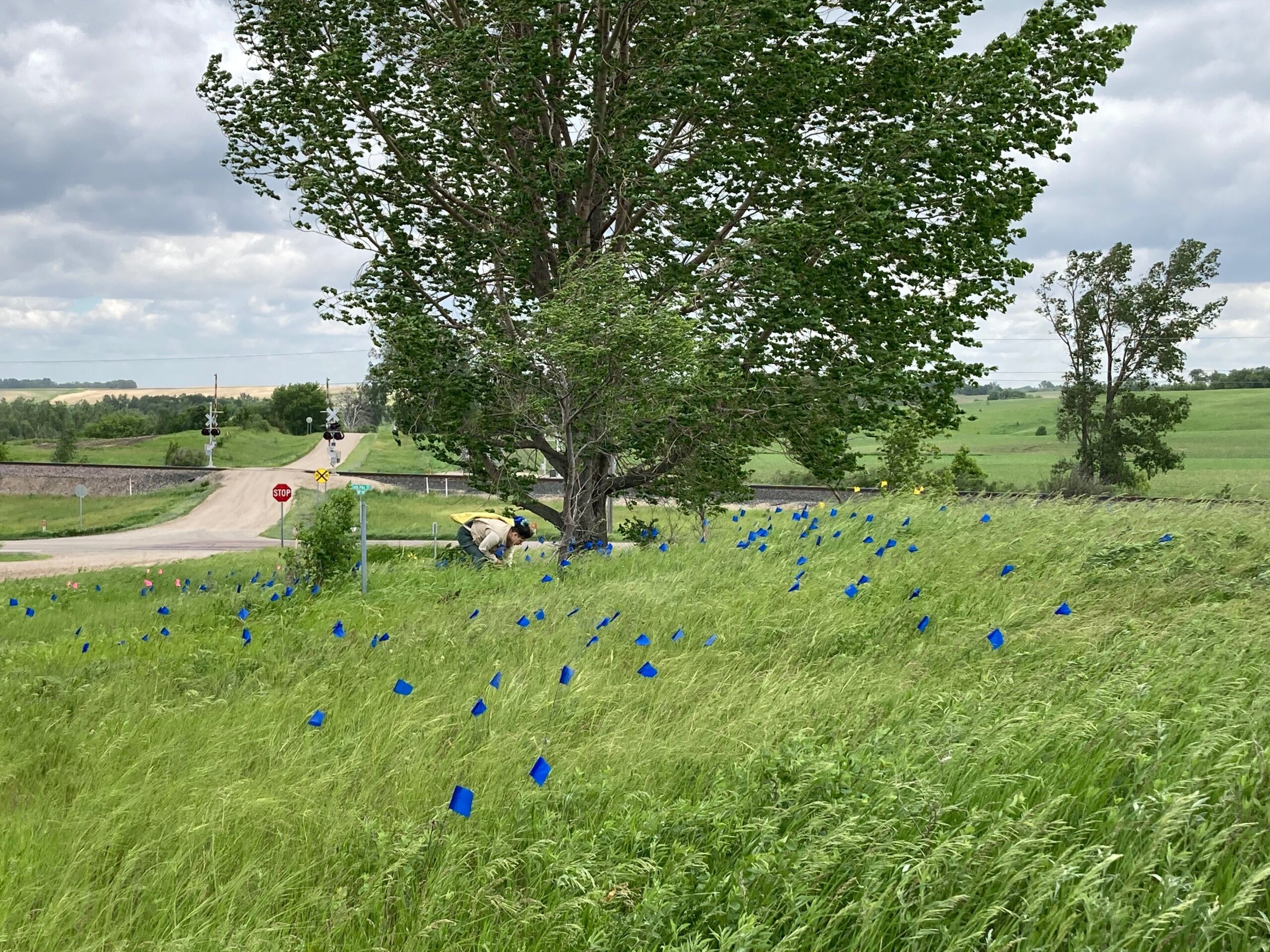
The team split in half to do our morning tasks. One group went to finish up some flagging in the experimental plots to help us out later on in the summer, and my group went out searching for flowering echinacea. We headed out to Riley and East Riley to begin our search. Once we got there Jared gave us all a great demonstration on how to set yourself up to find the most echinacea. The key is to look silly while doing it! We found some to flag, but the bright sun certainly was not making it easy on us and I have a feeling that when we visit again there will be more plants to spot.
Alex and Jared in their big hats searching for echinacea
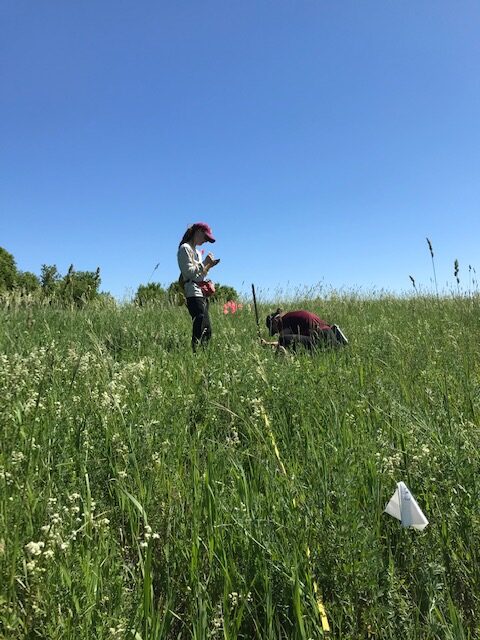
Before lunch we had a presentation from Jennifer Ison about her projects in p2 and then the whole team got to share short ABT’s about what we are interested in doing this field season. Then we were all off to p10 to flag and measure for the afternoon. Unfortunately, the flagging didn’t go as fast as we expected but we got it done and most of the team got their first introduction into measuring! It was a great finish to a fantastic first week!
Emma and Britney doing some of the first measuring of the year!
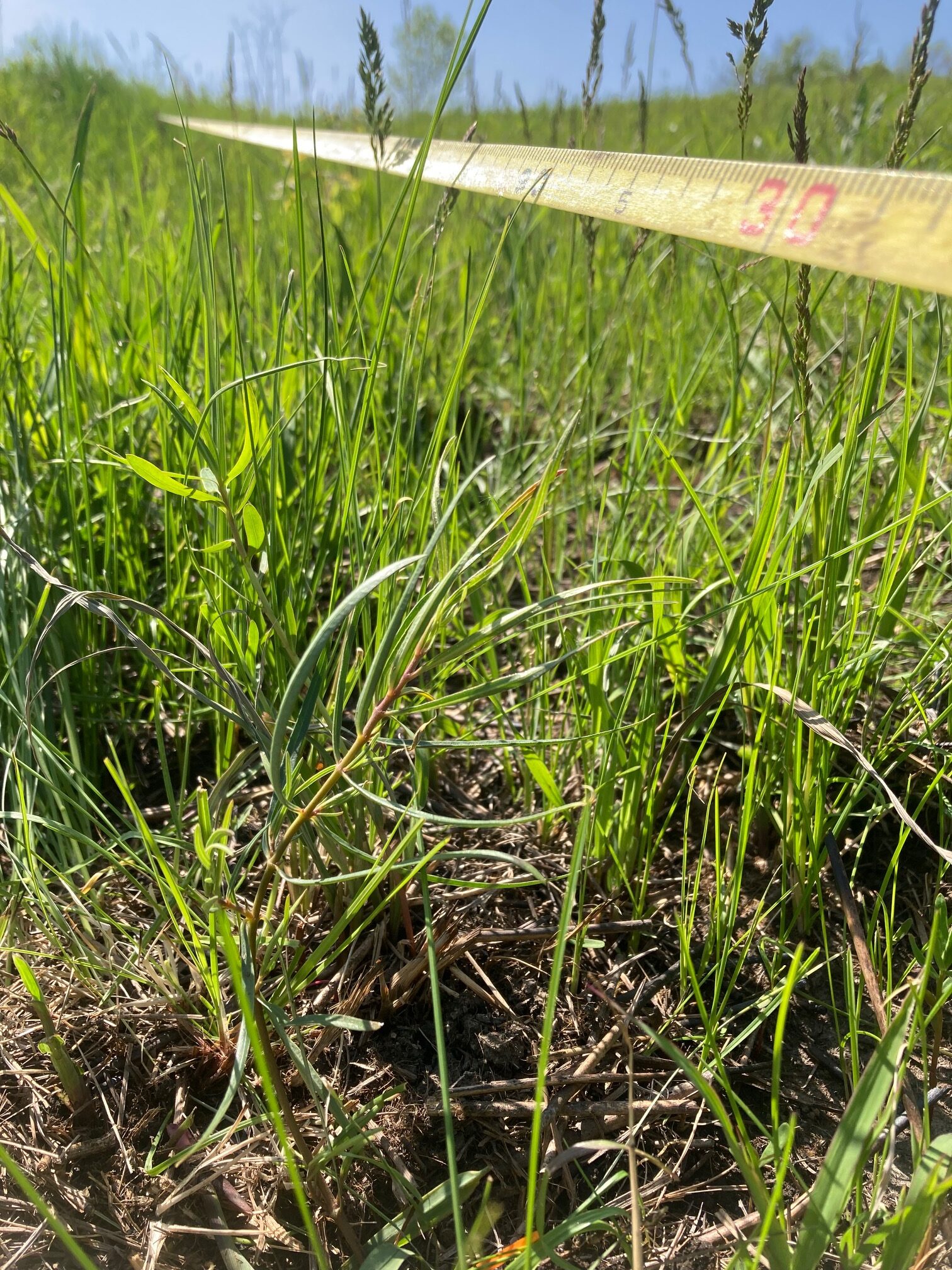
Between June 3 and June 12 (2022), members of the Echinacea Project planted 503 Green Milkweed (Asclepias viridiflora) seedlings across four sites in Solem Township. These sites included an area south of Experimental Plot 8 (149 seedlings planted June 3), a hilltop at Hegg Lake WMA (117 seedlings planted on June 9), a disturbed area at Staffanson Prairie Preserve (117 seedlings planted on June 10), and a hilltop at Eng Lake WPA (aka eth, 120 seedlings planted on June 12).
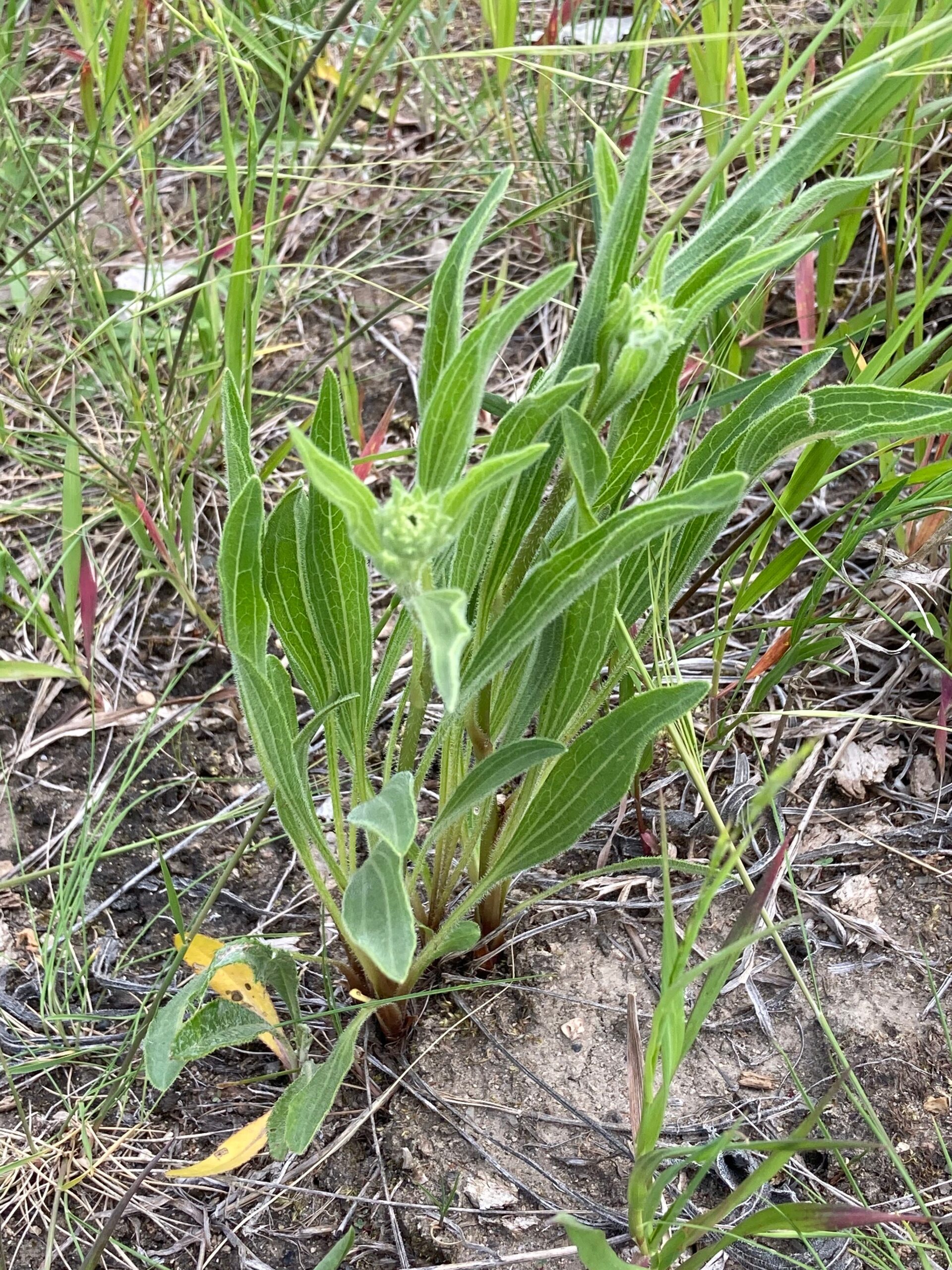
I promise this photo contains a green milkweed seedling we planted…
We hope these seedlings grown from locally-collected seed will establish new thriving populations of this declining plant species and provide a reliable seed source for future restorations. They may even provide future research opportunities to learn about the reproductive biology and demography of green milkweed! Thanks to the MN DNR, the Nature Conservancy, and USFWS for giving us permission to plant seedlings.
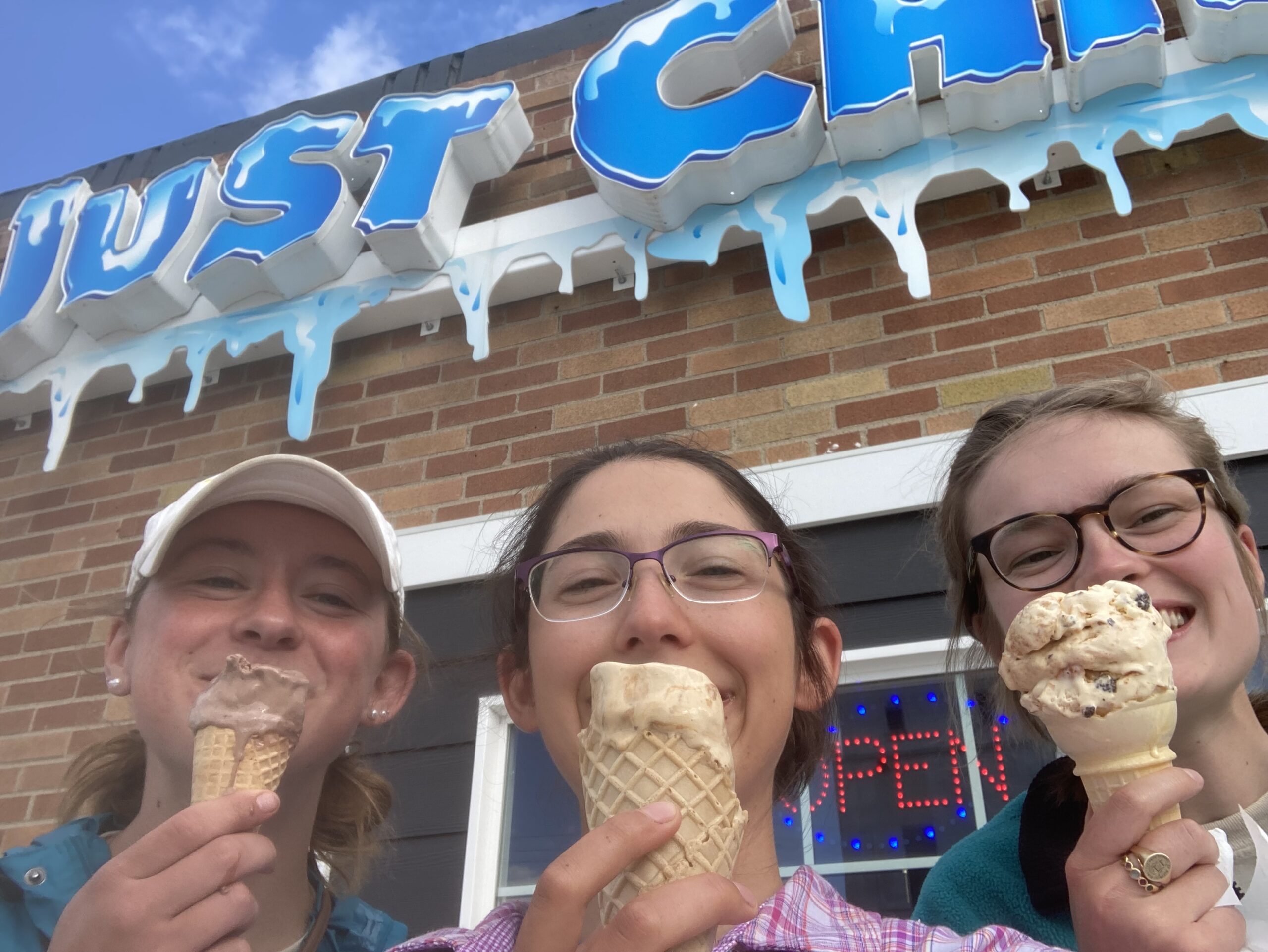
A new ice cream store just opened in Morris! Understandably, Mia, Lindsey, and I had to check out its grand opening. Just Chillin’ serves Bridgeman’s ice cream, and we tried the Wolf Tracks, Carmelicious, and Banana Buttercup. The first two flavors passed our rigorous ice cream evaluations, but Mia described the Banana Buttercup as “interesting” in true Minnesotan fashion, which means it wasn’t very good.
The ice cream gang
Since Lindsey had never been to Morris, I had to give a full tour of town. We checked out the creepy, derelict florist shop and drove through the University of Minnesota-Morris campus. We did not spot any horses on campus, unfortunately.
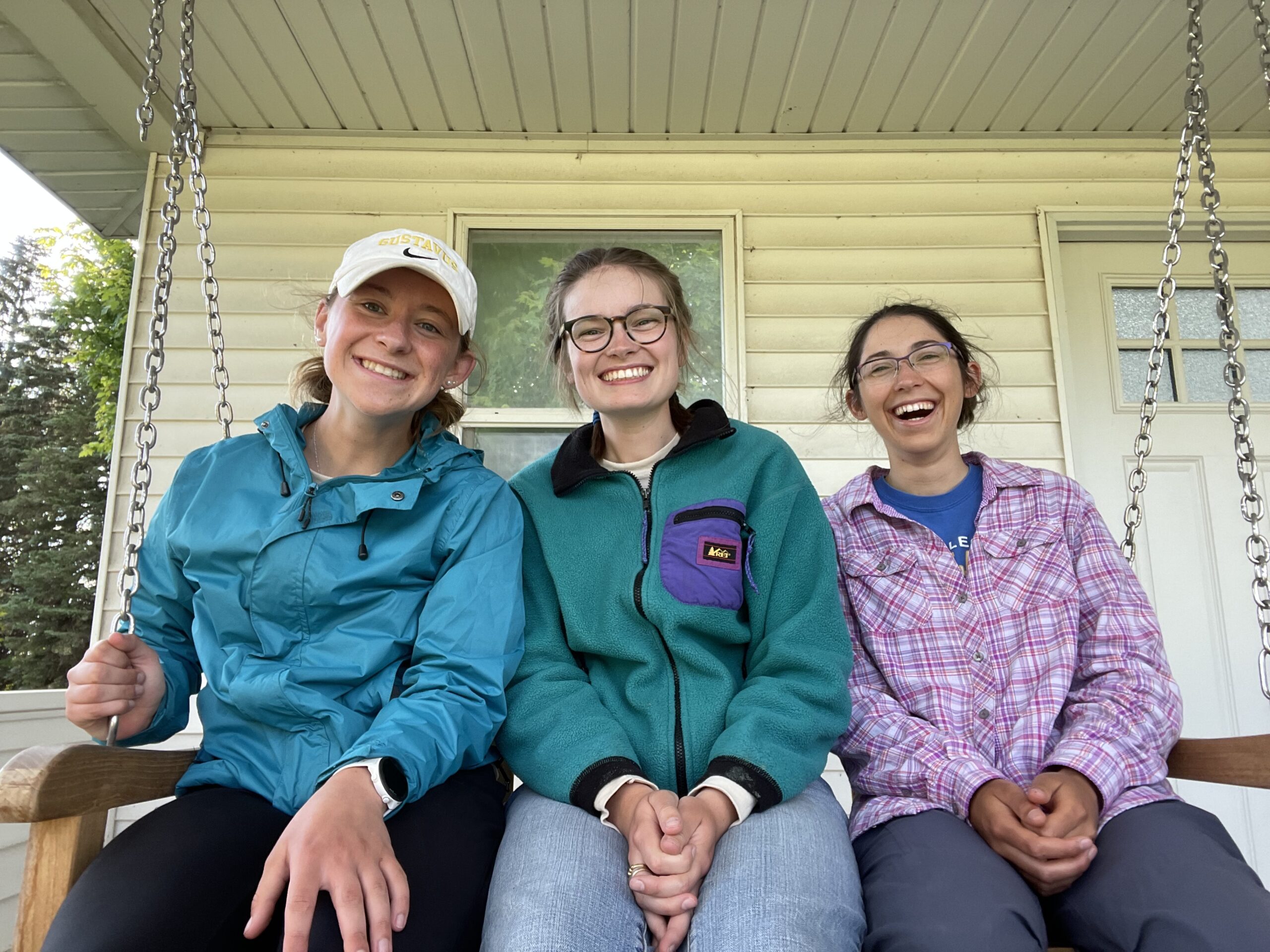
Just chillin’ on the porch swing
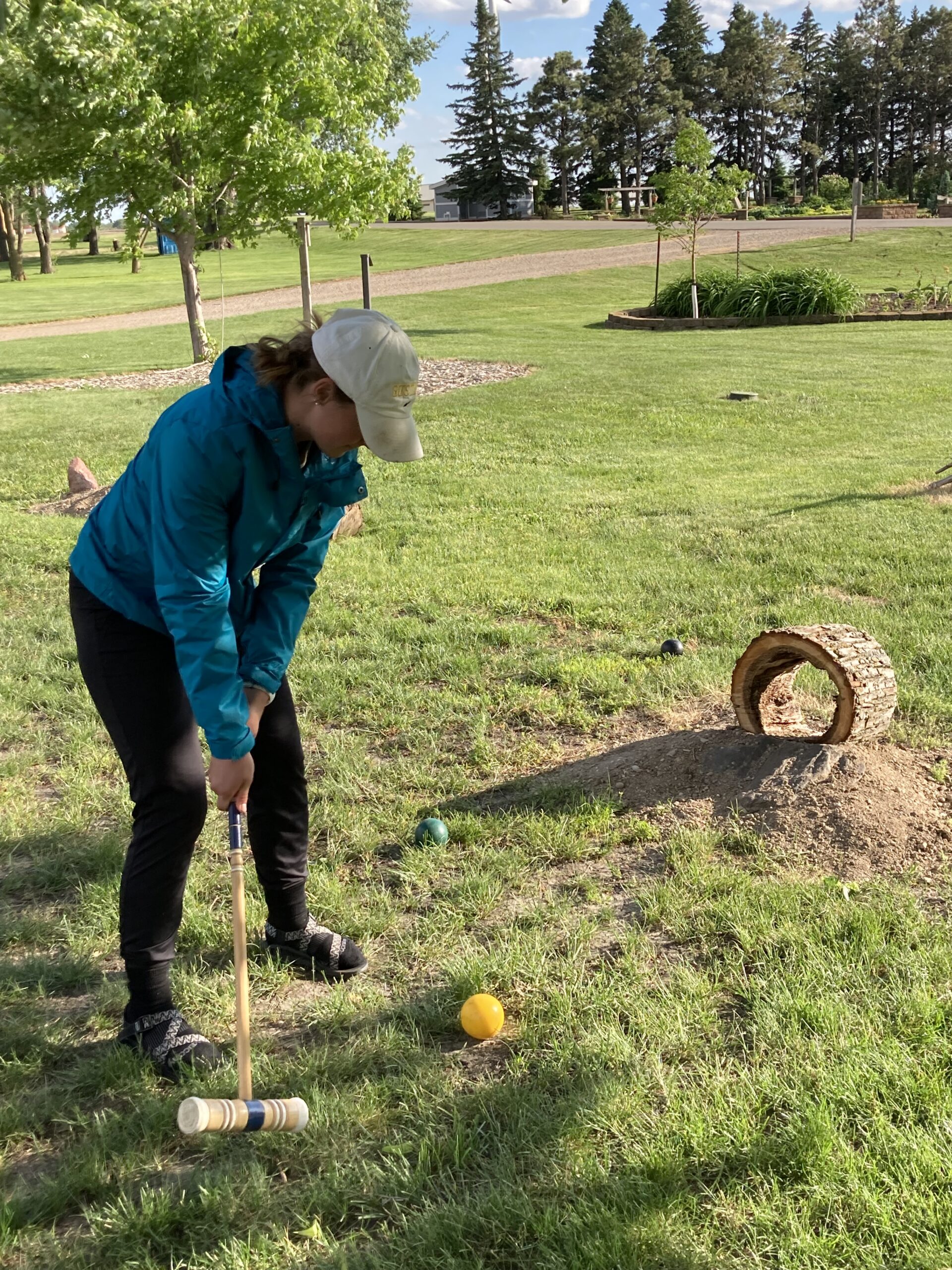
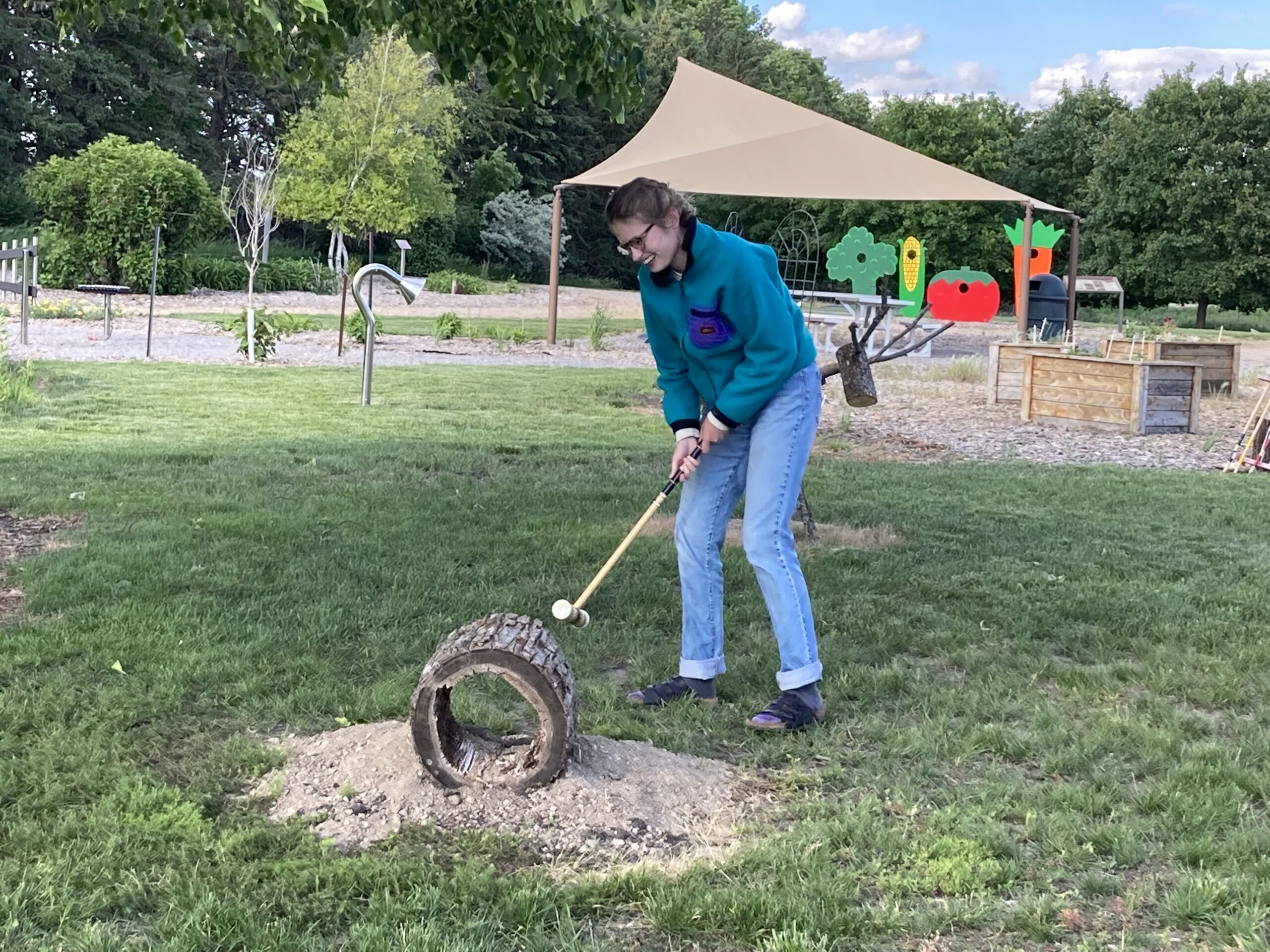
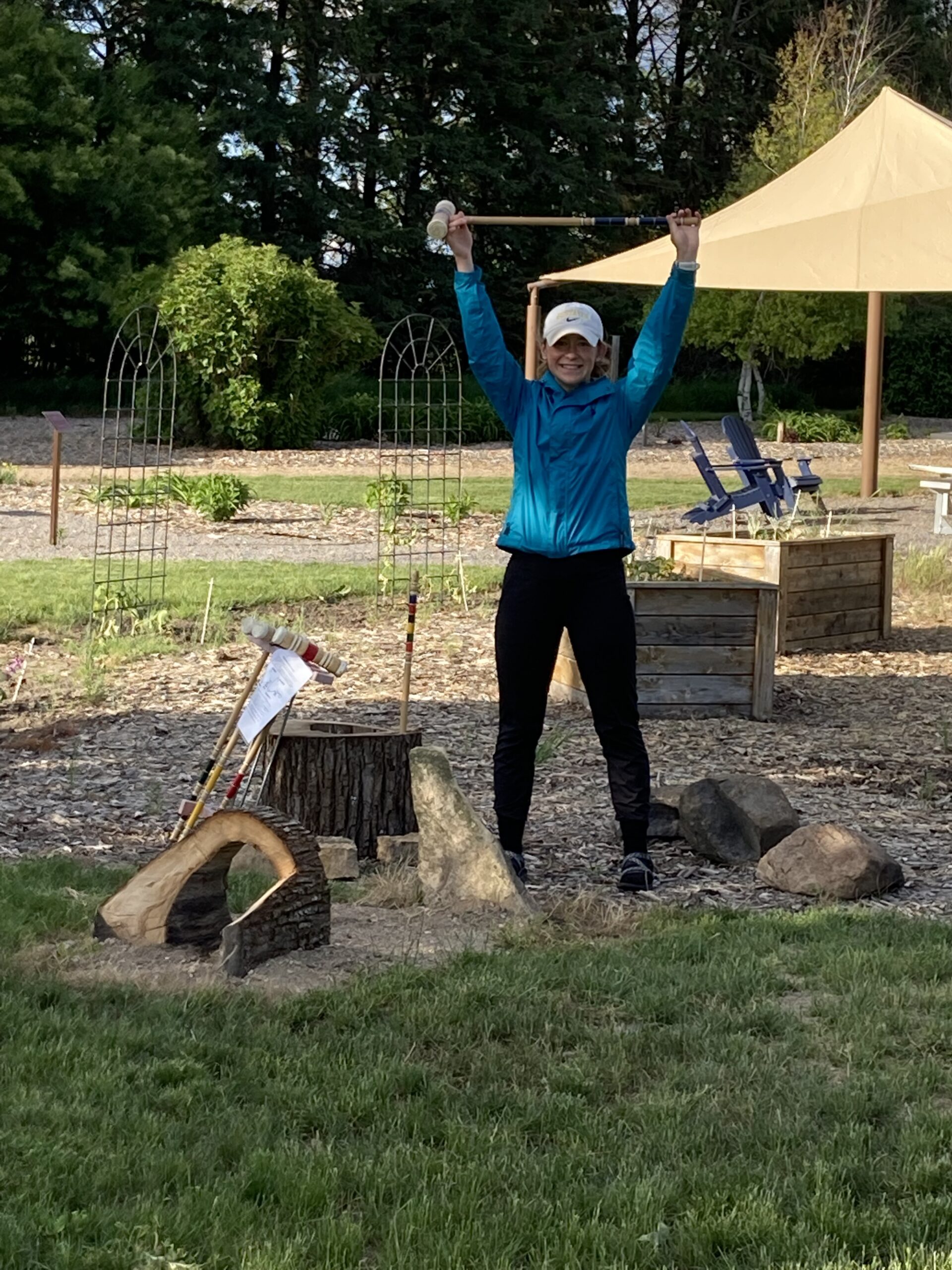
Next, we visited the West Central Research and Outreach Center. We wandered through the horticulture garden and found some suspicious ornamental orange Echinacea, which Mia identified as Echinacea purpurea. We also discovered a porch swing and a croquet game. The most challenging obstacle required us to hit the ball up an incline and through a hollow log. Lindsey was a pro croquet player, but Mia and I struggled, and it took us more tries than we would like to admit. If anyone challenges us to a croquet tournament, I’m placing my bets on Lindsey.
Hole in one!Mia struggles with the hollow logAn exhausting ordealThe croquet champion
This morning at roughly 9:30 am, a team of people were sent out to flag flowering plants at the prairie remnant known as LCE. A second team went out to P1 and finished flagging it (Woo-hoo!). Emma got to flag the last Echinacea.
Daytona and Emma visited Around Landfill (ALF) and Northwest of Landfill (NWLF) today. Each site was visited for around 15 minutes and was observed from the side of the road.
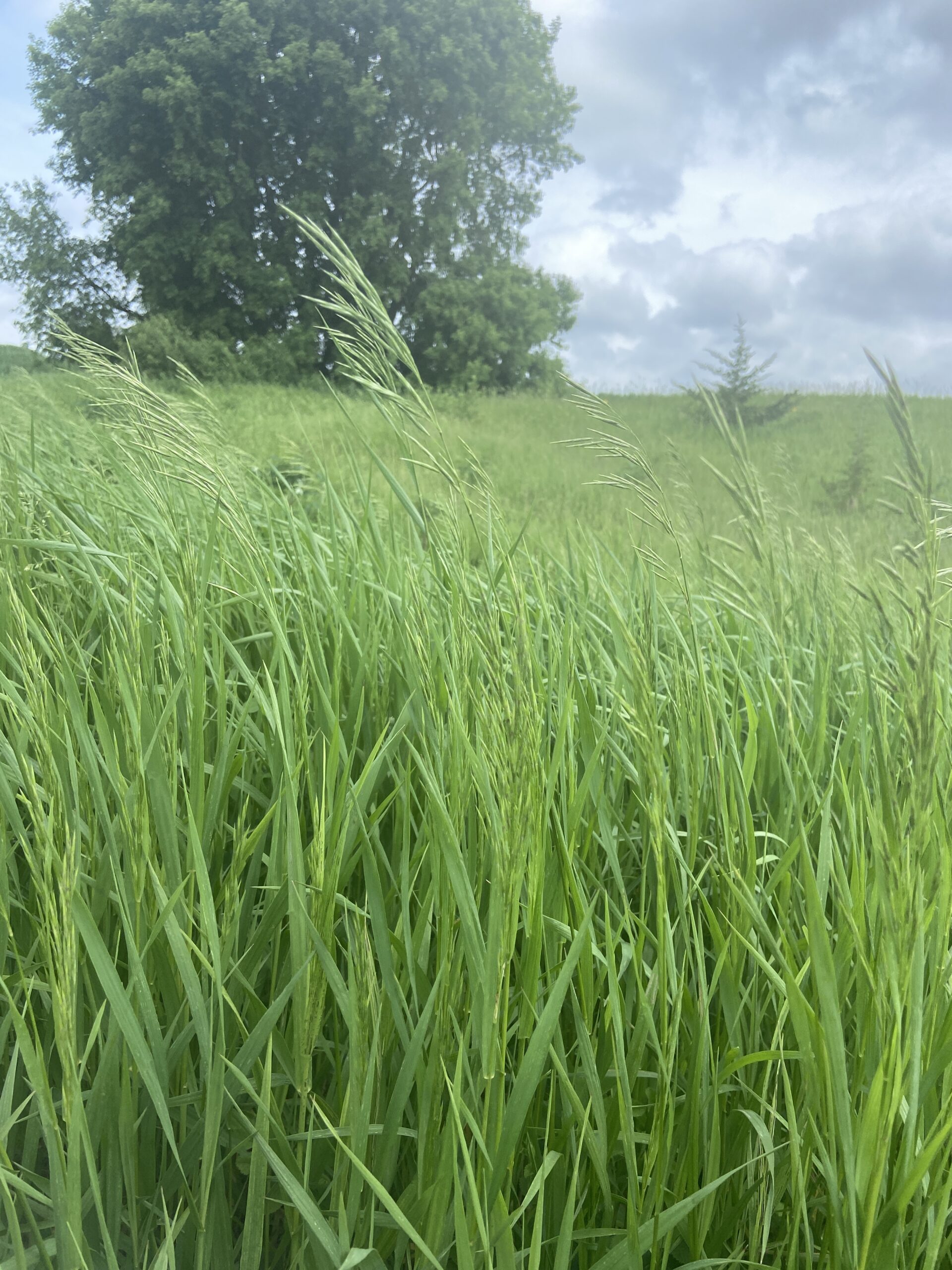
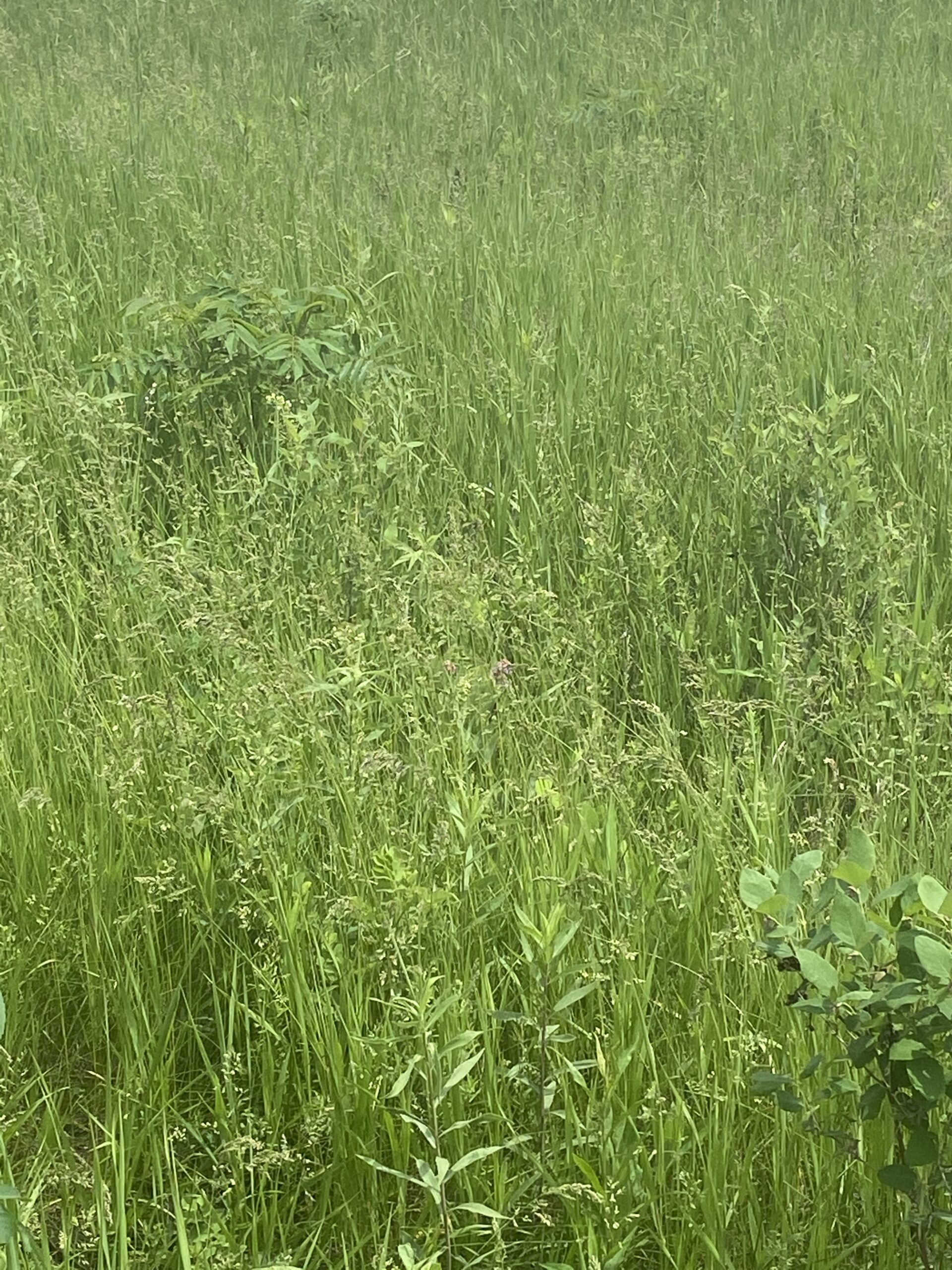
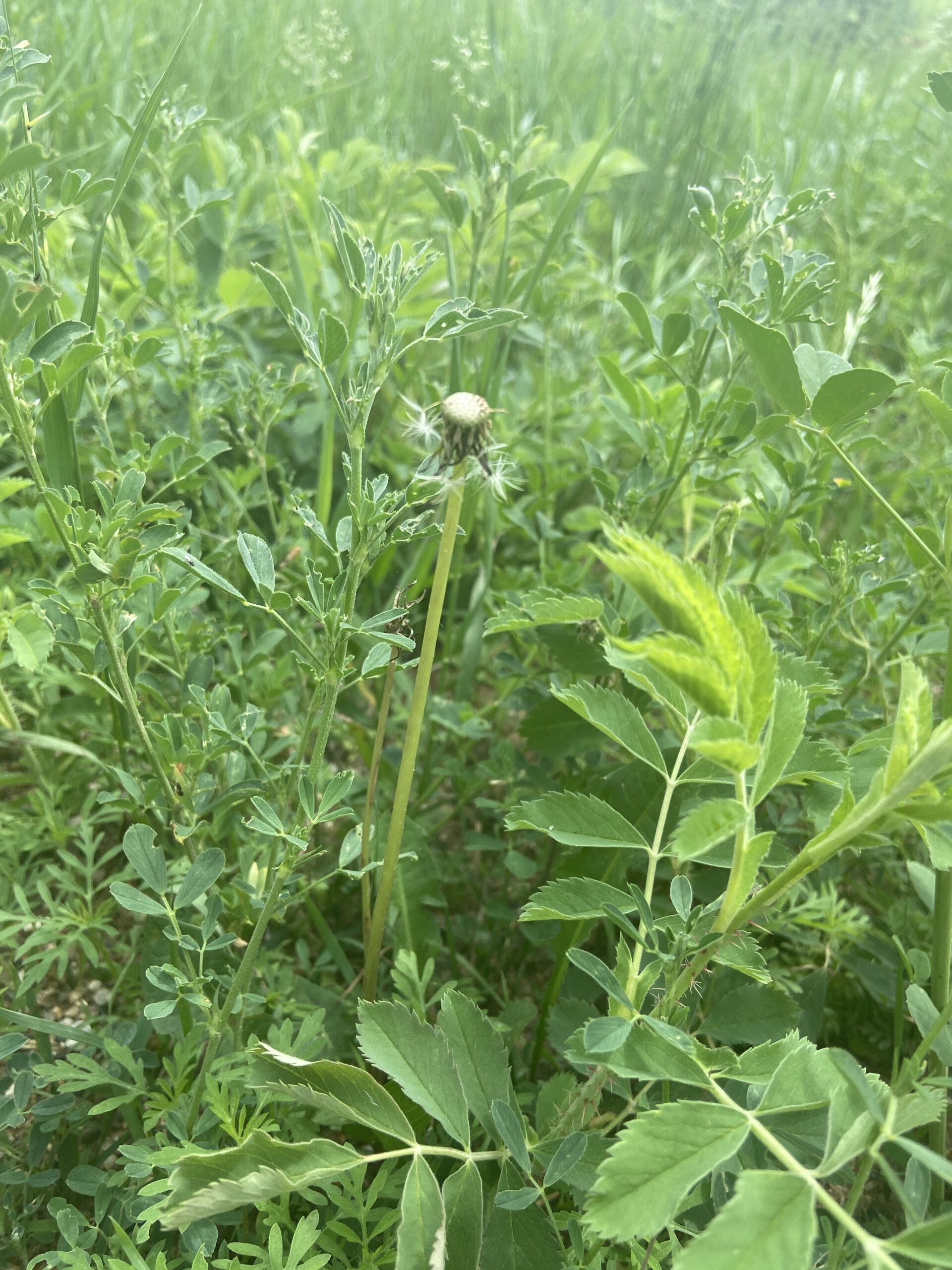
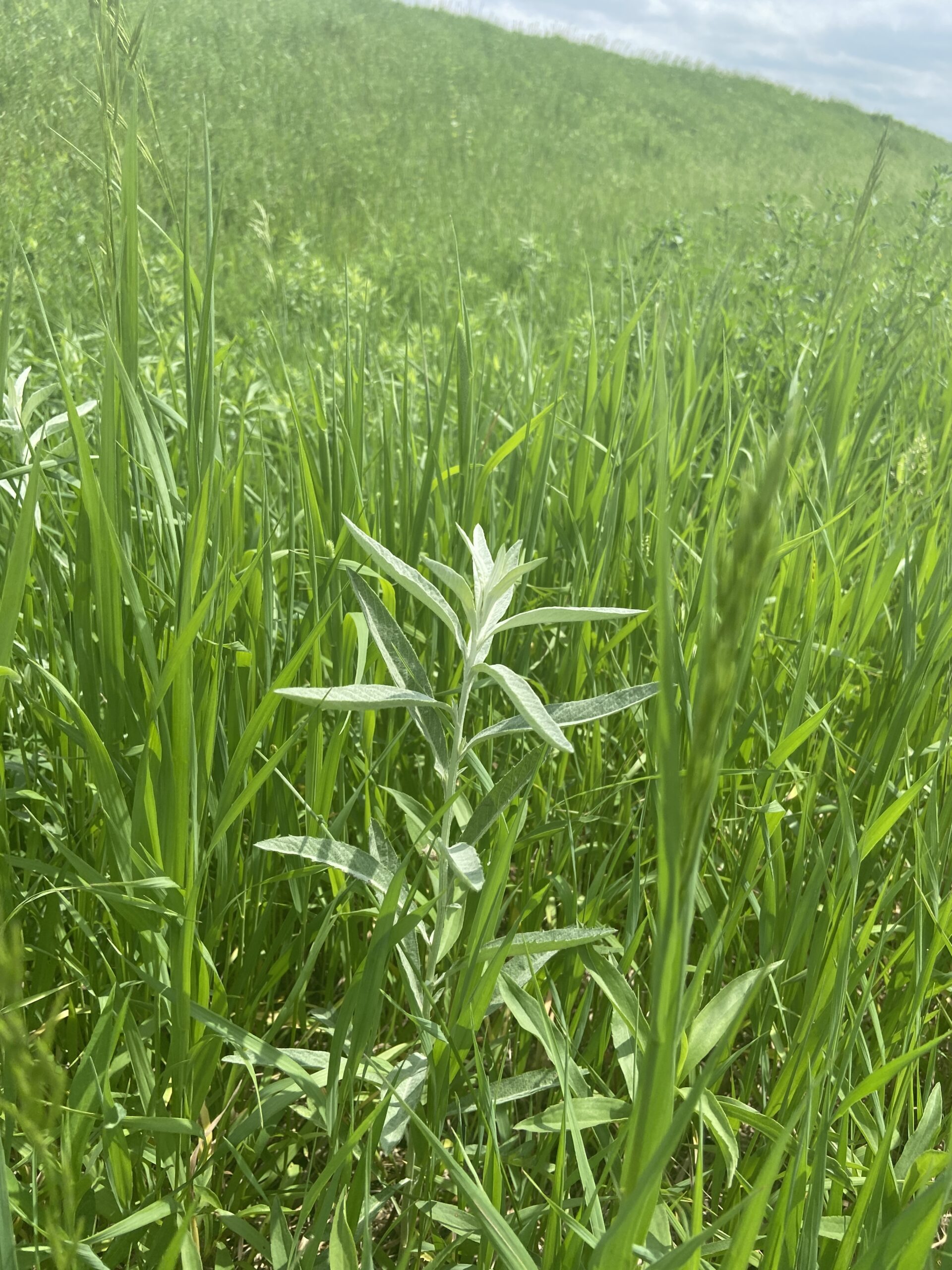
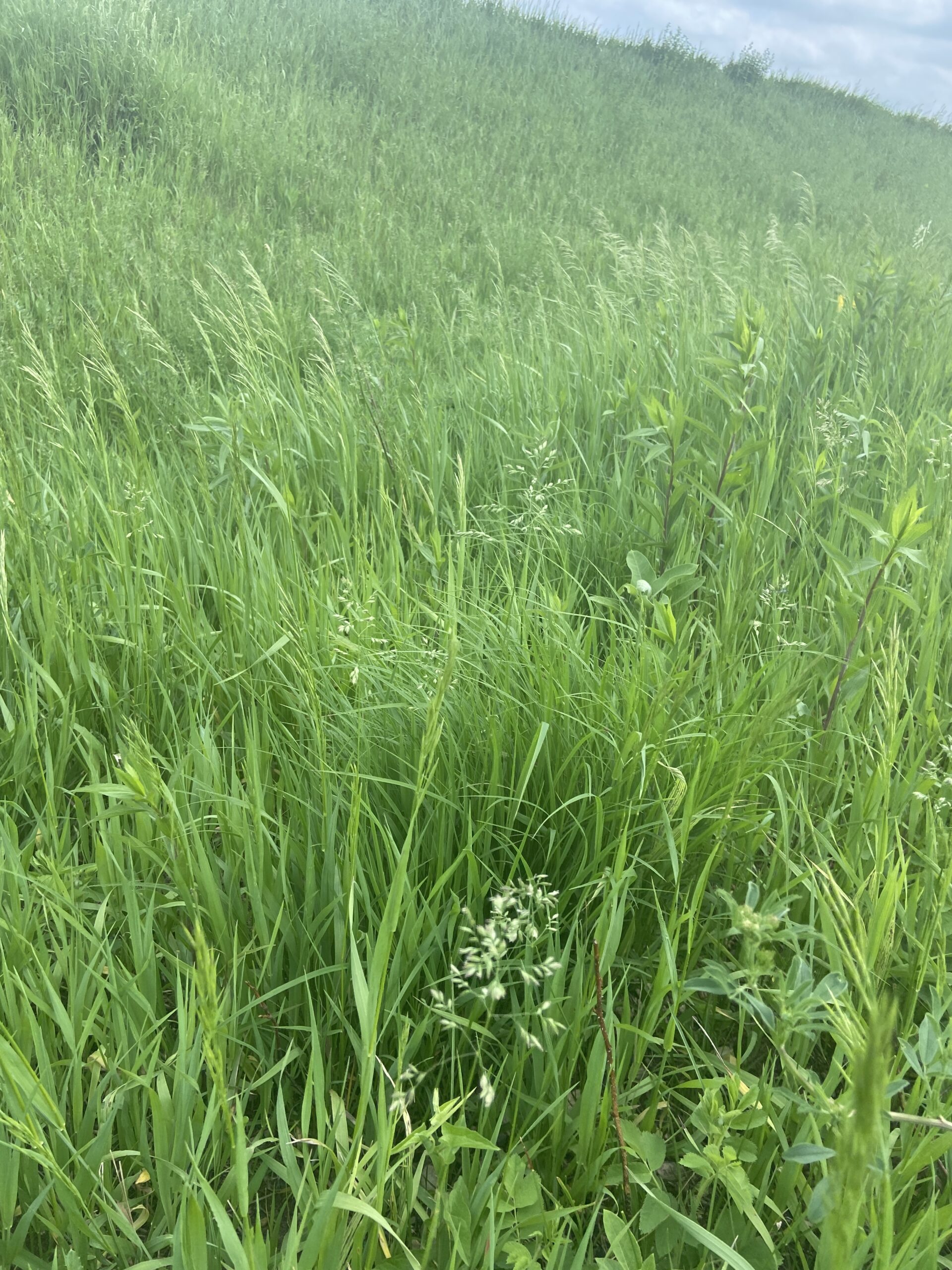
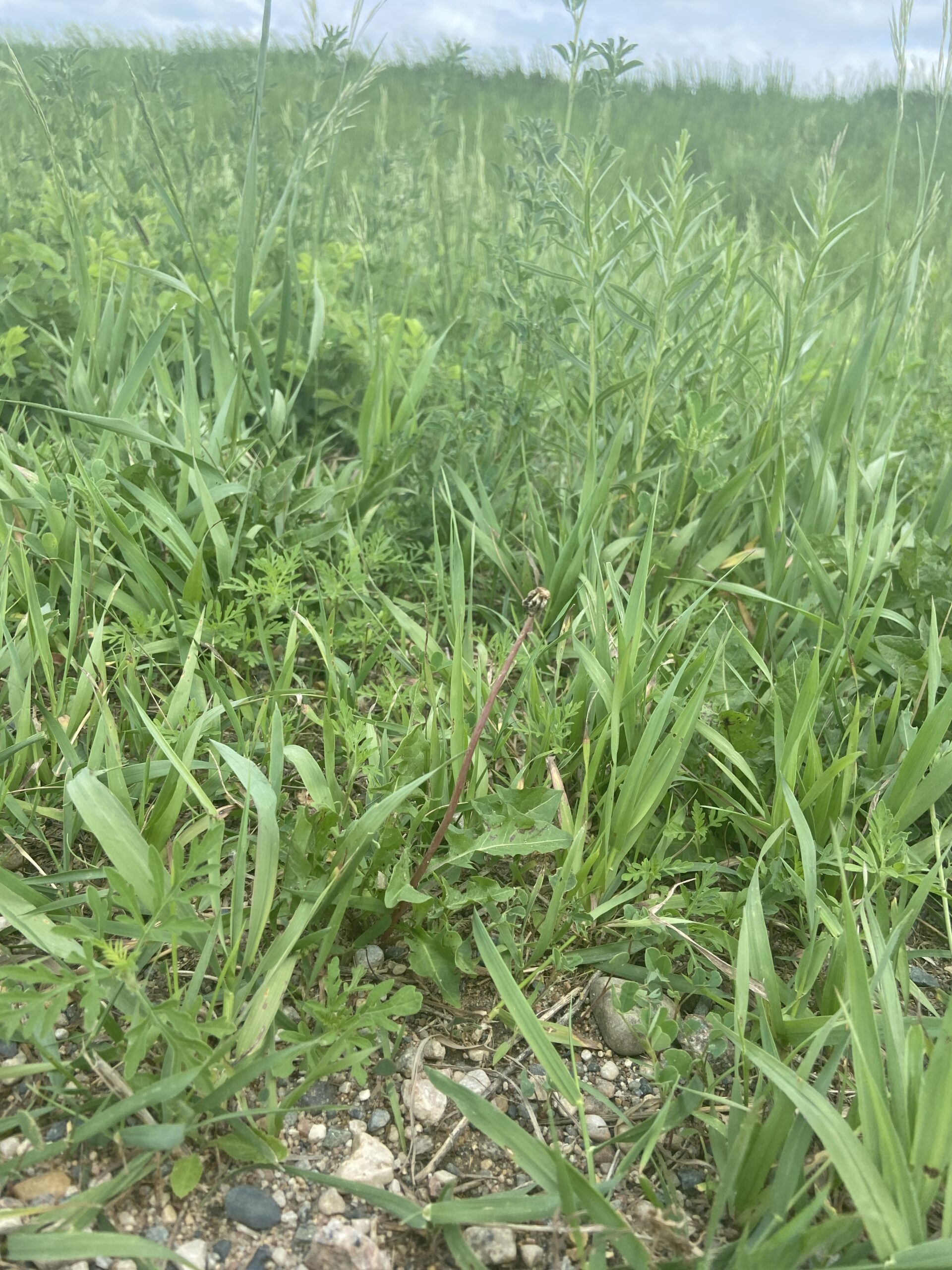
ALF did not look burned and contained a lot of shrubs and brome. We also noticed the warm grass big blue stem, as well as the forb dandelion and the legume veiny pea. This concluded all 4 plant communities within this site. We discussed how the shape of the land, namely the hill and the ditch, were both naturally occurring and man-made. Among the site we saw trees, some fences (one of which was electric), and a few cars passed us, which we made sure to wave to! We managed to spot some echinacea as well as the veiny pea at this site, which was exciting.
NWLF did looked burned. We agreed upon this because of the lack of previous years’ growth and the lack of brome in the area. We found lots of plants in each of the 4 plant communities, some being brome, silver leaf pea, big blue stem, and dandelion. At this site we saw echinacea plants, but did not find any veiny peas.
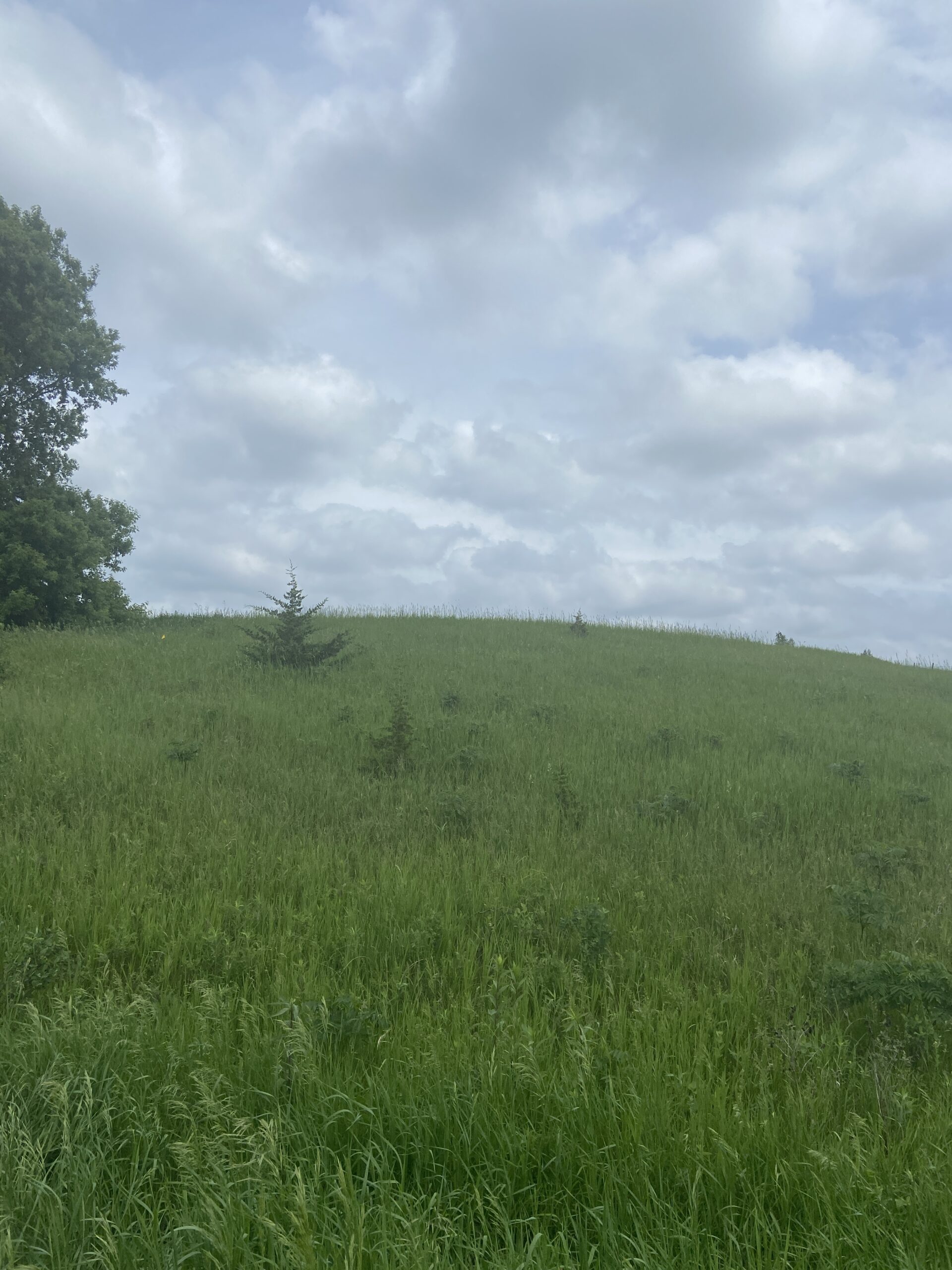
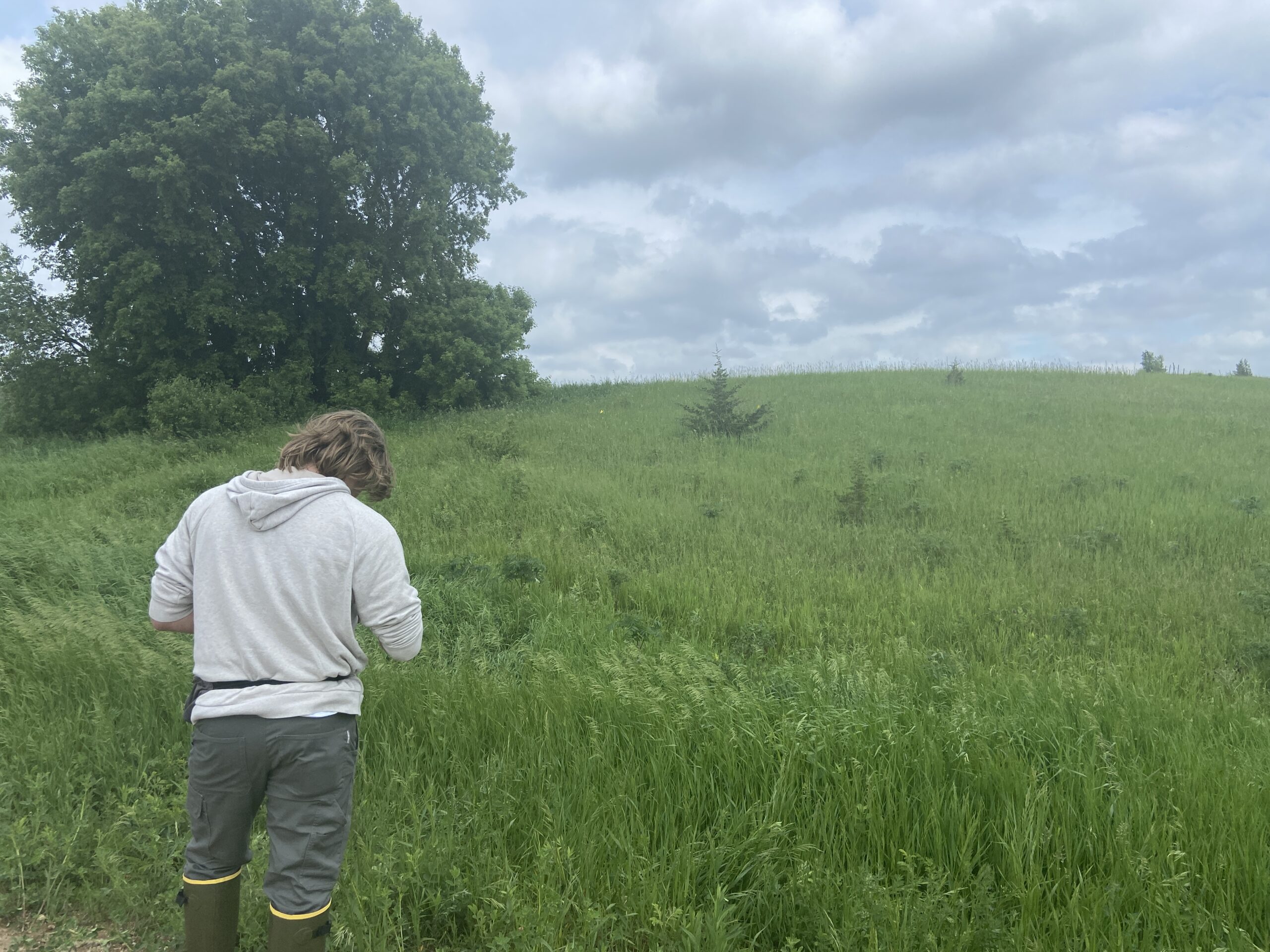
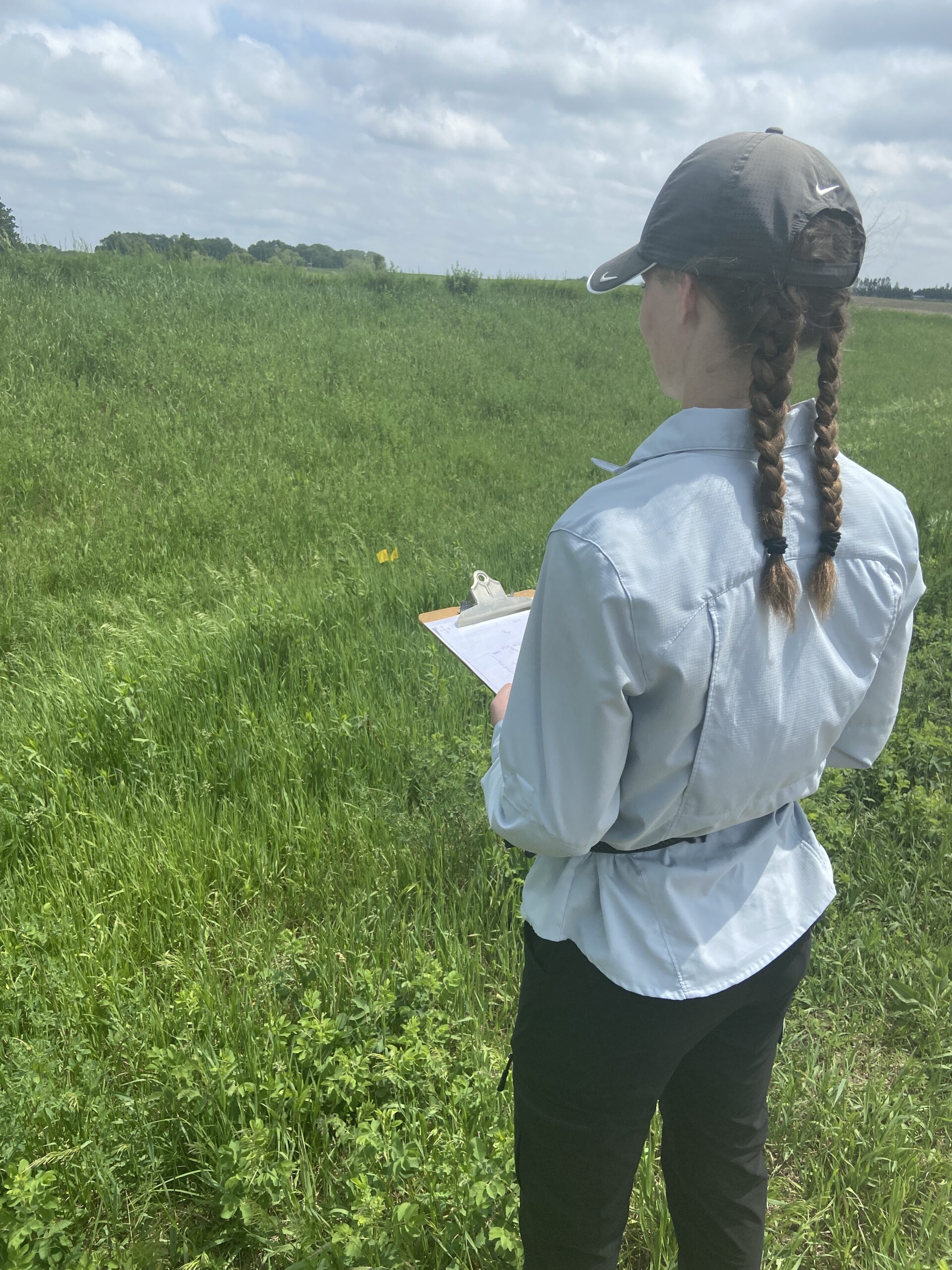
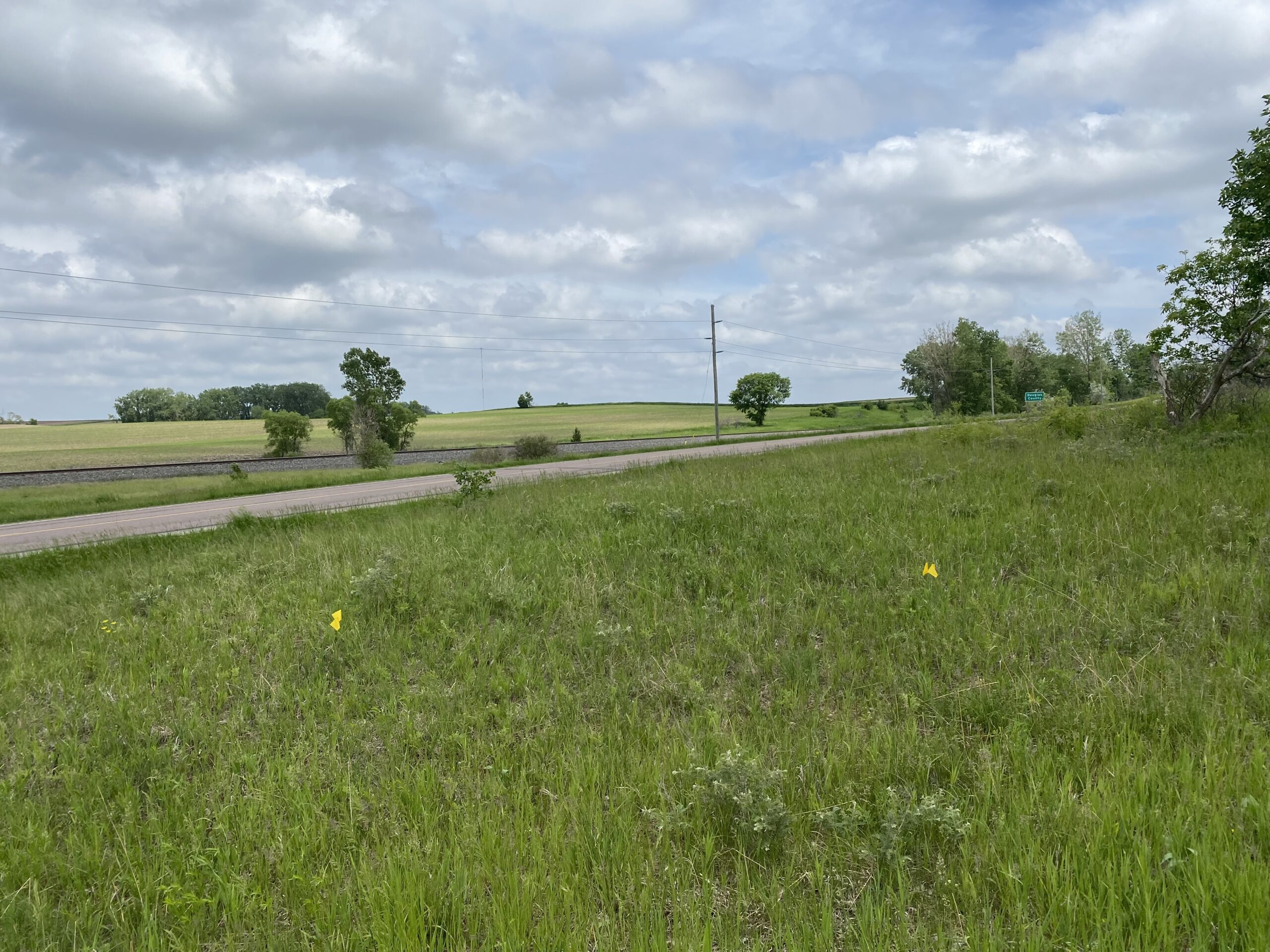
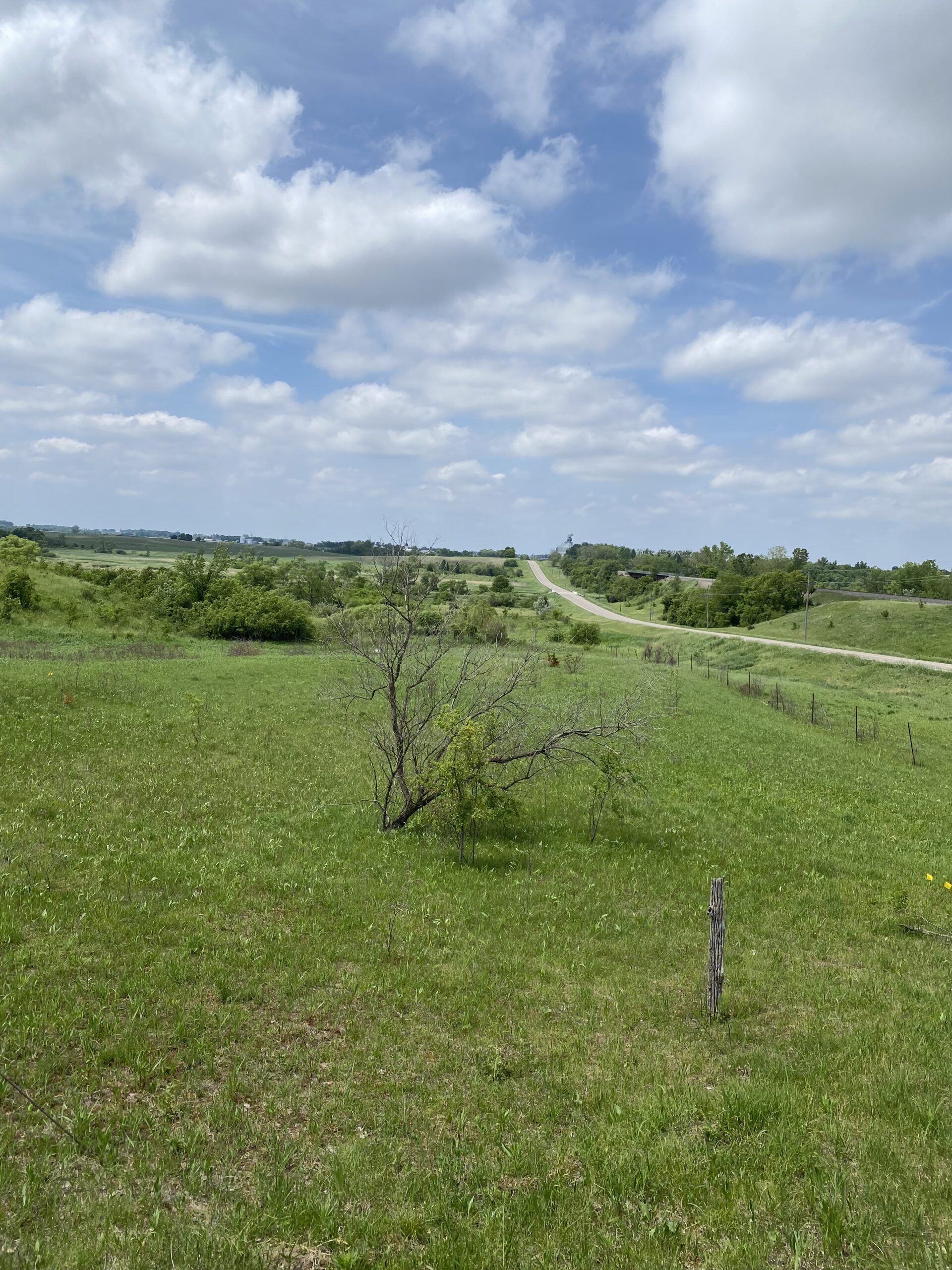
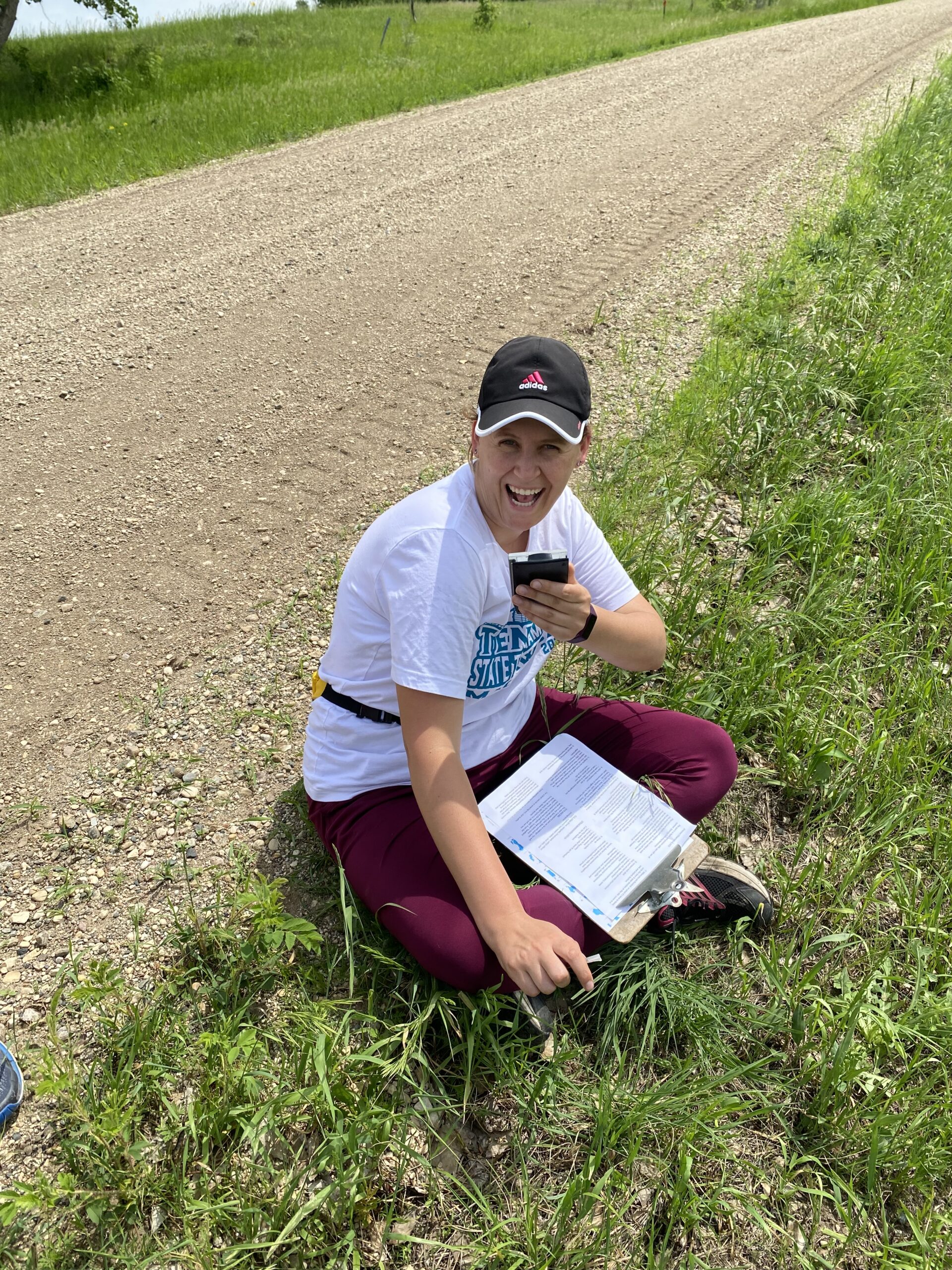
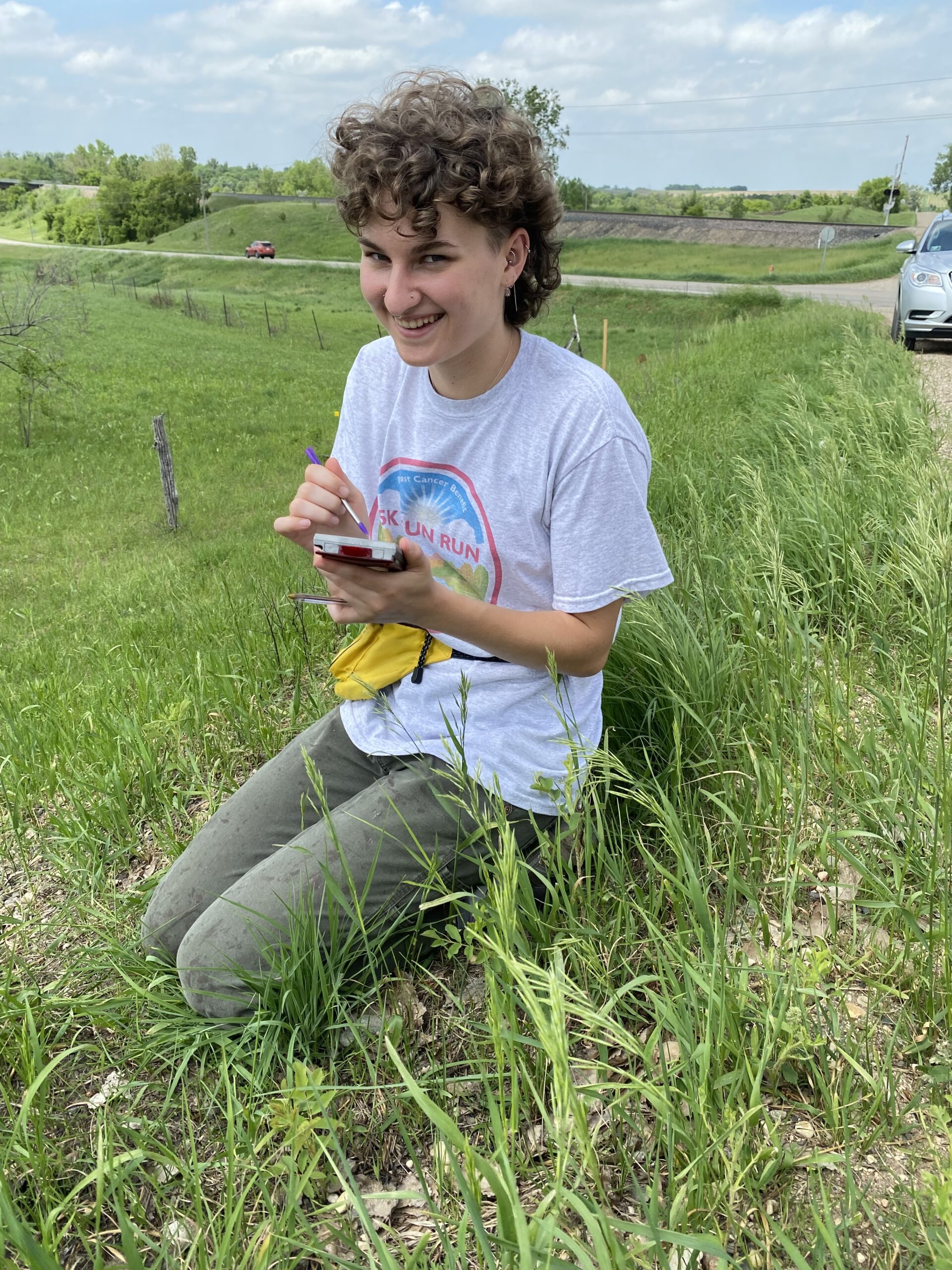
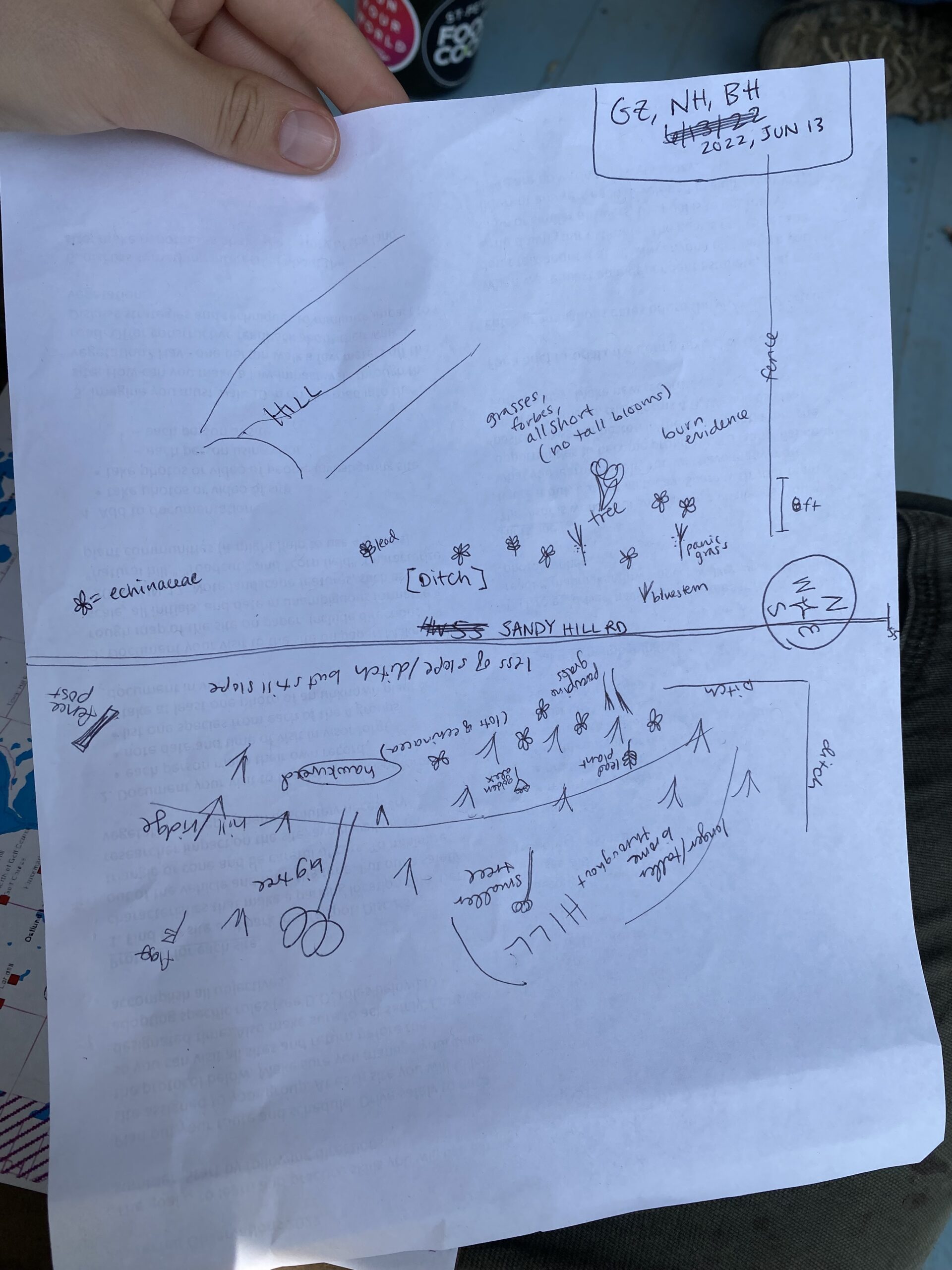
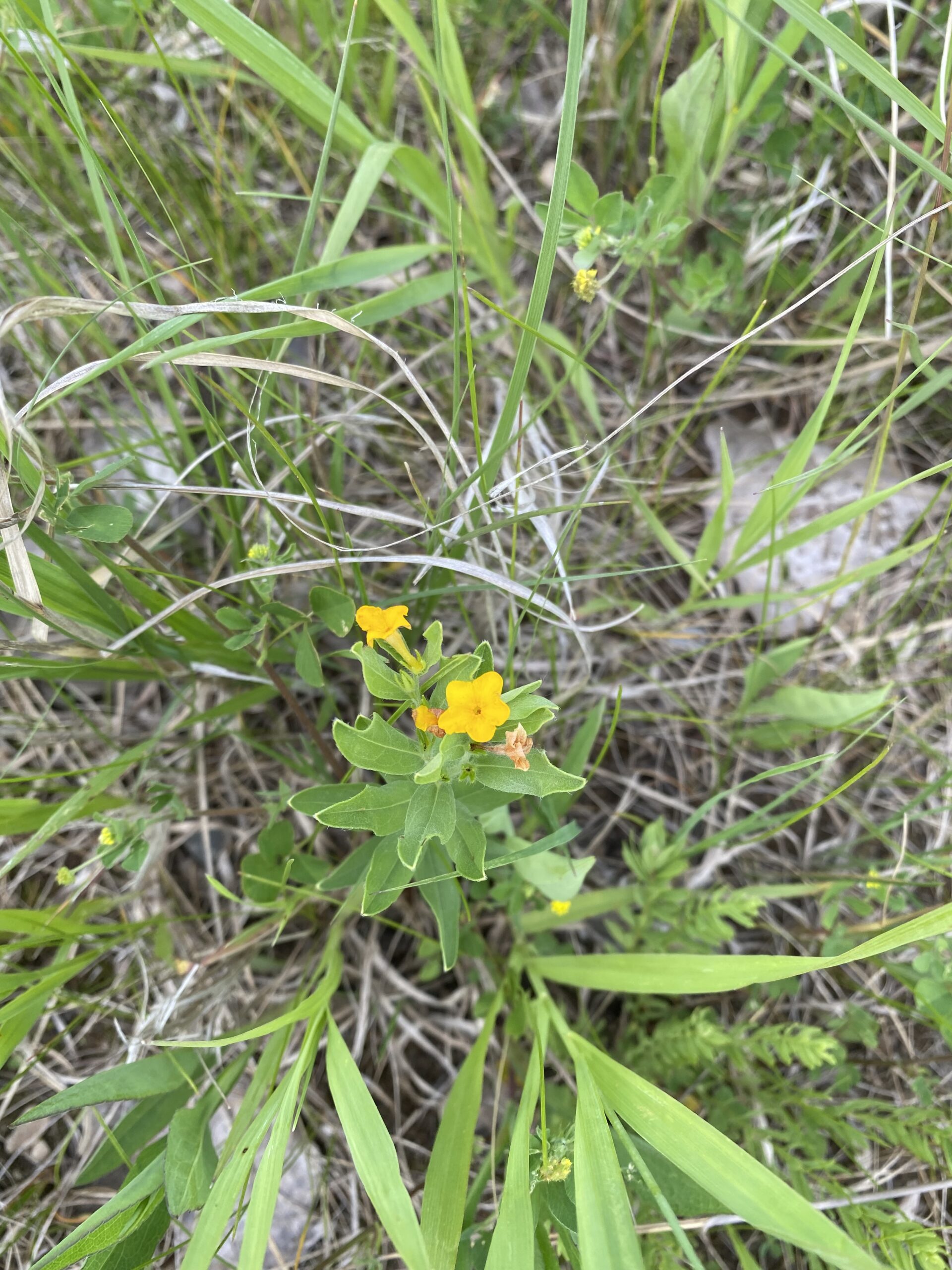
Pulling up to these two “empty” fields after crossing Highway 55, I think that everyone in our group immediately felt let down by what seemed to be a run-down patch of farmland split by an equally run-down gravel road. It took about 5 minutes of investigation which, aided by our Visors, encouraged us to paint ourselves’ a picture. What jumped out to me initially was that the West side of the plot housed significantly shorter plants as a whole compared to the East. With a little bit of prompting from our Visors, this led us to the conclusion that the West field had been through a burn in the recent past. We did end up finding a few Echinacea plants, as well as other plants we were introduced to earlier in the day, namely; Panic Grass, Lead Plant, Brome Grass, and Golden Alexander. (Our unknown plant was an orange flower we found on both sides of the plot)
West side of Loeffler Corner
After completing our Visor document and map (pictured below) for the West plot, we turned to the East. The East plot clearly hadn’t seen fire in a long time. It was overgrown and we quickly were able to identify many of the same plants we found on the West corner. Echinacea, Big Blue Stem, Lead plant, Hawkweed, and a bunch of Army Worms. I thought this was a better test of our skill to pick out the plants in an environment with more competition between producers. After finishing the other section of the map, we walked up and down the gravel road to explore the farthest reaches of the fields. Overall I think we all enjoyed working in a new place, and got the chance to flex our foraging skills.
Biology and Environmental Studies, Lake Forest College 2023
Research Interests
I am interested in learning whatever grabs my curiosity! This includes, biology(from molecular biology to conservation ecology), neuroscience, philosophy, statistics… I live to understand how the world around us works and hope to discover its secrets.
Statement
I come from the Chicagoland area and have mostly lived in big cities. I am excited to experience summer in rural Minnesota. My goals for the summer are to identify native plants, forage for food and be vegan!
Lastly, here is a photo of me in a forest preserve in Peoria IL.
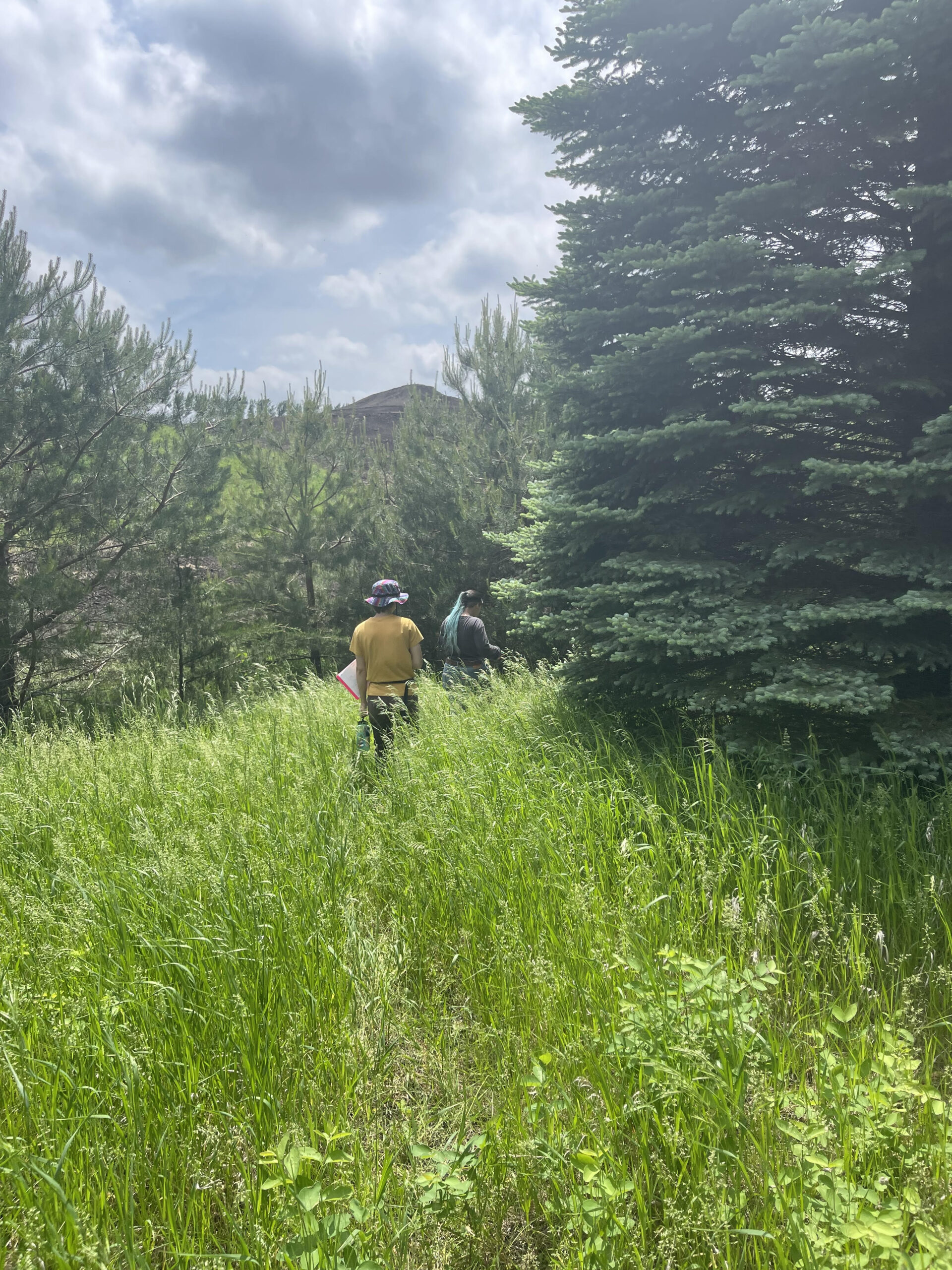
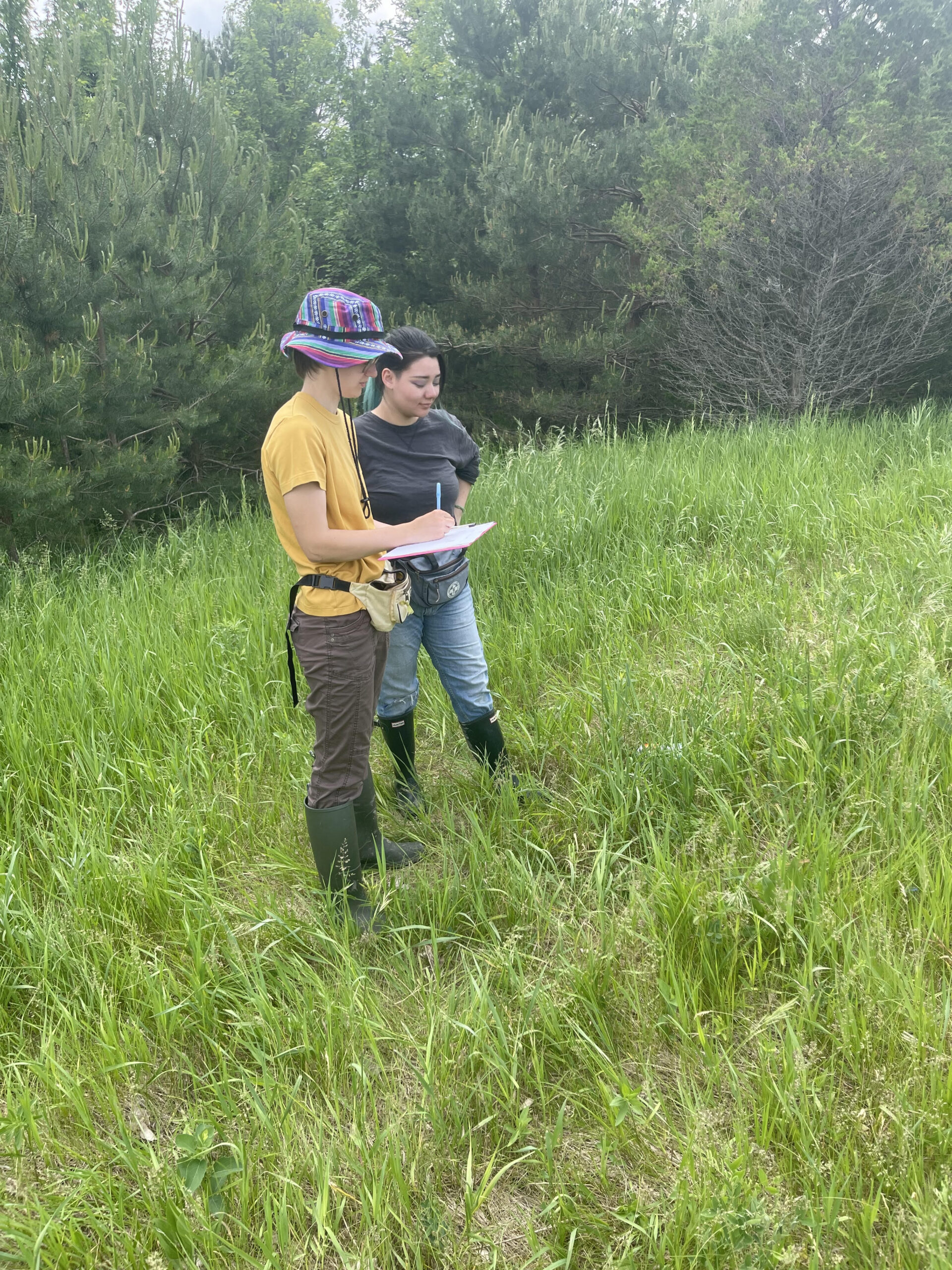
First day of the field season! Today we visited Landfill East and West for the first day directed observation! Our first obstacle was entering the landfill gate and attempting to pass a truck leaving the site. Once we were inside the gates, we soon realized why the sites were named Landfill when we were met with a putrid smell. To get to the prairie remnants, we walked (with big strides) through tall grass filled with damselflies along the tree line.
Johanna and Sophia traversing the site.
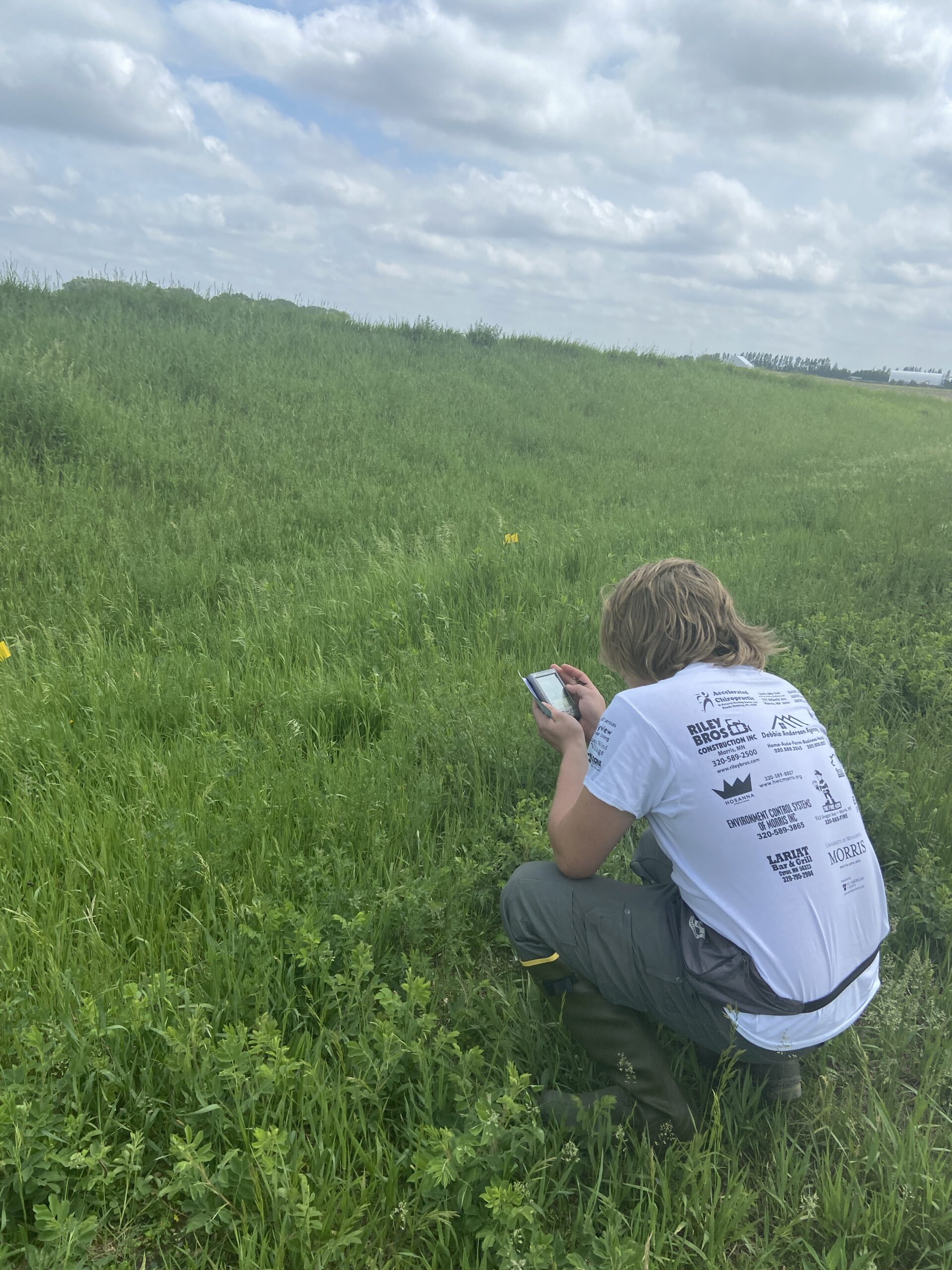
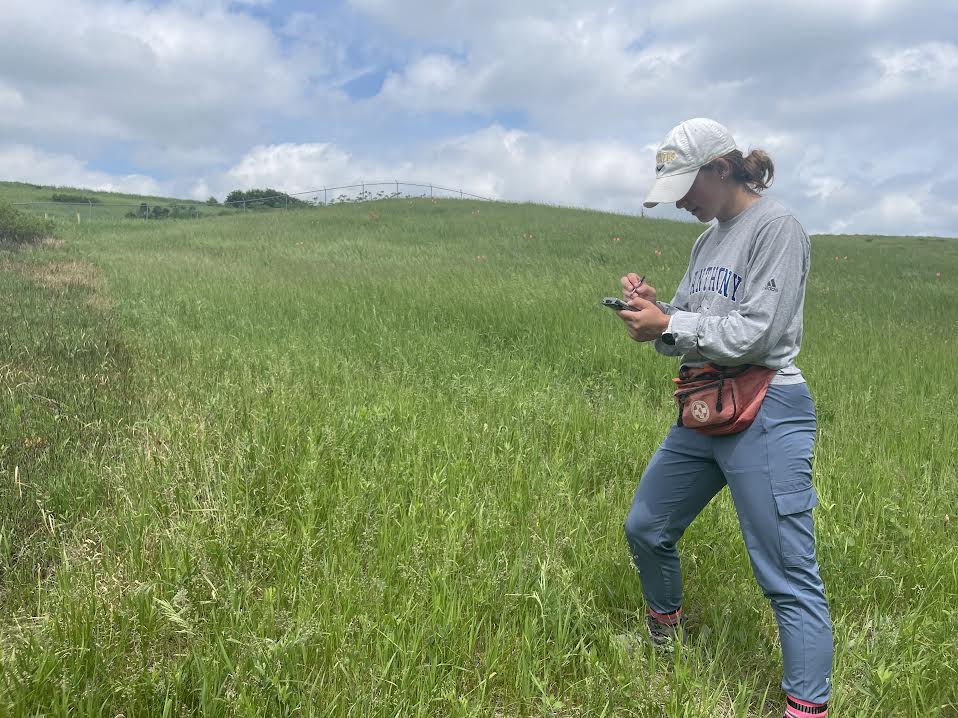
First, we worked on using our visors (tiny personal computers from the 90s) to document our observations.
Me (Lindsey) extremely focused on using the visor.
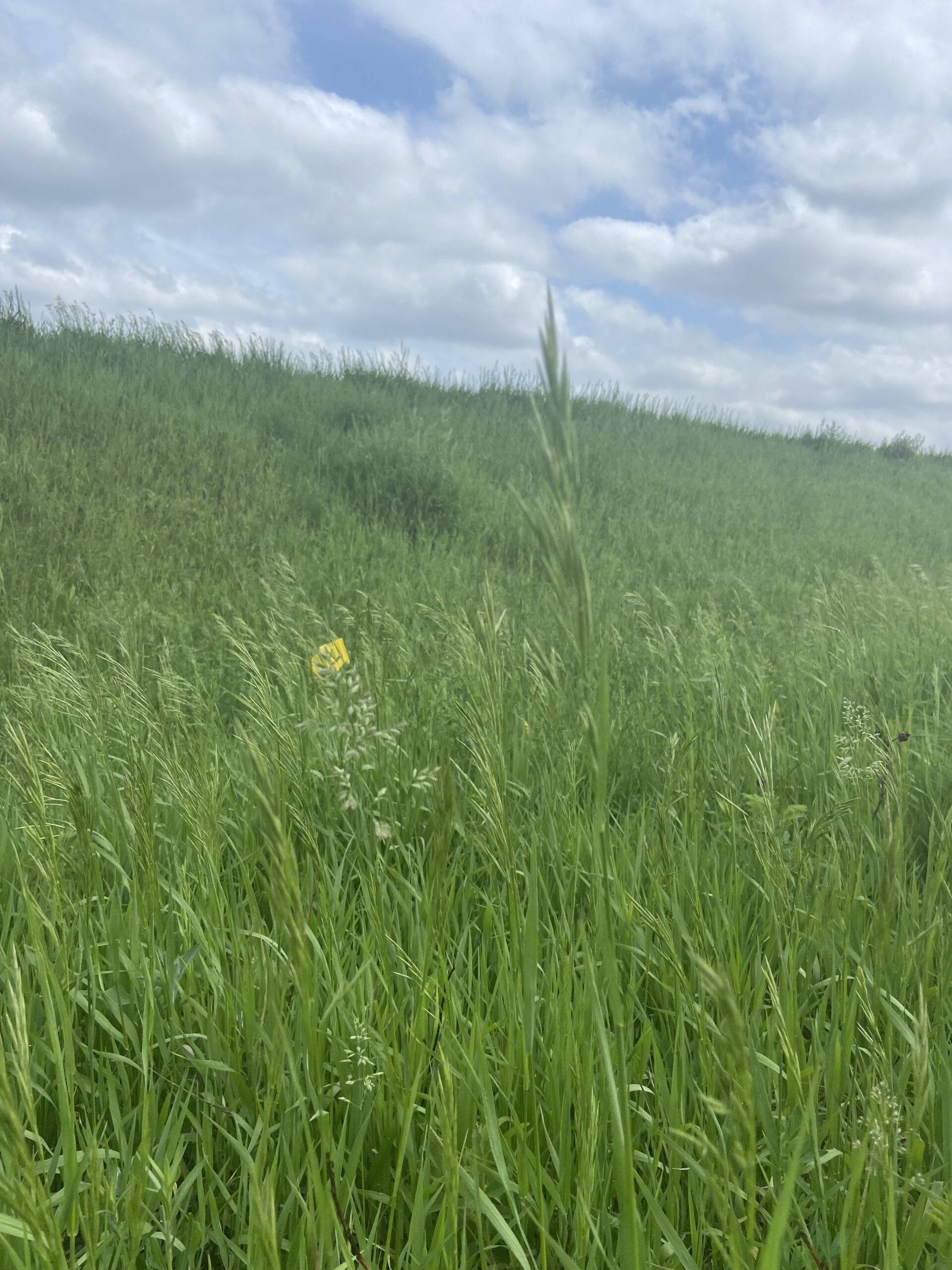
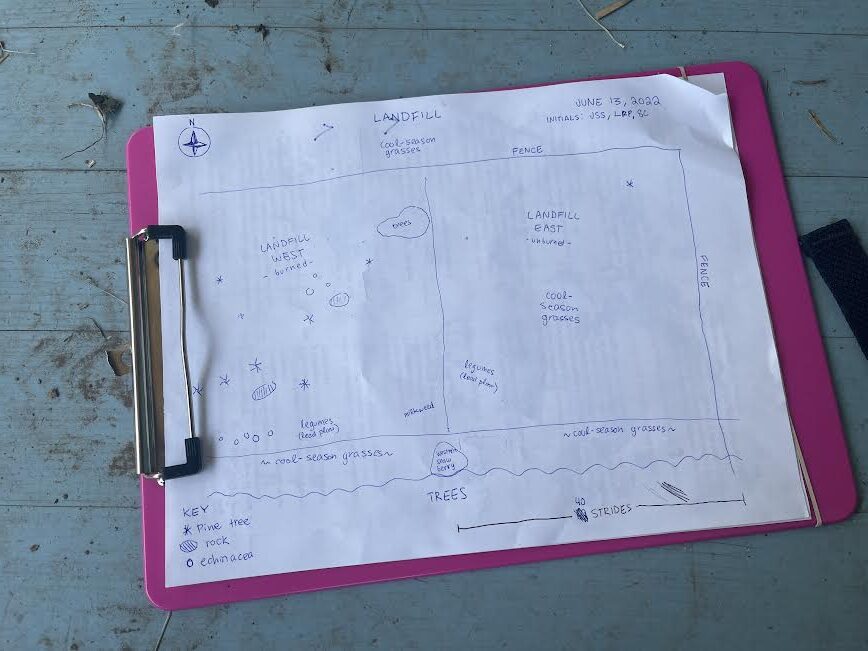
Next, we drew out a basic map of the site! We included the two sites, the fence line, the tree line, the many rocks, and more. We also noted examples of cool-season grasses (like brome and poa), legumes (like leadplant), and forbs (like milkweed). We also tried to look for some warm-season grasses, but found it difficult at this point in the season.
Johanna and Sophia hard at work!Johanna’s incredible cartography skills shown here.
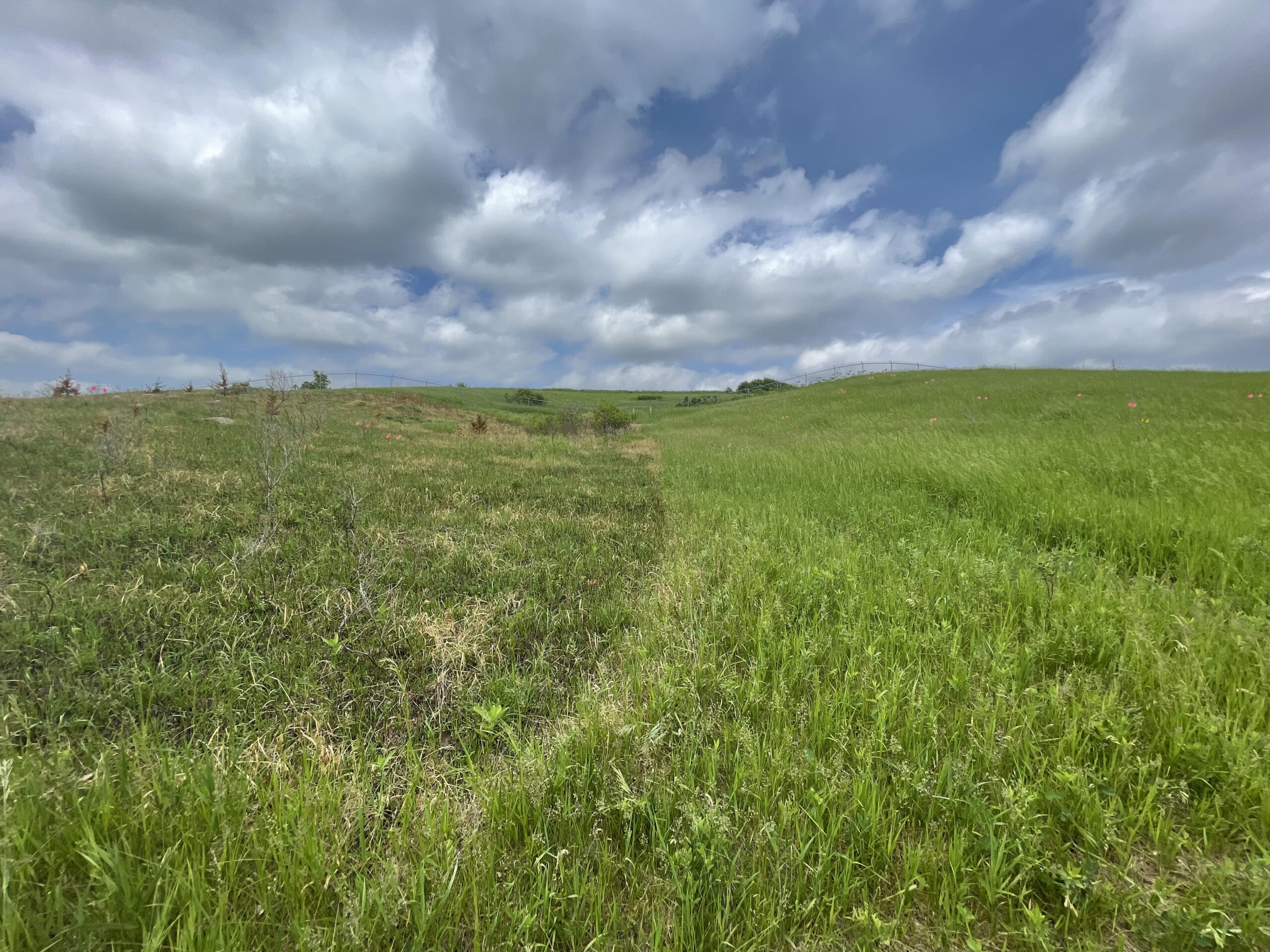
We compared both sites and noted the differences between Landfill East and West. One notable difference is that Landfill West was recently burned! Johanna also demonstrated proper walking technique through the prairie.
Here you can see the burn line between the two sites!
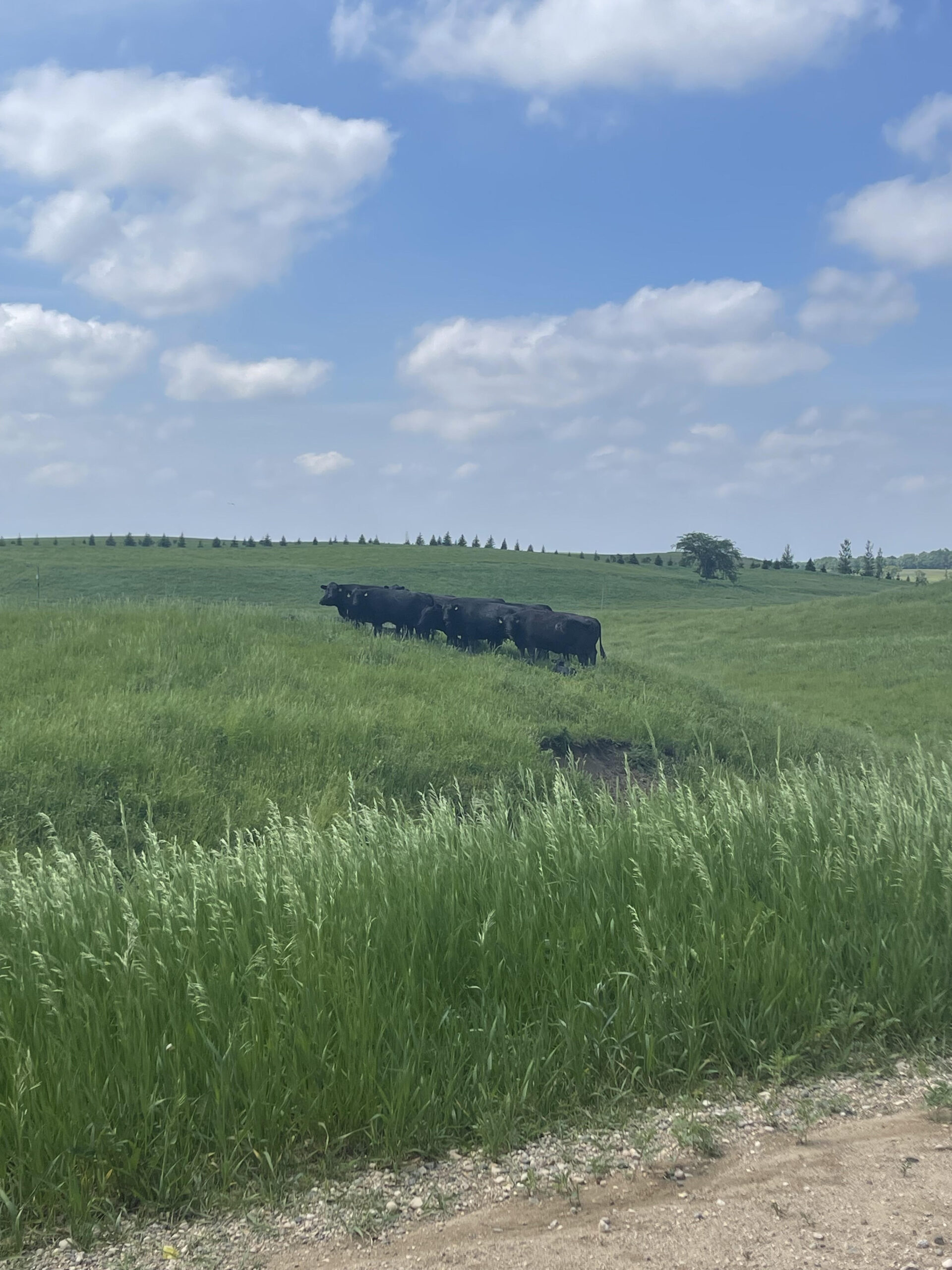
On our way out, we stopped to say hi to some cow friends! Then, we returned to the Hjelm house to write our flog post to conclude our first day on Team Echinacea. Woo!