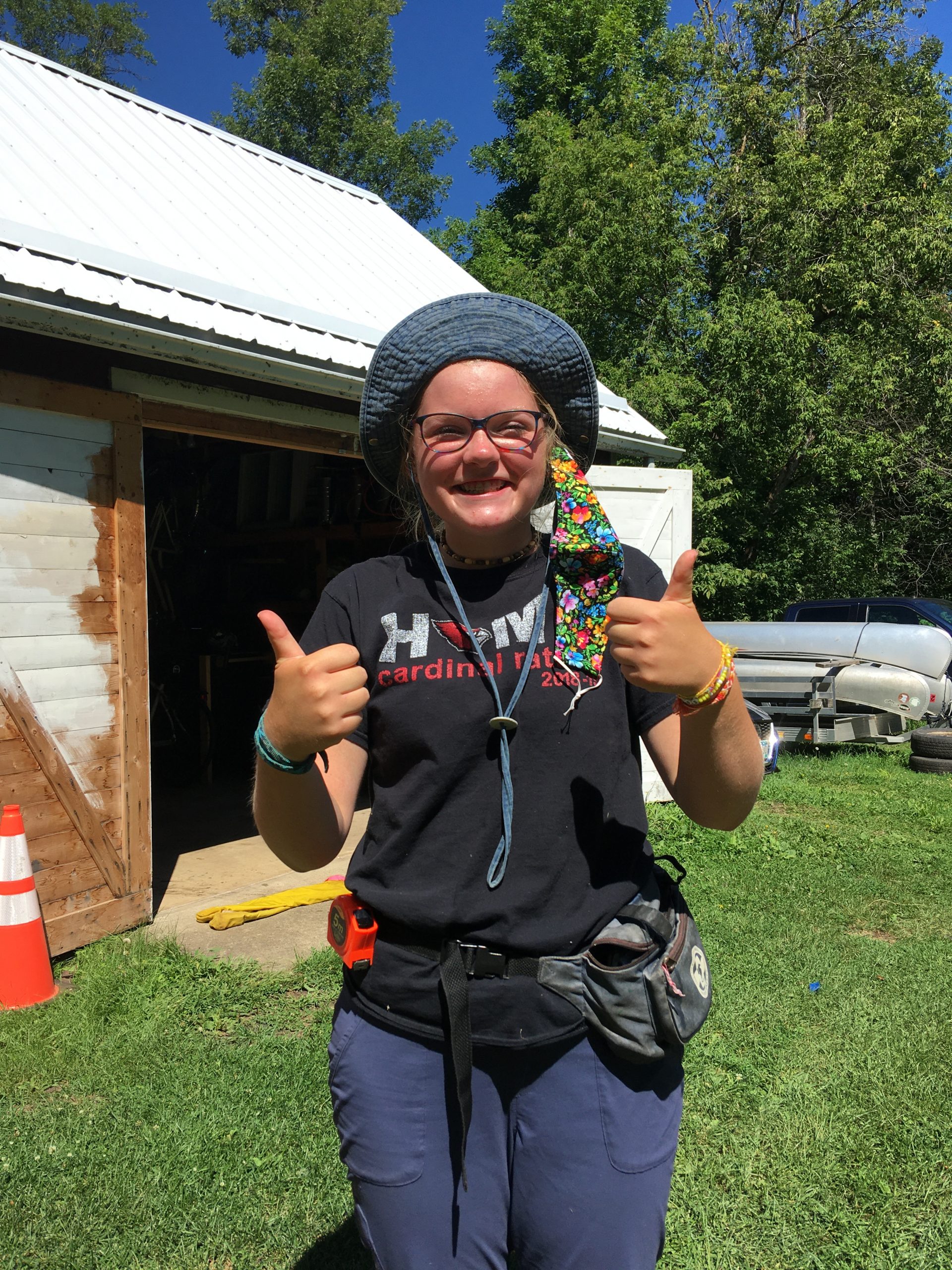
Ohhh heyyyyyyy its your friendly Team Echinacea yearlong intern who found her hair brush under her bed after it being lost for at least three weeks, Mia Stevens.
Oh boy do we have some updates for the flog!
Yesterday was a tumultuous weather day out here in Dougy county. Approximately at 4:30 am the thunder and rain began, this was some serious not messing around rain. I couldn’t sleep through it. Then at 6 there was the loudest thunder crack you have ever heard in your life. All of Andes crew jumped 6” in the air in shock. Then as we moseyed out of bed, we realized that not quite all of the lights were turning on. As we slightly began to panic about breakfast, the refrigerator, morning cups of tea, etc. Lea came to the rescue and checked the circuit breaker and fixed it all! Yay real adults! However, the one thing that did not turn back on and still hasn’t is the Wifi 🙁
We set off to Hjelm for a morning Zoom to learn about this awesome new mapping function made by Jared. The rain was still coming, enough to make even me drive the speed limit on 27. We were able to sneak in some remnant phenology, p1 phenology, demo, and even some p1 rechecks before lunch.
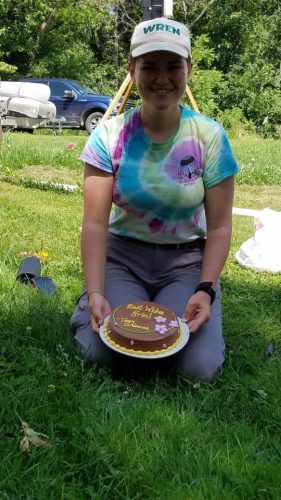
At lunch we enjoyed a wonderful vegan chocolate cake made by Jean, Penny, and Tulula to celebrate Jared’s week with the team. Then, the clouds came back with strong gusts of winds. We decided to call it quits on field work after lunch, and head over to Hoff house to empty it out.
Allie and I were working on some coding while double fisting halo pops when Stuart sent out a group me warning the group about the ongoing tornado warning! As two non-Midwesterners tornados are a fairly unknown phenomena, us New Yorkers know snow but that’s all about it natural disaster wise. Nothing too crazy happened in Hoffman, just some hard rain and wind. However, Lea reports it was raining sideways at Andes! But once we heard that John/Bonnie and Clyde are on tornado watch duty we instantly felt much safer. However, the lack of spotting the tornado in Evansville has made their further employment as tornado spotters come into question by some authorities, but not this one, we love you Clyde!
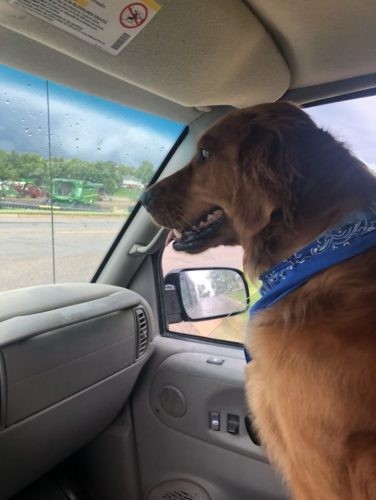
Clyde keeping watch!
After a recreating a scene from the Wizard of Oz we returned to Andes with a lifetime supply of halo pops. We went to bed with dreams of working Wi-Fi in the morning.
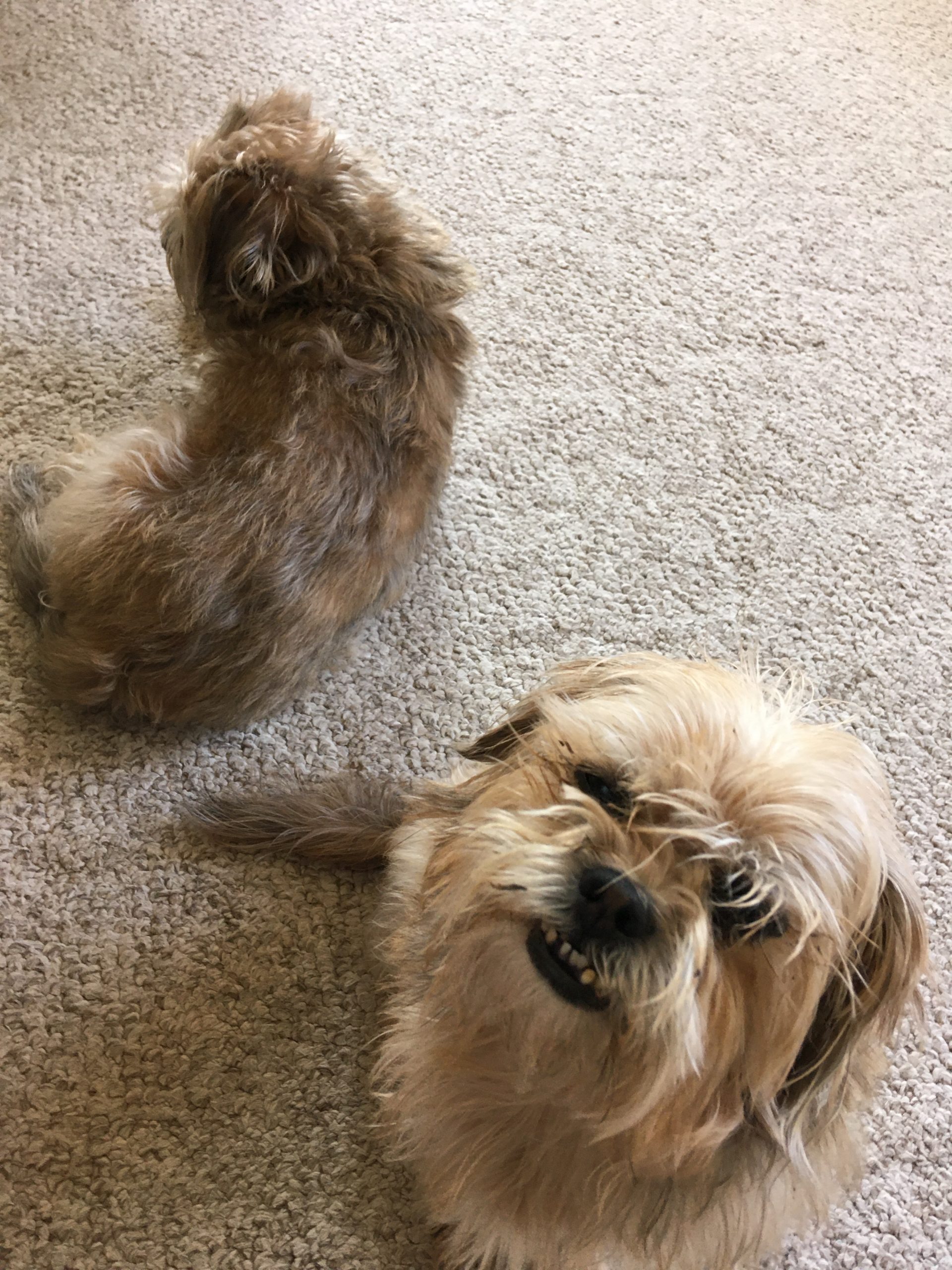
Our dreams were disappointed. We have spent the day finding ways to occupy ourselves without Wi-fi. Activities include but are not limited to: eating, drawing, cleaning your room, napping, becoming a dog groomer, reading, cleaning out your downloads folder, sunbathing, thinking about studying for the GRE, field work, and more eating.
Hopefully soon the Wifi can return and then I can choose to avoid answering emails instead of it being chosen for me.
Hi Flog! The week is going by fast, and we did some interesting things today in spite of a rainy start to the morning.
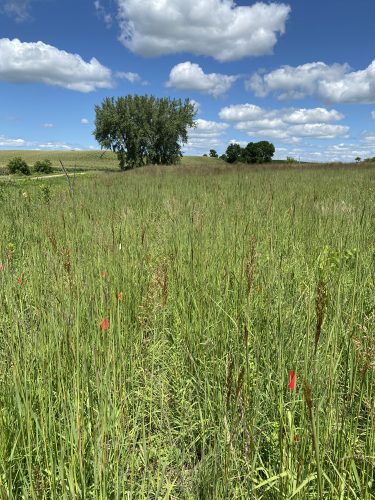
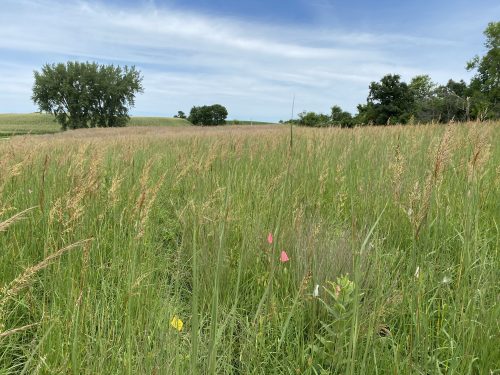
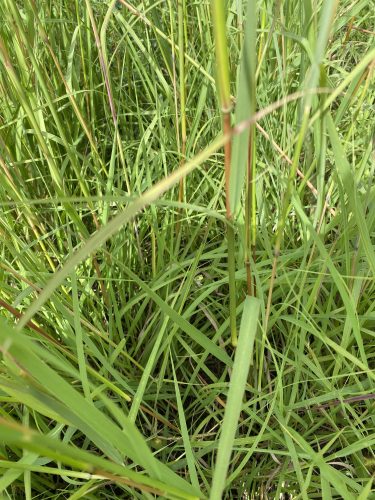
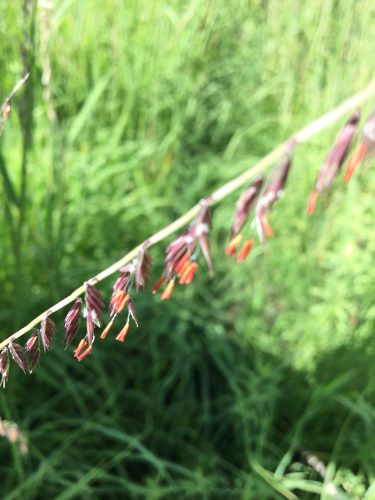
I’ll start off with some Grass Corner announcements––two cool P1 updates. The native grasses there continue to take off, with the tallest Andropogon gerardii stem measured this week maxing out the meterstick at 2.02 m! Not to be outdone, the Sorghastrum nutans flowering heads are pretty radiant this week, getting tall and showy in their half of P1. If you ever come across one, try and touch it––they’re very soft.
P1 last Monday (8/3/20)P1 this Tuesday (8/11/20). A major surge in S. nutans!
This morning Allie and I tackled demo at KJ’s, our second-to-last “annual sample” demo site, meaning it should be one of our last bigger ones. We’ve made so much progress and I’m excited to see where we are with it in another week and a half!
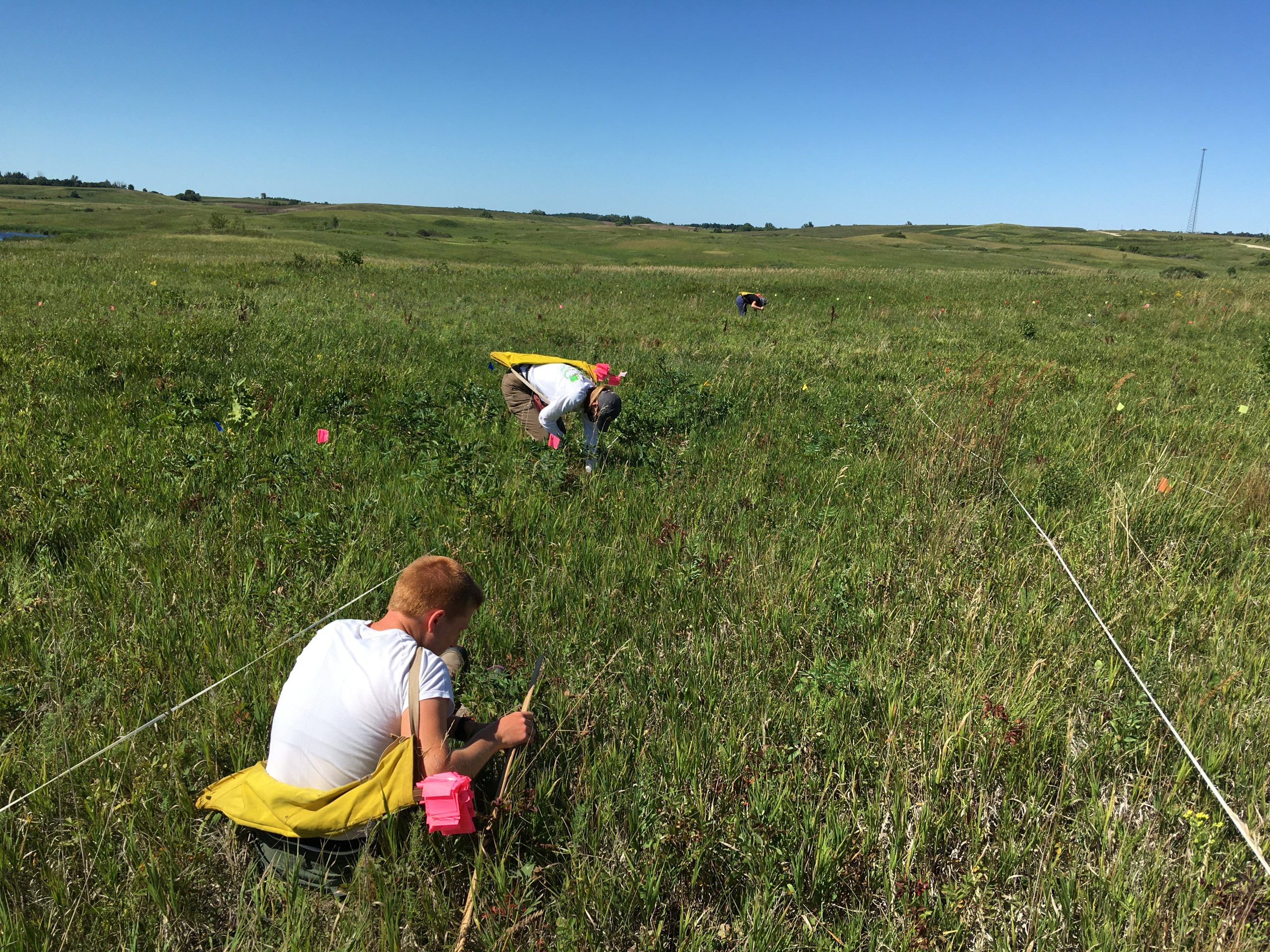
We had some fun and thought-provoking ABT’s and progress updates on summer projects at lunch, which was a nice chance to check in with how things are going for everyone and to practice explaining my own project. The big afternoon project was a whole-team measuring visit to P10, a set of experimental plots by the WCA high school that John uses for teaching his high school classes (sounds like an awesome teacher!!). The difference between plots that had been burned and not was stark, with immense, productive Andro in the burned plots rising feet above the neighboring vegetation. The Echinacea plants here were not as vigorous, though, since they were only planted a few years ago. Their small size made for some quick measuring when we could find them! Hopefully the high school students will think of some interesting ways to take advantage of such a cool resource.
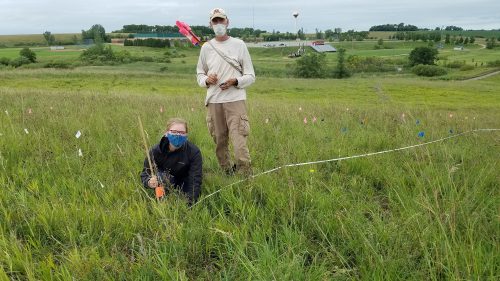
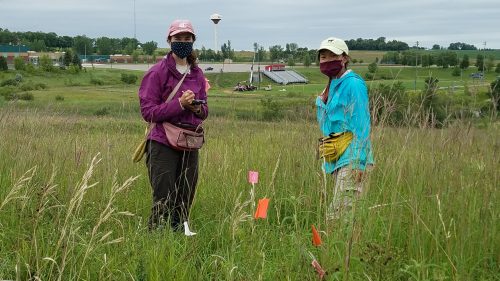
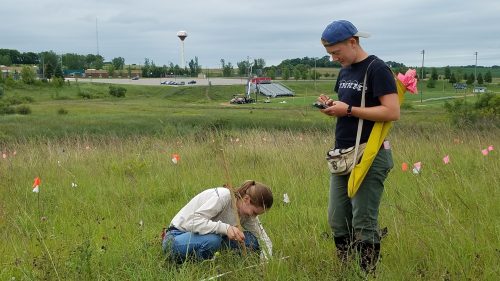
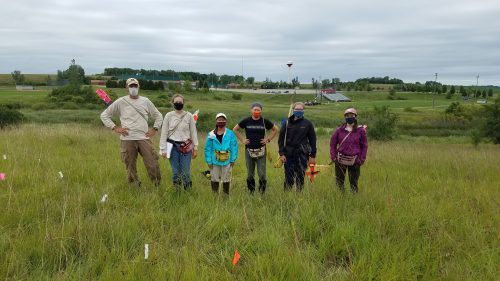
Anna and John finishing a rowAllie and Amy, smiling behind their masks Mia and Emma, staged photo 😉A team of prairie measuring pros!
And it would be wrong not to leave you with, as promised, the frog on the flog. I saw this tree frog clambering through P1 yesterday, just a little baby!
Aww! Can you spot him?
That’s it for now––goodnight moon, goodnight grass, goodnight flog.
Monday was the start of a new week. We traded Anna M. for Anna A. and hit the ground running.
The returned Anna A. – without braces!
Anna and I started the day off herding aphids in p1. Sadly, the number of aphids is slowly declining, after never really going up in the first place.
At lunch we all got to chat with Jared Beck, visiting possible post-doc. We talked about setting things on fire, like prairie preserves and experimental plots, and statistics. Jared will be here for the whole week, scoping The Echinacea Project out and looking at possible experimental sites.
After lunch, Emma, Anna, Mia, and I headed up to p2 to try and finish the last of the measuring. We made it all the way to row 73, meaning we have 7 more rows left. If John had been around we probably would have finished measuring (we miss you John!).
It has been a busy and at times stressful few weeks in and outside of work, but I’m thankful for the supportive and reliable people around me in both aspects of my life who help me stay positive and hopeful.
In terms of work some of the people I’ve been grateful to count on the past few weeks are Allie, Anna M., and Anna A., who’ve been working with me to do demo––we’ve done one or two sites every day the last week and a half, and it’s been going smoothly. It can be kind of a zen time, just me, the GPS, and the point I’m staking to…repetitive, routine, peaceful. I’m really glad to have teammates who do their jobs well, that makes my part easy! Another thing I enjoyed doing this week was ID’ing native milkweed Asclepias viridiflora with Anna M. Something about plant ID is just fun! And fun to see someone learning it for themselves.
Today I also got to work on my independent project some, doing a pilot study out at East Elk Lake Road, a favorite site. I collected microhabitat data around maternal Sling plants, including plant community composition & flowering plants, distance to roads, slope & aspect, and litter depth. The end goal is to learn to what extent microhabitat characteristics are related to Echinacea seedling persistence! I learned a lot on my test run today about my protocol (if anyone knows how to use a clinometer hit me up), and was reminded of how much I love doing community composition sampling! It felt so natural and fun to be doing again, even though it was just a little.
One last thing is a special mention of the apple of my eye, the native grasses in P1. There is awesome species representation and it’s been so fun seeing each one’s phenology as they take turns sending up seedheads throughout the summer. First was porcupine grass (Hesperostipa Sparta), then sideoats grama (Bouteloua curtipendula) started, then big bluestem (Andropogon gerardii), followed by Indiangrass (Sorghastrum nutans), and we’re now approaching my favorite grass, little bluestem (Schizachyrium scoparium)’s flowering. So great, so diverse! Thanks for tuning in to this episode of Grass Corner with Emma.
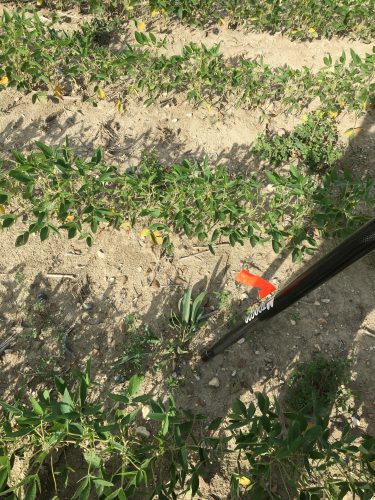
An insect predator-prey interaction? I heard that the green bug at the bottom is a predatory species, so it may beSometimes instead of woody encroachment it’s ag field encroachment––a lone Echinacea between the soybean rowsThe most beautiful color on this sideoats grama pollen! I’d never seen such bright red pollen before.
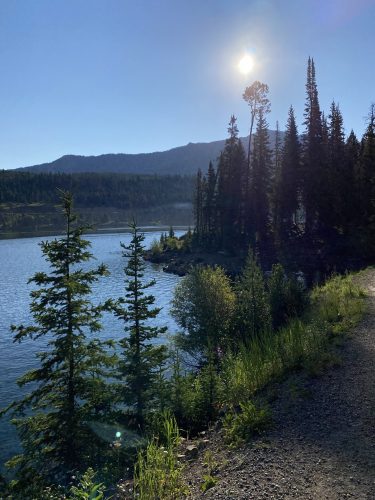
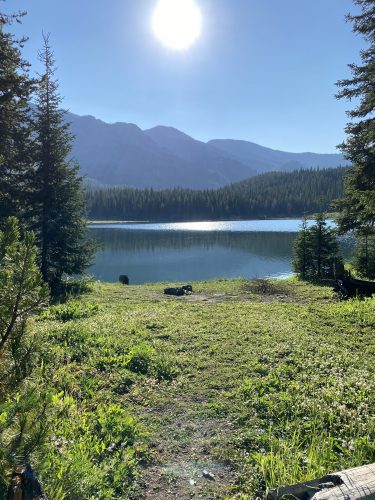
I love Montana! My mom and I decided to take a trip out to Montana to visit colleges. We arrived in Bozeman, Montana on Friday. Since Friday we have done tons of hiking, visited Yellowstone and took a tour of Montana State University. Yellowstone had lots of people and it took us about 5 hours to drive only 30 miles! In Yellowstone we saw the grand canyon and some geysers. Today we had a campus tour and I fell in love with Montana State University and later today we are going on a cave tour.
I have done a lot of hiking in my life but this hike was by far my favorite! My mom and I woke up at 5 am to get to Hyalite Trail by 7. We hiked for about 7 miles and it was gorgeous!
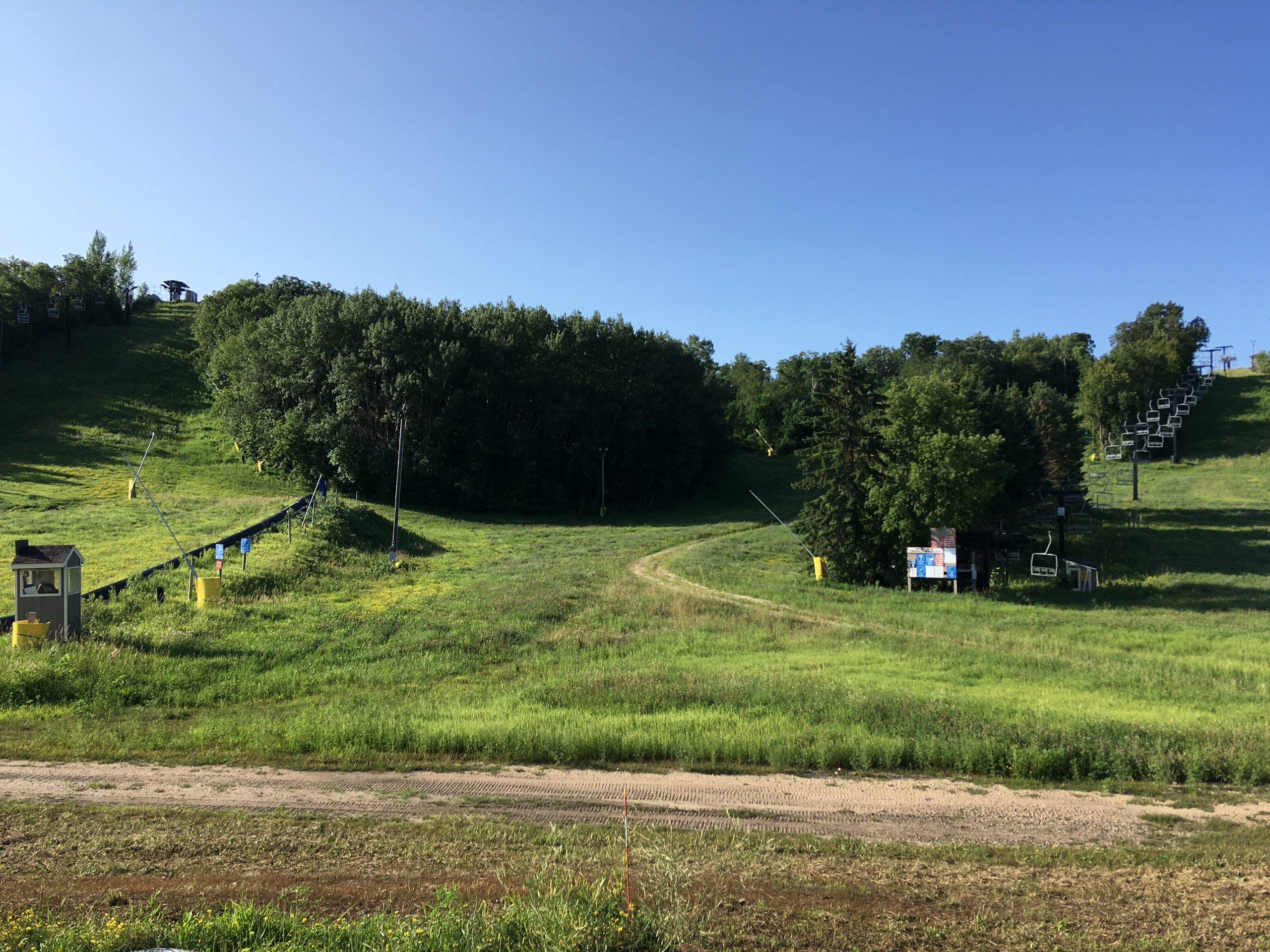
Amy headed back to the Twin Cities on Friday, which left me alone at the Hoff House. Since I don’t feel risking my life everyday biking to work on 27, I moved into the Andes Tower Hills condo Friday evening.
It has new topography (a hill) and new wildlife (Lea’s dogs). Given the general lack of dogs and elevation gain in the past 1.5 months, this is much more similar to my living condition at home (upstate NY).
I’m looking forward to fun new adventures with the Andes crew!
Andes Tower Hills – elevation of 1620 ft (290 ft rise)! Bellamy (left) and Huxley (right)
It’s Anna Meehan (Alpha Mike) coming at you with an update of our demo/measuring adventures. This week our active team consists of exclusively girls! And of course, no insult to the lovely men on our team, we have got a lot done. Specifically, demo and measuring have been flying by at a faster-than-usual rate.
We started off the day with some demo and phenology, which is typical of our mid-season schedule. Emma, Allie and I took on Loeffler’s Corner this morning. This is a large demo-site with approximately 175 plants. Usually, Darwin (our GPS system) would count as a man, but he is, in fact, a GPS. Meanwhile, Anna Allen conquered P2 phenology, all on her own! While our tasks seemed somewhat daunting, we completed both in a timely manner well before noon. We wrapped up the morning with some extra measuring in P1.
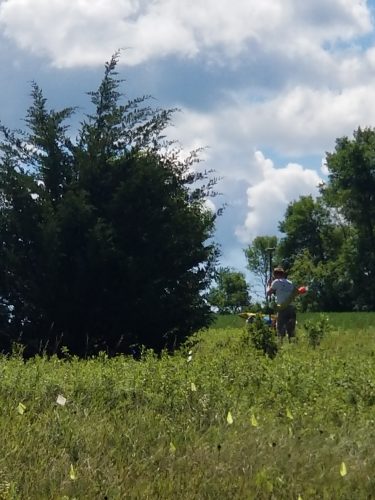
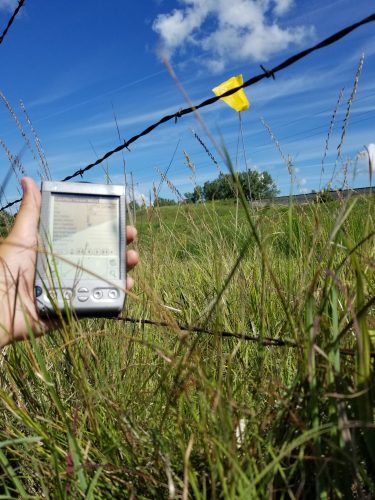
Superstar Demo Team Emma and Allie stake some new flowering plants!We had the chance to jump/crawl under some barbed wire fence today… in the name of science!
We took the afternoon to measure some more segments of our P1 plot. Today was significantly nicer than others, with lower humidity and temperature levels than Wednesday and Tuesday. Amy even joined in on measuring for the first time in ~3 years! Sadly, we weren’t able to get a picture of this precious moment, but it will live on in our memories. Mia, Allie and I found some aphids along the way, which have slipped our eyes the entire field season. Now, we may be able to continue our aphid addition/exclusion experiment from previous years.
APHIDS!!! At last!
Overall, our day was pretty typical. This week has reminded us of the importance of women in STEM, and just how much we are capable of as a team. I’m incredibly lucky to have some awesome, efficient, kind, and strong women to look up to as I continue my journey through science.
Today was a solid day’s work with a small crew––we worked on phenology, demo, and P1 measuring, mostly. Everything went smoothly overall––there’s lots of P1 to go, but flowering is really on its last legs which makes for diminished phenology personnel needs. This meant I got to go and use the GPS (“Darwin” to close friends) and work with Allie and Anna M. on demo at Railroad Crossing! We shot 112 points in about 2-2.5 hours, and there were minimal technical difficulties which was a relief since GPS guru Erin is off to greener (NCSU) pastures! I’m looking forward to continuing to work on some other big sites with people the rest of this week. Thankful for a reliable and hardworking team in the face of adversity!
Found a couple new plants at Loeffler’s Corner today…these surprise Echinacea stragglers to the flowering party keep me young!Master measurer Allie kicking butt and finding staples in P1 last week. Shoutout to her for coming in clutch to help Anna and I finish our row at the end of the day today!
Today started with some remnant phenology, the majority of the plants are done flowering at this point which means that the team can make short work of the task. Erin and Emma set off to do demo at north of golf, they staked to 134 different locs!
During lunch we celebrated Erin’s last day of field work with cake and chocolate!
Erin and cake!
In the afternoon the team continued to chip away at p1 measuring, with the help of the one and only Gretel Kiefer. Gretel came up from Chicago and got here at Thursday morning. We have all been highly appreciative of Gretel’s help over the past two days.
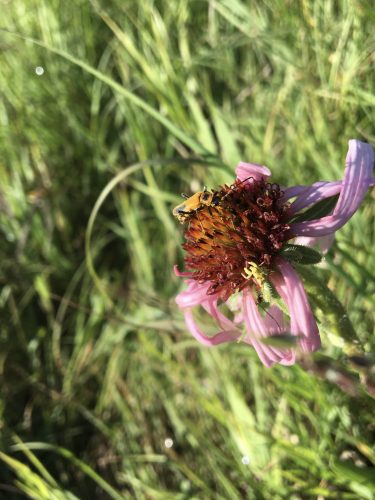
The team has been working on our bee ID skills here is an example of one of the bees found visiting Echinacea.
An Agapostemon virescens found by JVK id-ed by Alpha Whiskey
This morning started with brisk remnant phenology routes for the team—flowering is winding down, so things go more quickly with phenology by the day as more plants shift to being done flowering. In the afternoon everyone worked on independent projects, which included a fruitless search for aphids (and by “fruitless,” I mean aphidless), some pollen collection in P1, and reading up on plant community monitoring methods.
We ended the workday with a Zoom call where we heard from Scott, a former Echinacea Project team member and current grad student at UC Boulder, and current team members Drake and Devon. Scott gave a practice presentation for a talk he’s giving at the North American Congress for Conservation Biology later in the week about fire and survival, reproduction, and recruitment in small Echinacea populations. The conference is for a conservation and land management audience, which I thought was really cool—I’m always excited when I see science and management coming together because collaboration between these two “sides” is critical to effectively caring for the planet, and is really interesting to me!
Devon gave a cool update on her project, which involves investigating the probability of Echinacea seedlings occurring at varying distances from maternal plants (“dispersal kernel” was the new phrase I learned today). Amy Dykstra, a researcher who’s been a leader with the Echinacea Project on the Sling project Devon’s analyzing data from, made a good point that if maternal plants’ stalks tend to falls over, where their seedheads land might determine the distance of many seedlings from that plant. I really liked Devon’s visualizations of her preliminary findings and I’m looking forward to seeing more!
Drake’s update was good news—the transplanting into P1 stage of his project is finished, and the parasitic plants Pedicularis canadensis and Comandraumbellata are doing okay in their new common garden locations. The overall goal is to determine if these parasites are keystone species in prairies. Among other types of data collection, it sounds like there could be some clipping and sorting of biomass in Drake’s (or someone’s, maybe an extern’s?) future!
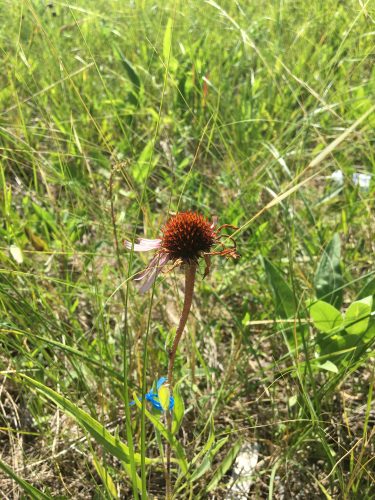
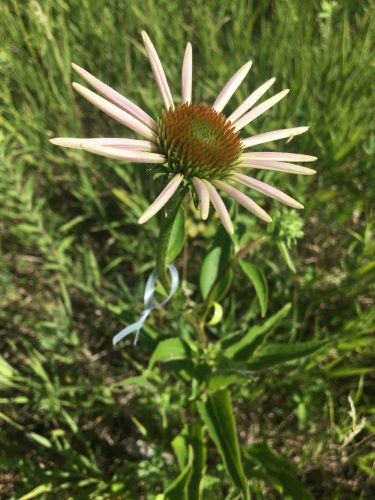
The withered state of many Echinacea angustifolia that are done floweringThis Echinacea purpurea sighted at Yellow Orchid Hill on the other hand is only at the “rays spreading” stage. Its and leaves (and phenology this year) are very distinct from those of Echinacea angustifolia!