Friday was a phull phun day of pure phenology! We visited all the remnant sites, P1, and p2. As the summer slips away from us, so does the flowering Echinacea. Though phenology has been taking less time it serves as a sad reminder that summer is beginning to wind down. After all the phenology was completed, we all worked out in P1 on crosses for the Q3 experiment. Some of us also peaked on some of the crosses from the previous day, curious to see whether our crossing technique has been effective. When we see shriveled styles on heads that we have crossed, and those styles are not associated with bracts that are painted white to denote that they may have been pollinated before we designated them as part of the Q3 project. It was exciting to see how it has been working, and we’ve been seeing some preliminary shriveling on what we crossed! After work, most of the team (minus Gretel, Stuart, and Matt) headed back to town hall Lea made yummy guacamole and a group made some homemade chips! At the end of the day we went to Abby’s house and watched McFarland projected at her outdoor theater! It was a very full, and very fun day.
|
||||||||||||||||||||||
|
The days and weeks are starting to fly by as we get into the busy part of the summer. Nearing the end of July, it seems like we’re hovering right around the peak of the flowering season for Echinacea angustifolia. In addition to keeping up with the phenology for our flowers (roughly a couple thousand across our remnants alone!), we’re also making timely progress on independent projects and getting important work done on the q3 experiment. We got off to a quick start this morning sending half the crew out to do phenology at a handful of sites while Danny and Amy continued their work assessing compatibility across remnant flowers and still a few others collected pollen at Staffanson for q3. While phenology is proving to be quite the time commitment right now, we’re slowly (and satisfyingly) starting to be able to check the “Done flowering” box for more and more of our flowers. The flowering season is tapering off much faster than I had expected! 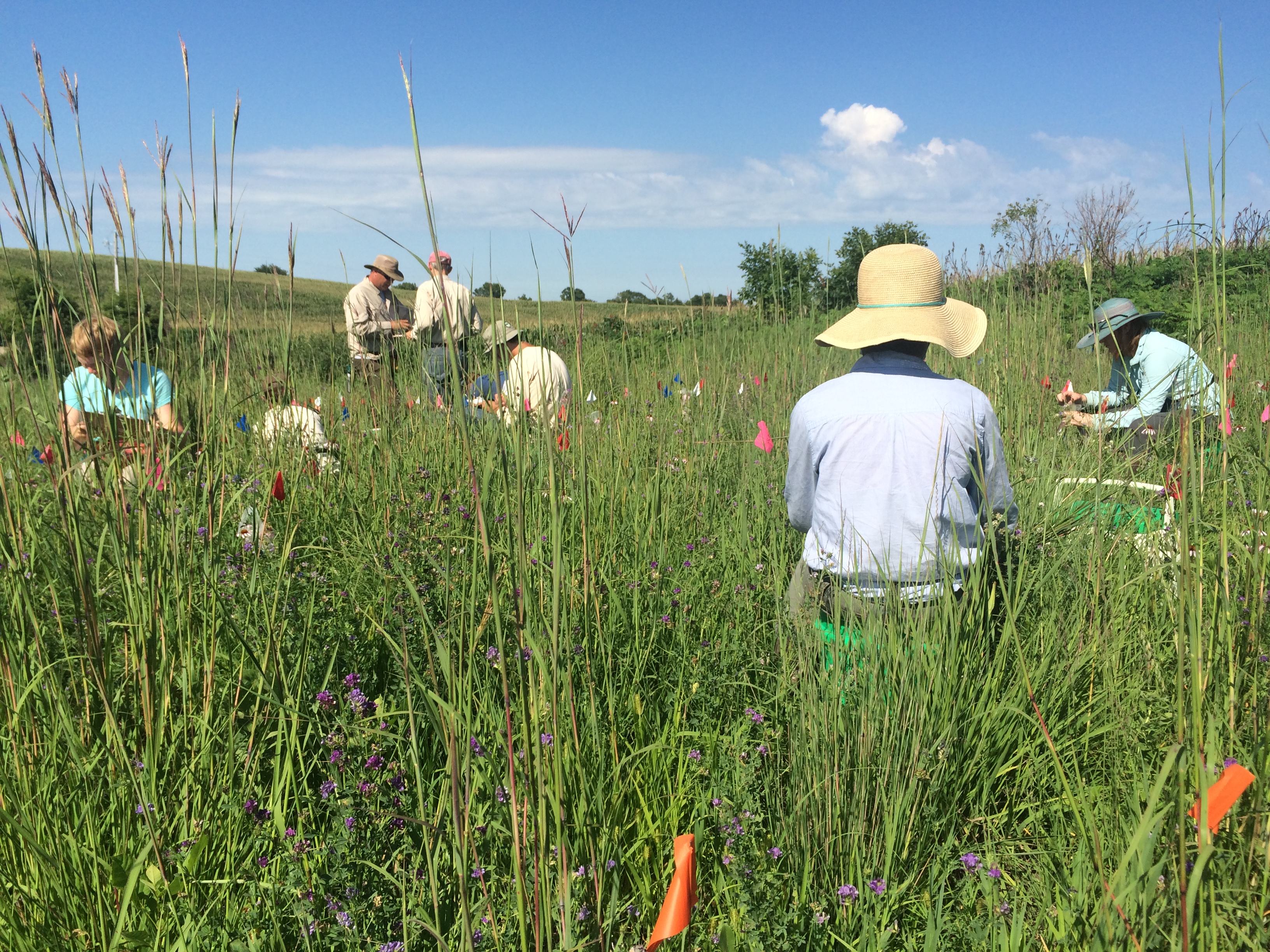 A cross-pollinator’s eye view of a well-organized team carrying out crosses in p1. The bright and breezy afternoon had most of the team out in p1 doing pollen crosses for q3. Stuart debuted a new system for keeping us organized in the field as we share, swap, switch, and track down the right vials of sire pollen to be applied to the p1 dams. While the fits of wind that persisted for much of the afternoon were a nice way to cool down, it was not very much appreciated when the breeze swept away the valuable bits of pollen we were trying to apply to our flowers! The day ended with a visit from some of the parents of the crew members and local science teachers (these two groups actually had quite a bit of overlap). These visits were timed excellently for our guests to appreciate the Echinacea in all their peak flowering glory. 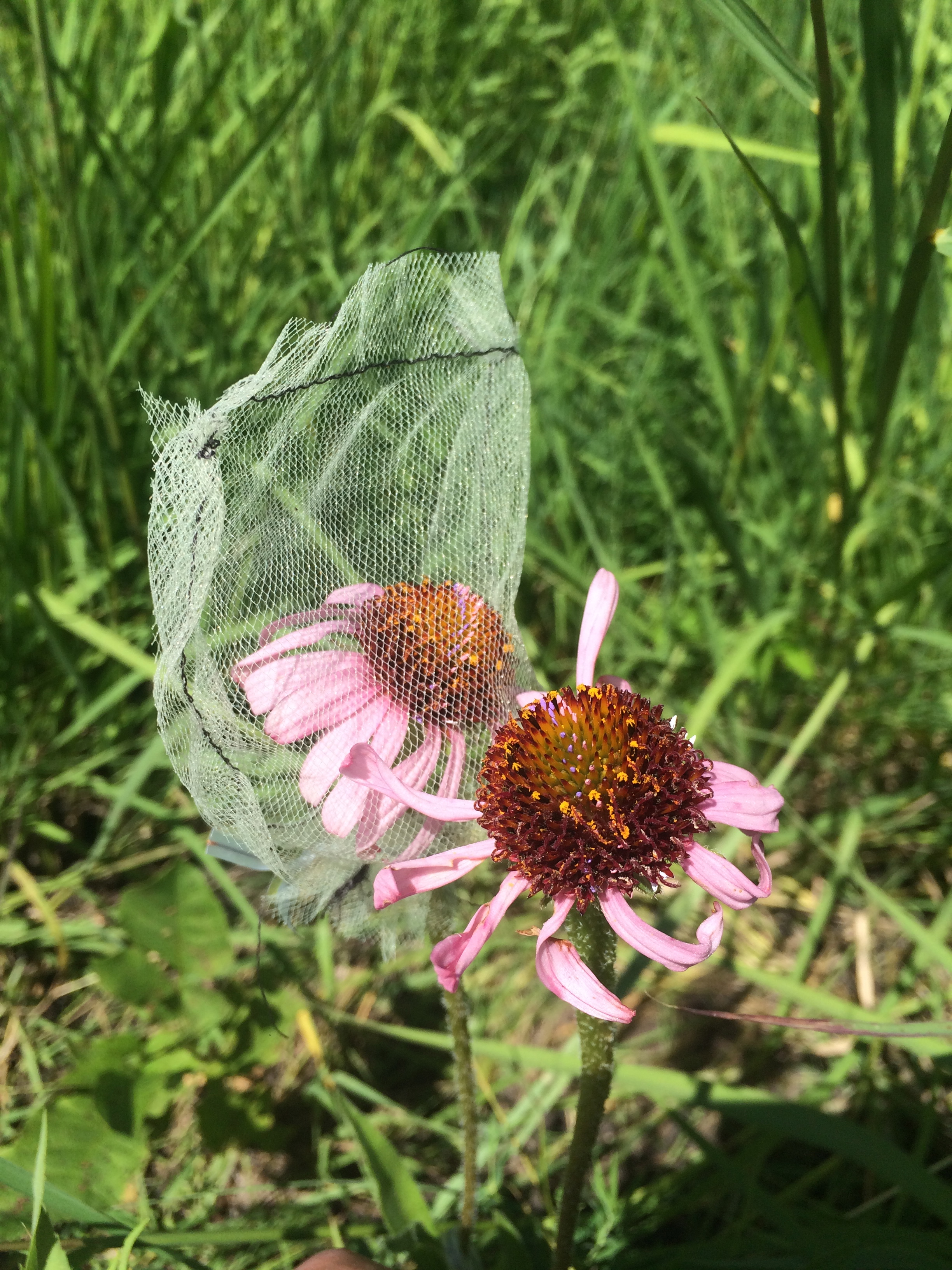 Bagged and painted Echinacea ready to be cross-pollinated. Today is Taylor’s Birthday! Today she turned 19 years old. Gretel made a wonderful chocolate cake with caramel in the middle for Taylor which we got to eat at lunch when we all sang Happy Birthday to Taylor. Later Taylor made us all some delicious fish tacos for dinner (she wished to cook on her birthday) and we celebrated with another homemade cake! 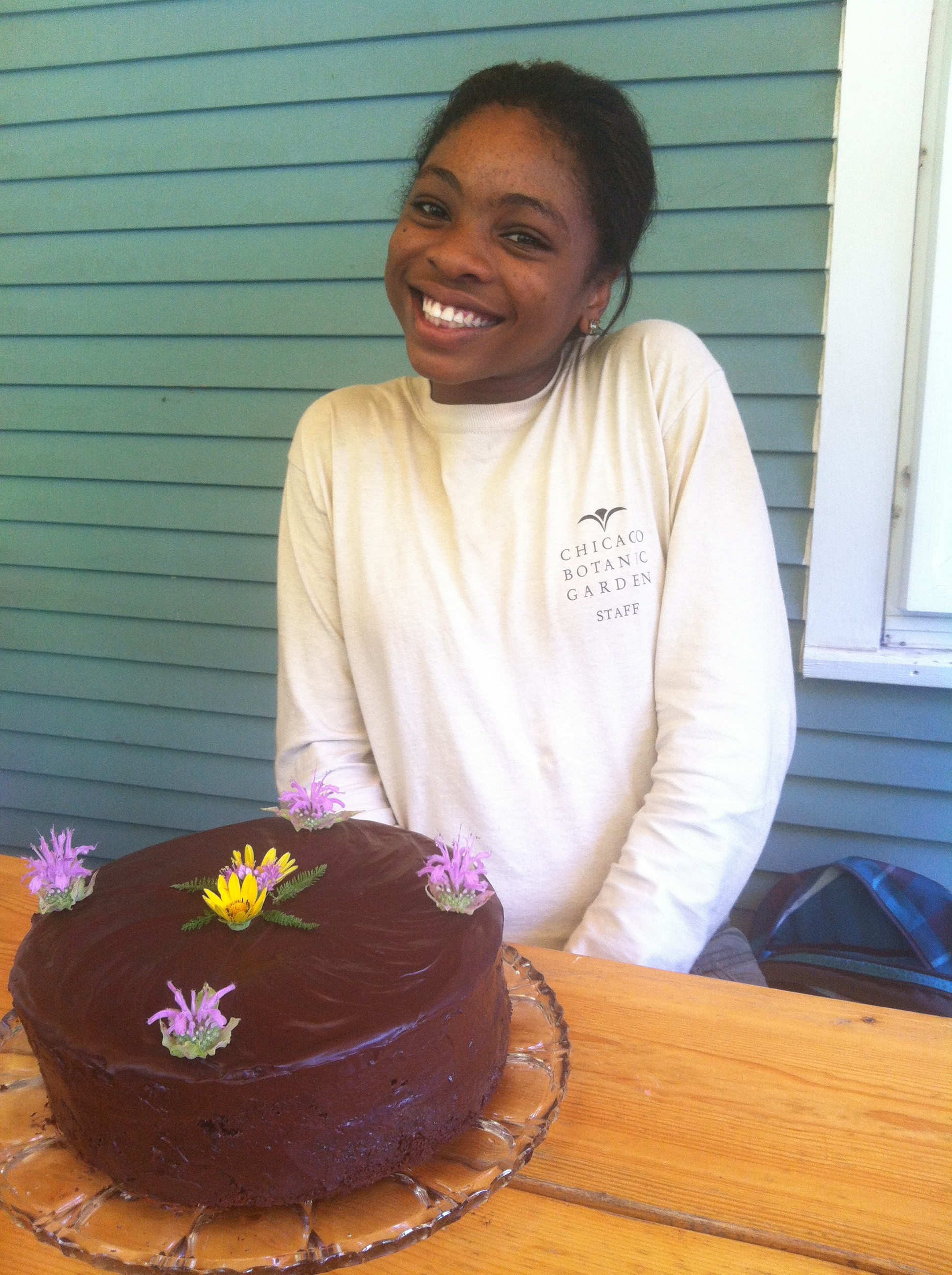 Taylor and her first cake of the day!
Taylor’s birthday was the most important part of the day but we did do some work today. In the morning Will and I went out to Staffanson to collect pollen for the Q3 experiment. In the afternoon much of the team did cross pollenation of Landfill plants for the Q3 experiment. I worked on clearing P1 of any Birdsfoot Trefoil. I was able to extract nine plants from the experimental plot, each of them witha large taproot. 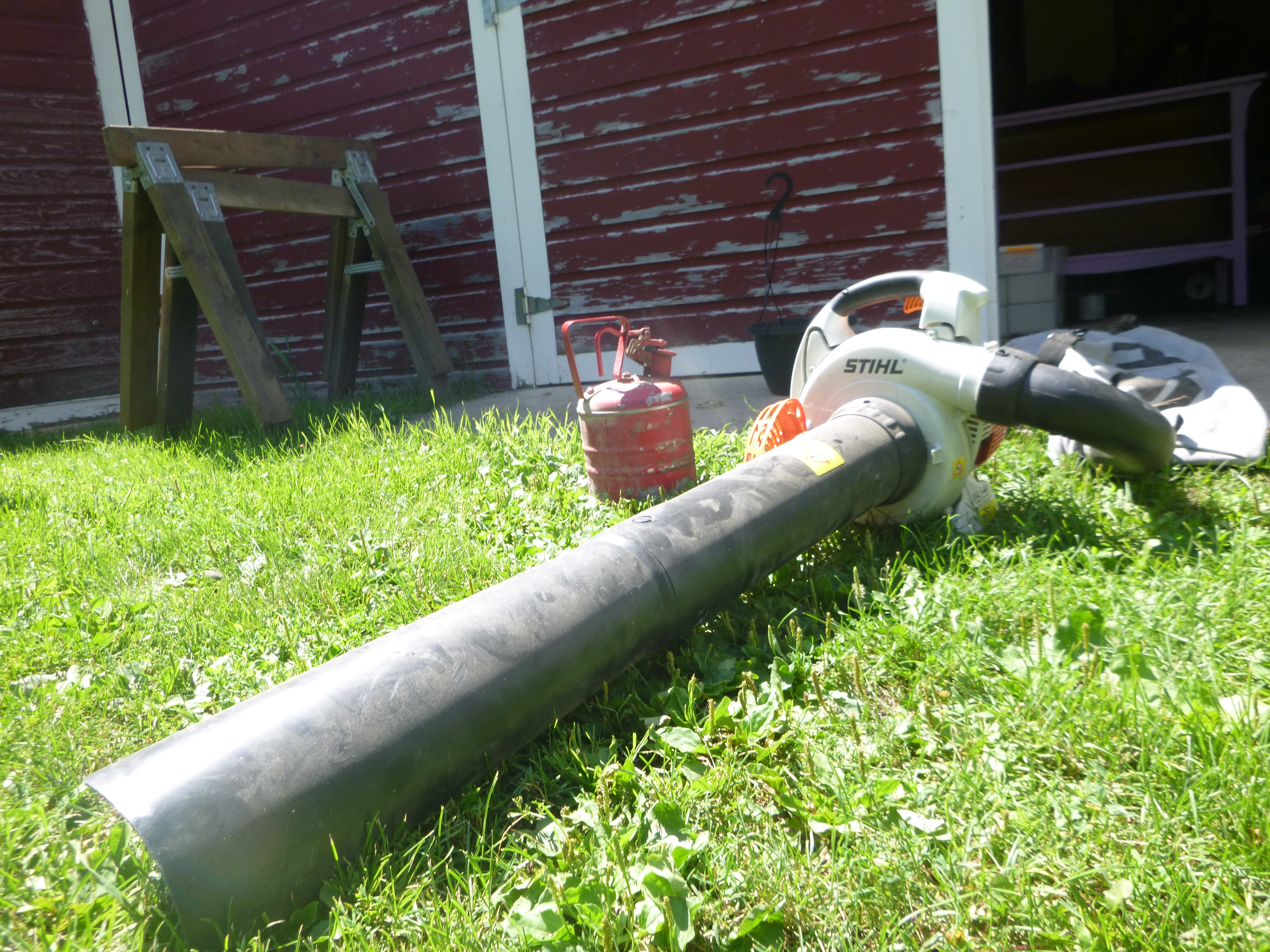 The newest member of Team Echinacea
Yesterday I made lots of headway on my independent project! I met with Jason Strege from the DNR to discuss mechanical methods of seed collection. Jason also brought along this beauty. It was bought by the DNR to be tested as a vaccum collection method. In the comming weeks I will be doing some testing with different nozzle sizes to attain the optimal settings for seed collection. At this point, I think we’ve all gotten into a good groove. Phenology on half of the sites went smoothly this morning. Ben and I worked at Landfill. I enjoyed watching the nearby herd of cows get chased out of a wetland by an angry man in an ATV while I methodically selected “Done Flowering” for a head with no more female or male florets. The sun was out but the grass was dewy. I worked on the East hill for the first time. By 11:20am, we headed back to the Hjelm house to work on phenology in p1. People trickled in from all the different routes, and by lunch all the phenology was complete. After a calm lunch, where I thought for the first time about brome-derived ethanol, the team split up to complete a few jobs. While Amy and Danny headed out to prepare for the next step in the Compatibility study, the rest of us worked in p1 or the Hjelm house itself on various tasks. I started painting bracts: Lavender along the western edge of each head’s center divide, Pink along the eastern edge, and white for pre-shriveled styles. It was the perfect afternoon for that kind of task. The sky was bright blue but punctuated with small white bursts of cloud. The air was warm and the sun turned my rubber boots into little foot ovens. But time felt purposeful and productive. When everyone had finished their jobs, we met back on the porch and debriefed the day. It was busy, fruitful, but most of all it felt comfortable and settled. We are hitting our stride as a team, working smoothly to divide tasks and communicating clearly. And I think I’ve found my new passion in field work.
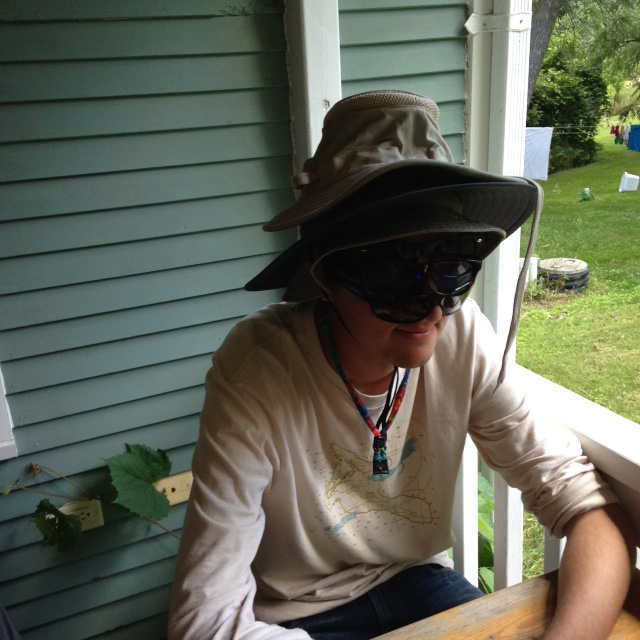
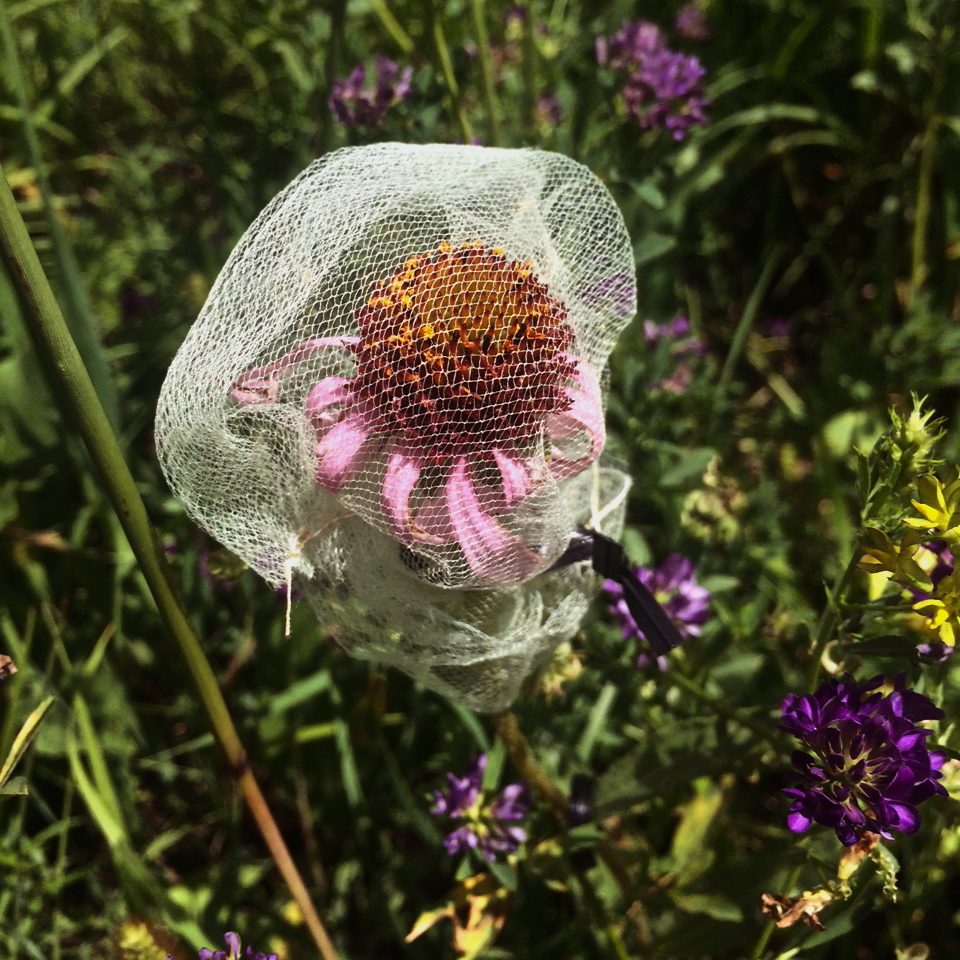 Pollinator Exclusion Bags On!  Bracts Painted! 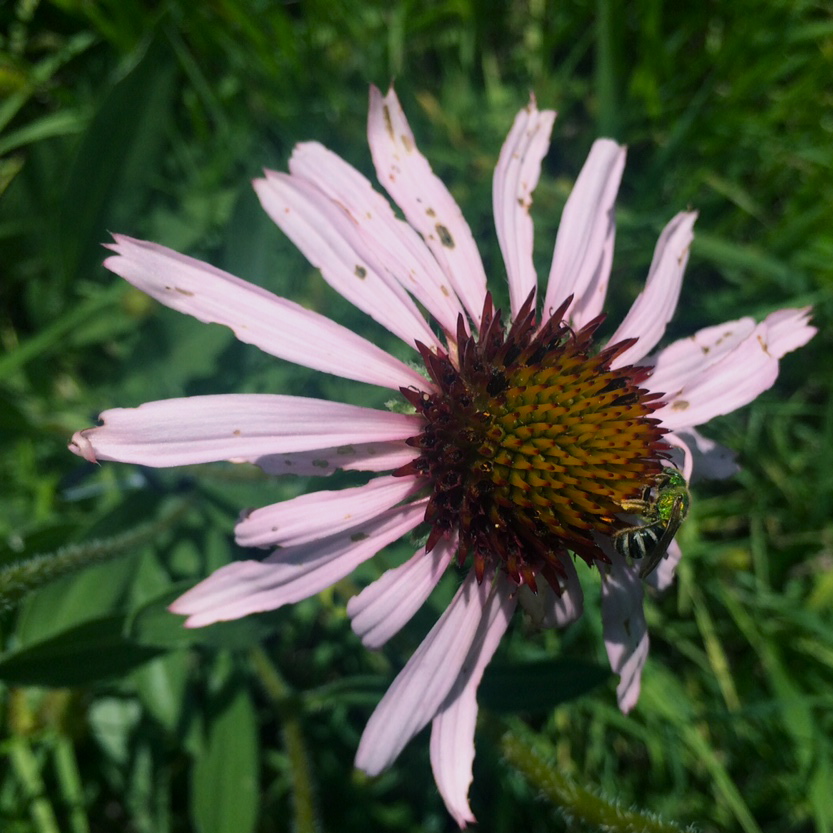 Pollinator at work!  Dinner Time!! Birds foot trefoil has slowly been making its way into P1 along with its buddy Canada thistle. The time has come to put an end to it! Today P1 was mapped out and all the invaders were marked for termination. The eradication will began right after the next rain. It looks like perhaps Friday will be the day as rain is looking good for Thursday. Everyone will have to glove up and teach these pesky invaders a lesson! Look further down the post to see how Will has devised a plan for extra triple protection from sun to take on the task!
Will has decided that extra protection will be needed to take on this task and its shown here demonstrating the latest in ultra triple protection. No sun will be getting in his eyes!
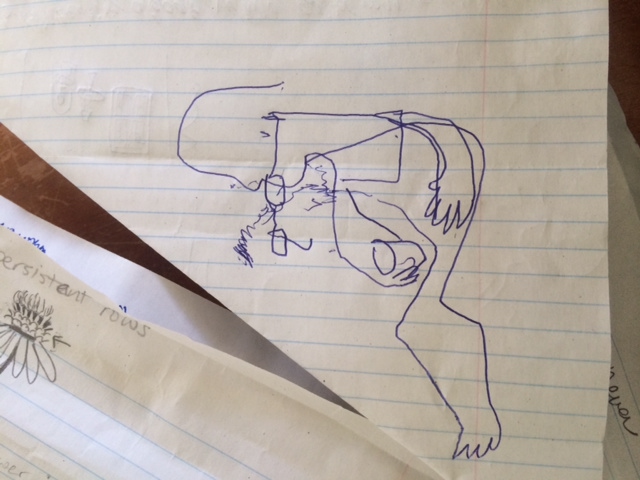 Ben Lee (2015); ballpoint pen on notebook paper It was a good Saturday of phenology and fun for Team Echinacea! A group of us braved the morning fog and went out to our remnant sites to assess phenology. Lots of plants have reached or are nearing the end of their flowering time already. Later in the day we went swimming, played bananagrams, and drew blind contour drawings of each other. This weekend, Danny and I have been working the ongoing project assessing compatibility between Echinacea individuals within remnants. On Friday, we went to Loeffler’s Corner and randomly selected 10 flowering plants; these are our focal plants. We do four crosses on each focal plant, with pollen from each of the crosses being placed on four or 5 bracts of the focal plants. We can tell if the cross is compatible by seeing if the styles shrivel after receiving pollen; if they do, they’re compatible, but if the styles persist, then the cross was between two plants that are not compatible. For this study, we cross each focal plant with its nearest flowering neighbor, its furthest flowering neighbor, a plant that flowered early (i.e. one that is just ending flowering), and a plant that flowered late (i.e. one that just started flowering). To keep track of the crosses, we paint the bracts of the focal plant different colors which correspond to the cross that the style will receive: near, far, early, or late. We paint bracts corresponding to male florets; the next day, they will be styles, and we will be able to do the crosses. After we paint, we cover each focal flower with a pollinator exclusion bag so that we can be sure that no other pollen is introduced. On the next day, Saturday, the styles of our focal plants emerged. We collected pollen from the various pollen donors and used a toothpick to perform the crosses, carefully placing pollen onto the styles identified by their painted bracts. We cover the focal flowers back up with the pollinator exclusion bags and wait one day to see if the styles shrivel. This morning, Danny and I went back out to Loeffler’s to check on style shriveling. Here are the results!
Here I’m considering a cross compatible if 75% or more of the styles shriveled, incompatible if 25% or less shriveled, and inconclusive if it is anywhere in between. We’ll go back tomorrow to check on crosses that weren’t either 100% shriveled or not shriveled and see if any more styles have shriveled in that time. Hopefully we’ll be able to repeat this process on several more remnant populations this coming week! 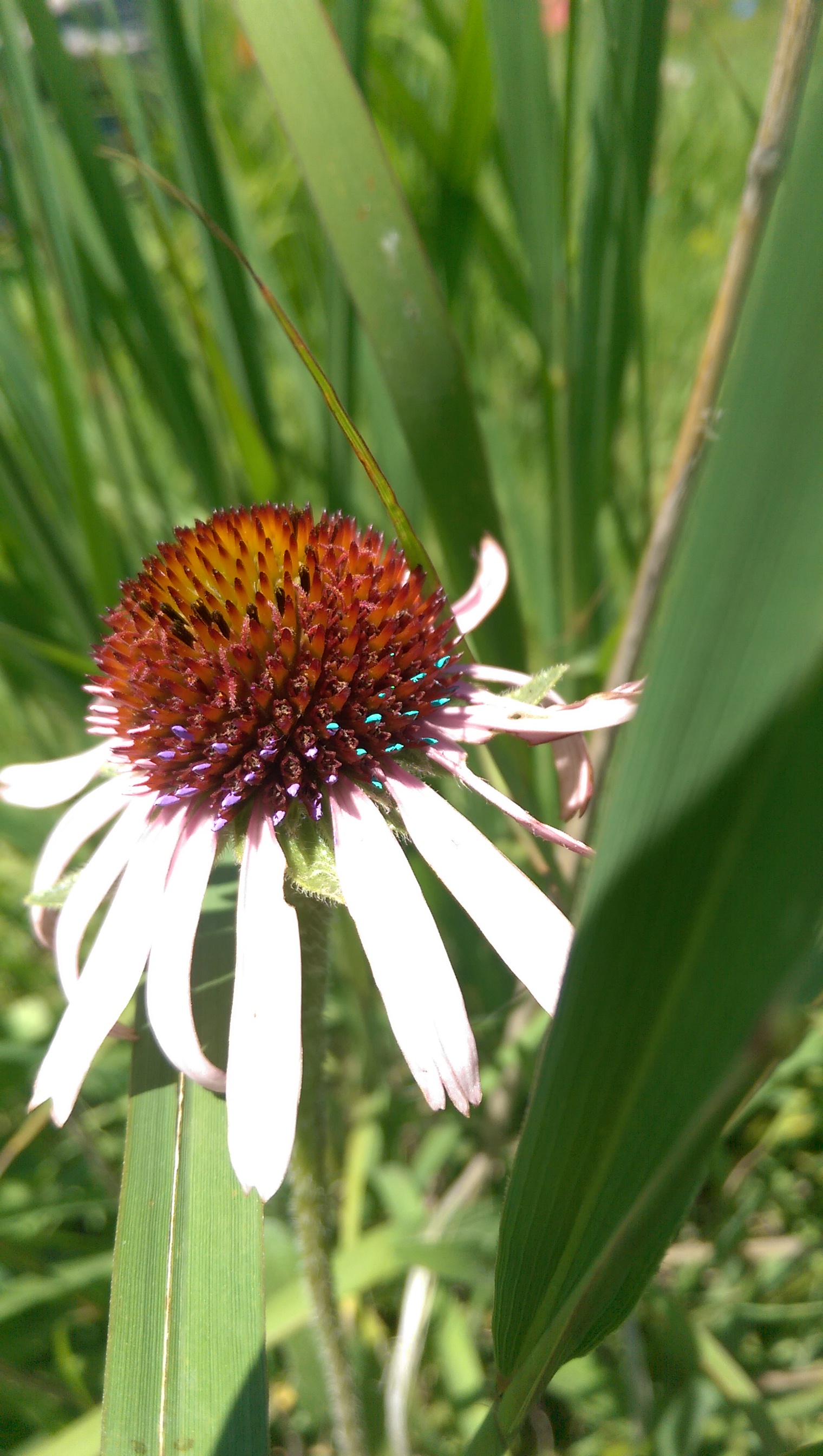 My beautiful bracts! 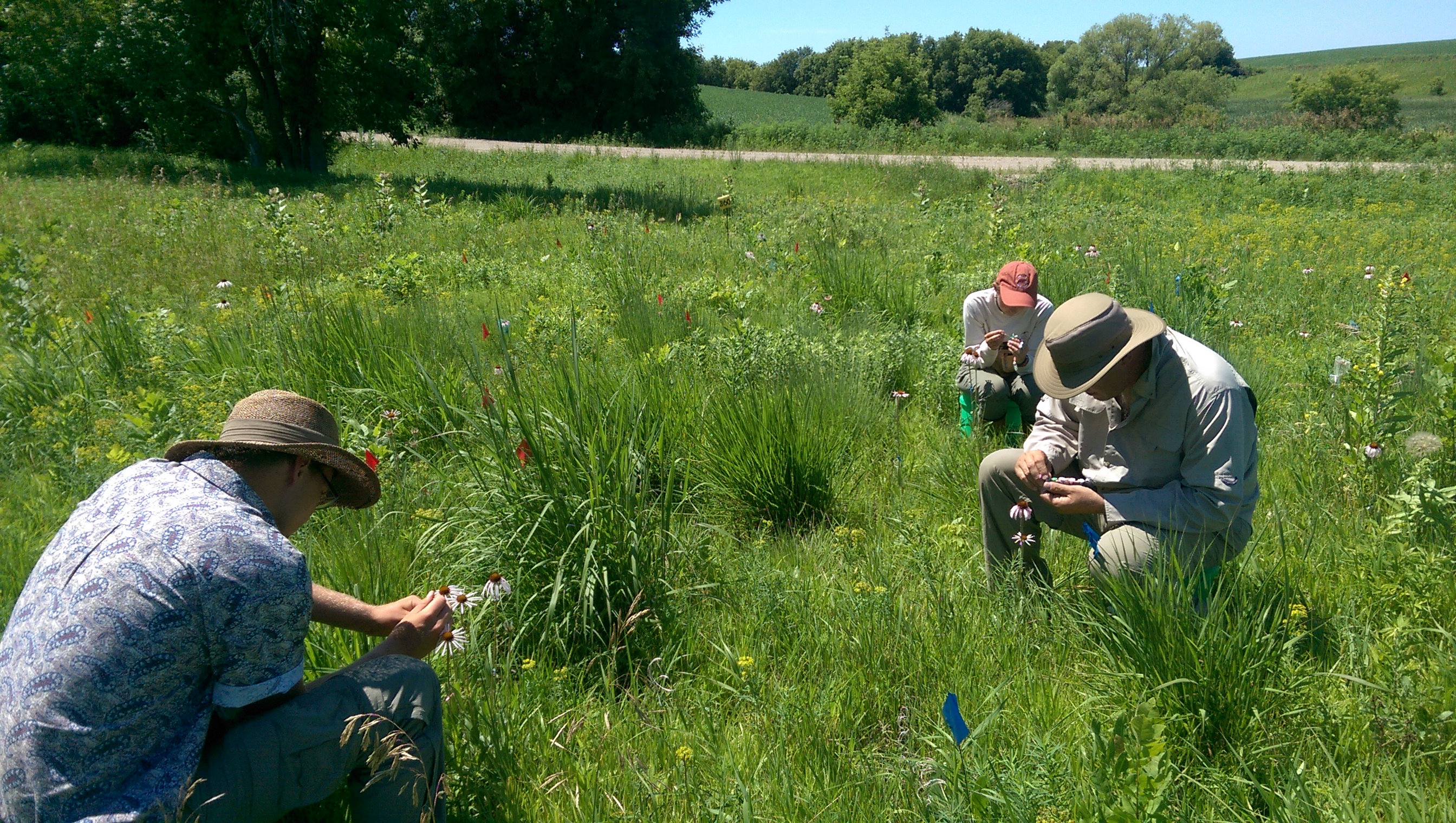 Ben, Gina, & Matt practice precise painting Today was another successful day with the team! We had a morning filled with phenology at half of the sites and later everyone divided to get many things accomplished. After lunch, some of us practiced painting the bracts of Echinacea; this wasn’t too hard, it was actually very pleasant. Using toothpicks, we had to be sure to paint the tops of bracts as well as the bottom while making sure not to get paint on the florets or apply too much. 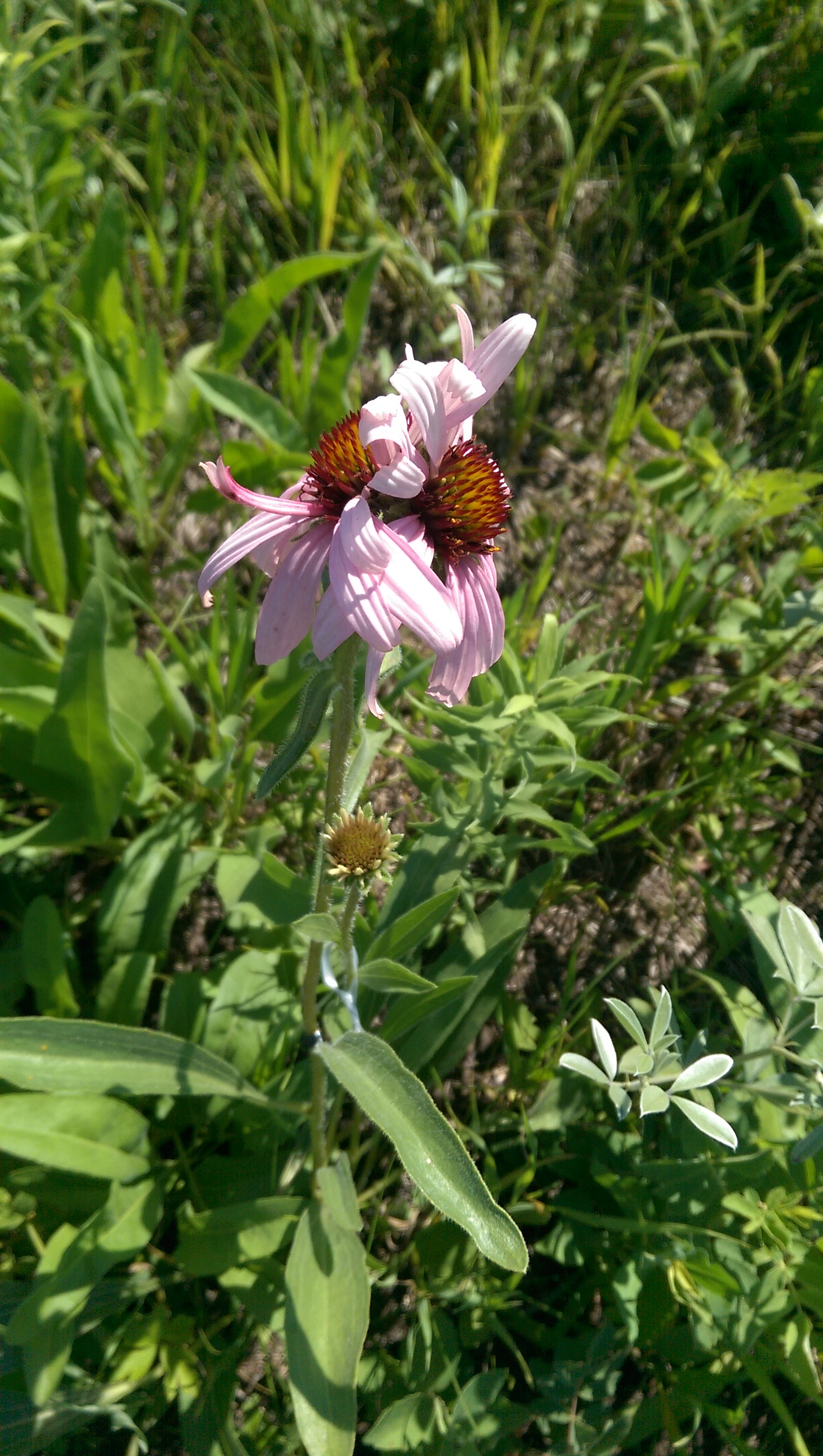 I see absolutely nothing wrong here. Here, Lea and I were at p2 collecting phenology data in the afternoon. There are 80 rows in this plot and it took us almost the whole day to get the job done! I’m from the south and it honestly takes a lot for me to confess that a place is hot, but the way the sun was blazing today, I wasn’t sure if I’d make it out of the prairie to deliver this flog post to you! It was so “warm” today I was seeing double headed Echinacea…….. sheesh. To conclude a week full of accomplishments, Stuart sliced up the best watermelon ever. One shouldn’t argue this watermelon’s caliber; I know this was the best watermelon ever because it replenished all the sense I lost in p2 today. I’d say that everyone else enjoyed this glorious melon as well! Today was a good Friday! 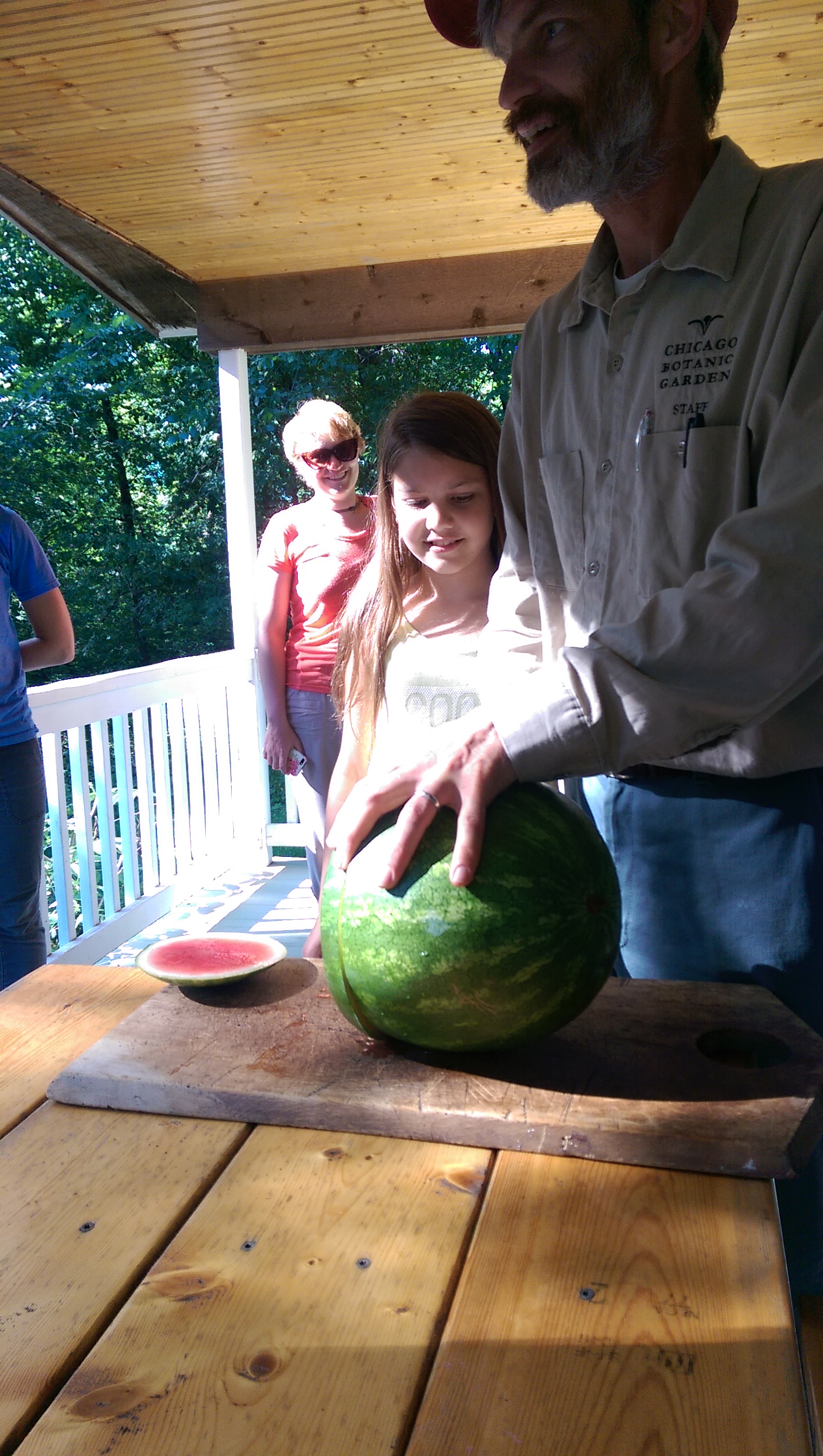 Watermelon after work! This morning Gretel took us all down to P1, and we learned the proper way to collect pollen from plants and put it onto other plants. After getting to practice that ourselves, we split into small groups and went to do various jobs. Everybody agrees that Gina and Will got the best job. They went out to Hegg Lake and got to cut off all the Echinacea pallida heads. Now we have a beautiful bouquet of them on our lunch table! Per and I got to bag flower heads in P1 that will potentially be used in the cross-pollination experiment. 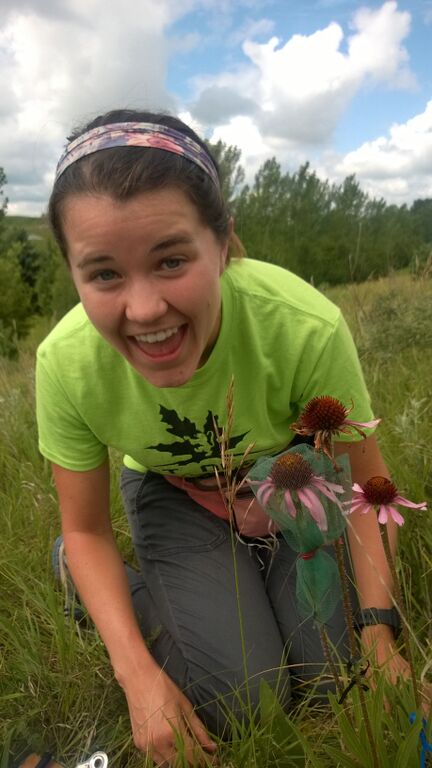 Amy is excited to bag heads at landfill! After lunch, a group of us got sent out to Hegg Lake to help Taylor flag the rest of her hybrid plot. We found lots of little Echinacea plants and measured all their leaves.  Done flagging the hybrid plot! Another long morning of phenology Nobody knew the protocol, apparently Gretel sunk our visors one by one Until 12:30 we toiled in the sun So much end of flowering to observe The plants have been thriving at Staffanson Preserve Into boots our feet slid after lunchtime fun For Hegg Lake had much more work to be done On the hills we tagged more angustifolia flowers Lots of us also helped Taylor and Amy for hours If only we understood those rogue Echinacea plants… Another cruel joke by Team Pallida, perchance??  Measuring baby hybrids for Taylor’s experiment!
As we are wont to do in team Echinacea 2015, we started the day with a wonderful bout of phenology. The number of newly discovered plants is really starting to slow down but as we get closer to peak flowering, more and more will become apparent. Speaking of peak flowering, it seems to be almost that time of year for the Echinacea, some sites, like Landfill, are already seeing plenty of heads near the end of their flowering for the summer. Both p1 and p2, having been burned this year, are a little slower on the uptake but they’re starting to gain momentum.  A “done flowering” Echinacea leads the way for its flowering brethren. Before lunch, Stuart took a group of us out and showed us the proper technique for painting the bracts to identify styles for hand-crosses. We made some paint holsters and feel ready for some compatibility assessment! |
||||||||||||||||||||||
|
© 2026 The Echinacea Project - All Rights Reserved - Log in Powered by WordPress & Atahualpa |
||||||||||||||||||||||